by Tom Gurney
Tom Gurney BSc (Hons) is an art history expert with over 20 years experience
Page created on September 3, 2026 / Page updated on September 13, 2026
Email: tomgurney1@gmail.com / Phone: +44 7429 011000
How Colorants, Film Formers and Additions Build a Paint Layer
Paint is a mixture that becomes a working layer and, in many systems, a coherent dry film. Its colour-bearing material does not work alone. A binder holds particles together and to a prepared support; liquids control manufacture or application; smaller ingredients tune flow, drying, preservation or surface. The same everyday words are used differently by artists, manufacturers, conservators and coatings engineers, so context matters.
This page owns physical composition and terminology. It does not catalogue named pigments or teach colour mixing; those belong to Color in Art. It does not replace the Art Media guides to oil, acrylic, watercolour, tempera or other medium histories and techniques.
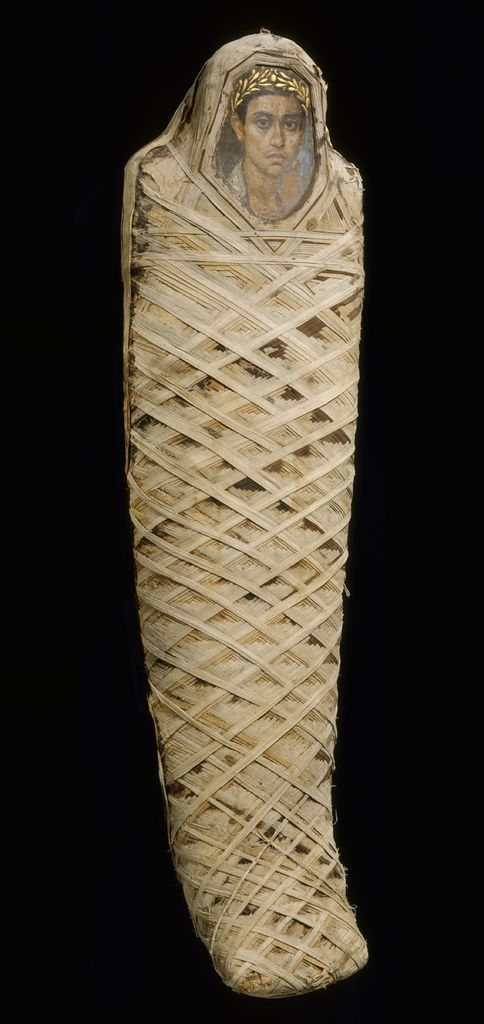
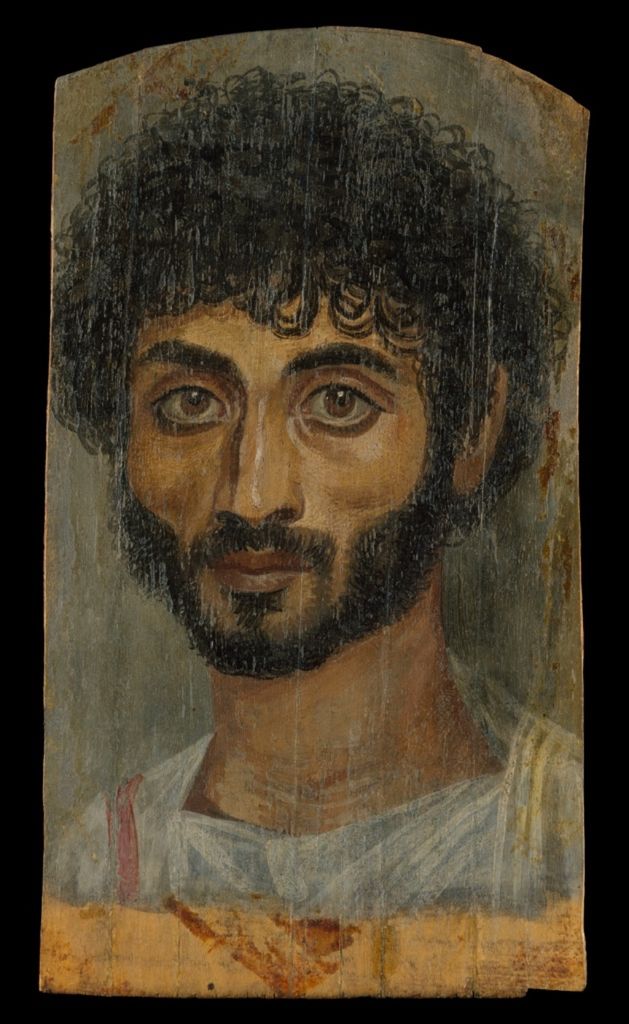
Maker unrecorded, Mummy with an Inserted Panel Portrait of a Youth, 80–100 CE; panel portrait in encaustic on limewood. Here wax is not merely a surface effect but the recorded binder family within a larger funerary object. Image: The Metropolitan Museum of Art, Open Access/public domain.
At a Glance
- Pigment or colorantsupplies colour or other optical properties but does not by itself make a stable paint film.
- Binderforms or deposits the continuous phase that holds pigment to a prepared support.
- Vehicle and diluentcarry or adjust paint during manufacture and use; the terms vary by system and context.
- Painting mediumis an intentional addition that changes handling or film properties and must remain compatible with the paint system.
- Complete recordkeeps support, ground, paint layers, additions, coatings, labels and analytical uncertainty separate.
Contents
- How Colorants, Film Formers and Additions Build a Paint Layer
- Pigment and colorant
- Binder and binding medium
- Vehicle, carrier and diluent
- Painting medium
- Additives, extenders and fillers
- Wet paint becomes a film
- Ground, paint and varnish
- Safety and documentation
- A terminology checklist
- Binder families form films differently
- Pigment concentration and critical packing
- Rheology: why paint flows, levels or holds a mark
- Additives have distinct jobs
- Reading Colour Index notation
- Read a technical record in layers
- Art Materials reference pages
- Watch Pigment, Binder and Paint Film in Practice
Pigment and colorant
A pigment is generally an insoluble particulate colorant dispersed through a binder. The National Gallery describes paint as pigment bound in a medium and notes that pigment-to-medium ratio affects malleability, colour and drying.[1] Particle size, shape, refractive index, surface treatment and concentration contribute to hiding power, transparency, texture and handling, but no one property determines all of them.
A dye is generally soluble in its application liquid or substrate. A lake pigment can be formed when a dye is attached to an insoluble substrate or mordant, producing a particulate material usable like pigment.[4] Historical and trade language is not perfectly consistent, and some modern effect materials complicate a simple insoluble/soluble split. “Colorant” is the broader neutral term.
Pigment code, common colour name and chemical identity are different fields. A poetic name may cover different formulations; one formulation may combine several pigments. Always retain the maker’s current pigment disclosure and safety label rather than inferring chemistry from hue.
Binder and binding medium
The binder is the film-forming material that holds pigment particles together and adheres the paint to its support.[2][6] Drying oils form networks through reactions involving oxygen; acrylic dispersions coalesce as water leaves and polymer particles form a film; gum and protein systems set or dry in other ways. These broad mechanisms do not make all products within a family interchangeable.

Lippo Memmi, Madonna and Child, about 1340, tempera on wood with gold ground. “Tempera” identifies a water-miscible binder family, while wood, preparation and gilding remain distinct layers in the object. Image: The Metropolitan Museum of Art, Open Access/public domain.
Museum usage often calls the binder the “medium” or “binding medium.” The National Gallery uses the term this way for materials such as drying oil, egg or glue and stresses that both pigment and medium optical properties affect the applied paint.[2][3] In studio retail, however, “painting medium” can mean a separate product added to manufactured paint. The sentence must resolve which meaning is intended.
Vehicle, carrier and diluent
Vehicle can mean the liquid phase that carries pigment during manufacture and application. In some definitions it includes binder plus volatile liquid; in others it is used almost synonymously with binder, especially in artists’ oil-paint discussion. A technical data sheet should therefore define the system rather than relying on the bare word.
A carrier or diluent reduces viscosity or moves components during application. Water can be a continuous phase or diluent in a water-borne system without becoming the final polymer binder. An organic solvent may dissolve resin or reduce viscosity and then evaporate. “Thinner” describes a function, not a safe universal ingredient.
Adding too much unbound liquid can leave insufficient binder at the final pigment/substrate interfaces. The safe amount depends on formulation, layer, support and manufacturer directions. Avoid folk ratios that cross from one brand or paint family to another.
Painting medium
An added painting medium modifies working or dry-film properties: flow, viscosity, transparency, gloss, texture, drying or open time. A compatible medium usually brings binder appropriate to its paint family. But naming varies. Oil-paint makers may call mixtures of oil, resin or solvent “medium”; acrylic makers distinguish binder-rich gels and fluids from concentrated binder-free additives.[7]
Medium is also the broad category in phrases such as “the medium of watercolour” or “mixed media.” These three meanings—art form, binding material and added product—should not be collapsed. Write “acrylic gel medium,” “oil binding medium” or “watercolour as a medium” when ambiguity matters.
Additives, extenders and fillers
An additive is a component used in relatively small quantity to adjust a property such as wetting, foam, preservation, flow or drying.[6] It is not automatically a cheap filler. Some additives are essential to manufacture a stable modern paint.
An extender or filler is a generally low-colour particulate material used to alter volume, rheology, surface, opacity, cost or other properties. Depending on refractive-index relationships, a material can appear opaque in one binder and relatively transparent in another. Labels and conservation analysis, not prejudice, should establish its role.
In acrylic systems, manufacturer guidance explicitly distinguishes resin-containing mediums from binder-free additives and warns that excess additive can weaken adhesion or film stability.[7] That limit is product-specific. Never treat a concentrated additive as a generic medium or mix several modifiers without technical confirmation.
Wet paint becomes a film
Wet paint contains pigment plus a continuous phase that allows movement. During drying or curing, water or solvent may leave, binder may coalesce, oxidise, polymerise or otherwise set, and particles become embedded in a film. “Dry to touch” does not necessarily mean fully cured throughout.
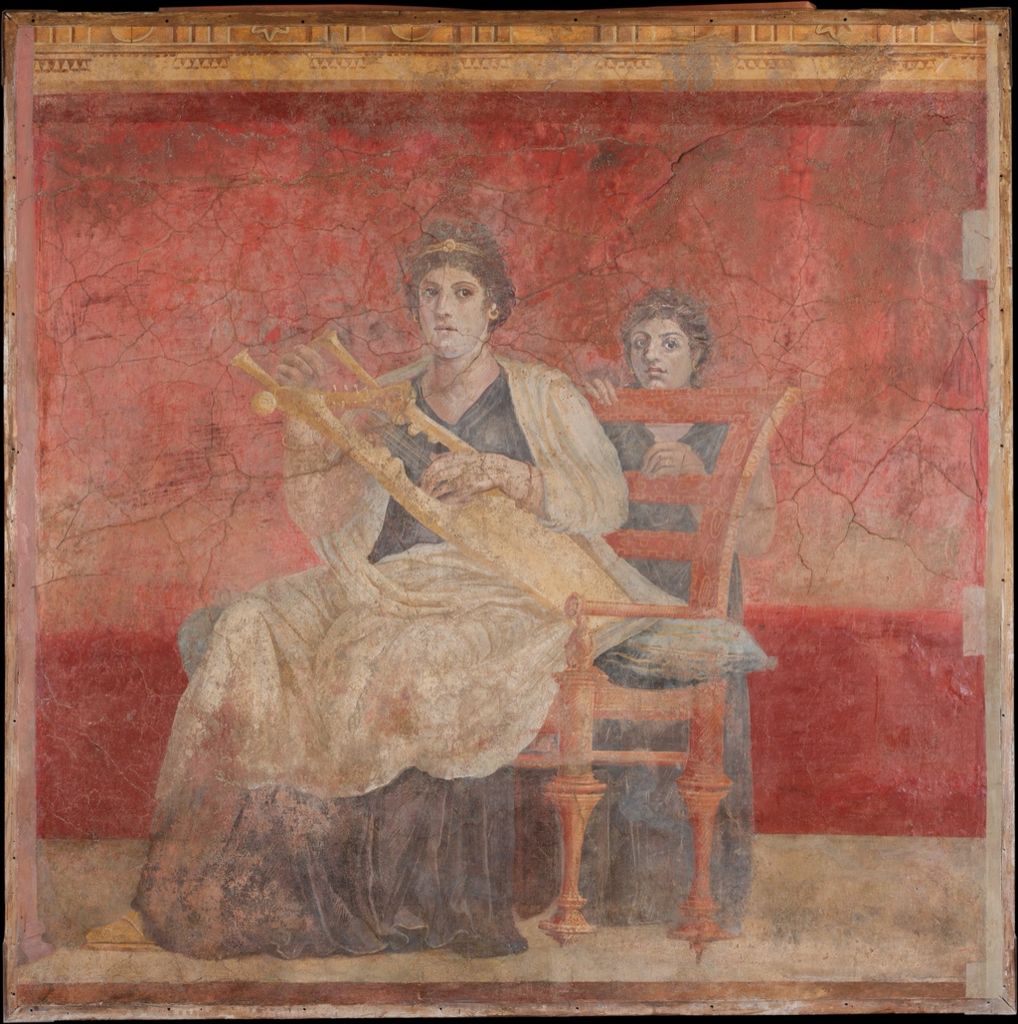
Maker unrecorded, Wall painting from Room H of the Villa of P. Fannius Synistor at Boscoreale, about 50–40 BCE, fresco. In true fresco, pigment becomes bound within a carbonating plaster surface rather than drying as the same kind of discrete organic film as oil or egg tempera. Image: The Metropolitan Museum of Art, Open Access/public domain.
Pigment and binder interact. National Gallery technical research shows both contribute to translucency, covering power, gloss, flow, drying and body, and their ageing can change those qualities.[5] More binder is not automatically better: too little can produce a friable underbound layer, while excess can alter colour, gloss, transparency, wrinkling or drying. Professional formulation balances a complete system.
Ground, paint and varnish
Ground is the prepared paint-receiving layer over a support or size. It can control colour, tooth and absorbency. The image paint sits above it. A varnish is a later surface coating with protective or optical functions. These layers can contain chemically related resins or particles, but function and position keep them distinct.
Do not use “medium” to mean varnish by default, and do not assume a clear acrylic product is suitable for every role. Grounds, isolation layers, mediums and varnishes are formulated for different interfaces and application moments. Follow the named product system and drying requirements.
Safety and documentation
Hazard depends on complete formulation, exposure route and use—not on whether an ingredient sounds natural. Keep labels and safety data sheets, prevent ingestion and skin cleaning with solvent, control dust and spray, and ventilate as directed. HSE solvent guidance stresses substitution where possible, adequate ventilation, closed containers and correct contaminated-rag management.[8]
For a durable studio record, note product, manufacturer, batch, pigment identifiers, binder family, added medium or additive and approximate amount, support and ground, date and observed drying. Do not preserve proprietary mixtures in unlabelled jars.
A terminology checklist
- Pigment: usually an insoluble colour-bearing particle.
- Dye: usually a soluble colorant; a dye can be made into a particulate lake.
- Binder: film former that holds particles and adheres paint.
- Vehicle: context-dependent wet carrying phase; read the technical definition.
- Diluent or solvent: adjusts application and may evaporate; not automatically binder.
- Painting medium: context-dependent binder or compatible added modifier.
- Additive: small functional component, sometimes binder-free and ratio-limited.
- Extender or filler: particulate material that changes physical or optical properties.
- Ground, paint and varnish: distinct layers with distinct functions.
Precise language does not make paint simple; it makes complexity traceable. When a term is ambiguous, name the material, role and paint family. That prevents a useful instruction for one system becoming a damaging assumption in another.
Binder families form films differently
Drying oils, acrylic dispersions, plant gums, proteins and waxes do not reach a solid state by one mechanism. A drying oil reacts with oxygen and develops a cross-linked network; this process continues after the surface no longer feels wet. An acrylic dispersion loses water and its polymer particles deform and coalesce into a continuous film. A gum-bound watercolour loses water but remains comparatively re-soluble. Egg and other protein binders form films through drying and molecular interactions that differ again.[9][11]
These categories are deliberately broad. Oil-modified alkyd, acrylic solution, acrylic dispersion and vinyl dispersion are not interchangeable merely because they contain synthetic resin. An emulsion can contain phases that play different roles. A wax-rich system may soften with heat without behaving like a drying oil. Name the binder family and product system before discussing dilution, curing or compatibility.
“Dries by evaporation” is often incomplete. Water or solvent may leave first while coalescence, oxidation or another curing process continues. Touch-dry, overpaint-ready and fully cured therefore describe different states, and only the maker’s current technical directions can assign times to a product under stated conditions.
Pigment concentration and critical packing
Pigment-to-binder ratio can be stated by mass or volume, and those values are not interchangeable because pigments have different densities. Pigment volume concentration describes the volume of pigment and extender relative to the non-volatile solid ingredients. At a critical range, there may no longer be enough binder to fill voids between particles completely. Porosity, gloss, strength and optical behaviour can change sharply around that structure.
This concept explains why “more pigment” is not a universal quality scale. One pigment may require more binder to wet and surround its particles than another. A highly loaded colour can be intentionally matt or short; another can remain glossy at a different concentration. Getty’s mechanical research emphasises that artistic paint properties depend on binder, pigment, extenders, driers and additives and continue changing as a liquid-like material becomes a solid-like film.[9]
Artists should not calculate a critical ratio from a tube label. The useful lesson is to avoid removing binder indiscriminately, adding dry pigment without formulation knowledge or comparing products by marketing claims about pigment load alone.
Rheology: why paint flows, levels or holds a mark
Rheology describes deformation and flow. Viscosity is one part of it, but many paints are non-Newtonian: their apparent viscosity changes under brush, knife or stirring forces and may recover when the force stops. Yield stress helps a paint hold a peak until sufficient force makes it move; thixotropic behaviour describes a time-dependent reduction and recovery under shear.
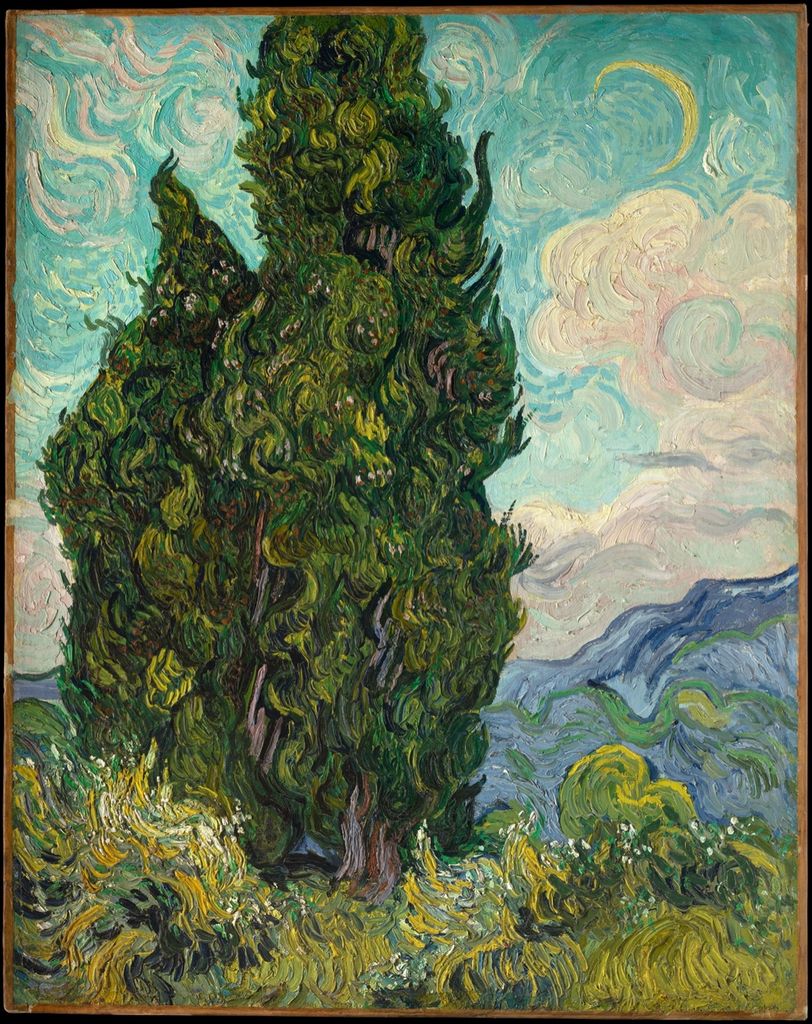
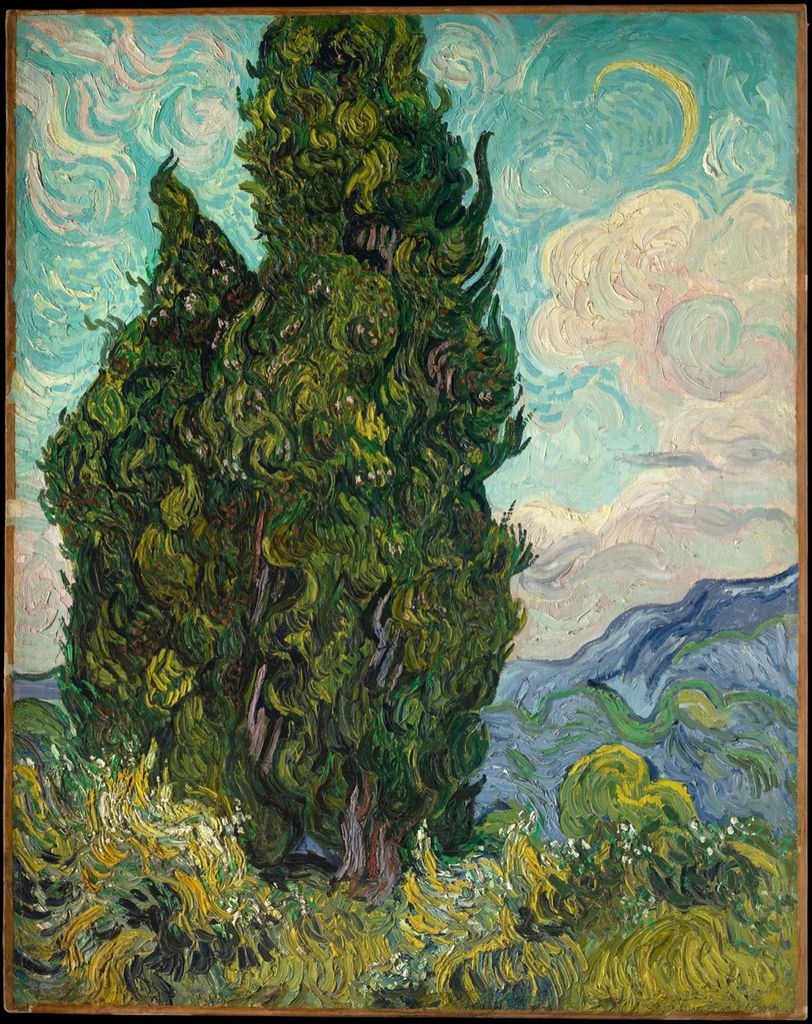
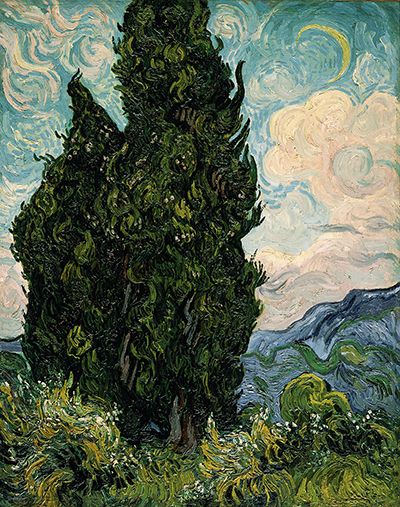
Vincent van Gogh, Cypresses, 1889, oil on canvas. The drying-oil binder supports both thin passages and ridges that retain the direction of a loaded tool, but the catalogue medium alone does not disclose the complete formulation or additions. Image: The Metropolitan Museum of Art, Open Access/public domain.
Pigment shape and surface, concentration, binder molecular structure and rheology modifiers all contribute. A long paint may pull into strings; a short paint breaks quickly; a buttery paint can hold a stroke. These are useful observations, not standardised guarantees. Temperature, ageing and previous stirring can alter the same sample.
An added medium changes this balance as a formulated package. A diluent may lower viscosity without adding enough film former; a gel medium can add binder and structure; a concentrated flow additive may reduce surface tension at a much smaller permitted dose. Use the product category and directions rather than treating everything that makes paint move as “thinner.”
Additives have distinct jobs
Surfactants help wet and disperse particles or adjust surface tension. Defoamers limit persistent bubbles. Humectants slow water loss or support rewetting. Preservatives protect susceptible material in the container. Driers catalyse oxidation in some oil or alkyd systems. Plasticisers alter flexibility; matting agents change gloss; thickeners tune rheology. A manufactured paint can contain several at low concentrations.[6][9]
Their small quantity does not make them unimportant, and their presence does not prove low quality. Excess or incompatible additions can migrate, remain surface-active, disturb adhesion or change ageing. Because proprietary formulations rarely disclose every component, a safety data sheet is not a full recipe and a marketing label is not a conservation analysis.
Reading Colour Index notation
The Colour Index uses two related identifiers. The Generic Name classifies a commercial colorant by application class, hue and serial number—for example, “C.I. Pigment Blue” followed by a number. The Constitution Number is a separate structure-related identifier.[10] Artist-paint abbreviations such as PB, PR, PY or PW derive from the pigment class and hue, but the serial number is not a lightfastness score or quality grade.
A Generic Name groups colorants under defined rules, yet variants and colon numbers can mark distinctions. A paint carrying two pigment codes contains a physical mixture rather than one new Colour Index identity. A familiar colour name can be attached to different formulas, so the code is more transferable than the poetic name—but it still does not disclose particle size, crystal form, surface treatment, concentration or every additive.
This page stops at notation. Individual pigment histories, colour relationships and mixing behaviour remain outside its ownership.
Read a technical record in layers
- Identity: product, maker, batch and date.
- Colorant: Colour Index Generic Name or other disclosed identifier; note mixtures.
- Binder family: drying oil, acrylic dispersion, gum, protein, wax or another named system.
- Working additions: exact medium, additive or diluent and approximate amount.
- Substrate system: support, size, ground and previous layers.
- Drying conditions: temperature, ventilation and elapsed time where relevant.
- Safety evidence: current label and safety data sheet, with exposure controls appropriate to the activity.
Documentation cannot reveal undisclosed proprietary formulation, but it prevents ambiguity from multiplying. It also separates an observed property—gloss, stringiness, drying time—from an unsupported claim about which ingredient caused it.
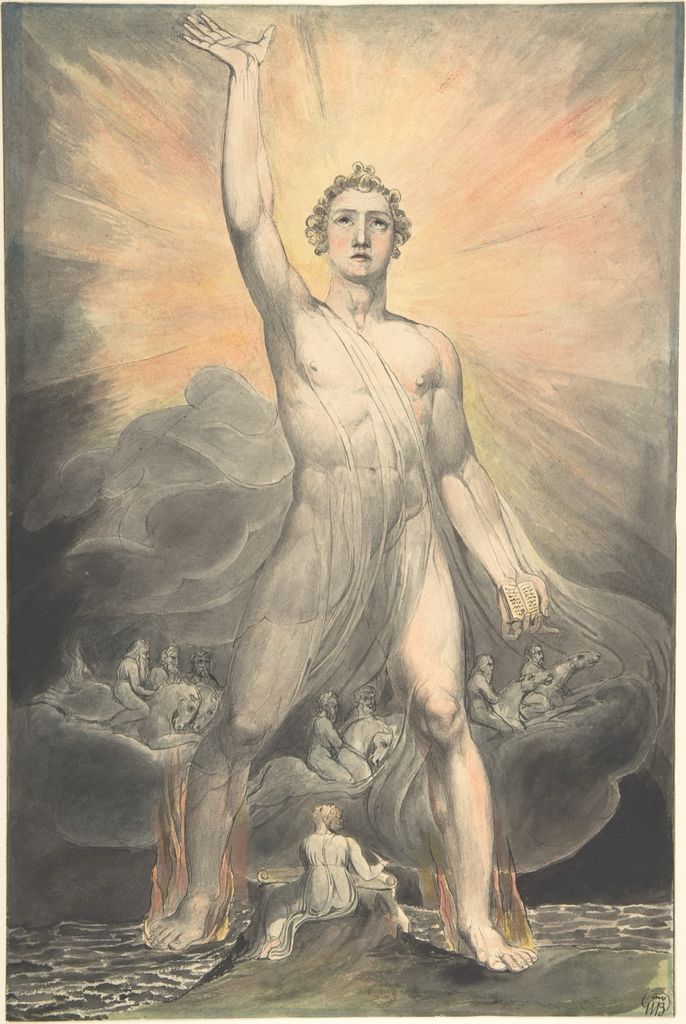
William Blake, Angel of the Revelation, about 1803–5, watercolour, pen and black ink over traces of graphite. The catalogue separates media but cannot stand in for a full recipe: gum type, pigment concentration and additives remain unreported. Image: The Metropolitan Museum of Art, Open Access/public domain.
Dry pigment deserves a separate risk category from paint already dispersed in binder. Powder can become airborne and create inhalation or surface-contamination routes that are absent or reduced in a wet paste. Some pigments also carry specific toxicological hazards. Do not grind, sieve or disperse unknown pigment from a web recipe; use supplier documentation, appropriate controls and competent safety guidance. “Natural” and “historic” are not safety classifications.
Watch: Pigment, Binder and Paint Film
Choose a MoMA introduction to paint, a historical reconstruction of oil paint, or conservation science focused on modern formulations.
Paint | Art Terms in Action
See pigment, binder and application treated as related but distinguishable parts of paint.
Watch on YouTubeFrequently Asked Questions
Pigment supplies colour or another optical effect; binder forms or deposits the film that holds those particles together and attaches them to the prepared support.
A painting medium is an intentional addition used to alter flow, drying, transparency, gloss, body or another working property within a compatible paint system.
No. A solvent or diluent can carry or thin a paint during use and then evaporate, while the binder remains or forms the continuous paint film.
No. A code identifies a colorant classification, not particle size, concentration, surface treatment, binder, additives or the complete formulation.
Support, ground, paint, medium additions and varnish can age and respond differently; separating them prevents one material name from being applied to the whole object.
Discussion
Which term is most often used too loosely in discussions of paint: pigment, binder, vehicle, medium, additive or varnish?
Reader Insights
Ask what a component does before treating a familiar label as a complete recipe.
Pigment, binder, support, ground, additions and coating interact but are not interchangeable.
A colour name or visual appearance rarely discloses the complete formulation.
Join the Conversation
Share one precise observation or a useful museum example below.
References
- National Gallery. Pigments.
- National Gallery. Binder.
- National Gallery. Media.
- Getty Conservation Institute. APPEAR Glossary.
- National Gallery. Analyses of Paint Media.
- Golden Artist Colors. Technical Glossary.
- Liquitex. Flow Aid Additive: medium and additive distinction.
- Health and Safety Executive. Solvents.
- Getty Conservation Institute. Properties of Historic and Artistic Paints.
- Colour Index. Introduction to the Colour Index: Classification System and Terminology.
- Canadian Conservation Institute. Caring for Paintings: Binders for Paint Media.