by Tom Gurney
Tom Gurney BSc (Hons) is an art history expert with over 20 years experience
Page created on September 3, 2026 / Page updated on September 13, 2026
Email: tomgurney1@gmail.com / Phone: +44 7429 011000
Reading Sacred Signs through Narrative, Tradition and Setting
Christian symbolism in art uses figures, objects, animals, gestures and settings to identify sacred subjects and develop their meaning. A key can identify Saint Peter, a wheel Saint Catherine, and a winged lion Saint Mark. A dove descending toward Mary in an Annunciation belongs to a different kind of sign: it represents the Holy Spirit within a specific biblical event.
These conventions were never a single timeless code. They changed across centuries, regions, churches and media. Interpretation begins by identifying the represented story and the work's function—altarpiece, manuscript, reliquary, private devotional image or public monument—before translating individual details.
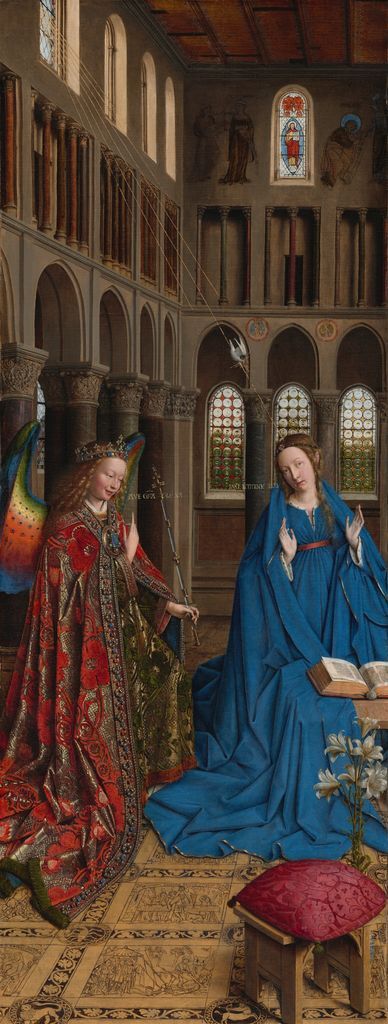
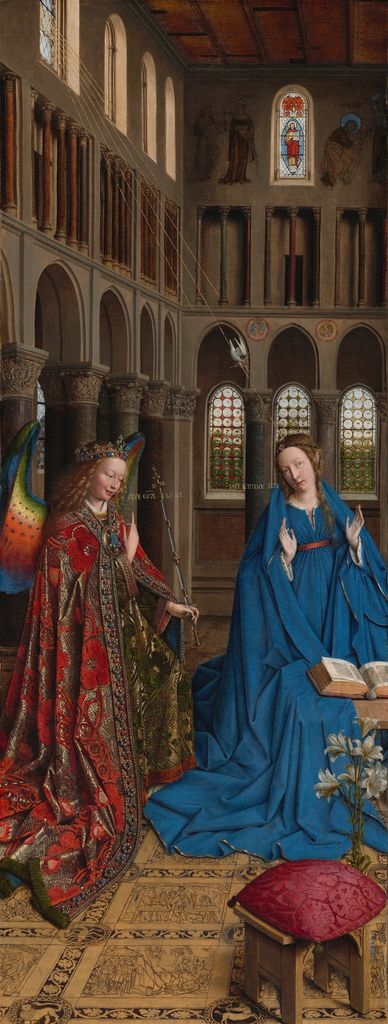
Jan van Eyck, The Annunciation, c. 1434/1436. The dove, rays, lilies, inscriptions and church setting identify and interpret a specific Christian narrative through connected signs rather than a detachable symbol list. Image and interpretation: National Gallery of Art, public domain.
At a Glance
- Begin with the narrativeidentify the episode, figure or devotional function before decoding details.
- Attributes identifykeys, wheels, animals, instruments and clothing can name saints within established traditions.
- Signs work togethergesture, inscription, setting and liturgical use constrain meaning.
- Traditions varyEastern and Western, regional and chronological conventions are not interchangeable.
- Evidence firstobject records, texts, function and comparable works support stronger readings than generic dictionaries.
Contents
Attributes, symbols and sacred narratives
An attribute helps identify a person. The National Gallery explains that saints' attributes often derive from their lives or martyrdoms: Peter's keys, Catherine's wheel, Mary Magdalene's ointment pot.[1] A symbol can carry a broader theological idea, while a narrative detail helps locate a particular episode. One object may do more than one job.
Halos mark sacred status, but their forms and use developed historically. Crosses can identify Christ's Passion, Christian faith, or a saint associated with a specific cross form. The lamb may refer to Christ as the Lamb of God, yet an ordinary sheep in a pastoral scene need not do so. Context prevents automatic decoding.
Four works: how Christian signs operate
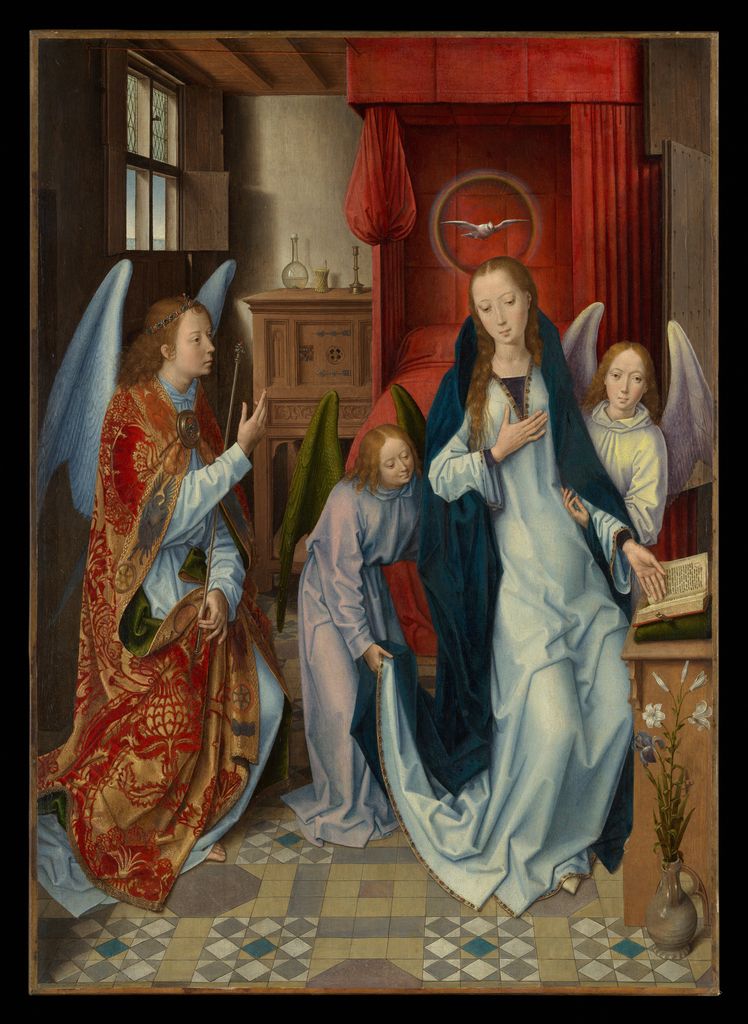
Memling: an Annunciation read through relationships
Hans Memling's The Annunciation (1480–89) places Gabriel and Mary in a carefully furnished interior.[2] The event is identified by the encounter itself, then enriched by objects, gestures and light. Annunciation lilies are associated with Mary's purity, while the dove represents the Holy Spirit in this subject.[3]
Those elements work together rather than as detachable labels. The domestic setting brings sacred history into a recognisable world; fabrics and vessels shape the scene's stillness. Comparison with Jan van Eyck's Annunciation, where rays, inscriptions, dove and church architecture form a dense theological network, shows how artists varied a shared narrative.[3]
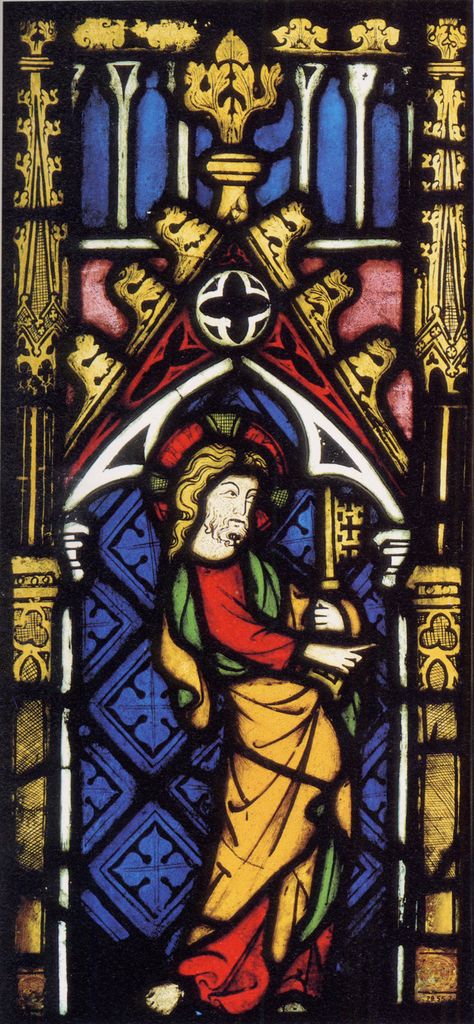
The keys of Saint Peter
In the early-fourteenth-century relief Christ Presenting the Keys to Saint Peter, the object records an action and establishes an attribute.[4] The keys refer to the keys of heaven given by Christ and to Peter's spiritual authority.[5] Later viewers could recognise Peter by keys even when Christ was not shown handing them over.
This is how iconography condenses narrative. An object first embedded in a story becomes a portable identifying sign. Yet its design, number and placement can vary, so the work's title and companions remain important.
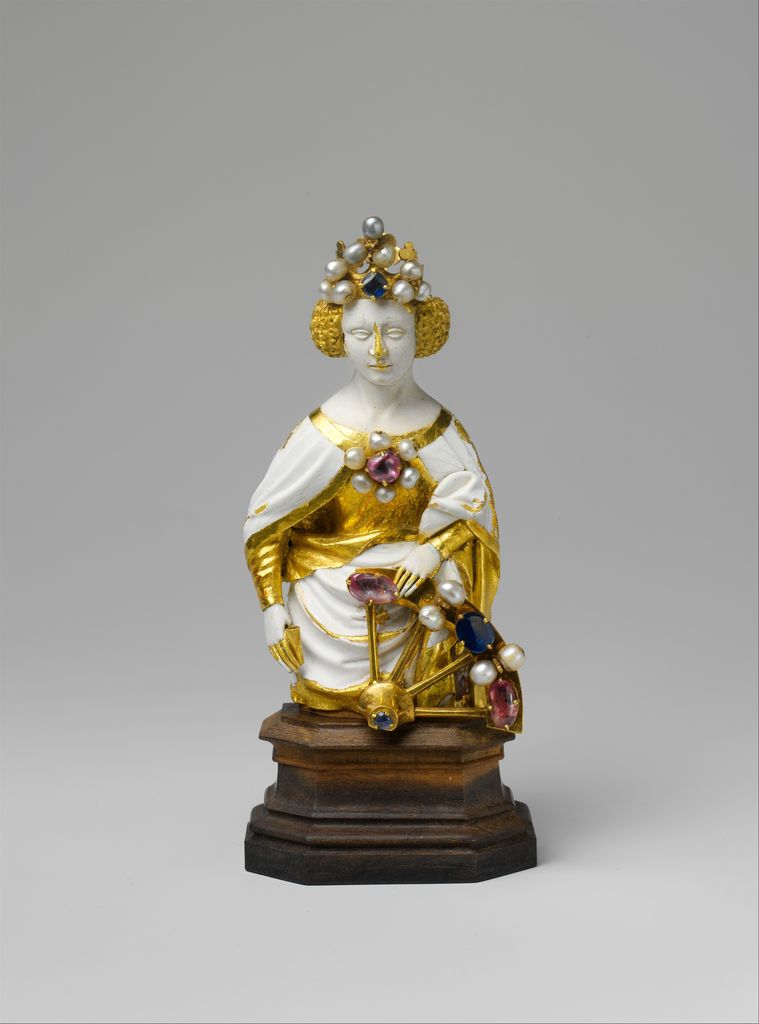
Saint Catherine and the wheel
An early-fifteenth-century sculpture of Saint Catherine of Alexandria uses dress, bearing and attribute to make a legendary saint present.[6] Catherine is commonly recognised by the wheel associated with her attempted torture and sometimes by the sword of her eventual beheading.[7]
The attribute is not simply “suffering.” It names this saint through a particular story. In an altarpiece containing several holy figures, such specificity let worshippers distinguish identities and patronal associations. Materials and original placement also shaped the figure's devotional presence.
The lion of Saint Mark
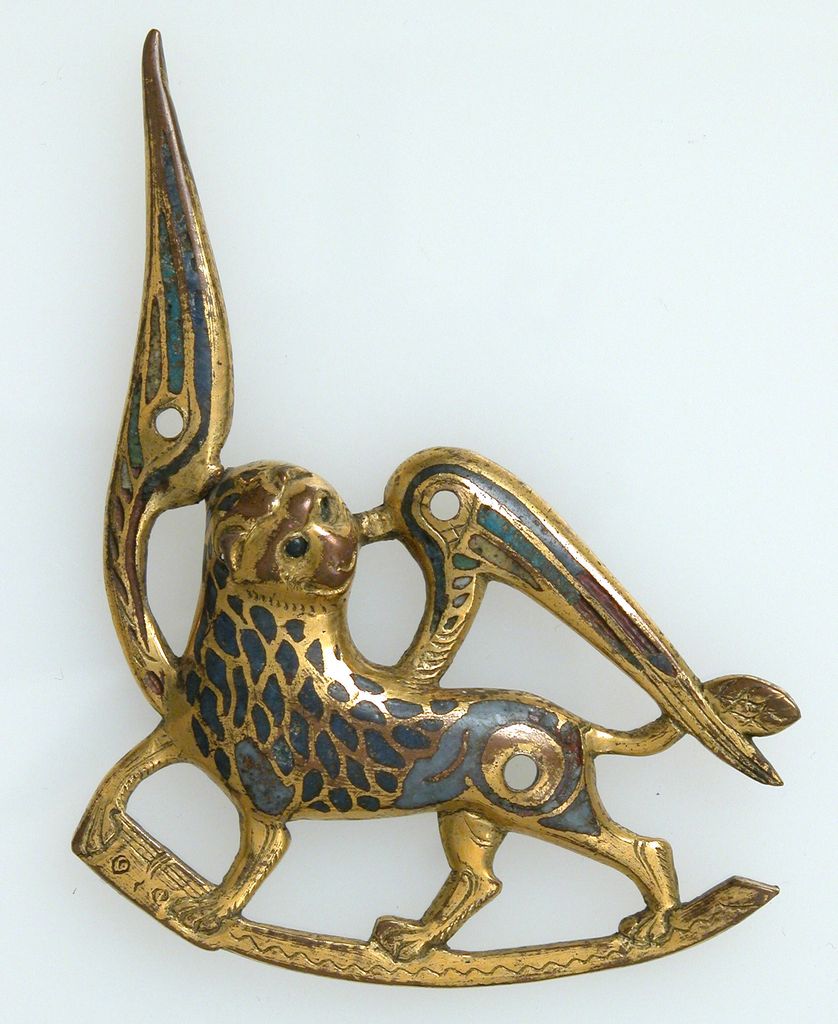
An enamel Lion of Saint Mark, made around 1200–1225 as an appliqué for a book cover, shows that a sign can stand in for a person.[8] Christian tradition associates the four Evangelists with an angel or man for Matthew, lion for Mark, ox for Luke and eagle for John.[9]
Attached to a Gospel book, the lion did more than decorate the surface. It identified authorship and gave precious material form to the text's sacred status. Removing it from that book-cover setting would weaken part of its meaning.
A concise Christian symbol guide
The cross centres on Christ's crucifixion and can also identify saints or institutions. The dove may represent the Holy Spirit in the Annunciation or Baptism of Christ. The lamb can signify Christ's sacrificial role. Bread and wine relate to the Last Supper and Eucharist. Fish and letter forms can function as early confessional signs. Palm branches often identify martyrs or victory over death.
Saintly attributes are usually more exact. Jerome may appear with lion, cardinal's hat, book or stone, each invoking a different aspect of his learned and penitential identity.[1][10] Sebastian's arrows recall his martyrdom and later associations with protection against plague.[11] Symbols become readable through subject, companions and historical use.
How to interpret Christian iconography
First identify the probable story through the collection record and relevant text. Then list figures, attributes, inscriptions and gestures. Ask whether an object identifies someone, advances the event, or develops doctrine. Consider original function: an altar image addressed worship differently from a portable book or domestic panel.
Next account for change. Medieval, Renaissance, Protestant, Catholic and Orthodox images do not use every sign in the same way. The sixteenth-century Reformation contested practices surrounding saints and sacred images.[12] A historically responsible reading names that setting rather than speaking for Christianity as a whole.
Finally, test the reading against the complete work. The wider Iconography and Symbols in Art method is useful: observe, identify, contextualise, interpret and retain uncertainty. Christian symbols are most meaningful when restored to the stories, objects and communities that made them visible.
Watch: Christian Symbolism through Formal Analysis
Choose a museum-led whole-work analysis, a close reading, or a foundations overview for considering christian symbolism.
Introducing Formal Analysis: Landscape
Follow how recurring shapes, colours and intervals contribute to a larger visual organisation.
Watch on YouTubeFrequently Asked Questions
It is the use of signs, attributes, figures, settings and narratives whose meanings are grounded in Christian texts, worship and visual traditions.
An attribute is an identifying object or creature associated with a saint, often through biography, martyrdom or patronage.
No. Meaning varies with denomination, region, period, narrative, function and surrounding signs.
Start with attributes, inscriptions, clothing, companions and the represented episode, then confirm the identification through a reliable collection record.
Use the work’s religious tradition, historical setting, intended function and authoritative sources, while avoiding claims that flatten living or diverse practices.
Discussion
Which example on this page depends most on a relationship among several signs rather than one identifying attribute?
Reader Insights
Narrative context can change the role of every object.
Use collection records and comparable works within the same tradition.
Altarpiece, manuscript, reliquary and public monument addressed viewers differently.
Join the Conversation
Share one precise observation or a useful museum example below.
References
- National Gallery — Attribute
- The Met — The Annunciation by Hans Memling
- National Gallery of Art — Stories and Symbols in Van Eyck's Annunciation
- The Met — Christ Presenting the Keys to Saint Peter
- National Gallery — Recognising saints: keys
- The Met — Saint Catherine of Alexandria
- National Gallery — Saint Catherine of Alexandria
- The Met — The Lion of Saint Mark
- National Gallery — Evangelists
- National Gallery — Saint Jerome
- National Gallery — Saint Sebastian
- National Gallery — Painting saints