by Tom Gurney
Tom Gurney BSc (Hons) is an art history expert with over 20 years experience
Page created on September 3, 2026 / Page updated on September 13, 2026
Email: tomgurney1@gmail.com / Phone: +44 7429 011000
When Still-Life Abundance Turns into an Argument about Time
Vanitas art is a form of still life that turns attractive objects into an argument about transience. Books, instruments, flowers, coins, glassware and costly fabrics display human skill and worldly pleasure; skulls, clocks, bubbles and extinguished flames expose their limits. The term comes from the biblical phrase “vanity of vanities,” where vanity means emptiness or futility rather than personal appearance.[1]
Vanitas paintings flourished especially in the seventeenth-century Netherlands, when still life became a prominent field of artistic invention.[2] Their polish is not a contradiction. The pleasure of looking at reflective metal, delicate petals or convincingly painted paper is part of the encounter: the image attracts the eye, then asks what beauty, knowledge and possession can secure against time.
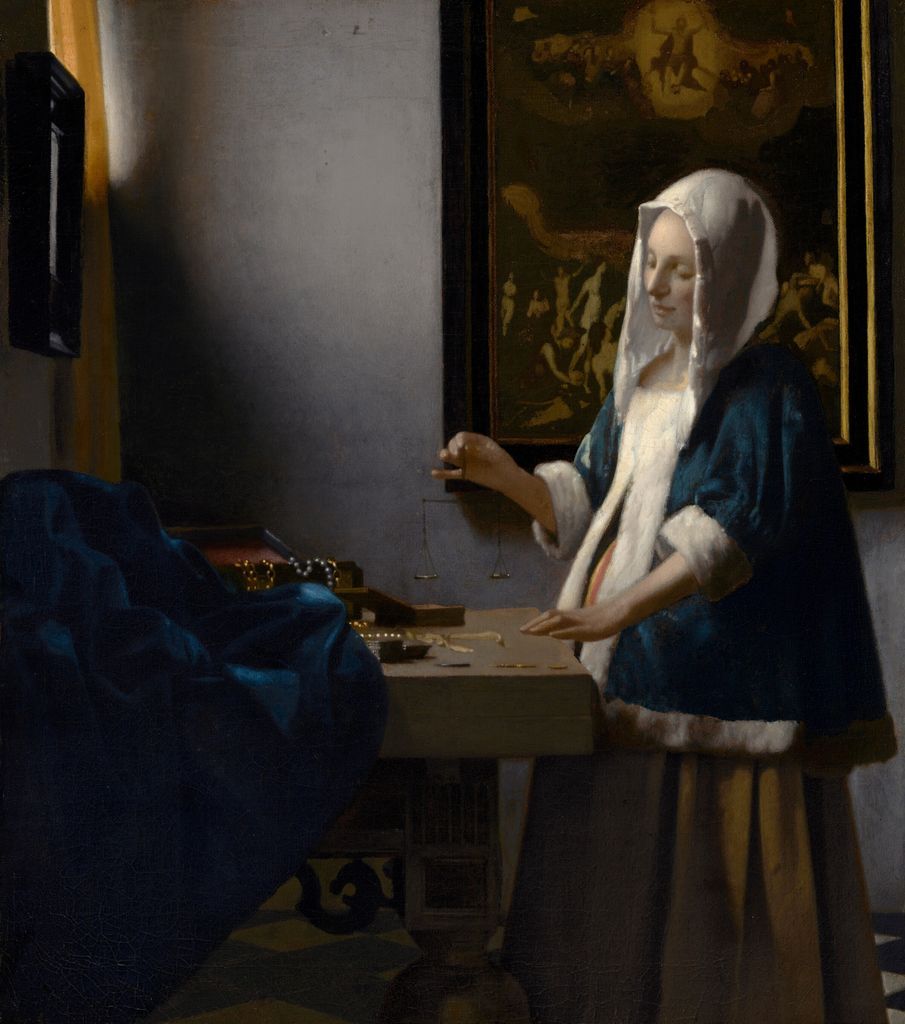
Johannes Vermeer, Woman Holding a Balance, c. 1664. Valuables, weighing and judgment support moral interpretation, yet the figure painting is not therefore a vanitas still life; subject type and historical convention remain essential. Image: National Gallery of Art, public domain.
At a Glance
- Core categoryvanitas usually describes a historically specific still-life tradition centred on transience and worldly attachments.
- Read the clusterskull, watch, book, flower, glass, music and luxury gain force through combination.
- Objects are materialsurface, fragility, decay, reflection and use matter alongside symbolic associations.
- Not any moral imagea skull, expensive object or Last Judgment does not automatically make a work vanitas.
- Context firsttitle, date, place, genre, collection record and comparison support the classification.
Contents
What makes a still life a vanitas?
Not every skull makes a painting vanitas, and not every lavish still life is a moral warning. Vanitas depends on an arrangement whose objects collectively point to the brevity of life and the insufficiency of worldly achievement.[1] Meaning emerges from relationships: a watch beside a fading flower, a musical instrument fallen silent, or a book whose learning cannot prevent death.
The genre overlaps with memento mori but is narrower. Memento mori names any purposeful reminder of mortality, from a prayer bead to a portrait detail. Vanitas usually names a symbolic still-life tradition.[1] A vanitas can contain a memento mori, while many memento mori objects are not vanitas paintings.
Four vanitas paintings to read closely
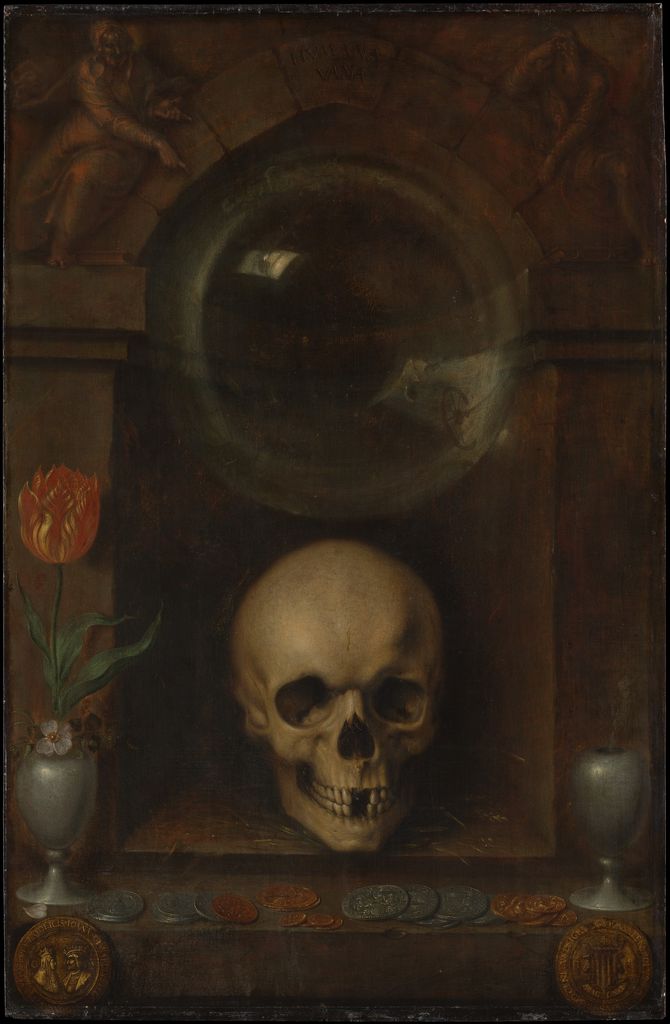
Jacques de Gheyn II: bubble, skull and smoke
Jacques de Gheyn II's Vanitas Still Life (1603) is generally regarded as the earliest known independent still-life painting of a vanitas subject.[3] A skull occupies the centre. Above it, a large bubble holds faint images while cut flowers and a smoking urn flank the scene. The Met identifies Democritus and Heraclitus—the laughing and weeping philosophers—in the arch above.[3]
The bubble joins splendour to instant disappearance; smoke gives form to something already dispersing. The skull is stable by comparison, but its stability is that of remains. Rather than assigning each motif a one-word meaning, notice the temporal sequence they create: blooming, floating, smoking, ending.
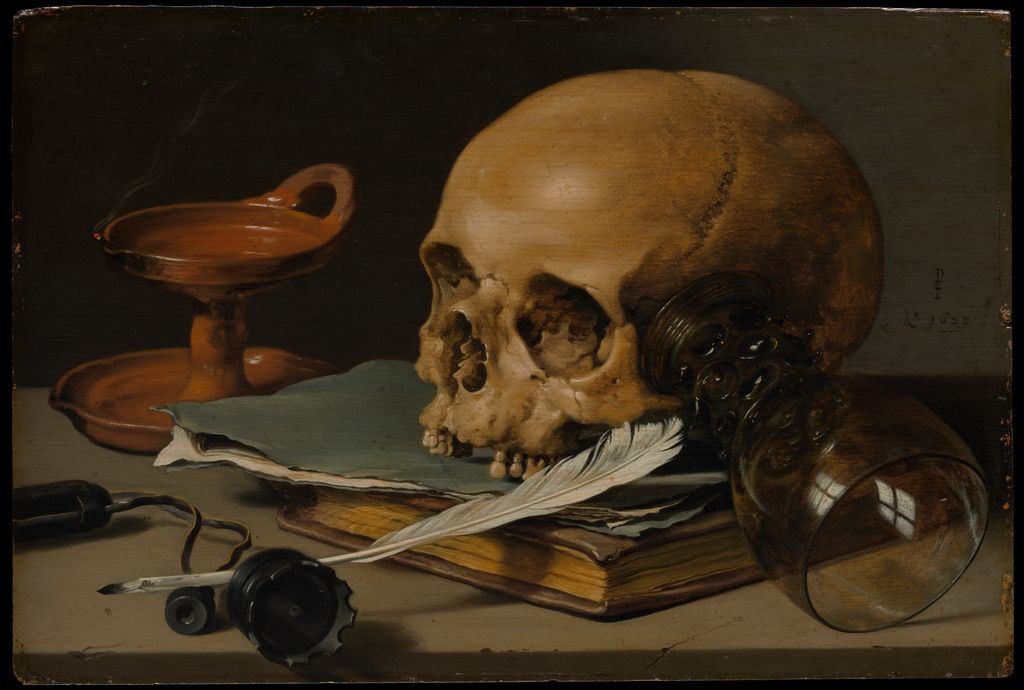
Pieter Claesz: knowledge under pressure
In Still Life with a Skull and a Writing Quill (1628), Pieter Claesz restricts his palette and concentrates attention on a few worn objects.[4] A skull, books and quill suggest mortality, learning and authorship. An overturned glass and extinguished oil lamp turn interruption into visible form.
Claesz's restraint matters. The low colour range makes paper, bone and glass feel as though they inhabit the same quiet air. Human knowledge is not mocked; the painter's own virtuosity proves its value. Yet neither scholarship nor art escapes duration. The work stages that tension without resolving it.
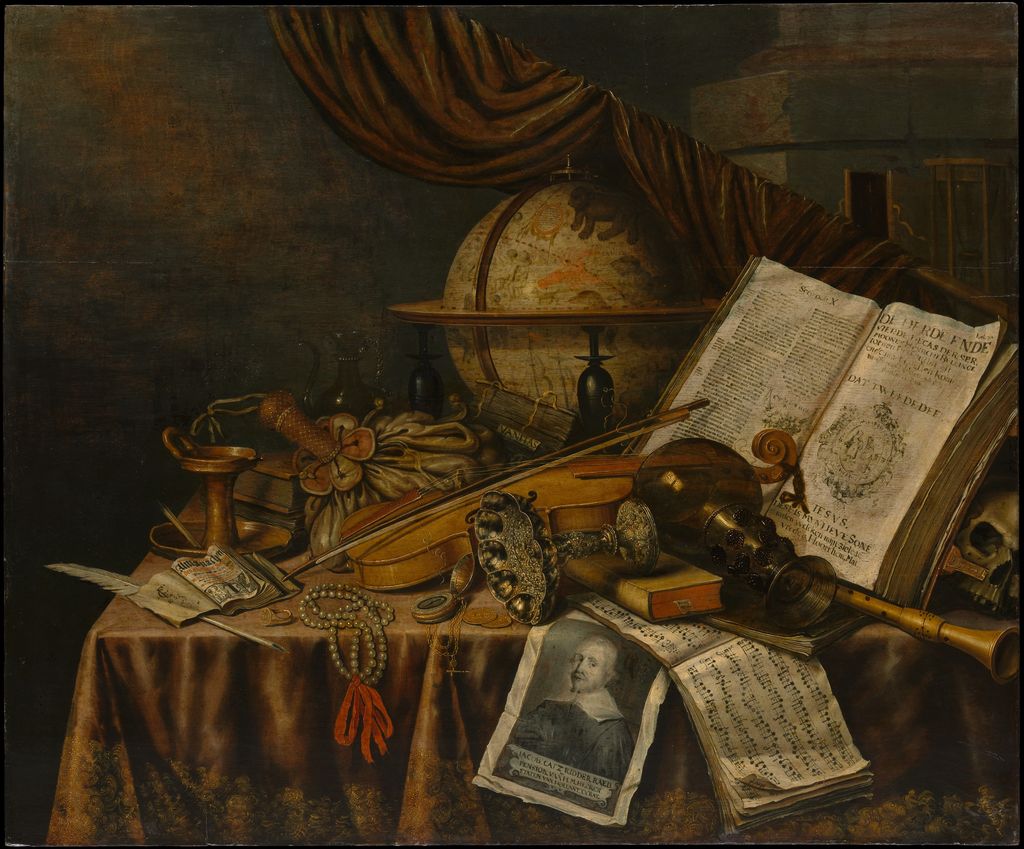
Edwaert Collier: an inventory of accomplishment
Edwaert Collier's Vanitas Still Life (1662) is crowded with books, musical instruments, a globe and precious things.[5] Such objects can stand for learning, music, travel and wealth, but the painting is more than a catalogue. Overlap makes the accumulation unstable: objects lean, hang and partly obscure one another.
The viewer is invited to recognise achievement and to feel its excess. Collier often used written texts and inscriptions to sharpen his themes; even without translating every line, their presence makes reading itself part of the image. Knowledge accumulates, while time continues.
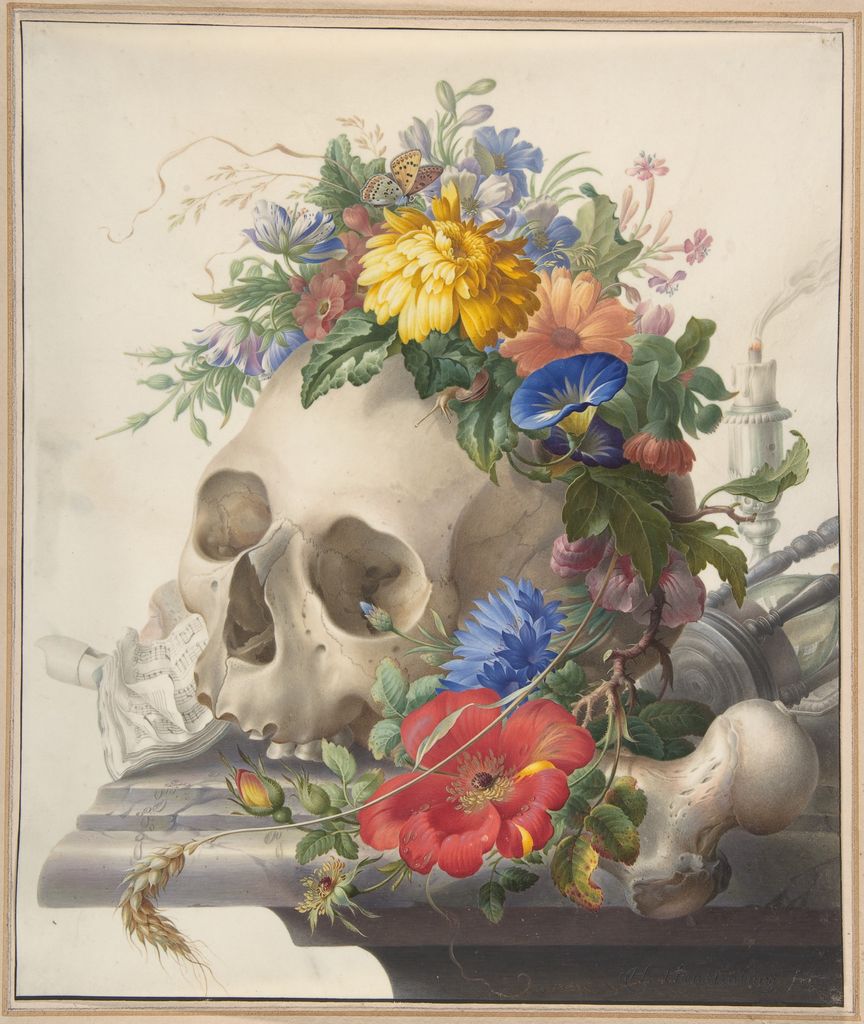
Herman Henstenburgh: vanitas in watercolour
Herman Henstenburgh's undated Vanitas Still Life demonstrates that the subject was not limited to oil on panel.[6] His watercolour gathers flowers, skull, books and precious materials with minute finish. The fragile medium gives an additional edge to painted abundance: translucent washes describe objects that appear sensuous but remain materially delicate.
Its colour also complicates the assumption that vanitas must be austere. Brilliant visual pleasure can carry a meditation on loss. The work's warning is effective because the things represented remain worth looking at.
A practical guide to vanitas symbols
Objects often fall into broad groups. Time and extinction appear through watches, hourglasses, candles, smoke and bubbles. Mortality and decay appear through skulls, bones, bruised fruit, insects and wilting flowers. Knowledge and reputation may be represented by books, maps, writing tools, crowns or documents. Pleasure and wealth can take the form of music, wine, jewellery, coins, games and luxury vessels.
These are starting points, not automatic translations. Pieter Symonsz Potter's Vanitas Still Life (1646), for example, includes a document sealed with the Dutch lion among a globe, skull, songbook, flute, dice, lamp and bubbles.[7] The Rijksmuseum reads the seal as bringing the Republic's own fragility into the warning. That historically specific connection is lost if the seal is reduced to “power.”
Pieter Claesz's Vanitas Still Life with the Spinario (1628) adds an antique cast, armour and a painter's palette to familiar bones, books, watch and lamp.[8] Art and classical learning enter the field of transient achievement. Aelbert van der Schoor's later Vanitas Still Life places six skulls at different angles, making pictorial skill and bodily remains inseparable.[9]
How to look without over-decoding
First decide whether the museum or historical evidence identifies the work as vanitas, rather than inferring the category from one object. Describe the objects, their condition and their spatial relations. Look for actions that have just happened: a flame extinguished, glass overturned, fruit cut, music stopped.
Then group the objects by the kinds of human value they invoke. Ask whether the composition balances abundance with loss, or whether a particular inscription supplies a more exact theme. Consider the original market and viewing setting. A cabinet painting rewarded close, repeated inspection; its moral force did not cancel its desirability as a possession.
Finally, keep interpretation proportionate. A flower may be present because it fades, because it was rare, because it displays technique, or for several reasons at once. Strong readings explain the whole arrangement and acknowledge pleasure as well as warning. Vanitas art endures because it holds those experiences together: the world is beautiful, human making matters, and neither possession nor representation can stop time.
Watch: Vanitas Art through Formal Analysis
Choose a museum-led whole-work analysis, a close reading, or a foundations overview for considering vanitas art.
Introducing Formal Analysis: Landscape
Follow how recurring shapes, colours and intervals contribute to a larger visual organisation.
Watch on YouTubeFrequently Asked Questions
Vanitas is a historically specific still-life tradition that uses objects and their material qualities to address transience, mortality and worldly attachments.
Skulls, timepieces, books, flowers, glass, musical instruments, money and luxury goods often appear, but meaning depends on their relationships.
No. Date, place, genre, title, object cluster and historical evidence should support the classification.
Memento mori is a broad reminder of mortality; vanitas is a more specific still-life tradition and argument about time and worldly value.
Identify the objects and their conditions, trace relationships and material effects, establish historical context, then avoid assigning fixed meanings one object at a time.
Discussion
Which vanitas painting on this page makes material fragility—rather than the skull alone—the strongest part of its argument?
Reader Insights
Start with title, object record, place and date.
A clustered argument is stronger than one-object decoding.
Wilting, reflection, cracking, smoke and precarious balance make transience visible.
Join the Conversation
Share one precise observation or a useful museum example below.
References
- National Gallery — Vanitas
- National Gallery — Still lives
- The Metropolitan Museum of Art — Vanitas Still Life by Jacques de Gheyn II
- The Metropolitan Museum of Art — Still Life with a Skull and a Writing Quill
- The Metropolitan Museum of Art — Vanitas Still Life by Edwaert Collier
- The Metropolitan Museum of Art — Vanitas Still Life by Herman Henstenburgh
- Rijksmuseum — Vanitas Still Life by Pieter Symonsz Potter
- Rijksmuseum — Vanitas Still Life with the Spinario
- Rijksmuseum — Vanitas Still Life by Aelbert van der Schoor