by Tom Gurney
Tom Gurney BSc (Hons) is an art history expert with over 20 years experience
Page created on September 3, 2026 / Page updated on September 13, 2026
Email: tomgurney1@gmail.com / Phone: +44 7429 011000
Why Species, Setting and Use Matter More than a Universal Code
Animal symbolism in art begins with a particular creature in a particular cultural setting. Lions can express kingship, divine protection, Christian triumph, civic identity or danger. Birds may embody deities, identify saints, mark a season or simply occupy a landscape. Species alone never supplies a complete interpretation.
Artists draw on behaviour, habitat and appearance, but also on myths, sacred texts, political power, trade and inherited images. Real and imagined animals can be attributes, protagonists, emblems, sacrifices, companions or decorative forms.
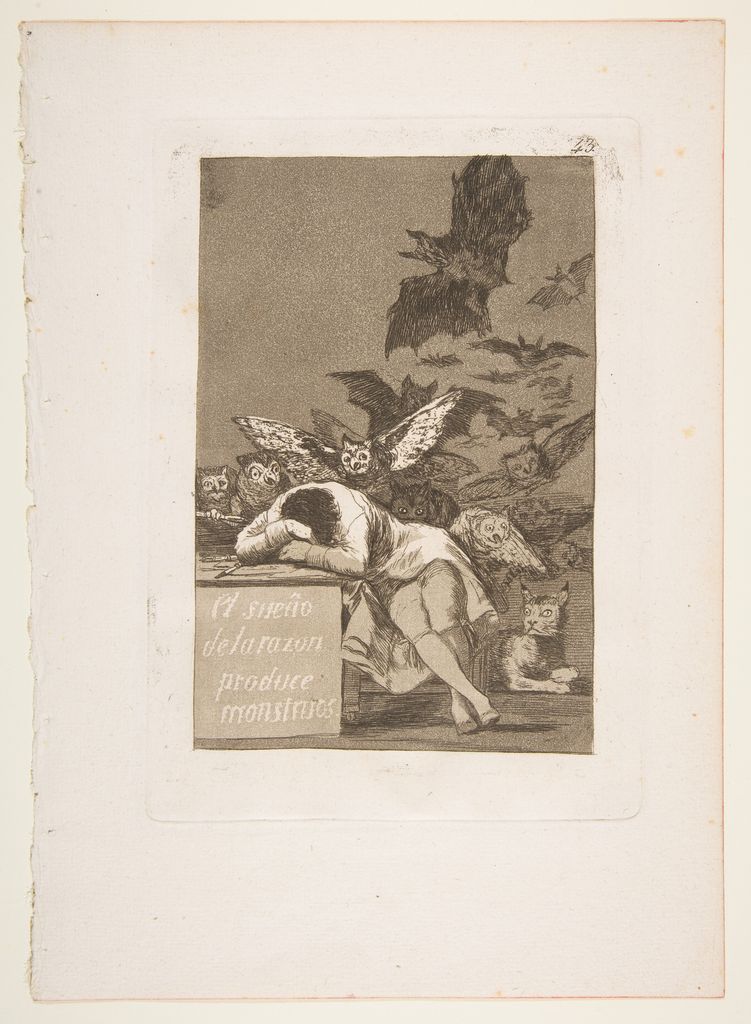
Francisco de Goya, The Sleep of Reason Produces Monsters, 1799. Owls, bats and a lynx gain force from the print’s title, satirical series and nocturnal setting; their roles cannot be transferred unchanged to every image of the same species. Image: The Metropolitan Museum of Art, public domain, Open Access CC0.
At a Glance
- Start with identityname the species or creature as precisely as the object allows.
- Context controls meaningreligion, court, heraldry, literature, region and period shape associations.
- Role mattersan animal may be a deity, attribute, emblem, companion, prey, ornament or observed subject.
- Combinations mattercompanions, gestures, inscriptions and setting narrow the reading.
- Avoid dictionariesone species does not carry a single timeless meaning across cultures.
Contents
Why animal meanings change
An animal's role depends on what kind of image it is. A falcon-shaped sacred container does different work from a natural-history drawing. A lion on a throne leg carries the sitter's power; a lion fighting a dragon creates a moral action. Text, placement and material can matter more than resemblance.
Images also travel. Lions entered Chinese art though the animal was not native to China; griffins crossed regions and religions; the carp-to-dragon legend moved through East Asia. Borrowing creates new contexts, not identical meanings everywhere.
Four animals in exact contexts
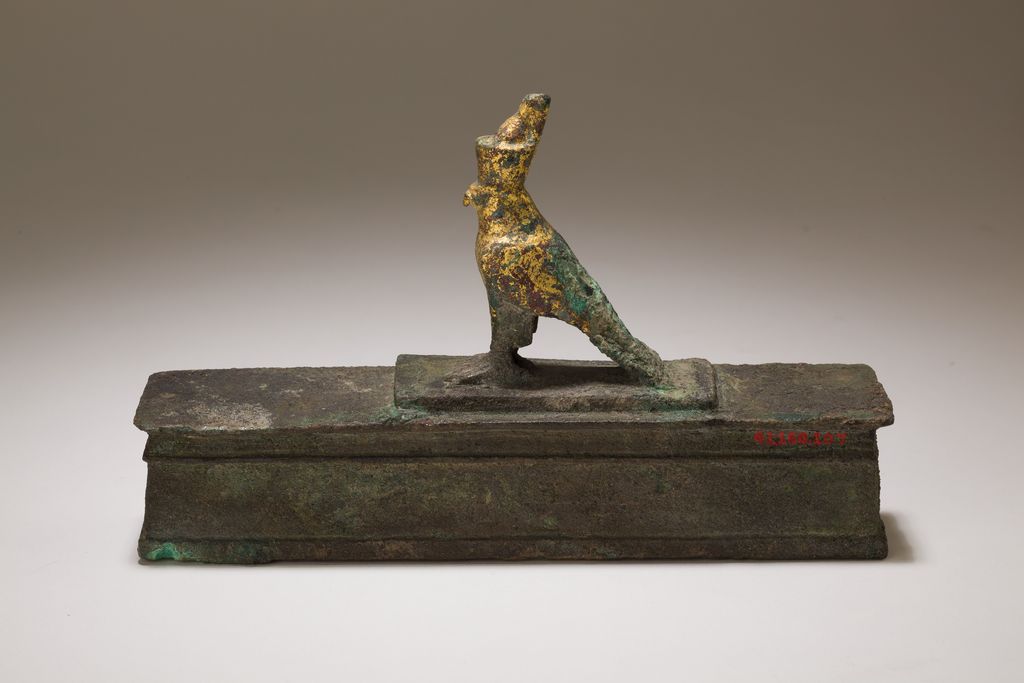
Horus as a falcon: image as divine presence
An Egyptian Falcon in double crown surmounting a shrine-shaped box for an animal mummy dates to 664–30 BCE.[1] The falcon represents Horus, while the red and white double crown signifies Upper and Lower Egypt and stresses divine kingship. Gilding communicates a luminous sacred nature.[1]
The Met's Egyptian Bestiary explains that animal images could be more than poetic comparisons: a falcon or beetle might function as a visible manifestation of a deity without exhausting that deity's nature.[2] Object type, crown, precious surface and ritual deposition make this falcon readable.
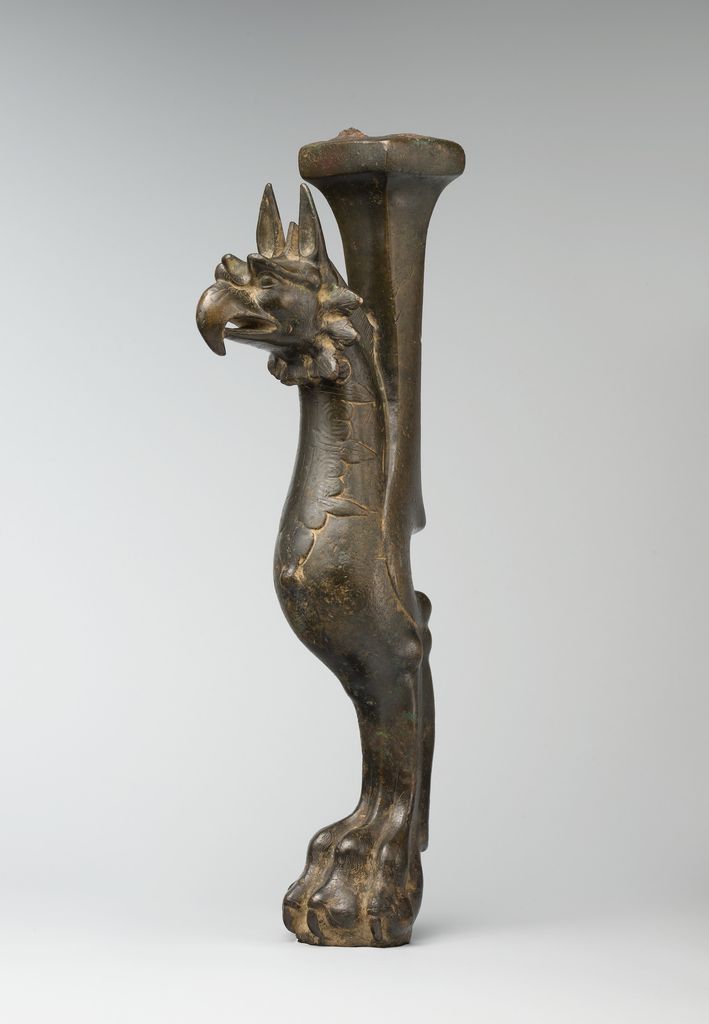
A griffin supports a throne
The late-seventh- or early-eighth-century Iranian Throne Leg in the Shape of a Griffin adapts a composite lion-and-eagle creature to furniture.[3] The Met links such powerful winged animals to royalty. Earlier Iranian meanings of ascension were appropriated by new rulers to communicate authority and legitimacy.[3]
Placement is the argument: the ruler is literally supported and elevated by the creature. Calling the griffin merely “courage” would miss the throne, political transition and long movement of the motif across regions.
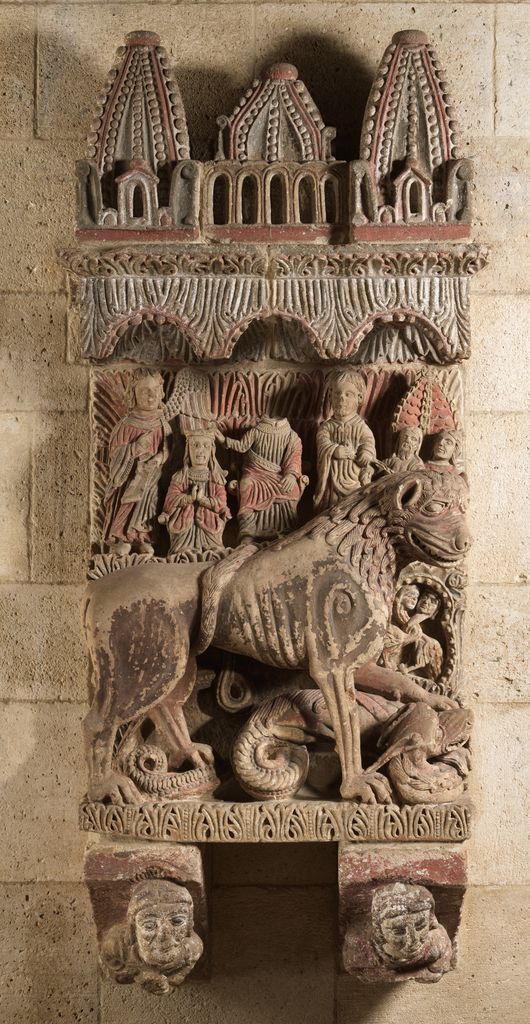
Zamora's lion: triumph and wordplay
A Spanish Lion Relief of about 1200 shows a massive lion trampling a serpentine dragon.[4] At the entrance to San Leonardo in Zamora, the action could suggest Christ's triumph over evil. It also made a pun on leo, Latin for lion, and the parish's patron Saint Leonard.[4]
The same figure thus works theologically and civically. Architecture frames the parish community; the lion protects an entrance and acts as a memorable namesake. Multiple meanings reinforce rather than cancel one another.
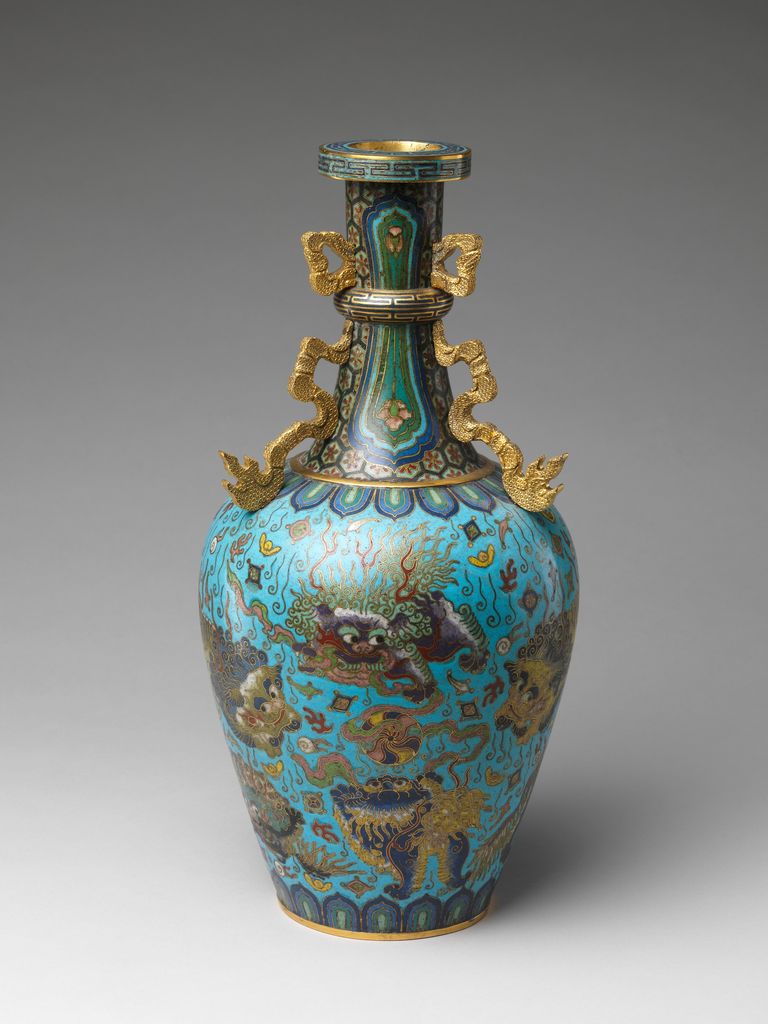
Lions on a Chinese vase
A Qing-dynasty cloisonné Vase with lions places doglike guardian lions among flaming pearls, coral branches and silver ingots.[5] The Met notes that the creatures are often called “Fu dogs” in the West and connects the term to Buddha and their presence at temples or monasteries. Here they join emblems of luck and fortune.[5]
The comparison with Zamora is instructive. Both works feature lions, but one stages conquest at a church door and the other creates an auspicious ornamental field. Species does not override culture, action or object function.
Common animal roles
Animals can embody gods, as Horus does; identify people, as lion, ox and eagle identify Mark, Luke and John in Christian art; carry rulership, through eagles, lions and composite beasts; or organise moral fables. They can mark place and season, participate in heraldry, or index wealth and access to distant fauna.[6]
Uncertainty should remain visible. In an Archaic Greek pediment fragment of a lion felling a bull, the Met notes that the exact meaning is unknown, though a violent meeting of opposites is plausible.[7] Formal suitability—the animal struggle fitting a triangular pediment—may be as important as symbolism.
Meaning can also arise from action. A carp ascending a waterfall in Japanese art draws on a transformation legend and can suggest perseverance and aspiration.[8] A dog beside a portrait sitter might imply fidelity, status, affection or hunting culture depending on the work. Observation and symbolism often coexist.
How to interpret animals in art
Identify the species carefully, including whether it is mythical or hybrid. Describe what it does, what accompanies it and where it appears. Find the object's culture, date, medium and function. Then consult relevant sacred, literary, heraldic or collection evidence.
Compare close examples from the same context before reaching across cultures. Avoid claims such as “the owl means wisdom” without identifying whose owl, where and when. The method in Iconography and Symbols in Art applies: secure identification first, interpretation second.
Animal imagery is powerful because living creatures are both observed beings and cultural forms. Good interpretation keeps both in view: the animal's body, behaviour and beauty, and the human history that made it signify.
Watch: Animal Symbolism through Formal Analysis
Choose a museum-led whole-work analysis, a close reading, or a foundations overview for considering animal symbolism.
Introducing Formal Analysis: Landscape
Follow how recurring shapes, colours and intervals contribute to a larger visual organisation.
Watch on YouTubeFrequently Asked Questions
It is the use or interpretation of animals as attributes, emblems, sacred beings, narrative actors or other meaningful forms within a specific context.
No. Meanings vary across cultures, periods, religions, media and relationships within the work.
Identify the creature, work, place, date and function, then examine companions, gestures, inscriptions and authoritative object records.
They require the same contextual method, but their composite bodies and textual traditions often make source comparison especially important.
Yes. Naturalistic study, portraiture, decoration and material display do not automatically require symbolic interpretation.
Discussion
Which animal on this page changes most dramatically when its specific religious, political or literary context is restored?
Reader Insights
Species, hybrid form and material can all affect the evidence.
Attribute, emblem, deity, companion and observed subject are not synonyms.
The strongest meaning often comes from a cluster rather than one creature alone.
Join the Conversation
Share one precise observation or a useful museum example below.