by Tom Gurney
Tom Gurney BSc (Hons) is an art history expert with over 20 years experience
Page created on September 3, 2026 / Page updated on September 13, 2026
Email: tomgurney1@gmail.com / Phone: +44 7429 011000
How Subject, Purpose and Convention Organise the History of Painting
Painting genres are categories based mainly on what a painting represents: a story, a person, everyday life, a place, an arrangement of objects, the sea or a sacred subject. They help viewers recognise a work's central purpose before asking how it was painted or which movement it belongs to. A portrait and a landscape may both be Impressionist; an oil painting and a fresco may both depict a religious story.
The traditional European system grouped paintings as history painting, portraiture, genre painting, landscape and still life. From the sixteenth century onward, theorists and academies also ranked those subjects, placing history painting at the top and still life near the bottom.[1] That hierarchy shaped training, exhibitions and prestige, but it was neither universal nor permanent. Museums now use genre as a practical way to compare works, while recognising that artists repeatedly blurred the borders.[2][3]
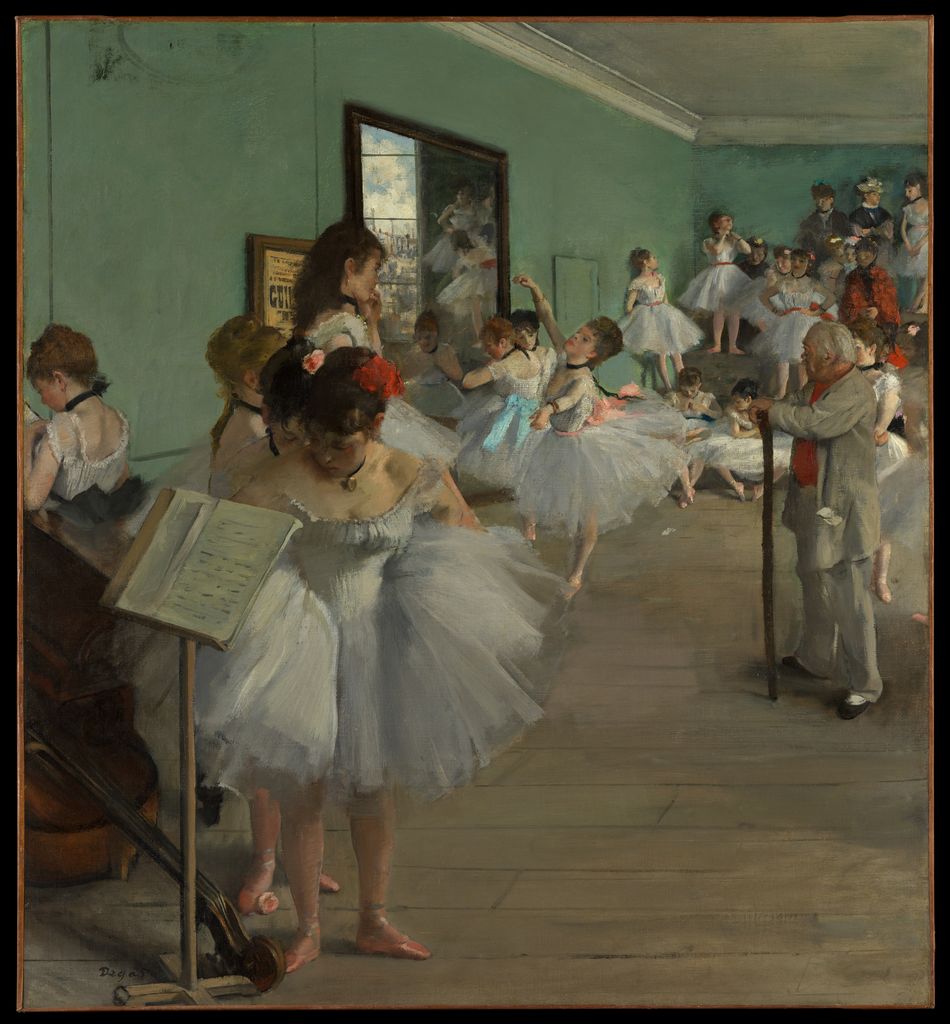
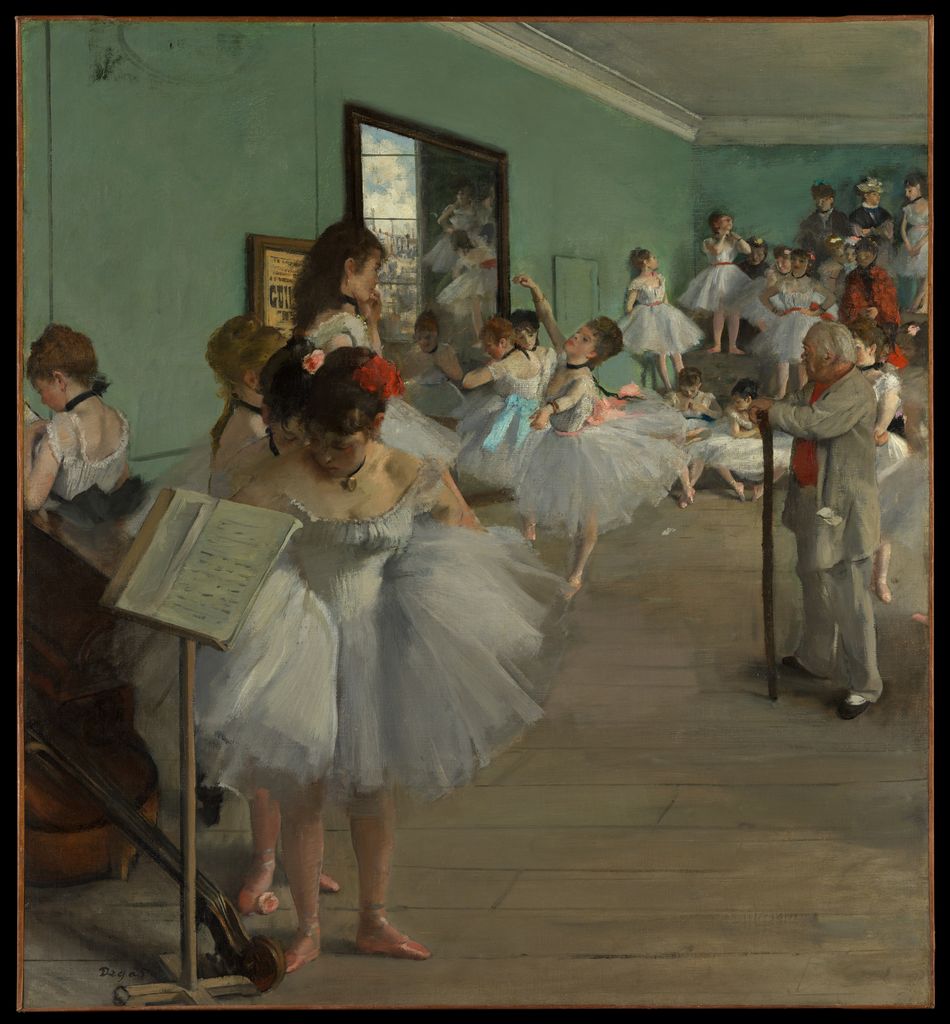
Edgar Degas, The Dance Class, 1874. A rehearsal room becomes a subject in its own right: observation, gesture and social setting help explain how genre painting differs from narrative history painting. Image: The Metropolitan Museum of Art, public domain, Open Access CC0.
At a Glance
- Core ideaa painting genre groups works primarily by represented subject, recurring function or established convention.
- Main familieshistory, portraiture, scenes of everyday life, landscape, marine, sacred subjects and still life.
- Not the same as stylegenre asks what kind of subject a work presents; style asks how its visual character is formed.
- Boundaries overlapa single work can combine portraiture, landscape, religious narrative and everyday observation.
- Historical cautionthe European academic hierarchy was influential, but it was neither universal nor a permanent measure of artistic value.
Contents
What is a painting genre?
A genre identifies a recurring kind of subject. It answers a question such as: Is the picture centred on a named person, an everyday activity, an arranged group of objects or a broad view of the natural world? The answer is usually more useful than the picture's size, material or visual style when making the initial classification.
The same work can belong to more than one genre. A biblical scene set within a sweeping countryside may be both religious and landscape painting. A naval victory is marine art because the sea is central, and history painting because it presents an elevated public event. Categories are tools for looking, not sealed boxes.
Scale does not determine genre. A small panel can carry an ambitious sacred narrative, while a monumental canvas may show an apparently ordinary crowd. Nor does realism settle the question: an abstracted arrangement can still operate as a still life, and an imagined view can remain a landscape. Titles, commissions and original settings often reveal the subject more precisely than appearance alone.
The main painting genres
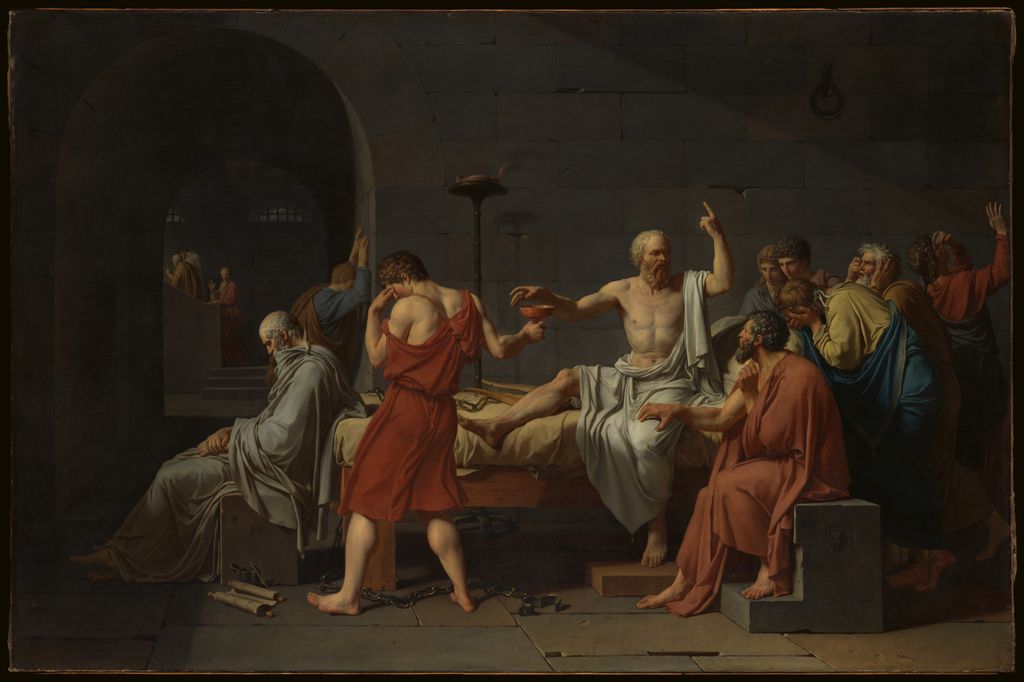
History painting — The Death of Socrates
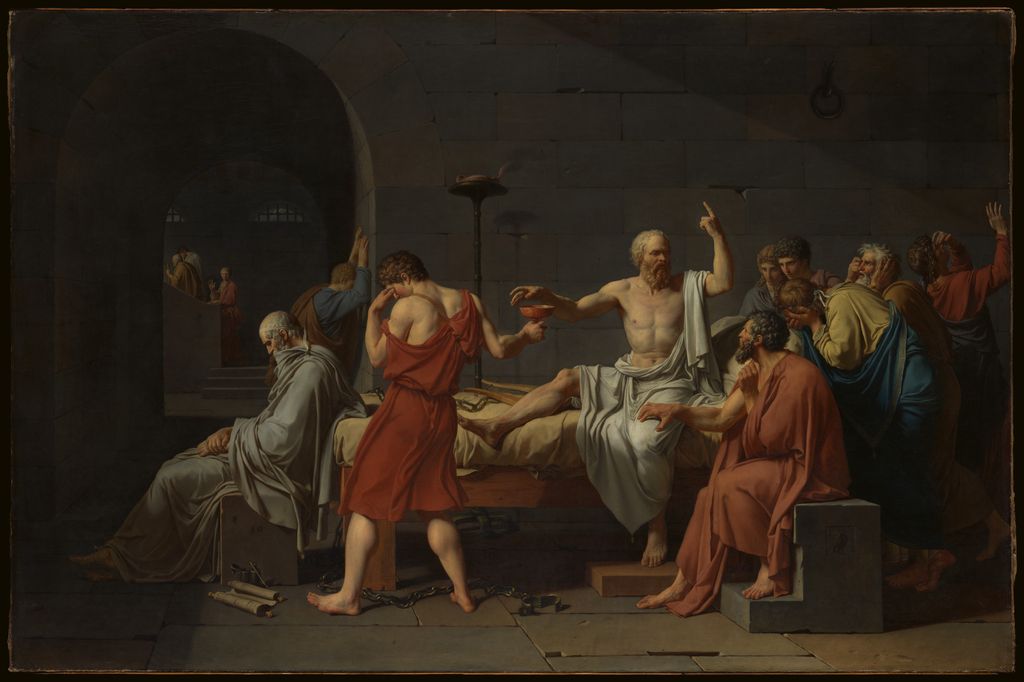
History painting presents an important narrative drawn from history, scripture, mythology or literature. The word history once meant a significant story rather than only a documented past event. Jacques Louis David's The Death of Socrates (1787) reconstructs an ancient philosophical death as a stage of deliberate gestures, controlled emotion and moral choice.[4] Its ambitious narrative made it exemplary of the category that European academies considered most demanding.
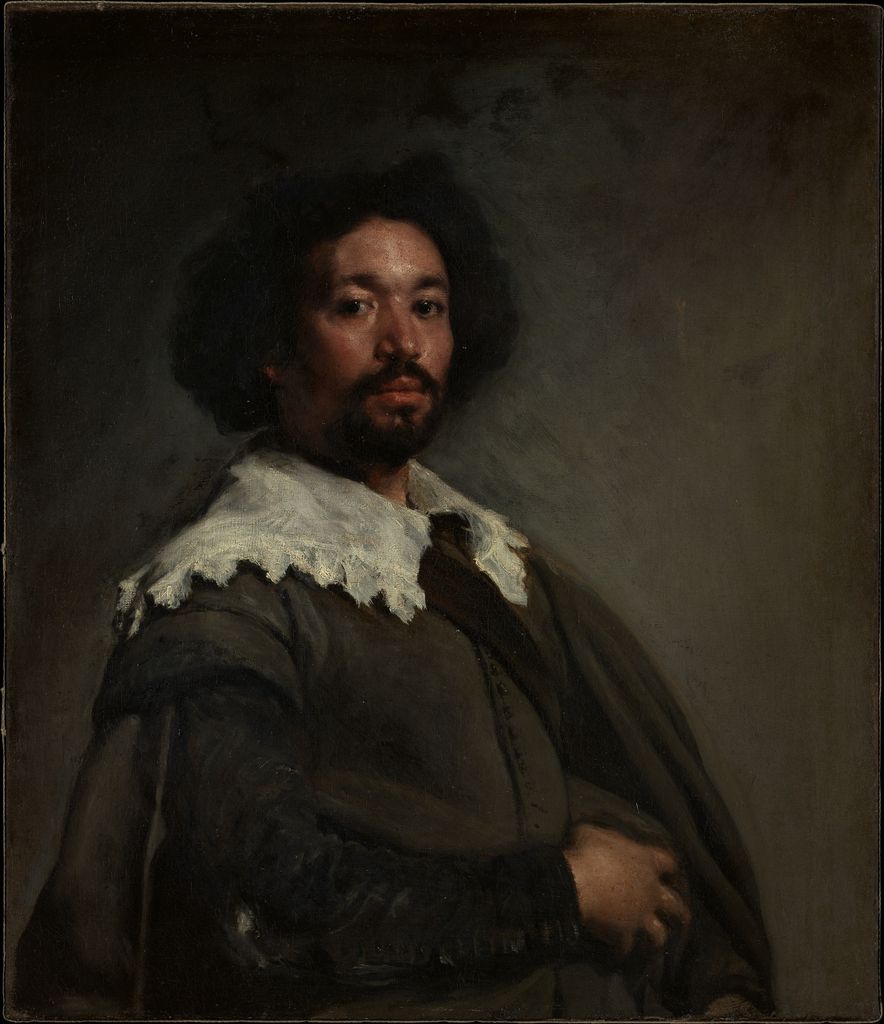
Portraiture — Juan de Pareja
Portraiture centres on the identity and presence of a person or group. Likeness matters, but pose, setting, clothing and expression also construct a social or psychological image. Diego Velázquez painted Juan de Pareja in 1650, presenting the sitter at half length against an open, atmospheric background.[5] The work is a portrait even though its handling and historical circumstances invite questions beyond physical resemblance. Explore the site's artists directory for individual careers and portrait traditions.
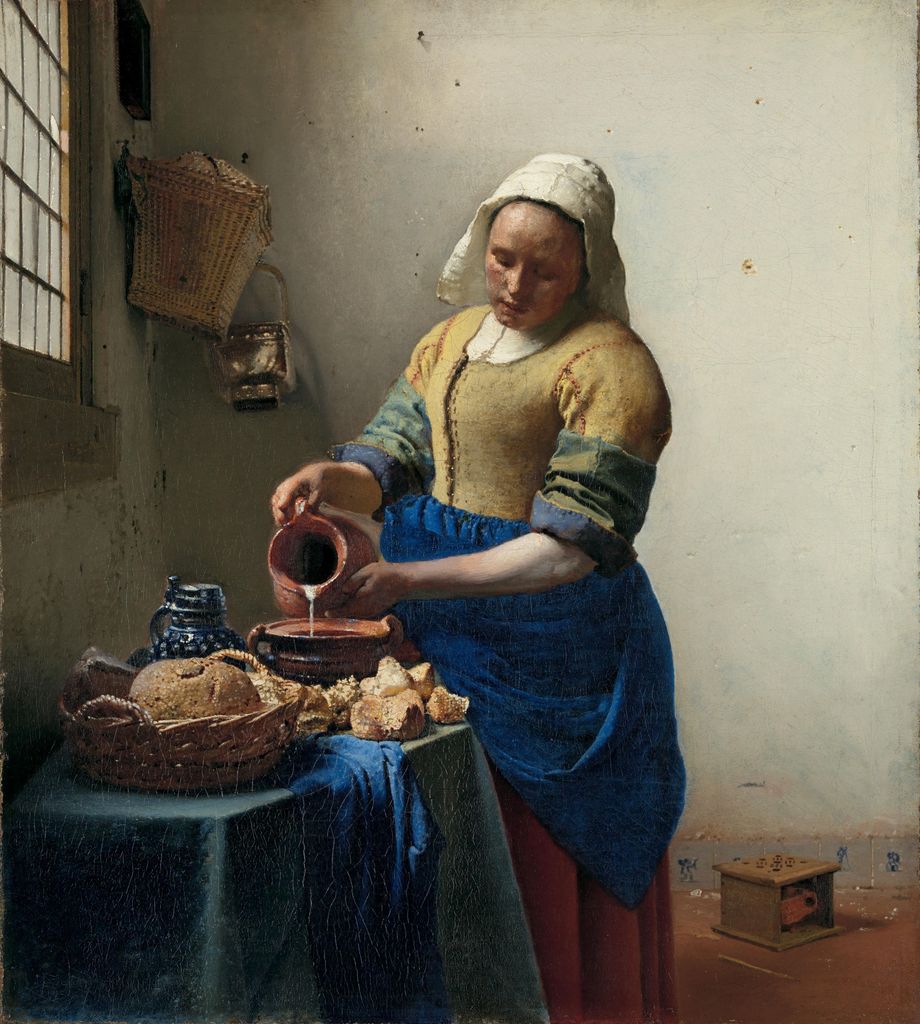
Genre painting — The Milkmaid
Confusingly, genre painting is one specific genre: scenes of ordinary life. Its subjects include work, leisure, markets, homes, taverns and streets rather than named heroes or grand public events.[2] In Johannes Vermeer's The Milkmaid, a woman pours milk beside bread and domestic vessels in a quiet interior.[6] The action is modest, yet light, surface and concentration give it unusual weight. Genre scenes can be affectionate, satirical, moralising or socially observant.
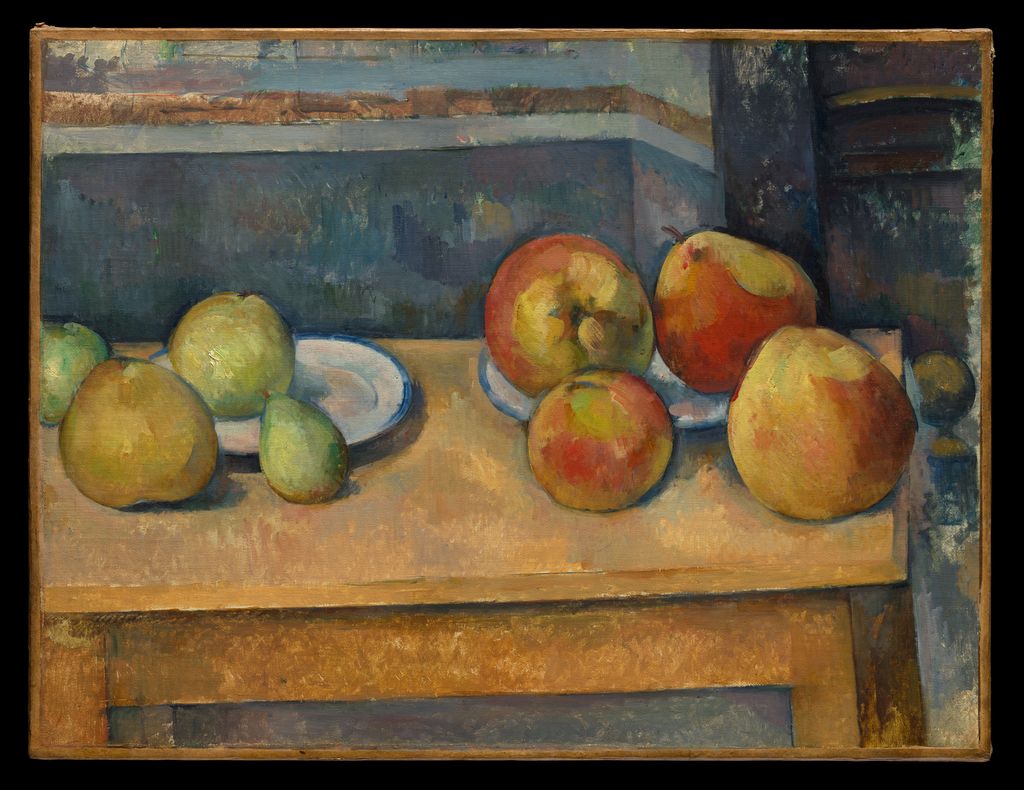
Still life — Still Life with Apples and Pears
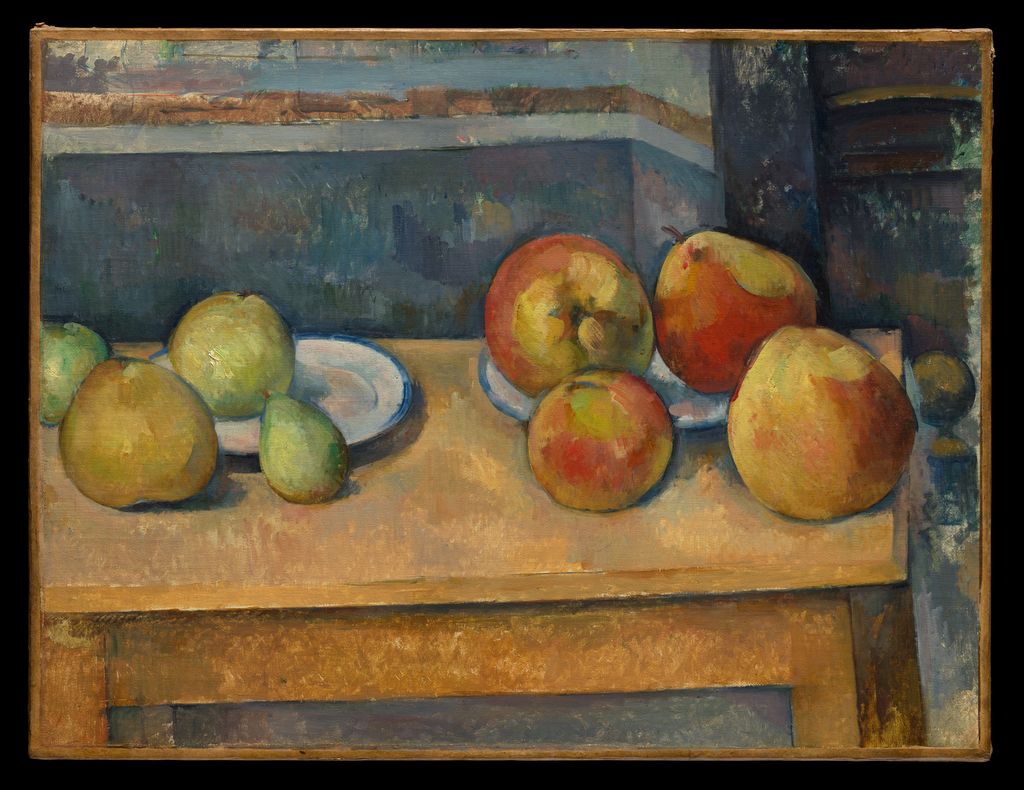
Still life gives primary attention to arranged things: flowers, fruit, food, vessels, books, instruments or manufactured goods. The objects may display abundance, test close observation or suggest time, mortality and the senses. Paul Cézanne's Still Life with Apples and Pears tilts plates, fruit and cloth into a deliberately unstable construction.[7] The category stays legible while the painting challenges ordinary perspective. Flower pieces, banquet pictures and vanitas are among its recognised subgenres.
Marine art — Keelmen Heaving in Coals by Moonlight
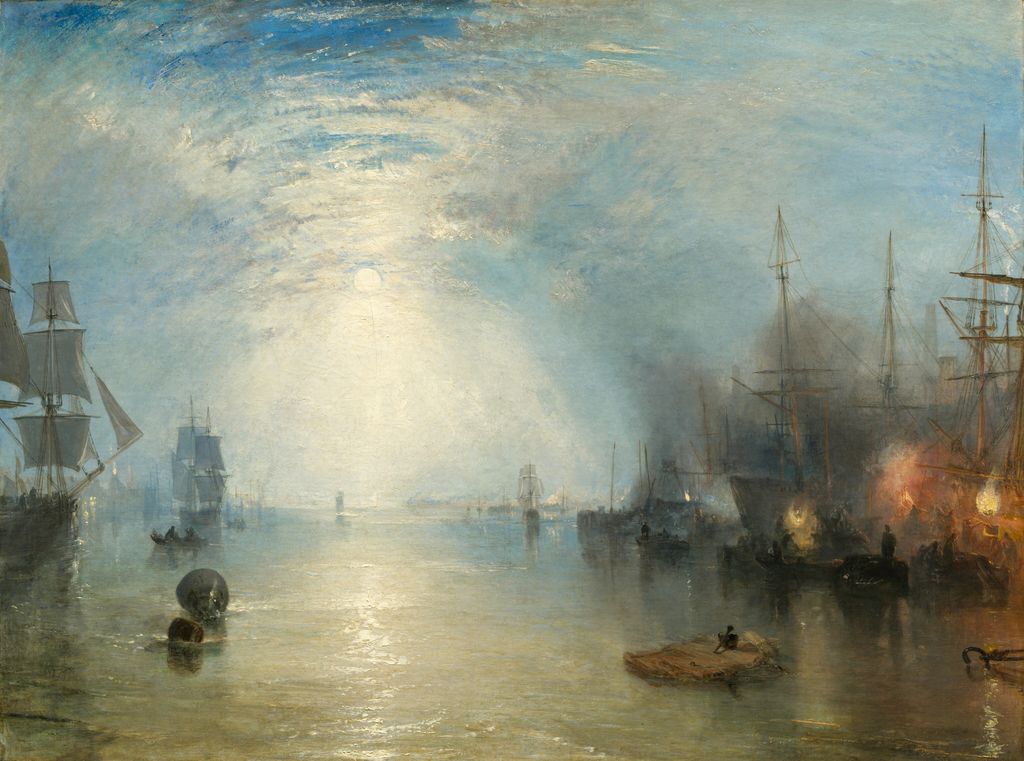
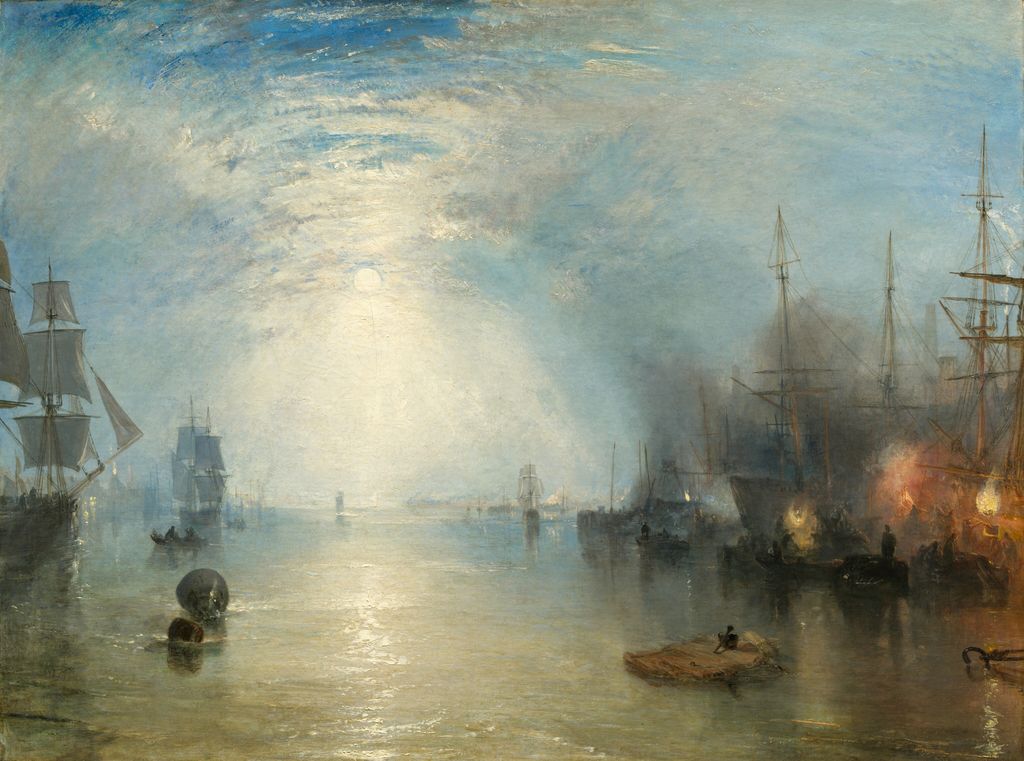
Marine art focuses on the sea and human activity around it: ships, harbours, naval encounters, storms, fishing and coastal labour. It overlaps landscape, history painting and scenes of work. J. M. W. Turner's Keelmen Heaving in Coals by Moonlight (1835) turns a working harbour into a drama of pale moon, dark rigging, fire and reflected light.[8] The subject is neither a generic landscape nor merely a technical study of atmosphere; maritime life determines the picture's world.
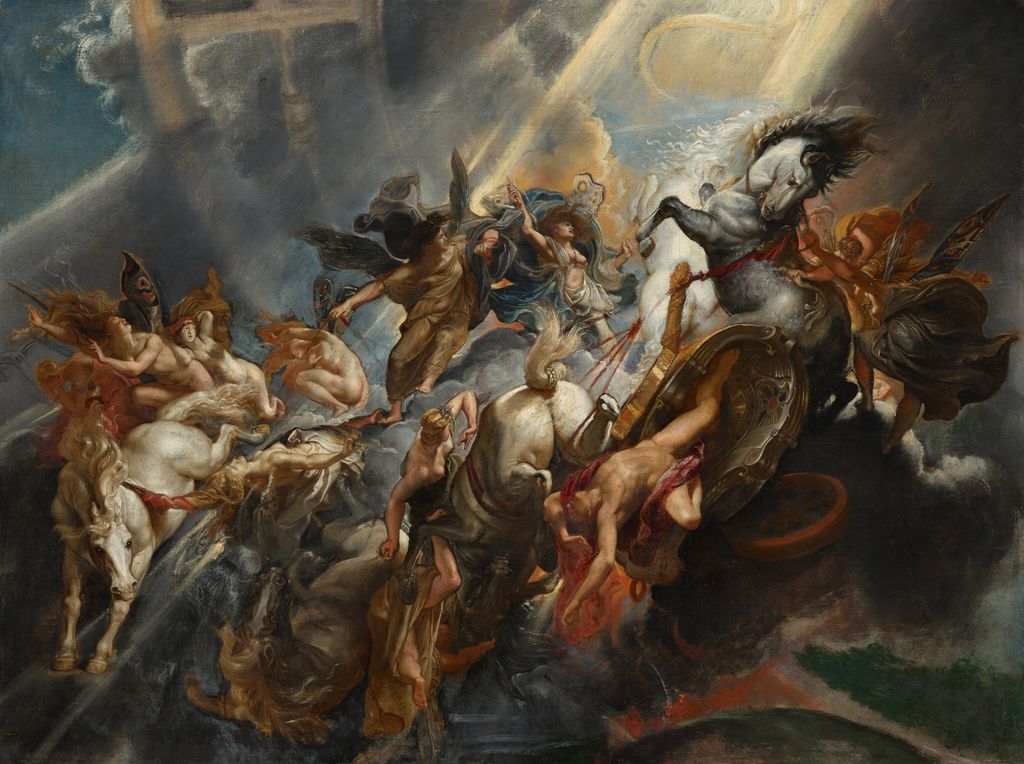
Mythological art — The Fall of Phaeton
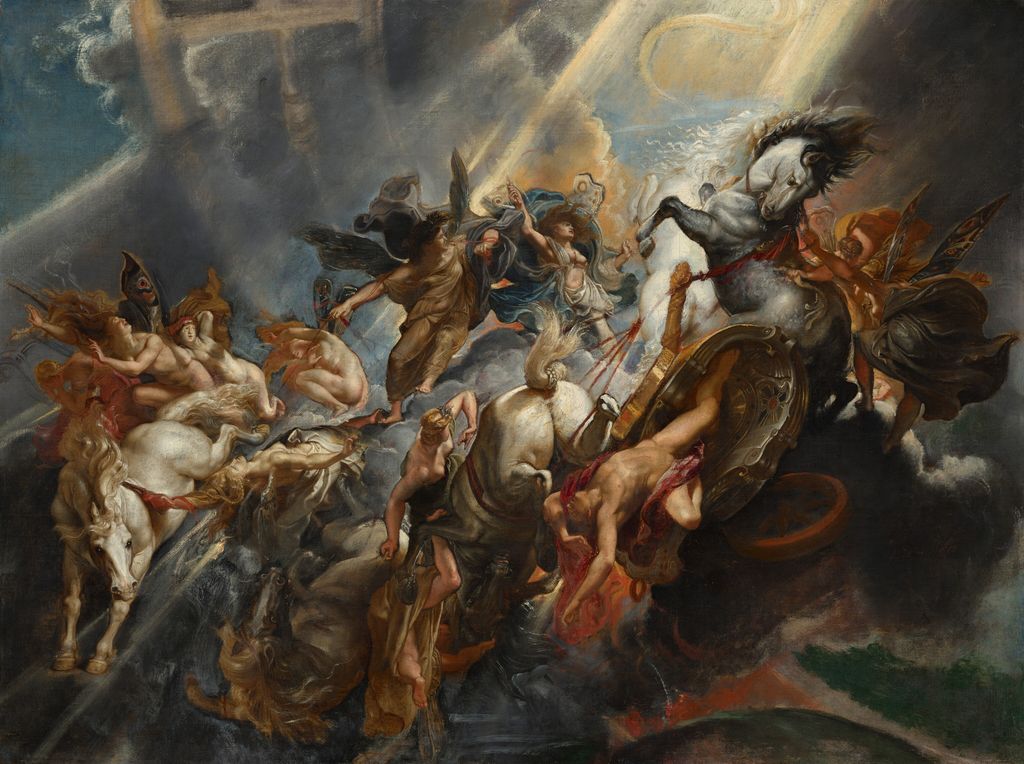
Mythological painting visualises inherited stories about gods, heroes, transformations and origins. In the European academic tradition it commonly counted as history painting because artists had to invent a complex narrative from revered texts. Peter Paul Rubens's The Fall of Phaeton shows horses, bodies and the shattered chariot tumbling through a storm of light.[9] Myth provided artists with action, allegory and the human figure, but later works also questioned whose myths were treated as authoritative.
Landscape — The Oxbow
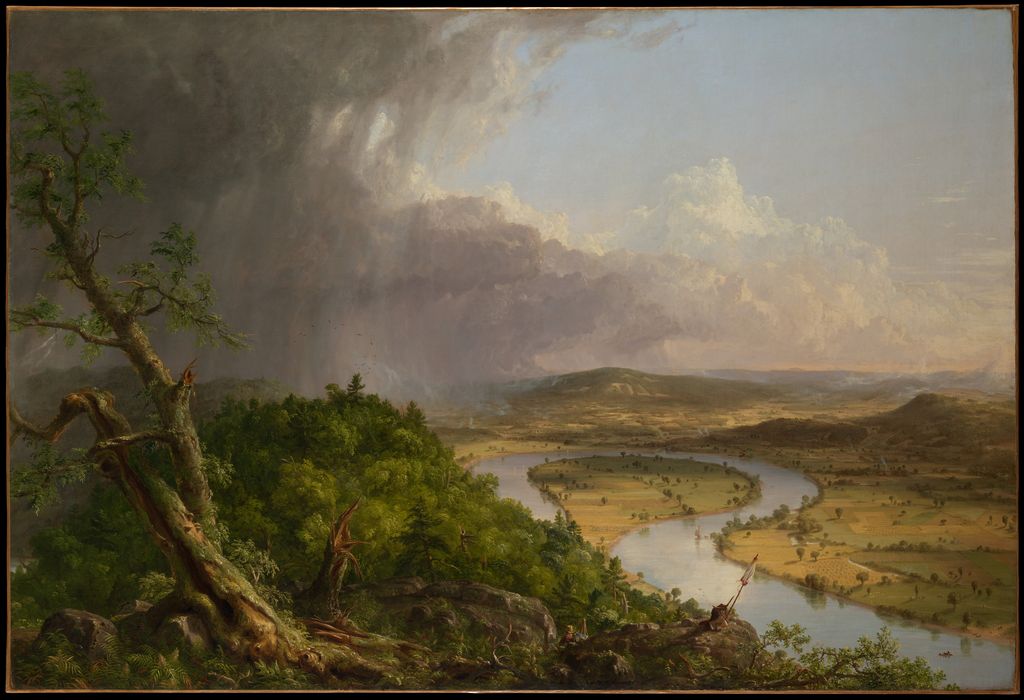
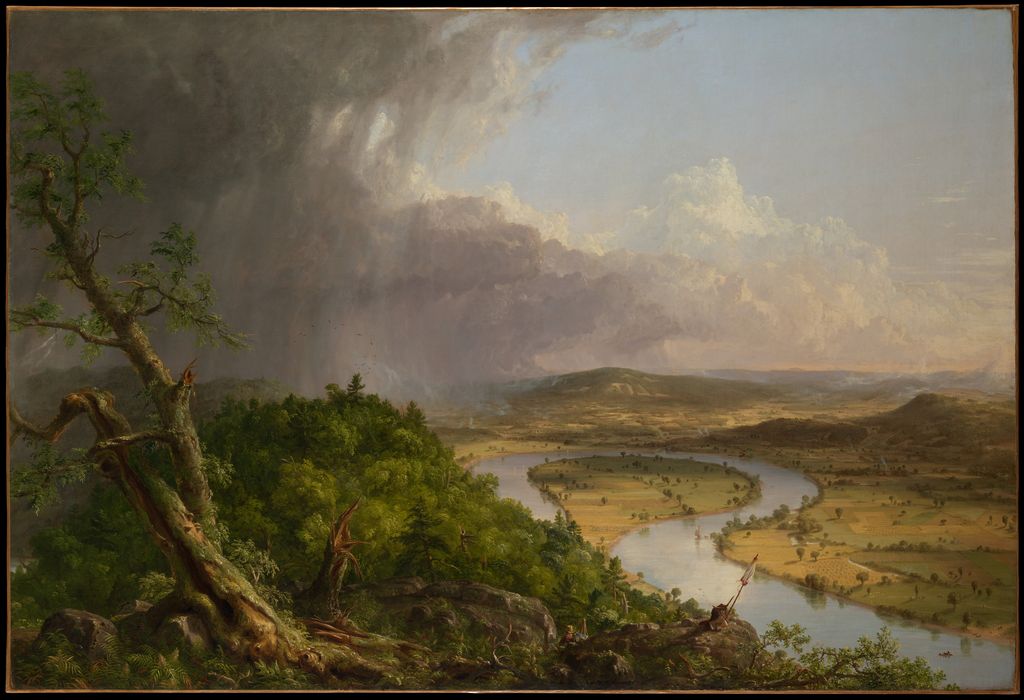
Landscape makes land, weather or a shaped environment the principal subject. It includes mountains, rivers, forests, rural views, cityscapes and imagined or symbolic places. Thomas Cole's The Oxbow (1836) divides a storm-darkened wilderness from a sunlit cultivated valley.[10] Human history is present in the contrast, yet the immense view controls the encounter. Landscape can document a place, idealise it, claim territory, express mood or confront environmental change.
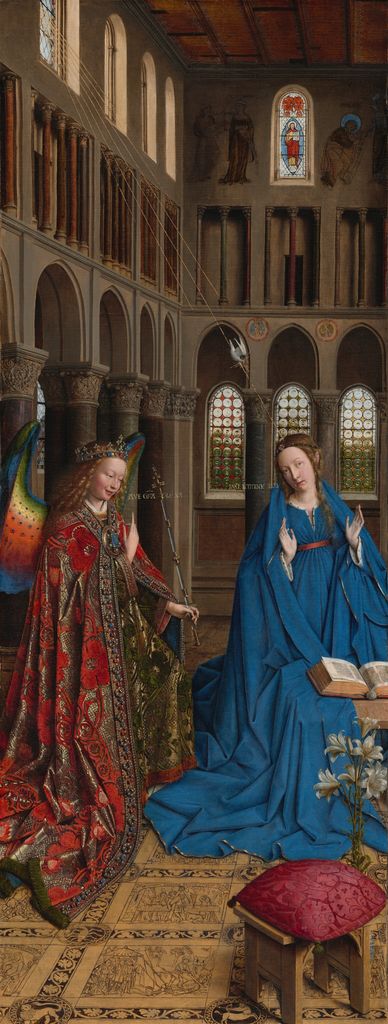
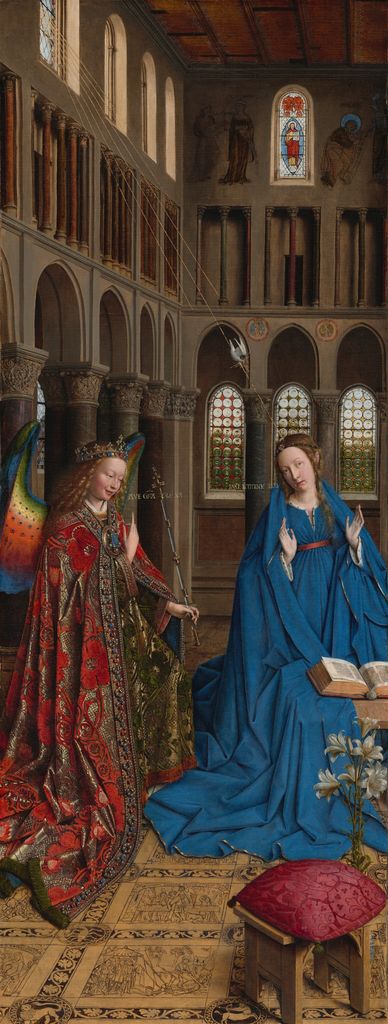
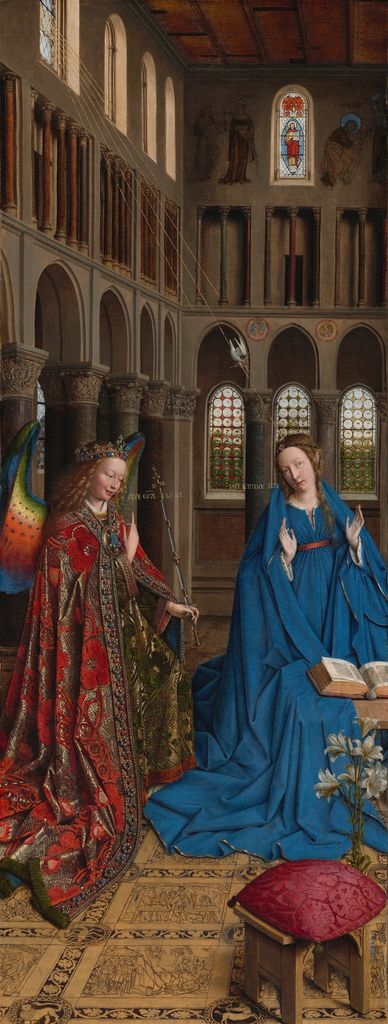
Religious art — The Annunciation
Religious painting represents sacred narratives, holy figures, devotional encounters or images made for ritual and instruction. Jan van Eyck's The Annunciation, painted around 1434–36, places Gabriel and Mary inside an architecture dense with symbolic details.[11] Its subject and original devotional function define the genre more strongly than its oil technique or Early Netherlandish style. Religious art spans many faiths and visual traditions; it is not simply a branch of European history painting.
Why were painting genres ranked?
The academic hierarchy reflected particular European ideas about intellect, invention and social importance. History painters were expected to compose many figures, represent persuasive actions, know literature and scripture, and turn a narrative into a moral or civic lesson. Portraitists followed, while landscape and still-life painters were treated as if they merely copied lower kinds of subject.[1]
The ranking never described artistic quality reliably. A still life may reorganise space as radically as an ambitious narrative, while an everyday scene may reveal more about social relations than an official commemoration. The hierarchy is historically useful because it explains patronage, prizes and artists' ambitions. It should not become a present-day scorecard.
Genre, movement, style and medium are different
These terms classify different aspects of a work:
Genre identifies the subject category. Movement connects artists through a historical tendency, network or programme, such as Impressionism or Cubism. Style describes recurring visual decisions, and medium identifies the material and process, such as oil, tempera or watercolor. Art Mediums explains material families, while Art and Painting Techniques examines procedures such as glazing, impasto and sfumato. The Elements of Art and Principles of Art describe the visual relationships within any genre.
A single description can use all four levels without contradiction: an Impressionist landscape in oil, organised through asymmetrical balance and broken colour. Keeping the levels distinct prevents a common mistake—calling every recognisable type of painting a movement.
How genres overlap and change
Genre boundaries change with institutions, audiences and new forms of life. Seventeenth-century Dutch markets encouraged specialised landscape, still-life and everyday-life painters. Nineteenth-century artists enlarged scenes of modern leisure and work, while photography altered the social territory of portraiture. Modern and contemporary artists have quoted, mixed and challenged inherited categories rather than abandoning them.[3]
Subject alone may not settle every case. Turner's harbour is marine art, landscape and a scene of labour. Rubens's Phaeton is mythological and history painting. Van Eyck's Annunciation is religious, narrative and architectural. The best classification names the dominant purpose and then acknowledges the productive overlap.
How to identify a painting genre
Begin with the element that would most change the work if removed. If a named sitter is indispensable, portraiture is likely primary. If arranged objects command the picture, consider still life. If an unfolding story depends on actions and consequences, ask whether it belongs to history, mythology or religion. If land, weather or water shapes the entire experience, landscape or marine art may lead.
Then look at context. A museum title, original commission, intended setting and contemporary vocabulary can correct a first impression. Finally, avoid treating genre as a value judgement. It tells you what kind of subject an artist transformed—not how important, difficult or successful the result must be.
Watch: Painting Genres through Formal Analysis
Choose a museum-led whole-work analysis, a close reading, or a foundations overview for considering painting genres.
Introducing Formal Analysis: Landscape
Follow how subject, space, colour and composition work together across a complete artwork.
Watch on YouTubeFrequently Asked Questions
A painting genre is a recurring category based mainly on represented subject, function or convention, such as portraiture, landscape, still life or history painting.
Common categories include history painting, portraiture, genre painting, landscape, marine art, religious art, mythological art and still life.
No. Genre classifies what kind of subject or function a work presents, while a movement describes a historical grouping of artists, ideas or practices.
Yes. A work may combine a portrait with landscape, place a religious narrative in an everyday setting, or use still-life objects within a history painting.
European academies developed hierarchies that reflected particular theories of invention, intellect and subject matter; these rankings shaped training and prestige but were not universal measures of quality.
Discussion
Which painting on this page crosses genre boundaries most clearly, and what evidence supports more than one classification?
Reader Insights
Describe the represented people, objects, place or event before choosing a category.
Genre, movement, style, medium and technique answer different questions.
Ask which classification would change if the central subject were removed.
Join the Conversation
Share one precise observation or a useful museum example below.
References
- The Genres — National Gallery, London
- Our Genres — Mauritshuis
- Within Genres — Pérez Art Museum Miami
- The Death of Socrates — The Metropolitan Museum of Art
- Juan de Pareja — The Metropolitan Museum of Art
- The Milkmaid — Rijksmuseum
- Still Life with Apples and Pears — The Metropolitan Museum of Art
- Keelmen Heaving in Coals by Moonlight — National Gallery of Art
- The Fall of Phaeton — National Gallery of Art
- The Oxbow — The Metropolitan Museum of Art
- The Annunciation — National Gallery of Art