


A painting can be approached in several ways at once. You might begin with what it depicts, such as a figure, an animal, fruit or a mountain. You might be interested in a recognised genre such as still life or landscape, in the work of a particular artist, or in one painting whose reputation has grown across generations. These paths overlap, but they are not interchangeable.
This guide brings those paths together. It offers a starting point for exploring paintings by subject, directs broader classification questions to the painting genres collection, and introduces six works that show how differently artists can treat familiar things. For a concentrated selection of widely recognised works, visit Famous Paintings.
Finding paintings by subject
Subject is the most immediate way into many paintings: it answers the simple question, “What can I see?” A subject can be a person, an animal, an object, an activity or a place. That makes subject-led browsing useful even when you do not yet know an artist's name, period or movement.
People and human activity
Paintings of women range from formal portraits to anonymous figures, mythological characters and people absorbed in everyday life. Looking across them can reveal how pose, dress, setting and the sitter's relationship with the viewer change from one period to another. Dance paintings add movement and group interaction: performers may be shown rehearsing, resting, appearing on stage or gathering behind the scenes.
Animals and the natural world
Cats, horses and fish place different demands on a painter. A horse may be studied through anatomy, motion and character, as in Horse Paintings. Cats can appear as companions, independent presences or compact shapes within a domestic scene. Fish may be represented alive in water, displayed as food or arranged within a still life. Tree Paintings offers another route into the natural world, following a subject that can act as the main focus, a marker of place or part of a wider landscape.
Objects, food and flowers
Fruit and flowers are closely associated with still life, yet they also support subject-led comparison. Apples, grapes or citrus fruits can organise colour and volume; cut flowers bring questions of season, display and impermanence. Umbrellas and parasols connect an object to the people who carry it, often shaping posture, shade and the surrounding space. These subjects can be compared across still lifes, portraits, outdoor scenes and scenes of leisure without reducing them to a single genre.
Places, weather and the sky
Mountains can dominate a landscape, form a distant boundary or provide a measure of human scale. Night skies shift attention towards moonlight, stars, clouds and the limited visibility of the land below. In both cases, the depicted subject is only one part of the painting's structure: viewpoint, light, weather, colour and the relationship between foreground and distance determine how the scene is experienced.
How subject differs from genre
A subject identifies what is represented. Genre describes a broader category or convention within painting. A bowl of apples may belong to still life; a mountain view may belong to landscape; a gathering of ordinary people may be described as genre painting. One work can therefore be reached through more than one useful classification.
The categories also have histories. European academies once ranked forms of painting, giving the greatest prestige to history painting and placing subjects such as still life lower in the hierarchy.[1] That historical ranking is not a measure of what deserves attention today, but it helps explain why scale, patronage and critical status differed between categories.
Explore the full Painting Genres collection for definitions, histories and examples. Begin with Still Life Art or Landscape Art, then compare their concerns with History Painting and Genre Painting. Separate guides introduce Religious Art, Marine Art and Mythological Art. Subject collections complement these categories by following a depicted motif across different settings and traditions.
Movement and medium provide still other routes. A movement groups artists or works through shared historical circumstances, ideas or stylistic tendencies. Medium identifies materials and processes: oil on canvas, for example, can be used for portraits, landscapes, still lifes and many other kinds of painting. Keeping these terms distinct makes comparison clearer without forcing a work into only one box.
Six paintings, six ways of looking
The following works are not a ranking or a miniature canon. Each offers a concrete point of entry into one subject path while retaining its own artist, collection and historical setting.
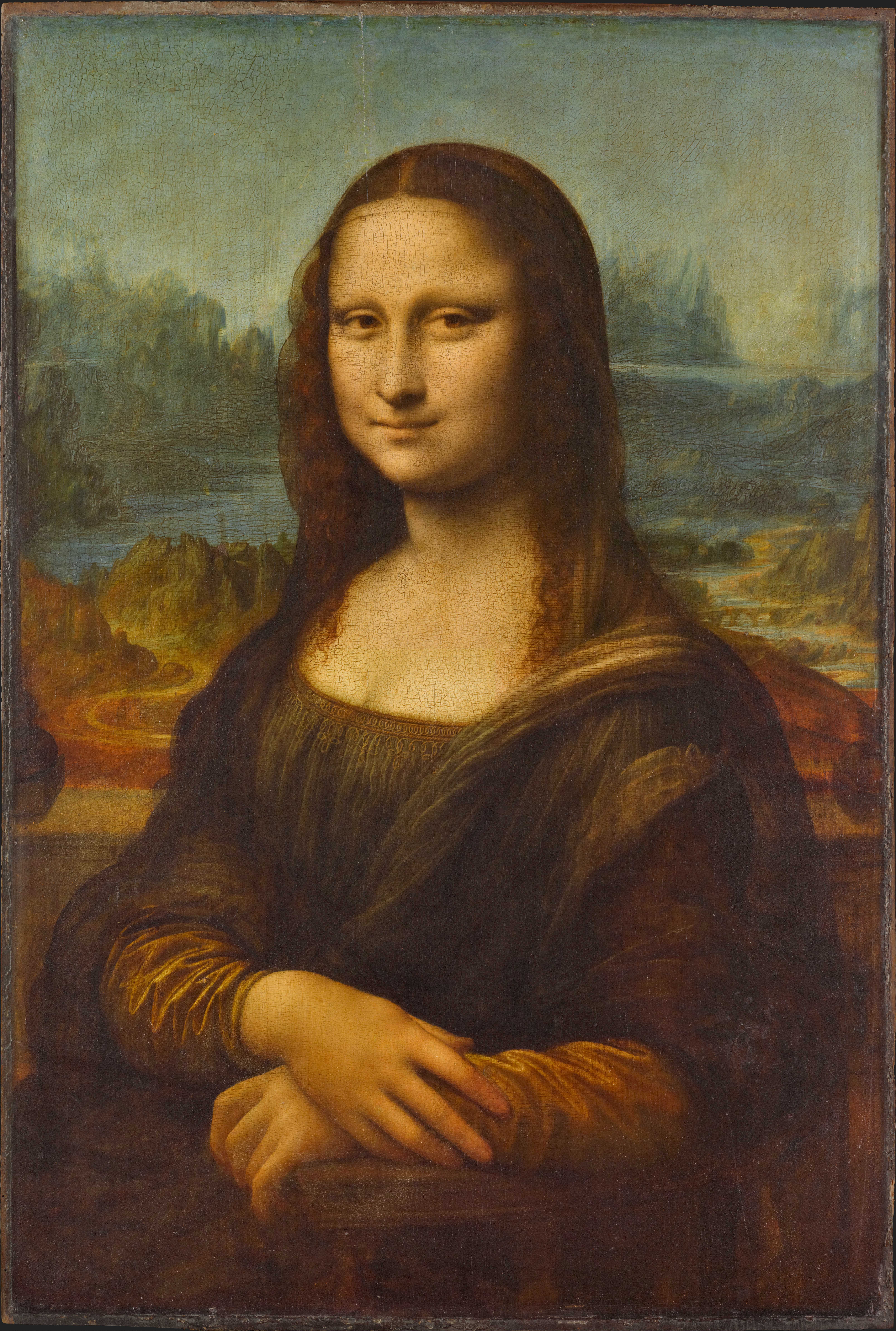
Mona Lisa: presence and landscape
In Leonardo da Vinci's Mona Lisa, the seated figure turns towards us with her hands folded, while roads, water and rock recede into a hazy distance. The work can be approached as a painting of a woman, a portrait and a study in the relationship between a figure and an imagined landscape. The Louvre dates the oil-on-poplar painting to 1503–1519 and identifies it as the portrait of Lisa Gherardini, wife of Francesco del Giocondo.[2] Explore more work by Leonardo da Vinci.
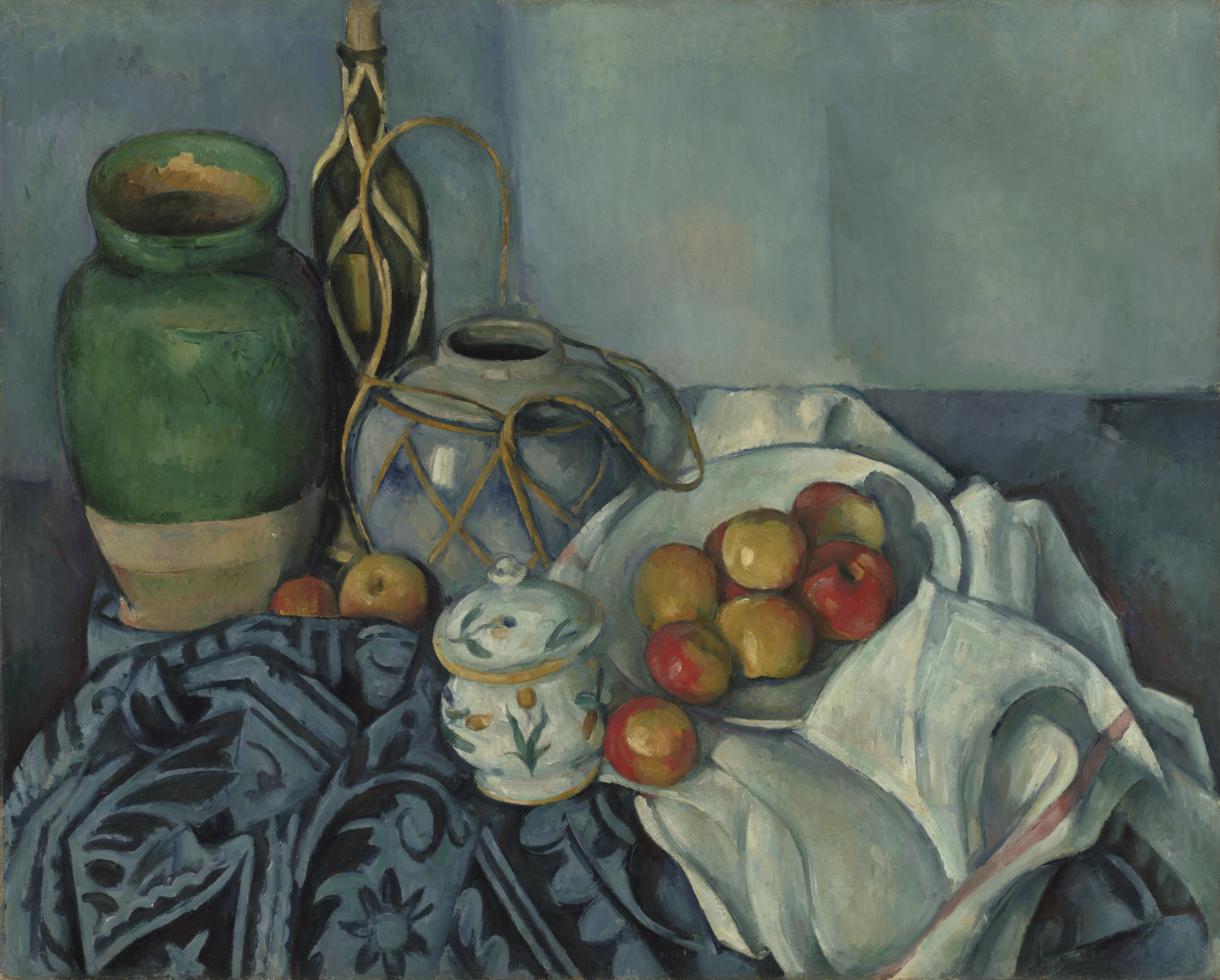
Still Life with Apples: ordinary objects, active space
Still Life with Apples turns fruit, bottles, pottery and folded cloth into an active arrangement of shapes and colours. Edges tilt, objects overlap and the drapery carries the eye across the table. Fruit supplies the subject, while still life supplies the genre; neither description alone accounts for the painting's spatial tensions. The J. Paul Getty Museum dates this oil-on-canvas work by Paul Cézanne to 1893–1894 and records it as 96.PA.8.[3]
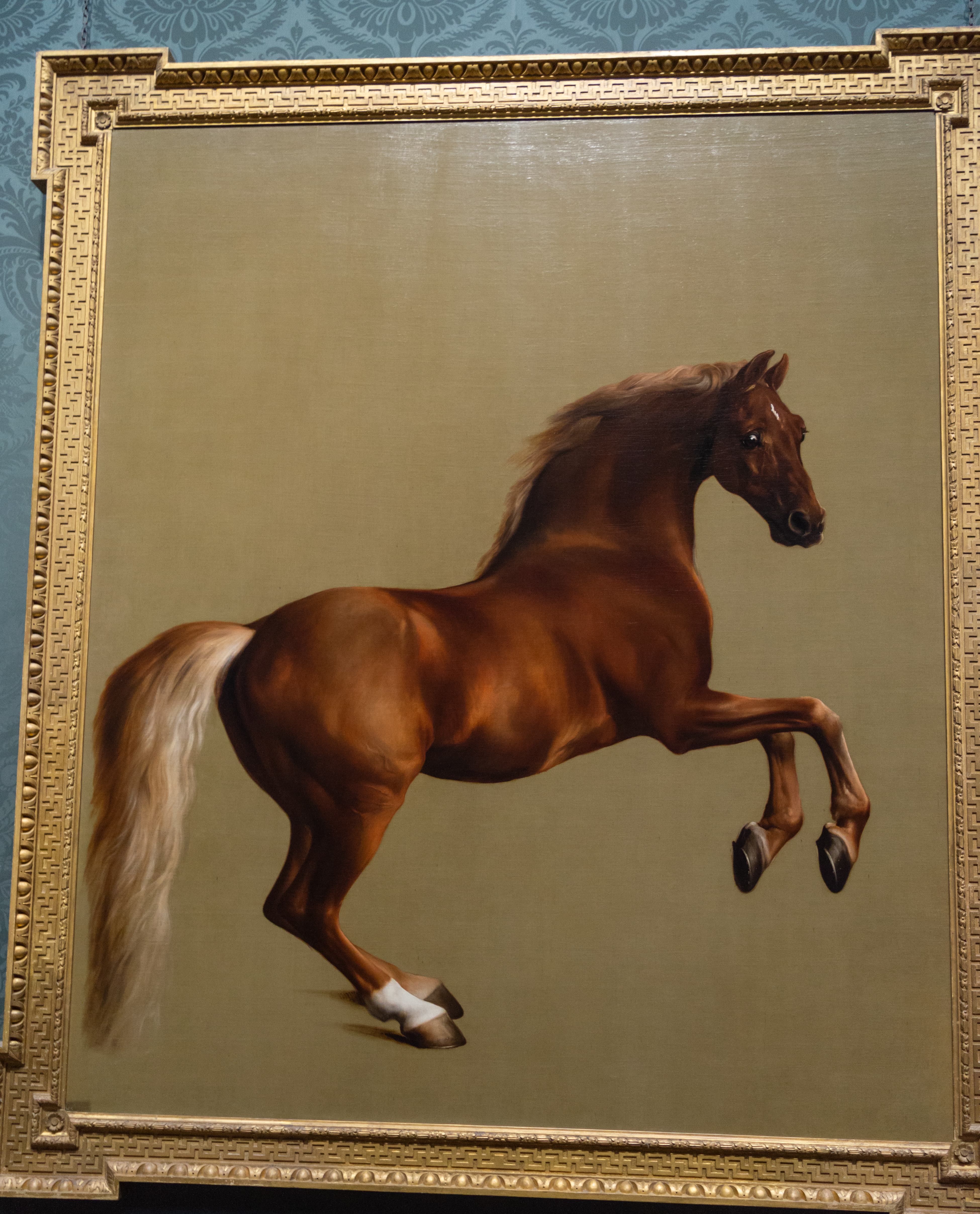
Whistlejacket: an animal as a monumental presence
George Stubbs isolates a chestnut stallion against a pale ground in Whistlejacket. With no rider, stable or landscape to establish a story, the horse's lifted legs, arched neck and alert head carry the composition. The National Gallery dates the oil-on-canvas painting to about 1762 and records it as NG6569.[4] Its scale and concentration make it a striking introduction to the work of George Stubbs, while the subject remains unmistakably individual.
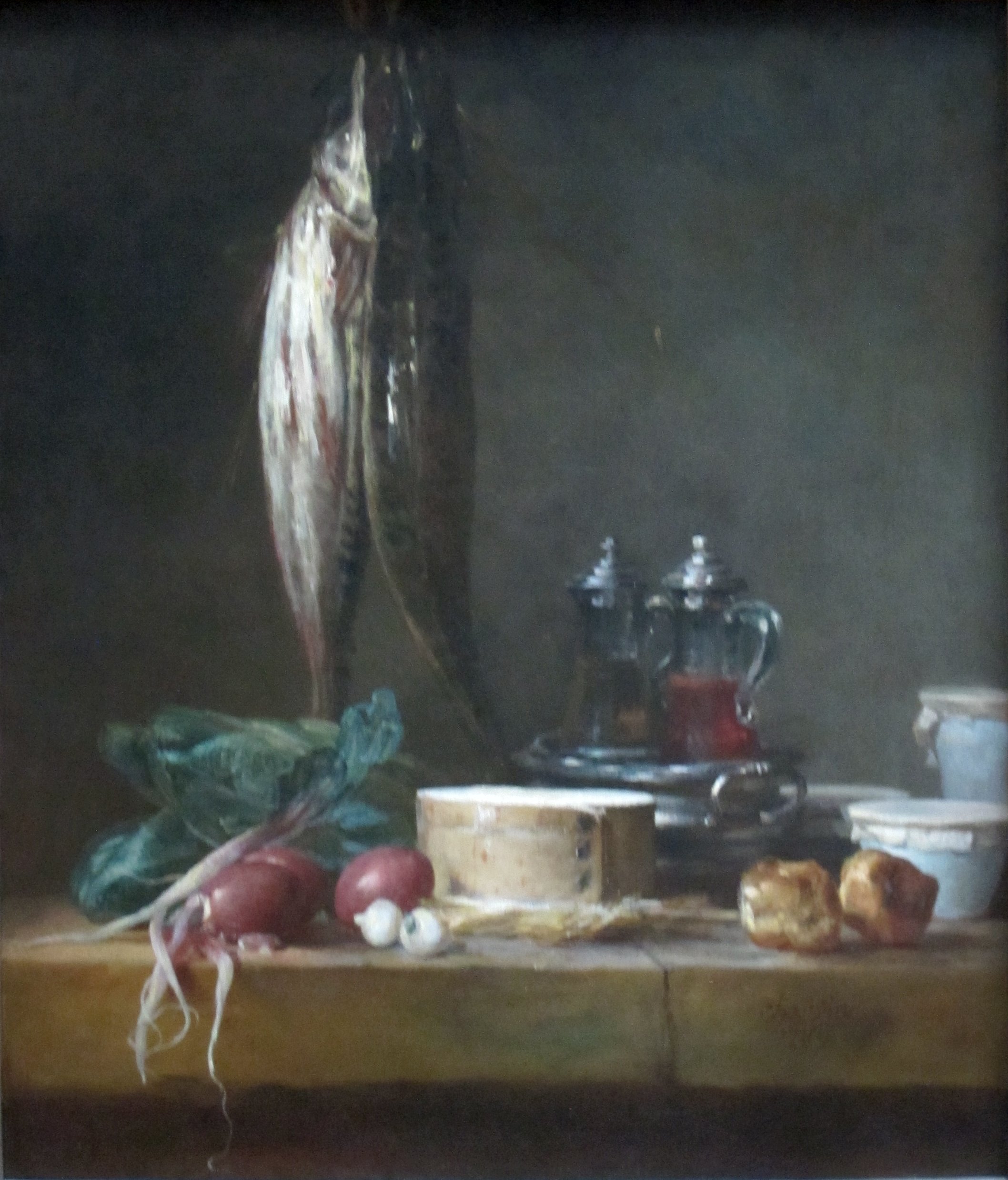
Still Life with Fish: abundance and texture
Jean-Baptiste-Siméon Chardin's Still Life with Fish, Vegetables, Gougères, Pots, and Cruets on a Table assembles a hanging fish, vegetables, pastries, pottery and glassware. Soft light moves across skin, leaves, metal, glaze and transparent vessels, allowing humble kitchen objects to reward close attention. The Getty identifies the painting as an oil on canvas of 1769, accession 2003.13.[5] It connects fish painting with still-life traditions without implying that every image of fish belongs to the same category. Explore Chardin for more of his work.
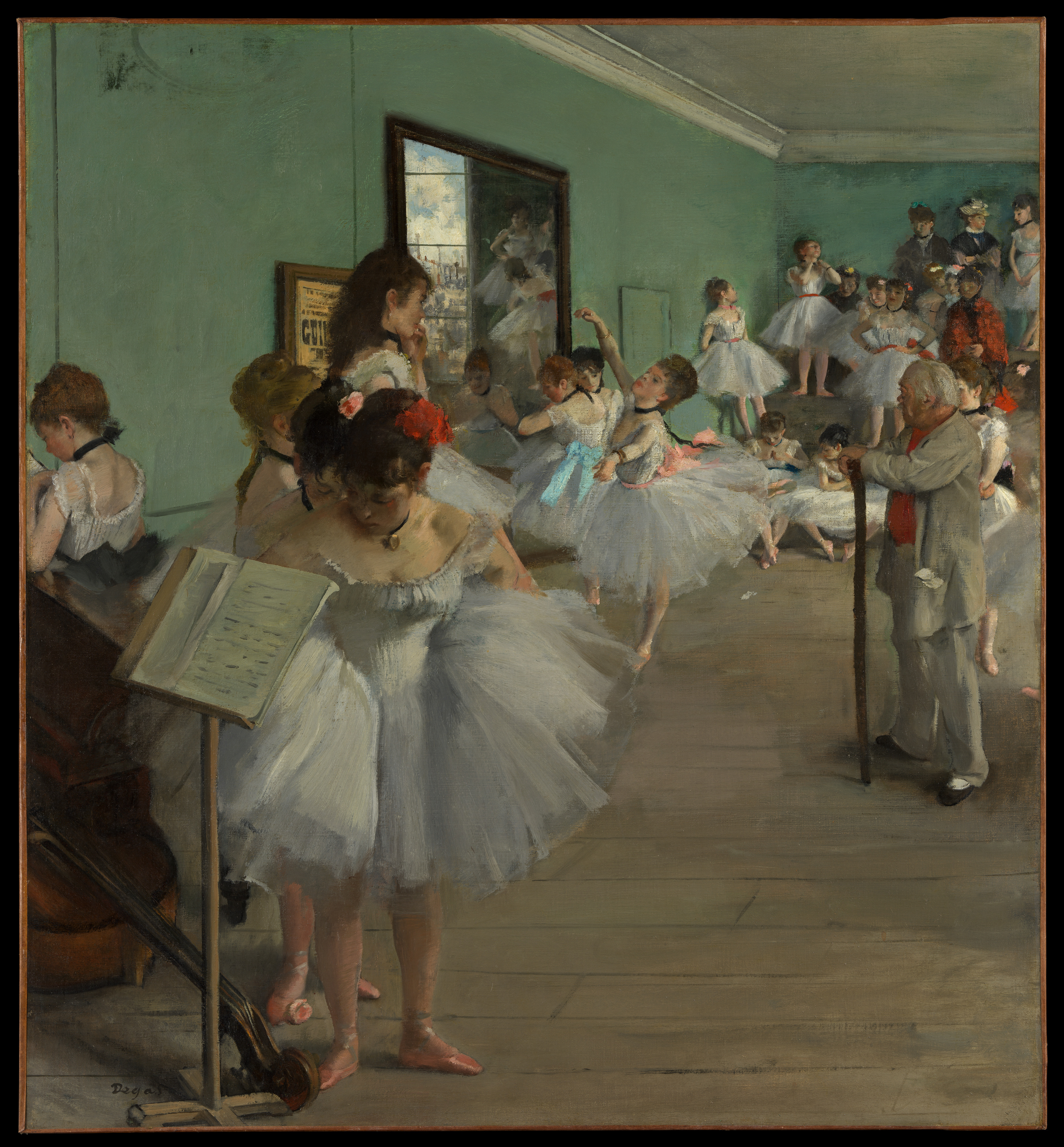
The Dance Class: movement between performances
Edgar Degas shows dancers rehearsing, waiting and adjusting themselves in The Dance Class. The ballet master stands at the right while figures gather through the room, some attentive and others momentarily distracted. Rather than presenting a single polished stage pose, the painting makes practice, observation and pause part of its subject. The Metropolitan Museum of Art dates this oil-on-canvas version to 1874 and records it as 1987.47.1.[6] It is one of several dance-class compositions by Edgar Degas, so the collection and object identity matter.
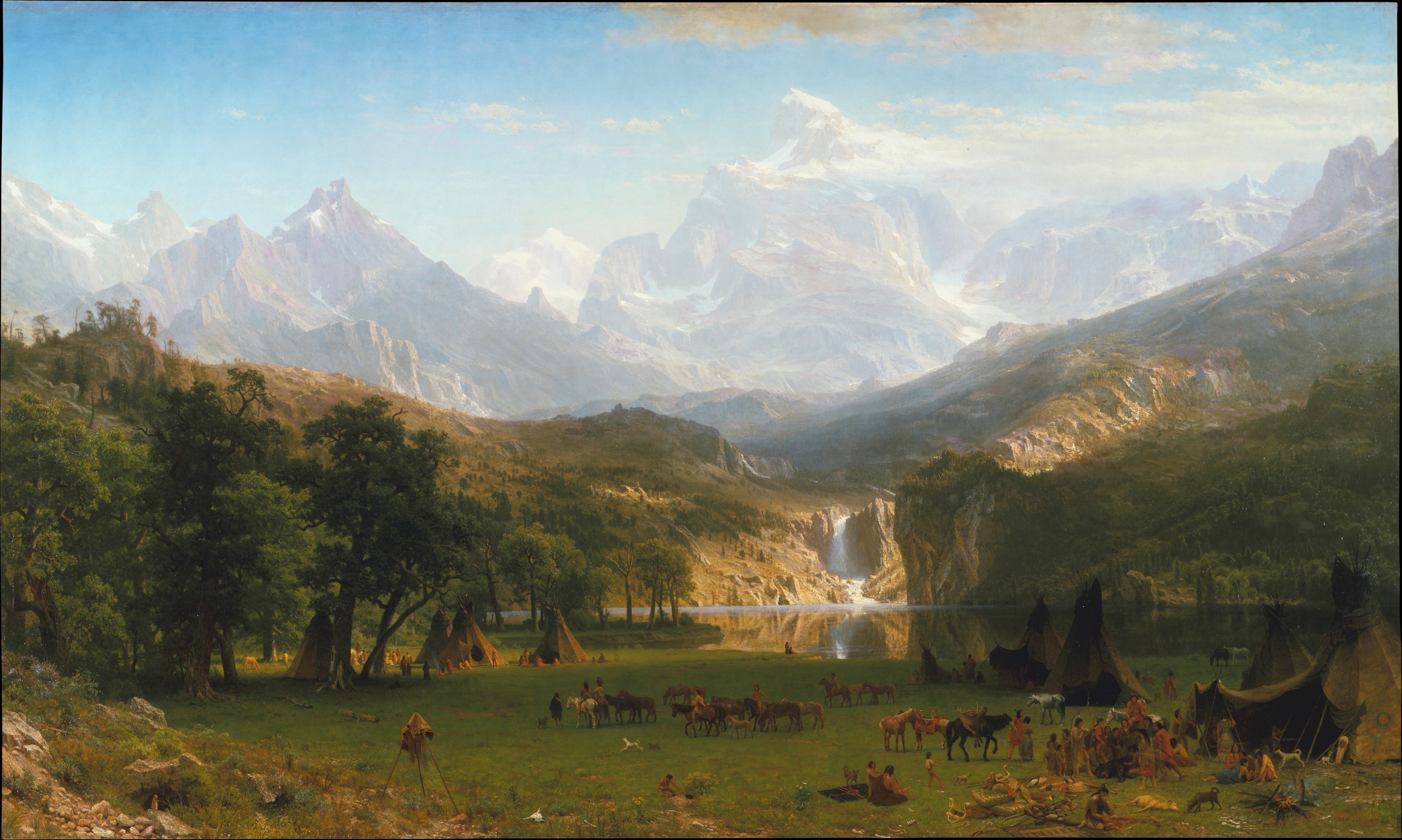
The Rocky Mountains, Lander's Peak: landscape and scale
In Albert Bierstadt's The Rocky Mountains, Lander's Peak, a broad valley and waterfall lead towards snow-covered peaks. A Shoshone encampment occupies the foreground, placing people, animals and dwellings within the enormous sweep of the scene. The Metropolitan Museum of Art dates the oil-on-canvas painting to 1863 and records it as 07.123.[7] The work offers a mountain subject on a monumental scale while also belonging to the history of landscape painting. Explore more by Albert Bierstadt.
Ways to explore and compare
Start with a subject when a visible motif has caught your attention. Then ask what changes across different treatments. Is the subject isolated or embedded in a story? Does it establish scale, create rhythm, carry symbolic associations or simply invite sustained looking? A horse against an empty ground behaves differently from animals within a mountain valley; fruit set on a table creates a different kind of space from a sitter placed before a distant landscape.
Genre offers the next layer. Cézanne's apples and Chardin's fish both belong within still life, but their arrangements, surfaces and sense of space are unlike one another. Bierstadt's mountains belong within landscape, while Leonardo's distant terrain supports a portrait. Degas brings dance into a scene of modern practice rather than treating movement as an abstract theme.
Artist and period can then widen the comparison. Following one artist reveals recurring decisions across many works; moving across periods shows how materials, audiences and visual conventions change. A masterpiece directory answers yet another question by gathering works with unusually broad cultural recognition. These paths are most useful together: subject begins with what is visible, genre supplies a category, artist provides a body of work, and an individual painting keeps the encounter specific.
References
- National Gallery, London, “The Genres”, View source.
- Musée du Louvre, “Portrait de Lisa Gherardini, épouse de Francesco del Giocondo, dit La Joconde or Monna Lisa”, View source.
- J. Paul Getty Museum, “Still Life with Apples”, View source.
- National Gallery, London, “George Stubbs, Whistlejacket”, View source.
- J. Paul Getty Museum, “Still Life with Fish, Vegetables, Gougères, Pots, and Cruets on a Table”, View source.
- Metropolitan Museum of Art, “The Dance Class”, View source.
- Metropolitan Museum of Art, “The Rocky Mountains, Lander's Peak”, View source.