 by Tom Gurney
Tom Gurney BSc (Hons) is an art history expert with over 20 years experience
Published on June 19, 2020 / Updated on September 27, 2026
Email: tomgurney1@gmail.com / Phone: +44 7429 011000
Paul Klee works A–G
An alphabetical list makes it easy to find a familiar title, but Paul Klee's works rarely fit into a single, simple category. The A–G directory below brings together oil paintings, watercolours, drawings with added colour, mixed techniques and images on paper mounted to another support. The Zentrum Paul Klee estimates that about four fifths of his oeuvre is on paper. “Paintings” remains a useful site heading, provided it does not imply that every image below is oil on canvas.[1]
This directory is a route through names used on this site. It is separate from Klee's handwritten Œuvre-Katalog, the nine-volume printed Catalogue raisonné Paul Klee and the continuing work database of the Zentrum Paul Klee. The museum says that database can be consulted on site by appointment. A title in this list, by itself, does not establish an artist's original title, a date or a collection history. Where the evidence has been checked, the tile pairs a familiar site name with an original-language title, annual work number and collection source.[2]
Contents
- How to use the A–G directory
- What the materials reveal
- Routes through the researched works
- Place, memory and changes to the object
- Why titles and numbers can disagree
- After browsing the grid
How to use the A–G directory
The current local A–G grid has 139 artwork tiles. It began as a larger legacy list, and its entries are being checked against owning records and against one another. Some have a link to a researched page, some lead to older site pages that still need the same review, and some have no detail-page link. An unlinked tile is a visible index name, not a promise that a missing page exists. The adjacent H–S and T–Z segments continue the alphabetical browse, while the paintings guide explains the wider selection by material and period.[3]
Look first for the work, then for the wording of its title. In this stretch of the alphabet, A Gate appears with Klee's ein TOR and the annual entry 1939,911 (XX 11). The Fondation Beyeler's record even describes an inscription that dates and titles that particular sheet. After The Floods appears beside Nach der UeberSchwemmung, 1936,7 (7); the museum records a surviving piece of its original, titled backing. Such details connect a translation to a specific object more securely than a similar-looking thumbnail can.[4][5]
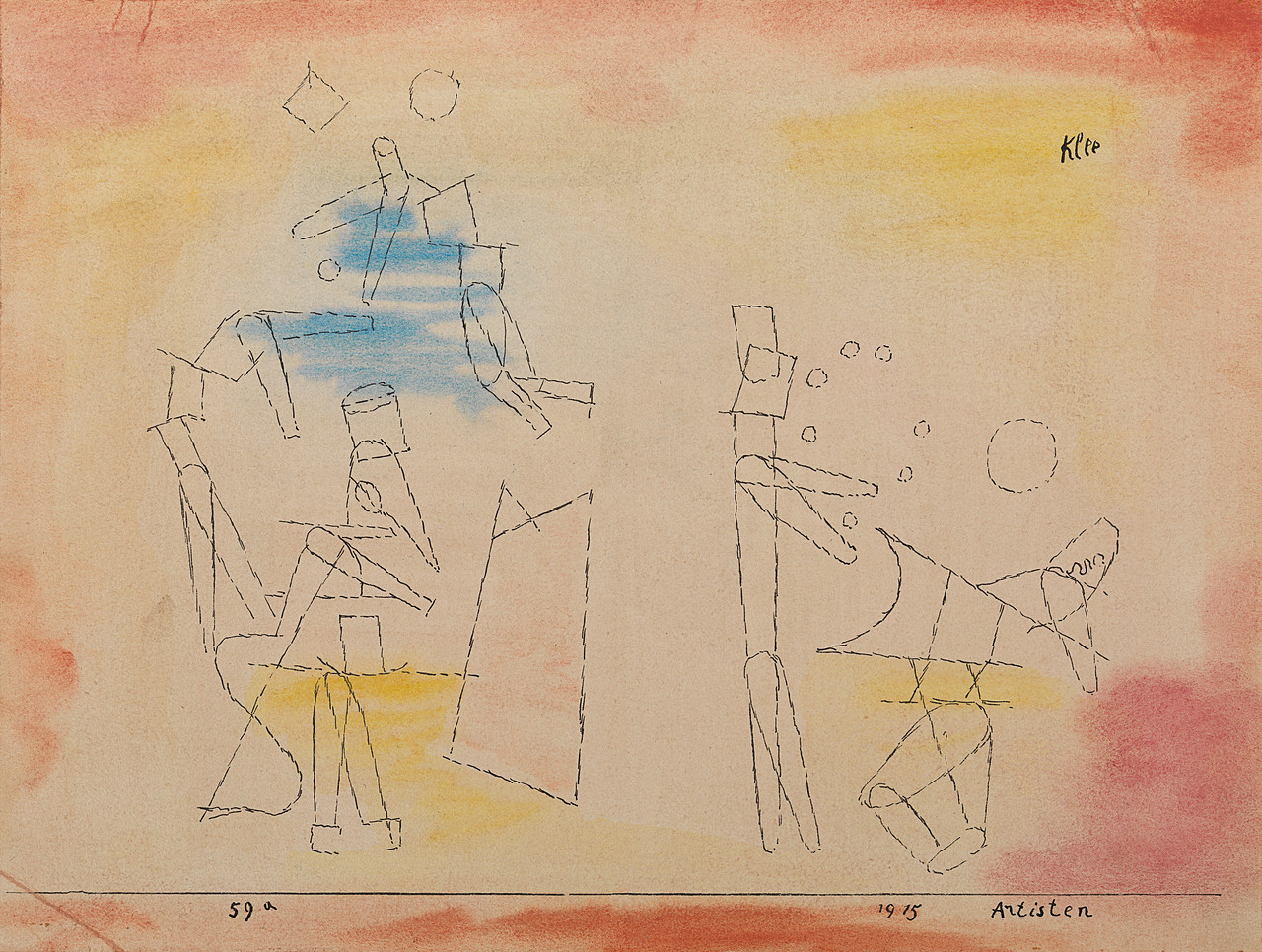
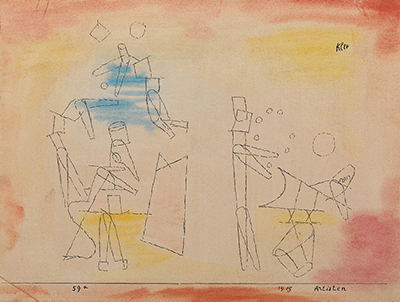
Acrobats is a useful test of the method. The inherited tile matches the Guggenheim Museum's 1915 watercolour, pastel and ink sheet, accession 48.1172.67. Its lower edge bears Klee's German title Artisten; the small tile crops close to that inscription. The Los Angeles County Museum of Art also holds an Acrobats by Klee, but its 1919 lithograph is another object. A shared English title cannot transfer a date, technique or collection from one work to the other. The catalogue tile remains unlinked while its old detail route redirects here.[32]
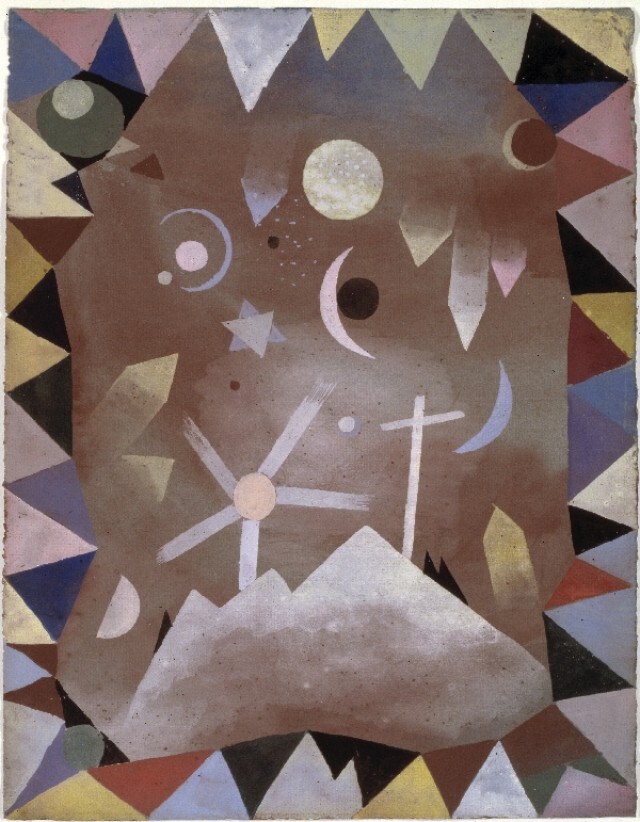
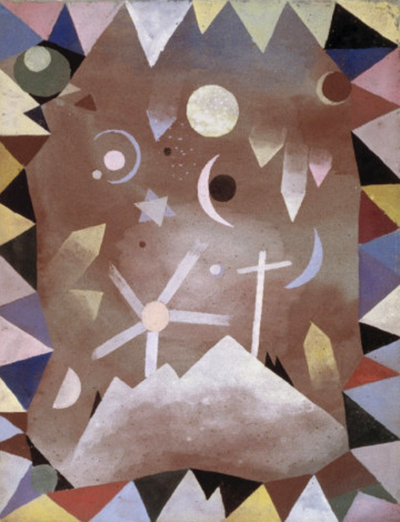
Above Mountain Summit demonstrates a different limit of a thumbnail. The tile is a tight crop of Über Bergeshöhe, a 1917 sheet recorded by Kunstmuseum Den Haag as a long-term private-collection loan. Its current object page calls the medium gouache on paper and gives 31 × 24.1 cm. A 2018 German exhibition caption for the same work says watercolour on paper mounted on cardboard. The two institutional descriptions agree on title, year and size, yet differ on the material; the short directory follows the current museum record while leaving the support question open. The surrounding triangles, pale disc and crescents identify the image without telling us which paint or backing Klee used.[33]
The same check matters when English smooths out a German phrase. The site inherited Forest Witch, while the owner's title is the plural Wald-Hexen, 1938,145 (K 5). The inherited Before the Blitz translates vor dem Blitz, 1923,150; the date alone rules out treating “Blitz” as a reference to the Second World War, and the German word can mean lightning. The corrected English labels now appear with the original titles; established routes retain their old slugs. Four duplicate German-name tiles were removed only after museum records and side-by-side image checks supported the pairings. The worklist keeps those former entries and their route histories.[6][7][3]
What the materials reveal
The unlinked After Drawing tile illustrates why a colour image does not necessarily depict a painting. Its closed-eyed face, striped lips, grey background and yellow shoulders match the hand-coloured first-state lithograph illustrated by Klee scholar Marie Kakinuma as nach der Zeichnung 19/75, 1919,113. The title means “after drawing 19/75”: Kakinuma distinguishes the original pencil Versunkenheit, 1919,75, now at the Norton Simon Museum, from the later lithograph based on it. Her German article places the print within Klee's concentrated 1919 group of artist self-images and notes its publication in the Münchner Blätter für Dichtung und Graphik. The image is therefore better described as a particular coloured print impression than as an independent watercolour portrait. A 2018 Pinakothek exhibition caption identifies its reproduced first-state, watercoloured lithograph as 22.2 × 16 cm at the Zentrum Paul Klee, gift of Livia Klee. The inherited tile crops its edges and inscription; its exact file provenance is still untraced, so the colour image was used for identification only, not as a new large reproduction.[51][52]
Paper in Klee's art is often the work's active surface, not a preliminary scrap. The Beyeler describes Die Kapelle (1917,127) as watercolour and white tempera on paper mounted on cardboard. The museum's German exhibition guide asks the reader to consider its architecture from more than one orientation. The small A–G tile cannot convey the sheet's physical edges or the full effect of the light ground, so the object record remains useful even when the image is recognizable.[8]
Ab ovo (1917,130) makes the layered support particularly clear. A 2019 exhibition curated by Fabienne Eggelhöfer for the Centro Cultural Banco do Brasil with the Zentrum Paul Klee identifies watercolour on primed gauze on paper on cardboard, measuring 14.9 × 26.6 cm. Its illustrated catalogue shows the coloured, faceted image within a tan mount that the inherited tile crops away. The exhibition essay relates Klee's wartime work with fabrics and stencils to his artistic experiments, while its object caption supplies the specific material sequence for Ab ovo. That context invites investigation of the gauze; it does not prove which particular military task produced this picture.[31]
The Detroit Institute of Arts identifies the unlinked Arrival of the Air Steamer tile as Ankunft des Luft-Dampfers, inscribed 1921/17 below the yellow border. The museum records oil transfer and watercolour on textured paper mounted on thin cardboard, with a 32.1 × 46 cm sheet. Its image distinguishes that sheet, the yellow border and the smaller drawn area; the inherited tile cuts off the border and Klee's handwritten title. The angular town and pale airship in the tile match the museum photograph, while the oil-transfer lines help explain why a work grouped here under “paintings” can retain the character of a drawing.[43]
Two other unlinked A–G tiles can now be tied to owners' objects. The Barnes Foundation holds Nach einer Scizze aus Zürich (After a Sketch from Zurich, 1914), accession BF1006. The owner describes watercolour over graphite underdrawing on woven paper, mounted by Klee on paperboard. The local tile reproduces the coloured picture closely but omits the broad paper margin and lower inscription visible in the Barnes view. The Detroit Institute of Arts holds Gefangener Pierrot (Captive Pierrot, 1923), accession 70.341. It records oil transfer, watercolour and black ink on heavy paper mounted on grey cardboard, with an additional painted border. The local crop removes that border and the handwritten title below; the owner gives separate sheet and mount sizes, 39.7 × 30.2 cm and 47.9 × 36.8 cm. These are materially different works, yet both small tiles conceal how Klee mounted and titled the visible image.[45][46]
The apparent oil painting Camel (in Rhythmic Landscape with Trees) has an equally instructive physical history. Kunstsammlung Nordrhein-Westfalen calls it Kamel (in rhythm. Baumlandschaft), 1920,43, inventory 1030, and catalogues oil and pen on a chalk ground on gauze on cardboard. It also records an unfinished colour study on the reverse and a frame reconstructed in 2024. The circles on stems and camel-like form match the inherited tile, but the museum's material and reverse-side findings cannot be recovered from that 400-pixel crop. Its continuous catalogue number 2388 is a later identifier, separate from Klee's annual 1920,43 and the museum's inventory number.[47]
The Met's All Souls' Picture (1921, accession 1987.455.5) is another mounted paper work in this stretch. Its watercolour and transferred printing ink lie on paper bordered with ink and mounted on cardboard; the museum gives 40 × 53.7 cm. The inherited tile matches the owner's quiet central procession of small signs, but cuts closer to the image than the owner's photograph of the complete sheet. The Met currently restricts enlargement and download of its displayed photograph, so the identity check does not supply a new image for the site.[48]
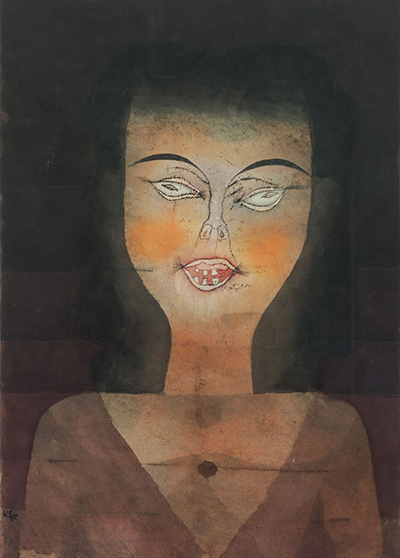
Besessenes Mädchen (1924,250) is recorded as watercolour and an oil-colour drawing on paper mounted on cardboard. boote in der Überflutung (1937,222 [V 2]) uses coloured paste on wrapping paper mounted on cardboard. In the Beyeler's German, English and French guides to the latter, the broad white of the paper helps form the flood; the blue marks do not simply fill a painted “water” area. These are two substantially different ways for support and mark to work together, despite both being gathered under the site's painting heading.[9][10]
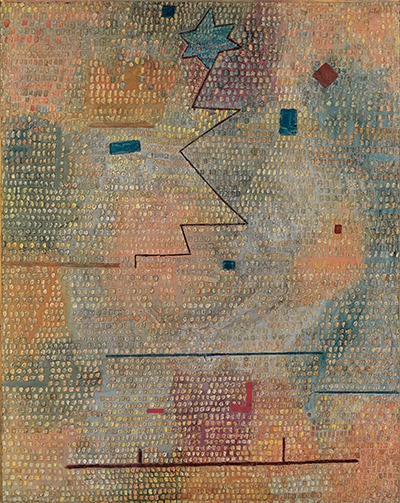
The same owner records show how much the medium can shift within a few neighbouring entries. Diana (1931,287 [Y 7]) and aufgehender Stern (1931,230 [V 10]) are oil on canvas. die Vase (1938,122 [J 2]) is catalogued as oil on jute mounted on jute; its open weave is not just a neutral substitute for smooth canvas. glüht nach (1939,925 [YY 5]) returns to watercolour and pencil on paper mounted on cardboard. Their catalogue labels are brief identifiers, not interchangeable recipes. The dedicated materials and techniques guide explains how grounds, supports, borders and reverse sides can change what a reproduction seems to show.[11][12][13][14]
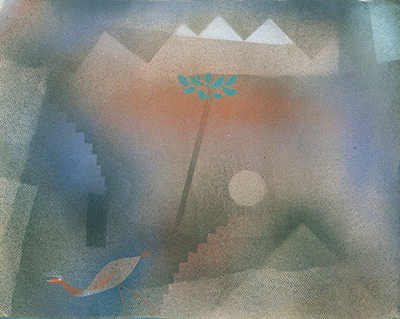
The two bird pictures in this alphabetic stretch show how the same kind of motif can sit on unlike supports. Vogelgarten (Bird Garden, 1924) belongs to the Bavarian State Painting Collections and is catalogued as mixed technique on newsprint on cardboard. Red and pale birds move among plants and squared compartments in the inherited crop, but the owner does not name each paint used. The Met's Bird Wandering Off (1926) is instead watercolour sprayed through stencils and brushed on paper, mounted on a board inscribed by Klee. Its single small bird crosses a hazy field beneath pale angular peaks; the browse tile crops away much of the mounted edge. Neither object's medium should be copied into the caption of the other just because both have birds in the English title.[39][40]
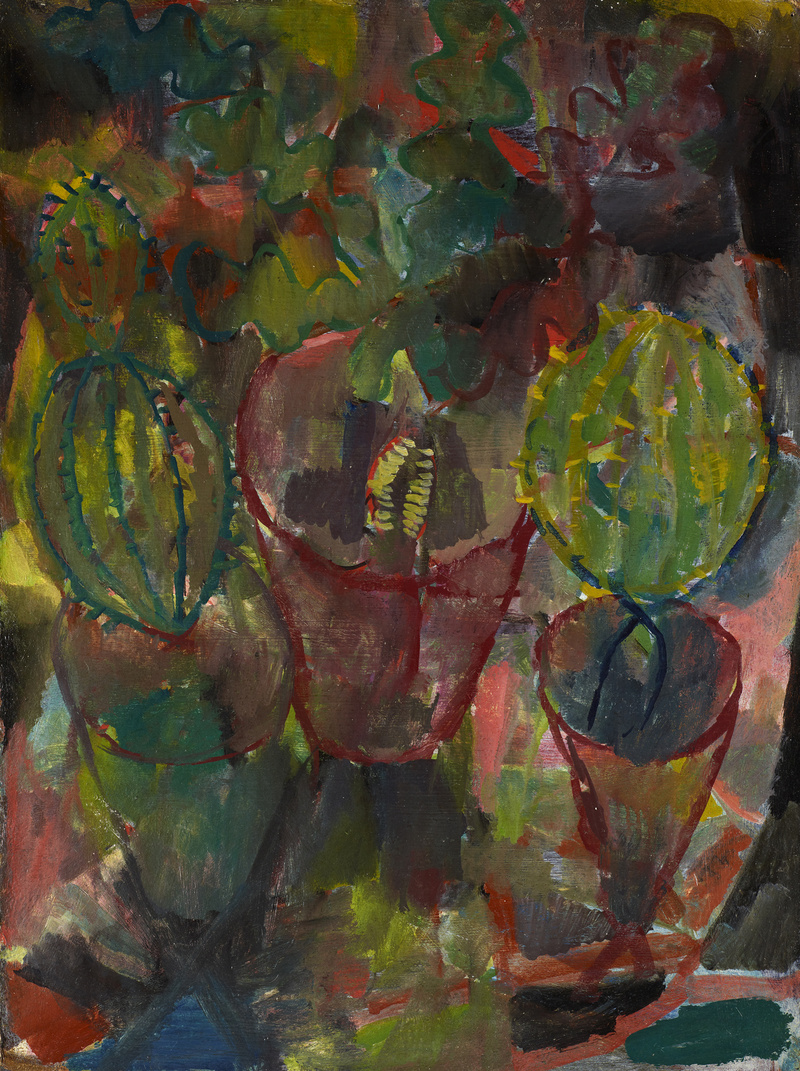
An earlier plant picture helps put those experiments in sequence. Lenbachhaus dates Kakteen (Cacti) to around 1912, rather than to an exact year, and records oil on cardboard, 52 × 41.5 cm. The three potted cacti in the inherited tile match the museum's full view, though the crop and colour differ. Its owner history runs through Mathilde Klee and Marietta Rougemont to the museum's 1961 auction purchase. This is a specific early oil painting; the shared plant subject does not make its surface equivalent to the paper, newsprint and mixed-media works elsewhere in the grid.[41]
The flower tile farther along the alphabet is a different kind of object again. Yale University Art Gallery identifies Autumn Flower as 1922, oil on canvas, accession 1941.534. Its record distinguishes an irregular 38.1 × 31.1 cm canvas from a 42.4 × 34.3 cm canvas with border, and transcribes Klee's mounted inscription as 1922/33 and Herbstblume X. The local tile reproduces the red pot and dark flowering forms but omits the border and inscriptions. Yale traces the work from Klee to the Société Anonyme in 1926, then to the university collection in 1941; those object facts give this image a firmer identity than its English name alone.[49]
The Centre's current conservation work provides a further warning against treating a thumbnail as a complete object. Its research on Klee's worked reverses identifies hundreds of works with an image on the back, in different states of completion or later concealment. It does not follow that every A–G sheet has a second picture. It does mean that a flat front view should not be made to stand for an unexamined mount, inscription or condition history.[15]
Routes through the researched works
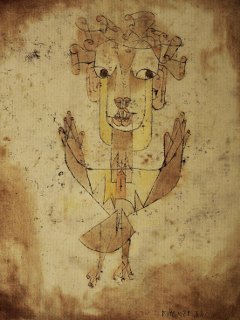
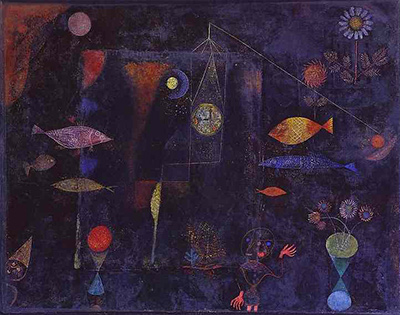
The linked work pages allow several different questions to be followed without imposing one story on all 139 entries. For line, symbol and the image's support, compare Angelus Novus, Around the Fish and Fish Magic. The first is an oil-transfer and watercolour image on paper whose later reception requires its own history. MoMA describes Around the Fish (1926) as oil and tempera on canvas mounted on cardboard and traces its Dresden ownership, 1937 confiscation and arrival in New York. The Philadelphia Museum of Art records Fish Magic (1925) as a layered painting in which a dark surface was scratched back to reveal underlying colour and a square of muslin was attached. The repeated fish motif is a reason to compare these specific objects, not to merge their dates or techniques.[16][17][18]
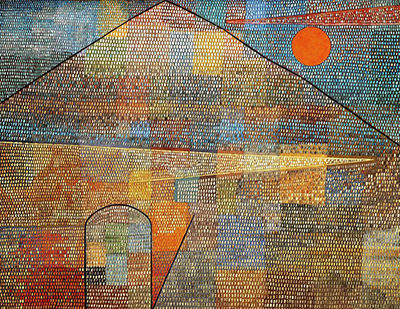
For colour and constructed space, move among Crystal Gradation, Ancient Harmony, Fire in the Evening and Ad Parnassum. Their grids, steps or bands have different scales and physical supports. Basel's records for the first two and Bern's for Ad Parnassum give the dated objects behind a visual analogy; the individual essays examine where music or architecture is a plausible reading and where it remains a proposal. A short directory can open those comparisons without repeating the full arguments here.[19][20][21]
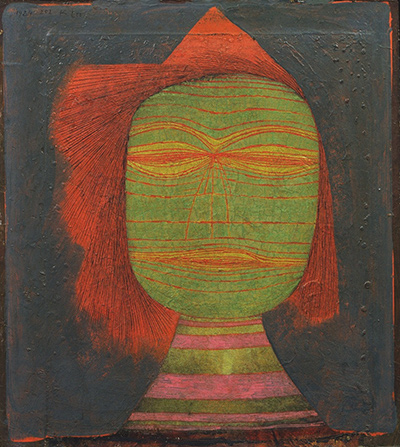
Other titles show that Klee's figures are not all whimsical in the same way. Cat and Bird places the bird within the cat's head; MoMA's own essay interprets that arrangement as a picture of thought or appetite. Actor's Mask depends on historical date and title evidence that earlier catalogues do not present uniformly. Error on Green has a 1930 institutional object anchor, contradicting the date repeated by some older online captions. Each work page separates its owner's facts from later interpretations, including points still disputed.[22][23][24]
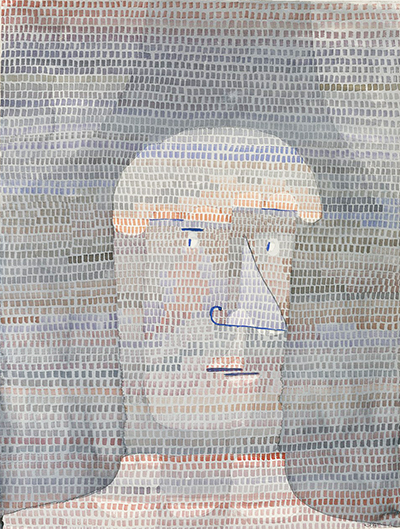
Three unlinked tiles make the difference between a visible motif and an object record especially clear. Bad Band is the Barnes Foundation's Schlechte Musik Kapelle (1920), a small watercolour and drawing on thin paper that Klee mounted on board. The museum leaves its identification of black crayon uncertain and asks whether the musicians' lack of coordination and the coloured haze might suggest audible dissonance; those are useful questions, not a sound track encoded by Klee. Athlete's Head is a much larger 1932 sheet at the Met, built from watercolour, gouache and graphite on paper mounted on cardboard. Its dense field of short coloured marks forms a face in the tile, but the thumbnail crops away the sheet's border and cannot describe its full scale.[35][36]
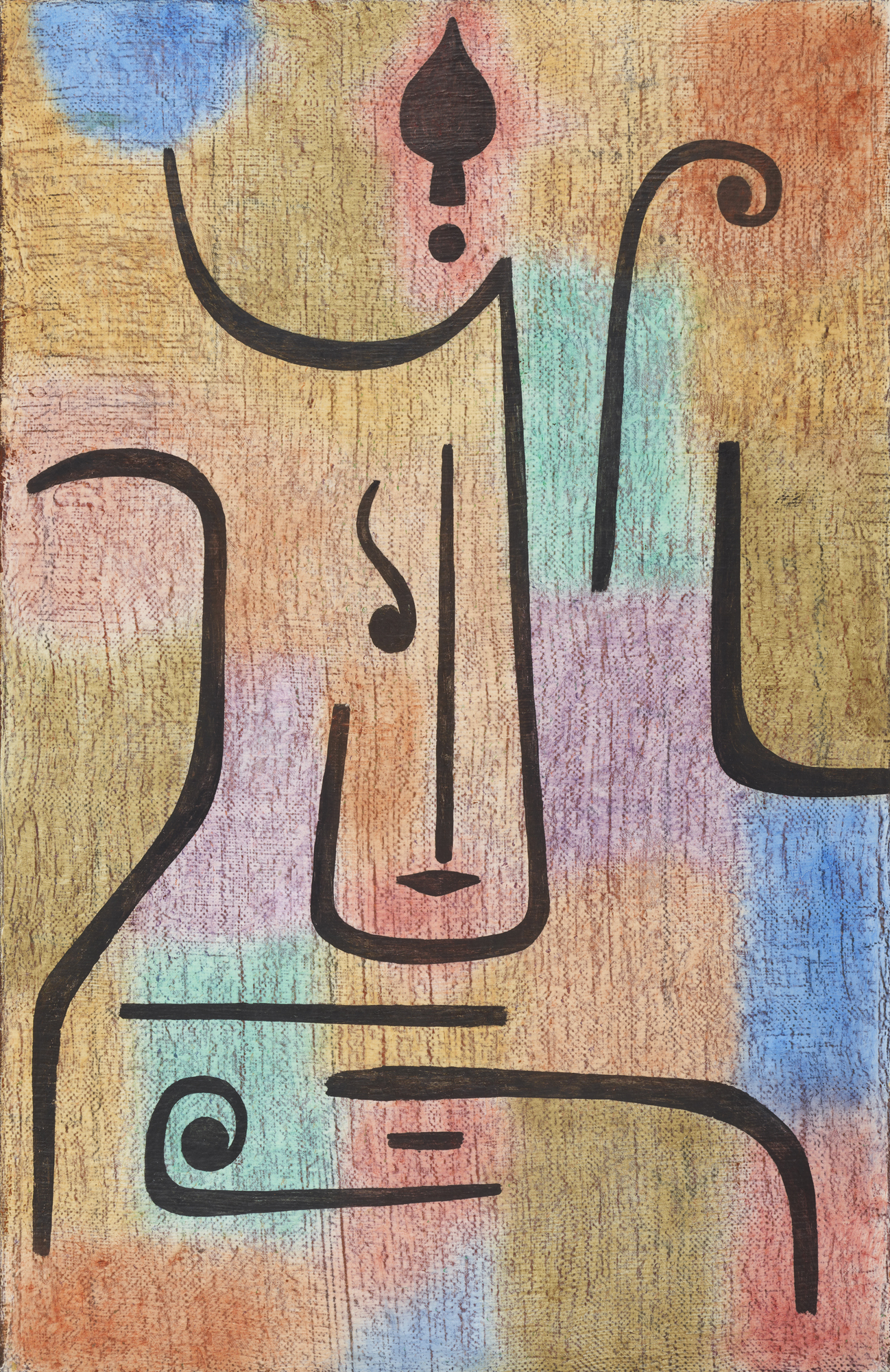
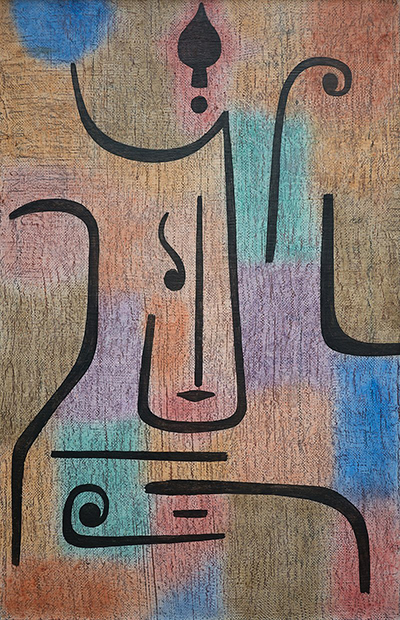
The later Erzengel (Archangel, 1938,82 [G 2]) at Lenbachhaus shows how an apparently spare black sign can depend on a complex support. The museum records oil and paste on cotton over jute on a stretcher, 100 × 65 cm. Its vertical marks can suggest eyes, nose, mouth and wings without giving a single compulsory portrait key. The English tile shows the composition, while the owner's layer description and its status as a Münter–Eichner Foundation loan keep the object from being reduced to “oil on fabric.” A later visitor or writer may see calligraphy in the curves; that comparison needs attribution to the viewer, not presentation as Klee's documented intention.[37]
Angel Serves the Desired shows another limit of a picture-only title. The delicate winged figure carrying a tray matches the design of a 1920 lithograph catalogued in a Berlin exhibition checklist as Nach 1915/29 [Ein Engel bringt das Gewünschte], Klee annual 1920,91. SFMOMA records a watercoloured impression under the alternative title Ein Genius serviert ein kleines Frühstück or Engel bringt das Gewünschte. Its displayed example has a red frame around the figure, whereas the inherited tile has broad blue, yellow and brown washes. They share the printed line design; the different colouring means the exact impression behind the local tile has not been identified. The tile is therefore a print-design lead inside this legacy “paintings” directory, not proof that SFMOMA owns the pictured sheet.[50]
Broken Key is another late picture where black marks stand against coloured fields, but it is a different object and construction. Sprengel Museum Hannover identifies it as Zerbrochener Schlüssel (1938), inventory Slg. Sprengel II,15, 50 × 66 cm. The owner records oil and paste-colour on newsprint on jute on a stretcher; the tile's broad black strokes and pink-blue ground match its photograph. The museum also transcribes the reverse inscription 1938 J 16 "Zerbrochener Schlüssel" Klee and traces the picture through Rolf Bürgi and Galerie Beyeler before its 1969 entry with the Sprengel collection. These anchors support the title and materials, but they do not establish that the marks form a legible key or explain what a break meant to Klee.[42]
The A–G sequence also crosses Klee's final years. Fire at Full Moon is a 1933 Folkwang work; Death and Fire belongs to 1940. Their dates invite historical questions, yet neither picture can be reduced to a single biographical cause. After The Floods, Forest Witches and A Gate are later works held by Beyeler with their own numbers, media and ownership records. Compare what their surfaces and inscriptions establish before applying a general label such as “late style.” The late-work guide sets the chronology and the limits of political or medical readings.[25][26][4][5][6]
Place, memory and changes to the object
Several A–G titles appear to name a place or a physical thing, but their relation to observation varies. Lenbachhaus identifies Föhn in Marc's Garden as Föhn im Marc'schen Garten, 1915,102, watercolour on paper mounted on cardboard. The title and inscription anchor the object; they do not, without further evidence, identify every patch of colour as a literal garden feature or fix the work to the Marcs' earlier residence. The owning museum discusses the picture as a development after Klee's 1914 Tunisia journey, a historical account more specific than saying that the trip “created” his colour practice. The dedicated page weighs the location and measurement differences among sources.[28]
Castle and Sun presents a different problem. Osamu Okuda's Zentrum Paul Klee archive research reproduces Burg und Sonne, 1928,201, and captions it as oil on canvas in private ownership. The site's older splash is noticeably more saturated than that scholarly figure. The recognisable castle and sun support a descriptive title, but an image-only comparison cannot establish the original palette, current owner or every layer of the medium. The work page records older conflicting captions and therefore keeps its material statement attributed rather than smoothing the disagreements away.[29]
Adventurer Ship opens a route through the object's later history as well as its fanciful scene. The inherited thumbnail matches Abenteurer-Schiff (1927) in the Bavarian State Painting Collections, inventory 13511. The museum describes sprayed watercolour and gouache on a black-prepared paper sheet, with extra painted strips attached above and below and the whole mounted on card. Its 49.9 × 65 cm sheet is larger than the 30 × 46.3 cm picture area; the small tile crops away part of that construction. The museum traces the work from Halle, where it was probably acquired from Klee, through confiscation in 1937, an exchange to Sofie and Emanuel Fohn in 1939, and their gift to the Bavarian collection in 1964. A second work, the Albertina's Abenteurer zur See (1927,5), also uses a ship and an adventure title, but is a distinct image. Its annual number and moonlit interpretation do not belong to the tile here.[34]
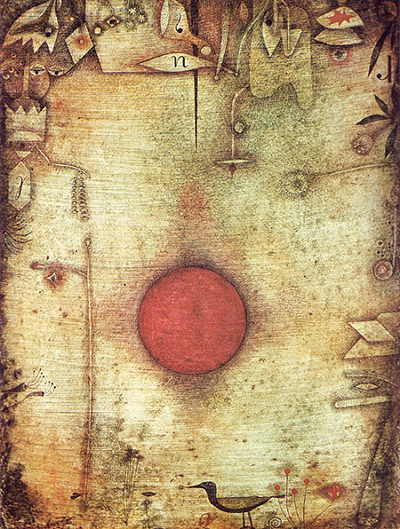
Ad marginem shows why the date on a browse tile may not finish the object's history. Kunstmuseum Basel records 1930,210 (E 10) and work in 1935–36. Its inscription, painted field, altered orientation and later support decisions matter to how the composition is encountered. The familiar Latin title, meaning “at the margin,” directs attention toward the edge, but should not be used as a licence to narrate Klee's precise intentions without the object's conservation and catalogue evidence. In an alphabetical grid, it sits beside works from quite different years; the dedicated page is where those stages can be disentangled.[30]
Why titles and numbers can disagree
An annual number such as 1923,150 belongs to Klee's own year sequence. A museum inventory number identifies the holding institution's object. A continuous number in the later printed catalogue raisonné serves a third purpose. Those systems may all be mentioned on a collection page, but they are not equivalent. Beyeler, for example, gives ein TOR the annual 1939,911 (XX 11) and its own inventory 66.1; it also cites a separate printed catalogue entry. This site's English route is a fourth, editorial identifier. Keeping those levels apart prevents a search-friendly slug from becoming a false artist title.[2][4]
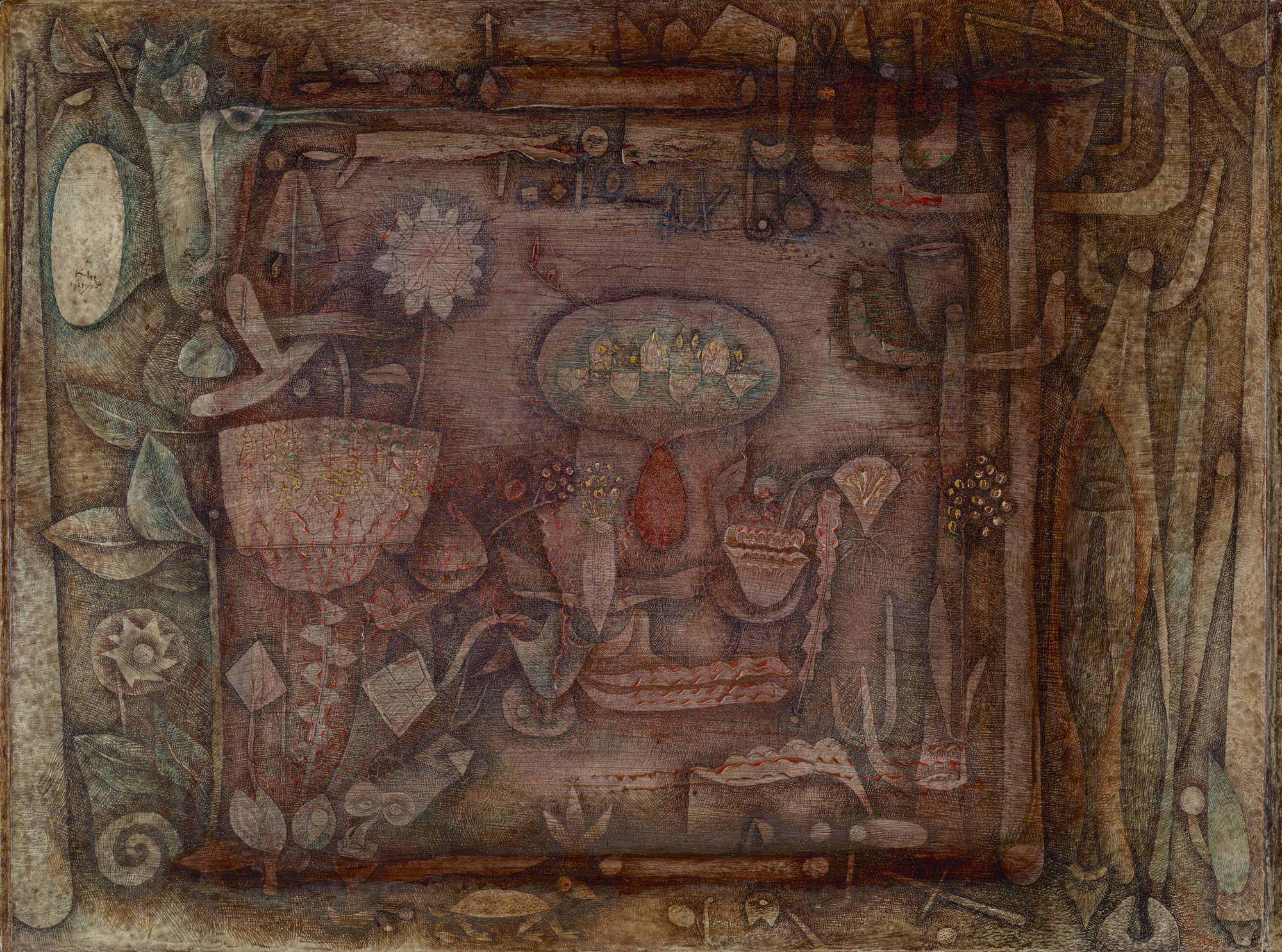
Botanisches Theater (Botanical Theatre) makes the separation of dates especially tangible. Lenbachhaus catalogues the work as 1934,219 (U 19), yet records inscriptions referring to 1924/198 and Klee/1924/=1934. Its German essay says Klee began the picture in 1924 and reworked and finished it in 1934. Christian Rümelin's study of Klee's own register proposes an earlier start around 1923, connects a possible 1924 entry titled tropische Landschaft to the developing composition, and dates completion to 10 July 1934. The proposed 1923 start is a scholarly reconstruction, not a date the owner treats as settled. The tile is recognisably the dense, framed plant-like scene, but the one date in a browse result cannot express this extended object history. The museum describes oil, watercolour and pen on paper on cardboard, a material chain that also cautions against reading every texture in a compressed crop as the same paint. Interpretations of the central form as an archetypal plant or concealed life force belong to later curators; the inscriptions and material line provide the firmer object anchor.[38][44]
The original A–G list also showed one picture twice: an unlinked tile labelled Composition and the linked Flowers in Stone tile had different crops and colours of the same image. A side-by-side comparison with Sprengel Museum Hannover's current object photograph identifies it as Blumen in Stein (1939,638 [GG 18]), inventory D 3455. The owner calls it oil on cardboard on wooden strips. “Composition” is an unverified inherited caption for this work, so the duplicate tile is omitted here. The Flowers in Stone page carries the documented object account.[3][27]
When a tile is linked, follow it to the work page and its object source. For an unlinked title, the original title, annual number and museum record help establish the work’s identity. The drawings, watercolours and prints guides offer other ways into Klee’s oeuvre.[3]
See all Paul Klee artworks
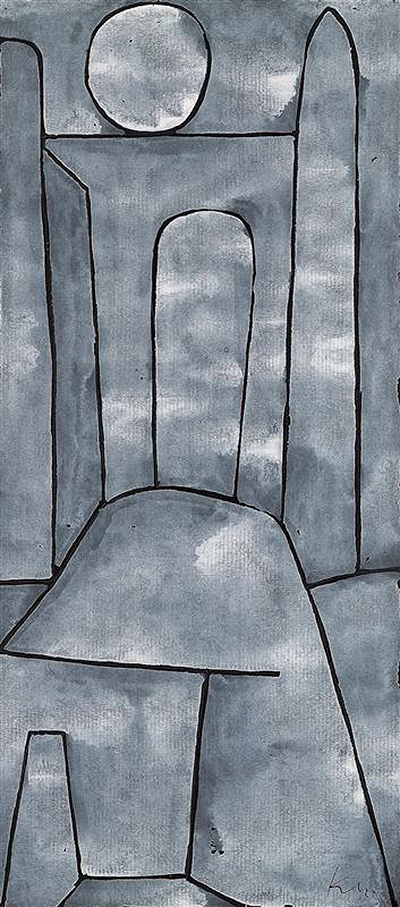
A Gate
Original: ein TOR (1939, 911 (XX 11)); Fondation Beyeler record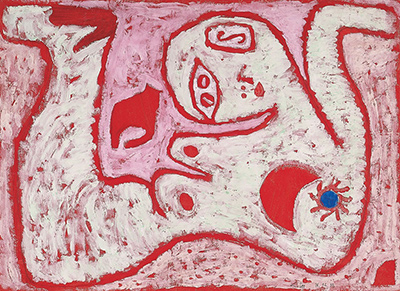
A Woman for Gods
Also: ein Weib für Götter (1938)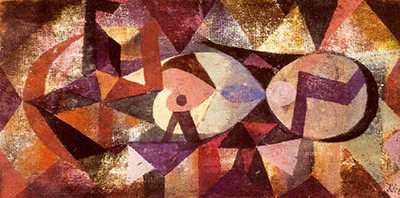
Ab Ovo
Above Mountain Summit
Abstract Trio
1923 · The Met 1984.315.36 · object record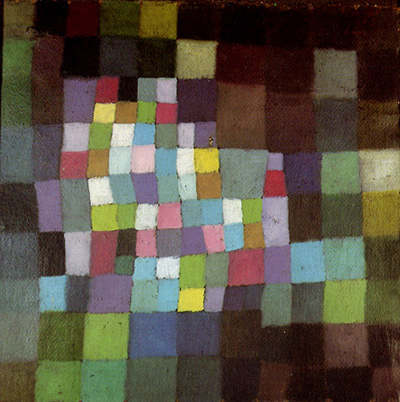
Flowering Tree
Blühender Baum · also listed as Abstraction with Reference to a Flowering Tree · 1925, 119 · Tokyo museum record
Acrobats
Actor's Mask
1924 · MoMA object record
Ad Marginem
1930; reworked 1935–36 · ad marginem · Basel object record
Ad Parnassum
1932 · Bern object guide
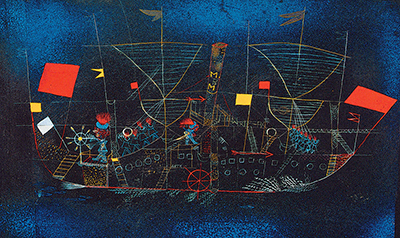
Adventurer Ship
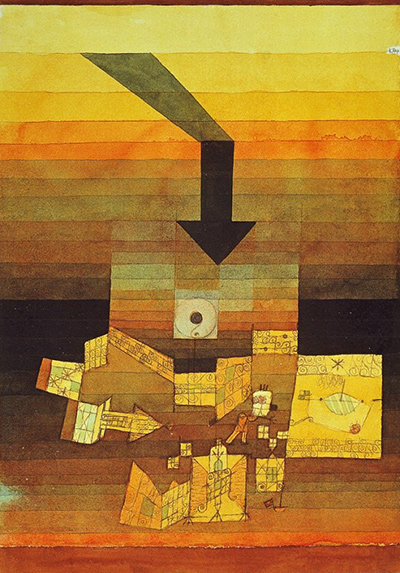
Affected Place
betroffener Ort · 1922, 109 · Zentrum Paul Klee record
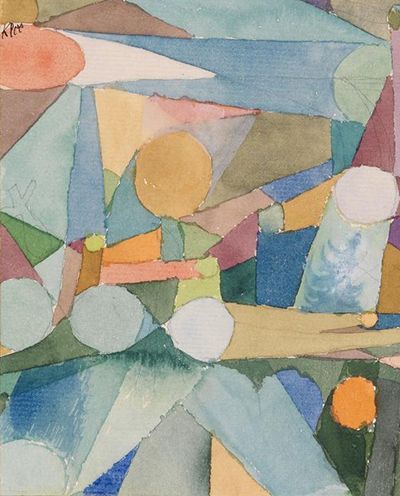
After a Sketch from Zurich
Original: Nach einer Scizze aus Zürich (1914); Barnes Foundation BF1006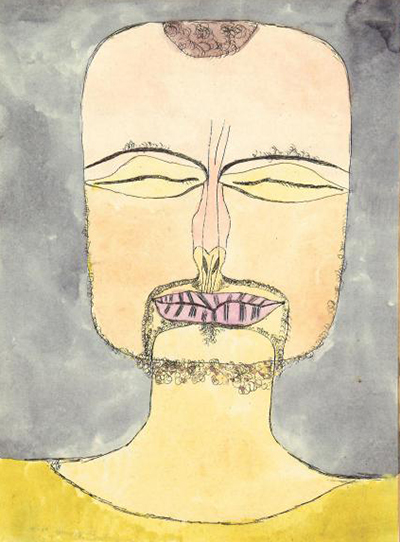
After Drawing
Original: nach der Zeichnung 19/75 (1919,113); Kakinuma / ZPK figure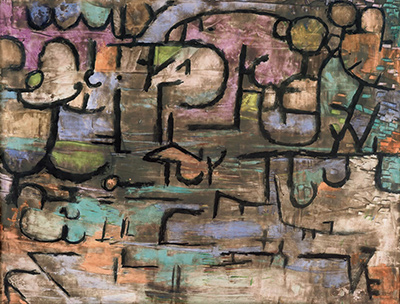
After The Floods
Original: Nach der UeberSchwemmung (1936, 7 (7)); Fondation Beyeler record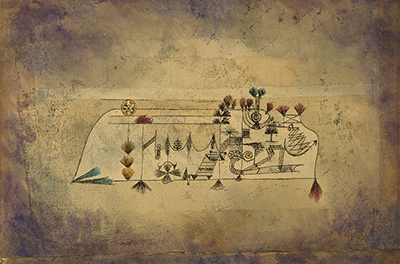
All Souls' Picture
1921 · Met 1987.455.5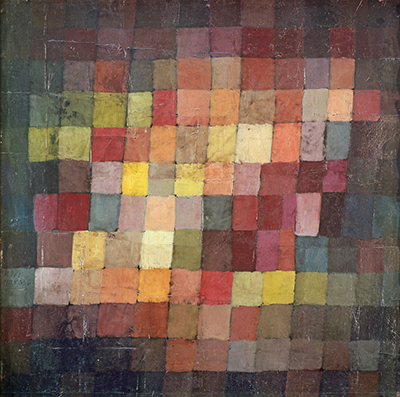
Ancient Harmony
1925 · Alter Klang · Basel object record
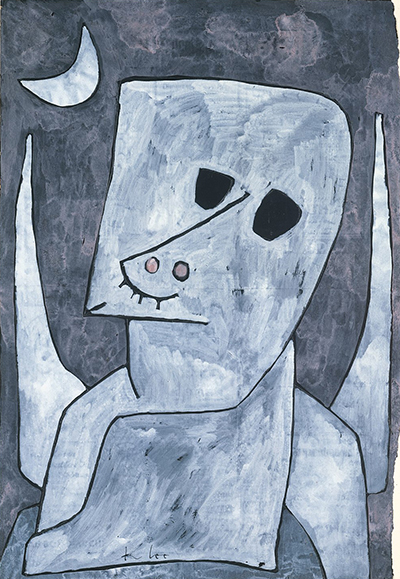
Angel Applicant
1939 · The Met 1984.315.60 · object record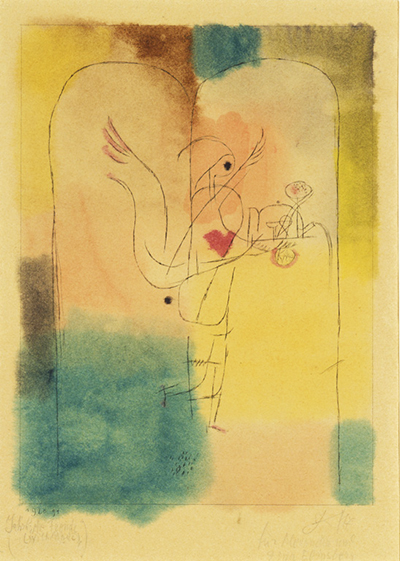
Angel Serves the Desired
1920 lithograph design; impression unresolved · SFMOMA comparison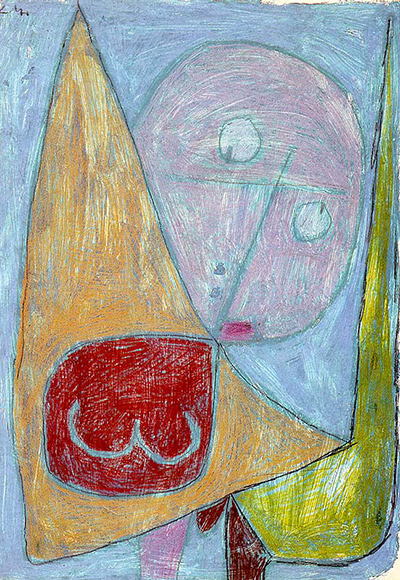
Angel, Still Female
Engel, noch weiblich · 1939, 1016 · formerly listed here as Angel Still Feminine · Museum checklist
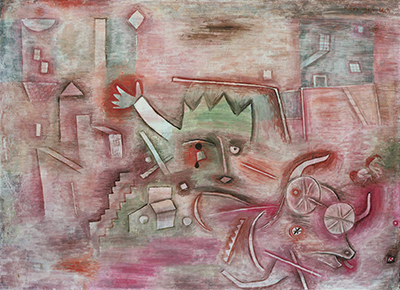
Animal Terror
1926 · Philadelphia Museum of Art 1950-134-113 · object record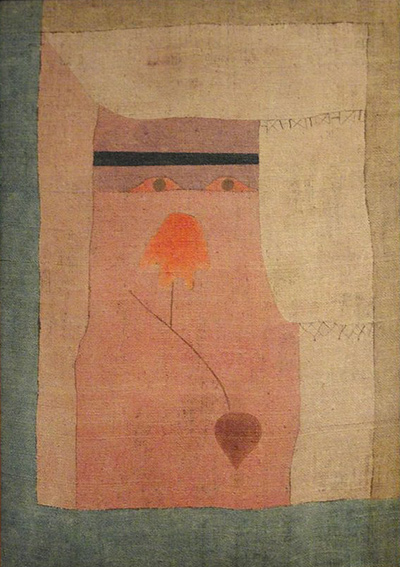
Arab Song
Arabisches Lied · 1932, 283 · Phillips Collection
Archangel
Architecture of the Plain
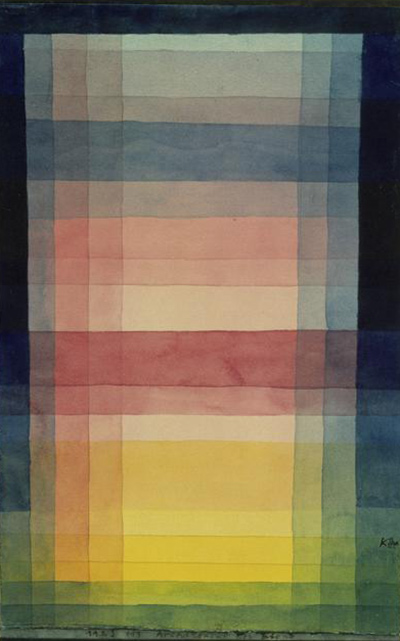
Architektur der Ebene · 1923, 113 · Museum Berggruen record
Architecture
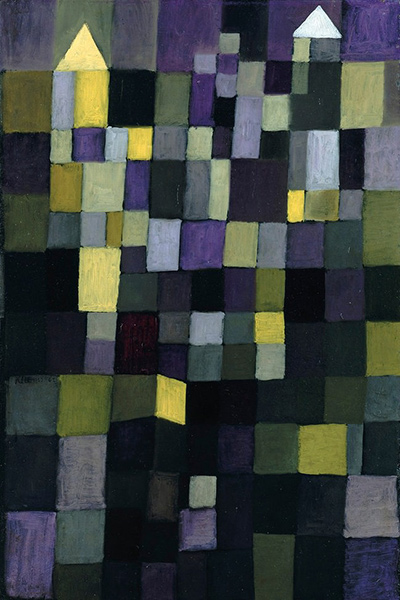
Architektur · 1923, 62 · Neue Nationalgalerie record
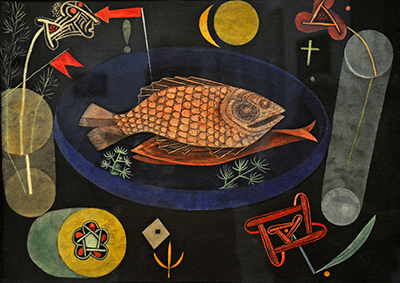
Around the Fish
1926 · Um den Fisch · MoMA object record
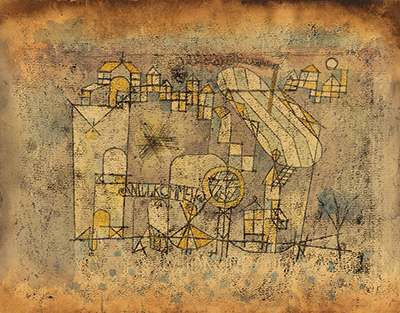
Arrival of the Air Steamer
Original: Ankunft des Luft-Dampfers (inscribed 1921/17); Detroit Institute of Arts object record
Asiatic God
Original: Asiatischer Gott (1924,263); Art Institute of Chicago 1991.322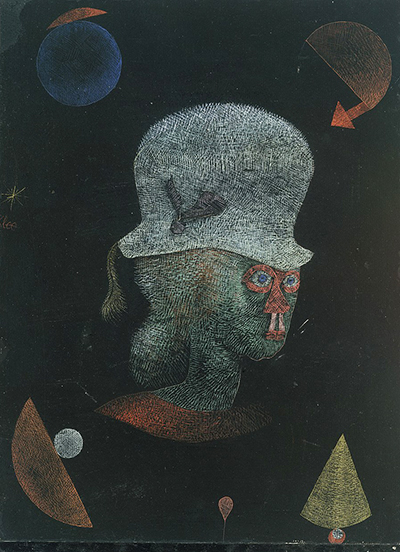
Astrological Fantasy Portrait
1924 · The Met 1984.315.39 · object record
At the Core
Athlete's Head
Aufgehender Stern
Museum title: aufgehender Stern (1931, 230 (V 10)); Fondation Beyeler record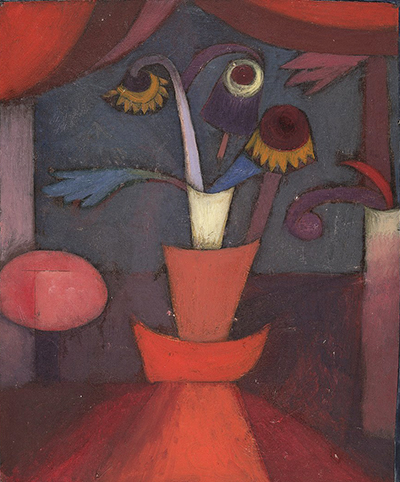
Baroque Centaur
Original: Barocker Kentaur (1939); NGA 2004.140.11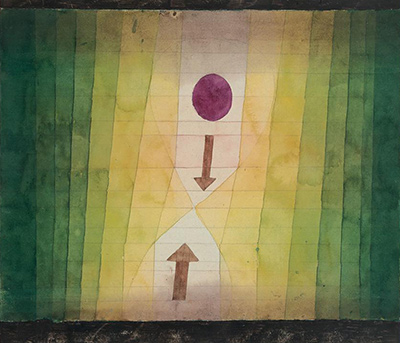
Before the Lightning
Original: vor dem Blitz (1923, 150); formerly listed here as “Before the Blitz”; Fondation Beyeler record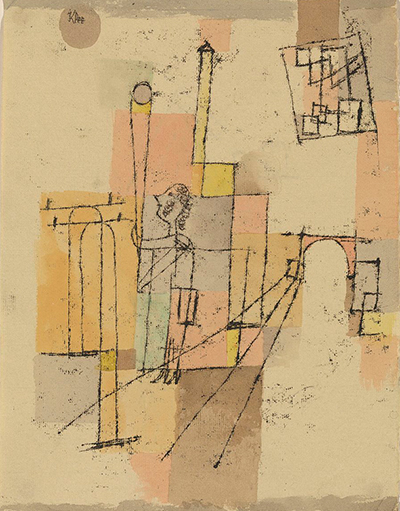
Before the Festivity
Before the Snow
Vor dem Schnee · 1929, 319 · Kornfeld object record
Besessenes Madchen
Museum title: Besessenes Mädchen (1924, 250); Fondation Beyeler record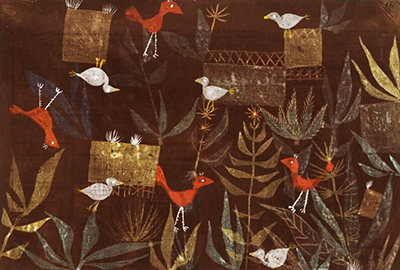
Bird Garden
Bird Wandering Off
Blossoms in the Night
Blüten in der Nacht · 1930, 207 (E 7) · SFMOMA record
Blue-Bird-Pumpkin
1939 · The Met 1984.315.59 · object record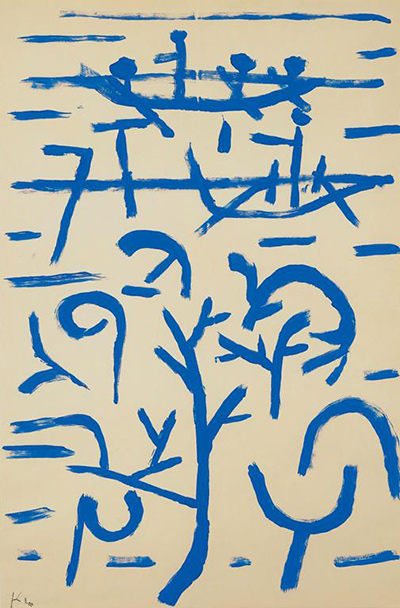
Boats in the Flood
Museum title: boote in der Überflutung (1937, 222 (V 2)); Fondation Beyeler record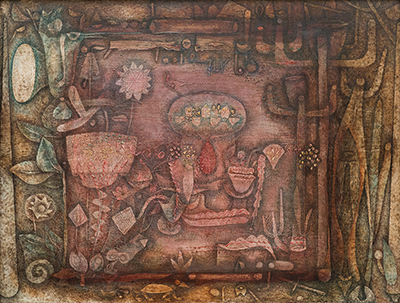
Botanical Theatre
Boy in Fancy Dress
1931 · The Met 1988.415 · object record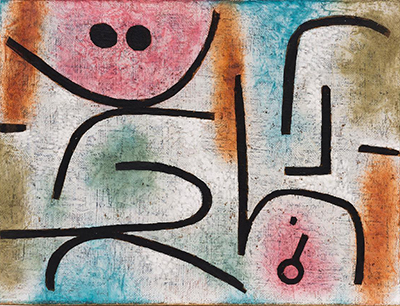
Broken Key

Brother and Sister
Geschwister · 1930 · Heidi Horten Collection guide
But the Red Roof
1935 · Philadelphia Museum of Art 1950-134-121 · object record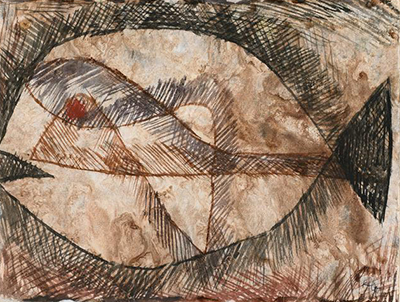
C - C = Fisch
C. - C. = Fisch (1931); Mia 77.41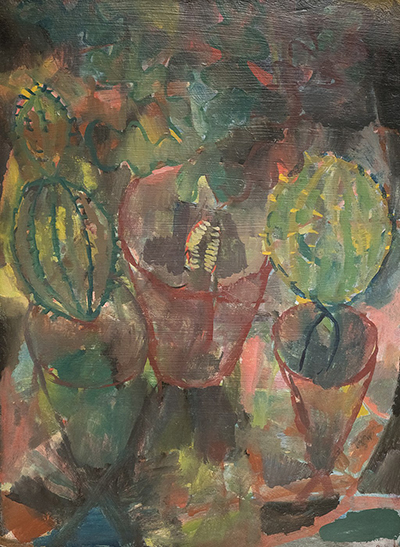
Cacti
 Paul Klee.jpg)
Camel (in Rhythmic Landscape with Trees)
Original: Kamel (in rhythm. Baumlandschaft) (1920,43); Kunstsammlung Nordrhein-Westfalen 1030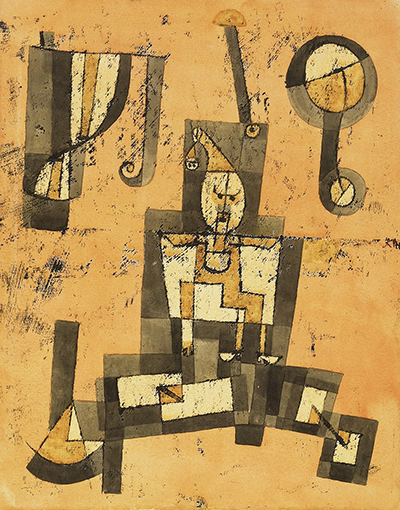
Captive Pierrot
Original: Gefangener Pierrot (1923); Detroit Institute of Arts 70.341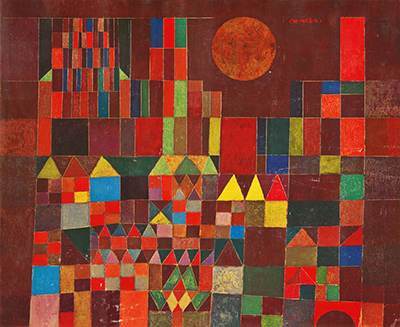
Castle and Sun
1928 · Burg und Sonne · Bern scholarly study
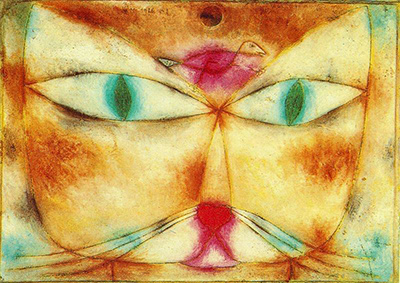
Cat and Bird
1928 · MoMA object record
Catastrophe in a Dream
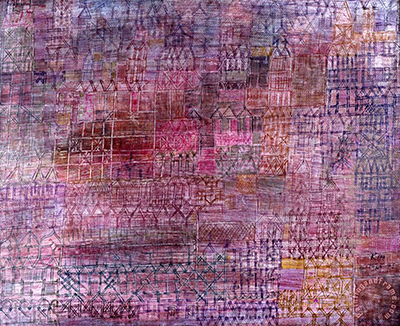
Cathedrals
Kathedralen · 1925/65 · Aichele study
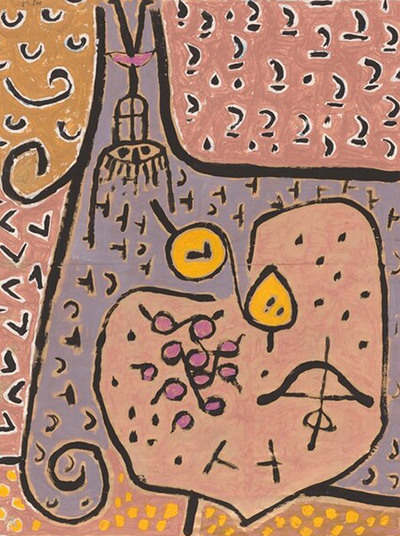
Chalice of the Heart
Original: Die Schale des Herzens; NGA 2002.88.1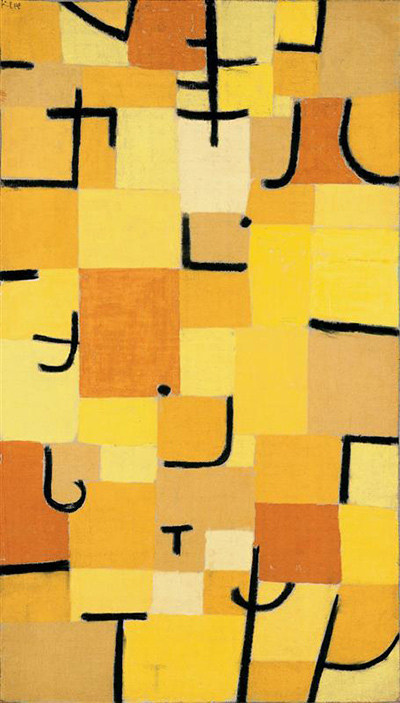
Characters in Yellow
Zeichen in Gelb · 1937, 210 (U 10) · Fondation Beyeler record
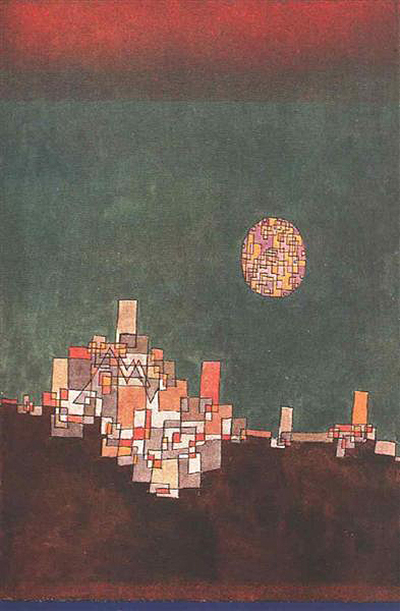
Chosen Site
Original: Auserwählte Stätte (1927); Bavarian State Painting Collections 14228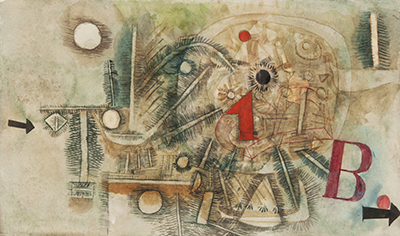
Christmas Picture
1923 · Philadelphia Museum of Art 1952-61-50 · object record
City Core
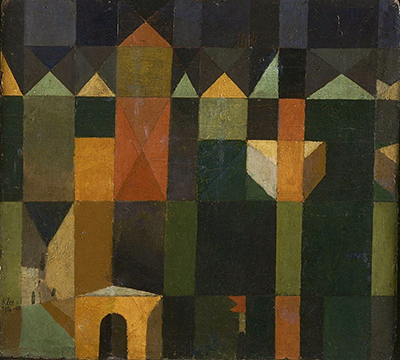
City of Towers
1916 · Philadelphia Museum of Art 1950-134-109 · object record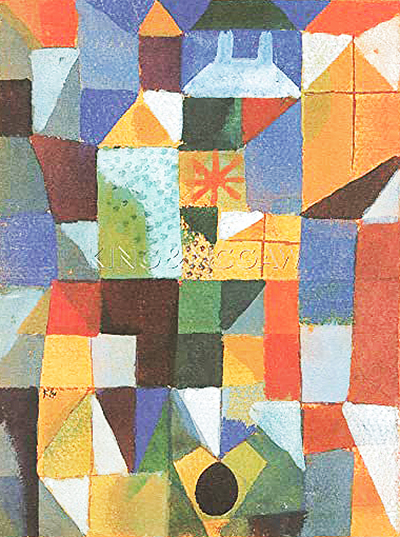
Cityscape with Yellow Window
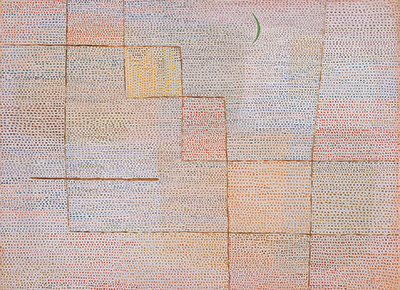
Clarification
1932 · The Met 1984.315.54 · object record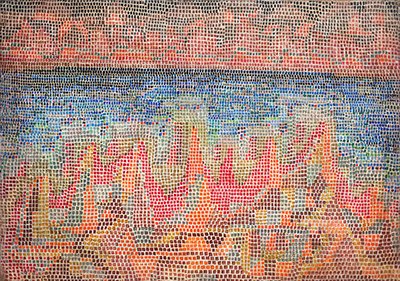
Cliffs by the Sea
Coastal Town Decked with Flags
Collection of Figurines
1926 · The Met 1984.315.47 · object record
Colorful Architecture
1917 · The Met 1984.315.10 · object record
Comedians' Handbill
1938 · The Met 1984.315.57 · object record
Comedy
Comic Opera Singer
Original: Sängerin der komischen Oper (1927); Bavarian State Painting Collections 14233
Composition with Figures
Paul Klee, Composition with Figures (1915, 191); National Gallery of Art 2014.18.25
Composition with Stars
Composition with the Yellow Half-Moon and the Y
1918 · The Met 1984.315.13 · object record
Conch–Still Life II
1939 · Philadelphia Museum of Art 1963-181-37 · object record
Cosmic Composition
Kosmische Composition · 1919, 165 · Kunstsammlung NRW record
Crosses and Pillars
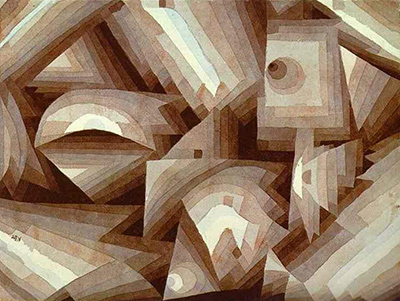
Crystal Gradation
1921 · Kristall-Stufung · Basel object record
Curtain
Dance of the Grieving Child
Original: Tanz des trauernden Kindes II (1922); Bavarian State Painting Collections 14229
Dancing Girl
1940 · Art Institute of Chicago, 1959.172 · Owner record
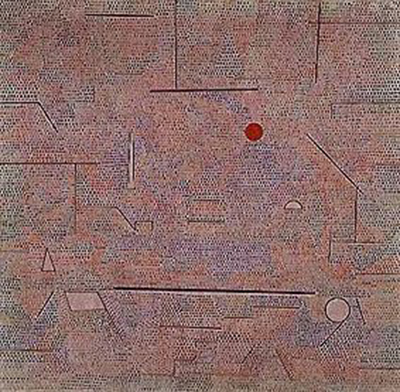
Das Licht und Etliches
Original: Das Licht und Etliches (1931); Bavarian State Painting Collections 14070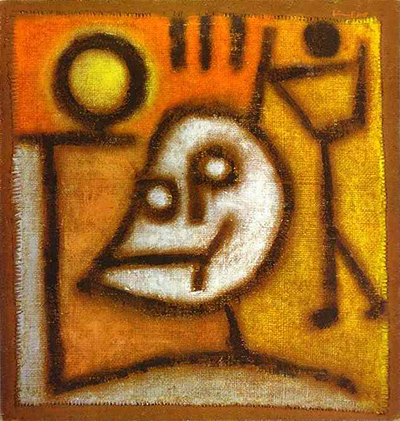
Death and Fire
1940 · Tod und Feuer · ZPK guide
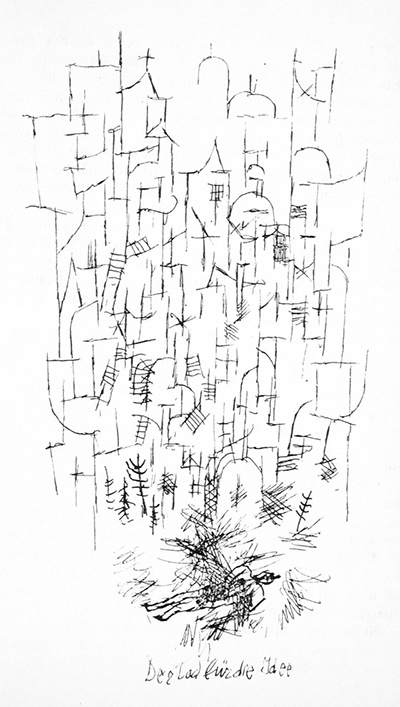
Death for the Idea
1915 · lithograph in Zeit-Echo · MoMA object record
 Paul Klee.jpg)
Death in the Garden (Legend)
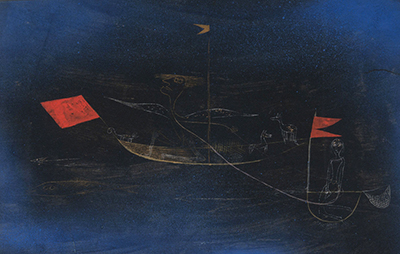
Demon as Pirate
1926 · Philadelphia Museum of Art 1950-134-114 · object record
Diana
Museum title: Diana (1931, 287 (Y 7)); Fondation Beyeler record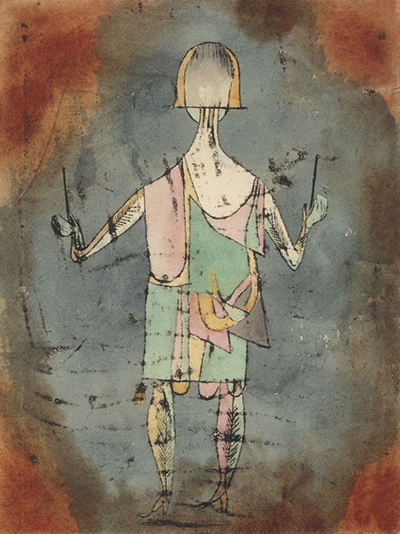
Diavolo Player
1923 · Philadelphia Museum of Art 1963-181-34 · object record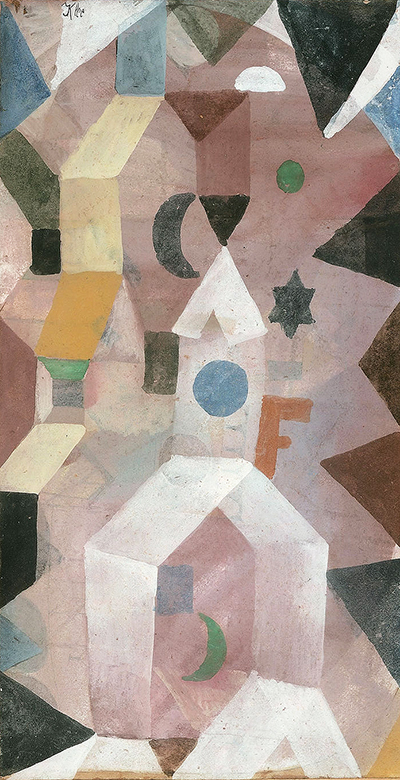
Die Kapelle
Museum title: Die Kapelle (1917, 127); Fondation Beyeler record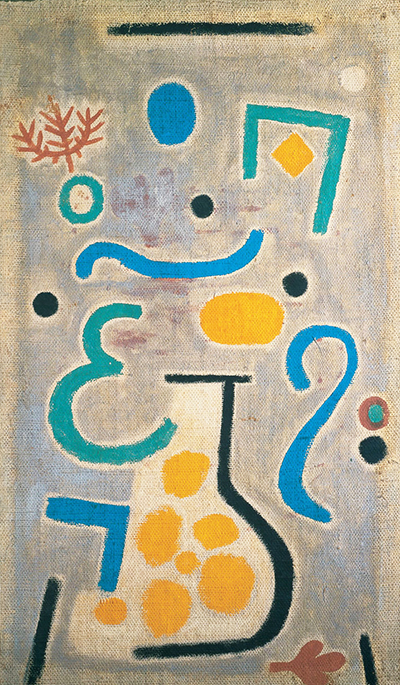
Die Vase
Museum title: die Vase (1938, 122 (J 2)); Fondation Beyeler record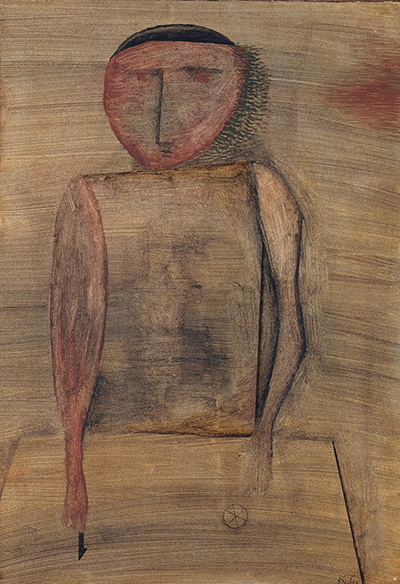
Doctor
1930 · The Met 1984.315.52 · object record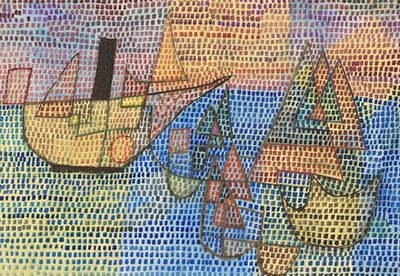
Dredger and Sailboat
Original: Dampfer und Segelbōte (1931); NGA 1983.1.93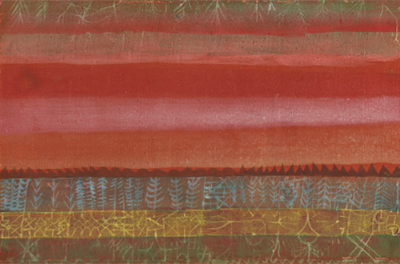
Ebene Landschaft
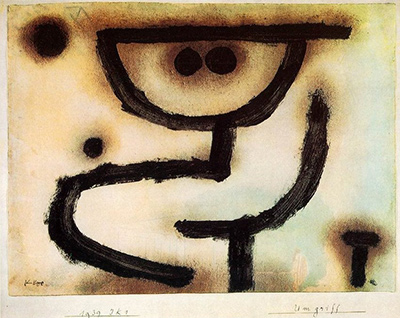
Embrace
Umgriff, 1939, no. 1121 · McMullen Museum catalogue
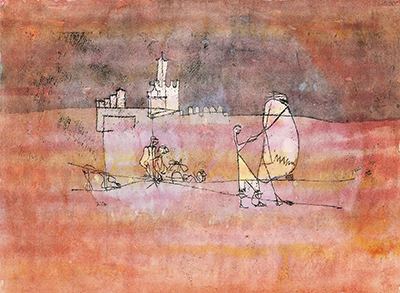
Episode before an Arab Town
1923 · The Met 1987.455.14 · object record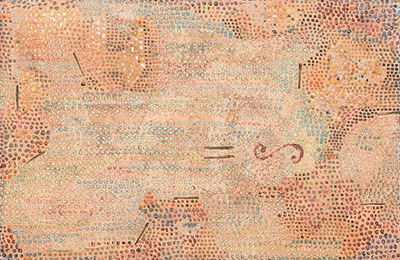
Equals Infinity
Gleich unendlich, 1932 · MoMA 90.1950 · Owner record
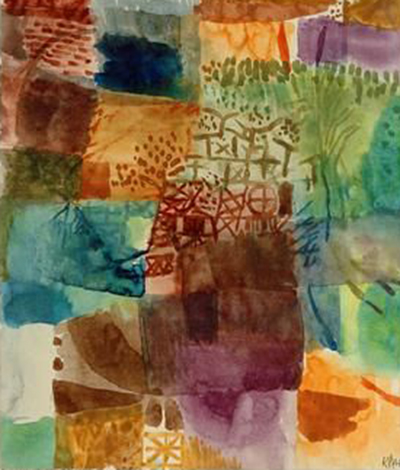
Erinnerung an einen Gart
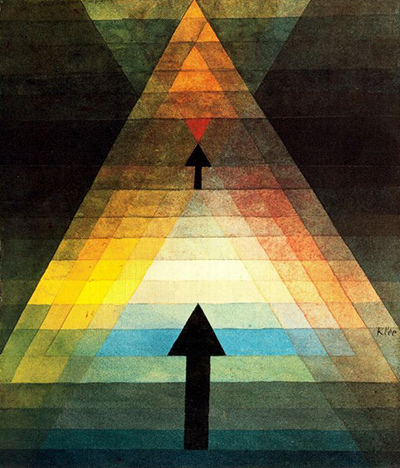
Eros
1923, 115 · Museum Sammlung Rosengart · Collection record
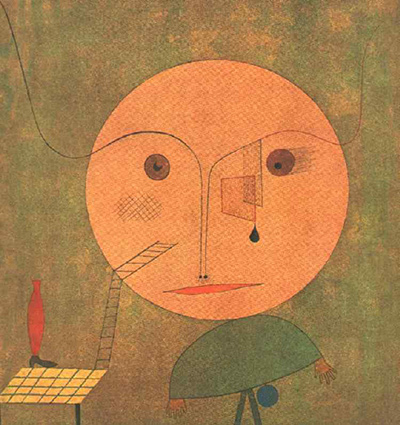
Error on Green
1930 · Irrung auf Grün · JSMA exhibition record
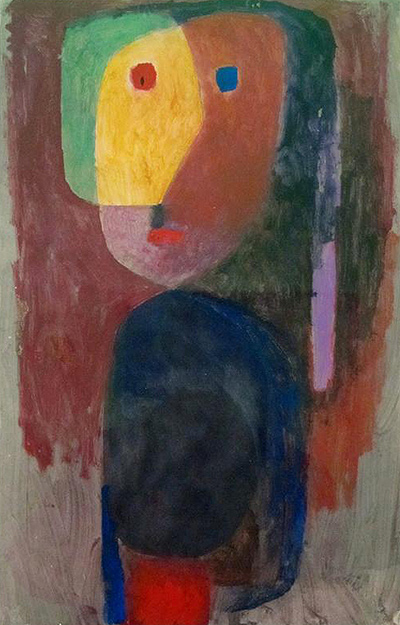
Evening Figure
Abendliche Figur, 1935 · LaM 979.4.128 · Owner record
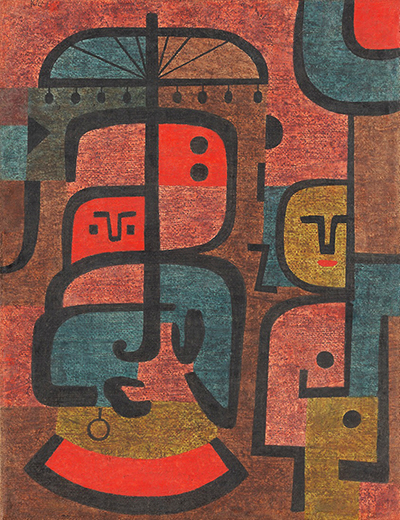
Exotics
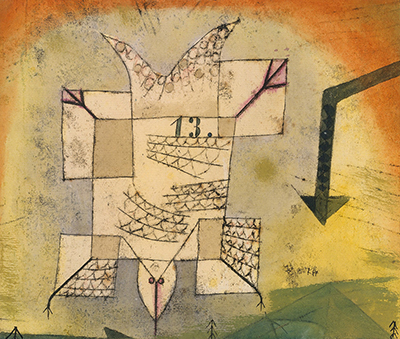
Falling Bird
1919 · The Met 1984.208.4 · object record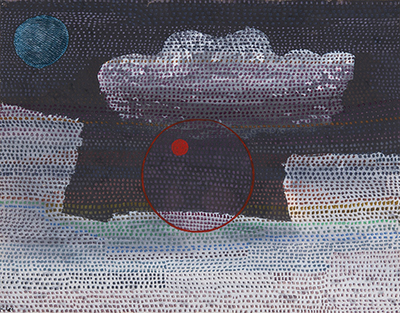
Fermata
1932–1933 · Philadelphia Museum of Art 1963-181-36 · object record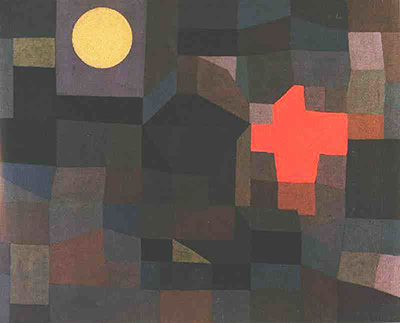
Fire Full Moon
1933 · Feuer bei Vollmond · Folkwang object record
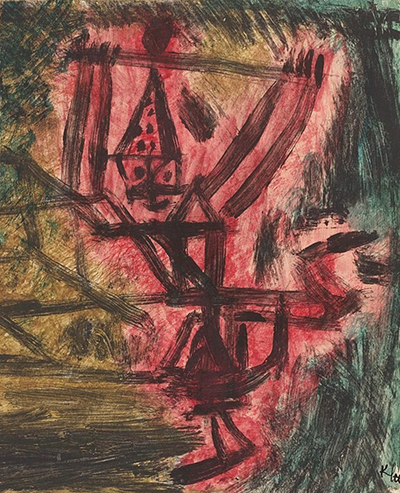
Fire Clown
Original: Feuer Clown I (1921); NGA 2004.140.12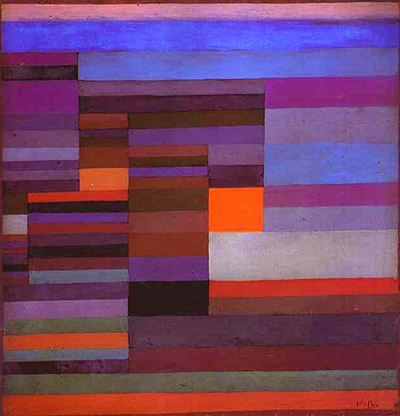
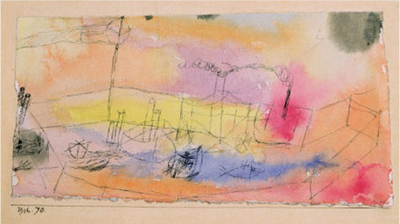
Fish in the Harbour
Der Fisch im Hafen, 1916 · private collection · Image archive record
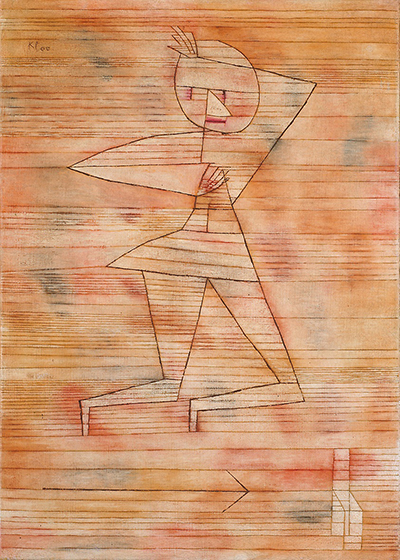
Fleeing Ghost
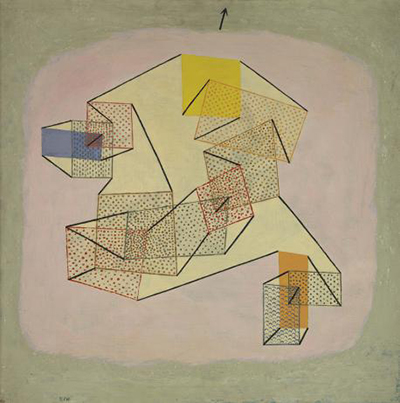
Floating
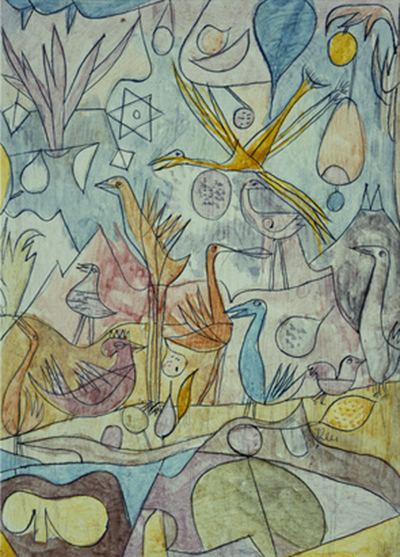
Collection of Birds
Vogelsammlung · 1917 · also known as Flock of Birds · Christie’s Images record
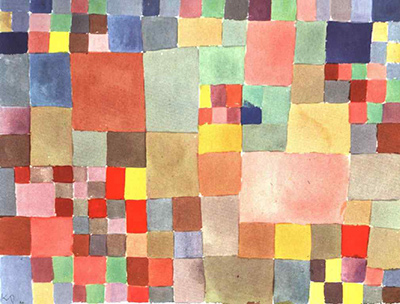
Flora on Sand
1927 · Flora auf Sand · Auction record
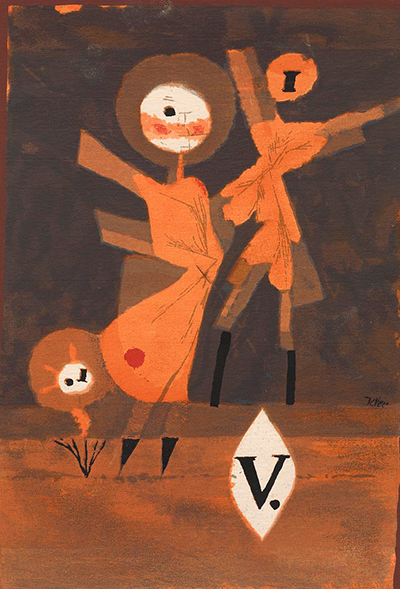
Flower Family V
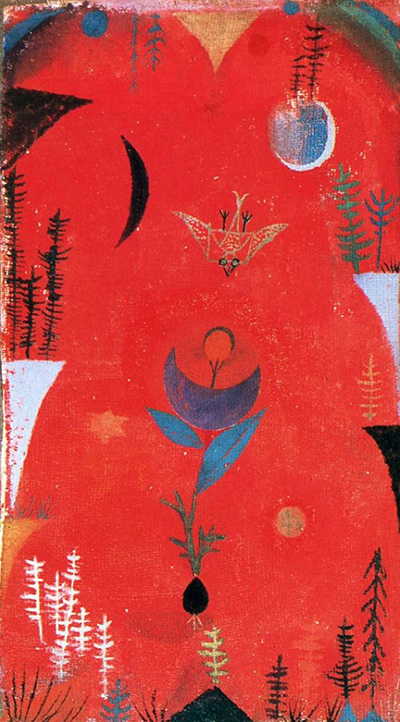
Flower Myth
1918 · Blumenmythos · Sprengel object record
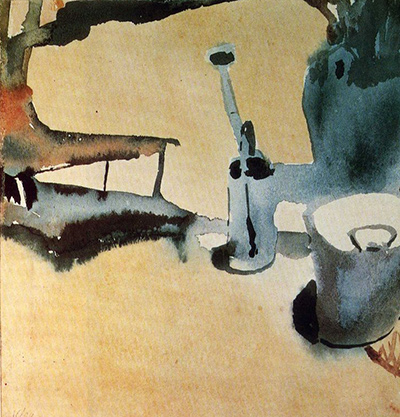
Flower Stand with Watering Can and Bucket
Blumensteg, Gießkanne und Eimer · 1910, 47 (B) · Lenbachhaus · owner record
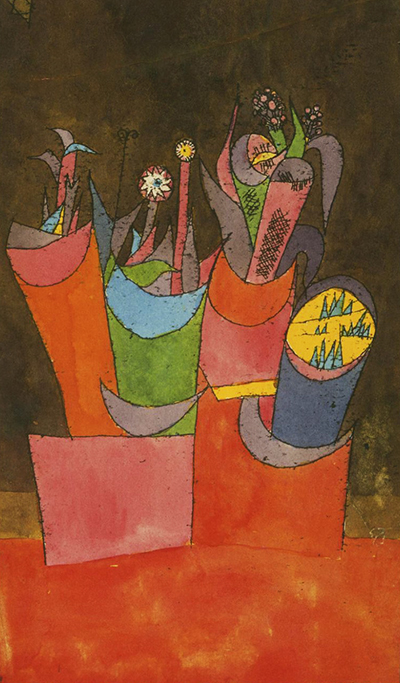
Flowers in Pots
1923 · Philadelphia Museum of Art 1974-178-56 · object record
Flowers in Stone
Blumen in Stein · 1939, 638 (GG 18) · Sprengel Museum Hannover · owner record
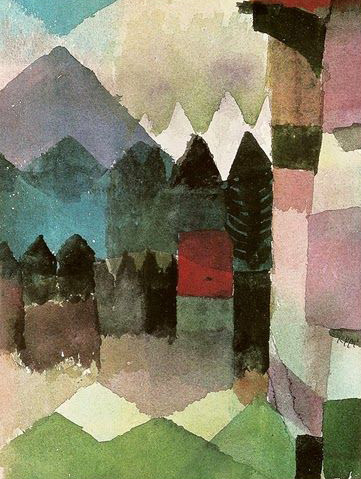
Fohn Wind in Franz Marc's Garden
1915 · Föhn im Marc'schen Garten · Lenbachhaus object record
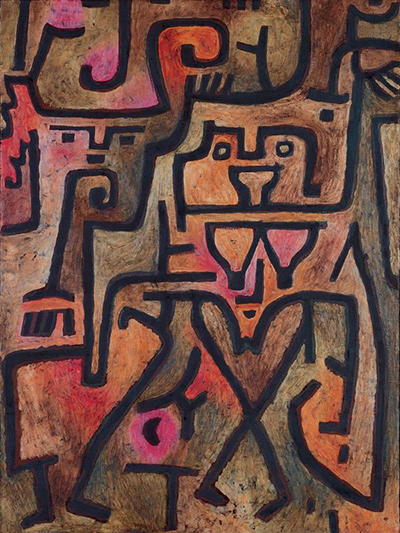
Forest Witches
Original: Wald-Hexen (1938, 145 (K 5)); formerly listed here as “Forest Witch”; Fondation Beyeler record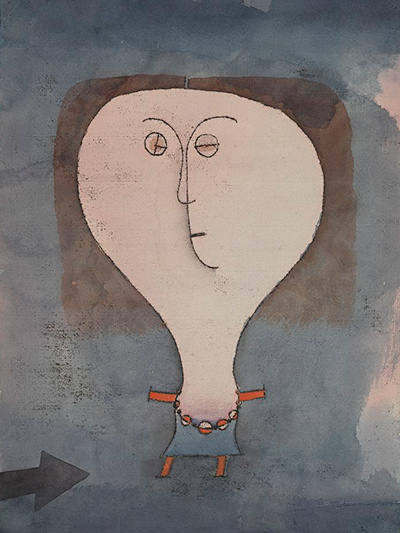
Fright of a Girl
Schreck eines Mädchens · 1922/131 · Guggenheim Museum, New York · owner record
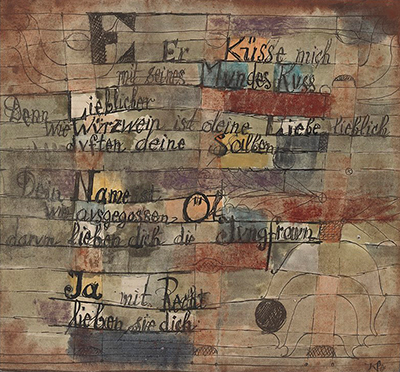
From the Song of Songs - Version II
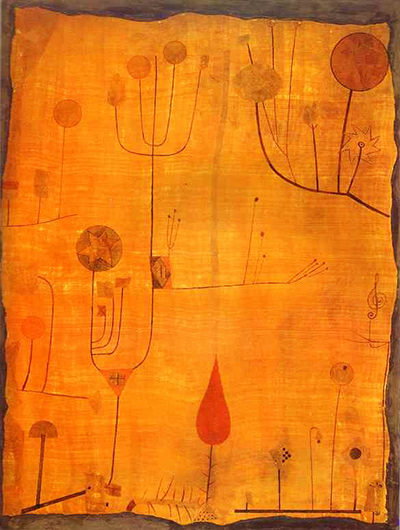
Fruits on Red
Früchte auf Rot · 1930, 263 (AE 3) · Lenbachhaus, Munich · owner record
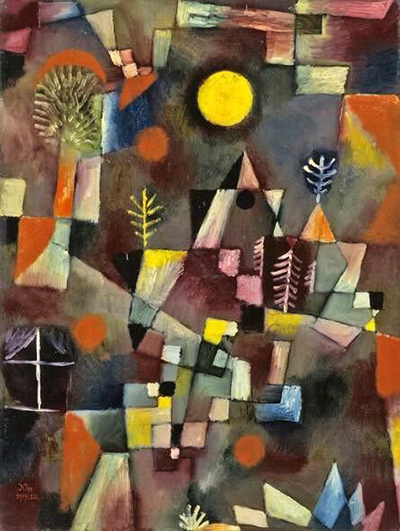
Full Moon
Original: Der Vollmond (1919); Bavarian State Painting Collections 15249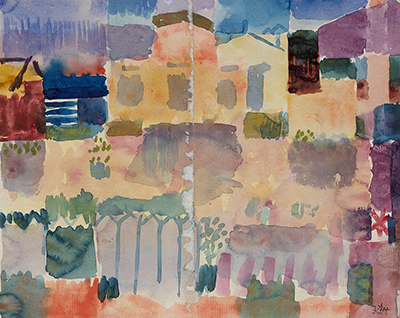
Garden in St Germain, The European Quarter near Tunis
1914 · The Met 1984.315.3 · object record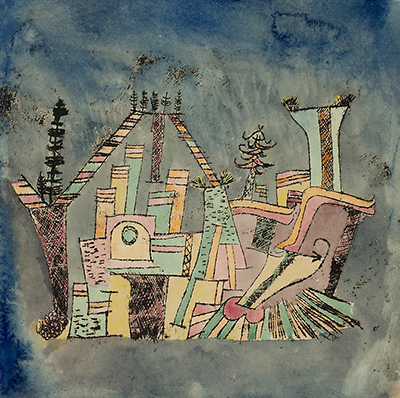
Garden on Debris
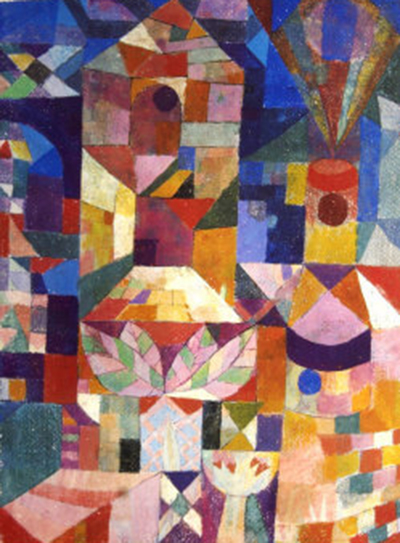
Garden View
 Paul Klee.jpg)
Ghost Chamber with the Tall Door (New Version)
1925 · The Met 1987.455.16 · object record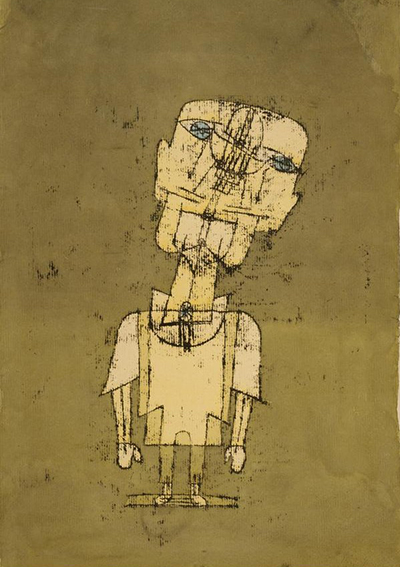
Ghost of a Genius
Original: Gespenst eines Genies (1922, 10); National Galleries of Scotland GMA 2106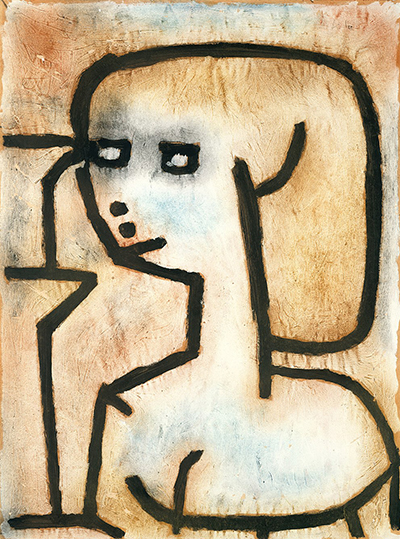
Girl in Mourning
1939 · The Met 1984.315.61 · object record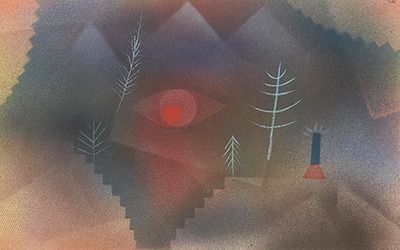
Glance of a Landscape
1926 · Philadelphia Museum of Art 1950-134-120 · object record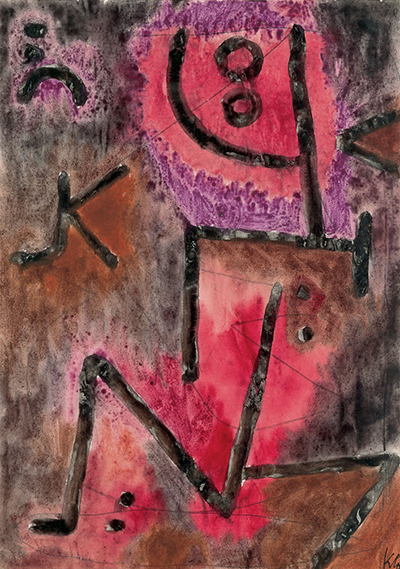
Gluht Nach
Museum title: glüht nach (1939, 925 (YY 5)); Fondation Beyeler record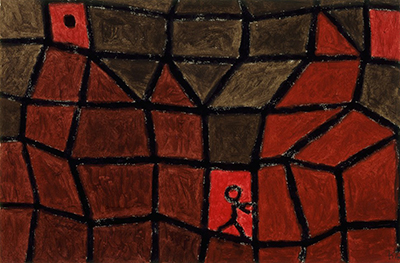
Going next Door
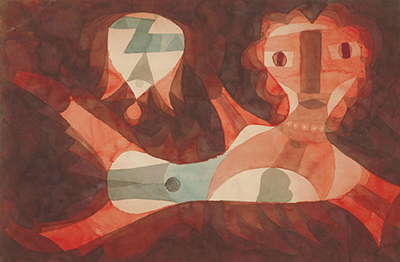
Goldfish Wife
1921 · Philadelphia Museum of Art 1950-134-110 · object record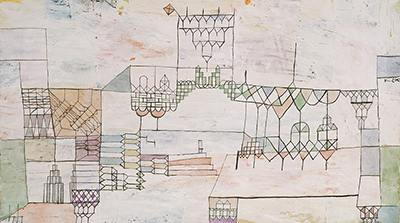
Great Hall for Singers
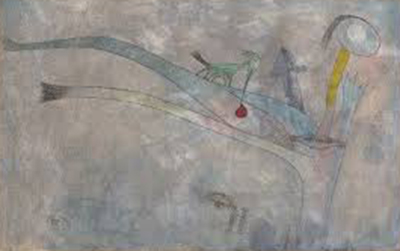
Green Plant, Blood, Louse
Original: Grüne Pflanzen Blutlaus (1924); NGA 1991.38.1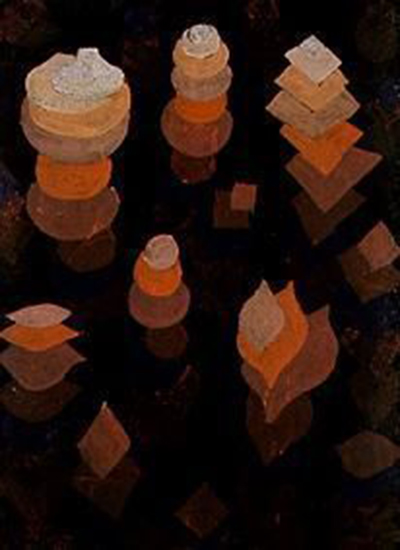
Growth of Night Plants
After browsing the grid
Alphabetical order brings unlike years and objects together. That is its strength for finding a name and its weakness as an art-historical account. A reader who begins at an A title might reach a 1917 mounted watercolour, a 1920 oil transfer, a 1930 gridded picture or a 1939 tempera sheet within a few scrolls. The institution holding each work can tell us what that object is; the specialist essay can ask what its forms and history might mean; the directory makes those routes reachable. None of the three can replace the others.[2][8][16]
The A–G list will continue to change as object identities, old page routes and image sources are checked. Those corrections should sharpen the finding aid without pretending that an alphabetic website directory is Klee's own catalogue. For a chronological view, return to the paintings guide or the Paul Klee home page.[2][3]
References
- Zentrum Paul Klee, collection overview (English; German and French versions). The roughly 80% works-on-paper estimate and distinction within the museum's collection come from one institutional source family.
- Zentrum Paul Klee, archive and research (German; English). Distinguishes the handwritten catalogue, nine-volume publication and successor database available on site by appointment. The printed volumes have not been directly consulted here.
- The History of Art, dated local catalogue identity/rights worklist and bilingual duplicate audit, 26 September 2026. These are internal editorial records of tile count, site routes and visual comparison, not authority for every artwork attribution or reuse right.
- Fondation Beyeler, ein TOR, 1939,911 (XX 11), German archived owner record, inv. 66.1. The museum records the inscribed title and cites the later printed catalogue separately, View source.
- Fondation Beyeler, Nach der UeberSchwemmung, 1936,7 (7), German owner record, inv. 59.3; record of a surviving titled backing fragment, View source.
- Fondation Beyeler, Wald-Hexen, 1938,145 (K 5), English owner record with original German title, View source.
- Fondation Beyeler, vor dem Blitz, 1923,150, German owner record. The lexical distinction between lightning and a later historical “Blitz” is a translation caution, not an attributed artist statement, View source.
- Fondation Beyeler, Die Kapelle, 1917,127, owner medium and inscription; 2017 German exhibition guide, room 2. The guide offers an interpretation, while the record supplies object facts.
- Fondation Beyeler, Besessenes Mädchen, 1924,250, German owner record with material and title inscription, View source.
- Fondation Beyeler, boote in der Überflutung, 1937,222 (V 2), owner record and German, English and French 2017 guides, room 5. The translations are one museum interpretation.
- Fondation Beyeler, Diana, 1931,287 (Y 7), owner record, View source.
- Fondation Beyeler, aufgehender Stern, 1931,230 (V 10), owner record and inscription, View source.
- Fondation Beyeler, die Vase, 1938,122 (J 2), German owner medium “Öl auf Jute auf Jute.”, View source.
- Fondation Beyeler, glüht nach, 1939,925 (YY 5), owner record and title inscription, View source.
- Zentrum Paul Klee, Fokus: Klees Rückseiten and 2026 press kit. The worked-reverse estimate is broad context, not a finding about each grid tile.
- Israel Museum, From Picasso to Kentridge exhibition catalogue, pp. 26–27, for the 1920 object, medium and museum inventory. The dedicated work page distinguishes the original from Benjamin's later interpretation.
- Museum of Modern Art, Around the Fish, owner record, 1926 medium, provenance and exhibition history, View source.
- Philadelphia Museum of Art, Fish Magic, owner technical description; image reuse terms are separate from the object's interpretation, View source.
- Kunstmuseum Basel, Crystal Gradation and Ancient Harmony, German object records and the dedicated work dossiers.
- Museum of Modern Art, Fire in the Evening, current owner record, 1929 and oil on cardboard; the Fondation Beyeler German press dossier identifies the original title and its place among Klee's layered pictures.
- Kunstmuseum Bern, Ad Parnassum, owner record; see the dedicated work dossier for historic captions and technical questions, View source.
- Museum of Modern Art, Cat and Bird, 1928 object and published interpretation; the linked work manuscript separates Klee's painting from later readings, View source.
- Museum of Modern Art, Actor's Mask, current 1924 record; Berlin 2008 exhibition checklist for annual number and fuller title.
- Jordan Schnitzer Museum of Art, Shared Visions, 2026 loan listing for Irrung auf Grün, 1930. The work-specific manuscript addresses other contradictory captions, View source.
- Museum Folkwang, Feuer bei Vollmond, 1933 owner record. Interpretation remains qualified in the dedicated page, View source.
- Zentrum Paul Klee, Death and Fire guide, German owner interpretation, and the late-work page for chronological context.
- Sprengel Museum Hannover, current collection record for Blumen in Stein, object ID 3839, inventory D 3455: 1939 date, oil on cardboard on wooden strips, dimensions and owner photograph. The 970 × 1,200 px owner photograph was compared with both inherited tiles for identity only. K. Porter Aichele's Paul Klee's Pictorial Writing (Cambridge University Press, 2002), list of illustrations, p. ix, independently prints annual number 1939,638 (GG 18). Sprengel's bibliography cites printed Catalogue raisonné Paul Klee no. 8344; that volume was not read directly. The museum's image-use notice does not clear a new enlarged reproduction.
- Städtische Galerie im Lenbachhaus, Föhn im Marc'schen Garten, original title, 1915,102, watercolour on paper on cardboard, and museum interpretation. Its CC BY-NC-SA image terms do not authorise a new commercial body reproduction here, View source.
- Osamu Okuda, Zentrum Paul Klee archive research on Klee's pictures and colour, figure of Burg und Sonne 1928,201, caption and scholarly discussion. Its image is used here as research evidence only, View source.
- Kunstmuseum Basel, Ad marginem, object record, 1930,210 (E 10), revised 1935–36; see also the Kunstmuseum Basel acquisition list for the dating notation. The object dossier keeps orientation and support questions open.
- Centro Cultural Banco do Brasil / Zentrum Paul Klee, Paul Klee: Unstable Balance / Equilíbrio Instável, 2019 exhibition catalogue curated by Fabienne Eggelhöfer, printed pp. 26–27, figure 17 (English and Portuguese): ab ovo, 1917,130, watercolour on primed gauze on paper on cardboard, 14.9 × 26.6 cm, and the adjacent essay on Klee's wartime work with fabrics and stencils. The illustrated plate was visually compared with the local tile; it is research evidence, not an image-reuse licence, View source.
- Solomon R. Guggenheim Museum, Acrobats, 1915, accession 48.1172.67; its owner image was visually compared with the inherited A–G tile. The German Artisten is visible on the lower edge and recorded on the museum-derived Commons file. Los Angeles County Museum of Art, different Acrobats, 1919 lithograph, accession 83.1.1323e. The printed Klee catalogue entry for the Guggenheim sheet has not been read.
- Kunstmuseum Den Haag, Above Mountain Summit, 1917, object 0513244, 31 × 24.1 cm, current medium “gouache on paper,” long-term private-collection loan; the owner image was compared with the inherited cropped tile. Kulturstiftung der Länder, 2018 exhibition caption, gives Über Bergeshöhe; Ernst von Siemens Kunststiftung, 2018 exhibition caption, describes watercolour on paper on card. The conflicting medium lines are not reconciled by the consulted sources.
- Bayerische Staatsgemäldesammlungen, Abenteurer-Schiff, 1927, inv. 13511: detailed medium, separate sheet/image dimensions, Halle confiscation, Fohn exchange and 1964 gift. The owner download was visually matched to the inherited tile and is marked CC BY-SA 4.0 on the museum page; it was not installed as a new website image. Albertina, distinct Abenteurer zur See, 1927,5, collection Batliner.
- Barnes Foundation, Bad Band (Schlechte Musik Kapelle), 1920, BF2534, owner material line, dimensions and interpretive essay; the displayed owner image was visually compared with the inherited tile. Its crayon identification includes a question mark. The Barnes page cites the printed Catalogue raisonné Paul Klee vol. 3 no. 2504, which was not independently read, View source.
- Metropolitan Museum of Art, Athlete's Head, 1932, accession 1987.455.20, materials, dimensions and restricted owner image. Its display image was checked visually against the inherited tile; no new reproduction was installed.
- Städtische Galerie im Lenbachhaus, Erzengel, 1938,82 (G 2), inventory AK 9, owner material sequence, measurements, inscription and permanent-loan credit; its owner image was visually compared with the inherited tile. The owner image is marked CC BY-NC-SA 4.0 and was not installed as a new commercial site figure.
- Städtische Galerie im Lenbachhaus, Botanisches Theater, 1934,219 (U 19), inventory G 15632 / AK 24: medium, dimensions, two inscriptions and German work text on the 1924 start and 1934 reworking/completion. Its owner image was visually compared with the inherited tile. The CC BY-NC-SA owner file was not installed as a new commercial image.
- Bayerische Staatsgemäldesammlungen, Vogelgarten, 1924, inventory 15251: mixed technique on newsprint mounted on card, dimensions and provenance. Its CC BY-SA owner image was visually compared with the inherited tile but not installed.
- Metropolitan Museum of Art, Bird Wandering Off, 1926, accession 1987.455.17: stencil-sprayed and brushed watercolour, inscribed board, dimensions and restricted image terms. Its owner display image was visually compared with the inherited tile and not installed as a new figure.
- Städtische Galerie im Lenbachhaus, Kakteen, circa 1912, inventory G 12840: oil on cardboard, dimensions and provenance. The owner display image was visually compared with the inherited Cacti tile. Its CC BY-NC-SA 4.0 terms were not used as a licence for a new enlarged website image.
- Sprengel Museum Hannover, collection record for Zerbrochener Schlüssel, object ID 2884, inventory Slg. Sprengel II,15: title, 1938 date, layered medium, dimensions, reverse inscription and provenance tabs. The owner image was visually compared with the inherited Broken Key tile. The museum bibliography cites printed Catalogue raisonné Paul Klee no. 7338, which has not been read directly. Its image-use notice does not clear a new enlarged reproduction.
- Detroit Institute of Arts, Arrival of the Air Steamer, 1921, accession 70.345: owner image, oil-transfer/watercolour medium, sheet and image measurements, inscription
1921/17 Ankunft des Luft-Dampfersand Tannahill bequest. The owner web image was visually compared with the inherited 400 px tile for identity only; its downloadable TIFF was not installed as a new site image, View source. - Christian Rümelin, “Klees Umgang mit dem eigenen Œuvre”, in Roland Doschka, ed., Paul Klee: Jahre der Meisterschaft 1919–1933 (2001), pp. 21–37, 215–22 (German full text): discussion of Botanisches Theater and its possible 1923 start, 1924 precursor entry and documented 10 July 1934 completion. The author-uploaded OCR is imperfect; its reconstruction is distinguished from the Lenbachhaus owner's simpler 1924–34 account. The printed catalogue raisonné remains unread directly, View source.
- Barnes Foundation, After a Sketch from Zurich (Nach einer Scizze aus Zürich), 1914, BF1006: owner medium, dimensions and photograph visually compared with the inherited small tile. The owner's citation of printed catalogue raisonné no. 1223 is an indirect cross-reference; the volume was not directly read. The owner image carries an ARS notice and was not adopted as a new enlarged reproduction, View source.
- Detroit Institute of Arts, Captive Pierrot, 1923, 70.341: owner medium, separate sheet and mount dimensions, inscription and photograph compared with the inherited small tile. The downloadable TIFF was not installed as a new site image, View source.
- Kunstsammlung Nordrhein-Westfalen, Kamel (in rhythm. Baumlandschaft), 1920,43, inventory 1030 (German owner record): layered support, unfinished reverse colour study, 2024 reconstructed frame, catalogue raisonné no. 2388 and owner photograph compared with the inherited small tile. The photograph is labelled public domain by the owner; the inherited tile remains unchanged, View source.
- Metropolitan Museum of Art, All Souls' Picture, 1921, accession 1987.455.5: owner medium, size and display image visually compared with the inherited tile. The owner page marks its photograph restricted and credits ARS; no new image was installed, View source.
- Yale University Art Gallery, Autumn Flower, 1922, accession 1941.534: owner material, separate canvas measurements, German inscription, provenance and image compared with the inherited tile. The owner's full view includes the border absent from the local crop, View source.
- Staatliche Museen zu Berlin, Das Universum Klee work list, 2008 (German), entry Nach 1915/29 [Ein Engel bringt das Gewünschte], continuous no. 2436, Klee annual 1920,91, lithograph. SFMOMA, Ein Genius serviert ein kleines Frühstück or Engel bringt das Gewünschte, a watercoloured lithograph impression. The owner image and inherited tile share the line design but have different hand-colouring; the exact local impression remains unidentified.
- Marie Kakinuma, “Die Serie der »Selbstbildnisse« im Jahr 1919 von Paul Klee”, Zwitscher-Maschine 3 (2017), German full text, figs. 5–6 and discussion of the pencil Versunkenheit 1919,75, the coloured first-state lithograph nach der Zeichnung 19/75 1919,113, and the print's periodical publication. Its fig. 6 was visually compared with the inherited tile; the scholar's interpretation of the series is attributed, View source.
- Pinakothek der Moderne, 2018 exhibition page for Paul Klee: Konstruktion des Geheimnisses, institutional identification of the illustrated sheet at the Zentrum Paul Klee; Kulturstiftung der Länder, exhibition caption, first-state watercoloured lithograph, 22.2 × 16 cm, gift of Livia Klee.