 by
Tom Gurney
Tom Gurney BSc (Hons) is an art history expert with over 20 years experience
Email:
tomgurney1@gmail.com
/ Phone:
+44 7429 011000
Conrad Wise Chapman’s Mexican Landscapes: Introduction
Mexico supplied Conrad Wise Chapman with subjects for decades. His pictures range from early views of Monterrey to repeated prospects of the Valley of Mexico and landscapes centered on Ajusco. Mountains and broad skies give these works scale, while people, roads, buildings and cultivation make the terrain inhabited.
His first Mexican journey began after the Confederate defeat in 1865. Later travel, new patrons and returns to earlier material extended that encounter into a continuing practice. The Mexican pictures belong to a substantial part of his career, alongside the better-known Charleston commission. [1]
Their shared subjects should not obscure the individuality of each work. A small canvas, a long study and a later panoramic painting can describe related terrain while having different dates, supports, inscriptions and histories. Those distinctions make comparison more revealing.
Explore the Mexican landscapes
At a Glance
- First Mexican journey Began in 1865.
- Important settings Monterrey, the Valley of Mexico and Ajusco.
- Recurring concerns Inhabited foregrounds, distant mountains, changing scale and repeated views.
- Working history Field material could support later versions made in different circumstances.
- Useful collections Museo de Historia Mexicana, Museo Soumaya and the Cisneros collection, alongside works associated with the Valentine.
Contents
- Monterrey in 1865
- Mexico City and a new patron
- An occupied Valley of Mexico
- Landscape and local customs
- Several objects with related titles
- Later years and returning to earlier material
- Looking at paintings in a museum setting
- Classical landscape and the traveler’s view
- Comparing Mexico with the Charleston pictures
Monterrey in 1865
The Museo de Historia Mexicana’s Vista de Monterrey is dated 1865 and painted in oil on paper. Its broad view brings a mountain setting into relation with the city and activity in the foreground. The museum’s discussion identifies people, carts and animals as elements within the prospect. [2]
The long format gives those elements room to spread across the view. A settlement can occupy one band of space while the mountains extend beyond it. Close activity establishes the scale from which the farther terrain is understood, preventing the panorama from becoming only a distant silhouette.
This early Mexican subject is distinct from Chapman’s later Monterrey paintings. A repeated place name identifies a continuing interest, but it does not supply a shared creation date or a single surviving object. The later Monterrey desde el cerro de Chipinque , dated 1902, belongs to a different moment in his work. [3]
Mexico City and a new patron
The account reproduced from Ben Bassham’s Timken exhibition essay places Chapman in Mexico City in January 1866. He undertook survey work east of the capital in connection with Maximilian’s settlement of former Confederates. When that project ended, he returned to the city, where his Monterrey pictures found a buyer. [4]
The buyer was W. R. Jolly, an English engineer and industrialist. A commission associated with Jolly’s tile factory developed alongside Chapman’s wider interest in the Valley of Mexico. The project supplied material for studies and later versions, linking an individual patron’s enterprise with an extensive landscape subject. [4]
The connection changes how a prospect can be read. Industry and settlement are part of the terrain rather than intrusions outside the picture’s main concern. A factory might occupy only a small portion of a view yet help explain why that view was commissioned. Geography and patronage operate at different scales within the same painting.
An occupied Valley of Mexico
The small Valle de México in the Cisneros collection is dated 1870. It is an oil on canvas measuring 13.34 by 20.32 centimeters. Its foreground includes people resting, carrying out domestic tasks and working in the open ground, while water, buildings and mountains extend toward the horizon. [5]
The arrangement connects different kinds of activity across the view. A camp gives domestic life a visible place, while work farther to the side draws attention outward. Above those figures, the terrain broadens into successive distances. The picture’s intimate physical scale makes the extent of the represented space particularly notable.
The collection’s commentary emphasizes the inhabited character of this landscape. That observation gives a useful route through Chapman’s Mexican subjects more generally: examine the foreground before allowing the mountain distance to dominate the whole reading. The people establish particular uses of the land as well as a measure of its size. [5]
Landscape and local customs
The Museo Soumaya’s Paisaje mexicano , dated 1877, centers on Ajusco. The museum records oil on canvas and dimensions of 48.5 by 65.3 centimeters. Its discussion connects the picture with figures appearing in other Chapman works, including a standing man and a person beside a horse. [6]
Repeating figures provides a connection among otherwise distinct compositions. A familiar body, pose or activity can become working material that is placed within a different landscape. The repetition therefore deserves attention alongside the treatment of mountains and light; it shows how a scene could develop through the reuse and rearrangement of observed or studied forms.
The museum relates Chapman’s art to Mexican landscape painting and costumbrismo, the representation of local customs and everyday life. That context encourages attention to the activities and social types placed within a view. It also places his foreign perspective alongside the work of Mexican painters rather than treating his pictures as an isolated account of the country. [6]
The Soumaya commentary specifically names Luis Coto and José María Velasco in this comparison. The connection concerns the representation of local identities and everyday subjects within landscape. It gives the people in Chapman’s foregrounds a place within a regional artistic discussion, alongside the treatment of distant terrain. Comparing who occupies a view and what they are doing can therefore be as revealing as comparing the outlines of mountains. [6]
Several objects with related titles
Chapman returned repeatedly to the Valley of Mexico. The 1870 Cisneros canvas is a different painting from the 1894 work formerly in the Timken Museum. The latter is a much wider oil on canvas with an inscription identifying its making for Alejandro Najera. Its object record preserves a particular commission and history within the recurring subject. [4]
The panoramic San Angel study introduces another format. Sotheby’s describes oil on canvas laid down on board, measuring 14.3 by 82.5 centimeters. Its catalogue dates execution to 1866 while recording an inscription dated 1865 on the reverse. The two kinds of date need to remain distinguishable when identifying the work. [7]
The Valley of Mexico article follows these objects together. Comparing their scale and recorded circumstances shows how much can change within a repeated subject. A title shared across several works should begin an inquiry into versions, rather than stand in for each object’s identity.
Watch: Conrad Wise Chapman
Two Spanish-language museum films explore Chapman and his views of Mexico.
#ElSoumayaEnCasa | Conrad Wise Chapman
Museo Soumaya introduces Chapman and his work. This museum presentation is in Spanish.
Watch on YouTubeLater years and returning to earlier material
The Library of Virginia records Chapman’s return to Mexico in 1883 and describes him painting variations of earlier Valley views. He also colored photographs to support himself and his wife, Laura Seagar. The Mexican landscapes formed part of continuing professional work within a life of repeated moves. [1]
An earlier study can retain value after the circumstances of its making have changed. It supplies a remembered arrangement, a figure or a position from which a later picture can develop. Repetition need not imply an identical result: altering proportions, selecting different details or adjusting the relation between near and far changes the experience of a view.
The Cisneros commentary explicitly notes that Chapman painted the valley both in front of the subject and from notes and memory. That distinction is important across the later works. A represented Mexican location does not by itself establish where the finished picture was painted or when each detail was first observed. [5]
Looking at paintings in a museum setting
Luis Alvaz’s 2023 photograph of México desde la hacienda de los Morales identifies the painting as 1896. The complete frame surrounds a landscape with figures near a building, cultivated ground and an extensive view beyond. Its visible gallery lighting forms part of the photograph’s record of the object as encountered. [8]
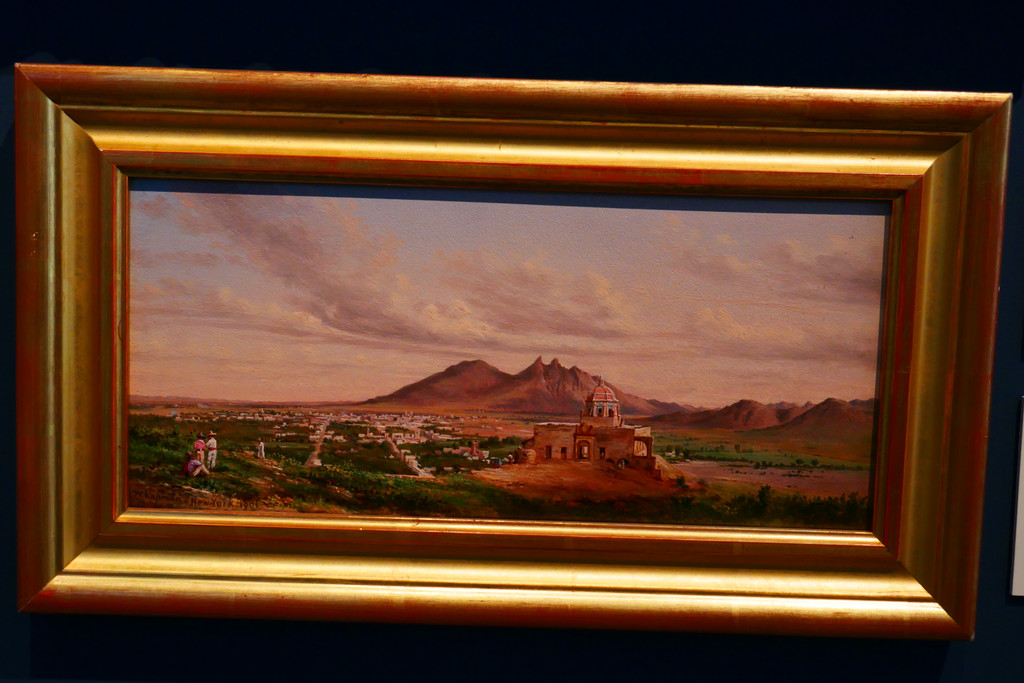
His photograph of Monterrey desde el cerro de Chipinque records a larger framed prospect with a prominent foreground building and a mountain rising beyond the city. The painting is identified as 1902, and its lower-left signature includes New York. The photographed work thus offers a concrete example of a Mexican subject carrying a connection to another place in its inscription. [3]
The dates of the photographs and paintings answer different questions. The camera records a museum encounter in 2023; the works themselves belong to the 1890s and early 1900s. Keeping that distinction clear allows a photograph to contribute information about display, frame and physical appearance without becoming a new date for the art.
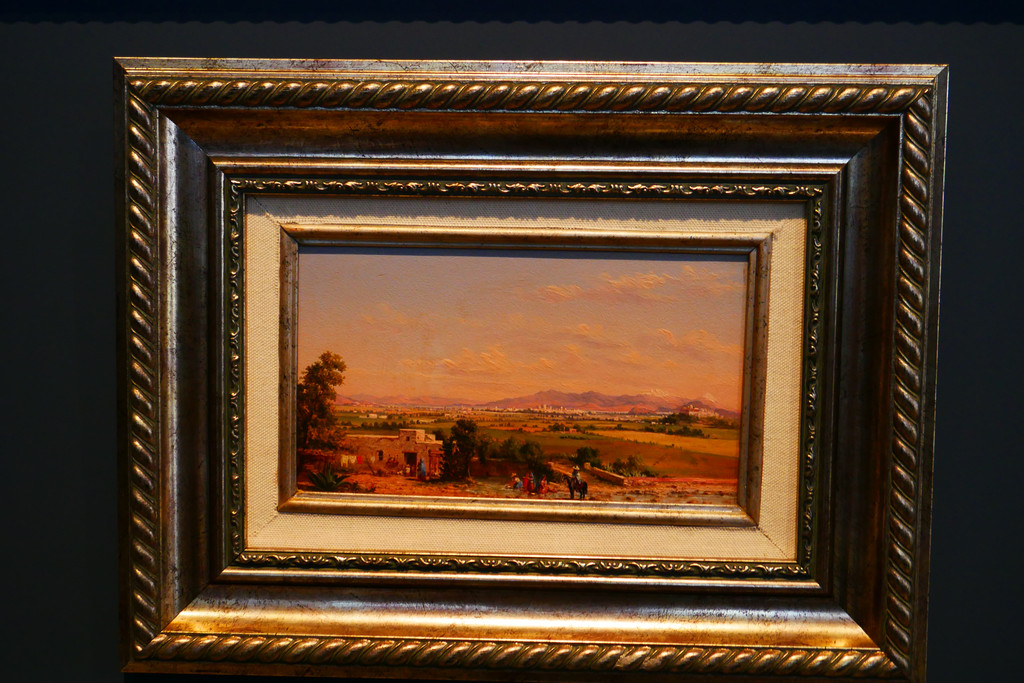
Luis Alvaz’s 2023 photograph of México desde la hacienda de los Morales, identified as 1896. Frame, background and gallery lighting remain visible. Luis Alvaz, photograph of México desde la hacienda de los Morales (1896) by Conrad Wise Chapman, Museo Internacional del Barroco, 21 April 2023. CC BY-SA 4.0.
Image source
.
CC BY-SA 4.0; photograph by Luis Alvaz, 21 April 2023
. Photograph by Luis Alvaz (2023), CC BY-SA 4.0. Resized only; no crop or colour changes. This resized photograph remains CC BY-SA 4.0.
Classical landscape and the traveler’s view
Marisa Day’s 2011 study focuses on Mexican landscapes associated with the Valentine Museum and sets out to consider classical landscape traditions alongside earlier traveler art. Its stated scope gives a useful context for Chapman’s combination of European training and Mexican subjects. [9]
Chapman had already worked with a long landscape format in Italy. Mary K. McGuigan’s study reproduces his Landscape at Frattocchie , dated 1861, measuring 11.7 by 38.2 centimeters. The early narrow prospect predates his first Mexican journey. It locates the panoramic interest within his training as well as his later response to Mexico, making it possible to consider a continuing compositional habit across a change of place, patrons and represented activities. [10]
The relationship can be considered through concrete arrangements. A nearby group gives the eye a starting point; cultivated land or settlement extends the inhabited space; a mountain range establishes a distant limit. These elements make an extensive prospect readable while retaining selected activities within it.
The foreign painter’s viewpoint also invites questions about selection. Which people are represented? How large are they within the landscape? Do buildings identify a particular place, serve a patron’s interest or organize the composition? Such questions keep the apparent ease of a broad panorama connected with the decisions that make it legible.
Comparing Mexico with the Charleston pictures
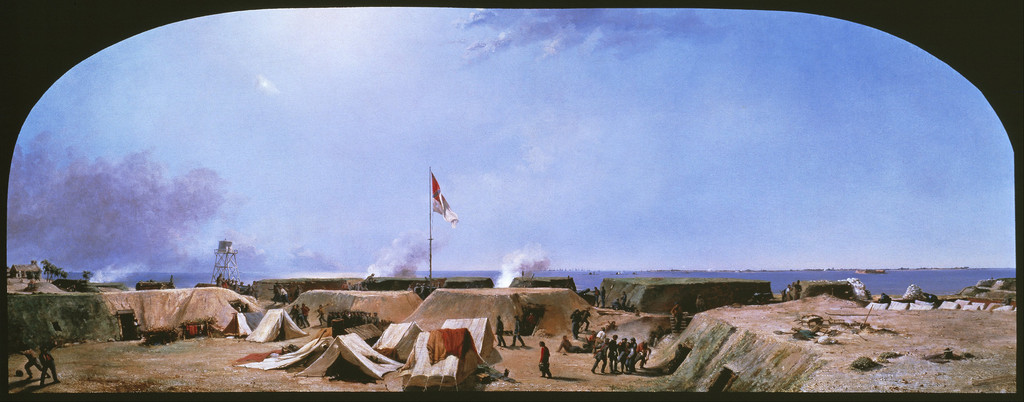
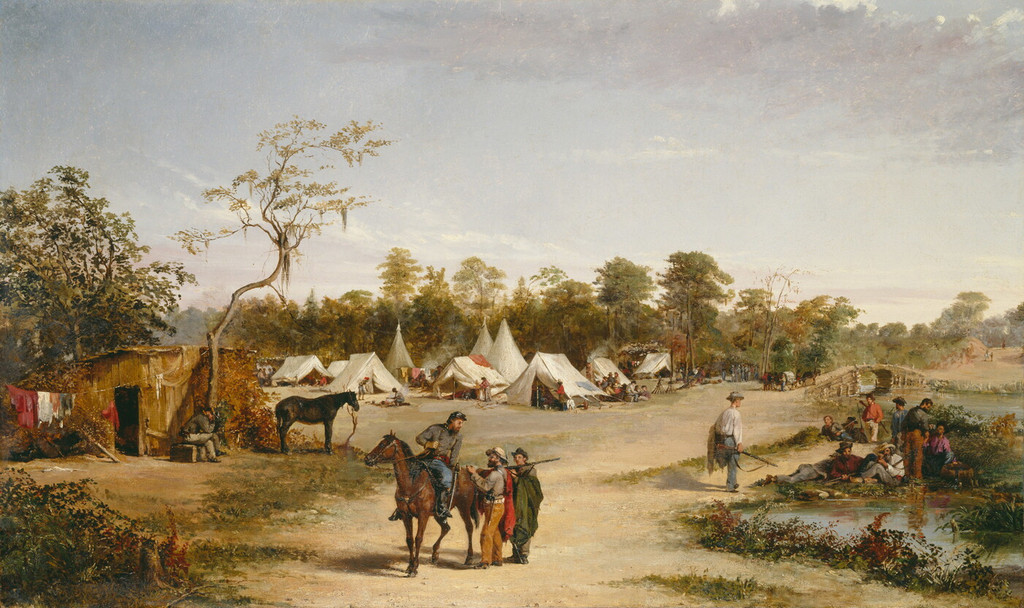
The Civil War paintings and Mexican landscapes contain different subjects, yet both often relate a low area of human activity to a much wider setting. A group of tents, a camp or a cluster of workers gives the spectator an immediate scale before the eye travels toward water, buildings or mountains.
The historical circumstances remain different. The Charleston project began within a Confederate military commission; the Mexican pictures developed through travel, survey work, patrons and a continuing market for landscapes. Similar compositional habits do not make those histories interchangeable.
For an introduction, compare the small Cisneros valley with the later framed Monterrey view. Notice how the foreground gathers attention and how quickly the terrain opens beyond it. Then follow the separate object histories. That movement between looking and identification gives Chapman’s Mexican career its full place within the broader story of American artists working across national settings.
Artworks directory
Browse 46 works identified in the consulted collection and catalogue records, including all 31 pictures in the father-and-son Charleston portfolio. Six entries explicitly credit John Gadsby Chapman. Approximate 1864–65 labels describe the series period; dates within its titles describe scenes and sometimes conflict with other catalogues. Other dates identify the separate objects or commissions. Links open our article where available, or the cited record. This is a research-based directory, not a catalogue raisonné.
| Name | Date | Medium |
|---|---|---|
| Battery Chevis, Mar. 4, 1864 | Series, c. 1864–65; scene date in title where given | Painting |
| Forts Sumter & Johnson, Mar. 15, 1864 | Series, c. 1864–65; scene date in title where given | Painting |
| Entrance to Fort Sumter — John Gadsby Chapman, from Conrad’s studies | Series, c. 1864–65; scene date in title where given | Painting |
| White Point Battery Charleston, Dec. 24, 1863 | Series, c. 1864–65; scene date in title where given | Painting |
| Quaker Battery (imagined scene) | Series, c. 1864–65; scene date in title where given | Painting |
| Fort Moultrie, Nov. 11, 1863 | Series, c. 1864–65; scene date in title where given | Painting |
| Battery on Long Island, Dec. 4, 1863 | Series, c. 1864–65; scene date in title where given | Painting |
| Church Flat Camp, Dec. 10, 1864 | Series, c. 1864–65; scene date in title where given | Painting |
| Fort Johnson, Oct. 10, 1863 | Series, c. 1864–65; scene date in title where given | Painting |
| Battery Halston — John Gadsby Chapman, from Conrad’s studies | Series, c. 1864–65; scene date in title where given | Painting |
| Charleston Bay and City — John Gadsby Chapman, from Conrad’s studies | Series, c. 1864–65; scene date in title where given | Painting |
| Battery Marion, Nov. 4, 1863 | Series, c. 1864–65; scene date in title where given | Painting |
| Battery Marshall, Sullivan's Island, Dec. 4, 1863 | Series, c. 1864–65; scene date in title where given | Painting |
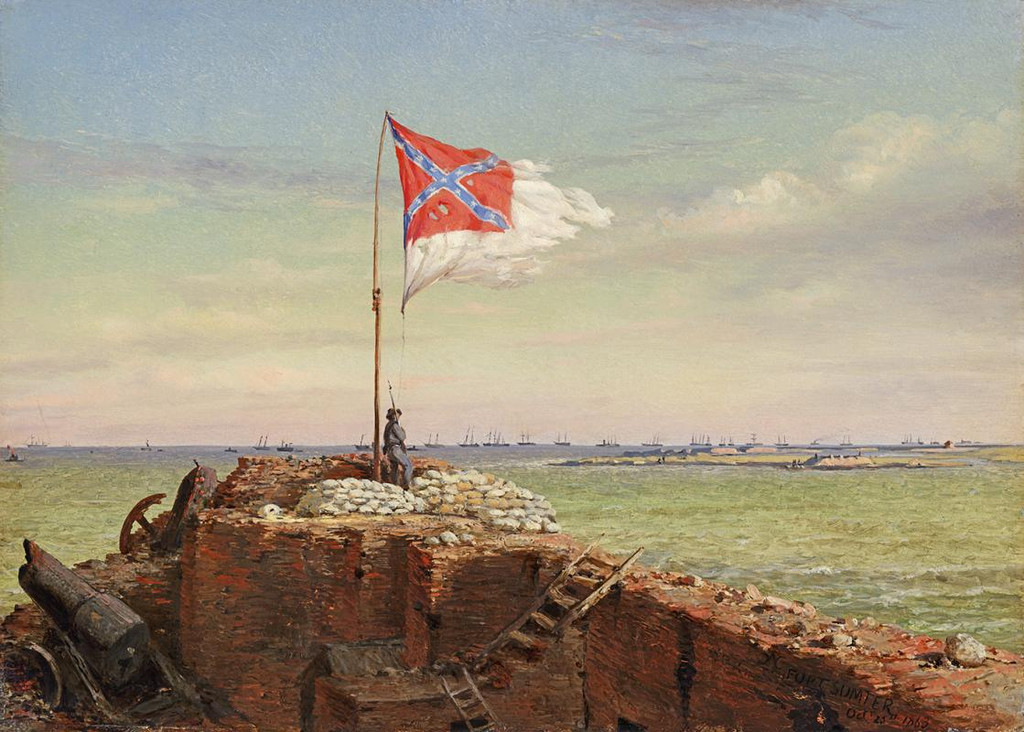
| The Flag of Sumter, Oct. 20, 1863 | 1863–64; scene 20 October 1863 | Painting |
| Battery Beauregard, Nov. 22, 1863 — John Gadsby Chapman, from Conrad’s studies | Series, c. 1864–65; scene date in title where given | Painting |
| Fort Moultrie, Interior, Sep. 16, 1863 (portfolio index entry) | Series, c. 1864–65; scene date in title where given | Painting |
| Battery Bee, Dec. 3, 1863 | Series, c. 1864–65; scene date in title where given | Painting |
| Battery Wampler, Mar. 4, 1864 | Series, c. 1864–65; scene date in title where given | Painting |
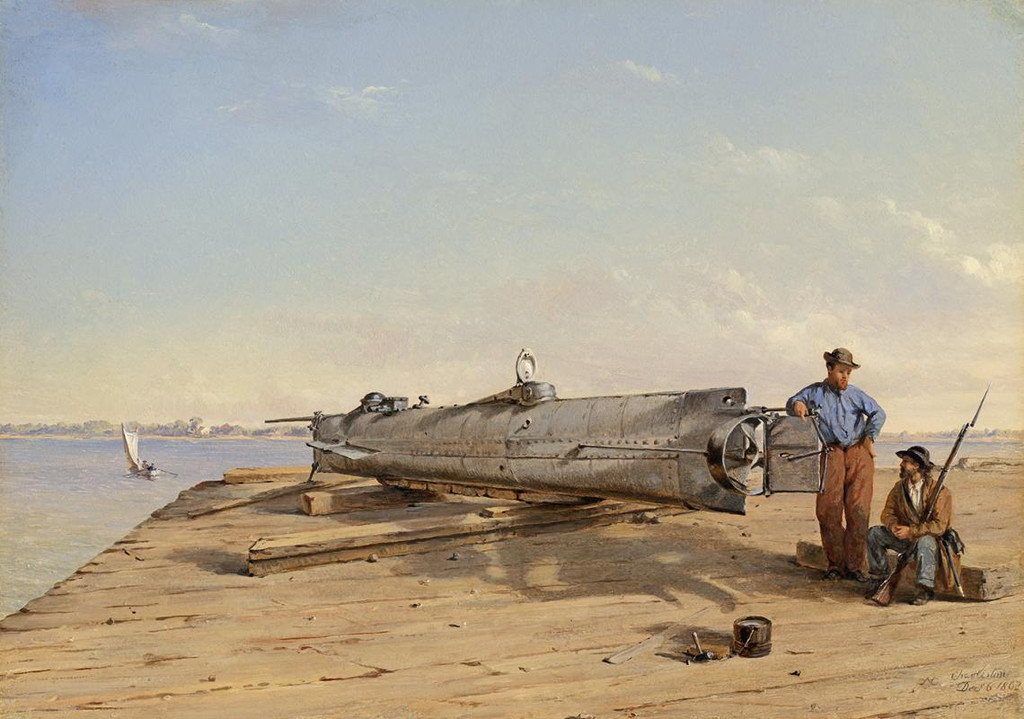
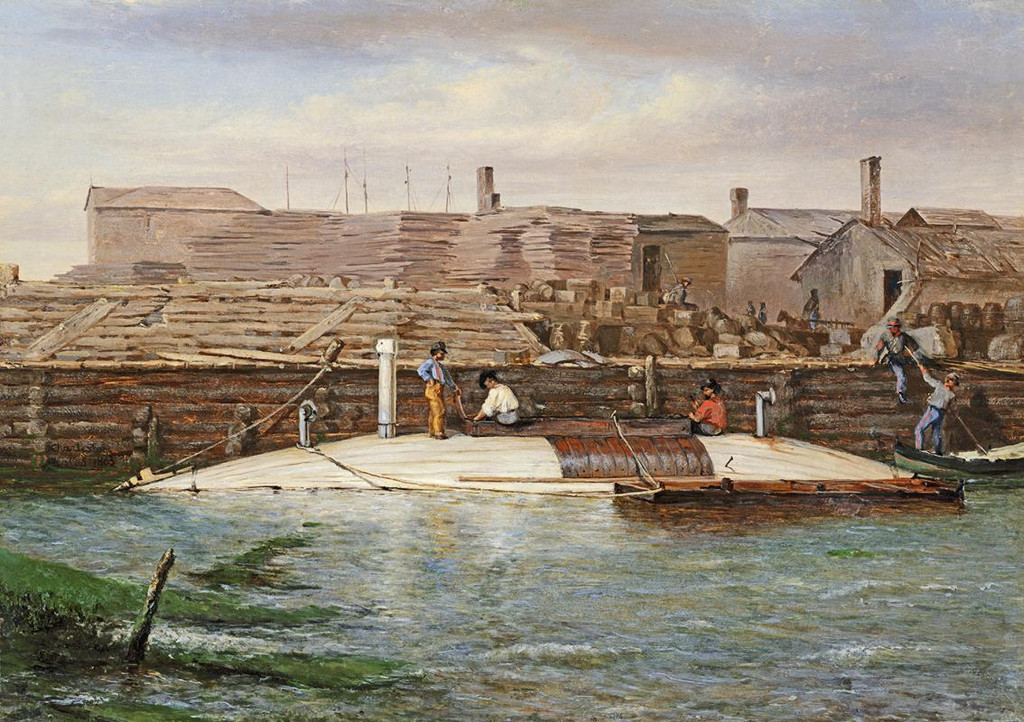
| Submarine Torpedo Boat H.L. Hunley, Dec. 6, 1863 | 1864; scene 6 December 1863 | Painting |
| Battery Simkins, Feb. 25, 1864 | Series, c. 1864–65; scene date in title where given | Painting |
| Fort Sumter [Gun Gallery], Dec. 8, 1863 | Series, c. 1864–65; scene date in title where given | Painting |
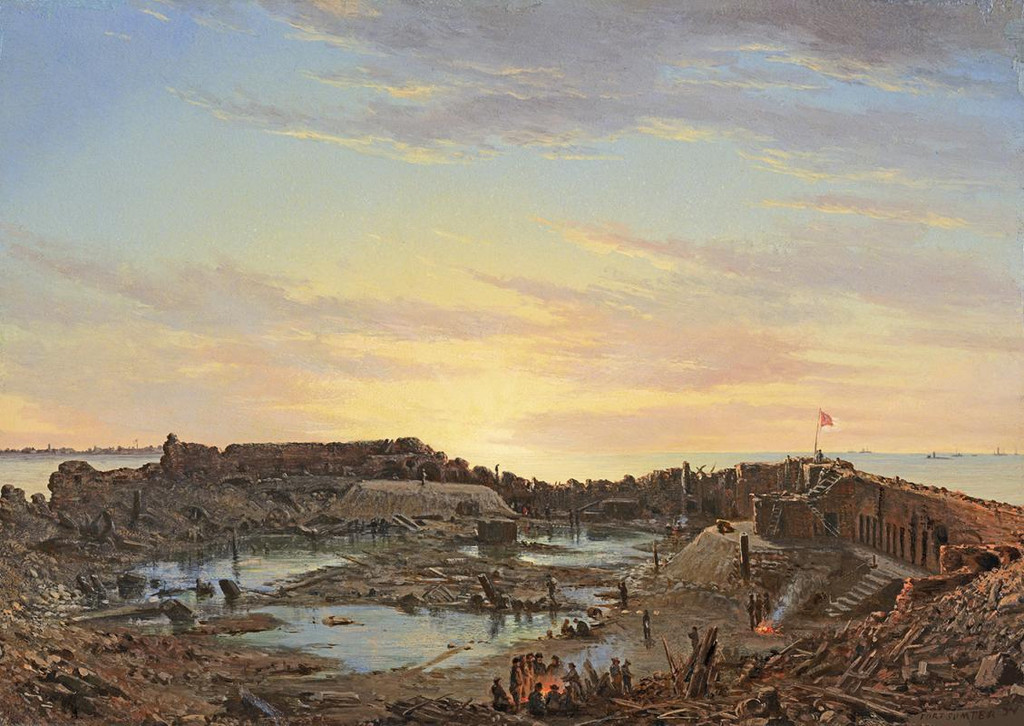
| Fort Sumter, Interior, Sunrise, Dec. 9, 1864 | 1864; published scene dates differ | Painting |
| Torpedo Boat David at Charleston Dock, Oct. 25, 1863 | 1864; scene 25 October 1863 | Painting |
| Federal Battery on Morris Island, Feb. 12, 1864 | Series, c. 1864–65; scene date in title where given | Painting |
| Fort Sumter from Moultrie, Nov. 10, 1863 | Series, c. 1864–65; scene date in title where given | Painting |
| Battery Marshall from Long Island, Nov. 18, 1863 | Series, c. 1864–65; scene date in title where given | Painting |
| Evening Gun, Fort Sumter — John Gadsby Chapman, from Conrad’s studies | Series, c. 1864–65; scene date in title where given | Painting |
| Battery Haskel, Mar. 4, 1864 — John Gadsby Chapman, from Conrad’s studies | Series, c. 1864–65; scene date in title where given | Painting |
| Battery Rutledge, Dec. 3, 1864 | Series, c. 1864–65; scene date in title where given | Painting |
| Night Bombardment, Dec. 10, 1864 | Series, c. 1864–65; scene date in title where given | Painting |
| Battery Laurens Street Charleston, Feb. 7, 1864 | Series, c. 1864–65; scene date in title where given | Painting |
| Bombardment of Fort Moultrie (Gibbes panorama) | 1864; scene 16 November 1863 | Oil on canvas |
| The Fifty-ninth Virginia Infantry—Wise’s Brigade | Probably 1867; scene September 1863 | Oil on canvas |
| Camp No. 2, Terrenos Baldios | 1860; setting unidentified | Oil on wood panel |
| Frattocchie | 1861 | Oil painting |
| French Encampment at Monterrey | 1865; described in historical catalogue essay | Painting |
| Vista de Monterrey | 1865 | Oil on paper |
| Valley of Mexico (Jolly commission) | 1865/66 commission; catalogue dates vary | Painting |
| Valle de México (Cisneros version) | 1870 | Oil on canvas |
| Important Panoramic View of the Valley of Mexico, San Angel | Executed 1866; reverse inscribed 1865 | Oil on canvas laid down on board |
| Valle de México (Alejandro Najera commission) | 1894 | Oil on canvas |
| Paisaje mexicano (Ajusco) | 1877 | Oil on canvas |
| México desde la hacienda de los Morales | 1896; photographed in 2023 | Painting |
| Monterrey desde el cerro de Chipinque | 1902; photographed in 2023 | Painting |
| Valley of Mexico (Valentine version) | 1902 | Oil on wood |
| Picket Post | 1863 | Engraving |
Frequently Asked Questions
The Cisneros commentary describes works made on site as well as from notes and memory. Later versions need their own creation histories. [5]
Discussion
Look again at the images and ideas explored in Conrad Wise Chapman’s Mexican Landscapes. These editorial prompts invite your observations.
Reader Insights
Compare the collection descriptions with the gallery photographs. How do people and buildings give an extensive landscape its scale?
How do the two gallery photographs change your awareness of frame, lighting and the physical painting?
Choose two dated versions. Which details belong to the exact object, and which connect it with a recurring subject?
Join the Conversation
Share a detail, comparison or question about Conrad Wise Chapman’s Mexican Landscapes below.
References
- Library of Virginia , Father and Son, 1998–99 exhibition. Mexican journeys, later work and family livelihood. View source
- Museo de Historia Mexicana , 3 Museos, Vista de Monterrey. The 1865 oil on paper, subject and collection record. View source
- Luis Alvaz , Monterrey desde el cerro de Chipinque, museum photograph. Painting dated 1902 with a visible New York inscription; photograph made 21 April 2023, CC BY-SA 4.0. View source
- Christie’s , Valle de México, 1894, lot 4010480. Exact later canvas and permitted excerpts from Ben Bassham’s Timken essay concerning the first journey and Jolly commission. View source
- Colección Patricia Phelps de Cisneros , Valle de México, 1870. Small canvas, inhabited view and work from observation, notes and memory. View source
- Museo Soumaya , Paisaje mexicano, 1877, partner catalogue. Ajusco, repeated figures and attributed landscape context. View source
- Sotheby’s , Important Panoramic View of the Valley of Mexico, San Angel, 2024, lot 38. Support, dimensions, 1866 execution date and 1865 reverse inscription. View source
- Luis Alvaz , México desde la hacienda de los Morales, museum photograph. Painting identified as 1896; photograph made 21 April 2023, CC BY-SA 4.0. View source
- Marisa Day , Conrad Wise Chapman and the Mexican Landscape, Virginia Commonwealth University, 2011. Repository abstract consulted for the study’s scope and framing; not the complete thesis. View source
- Mary K. McGuigan , Scenery Found, in American Latium, 2023, consulted pp. 160–163. Conrad’s Landscape at Frattocchie, 1861, and family practice in Italy. View source
- Splash image source.
Monterrey desde el cerro de Chipinque, 1902, photographed by Luis Alvaz in 2023 at the Museo Internacional del Barroco. A later Monterrey painting within its frame. Luis Alvaz, photograph of Monterrey desde el cerro de Chipinque (1902) by Conrad Wise Chapman, Museo Internacional del Barroco, 21 April 2023. CC BY-SA 4.0. CC BY-SA 4.0; photograph by Luis Alvaz, 21 April 2023 . Photograph by Luis Alvaz (2023), CC BY-SA 4.0. Resized only; no crop or colour changes. This resized photograph remains CC BY-SA 4.0.
View source