by Tom Gurney
Tom Gurney BSc (Hons) is an art history expert with over 20 years experience
Published on June 19, 2020 / Updated on November 6, 2026
Email: tomgurney1@gmail.com / Phone: +44 7429 011000
Felix Klee and Paul Klee
Felix Klee was the only child of the painter Paul Klee and the pianist Lily Klee, née Stumpf. His place in the artist's story extends beyond childhood portraits. He grew up within a household shaped by music, teaching and visual invention, then helped preserve the documents through which later generations came to understand his father. His role is best understood through the family biography and archive, rather than by treating every reference to his name as the title of a particular painting.
The Zentrum Paul Klee's biography records Felix's birth on 30 November 1907, following Paul and Lily's marriage in 1906 and their move to Munich. Its accounts of the collection and archive also identify Felix as a significant custodian of the family legacy. This page considers those two connected roles: child within the working household and adult participant in the transmission of an artist's life. [1] [2]
At a Glance
- PersonFelix Klee, son of Paul and Lily Klee
- Born30 November 1907
- FocusFamily life and the preservation of the archive
Contents
A household of visual art and music
Paul Klee's art developed in a family where music was a serious practice. His parents were musicians, Lily was a pianist, and musical activity remained part of the environment in which Felix grew up. It is tempting to turn that fact into a simple explanation of every rhythmic line or repeated shape in Klee's paintings. A more useful approach keeps the family context distinct from the interpretation of an individual work.
A musical household provides habits of practice, listening and repetition. A child's experience of those habits need not be identical to a painter's. Felix was not simply an illustration of his father's theories. He was a person growing up among adults whose work required preparation, concentration and performance.
This distinction matters when considering accounts of the Klee family. Domestic life can inform an artist's work without becoming its complete subject. Likewise, the fact that a child appears in a drawing does not make that drawing a transparent record of family relationships. It is still a constructed image, made with particular materials and decisions about emphasis.
The child as an observed subject
Drawings of children present a practical challenge. A young sitter moves, changes expression and rarely maintains an academic pose. An artist may respond through a few rapid marks, repeated attempts or a selective description of the head and body. Such work can preserve an encounter without pretending to record every visible detail.
For a viewer, the important questions are concrete. Does the drawing establish a weight-bearing body or concentrate on a face? Is the line continuous, exploratory or broken? Are the proportions descriptive, exaggerated or deliberately simplified? These observations are more reliable than assuming that looseness automatically expresses affection or that distortion reveals a specific psychological condition.
The family relationship makes a portrait of Felix biographically meaningful, but the image also belongs to Klee's wider investigation of drawing. The artist could move between observation, caricature and invented forms. A child's likeness should be read within that range, rather than used to collapse every experimental figure into a portrait of his son.
Childhood and artistic invention
Klee's interest in apparently simple forms has often encouraged comparisons with children's drawings. Those comparisons require care. A trained adult artist's selective simplification is not the same act as a child learning how to represent a figure or a place. Similar-looking marks can emerge from very different kinds of knowledge.
The presence of Felix in the household gives the subject a human dimension, but it does not prove that a particular painting was copied from one of his drawings. Such a claim needs a specific document or a surviving work that can be compared. Without that evidence, it is better to discuss the visible relationship between economy, invention and legibility.
This also changes the meaning of the word playful. Play can involve rules, testing and revision. A face made from a few marks may look effortless while depending on an exact choice of spacing. Klee's art can acknowledge the openness of childhood without surrendering the adult painter's capacity to organise a surface.
Growing up beside the Bauhaus years
The Zentrum's chronology places Klee's Bauhaus teaching within the family's longer movement between places and institutions. Felix's childhood and adolescence overlapped with a period in which his father's professional life became increasingly public. Teaching introduced another relationship between making and explanation: the painter had to consider how formal ideas could be communicated to students. [1]
It is useful to distinguish the classroom, the studio and the home. They could influence one another, but they were not interchangeable spaces. A lesson about the development of a line was addressed to students within a curriculum. A family drawing might arise from a much more immediate encounter. A finished painting could transform an idea again for exhibition.
Keeping those settings separate prevents a romantic picture of the artist's household from replacing historical understanding. Felix's presence belongs to the biography, while the educational work has its own surviving manuscripts, institutional circumstances and participants.
Felix as custodian of the family archive
The later history of the archive is one of Felix's most consequential contributions. The Zentrum Paul Klee describes him as having preserved family mementoes over decades and made important parts accessible to the public. After his death in 1990, his heirs, Livia Klee-Meyer and Alexander Klee, decided to give documents from the family archive to the institution. [2]
Preservation is not a passive background activity. Photographs, letters, notebooks and recollections make different kinds of evidence available. They can establish a date, identify a relationship or show the circumstances in which an image was made. They can also preserve the perspective of a particular family member, which must be distinguished from a complete account of the past.
A recollection recorded long afterwards should therefore be read differently from a letter written during an event. Both may be valuable. The difference lies in what each can establish and how directly it speaks to the moment being reconstructed.
From family collection to public institution
The Paul Klee Foundation's history records Felix's involvement in its work and the contribution of photographs and books from his collections. Its account describes the development of documentation, archive and library resources that supported the later catalogue raisonné. The family legacy thus became part of a wider scholarly infrastructure, rather than remaining solely a private inheritance. [3]
The Zentrum's account of its own foundation places subsequent family gifts alongside other contributions that made the museum possible. Livia Klee-Meyer's 1997 gift and Alexander Klee's loans and documents helped establish the collection's public future. These were related stages in a long process, not one single transfer made by one person. [4]
Felix's significance emerges most clearly when those stages are kept visible. He was a child whom his father could observe and depict; an adult who remembered the household from within; and a custodian whose preservation of objects and documents shaped later research. Understanding all three roles gives a fuller account of the relationship than treating him only as the subject of a charming family image.
Artworks and records
The published artist directory is retained here. Historical titles and attributions remain as recorded in that existing catalogue.
| Name | Date | Record |
|---|---|---|
| A Gate | 1939 | Painting |
| A Woman for Gods | 1938 | Painting |
| Ab Ovo | 1917 | Painting |
| Above Mountain Summit | 1917 | Drawing |
| Abstract Trio | 1923 | Drawing |
| Acrobats | 1915 | Painting |
| Actor's Mask | 1924 | Painting |
| Ad Marginem | 1930 | Drawing |
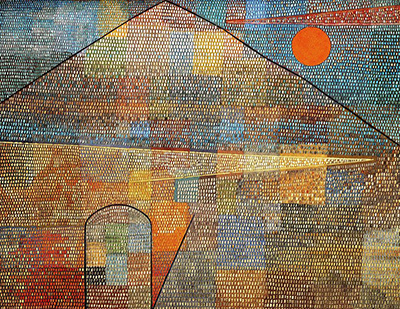
| Ad Parnassum | 1932 | Painting |
| Adventurer Ship | 1927 | Drawing |
| Affected Place | 1922 | Drawing |
| After a Sketch from Zurich | 1914 | Painting |
| After Drawing | 1919 | Drawing |
| After The Floods | 1936 | Painting |
| All Souls' Picture | 1921 | Drawing |
| Ancient Harmony | 1925 | Painting |
| Angel Applicant | 1939 | Drawing |
| Angel Serves the Desired | 1920 | Drawing |
| Angel, Still Female | 1939 | Painting |
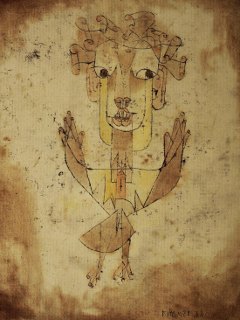
| Angelus Novus | 1920 | Drawing |
| Animal Terror | 1926 | Painting |
| Arab Song | 1932 | Painting |
| Archangel | 1938 | Painting |
| Architecture | 1923 | Painting |
| Architecture of the Plain | 1923 | Drawing |
| Around the Fish | 1926 | Painting |
| Arrival of the Air Steamer | 1921 | Drawing |
| Asiatic God | 1924 | Painting |
| Astrological Fantasy Portrait | 1924 | Drawing |
| Athlete's Head | 1932 | Painting |
| Aufgehender Stern | 1931 | Painting |
| Autumn Flower | 1922 | Painting |
| Bad Band | 1920 | Drawing |
| Baroque Centaur | 1939 | Painting |
| Before the Blitz | 1923 | Drawing |
| Before the Snow | 1929 | Drawing |
| Besessenes Madchen | 1924 | Painting |
| Bird Garden | 1924 | Drawing |
| Bird Wandering Off | 1926 | Painting |
| Blossoms in the Night | 1930 | Painting |
| Blue-Bird-Pumpkin | 1939 | Painting |
| Boats in the Flood | 1937 | Painting |
| Botanical Theatre | 1934 | Drawing |
| Boy in Fancy Dress | 1931 | Painting |
| Broken Key | 1938 | Drawing |
| Brother and Sister | 1930 | Painting |
| But the Red Roof | 1935 | Painting |
| C - C = Fisch | 1931 | Painting |
| Cacti | 1912 | Painting |
| Camel (in Rhythmic Landscape with Trees) | 1920 | Drawing |
| Captive Pierrot | 1923 | Drawing |
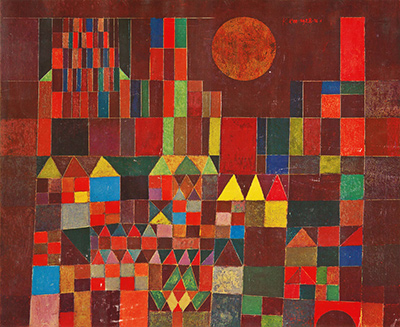
| Castle and Sun | 1928 | Drawing |
| Cat and Bird | 1928 | Drawing |
| Cathedrals | 1925 | Painting |
| Chalice of the Heart | 1937 | Painting |
| Characters in Yellow | 1937 | Painting |
| Chosen Site | 1927 | Painting |
| Christmas Picture | 1923 | Drawing |
| City of Towers | 1916 | Painting |
| Clarification | 1932 | Painting |
| Collection of Figurines | 1926 | Painting |
| Colorful Architecture | 1917 | Painting |
| Comedians' Handbill | 1938 | Drawing |
| Comic Opera Singer | 1927 | Painting |
| Composition | 1939 | Painting |
| Composition with Figures | 1915 | Drawing |
| Composition with the Yellow Half-Moon and the Y | 1918 | Painting |
| Conch–Still Life II | 1939 | Painting |
| Cosmic Composition | 1919 | Painting |
| Crystal Gradation | 1921 | Drawing |
| Dance of the Grieving Child | 1922 | Painting |
| Dancing Girl | 1940 | Painting |
| Das Licht und Etliches | 1931 | Painting |
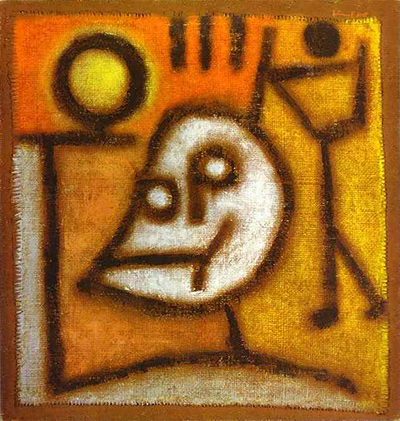
| Death and Fire | 1940 | Painting |
| Death for the Idea | 1915 | Drawing |
| Demon as Pirate | 1926 | Painting |
| Diana | 1931 | Painting |
| Diavolo Player | 1923 | Drawing |
| Die Kapelle | 1917 | Painting |
| Die Vase | 1938 | Painting |
| Doctor | 1930 | Drawing |
| Dredger and Sailboat | 1931 | Painting |
| Ein Tor | 1939 | Painting |
| Ein Weib fur Gotter | 1938 | Painting |
| Embrace | 1939 | Painting |
| Episode before an Arab Town | 1923 | Drawing |
| Equals Infinity | 1932 | Painting |
| Eros | 1923 | Drawing |
| Error on Green | 1930 | Painting |
| Evening Figure | 1935 | Drawing |
| Falling Bird | 1919 | Drawing |
| Fermata | 1932 | Painting |
| Fire Clown | 1921 | Painting |
| Fire Full Moon | 1933 | Painting |
| Fire in the Evening | 1929 | Painting |
| Fish in the Harbour | 1916 | Painting |
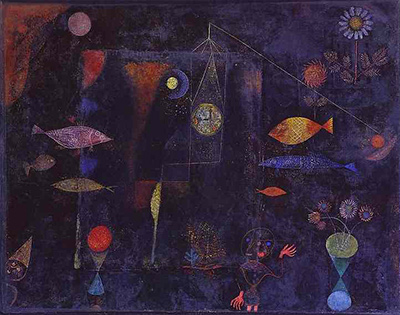
| Fish Magic | 1925 | Painting |
| Flock of Birds | 1917 | Drawing |
| Flora on Sand | 1927 | Painting |
| Flower Myth | 1918 | Drawing |
| Flower Stand with Watering Can and Bucket | 1910 | Painting |
| Flowering Tree (Abstraction with Reference to a Flowering Tree) | 1925 | Painting |
| Flowers in Pots | 1923 | Drawing |
| Flowers in Stone | 1939 | Painting |
| Forest Witch | 1938 | Painting |
| Fright of a Girl | 1922 | Drawing |
| Fruits on Red | 1930 | Drawing |
| Full Moon | 1919 | Painting |
| Föhn Wind in Franz Marc's Garden | 1915 | Painting |
| Garden in St Germain, The European Quarter near Tunis | 1914 | Painting |
| Ghost Chamber with the Tall Door (New Version) | 1925 | Drawing |
| Ghost of a Genius | 1922 | Drawing |
| Girl in Mourning | 1939 | Painting |
| Glance of a Landscape | 1926 | Painting |
| Gluht Nach | 1939 | Drawing |
| Golden Fish | 1925 | Painting |
| Goldfish Wife | 1921 | Painting |
| Green Plant, Blood, Louse | 1924 | Drawing |
| Hafenbild | 1918 | Painting |
| Hammamet with Mosque | 1914 | Painting |
| Harbour with Sailing Ships | 1937 | Painting |
| Hauptweg und Nebenwege | 1929 | Painting |
| Heavenly and Earthly Time | 1927 | Drawing |
| Heroic Fiddling | 1938 | Painting |
| Heroic Roses | 1938 | Painting |
| Heroic Strokes of the Bow | — | Painting |
| Highway and Byways | 1929 | Drawing |
| Houses near the Gravel Pit | 1913 | Painting |
| Howling Dog | 1928 | Painting |
| In the Current Six Thresholds | 1929 | Painting |
| In the Style of Kairouan | 1914 | Drawing |
| Individualized Altimetry of Stripes | 1930 | Painting |
| Insula Dulcamara | 1938 | Drawing |
| Interior with the Clock | 1913 | Painting |
| Irma Rossa the Animal Tamer | 1918 | Drawing |
| Journey in Corsica | 1927 | Drawing |
| Landscape with Bluebirds | 1919 | Painting |
| Legend of the Nile | 1937 | Painting |
| Lemon Harvest | 1937 | Painting |
| Likeness in the Bower | 1930 | Painting |
| Limits of Reason | 1927 | Painting |
| Little Hope | 1938 | Painting |
| Magdalena before the Conversion | 1938 | Drawing |
| Mask of Fear | 1932 | Painting |
| May Picture | 1925 | Painting |
| Monument in a Cemetery | 1922 | Painting |
| Monuments at G | 1929 | Painting |
| Municipal Jewel | 1917 | Painting |
| Mural from the Temple of Longing Thither | 1922 | Drawing |
| Nach der Uberschwemmung | 1936 | Painting |
| New Harmony | 1936 | Painting |
| New House in the Suburbs | — | Painting |
| Old Steamboat | 1922 | Drawing |
| On the Edge | 1930 | Drawing |
| Once Emerged from the Gray of Night | 1918 | Drawing |
| One Who Understands | 1934 | Painting |
| Oriental Pleasure Garden | 1925 | Painting |
| Park of Idols | 1939 | Painting |
| Passing by Red Pillars | 1928 | Painting |
| Persian Nightingales | 1917 | Drawing |
| Popular Wall Painting | 1922 | Painting |
| Prestidigitator | 1927 | Painting |
| Rainy Day | 1931 | Painting |
| Red and White Domes | 1914 | Painting |
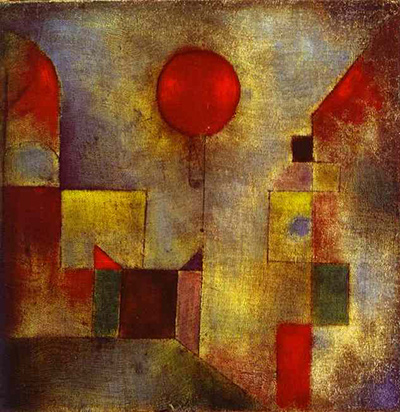
| Red Balloon | 1922 | Drawing |
| Redgreen and Violet-Yellow Rhythms | 1920 | Drawing |
| Refuge | 1930 | Painting |
| Rhythmic Rythmical | 1930 | Painting |
| Saint of the Inner Light | 1921 | Drawing |
| Scaffolding of a New Building | 1930 | Painting |
| Scholar in Dealing with Stars | 1926 | Painting |
| Seated Woman | 1930 | Drawing |
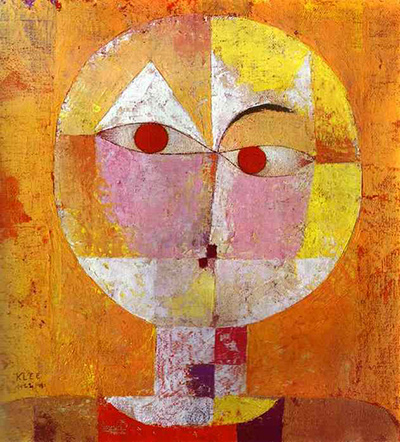
| Senecio | 1922 | Painting |
| Separation in the Evening | 1922 | Drawing |
| Sinbad the Sailor | 1923 | Drawing |
| Skeptically Smiling | — | Painting |
| Small House in the Garden City | 1928 | Painting |
| Small Portrait of a Girl in Yellow | 1925 | Painting |
| Southern Gardens | 1919 | Painting |
| Static-Dynamic Gradation | 1923 | Drawing |
| Still Life | 1927 | Painting |
| Still Life with Gladioli | 1932 | Painting |
| Strange Garden | 1923 | Drawing |
| Stricken City | 1936 | Painting |
| Strong Dream | 1929 | Painting |
| Struck from the List | 1933 | Drawing |
| Structural I | 1924 | Drawing |
| Sumpflegende | 1919 | Painting |
| Temple Gardens | 1920 | Drawing |
| The Arrow before the Target | 1921 | Drawing |
| The Barbed Noose with the Mice | 1923 | Painting |
| The Flora of the Heath | 1925 | Painting |
| The Goldfish | 1925 | Painting |
| The Hour Before One Night | 1940 | Painting |
| The Man in Love | 1923 | Drawing |
| The Mask with the Flag | 1925 | Painting |
| The Pathos of Fertility | 1921 | Drawing |
| The Rhine at Duisburg | 1937 | Painting |
| The Way to the Citadel | 1937 | Painting |
| Three Houses and a Bridge | 1922 | Painting |
| Tightrope Walker | 1923 | Drawing |
| Tomb in Three Parts | 1923 | Painting |
| Tomcat's Turf | 1919 | Painting |
| Tower in Orange and Green | 1922 | Drawing |
| Tree and Architecture - Rhythms I | 1920 | Painting |
| Tree and Architecture - Rhythms II | 1920 | Painting |
| Tropical Dawn with the Owl | 1921 | Painting |
| Tropische Dammerung | 1921 | Painting |
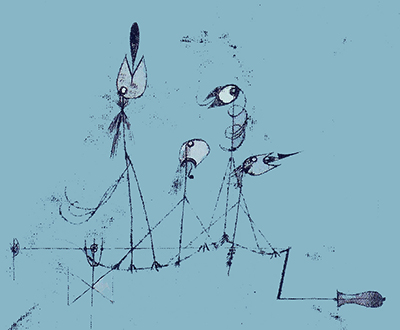
| Twittering Machine | 1922 | Drawing |
| Variations (Progressive Motif) | 1927 | Painting |
| Ventriloquist and Crier in the Moor | 1923 | Drawing |
| Viaducts Break Ranks | 1937 | Drawing |
| Villa R | 1919 | Painting |
| Village Carnival | 1926 | Painting |
| Vor dem Blitz | 1923 | Drawing |
| Wald-Hexen | 1938 | Painting |
| Young Forest | 1925 | Drawing |
Discussion
Share a reading of the figures, materials or relationships discussed in this article.
Reader Insights
Which detail most affects your reading?
Which comparison would you like to explore further?
Join the Conversation
Share a detail, comparison or question about Felix Klee and Paul Klee below.
References
- Zentrum Paul Klee, Paul Klee biography and chronology. View source.
- Zentrum Paul Klee, Paul Klee – Leben und Nachleben, family archive and Felix Klee. View source.
- Zentrum Paul Klee, history of the Paul-Klee-Stiftung. View source.
- Zentrum Paul Klee, 2025 anniversary press kit, institutional and collection history. View source.