 by Tom Gurney
Tom Gurney BSc (Hons) is an art history expert with over 20 years experience
Published on June 19, 2020 / Updated on August 16, 2026
Email: tomgurney1@gmail.com / Phone: +44 7429 011000
Pieter Bruegel Peasant Imagery: Introduction
Pieter Bruegel the Elder is often remembered as the painter of peasants. The nickname can be useful, but it can also be misleading. Bruegel did paint weddings, dances, festivals, workers, drinkers, children, beggars and village crowds. Yet those scenes are not simple records of rural life. They are carefully designed images made for viewers who were often urban, educated and socially distant from the people represented [3].
Bruegel's peasant imagery matters because it joins humor, observation, social structure and pictorial intelligence. A wedding feast becomes an image of community, food, service and rank. A dance becomes a study of bodily energy and festival behavior. A fantasy of abundance turns appetite into moral comedy. These works helped create Bruegel's public identity, but they also show why that identity should be handled carefully.
For the wider artist, start with Pieter Bruegel the Elder, the biography and the survey of Bruegel's paintings. For the most famous page in this part of the Bruegel section, see Peasant Wedding.
At a Glance
- Main ideaBruegel's peasant scenes are structured works of art, not unfiltered snapshots of village life.
- Key worksPeasant Wedding, Peasant Dance, Wedding Dance, The Land of Cockaigne and related festival images.
- Best cautiondo not reduce Bruegel to a folkloric recorder of rustic customs.
- Viewer contextBruegel worked for patrons, collectors and connoisseurs, not primarily for the rural communities he painted.
- Main themesfood, festivity, work, appetite, social rank, humor, dignity and communal performance.
- Related pagesPeasant Wedding, Children's Games, The Fight Between Carnival and Lent and proverbs and iconography.
Contents
- Introduction
- Why The Nickname Needs Care
- Peasant Wedding As A Starting Point
- Festival, Dance And Public Behavior
- Humor Without Reduction
- Food, Appetite And Social Order
- Peasant Imagery And Elite Viewers
- How To Read Bruegel's Peasant Scenes
- Why Peasant Imagery Matters
Why The Nickname Needs Care
The phrase "Peasant Bruegel" has a long history because Bruegel's rural subjects are unforgettable. The Met notes that his paintings of Flemish commoners contributed to that nickname and to the mistaken belief that he himself came from peasant birth [3]. The nickname therefore tells us something about reception, but it does not tell the whole truth about the artist.
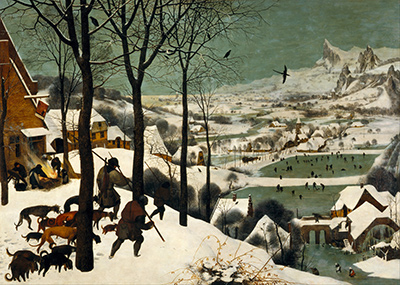
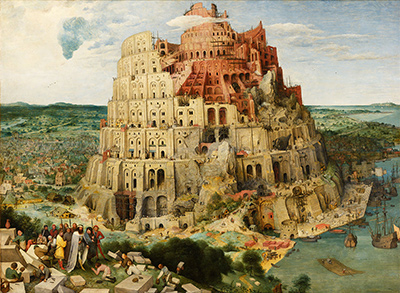
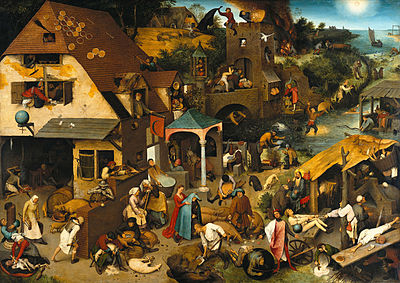
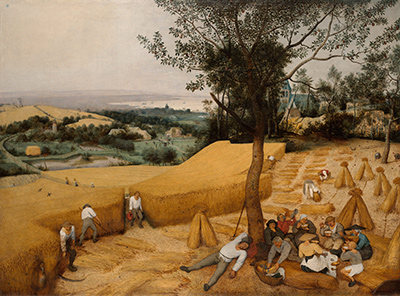
Bruegel was also a designer of prints, a maker of landscapes, a painter of biblical scenes and a builder of complex moral images. His world includes The Harvesters, Hunters in the Snow, Netherlandish Proverbs, The Tower of Babel and The Triumph of Death. Peasant imagery is central, but it is one part of a larger invention.
The nickname can also make the rural scenes seem too easy. It may suggest that Bruegel simply visited villages and copied what he saw. The stronger reading is more demanding. Bruegel observed bodies, food, gestures and customs closely, but he organized them with great care. A room, square or festival becomes a structure of looking.
That is why Bruegel's peasant imagery should be approached as art, not folklore alone. Customs matter, but composition matters too. Humor matters, but so do rank, distance and the conditions of viewing.
Peasant Wedding As A Starting Point
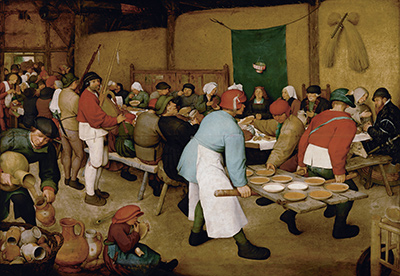
*Peasant Wedding* is the clearest entry into this subject. The Kunsthistorisches Museum identifies the painting as a 1568 work by Bruegel on oak and stresses that its apparent snapshot effect is carefully composed [1]. That single point cuts through many lazy readings of the picture.
The painting shows a wedding feast in a barn-like interior. The bride sits before a green hanging beneath a paper crown. Food is carried on an unhinged door. Guests sit at a long table. A lawyer, Franciscan and local lord appear at the right [1]. The scene feels immediate, but its structure is deliberate.
The bride's stillness, the diagonal of the serving door, the crowded table and the figures of rank all work together. Bruegel does not simply show peasants eating. He shows how ceremony, hunger, labor and social hierarchy share the same room.
The painting also resists a simple comic reading. It is funny because bodies are heavy, appetites are visible and service is practical. But the bride's framed position and the seriousness of the composition give the feast weight. Bruegel lets rural life be comic without making it trivial.
Festival, Dance And Public Behavior
Bruegel's peasant scenes often involve public performance. Dance, music, drinking, eating and gathering all create social pressure. They show people acting in front of one another.
KHM's account of Peasant Dance describes another late rural scene, dated around 1568, in which Bruegel represents a village fair dance with robust figures and a strong sense of physical action [2]. The painting belongs close to Peasant Wedding, but it shifts the scene from interior feast to outdoor motion.
Dance matters because it makes social order visible through the body. People move, touch, display themselves, follow music and occupy space. Bruegel notices the weight of feet, the tilt of heads, the force of appetite and the rough energy of festival. He is not painting courtly grace; he is painting communal behavior.
This festival world also connects to The Fight Between Carnival and Lent. That picture is not simply a peasant scene, but it uses public custom, food, charity, begging and ritual conflict to show society under pressure. Bruegel's interest in peasant imagery overlaps with his interest in ritual and moral behavior.
Humor Without Reduction
Bruegel's peasant scenes are often funny. The humor can be physical, social or moral. A figure reaches too eagerly, drinks too much, dances too heavily or loses dignity in public. Yet the humor does not mean the people are empty caricatures.
The safest word is complexity. Bruegel can laugh at appetite while recognizing the seriousness of food. He can show roughness without denying humanity. He can stage social distance while letting rural figures occupy the painting with enormous physical presence.
That balance is one reason his peasant imagery has lasted. If the paintings were only mockery, they would be thinner. If they were only sympathy, they would be softer. Bruegel's rural people live in the uneasy space between observation, comedy, discipline and dignity.
The viewer should also remember the likely audience. These paintings were not made mainly for peasants to hang in their own cottages. They entered a world of patrons, collectors and connoisseurs [3]. That distance matters. A rural scene could entertain, instruct, amuse and unsettle viewers outside the world it represented.
Food, Appetite And Social Order
Food is one of Bruegel's great pictorial tools. In Peasant Wedding, bowls of plain food move through the room on a door. In The Harvesters, a meal under a tree marks rest within the seasonal labor of cutting grain. In The Land of Cockaigne, abundance becomes fantasy and moral excess.
Food is never just food. It reveals work, appetite, hierarchy and time. Who serves? Who eats? Who waits? What is plain, excessive, earned or wasted? Bruegel turns those questions into visible arrangements.
In Peasant Wedding, the men carrying the door make service visible. The meal does not appear magically. It is carried through the room by bodies under weight. The diners' gestures show appetite and anticipation. The bride's stillness contrasts with the movement of food toward the table.
This is why peasant imagery connects so strongly with Bruegel's broader moral art. Appetite can be necessary, comic, festive or dangerous. It can sustain a community or expose human weakness. Bruegel rarely lets it be only one thing.
Peasant Imagery And Elite Viewers
Bruegel's peasant images should be read through the gap between subject and audience. The Met describes Bruegel as patronized by scholars, wealthy businessmen and connoisseurs, and connected with leading humanists [3]. That context changes the rural pictures.
An elite viewer could admire Bruegel's craft, laugh at rustic behavior, recognize customs, reflect on human folly or enjoy the novelty of everyday subjects treated seriously. The paintings are open enough to hold several responses at once.
This does not mean the works are cynical. It means their social position is part of their meaning. Bruegel paints rural life from a place of distance, but not indifference. His peasants are observed from outside and organized for viewers outside their world, yet the paintings grant them weight, density and compositional force.
The presence of elite or official figures inside some works reinforces that point. In Peasant Wedding, the lawyer, friar and lord at the right prevent the feast from becoming a sealed rustic fantasy [1]. The village world is connected to law, religion and landholding power.
How To Read Bruegel's Peasant Scenes
Begin with visible action. Who is eating, carrying, dancing, drinking, watching, serving or waiting? Bruegel's scenes often make meaning through posture before they make it through symbol.
Then look for social structure. Who is central? Who is at the edge? Who works while others consume? Who watches without joining? Who belongs to a different rank or institution?
Next, consider the setting. A barn, square, road or field is not neutral. It shapes movement and behavior. Bruegel's spaces are designed to make social life legible.
Finally, avoid choosing too quickly between comedy and seriousness. In Bruegel, the two often depend on each other. The funny detail may reveal a serious pressure. The serious structure may depend on comic bodies. The rural scene may be both observed and invented.
Why Peasant Imagery Matters
Bruegel's peasant imagery matters because it helped make everyday people and customs worthy of large, memorable paintings. He did not need kings, saints or mythological heroes to create pictorial drama. A wedding meal, dance or harvest could carry the weight of social thought.
It also matters because it reveals Bruegel's gift for human systems. People in his paintings are rarely isolated. They belong to feasts, seasons, games, proverbs, rituals, villages, crowds and landscapes. A peasant body is not only an individual figure; it is part of a world.
That is the deepest reason these works still feel alive. Bruegel does not simply show peasants. He shows communities behaving under the pressure of appetite, custom, labor, weather, rank and time. His rural scenes are funny because people are physical. They are serious because bodies, food and customs are how societies know themselves.
Discussion
Which detail most changes how you read Peasant Imagery: the subject, the setting, the social context, the handling of space, or the way Bruegel directs attention across the surface?
Reader Insights
Start with the part of Peasant Imagery that first catches your eye, then follow the smaller incidents around it. Bruegel often makes meaning accumulate through repeated acts of noticing rather than through one obvious focal point.
Think about how this page's evidence connects image, audience and setting. A Bruegel composition can be comic, observational, devotional, political or all of these at once depending on how its details are organized.
Where does the work leave interpretation deliberately unsettled? The strongest Bruegel pages often turn on tensions between delight and warning, ordinary life and moral structure, or invention and later copying.
Join the Conversation
Share the detail, source question or comparison that would most help another reader look again.
References
- Kunsthistorisches Museum, "Peasant Wedding." https://www.khm.at/en/artworks/peasant-wedding-330
- Kunsthistorisches Museum, "Peasant Dance." https://www.khm.at/en/artworks/peasant-dance-331
- Jacob Wisse, "Pieter Bruegel the Elder (ca. 1525-1569)," The Metropolitan Museum of Art, Heilbrunn Timeline of Art History. https://www.metmuseum.org/essays/pieter-bruegel-the-elder-ca-1525-1569
- Nadine M. Orenstein, ed., Pieter Bruegel the Elder: Drawings and Prints, The Metropolitan Museum of Art, 2001. https://www.metmuseum.org/met-publications/pieter-bruegel-the-elder-drawings-and-prints