


 by Tom Gurney
Tom Gurney BSc (Hons) is an art history expert with over 20 years experience
Published on June 19, 2020 / Updated on August 9, 2026
Email: tomgurney1@gmail.com / Phone: +44 7429 011000
Rembrandt Bankruptcy: Introduction
Rembrandt's bankruptcy is one of the most famous episodes in his life, but it is often told too quickly. The familiar version turns a complex legal and financial crisis into a warning tale about genius, pride and decline. The surviving records point to something more precise and more interesting: a household, a house, a collection, an inheritance, creditors, legal protection, sales and a new business structure that allowed Rembrandt to keep working.
The crisis came to a head in 1656, when Rembrandt sought a form of insolvency protection and a room-by-room inventory was made of his possessions. The document is central to modern knowledge of the artist because it opens the doors of his Breestraat house at the moment when private property became creditor evidence. It records art, books, prints, costumes, props, weapons, shells, studio material and household goods, but it does not turn Rembrandt into a simple cautionary example.
This page follows the documentary story: the Breestraat house, mounting debt, the 1656 boedelafstand, the Desolate Boedelkamer, the inventory of 25 and 26 July, later sales, the loss of the house, the move toward the Rozengracht, and the 1660 arrangement in which Hendrickje Stoffels and Titus structured a business that employed Rembrandt.
Contents
- Introduction
- Why Rembrandt's Bankruptcy Matters
- The Breestraat House Before 1656
- Debt, Inheritance and Pressure
- Boedelafstand and the Desolate Boedelkamer
- The Inventory of 25 and 26 July 1656
- What the Inventory Reveals
- Jan Six and Creditor Context
- Sales, House Loss and Rozengracht
- The 1660 Hendrickje and Titus Arrangement
Why Rembrandt's Bankruptcy Matters
The bankruptcy matters because it joins several parts of Rembrandt's life that are often separated. It belongs to biography, because it changed where he lived and how his household operated. It belongs to art history, because the inventory shows the material world that surrounded his paintings, drawings and etchings. It belongs to legal history, because seventeenth-century Amsterdam had procedures for debt, property and creditor settlement. It belongs to family history, because Titus's inheritance from Saskia van Uylenburgh is part of the story.
It also matters because it challenges the usual emotional shortcut. Rembrandt did not simply become poor and then paint late masterpieces from defeat. After the crisis he still made major works, trained pupils, handled commissions and shaped some of the most powerful images of his career. His later art changed, but the change should not be reduced to insolvency.
The strongest account therefore starts with documents rather than judgement. The record shows a man with a large house, a costly collection, legal obligations, family claims and creditors. It shows that the house and its contents became part of a formal process. It also shows that Rembrandt's working life continued after the settlement machinery began.
That balance is important for anyone coming to the art from the life story. Bankruptcy explains a change in circumstances. It does not explain every late brushstroke, every sitter or every choice of subject. The records give readers a firmer ground from which to look, not a single key that unlocks the paintings.
The Breestraat House Before 1656
Rembrandt bought the Breestraat house in 1639, in the Amsterdam area now associated with Museum Rembrandthuis. The purchase marked confidence and status. It placed him in a lively part of the city, near clients, dealers, pupils and a broader art market. It was not only a residence. It was also a workplace, a teaching environment and a place where objects could be studied, displayed and used.
The house helps explain why the later inventory is so valuable. Rembrandt's possessions included art by himself and others, prints, drawings, books, costumes, armour, weapons, casts and unusual natural objects. These were not merely signs of luxury. For a history painter and printmaker, such things could be working material. A helmet might serve a biblical or military subject. A costume could help transform a sitter or model into a figure from another age. Prints and drawings could train the eye, prompt invention and support teaching.
The house also helps explain the risk. Property, art and collectible objects can enrich an artist's imagination, but they can also tie money to things that creditors can see. By the 1650s, the same rooms that had supported Rembrandt's art and reputation could be measured, listed and used in settlement.
Debt, Inheritance and Pressure
Rembrandt's financial crisis did not begin with one sudden event. It grew from overlapping pressures. The Breestraat house was expensive. His collecting was costly. The Amsterdam art market was competitive. Family law mattered because Saskia had died in 1642 and left her property to Titus, with Rembrandt managing the inheritance. The household's money was therefore not only Rembrandt's private matter.
The inheritance issue became especially important in 1656. GeschiedenisLokaal Amsterdam records that on 17 May 1656 Rembrandt put the Jodenbreestraat or Sint Antoniesbreestraat house in Titus's name as Titus's share of Saskia's inheritance. Less than two months later, Rembrandt entered the insolvency process. That sequence makes the bankruptcy more than a story about spending. It shows property, debt and family protection crossing one another.
Creditors were also part of Rembrandt's social world. Stadsarchief Amsterdam's account of Rembrandt and Jan Six shows how debts and agreements could involve patrons, collectors and lawyers. It records sale agreements from October 1652, a 1,000-guilder loan from Six in 1653 and later action by the Desolate Boedelkamer. Such records show that credit was not an abstract shadow over Rembrandt's life. It moved through named people, documents and transactions.
Boedelafstand and the Desolate Boedelkamer
The Dutch term boedelafstand is usually explained as a surrender of goods or estate in an insolvency setting. In Rembrandt's case, the record preserved by GeschiedenisLokaal Amsterdam places his request in July 1656. The procedure allowed a debtor to seek protection while the estate was handled for creditors. For modern readers, it is tempting to translate this simply as bankruptcy, but the legal setting is more specific than the modern word suggests.
After Rembrandt's request, the Desolate Boedelkamer became central. This Amsterdam body dealt with insolvent estates and creditor settlement. Its role was not to write Rembrandt's life story, but to manage property. That is why the documents are so revealing and so limited at the same time. They are rich in possessions, rooms and values, but quiet about feelings, motives and artistic intention.
Understanding that purpose keeps the evidence in balance. A legal inventory tells us what was recorded for a creditor process. It does not tell us everything Rembrandt owned, everything he cared about or everything that mattered to his work. It also does not mean that he stopped being an artist at the moment his property was listed.
The Inventory of 25 and 26 July 1656
On 25 and 26 July 1656, Rembrandt's possessions were inventoried room by room. GeschiedenisLokaal Amsterdam presents the inventory through Stadsarchief material and describes spaces such as the art room, a large studio and a smaller studio. Rembrandthuis scholarship gives the archive citation as Stadsarchief Amsterdam, Register van inventarissen B, Desolate Boedelkamer, inventory number DBK 364, 1656/12, folios 29r-38v.
The inventory is famous because it seems to let readers walk through the house. It records paintings, drawings, prints, albums, books, sculptures, casts, clothing, weapons, armour, shells and many other things. Some entries point toward Rembrandt's taste as a collector. Others point toward his needs as a maker of images. The result is one of the most vivid documentary views of an artist's working environment in the Dutch Republic.
One detail is especially important. GeschiedenisLokaal explains that professional tools such as easels, brushes and paint are absent because tools needed to continue a profession were protected. That point corrects a powerful misconception. The inventory does not show Rembrandt stripped of the means to make art. It shows a legal sorting of goods in which continuing work still had a protected place.
The inventory therefore has to be read carefully. It is evidence of wealth, ambition, collecting, pressure and settlement. It is also evidence of boundaries: the document's purpose was legal, not biographical in the modern sense.
What the Inventory Reveals
The inventory reveals a house filled with images and objects. It suggests a painter who learned from other artists, kept study material close at hand and used objects to build convincing scenes. It supports the Rembrandthuis view of the house as a place where living, teaching, collecting and making overlapped.
It also reveals how deeply Rembrandt's art depended on looking. Books, prints, casts, costumes and props do not make a great artist by themselves, but they create a reservoir of forms, textures and stories. A history painter needed ways to imagine ancient, biblical or distant worlds. A teacher needed material that pupils could copy, compare and discuss. A printmaker needed examples of line, tone and invention. The Breestraat house held that world in physical form.
At the same time, the inventory does not prove that every object was used in a specific painting. It should not be treated as a codebook for the art. A helmet listed in the house does not automatically identify the source for one figure. A print or book does not by itself solve an image. The document is strongest when it shows the range of material Rembrandt kept around him, not when it is forced into one-to-one explanations.
Jan Six and Creditor Context
Jan Six is useful in the bankruptcy story because his records show how art, credit and social connection could overlap. Six was a collector, writer and important Amsterdam figure, and Rembrandt's portrait of him became one of the artist's celebrated works. The financial record adds a harder edge to that relationship.
Stadsarchief Amsterdam records that lawyer Henricus Torquinius, handling Rembrandt's bankruptcy, found two October 1652 agreements with Jan Six for the sale of three paintings. It also records that Six lent Rembrandt 1,000 guilders in 1653 without charging interest, and that the debt note was later sold. The Desolate Boedelkamer commissioners later cancelled the agreements.
This does not turn Jan Six into the cause of the bankruptcy. It does something more useful: it shows that Rembrandt's financial situation was entangled with patrons, collectors, credit and legal action. His crisis was not sealed off from the same networks that had supported his career.
Sales, House Loss and Rozengracht
The 1656 inventory was followed by sales and property changes. Stadsarchief Amsterdam connects the crisis with the eventual forced sale of the Breestraat house. Rembrandthuis scholarship identifies a 1 February 1658 sale-deed route connected with the house sale and workshop partitions, giving a path from the inventory record to the later disposal of the property.
GeschiedenisLokaal's house-transfer account says the house was sold in 1658 for more than 11,000 guilders and that Rembrandt moved to the Rozengracht. That move is often described as a fall in status, and in social terms it did mark a change. He left the house that had embodied his Amsterdam rise. But the move should also be understood practically. The Breestraat property was part of the creditor and inheritance story. Rozengracht became the setting for a later household and later work.
The loss of the house was therefore both symbolic and concrete. It changed Rembrandt's public position, his daily surroundings and the structure of his household. Yet it did not end his career. Some of the strongest late works belong to the years after this change.
The 1660 Hendrickje and Titus Arrangement
In December 1660, Hendrickje Stoffels and Titus formed a business arrangement that employed Rembrandt. Stadsarchief Amsterdam identifies notary Nicolaes Listingh as the notary before whom the document was drawn up. The arrangement helped manage work and creditors after the bankruptcy by placing business activity under Hendrickje and Titus rather than directly under Rembrandt.
This should not be treated as a sentimental rescue story. It was a practical legal and household measure. Hendrickje was part of Rembrandt's later life and household; Titus carried inheritance and family significance as Saskia's son. Together they helped create a structure through which Rembrandt could continue to work while creditor pressure remained an issue.
The arrangement also reminds readers that Rembrandt's post-bankruptcy life was not isolated. It involved family, business, trust and legal form. Hendrickje and Titus were not background figures standing beside a tragic artist. They were active participants in the household's survival.
Art After Bankruptcy
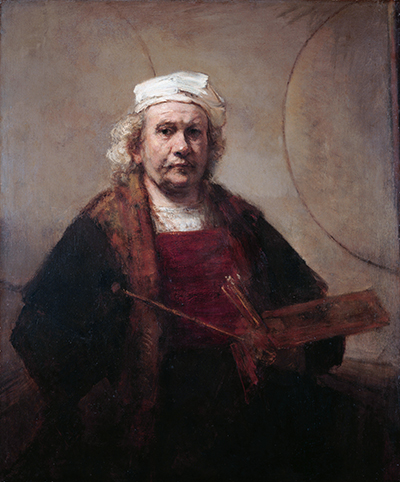
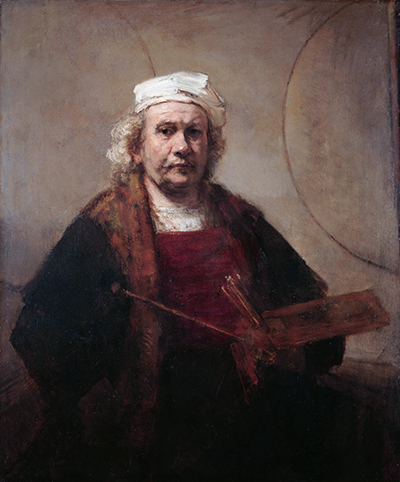
The years after bankruptcy produced works that resist a simple decline story. Rembrandt's 1659 Self-Portrait in the National Gallery of Art, Washington, belongs to the period after the financial crisis, and the museum's catalogue treats it as a major late statement of artistic identity. It can be read in relation to hardship, but it should not be reduced to hardship.
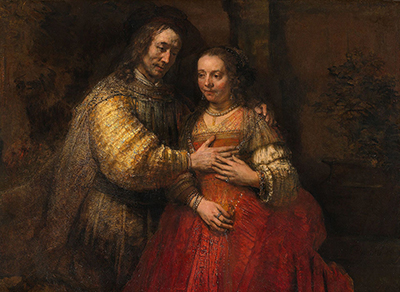
Later works such as The Syndics of the Drapers' Guild, The Jewish Bride and late self-portraits show continuing command of portraiture, touch, gesture and emotional pressure. They do not suggest an artist whose powers had collapsed. They suggest an artist whose circumstances changed while his pictorial ambition remained intense.
The bankruptcy may help explain why some later images feel so concentrated, but it cannot explain them fully. A painting is not a legal document. The record gives context; the work still has to be seen on its own terms.
Myths to Avoid
The first myth is that Rembrandt's bankruptcy proves personal failure in a simple moral sense. The documents show debt and pressure, but they also show law, inheritance, credit and property. They should not be flattened into a character verdict.
The second myth is that the inventory shows total ruin. It records goods for a legal process and leaves out protected professional tools. Rembrandt's ability to work was not erased by the inventory.
The third myth is that collecting was only wasteful. Rembrandt's objects were expensive and contributed to financial risk, but they also supported his art, teaching and imagination. The same collection can be both creative resource and economic liability.
The fourth myth is that bankruptcy automatically explains the late style. The late works belong to a changed life, but they also belong to artistic choice, skill, commission, studio practice, materials and long experience.
The final myth is that the story ends in 1656. In fact, the most important question is what happened next: sales, the loss of the house, Rozengracht, Hendrickje and Titus's arrangement, continuing work and the late art that kept Rembrandt's name alive long after the creditors' papers had done their job.
Frequently Asked Questions About Rembrandt's Bankruptcy
Boedelafstand was a legal surrender of goods or estate in an insolvency context. In Rembrandt's case, it led to the handling of his property for creditor settlement.
The Desolate Boedelkamer was the Amsterdam body that dealt with insolvent estates. It became involved in the management of Rembrandt's property and creditor settlement.
The inventory included art, prints, drawings, books, costumes, weapons, shells, casts, household goods and studio-related objects. It is especially valuable because it records the Breestraat house room by room.
Yes. The Breestraat house was sold after the financial crisis, and Rembrandt later lived on the Rozengracht.
No. Rembrandt continued to work after the crisis and made major late paintings, portraits, self-portraits and other works in the years that followed.
Discussion
What part of Rembrandt Bankruptcy most changes your view of the artist: the documents, the household setting, the Amsterdam career, the financial pressures, or the paintings and prints made around the same time?
Reader Insights
Read Rembrandt Bankruptcy through evidence as much as legend: dates, contracts, houses, family ties and later records all shape the story.
Pair the biography with one painting and one print from the same period to see how life events and artistic decisions overlap without becoming the same thing.
Which detail feels most useful for understanding Rembrandt as a working artist rather than only as a famous name?
Join the Conversation
Have a thought or observation about Rembrandt Bankruptcy? Share it below. Thoughtful responses may be added to this section as the Rembrandt pages develop.
References
- GeschiedenisLokaal Amsterdam / Stadsarchief, Boedelinventaris van Rembrandt (in Dutch): https://geschiedenislokaalamsterdam.nl/bronnen/boedelinventaris-van-rembrandt
- Stadsarchief Amsterdam, De geldzaken van Rembrandt (in Dutch): https://www.amsterdam.nl/stadsarchief/nieuws/rembrandt-0/
- Rembrandthuis, Leonore van Sloten, Stappen in de Reconstructie van een Leven (in Dutch): https://www.rembrandthuis.nl/de/kronieken/stappen-in-de-reconstructie-van-een-leven/
- Stadsarchief Amsterdam, Rembrandt en Jan Six (in Dutch): https://www.amsterdam.nl/stadsarchief/stukken/geld/rembrandt-jan-six/
- GeschiedenisLokaal Amsterdam, Rembrandt laat zijn huis aan Titus na (in Dutch): https://geschiedenislokaalamsterdam.nl/bronnen/rembrandt-laat-zijn-huis-aan-titus-na
- GeschiedenisLokaal Amsterdam, Testament van Titus (in Dutch): https://geschiedenislokaalamsterdam.nl/bronnen/testament-van-titus
- Radboud University, Rembrandt Documents Project: https://www.ru.nl/en/research/research-projects/rembrandt-documents-project
- Museum Rembrandthuis, Meet Rembrandt: https://www.rembrandthuis.nl/en/find-out-more/meet-rembrandt/
- Museum Rembrandthuis, science portal: https://www.rembrandthuis.nl/en/find-out-more/science-portal/
- National Gallery of Art, Washington, Rembrandt van Rijn artist biography: https://www.nga.gov/artists/1822-rembrandt-van-rijn
- National Gallery, London, Rembrandt artist biography: https://www.nationalgallery.org.uk/artists/rembrandt
- National Gallery of Art, Washington, Self-Portrait, 1659: https://www.nga.gov/artworks/79-self-portrait
- National Gallery of Art, Washington, catalogue entry for Self-Portrait, 1659: https://www.nga.gov/research/publications/dutch-paintings-seventeenth-century/rembrandt-van-rijn-self-portrait-1659
- Rijksmuseum, Isaac and Rebecca, Known as The Jewish Bride: https://www.rijksmuseum.nl/en/collection/object/Isaac-and-Rebecca-Known-as-The-Jewish-Bride--019c1265e6dbf108d4587ab2b7c02c66
- Rijksmuseum, The Sampling Officials of the Amsterdam Drapers' Guild, Known as The Syndics: https://www.rijksmuseum.nl/en/collection/object/The-Sampling-Officials-of-the-Amsterdam-Drapers-Guild-Known-as-The-Syndics--575b43f479d021359fb5f63b32f7c234
 Rembrandt.jpg)