 by Tom Gurney
Tom Gurney BSc (Hons) is an art history expert with over 20 years experience
Published on June 19, 2020 / Updated on August 2, 2026
Email: tomgurney1@gmail.com / Phone: +44 7429 011000
Contents
- Introduction
- What the Painting Shows
- The Breeches Buoy
- Cropping, Waves And Bodily Suspense
- Shipwreck Tradition And Modern Rescue
- Preparatory Work, Revisions And Technical Evidence
- Cullercoats, Prouts Neck And The Rescue Theme
- Anonymity And Ambiguity
- Why The Painting Was A Success
- Related Works In Homer's Marine Cluster
Introduction
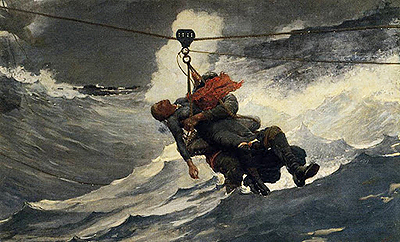
Winslow Homer's The Life Line turns a rescue at sea into one of the most gripping images of modern danger in nineteenth-century American art. A woman is carried through surf by a rescuer on a breeches buoy, suspended above the water while waves crash below. The shipwreck itself is not shown in full. The shore is not safely reached. Homer compresses the drama into the dangerous middle of the rescue, when human bodies, weather, rope and technology all meet over the sea. [1]
The painting was made in 1884 and is an oil on canvas in the collection of the Philadelphia Museum of Art. The PMA object record and the museum's Shipwreck! Winslow Homer and The Life Line exhibition page make the work a strong source-backed candidate for a major article. The source packet identifies the picture as a scene of rescue from a foundering ship, centered on the breeches buoy as lifesaving technology and on Homer's cropped, immediate staging of the figures above the waves. [2]
That combination is what makes The Life Line so important. Homer did not simply paint a dramatic storm. He painted rescue as a modern event. The subject depends on a mechanical apparatus, a system of lines, and trained people who use technology to cross the violent space between wreck and safety. At the same time, the painting never lets the apparatus feel abstract or reassuring. The viewer sees bodies under pressure. The woman appears semiconscious or exhausted. The rescuer's face is hidden. Spray and wind seem to erase ordinary identities. The drama is organized by technology, but it is felt through vulnerability. [3]
What the Painting Shows
The first thing to notice in The Life Line is how little space Homer gives the viewer for distance. Many shipwreck images step back and show the wreck, the sea, the rescuers, the victims and sometimes the shoreline in a broad narrative arrangement. Homer does something more immediate. He brings the rescue so close that the figures nearly fill the scene. The apparatus, bodies and breaking water are pressed together. [4]
That closeness matters because it turns looking into physical involvement. The viewer is not allowed to stand calmly apart from the event. The figures are suspended above the surf, and the composition makes that suspension feel unstable. The woman's body hangs across the rescuer. The rescuer's own body is partly hidden by clothing, spray and the act of carrying. The line that makes rescue possible is present, but the sea below remains dangerous. [5]
The painting's central pair is therefore both intimate and impersonal. A man carries a woman, a familiar rescue motif with older romantic associations. Yet Homer complicates that motif by making the rescuer anonymous. The figure is not presented as a handsome theatrical hero whose face explains the story. He is a working participant inside an emergency system. His identity matters less than the action he performs. [6]
The woman is equally important. She is not simply an emblem of helplessness. Her limpness or semiconscious state gives the rescue its urgency, but Homer resists turning her into a decorative victim. Her body has weight. The rescuer must manage that weight while moving through violent air and water. The danger is practical as well as emotional. [7]
The waves below the figures keep the rescue unfinished. The viewer understands that the bodies have been lifted from one danger, but not yet delivered into safety. The sea remains active. The storm has not become background. This is one of Homer's great strengths: he turns the instant of possible rescue into an image of continued exposure. [8]
The cropped composition intensifies that effect. We do not see enough to master the whole event. We cannot measure the full distance to shore. We cannot inspect the wreck in a complete way. We cannot identify every participant. Instead, Homer concentrates the painting around a short stretch of the rescue line and the human burden it carries. The result is a picture that feels modern because it withholds the reassuring overview. [9]
The Life Line is not a disaster after the fact. It is a rescue in process. The painting's power comes from that active middle state. Someone has acted. Technology is working. The woman has not been abandoned. Yet nothing in the composition lets the viewer relax into certainty. [1]
Annotated Details from The Life Line
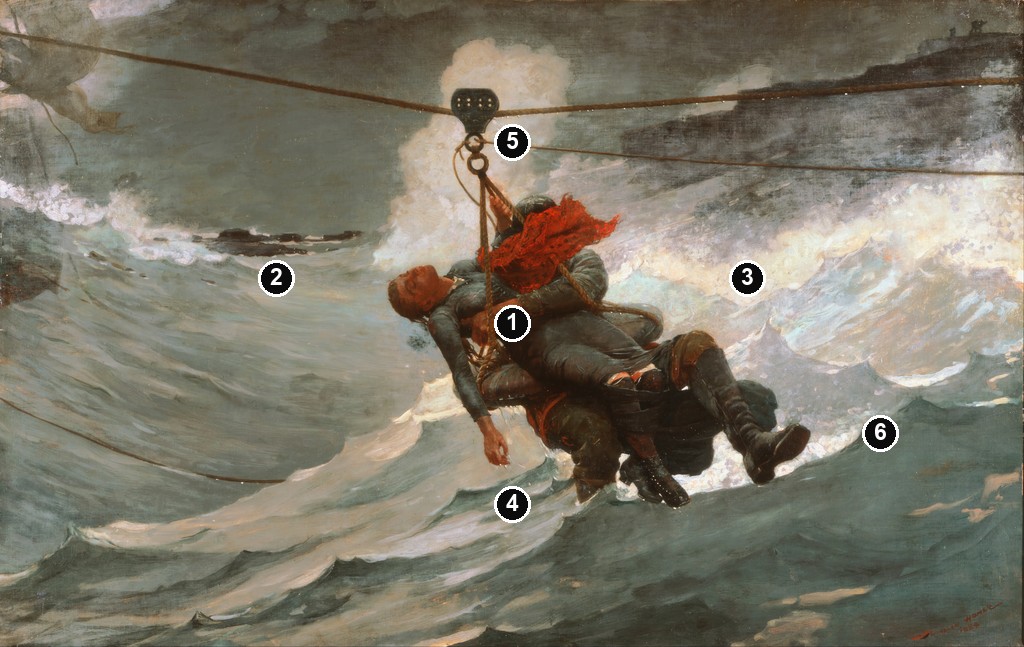
Details from THE LIFE LINE
Close looking follows the composition through figure, setting, foreground and surrounding visual pressure.
Central Action
The central passage carries the first act of close looking, where pose, spacing and surrounding detail establish the main visual problem.
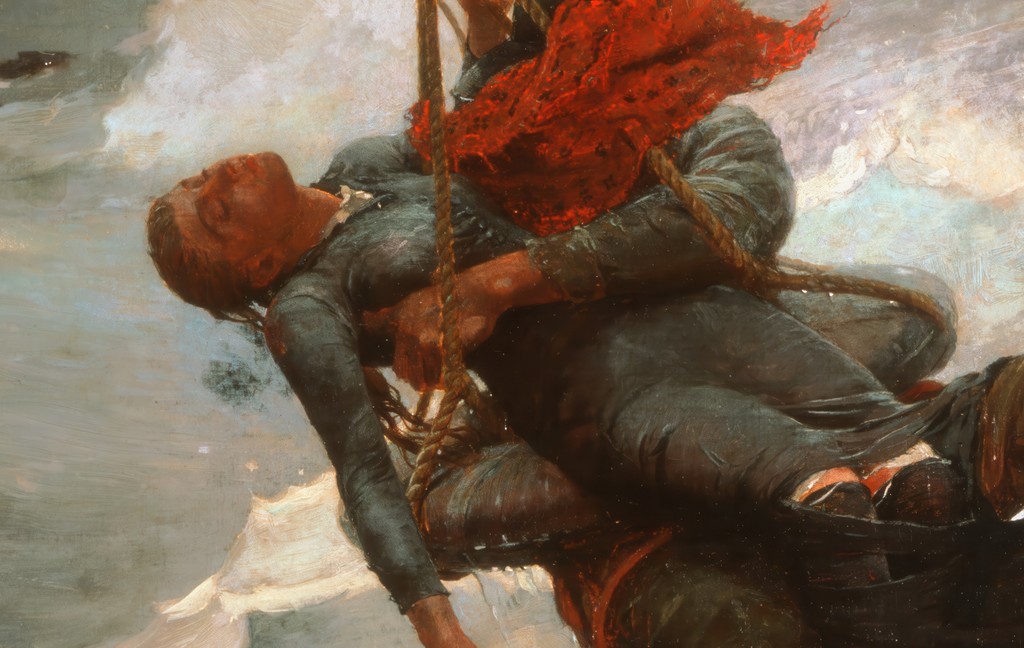
Left-Hand Structure
The left side helps frame the composition and shows how Homer balances incident against the broader setting.
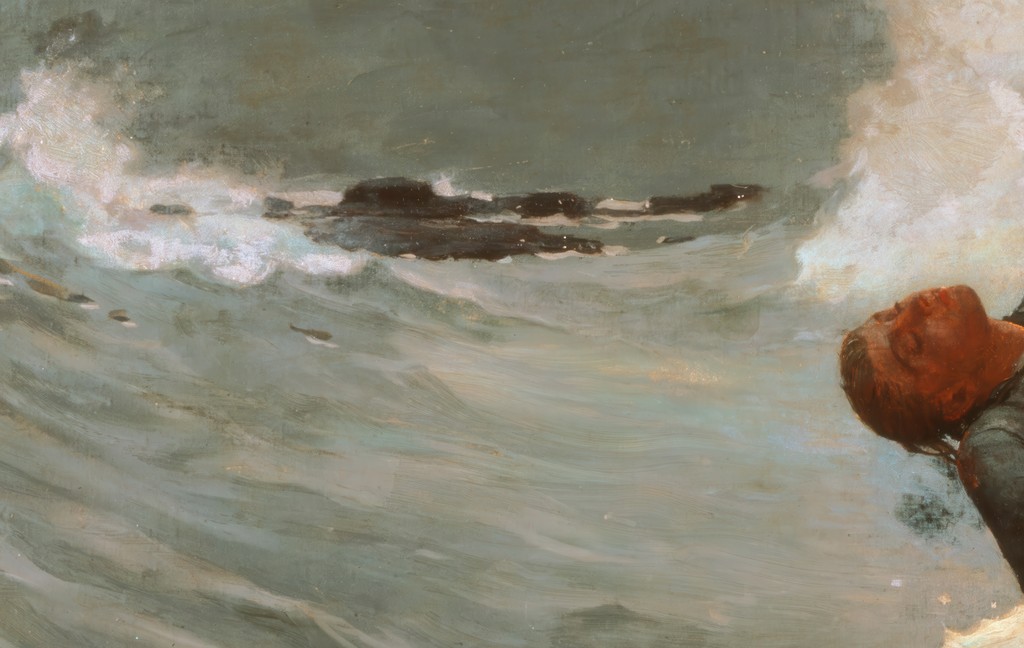
Right-Hand Structure
The right side answers the central group with a second visual pressure, often through movement, distance or environmental force.
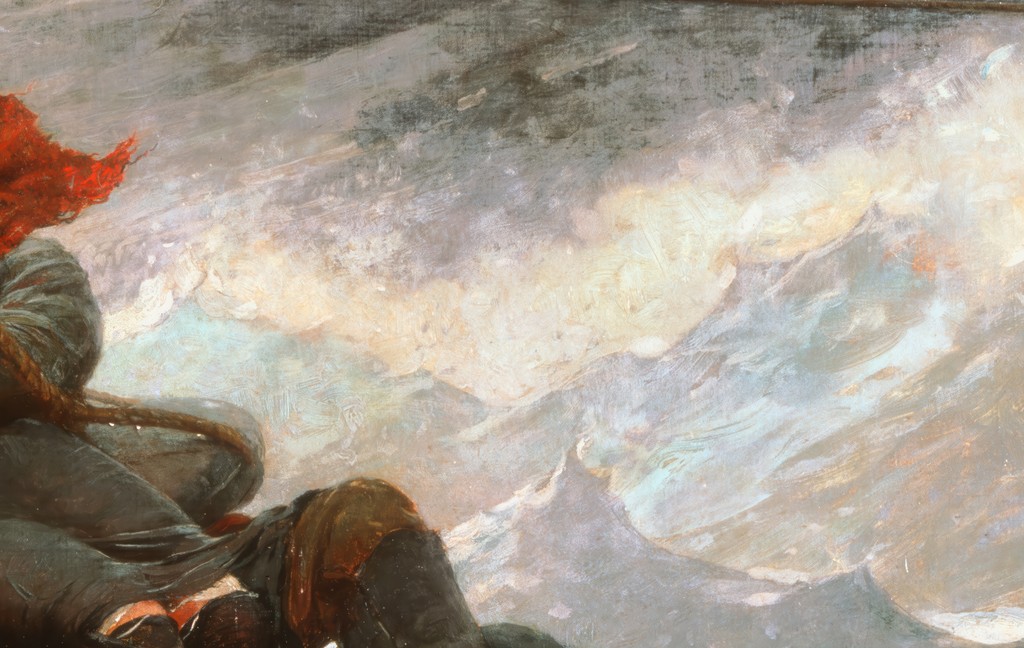
Foreground Detail
The foreground gives the viewer a threshold into the image and often contains the practical evidence of work, risk or play.
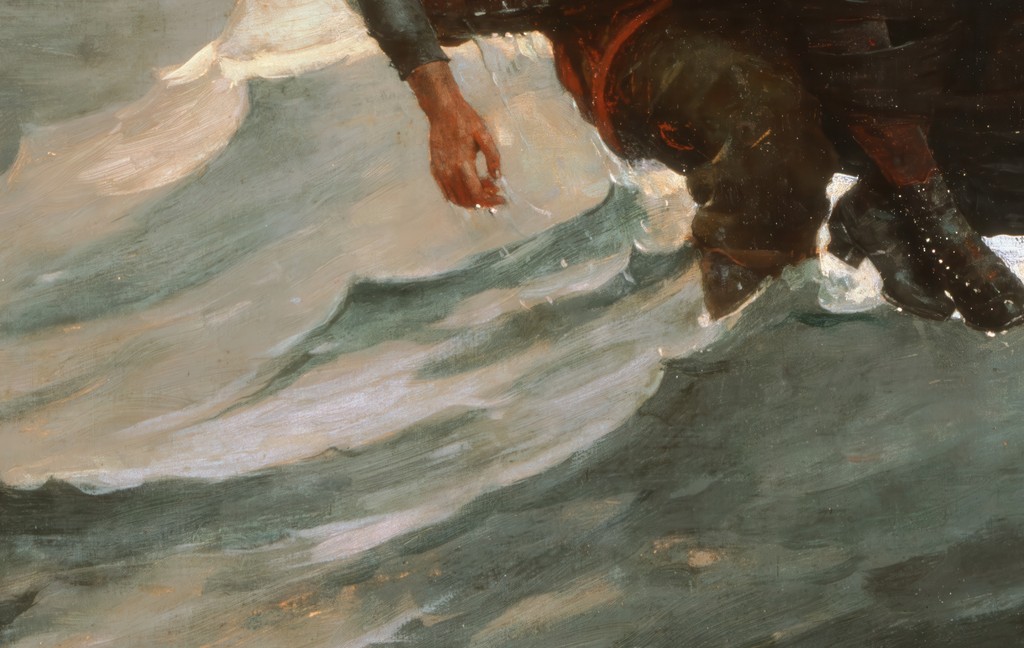
Background Distance
The background opens the picture into weather, landscape or social space, making the scene larger than the immediate figures.
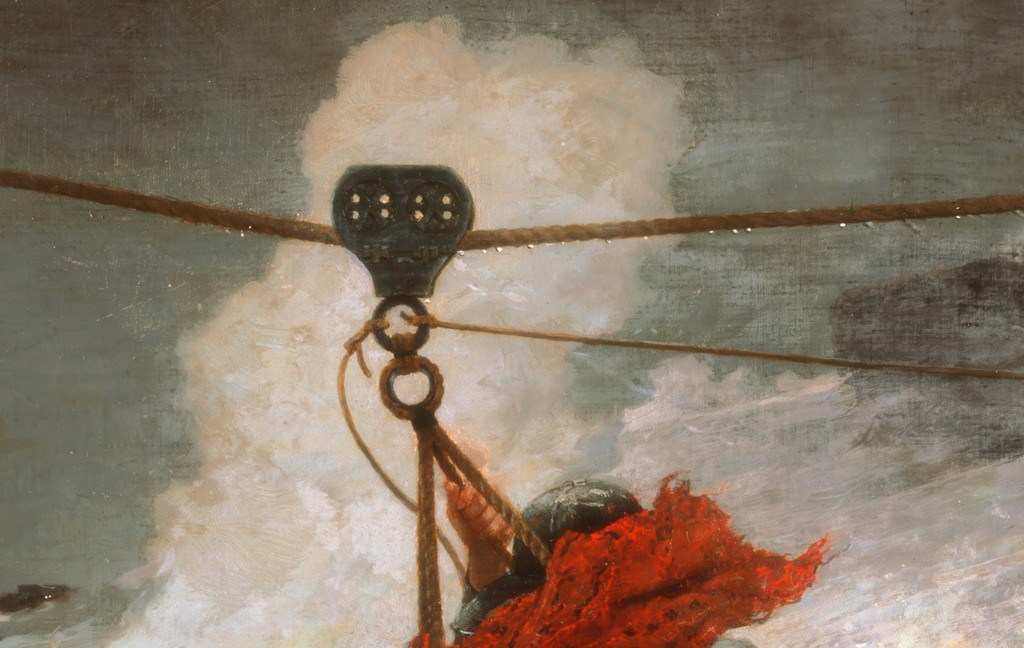
Edge Rhythm
A detail near the edge shows how the composition keeps the eye moving instead of closing around a single motif.
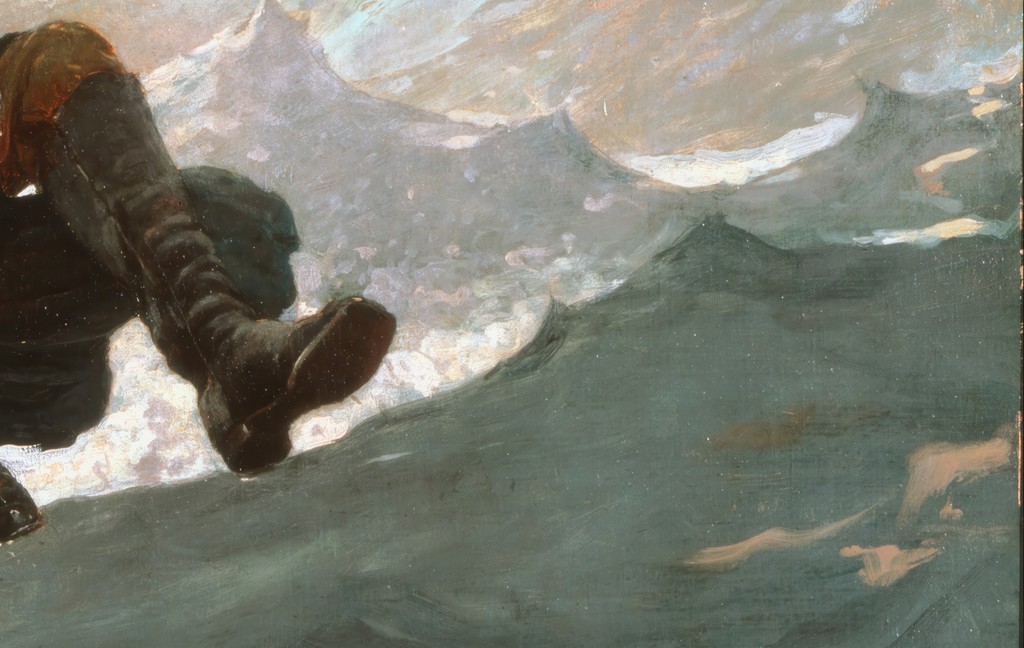
The Breeches Buoy
The key term for this article is breeches buoy. In simple terms, a breeches buoy was a lifesaving rescue device that could carry a person along a rope or cable between a wrecked vessel and safety. The apparatus often included a ring or seat-like support, allowing a rescued person to be hauled through the air above dangerous water. In Homer's painting, the device makes the rescue possible, but it does not make the rescue easy. [2]
This technology gives The Life Line a different character from a traditional shipwreck scene. Older shipwreck imagery often emphasized divine mercy, individual heroism, sublime nature or dramatic despair. Homer includes drama, but he also includes procedure. A rescue can happen because people have equipment, lines and a method for using them. [3]
That procedural element is central to the painting's modernity. The scene is not only about courage. It is about organized response. Someone has secured the line. Someone is operating the apparatus. Someone has gone out into danger to bring another person back. The painting honors heroism, but it locates heroism within a practical system. [4]
At the same time, the breeches buoy does not remove fear from the image. Homer is too good a painter of risk to let technology become a simple symbol of safety. The apparatus crosses the surf, but the surf still matters. The figures are suspended, but suspension is not the same as arrival. The line may hold, but the viewer feels the strain of the event. [5]
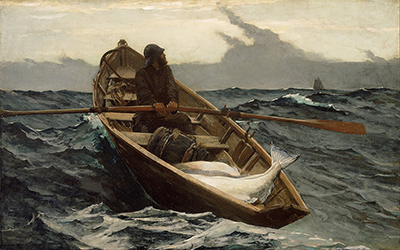
This makes The Life Line a particularly useful work for readers who know Homer's later marine paintings. In The Fog Warning, a fisherman has no comparable apparatus. He has a dory, oars, judgment and the distant schooner. In The Gulf Stream, rescue is even more uncertain: a damaged boat, sharks, weather and distant signs of help create a harsher vision of isolation. The Life Line sits between these possibilities. It shows danger at sea, but it also shows a human system designed to intervene. [6]
The breeches buoy also changes the emotional focus of the painting. In a boat rescue, the viewer might attend to rowing, steering or the approach to a vessel. Here, the main action is suspended above the sea. The line turns the space over the water into a route of passage. The painting is about crossing, not sailing. The figures move from wreck toward rescue by means of a line stretched through violent weather. [7]
For the Article Utility Panel, the term is best defined compactly. The article does not need a technical manual. It needs just enough explanation for a reader to understand why the apparatus matters. Without that understanding, the painting can look like a generic rescue embrace. With it, the image becomes a drama of modern lifesaving technology under extreme pressure. [8]
Cropping, Waves And Bodily Suspense
Homer's cropping is one of the reasons The Life Line feels so immediate. The painting does not offer a calm, balanced inventory of the whole event. It cuts into the rescue at the point of greatest tension. This cropping makes the figures feel close, but it also makes the wider situation harder to grasp. That partial view is not a weakness. It is the source of the picture's suspense. [9]
The viewer sees enough to know that a shipwreck or foundering vessel has created the emergency. The viewer also sees enough to know that a rescue apparatus is in use. But the painting refuses a settled narrative map. The event seems to continue beyond the edges of the canvas. Ropes, wind, sea and human effort imply a larger operation that cannot be fully seen from this angle. [1]
This structure turns the human body into the painting's central evidence. The woman's body tells us how close the situation has come to catastrophe. She cannot be presented as fully self-directed in this moment. She must be carried. Her condition gives the rescue its emotional stakes. [2]
The rescuer's body carries another kind of evidence. He is not posed for admiration. He is braced into the task. Because his face is obscured, the viewer reads him through action rather than expression. His anonymity makes the rescue feel less like a portrait of one hero and more like a picture of trained response under pressure. [3]
The waves below are not just setting. They are the force from which the bodies are being lifted and across which they are still moving. Homer makes the sea feel close enough to reclaim them. This is the central tension: the figures have left the water, but the water has not left the scene. [4]
The suspended position also creates a strange emotional double state. The viewer can feel relief because rescue is underway. The viewer can also feel fear because rescue is incomplete. Homer holds those feelings together rather than letting one cancel the other. That is why the painting remains more complex than a simple happy rescue image. [5]
The cropping helps Homer avoid sentimentality. A distant, fully explanatory view might allow the viewer to enjoy the rescue from a comfortable remove. A more theatrical arrangement might turn the central figures into romantic symbols. Homer's closer framing keeps the event harsh, practical and unresolved. We are made to look at a body being carried through danger, not at a staged emblem of rescue. [6]
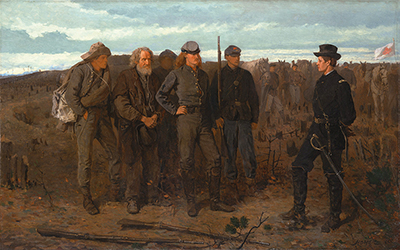
This is also why the painting works within the larger Homer cluster. Many of Homer's strongest works are built around the moment before resolution. In The Fog Warning, the fisherman has caught halibut but has not reached safety. In The Gulf Stream, the isolated figure's fate remains uncertain. In Prisoners from the Front, the Civil War encounter is charged by what happened before and what will happen after. The Life Line belongs to this wider Homer habit of keeping the viewer inside an unresolved present. [7]
Shipwreck Tradition And Modern Rescue
Shipwreck had a long history in art before Homer painted The Life Line. It could be a subject of terror, faith, sublime nature, sentimental rescue or moral instruction. Homer knew how powerful those traditions were, but he did not simply repeat them. He modernized the shipwreck subject by making the rescue apparatus as important as the romantic encounter between rescuer and rescued. [8]
The PMA exhibition context is useful here because it places The Life Line in relation to shipwreck tradition, rescue imagery and Homer's process. That context helps prevent a shallow reading of the painting as a melodramatic rescue scene. The work is dramatic, but it is also self-conscious about the visual language of rescue. [9]
The central pair can remind viewers of older rescue imagery, especially the motif of a male rescuer carrying a vulnerable woman. Homer uses that motif because it is instantly legible. Viewers understand the danger and emotional stakes quickly. But he changes its meaning by embedding it in a modern lifesaving system and by denying the rescuer the clear identity and theatrical display that older heroic imagery often offered. [1]
In other words, the painting uses familiar rescue drama while making it less comfortable. The woman's body is close, heavy and exposed. The rescuer is necessary but anonymous. The line is efficient but precarious. The sea is violent but not decorative. Homer keeps pushing the image back from romance into emergency. [2]
This does not mean the painting lacks feeling. On the contrary, its feeling is intense because it is controlled. Homer does not need to overstate emotion in faces or gestures. The whole composition carries emotion through pressure, suspension and proximity to the waves. [3]
The work also fits Homer's broader movement from narrative clarity toward compressed uncertainty. Earlier in his career, as an illustrator and Civil War artist-correspondent, he had learned how to stage legible human situations. In later oil paintings, he often kept that legibility while removing easy conclusions. The Life Line is a perfect example. The rescue is legible at once, but its meaning is not exhausted by that first recognition. [4]
The painting asks what modern rescue changes and what it cannot change. Technology can reach across water. It can organize effort. It can turn a wreck into a recoverable emergency rather than certain death. But technology cannot make the sea benign. It cannot make the body weightless. It cannot erase fear, exhaustion or the uncertainty between rescue begun and rescue completed. [5]
That balance gives the painting its enduring seriousness. It is not anti-modern, and it is not naively technological. It shows modern lifesaving as necessary, admirable and limited. Homer does not choose between human invention and natural force. He paints the line stretched between them. [6]
Preparatory Work, Revisions And Technical Evidence
The PMA exhibition route is especially valuable because it points beyond the finished image to Homer's process. The packet records that the exhibition context includes preparatory drawings, etchings, pentimenti and X-radiographs. Those materials matter because they show The Life Line not as a single dramatic idea tossed onto canvas, but as a carefully worked composition. [7]
Pentimenti are visible traces or evidence of changes made during the making of a painting. The term should appear only with a quick explanation because it is useful but unfamiliar to many readers. In this case, pentimenti matter because they point to revision. Homer adjusted the work. The final scene's apparent directness is the result of decisions made and remade. [8]
X-radiographs can support that same point from another direction. Technical imaging can reveal hidden structures, changes or earlier states beneath the visible surface. For an article about The Life Line, that kind of evidence is valuable because the painting itself is so compressed. The viewer sees a final moment of rescue; technical evidence can help show the decisions beneath that final moment. [9]
Even in this cautious form, the process material changes how readers understand the painting. The Life Line feels like an instantaneous emergency, but it was built through artistic control. Homer had to decide how much of the wreck to show, where to place the bodies, how to obscure the rescuer, how to make the line readable and how to keep the waves active without drowning the central action. [1]
That relationship between immediacy and revision is one of the article's best interpretive opportunities. The finished image makes the viewer feel that everything is happening now. The technical and preparatory context reminds us that this feeling of now was made. [2]
Cullercoats, Prouts Neck And The Rescue Theme
The Life Line should also be understood within Homer's larger turn toward coastal communities, maritime labor and marine danger. His time in Cullercoats and Tynemouth in England sharpened his attention to people whose lives were organized around the sea. His later move to Prouts Neck, Maine, gave him a sustained base for studying the Atlantic and the drama of weather, rocks, boats and exposed bodies. [3]
The internal source backbone records Cullercoats and Prouts Neck as important phases, but this article does not need to become a full biography. The point is more focused: Homer's rescue image did not appear in isolation. It belongs to a body of work in which the sea becomes a test of human skill, endurance, vulnerability and social organization. [4]
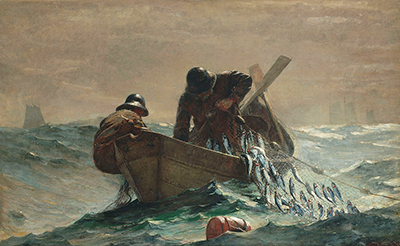
In Cullercoats-related works, Homer studied coastal labor and waiting from the shore. In marine paintings such as The Herring Net, he shows men working at sea, handling fish and equipment under pressure. In The Fog Warning, the fisherman has succeeded in catching fish but must still return before fog overtakes him. In The Life Line, the emergency is more dramatic because someone is already being rescued from a wreck. [5]
The difference is important. The Herring Net shows labor as coordinated work. The Fog Warning shows labor under approaching danger. The Life Line shows rescue after ordinary control has broken down. The breeches buoy enters when boat, ship or human strength alone is no longer enough. [6]
That progression helps readers see why The Life Line is not just another seascape. It is a painting about the systems humans build because the sea can defeat ordinary systems. Boats fail. Weather changes. Wrecks happen. Lifesaving technology exists because people have had to imagine practical responses to repeated danger. [7]
The painting also points toward Homer's more elemental late works. In The Gulf Stream, the apparatus of rescue is absent or uncertain, and the isolated figure is surrounded by threats. In Northeaster, human figures disappear and the sea itself becomes dominant. The Life Line stands at a crucial midpoint: the sea is dangerous, but human intervention remains visible. [8]
Anonymity And Ambiguity
One of Homer's smartest decisions in The Life Line is the way he handles identity. The rescuer is essential, but not personally revealed. The woman is central, but her inner state remains inaccessible. The scene is intimate, but the painting withholds the kind of facial clarity that would make the figures easy to turn into a sentimental pair. [9]
This anonymity changes the meaning of heroism. The rescuer's importance lies in action, not display. He is not removed from danger and admired from a safe distance. He is inside the mechanism of rescue, almost merged with the line, clothing, wind and spray. His covered or obscured face keeps the viewer's attention on the task. [1]
The woman's ambiguity is equally important. She appears vulnerable and may be semiconscious, but Homer does not turn her into a simple symbol. Her body is the burden and the reason for the rescue. The painting makes viewers feel the difficulty of carrying another person through danger. It does not ask them merely to admire an elegant pose. [2]
The closeness between the figures could have become romantic spectacle. Homer resists that by surrounding them with practical emergency. The line, wind, sea and hidden faces make the image less about personal drama and more about survival. The result is emotionally charged but not easy. [3]
That ambiguity is part of why the painting still holds attention. Viewers can recognize the rescue quickly, but they cannot reduce it to a single message. Is the painting about courage? Yes, but not only courage. Is it about technology? Yes, but not technology alone. Is it about human vulnerability? Yes, but vulnerability is shown inside a system of action. [4]
Homer's marine works often become powerful at exactly this point, when a clear scene carries more than one kind of meaning. In The Fog Warning, the fisherman is both successful worker and endangered man. In The Gulf Stream, the central figure is both physically isolated and historically charged by the Caribbean setting. In The Life Line, rescue is both underway and unfinished. [5]
The painting's ambiguity therefore be preserved in the public copy. The article does not need to announce that the woman is saved, that the rescuer is heroic in a simple theatrical sense, or that technology conquers nature. It should say what the painting shows: a rescue in progress, a modern lifesaving apparatus, a semiconscious or exhausted body, an anonymous rescuer and a sea that remains dangerous. [6]
Why The Painting Was A Success
The local packet records The Life Line as a popular and critical success. That reception makes sense. The painting has a subject that viewers could understand quickly, an emotional charge that does not require specialized art history, and a modern rescue apparatus that made the scene feel timely rather than antique. [7]
But popularity does not need to be confused with simplicity. The same qualities that made the painting accessible also make it complex. The rescue is immediately legible, yet the composition denies the viewer a secure ending. The figures are close, yet anonymous. The technology is visible, yet not triumphant. The sea is dramatic, yet not merely theatrical. [8]
Homer's success with the picture likely depended on that balance. He could give audiences a gripping narrative without flattening it. A viewer could respond to the rescue drama at once, then continue to look because the painting does not settle into a single emotion. [9]
The work also arrived at a moment when modern life was increasingly understood through systems, devices and organized public response. Lifesaving technology could be admired as practical progress. Homer makes that progress visible without turning it into an advertisement. The apparatus matters because a human life may depend on it. [1]
That distinction is important for tone. The article does not need to make the painting sound like a technical illustration. Nor should it ignore the technology in favor of romance. The best reading keeps both together: a physically intimate rescue made possible by a specific modern system. [2]
The painting's success also belongs to Homer's larger career. By the 1880s he had already established himself as an artist capable of turning American subjects into serious art. He had worked as an illustrator, painted Civil War and Reconstruction subjects, explored childhood and rural scenes, and deepened his engagement with watercolors and coastal life. The Life Line shows how that accumulated experience could produce a marine painting with both narrative clarity and formal compression. [3]
Related Works In Homer's Marine Cluster
The Life Line sits near the center of Homer's marine peril cluster. It links readers to related pages without making every sea picture sound the same. Its particular subject is rescue: not work before danger, not isolation after control fails, but the act of bringing a body through danger by means of lifesaving technology. [4]
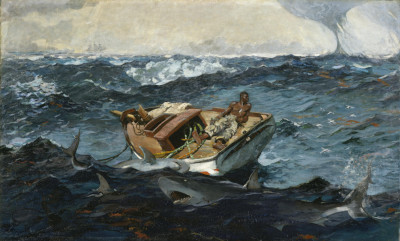
The Fog Warning is the most useful contrast. In that painting, a fisherman rows a loaded dory while fog threatens the distance between him and a schooner. There is no rescue apparatus. The drama depends on judgment, time, weather and the fisherman's own labor. The Life Line begins from a later point in the emergency. Someone already needs rescue, and the line has already been deployed. [5]
The Herring Net connects through maritime labor. It shows fishermen working together at sea, handling net and catch under difficult conditions. That cooperative labor helps readers understand the world from which Homer's rescue and peril images emerge. The sea is a workplace before it becomes a disaster field. [6]
Undertow offers a close thematic connection because it also concerns bodies caught in dangerous water and human attempts at rescue. The exact image and source treatment for that page remains separate, but the internal corridor is useful: readers interested in the physical drama of The Life Line will naturally want to compare Homer's other rescue-at-water subjects. [7]
Lost on the Grand Banks belongs in the same marine peril corridor. It can help readers see the North Atlantic fishing context and the risks of exposed human bodies at sea. Again, the connection is best thematic rather than forced. The article does not need to imply identical subjects, only a shared interest in danger, weather and maritime survival. [8]
The Gulf Stream is the strongest late comparison for isolation and uncertainty. In The Life Line, a visible apparatus carries the figures toward possible safety. In The Gulf Stream, rescue is much less secure. The boat is damaged, threats surround the central figure and help remains distant or doubtful. Together, the two works show how Homer could move from rescue in process to survival without a reliable line. [9]
Why The Life Line Still Feels Modern
The Life Line still feels modern because it is not content with spectacle. It has all the ingredients of maritime drama: storm, wreck, rescue, danger, body and sea. Yet Homer refuses to make those ingredients comfortable. He crops the scene tightly, obscures identity, emphasizes weight and leaves the rescue unfinished. [1]
The painting also feels modern because it takes technology seriously without becoming naive about it. The breeches buoy is not decoration. It is the reason the rescue can occur. But the apparatus is not a magic solution. It is a line under strain, carrying human bodies through weather and spray. Homer understands that modern systems can save lives while still depending on courage, skill and luck. [2]
That combination remains powerful for contemporary viewers. We still live with the tension between technological confidence and bodily vulnerability. We build systems for safety, emergency response and rescue, but those systems are tested in moments when weather, accident or force exceeds ordinary control. Homer gives that tension a nineteenth-century maritime form. [3]
The painting also avoids the false comfort of a completed happy ending. Rescue is underway, and that matters enormously. But the figures have not arrived. The picture keeps the viewer in the middle of action, where relief and fear exist at the same time. That is truer to emergency than a simple before-and-after narrative. [4]
For readers new to Homer, The Life Line is an ideal doorway into his mature art. It is dramatic enough to grasp quickly, but serious enough to reward slow looking. It connects to the biography through the artist's marine turn, to the Paintings hub through major oil painting, to the technical/exhibition context through process evidence, and to the wider cluster through rescue and peril at sea. [5]
For readers who already know Homer's most famous seascapes, the painting adds an essential distinction. Not every Homer sea picture is about solitude or elemental nature. Some are about work. Some are about judgment. Some are about systems of rescue. The Life Line is the great example of that last category. [6]
The painting's greatness lies in how fiercely it concentrates the rescue. A line crosses danger. A rescuer carries a body. The waves are still there. The viewer is close enough to feel the urgency but not far enough away to feel in control. Homer turns a lifesaving apparatus into a human drama and a human drama into a modern image of uncertainty. [7]
Discussion
Winslow Homer rewards close looking because his strongest images rarely close down into one easy meaning. Use the prompts below to test how the work changes as you move between subject, place, medium and history.
Reader Insights
First Look
What detail in The Life Line changes how the whole work feels?
Homer's Method
Where do you see Homer's balance between clear observation and unresolved meaning?
Cluster Context
Which related Homer work helps you read this page more carefully?
Join the Conversation
Share a thoughtful observation below, especially if a detail, source connection or related Homer page changed the way you read the work.
References
- Philadelphia Museum of Art, object record for The Life Line, https://www.philamuseum.org/objects/102970.
- Philadelphia Museum of Art, Shipwreck! Winslow Homer and The Life Line, https://www.philamuseum.org/exhibitions/shipwreck-winslow-homer-and-the-life-line.
- Winslow Homer Phase 1A Conditional-Route Flagship Source Packets, 2026-07-20.
- Winslow Homer Phase 1 Page/Source Packets - Wave 1, 2026-07-20.
- Winslow Homer Approved Eight Image Rights Review, 2026-07-20.
- Winslow Homer Internal-Link Ledger, 2026-07-20.
- Winslow Homer Quote Ledger, 2026-07-20.
- Winslow Homer Glossary Ledger, 2026-07-20.
- Winslow Homer Tom Image Policy - Issue-Bearing PD Assets, 2026-07-20.
 Winslow Homer.jpg)