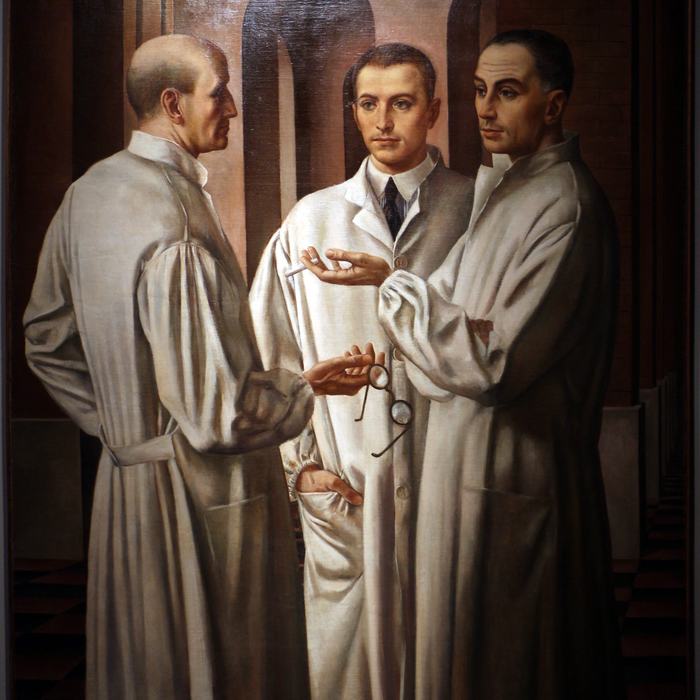
Image reference: Ubaldo Oppi’s The Surgeons.
At a Glance
- Core visual-art periodapproximately 1917–1950, with important later Dutch and American continuities.
- Starting pointFranz Roh's 1925 book Nach-Expressionismus: Magischer Realismus.
- Principal contextsGermany, Italy, Spain, the Netherlands and the United States.
- Common qualitiesprecise surfaces, still figures, isolated objects, staged space, old-master technique, clear but unnatural light and an unexplained sense of threat or wonder.
- Major related movementsNew Objectivity, Metaphysical Painting, Italian Novecento and Surrealism.
- What it was notone international society, a fixed membership list, another name for all figurative art or a visual illustration of later literary magical realism.
Contents
- Where it fits
- Franz Roh’s idea
- How exact reality becomes uncanny
- Italian Realismo Magico
- Spain
- The Netherlands
- The United States
- Movement boundaries
- Four stages
- Essential works
Where Magic Realism fits
Carlo Carrà
Key career periodGiorgio de Chirico
Key career periodFelice Casorati
Key career periodGeorg Schrimpf
Key career periodÁngeles Santos
Key career periodCarel Willink
Key career periodPaul Cadmus
Key career periodGeorge Tooker
Key career periodMagic Realism began in art history, not fiction. In 1925 the German critic Franz Roh used magischer Realismus to describe a new kind of European painting emerging after Expressionism. Its pictures did not need levitating figures, impossible creatures or visible miracles. Their “magic” could lie in the opposite direction: a bottle, face, town square or table painted so exactly that the familiar world became strange.
Roh's term was never the name of one organised movement. The artists did not sign a common manifesto, share a political programme or necessarily accept the label. It overlapped New Objectivity in Germany, acquired a more concentrated meaning in Italian Realismo Magico, travelled into Spanish art through a 1927 translation, and became attached to Dutch neo-realism. In 1943, the Museum of Modern Art used it to assemble a broad American exhibition. Each use altered the category.
That instability is part of the subject. Magic Realism is most useful as a history of how critics, artists and museums tried to explain an unsettling kind of clarity. Bodies appear sculpturally present but psychologically remote. Ordinary rooms become stages. Old-master technique records modern clothes and machines. Time seems to have stopped just before or after an event that the picture refuses to disclose.
The term later entered literary criticism, especially through debates about Latin American writing. That better-known history should not be projected backwards onto European painting. Visual Magic Realism usually discovers mystery inside the material world; it does not require the supernatural to be treated as everyday fact. The shared words record translation and reinvention, not one continuous doctrine.
Franz Roh and the mystery of ordinary things
Roh's book appeared in Munich in 1925 under the title Nach-Expressionismus: Magischer Realismus. Probleme der neuesten europäischen Malerei—approximately, Post-Expressionism: Magic Realism. Problems of the Most Recent European Painting. It responded to an evident change. Many artists who had intensified or broken visible form before and during the First World War were again painting recognisable bodies, rooms, landscapes and objects. Roh surveyed this return across Europe and proposed a name for its unusual atmosphere.[1]
The adjective “post-Expressionist” did not mean that every trace of the older movement had vanished. Nor did it establish a neat period beginning on publication day. It identified a change in emphasis: from ecstatic projection towards the resistant presence of the world. Hard contour replaced eruptive brushwork; controlled construction replaced the sense that emotion could reshape everything it touched. Yet mystery remained.
Roh's European range is essential. His argument placed German painters beside Italian, French, Spanish, Dutch and other artists, including figures who would later be sorted into different movements. An important IVAM reconstruction brought together works by Max Beckmann, Otto Dix, George Grosz, Georg Schrimpf, Carlo Carrà, Giorgio de Chirico, Fernand Léger, Pablo Picasso, Joan Miró, Josep de Togores and Salvador Dalí. The list does not mean that all were lifelong Magic Realists. It demonstrates how broadly the initial idea operated.[2]
Roh searched for language because the new realism did not feel like a simple recovery of nineteenth-century naturalism. He considered phrases corresponding to ideal realism, verism, neoclassicism and New Objectivity, but none held the exact paradox he wanted. “Post-Expressionism” located the change historically; “Magic Realism” named its effect. The Lenbachhaus describes the term as deliberately difficult because its two halves seem to pull apart.[3]
The magic was not painted on top of reality. It appeared through concentrated attention to reality. A tabletop may tilt only slightly, but enough to make every object appear separately alert. A figure may be modelled with total clarity while remaining inaccessible. Architecture can be rational and still generate dread. The more completely the picture seems to disclose, the more it withholds.
This idea competed with Gustav Friedrich Hartlaub's New Objectivity. Hartlaub had begun planning an exhibition of post-Expressionist German painting in 1923 and opened Die Neue Sachlichkeit at the Kunsthalle Mannheim in 1925. His name became the dominant art-historical category for Weimar realism. Roh's survey was more transnational and more explicitly concerned with the mystery persisting behind material appearance. The labels overlap, but neither is a subdivision of the other.[4]
The difference helps explain why Magic Realism has remained both illuminating and slippery. A term tied to one exhibition can be reconstructed through a checklist. Roh's term described an aesthetic problem across incompatible artists. It is less a box than a proposition: when reality is rendered with unusual precision, can it look less familiar rather than more?
How exact reality becomes uncanny
There is no checklist of formal features that proves a painting is Magic Realist, but a recurring grammar makes comparison possible. Surfaces are often smooth, hard or patiently layered. Contours separate each thing from its neighbour. Figures hold poses rather than move through them. Perspective appears lucid until walls, floors and horizons are followed closely. Light reveals materials without creating a convincing hour of day.
Tate's account of Magic Realism in Weimar Germany stresses the move from Expressionist emotion towards a “cold” clarity capable of unsettling imagery. Otto Dix, George Grosz, Albert Birkle and Jeanne Mammen could depict ordinary modern life while making its people strangely rigid or exposed. Description is not the opposite of distortion. It can make distortion look factual.[5]
Stillness is one of the strongest devices. A gesture arrested halfway acquires ceremonial weight. Two people in the same room may fail to make psychological contact. A deserted plaza feels as if it is waiting. Still-life objects appear too isolated to participate in domestic use. The image does not tell viewers what has happened, so order itself becomes suspenseful.
Scale also changes the familiar. A flower can possess the authority of a monument; a human figure can look reduced beside classical architecture; a face may be rendered with such microscopic attention that skin becomes a landscape of time. Magic Realism does not abolish proportion as fantasy might. It adjusts visual emphasis until the ordinary seems to have an independent life.
Old techniques intensify the effect. Egg tempera, thin glazing, careful underdrawing and dialogue with Renaissance painting gave contemporary scenes a durable, sometimes ritual character. These methods were not inherently conservative. The same control could be used for a factory, newspaper, cinema-derived pose, queer body or indictment of fascism. Technical patience could slow down modern experience enough to expose its violence.
The spectator completes the uncanniness. Magic Realist pictures often invite recognition and deny explanation. We know what each object is, but not why it has been made so prominent. We can describe a person's clothes, but not their thought. The image is less a puzzle with a hidden solution than a world whose legibility has become suspect.
Germany: beside New Objectivity
The German history begins in the same postwar conditions that produced New Objectivity: military defeat, revolution, inflation, political violence, new mass media and a loss of confidence in Expressionist spiritual renewal. Painters returned to the visible world, but they found it fractured by war, class and new social roles.
Museum history gave Hartlaub's term an advantage. The Kunsthalle Mannheim exhibition assembled 132 works by 32 artists and travelled in changed forms. Its title became a label for a generation even though the participating painters had not formed a group. Magic Realism, by contrast, remained attached to Roh's book and to the qualities he discerned across national borders.[6]
Hartlaub proposed two broad currents. Verists such as Dix and Grosz used precise, often savage figuration for social criticism. Painters including Georg Schrimpf and Alexander Kanoldt pursued calmer, classicising figures, landscapes and still lifes. These were provisional critical descriptions, not parties with fixed memberships. The Lenbachhaus places Munich artists influenced by the Italian journal Valori Plastici beside socially critical painters precisely to show how varied the return to objects was.[7]
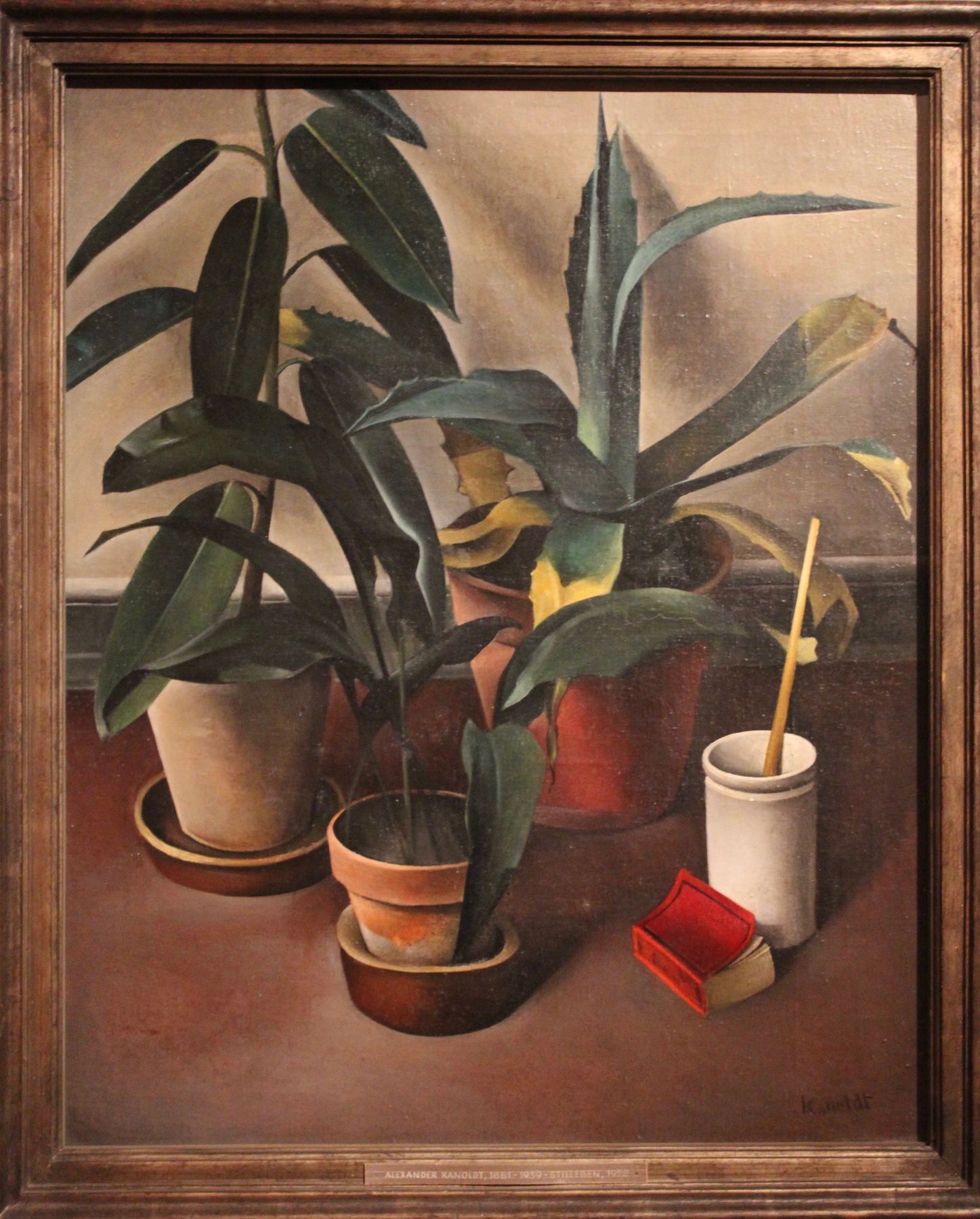
Roh's idea is especially useful for the quieter current. Kanoldt's still lifes separate vessels, plants and geometric solids until a tabletop becomes a stage of self-contained presences. His Italian townscapes use early Renaissance architecture and sharp shadow to suspend historical time. Schrimpf's reading women and rural figures seem serene, but their stillness can feel sealed away from shared life.
Magic Realism also clarifies works with more obvious social charge. Dix's portraits often turn skin, cloth and furniture into hard evidence while making the sitter's identity more theatrical. Grosz builds city scenes whose apparently recognisable spaces operate like moral diagrams. Max Beckmann's compressed interiors give material things symbolic pressure. The category does not soften them into dreamers; it helps explain why their realism feels constructed.
The danger is to use Magic Realism as a decorative synonym for New Objectivity. Hartlaub's category belongs specifically to German institutional and political history. Roh's category is a theory of post-Expressionist visibility. They share artists and formal concerns, but their geography, emphasis and later reception are different.
Follow Magic Realism through four stages
–25
Roh names a European visual problem
Post-Expressionist painters restore bodies, rooms and objects while precision, stillness and material presence make the familiar newly difficult to explain.
–35
Italian Realismo Magico becomes concentrated
Quattrocento structure, Metaphysical estrangement and modern subjects meet in a distinct Italian field without forming one organised artists’ society.
–40
Spanish and Dutch artists transform the term
Roh’s Spanish translation enables new visual systems while Dutch neo-realism develops its own precise still lifes, ominous architecture and artist-preferred labels.
–60
An American museum category and postwar afterlife
MoMA’s 1943 exhibition constructs a broad American lineage; later artists extend the category through tempera, social enclosure, satire and queer collaboration.
Italian Realismo Magico
In Italy, Realismo Magico names a more concentrated field, usually centred on the years from about 1920 to 1935. The phrase gathers painters who combined modern clarity with early Renaissance structure, Metaphysical estrangement and an intense respect for craft. Palazzo Reale's major survey organised the field through portraiture, maternity and childhood, nudes, eros, landscape, still life and allegory, showing that its magic lay across genres rather than in one subject.[8]
Carlo Carrà and Giorgio de Chirico supplied crucial foundations. Their wartime Metaphysical Painting had transformed arcades, maps, mannequins, biscuits, rulers and classical fragments into signs whose relation could not be fully explained. After that phase, both turned towards museums, technique and Italian tradition. Carrà's The Daughters of Lot of 1919 uses simplified figures and architecture to make biblical narrative feel simultaneously ancient and newly invented. MART places such work at the meeting point of avant-garde experiment and recovery of tradition.[9]
The magazine Valori Plastici, founded by Mario Broglio in 1918, helped circulate this return to form. It published Italian and international artists and supported exhibitions abroad. De Chirico's The Troubadour belongs to the mannequin world of the Metaphysical years, while the movement's 1921 German tour helped transmit its carefully staged uncanniness. Magic Realism did not replace Metaphysical Painting so much as make its estrangement more bodily, domestic and materially exact.[10]
Felice Casorati is one of the central painters. His figures inhabit carefully measured rooms, often frontal and self-contained. Silvana Cenni presents a seated woman with an almost altarpiece-like authority; surrounding architecture and landscape are simplified into a system that seems both lucid and mentally remote. Casorati's long career exceeded Magic Realism, but his staged classicism shows how living models could be translated into a suspended pictorial order.[11]
Antonio Donghi made leisure and everyday life look ceremonial. Circus performers, rowers, women at cafés and people in parks appear sharply outlined and oddly self-absorbed. His colour can be clear and attractive, yet the scenes lack the casual exchange their subjects imply. A gesture becomes an emblem; a public place feels private and airless.
Cagnaccio di San Pietro pushed precision towards discomfort. After the Orgy arranges exhausted bodies, bottles, cards and cigarettes with a coldness closer to forensic inventory than moral anecdote. The picture's smooth finish does not neutralise its judgement. It turns privilege, sexuality and depletion into things laid out for inspection.
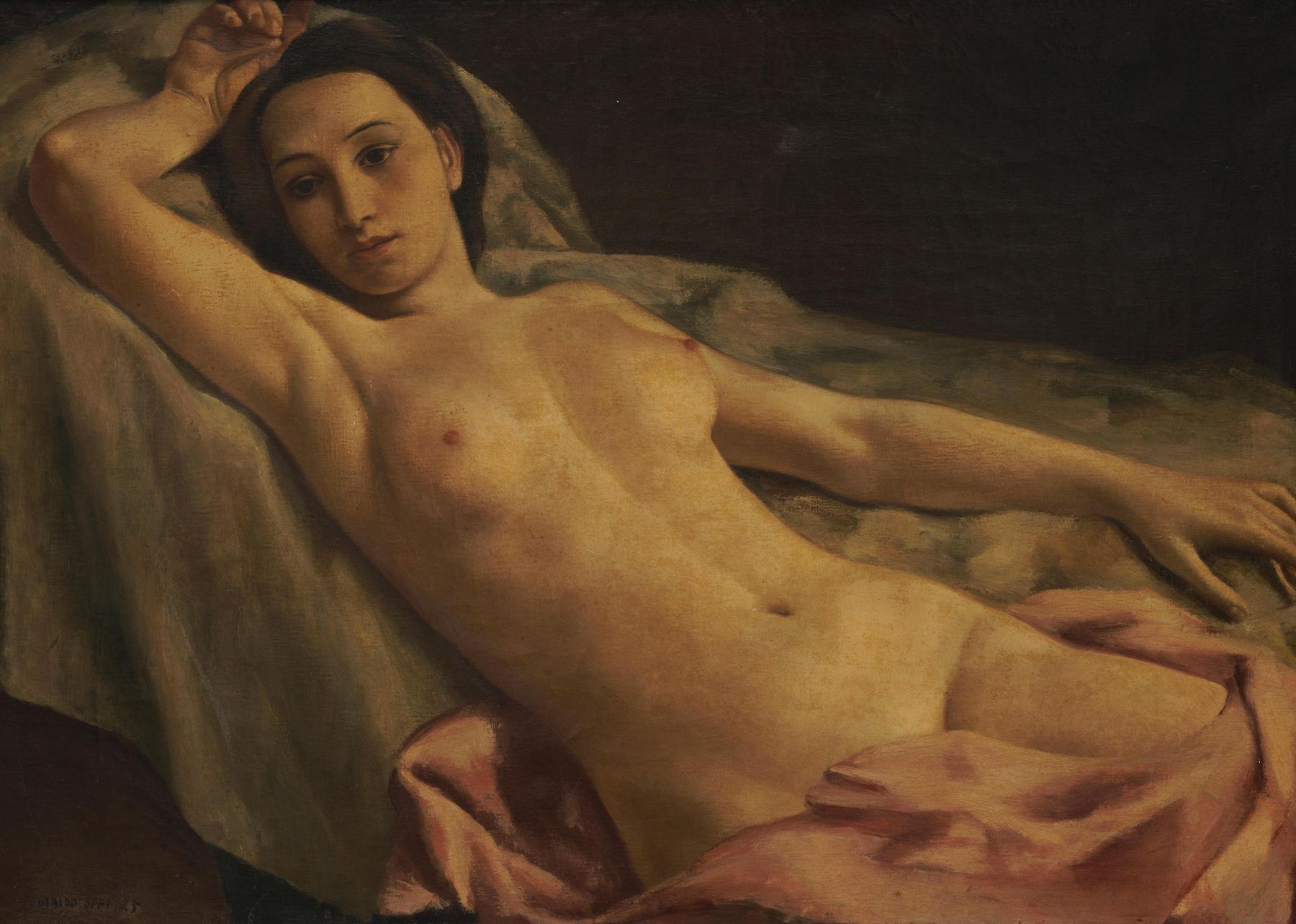
Ubaldo Oppi, Achille Funi, Gino Severini, Antonio and Virgilio Guidi, Riccardo Francalancia, Gisberto Ceracchini and others produced distinct versions of purified figure and landscape. Leonor Fini, Edita Broglio, Daphne Maugham Casorati, Nella Marchesini, Cagnaccio's female sitters and other women complicate a history too often narrated through male masters alone. MART's regional survey makes this breadth visible, extending the field beyond a small Milanese circle.[12]
Edita Broglio is particularly important because she was artist, writer, translator and editorial collaborator within Valori Plastici. Her still lifes and landscapes possess the lucid separation associated with Magic Realism, yet her role in shaping critical exchange was as significant as her pictures. Restoring her does not add one woman to a completed canon; it changes the infrastructure through which the style circulated.
Italian Magic Realism repeatedly looks towards the Quattrocento. That does not mean copying fifteenth-century subjects. It means learning from clear silhouette, simplified volume, frontal relation, measured architecture and narratives in which figures seem to occupy a time larger than the depicted moment. The old art offered a way to make modern bodies feel permanent at a time when political life was radically unstable.
Museum Folkwang describes the tendency through masks, closed books, distorted perspective and a beauty that can become disturbing. De Chirico's influence is strong, while Carrà's dialogue with Quattrocento painting gives ordinary form an archaic gravity. The exhibition's artists did not form a coherent group. Their common ground was an attitude: reality could become legendary without losing its visible substance.[13]
That distinction matters. The painters shared neither one institution nor one political position. The English presentation of the Folkwang exhibition returns to Roh's claim that mystery remains behind the represented world. Italian Realismo Magico is therefore best approached as a constellation of technical and imaginative choices, not a signed alliance.[14]
Milan was a major centre, but Turin, Rome, Trieste and other locations supported different networks. A Folkwang symposium traces the formation from around 1916 and identifies Casorati, de Chirico, Donghi, Carrà and Cagnaccio among its principal figures. The chronology makes clear that 1925 supplied language rather than causing the pictures to begin.[15]
Magic Realism, Novecento and Fascism
Italian Magic Realism overlaps Novecento Italiano, the movement promoted by the critic Margherita Sarfatti. Both valued lucid form, renewed craft and dialogue with Italian tradition. Some artists participated in both. Yet they are not synonyms.
Novecento had an organised exhibition history and a highly visible spokesperson. Sarfatti promoted Italian artists internationally while maintaining a close relationship with Benito Mussolini and the Fascist cultural system. MART's account follows the movement's international exhibitions and political entanglement, which made its appeal to order and Italian greatness available to the regime.[16]
Magic Realism is a looser, partly retrospective stylistic category. Its clarity could serve nationalist ideas of permanence, but it could also produce private anxiety, social criticism or withdrawal. The political meaning of a sharply outlined body cannot be read from contour alone. Patronage, statements, exhibitions and conduct must be examined artist by artist.
This caution does not make the pictures innocent. Classical order had particular attractions in a society being reorganised by dictatorship. Monumental motherhood, healthy bodies and an idealised land could align with official values. At the same time, empty streets, rigid masks and emotionally disconnected families could make order look oppressive. Magic Realism's ambiguity is historical, not an excuse to avoid politics.
Spain and the 1927 translation
The Spanish history offers unusually direct evidence of a book changing artistic possibilities. Fernando Vela translated a shortened version of Roh's study for José Ortega y Gasset's Revista de Occidente in 1927. The publication's images and terminology reached artists who were seeking ways to combine modern experiment with legible figures and local tradition. Museo Reina Sofía identifies technical devotion, static composition and a magical estrangement of everyday life as recurring traits in the Spanish reception.[17]
Ángeles Santos made the most astonishing response. She was seventeen when her monumental Un mundo appeared at Madrid's Salón de Otoño in 1929. The painting presents the world as an enormous angular body surrounded by darkness. Female figures inhabit its rooms, climb ladders, light the sun and perform mysterious tasks. The scale—about three metres square—turns a private vision made in Valladolid into a public cosmology.
Santos did not have direct access to every European painting. Roh's reproductions allowed her to study Miró and German New Objectivity, among other modern examples. The Reina Sofía records those sources while emphasising the originality of the result. Un mundo draws material from a young artist's immediate surroundings, poetry, magazines and reproductions, then builds a visual universe no source could supply on its own.[18]
The work also defeats rigid labels. Its exact rooms and figures connect with Magic Realism; its impossible cosmology approaches Surrealist poetics. Conservation study has recovered how this enormous canvas was made, altered and displayed, reminding viewers that an apparently visionary world remains a constructed material object.[19]
Rosario de Velasco's Adam and Eve and Alfonso Ponce de León's paintings offer another balance of classicism and modernity. Bodies are solid, simplified and exposed to a strangely lucid setting. The Spanish room at the Reina Sofía places this search beside Italian Novecento while noting its political complexity. Shared form did not produce identical biographies.
Maruja Mallo's early paintings also move through Magic Realism. Popular festivities, masks, sport, machines and geometrically ordered bodies let her connect street culture with modern design. Later works become more openly Surrealist, socially charged, organic or cosmological. The Reina Sofía's retrospective describes a career moving from early Magic Realism and Surrealist composition towards later geometric fantasy.[20]
It is tempting to fit Mallo into whichever movement a room requires. Her work resists that convenience. The museum's accompanying programme explicitly presents her as exceeding Realism, Surrealism, popular culture, spirituality, Marxism, craft and the Generation of 1927. The point is not that labels are useless, but that they illuminate phases and problems rather than containing a person.[21]
Mallo joined avant-garde and tradition through material curiosity. Popular ritual, ceramics, theatre, science, architecture and bodily movement were active resources, not picturesque decoration. Her work could unite the performative and magical with political ideas of equality, then change radically during exile.[22]
Women artists' visibility during the Second Republic belongs to this history. Mallo and Santos worked within expanded education, publishing and exhibition networks while still facing gendered scrutiny and restricted professional authority. The Civil War, dictatorship and exile transformed their careers. A movement account that celebrates a Spanish “magic” but ignores these institutions would turn history into atmosphere.[23]
Close looking at Un mundo returns the category to its strength. One can follow the repeated windows, ladders, rays and tiny actions; notice how the angular planet combines building, body and stage; and ask why familiar domestic labour has become cosmic maintenance. The Reina Sofía's access and conservation programmes treat composition, context and material evidence together. That is an apt method for Magic Realism: wonder begins with looking closely at how the image was made.[24]
The Netherlands: precision and the anxious thirties
Dutch Magic Realism is often discussed within a broader neo-realist tradition. Museum MORE's collection brings Carel Willink, Pyke Koch, Dick Ket, Raoul Hynckes and Wim Schuhmacher into one field while preserving strong differences of temperament, source and politics.[25]
Willink is the best-known name, though he preferred “imaginary realism” or “fantastic realism.” His pictures combine monumental buildings, statues, threatening skies, modern dress and displaced animals. Technical perfection matters because each element must be credible before the total scene can become impossible to trust. Museum MORE connects his ominous 1930s paintings with a persistent fascination with civilisation's fragility, while noting that he resisted turning them into a simple political message.[26]
In the 1934 Self-Portrait, Willink presents himself before severe classical architecture and a darkened sky. The face is controlled, the clothing exact and the setting seemingly permanent. Yet the background does not stabilise the figure. It makes the self look small beside a culture that may endure as ruin. The museum's reading identifies the threat without treating the painting as literal prophecy.[27]
Willink studied Holbein, Vermeer and other old masters to strengthen precision. His later combinations—a camel at Versailles, zebras before red rocks, nuclear imagery beside classical remains—extend the method beyond the interwar period. The animals are not fantasy creatures. Their documentary exactness makes their relocation disturbing.
Dick Ket concentrated on self-portraits and still lifes. Bottles, bowls, musical instruments, cloth and household containers are balanced with extraordinary care. Flemish and Renaissance sources informed the structure, but the objects retain a private modern intensity. Museum MORE describes an objective approach serving the spiritual life of things: exactness becomes a means of inward concentration rather than public spectacle.[28]
Ket's physical illness and relative isolation are often used to explain his enclosed worlds. Biography matters, but it should not make every bottle a symptom. The paintings establish their own logic through repeated objects, tilted tables, mirrored surfaces and the artist's testing gaze. Their emotional pressure comes from construction as much as circumstance.
Raoul Hynckes turned still life towards vanitas. Dead animals, skulls, broken branches, keys and satin ribbons appear within theatrical darkness. Dutch and Spanish seventeenth-century painting offered precedents for mortality and material illusion. In The Hare, exact fur and suspended body make death unavoidable, while the staged setting prevents the work from becoming natural-history record.[29]
Wim Schuhmacher worked through greys, muted light and severe reduction. His landscapes, figures and double nudes can feel tranquil at first, then increasingly remote. His insistence on formal perfection earned him the name “master of grey.” Museum MORE also records his refusal after the war to exhibit with Koch because of Koch's wartime collaboration, an artist-specific decision that warns against treating Dutch realism as politically uniform.[30]
The category itself was strengthened retrospectively. A Rijksmuseum record for an exhibition poster names Magic Realism in Dutch painting as an autonomous current and foregrounds Hynckes, Koch and Willink. Such material is evidence not only of a style but of later museums and exhibitions teaching audiences whom to place inside it.[31]
Pyke Koch requires particular care. His paintings build mysterious settings from memory, cinema, photographs and earlier art. Figures from fairs, streets and social margins appear monumentally composed rather than casually observed. A comparison with Charley Toorop makes the difference clear: Toorop's direct realism begins from what she sees, while Koch assembles a reality already mediated by images.[32]
Koch also made political choices that cannot be hidden behind aesthetic ambiguity. He aligned himself with fascist organisations and collaborated during the occupation before later distancing himself. Willink, by contrast, refused the Dutch Chamber of Culture and rejected an approach connected with Hermann Göring. Rijksmuseum scholarship demonstrates why political judgement must follow documented conduct, not the shared label “Magic Realism.”[33]
The United States: a museum makes another movement
American Magic Realism was not imported as a coherent European school. It was consolidated through artists, critics, galleries and especially a museum exhibition. Americans 1943: Realists and Magic-Realists opened at the Museum of Modern Art in New York on 10 February 1943. It included forty-two artists and was accompanied by a catalogue, checklist, press material and installation photographs.[34]
The exhibition divided its argument between “retrospective” and “contemporary” artists. The historical genealogy included Raphaelle Peale, Thomas Cole, George Caleb Bingham, Winslow Homer, John Frederick Peto, William Harnett and Thomas Eakins. The contemporary section placed Edward Hopper and Charles Sheeler beside Ivan Albright, Peter Blume, Paul Cadmus, Jared French, O. Louis Guglielmi, Ben Shahn, Andrew Wyeth and many less familiar painters. This was not a recovered lineage waiting intact in American art. It was a curatorial construction linking precision, strangeness and national tradition.[35]
Dorothy C. Miller's papers preserve catalogue drafts, correspondence, biographies, statements, lender lists and exhibition planning. They show artists responding individually rather than joining a shared programme. The archive makes visible the labour by which a museum category acquires authority.[36]
The exhibition files likewise contain annotated checklists, loan correspondence, press coverage and installation documentation. This evidence is valuable because it prevents the category from floating free of its event. “American Magic Realism” meant something made in rooms, catalogues and publicity during wartime New York, then altered by later scholarship.[37]
MoMA's catalogue proposed a domestic ancestry partly to distinguish the selected painters from European Surrealism. American exactness, it argued, already possessed a latent poetry and strangeness. Trompe-l'œil still life, luminist landscape and the quiet isolation of nineteenth-century figures could be made into predecessors. The claim is historically revealing even where its family tree seems too tidy.
Peter Blume's The Eternal City provides the exhibition's strongest political example. Begun after a 1932 visit to Rome and completed in 1937, the painting compresses ruins, catacombs, beggars, priests, violence and official spectacle around a grotesque Mussolini jack-in-the-box. Every element is meticulously described, yet the city operates as a nightmare mechanism. MoMA identifies it as a searing anti-fascist indictment rather than a dream detached from history.[38]
The precision is necessary to the satire. Archaeological fragments invoke Roman greatness while modern dictatorship degrades it. Tiny figures move through tunnels and ceremonial space as if controlled by an irrational system. Mussolini's green head is absurd, but surrounding poverty and coercion give the absurdity material consequence.
MoMA acquired the work in 1942 and gave it a focused display in March 1943, immediately after the Realists and Magic-Realists exhibition opened. That sequence made Blume's painting a public statement during the war and a key institutional example of how painstaking realism could carry fantastic compression and political attack.[39]
Ivan Albright took precision in another direction. Skin, cloth, wood, dust and decay accumulate until a person seems composed of time's damage. His surfaces do not provide clinical mastery over the body; they make matter almost impossible to bear. The label “Magic Realism” captures the way ordinary flesh becomes metaphysically charged, but Albright's intense manner remains unlike Blume's narrative montage.
Paul Cadmus combined egg tempera and Renaissance drawing with erotic satire. Sailors, holiday crowds and muscular male bodies are exposed to comic excess and desire. His work was censored and debated partly because it refused respectable separation between classicising technique, queer looking and modern social vulgarity. The Whitney describes his mixture of eroticism and allegorical criticism as the basis on which the term Magic Realism was applied.[40]
Jared French also used tempera to give bodies a sculptural, arrested presence. In State Park, a family and idealised male figures occupy a bright but airless setting, physically near and socially separated. Archaic and Renaissance sources stabilise the forms, while the composition encodes outsider experience. The Whitney places French beside Cadmus and George Tooker and connects his imagery to their shared circle.[41]
The circle matters. Jared French, Margaret Hoening French and Cadmus formed the photographic collaboration PaJaMa, staging themselves and friends on Fire Island, Nantucket and Provincetown. Props, bodies and beaches became dreamlike tableaux. These photographs gave form to queer friendship, desire and chosen community in an era when such relationships could rarely be represented publicly without disguise.[42]
Recognising collaboration changes the interpretation of solitary figures. The isolation in a painting may be purposeful, but it did not necessarily arise from an isolated studio life. Paintings, drawings and photographs moved through relationships among Cadmus, the Frenches, George Platt Lynes, Lincoln Kirstein, Tooker and their friends. Magic Realism's sealed bodies were sometimes made inside remarkably connected communities.
George Tooker extended the field after the 1943 exhibition. His egg-tempera paintings show government offices, waiting rooms, lunch counters, corridors and subways whose organisation has become oppressive. Repeated faces and barriers make public systems look both familiar and mentally inescapable.
Tooker rejected the idea that he simply painted dreams or fantasy. He described reality impressing itself so forcefully on the mind that it returns with the character of a dream. In The Subway, multiple perspectives, harsh illumination and repeated verticals trap commuters who fail to meet one another's gaze. The scene is imaginary, but its dread is social and architectural.[43]
Later work retained Renaissance technique and staged psychology. The Metropolitan Museum reads Landscape with Figures III through tempera, compressed groups, Masaccio-derived figures, imprisonment and cultural conformity. The association with Magic Realism is useful, but Tooker's objection remains a reminder that museum labels and artistic self-description need not coincide.[44]
The American category was always broad enough to strain. Hopper's empty streets and rooms can feel magically suspended, but his sustained career has other histories. Andrew Wyeth's precision and silence invite the label, yet regional experience and material practice are more specific. Ben Shahn's social commitments operate differently from Albright's decaying surfaces. MoMA's exhibition should be understood as a productive comparison, not proof that all participants shared one style.
Later exhibitions have kept the ambiguity alive. The Whitney's Real/Surreal joined Albright, Blume, Cadmus, French, Hopper, Tooker and Wyeth with Charles Burchfield, Helen Lundeberg, Kay Sage, Yves Tanguy and others. The title refuses a clean border and demonstrates how realism can generate an uncanny effect without becoming an organised Surrealist movement.[45]
Magic Realism and Surrealism
The two histories overlap but begin from different questions. Surrealism developed through manifestos, collective activity, automatism, dream, psychoanalysis, found objects and revolutionary claims. Magic Realism was a critic's name for the mystery remaining within exactly represented things.
A Surrealist image may deliberately rupture ordinary causality: a train emerges from a fireplace, anatomy becomes furniture or unrelated fragments collide. A Magic Realist image can obey physical possibility and remain inexplicable. The room is real, the figure plausible and the objects correctly named; what is missing is a stable relation among them.
The distinction cannot be made by counting strange objects. De Chirico influenced both fields. Santos's Un mundo belongs near both. Mallo moved through both. American curators sometimes used Magic Realism to distance painters from European Surrealism even when their work contained overt fantasy. Labels are historical arguments, not chemical tests.
One useful comparison is with Max Ernst. His collage and frottage practices deliberately discover monsters, forests and impossible conjunctions within found material. Magic Realist painters more often preserve the recognisable integrity of the thing, then alter scale, time, placement or attention. Both reveal the unfamiliar inside the familiar; their methods and institutional histories differ.
Magic Realism and Metaphysical Painting
Metaphysical Painting is the closest formal ancestor of Italian Realismo Magico. De Chirico, Carrà and Giorgio Morandi created deserted plazas, mannequins, towers, maps, boxes and incongruous interiors during the 1910s. Their pictures suspend time and turn ordinary objects into philosophical signs.
Magic Realism generally restores fuller bodies and greater material specificity. A mannequin may become a sitter; a symbolic box becomes a meticulously painted bottle; an empty plaza admits workers, bathers or families. Yet the sense that a visible thing carries a secret survives. The transition is not a clean replacement. Artists revised their own earlier practices while journals and exhibitions carried Metaphysical estrangement into new settings.
From visual art to literary magical realism
Readers now most often associate magical realism with novels and stories in which extraordinary events are narrated within an otherwise realistic world. The phrase's visual origin is therefore important, but it does not make literature a direct extension of Roh's pictures.
The 1927 Spanish translation supplied realismo mágico to Spanish-language debate. Writers and critics later redirected it towards narrative. Alejo Carpentier's 1949 idea of lo real maravilloso americano—the marvellous real of the Americas—was not a simple repetition of Roh. It located the marvellous in histories, cultures, beliefs, geography and colonial violence that European aesthetic experiment could not claim as its own.
Later critics applied magical realism to Latin American fiction and eventually to writing across the world. The category became influential and contested, sometimes opening attention to plural realities and sometimes turning diverse cultures into a marketable expectation of exotic marvels.
The difference can be stated simply. Roh asked how precise painting makes ordinary reality mysterious. Literary magical realism often asks how a realist narrative can admit events or beliefs excluded by dominant ideas of reality. There are affinities—matter, estrangement, refusal of one rational order—but no single rule connects Carrà to Gabriel García Márquez.
Keeping the histories apart is also an ethical necessity. Latin America should not be described as naturally magical. Carpentier's claim emerged from specific arguments about conquest, revolution, African diasporic religion, Indigenous histories and European Surrealism. To flatten those histories into a mood would reproduce the exoticism the concept can challenge.
Politics without a single political style
Magic Realism crosses incompatible political worlds. Blume made an anti-fascist masterpiece. Koch collaborated with fascist organisations. Italian painters exhibited under a dictatorship and held varying relations to its institutions. Spanish artists faced civil war, dictatorship and exile. American queer artists worked within censorship and social exclusion. No political adjective covers the whole category.
The recurring desire for order requires attention. After war, inflation and revolutionary disruption, solid bodies, durable technique and early Renaissance form could promise continuity. That promise might be restorative, anxious, nationalistic or authoritarian. The same visual stability could also make conformity appear lifeless and oppressive.
Art history should therefore separate formal description from political evidence. Hard contour is not fascist. Social satire is not automatically free of misogyny. A dreamlike atmosphere is not resistance. Exhibition participation, public statements, professional choices, censorship, exile and collaboration provide the evidence through which politics can be discussed responsibly.
Women, bodies and the limits of the canon
Magic Realism's history was formulated largely by male critics and repeatedly narrowed to male painters. Restoring Edita Broglio, Ángeles Santos, Maruja Mallo, Leonor Fini, Daphne Maugham Casorati, Margaret French and others changes more than representation. It reveals publishing, collaboration, exile and the gendered rules of artistic profession.
Female bodies in Italian painting often carry ideals of maternity, erotic availability or monumental national continuity. Women artists could use the same lucid style to stage selfhood, work, friendship and cosmology differently. There is no single female Magic Realism, but there are different conditions under which a body becomes visible.
Queer histories likewise need more than icon hunting. Cadmus, French, Tooker and PaJaMa developed forms through friendships, collaborations and relationships that shaped who could pose, look and belong. Classical male bodies could encode desire and critique, but not every gesture has one secret biographical answer. The evidence is strongest when social history and close looking support one another.
How to look at Magic Realism
Begin with what is unquestionably ordinary. Name the bottle, garment, paving stone, face or cloud. Then ask why it feels more significant than its practical role. Has it been isolated, enlarged, repeated or lit without a clear source? Magic Realism often starts where accurate naming stops being sufficient.
Follow the space. Do floor and wall agree? Can the figures move naturally through the room? Does a landscape open into depth or press forward like scenery? A tiny inconsistency can be more unsettling than open fantasy because the picture initially earns trust.
Watch time. Is a gesture beginning, ending or held indefinitely? Is the architecture contemporary, ancient or both? Do the figures look absorbed in a shared event, or has each been fixed in a separate duration? Suspended time turns narrative absence into emotional pressure.
Study technique as meaning. Tempera's matte clarity differs from glossy oil, granular pencil or layered glaze. Old-master craft may dignify a modern subject, expose it to scrutiny or detach it from the speed of mass culture. Precision is never only virtuosity.
Consider the source world. A pose may come from film, a building from travel photography, a composition from Piero della Francesca, a face from a friend and an object from a studio shelf. Magic Realism often joins these sources without showing the seams. Research can reveal that a seemingly private vision was assembled through modern image circulation.
Finally, ask who applied the name. Did Roh include the artist? Did an Italian curator use Realismo Magico retrospectively? Did a Dutch painter prefer another term? Was an American placed in MoMA's 1943 exhibition? The label is part of reception history, not a fact permanently embedded in the paint.
Essential Magic Realist works
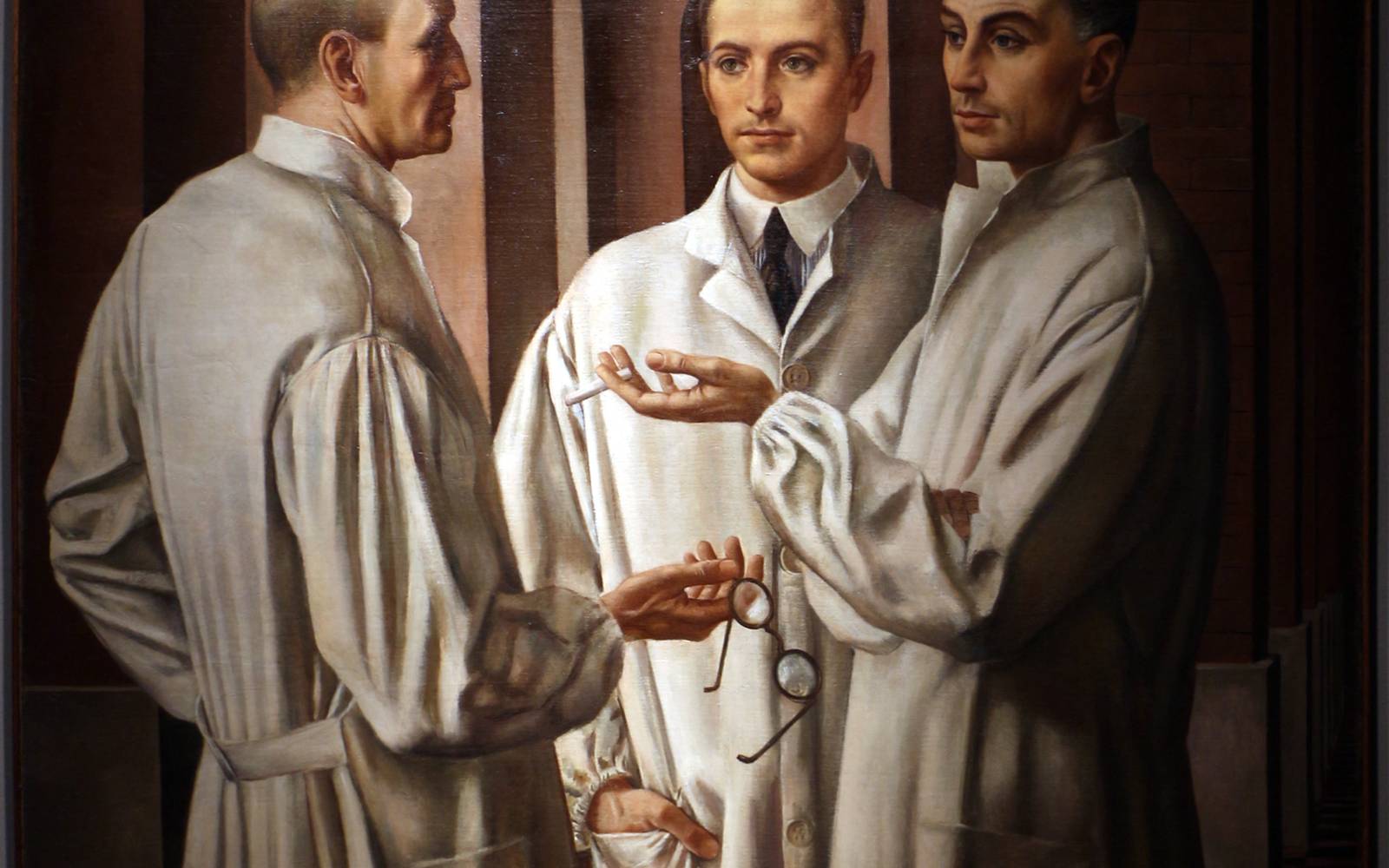
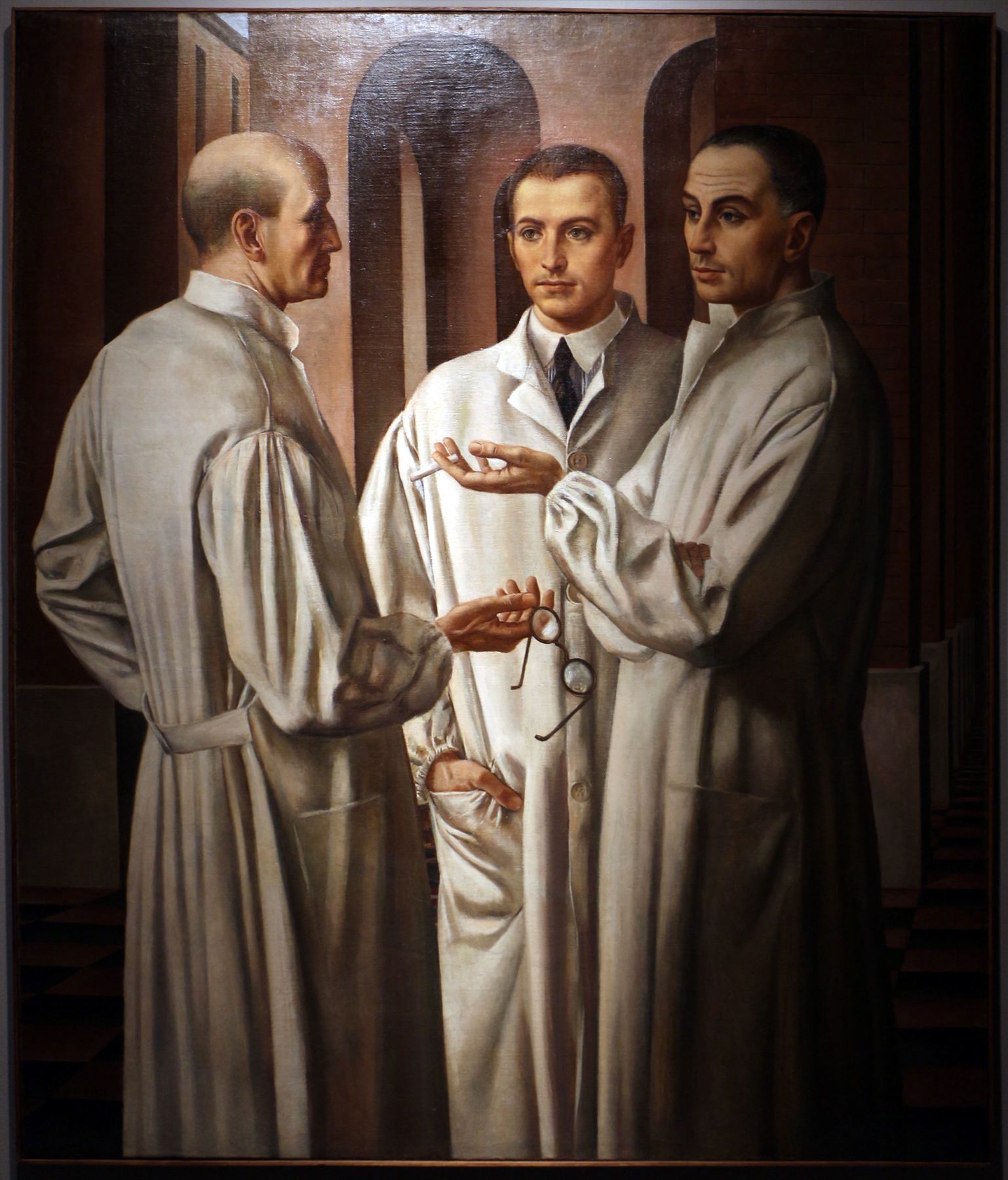
The Surgeons
Ubaldo Oppi · 1926 · Oppi turns three doctors into a measured, almost architectural group: crisp white coats, arrested gestures and sealed expressions make professional reality feel ceremonial and remote.
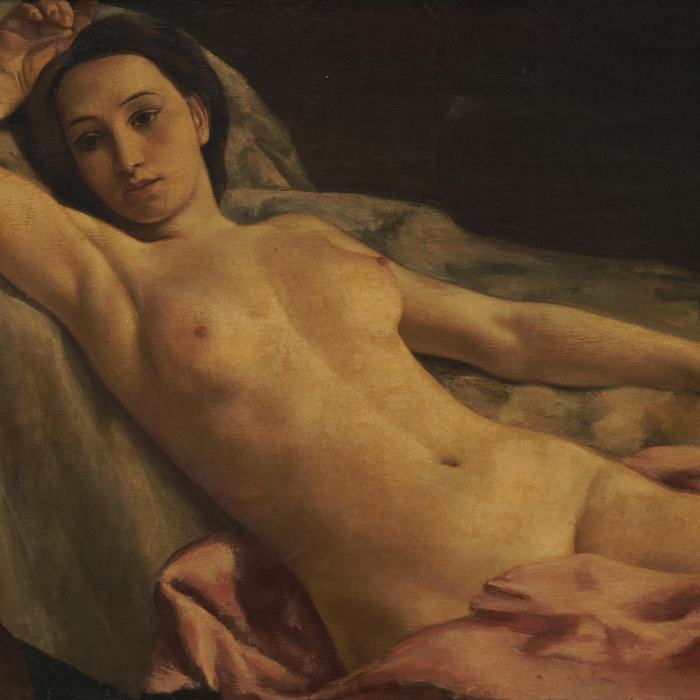
Nude
Ubaldo Oppi · 1925 · The smooth surface and monumental reclining body join modern portraiture to Renaissance calm while the sitter’s withdrawn gaze keeps the scene psychologically unresolved.
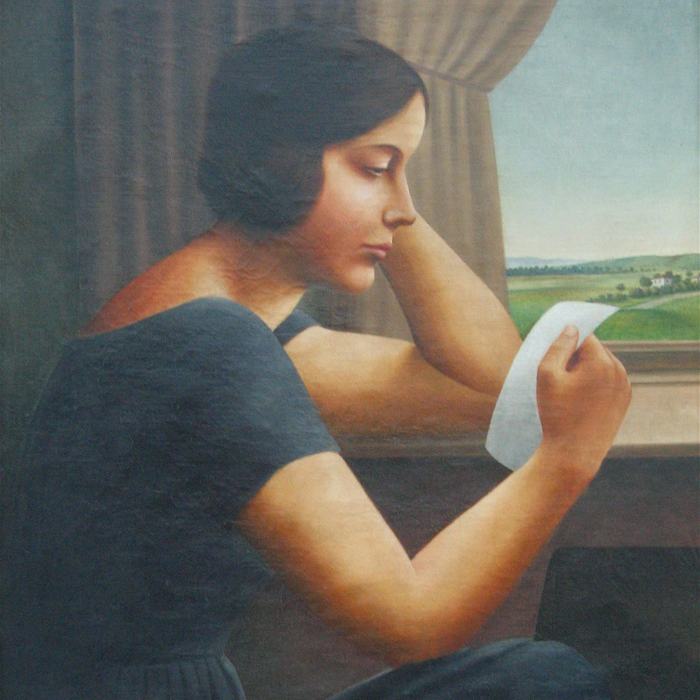
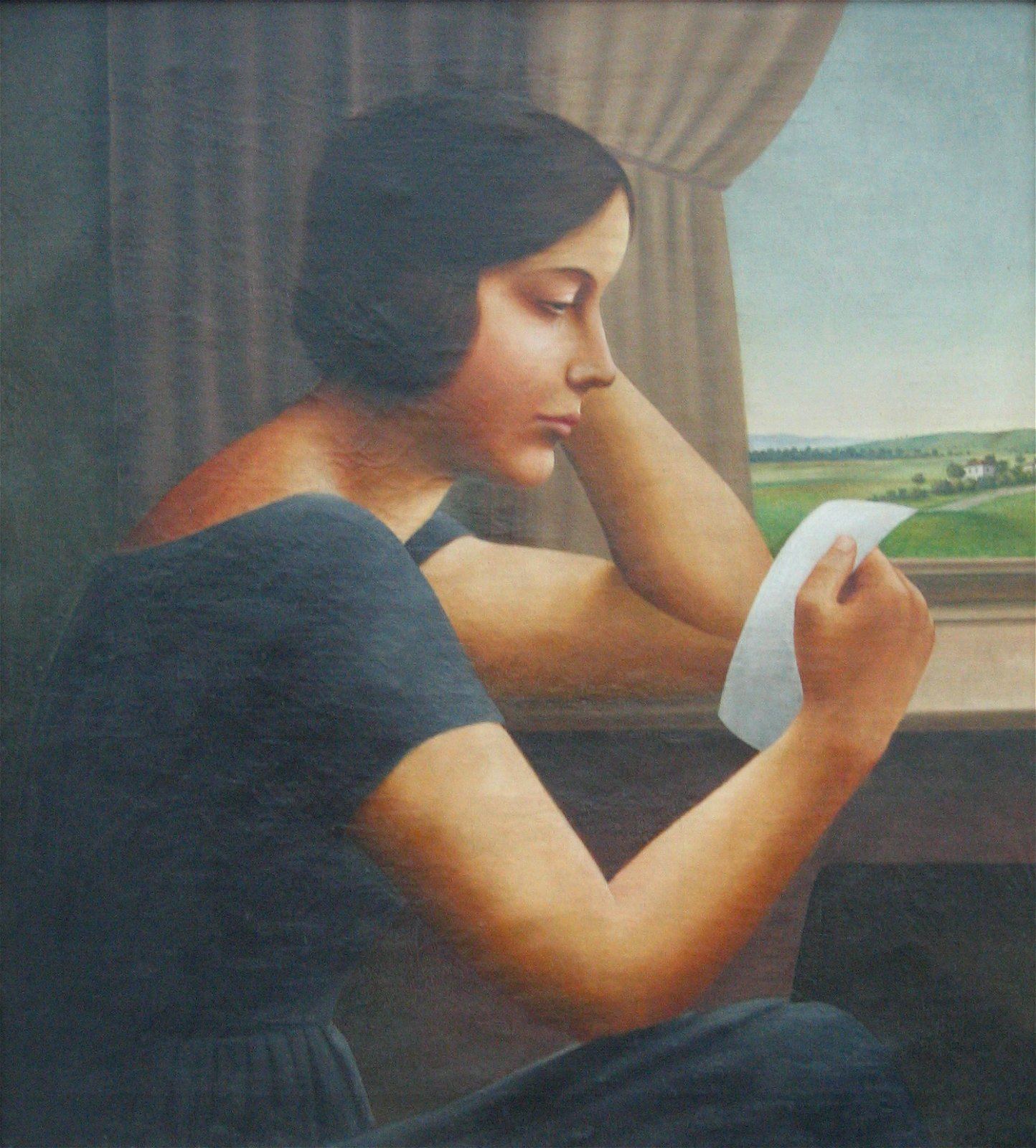
Martha
Georg Schrimpf · 1925 · Schrimpf uses frontal calm, absorbed reading and Renaissance-derived balance to make quietness an active post-Expressionist visual condition.
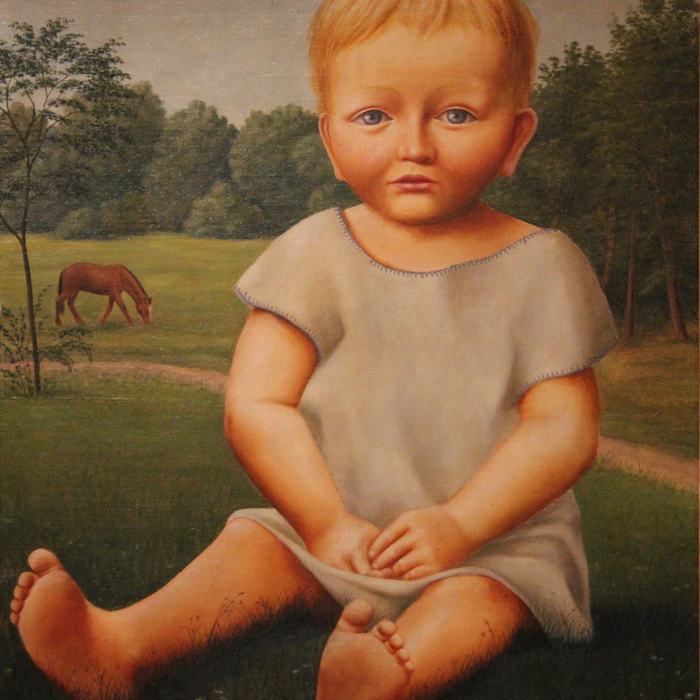
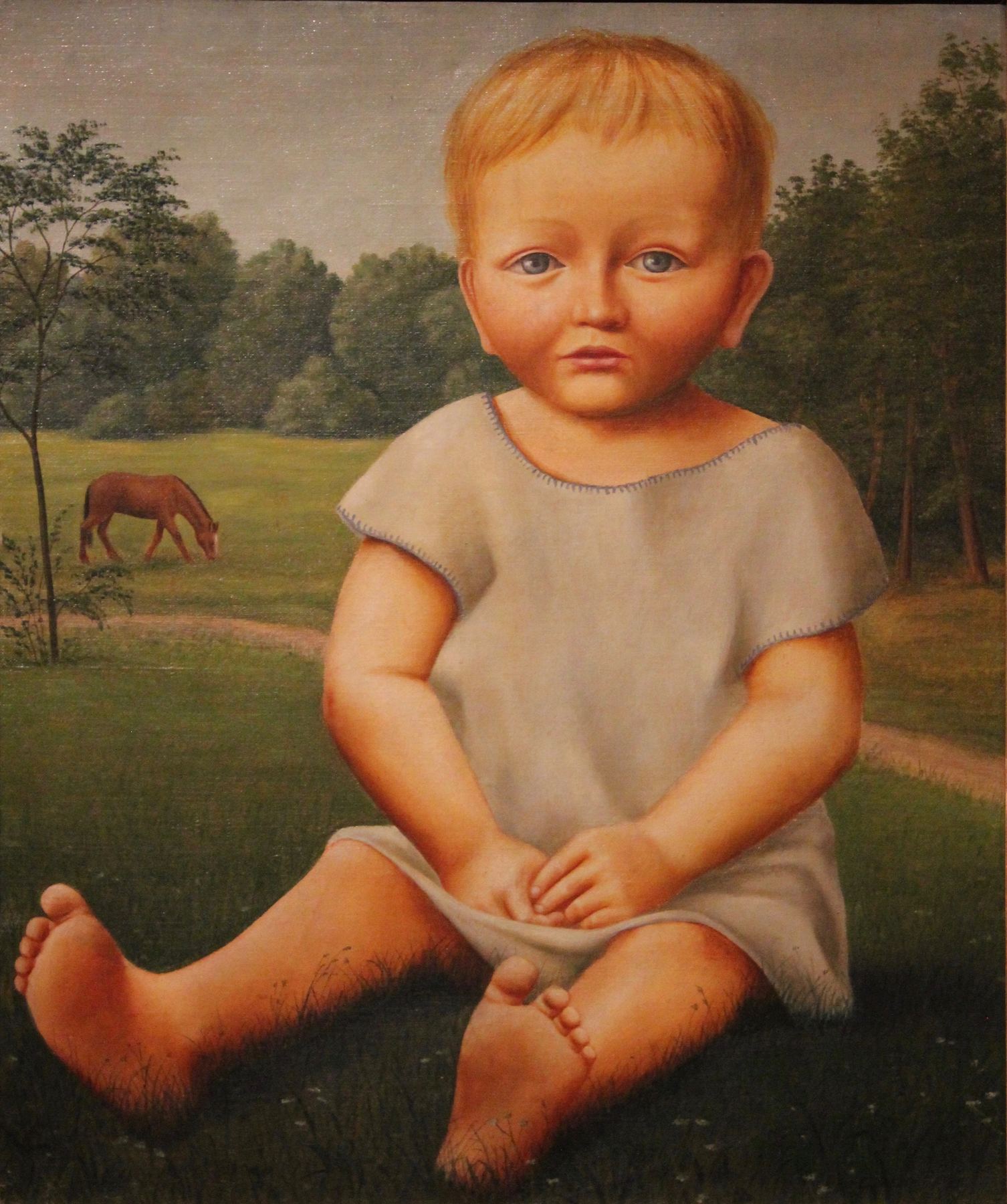
Child Portrait
Georg Schrimpf · 1925 · An exact child, a miniature landscape and unusual scale relations make ordinary portraiture feel lucid, intimate and faintly uncanny.
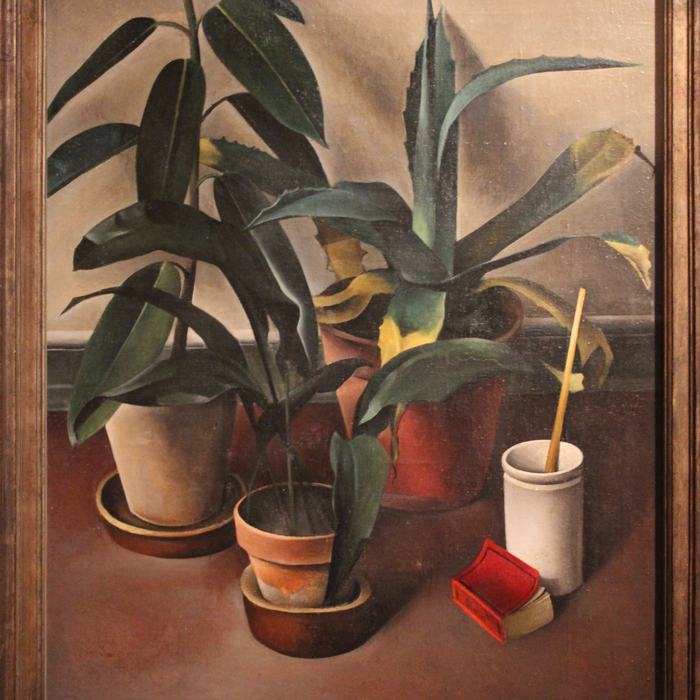
Still Life I
Alexander Kanoldt · 1926 · Kanoldt separates pots, leaves and tabletop so firmly that the objects become overpresent while the shallow room refuses a fully stable perspective.
Where to see Magic Realism
Displays, loans and access arrangements change. Check current information before travelling.
- 01
Lenbachhaus
The Lenbachhaus is essential for understanding the overlap and difference between Roh's Magic Realism and New Objectivity. Its Munich collections connect post-Expressionist clarity with artists influenced by Valori Plastici, while its exhibition research explains why several names competed in 1925.
Munich, Germany
Collection and research guideVisit official website - 02
Museum Folkwang
Folkwang's Italian survey reconstructed the disturbing clarity of 1920s Realismo Magico. Its comparative presentation of de Chirico, Carrà, Casorati, Donghi, Cagnaccio and Edita Broglio makes the Italian field visible as a stance rather than an artists' club.
Essen, Germany
Collection and research guideVisit official website - 03
Palazzo Reale
Palazzo Reale's large exhibition offers one of the clearest thematic maps of Italian Magic Realism. Portrait, family, landscape, still life and allegory reveal how the movement's atmosphere crossed subject categories.
Milan, Italy
Collection and research guideVisit official website - 04
MART
MART's collections and exhibitions are particularly strong for the junction of Futurism, Metaphysical Painting, Valori Plastici, Novecento and Magic Realism. Carrà and de Chirico can be seen within a longer Italian negotiation between avant-garde and tradition.
Rovereto, Italy
Collection and research guideVisit official website - 05
Museo Reina Sofía
The Reina Sofía places Spanish Magic Realism within the reception of Roh's translated book. Ángeles Santos's Un mundo is the indispensable work, joined by Rosario de Velasco, Alfonso Ponce de León and the changing practice of Maruja Mallo.
Madrid, Spain
Collection and research guideVisit official website - 06
Museum MORE
Museum MORE is the principal destination for Dutch modern realism. Its holdings of Willink, Koch, Ket, Hynckes and Schuhmacher allow viewers to compare ominous architecture, mediated figuration, intimate still life, vanitas and tonal restraint without assuming one politics.
Gorssel and Ruurlo, Netherlands
Collection and research guideVisit official website - 07
Museum of Modern Art
MoMA's 1943 exhibition archive and its collection of Peter Blume make it central to the American category. The Eternal City demonstrates how meticulous construction can turn political reality into a compressed nightmare.
New York, United States
Collection and research guideVisit official website - 08
Whitney Museum of American Art
The Whitney's holdings of Cadmus, Jared French, Tooker and PaJaMa disclose the American network behind Magic Realist bodies. Paintings and photographs together reveal links among tempera, Renaissance sources, queer collaboration and modern social enclosure.
New York, United States
Collection and research guideVisit official website
Suggested books
Magic Realism: Post-Expressionism by Franz Roh
The foundational text is the place to encounter Magic Realism before later definitions made it synonymous with fiction. Read it as a critic's 1925 attempt to describe a broad European return to objects, not as a permanent list of approved artists.[46]
Realismo mágico: Franz Roh y la pintura europea 1917–1936
The IVAM catalogue reconstructs the term's transnational visual field and is especially valuable for the Spanish translation and reception. Its wide artist list helps prevent German, Italian or literary histories from monopolising the subject.[47]
Realismo Magico
The Palazzo Reale catalogue concentrates on Italian painting of the 1920s and 1930s. Its thematic organisation makes the relationship among technique, Quattrocento sources, Metaphysical estrangement, Novecento and everyday subjects easier to see.[48]
American Realists and Magic Realists
MoMA's 1943 catalogue is a primary document rather than a neutral modern survey. Its retrospective ancestry, contemporary artist statements and broad selection show a museum actively constructing an American category during wartime.[49]
Magical Realism: Theory, History, Community, edited by Lois Parkinson Zamora and Wendy B. Faris
This anthology includes an English translation of Roh and Carpentier's influential account of the marvellous real, then follows the term into international literature. It is the most useful bridge for readers who want to understand both the connection and the break between painting and fiction.[50]
Major artists associated with Magic Realism
| Name | Nationality | Key Works |
|---|---|---|
| Georg Schrimpf | German | Martha · Women at the Window |
| Alexander Kanoldt | German | Still Life I · Olevano |
| Carlo Mense | German | Girl with Mirror · Sicilian Landscape |
| Max Beckmann | German | Self-Portrait with Bowler Hat · The Night |
| Otto Dix | German | Portrait of Sylvia von Harden · The Skat Players |
| George Grosz | German-American | Grey Day · The Pillars of Society |
| Jeanne Mammen | German | She Represents · At the Shooting Gallery |
| Carlo Carrà | Italian | The Daughters of Lot · The Engineer's Lover |
| Giorgio de Chirico | Italian | The Troubadour · The Song of Love |
| Felice Casorati | Italian | Silvana Cenni · Portrait of Renato Gualino |
| Antonio Donghi | Italian | The Juggler · The Baptism |
| Cagnaccio di San Pietro | Italian | After the Orgy · The First Money |
| Ubaldo Oppi | Italian | The Surgeons · The Young Bride |
| Achille Funi | Italian | Motherhood · The Earth |
| Gino Severini | Italian | Maternity · The Two Pulcinellas |
| Edita Broglio | Italian | Still Life · The House |
| Ángeles Santos | Spanish | Un mundo · Tertulia |
| Maruja Mallo | Spanish | Verbena · The Surprise of Wheat |
| Rosario de Velasco | Spanish | Adam and Eve · The Massacre of the Innocents |
| Alfonso Ponce de León | Spanish | Accident · Self-Portrait |
| Carel Willink | Dutch | Self-Portrait · Late Visitors to Pompeii |
| Pyke Koch | Dutch | The Shooting Gallery · Bertha of Antwerp |
| Dick Ket | Dutch | Still Life with Eggs · Self-Portrait |
| Raoul Hynckes | Dutch | The Hare · Still Life with Skull |
| Wim Schuhmacher | Dutch | Double Nude · Chalk Cliffs |
| Peter Blume | American | The Eternal City · South of Scranton |
| Ivan Albright | American | Into the World There Came a Soul Called Ida · That Which I Should Have Done I Did Not Do |
| Paul Cadmus | American | The Fleet's In! · What I Believe |
| Jared French | American | State Park · Evasion |
| George Tooker | American | The Subway · Government Bureau |
Frequently Asked Questions
Magic Realism is a critical term for figurative art in which exact, materially convincing representation makes ordinary reality feel mysterious, suspended or uncanny. Franz Roh coined the phrase in 1925 for post-Expressionist European painting. It later acquired distinct Italian, Spanish, Dutch and American uses.
The name dates from Roh's 1925 book, but the paintings he described had developed during and after the First World War. Approximately 1917–1950 is a useful comparative visual-art span, not a rigid lifetime. Dutch and American artists continued related practices much later.
No. It had no single membership, manifesto or political programme. In most contexts it was a critic's or curator's category applied to artists who might identify themselves differently. Italian Realismo Magico is a relatively concentrated constellation, but it was still not one formal society.
New Objectivity is primarily a German history tied to Gustav Friedrich Hartlaub's 1925 Mannheim exhibition and the Weimar Republic. Roh's Magic Realism was a broader European aesthetic account. The two overlap in artists and dates, but New Objectivity stresses a return to factual reality while Roh foregrounds the mystery that exact reality retains.
Surrealism developed through manifestos, collective activity, automatism, dream and deliberate disruption of ordinary causality. Magic Realism usually preserves recognisable bodies and objects, then makes their arrangement, stillness or clarity uncanny. Some artists and works belong near both histories.
No. Metaphysical Painting emerged earlier around de Chirico, Carrà and Morandi and used empty plazas, mannequins and unexplained objects to suspend time. It strongly influenced Italian Magic Realism, which often restored fuller bodies, domestic subjects and greater material specificity.
The German art historian Franz Roh coined magischer Realismus in his 1925 book on post-Expressionist European painting. A Spanish translation in 1927 helped the words travel into new artistic and literary debates.
Major figures include Carlo Carrà, Giorgio de Chirico, Felice Casorati, Antonio Donghi, Cagnaccio di San Pietro, Ubaldo Oppi, Achille Funi, Edita Broglio and Gino Severini. Their practices differ, and several also belong to Metaphysical Painting, Novecento or other histories.
Carel Willink, Pyke Koch, Dick Ket, Raoul Hynckes and Wim Schuhmacher are frequently central to Dutch accounts. Willink preferred “imaginary” or “fantastic realism,” illustrating why the public movement label should not erase artists' own terminology.
There was an influential American category rather than one self-organised movement. MoMA's 1943 exhibition brought together a historical ancestry and contemporary painters including Peter Blume, Ivan Albright, Paul Cadmus, Jared French, Edward Hopper and Andrew Wyeth. George Tooker later became strongly associated with the term.
No. It crossed incompatible political positions. Some artists participated in fascist institutions or collaborated; others opposed fascism, were persecuted, went into exile or kept a private distance. Classical form and precise technique cannot establish political allegiance without biographical evidence.
No. They share a translated term and a broad interest in unstable realities, but their histories differ. Roh described European painting. Later literary magical realism developed through Latin American and international debates about narrative, history, belief and colonial power. Carpentier's lo real maravilloso was a related but competing formulation.
Discussion
Which Magic Realist work most powerfully makes the ordinary feel unfamiliar—and does its effect come from subject, technique, stillness, spatial construction or the history you bring to it? Share the detail that first changed how you read the picture.
Reader Insights
Identify the bottle, face, garment or room before asking which visual decision makes it feel unfamiliar.
Follow floors, walls, gestures and sightlines to find where a lucid world stops behaving naturally.
Ask whether Roh, an artist or a later museum applied Magic Realism—and what that act of naming includes or excludes.
Join the Conversation
Which Magic Realist work most powerfully makes the ordinary feel unfamiliar, and which detail creates that effect?
References
- Realismo mágico: Franz Roh y la pintura europea 1917–1936, IVAM (Spanish; consulted in Spanish), View Source
- Realismo mágico exhibition brochure, IVAM (Spanish; consulted in Spanish), View Source
- Nach dem Expressionismus, Lenbachhaus (German; consulted in German), View Source
- After Expressionism, Lenbachhaus, View Source
- Magic Realism: Art in Weimar Germany 1919–33, Tate, View Source
- Die Neue Sachlichkeit: Ein Jahrhundertjubiläum, Kunsthalle Mannheim (German; consulted in German), View Source
- Neue Sachlichkeit, Lenbachhaus (German; consulted in German), View Source
- Realismo Magico, Palazzo Reale Milano (Italian; consulted in Italian), View Source
- Le collezioni del Mart, MART (Italian and English; consulted in Italian and English), View Source
- Trovatore, MART (Italian; consulted in Italian), View Source
- Casorati, Palazzo Reale Milano (Italian; consulted in Italian), View Source
- Realismo Magico: L'incanto nella pittura italiana degli anni Venti e Trenta, MART (Italian; consulted in Italian), View Source
- Unheimlich real: Italienische Malerei der 1920er Jahre, Museum Folkwang (German; consulted in German), View Source
- Uncannily Real: Italian Painting of the 1920s, Museum Folkwang, View Source
- Wirklichkeit als Legende, Museum Folkwang (German; consulted in German), View Source
- Margherita Sarfatti: Il Novecento Italiano nel mondo, MART (Italian; consulted in Italian), View Source
- Sala 205.06: Realismo mágico, Museo Reina Sofía (Spanish; consulted in Spanish), View Source
- Un mundo, Museo Reina Sofía (Spanish; consulted in Spanish), View Source
- Restauración de Un mundo, Museo Reina Sofía (Spanish; consulted in Spanish), View Source
- Maruja Mallo: Máscara y compás, Museo Reina Sofía (Spanish; consulted in Spanish), View Source
- Naturalmente, Maruja Mallo, Museo Reina Sofía (Spanish; consulted in Spanish), View Source
- Maruja Mallo press dossier, Museo Reina Sofía (Spanish; consulted in Spanish), View Source
- Las mujeres durante la II República, Museo Reina Sofía (Spanish; consulted in Spanish), View Source
- En detalle: Un mundo, Museo Reina Sofía (Spanish; consulted in Spanish), View Source
- Kunstenaars, Museum MORE (Dutch; consulted in Dutch), View Source
- Carel Willink, Museum MORE (Dutch; consulted in Dutch), View Source
- Zelfportret, Museum MORE (Dutch; consulted in Dutch), View Source
- Dick Ket, Museum MORE (Dutch; consulted in Dutch), View Source
- De haas, Museum MORE (Dutch; consulted in Dutch), View Source
- Wim Schuhmacher, Museum MORE (Dutch; consulted in Dutch), View Source
- Het magisch realisme in de Nederlandse schilderkunst, Rijksmuseum (Dutch; consulted in Dutch), View Source
- Alles of niets: Charley Toorop & Pyke Koch, Museum MORE (Dutch; consulted in Dutch), View Source
- Carel Willink and Pyke Koch in the 1930s and 1940s, Rijksmuseum Bulletin, View Source
- Americans 1943: Realists and Magic-Realists, Museum of Modern Art, View Source
- American Realists and Magic Realists, Museum of Modern Art, View Source
- Dorothy C. Miller Papers, Museum of Modern Art Archives, View Source
- The Museum of Modern Art Exhibition Records 1929–1959, Museum of Modern Art Archives, View Source
- The Eternal City, Museum of Modern Art, View Source
- Peter Blume: The Eternal City, Museum of Modern Art, View Source
- About this artist: Paul Cadmus, Whitney Museum of American Art, View Source
- Jared French, Whitney Museum of American Art, View Source
- PaJaMa, Whitney Museum of American Art, View Source
- George Tooker, Whitney Museum of American Art, View Source
- Landscape with Figures III, Metropolitan Museum of Art, View Source
- Real/Surreal, Whitney Museum of American Art, View Source
- Magic Realism: Post-Expressionism, Franz Roh / New York Review Books, View Source
- Realismo mágico: Franz Roh y la pintura europea 1917–1936, WorldCat (Spanish; consulted in Spanish), View Source
- Realismo Magico: Uno stile italiano, 24 ORE Cultura (Italian; consulted in Italian), View Source
- American Realists and Magic Realists, Museum of Modern Art, View Source
- Magical Realism: Theory History Community, Duke University Press, View Source
- Magic Realism image records, Wikimedia Commons: The Surgeons (CC BY-SA 4.0; Sailko / Wikimedia Commons), Nude (Wikimedia Commons reusable file; public-domain artwork; Wikimedia Commons), Martha (Public domain / Commons reusable file; Wikimedia Commons), Child Portrait (CC0 / public-domain artwork; Neue Nationalgalerie / Wikimedia Commons), Still Life I (Public domain / Commons reusable file; Neue Nationalgalerie / Wikimedia Commons).