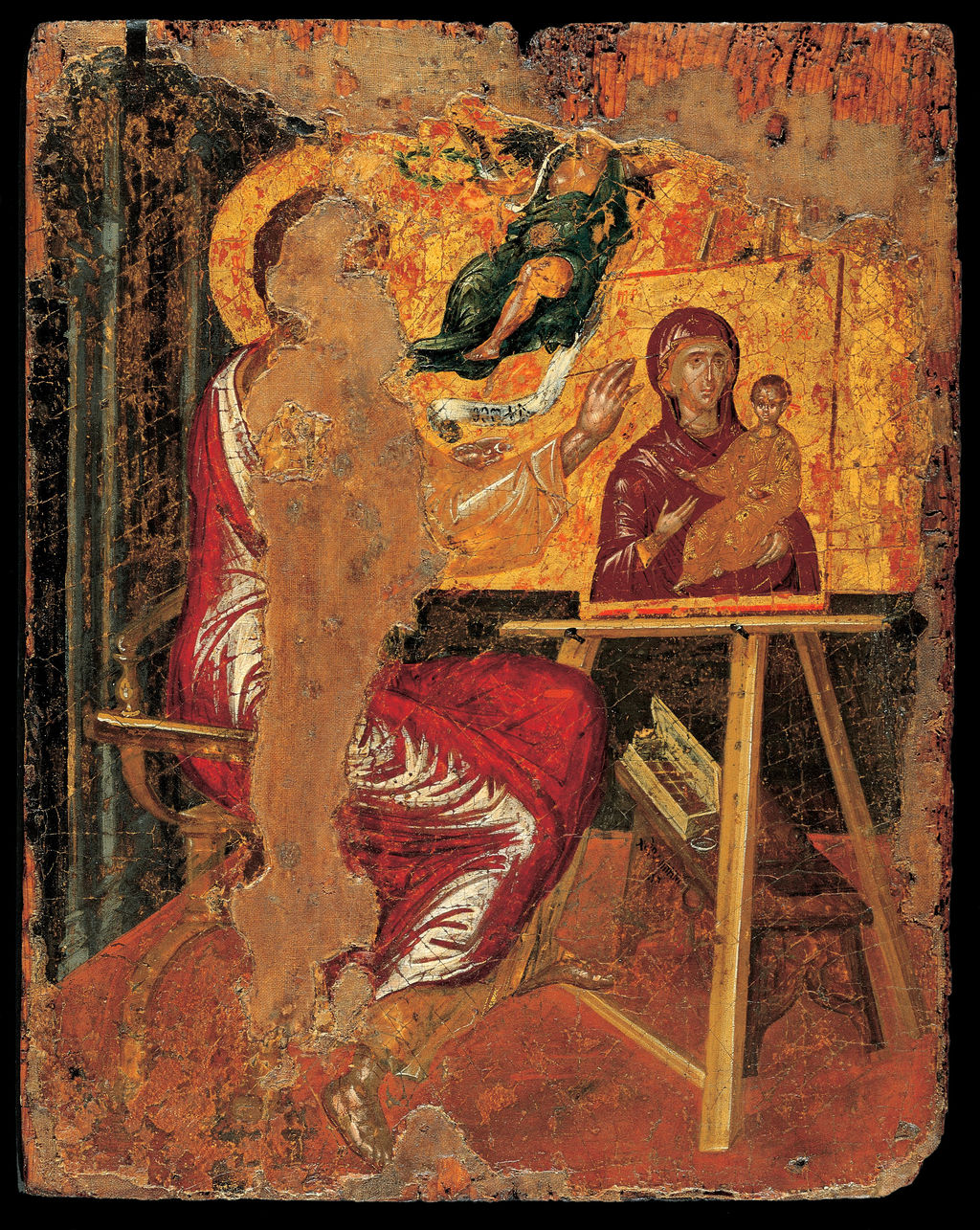
El Greco, Saint Luke Painting the Virgin, 1560–67. Benaki Museum, Athens, ΓΕ 11296. Benaki Museum, via Google Arts & Culture and Wikimedia Commons. Image source. Public domain. Whole panel reproduced with its existing edges and surface losses. Resized for the web.
 by Tom Gurney
Tom Gurney BSc (Hons) is an art history expert with over 20 years experience
Email: tomgurney1@gmail.com / Phone: +44 7429 011000
Saint Luke Painting the Virgin by El Greco: Introduction
Saint Luke's hand comes up to the edge of a small gold panel. The Virgin's face is just beyond the point of his brush. El Greco turns the panel far enough towards us to see the child seated against her and the hand with which she draws attention to him. Above Luke, a figure in green reaches through the gold towards his halo. The cloth across his knees and the angular legs of his easel fill much of the space below. [1]
Saint Luke Painting the Virgin is a signed icon from El Greco's years on Crete. The Benaki Museum dates it to 1560–67. El Greco gives the evangelist a seat, an easel and a raised arm whose movement we can follow. Within that room, Luke is painting a second icon, whose comparatively still figures look out of their own gold field. The difference between the two spaces is already clear in the gap between the painter's fingers and Mary's cheek. [1] [2]
At a Glance
- ArtistEl Greco (Doménikos Theotokópoulos)
- Date1560–67, Benaki Museum dating [1]
- MediumTempera and oil on wood panel, with a gold ground [1] [2]
- Dimensions41.6 × 33 cm [1] [2]
- CollectionBenaki Museum, Athens, ΓΕ 11296 [1]
- CreditGift of Dimitrios Sisilianos [1]
This work across El Greco’s career
Saint Luke Painting the Virgin (current article)
1560–67, Benaki Museum dating [1]Dormition of the Virgin
c. 1565–66Modena Triptych
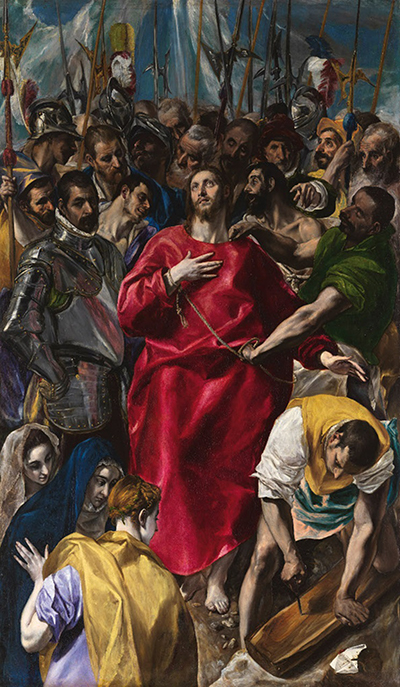
1567–68The Disrobing of Christ
1577–79The Assumption of the Virgin
1577–79The Holy Trinity
1577–79Contents
- The Painter at the Easel
- What Luke Paints
- The Hand of Domenikos
- Three Ways to Make a Small Image
- What Survives on the Surface
The Painter at the Easel
The red border on the painted icon is easiest to see along the bottom. It sits just above the easel's ledge, which extends beyond it to the right. Two legs of the stand descend from the ledge at different angles. Behind them, a dark step and a red floor help to separate the near and far edges of the furniture. The inside of Luke's seat is visible at left. Its arm, the lower edge of the robe and the easel's crossbar make a shallow space in which his knees and feet have somewhere to go. [1] [2]
Much of the saint's face has been lost, but the brush is still visible. It reaches out past the ends of the fingers, narrowing to a dark line over the gold. That line is so fine that the hand provides a better first clue to its direction. The forearm extends from the loose sleeve, the fingers rise and the brush continues into the space beside Mary's face. El Greco uses the firm geometry of the stand to make the small movements of the painter look exact. [1] [2] [3]
The red robe also does work that the lines of the easel cannot. Its brightest white passages curve across the lap, bunch near a bend and narrow where the cloth falls away. Within each broad fold, the red extends into a darker strip before it meets the next pale mark. The Benaki calls attention to this use of light and shade. Once the chair and the easel have located Luke's body in the room, the folds give the eye a way to follow its turn. His upper arm goes forwards and his weight stays low in the seat. Those movements help us read the figure even with so much of the middle of the panel missing. [1] [2] [3]
What Luke Paints
A medieval Christian tradition remembered Luke as a painter who had made a likeness of the Virgin and Child from life. El Greco shows the result forming directly on the panel. Mary supports the child on one side and brings her other hand up towards him. The Benaki identifies it as a Hodegetria, the image of the Virgin who shows the way. Luke's hand directs the viewer towards the painted Mary, whose own hand directs attention to Christ. [1] [2]
The child's garments have a network of thin gold lines. Mary's mantle folds into a series of small ridges at her throat and sleeve. The faces and fabric have their own modelling, but the sacred pair remain close to the plane of their gold field. El Greco has given that field a frame and a position on the easel. The difference in depth between the icon and its surroundings can be seen at the bottom, where the stand brackets the deep red garment of the painter and the little group above it stays within its ruled edge. [1] [2]
Above the edge of the easel picture, the angel's green garment twists into dark folds. Its knee and exposed foot give the figure a direction of movement across the space. The Benaki describes the angel as crowning Luke and connects the device, along with the play of light across the evangelist's robe, with Italian art. The angel's descending gesture is a second action in the picture. Luke approaches an image with his brush as the angel approaches the painter. [1] [2]
The type travelled across materials and places. An ivory figure in the Metropolitan Museum, probably made in Constantinople between the mid-tenth and mid-eleventh centuries, carries the child on Mary's left arm just as the painted figure does here. The Met's Madonna and Child by Berlinghiero, made in Tuscany perhaps in the 1230s, places the same gesture on a wood panel with a gold ground. Berlinghiero's child holds a scroll, which his mother directs us towards along with his face. These comparisons show how recognisable the pose was long before El Greco. His own contribution here is to put it in the hands of the painter credited by tradition with making it. [1] [4] [5]
The Hand of Domenikos
The Greek signature appears among the things set out beneath the easel. Andrew R. Casper translates it as “hand of Domenikos,” a familiar way for a Cretan painter to identify a work as his own. The wording is particularly apt for this subject. One painter represents another in the moment of making an image, and the maker of the outer panel puts his own hand into words. The relatively small letters require a viewer to come within the distance at which the fingers and brush can also be made out. [1] [6]
The signature tells us how the painter identified himself. The documents from Candia tell us something different about his standing there. In the record of December 1566 published by Maria Constantoudaki-Kitromilides, the authorities call him a master painter and grant him permission to put a gold-ground image of the Passion into a lottery after an appraisal. Two painters valued it, and El Greco accepted the lower estimate. That record concerns a Passion painting. It places a practising, recognised master in Candia during the period to which the Benaki assigns the icon of Luke. [1] [7]
The surviving documents chart the next step in his biography through a different set of objects. An order in August 1568 concerned drawings that he had sent from Venice to Crete. Years later in Rome, he paid two scudi to enter the city's painters' association. The ledger entry, transcribed by Elisa Camboni, is dated 18 October 1572, the feast of Saint Luke. The Cretan panel and the Roman payment belong to different chapters of his life. The recurrence of the saint shows how widely a painter's identity could be expressed through Luke, from a panel made in Candia to the calendar of a Roman professional association. [3] [7]
Three Ways to Make a Small Image
In the Dormition of the Virgin on Syros, there is also a place for a small inscription close to an image's principal action. El Greco signs on a represented candlestick beside Mary’s bed. On the Benaki panel he signs among the implements of a painter. The objects serve a practical role within their respective scenes. They also give writing a place where it can be read in the same close view as a pair of hands, a face or a finely painted edge. The Metropolitan Museum exhibited both panels in its 2003–04 El Greco retrospective as evidence of his early work in Crete. [1] [6] [8]
The Modena Triptych puts small pictures to work in another way. Its wings move, letting a viewer see different scenes on the front and back. Closed, it is just 37 by 23.8 centimetres according to the Italian national catalogue. The signature on the reverse of the centre panel again names the hand of Domenikos. The subject of the Benaki panel needs only one face of the wood. The artist suggests the physical presence of a second panel by giving it a border, a ledge and a face set at an angle to the room. [1] [6] [9]
What Survives on the Surface
A wide area of damage interrupts Luke's body from the head down through the clothes. The pale shape through the middle is a loss of the painted surface. It is easiest to recognise where several red and white folds stop suddenly and reappear farther over. In a study of El Greco's style and technique, Mariella Lobefaro describes a transparent reddish violet colour that Cretan painters used in thin strokes around flesh. She identifies surviving traces around Luke's hands and between his fingers. Those small passages preserve evidence of how the painter edged the forms even where the face gives little help. [1] [3]
Nano Chatzidakis traces the icon to the Athenian antiquities market in 1934, when it was acquired by Dimitrios Sisilianos, who published it the following year. Its poor condition and the mixture of styles initially complicated its identification. Sisilianos gave it to the Benaki in 1956. A close view today still imposes limits. Luke's expression is hard to recover, while the size of the painted hands, the position of the brush and the separate edges of the panel on the easel make the act of painting unusually clear. [1] [3]
Browse the artworks
Browse the paintings covered in this collection and related works in museum catalogues. Some are by El Greco’s workshop or were formerly attributed to him.
| Name | Date | Medium |
|---|---|---|
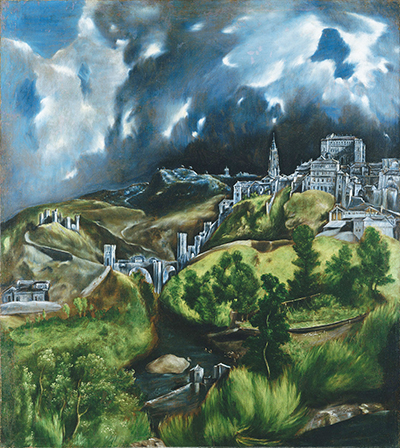
| View of Toledo | Around 1599–1600 | Oil on canvas |
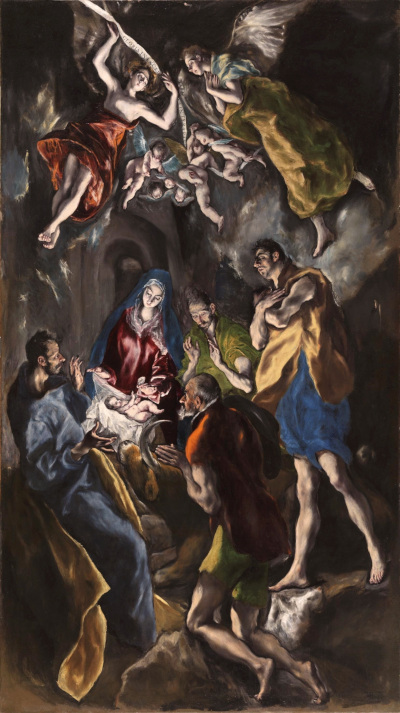
| Adoration of the Shepherds | 1612–14 | Oil on canvas |
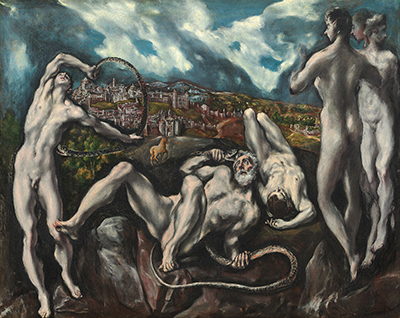
| Laocoön | About 1610–14 | Oil on canvas |
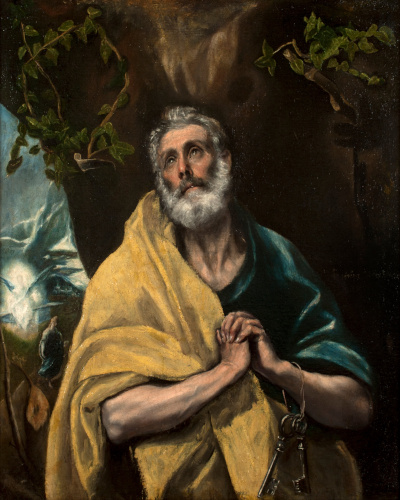
| The Tears of Saint Peter | 1587–96, Museo del Greco dating | Oil on canvas |
| The Holy Family with Saint Anne | About 1595 | Oil on canvas |
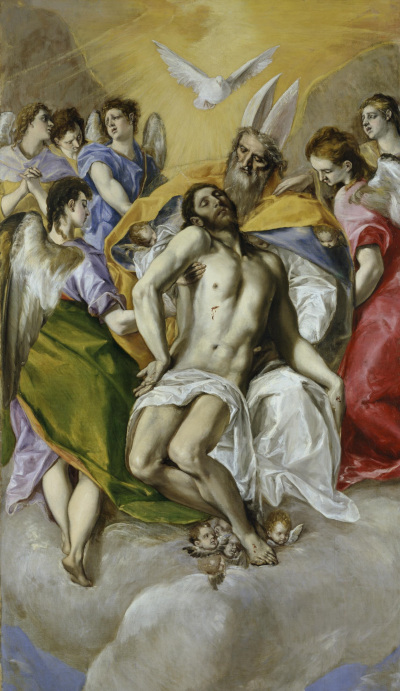
| The Holy Trinity | 1577–79 | Oil on canvas |
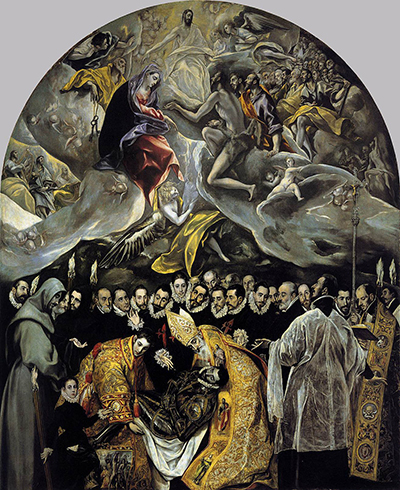
| The Burial of the Count of Orgaz | 1586–88, the conventional range | Oil on canvas |
| Disrobing of Christ | 1577–79 | Oil on canvas |
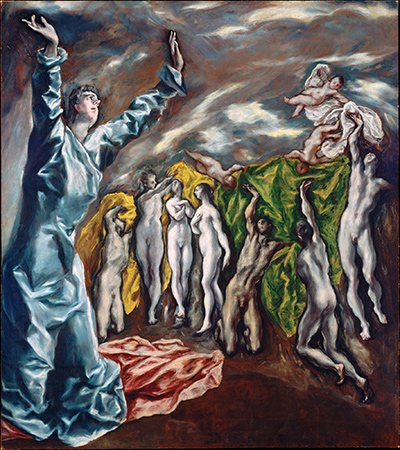
| Opening of the Fifth Seal | About 1608–14 | Oil on canvas |
| Saint Martin and the Beggar | 1597–99 | Oil on canvas |
| Martyrdom of Saint Maurice | 1580–82 | Oil on canvas |
| Adoration of the Name of Jesus | 1577–79 | Oil on canvas |
| Saint Peter in Penitence (Bowes Museum) | 1580s | Oil on canvas |
| Christ Carrying the Cross | Around 1577–87 | Oil on canvas |
| Crucifixion | 1597–1600 | Oil on canvas |
| Resurrection | 1597–1600 | Oil on canvas |
| Immaculate Conception | About 1608–13 | Oil on canvas |
| Annunciation | 1597–1600 | Oil on canvas |
| Coronation of the Virgin | 1591–92 | Oil on canvas |
| Lady in a Fur Wrap | About 1580–88 | Oil on canvas |
| Baptism of Christ | Around 1608–14, with further work in the early 1620s according to Walter Liedtke. The foundation dates the painting to around 1614. | Oil on canvas |
| Portrait of an Old Man (Possible Self-Portrait) | About 1595–1600 | Oil on canvas |
| Adoration of the Kings | 1565–67, Benaki Museum dating | Tempera on wood |
| Mary Magdalene in Penitence | About 1585–90, tentatively dated by the Museu del Cau Ferrat | Oil on canvas |
| Saint Sebastian | About 1577 in the cathedral centenary catalogue | Oil on canvas |
| Portrait of Cardinal Fernando Nino de Guevara | About 1600 | Oil on canvas |
| Penitent Magdalene | About 1576–77 | Oil on canvas |
| The Nobleman with his Hand on his Chest | About 1580 | Oil on canvas |
| Saint Peter and Saint Paul | 1590–1600 | Oil on canvas |
| Pentecost | Circa 1600 | Oil on canvas |
| The Fable | About 1580 | Oil on canvas |
| Pietà | 1580–90 | Oil on canvas |
| View and Plan of Toledo | 1610–1614, according to the Museo del Greco | Oil on canvas |
| Assumption of the Virgin | 1577–79, with 1577 in the Greek inscription | Oil on canvas |
| The Annunciation (1609) | Late Tavera period. The owner dates the canvas to 1614. Factum gives 1608–1613 in its initial recording account. | Oil on canvas |
| The Agony in the Garden of Gethsemane | 1590s | Oil on canvas |
| Portrait of Jorge Manuel Theotocópuli | Circa 1600–05 | Oil on canvas |
| Dormition of the Virgin | About 1565–66, according to the National Gallery of Greece | Tempera on wood |
| Saint Louis | 1585–90 | Oil on canvas |
| Ecstasy of St Francis of Assisi (1580) | About 1577–80 in the Vatican Museums’ account. The Diocesan Museum gives 1575–80. | Oil on canvas |
| Saint Francis of Assisi in Ecstasy, after El Greco | Seventeenth century | Oil on canvas |
| Christ Driving the Money Changers from the Temple | Probably before 1570 | Oil on wood |
| The Entombment of Christ | Circa 1568–70, Venice | Mixed technique on wood |
| Nativity | 1603–05 | Oil on canvas |
| Portrait of a Gentleman | About 1586 | Oil on canvas |
| Coronation of the Virgin (Illescas) | 1603–05 | Oil on canvas |
| A Boy Blowing on an Ember to Light a Candle (El Soplón) | About 1570–72 | Oil on canvas |
| The Feast in the House of Simon | About 1608–14 | Oil on canvas |
| Concert of Angels | About 1608–14 | Oil on canvas |
| Healing of the Man Born Blind | Around 1570 in Dresden’s printed collection guide | Mixed technique on wood |
| Fray Hortensio Félix Paravicino | 1609 | Oil on canvas |
| Purification of the Temple | Circa 1600 | Oil on canvas |
| Portrait of Vincenzo Anastagi | Circa 1575 | Oil on canvas |
| Saint Paul (Almadrones) | 1608–14 | Oil on canvas |
| Head of Christ | About 1579–86 | Oil on canvas |
| Last Supper | About 1567–68, Venice | Tempera on wood |
| Saint John the Evangelist (Prado Museum, Madrid) | About 1605 | Oil on canvas |
| Disrobing of Christ (Lyon, Half Painting Version) | About 1581–86 | Oil on canvas |
| The Dream of Philip II | 1577–79 | Oil on canvas |
| Portrait of a Sculptor | About 1577–80, 2019 exhibition dating | Oil on canvas |
| Saint Bernard | 1577–79 | Oil on canvas |
| Saint Benedict | 1577–79 | Oil on canvas |
| Portrait of Jerónimo de Cevallos | 1613, as catalogued by the Prado | Oil on canvas |
| The Flight into Egypt | About 1570 | Oil on wood |
| Saint Anthony of Padua | About 1580 | Oil on canvas |
| Portrait of a Doctor | 1582–85 | Oil on canvas |
| The Veil of Saint Veronica | 1586–95 | Oil on canvas |
| An Elderly Gentleman | About 1587–1600 | Oil on canvas |
| Saints Andrew and Francis | About 1595 | Oil on canvas |
| The Holy Family with Saint Anne and the Infant Saint John | Around 1600 in the Prado catalogue. The Balaguer record gives 1595–1600. | Oil on canvas |
| The Virgin Mary | 1595–1600 | Oil on canvas |
| Portrait of a Gentleman (1600-1605) | About 1600–05 | Oil on canvas |
| Portrait of a Young Gentleman | 1600–05 | Oil on canvas |
| John the Baptist and Saint John the Evangelist | 1600–10 | Oil on canvas |
| Portrait of a Friar | 1600–50 | Oil on canvas |
| Saint Thomas (Almadrones) | 1608–14 | Oil on canvas |
| Christ the Saviour (Almadrones) | 1608–14 | Oil on canvas |
| An Apostle (Prado P000814) | 1608–14 | Oil on canvas |
| Saint James (Almadrones) | 1608–14 | Oil on canvas |
| Julián Romero and his Patron Saint | 1612–18 | Oil on canvas |
| Allegory of the Camaldolese Order | Around 1600, Instituto Valencia de Don Juan dating | Oil on canvas |
| Saint Joseph and the Christ Child | 1597–99 | Oil on canvas |
| Saint Ildefonsus | Around 1600 according to the Prado's proposal, 1603–05 in Hadjinicolaou and Ficonofue | Oil on canvas |
| Saint Augustine | About 1585–1602, as listed in the 2014 exhibition study | Oil on canvas |
| Portrait of Diego de Covarrubias y Leyva | Circa 1600 | Oil on canvas |
| Saint Bernardino of Siena | 1603 in the Prado catalogue. The Museo del Greco object page lists 1602. | Oil on canvas |
| Portrait of Cardinal Tavera | About 1609 in the foundation's account, circa 1610 in its image heading | Oil on canvas |
| Visitation | About 1610–14 | Oil on canvas |
| Portrait of Francisco de Pisa | Circa 1610–14 | Oil on canvas |
| Saint Lawrence's Vision of the Madonna and Child (Apparition of the Virgin to St. Lawrence) | 1578–80 in the 2021 heritage decree | Oil on canvas |
| Christ on the Cross | Probably 1570s, assigned to El Greco’s Italian period in the sale literature | Oil on canvas |
| Portrait of Charles de Guise | 1572, as dated in the painted book | Oil on canvas |
| Portrait of Giulio Clovio | 1571–72, according to Capodimonte | Oil on canvas |
| Mount Sinai | About 1570–72 | Mixed technique on wood |
| Modena Triptych | 1567–1568, as dated by the Galleria Estense and the national catalogue | Tempera on wood |
| Saint Luke Painting the Virgin | 1560–67, Benaki Museum dating | Mixed technique on wood |
| Saint Ildefonso (Washington) | 1603–14 | Oil on canvas |
| Saint Martin and the Beggar (smaller Washington version) | 1600–14 | Oil on canvas |
| The Holy Family with Saint Anne and the Infant John the Baptist (Washington) | About 1595–1600 | Oil on canvas |
| The Adoration of the Name of Jesus (London panel) | Late 1570s | Oil on wood |
| Christ Driving the Traders from the Temple (London) | About 1600 | Oil on canvas |
| Saint Francis Receiving the Stigmata (Baltimore) | 1585–90 | Oil on canvas |
| Saint Luke (Almadrones, Indianapolis) | About 1610–14 | Oil on canvas |
| Saint Matthew (Almadrones, Indianapolis) | About 1610–14 | Oil on canvas |
| Saint Simon (Almadrones, Indianapolis) | About 1610–14 | Oil on canvas |
| The Tears of Saint Peter (Hospital de Tavera) | About 1605 | Oil on canvas Catalogue. |
Discussion
Look again at the images and ideas explored in Saint Luke Painting the Virgin by El Greco. These editorial prompts invite your observations.
Reader Insights
Follow Luke’s brush to the little panel on the easel. Which detail tells you that Mary and the child occupy a different space?
Find the pale marks across the robe. What do they show about the way Luke sits, even where the surface is damaged?
Join the Conversation
Share a detail, comparison or question about Saint Luke Painting the Virgin by El Greco below.
References
- Benaki Museum, St Luke Painting the Virgin, ΓΕ 11296, collection entry through Google Arts & Culture View source.
- Greek Painters in Renaissance Venice, Smarthistory Guide to Byzantine Art, section on El Greco View source.
- Accademia Nazionale di San Luca, El Greco. L'Adorazione dei magi, essays by Nano Chatzidakis, Elisa Camboni and Mariella Lobefaro, 2018, pp. 23–26, 41–46 View source.
- Metropolitan Museum of Art, Byzantine Icon with the Virgin and Child, 17.190.103 View source.
- Metropolitan Museum of Art, Berlinghiero, Madonna and Child, 60.173 View source.
- Andrew R. Casper, Greeks Abroad: (As)signing Artistic Identity in Early Modern Europe, pp. 361–364 View source.
- Maria Constantoudaki-Kitromilides, Domenikos Theotokopoulos (El Greco) from Candia to Venice, archive transcriptions A and C View source.
- Metropolitan Museum of Art, El Greco, 2003–04 exhibition overview View source.
- Italian national catalogue, Altarolo per un Miles Christi (Trittico di Modena), Galleria Estense, RCGE 8095 View source.