 by Tom Gurney
Tom Gurney BSc (Hons) is an art history expert with over 20 years experience
/
Email: tomgurney1@gmail.com / Phone: +44 7429 011000
George Bellows Prints and Lithographs: Introduction
George Bellows took up lithography in 1916, after his paintings of New York and prizefighting had already established his reputation. Printmaking did more than multiply familiar pictures. It gave him a way to draw at scale, revise an idea through successive stages and send forceful black-and-white designs into homes, magazines and collections. Boxing, family life, social comedy, wartime violence and self-portraiture all changed as they passed through this medium.
At a Glance
- Printmaking period1916–1925
- Principal print mediumLithography, usually printed in black
- Early printerGeorge C. Miller, who printed most of Bellows's lithographs from 1916 to 1919
- Later printerBolton Brown, Bellows's printer from 1919 to 1925
- Recurring subjectsBoxing, modern society, family, war, portraits and the artist at work
- Essential distinctionA design, stone, state and individual impression are related, but they are not the same object
Contents
- Introduction
- Why Bellows Chose Lithography in 1916
- From Drawing to Stone, State and Impression
- Printers as Technical Partners
- Boxing Reconsidered in Black and White
- Social Satire and Everyday Theatre
- War Images: Construction, Shock and Publication
- Family, Portraits and the Artist at Work
- How to Look at a Bellows Lithograph
Why Bellows Chose Lithography in 1916
Bellows installed a lithographic press on the balcony of his East 19th Street studio during the winter of 1915–1916. He had previously made an etching of Robert Henri's night class, but he did not continue with intaglio printing. Drawing on stone offered a more congenial route. The National Gallery of Art's account describes an artist new to the technical demands of lithography but immediately drawn to its expressive possibilities. In his first year he produced thirty-five designs.[1]
The timing matters. Etching then held greater prestige among many American artists and collectors, while lithography was still widely associated with commercial reproduction. Bellows's success helped renew interest in it as a fine-art medium. The Smithsonian American Art Museum describes his lithographs as an important part of that revival and notes that they were often more satirical than his paintings.[2] His choice was therefore both practical and ambitious: lithography could preserve the broad attack of his drawing while reaching more buyers than a unique canvas.
This new practice did not replace painting. Bellows continued to move among oil, drawing, illustration and print, using each for different effects. The Metropolitan Museum of Art places his lithographs alongside work addressing the social, political and cultural life of the period, rather than treating them as a secondary appendix to his paintings.[3]
From Drawing to Stone, State and Impression
In traditional lithography, the artist draws with a greasy material on a prepared stone. The printer uses the opposition of grease and water so that ink takes to the design while the dampened blank areas resist it; pressure then transfers the inked design to paper. Bellows sometimes worked through a transfer drawing and sometimes directly on the stone. Either route demanded that a gestural drawing survive preparation, inking and pressure.
The vocabulary helps identify what survives. A design is the composition Bellows conceived. The stone is the worked printing surface. If he altered that surface and printed it again, the changed version became another state. An impression is one sheet pulled from the stone in a particular state. An edition is the intended or completed group of impressions, though surviving numbering does not always prove how many acceptable sheets were actually printed. Paper, ink density, wiping, pressure, inscriptions and condition can make impressions of the same state look different.
That is why a museum record belongs to a specific sheet, not to every example of the design. Catalogue numbers help connect related impressions, while accession numbers identify objects within individual collections. Descriptions should retain both levels: the shared design and the particular impression being discussed.
Printers as Technical Partners
Bellows did not master every stage alone. Artist and dealer Albert Sterner encouraged his first attempts and introduced him to the experienced lithographer George C. Miller. Miller printed most of the lithographs Bellows made between 1916 and 1919. From 1919 until Bellows's death in 1925, artist-printer Bolton Brown became his principal collaborator.[1]
Their role was not merely to operate a press after the creative work had ended. A printer judged how a crayon passage, scraped highlight or broad dark would respond during processing and how much ink and pressure would preserve the intended range. Brown was especially skilled at retaining subtle gradations. His name appears on surviving sheets because the pulled impression embodies both Bellows's work on the design and the printer's technical decisions.
The collaboration also explains why object records sometimes name two makers. “George Bellows” identifies the artist, while “George C. Miller” or “Bolton Brown” may identify the printer. The abbreviation imp., derived from impressit, means “printed by.” It records responsibility for the impression rather than shared authorship of the composition.
Boxing Reconsidered in Black and White
Boxing gave Bellows an ideal test for lithography: bodies could be built from luminous paper, dense crayon and abrupt contours, while the crowd became a field of compressed marks. The prints did not simply reproduce the famous early oils. They revisited gestures, viewpoints and spectators after the legal and cultural setting of boxing had changed. Preliminaries to the Big Bout and Between Rounds, No. 1, both dated 1916, shift attention from a single blow to the ceremony and pauses surrounding a match.[1]
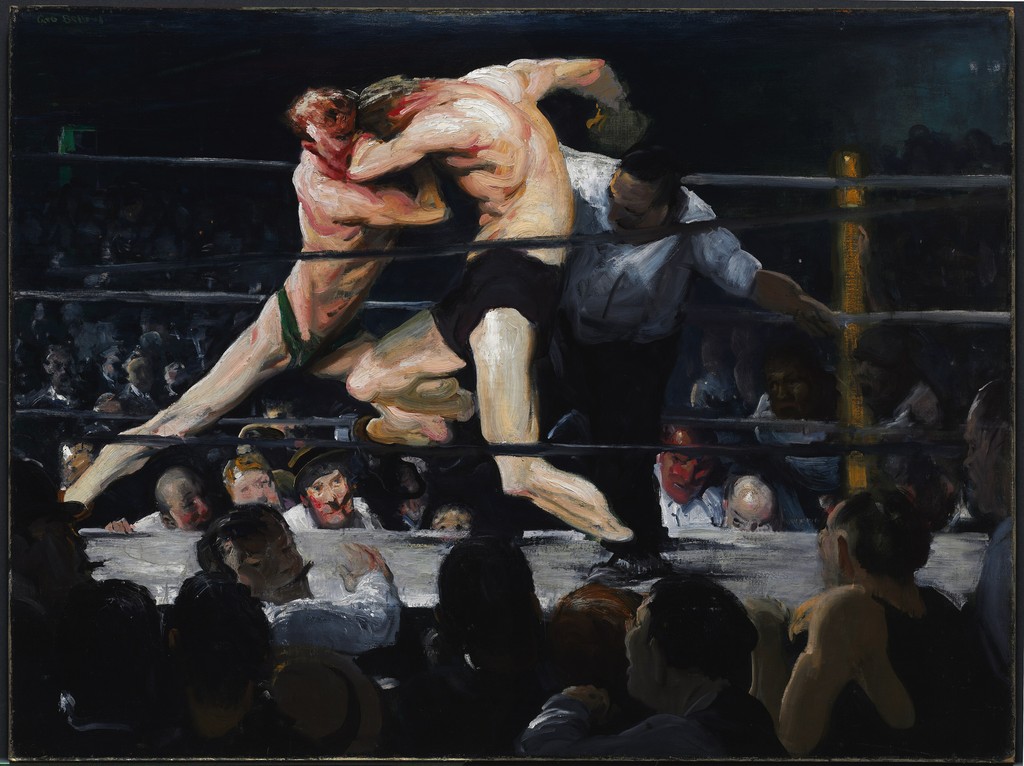
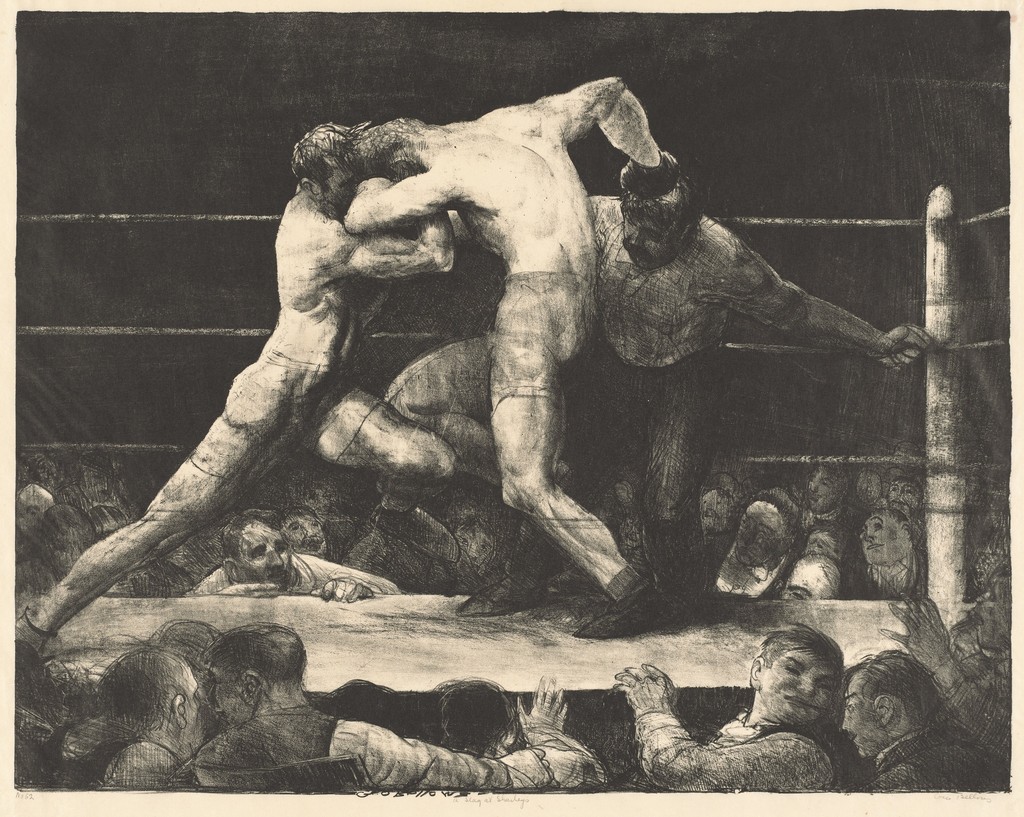
The title distinction between Stag at Sharkey's and A Stag at Sharkey's is especially important. The former is the Cleveland Museum of Art's 1909 oil painting. The latter is a separate 1917 lithographic design. The National Gallery's impression of A Stag at Sharkey's is a lithograph in black, accession 1956.6.13, catalogued as Mason no. 46. Its graphite inscription includes “No. 62,” but the museum record does not assign the sheet to a numbered state; that inscription should not be converted into one.[4]
The later print concentrates the grapple in a broad horizontal field, but its paper, monochrome tonality and printable design create a different encounter from the oil. It could circulate in multiple impressions and enter several collections. Bellows returned again to boxing in 1921 and in lithographs related to the 1923 Dempsey–Firpo fight. Repetition here is creative reconsideration: a subject changes when drawn for a stone, revised, printed and seen away from a painted original.
Social Satire and Everyday Theatre
Printmaking also drew together Bellows's experience as an illustrator and his alertness to social performance. Business-Men's Class (1916), with its comic cast and exaggerated activity, belongs to a satirical vein that the National Gallery compares to Honoré Daumier's social commentary.[1] Such designs depend on quickly legible types, but Bellows rarely lets the scene become orderly. Faces crowd together, gestures overlap and bodily awkwardness unsettles easy moral distance.
The humour could be affectionate, sceptical or sharp. Clubs, sporting events, streets and public gatherings offered ready-made stages on which class, fashion and self-importance became visible. Lithography allowed Bellows to make these scenes as drawings intended for circulation, rather than as unique painted statements. That broader audience mattered: an impression could be purchased, exhibited, reproduced or encountered in a publication, giving the design several public lives.
This circulation should not be confused with sameness. A magazine reproduction is not an original lithographic impression, just as a later photographic reproduction of a print is not the print itself. Scale, paper surface and tonal depth change as the image moves between formats.
War Images: Construction, Shock and Publication
Bellows's 1918 war lithographs use the medium's stark contrasts for an altogether different purpose. He did not witness combat in Europe. His scenes were constructed from newspaper reports, other published accounts, photographs, illustrations and soldiers' stories. Sniped focuses on soldiers gathered around a fallen comrade while danger remains largely unseen. The Metropolitan Museum of Art identifies its object as a 1918 lithograph, 1973.589.8, and records that the design appeared in the 13 July 1918 issue of Collier's with a combat story by Donal Hamilton Haines.[5]
Publication altered the setting in which such an image operated. In a museum, an impression can be studied as ink on a particular sheet. In a mass-circulation magazine, the design accompanied text and wartime news. Its persuasive and emotional work was therefore inseparable from reproduction, sequencing and contemporary propaganda. The war work must be read with that non-eyewitness boundary intact.
Individual records keep the series from becoming an undifferentiated catalogue of horrors. The National Gallery's The Charge is a 1918 lithograph in black with chine collé on wove paper, accession 2015.19.2929 and Mason no. 63.[6] Its Murder of Edith Cavell, also dated 1918, is a separate impression printed by George C. Miller: lithograph in black on wove paper mounted on paperboard, accession 2015.19.529 and Mason no. 53.[7] Other impressions of either design may differ in paper, mounting, inscriptions, state or collection history.
Family, Portraits and the Artist at Work
The quieter lithographs are essential to understanding Bellows's range. The Smithsonian singles out The Black Hat (1921), a portrait of his wife Emma, within the final nine years of his printmaking. Family and portrait subjects use the same medium as the boxing and war images but exchange collision for sustained attention: faces, hats, fabric and posture emerge from measured tonal passages.[2]
His 1921 Self-Portrait turns printmaking itself into the subject. Bellows shows himself working at a lithographic stone, making the image an occupational portrait as well as a record of appearance. The Library of Congress impression is identified by the digital ID cph.3m00107; its record notes signatures on the stone and in pencil by the artist and printer.[8] Those marks return the viewer to the chain of work behind a finished sheet.
Late portraits also show what collaboration could preserve. A printer sensitive to crayon's greys could retain a face without forcing it into the hard black-and-white drama of a prizefight. Bellows's print practice was broad enough to carry both extremes. Its unity lies in the pressure of drawing—sometimes muscular, sometimes intimate—translated into repeatable impressions.
How to Look at a Bellows Lithograph
Start with the object label. Note the exact title, year, medium, paper, printer, catalogue number, accession and any stated state. Then look for inscriptions in the image and margins. A number written on one sheet may refer to an impression or another record-keeping system; it is not automatically an edition size or state number.
Next, examine the tonal range. Bellows could make untouched paper function as glaring light, let grainy crayon describe atmosphere, or compress a crowd into blackness. Ask where the lithograph depends on the material qualities of ink and paper rather than on the colours or brushwork of a related painting.
Finally, consider circulation. Was the design sold as a signed impression, exhibited, reproduced in a magazine or translated into another medium? These routes shaped its audience. They also explain why locating “the original” is often the wrong question: the stone carried a design, while museums preserve distinct impressions with their own histories.
Researched works directory
This searchable evidence census was assembled from public museum records and a reproducible Wikidata snapshot. It is not a catalogue raisonné, not a claim to complete oeuvre coverage, and not a substitute for the published catalogue literature, which was not used to claim absolute completeness.
| Name | Date | Medium |
|---|---|---|
| A Cloudy Day / Hudson River: Coming Squall | 1908 | Painting |
| A Day in June | 1913 | Painting |
| A Fresh Breeze | 1913 | Painting |
| A Grandmother | 1914 | Painting |
| A Knockout | 1921 | |
| A Morning Snow--Hudson River | 1910 | Painting |
| A Stag at Sharkey's | 1917 | |
| A Winter Day - Under the Elevated near Brooklyn Bridge | 1907 | Painting |
| Allan Donn Puts to Sea | 1923 | |
| An Irish Girl | 1922 | Drawing |
| Anne | 1915 | Painting |
| Anne 1921 | 1923 | |
| Anne and Her Mother | 1917 | Drawing |
| Anne in Black Velvet | 1917 | Painting |
| Anne in White | 1920 | Painting |
| Anne with a Japanese Parasol | 1917 | Painting |
| Approach of Rain | 1913 | Painting |
| Approach to the Bridge at Night | 1913 | Painting |
| Arms of a Boxer | 1916 | Drawing |
| Artists' Evening | 1916 | |
| August Lundberg (No 2) | 1907 | Painting |
| Aunt Fanny | 1920 | Painting |
| Barnyard and Chickens | 1924 | Painting |
| Bethesda Fountain (Fountain in Central Park) | 1905 | Painting |
| Between Rounds, large, first stone | 1916 | |
| Between Rounds, small, second stone | 1923 | |
| Blue Morning | 1909 | Painting |
| Blue Snow, the Battery | 1910 | Painting |
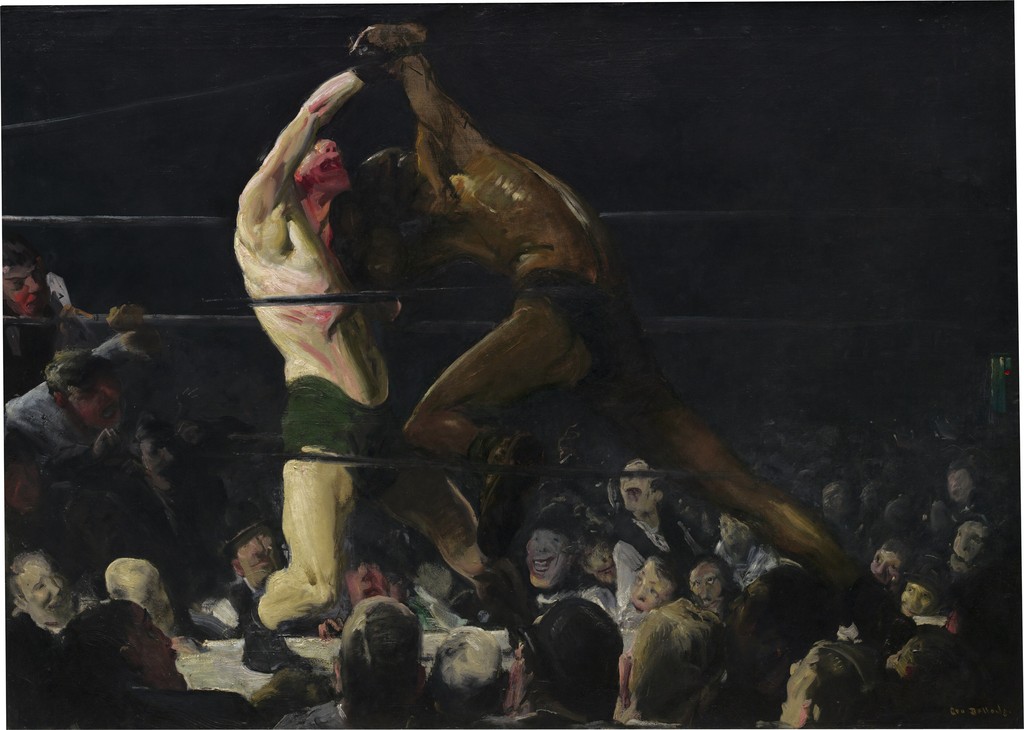
| Both Members of This Club | 1909 | Painting |
| Boy in a Blue Coat | 1915 | Painting |
| Boy with Eton Collar (Portrait of Meredith Hare) | 1921 | Painting |
| Breaking Sky, Monhegan | 1916 | Painting |
| Bridge, Blackwell’s Island | 1909 | Painting |
| Builders of Ship | 1916 | Painting |
| California Headlands | 1917 | Painting |
| Caricature of Adam and Eve and Two Female Portrait Sketches | Date unknown | Drawing |
| Central Park | 1905 | Painting |
| Chester Dale | 1922 | Painting |
| Children Playing in a Park | 1905 | Drawing |
| Cleaning Fish | 1913 | Painting |
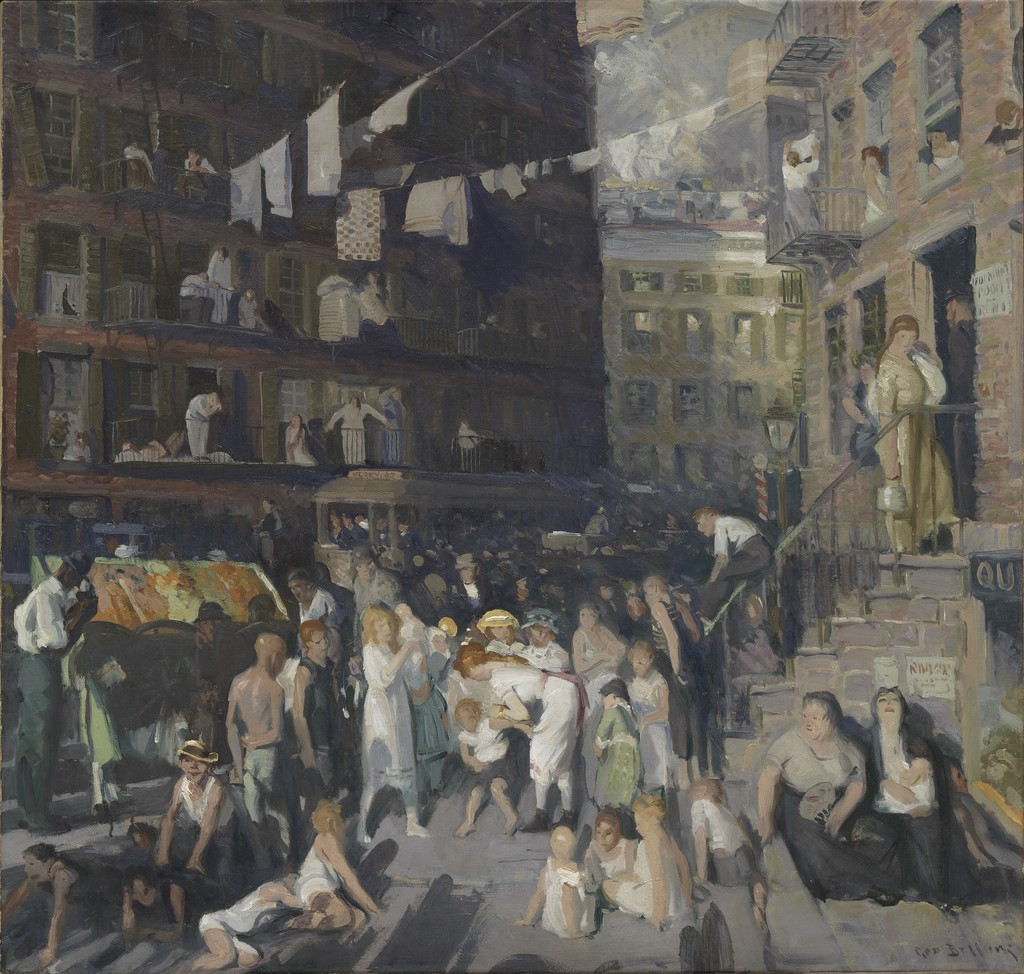
| Cliff Dwellers | 1913 | Painting |
| Cliffs | Date unknown | Painting |
| Club Night | 1907 | Painting |
| Coming Storm | 1914 | Painting |
| Coopers Lake, Woodstock | 1924 | Painting |
| Counted Out, first stone | 1921 | |
| Counted Out, second stone | 1921 | |
| Criehaven Wharf | 1916 | Painting |
| Cross-Eyed Boy | Date unknown | Painting |
| Dance in a Madhouse | 1917 | |
| Dancing Town (The Top of the World) | 1922 | Drawing |
| Dempsey and Firpo | 1923 | |
| Dempsey and Firpo | 1924 | Painting |
| Dempsey through the Ropes | 1923 | |
| Dempsey Through the Ropes | Date unknown | Painting |
| Deserted Factory | 1924 | Painting |
| Dock Builders | 1916 | Painting |
| Edge of the Pasture - Glow of the Sun | 1916 | Painting |
| Edith Cavell | 1918 | Painting |
| Elinor, Jean and Anna | 1920 | Painting |
| Elsie, Emma and Marjorie, First Stone | 1921 | |
| Elsie, Emma and Marjorie, second stone | 1921 | |
| Elsie Reading to Emma, First Stone | 1921 | |
| Elsie Reading to Emma, Second Stone | 1921 | |
| Elsie Speicher [verso] | 1920 | Drawing |
| Emma and Her Children | 1923 | Painting |
| Emma at the Piano | 1914 | Painting |
| Emma at the Window | 1920 | Painting |
| Emma, Elsie and Gene | 1921 | |
| Emma in a Purple Dress | 1920 | Painting |
| Emma in the Black Print | 1919 | Painting |
| Emma in the Purple Dress | 1919 | Painting |
| Evening Blue | 1916 | Painting |
| Evening Swell | 1911 | Painting |
| Excavation at Night | 1908 | Painting |
| Family in a Surrey | 1921 | Drawing |
| Fern Woods | Date unknown | Painting |
| Five Cows | 1919 | Painting |
| Floating Ice | 1910 | Painting |
| Florence Davey | 1914 | Painting |
| Fog Breakers | 1913 | Painting |
| Forty-two Kids | 1907 | Painting |
| Frankie, the Organ Boy | 1907 | Painting |
| Garaldine Lee, No. 2 | 1914 | Painting |
| Gardiner's Bay from Sag Harbor | 1899 | Painting |
| Ghost of Sergeant Pelly | 1918 | Drawing |
| Golf Course, California | 1917 | Painting |
| Gorge and Sea | 1911 | Painting |
| Grandma Bellows | 1919 | Painting |
| Gray Sea | 1913 | Painting |
| Harbor of Monhegan, Fish Boats | 1911 | Painting |
| Haystacks and Barn | 1909 | Painting |
| Head of Boy (aka Gray Boy) | 1905 | Painting |
| Hungry Dogs, second stone | 1916 | |
| Hunter and Mountains | 1920 | Painting |
| In a Rowboat | 1916 | Painting |
| In an Elevator | 1916 | |
| In the Park, Dark | 1916 | |
| Introducing Georges Carpentier | 1921 | |
| Introducing John L. Sullivan | 1916 | |
| Introducing John L. Sullivan | 1923 | Painting |
| Introducing the Champion | 1916 | |
| Introductions | 1921 | |
| Jackie (Jacqueline Hudson) | 1914 | Painting |
| Jean 1923 | 1923 | |
| Jean in a Black Hat | 1923 | |
| Jean with Blue Book and Apple | 1916 | Painting |
| Jim Twadell's Place | 1924 | Painting |
| Julie Hudson | 1914 | Painting |
| Katherine Rosen | 1921 | Painting |
| Kids | 1906 | Painting |
| Lady Jean | 1924 | Painting |
| Lady of 1860 - The Actress | 1922 | Drawing |
| Lady with a Fan | 1921 | |
| Launching | 1913 | Painting |
| Little Girl in White (Queenie Burnett) | 1907 | Painting |
| Love of Winter | 1914 | Painting |
| Lychnis and Her Sons | 1923 | |
| Madeline Davis | 1914 | Painting |
| Man and Dog | 1905 | Painting |
| Matinicus | 1916 | |
| Maud Dale | 1919 | Painting |
| May Day in Central Park | 1905 | Painting |
| Men of the Docks | 1912 | Painting |
| Mill Dam | 1924 | Painting |
| Miss Bentham | 1906 | Painting |
| Monhegan Island | 1913 | Painting |
| Mother and Children | 1916 | |
| Mother and Children, Second State | 1916 | |
| Mountain Farm | 1922 | Painting |
| Mr. and Mrs. Phillip Wase | 1924 | Painting |
| Mrs. Chester Dale | 1919 | Painting |
| Mrs. T. in Cream Silk, No.1 | 1919 | Painting |
| Mrs. T. in Cream Silk, No.2 | 1920 | Painting |
| Mrs. Walter H. Richter | 1922 | Painting |
| Murder of Edith Cavell | 1918 | |
| My Family | 1916 | Painting |
| My Mother | 1921 | Painting |
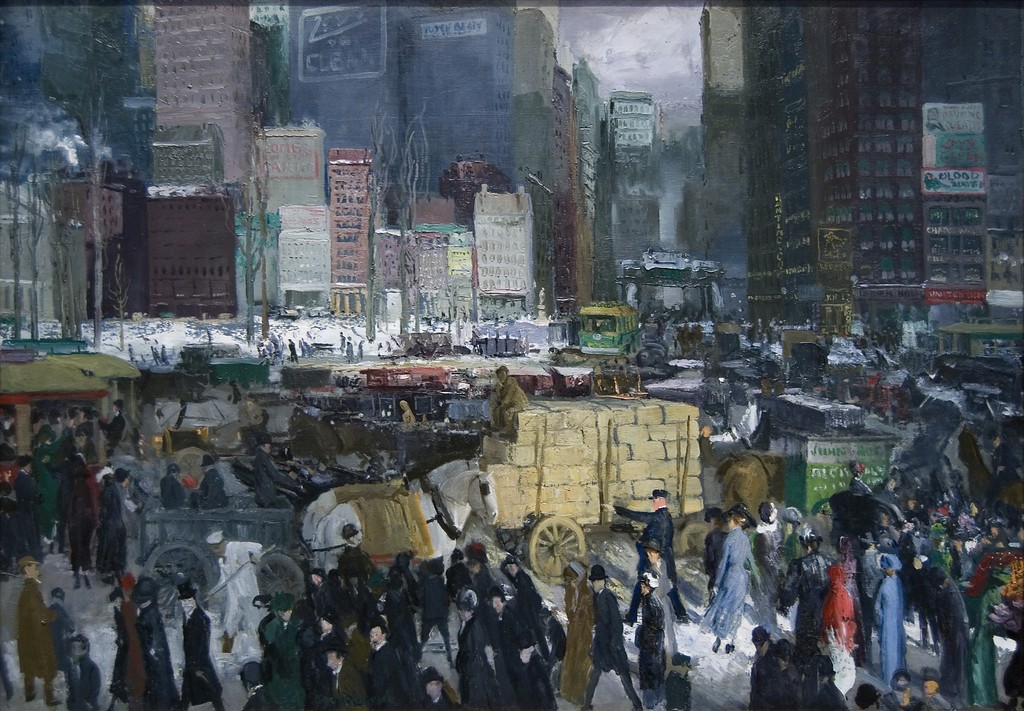
| New York | 1911 | Painting |
| North River | 1908 | Painting |
| Nude Girl, Miss Leslie Hall | 1909 | Painting |
| Nude Girl Reclining | 1919 | Drawing |
| Nude Study, Girl Standing on One Foot | 1923 | |
| Nude with Fan | 1920 | Painting |
| Nude with Hexagonal Quilt | 1924 | Painting |
| Nude with Parrot | 1915 | Painting |
| Nude with Red Hair | 1920 | Painting |
| Old Barn, Grey Day | 1920 | Painting |
| Old Fisherman | 1904 | Painting |
| Ox Team, Wharf at Matinicus | 1916 | Painting |
| Paddy Flannigan | 1908 | Painting |
| Padre | 1917 | Painting |
| Paradise Point | 1919 | Painting |
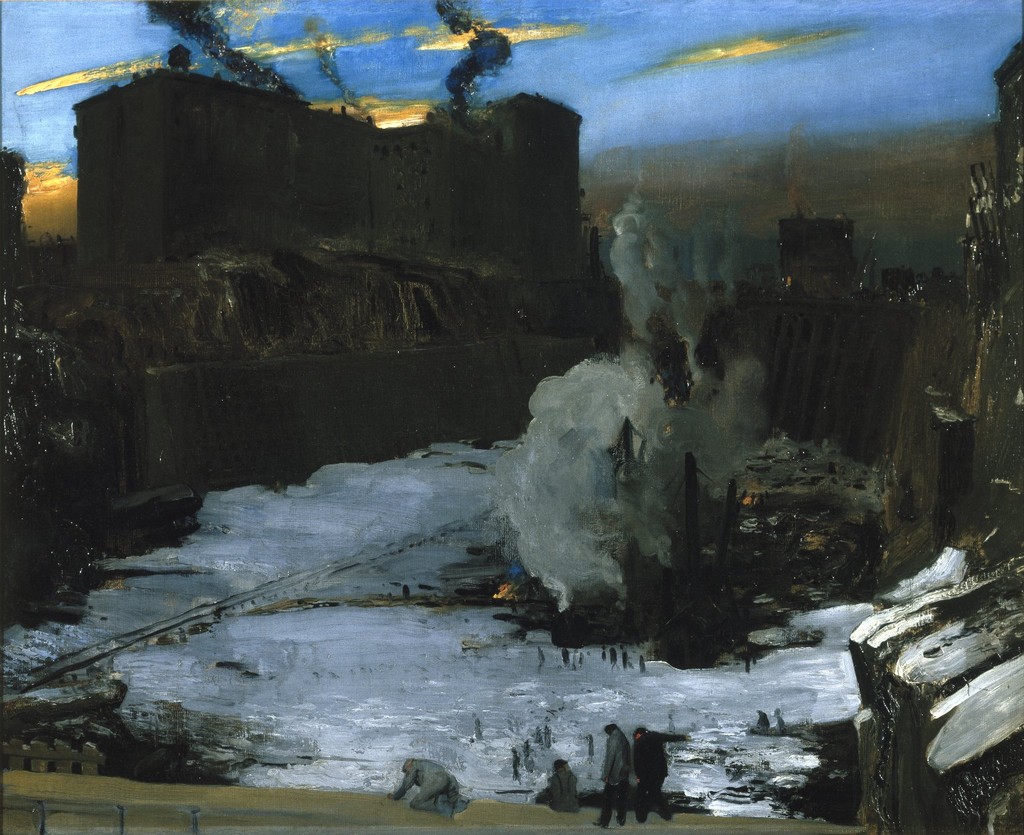
| Pennsylvania Station Excavation | c. 1907–1908 | Painting |
| Pigs and Donkey | 1920 | Painting |
| Polo at Lakewood | 1910 | Painting |
| Portrait of a Boy | 1921 | Painting |
| Portrait of a Laughing Boy | 1907 | Painting |
| Portrait of Florence Budd | 1914 | Painting |
| Portrait of Florence Pierce | 1914 | Painting |
| Portrait of Geraldine Lee, No. 1 | 1914 | Painting |
| Portrait of My Mother No. 1 | 1921 | Painting |
| Portrait of Prosper Invernizzi | 1907 | Painting |
| Portrait of Walter Littlefield | 1915 | Painting |
| Porträt der Anne | 1915 | Painting |
| Porträt der Laura | 1922 | Painting |
| Prayer Meeting, second stone | 1916 | |
| Preliminaries | 1916 | |
| Preliminaries | Date unknown | |
| Pueblo Tesuque, No. 2 | 1917 | Painting |
| Rain on the River | 1908 | Painting |
| Return of the Useless | 1918 | Painting |
| River Front No. 1 | 1914 | Painting |
| Rock Bound | 1913 | Painting |
| Rock Reef, Maine | 1913 | Painting |
| Rock Ridge Farm | Date unknown | Painting |
| Rocks and Coast | 1911 | Painting |
| Rolling Breakers | 1913 | Painting |
| Romance of Autumn | 1916 | Painting |
| Romance of Criehaven | 1916 | Painting |
| Roumanian Girl | 1921 | Painting |
| Samuel Knopf | 1922 | Painting |
| Santuario de Chimata | 1917 | Painting |
| Seated Female Nude (Emma Story Bellows) | Date unknown | Drawing |
| Seated Nude | 1910 | Painting |
| Self-Portrait | 1921 | |
| Shipyard Society | 1916 | Painting |
| Sixteen East Gay Street | 1923 | |
| Sketches of Heads, Including One of Chester Dale | Date unknown | Drawing |
| Sketches of Three Female Heads [recto] | Date unknown | Drawing |
| Snow-Capped River | 1911 | Painting |
| Snow Dumpers | 1911 | Painting |
| Society Ball [verso] | 1907 | Drawing |
| Splinter Beach | 1916 | |
| Stag at Sharkey's | 1909 | Painting |
| Steaming Streets | 1908 | Painting |
| Storm Sea | 1913 | Painting |
| Street Fight [recto] | 1907 | Drawing |
| Studies of Jean | 1920 | Drawing |
| Study for "Mr. and Mrs. Philip Wase | 1924 | Drawing |
| Study for Nude with Hexagonal Quilt | 1924 | Drawing |
| Study for "Riverfront No. 1 | 1915 | Drawing |
| Study of Emma and the Children | 1917 | Painting |
| Summer City | 1909 | Painting |
| Summer Fantasy | 1924 | Painting |
| Summer Night, Riverside Drive | 1909 | Painting |
| Sun Glow | 1913 | Painting |
| Sun Shadows (Rocks at Monhegan) | 1913 | Painting |
| Sunday 1897 | 1921 | |
| Sunlit surf | 1913 | Painting |
| Swans in Central Park | 1906 | Painting |
| Tennis | 1920 | |
| Tennis at Newport | 1919 | Painting |
| Tennis at Newport | 1920 | Painting |
| Tennis Tournament | 1920 | Painting |
| The Barricade | 1918 | Painting |
| The Beach, Newport (In the Sand) | 1919 | Painting |
| The Big Dory | 1913 | Painting |
| The Black Derby / Head of a man with a red nose | 1905 | Painting |
| The Brook | Date unknown | Painting |
| The Charge | 1918 | |
| The Cigarette | 1918 | |
| The Coming Storm | 1916 | Painting |
| The Dock | 1913 | Painting |
| The Donkey Cart | 1922 | Drawing |
| The Fish Wharf, Matinicus Island | 1916 | Painting |
| The Fisherman | 1917 | Painting |
| The Germans Arrive | 1918 | Painting |
| The Grove — Monhegan | 1911 | Painting |
| The Gulls, Monhegan | 1911 | Painting |
| The Harbor, Monhegan Coast, Maine | 1913 | Painting |
| The Kindliness Came Not from Her | 1922 | Drawing |
| The Launching | Date unknown | Painting |
| The Law Is Too Slow | 1923 | |
| The Lone Tenement | 1909 | Painting |
| The Newsboy | 1908 | Painting |
| The Novitiate | 1916 | |
| The Palisades | 1909 | Painting |
| The Red Vine, Matinicus Island, Maine | 1916 | Painting |
| The Sand Cart | 1917 | Painting |
| The Sea | 1911 | Painting |
| The Shower-Bath | 1917 | |
| The Studio | 1919 | Painting |
| The Teamster | 1916 | Painting |
| The Tournament | 1920 | |
| The Village Houses | 1920 | Painting |
| The Warships | 1909 | Painting |
| The White Hope | 1921 | |
| The White Horse | 1922 | Painting |
| The Widow | 1917 | Painting |
| Three Children | 1919 | Painting |
| Three Pigs and a Mountain | 1922 | Painting |
| Three Rollers | 1911 | Painting |
| Through the Trees, Monhegan Island, Maine | 1913 | Painting |
| Tumble of Waters | 1913 | Painting |
| Two Girls | 1917 | |
| Two Women | 1924 | Painting |
| Up the Gorge | 1913 | Painting |
| Up the Hudson | 1908 | Painting |
| Village on the Hill | 1916 | Painting |
| Vine Clad Shore--Monhegan Island | 1913 | Painting |
| Waldo Peirce | 1920 | Painting |
| War Series | 1918 | Painting |
| West Wind | 1913 | Painting |
| Willard in Training Quarters | 1916 | |
| Winter Afternoon, Riverside Park | 1909 | Painting |
| Winter Road | 1912 | Painting |
| Woodstock Road, Woodstock, New York | 1924 | Drawing |
Frequently Asked Questions
He began in 1916, installing a press in his East 19th Street studio during the winter of 1915–1916. He made thirty-five designs in his first year and continued working in the medium until his death in 1925.[1]
He drew with lithographic materials either directly on a stone or through a transfer drawing. After the surface was prepared, the printer dampened and inked it so the drawn areas accepted ink and the blank areas resisted it, then transferred the design to paper under pressure. Bellows valued the process as an extension of drawing.[1]
They were specialist printers who helped turn Bellows's worked stones into successful impressions. Miller printed most of his lithographs from 1916 to 1919; Brown worked with him from 1919 to 1925 and was particularly important to the tonal subtlety of the later prints.[1]
No. Stag at Sharkey's is a 1909 oil painting in Cleveland. A Stag at Sharkey's is a separate lithograph made in 1917. They share a boxing subject, but their dates, media, compositions and object histories differ.[4]
Major holdings include the National Gallery of Art, the Metropolitan Museum of Art, the Smithsonian American Art Museum and the Library of Congress. Check each institution's current object record before planning a visit, because works on paper are light-sensitive and are often not on permanent display.[2][3][4][8]
Discussion
Use this evidence-led guide as a starting point for close looking rather than a final verdict.
Share an observation about George Bellows Prints and Lithographs or a source that adds useful context.
Reader Insights
Which material decision best defines Bellows's practice in this group of works?
Where do you see observation and invention working together rather than as opposites?
Which work would you add to the selected group, and what would it change?
Join the Conversation
Add your reading below, keeping observations specific and evidence clear.
References
- National Gallery of Art, Bellows: The Boxing Pictures, accessed 31 August 2026.
- Smithsonian American Art Museum, “George Bellows”, accessed 31 August 2026.
- The Metropolitan Museum of Art, “George Bellows”, accessed 31 August 2026.
- National Gallery of Art, “A Stag at Sharkey's”, accessed 31 August 2026.
- The Metropolitan Museum of Art, “Sniped from War Series”, accessed 31 August 2026.
- National Gallery of Art, “The Charge”, accessed 31 August 2026.
- National Gallery of Art, “Murder of Edith Cavell”, accessed 31 August 2026.
- Library of Congress via Wikimedia Commons, “George Bellows self-portrait”, accessed 31 August 2026.