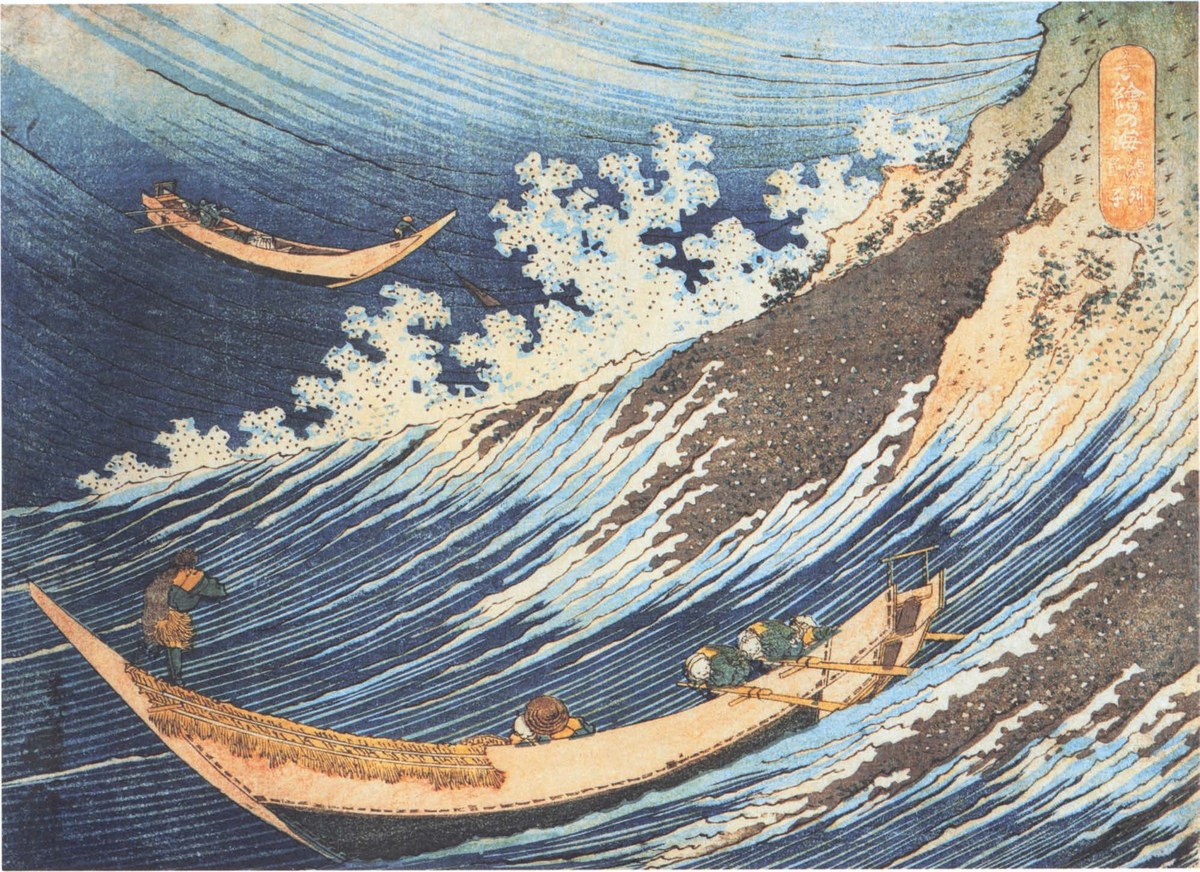
 by Tom Gurney
Tom Gurney BSc (Hons) is an art history expert with over 20 years experience
Email: tomgurney1@gmail.com / Phone: +44 7429 011000
Hokusai Timeline
Katsushika Hokusai's working life stretches from prints of actors in the late 1770s to painted scrolls, drawings for books and finished paintings in the 1840s. A chronology can show when particular works became available to readers and viewers, when he used different names and how long seemingly separate projects overlapped. Approximate dates refer to the evidence for an object or an event. For a fuller account of the evidence and the people with whom he worked, see the biography.
At a Glance
- ArtistKatsushika Hokusai
- Life1760–1849
- Working periodLate 1770s to 1849
- MediaPrints, books, drawings and paintings
Contents
- 1760–1778: Honjo and the trades behind pictures
- 1779–1790s: Shunrō and a growing range of work
- Mid-1790s–1804: Sōri, Hokusai and poetry
- 1804–1819: Stories, teaching and public art
- 1820–1829: Iitsu and the later household
- Circa 1830–1835: The two Fuji projects
- Late 1830s–1848: Late paintings, Obuse and Ōi
- 1849 and the circulation of his work
- Works to explore along the timeline
1760–1778: Honjo and the trades behind pictures
1760. Hokusai was born in Edo, in the Honjo area east of the Sumida River. The earliest locations associated with him lie near Warigesui, an old channel whose course is reflected in the neighbourhood today. His museum in Sumida traces a number of later homes on a map, showing how his association with Honjo extended well beyond his birth. [1]
Youth. The Japanese chronology records a tradition of employment in a book rental shop followed by work in block cutting. Pinning down these years is harder than dating the earliest surviving prints. The tradition is significant because it places the young artist among the people who kept printed pictures circulating. It also distinguishes the skills of preparing a block from the profession he eventually entered as a designer of images. [2]
1778. He entered the circle of Katsukawa Shunshō. In the usual Japanese traditional count he was nineteen. The Katsukawa school gave him access to a developed market in images of kabuki actors. It also offered models for painting, an aspect of the training that matters when comparing the scrolls of his maturity with the prints of his earliest years. [2] [3]
1779–1790s: Shunrō and a growing range of work
1779. A picture of Iwai Hanshirō IV in the role of Kashiku is catalogued by Sumida with this year. It documents the young artist's use of Shunrō (春朗), a name that identifies the circle in which he trained. An actor and character both belong to the history of the work. The distinction explains why museum titles of early Japanese theatrical prints can be long and specific. [4]
1780s. His work as Shunrō covered a broader range of subjects than actor portraits. Sumida's Japanese chronology illustrates the phase with a perspective print of visitors enjoying fireworks at Ryōgoku. Spectators, structure and the position of the viewer all matter in it. The urban viewpoints of the Fuji series address similar questions decades later, in a different format and with a much more distant landmark. [2]
1790s. Hokusai moved away from the Katsukawa school. The story of the exact circumstances varies in later accounts. Work around this time bears different kinds of signatures and encompasses formal ideas available from Japanese painting and from images using foreign perspective. Naming a single reason for his change of direction would make the shift look more abrupt than the surviving variety of work suggests. [5]
Mid-1790s–1804: Sōri, Hokusai and poetry
Mid-1790s. The name Sōri (宗理) accompanies work for circles producing witty verse and fine privately commissioned prints. The audience for a poetry print could share knowledge of literary allusions that a commercial print might have to leave to a caption. The commissions expand the range of Hokusai's work while making his professional identity visible under a new name. [6]
About 1798. He began using Hokusai, including the form Hokusai Tokimasa. The Suntory exhibition connects his choice to the North Star and the Buddhist deity Myōken. The name Sōri could be passed on. Such transfer is one reason a school name alone cannot identify a painter. [6]
1799 and about 1803–04. Nantes's exhibition catalogue records an excellent pair of signatures. A 1799 poetry print of two beauties with a plum tree names the transition from Sōri to Hokusai. A painted Two Beauties several years later combines Hokusai with a persona devoted to drawing. The earlier names could remain intelligible to customers and be written into a new signature. Each record anchors a form of the name to one work without fixing a final date for its use. [7]
1804–1819: Stories, teaching and public art
1807–11. Hokusai drew pictures for Bakin's Strange Tales of the Bow Moon, one of the publishing collaborations that placed his work before readers of illustrated prose. Dates given for the whole title span the publication of instalments. An illustrator had to know when a picture should make the action clear and when a single image could delay the reader's discovery of its consequence. [6]
1812. Quick Lessons in Simplified Drawing belongs to his work on methods of teaching the brush. The decade also sees the growth of his contacts beyond Edo, including with Maki Bokusen and a circle of artists and enthusiasts in Nagoya. Showing how a figure or animal can be built from fewer marks is an achievement of design with its own demands. The publication made those devices available to readers beyond his workshop. [6]
1814. The first volume of Hokusai Manga appeared. The title became attached to a multi-volume series with a long publishing history. Treat the year as the beginning of the published series. Later copies may have dates and layouts that need to be examined volume by volume. [2]
1817. A large public painting of Daruma in Nagoya shows Hokusai working on a scale far removed from a page of Manga. In both settings he needed a gesture to stay legible under changing conditions. In a demonstration even people far away needed to be able to recognise the emerging image. In a book the work of multiple gestures could be spread across the turn of a page. [6]
1820–1829: Iitsu and the later household
1820. The name Iitsu (為一) begins to appear in his professional work. Nantes describes a silk painting of a shirabyōshi dancer carrying a signature that records the change from Hokusai Taito to Iitsu. A year or period associated with a new name identifies a transition. An actual object can demonstrate how Hokusai chose to present it to a particular reader or viewer. [7]
Early 1820s. The Sumida chronology notes growing work on surimono during the first years of Iitsu. Fine commissioned prints continued alongside the teaching and illustration interests of the previous decade. Print size and the scale of their distribution matter to reading these objects. A technique used for a limited impression does not necessarily prove it was economical for a large print run. [2]
Later 1820s. Accounts relate family losses and financial trouble, as well as an illness sometimes described as a possible stroke. Katsushika Ōi returned to work with her father after her marriage ended. Surviving paintings and books identify her as an artist in her own right. Later accounts of the household help explain why she was near Hokusai, but a specific claim about who drew or painted a work depends on evidence for that work. [8] [9]
Circa 1830–1835: The two Fuji projects
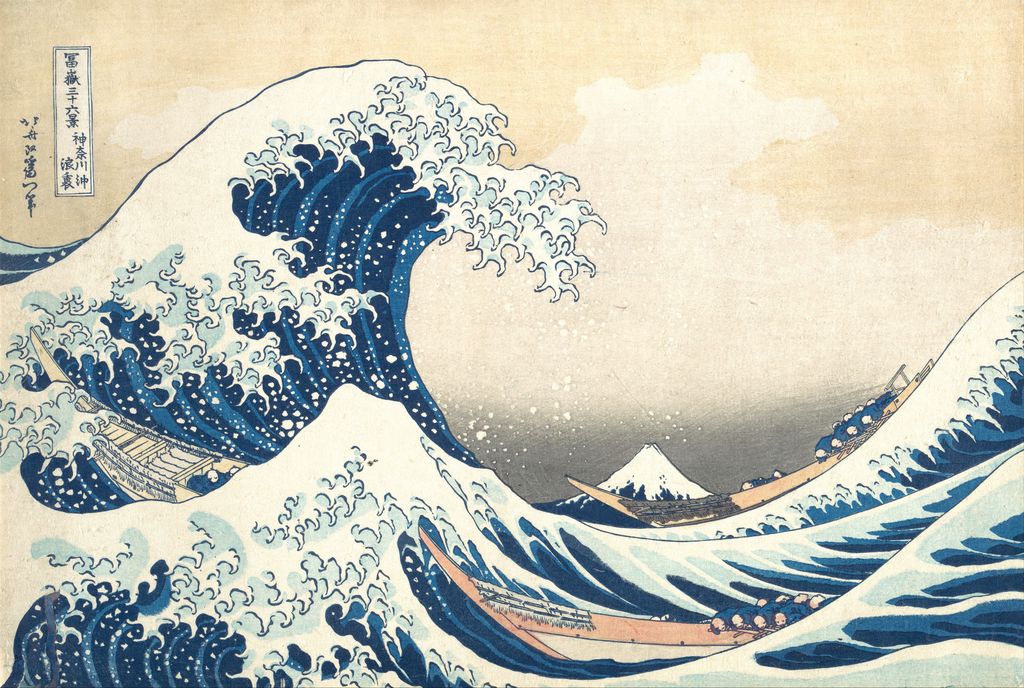
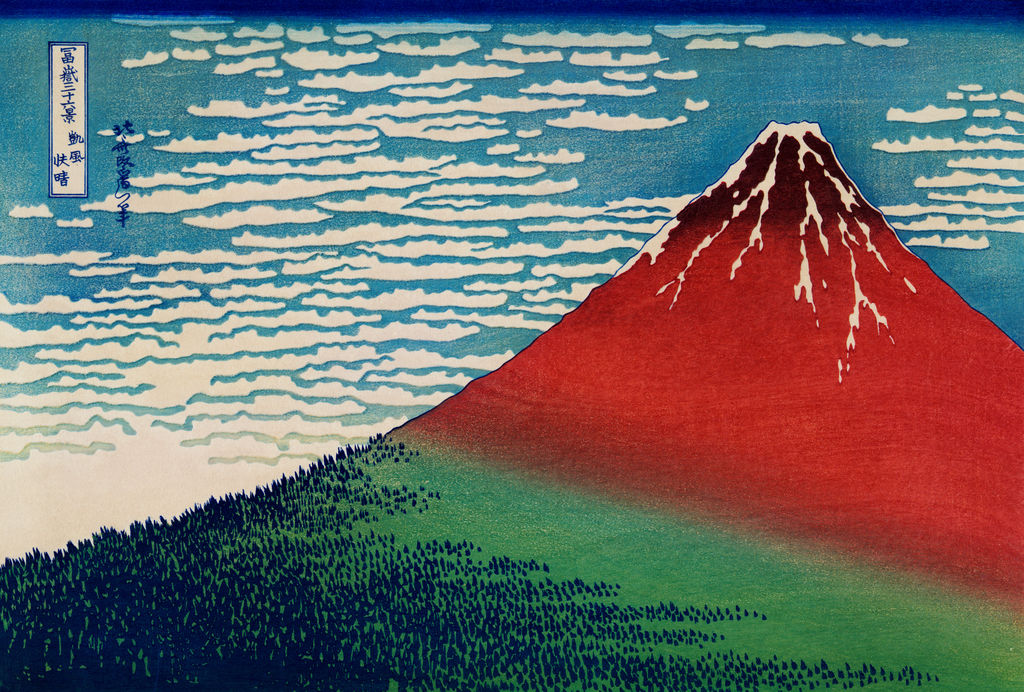
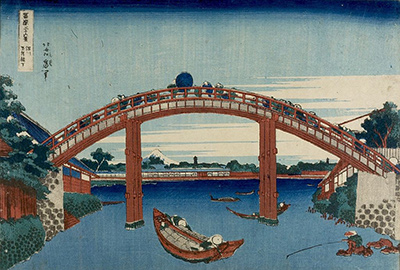
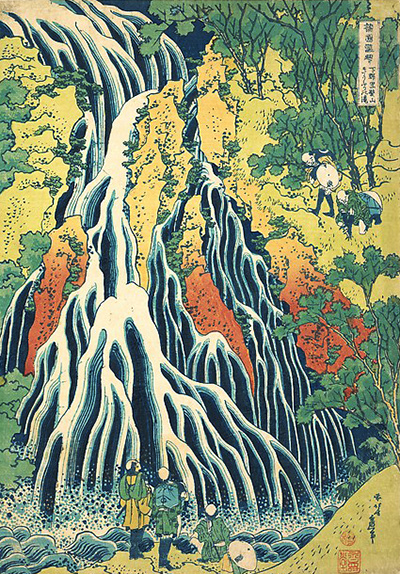
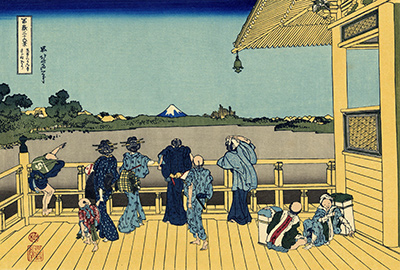
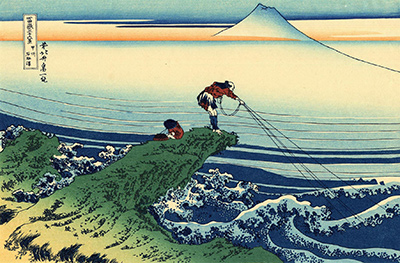
Circa 1830–33. The publisher Nishimuraya Yohachi issued Thirty-six Views of Mount Fuji. Ten additional designs took the total to forty-six. The dates are a range for the undertaking, while the making of any one impression can fall at a different point in the series' history. [10]
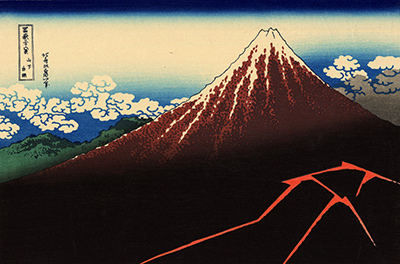
Early 1830s. The prints now called Great Wave, Red Fuji and Rainstorm Beneath the Summit explored widely different relations between the mountain, weather and foreground. Surviving impressions demonstrate different printing decisions for the same design. The order of production cannot always be inferred from how strongly a particular sheet is coloured. [11] [12]
1833. The artist Keisai Eisen refers to Hokusai’s daughter Eijo as a professional picture maker. The account predates the later biographies that placed her chiefly inside her father’s household. It provides a useful date for her established reputation, separate from the much broader date ranges applied to her surviving paintings. [13]
1834–35. The first two volumes of One Hundred Views of Mount Fuji belong to these years. The book introduced readers to different Fuji scenes across pairs of pages. The first volume closes with Hokusai's printed statement of his hopes for his art in old age. The wording of his signature reflects the later identity associated with Manji. The date of the third volume is less secure. [14] [5]
Late 1830s–1848: Late paintings, Obuse and Ōi
Late 1830s and early 1840s. Hokusai pursued further printed work while producing paintings. The British Museum's acquisition of drawings for The Great Picture Book of Everything raised questions about when its designs were made. The museum's later discussion of letters suggests the work could have continued into the 1840s. The surviving drawings and the letters provide different sorts of dates. One can place work on a project without dating every sheet in it. [8]
1842–48. The Musée d'histoire de Nantes, working with the Hokusai-kan, situates his visits to Obuse in these years. Takai Kōzan supported work that included painted decorations for two festival floats. A ceiling painting made to be admired from below, sometimes on a moving festival structure, is a different object from an individually mounted print or a book held in the hands. [15]
Late Tenpō era. The Sumida places map records Hokusai and O-Ei at Han'nokibaba in Honjo Kamezawa. The National Diet Library preserves his pupil Tsuyuki Iitsu's drawing depicting the temporary dwelling. This is evidence of two people in a single working household. It helps place the last years in Edo alongside the extended visits to Obuse. [1] [16]
1847. The Nantes catalogue attributes Chrysanthemums jointly to Hokusai and Ōi and transcribes two signatures naming Manji. It is unusually useful to put the credited authorship and the lettering of this object side by side. The comparison explains how curatorial attribution can tell a reader something not contained in the words of a signature alone. [7]
1847–48. The illustrated revision of Onna chōhōki names Ōi as artist and gives her a firmly dated publication. The next year saw both her book about tea and the Hokusai-signed painting manual Ehon saishiki tsū. A letter from Ōi about preparing a red colourant gives an unexpected comparison with the manual, without assigning a given part of it to her. [17] [13]
1849 and the circulation of his work
10 May 1849. Hokusai died in Edo. The eighteenth day of the fourth month of Kaei 2 is the equivalent date in the calendar then in use. He was ninety by traditional counting. The famous reports of his final wishes are best read alongside the printed statement published on his own authority in the first volume of One Hundred Views. [18] [2]
Around 1850. Ellis Tinios proposes this date for the first complete edition of the three volumes of One Hundred Views. He distinguishes drawings already made by Hokusai from blocks for the third volume likely cut later under Egawa Sentarō. The material history of the books continues a history of design begun by the artist, but the evidence for printing belongs partly to people still working after his death. [13]
After 1849. Ōi outlived her father. The gap in evidence for her last years explains why museum catalogues give different formulations of her ending date. Later circulation of Hokusai's work, particularly as interest in Japanese art grew around events such as the 1867 Paris Exposition, gave many European and American viewers their first opportunity to interpret parts of his career. The objects in museum collections now make possible comparisons of paintings, original paper impressions, working drawings and whole books that no single reproduction can provide. [19] [5]
2023–26. Boston's exhibition Hokusai: Inspiration and Influence presented objects across Hokusai's own career and the work of several other artists, including Ōi. The 2025 display in Nantes put Japanese paintings and Obuse at the centre of its account. The Ōta Memorial Museum's 2026 exhibition on nocturnal scenes placed Ōi's own major painting at the centre. The shifts in subject suggest how much a chronology centred on the artist's famous name can gain by keeping track of the people, objects and institutions connected to the life. [20] [15] [21]
Works to explore along the timeline
| Work or project | Context |
|---|---|
| Thirty-six Views of Mount Fuji | Colour prints issued as separate sheets |
| One Hundred Views of Mount Fuji | Three illustrated volumes |
| Hokusai Manga | Sketchbooks published across fifteen volumes |
| Great Wave off Kanagawa | Early 1830s · colour woodblock print |
| Dragon | Late painted work |
Discussion
Look again at the images and ideas explored in Hokusai Timeline. These editorial prompts invite your observations.
Reader Insights
Which name change is most useful for placing a work in time?
Where do the Fuji prints and books overlap with other projects?
Join the Conversation
Share a detail, comparison or question about Hokusai Timeline below.
References
- Sumida Hokusai Museum, Sumida Hokusai Museum map. View source.
- Sumida Hokusai Museum, Sumida Japanese chronology. View source.
- Museum of Fine Arts, Boston, MFA on his training. View source.
- Sumida Hokusai Museum, Sumida object record. View source.
- Sumida Hokusai Museum, Sumida Hokusai Museum, account of his changing practice. View source.
- Suntory Museum of Art, Suntory Museum of Art, Sōri section. View source.
- chateaunantes.fr, Nantes catalogue entries 67 and 43. View source.
- The British Museum, British Museum exhibition guide. View source.
- Tokyo National Museum, Tokyo National Museum, Ōi. View source.
- Sumida Hokusai Museum, Sumida exhibition on both Fuji series. View source.
- The British Museum, British Museum technical study. View source.
- nature.com, Red Fuji conservation study. View source.
- doi.org, Julie Nelson Davis, Late Hokusai, p. 62. View source.
- The Metropolitan Museum of Art, Met record for early volumes. View source.
- chateaunantes.fr, Nantes exhibition on Hokusai and Obuse. View source.
- National Diet Library, National Diet Library drawing record. View source.
- d-archive.u-gakugei.ac.jp, Tokyo Gakugei University, Onna chōhōki. View source.
- The British Museum, British Museum, Tim Clark, Hokusai: old master. View source.
- Cleveland Museum of Art, Cleveland Museum of Art, Ōi life dates. View source.
- Museum of Fine Arts, Boston, MFA 2023 exhibition. View source.
- ukiyoe-ota-muse.jp, Ōta 2026 exhibition. View source.