 by Tom Gurney
Tom Gurney BSc (Hons) is an art history expert with over 20 years experience
Email: tomgurney1@gmail.com / Phone: +44 7429 011000
Hokusai Series & Books
Hokusai designed print series about waterfalls, ghosts, fishing, bridges and classical poetry, as well as his best-known project about Mount Fuji. His illustrated books put a similar appetite for variation to work across pages rather than across separate sheets. Start with the series and books below, or follow the links to individual prints and museum collections.
At a Glance
- ArtistKatsushika Hokusai
- ScopePrint series and illustrated books
- ExamplesFuji views, waterfalls, ghosts, fishing, bridges and poetry
Contents
The Fuji projects
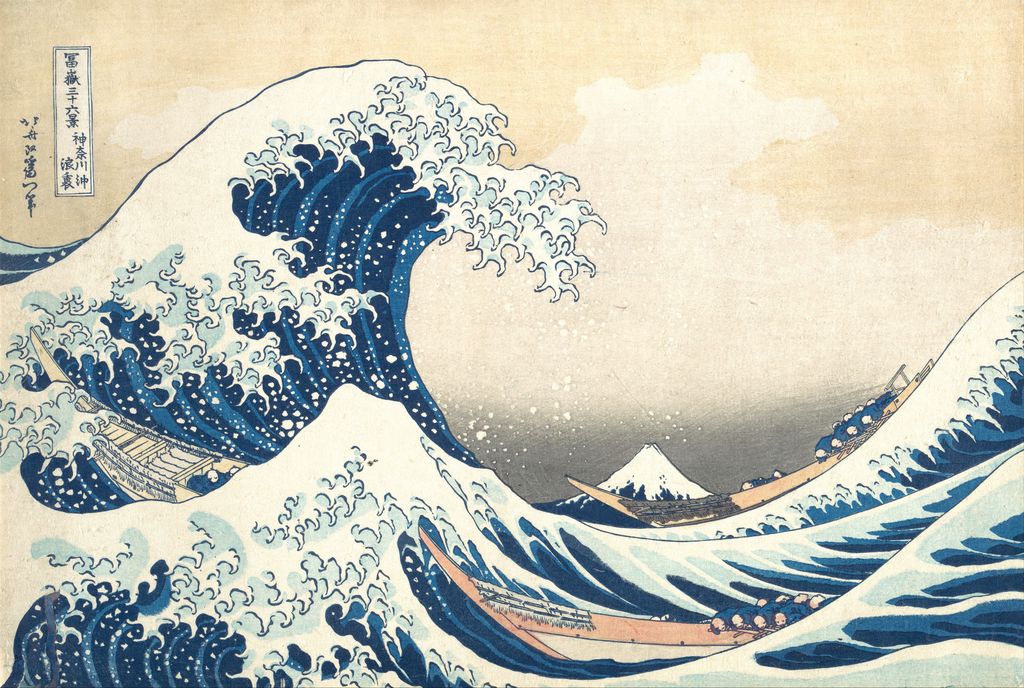
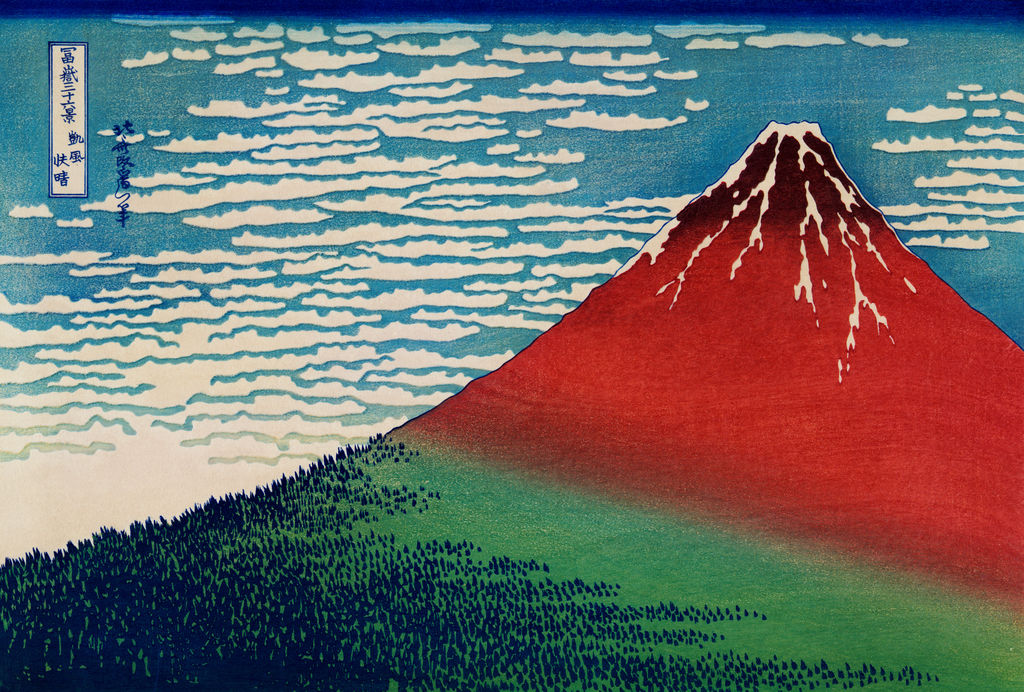
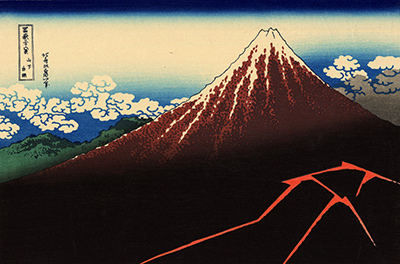
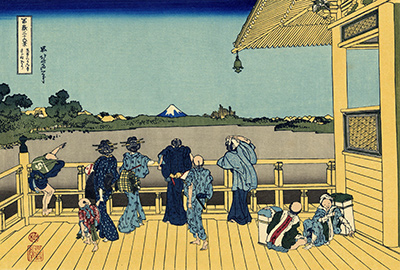
Thirty-six Views of Mount Fuji began as a series of individual colour woodblock prints and grew to forty-six designs. Compare the tiny mountain beneath the crest in The Great Wave with the enormous profile in Red Fuji. In the one, the artist gives the boats and wave most of the available space. In the other, weather and the colour of the mountain can hold a whole sheet.
One Hundred Views of Mount Fuji is a separate project published in three illustrated volumes. Here the reader can turn from one opening to the next and see forms recur in different roles. The Sumida Hokusai Museum’s exhibition on both Fuji projects mounted pages to let visitors compare the book's compositions directly with the prints.
A Tour of Waterfalls in Various Provinces
Read the full A Tour of Waterfalls in Various Provinces guide.
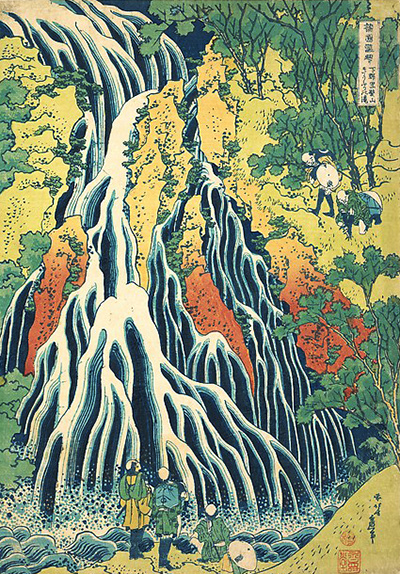
The vertical waterfall prints use the whole length of a sheet to describe how water falls, spreads or breaks against rocks. At Kirifuri Waterfall, the white streams fan out in branching lines. The scale of the visitors below makes the form legible as a height people can approach. In Yoshino Waterfalls, the title invokes the story of the warrior Yoshitsune washing his horse. Look for the people and horse near the water, then follow the repeated streams. The movement of the water gives the figures their setting. [1]
One Hundred Ghost Stories
Read the full One Hundred Ghost Stories guide.
The title Hyaku monogatari evokes a gathering in which people tell supernatural tales after dark. The Library of Congress album preserves five designs. In The Ghost of Oiwa, a face appears in a lantern. In The Laughing Demon, the tightly framed figure and the object it holds leave a viewer very little distance from the scene. Both prints make something disturbing recognisable within a small, everyday shape or gesture.
Oceans of Wisdom
Read the full Oceans of Wisdom guide.
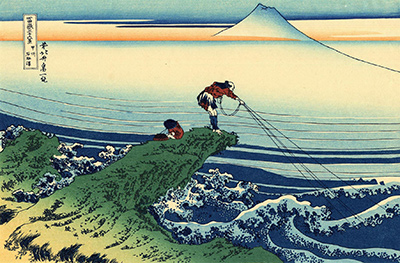
Suntory Museum of Art records ten known prints under Chie no umi, also translated as One Thousand Pictures of the Sea. They explore work on rivers and coasts as well as the changing form of the water. Compare the boats beneath the headland in Choshi in Shimosa with the use of artificial light in Fishing by Torchlight. [2]
Remarkable Views of Bridges in Various Provinces
Read the full Remarkable Views of Bridges in Various Provinces guide.
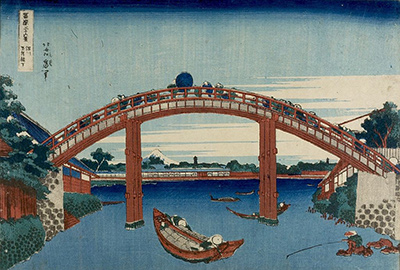
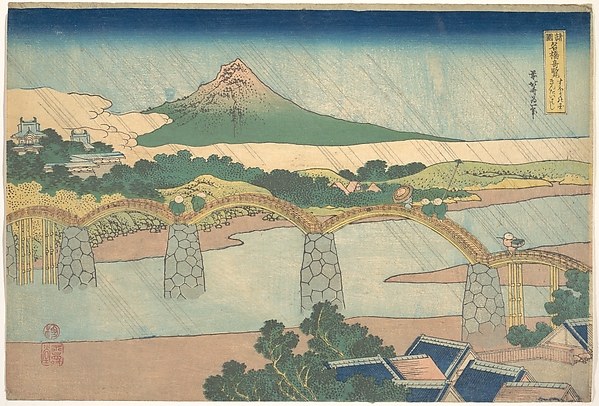
This series puts the design and use of a crossing at the centre of the view. In Ancient View of Yatsuhashi in Mikawa Province, the bridge's angular route carries people across the marsh and gives the eye a line to follow through the picture. The Met discusses its relationship to an older literary image of Yatsuhashi. Hokusai also included bridges in his Fuji series, so check the series title when looking up an individual design. [3] [4]
One Hundred Poems Explained by the Nurse
Read the full One Hundred Poems Explained by the Nurse guide.
Hokusai began this unfinished series with poems from the classical anthology One Hundred Poems by One Hundred Poets. The images can shift attention from an ancient poem's speaker to the lives of people in Hokusai's own era. In the print for Minamoto no Muneyuki, for instance, hunters gather by a fire in the snow. The Met contrasts the activity around the fire with the poem's remote, lonely winter mountain. [5]
Hokusai Manga, shunga and brush paintings
Hokusai Manga brings together sketches of bodies, animals, landscapes and other subjects across a long sequence of printed volumes. The Shunga guide explores an artistic genre and the books Hokusai made within it. For pictures painted by hand, including the festival float panels made for Obuse, see Hokusai Paintings. The Ukiyo-e Woodblock Prints guide explains how drawn designs became printed objects.
Series and books at a glance
| Project | Format or scope |
|---|---|
| Thirty-six Views of Mount Fuji | Colour prints issued as separate sheets |
| One Hundred Views of Mount Fuji | Three illustrated volumes |
| Hokusai Manga | Sketchbooks published across fifteen volumes |
| Shunga | Erotic book illustration and prints |
| A Tour of Waterfalls in Various Provinces | Eight waterfall designs |
| One Hundred Ghost Stories | Five surviving ghost prints |
| Oceans of Wisdom | Ten known fishing prints |
| Remarkable Views of Bridges in Various Provinces | Eleven bridge designs |
| One Hundred Poems Explained by the Nurse | Twenty-seven published colour designs |
Discussion
Look again at the images and ideas explored in Hokusai Series & Books. These editorial prompts invite your observations.
Reader Insights
What changes when a design is seen on a book opening rather than on a separate sheet?
Which recurring subject connects two series that otherwise seem very different?
Join the Conversation
Share a detail, comparison or question about Hokusai Series & Books below.
References
- The Metropolitan Museum of Art, Met collection record for the Yoshino print. View source.
- Suntory Museum of Art, Suntory Museum of Art series notes and checklist. View source.
- The Metropolitan Museum of Art, Ancient View of Yatsuhashi, Met collection record. View source.
- The Metropolitan Museum of Art, Met catalogue. View source.
- The Metropolitan Museum of Art, Met collection record. View source.