


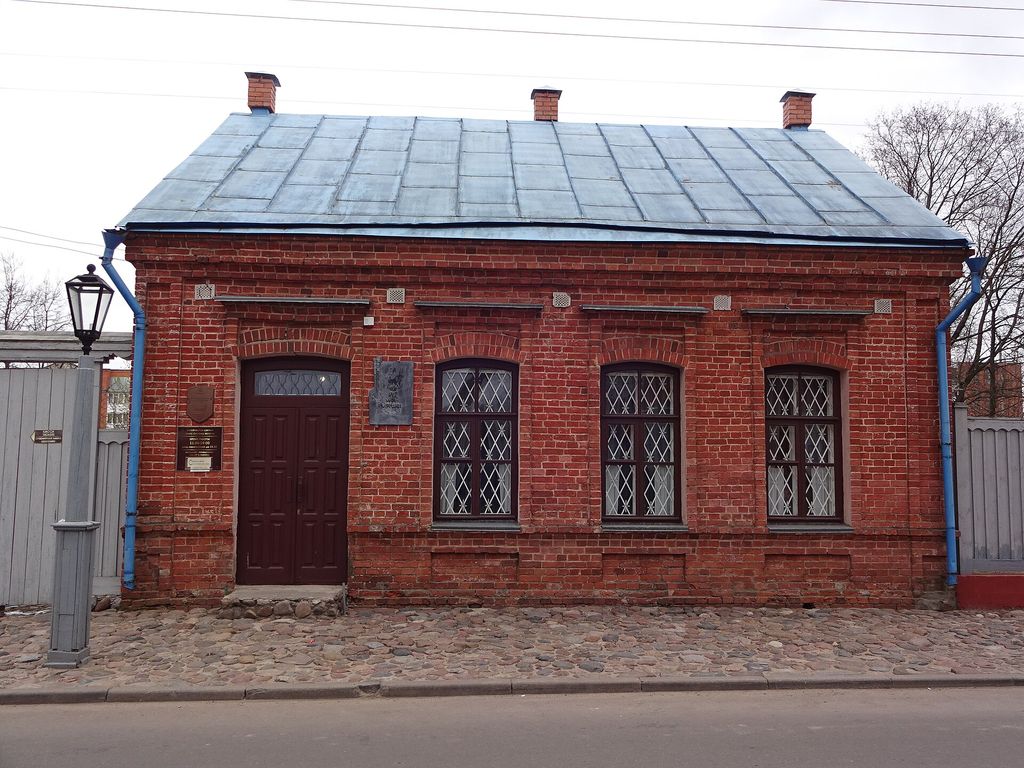
 by Tom Gurney
Tom Gurney BSc (Hons) is an art history expert with over 20 years experience
Page Created on September 22, 2026 / Page Updated on September 22, 2026
Email: tomgurney1@gmail.com / Phone: +44 7429 011000
Introduction
Marc Chagall’s life crossed borders whose legal and political meanings changed repeatedly. Born a Jewish subject of the Russian Empire in territory now belonging to Belarus, he became active in revolutionary Russia, built an international career in France, escaped Nazi persecution to the United States and returned as a French citizen to make art for buildings across Europe, Israel and America. Vitebsk, Paris, New York and the Mediterranean all mattered, but no single city or national label contains the career.
Biography is especially treacherous for an artist who converted memory into pictorial form. Chagall’s My Life, Bella Chagall’s memoirs, later interviews and family archives are indispensable but shaped by literary purpose and retrospect. Dates, birthplaces and names vary across documents.
The strongest account keeps those variants visible and distinguishes archival fact from the artist’s later mythology.
At a Glance
- ArtistMarc Chagall
- SubjectMarc Chagall Biography
- Artistic contexttwentieth-century modern art
Contents
- Names, birthplace, family and education, 1887–1906
- Saint Petersburg: art under residence restrictions, 1907–10
- Bella Rosenfeld: education, writing and partnership
- First Paris: Vinaver, La Ruche and a new name, 1911–14
- Marriage, revolution and the Vitebsk school, 1914–20
- Moscow: Jewish theatre, Malakhovka and departure
- Berlin, My Life and graphic reinvention, 1922–23
- Paris, Vollard and refugee status, 1923–30
- Palestine, Poland and citizenship, 1931–37
- Persecution, denaturalisation and rescue, 1937–41
- New York exile, Yiddish networks and Bella’s death, 1941–44
- Virginia, Ida and post-war recovery, 1945–51
- Return to France, Vava and the Mediterranean, 1948–52
- Sacred art, southern studios and public commissions, 1950–73
- The Biblical Message and a national museum, 1955–73
- Return to the Soviet Union and political public life
- Death, burial and the archive
- Nationality and a life without one centre
Names, birthplace, family and education, 1887–1906
The official artist archive gives Chagall’s birth as 7 July 1887 in Vitebsk and his original name as Moyshe Segal. Other records use Moishe or Movsha Shagal, Moïse Chagaloff and Russian patronymic forms. YIVO notes that in Paris Moyshe became Marc and Shagal was rendered Chagall; the name change was gradual rather than one documented act.[1][2]
Day-level dating requires the same caution as naming. A Julian-calendar birth date of 24 June circulates beside Gregorian dates of 6 and 7 July; current artist and national-museum chronologies use 7 July. The difference should be attributed rather than “corrected” invisibly.
The 1915 marriage is likewise printed as 15 or 25 July in different chronologies. A biography can preserve the official archive's preferred dates while warning that calendar conversion and retrospective registration have produced variants.[1]
Some biographers and records locate the birth at Liozno, east of Vitebsk, or Peskovatik near the city. Chagall’s parents came from Liozno and he spent summers with extended family there. Official current catalogues prefer Vitebsk, the city of registration, childhood and self-identification.
A responsible biography states the disagreement rather than treating a modern border or one transliteration as timeless fact.
Language shaped the life. Yiddish belonged to home and modern Jewish culture; Hebrew entered through prayer and Biblical study; Russian through school, administration and literature; French became the main language of career and citizenship; German mattered in Berlin; English remained uncomfortable during American exile. Chagall’s letters move among these languages, and titles often changed with publication and exhibition.
“Russian”, “Belarusian”, “Russian Jewish” and “French” can each be historically correct, but only when attached to a specific period and claim.
Chagall was the first of nine children—seven girls and two boys—born to Khatskel Segal and Feïga-Ita Tchernina. His father worked salting herring at the Jachnine warehouse on the Dvina; his mother ran a grocery on the ground floor of the family house in Pokrovskaia Street.[1] Their circumstances were modest, though later retellings sometimes intensified poverty to sharpen the contrast with fame.
He attended a heder, learning prayers and Biblical passages in Hebrew and receiving singing and violin instruction. At about thirteen he entered Vitebsk’s secular Russian school despite restrictions affecting Jewish pupils. The official archive records that he left in 1905 without a final diploma.[1]
Movement between religious and state education introduced different calendars, alphabets and authorities rather than a simple passage from tradition to modernity.
In 1906 he studied with Iouri or Yehuda Pen, the academic Jewish painter who operated Vitebsk’s principal private art school. Pen provided disciplined observation and a precedent for representing Jewish sitters and local labour. At his mother’s urging, Chagall also apprenticed in photographic-negative retouching under Abel Miestchaninov.[1]
This early contact with mediated images belongs beside the better-known story of a provincial youth discovering paint.
Saint Petersburg: art under residence restrictions, 1907–10
Chagall left for Saint Petersburg with Viktor Mekler in the winter of 1906–07. Jewish residence in the imperial capital required permission, and he arrived without secure status or money. He drew shop signs and relied on patrons.
Baron David Ginzburg introduced him to Jewish intellectuals; lawyer Grigorii Goldberg employed him as a servant partly to regularise residence; Maxim Vinaver, a Duma deputy, became a decisive supporter.[1]
After rejection by the Baron Stieglitz school, he entered the drawing school of the Imperial Society for the Encouragement of the Arts under Nicholas Roerich. Surviving records note a six-rouble scholarship from April 1907 and fifteen roubles between September 1907 and September 1908.[1] Such sums and permissions make clear that training depended on law and patronage as well as talent.
He later attended Elizaveta Zvantseva’s school and studied with Léon Bakst. Bakst’s theatre, illustration and association with Mir iskusstva widened Chagall’s sense of an artist’s possible work. Exhibitions brought French modern painting into view.
Roerich and Ginzburg also supplied letters that helped postpone military service.
Bella Rosenfeld: education, writing and partnership
Chagall met Bella Rosenfeld in Vitebsk in 1909. She was the youngest child of a prosperous Jewish jeweller’s family, educated in Moscow and trained in acting. Their relationship continued through his first Paris years by letters and visits.
Describing Bella only as muse or model diminishes an intellectual partner who wrote, translated, acted and later shaped the record of Vitebsk.
Her Yiddish memoir Burning Lights reconstructs the Jewish festival year and family life before revolution. The Jewish Museum describes Bella as a gifted author and actress and notes that the book was conceived in France in the 1930s; its title refers to festive candles.[3] After her death, Marc and Ida translated and prepared it with thirty-six Chagall drawings.
The memoir is a literary witness, not an objective caption book for his paintings.
Bella’s family resources and social network also mattered. Her brother Jacob found Chagall clerical work during the First World War. She read French literature to him and participated in the practical life around commissions and exile.
The couple’s imagery of lovers should be understood alongside this labour, without reducing every bride to a portrait of Bella.
First Paris: Vinaver, La Ruche and a new name, 1911–14
Vinaver funded Chagall’s journey west. Older sources disagree over late 1910 or 1911; the official archive now places departure in early May 1911. He travelled through Berlin and settled at La Ruche by 1912 among an international group of artists.[1]
He met Robert and Sonia Delaunay, Fernand Léger, Chaïm Soutine, Jacques Lipchitz, Alexander Archipenko and poets Blaise Cendrars, Max Jacob, André Salmon and Guillaume Apollinaire. These networks gave access to exhibitions, criticism, studios and patrons. Fauvist colour, Cubist construction and simultaneous contrast entered the work selectively; he did not join a manifesto-bound group.
Apollinaire connected him with Herwarth Walden, whose Galerie Der Sturm mounted the first large solo exhibition in Berlin in June–July 1914: forty paintings and 160 works on paper.[1] Chagall travelled to Vitebsk intending a short visit after the opening. War closed the route back, separated him from works and proceeds in Germany and changed a visit into eight Russian years.
Marriage, revolution and the Vitebsk school, 1914–20
Marc and Bella married in Vitebsk on 25 July 1915 according to the official archive; some secondary sources give 15 July because of calendar conversion.[1] They moved to Petrograd, the wartime name of Saint Petersburg, where Chagall worked for Jacob Rosenfeld’s Military-Industrial Committee rather than serving at the front. Their daughter Ida was born in May 1916.
Domestic paintings such as The Birthday, Bella with White Collar, The Lovers and The Promenade emerged beside newspaper sellers, soldiers and Vitebsk streets. Marriage was not an escape from history but one experience within mobilisation, shortages and legal change. Bella and Ida became recurring presences, while the family also connected Chagall to literary circles including Boris Pasternak, Alexander Blok, Sergei Yesenin and Vladimir Mayakovsky.[1]
Exhibition and collecting records show that the Russian years were professionally active rather than an enforced pause between Paris periods. Twenty-five Vitebsk works appeared in Moscow in 1915, and collectors Ivan Morozov and Jacob Kagan-Chabchaï bought examples. At Nadezhda Dobychina's Petrograd gallery Chagall exhibited repeatedly; in November 1916 he showed forty-five works with the Jack of Diamonds group.
These events connected an intensely local subject repertoire to Russian metropolitan collecting before revolution altered the institutional field.[1]
In 1917 he also joined the Union of Youth and served as artist and juror in the second exhibition of the Jewish Society for the Encouragement of the Arts. This double participation matters. Chagall did not have to choose between a general avant-garde and a modern Jewish cultural sphere; he worked in both, and his later administration in Vitebsk grew from that overlapping position.[1]
The February Revolution removed many disabilities imposed on Jews. The October Revolution offered cultural positions but also new institutions and conflicts. Chagall initially understood revolutionary change as compatible with public art and expanded education.
In August 1918 Chagall became commissar for the arts in the Vitebsk region. He organised vast street decorations for the first anniversary of the October Revolution and founded the People’s Art School. At its official opening in January 1919, 120 students from different social backgrounds were enrolled.[1]
He recruited artists with divergent approaches, including Iouri Pen, Mstislav Dobuzhinsky, Vera Ermolaeva, El Lissitzky and Kazimir Malevich. A state exhibition in Vitebsk presented 241 works by forty-one artists, including Kandinsky, Rodchenko, Exter and leading avant-garde figures.[1] Chagall’s programme was pluralist and figurative; Malevich’s Suprematism offered a systematic non-objective language and soon drew students into UNOVIS.
Administrative pressures, scarce resources and competing ideas of revolutionary art weakened Chagall’s position. His departure should not be reduced to personal jealousy or local incomprehension. It involved governance, pedagogy and incompatible models of collective culture.
He resigned and left Vitebsk in 1920.
Recent reconstruction makes the school's social ambition more precise. It was free, accepted students without age restrictions and enrolled many Jewish youths from working families. Lissitzky managed printing, graphic and architectural teaching; Malevich's arrival in November 1919 accelerated the formation of UNOVIS.
Students and teachers designed public banners, posters, ration cards, trams, façades and platforms. Chagall's pluralism extended to a museum collection and a December 1919 exhibition that set figurative and abstract modernisms beside one another. The first and only graduating class completed its studies in May 1922, after his departure.[15]
Moscow: Jewish theatre, Malakhovka and departure
In Moscow, Chagall designed murals, sets and costumes for the State Yiddish Chamber Theatre. The surrounding panels on theatre, music, dance and literature placed modernised Jewish figures within a performance space. The commission anticipated later architectural environments while remaining tied to Yiddish cultural institutions after revolution.
The theatre belonged to a wider, short-lived flourishing rather than an isolated commission. GOSET performed in Yiddish, while Habima worked in Hebrew; both joined experimental acting to modern stage and costume design. Chagall's 1920 panels shaped gesture as well as décor, according to later theatre research: the extreme stylisation of actors echoed the painted bodies around them.
Stalinist repression later closed GOSET after the state murder of Solomon Mikhoels, and a 1953 fire nearly destroyed its archival remains. The survival and later exhibition of the murals are therefore part of the biography of Soviet Jewish culture as well as Chagall's personal career.[16]
He also taught at Malakhovka, a colony for Jewish children orphaned by war and pogrom. Material conditions were severe. Chagall sought permission to leave, while Soviet cultural power consolidated and opportunities narrowed.
In 1922 Marc, Bella and Ida travelled legally through Kaunas to Berlin. The departure became permanent, although he could not know that at the border. Calling it simple emigration misses the mixture of authorisation, cultural disappointment and economic need.
Berlin, My Life and graphic reinvention, 1922–23
Berlin returned Chagall to the site of his 1914 triumph but not to intact property. Inflation had destroyed much of the monetary value owed from the exhibition, and works had dispersed. At the same time, German collectors and museums had embraced him: the Jewish Museum Frankfurt records more than two hundred works in German ownership before 1933.[4]
Paul Cassirer planned a German edition of My Life. Chagall learned etching with Hermann Struck and worked in Joseph Budko’s print shop, producing twenty autobiographical drypoints eventually issued without the text. Printmaking became a second major career rather than a temporary means of reproducing paintings.
The memoir and the prints require separate histories. MoMA records that Chagall reached Berlin with an autobiographical manuscript on which he had worked since 1911. Cassirer hoped to publish it in German with new prints, but the unusual prose proved difficult to translate.
What appeared in 1923 was therefore a portfolio without the memoir: twenty etchings, fifteen also worked in drypoint, in an edition of 110, probably printed by Pan-Presse.[21]
The portfolio title Mein Leben does not turn every sheet into one composition called My Life. Its images include Chagall, Bella, Ida, his parents, their home, a Talmud teacher and remembered episodes in Vitebsk. MoMA catalogues the title page separately and records hand additions made in 1946, evidence that even one portfolio object could acquire a later material state.[22]
Textual publication followed another route. A Yiddish version, Eygens, appeared in the New York literary monthly Di Tsukunft from March to July 1925.[23] The official Chagall chronology records the French Ma Vie in 1931, translated from the Russian manuscript by Bella and published by Stock.[1]
The familiar French book and the earlier Yiddish serial should not be cited as if they were one stable text in different alphabets.
The 2017 French edition Mon univers returned to the 1925 Yiddish version. Its publishers and translators explain that this text differs materially from Ma Vie, retaining more references to Jewish life, religious practice, the shtetl and sexual awakening.[24][25] Bella's French version is longer in other respects and belongs to a later stage of rewriting.
Translation here is part of authorship and reception, not a transparent conduit.
The versions also complicate the word “autobiography”. The Canadian Jewish Studies publication of Eygens places the serial within Yiddish literary history and modern scholarship, while Benjamin Harshav's documentary biography compares early life-writing with letters and contemporary records.[23][26] These sources show Chagall shaping a voice for different publics as well as recording events.
That literary agency makes My Life indispensable but insufficient as factual proof. It preserves sensory detail, family portraits, humour and the artist's account of becoming a painter, yet its chronology, dialogue and dramatic episodes are retrospective constructions. A birth date, institutional dispute or provenance claim should be checked against civil, archival and museum records rather than settled by the memoir alone.
The legacy page confused a title-page image, the print portfolio and the published memoir, then diverted into unrelated MoMA visitor information. The useful correction is not simply a longer plot summary. It is an account of how manuscript, Yiddish serial, French translation, Berlin etchings and later states produce several related works under the name My Life.
YIVO notes that the Paris return fixed the public forms Bella, Marc and Chagall from Berta, Moyshe and Shagal.[2] The change belongs to migration, publishing and the French art world; it should not be narrated as rejection of Jewish identity.
Paris, Vollard and refugee status, 1923–30
The family arrived in Paris in September 1923. Ambroise Vollard commissioned enormous etched cycles for Gogol’s Dead Souls, La Fontaine’s Fables and eventually the Bible. Publishers and dealers were structural to the career: Vollard provided texts and plates; Bernheim-Jeune represented Chagall; later Tériade rescued the unfinished books; Aimé Maeght and Pierre Matisse organised French and American markets.
Chagall travelled through France, making landscapes and gouaches. The Fables commission exposed the politics of belonging: critics objected, often antisemitically, to a recently arrived Russian Jewish artist illustrating a French classic. The project nevertheless introduced him deeply to French literature and landscape.
OFPRA describes Chagall as a Russian refugee in France from 1933 to 1937, but his insecurity began earlier.[5] Fame did not automatically confer citizenship. Residence papers, statelessness after the Soviet period, travel permissions and dealer networks shaped what commissions and journeys were possible.
Palestine, Poland and citizenship, 1931–37
In 1931 Chagall travelled with his family to Palestine after an invitation connected to Tel Aviv and a proposed Jewish museum. Jerusalem, Safed and other sites informed the Bible gouaches and etchings. Travel in this period also included the Netherlands, Spain, Italy and, in 1935, Poland, where visible antisemitism intensified his alarm.[1]
In 1931 Chagall travelled with his family to Palestine after an invitation connected to Tel Aviv and a proposed Jewish museum. Jerusalem, Safed and other sites informed the Bible gouaches and etchings. The same period included a visit to Vilna at YIVO's invitation.
Tel Aviv's museum project and YIVO's documentation of eastern European Jewish life represented different institutional futures, one attached to cultural building in Palestine and the other to scholarship in the diaspora. Travel also included the Netherlands, Spain, Italy and, in 1935, Poland, where visible antisemitism intensified his alarm.[1][20]
His application for French citizenship was initially rejected, apparently twice. Jean Paulhan and other friends supported a successful naturalisation in 1937.[6] Citizenship was therefore an achieved legal protection following years of residence, not the inevitable reward of artistic success.
The same decade dismantled Chagall’s German institutional presence. Nazi museums removed his work; three pictures were classified in the “degenerate art” campaign, while other works were confiscated, displayed and sold.[1] The more than two hundred works previously in German ownership show the magnitude of the reversal.[4]
Persecution, denaturalisation and rescue, 1937–41
From 1937, Chagall’s crucifixions, burning villages and refugees responded to European persecution. He moved works from Paris to Saint-Dyé-sur-Loire with Ida’s help, then after the German invasion took refuge in Gordes. His initial reluctance to leave France reflected attachment, age, disbelief and the common difficulty of recognising escalating danger.
Naturalisation did not protect him under Vichy. The regime reviewed grants made since 1927 and on 5 May 1943 stripped Chagall of French nationality while he was already in American exile.[1] OFPRA records its restoration after the war.[5]
The sequence—rejection, naturalisation, denaturalisation and restoration—makes nationality an active historical force in the biography.
Chagall was also briefly arrested during a police raid at the Hôtel Moderne in Marseille in 1941. Intervention by Varian Fry and US consul Hiram “Harry” Bingham helped secure his release.[1] This was the point at which temporary caution became a decision to flee.
The rescue involved overlapping institutional and personal work. The Emergency Rescue Committee sent Varian Fry to Marseille; Marga and Alfred Barr at MoMA assisted threatened artists and patrons; Bingham helped with visas. MoMA’s archival account lists the documents required for entry: State Department visa, financial affidavit, moral sponsorship, biographical proof and at least $400 for passage.[7]
A surviving letter of December 1940–January 1941 records Fry telling Chagall that Alfred Barr awaited him in the United States for a retrospective and offering help with visas; a MoMA telegram asked him to bring his paintings.[8] The invitation created an official purpose for travel while the rescue network managed bureaucracy outside and sometimes against restrictive policy.
Marc and Bella travelled through Spain and Portugal and arrived in New York on 21 June 1941. Six hundred kilograms of crated works remained blocked in Madrid for five weeks. Ida intervened and had them loaded onto her own ship.[1]
She was therefore not a passive daughter accompanying famous parents: she helped preserve the material corpus on which post-war retrospectives depended.
The rescue should not be turned into a reassuring story of celebrity saved. Fry’s network assisted many, but most European Jews had no museum invitation, funds or transatlantic route. Chagall’s survival depended on privilege, friendship, institutional mobilisation and chance within a much larger catastrophe.
New York exile, Yiddish networks and Bella’s death, 1941–44
Pierre Matisse became Chagall’s American dealer on arrival and continued representing him for decades. Chagall joined artists and writers in exile but never became comfortable in English. Russian and Yiddish networks, Jewish organisations and news from the Soviet Union connected him to a Europe undergoing mass murder.
Solomon Mikhoels and poet Itzik Fefer visited during their 1943 Jewish Anti-Fascist Committee mission. Chagall saw them frequently; an archive telegram documents continuing contact.[9] Their later persecution and murder under Stalin complicate any easy distinction between safe Soviet homeland and Western exile.
The Aleko ballet took Chagall to Mexico in 1942, where he could work directly on scenery and costumes outside American union restrictions. Mexican colour and workshop conditions altered designs begun in New York. Exile thus generated new collaboration while war paintings filled remembered villages with refugees, fire and crucifixion.
Bella died on 2 September 1944, thirty-six hours after hospitalisation with a viral infection. Wartime medical priorities limited access to emergency treatment. Chagall wrote that everything went dark and stopped painting for about nine months.[1]
In 1945 he and Ida began translating and illustrating Bella’s Yiddish Burning Lights. Ida’s role joined linguistic, editorial and familial labour. A second volume, First Encounter, further established Bella as the author of her own remembered Vitebsk rather than only the woman seen in Chagall’s paintings.
Mourning changed the reception of his bride imagery, but later works should not be read as transparent records of one loss. Chagall’s iconography combined Bella, scripture, current relationships and long-established pictorial forms.
Virginia, Ida and post-war recovery, 1945–51
Ida introduced Virginia Haggard McNeil, a French-speaking English woman, to help Chagall after Bella’s death. Virginia became his partner; their son David was born on 22 June 1946. They lived at High Falls in New York and later at Orgeval and Vence.[1]
Virginia participated in studio and domestic work. A 1951 letter to Ida records Chagall’s painting and the wedding dinner service he was designing; Virginia drew the intended vessel shapes so Suzanne Ramié’s workshop could fabricate them.[10] This archival detail replaces the vague category “companion” with documented mediation between artist, family and ceramics workshop.
The relationship lasted about seven years and ended in 1951. Virginia’s presence intersects with renewed painting, the first colour lithographs for Arabian Nights, post-war travel and the return to France. David later became a songwriter and author.
Biography should name him without forcing private family relations into every work of the period.
Ida repeatedly acted as organiser, translator, courier and guardian of the oeuvre. She rescued the crated works in 1941, prepared Bella’s writing, organised the 1946 MoMA retrospective and a Paris exhibition, and continued to document and manage her father’s work. The present archive bears both Marc and Ida’s names for good reason.
The official archive contains correspondence from 1910 to 1985, administrative records, photographs and documentary resources. A recent inventory identifies more than 55,000 documents and collaborations with publishers, poets, architects, politicians and makers.[11] This body of evidence allows older anecdotes to be tested against dated letters and contracts.
Ida’s labour also shaped what survived and how it was catalogued. That influence requires acknowledgement without assuming family archives are neutral. Access, selection, inherited titles and retrospective organisation remain part of the source history.
Return to France, Vava and the Mediterranean, 1948–52
Chagall returned permanently to France in 1948, first living at Orgeval and then buying Les Collines at Vence in 1950. Aimé Maeght became his French dealer; Tériade acquired the Vollard plates and brought Dead Souls, Fables and the Bible to publication.[6] Publishers and dealers connected studio production to exhibitions, books and international commissions.
At Vallauris, Chagall worked at the Madoura pottery with Georges and Suzanne Ramié. Clay, firing, glaze and three-dimensional form required collaboration and altered his images. He began carving stone with Lanfranco Lisarelli and explored mosaic and glass.
The late-career expansion was not a ceremonial diversification by an established painter but sustained technical learning.
Virginia and David initially shared this southern life. After their departure, Ida introduced Valentina Brodsky. Chagall married her in 1952.
Vava was Russian-born and Jewish, with commercial and social experience in Paris and London. She became Chagall’s wife, household manager and a powerful organiser of access during the period of great public commissions. Sources and biographers assess that power differently; she should be neither erased as administration nor reduced to a controlling stereotype.
Their travels in Greece in 1952 and 1954, encouraged by Tériade, informed Daphnis and Chloe. Vava appears in portraits and participated in the networks around exhibitions, patrons and the Nice museum. The marriage supplied stability during decades when Chagall’s work moved through many specialist workshops.
Family roles overlapped but differed: Bella was writer, translator and wartime partner; Ida preserved works and organised archives; Virginia mediated domestic and workshop projects; Vava managed a late international career. “Muse” is inadequate for all four.
Sacred art, southern studios and public commissions, 1950–73
The Dominican priest Marie-Alain Couturier encouraged modern artists to work in Catholic buildings. Chagall contributed ceramic, relief and his first windows to Notre-Dame-de-Toute-Grâce at Plateau d’Assy. At Metz he began the long collaboration with Charles Marq and Brigitte Simon of the Reims workshop.
Christian patronage did not dissolve Chagall’s Jewish identity. Hebrew scripture, tribal blessings, Torah imagery and the Jewish figure of Jesus entered churches and cathedrals through particular negotiations. The Hadassah synagogue windows in Jerusalem, unveiled in 1962, formed a Jewish liturgical cycle; Reims, Zurich, Tudeley and Mainz required different Christian programmes.
The variety cautions against a late-life conversion narrative. Chagall’s interest lay in Biblical narrative, suffering, colour and dialogue across traditions, while each commissioning institution retained its own theology and politics.
“South of France” compresses two different working environments. Chagall lived at Vence from roughly 1949 to 1966, first at Les Collines, while developing ceramics, sculpture, lithography, glass, mosaic and tapestry through nearby workshops. In 1966 he and Vava moved to La Colline at Saint-Paul-de-Vence, which remained his final studio and home.
A 2025 joint project by the national Chagall museum and the Musée de Vence has renewed attention to the earlier period as a phase of technical experiment rather than a vague Mediterranean retirement.[17]
Light and vegetation mattered, but location alone does not explain the change. Madoura supplied kilns, clay bodies and the knowledge of Georges and Suzanne Ramié; Lanfranco Lisarelli assisted with stone; printers and glassmakers connected the studio to Paris and Reims. The freer surfaces of the period resulted from contact among place, mature pictorial habits and new materials.
The distinction between Vence and Saint-Paul also clarifies dates in late biographies: a commission could be conceived at one address, fabricated elsewhere and installed years later in another country.[17]
The 1960s transformed Chagall from internationally successful easel painter into a visible maker of civic interiors. The Hadassah windows, UN Peace Window, Paris Opéra ceiling, Metropolitan Opera murals, Knesset tapestries and mosaics, and Zurich glass placed his work inside worship, diplomacy, performance and government.
André Malraux’s commission for the Opéra ceiling in 1963–64 provoked arguments over heritage, nationality and modernism. The Russian-born Jewish immigrant naturalised only in 1937 now occupied one of France’s most symbolically charged buildings. Workshop assistants and a removable support made the intervention technically possible.
The official catalogue raisonné reconstructs these works through correspondence, photographs and administrative documents, naming the glassmakers, mosaicists, weavers and fabricators whose work older biographies often subsumed under Chagall alone.[12]
The 2025 mosaic catalogue shows what this reconstruction changes. It identifies twenty-eight works from 1955 to 1986 across France, Israel, Italy, Switzerland and the United States and draws on the Marc and Ida Chagall Archive, other archive holdings and restoration evidence. The terminal date extends beyond Chagall's death because design, fabrication and completion need not coincide.
A biographical year therefore cannot automatically serve as an object's production date.[19]
The Biblical Message and a national museum, 1955–73
Chagall began large Biblical paintings in relation to a proposed chapel at Vence. Over roughly a decade they developed into twelve Genesis and Exodus scenes and five Song of Songs paintings. Marc and Vava donated the cycle to the French state in 1966.[13]
The donation led to a purpose-built museum at Nice designed by André Hermant and opened in 1973. Chagall helped shape galleries, garden, auditorium and library, and added stained glass, mosaic and tapestry. It was the first French national museum dedicated to a living artist.[13]
The museum represents both personal recognition and state cultural policy. A Jewish artist’s Biblical cycle, initially linked to Christian architecture, became a national collection in a building designed partly around music and meditation. Its history cannot be reduced to a neutral container for masterpieces.
Return to the Soviet Union and political public life
In 1973 Chagall visited Moscow for the first time since 1922 at the invitation of the Soviet culture minister. He signed surviving Jewish Theatre panels and met sisters Lisa and Mariaska. The trip was a managed cultural event as well as a family return; Vitebsk itself was not restored to him as an uncomplicated home.[1]
The Four Seasons mosaic was dedicated in Chicago in 1974. Reims glass followed that year; Mainz windows began in 1978 and continued until his death. The Mainz commission, initiated by Pastor Klaus Mayer, acquired post-war significance because a Jewish artist persecuted by Germany made Biblical glass for a rebuilt German Catholic church.
Chagall continued painting, drawing, engraving and reviewing workshop projects into his nineties. Official catalogues record more than seventy stained-glass windows, 350 ceramics, ninety-seven sculptures and twenty-eight mosaics, with other categories still being researched.[12] These numbers refute the idea that the late career consisted only of honorary repetition.
A chronological life can still understate Chagall's political agency if it records only the events that happened to him. Recent research for Chagall. A Cry for Freedom examined letters, public statements, speeches and official papers in French, English, Russian and Yiddish, many previously unpublished.
It treats human rights, equality, migration, antisemitism, war and peace as sustained concerns rather than background to an art of private fantasy.[18]
That evidence does not turn Chagall into a party intellectual. His early revolutionary service, refusal of a single school doctrine, wartime Jewish appeals and post-war peace language emerged in different institutions and sometimes in deliberately broad terms. Political meaning must remain attached to occasion: a Vitebsk banner, a wartime crucifixion, a Soviet anti-fascist visit and a United Nations memorial do different work.
The biography gains accuracy by recording those acts without pretending they form one unchanging programme.[18]
Death, burial and the archive
Chagall died at his home in Saint-Paul-de-Vence on 28 March 1985 after working in the studio that day. He was buried in the local cemetery. Vava died in 1993 and Ida in 1994.
The archive remained an active construction after death. It now combines correspondence, administrative papers, photographs of works and records assembled by Marc, Ida, heirs and later researchers.[11] The online catalogue raisonné began in 2019 and explicitly permits updates to provenance, exhibition and bibliography as evidence emerges.[12]
Posthumous biography must therefore resist false closure. Restitution research continues: in 2022 France returned Chagall’s The Father to the heirs of David Cender after establishing its wartime spoliation, even though Chagall had unknowingly repurchased his own painting after the war.[14] An object can carry a history the artist himself did not know.
Nationality and a life without one centre
Chagall was born an imperial Russian subject in present-day Belarus, within the Pale of Settlement. He became a Soviet citizen after revolution, left legally and lived as a Russian refugee, gained French nationality in 1937, was denaturalised by Vichy in 1943 and restored after liberation.[5][6]
Calling him simply Russian erases Belarusian geography, Jewish legal status and French citizenship. Calling him simply Belarusian applies a present state to an imperial birth. Calling him simply French conceals formative Russian and Jewish worlds.
Museum labels need brevity, but a biography can retain the sequence.
His own identifications were also contextual. He addressed Jewish audiences, defended French culture, wrote about Russia and Vitebsk, and worked for Israeli institutions without becoming an Israeli artist. Multiple belonging was not a fashionable abstraction but the lived result of empire, revolution, citizenship law, persecution and migration.
Vitebsk was childhood, revolutionary workplace and a city reconstructed after permanent departure. Paris was experiment, publishing, citizenship, danger and later official recognition. New York was rescue, exile and bereavement.
The Mediterranean was home and a base for works installed elsewhere.
Biography clarifies those pressures but should not decode every image. Chagall transformed family, language, scripture, patronage and catastrophe through pictorial decisions. Keeping that distinction allows Bella to remain a writer, Ida an organiser, Virginia a collaborator, Vava a manager, Vitebsk a real multilingual city and the floating figures constructed works rather than transparent diary entries.
Discussion
Which piece of evidence most changes the way you read Marc Chagall Biography?
Reader Insights
Which visible detail most changes your reading of Marc Chagall Biography?
How do medium, setting and documented history shape the encounter?
What remains uncertain when documented fact is separated from interpretation?
Join the Conversation
Share your reading of Marc Chagall Biography below.
References
- Marc Chagall official website, “Biography”, View Source
- YIVO Encyclopedia of Jews in Eastern Europe, “Chagall, Marc”, View Source
- Jewish Museum, Bella Chagall, Burning Lights, View Source
- Jüdisches Museum Frankfurt, “Verehrt und verfemt”, View Source
- Office français de protection des réfugiés et apatrides, “Marc Chagall, artiste peintre”, View Source
- Musée national Marc Chagall, “Marc Chagall’s chronology”, View Source
- Museum of Modern Art, “In Search of MoMA’s ‘Lost’ History: Uncovering Efforts to Rescue Artists and Their Patrons”, View Source
- Archives Marc et Ida Chagall, “Letter from Varian Fry”, View Source
- Archives Marc et Ida Chagall, “Telegram from Solomon Mikhoels and Itzik Fefer”, View Source
- Archives Marc et Ida Chagall, “Letter from Virginia McNeil to Ida Chagall”, View Source
- Marc Chagall official website, “Archives Marc and Ida Chagall”, View Source
- Marc Chagall official website, “Catalogue raisonné”, View Source
- Musée national Marc Chagall, “Historique”, View Source
- Ministère de la Culture, “Restitution du tableau de Marc Chagall, Le Père”, View Source
- The Jewish Museum, “Chagall, Lissitzky, Malevich: The Russian Avant-Garde in Vitebsk, 1918–1922”, View Source
- The Jewish Museum, “Chagall and the Artists of the Russian Jewish Theater, 1919–1949”, View Source
- Musée national Marc Chagall and Musée de Vence, “Chagall, les années vençoises. Une renaissance méditerranéenne”, View Source
- Musée national Marc Chagall, “Chagall. A Cry of Freedom”, View Source
- Marc Chagall official catalogue raisonné, “Mosaics”, View Source
- Schirn Kunsthalle Frankfurt, Chagall: World in Turmoil, exhibition wall texts, View Source
- Museum of Modern Art, “Marc Chagall: My Life (Mein Leben)”, View Source
- Museum of Modern Art, “Untitled from My Life”, title page with 1946 hand additions, View Source
- Canadian Jewish Studies / Études juives canadiennes, “Introduction and excerpt from Eygens by Marc Chagall”, View Source
- Éditions Fides, “Mon univers”, View Source
- Chantal Ringuet, “When Translation Becomes Homage”, Words Without Borders, View Source
- Benjamin Harshav, Marc Chagall and His Times: A Documentary Narrative, Stanford University Press, 2004, View Source