


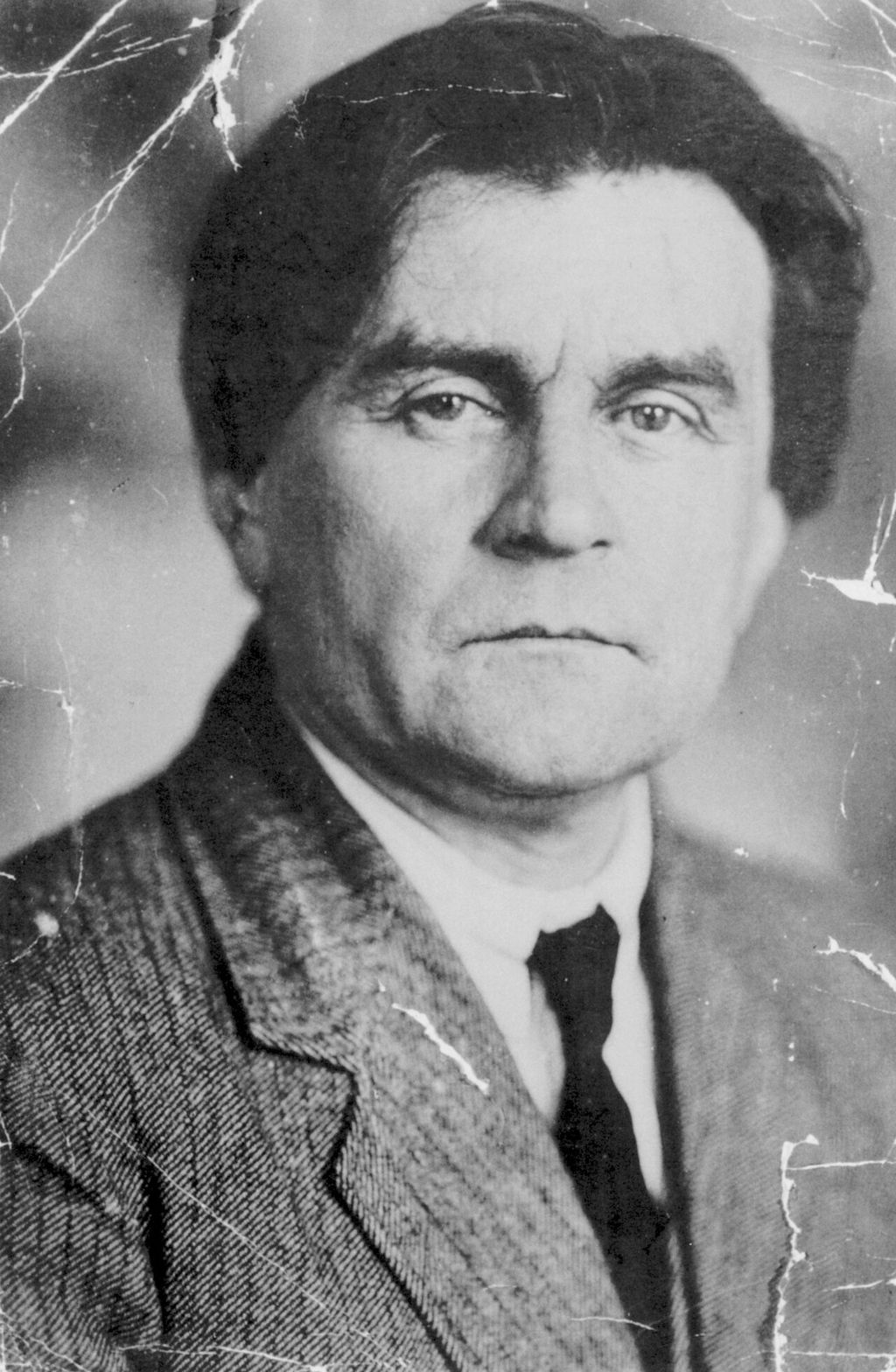
 by Tom Gurney
Tom Gurney BSc (Hons) is an art history expert with over 20 years experience
Page Created on September 22, 2026 / Page Updated on September 22, 2026
Email: tomgurney1@gmail.com / Phone: +44 7429 011000
Introduction
Marc Chagall's career does not fit a list of single-year masterpieces. Paintings were revised across decades; print projects survived the death of a publisher and a world war; stained glass moved from model to workshop to architectural inauguration; titles and dates changed among languages and catalogues.
This timeline therefore separates life events, work periods, publication and installation. A date range is retained when it describes continued labour rather than uncertainty. The official catalogue raisonné is still expanding, so individual object records may be revised as new archival and technical evidence appears.[12]
Calendar systems create two apparent conflicts. Chagall's birth appears as 24 June 1887 in the Julian calendar then used in the Russian Empire, which converts arithmetically to 6 July in the nineteenth-century Gregorian calendar; the official archive and many modern authorities nevertheless give 7 July. His marriage to Bella Rosenfeld likewise appears under variant July dates in published chronologies. The differences require source attribution rather than silent harmonisation.[1][3]
At a Glance
- ArtistMarc Chagall
- SubjectMarc Chagall Timeline
- Artistic contexttwentieth-century modern art
Contents
- 1887–1909: Vitebsk and artistic formation
- 1910–14: first Paris period
- 1914–22: war, marriage and revolution
- 1923–31: Paris, Vollard and the Bible commission
- 1932–40: persecution and threatened France
- 1941–48: rescue, America and return
- 1949–60: southern France and new materials
- 1961–73: monumental commissions and the Nice museum
- 1974–85: late glass, public recognition and final work
- 1985–2026: collections, museums and the evolving corpus
- How to use the chronology
1887–1909: Vitebsk and artistic formation
1887 — Birth. Moyshe Segal, later Marc Chagall, is born in Vitebsk in the Russian Empire, now Belarus, into a Jewish family. His mother Feiga-Ita runs a grocery business; his father Khatskel works in a herring warehouse near the Dvina. Chagall is the eldest of nine children.[1][3]
1890s — Heder, music and Liozno. He receives traditional elementary instruction in Hebrew prayers and Bible passages, learns singing and violin, and spends summers with maternal relatives at Liozno, about forty kilometres from Vitebsk.[1]
1900–05 — Russian secondary education. At about thirteen he enters the municipal Russian school, a difficult transition under restrictions on Jewish pupils. He leaves without a diploma in 1905.[1]
1898 and 1902 — Archival school records. An admissions list identifies “Moyshe Segal” as a Jewish townsman seeking entry to the Vitebsk municipal school. Two Russian-language examination papers survive from May 1902, including dictation and a short history of the war of 1812.[27] The records anchor a childhood otherwise known largely through retrospective autobiography.
1906 — Yehuda Pen. Chagall studies briefly at Yehuda or Yury Pen's Vitebsk art school and works retouching photographic negatives. Pen provides a professional model for painting local Jewish people and trades.[1]
1907 — Saint Petersburg. Chagall leaves with Viktor Mekler. Because Jews need special permission to reside in the imperial capital, his legal and financial position is precarious. At the Imperial Society for the Encouragement of the Arts he enters the class led by Nicholas Roerich and receives a small scholarship.[1]
1908–09 — Zvantseva school and Bakst. He studies with Léon Bakst and encounters Mstislav Dobuzhinsky's teaching, theatre design and modern Russian art. Early works include The Dead Man, Birth, The Holy Family and Vitebsk interiors and window views.[1]
1909 — Bella Rosenfeld. During a return to Vitebsk, he meets Bella through Théa Brachmann. Surviving correspondence, including a 1912 postcard from Bella in Moscow, documents the relationship during later separation.[2][9]
1910–14: first Paris period
1910–11 — Arrival in Paris. Sources alternate between 1910, when Chagall left Russia, and 1911, when his Paris period is firmly established. He studies museums and salons rather than enrolling in a long academic programme and adopts the French form Marc Chagall.[1][3]
1911 — La Ruche and the breakthrough paintings. Chagall moves to the artists' residence La Ruche. I and the Village, To Russia, Asses and Others and other large works combine Vitebsk memory, Yiddish verbal imagery, Fauvist colour and Cubist or Orphic construction.[4][6]
1912 — Salons and artistic networks. He exhibits at the Salon des Indépendants and Salon d'Automne, meets poets including Blaise Cendrars and Guillaume Apollinaire, and encounters Robert Delaunay, Léger, Modigliani and other artists of the Paris avant-garde.[1]
6 October 1912 — Bella's Moscow postcard. Bella writes that she is still awaiting answers to her letters. The archive object places correspondence, not only later painted recollection, inside the years of separation.[2]
1912–13 — Self-definition. Self-Portrait with Seven Fingers, Homage to Apollinaire and Paris Through the Window make divided geography and the modern artist explicit subjects. Paris and Vitebsk coexist rather than replace one another.[4]
1913 — Berlin exposure. Herwarth Walden includes Chagall in the first German Autumn Salon. Walden's Der Sturm network links the Paris work to German and wider European audiences.[1]
June 1914 — Der Sturm retrospective. Chagall's first solo exhibition in Berlin presents about forty paintings and 160 works on paper. He then travels to Vitebsk, intending a limited visit. The First World War blocks his return west.[1]
1914–22: war, marriage and revolution
1914–15 — Wartime Vitebsk. Chagall makes direct studies of streets, soldiers, displaced people, Jewish figures and family life alongside works remembered from Paris. The Praying Jew, The Green Jew and Over Vitebsk belong to this renewed local engagement.[1]
July 1915 — Marriage. Marc and Bella marry in Vitebsk. Birthday and the early lovers pictures turn domestic experience into distorted, airborne form. The 15/25 July variance follows Julian/Gregorian conversion.[1][9]
1915–16 — Petrograd and military service. Work arranged through Bella's brother helps Chagall avoid front-line duty. Marc and Bella live in Petrograd while he continues exhibiting and painting.[1]
18 May 1916 — Ida Chagall born. Family portraits and mother-and-child images join the lovers sequence. Ida later becomes a translator, organiser of retrospectives and custodian of the archive.[1][9]
1917 — Revolution and Vitebsk masterpieces. The February and October revolutions change political possibilities. The Promenade, The Blue House, Bella with White Collar, Double Portrait with a Glass of Wine and Over the Town are made or developed during 1917–18.[1][4]
August–November 1918 — Arts commissar and street decoration. Chagall becomes fine-arts commissar for Vitebsk province and organises public decoration for the first anniversary of the October Revolution. Artists and students cover civic space with banners, painted structures and large figures.[1][7]
January 1919 — People's Art School. The school officially opens with about 120 students from varied social backgrounds. Chagall recruits Pen, Dobuzhinsky, Vera Ermolaeva, El Lissitzky, Robert Falk and later Kazimir Malevich, among others.[1][7]
1919 — Exhibitions and museum project. Vitebsk hosts a student exhibition and a major state exhibition of 241 works by forty-one local and Moscow artists. Chagall also attempts to establish a modern-art museum outside the capitals.[1][7]
1919 — Contested Jewish-art curriculum. The Jewish Society for the Encouragement of the Arts offers Vitebsk two brief specialist courses: Ilya Ginzburg would address sculpture and visual creation among Jews, while Rachel Wischnitzer would examine ornament. Chagall leaves both the proposal and its reminder unanswered in the surviving archive.[28] The silence qualifies later descriptions of the school as either straightforwardly Jewish or wholly universal.
1919–20 — Malevich and UNOVIS. Malevich arrives in November 1919. Students form UNOVIS around Suprematism and collective practice. Aesthetic, institutional and administrative conflict leaves Chagall isolated.[7]
Mid-1920 — Departure for Moscow. Chagall leaves Vitebsk. At the Moscow State Yiddish Theatre, GOSET, he creates murals for An Evening with Sholem Aleichem. The designs shape scenery, costume, make-up and the actors' exaggerated bodily language.[8]
1921 — Malakhovka. He teaches art to children at a Jewish war-orphan colony near Moscow and produces drawings connected with Yiddish writers and post-revolutionary Jewish culture.[1][3]
1922 — Leaves Soviet Russia. The Chagalls travel through Lithuania to Berlin. Chagall works on etchings for his autobiography and confronts the loss or devaluation of works left with Walden before the war.[1][5]
1923–31: Paris, Vollard and the Bible commission
1923 — Return to France. The family settles in Paris. Publisher Paul Cassirer issues My Life in German; Bella translates and edits Chagall's Russian text into French. Ambroise Vollard commissions etchings for Gogol's Dead Souls.[1][9]
1923–27 — Early French printmaking. Chagall develops drypoint, etching and aquatint through autobiography plates, literary illustration and individual prints. Some impressions are extensively transformed by hand colouring.[5]
1924 — First French retrospective. Galerie Barbazanges-Hodebert presents a major Paris retrospective. Chagall revisits paintings left in Russia and begins consolidating a western market and critical history.[1]
1925–27 — Dead Souls and other books. He completes 107 plates for Gogol and works on illustrations for Marcel Arland and a multi-author volume on the seven deadly sins. The books are technically complete before Vollard publishes them.[1][5]
1926 — Bernheim-Jeune contract. Chagall gains more stable gallery representation. Travel across France produces landscapes that translate Russian snow and village memory into French geography.[1]
1926–31 — La Fontaine's Fables. Vollard commissions one hundred plates. Chagall makes preparatory gouaches, then develops painterly black-and-white etchings and aquatints. Publication is delayed until 1952.[1][5]
1927–28 — Vollard Circus. Visits to the Cirque d'Hiver generate gouaches and prints of acrobats, riders and performers. Circus becomes a lasting language of risk, inversion and artistic labour.[1]
1929 — Vitebsk collection reported missing. An inventory finds the contemporary-art collection created around Chagall's museum project absent; archive-led research identifies twenty-six missing paintings associated with Kandinsky, Ermolaeva, Chagall and Malevich.[29] Loss, reuse and institutional neglect begin well before the Second World War.
1930 — Bible commission. Vollard supports Chagall's plan for an illustrated Hebrew Bible/Old Testament. The artist begins preparatory work that will extend through publisher's delay, Vollard's death, exile and postwar completion.[1][11]
1931 — Mandate Palestine. Marc, Bella and Ida visit Tel Aviv, Safed and Jerusalem. The official archive gives February–April, whereas Schirn research gives 1 March–4 June and notes that first gouaches existed before departure.[1][30] Chagall returns to the Bible plates with observed light and topography, but the dating conflict prevents a false travel-day precision for individual studies.
1931 — French My Life. Stock publishes Bella's French translation of Chagall's autobiography.[1][9]
1932–40: persecution and threatened France
1932–33 — Bible plates and Nazi attack. Chagall continues the Bible. After Hitler's accession, Nazi cultural authorities use The Praying Jew in Mannheim as an early example of so-called Jewish “degenerate art”. An initial French citizenship application is rejected partly because of his revolutionary commissariat.[1][22]
Late 1933 — Basel retrospective. Kunsthalle Basel exhibits about 170 works, creating an important survey near the German frontier while Chagall's work is being removed from German museums.[1]
1934–36 — Travel and gathering danger. Marc and Bella visit Spain; Chagall later establishes a new Paris studio near the Trocadéro. Biblical and Vitebsk motifs darken as European antisemitism increases.[1][23]
13 June 1937 — French citizenship. A naturalisation decree is published with help from French supporters including Jean Paulhan. German museums remove Chagall's works; three appear in the “Degenerate Art” campaign.[1]
1937–52 — Revolution becomes a triptych. Chagall repeatedly reworks a large composition begun in 1937. By cutting and revising it, he creates Resistance, Resurrection and Liberation, whose dates extend to 1948 and 1952.[26]
1938 — White Crucifixion. Chagall uses the crucified Jewish Jesus, Torah scrolls, burning synagogue and refugees to answer pogrom and Nazi violence. The work later enters the Art Institute of Chicago.[22][23]
1939 — Vollard dies. The publisher's death leaves Dead Souls, Fables and the Bible unpublished or incomplete as book projects. Tériade later acquires and completes them.[1][11]
1939–40 — Internal flight. Chagall moves works from Paris to Saint-Dyé-sur-Loire, then retreats with the family to Gordes after the German invasion of France.[1][22]
July–October 1941 — Vitebsk ghetto and mass murder. German occupation forces confine remaining Jews in a ruined industrial area. A major killing action begins on 8 October; victim estimates across the ghetto period range from roughly 8,000 to 13,000.[31] Chagall learns of destruction at a distance, so wartime Vitebsk motifs remain responses to news and memory rather than eyewitness documents.
1941–48: rescue, America and return
Winter–June 1941 — Escape from France. Varian Fry and US consul Hiram “Harry” Bingham assist Chagall. After an arrest in Marseille and release, Marc and Bella travel through Spain and Portugal and arrive in New York on 21 June. Ida secures the delayed shipment of about 600 kilograms of works.[1][23]
1941 — Pierre Matisse representation. The New York dealer becomes Chagall's representative and continues exhibiting him. American exile is safe but linguistically and emotionally disorienting.[1]
September–October 1942 — Aleko. Chagall completes sets and costumes in Mexico under conditions that transform the colour of designs begun in New York. The ballet premieres in Mexico City on 8 September and then appears in New York.[1]
1943 — War news and denaturalisation. Solomon Mikhoels and Itzik Fefer visit New York. On 5 May, the Vichy regime strips Chagall of French nationality under its review of naturalisations.[1][22]
2 September 1944 — Bella dies. A sudden viral infection and high fever lead to hospitalisation and death within thirty-six hours. Chagall stops painting for about nine months.[1][9]
1945 — Books and The Firebird. Chagall and Ida prepare Bella's Yiddish memoirs for translation and illustration. He resumes work and designs sets and costumes for Stravinsky's ballet The Firebird.[1][9]
1946 — High Falls, David and MoMA. Chagall lives with Virginia Haggard McNeil; their son David is born on 22 June. He prepares colour-lithograph designs for Arabian Nights. James Johnson Sweeney organises MoMA's major retrospective.[1][5][6]
1947 — European retrospectives. Chagall attends the Paris Museum of Modern Art retrospective. Related surveys are held in Amsterdam, London, Zurich and Bern, re-establishing his work in postwar Europe.[1]
1945–47 — Bella's books. The Yiddish Brenendike likht appears in New York in 1945, followed by Norbert Guterman's English Burning Lights in 1946 and Yiddish Di ershte bagegenish in 1947; French publication follows through a separate translation route.[9][32] Marc's drawings and editorial work belong to the books' posthumous form, not to Bella's authorship of the manuscripts.
August–September 1948 — Return and Venice prize. Chagall, Virginia and the children return to France. Tériade acquires Vollard's print projects; Chagall receives the Venice Biennale prize for engraving.[1]
1949–60: southern France and new materials
1949–50 — Mediterranean move. Chagall works at Saint-Jean-Cap-Ferrat and buys Les Collines in Vence. Southern light and workshop culture encourage ceramics, sculpture and later architectural media.[1][21]
1949–72 — Ceramics. The official corpus currently records 350 ceramics. Chagall works especially at the Madoura workshop, using plates, vessels, reliefs, incised clay, engobes, oxides and glaze.[13]
1951 — Sculpture and Israel. Chagall's work in clay and found or carved forms expands into sculpture. He visits Israel again and begins sacred commissions that connect biblical imagery with architecture.[1][12]
12 July 1952 — Marriage to Vava. Chagall marries Valentina “Vava” Brodsky. His relationship with Virginia has ended; memory of Bella and present domestic life coexist in later imagery.[1][3]
1952 — Fables published. Tériade issues La Fontaine's Fables after the long Vollard delay. Different book and suite states preserve the history of plates made largely in the 1920s.[1][5]
1954–55 — Greece and Daphnis and Chloe. Travel with Vava informs preparatory work for the colour-lithograph cycle. Chagall also develops the Biblical Message paintings, initially linked to a chapel at Vence.[1]
1954–58 — Ravenna and first mosaics. A Ravenna visit and the mosaics at Sant'Apollinare in Classe deepen Chagall's interest in glass and stone. Through Lionello Venturi and Giuseppe Bovini he works with the Gruppo Mosaicisti on two versions of The Blue Rooster, translated from a gouache and completed in 1958.[36]
1956 — Bible publication. Tériade publishes two volumes containing 105 etchings and drypoints. Separate Verve colour lithographs and later hand-coloured impressions must not be conflated with the bound Bible.[11]
1956–66 — Biblical Message. Chagall develops twelve monumental Genesis and Exodus paintings and five Song of Songs canvases. The intended chapel programme becomes a state gift for an interreligious public museum.[1][10]
1957 — First stained glass. With Paul Bony, Chagall completes windows for Notre-Dame-de-Toute-Grâce at Plateau d'Assy. Long collaboration with Charles Marq and Brigitte Simon follows.[1]
1958 onwards — Mosaics. Chagall begins major stone-and-glass mosaics, principally with Heidi and Lino Melano. The official catalogue records twenty-eight mosaics made from 1955 to 1986, including a posthumously completed project.[14]
1958 — Complete hand-coloured Bible portfolio. The Metropolitan Museum's full set of 105 etchings, published by Tériade and hand-coloured by Chagall, is catalogued to 1958.[33] It is a later state of the 1956 Bible project rather than a third colour-lithograph suite.
1960 — Erasmus Prize. Chagall and Oskar Kokoschka receive the Erasmus Prize. Chagall's international recognition now spans painting, print and monumental art.[1]
1961–73: monumental commissions and the Nice museum
1961 — Daphnis and Chloe. Tériade publishes the forty-two colour lithographs. The Hadassah windows are exhibited in Paris and New York before permanent installation.[1]
6 February 1962 — Hadassah windows inaugurated. Twelve stained-glass windows representing the tribes of Israel are unveiled at the Hadassah-Hebrew University Medical Center in Jerusalem after design and fabrication with the Simon-Marq workshop.[1][15]
1963–64 — United Nations Peace Window. Chagall designs a memorial to Dag Hammarskjöld and fifteen others killed in the 1961 air crash. Executed with Charles Marq and Brigitte Simon, it is installed at UN headquarters in 1964.[16]
1963–64 — First architectural mosaic with Melano. Chagall and Lino Melano develop The Lovers for the Maeght Foundation through a painted model, colour samples and a trial mosaic. Heidi Melano, Luigi Guardigli and Leonard Leoni also participate in the marble, limestone and glass-paste wall.[36]
1963–64 — Palais Garnier ceiling. At André Malraux's invitation, Chagall designs a removable modern ceiling honouring composers and operas. Twenty-four painted canvas panels are mounted over Jules-Eugène Lenepveu's nineteenth-century ceiling and unveiled in September 1964.[17]
1963–66 — Knesset ensemble. Chagall prepares three tapestries, floor and wall mosaics for the Israeli parliament. The Gobelins Manufactory weaves the tapestries; the ensemble is inaugurated in 1969.[1]
1965–66 — Metropolitan Opera. Chagall designs the monumental murals The Sources of Music and The Triumph of Music for the new Lincoln Center building, working through large-scale translation and assistants.[18]
1966 — La Colline. Marc and Vava move from Vence to a purpose-built Saint-Paul-de-Vence house and studio equipped for painting, print, sculpture, glass and monumental work.[21]
1966 — State gift. Chagall gives the seventeen Biblical Message paintings to France. Further donations of preparatory works, prints, sculpture and ceramics follow as plans for a museum advance.[10]
February 1967 — The Magic Flute. The Metropolitan Opera premieres Mozart's opera with Chagall's sets and costumes. The production extends his stage language into a large modern opera house.[1][18]
23 June–6 November 1967 — Louvre presentation. The Biblical Message is shown at the Louvre together with the museum proposal. A broad June-to-October span appears in the archive biography, while the dedicated catalogue fixes the final day in November.[1][34] The display makes the conditional state gift of seventeen canvases and thirty-eight gouaches publicly visible before the Nice building exists.
1968–69 — Metz, Nice and Jerusalem. Chagall works on Metz Cathedral windows, the Message of Ulysses mosaic for the University of Nice, and the Knesset ensemble. These commissions depend on Marq, Simon, Melano, Gobelins and architectural teams.[1][14]
1969–70 — Grand Palais and Zurich. The Grand Palais opens Homage to Chagall, a retrospective of 414 works. Five windows are unveiled at Zurich's Fraumünster in September 1970.[1]
1971–72 — Nice and Chicago models. Chagall designs Elijah's Chariot for the Nice museum façade and models for The Four Seasons mosaic in Chicago. The 1972 gift expands the Nice collection.[1][10][20]
1973 — Moscow, but not Vitebsk. Chagall returns to Moscow for the first time since 1922, signs the preserved GOSET panels and meets two sisters. He does not return to Vitebsk.[1][8]
7 July 1973 — Museum opening. The National Museum of the Biblical Message Marc Chagall opens in Nice on the artist's birthday, with André Malraux present. It is the first French national monographic museum opened during its artist's lifetime.[10]
1973 — Biot studio fire and workshop transition. Fire destroys some Melano workshop models for the unfinished Four Seasons. Michel Tharin helps bring the Chicago mosaic to completion and becomes a collaborator on Chagall's remaining mosaics.[36] A finished monument can therefore postdate the loss of part of its design archive.
1974–85: late glass, public recognition and final work
1974 — Reims and Chicago. Three Chagall windows are unveiled in Reims Cathedral. The Four Seasons, executed with Lino Melano, is installed at First National Plaza in Chicago.[1][20]
1974–77 — Louvre and works on paper. Chagall continues painting, printmaking and monumental design. The Louvre presents recent works in 1977, an exceptional honour for a living artist.[1][4]
1975–77 — America Windows. Chagall develops six panels with Charles Marq for the Art Institute of Chicago. Completed in 1977, the 244 by 978 centimetre work commemorates American cultural and religious freedom and the Bicentennial era.[19]
1978 — Honours and new windows. Chagall receives the Grand Cross of the Légion d'honneur and honorary citizenship of Jerusalem. Projects include Sarrebourg, Chichester Cathedral and the first windows for Saint Stephen's Church, Mainz.[1]
1978–85 — Mainz. Nine windows are completed for Saint Stephen's, with the cycle extending through the last years of Chagall's life. Their postwar Jewish-Christian setting gives the commission a distinct reconciliation history.[1]
1977 — Chicago dedication and a chronology discrepancy. The Art Institute's object record dates America Windows to 1977 and connects the dedication to Mayor Richard J. Daley. The official artist chronology places an America-related entry in 1979. The object-owning institution's date governs the work record; the later date should be retained only as evidence that summary chronologies can disagree.[1][19]
1980–83 — Continuing glass and retrospectives. Chagall completes windows for Mainz and Le Saillant/Voutezac. Retrospectives appear at Moderna Museet, Stockholm, and Louisiana Museum, Humlebæk, in 1982.[1]
1984 — Major French exhibitions. Centre Pompidou surveys the works on paper; Fondation Maeght presents paintings; the Nice museum examines stained glass and sculpture.[1][4]
1985 — Final retrospective and death. The Royal Academy opens a large retrospective that later travels to Philadelphia. On 28 March, after working in his studio, Chagall dies at Saint-Paul-de-Vence aged ninety-seven. He is buried there on 1 April.[1][25]
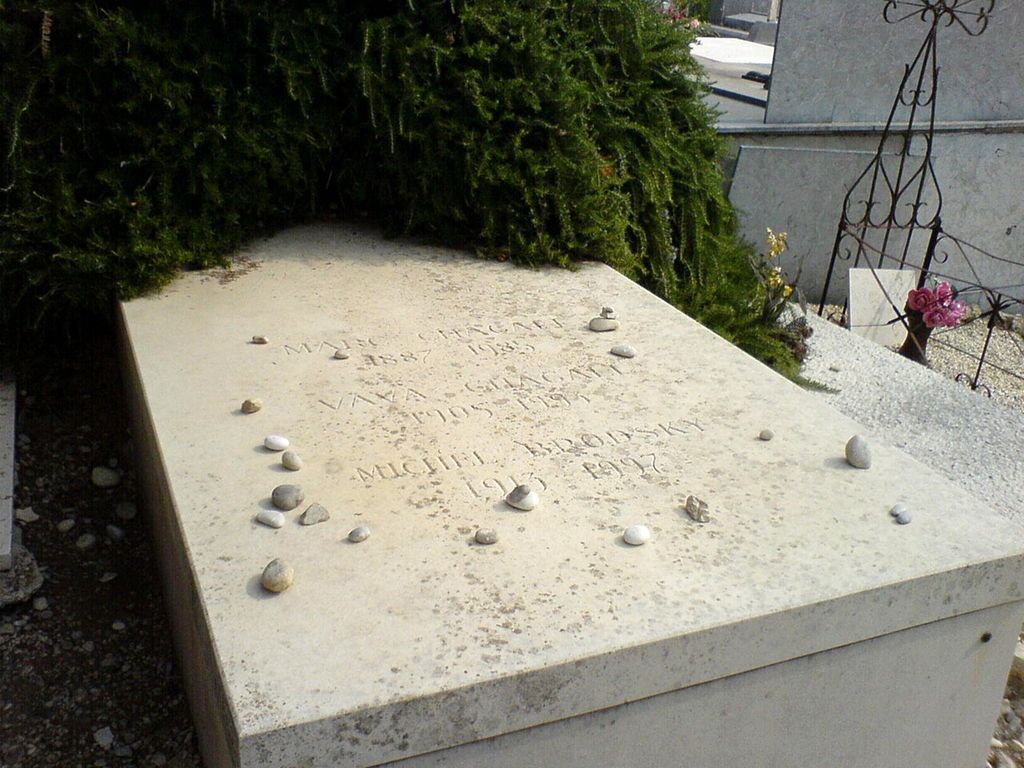
1985–2026: collections, museums and the evolving corpus
1988 — Dation and national collections. A major payment in lieu of inheritance tax brings important works into the French national collection, including paintings now at Centre Pompidou or deposited in Nice. Object histories should distinguish this route from Chagall's lifetime gifts.[4]
1987–2012 — Uneven Belarusian rehabilitation. Perestroika reopens public discussion of Chagall, but a 1988 Vitebsk exhibition of magazine photocopies is halted by local authorities. Archive-based research reports that no Chagall painting remained in Belarus between 1920 and acquisitions made in 2012.[29] Institutional recovery therefore proceeded through conflict, reproduction and later purchase rather than simple post-Soviet restoration.
1990s — Vitebsk commemoration. Post-Soviet institutions restore Chagall to the cultural history of his birthplace. The Marc Chagall Art Centre develops from 1992; the family house opens as a museum in 1997.[24]
2005–10 — America Windows conserved. Construction of the Art Institute's Modern Wing prompts the first deinstallation of all thirty-six glass sections. Analysis identifies glass colorants and stable fired grisaille; conservators address residue and condensation associated with the original installation before reinstallation in October 2010.[35] Conservation becomes a dated phase of the commission's history rather than an invisible return to an original state.
2008–18 — Theatre and Vitebsk reconstructed in exhibitions. The Jewish Museum presents the Russian Jewish theatre context in 2008–09 and the Chagall–Lissitzky–Malevich Vitebsk school in 2018–19, returning works to institutional networks often omitted from monographic accounts.[7][8]
2014–15 — Woven work reassessed. Exhibitions at Troyes and the Nice museum place twelve tapestries beside twelve painted, drawn or printed models. The research identifies twenty tapestries completed during Chagall's lifetime and distinguishes Gobelins execution from Yvette Cauquil-Prince's interpretive maître d'œuvre role.[37]
2018 — People's Art School museum. A museum opens in the restored Vitebsk building associated with the 1918–23 school, bringing Chagall, Malevich, Lissitzky, teachers and students into one local history.[24]
2019 — Archives and catalogue raisonné. The Association des Amis de Marc Chagall establishes the official Archives & Catalogue raisonné project with the Marc and Ida Chagall Archive and Comité Marc Chagall.[12]
2023 — Online catalogue begins. The official online critical catalogue launches with the sculpture corpus, recording ninety-seven sculptures and a methodology explicitly open to revision.[12]
2024 — Ceramics volume. The online catalogue publishes 350 ceramics dated 1949–72, substantially enlarging access to a practice long treated as secondary.[13]
2025–26 — Mosaics and continuing revision. The mosaic catalogue records twenty-eight works dated 1955–86 and integrates restoration evidence and workshop collaboration. Research, exhibitions and new documentation continue to change the corpus rather than closing it.[14]
How to use the chronology
A life date does not automatically date an artwork. A painting can begin before a move and be completed after it; a plate can be made under Vollard and published by Tériade; a window can have separate commission, design, exhibition, fabrication and inauguration years.
The timeline is therefore a map into object-level research. It identifies when evidence and historical pressure changed, but dimensions, support, state, provenance and interpretation still belong to each work's record.
Chagall's longest projects demonstrate the point. The Bible spans commission around 1930, 1931 Palestine studies, prewar and postwar plate work, 1956 publication and later colour suites. The Biblical Message moves from chapel idea to 1956–66 paintings, 1966 gift, 1967 Louvre display and 1973 museum. Revolution becomes three paintings across 1937–52.[10][11][26]
Chronology is most accurate when it preserves such overlap. Chagall was rarely doing only one thing: a year of painting could also contain publishing, travel, theatre, family loss, political danger and workshop collaboration.
Discussion
Which piece of evidence most changes the way you read Marc Chagall Timeline?
Reader Insights
Which visible detail most changes your reading of Marc Chagall Timeline?
How do medium, setting and documented history shape the encounter?
What remains uncertain when documented fact is separated from interpretation?
Join the Conversation
Share your reading of Marc Chagall Timeline below.
References
- Marc Chagall official archive, “Biography”
- Marc and Ida Chagall Archive, documents portal
- YIVO Encyclopedia, Benjamin Harshav, “Chagall, Marc”
- Centre Pompidou, Marc Chagall collection records
- Museum of Modern Art, James Johnson Sweeney, Marc Chagall (1946)
- Museum of Modern Art, Marc Chagall exhibition catalogue
- Jewish Museum, Chagall, Lissitzky, Malevich: The Russian Avant-Garde in Vitebsk, 1918–1922
- Jewish Museum, Chagall and the Artists of the Russian Jewish Theater, 1919–1949
- Yiddish Book Center, Burning Lights reading resources
- Musée national Marc Chagall, “The collection”
- Musée d'art et d'histoire du Judaïsme, Chagall et la Bible
- Marc Chagall official catalogue raisonné
- Marc Chagall official catalogue raisonné, ceramics
- Marc Chagall official catalogue raisonné, mosaics
- Hadassah, Chagall windows
- United Nations, Peace Window
- Palais Garnier, Marc Chagall ceiling
- Metropolitan Opera, Chagall and The Magic Flute
- Art Institute of Chicago, America Windows
- Chicago Public Art, The Four Seasons
- Marc Chagall official archive, La Colline studio, 1966–85
- Musée du Luxembourg, Chagall: Between War and Peace
- Schirn Kunsthalle, Chagall: World in Turmoil
- Marc Chagall Museum, Vitebsk
- Royal Academy, Marc Chagall exhibition archive
- Marc Chagall official archive, “The Story of Three Paintings”
- E. V. Karpova, “The Pride of Three States: Marc Chagall's Documentary Heritage in Russia, Belarus and France”
- Arkady Zeltser, “Jewish Artists of Vitebsk, 1917–1941: Between the National and the Universal”
- Victor Martinovich, “Marc Chagall: Vitebsk's Unwanted Son”, Institute for Human Sciences
- Schirn Kunsthalle Frankfurt, Chagall: World in Turmoil, English wall panels
- Foundation Memorial to the Murdered Jews of Europe, Vitebsk ghetto memorial record
- Congress for Jewish Culture, “Chagall, Bella”
- Metropolitan Museum of Art, Bible, hand-coloured portfolio, 1958
- Marc Chagall official archive, Le Message Biblique de Marc Chagall, 1967 Louvre exhibition catalogue record
- Art Institute of Chicago, conservation of America Windows
- Marc Chagall official archive, “Mosaic in Chagall's Monumental Work”
- Musée National Marc Chagall, “Marc Chagall: Woven Works”