 by Tom Gurney
Tom Gurney BSc (Hons) is an art history expert with over 20 years experience
Published on August 6, 2026 / Updated on October 2, 2026
Email: tomgurney1@gmail.com / Phone: +44 7429 011000
Pontormo's Supper at Emmaus: Introduction
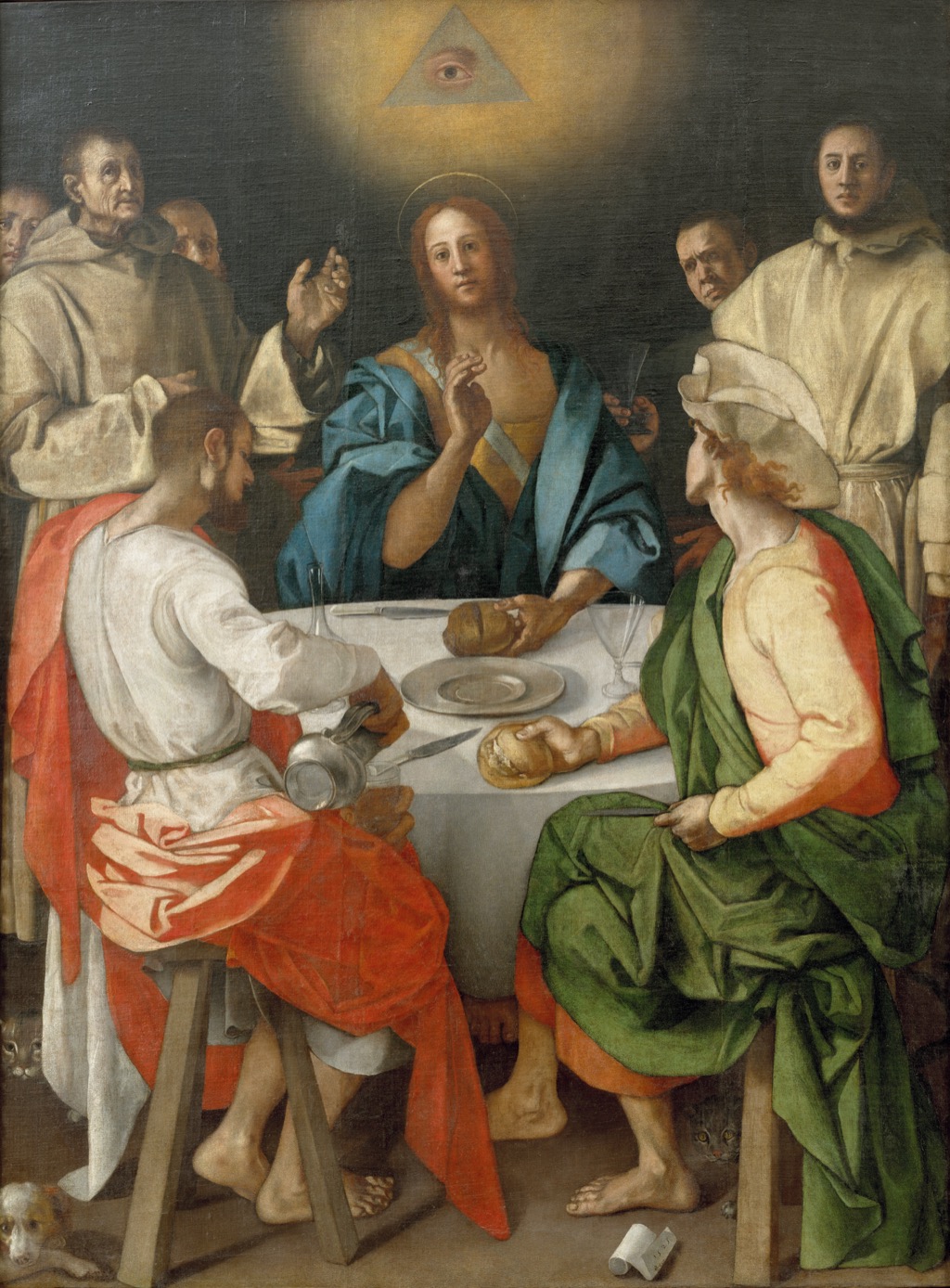
Pontormo's Supper at Emmaus, painted in 1525, places the risen Christ at the centre of a dark, crowded meal. Christ breaks the bread, and the disciples recognise him at the moment of blessing. Around them, Carthusian monks emerge from the background as witnesses, bringing the Gospel episode into the devotional world of the monastery for which the painting was made.[1]
The work belongs to the Uffizi Galleries, where it is catalogued as oil on canvas, 230 x 173 cm, inventory 1890 no. 8740. It was commissioned by the monks of the Galluzzo Charterhouse, or Certosa, after Pontormo had worked there on frescoes of the Passion. The painting therefore stands at the meeting point of biblical narrative, monastic life and Pontormo's response to Northern printmaking.[1]
At a Glance
- ArtistPontormo, also known as Jacopo Carucci
- Date1525
- Mediumoil on canvas
- Dimensions230 x 173 cm
- CollectionUffizi Galleries, Florence
- Inventory1890 no. 8740
- SubjectChrist recognised by two disciples at Emmaus
- Setting of commissionGalluzzo Charterhouse, near Florence
- Important caveatthe divine eye at the top is a posthumous repainting
Contents
- Introduction
- At a Glance
- The Emmaus story
- The Certosa and the plague years
- Durer, recognition and the table
- The monks in the background
- The divine eye and later alteration
- Why Supper at Emmaus matters
The Emmaus story
The subject comes from the Gospel of Luke. After the Resurrection, Christ appears as a traveller to two disciples on the road to Emmaus. They do not recognise him during the journey. Recognition comes later, at dinner, when he takes bread, blesses it, breaks it and shares it with them.[1]
Pontormo concentrates on that instant. Christ sits at the centre of the table, facing the viewer and holding the bread. His calm frontality contrasts with the reactions around him. The disciples turn inward, while the monks behind them look on from the shadows. The meal is simple, but the recognition is immense.
The Uffizi points to the naturalism of the table: the metal jug, clear glasses, dog and cats under the table waiting for leftovers. These details keep the sacred event close to ordinary experience. Pontormo does not remove the miracle from daily life. He sets it within a meal whose objects and animals feel observed, tangible and local.[1]
The Certosa and the plague years
Pontormo came to the Galluzzo Charterhouse in 1523 during a plague outbreak in Florence. There he painted Passion frescoes in the main cloister. When that work was complete, the monks commissioned the Supper at Emmaus for the monastery.[1]
The context matters because the painting is not simply a gallery image of Christ and two disciples. It was made for a Carthusian community whose members appear within the composition as witnesses. The sacred story is brought into the world of those who prayed, ate and lived under the discipline of the Charterhouse.
Pontormo's biography often notes his reputation for withdrawal, but the Certosa works should not be reduced to a psychological story. The monastery offered a specific commission, a devotional environment and access to living models. The result is a painting in which religious narrative and observed monastic presence are deliberately joined.
Durer, recognition and the table
The Uffizi states that the composition was inspired by Albrecht Durer's engraving of the same subject in the Small Passion series. Pontormo's use of the print should be treated as transformation, not copying. Durer supplied a Northern model for the Emmaus scene; Pontormo rebuilt it through Florentine colour, scale and psychological pressure.[1]
The table acts as the hinge of the painting. Its horizontal surface holds the bread, vessels and hands, but the eye is repeatedly drawn back to Christ's illuminated face. The beam of light described by the Uffizi clarifies the revelation without turning the image into a simple theatrical effect. Recognition happens through gesture, light and attention.
The animals beneath the table are more than charming details. They intensify the difference between ordinary hunger and spiritual revelation. While cats and dog wait for scraps, the disciples discover who sits before them. Pontormo keeps both kinds of appetite in view.
The monks in the background
The most distinctive witnesses are the Carthusian monks who stand in the darkness behind the table. Uffizi identifies the piercing portrait of Leonardo Buonafede, the old prior of the Charterhouse, as the monk standing on Christ's right-hand side.[1]
A related British Museum drawing, Study of a man standing in profile to right with two monks on the verso, helps explain this part of the painting. The Museum connects the verso study with the monks in the Supper at Emmaus and notes Vasari's claim that Pontormo portrayed Carthusians from life. The drawing does not prove every identity in the finished painting, but it supports the idea that Pontormo worked from close observation of monastic figures.[2]
This matters for the painting's emotional tone. The monks are not background decoration. They make the biblical event present to the community for which the work was made. Their faces and habits turn recognition at Emmaus into an image of monastic witness.
The divine eye and later alteration
The symbol at the top of the painting needs careful handling. The present divine eye, set within a triangular sign of God the Father, was not Pontormo's original solution according to the Uffizi. The Gallery attributes it to a posthumous repainting that concealed an earlier three-sided face representing the Trinity, a form later prohibited after the Counter-Reformation.[1]
That later intervention changes how modern viewers encounter the picture. It sits above Christ and strongly affects the vertical axis of the composition. But it should not be described as Pontormo's own painted invention unless the wording makes the later repainting clear. The safest account is that the painting now includes the divine eye, while the Uffizi records an earlier Trinitarian motif beneath its present form.
Why Supper at Emmaus matters
Supper at Emmaus shows Pontormo adapting his restless style to a monastic commission. Its naturalistic table, living portraits and dark background pull the miracle into a specific environment. At the same time, its light, colour and psychological compression connect it to the experiments that would define his mature paintings.
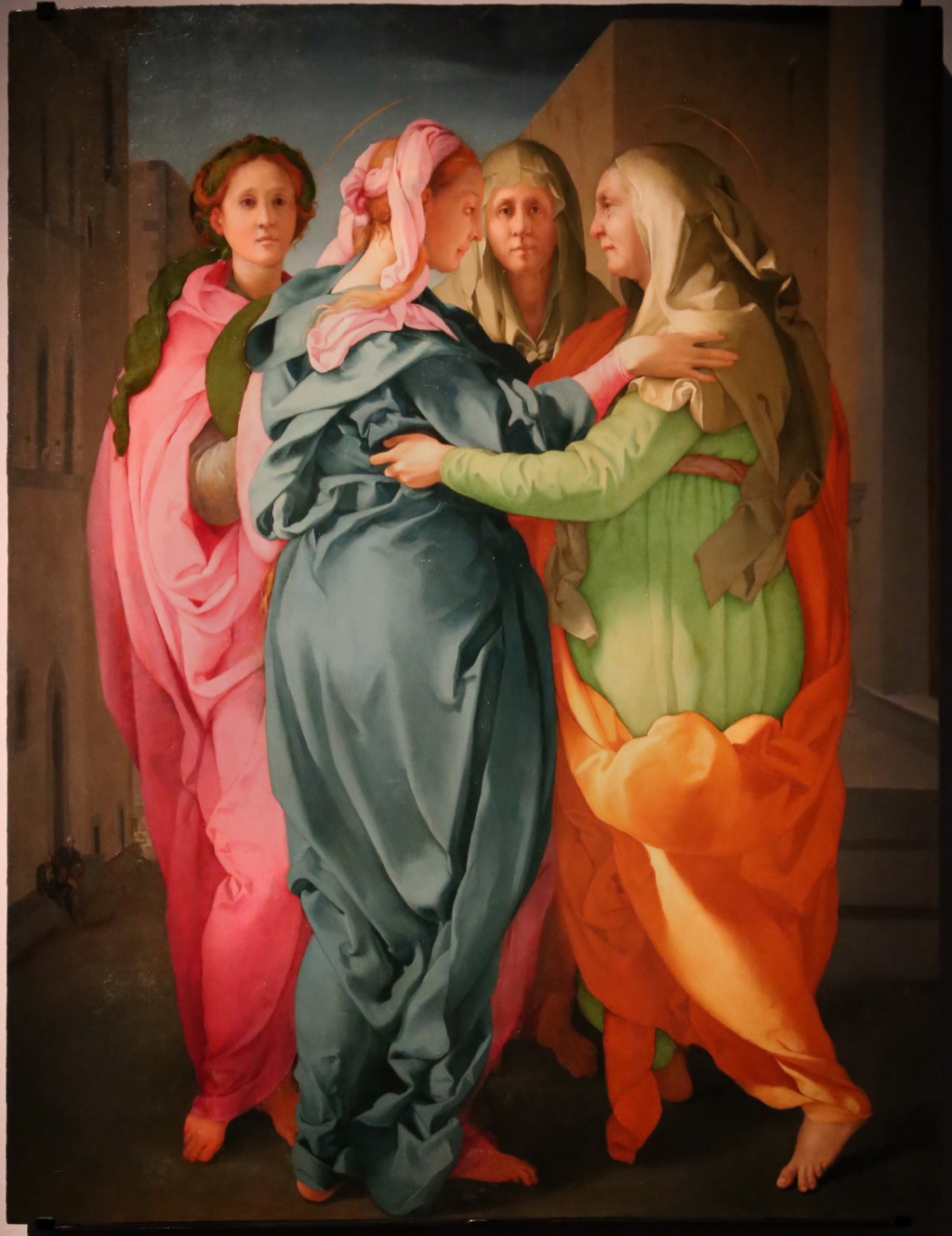
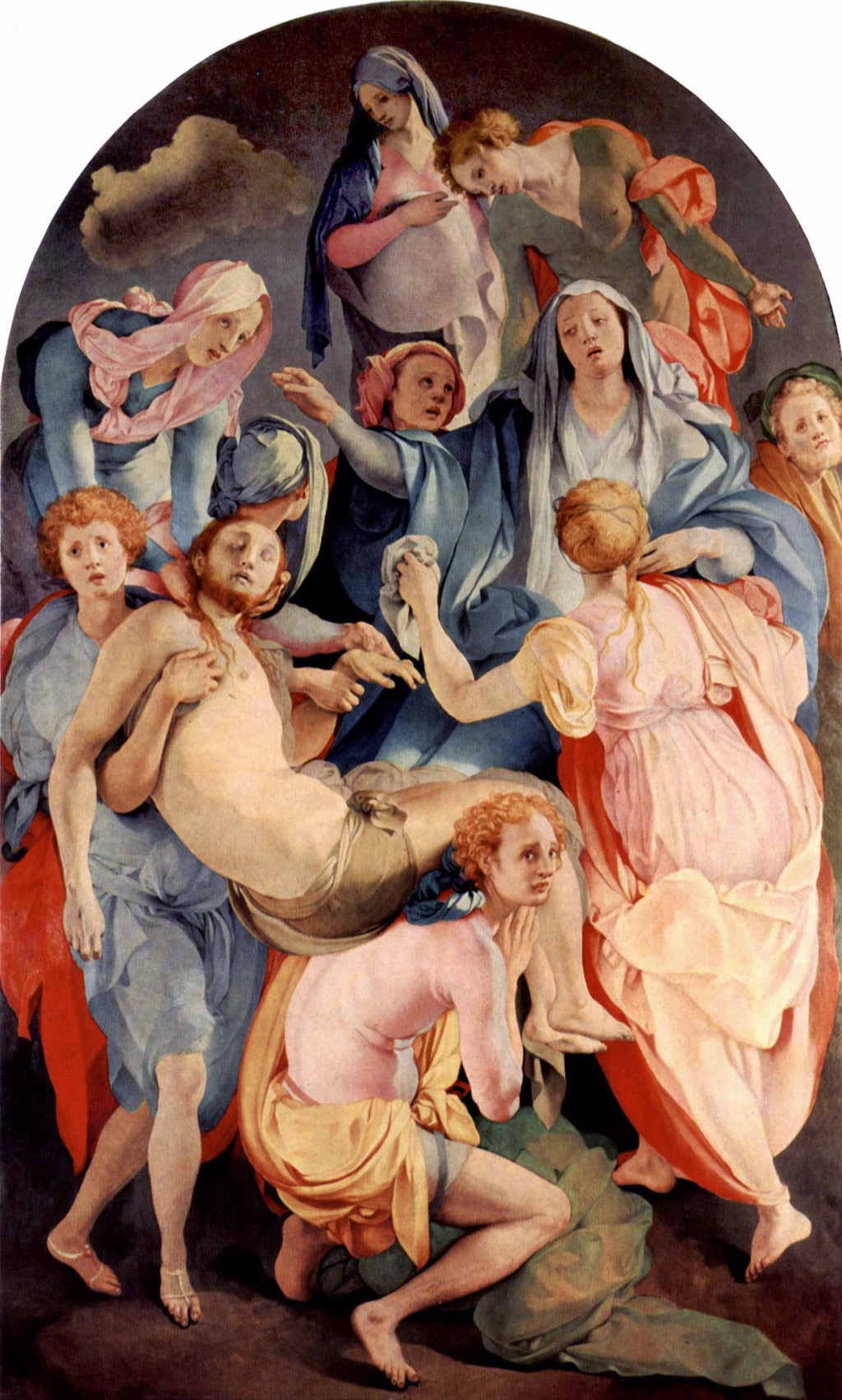
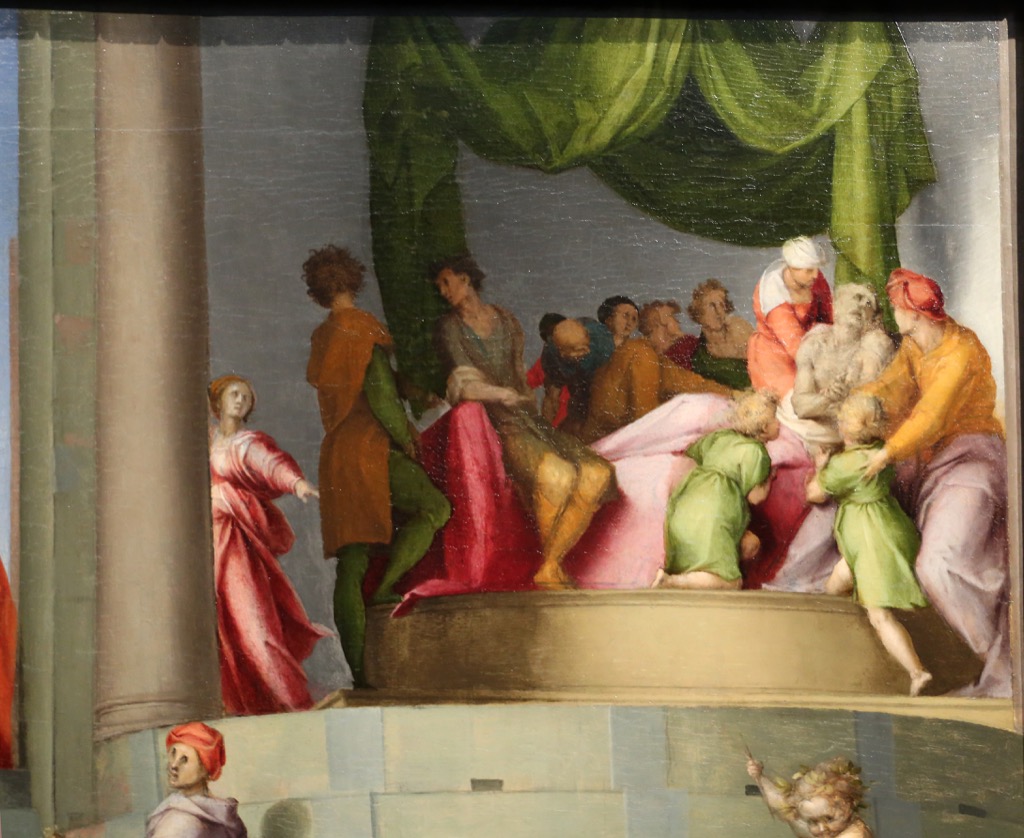
The work also links several parts of Pontormo's career. It follows the early narrative density of Joseph with Jacob in Egypt and precedes the suspended intensity of the Deposition from the Cross and Visitation. For the wider chronology, see the Pontormo overview and Pontormo biography.
Frequently Asked Questions
Discussion
Does the painting's force come more from Christ's gesture, the ordinary table details, the watching monks or the altered symbol above? How does knowing about the later repainting change the way the image reads?
Reader Insights
What visual detail most changes how you read Supper at Emmaus?
How do source, setting and image history affect the interpretation?
Which internal link gives the most useful next step through the Pontormo cluster?
Join the Conversation
Share your reading of this page below.
References
- Uffizi Galleries, “Supper at Emmaus by Pontormo”: View Source, inventory 1890 no. 8740.
- British Museum, “Study of a man standing in profile to right”: View Source, registration 1936,1010.10.
- Wikimedia Commons, “Pontormo - Cena in Emmaus - Google Art Project.jpg”: View Source, Public Domain Mark 1.0.
- Google Arts & Culture / Uffizi, via Wikimedia Commons; Public Domain Mark.