



 by Tom Gurney
Tom Gurney BSc (Hons) is an art history expert with over 20 years experience
Published on June 19, 2020 / Updated on October 14, 2023
Email: tomgurney1@gmail.com / Phone: +44 7429 011000
Russian Artists: From Sacred Icons to Modern Expression
Russian artists have played a crucial role in the development of both Eastern and Western art traditions. From the spiritual intensity of medieval icon painting to the bold experimentation of modern art, Russian art reflects a unique fusion of religion, culture and innovation.
This page brings together Russian artists featured on TheHistoryOfArt.org, offering a central hub for exploring their work, influence and artistic legacy.
You can also explore artists by nationality, century or movement.
- Country: Russia
- Key Periods: Medieval, Imperial, Modern
- Major Traditions: Icon Painting, Realism, Avant-Garde
- Famous For: Spiritual imagery, realism, abstraction
- Global Influence: Modern art, abstraction, expressionism
Medieval Russian Icon Painting
Russian art begins with the tradition of religious icon painting, deeply rooted in Orthodox Christianity. These works were not simply decorative but spiritual tools designed to inspire devotion and reflection.
Artists such as Andrei Rublev produced some of the most influential icons in history, combining simplicity, harmony and spiritual depth.
Russian Realism
In the 19th century, Russian artists turned towards realism, depicting everyday life, social issues and the natural world with remarkable honesty. This movement brought Russian art closer to Western traditions while maintaining a distinct cultural identity.
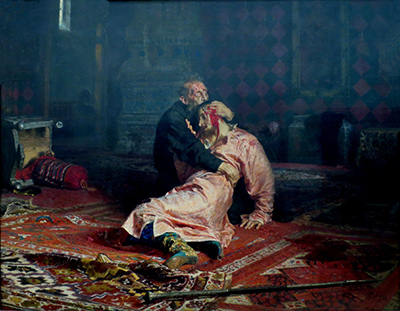
Artists like Ilya Repin captured the struggles and dignity of ordinary people, producing powerful and emotionally resonant works.
The Russian Avant-Garde
The early 20th century saw Russian artists at the forefront of modern art. Movements such as Suprematism and Constructivism pushed artistic boundaries, exploring abstraction, geometry and new ways of representing reality.
This period had a profound impact on global art, influencing developments across Europe and beyond.
Russian Art in Context
Russian artists exist at a crossroads between East and West. You can compare their work with German artists, French artists and Italian artists to understand how different traditions evolved.
These interactions helped shape modern art and continue to influence contemporary artists today.
All Russian Artists on TheHistoryOfArt.org
This section lists all Russian artists currently featured on the site. Expanding this cluster will strengthen your authority in this important area of art history.
Expand This Cluster (High SEO Opportunity)
Russian art is currently underrepresented on many art websites, making it a strong opportunity for SEO growth. Consider adding:
- Wassily Kandinsky (already linked via your page)
- Kazimir Malevich
- Marc Chagall
- Ivan Shishkin
- Arkhip Kuindzhi
These artists can bring high traffic with relatively low competition compared to Western masters.
Politics, religion and art have always been closely aligned with Russia, and previously the Soviet Union. Ruling powers, at times, have dictated the style of art that should be taught and encouraged, but despite that, much creativity has also prospered in this huge region.
In the late 17th century it was Tsar Peter the Great who requested all Russian artists to follow styles closer to western art, as part of a desire to merge the two cultures together. You will find from the movements that appeared in the following centuries that this attempt was successful, but there were still many who prefered to continue to retain the uniqueness of their nation within their own work and avoid merely copying foreign artists. Previously to the Tsar's request, most local work had been religious-themed, such was the dominance of prevolence of these themes within Russian society at the time. The Wanderers (Peredvizhniki) marked the beginning of the movement away from the academic and Neoclassical art which had previously been encouraged by the ruling powers. That group included the likes of Ivan Shishkin and Ilya Repin who would use their methods associated with realism to depict local scenes around Russia itself. It was clear at this point that self-expression was returning and that the future looked much brighter for this region's oeuvre.
As we entered the 20th century, there was then an incredibly turbulent period within Russian history which featured massive political unstability including the violent Russian Revolution of 1917 where Russian Imperial Rule was overthrown by the bolsheviks, led by Vladimir Lenin who then set about forming the Soviet Union and ruling via the Communist Party. These events appeared to force Russian art into a new direction, giving us a loose collection of new ideas which is collectively known as the Russian Avant-Garde. They were broadly in line with modernist ideals around the world at that time, but, as you will see, contributed some groundbreaking innovations despite their own restricted circumstances of that time. That is then where Wassily Kandinsky comes into play as well as the likes of Marc Chagall, himself from the region of modern day Belarus.
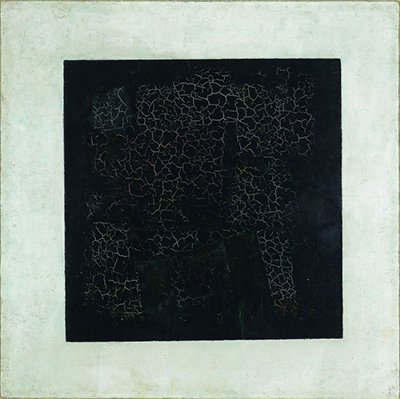
There was then a collection of artists who formed the Russian strand of the Futurist movement, which itself had enveloped large parts of western Europe already. Alexander Rodchenko and Natalia Goncharova were the key names involved within this, with some resemblance to elements of cubism. From this came Constructivism which was a successful offshoot, as new ideas continued to rise from the turmoil of this great nation. Suprematism was another related movement which starred Kazimir Malevich and involved taking abstraction to as simple a form as one could possibly imagine. He would famously produce white squares on white backgrounds and single squares and circles as the main composition element in a movement towards the purest form of modern art.
Famous Russian Artists
FAQs
Russian artists are known for icon painting, realism and pioneering modern art movements such as abstraction and Suprematism.
Famous Russian artists include Andrei Rublev, Ilya Repin and Wassily Kandinsky, each representing different periods of Russian art.
Russian icon painting is a religious art form used in Orthodox Christianity, focusing on spiritual symbolism and devotional imagery.
Russian artists played a key role in modern art by developing abstract movements such as Suprematism and influencing artists across Europe.