by Tom Gurney
Tom Gurney BSc (Hons) is an art history expert with over 20 years experience
Published on July 18, 2026 / Updated on July 18, 2026
Email: tomgurney1@gmail.com / Phone: +44 7429 011000
Francois Gerard: Introduction
Francois Gerard was one of the great image-makers of power in France between the Revolution, the Empire and the Restoration. Trained in the circle of Jacques-Louis David, he learned the severe language of Neoclassicism in the 1780s, but his career did not rest on severity alone. His gift was the ability to make authority look graceful. Across portraits of Napoleon, Talleyrand, Juliette Recamier, Marie-Louise, Charles X and other European elites, Gerard turned political position, social ambition and personal elegance into images that could travel through salons, palaces, engravings and official collections.
Versailles describes him as a court painter under Napoleon I and later under Louis XVIII and Charles X, calling him a portraitist of Europe's sovereign families [1]. That summary captures both his strength and his historical importance. Gerard is not only a painter to study in isolation. He is a bridge between David's studio, Napoleonic visual politics, Restoration monarchy, literary salon culture and the later public image of nineteenth-century France.
At a Glance
- Born4 May 1770, Rome
- Died11 January 1837, Paris
- Full nameFrancois Pascal Simon Gerard; later Baron Gerard
- NationalityFrench
- TrainingJacques-Louis David's studio
- Known forcourt portraits, Napoleonic imagery, Restoration portraits, mythological scenes and literary subjects
- Key worksPsyche and Cupid, Isabey and His Daughter, Talleyrand, Juliette Recamier, Corinne at Cape Miseno, Napoleon I in Coronation Robes, Marie-Louise and the King of Rome, and Charles X
Contents
- Introduction
- From Rome To David's Studio
- The Portraitist Of Power
- Empire And Restoration
- Gerard Among David's Heirs
- How To Read Gerard's Portraits
- Mythology, Literature And Salon Culture
- Where To Start
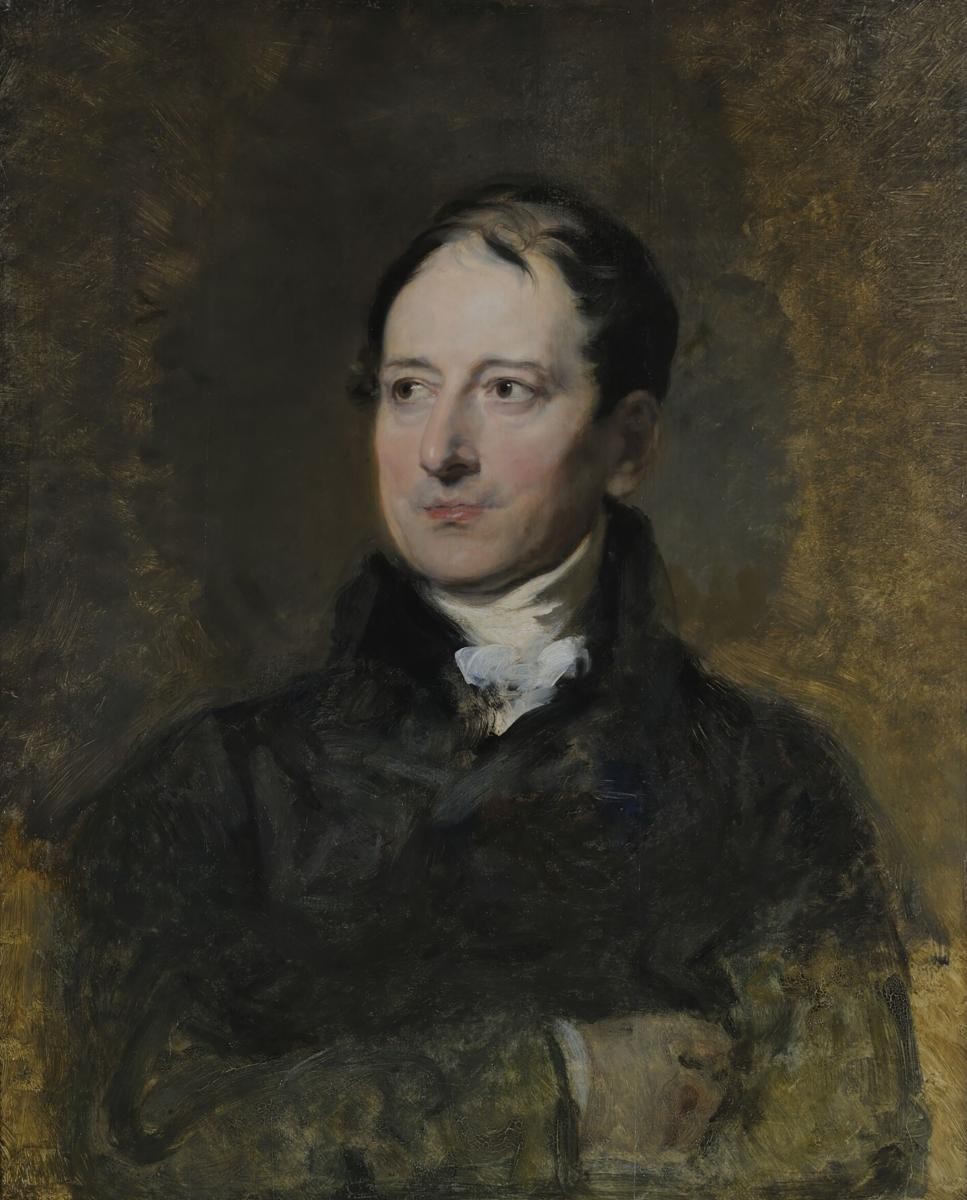
Thomas Lawrence, Portrait of Francois Gerard, 1825. Chateau de Versailles, MV 4830, via Wikimedia Commons, public domain.
From Rome To David's Studio
Gerard was born in Rome while his father, a French official, was stationed there. The Italian beginning mattered less as a permanent identity than as an origin point for a career built in Paris. By 1786 he was training with Jacques-Louis David, whose studio shaped a generation of artists during the last years of the Ancien Regime and the upheavals of the French Revolution [1].
David's influence gave Gerard more than a style. It gave him a professional network, a moral seriousness about history painting and access to the institutions that still mattered in Paris. Versailles records that Gerard won the second Prix de Rome in 1789, made his Salon debut in 1791 and, under David's protection, gained a lodging and studio in the Louvre [1]. Those details place him at the center of late eighteenth-century artistic ambition: academy prizes, Salon visibility, studio patronage and the Louvre as a working artistic environment, not only a museum.
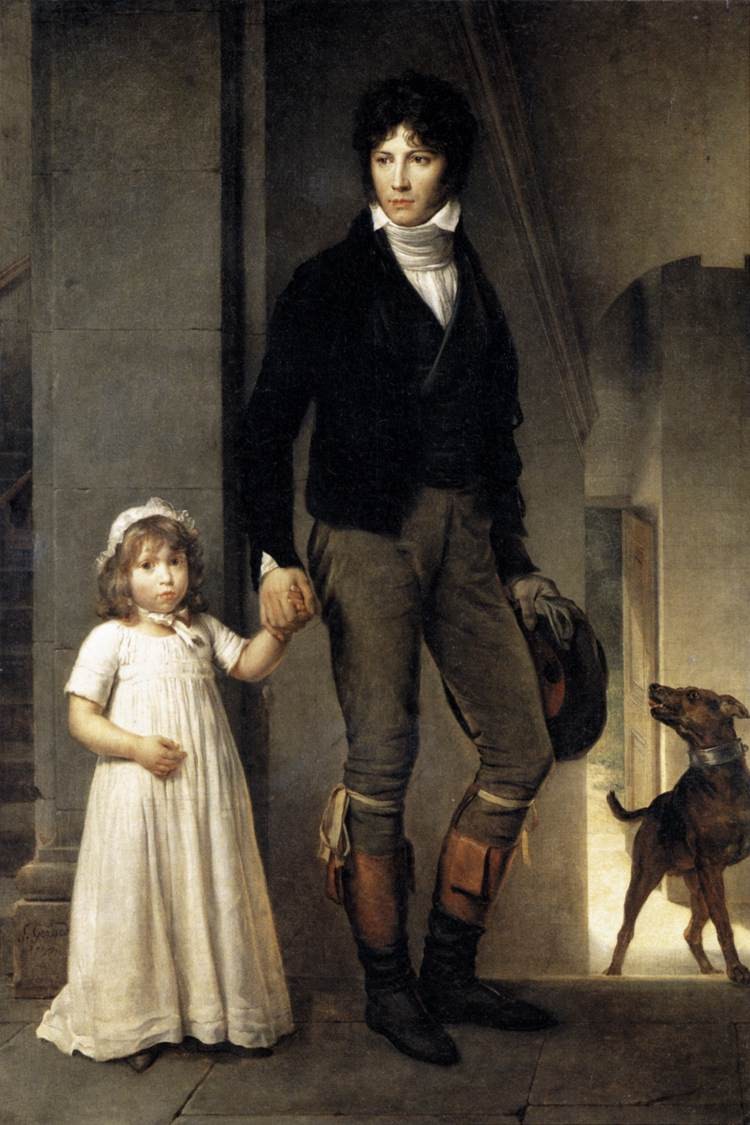
Gerard's early career was not a straight climb. The Revolution unsettled patronage, institutions and public taste. Yet the same instability also created room for artists who could adapt. Gerard's lost Belisarius, shown in 1795, and his portrait of Jean-Baptiste Isabey with his daughter, shown the following year, helped bring him recognition [1][2]. One was a history subject connected to Davidian seriousness; the other was an intimate portrait of an artist friend and child. Together they point toward the two halves of Gerard's later reputation: public ambition and private elegance.
The Portraitist Of Power
Gerard's rise depended on portraiture, but not portraiture as a minor genre. In the unstable decades after 1789, portraits helped new and returning elites define themselves. Napoleon needed images that made imperial authority feel inevitable. Restored Bourbon rulers needed images that joined monarchy to modern public display. Aristocrats, diplomats, writers and salon figures needed likenesses that could move through society as statements of taste and status.
Gerard became especially effective in that world because he softened the hard edges of official representation. His sitters often appear poised rather than theatrical, elegant rather than overwhelmed by symbols. That restraint helped his paintings work as instruments of authority without looking crudely propagandistic. The sitter remains legible as a person, but the person is arranged within a carefully managed social image.
Versailles emphasizes the scale of this activity, noting that Gerard produced more than eighty full-length portraits between 1796 and 1836, many repeated by his studio [1]. That repetition is important. Gerard's art was not only a sequence of single originals. It was also a system of images, versions and engraved diffusion. His portraits could be adapted, repeated and circulated as official likenesses across courts and collections.
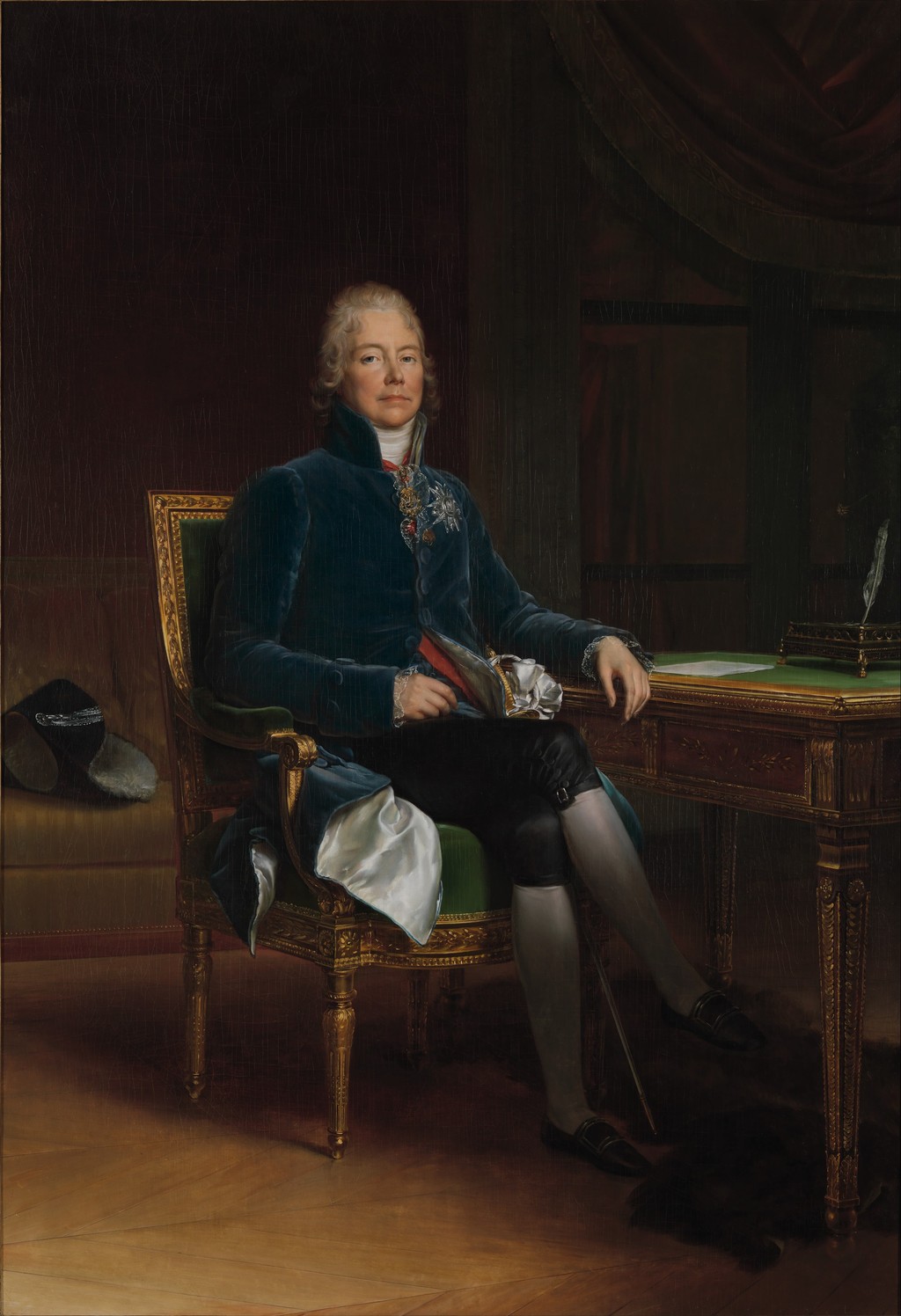
The Metropolitan Museum of Art's study of Gerard's Talleyrand portrait is useful for understanding why this system mattered [3][4]. Gerard's portraits were not merely likenesses of famous people. They were carefully controlled social events preserved in paint. A sitter's body could appear relaxed while the surrounding chair, desk, robe, order or architectural setting did the work of declaring rank. That balance between ease and display became one of Gerard's strongest tools.
This is also why Gerard is best understood through a group of works rather than a single famous canvas. One portrait by him can look like elegant flattery. Several together reveal a grammar. Napoleon, Talleyrand, Recamier and Charles X do not share the same political meaning, but Gerard repeatedly asks how a public person should occupy a room, meet a viewer and carry signs of status without losing composure. His art turns social control into pictorial order.
The repeated full-length format sharpened that effect. A full-length portrait does more than record a face. It gives the sitter a body, costume, environment and public scale. Gerard could use that format to make a ruler seem ceremonially inevitable, a diplomat unreadable, or a salon figure refined without turning the image into spectacle. Gerard's polish is active: the mechanism by which power, taste and self-command become visible.
Empire And Restoration
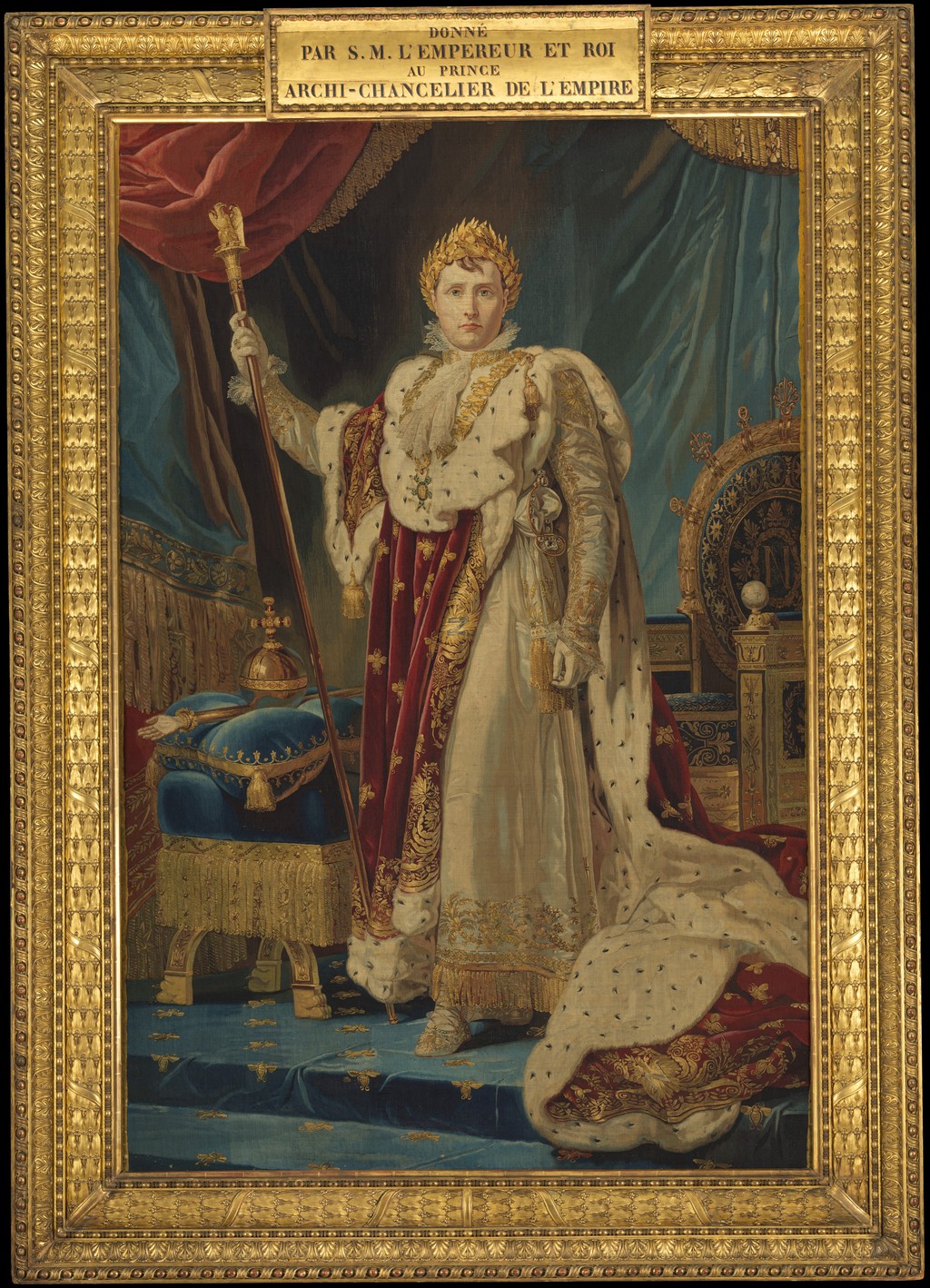
The Bonapartes brought Gerard into the world of Malmaison and imperial commissions. His images of Napoleon and the imperial family belong to a broader visual contest in which painters such as David, Antoine-Jean Gros and Jean-Auguste-Dominique Ingres also shaped the public image of Napoleonic authority. Gerard's version of Napoleon in coronation robes became part of that official visual language, repeated in painted versions and translated into tapestry [5][6].
After the fall of Napoleon, Gerard did not disappear. He remained important under the Restoration, when Louis XVIII and Charles X needed portraits that could make monarchy visible again after the Revolution and Empire. This continuity has sometimes made Gerard look like the perfect court artist, able to serve power wherever it settled. Yet that view can be too simple. His career shows how a painter trained in a revolutionary artistic climate could keep using Neoclassical order, refined surface and social intelligence under very different regimes.
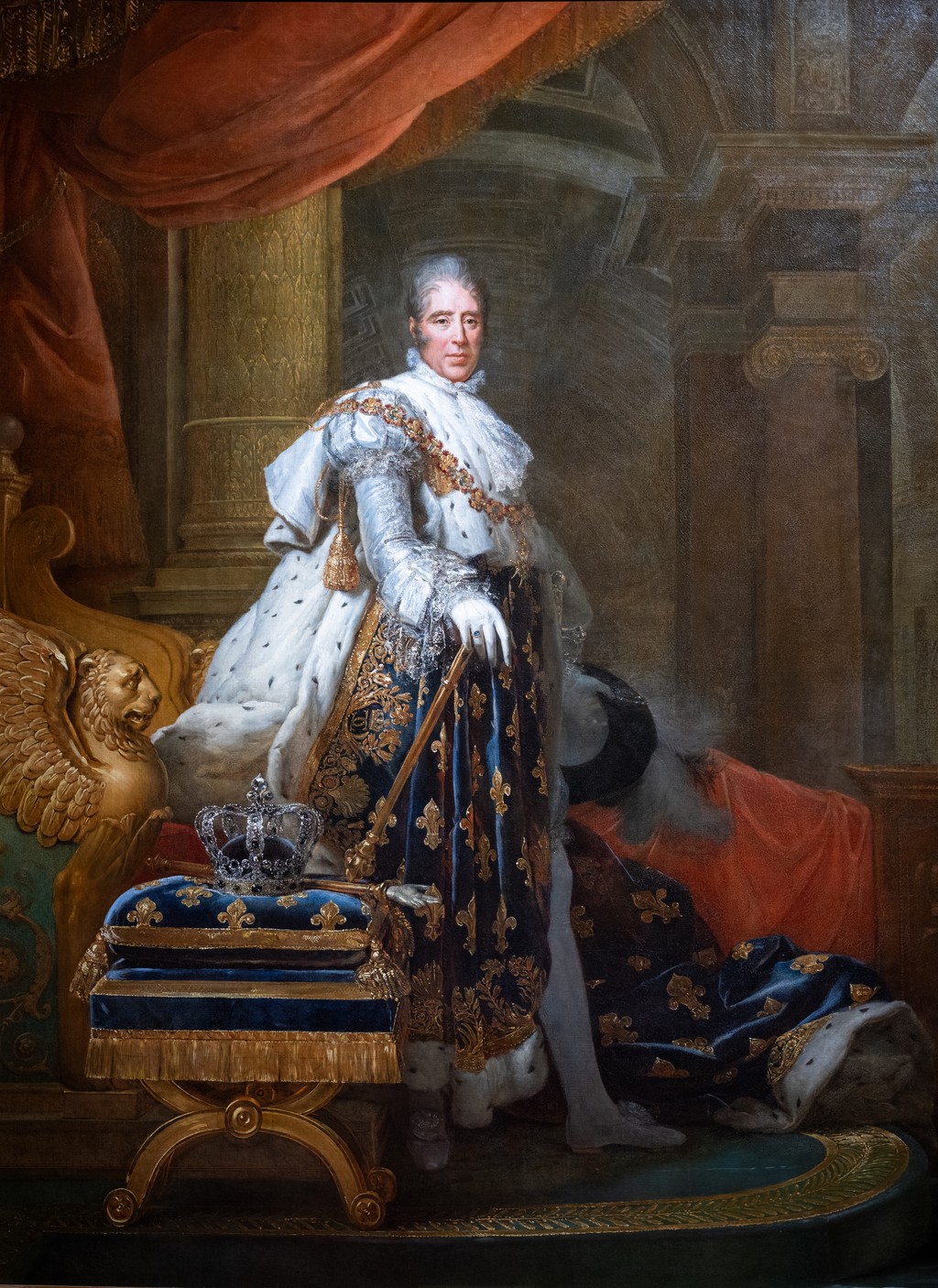
Gerard's Restoration portraits did not merely revive old monarchy. They translated monarchy into the post-Revolutionary public world. The full-length portrait of Charles X, for example, belongs to a tradition of coronation imagery, but its history of replicas, deposits and museum movement also shows how royal images became public collection objects [7][8].
Gerard Among David's Heirs
Gerard is best understood beside, rather than beneath, the other artists who came out of David's world. David gave French painting a severe public language during the Revolution and Empire. Gros turned Napoleonic ambition into scenes of military drama and emotional force. Girodet pushed Neoclassical form toward literary strangeness and psychological intensity. Ingres, slightly younger, made line and surface feel almost unreal in their perfection.
Gerard's contribution was different. He took the clarity of Davidian design and adapted it to a society of patrons, diplomats, writers and rulers who wanted to appear both important and cultivated. His art often refuses the shock of battle, martyrdom or visionary invention. Instead, it excels at the image of social command. The sitter is placed before the viewer as someone already accustomed to being seen.
That quality can make Gerard easy to underestimate. Modern viewers often admire rupture: the painter who breaks a rule, invents a style or exposes a crisis. Gerard's art is more controlled. It works through polish, balance, surface and social intelligence. Yet those qualities were not minor in his own time. They were precisely what made him useful to a world trying to rebuild authority after revolution.
Seen this way, Gerard is not simply a softened Davidian painter. He represents one outcome of David's inheritance. Neoclassical discipline could become republican severity, imperial battle painting, archaeological purity or, in Gerard's hands, a language of elite self-presentation. His importance lies in that translation. He took the trained line, the composed figure and the carefully staged gesture, then moved them into salons, diplomatic interiors, court rooms and literary circles.
That translation helps explain the peculiar durability of his career. Regimes could change, but public people still needed bodies that looked controlled under inspection. Gerard offered that service with unusual finesse. His paintings do not usually announce crisis; they absorb it into poise. In a century shaped by abrupt political reversals, that ability was not secondary to history. It was one of the ways history became visible.
Gerard also shows that Neoclassicism did not end neatly when political circumstances shifted. Its lines, poses and ideals could be redirected toward new patrons. In his work, antique discipline becomes a flexible social language, capable of serving empire, monarchy, diplomacy, literature and private fame without looking like a completely different style each time.
That continuity makes his work a useful guide to French art's quieter adjustments after 1789.
Few painters make adaptation itself so visible.
That is why Gerard rewards comparison rather than isolation. His achievement appears most clearly when a mythological body, a family portrait, a diplomat and a monarch are seen together. The same controlled surface keeps changing social purpose, and the changes tell the history.
How To Read Gerard's Portraits
A Gerard portrait usually rewards slow attention to the way public identity is assembled. Costume matters, but so does the restraint of the face. Setting matters, but often as a frame rather than a spectacle. Hands, chairs, columns, draperies, decorations and orders can all identify rank, but Gerard rarely lets symbols overwhelm the sitter completely.
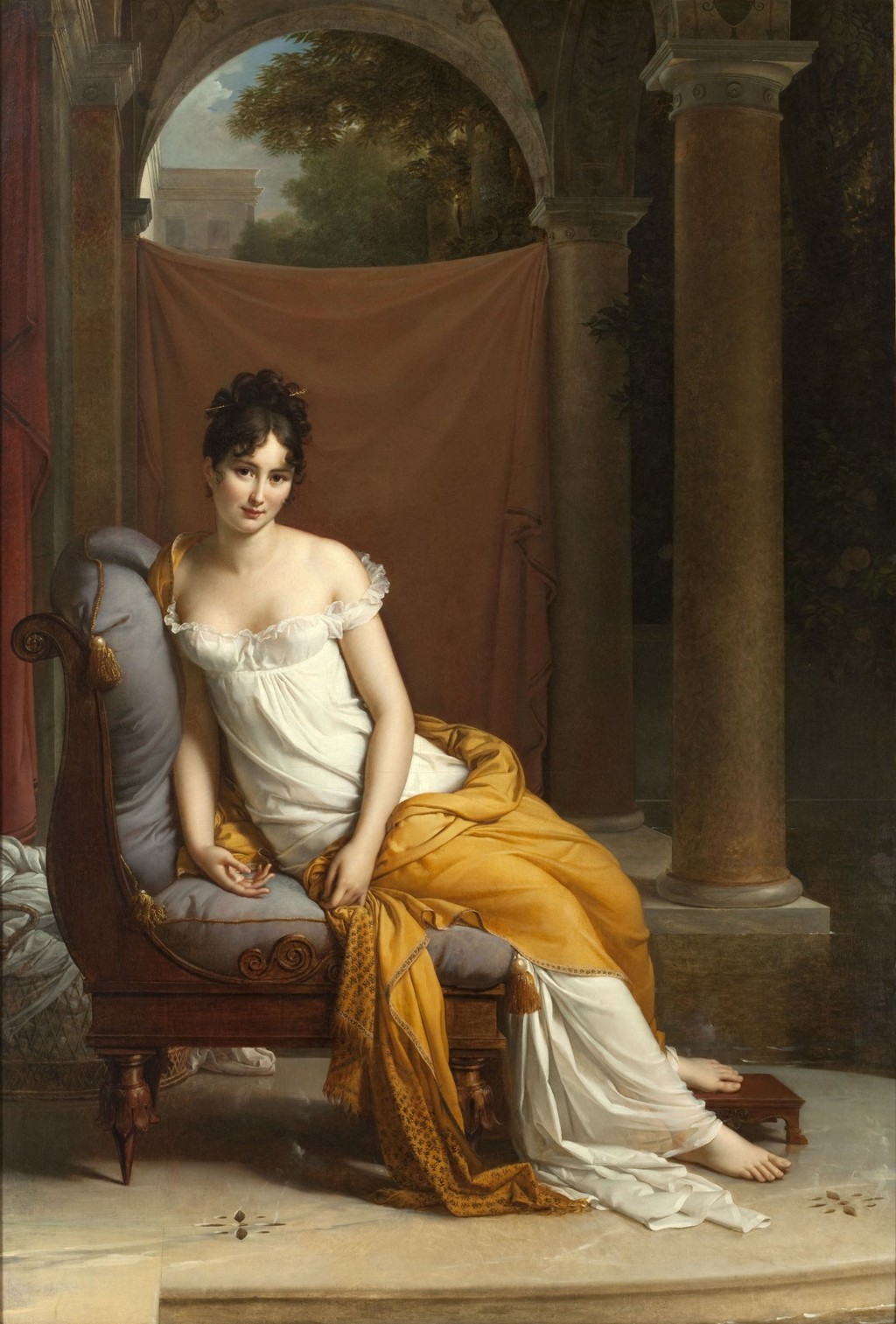
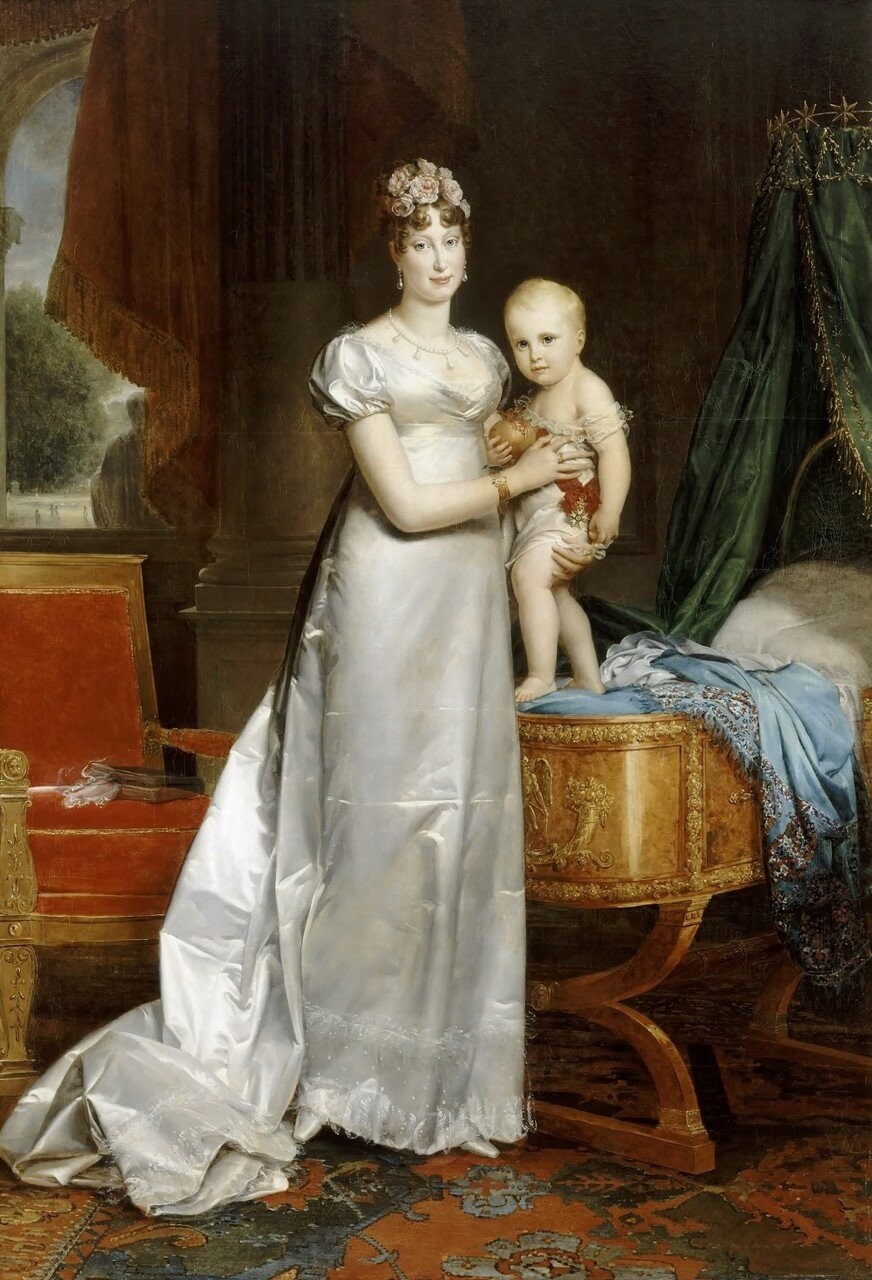
The best question is not simply whether the painting is flattering. Most elite portraits are flattering in some way. The sharper question is what kind of person the sitter wished to become in public. Talleyrand appears as political composure. Recamier appears as cultivated elegance. Napoleon appears as imperial legitimacy. Charles X appears through restored monarchy. Marie-Louise appears inside a dynastic image built around motherhood and succession.
Gerard's consistency across these different subjects shows his strength. He could adjust the language of portraiture to a diplomat, a salon figure, a ruler or a mythological heroine without abandoning his preference for controlled grace.
Mythology, Literature And Salon Culture
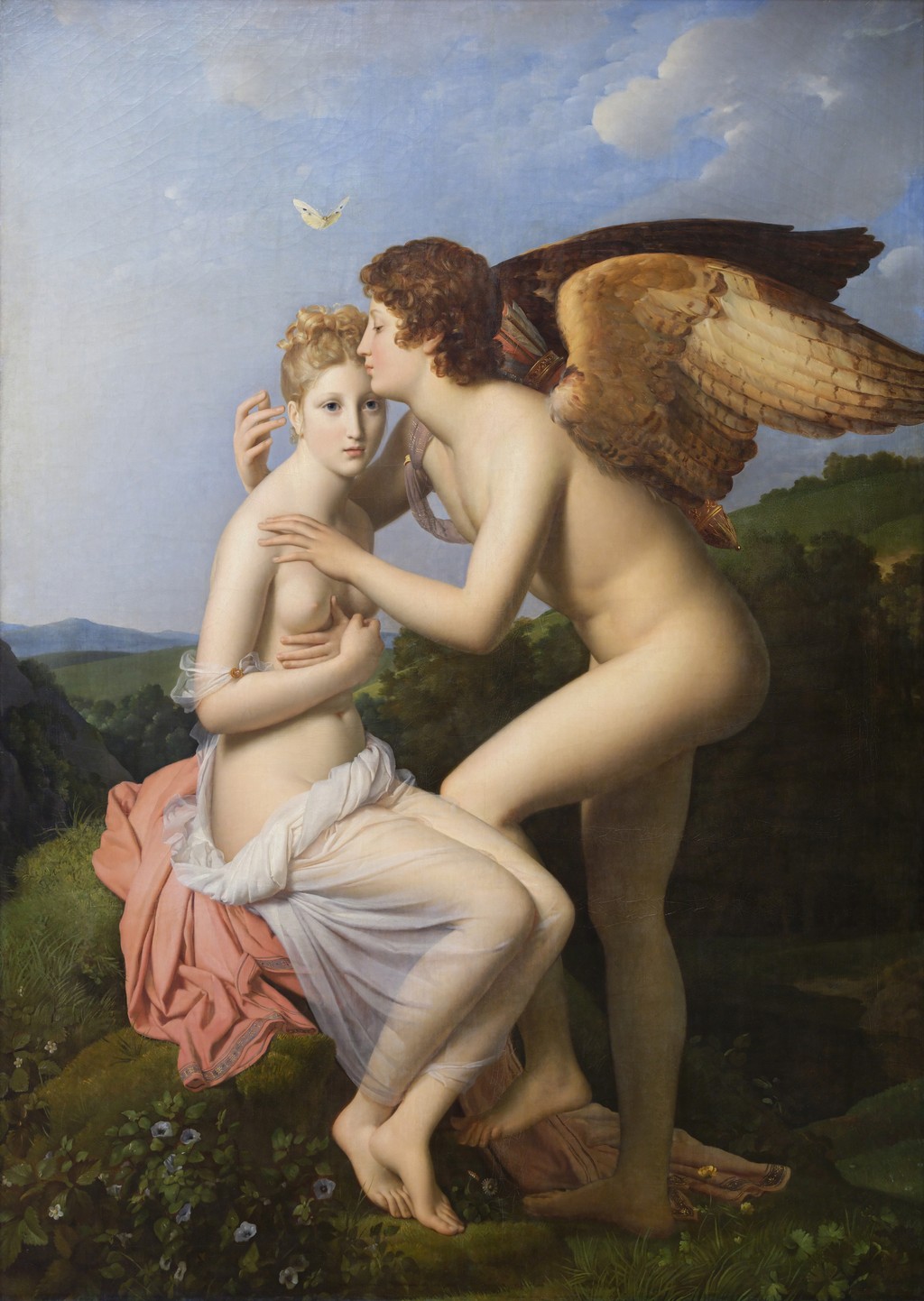
Gerard was not only a maker of official portraits. Psyche and Cupid, painted in 1798 and now in the Louvre, shows another side of his art: mythological subject matter rendered through polished surface, controlled line and emotional suspension [9]. The painting gives Gerard a place in the late eighteenth-century taste for ideal bodies and classical themes, but it also shows his sensitivity to quiet psychological moments.
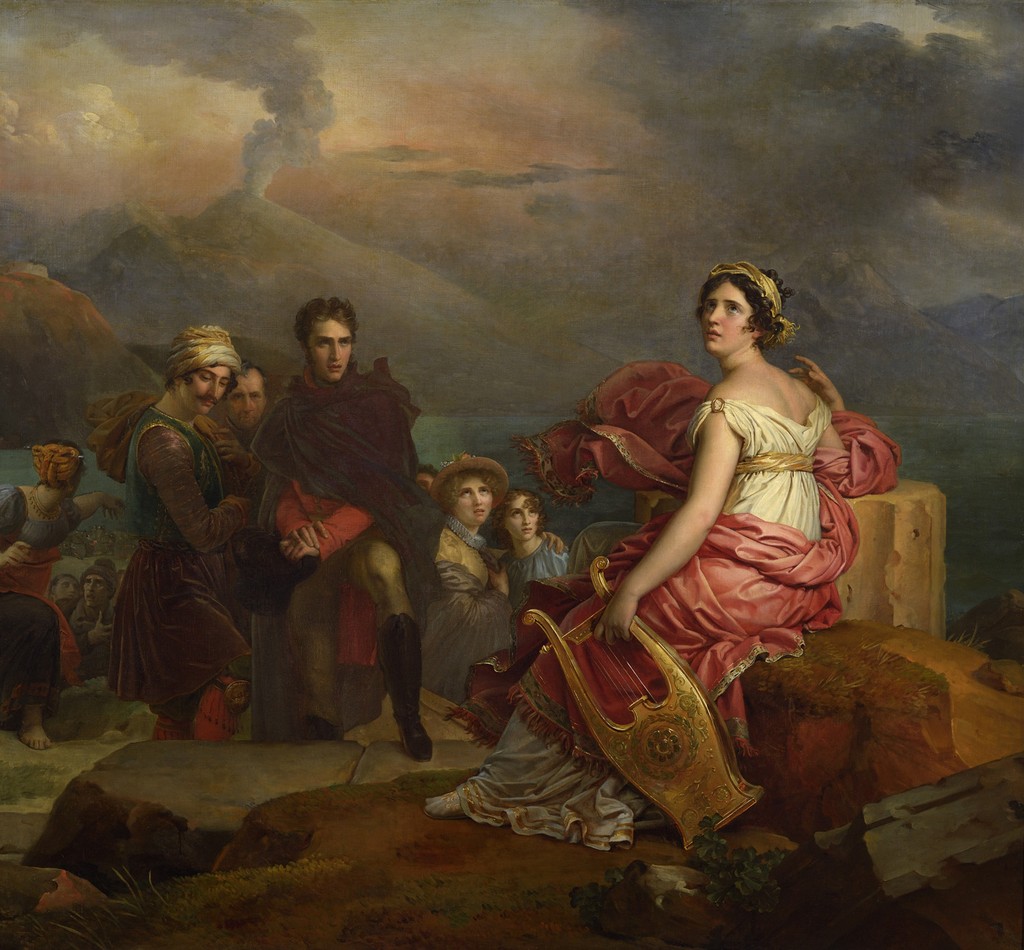
That quality carried into literary and salon subjects. Corinne at Cape Miseno, now in Lyon, connects Gerard to Germaine de Stael, Juliette Recamier and the culture of literary celebrity after the Revolution [10]. The portrait of Recamier at Carnavalet shows how Gerard could turn a living social figure into an image of cultivated elegance [11]. These works matter because they widen Gerard beyond court service. His art also belonged to the public image of writers, patrons, diplomats and society figures who helped shape taste.
Where To Start
Psyche and Cupid shows Gerard as a painter of myth rather than only a portraitist. Isabey and His Daughter is his crucial early-career portrait, intimate and personal in a way that contrasts with later state images. Talleyrand is a concentrated example of political portraiture as social performance. Juliette Recamier and Corinne at Cape Miseno open the salon and literary side of his art. Napoleon I in Coronation Robes, Marie-Louise and the King of Rome and Charles X show how Gerard's imagery worked for dynastic power.
Taken together, these works reveal an artist whose real subject was often the management of appearance. Gerard painted bodies, faces, robes, rooms and symbols, but he also painted social position. His art asks how power wished to be seen after the Revolution, and how elegance could make authority seem natural.
Gerard therefore belongs naturally beside David and Ingres. His work helps explain what happened to Neoclassical discipline when it entered the drawing room, the diplomatic portrait, the court replica and the literary salon. It also gives a more complete picture of French art after 1789. The age was not made only by revolutionary severity or Romantic revolt. It was also made by artists who knew how continuity could be staged, softened and repeated.
That makes Gerard especially revealing for anyone who already knows the larger names of French Neoclassicism. He does not replace David, Gros or Ingres in the story. He fills in a different part of it: the culture of portraits that helped powerful people become memorable in public.
Frequently Asked Questions
Gerard is best known for portraits of political, royal and social elites in Napoleonic and Restoration France. He also painted mythological and literary subjects, including Psyche and Cupid and Corinne at Cape Miseno.
Yes. Versailles records that Gerard trained with David from 1786. David's studio shaped Gerard's early formation and helped place him within the artistic world of Revolutionary Paris.
The phrase reflects Gerard's success with sovereign and aristocratic sitters. Versailles presents him as a painter for Napoleon I, Louis XVIII, Charles X and European ruling families.
Start with Psyche and Cupid, Isabey and His Daughter, Talleyrand, Juliette Recamier, Corinne at Cape Miseno and Napoleon I in Coronation Robes.
Discussion
Gerard's art often asks viewers to read public roles through small signs of pose, dress, surface and setting. Use the prompts below as starting points for looking closely.
Reader Insights
Which side of Gerard feels most revealing: the official portraitist of regimes, or the painter of intimate social and literary presence?
Where do you see David's discipline still shaping Gerard, and where does Gerard soften that language into something more sociable?
Many Gerard portraits lived through replicas, engravings and official display. How does that change the way you read them?
Join the Conversation
Share a thoughtful comment below about what you notice, question or compare when looking at this work.
References
- Chateau de Versailles, Francois Gerard (in English) https://en.chateauversailles.fr/discover/history/great-characters/francois-gerard
- Louvre Collections, Jean-Baptiste Isabey and His Daughter (in English) https://collections.louvre.fr/en/ark:/53355/cl010063560
- Kathryn Calley Galitz, Francois Gerard: Portraiture, Scandal, and the Art of Power in Napoleonic France, Metropolitan Museum of Art Bulletin, 2013 https://www.metmuseum.org/met-publications/francois-gerard-the-metropolitan-museum-of-art-bulletin-v-71-no-1-summer-2013
- Metropolitan Museum of Art, Charles Maurice de Talleyrand Perigord (in English) https://www.metmuseum.org/art/collection/search/441969
- Louvre Collections, Portrait en pied de Napoleon Ier en costume du Sacre (in English) https://collections.louvre.fr/en/ark:/53355/cl010057769
- Metropolitan Museum of Art, tapestry after Gerard's Napoleon portrait (in English) https://www.metmuseum.org/art/collection/search/199313
- Louvre Collections, Portrait en pied de Charles X, roi de France (in French) https://collections.louvre.fr/ark:/53355/cl010237434
- POP/Joconde, Charles X record (in French) https://pop.culture.gouv.fr/notice/joconde/000PE013230
- Louvre Collections, Psyche et l'Amour (in English) https://collections.louvre.fr/en/ark:/53355/cl010066604
- Musee des Beaux-Arts de Lyon, Corinne at Cape Miseno (in English) https://www.mba-lyon.fr/en/fiche-oeuvre/corinne-cape-miseno
- Musee Carnavalet, Portrait de Juliette Recamier (in French) https://www.carnavalet.paris.fr/collections/portrait-de-juliette-recamier-nee-bernard-1777-1849?page=1