by Tom Gurney
Tom Gurney BSc (Hons) is an art history expert with over 20 years experience
Published on July 18, 2026 / Updated on July 18, 2026
Email: tomgurney1@gmail.com / Phone: +44 7429 011000
Francois Gerard Biography: Introduction
Francois Gerard's life crossed one of the most turbulent political periods in French history. Born in Rome in 1770, trained in Paris under Jacques-Louis David, visible at the Salon during the Revolution and later active for Napoleon and the restored Bourbons, Gerard built a career by translating artistic discipline into social authority. His biography is not the story of a painter who invented a new movement. It is the story of a painter who understood how images of people could survive political rupture.
The official outline is clear. Versailles identifies Gerard as a student of David, a court painter under Napoleon I and later a painter of kings under Louis XVIII and Charles X [1]. INHA and BnF authority records confirm the broader identity: Francois Pascal Simon Gerard, later Baron Gerard, born in Rome on 4 May 1770 and dead in Paris on 11 January 1837 [2][3]. The British Museum adds that he was a painter and draughtsman, trained with David from 1786, known for early book illustrations, society portraits, mythological and historical subjects, and prints after his own paintings [4].
Those facts give the frame. The interest of the biography lies in how Gerard moved through each setting without losing the central skill that made him useful: the ability to give social and political ambition a refined visual form.
Contents
- Introduction
- Rome, Paris And Formation
- Salon Beginnings
- Belisarius And Isabey
- The Bonapartes And The Empire
- Talleyrand And Political Portraiture
- Restoration Career
- Salon, Society And Literature
- Studio, Repetition And Reputation
- Later Reputation
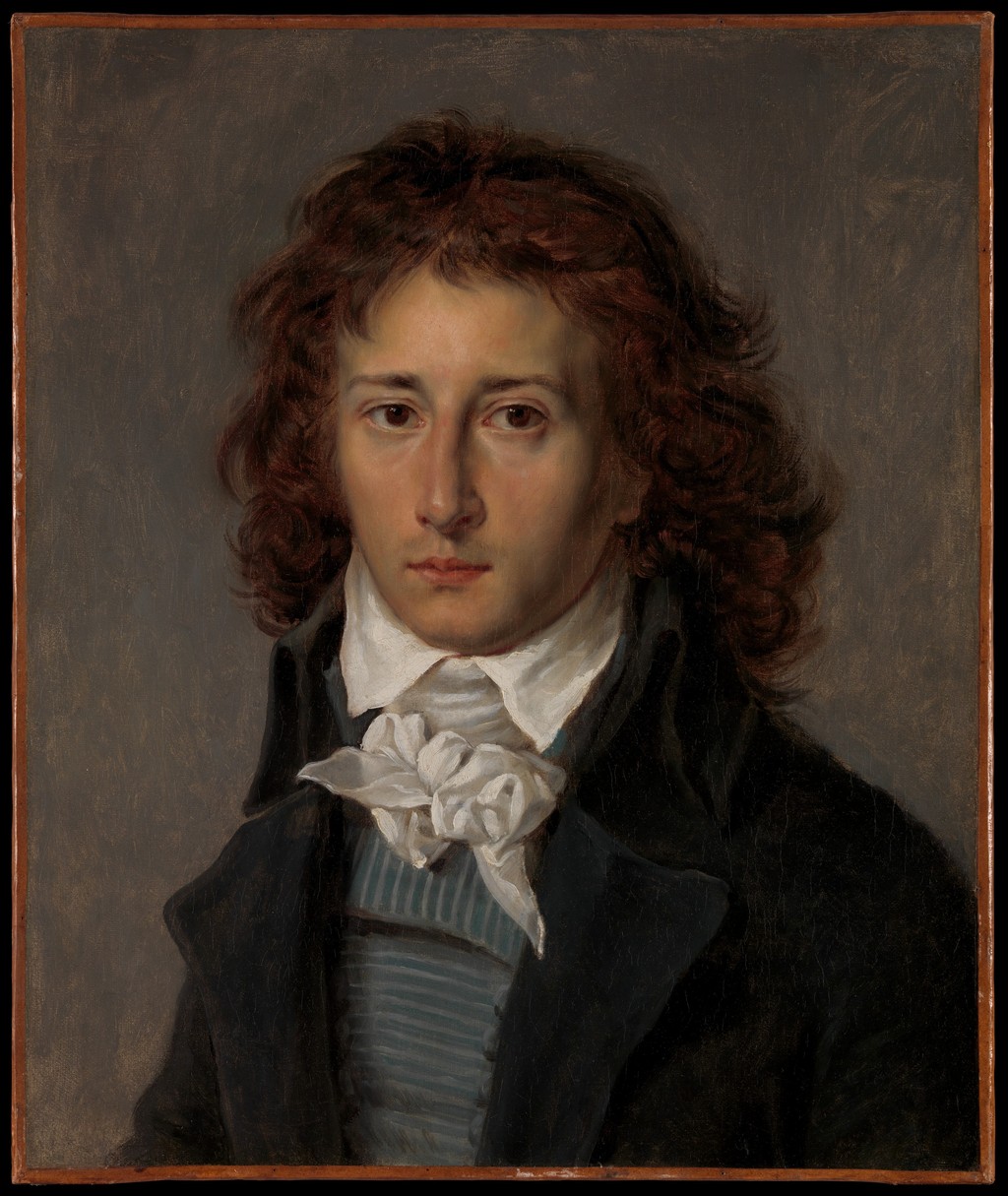
Antoine Jean Gros, Francois Gerard (1770-1837), later Baron Gerard. Metropolitan Museum of Art, New York, public domain.
Rome, Paris And Formation
Gerard was born in Rome because his father, a French official, was posted there. Rome gave him a prestigious birthplace for an artist, but his professional formation took place in Paris. According to Versailles, he entered David's orbit from 1786 [1]. This placed him among the younger artists shaped by the most powerful French painter of the period.
David's studio was more than a place to learn drawing and composition. It was a network of ambition. Students absorbed the language of antique form, moral seriousness, disciplined contour and public history. They also entered a world in which painting was tied to institutions, prizes and political change. Gerard's later career would be more polished and socially pliable than David's, but his sense of pictorial order came from this training.
In 1789 Gerard won the second Prix de Rome [1]. The date is striking. The French Revolution began the same year, and the institutions that had traditionally supported academic art were soon under pressure. Gerard's early maturity therefore unfolded in a world where older pathways still existed but no longer guaranteed stability.
Salon Beginnings
Gerard made his Salon debut in 1791, according to Versailles [1]. The Salon mattered because it placed an artist before critics, patrons and the public. For a young painter trained in David's circle, Salon visibility could create a reputation more powerful than private patronage alone.
David's support also helped Gerard obtain lodging and a studio at the Louvre [1]. That detail says much about his position. He was not an isolated young painter waiting for luck; he had access to one of the central artistic environments of Paris. Yet access still had to be converted into success.
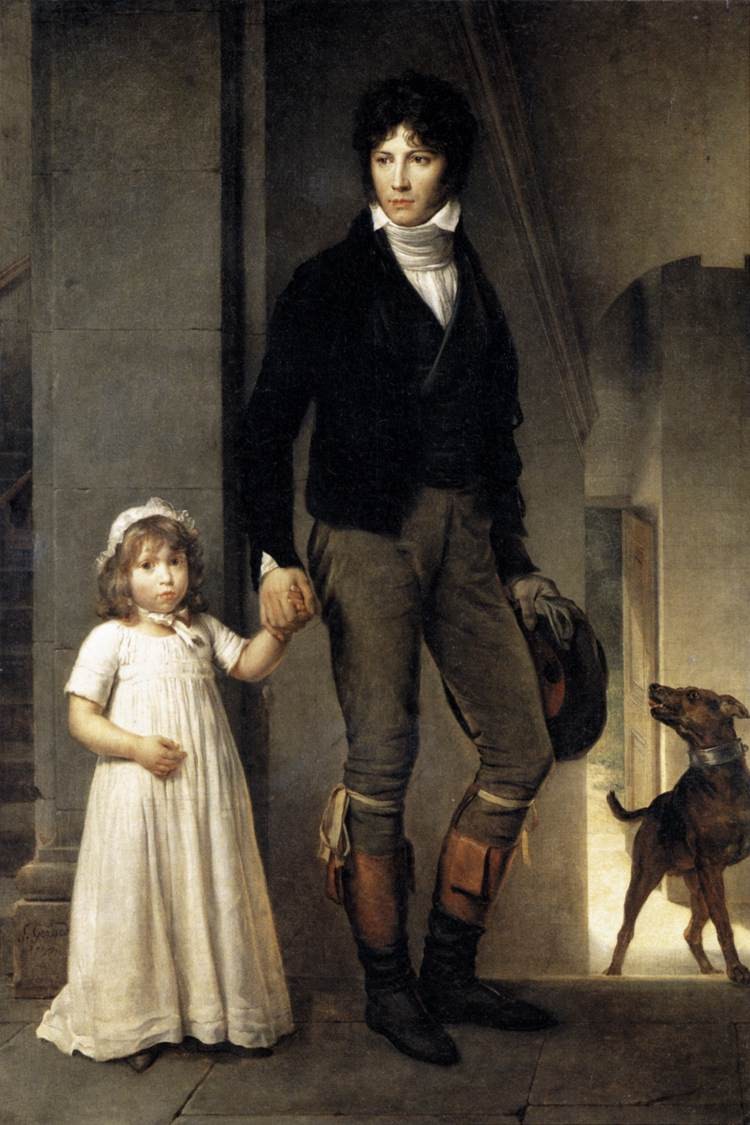
That conversion came in the mid-1790s. Versailles links Gerard's career launch to Belisarius, shown in 1795, and to the portrait of Jean-Baptiste Isabey and his daughter, shown the following year [1]. The Louvre record for the Isabey portrait preserves a more personal detail: Gerard gave the painting to Isabey after Isabey helped sell the lost Belisarius [5]. The story binds friendship, art dealing, Salon reputation and artistic gratitude into a single episode.
The episode also shows how artists made careers in Revolutionary Paris. Talent mattered, but so did friendship, buying, selling, exhibition, engraving and access to rooms where works could be seen. Gerard's early life was shaped by formal institutions, yet the Isabey story shows that reputation also moved through informal acts of help. One artist could rescue another from a stalled success, and the answer could be a portrait that turned gratitude into a public work.
That combination of institution and intimacy followed Gerard throughout his life. He was never only a bureaucratic court painter taking orders from above. He was a participant in circles of artists, patrons, writers and political figures. The same painter who needed David's protection in the Louvre later moved among people whose own social worlds depended on recognition, tact and display. His biography is therefore best read as a networked career rather than a solitary rise.
Belisarius And Isabey
The lost Belisarius is important even though modern viewers cannot stand before it in the same way they can stand before David's Belisarius Begging for Alms. The subject already belonged to a Davidian moral world: a fallen general, blindness, dignity and public compassion. For Gerard, it demonstrated seriousness in history painting at a moment when a young artist needed more than portrait commissions.
Isabey and His Daughter, by contrast, shows another register. It is an intimate portrait of an artist friend and a child, not an image of state power. The Louvre records it as a signed and dated work of 1795, later exhibited at the Salon de l'An V / 1796 and donated to the Louvre by Eugene Isabey in 1852 [5]. The portrait mattered because it showed that Gerard could create feeling without theatrical excess. That would become central to his later success.
The Bonapartes And The Empire
Gerard's portrait career accelerated under the Bonapartes. Versailles notes that he was noticed by the Bonaparte family, worked for them at Malmaison and then served as an official painter of the Empire, producing history paintings and portraits, including official images of sovereigns in 1805 and 1807 [1].
Napoleonic patronage demanded a delicate balance. The new regime needed grandeur, legitimacy and continuity with earlier forms of rule, but it also needed to look modern and energetic. Gerard's official portraits helped solve that problem. They borrowed from the language of monarchy, empire, military authority and classical order, yet they were shaped for a new political order.
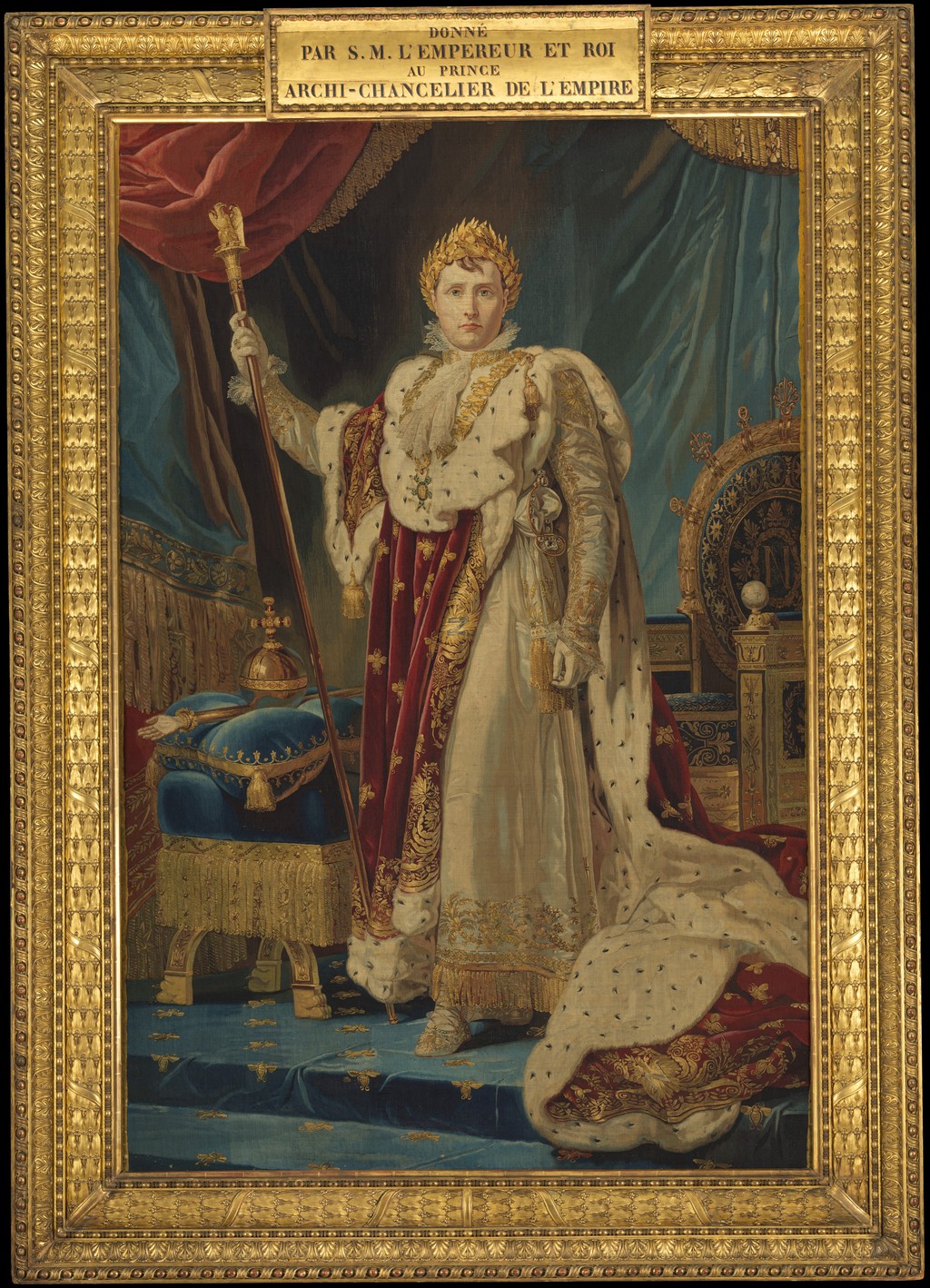
The portrait of Napoleon in coronation robes shows how Gerard's imagery entered systems of repetition. The Louvre record for Portrait en pied de Napoleon Ier en costume du Sacre identifies a long-term-loan painting associated with Versailles and records that it was commissioned by Napoleon I for the Gobelins as a replica of the painting commissioned for Talleyrand's hotel in 1805 [6]. The Metropolitan Museum of Art's tapestry after Gerard's Napoleon portrait shows another form of circulation: a painted image translated into a woven object for imperial display [7].
Gerard was therefore not only painting sitters. He was helping create repeatable images of power.
Talleyrand And Political Portraiture
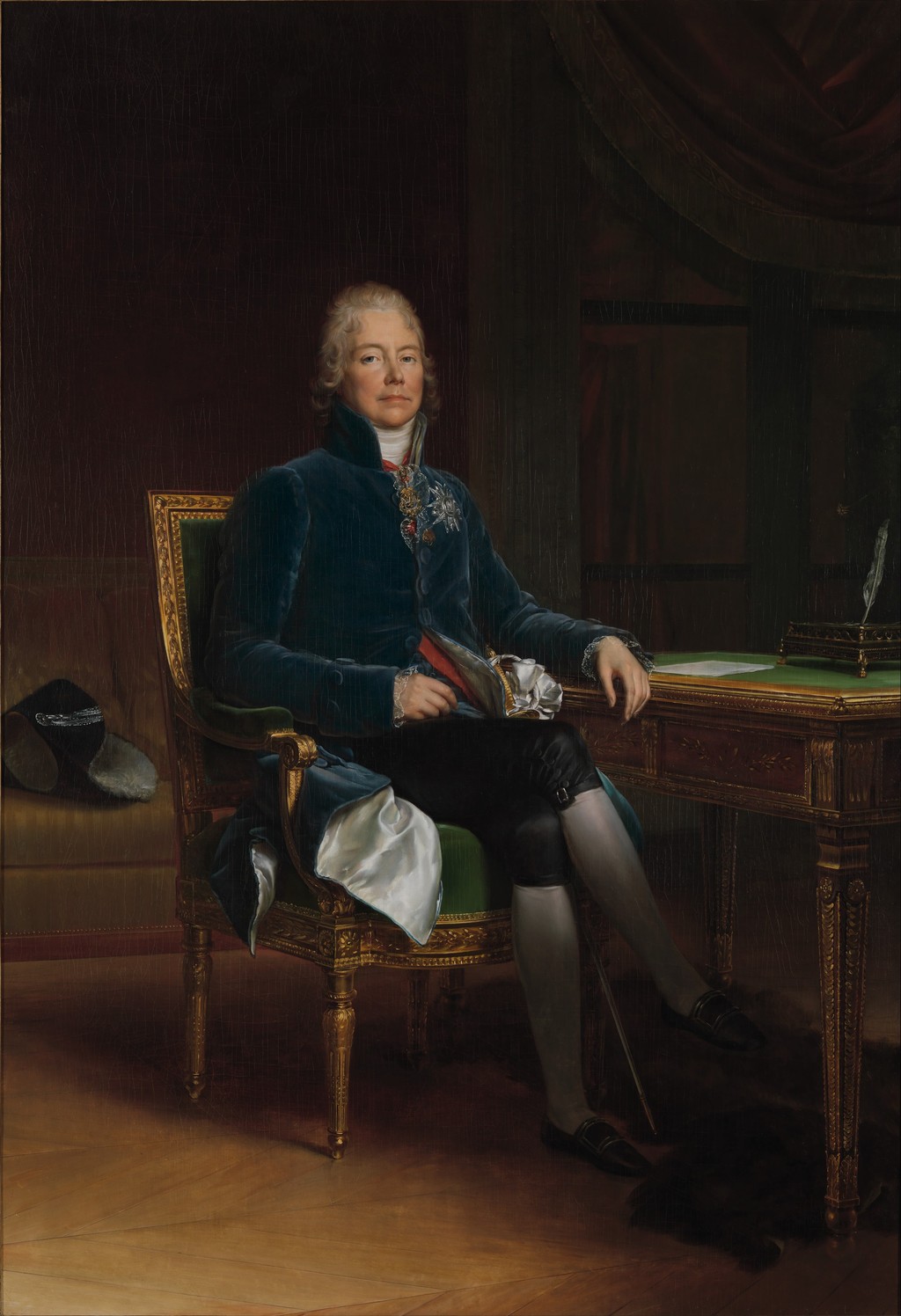
Gerard's 1808 portrait of Talleyrand, now at the Metropolitan Museum of Art, shows how his portraiture could serve politics without relying on open drama. The Met notes that the portrait was commissioned after Talleyrand resigned as Napoleon's foreign minister and that Gerard knew the sitter personally [8]. The painting's later adjustment of honors after the Congress of Vienna underlines the flexible life of a political portrait [8].
This kind of work suited Gerard's temperament as a painter. He could make rank visible while leaving character partly withheld. The sitter appears composed, almost effortless, but the image is carefully built from dress, posture, honors and setting. Gerard's biography cannot be separated from this capacity to make politics look like manners.
Restoration Career
After Napoleon's fall, Gerard's career continued under the restored Bourbons. Versailles states that he became painter to Louis XVIII and Charles X and served as portraitist to sovereign families across Europe [1]. That continuity is sometimes read as pure adaptability, but it also reflects the nature of portraiture after 1815. New and restored regimes needed artists who could make authority visible in acceptable forms.
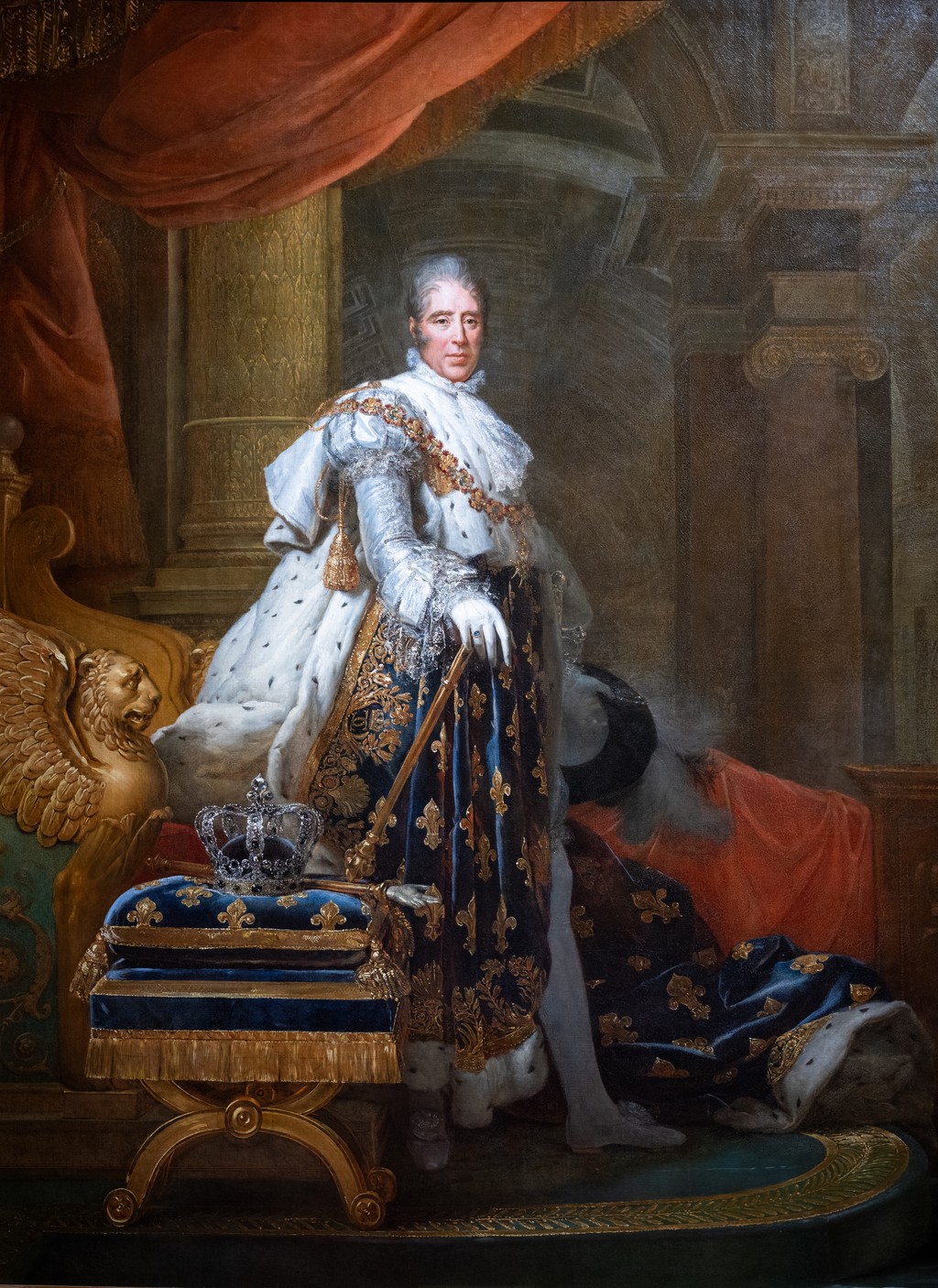
Gerard's Restoration images often return to full-length court portraiture. The Charles X portrait tradition, preserved through Louvre and POP/Joconde records, shows a network of originals, replicas, deposits and museum histories [9][10]. Gerard's art thus participated in the restoration of royal image-making while also entering the modern museum system.
Versailles notes that from 1796 to 1836 Gerard produced more than eighty full-length portraits, many repeated by his studio [1]. The studio mattered because portraits of rulers, diplomats and high-status sitters were not always single private objects. They could become official images, diplomatic gifts, replicas for institutions or models for prints.
Salon, Society And Literature
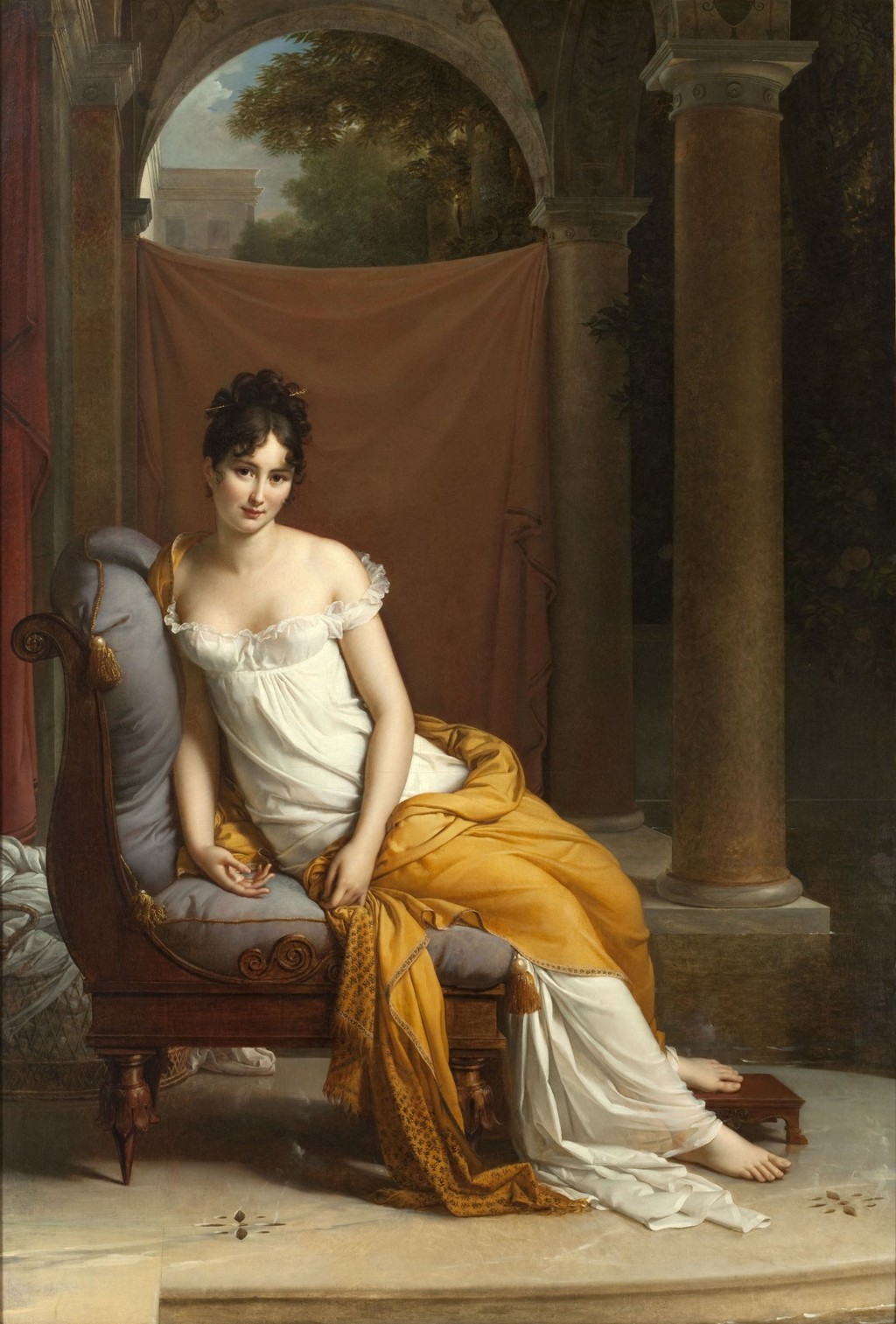
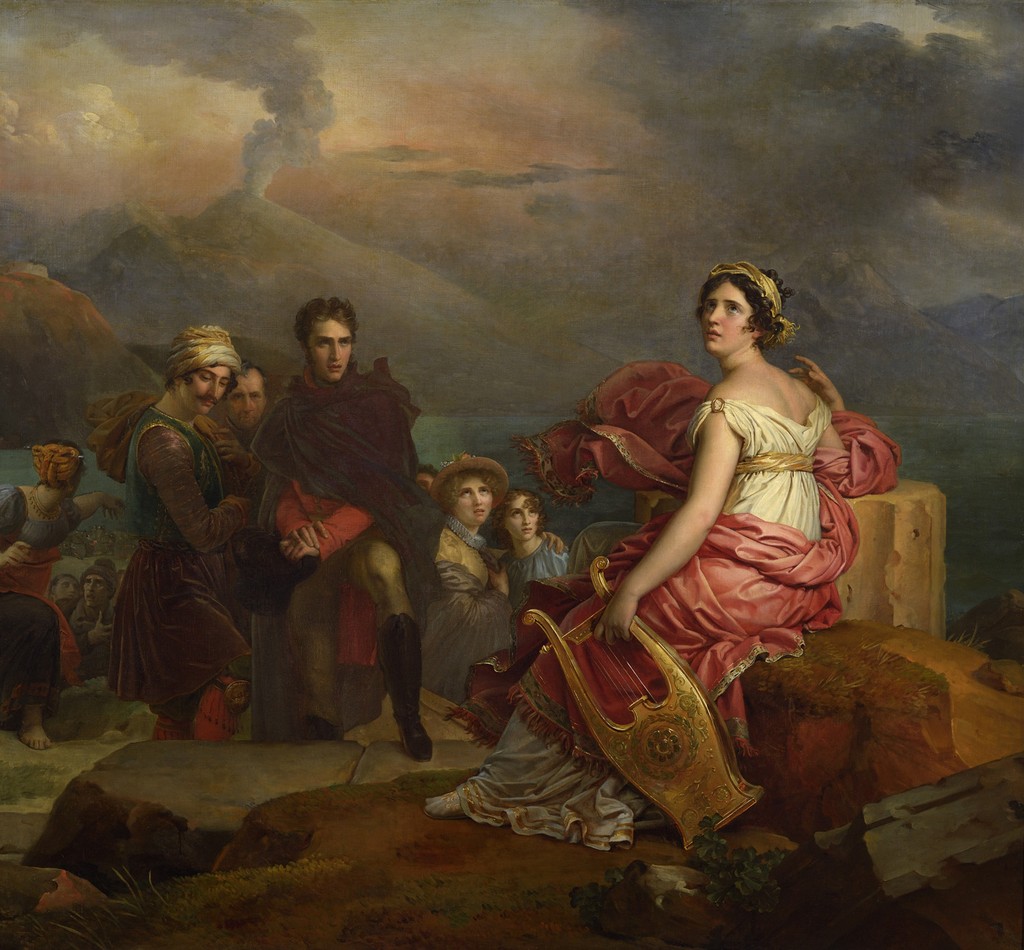
Gerard's world was not limited to courts. He also painted figures of salon and literary culture. Juliette Recamier, Germaine de Stael and the literary heroine Corinne belong to the same social universe in which reputation, patronage and image were intertwined. The Lyon Museum's Corinne at Cape Miseno connects Gerard's painting to Germaine de Stael's novel, Prince August of Prussia's commission and Recamier's role as intermediary [11]. The Carnavalet portrait of Recamier presents Gerard as one of the painters through whom she shaped her public image [12].
These works show why Gerard is more interesting than a simple court painter label suggests. He painted rulers, but he also painted people who shaped taste outside government: writers, salon figures, patrons and diplomats. His biography sits at the meeting point of state power and social performance.
Studio, Repetition And Reputation
Gerard's later career cannot be separated from the repetition of images. Versailles notes that many of his full-length portraits were repeated by his studio [1]. In practical terms, this meant that a successful image could have more than one life. A ruler's likeness might exist as a principal painting, a reduction, a workshop version, an engraved reproduction or a related decorative object.
This system was not a flaw in the way nineteenth-century portraiture worked. It was part of its function. Official images needed to circulate. Courts, ministries, museums and private collections all needed versions of the people who embodied power. Gerard's studio helped turn portraiture into a visual network.
That network requires careful attention. A Gerard image of Napoleon, Charles X or another ruler may exist in several related forms. Some are by Gerard, some by the studio, some after Gerard, and some preserved through later institutional histories. The distinction matters because it changes how the object should be understood. A portrait can be an original act of invention, a sanctioned repetition or an image after the painter's design.
Gerard's reputation grew inside this world of repetition. The very fact that his images could be copied and adapted shows that they had become authoritative. Patrons wanted not only Gerard's hand, but Gerard's formula for public presence.
That formula was especially useful because Gerard's sitters belonged to unstable political worlds. Napoleon's court, the restored Bourbon monarchy and European diplomatic society all needed images that looked settled even when history was not. A repeated portrait could reassure a viewer that authority had a recognizable face, body and costume. A workshop version could carry that message into another institution or another country.
The Met's Talleyrand portrait gives a concentrated example of this problem [8][13]. The sitter's honors could be adjusted after the Congress of Vienna, making the painting responsive to a later phase of Talleyrand's public life. That kind of detail makes Gerard's biography feel unusually modern. His paintings were not inert records. They were objects that could participate in the changing display of identity.
For Gerard, this meant that success depended on memory as much as likeness. Patrons needed images that would not collapse when political circumstances changed. Gerard's controlled surfaces, calm faces and adaptable signs of rank gave them that durability.
Later Reputation
Gerard died in Paris in 1837 [2][3]. By then he had lived through monarchy, Revolution, Empire, Restoration and the July Monarchy. His reputation depended on a skill that modern criticism has sometimes undervalued: the ability to make a public person legible to a public age.
He did not have David's revolutionary severity, Gros's battlefield urgency or Ingres's strange linear intensity. Gerard's power was quieter. He made political transition look polished. He made authority graceful. He gave sitters the image they needed, and in doing so left a visual record of how French elites wished to appear after 1789.
His correspondence and later biographical literature also point to the breadth of his network. BnF and Gallica preserve the 1867 published correspondence assembled by Henri Gerard, with a notice on the painter's life and works [14]. Such material is valuable because Gerard's art was inseparable from relationships: patrons, sitters, other artists, diplomats, writers and collectors. His life was not only a sequence of commissions, but a social map of French and European cultural power.
That is the strongest reason to read Gerard's biography alongside the artworks. The paintings show the finished image. The life explains the world that wanted those images, circulated them and kept returning to the same polished language of authority.
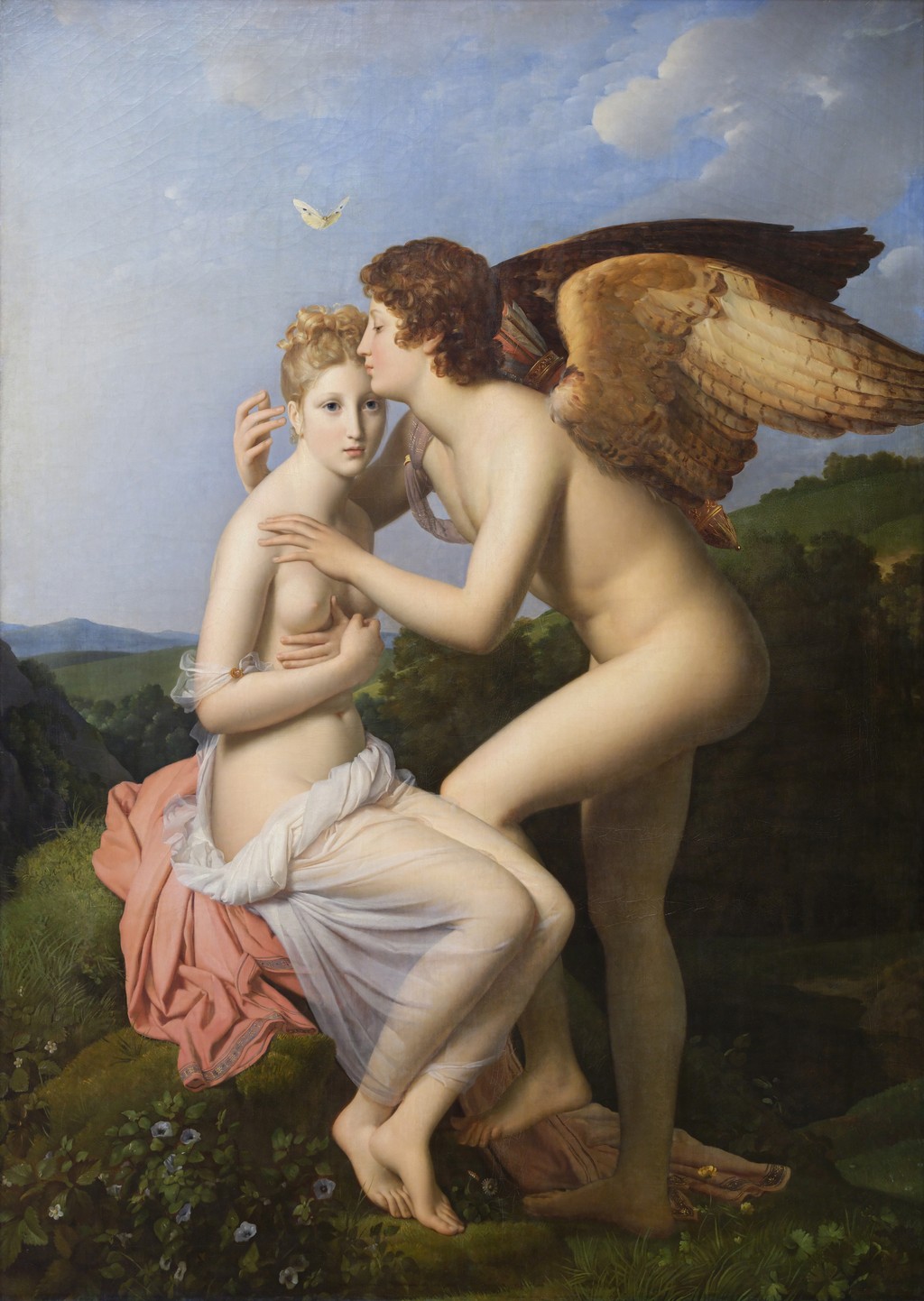
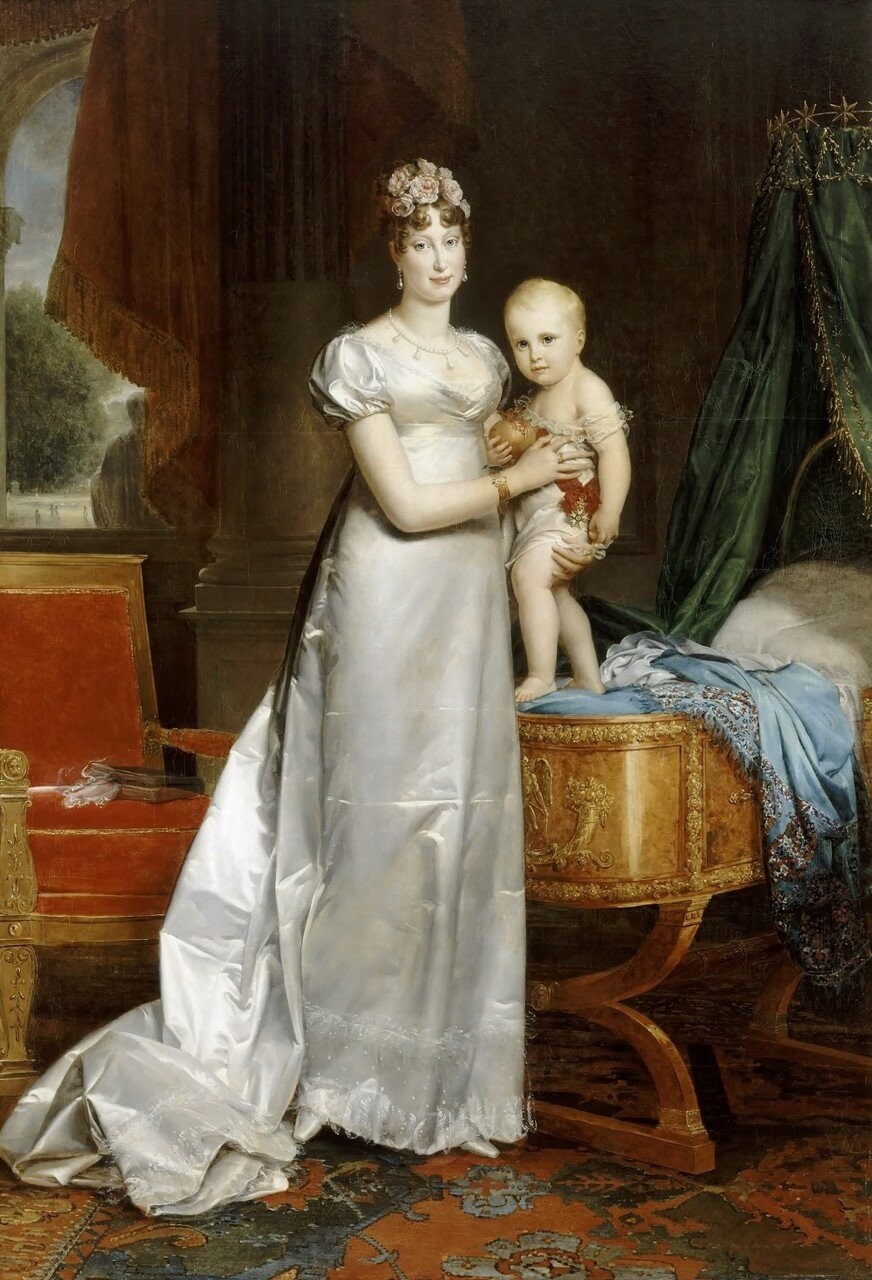
His biography also explains why Gerard's most rewarding works move between genres. The mythological Psyche and Cupid, the family portrait of Isabey, the diplomatic Talleyrand, the literary Corinne, and the dynastic image of Marie-Louise all belong to different settings. Yet each depends on a figure held in a carefully judged public pose. Gerard's life gave him access to those settings; his art gave them a shared visual language.
Frequently Asked Questions
Gerard was born in Rome on 4 May 1770. His father was a French official stationed there.
David's studio gave Gerard training in Neoclassical composition, public history painting and Parisian artistic networks. Gerard later softened that inheritance into a more elegant language of portraiture.
Yes. Versailles records that Gerard worked for the Bonapartes at Malmaison and became an official painter of the Empire.
His portrait style suited the Restoration as well as the Empire. He could make authority appear refined, stable and socially persuasive, which made him valuable to Louis XVIII, Charles X and other elite patrons.
Discussion
Gerard's art often asks viewers to read public roles through small signs of pose, dress, surface and setting. Use the prompts below as starting points for looking closely.
Reader Insights
What detail most shapes your reading of Biography: pose, setting, costume, expression or historical context?
How does Gerard balance public identity with a more personal or psychological presence?
Which comparison helps most: David's studio, Napoleonic portraiture, Restoration image-making or salon culture?
Join the Conversation
Share a thoughtful comment below about what you notice, question or compare when looking at this work.
References
- Chateau de Versailles, Francois Gerard (in English) https://en.chateauversailles.fr/discover/history/great-characters/francois-gerard
- INHA AGORHA, Francois Gerard person record (in French) https://agorha.inha.fr/ark:/54721/204d252a-b30b-4a03-b891-02379e998311
- BnF authority record for Francois Gerard (in French) https://catalogue.bnf.fr/ark:/12148/cb12031604b
- British Museum, Baron Francois Gerard person record (in English) https://www.britishmuseum.org/collection/term/BIOG28717
- Louvre Collections, Jean-Baptiste Isabey and His Daughter (in English) https://collections.louvre.fr/en/ark:/53355/cl010063560
- Louvre Collections, Portrait en pied de Napoleon Ier en costume du Sacre (in English) https://collections.louvre.fr/en/ark:/53355/cl010057769
- Metropolitan Museum of Art, tapestry after Gerard's Napoleon portrait (in English) https://www.metmuseum.org/art/collection/search/199313
- Metropolitan Museum of Art, Charles Maurice de Talleyrand Perigord (in English) https://www.metmuseum.org/art/collection/search/441969
- Louvre Collections, Portrait en pied de Charles X, roi de France (in French) https://collections.louvre.fr/ark:/53355/cl010237434
- POP/Joconde, Charles X record (in French) https://pop.culture.gouv.fr/notice/joconde/000PE013230
- Musee des Beaux-Arts de Lyon, Corinne at Cape Miseno (in English) https://www.mba-lyon.fr/en/fiche-oeuvre/corinne-cape-miseno
- Musee Carnavalet, Portrait de Juliette Recamier (in French) https://www.carnavalet.paris.fr/collections/portrait-de-juliette-recamier-nee-bernard-1777-1849?page=1
- Kathryn Calley Galitz, Francois Gerard: Portraiture, Scandal, and the Art of Power in Napoleonic France, Metropolitan Museum of Art Bulletin, 2013 https://www.metmuseum.org/met-publications/francois-gerard-the-metropolitan-museum-of-art-bulletin-v-71-no-1-summer-2013
- BnF/Gallica, Correspondance de Francois Gerard, peintre d'histoire, avec les artistes et les personnages celebres de son temps (1867, in French) http://gallica.bnf.fr/ark:/12148/bpt6k9602242x