by Tom Gurney
Tom Gurney BSc (Hons) is an art history expert with over 20 years experience
Published on July 18, 2026 / Updated on July 18, 2026
Email: tomgurney1@gmail.com / Phone: +44 7429 011000
Marie-Louise and the King of Rome by Francois Gerard: Introduction
Francois Gerard's Marie-Louise and the King of Rome is a dynastic portrait about the future Napoleon wanted the world to see. It does not show battle, ceremony or diplomacy. It shows the emperor's second wife with his heir. The image turns motherhood into political continuity, presenting the imperial family as if the Napoleonic future were secure.
Histoire par l'image lists a Gerard oil on canvas at Versailles, dated 1812, measuring 240.5 by 163 cm, with RMN reference MV 4703 - 89-000941 [1]. POP/Joconde records a related reduction titled MARIE-LOUISE, IMPERATRICE DES FRANCAIS, ET LE ROI DE ROME, inventory MV 4904 ; INV 4782 ; LP 3065, tied to an original of 1813 at Versailles MV 4703 [2]. The difference between the 1812 and 1813 wording should be kept visible: the records point to the same Versailles image tradition while describing its date relationship differently.
At a Glance
- ArtistFrancois Gerard
- SubjectMarie-Louise, Empress of the French, and the King of Rome
- Main Versailles imagelisted by Histoire par l'image as 1812
- Mediumoil on canvas
- Main dimensions listed by Histoire par l'image240.5 x 163 cm
- Related reductionPOP/Joconde inventory
MV 4904 ; INV 4782 ; LP 3065 - Themedynastic motherhood and Napoleonic succession
Contents
- Introduction
- A Dynastic Image
- Marie-Louise As Empress
- The King Of Rome
- Gerard's Official Role
- Source And Version Caution
- Looking At The Portrait
- Why The Painting Matters
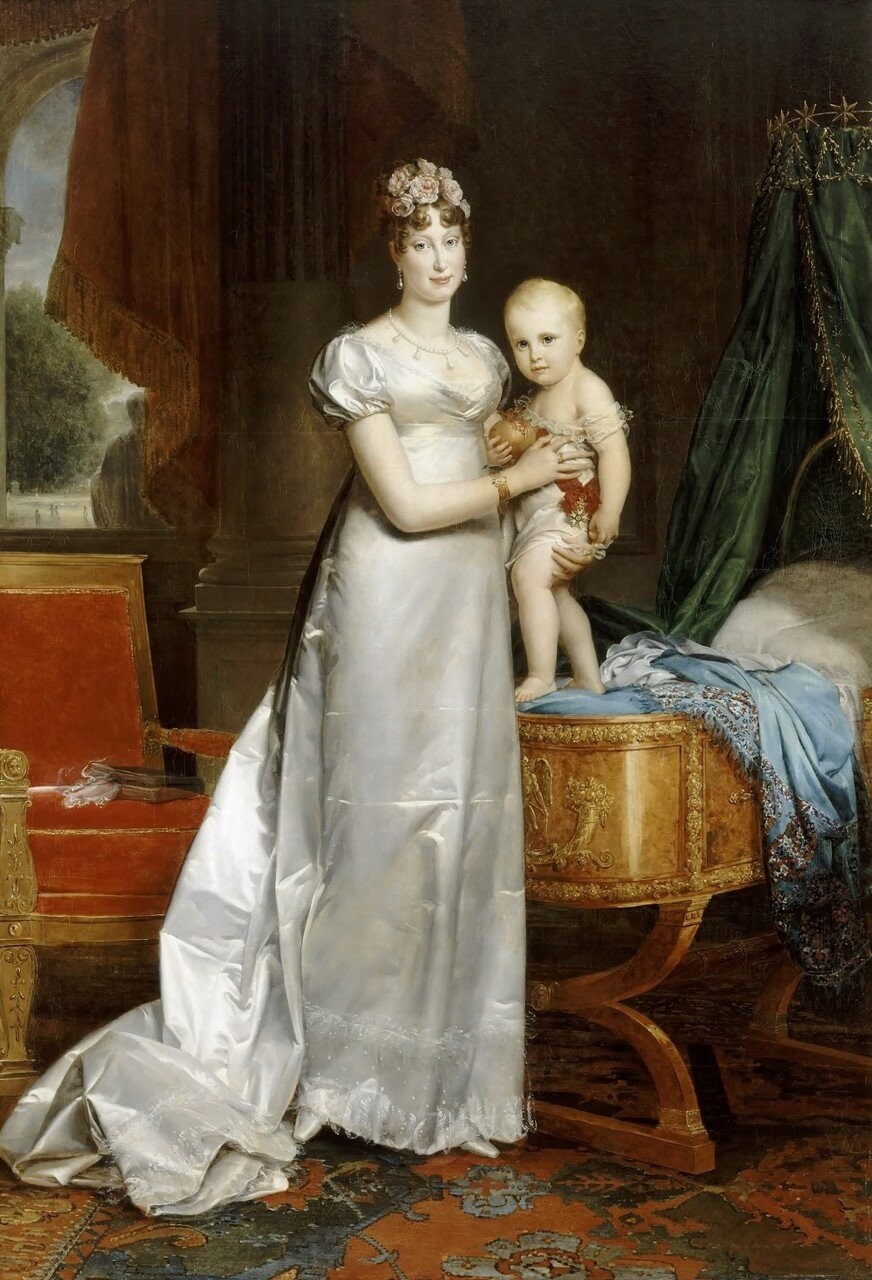
Francois Gerard, Marie-Louise, Empress of the French, and the Roi de Rome, c. 1812-1813. Chateau de Versailles, via Wikimedia Commons, public domain.
A Dynastic Image
The birth of Napoleon's son in 1811 was one of the central events of the Empire's political imagination. The child, styled King of Rome, promised continuity. Napoleon had founded a new dynasty, but dynasties need heirs. A portrait of Marie-Louise with the child therefore carried meaning far beyond family affection.
Gerard's painting belongs to that dynastic need. It presents the empress and child together, turning the mother into the visible guardian of succession. The image says that the Empire is not only the achievement of one extraordinary man. It has a future embodied in a child.
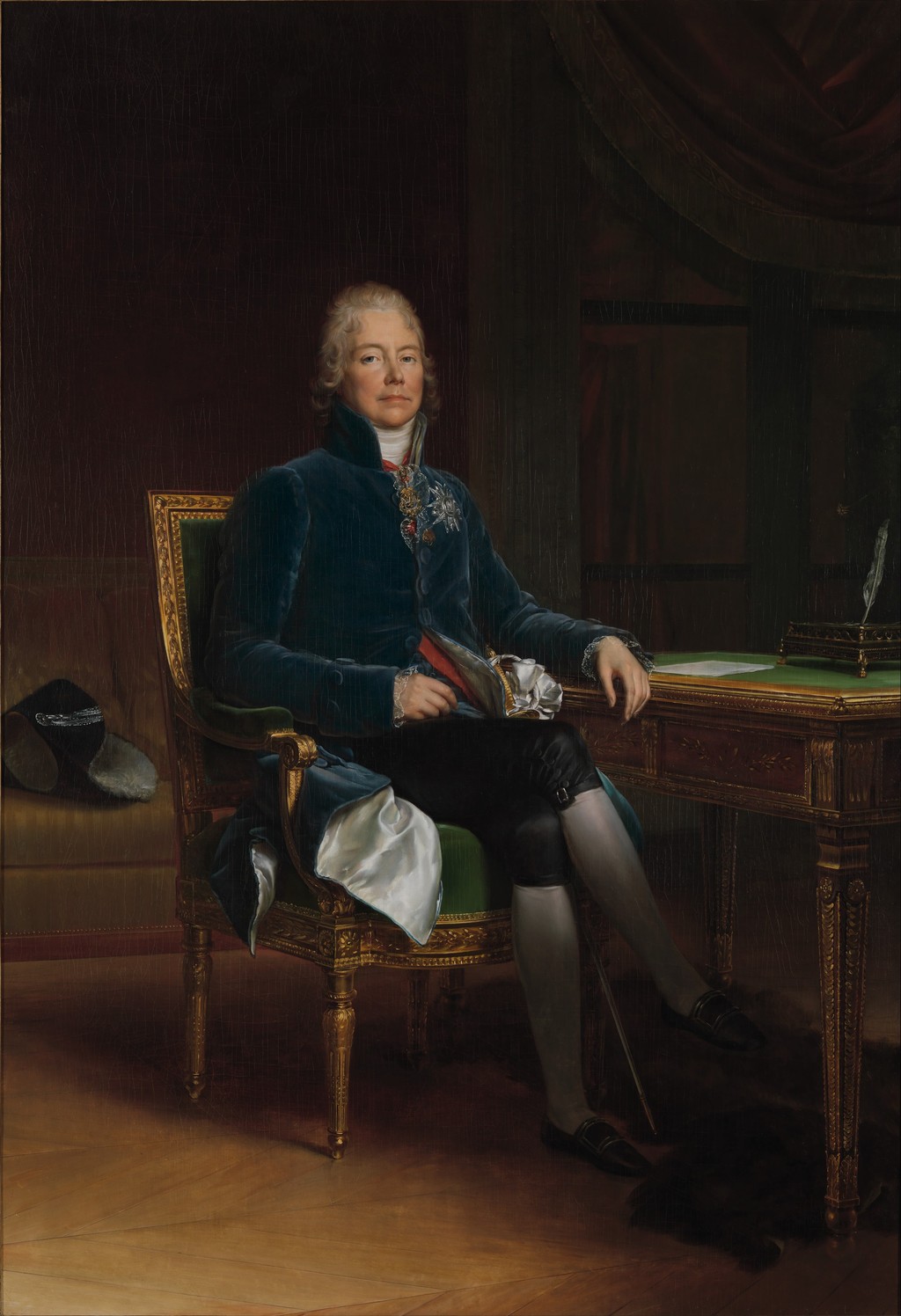
This makes the work different from Gerard's portraits of Napoleon in coronation robes or Talleyrand. Those images present public authority through adult command, costume and rank. Marie-Louise and the King of Rome presents authority through inheritance and tenderness.
Marie-Louise As Empress
Marie-Louise of Austria entered Napoleon's world through a marriage designed for political legitimacy. As an Austrian archduchess and empress of the French, she linked Napoleon's new dynasty to older European ruling houses. Her image could therefore serve both domestic and diplomatic purposes.
In Gerard's portrait, her role is inseparable from motherhood. She is not shown alone as a political bride or court figure. She appears with the imperial heir, whose presence transforms the image into a statement of succession.
The portrait's emotional surface matters. A dynastic portrait must persuade through feeling as well as status. If the image were only ceremonial, the child would become an emblem. Gerard gives the relationship enough softness to make political continuity appear natural and affectionate.
The King Of Rome
The King of Rome was Napoleon's hoped-for future. The title itself looked back to imperial ambition and forward to dynastic rule. In the portrait, the child is young, vulnerable and politically immense. His small body carries the weight of an entire regime's promise.
This tension is what gives the painting its poignancy. Modern hindsight knows that the Napoleonic dynasty would not unfold as the image suggests. The child who appears as imperial future would later be remembered as Napoleon II, a figure of unrealized succession. Gerard's painting preserves the moment before that collapse.
The work should therefore be read both as propaganda and as a fragile family image. It was meant to stabilize belief in the Empire's future. Yet its tenderness now appears shadowed by history.
That later knowledge gives the portrait a double emotional life. In its own moment, it promised continuation. After Napoleon's fall, it became an image of a future that failed to materialize. Gerard's calm surface now carries both imperial confidence and retrospective fragility.
Gerard's Official Role
Versailles describes Gerard as a court painter under Napoleon I and a painter of the imperial and royal worlds [3]. Marie-Louise and the King of Rome fits that role precisely. Gerard could make political power appear graceful, whether through a ruler in robes, a diplomat in a chair or an empress beside a child.
His style was well suited to dynastic portraiture. The image needed polish, clarity and warmth without disorder. Gerard's surfaces could make intimacy look elevated. He understood that public images of family had to balance affection with ceremony.
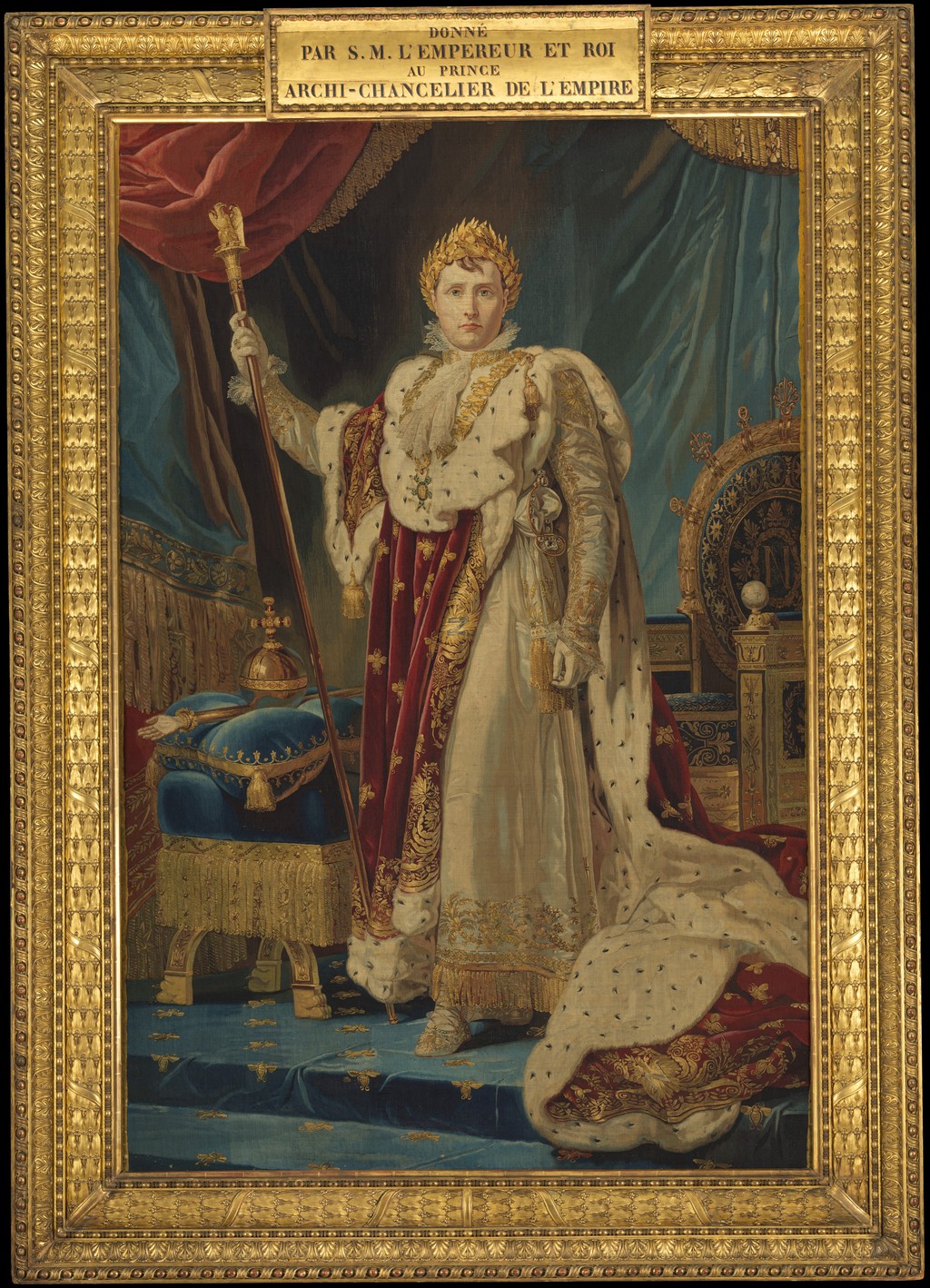
The painting also belongs to a larger network of imperial images. Gerard's Napoleon in coronation robes presented the emperor as sovereign. This portrait presents the emperor's family as continuity. Together, they define the ruler and the dynasty.
That pairing is useful because it shows how different forms of official portraiture worked together. Napoleon in robes supplies the image of command. Marie-Louise with the child supplies the image of inheritance. One asserts power in the present; the other projects power forward.
Source And Version Caution
The surviving records require care. Histoire par l'image identifies the large Versailles work as dated 1812, oil on canvas, 240.5 by 163 cm [1]. POP/Joconde records a small reduction, measuring 32 by 23 cm, and says it is a reduction of an original of 1813 conserved at Versailles under MV 4703 [2].
Rather than forcing these into a false certainty, the safest interpretation is to treat the painting as an image tradition centered on the Versailles work, with related reduction and engraving history. POP/Joconde also records that the reduction was acquired in 1837 from the Gerard sale and connected to an engraving dated 1852 [2]. This shows that the image continued to circulate after the immediate imperial moment had passed.
The reduction is important because it shows how dynastic images could persist in smaller forms. A large official canvas might belong to court display, while reductions and engravings allowed the image to move into other settings and later memory.
The 1837 acquisition from Gerard's sale also ties the reduction to the artist's own estate history [2]. By then, Napoleon's Empire was long gone, but the image still had collection value. The dynastic claim had failed politically, yet the painting remained historically and emotionally resonant.
Looking At The Portrait
The portrait's meaning depends on proximity. Mother and child are visually bound together. Marie-Louise's status matters, but the child's presence redirects attention from costume to succession. Gerard turns family intimacy into public assurance.
The setting and dress likely reinforce court identity, but the emotional center is the pair. The empress must appear dignified, not merely maternal; the child must appear precious, not merely cute. Gerard's portraiture often succeeds by finding exactly this balance between human feeling and public role.
The work also uses scale to create authority. The large Versailles canvas recorded by Histoire par l'image is more than life-size in effect [1]. It presents motherhood as a state subject. The private bond between mother and child becomes an image for the political future of France.
The small POP/Joconde reduction reverses that effect [2]. At 32 by 23 cm, it compresses a public dynastic image into an intimate format. That contrast between large official canvas and small reduction shows how the same image could serve different settings.
Why The Painting Matters
Marie-Louise and the King of Rome matters because it shows the Napoleonic regime imagining itself as hereditary. Napoleon's Empire was born from military and political upheaval, but this portrait asks viewers to see it as family continuity.
For Gerard, the painting demonstrates his ability to soften power without weakening it. He does not present succession through legal text or military triumph. He presents it through an empress and a child. The image is gentle, but its purpose is political.
The painting also gains force from what happened later. The promised future did not arrive in the form imagined here. That makes the work a record of imperial hope before defeat, exile and dynastic disappointment changed its meaning.
Gerard's achievement is to make that hope look natural. The portrait offers a calm image of continuity at the very moment when the Empire needed continuity most.
Its value lies in that calmness. Nothing in the image needs to announce the anxiety behind succession. Gerard's art works by making political need appear as family harmony.
The portrait also shows how official art could use softness without giving up authority. Marie-Louise and the child are presented through affection, but the scale, setting and subject keep the image in the world of state portraiture. Gerard makes tenderness carry dynastic weight.
That tension between affection and state purpose gives the painting its lasting charge.
It is family feeling arranged as imperial evidence.
And public promise.
Frequently Asked Questions
The painting shows Marie-Louise, Empress of the French, with her son, the King of Rome, Napoleon's heir.
Histoire par l'image lists the Versailles work as 1812. POP/Joconde describes a related reduction tied to an original of 1813 at Versailles. Both date references should be kept in mind.
He represented Napoleonic succession. His birth gave Napoleon a dynastic heir and allowed imperial imagery to present the Empire as a family future.
The reduction shows how Gerard's dynastic image continued through smaller versions and later engraving, beyond the original court context.
Discussion
Gerard's art often asks viewers to read public roles through small signs of pose, dress, surface and setting. Use the prompts below as starting points for looking closely.
Reader Insights
What detail most shapes your reading of Marie-Louise and the King of Rome: pose, setting, costume, expression or historical context?
How does Gerard balance public identity with a more personal or psychological presence?
Which comparison helps most: David's studio, Napoleonic portraiture, Restoration image-making or salon culture?
Join the Conversation
Share a thoughtful comment below about what you notice, question or compare when looking at this work.
References
- Histoire par l'image, Marie-Louise, imperatrice des Francais et le roi de Rome https://histoire-image.org/oeuvres/marie-louise-imperatrice-francais-roi-rome
- POP/Joconde, MARIE-LOUISE, IMPERATRICE DES FRANCAIS, ET LE ROI DE ROME https://pop.culture.gouv.fr/notice/joconde/000PE008244
- Chateau de Versailles, Francois Gerard https://en.chateauversailles.fr/discover/history/great-characters/francois-gerard