by Tom Gurney
Tom Gurney BSc (Hons) is an art history expert with over 20 years experience
Published on July 18, 2026 / Updated on July 18, 2026
Email: tomgurney1@gmail.com / Phone: +44 7429 011000
Juliette Recamier by Francois Gerard: Introduction
Francois Gerard's portrait of Juliette Recamier is a painting about beauty as self-command. The sitter is not shown as a passive ornament in someone else's social world. She appears as a woman who understood the value of image, taste, patronage and repetition. Gerard gives her the elegance expected of a celebrated salon figure, but he also gives that elegance structure. The portrait is graceful because it is controlled.
The Musee Carnavalet identifies the work as Portrait de Juliette Recamier, nee Bernard (1777-1849), an oil painting by Francois Gerard, inventory P1581, acquired by purchase at public sale [1]. The museum's account places the portrait inside Recamier's larger career as muse, model, patron and collector, one of the most represented women of her age [1]. That context is essential. The painting is not only a likeness; it is part of Recamier's deliberate public image.
At a Glance
- ArtistFrancois Gerard
- SitterJuliette Recamier, nee Bernard
- Date/contextcommissioned in 1801, according to Carnavalet
- Mediumoil painting on canvas
- CollectionMusee Carnavalet, Paris
- InventoryP1581
- SubjectRecamier as salon figure, patron, model and self-fashioning icon
Contents
- Introduction
- Who Was Juliette Recamier?
- A Commission From 1801
- Gerard And David
- Looking At The Portrait
- Fashion, Furniture And The Modern Interior
- Diffusion Through Engraving
- Prince August Of Prussia
- Why The Portrait Matters
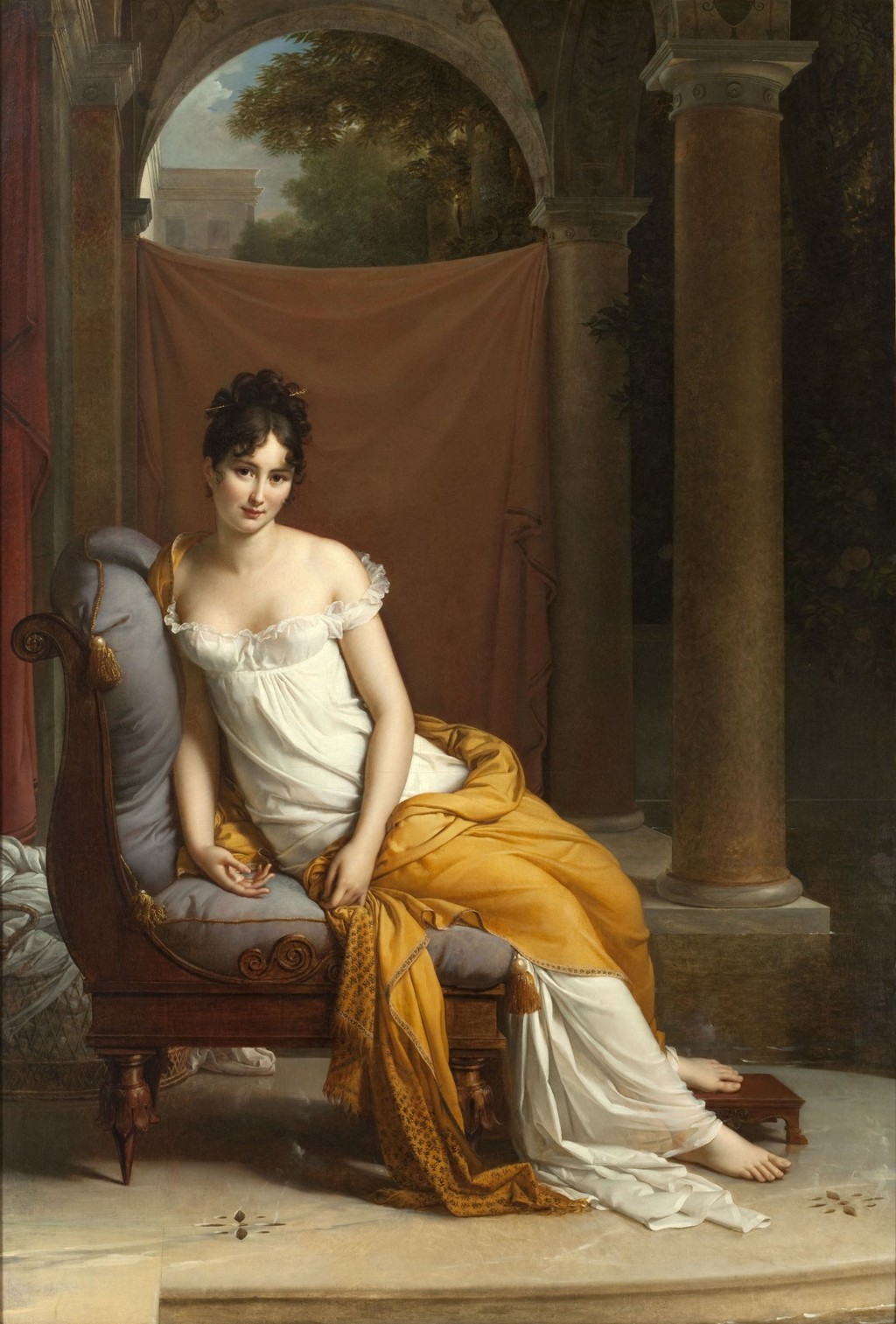
Francois Gerard, Portrait of Juliette Recamier, between 1802 and 1805. Paris Musees / Musee Carnavalet - Histoire de Paris, CC0.
Who Was Juliette Recamier?
Juliette Recamier was one of the most famous social figures in early nineteenth-century Paris. Carnavalet presents her as an icon who was at once muse, patron, model and collector [1]. That combination made her unusually powerful as a subject for portraiture. She was not merely represented by artists; she helped direct how she would be seen.
Her marriage to the banker Jacques-Rose Recamier placed her in a wealthy social world, and Carnavalet describes the couple's move into the Chaussee-d'Antin district and their modern furnishing of a mansion on the rue du Mont-Blanc with fashionable artists of the moment [1]. The house was not simply domestic space. It was a stage for taste.
Recamier gave parties and hosted a celebrated salon where artists and intellectuals gathered [1]. In that setting, portraiture mattered. A portrait could extend the effect of the salon beyond the room. It could turn beauty, furniture, dress and personality into a portable social fact.
A Commission From 1801
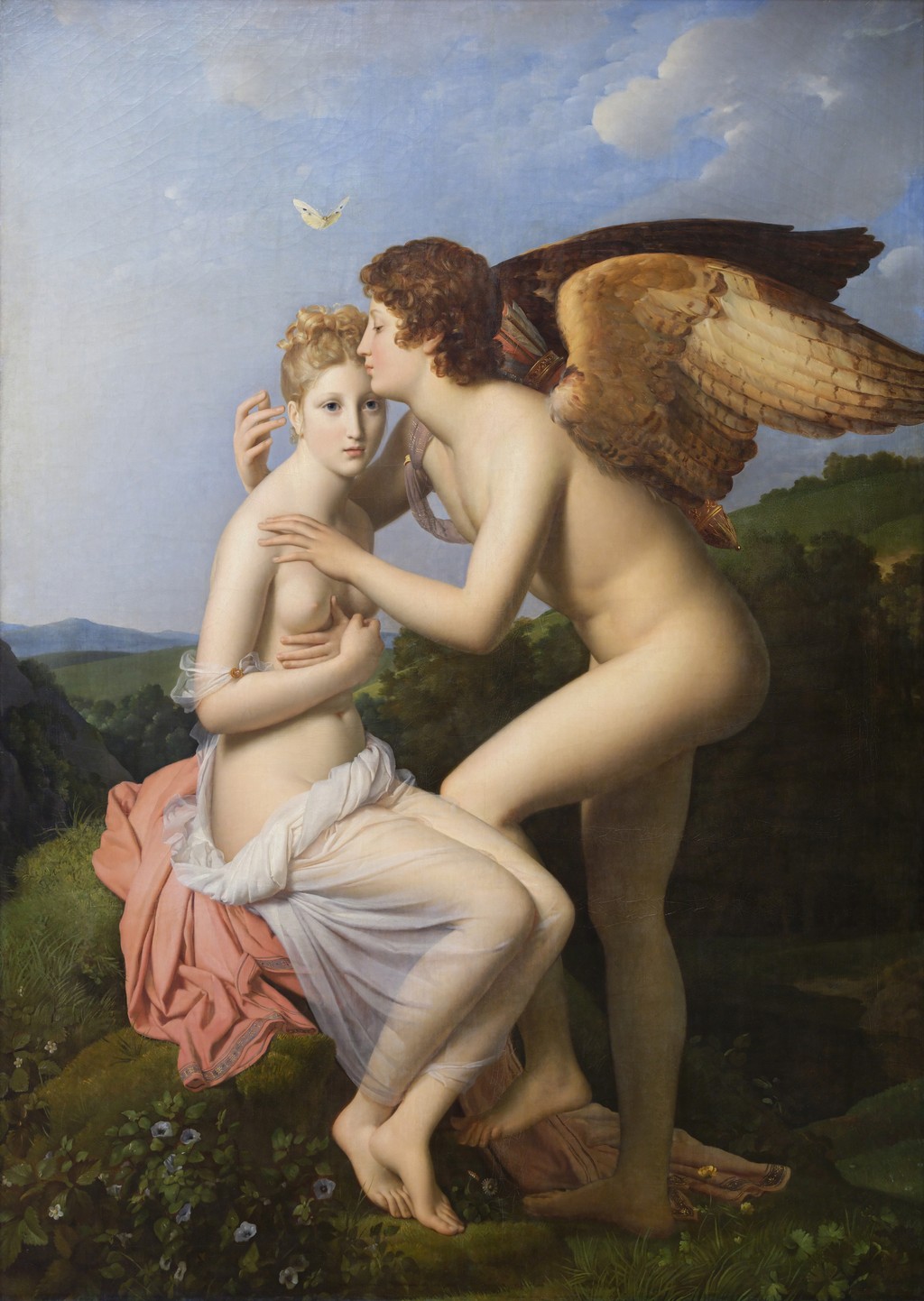
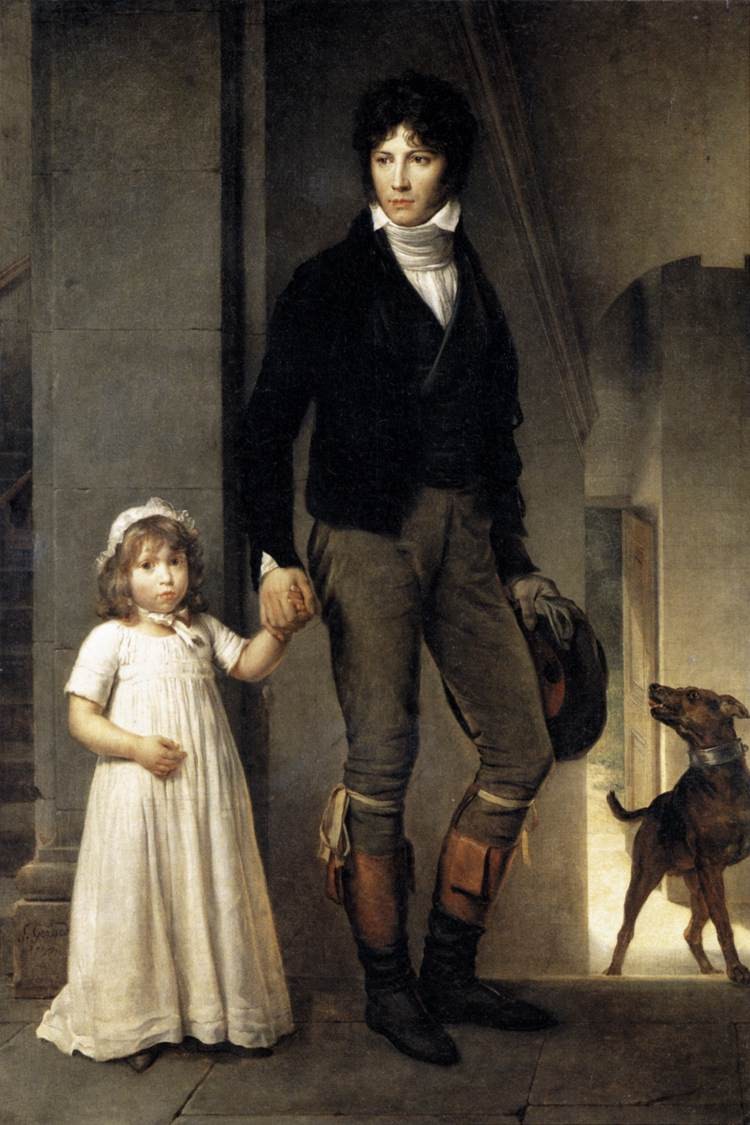
Carnavalet states that Recamier commissioned Gerard's portrait in 1801 [1]. The date places the work just after Gerard's early success with Psyche and Cupid and Isabey and His Daughter, and before his full immersion in the grandest forms of imperial and Restoration portraiture. The painting belongs to the moment when Gerard's social portraiture was becoming one of the most refined visual languages in Paris.
The commission also shows Recamier's active role. She was not waiting to be discovered by a painter. She chose painters and sculptors as part of a larger project of image-making. Carnavalet notes that she solicited leading masters of the moment for her representation, including David, Gerard, Chinnard and Canova [1].
Gerard's portrait therefore participates in a sequence of images rather than standing alone. Recamier's identity was multiplied through different media and temperaments: David's austerity, Gerard's polished social elegance, Canova's sculpture and later engraved diffusion. The sitter becomes visible through comparison.
This self-fashioning was not vanity in a shallow sense. In Recamier's world, social life depended on visibility. A salon host needed reputation, beauty, taste and memorable surroundings. Portraits helped give those qualities durable form. Gerard's painting shows Recamier as a person who understood that image could function almost like architecture: a structure through which others entered her social presence.
The commission also belongs to a Paris still emerging from Revolutionary upheaval. Aristocratic codes had been disrupted, but taste, display and sociability had not disappeared. Recamier's portrait shows a new kind of public femininity, neither courtly in the old Versailles sense nor republican in a severe political sense. She appears modern, classical, fashionable and socially sovereign.
Gerard And David
The most famous comparison is Jacques-Louis David's unfinished Madame Recamier. David's painting shows Recamier reclining on an antique-style couch in a composition of extraordinary severity. It is spare, modern and unfinished, leaving the sitter suspended inside a cool architectural emptiness.
Gerard's portrait works differently. Carnavalet says that he first considered representing Recamier nude and full-length before choosing a more restrained composition [1]. That change matters. The final painting does not pursue shock or antique exposure. It gives Recamier an image that is fashionable, seductive and socially usable without crossing into scandal.
This difference between David and Gerard reveals two kinds of Neoclassical modernity. David strips the image down to severe form; Gerard refines it into social persuasion. David's Recamier can feel almost experimental. Gerard's Recamier feels made for circulation.
The comparison also shows Recamier's own judgment as a patron. David's painting is now one of the great images of Neoclassical portraiture, but it did not supply the finished, satisfying public likeness she wanted. Gerard's painting did. The difference is not simply a matter of completion. It is a difference in social function. David's image turns Recamier into a distant modern icon; Gerard's makes her charming, legible and available to admiration without giving up control.
Gerard's solution also better suits the world of engraving. A sparse unfinished image can be powerful in a museum, but a portrait intended for broader diffusion needs a fuller vocabulary of dress, gesture, face and ornament. Gerard gives the engraver and later viewers more to hold.
Looking At The Portrait
Carnavalet describes Recamier seated on an antique-style chair, wearing a white dress in the fashionable Greek mode and a brightly colored shawl [1]. These elements are not incidental costume. They shape the whole meaning of the portrait.
The antique chair ties the sitter to Neoclassical taste. The white dress signals the fashion of the moment, with a form that emphasizes the body while keeping the image within acceptable social decorum. The shawl adds color and movement, preventing the image from becoming merely pale or sculptural. Gerard turns fashion into composition.
Recamier's body is presented through ease rather than drama. She does not need a grand narrative setting. The chair, dress, shawl and posture are enough to identify her as a woman of taste and command. Gerard's skill lies in making that command seem effortless.
The portrait also depends on the delicacy of Recamier's features and the charm associated with her by contemporaries. Carnavalet notes that Gerard's treatment bears witness to those qualities [1]. The painting is flattering, but the flattery is historically meaningful. Recamier's beauty was part of her social power, and Gerard gives that beauty a carefully managed form.
The seated pose is especially effective because it avoids both stiffness and informality. Recamier does not stand like a ruler, but neither does she dissolve into private ease. The chair supports a pose that feels poised for conversation. She belongs to a social world, but the painting gives her enough distance to become an image rather than merely a participant in a room.
This is why the portrait should not be separated too sharply from decorative art and interior culture. Recamier's public identity was made through rooms as well as faces. The antique chair, white dress and shawl belong to a world where furniture, clothing and portraiture worked together. Gerard understood that a fashionable sitter could be represented through an atmosphere of taste rather than through heraldry or official insignia.
Gerard's color also matters. The white dress creates a sculptural effect, while the vivid shawl prevents the figure from becoming bloodless. The portrait is classical in its references, but it remains sensuous. That balance between antique form and living charm is one reason the image satisfied its sitter.
Fashion, Furniture And The Modern Interior
The portrait belongs to a world in which furniture, dress and social identity were inseparable. Recamier's hotel on the rue du Mont-Blanc was furnished with modern ambition, and her portrait extends that interior culture into painted form [1]. The chair is not just a seat. It is a sign of taste.
Gerard was well suited to this kind of image. His portraits often make public identity through controlled surroundings rather than theatrical action. In Recamier's case, the setting does not need the heavy symbols of rank found in royal portraiture. The signs are lighter: antique form, fashionable textile, refined posture and a face arranged for admiration.
This is why the painting has more depth than simple prettiness. It shows how early nineteenth-century elegance could become a structure of identity. Recamier is beautiful, but she is also culturally positioned. She appears as a woman whose image belongs to salons, interiors, artists and reproduction.
Diffusion Through Engraving
Carnavalet records that Recamier was fully satisfied with Gerard's portrait and decided, before giving it to Prince August of Prussia in 1822, to have it widely diffused through engraving [1]. This is one of the most revealing facts about the work. The painting was not only made to please its sitter. It was made to travel.
Engraving turned a painted likeness into a broader public image. It allowed Recamier's chosen version of herself to circulate beyond the original canvas. Carnavalet also notes that she paid close attention to the preparatory drawing for the engraving, as shown by correspondence with Gerard [1]. That detail confirms her active involvement in the life of the image.
For Gerard, this was a familiar problem in another form. His official portraits of rulers and elites often existed through replicas, reductions, tapestries or engravings. Recamier's portrait belongs to the same culture of repetition, but with a different social purpose. Here, repetition serves salon fame and personal myth rather than state authority.
The engraving history also gives Recamier a kind of authorship over the image's afterlife. Carnavalet's note about her attention to the preparatory drawing suggests that she did not consider the original canvas the end of the process [1]. The portrait had to remain recognizably hers as it moved into another medium. That care makes her more than a sitter. She becomes an editor of her own public appearance.
Prince August Of Prussia
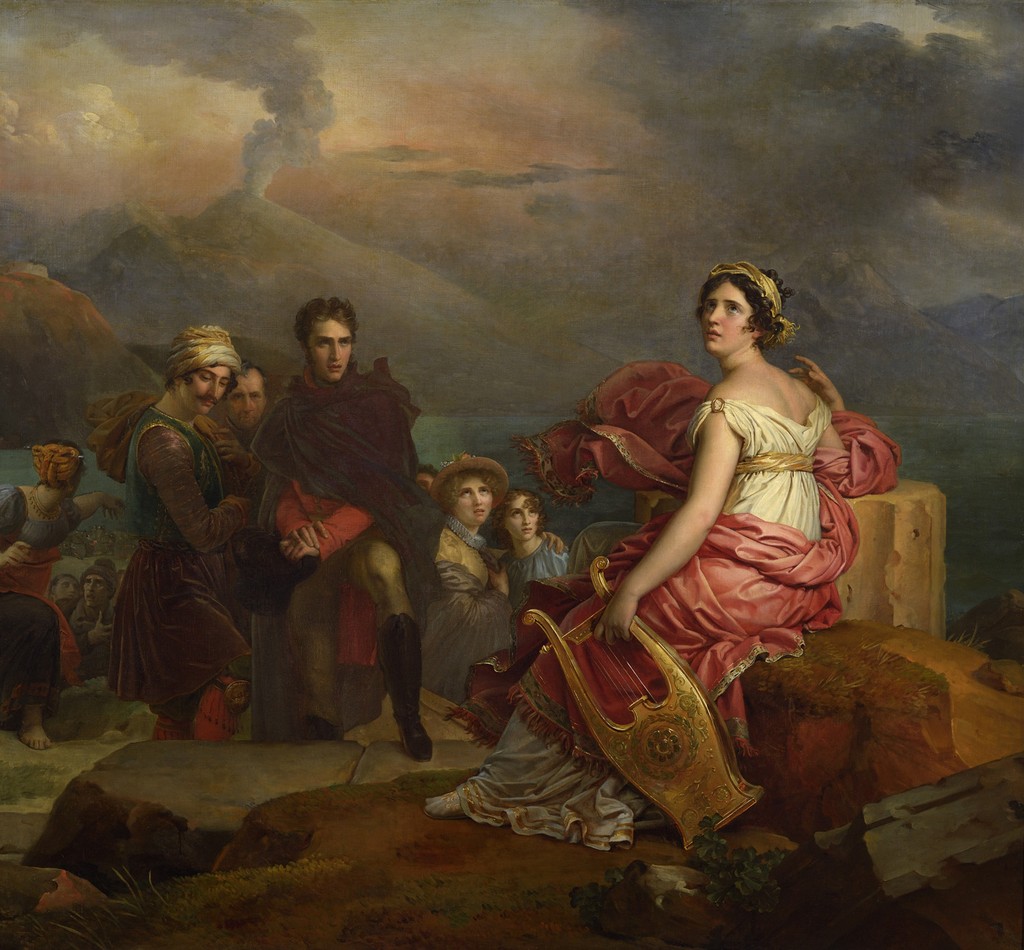
The later gift to Prince August of Prussia adds another layer to the portrait's meaning [1]. Recamier's relationship with August also shaped the history of Gerard's Corinne at Cape Miseno, which was commissioned by August with Recamier as intermediary and later given to her [2].
The two paintings therefore belong to a shared social world. Gerard painted Recamier herself, and later painted a literary memorial that entered her Abbaye-aux-Bois salon. In both cases, image, affection, literature and social performance are intertwined.
The gift of the portrait in 1822 also suggests that the painting had value beyond Parisian display. Recamier's image could move through European relationships just as Gerard's court portraits moved through political networks.
This movement helps explain why Gerard was such a natural painter for Recamier. Both understood circulation. Gerard's official images circulated through courts and institutions; Recamier's image circulated through salons, friendships, gifts and engravings. The portrait sits at the meeting point of those systems.
Why The Portrait Matters
Gerard's Juliette Recamier matters because it shows portraiture as collaboration between painter and sitter. Gerard supplies polish, composition and social tact. Recamier supplies self-awareness, patronage, beauty and control over diffusion. The result is a portrait that feels both elegant and strategic.
The painting also helps clarify Gerard's difference from David. David gave Recamier a severe modern icon; Gerard gave her an image that satisfied her and circulated successfully. That does not make Gerard less serious. It shows that his seriousness lay in social intelligence rather than radical formal austerity.
Recamier's portrait is also central to Gerard's art because it stands between private likeness and public fame. It is not a state portrait, but it behaves like an image made for a public world. It turns a living social presence into a repeatable symbol of taste.
That makes the painting one of Gerard's finest statements about elegance. The elegance is not accidental. It is constructed from dress, furniture, pose, reputation, patronage and reproduction. Gerard understood that a sitter like Recamier did not simply need to be painted beautifully. She needed to be made unforgettable in the right way.
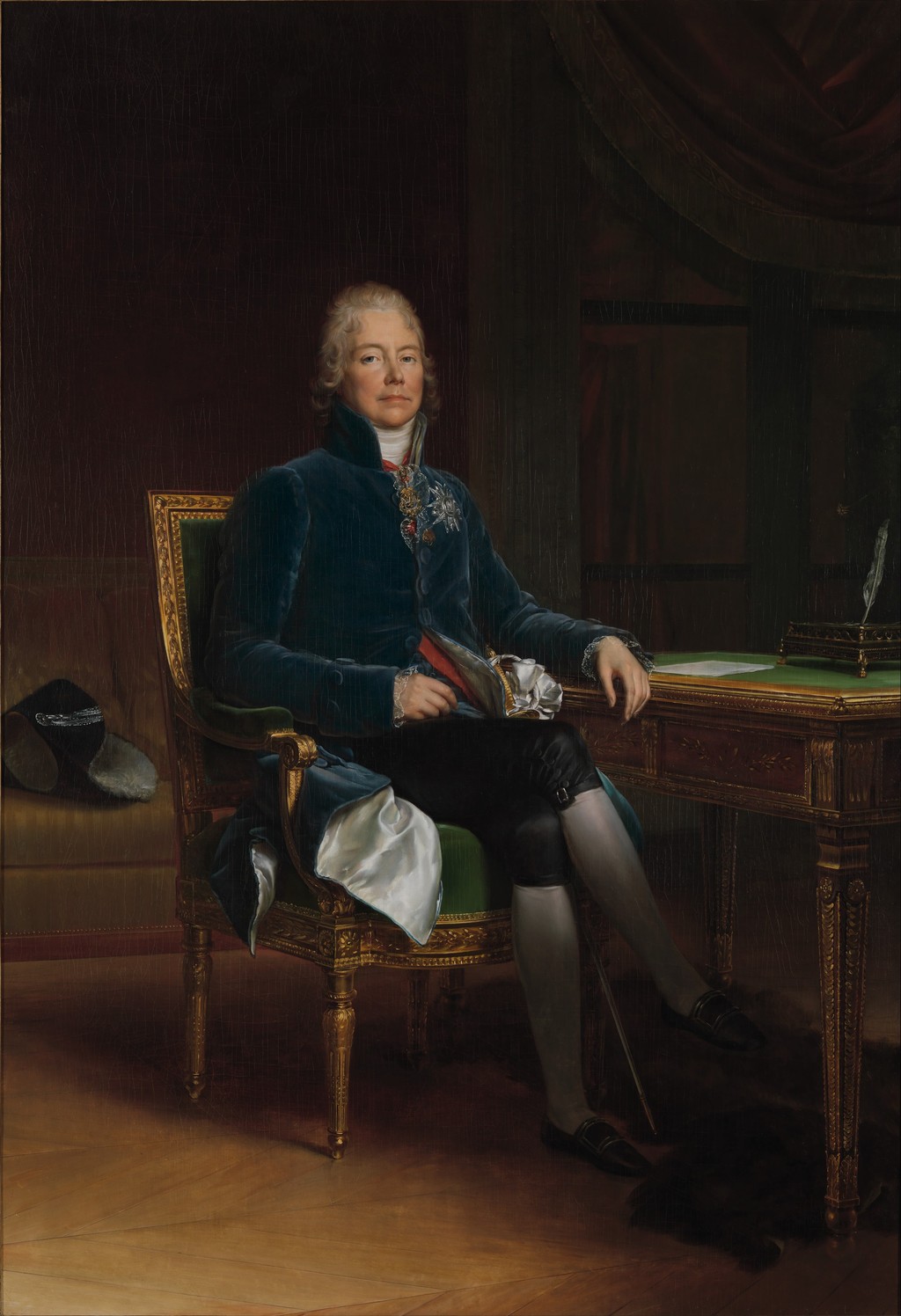
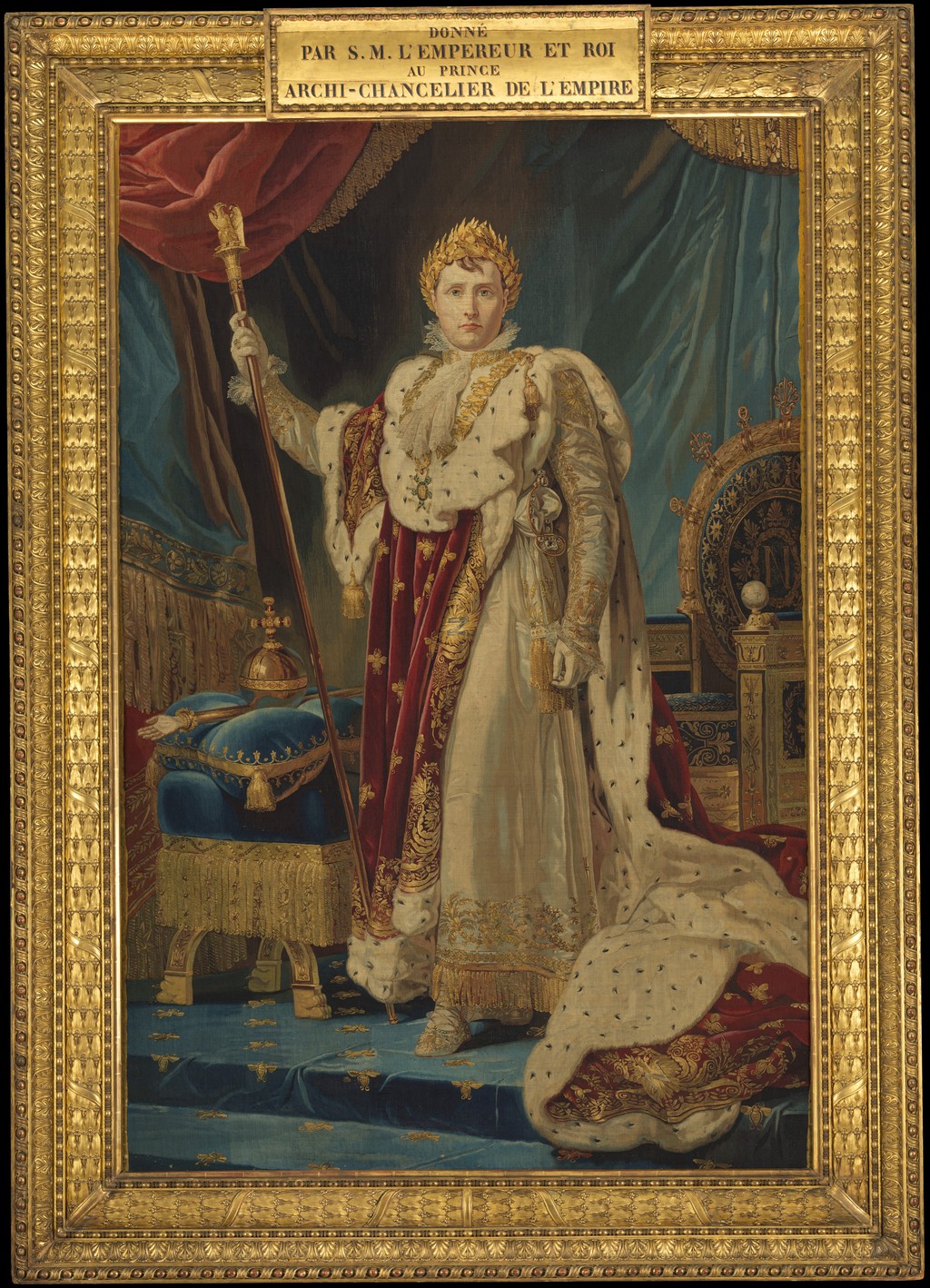
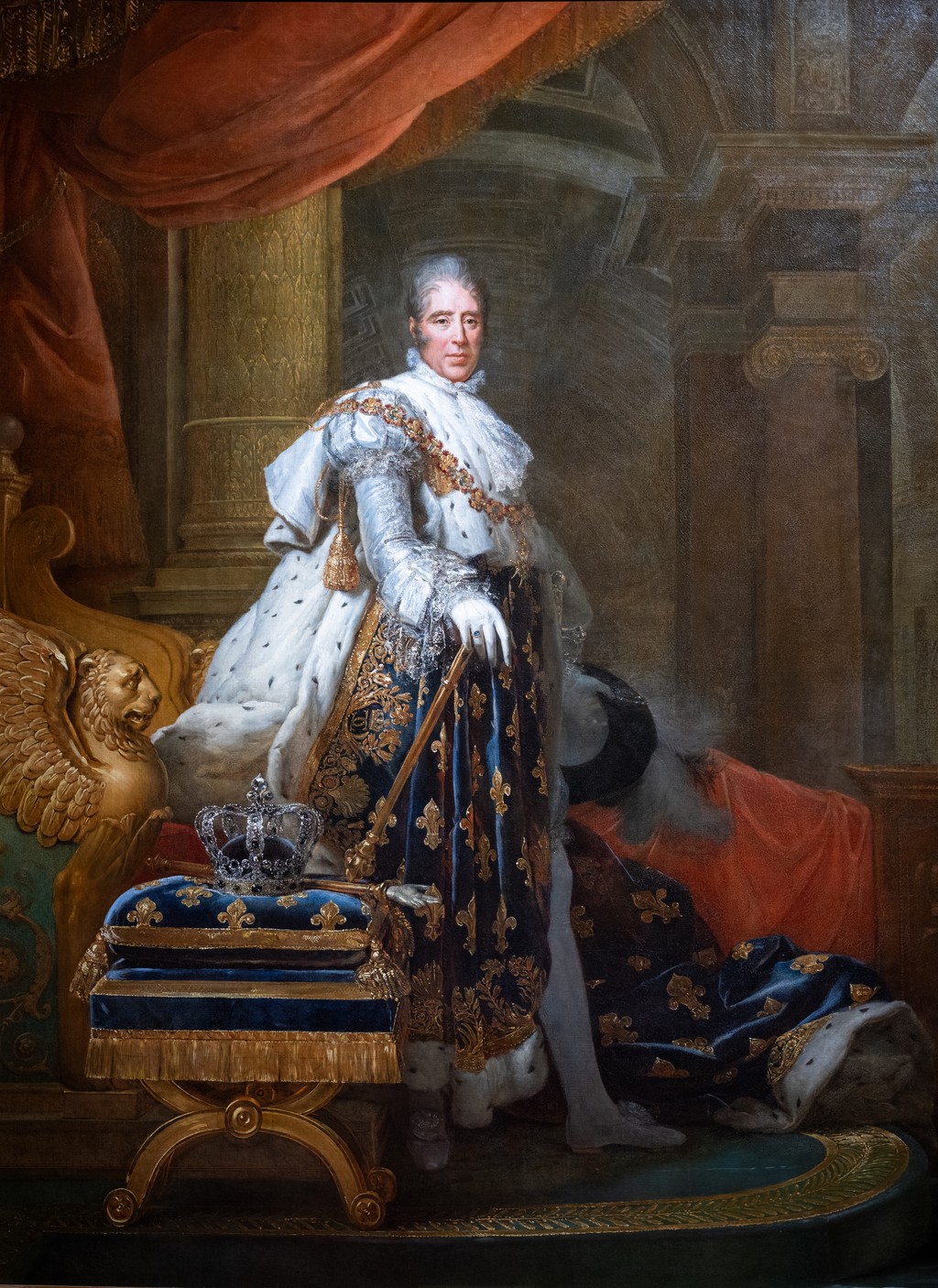
The portrait also gives Gerard's art a more intimate social register than his official images of Napoleon or Charles X. Those portraits must carry institutions. Recamier's portrait carries a person whose power worked through conversation, taste and fascination. Gerard adjusts without losing his signature control.
That adjustment is the painting's quiet brilliance. Gerard does not need the emblems of state power to make the image memorable. He turns social poise into a form of authority. Recamier sits, but the portrait is not passive. It shows how a woman of the period could make herself visible through patronage, taste and careful circulation.
The painting's success also depends on trust between sitter and painter. Recamier needed an image that could flatter without seeming merely decorative, and Gerard needed a sitter whose social aura could sustain his refined method. Their collaboration produced a portrait in which elegance becomes evidence of agency, not just beauty.
That agency is what separates the portrait from a conventional society likeness.
Recamier is admired, but she is also directing the terms of admiration.
That distinction gives the image its enduring tension.
Frequently Asked Questions
Juliette Recamier was a celebrated Parisian salon figure, patron, model and collector. Carnavalet describes her as one of the most represented women of her time.
Carnavalet records that Recamier commissioned the portrait from Gerard in 1801.
David's portrait is severe, spare and unfinished. Gerard's is more polished, socially persuasive and suited to the sitter's desired public image.
Recamier decided to diffuse Gerard's portrait through engraving, allowing the image to circulate more widely beyond the original canvas.
Discussion
Gerard's art often asks viewers to read public roles through small signs of pose, dress, surface and setting. Use the prompts below as starting points for looking closely.
Reader Insights
What detail most shapes your reading of Juliette Recamier: pose, setting, costume, expression or historical context?
How does Gerard balance public identity with a more personal or psychological presence?
Which comparison helps most: David's studio, Napoleonic portraiture, Restoration image-making or salon culture?
Join the Conversation
Share a thoughtful comment below about what you notice, question or compare when looking at this work.
References
- Musee Carnavalet,
Portrait de Juliette Recamier, nee Bernard (1777-1849)https://www.carnavalet.paris.fr/collections/portrait-de-juliette-recamier-nee-bernard-1777-1849?page=1 - Musee des Beaux-Arts de Lyon, Corinne at Cape Miseno https://www.mba-lyon.fr/en/fiche-oeuvre/corinne-cape-miseno