


 by Tom Gurney
Tom Gurney BSc (Hons) is an art history expert with over 20 years experience
Published on July 18, 2026 / Updated on July 18, 2026
Email: tomgurney1@gmail.com / Phone: +44 7429 011000
Francois Gerard Paintings: Introduction
Francois Gerard's paintings form a career-long study of public appearance. He could paint mythological desire, artistic friendship, diplomatic intelligence, literary memory and royal ceremony, but he returned again and again to the problem of how a figure should be seen. His art is rarely violent. It is ordered, polished and socially exact. That control is what made him so valuable in France between the Revolution, the Empire and the Restoration.
Versailles describes Gerard as a court painter under Napoleon I and later under Louis XVIII and Charles X, as well as a portraitist of Europe's sovereign families [1]. That official reputation is real, but it does not exhaust the paintings. The stronger view is to see Gerard as an artist who translated Neoclassical discipline into many kinds of social image: myth, intimacy, literary fame, dynastic motherhood and state authority.
At a Glance
- ArtistFrancois Gerard
- Dates1770-1837
- TrainingJacques-Louis David's studio
- Main modesportraiture, mythological painting, literary subject painting, official images and repeated court portraits
- Important worksPsyche and Cupid, Isabey and His Daughter, Juliette Recamier, Talleyrand, Corinne at Cape Miseno, Napoleon I in Coronation Robes, Marie-Louise and the King of Rome, and Charles X
Contents
- Introduction
- Key Paintings
- Mythological Painting
- Early Portraiture
- Salon Portraits And Self-Fashioning
- Diplomacy And Political Intelligence
- Literary Painting
- Napoleon And Official Images
- Dynastic And Restoration Portraiture
- Why Gerard's Paintings Matter
Key Paintings
The paintings below are the core works in this Francois Gerard cluster. The thumbnail rows provide a visual route through the artist's major pages and a clear internal-link structure for the paintings section.
Mythological Painting
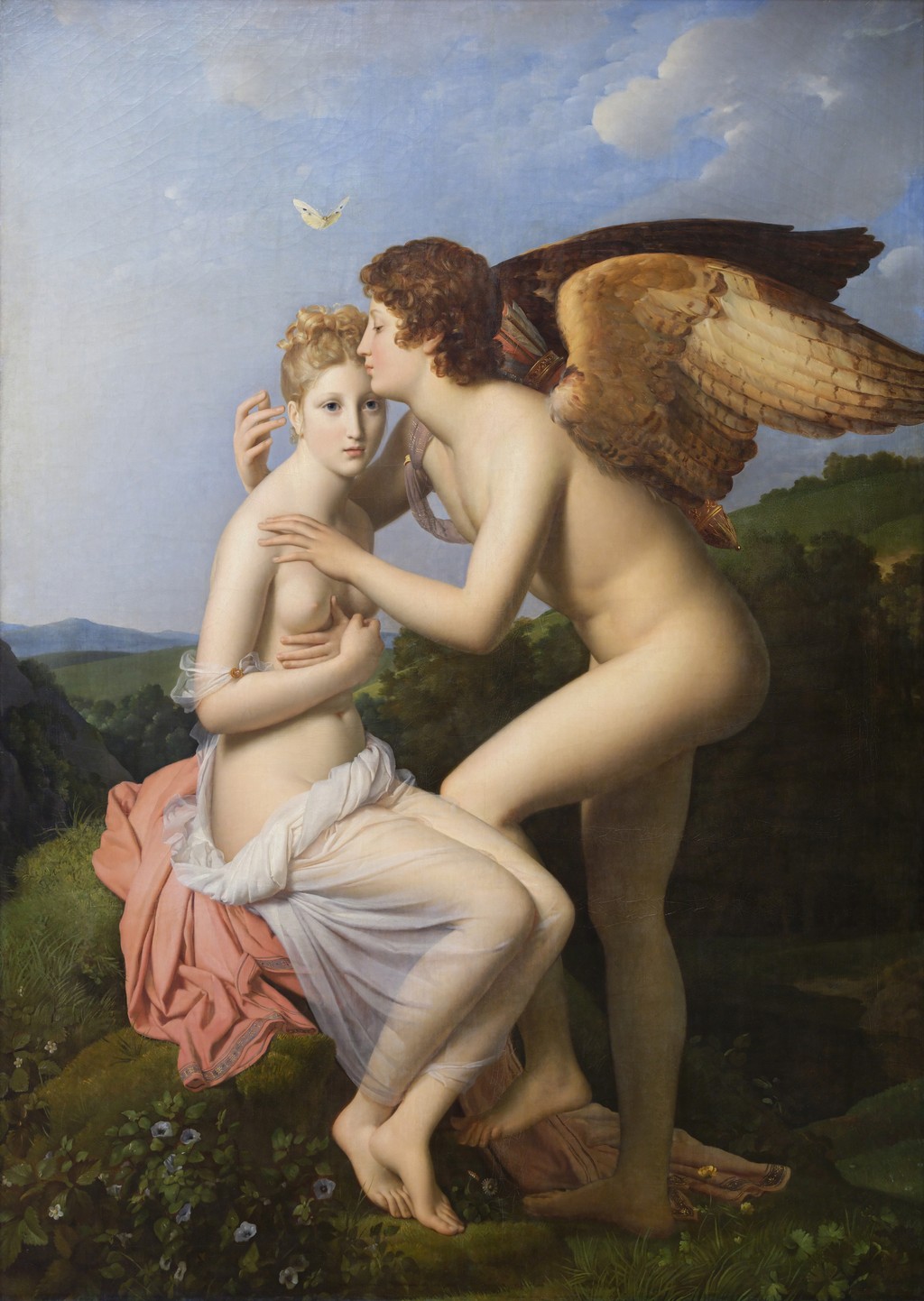
Psyche and Cupid, painted in 1798 and now in the Louvre, is Gerard's clearest mythological painting [2]. The subject is ancient, but the emotional register is delicate rather than heroic. Psyche receives Cupid's first kiss in a composition built around stillness, ideal beauty and restraint. The painting shows how Gerard could make Neoclassical form serve tenderness.
This matters because Gerard is often remembered through official portraits. Psyche and Cupid shows that his polish was not only a courtly instrument. It could also create an atmosphere of suspended feeling. The smooth body, controlled contour and quiet drama belong to the same artistic temperament visible in his portraits, but the subject changes the effect. Rank is absent; sensation becomes the center.
The Louvre's object history also places the painting in public Salon culture and later museum collecting [2]. Gerard's mythological art was not private fantasy detached from reputation. It belonged to the same world of exhibition, patronage and collecting that shaped his portraits.
That continuity is important. Even when Gerard changes subject, he rarely changes temperament abruptly. The figures remain composed, the surfaces controlled and the emotional charge carefully measured.
Early Portraiture
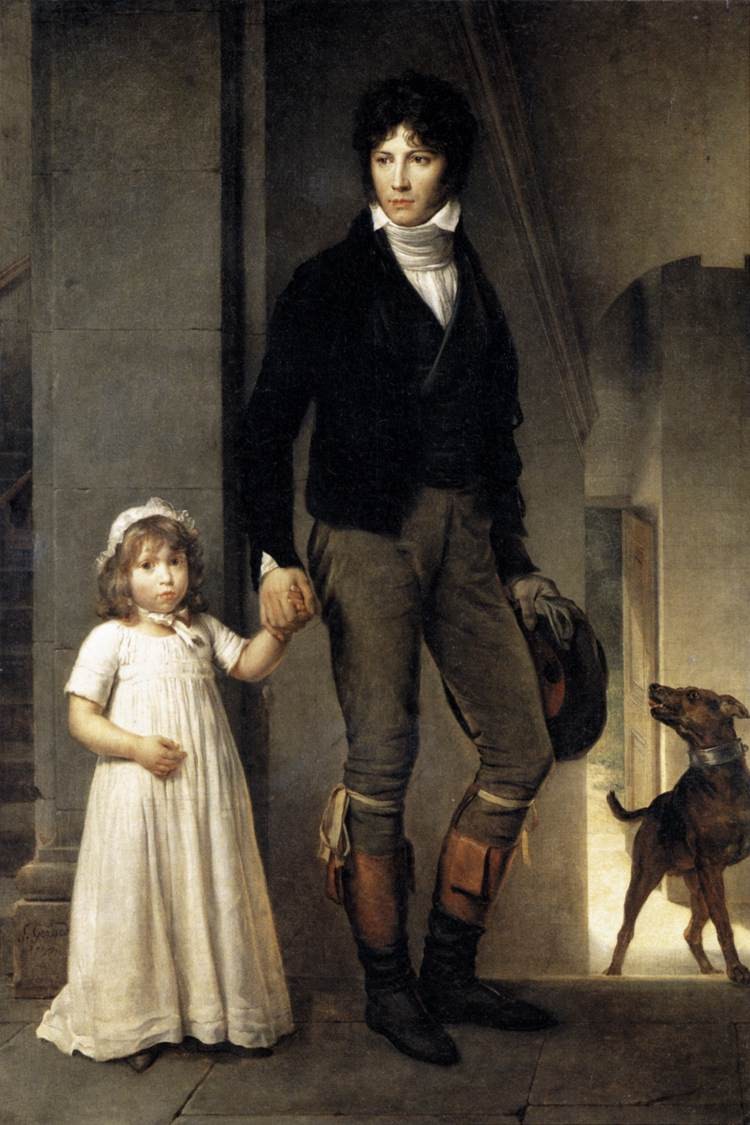
Isabey and His Daughter, painted in 1795 and exhibited at the Salon de l'An V / 1796, is one of Gerard's most important early portraits [3]. The sitter, Jean-Baptiste Isabey, was a painter in miniature and a friend of Gerard. The Louvre records that Gerard gave the portrait to Isabey after Isabey helped sell Gerard's lost Belisarius [3].
The work is intimate, but its scale and polish make it ambitious. Gerard presents artistic friendship and fatherhood with the dignity usually associated with more public forms of portraiture. That balance became one of his signatures. The image is tender without becoming loose, formal without becoming cold.
This early portrait also shows why Gerard's later success cannot be explained only by access to power. Before the full machinery of Empire and Restoration commissions, he had already learned how to make relation visible. In Isabey and His Daughter, affection becomes a public image.
Salon Portraits And Self-Fashioning
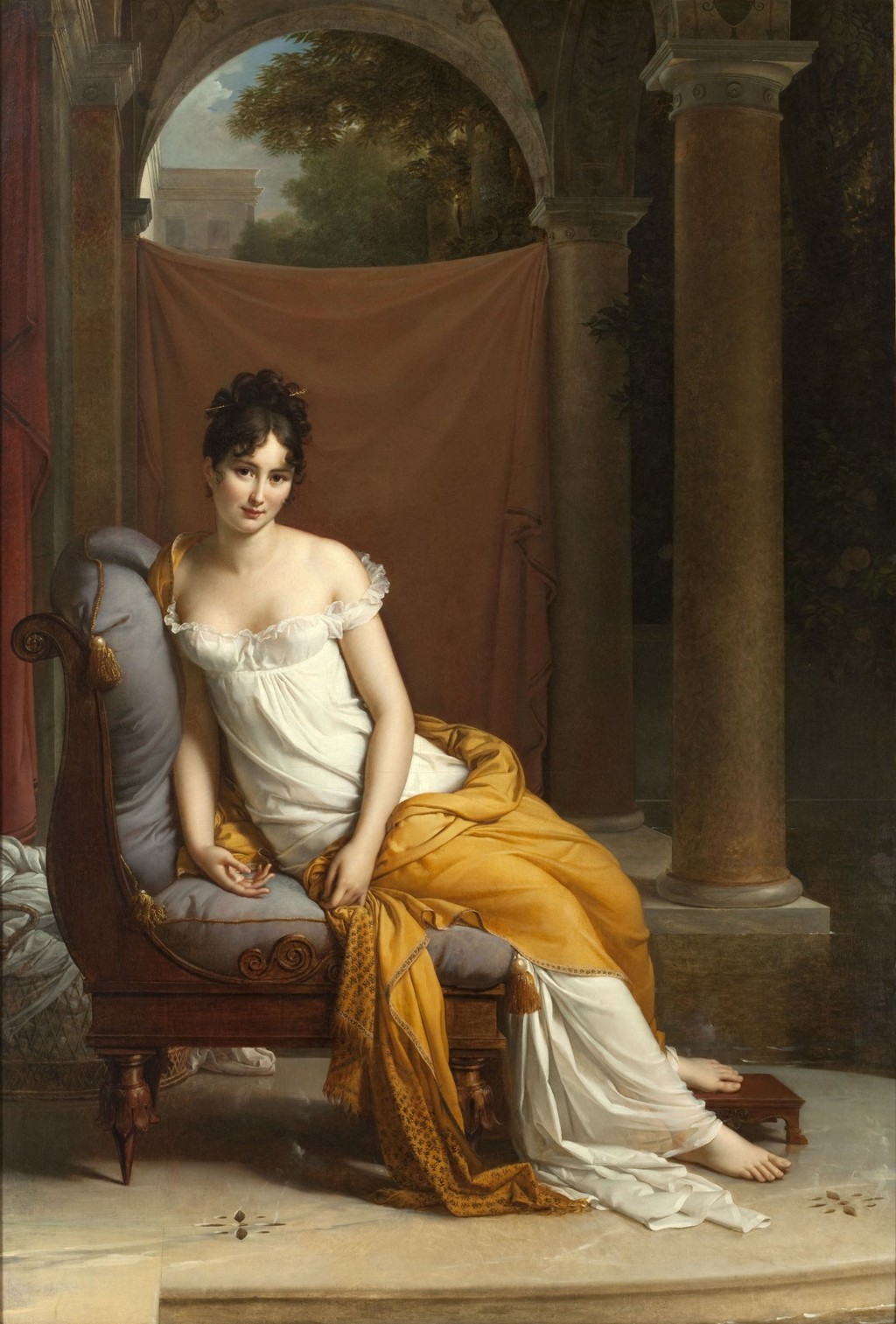
The portrait of Juliette Recamier extends Gerard's art into the world of salon culture. Carnavalet presents Recamier as muse, model, patron and collector, one of the most represented women of her time [4]. She commissioned Gerard's portrait in 1801 and was satisfied enough with the image to promote its diffusion through engraving before giving it to Prince August of Prussia in 1822 [4].
Gerard's Recamier is a portrait of social control. The sitter appears in fashionable white dress, seated on an antique-style chair with a vivid shawl. The image is elegant, but not merely decorative. It shows a woman managing her own public image through artists, interiors, salons and reproduction.
This painting also sits in dialogue with Jacques-Louis David's unfinished Madame Recamier. David gave Recamier an austere modern classicism; Gerard gave her a more finished and socially persuasive image. The difference reveals Gerard's gift for making refinement feel accessible.
Diplomacy And Political Intelligence
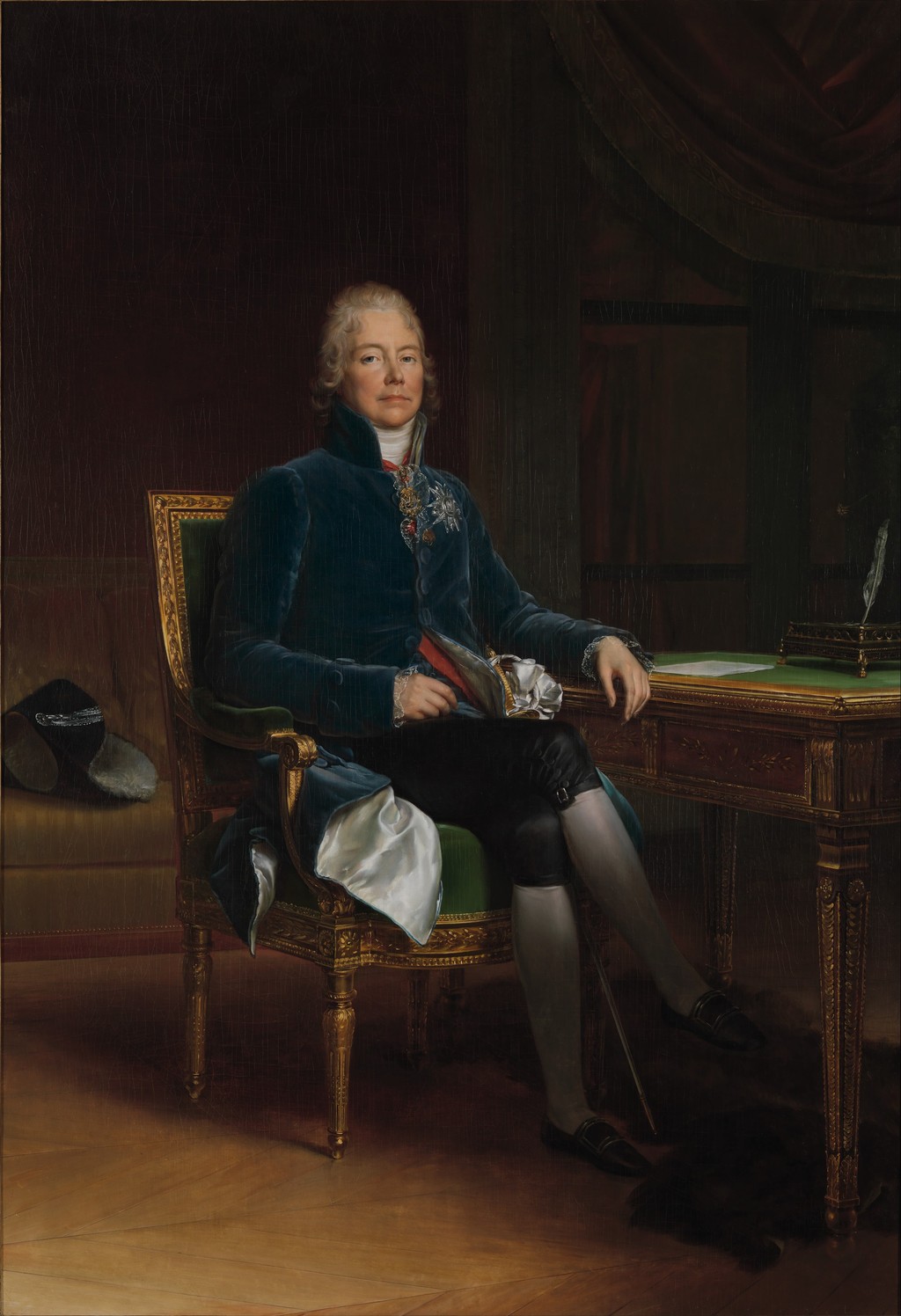
The Metropolitan Museum of Art's Talleyrand, painted in 1808, is one of Gerard's strongest political portraits [5]. The Met records that Talleyrand commissioned it after resigning as Napoleon's foreign minister, and that Gerard knew him personally [5]. The painting therefore belongs to a complicated political moment, not a simple celebration of office.
Gerard's portrait turns restraint into political meaning. Talleyrand appears calm, unreadable and completely at ease in a setting of rank. The honors, chair and desk carry much of the visual activity, while the sitter remains controlled. The Met also notes that the honors were updated after the Congress of Vienna in 1815 [5]. A portrait begun under the Empire could adapt to the world after the Empire.
That adaptability helps explain Gerard's broader career. His portraits were not static likenesses. They were objects through which public identities could be stabilized, revised and carried across political change.
Literary Painting
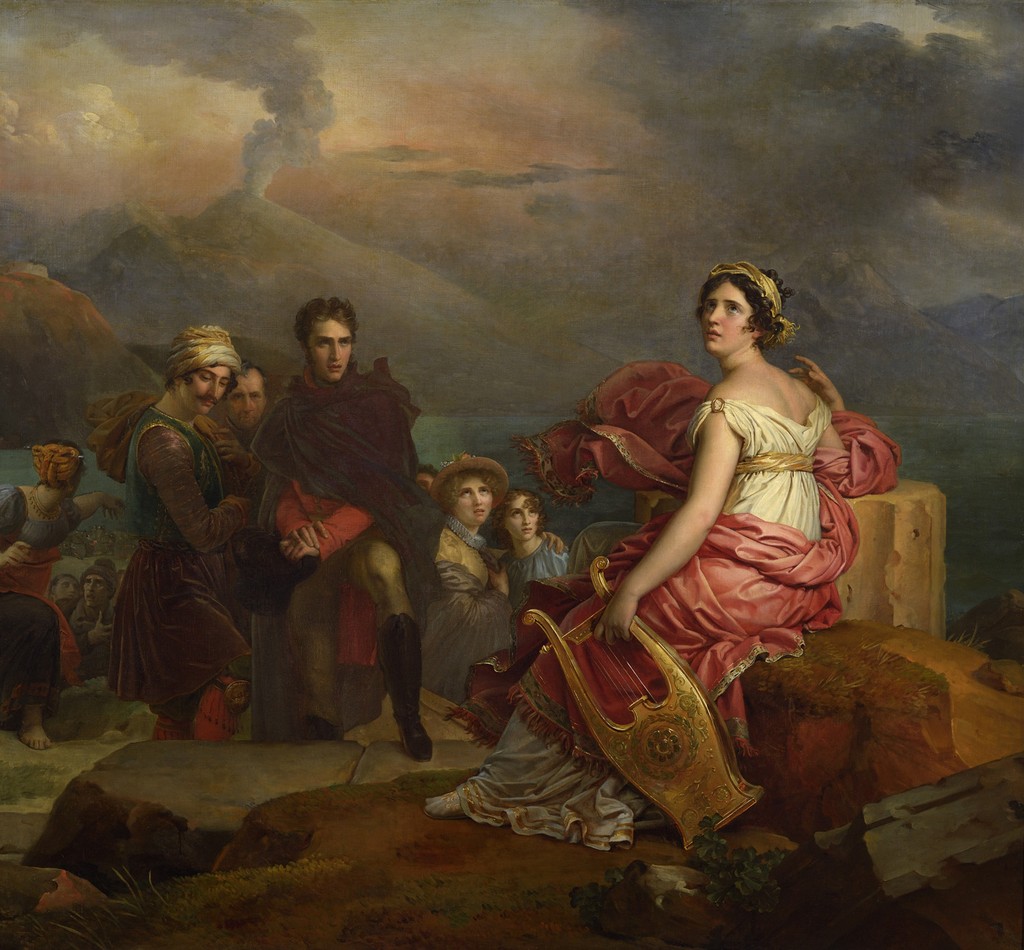
Corinne at Cape Miseno, painted between 1819 and 1821, belongs to Gerard's literary and memorial work [6]. The Lyon museum identifies it as a large oil on canvas commissioned by Prince August of Prussia, with Juliette Recamier as intermediary, in homage to Germaine de Stael [6]. Its subject comes from Stael's novel Corinne ou l'Italie.
The painting shows Corinne overwhelmed by emotion after poetic improvisation near the Bay of Naples. Lyon emphasizes the fusion of Davidian Neoclassical line with a new expressive and picturesque sensibility leaning toward Romanticism [6]. This makes the work especially important for Gerard's later range. He did not abandon control, but he allowed literary feeling and landscape atmosphere to enter the painting more strongly.
Napoleon And Official Images
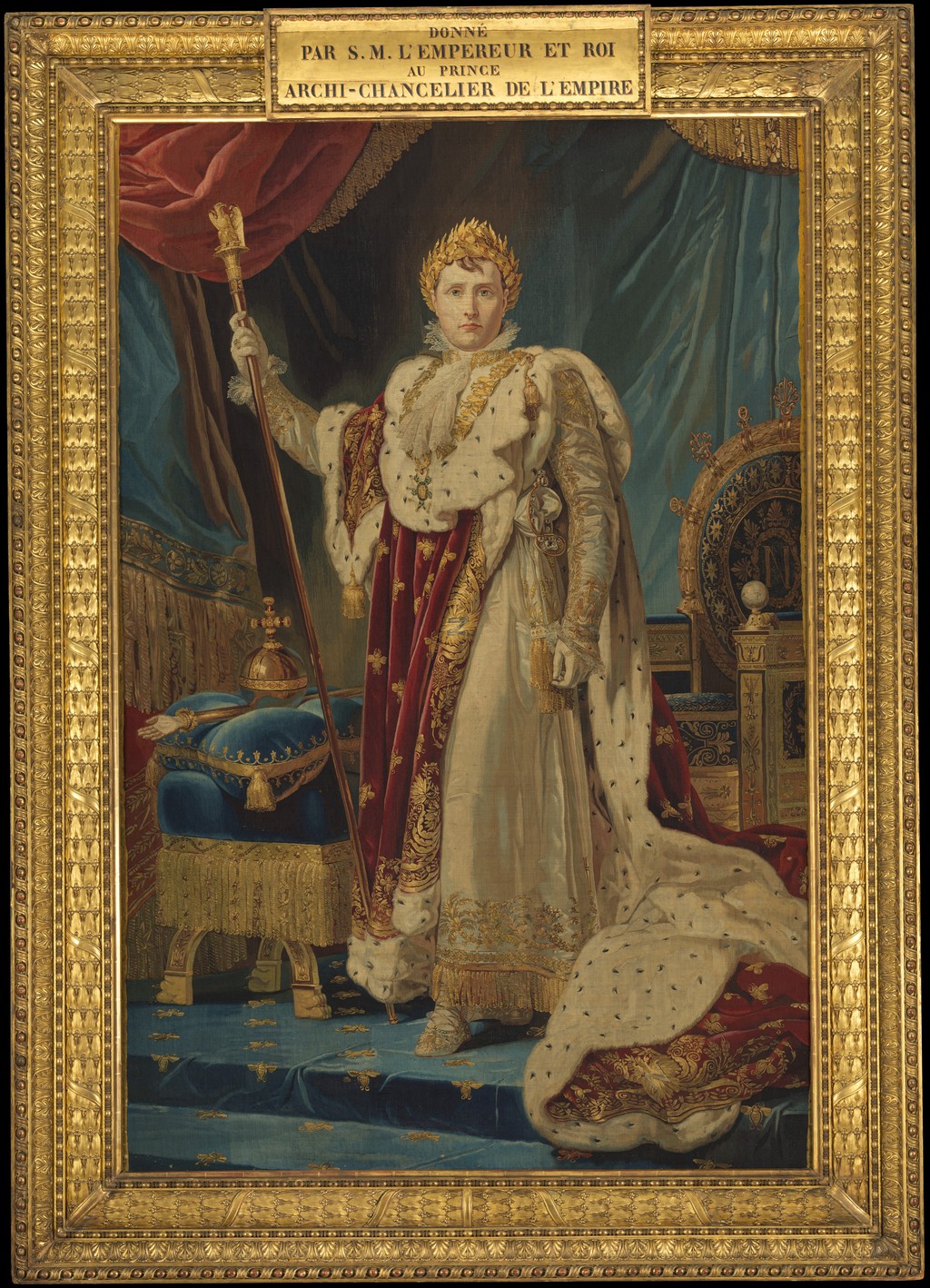
Gerard's official image of Napoleon in coronation robes became one of the most consequential works associated with him. The Louvre records a full-length Portrait en pied de Napoleon Ier en costume du Sacre, connected to a work commissioned for Talleyrand's hotel in 1805 and to a replica commissioned for the Gobelins [7].
The Met's tapestry after Gerard explains why the image mattered. Napoleon preferred Gerard's portrait over David's official coronation portrait, and repetitions followed for prominent officials and family members [8]. The woven version, designed in 1805 and woven between 1808 and 1811, shows how Gerard's painted image entered luxury production and imperial gift culture [8].
The essential caution is that Gerard's Napoleon exists through versions, replicas and works after his design. That complexity is not a distraction. It is part of the story. Official images needed to travel, repeat and remain recognizable.
Dynastic And Restoration Portraiture
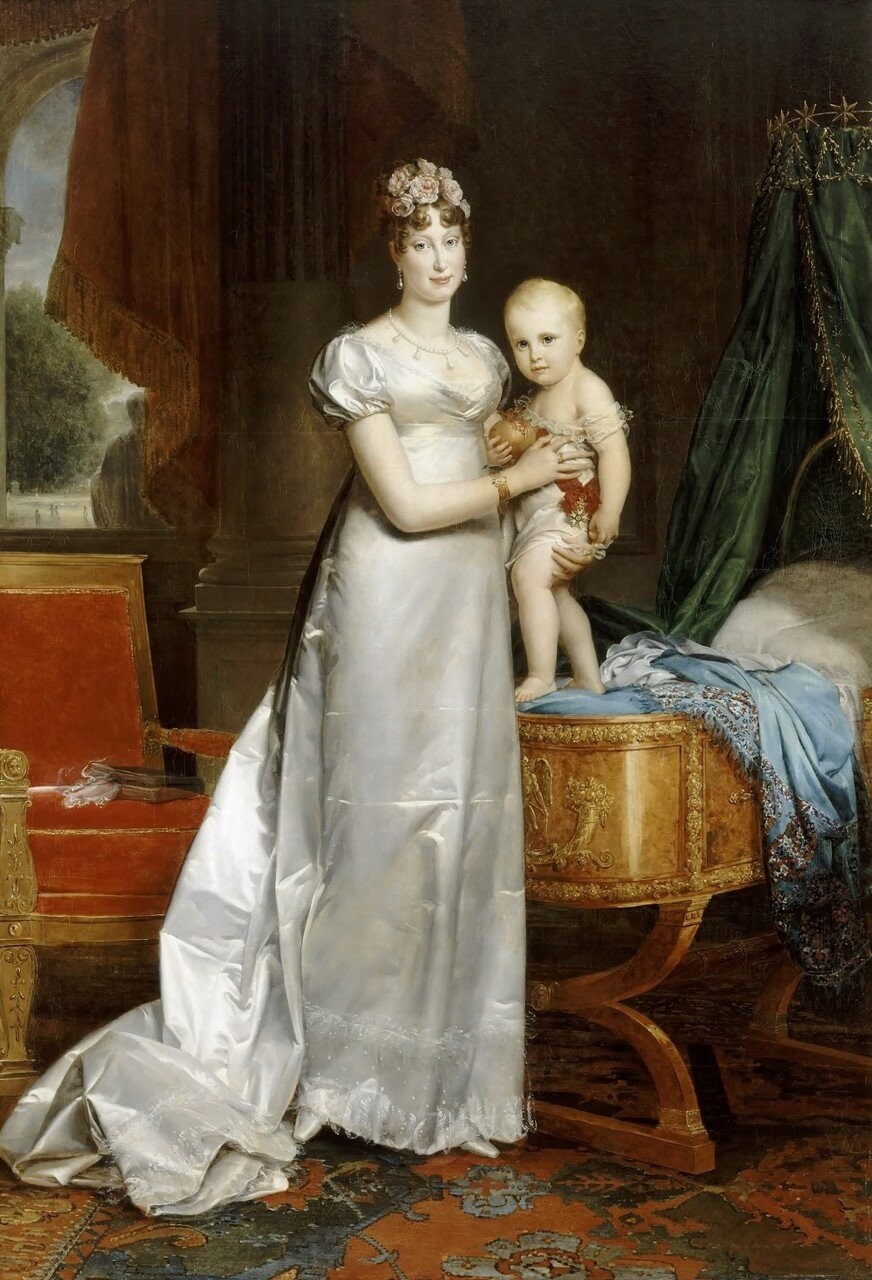
Marie-Louise and the King of Rome turns imperial portraiture toward dynastic motherhood. Histoire par l'image records a Gerard oil on canvas at Versailles, dated 1812, showing Napoleon's second wife with the imperial heir [9]. POP/Joconde records a related reduction connected to an original at Versailles and acquired from Gerard's sale in 1837 [10].
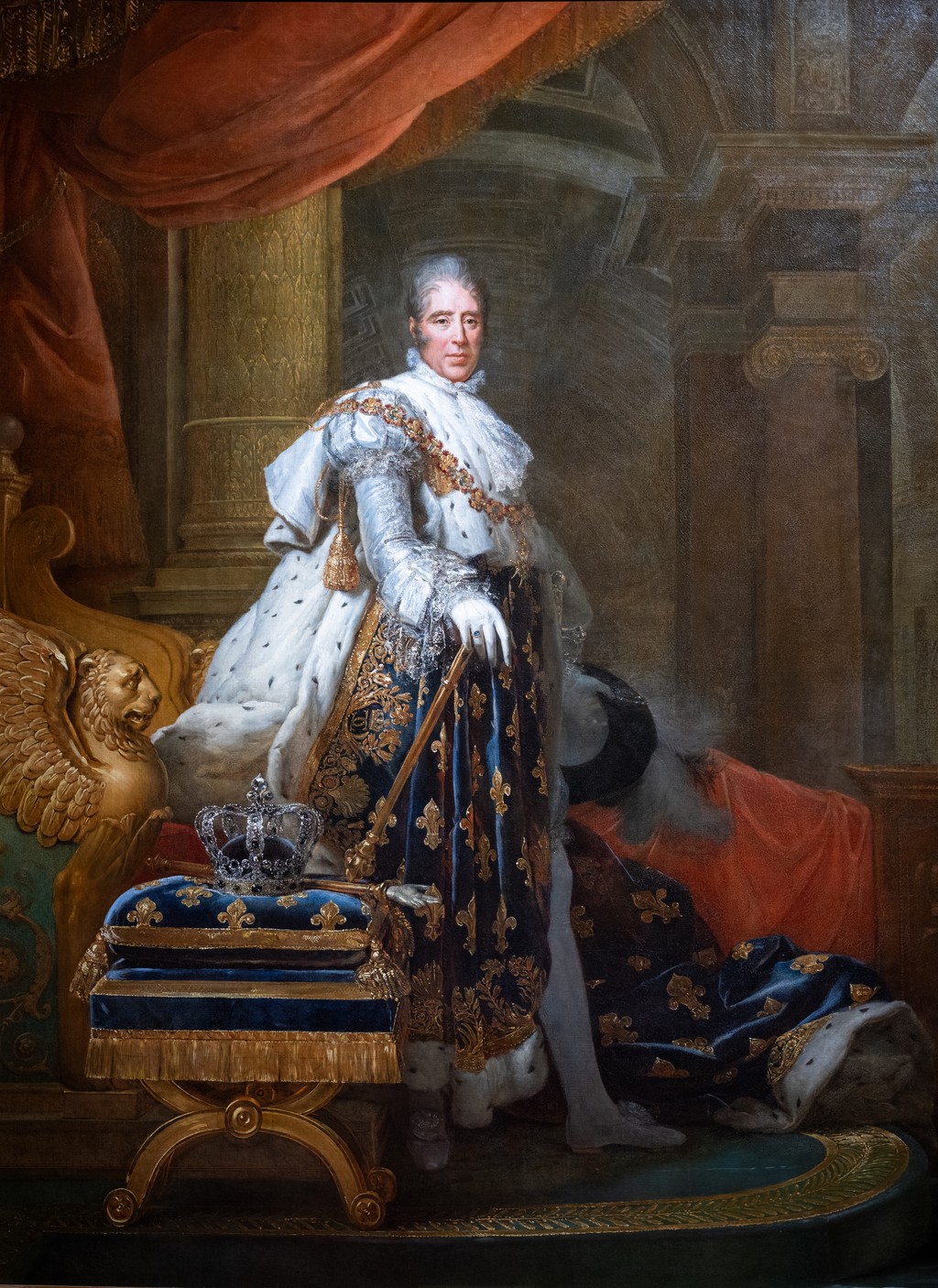
Charles X belongs to the other side of Gerard's political life: the Bourbon Restoration. Louvre and POP/Joconde records identify a full-length Charles X portrait tradition around 1825, with replica and workshop relationships that must be handled carefully [11][12]. Gerard's art served a restored monarchy just as it had served Napoleon's imperial court.
Together, these works show the continuity of Gerard's problem. Whether the subject is an emperor, an empress and child, or a restored Bourbon king, the painting must make authority visible, dignified and repeatable.
Why Gerard's Paintings Matter
Gerard's paintings matter because they show how Neoclassical discipline survived inside changing social worlds. He was not the most radical painter of his generation, and he was not trying to be. His importance lies in something subtler: the ability to make political and social identity appear composed.
That gift made him useful to artists, patrons, diplomats, salon figures, emperors and kings. It also makes his paintings historically revealing. They show how people after the Revolution wished to be seen: graceful, legible, cultivated, durable and prepared for public memory.
Frequently Asked Questions
Gerard painted portraits, mythological scenes, literary subjects, official Napoleonic images, dynastic portraits and Restoration court portraits.
Psyche and Cupid, now in the Louvre, is his clearest mythological work and one of the best examples of his controlled emotional style.
Official portraits often needed to circulate through courts, ministries, collections, gifts and engravings. Gerard's images were repeated because they became authoritative public likenesses.
Gerard trained in David's studio. He inherited Neoclassical discipline from that world, then adapted it to portraiture, court display and salon culture.
Discussion
Gerard's art often asks viewers to read public roles through small signs of pose, dress, surface and setting. Use the prompts below as starting points for looking closely.
Reader Insights
Gerard's paintings often move between private likeness and public image. Which works feel most clearly designed for circulation?
How do the mythological and literary works change the impression left by the court portraits?
Which painting would you choose as the best first encounter with Gerard, and why?
Join the Conversation
Share a thoughtful comment below about what you notice, question or compare when looking at this work.
References
- Chateau de Versailles, Francois Gerard https://en.chateauversailles.fr/discover/history/great-characters/francois-gerard
- Louvre Collections, Psyche et l'Amour https://collections.louvre.fr/en/ark:/53355/cl010066604
- Louvre Collections, Jean-Baptiste Isabey and His Daughter https://collections.louvre.fr/en/ark:/53355/cl010063560
- Musee Carnavalet, Portrait de Juliette Recamier https://www.carnavalet.paris.fr/collections/portrait-de-juliette-recamier-nee-bernard-1777-1849?page=1
- Metropolitan Museum of Art, Charles Maurice de Talleyrand Perigord https://www.metmuseum.org/art/collection/search/441969
- Musee des Beaux-Arts de Lyon, Corinne at Cape Miseno https://www.mba-lyon.fr/en/fiche-oeuvre/corinne-cape-miseno
- Louvre Collections, Portrait en pied de Napoleon Ier en costume du Sacre https://collections.louvre.fr/en/ark:/53355/cl010057769
- Metropolitan Museum of Art, tapestry after Gerard's Napoleon portrait https://www.metmuseum.org/art/collection/search/199313
- Histoire par l'image, Marie-Louise, imperatrice des Francais et le roi de Rome https://histoire-image.org/oeuvres/marie-louise-imperatrice-francais-roi-rome
- POP/Joconde, MARIE-LOUISE, IMPERATRICE DES FRANCAIS, ET LE ROI DE ROME https://pop.culture.gouv.fr/notice/joconde/000PE008244
- Louvre Collections, Portrait en pied de Charles X, roi de France https://collections.louvre.fr/ark:/53355/cl010237434
- POP/Joconde, CHARLES X, ROI DE FRANCE ET DE NAVARRE https://pop.culture.gouv.fr/notice/joconde/000PE013230