by Tom Gurney
Tom Gurney BSc (Hons) is an art history expert with over 20 years experience
Published on July 18, 2026 / Updated on July 18, 2026
Email: tomgurney1@gmail.com / Phone: +44 7429 011000
Psyche and Cupid by Francois Gerard: Introduction
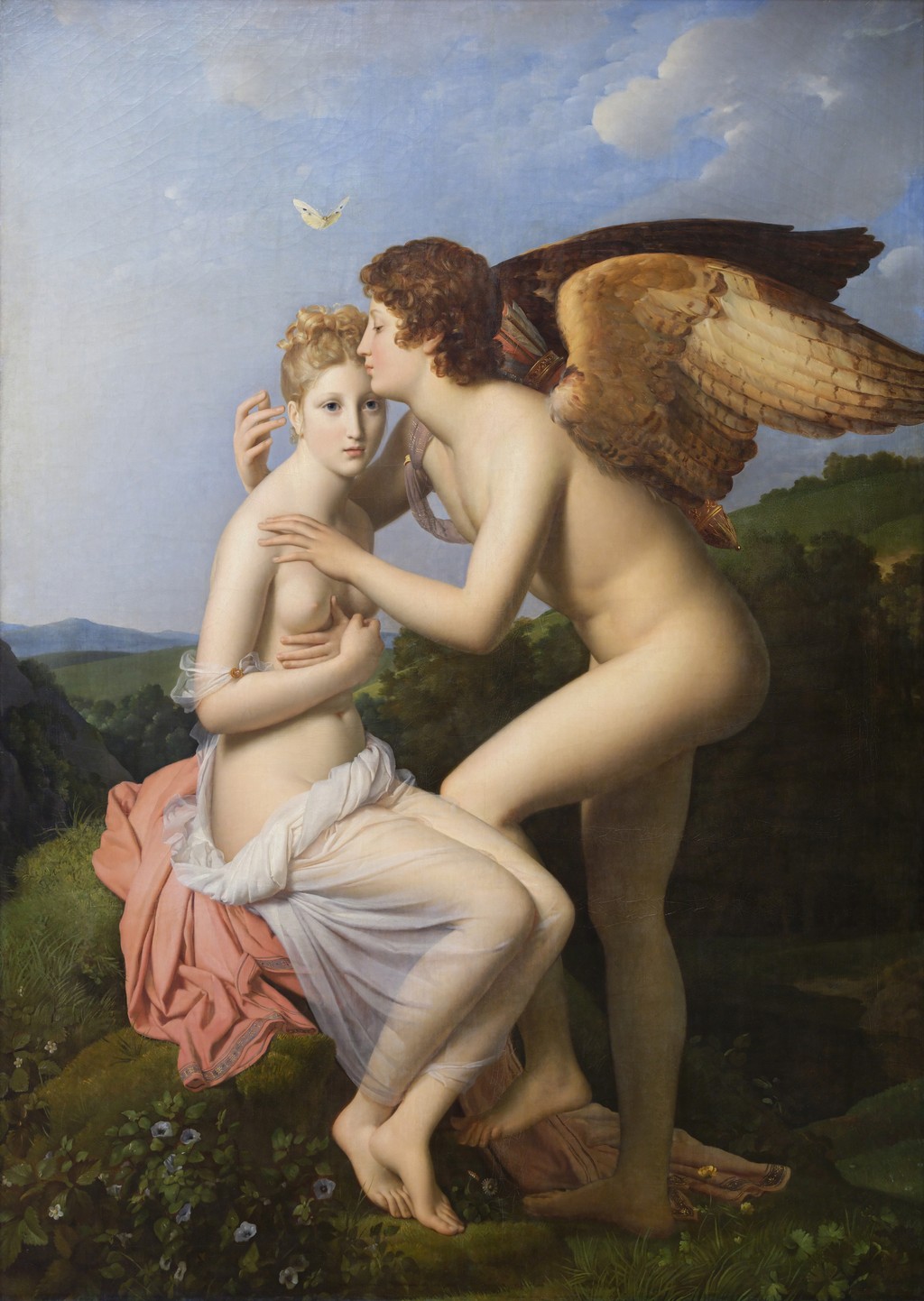
Francois Gerard's Psyche and Cupid is a painting about the moment before feeling becomes narrative. A young woman sits almost motionless while Cupid leans in for a first kiss. The scene is mythological, but Gerard does not treat it as crowded storytelling. He turns it into a suspended encounter: one body still, one body approaching, desire present but not yet released into action.
The Louvre identifies the painting as Psyche et l'Amour, also known as Psyche recevant le premier baiser de l'Amour, painted in 1798 by Francois Gerard [1]. It is an oil on canvas in the Louvre's Department of Paintings, with inventory numbers INV 4739 and L 3778 [1]. The work is one of the strongest examples of Gerard's mythological painting, and it complicates the common view of him as mainly a portraitist of courts and rulers.
At a Glance
- ArtistFrancois Gerard
- Date1798
- Mediumoil on canvas
- Dimensions1.86 m high by 1.32 m wide, according to the Louvre
- CollectionLouvre, Department of Paintings
- Inventory
INV 4739 ; L 3778 - SubjectPsyche receiving Cupid's first kiss
Contents
- Introduction
- The Mythological Moment
- Looking At The Painting
- Gerard Beyond Portraiture
- The Louvre And Later Reception
- Related Works
- Why The Painting Matters
Francois Gerard, Psyche and Cupid, 1798. Musee du Louvre, via Wikimedia Commons, public domain.
The Mythological Moment
The story of Cupid and Psyche was one of the most adaptable myths in European art. It offered artists beauty, secrecy, desire, trial, transformation and divine union. Gerard chooses a moment that depends on restraint rather than spectacle. Psyche is not shown in one of the myth's more dramatic episodes. There is no palace of invisible love, no jealous Venus, no dangerous lamp and no descent to the underworld. Instead, the painting narrows attention to a first contact.
This narrowing is what gives the work its intensity. The viewer does not need the entire myth to understand the emotional logic. Psyche's body, Cupid's approach and the hush around them make the scene legible. Gerard's art turns myth into a study of awakening.
The alternate title recorded by the Louvre, Psyche receiving the first kiss of Cupid, is useful because it names the psychological center of the painting [1]. The subject is not only love, but firstness: the vulnerability of an instant before experience has hardened into knowledge.
Looking At The Painting
Gerard's composition is built from delicate opposition. Psyche sits with a stillness that borders on dream. Cupid's winged body introduces movement, but the movement is controlled. He does not burst into the scene. He approaches with a softness that makes the kiss feel both tender and inevitable.
The figures are idealized, but the emotion is not abstract. Psyche's exposed body and lowered stillness create a sense of innocence, while Cupid's nearness suggests knowledge entering the scene. The painting's power comes from the distance between them. If the figures were more theatrical, the moment would become melodrama. If they were more distant, it would become allegory. Gerard holds the image between the two.
The smooth surface and careful contour belong to Neoclassical taste. Bodies are purified, gestures are measured and the scene is composed with unusual calm. Yet the painting is not cold. Its erotic charge lies precisely in the control. Gerard understands that in a subject like this, too much drama would make the scene less intimate.
The scale recorded by the Louvre, 1.86 m high by 1.32 m wide, also matters [1]. This is not a miniature cabinet subject. The figures are large enough to hold the viewer's attention physically, yet the action remains small. Gerard uses size for presence rather than spectacle. The painting asks the viewer to stand before a private instant enlarged into a public artwork.
The Louvre's fuller history makes that public character clearer. The museum records that the painting was shown at the Paris Salon of 1798, with a livret number, and that it was probably bought at the end of the Salon by Gerard's friends Pierre Fontaine and Joachim Le Breton [1]. That history is revealing. Psyche and Cupid was not only a polished studio invention. It entered the competitive public space of the Salon, attracted attention, and then moved through networks of friendship and collecting before becoming a museum object.
The sale history also parallels Gerard's earlier Belisarius problem. In both cases, a work with public ambition needed a buyer, and artistic friendship helped carry the painting forward. For Psyche and Cupid, the Louvre's record places Fontaine, an architect, and Le Breton, a major cultural administrator, at the start of the ownership chain [1]. The painting therefore belongs to a culture where art, institutional power and personal support were tightly connected.
That does not make the picture less intimate. It makes its intimacy more interesting. A painting about a first kiss was also an exhibition object large enough to draw public response, a work bought through a circle of supporters, and eventually an object with royal and museum histories. Gerard's private-looking myth had a very public life.
The vertical format helps this effect. Psyche's seated body gives the lower part of the composition weight, while Cupid's movement gives the upper space a sense of hovering possibility. The wing is not only an attribute identifying Cupid. It changes the rhythm of the image, making the approach feel suspended between earthly touch and divine intrusion.
Psyche's vulnerability is also carefully staged. Gerard idealizes her body, but he does not make her merely decorative. Her stillness creates uncertainty. Is she aware of Cupid's approach? Is the kiss a dream, a revelation or a threshold between innocence and knowledge? The painting does not need to answer completely. Its emotional force depends on the ambiguity.
Gerard Beyond Portraiture
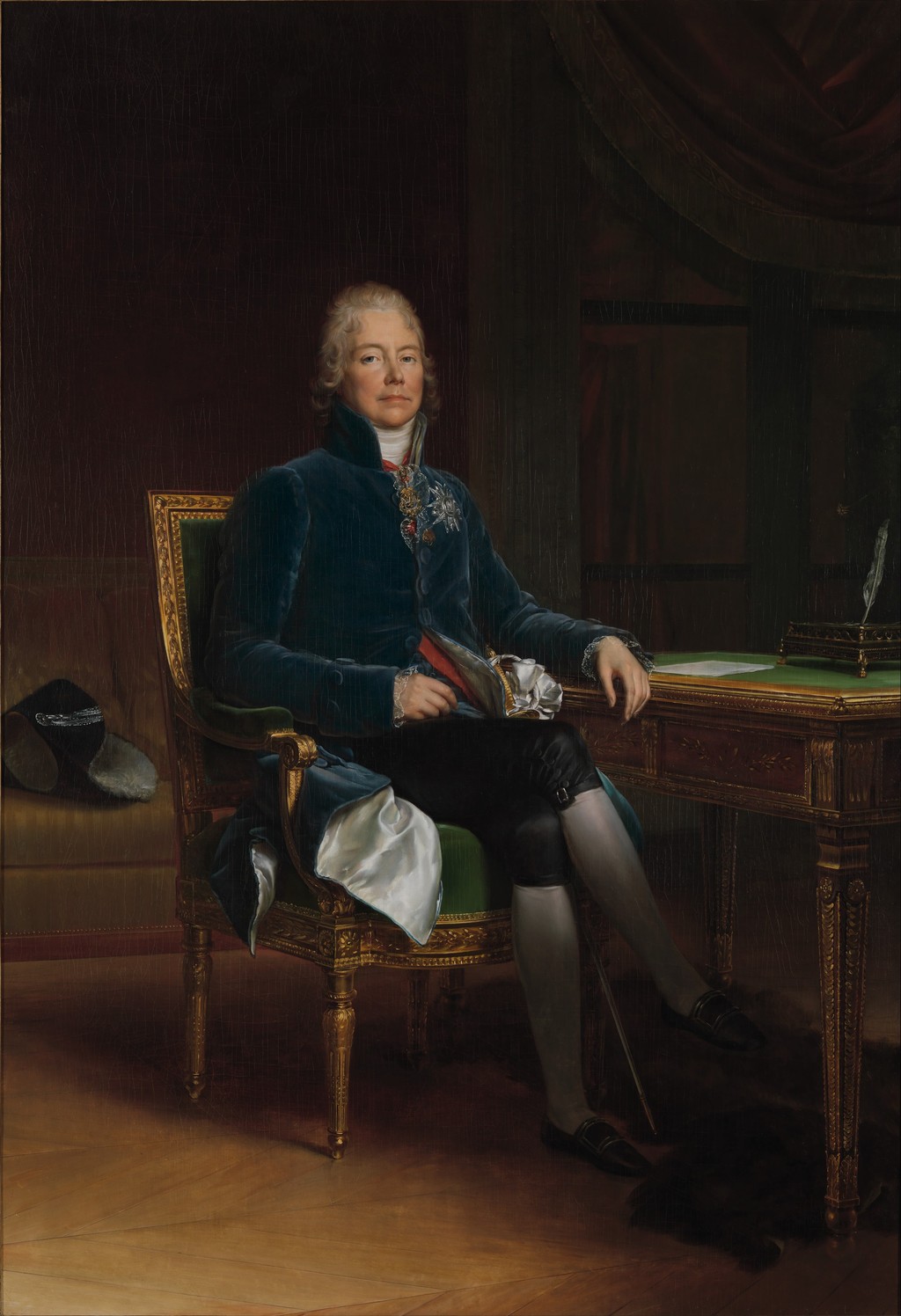
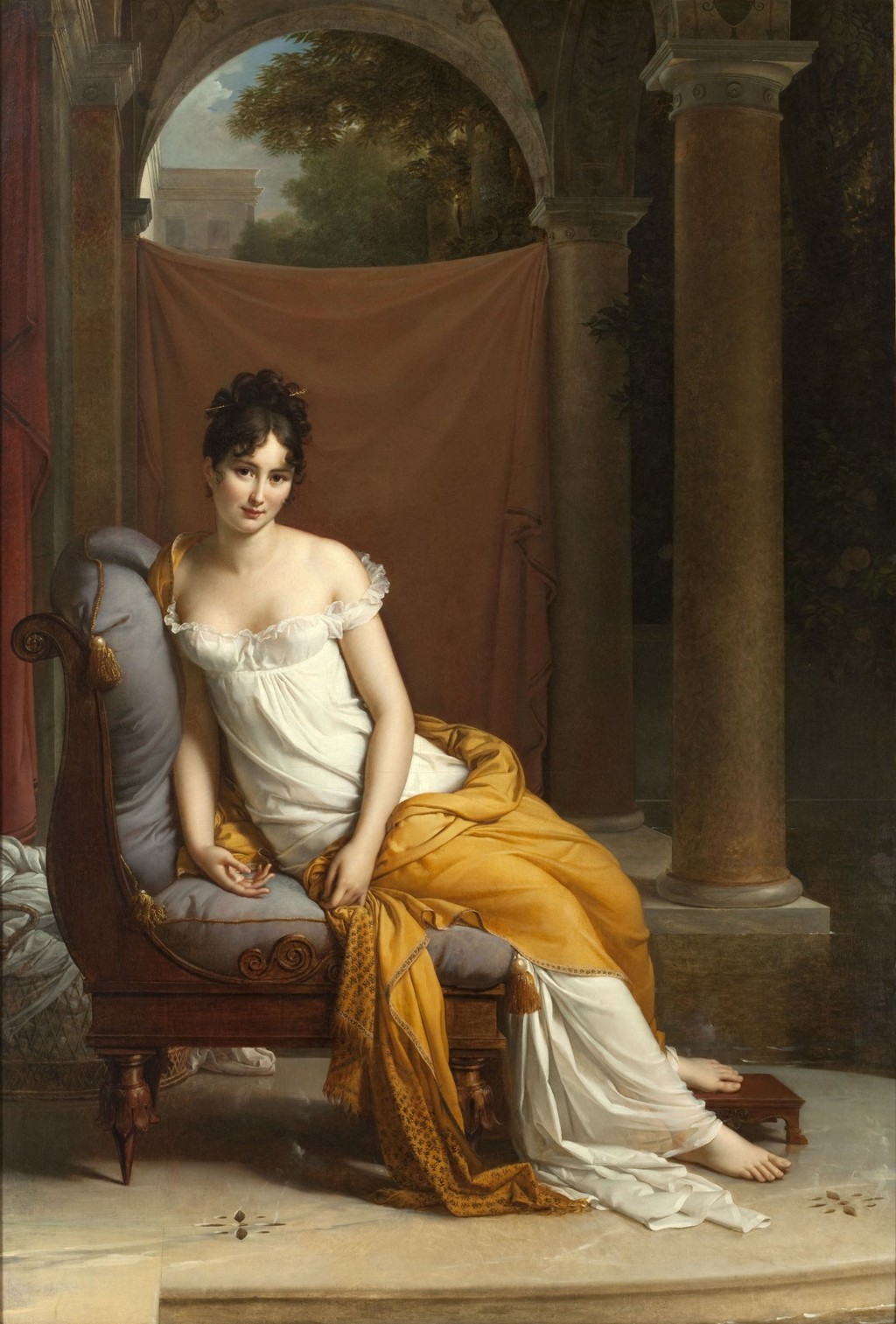
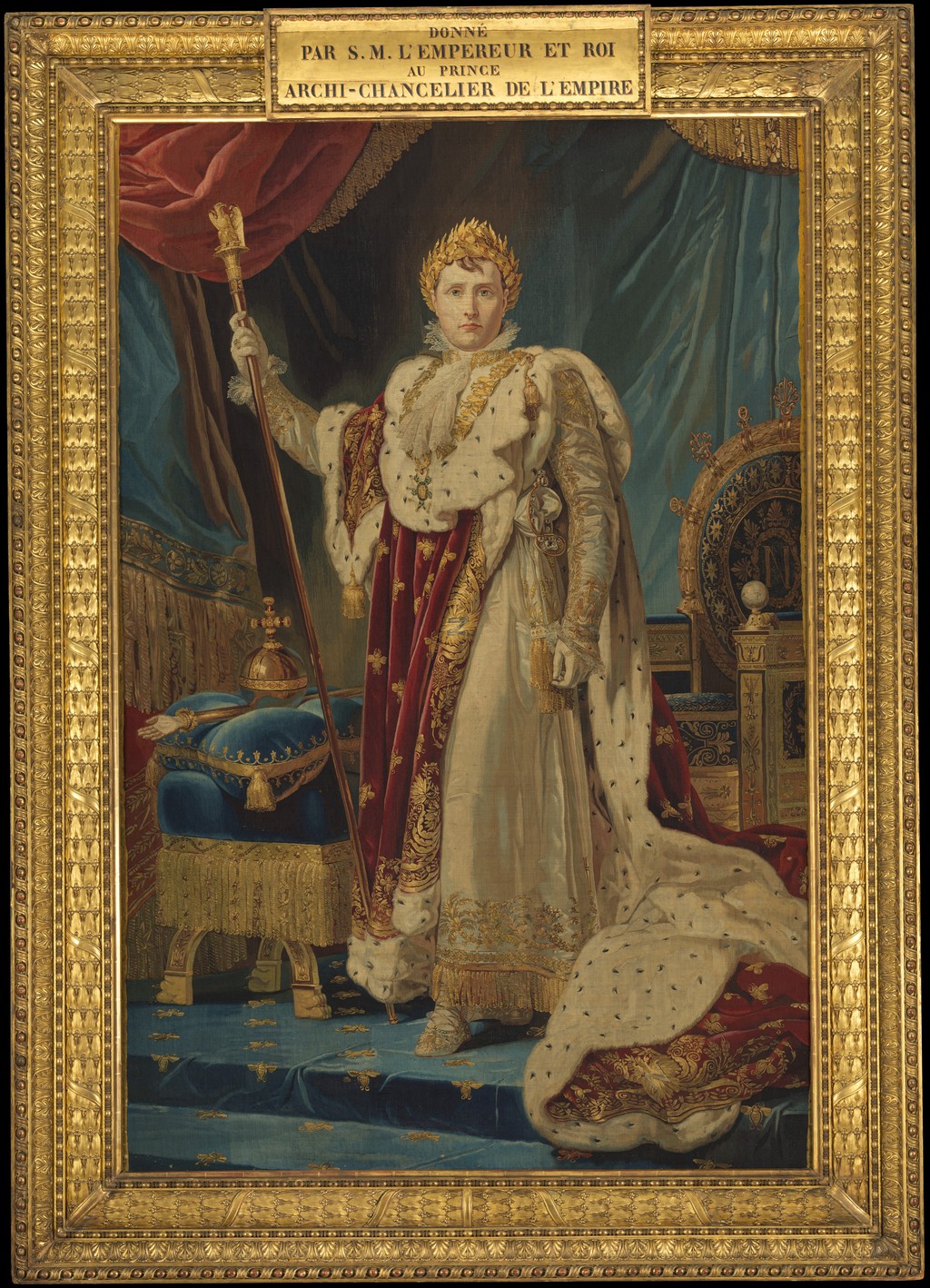
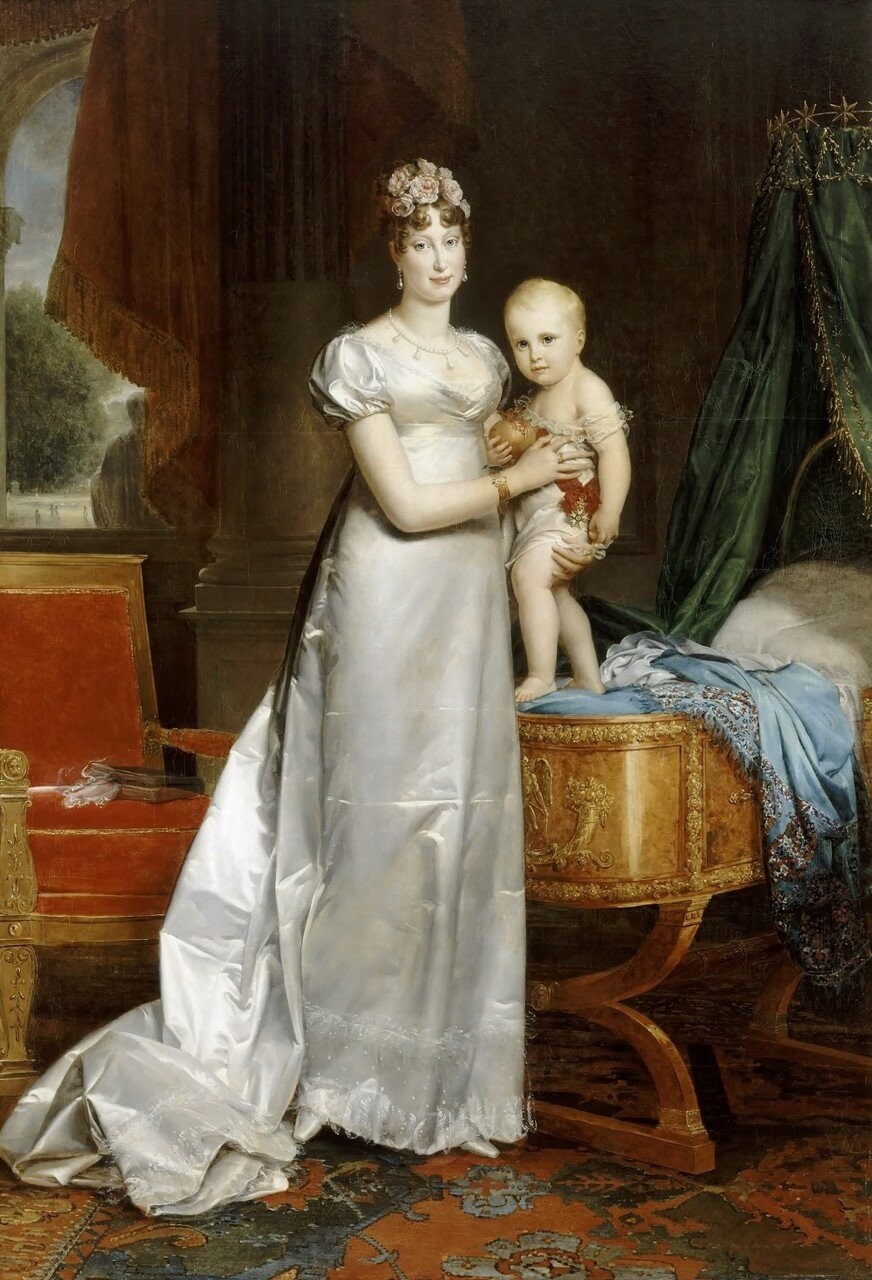
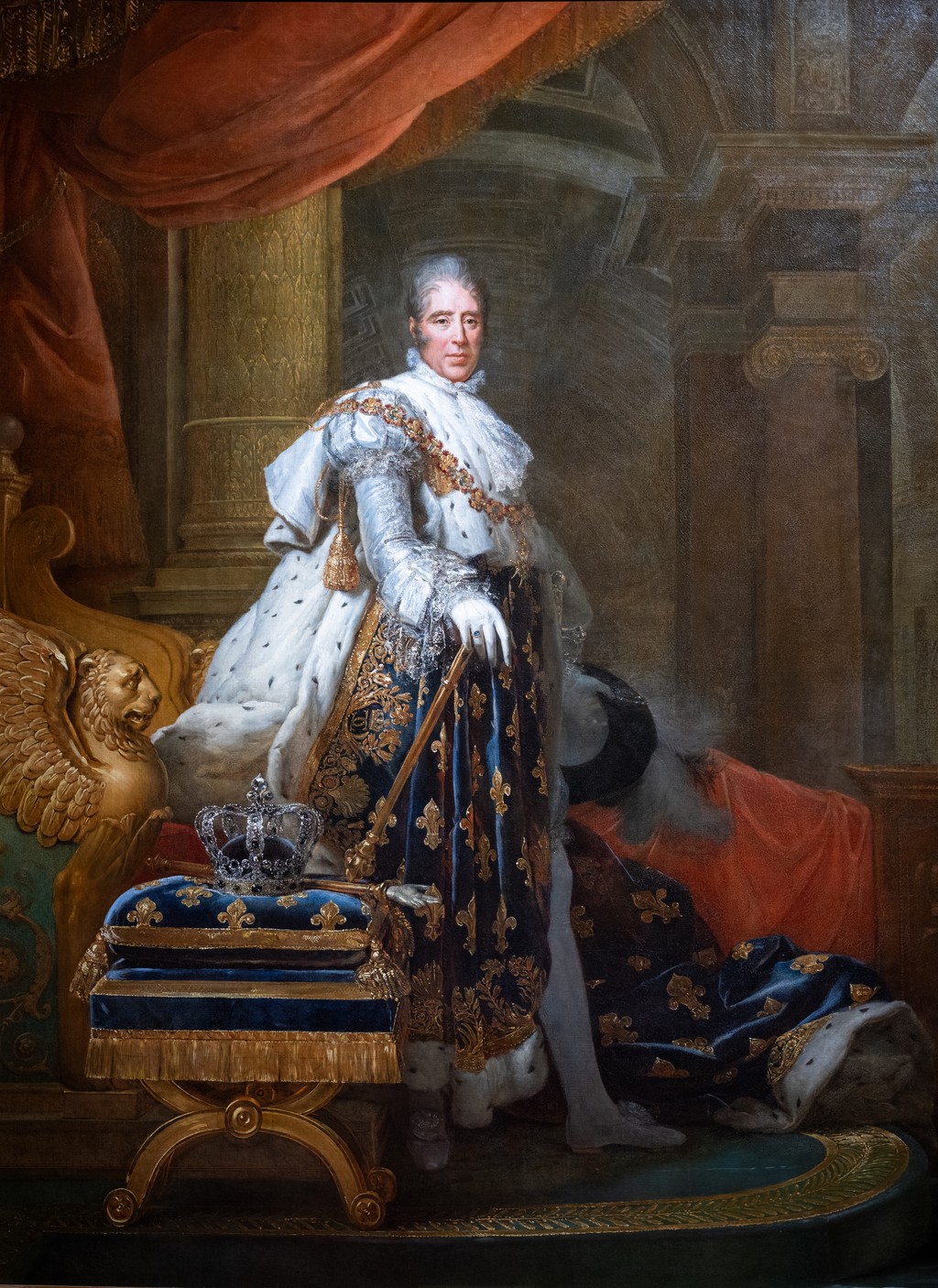
Psyche and Cupid matters because it widens Gerard's reputation. Gerard is often known through portraits of Napoleon, Talleyrand, Recamier or Charles X. Those works show him as a painter of public image. Psyche and Cupid shows him as an artist capable of mythological ambition, using the same polish and social sensitivity in a different register.
The painting dates to 1798, only a few years after the works that helped establish his career in the mid-1790s [1][2]. This was the period when Gerard was moving from David's studio inheritance toward his own reputation. The subject allowed him to demonstrate academic skill, ideal beauty and emotional refinement without depending on a famous sitter.
The painting also shows how flexible Neoclassicism could be. It was not only a style for republican virtue or Roman severity. In Gerard's hands, it could become a language for tenderness, hesitation and sensory delicacy.
That flexibility was not always praised without reservation. Gustave Planche, writing in the nineteenth century, treated Psyche as one of Gerard's serious claims as a history painter while also worrying that its refinement could become too abstract [3]. The point is useful because it names a real tension in the painting. Gerard's beauty is deliberate, but the same deliberation can make the figure seem removed from ordinary life.
That criticism is not a reason to dismiss the work. It helps explain the painting's peculiar atmosphere. Psyche and Cupid is not trying to reproduce a believable bedroom, landscape or bodily encounter. It imagines desire after it has passed through academic taste, classical form and poetic idealization. The risk is coolness. The reward is a kind of suspended clarity.
Planche's response also shows why Psyche became a reference point for Gerard's reputation. He could be criticized through it because it was important enough to matter. The painting stood as evidence of what Gerard could do when he turned away from portraiture and tried to make ideal beauty carry feeling.
This flexibility makes the painting a useful counterweight to the idea that Neoclassical art is always cold. Gerard's line is controlled, but the subject is intimate. The bodies are ideal, but the moment is emotionally fragile. The myth comes from antiquity, but the feeling belongs to a modern culture increasingly interested in sensibility, private emotion and the psychological charge of a single gesture.
For that reason, Psyche and Cupid sits between worlds. It looks back to classical myth and academic discipline, but it also looks toward the nineteenth-century fascination with inner life. Gerard does not break with his training. He bends it toward a softer emotional register.
The Louvre And Later Reception
The Louvre record gives the painting's collection identity and notes that it entered the collection of Louis XVIII [1]. That later royal association is fitting for Gerard, whose career would become deeply tied to courtly and royal patronage. Yet the painting's importance does not depend on royal ownership. Its value lies in the way it distills a myth into a single emotional interval.
The Louvre bibliography and exhibition history attached to the record also show the painting's continuing relevance to the study of love imagery and late eighteenth-century French painting [1]. Within Gerard's work, it is the natural mythological counterpart to the official portraits. Where the portraits organize rank and status, Psyche and Cupid organizes sensation and restraint.
The object history gives the later movement in unusually concrete form. After its early ownership by Le Breton, the painting passed to General Jean Rapp, who lent it to the Musee du Luxembourg from 1820 to 1822 [1]. It then entered the Louvre through the sale after Rapp's death in March 1822, before being presented at the Luxembourg during Gerard's lifetime and later at the Louvre [1]. This path matters because it places the painting between private collecting, royal acquisition and the public museum.
The Louvre's recent bibliography also shows how later institutions have kept returning to the work. It appears in studies and exhibitions about love, Psyche, Canova, David's circle and French painting around 1800 [1]. That range gives the painting unusual weight in Gerard's career. It is not just an example of mythological subject matter. It is a painting that connects Gerard to Salon culture, collecting history, museum display, love iconography and the contested legacy of Neoclassical idealism.
The long museum life also changes how the viewer reads its stillness. What looks like a timeless myth is tied to specific dates: Salon 1798, the Rapp collection, the 1822 sale, later Luxembourg and Louvre display, and the object's wartime movement before its return to the Louvre in 1946 [1]. The picture asks to be seen both as a dream of antiquity and as a real historical object with a traceable French afterlife.
That double identity is part of its appeal. The myth asks for timelessness, but the museum record restores contingency: friends, collectors, loans, sales, war storage and redisplay. Gerard's ideal scene survived because real institutions kept making room for it.
Related Works
A useful comparison is Jacques-Louis David's own treatment of Cupid and Psyche. David's art shaped Gerard's training, but Gerard's painting does not need to be read as imitation. The comparison is more interesting as a difference in tone. David's late work often brings irony, theatrical distance or psychological complication to mythological bodies. Gerard's painting is more poised and lyrical.
The painting can also be placed beside Gerard's portraits. In both kinds of work, he is interested in surfaces, poses and socialized feeling. The sitter in a portrait must appear controlled before the viewer; Psyche, in a mythological scene, must appear open to an experience she cannot yet fully understand. Gerard gives both situations the same elegant discipline.
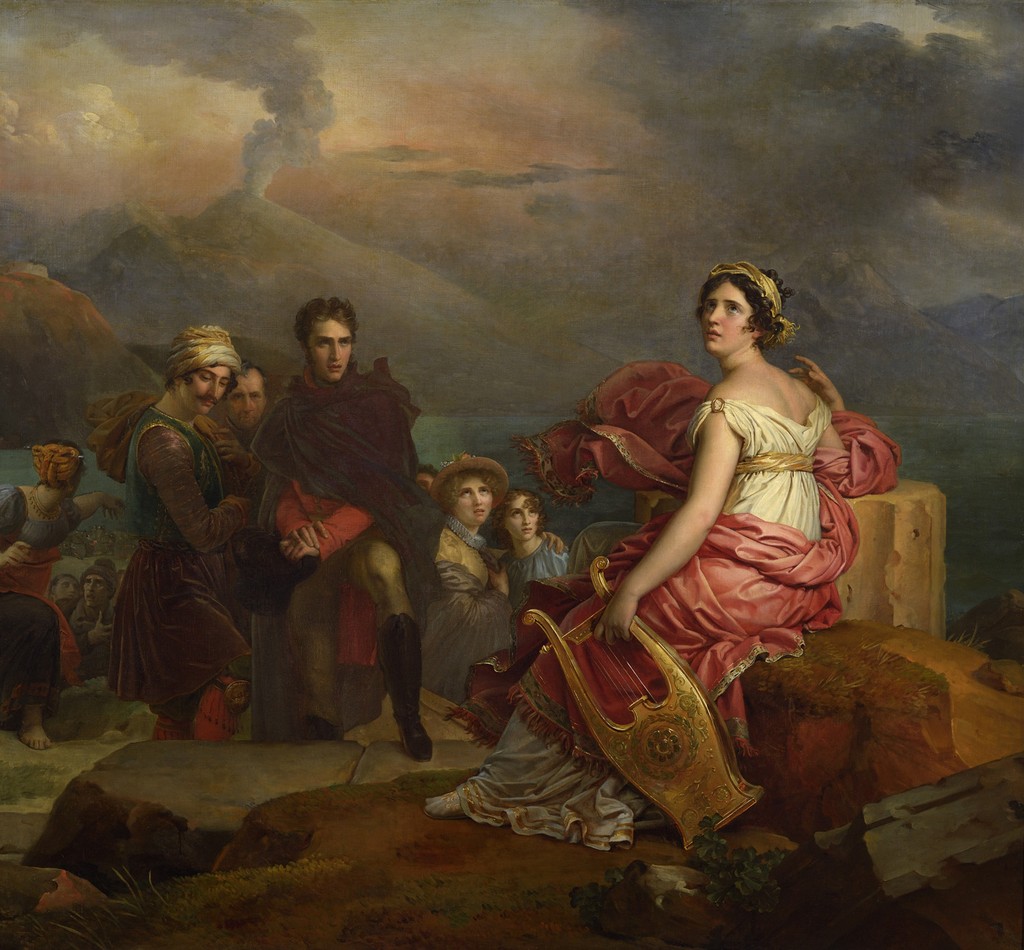
The painting also belongs beside Gerard's literary subjects, especially Corinne at Cape Miseno. Both works show female figures in heightened emotional or poetic states, framed through clarity and restraint rather than violent motion. In each case, Gerard avoids the extremes of theatrical expression. He gives viewers a figure to contemplate, not a scene to rush through.
Why The Painting Matters
Psyche and Cupid is not merely a pretty Neoclassical myth. It is a key to Gerard's artistic temperament. It shows his belief in controlled expression, his skill with idealized bodies and his ability to make emotion depend on poise rather than theatrical excess.
The painting also helps balance Gerard's place in art history. Without it, he can look like a successful portraitist of regimes. With it, he becomes an artist who could move between public likeness, mythological desire and literary culture. That range is central to understanding why he remained so useful to patrons across changing political worlds.
The work also helps explain why Gerard's surfaces matter. Smoothness in this painting is not only technical finish. It creates an emotional atmosphere in which nothing interrupts the first kiss. No rough brushwork, violent gesture or heavy shadow breaks the quiet. The bodies seem almost removed from ordinary time, which is exactly what the mythological subject requires.
Yet the painting is not empty idealization. Psyche's uncertainty and Cupid's careful approach give the scene a human charge. Gerard's achievement is to make a mythic event feel like a private threshold. The viewer sees not the whole story of Psyche, but the fragile instant when desire first enters her world.
That is why the painting remains one of Gerard's most persuasive works. It does not depend on the fame of a sitter or the grandeur of a regime. It depends on balance: innocence and knowledge, stillness and movement, classical form and emotional risk.
In Gerard's wider career, that balance becomes a signature. He rarely looks for violence when poise will do more. In Psyche and Cupid, the approach of the kiss is enough. The painting trusts the viewer to feel the pressure of a moment that has barely begun.
That restraint also makes the work a strong guide to Gerard. It teaches the viewer how to look at him: not for sudden disruption, but for the exact degree of control that lets feeling enter without breaking the surface.
Its Louvre history confirms that this quiet image sustained attention far beyond its first Salon moment.
Frequently Asked Questions
The painting shows Psyche receiving Cupid's first kiss. It draws on the ancient story of Cupid and Psyche, a myth about love, secrecy, trials and eventual divine union.
The painting is in the Louvre's Department of Paintings. The Louvre lists it under inventory numbers INV 4739 and L 3778.
Its idealized bodies, smooth finish, controlled contours and restrained emotion connect it to Neoclassical taste. Gerard uses that language to create intimacy rather than heroic severity.
Gerard focuses on a quiet instant rather than a dramatic episode. The painting is less about narrative action than about suspended desire and emotional awakening.
Discussion
Gerard's art often asks viewers to read public roles through small signs of pose, dress, surface and setting. Use the prompts below as starting points for looking closely.
Reader Insights
What detail most shapes your reading of Psyche and Cupid: pose, setting, costume, expression or historical context?
How does Gerard balance public identity with a more personal or psychological presence?
Which comparison helps most: David's studio, Napoleonic portraiture, Restoration image-making or salon culture?
Join the Conversation
Share a thoughtful comment below about what you notice, question or compare when looking at this work.
References
- Louvre Collections, Psyche et l'Amour (in English) https://collections.louvre.fr/en/ark:/53355/cl010066604
- Chateau de Versailles, Francois Gerard (in English) https://en.chateauversailles.fr/discover/history/great-characters/francois-gerard
- Gustave Planche, La Peinture de portrait en France - Francois Gerard (1856), Wikisource transcription https://fr.wikisource.org/wiki/La_Peinture_de_portrait_en_France_%E2%80%93_Fran%C3%A7ois_G%C3%A9rard