 by Tom Gurney
Tom Gurney BSc (Hons) is an art history expert with over 20 years experience
Page Created on August 31, 2026 / Page Updated on November 6, 2026
Email: tomgurney1@gmail.com / Phone: +44 7429 011000
Adam and Eve: Introduction
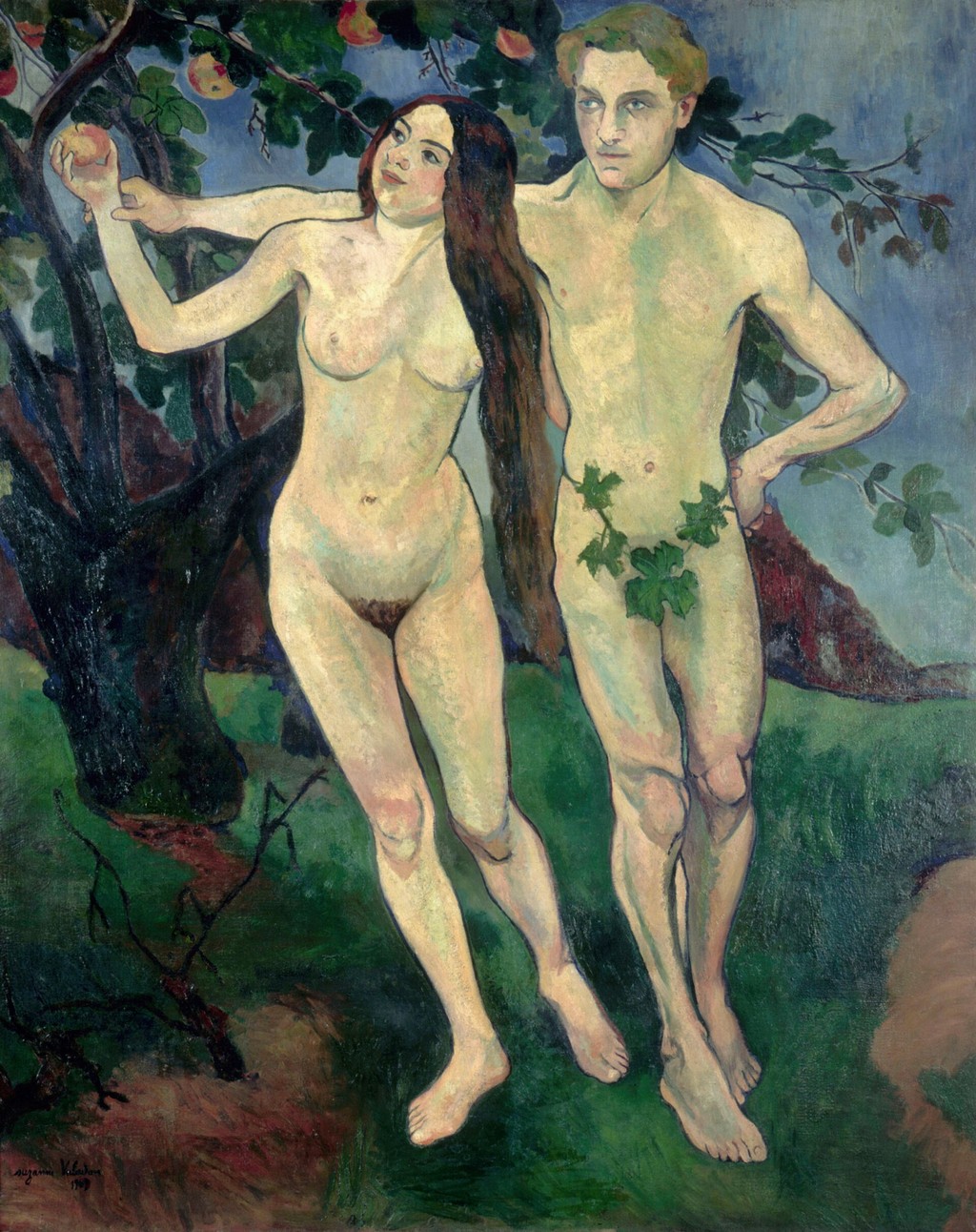
Suzanne Valadon’s Adam and Eve presents the artist and André Utter as the first couple, moving together through dense foliage. Eve reaches upward towards a branch or fruit while Adam follows, their arms and bodies linked across the centre. Painted in 1909 at a scale of 162 by 131 centimetres, the work turns a biblical subject into an ambitious double portrait and reverses familiar studio roles: a former model paints herself nude and places a male lover under her gaze.[1][2]
At a Glance
- ArtistSuzanne Valadon
- French titleAdam et Eve
- Date1909
- MediumOil on canvas
- Dimensions162 × 131 centimetres
- CollectionCentre Pompidou, inventory AM 2325 P
Suzanne Valadon in context
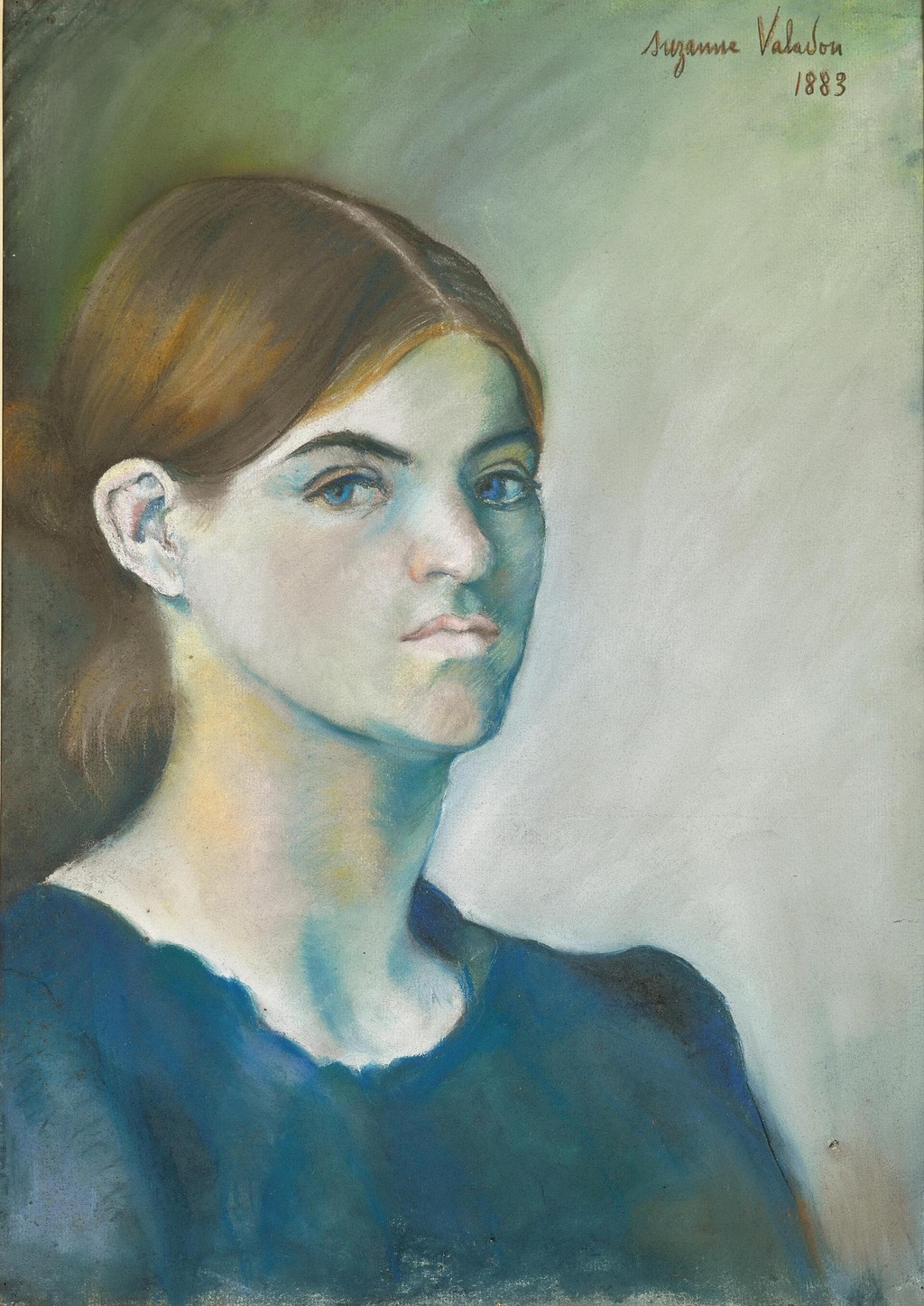
Self-Portrait
1883Portrait of Erik Satie
1892–93Adam and Eve
1909Family Portrait
1912The Casting of the Net
1914The Abandoned Doll
1921The Blue Room
1923Self-Portrait with Bare Breasts
1931Contents
- Introduction
- Object Record and Public History
- A Biblical Theme Made Personal
- Scale and the Frontal Male Nude
- Two Bodies in Motion
- The Garland and Exhibition Decorum
- Painter, Model and Desire
- Colour and Contour
- Beyond Scandal
Object Record and Public History
Centre Pompidou records Adam and Eve as an oil acquired by the French state in 1937 and assigned to the Musée national d’art moderne. Its subject indexing identifies Adam, Eve, André Utter and Valadon herself.[1] The work is public domain, and the current collection entry provides an exact inventory number that separates it from other Valadon nudes.
The state acquisition came near the end of her life, but the picture belongs to a decisive earlier moment. In 1909 Valadon left her marriage to Paul Mousis, began a relationship with Utter and concentrated increasingly on painting. The biography places these events beside exhibition milestones without treating the canvas as a literal diary.
A Biblical Theme Made Personal
The title invokes the Genesis story of the first humans, temptation and the Fall. Valadon does not build a distant sacred spectacle. She uses recognisable contemporary bodies, identifies herself with Eve and gives Adam the features of Utter. Their autobiographical identities and mythic roles coexist.[1]
Eve’s extended arm provides the clearest narrative cue, yet the fruit is less theatrically isolated than in many traditional versions. Vegetation crowds the couple and the painting concentrates on their joined movement. The biblical subject gives a public structure to a private pair; the pair gives the old story physical immediacy.
Scale and the Frontal Male Nude
Centre Pompidou’s curators describe Valadon as the first woman to paint a large-format frontal male nude paired with a nude self-representation.[2] Firstness claims depend on definitions and surviving evidence, so the statement is best attributed to the institution. The secure facts are already remarkable: a woman artist made a monumental double nude with her male lover fully exposed in the original conception.
The nudes and female gaze essay compares this reversal with smaller bathing scenes. Here scale changes the encounter. Utter’s body cannot be treated as a marginal study; it is central to an ambitious museum-sized painting.
Two Bodies in Motion
The figures do not stand as independent anatomy demonstrations. Eve’s raised arm, windblown hair and forward step pull the composition upward and across. Adam’s hand and bent arm connect him to her movement. Their legs form alternating verticals, while dark outlines separate flesh from green and blue foliage.
Centre Pompidou describes Eve as joyful and active rather than ashamed.[2] The visual evidence supports energy: lifted face, open stride and flying hair. “Joy” remains an interpretation of those signs, but it is notably different from the downcast or covered Eve common after the Fall.
The Garland and Exhibition Decorum
Accounts of the painting note that a leafy garland was added across Adam’s genitals so the work could be shown publicly, often connected with the 1920 Salon d’Automne. AWARE preserves this exhibition history and stresses that the covering was not part of the initial challenge of the male nude.[3] The alteration makes censorship visible within the image.
The leaves create a strange double status. They belong to the garden setting but also function as a later screen. The viewer therefore encounters both Valadon’s original reversal and the institutional limit placed upon it. Public decorum modified the represented body without removing the work’s basic structure.
Painter, Model and Desire
Valadon had long understood the unequal positions of painter and model. In Adam and Eve, she occupies both roles while Utter becomes subject to her selection and handling. Centre Pompidou calls this a triple inversion: the model takes the brush, paints herself and represents a naked man.[2]
The Montmartre model-to-artist guide expands the professional context. The reversal is not merely biographical revenge or romantic confession. It demonstrates control over a genre, a large surface and a public claim to artistic authority.
Colour and Contour
Flesh is modelled with greens, pinks and pale tones rather than sealed into smooth academic finish. Dark boundaries stabilise the bodies against dense leaves. Eve’s hair forms a strong reddish-brown accent, while blue and green masses make the garden feel both natural and constructed.
These formal choices connect the canvas to Valadon’s graphic practice. The drawings and prints essay shows how a line can register pressure and pose on a small sheet. In Adam and Eve, contour operates at large scale, containing bodies while keeping their edges visibly made.
Beyond Scandal
The work’s sexual and social audacity is real, but scandal is not an adequate interpretation. Composition, iconography, scale and technique all demand attention. Valadon entered a canonical subject and altered the distribution of authorship and exposure. The result can be discussed through desire without reducing it to the age difference between the couple.
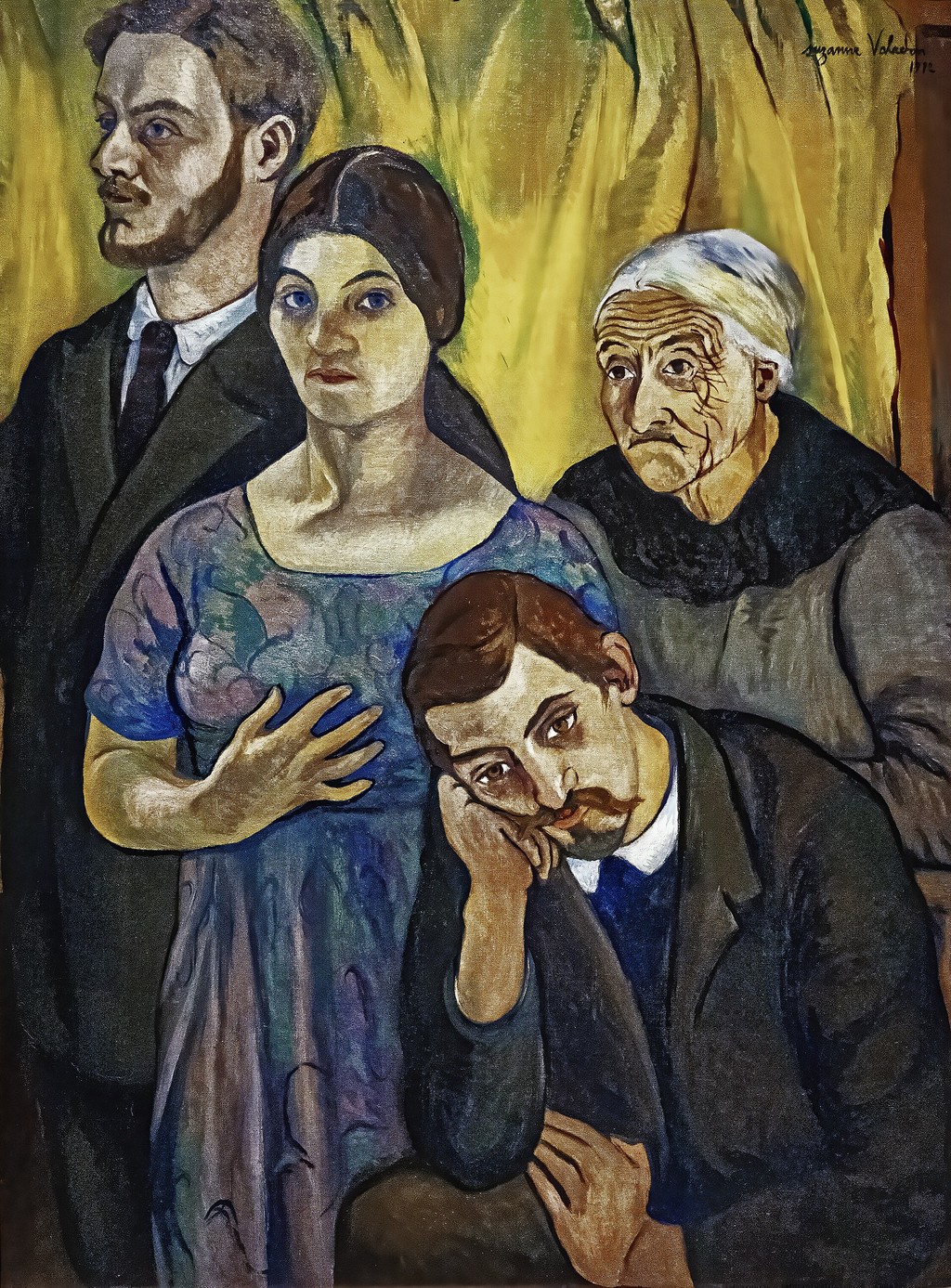
Read beside Family Portrait, made three years later, the painting also reveals Valadon’s range. One uses a mythic nude pair in motion; the other compresses four clothed relatives into formal poses. Both make personal relationships answer to public pictorial traditions.
Researched works directory
This searchable evidence census contains 133 distinct records assembled from public collection data and a reproducible Wikidata snapshot. It is not a catalogue raisonné, not a claim of complete oeuvre coverage, and it keeps works with repeated titles as separate objects.
| Name | Date | Medium |
|---|---|---|
| زنان در حمام | 1909 | Painting |
| Adam and Eve | 1909 | Painting |
| After the bath | 1908 | Painting |
| André Utter and his dogs | 1932 | Painting |
| Anémones dans un verre blanc | 1920 | Painting |
| Black Venus | 1919 | Painting |
| Bouquet de fleurs dans un vase Empire | 1920 | Painting |
| Bouquet de fleurs sur un guéridon | 1925 | Painting |
| Bouquet de fleurs sur une petite table | 1932 | Painting |
| Bouquet de roses | 1936 | Painting |
| Bouquet of flowers | 1930 | Painting |
| Bouquet of flowers 1928 | 1928 | Painting |
| Casting the Net | 1914 | Painting |
| Catherine lying naked on a panther skin | 1923 | Painting |
| Catherine nue se coiffant | 1895 | |
| Châtillon-d'Azergues | 1927 | Painting |
| Chien endormi sur un coussin | 1923 | Painting |
| Deux figures | 1909 | Painting |
| Doctor Robert Le Masle | 1930 | Painting |
| Femme à la contrebasse | 1908 | Painting |
| Femmes au bain | 1893 | |
| Fleurs | 1930 | Painting |
| Fleurs et fougères dans un vase | 1929 | Painting |
| Flowers in front of a Window | 1930 | Painting |
| Fruit bowl | 1917 | Painting |
| Germaine Utter à sa fenêtre | 1926 | Painting |
| Germaine Utter devant sa fenêtre | Date unknown | Painting |
| Gilberte nue se coiffant | 1920 | Painting |
| Grandmother and Grandson | 1910 | Painting |
| Joy of Life | 1911 | Painting |
| Juliet sitting in a chair | 1909 | Painting |
| L'Acrobate, ou La Roue | 1916 | Painting |
| L'avenir dévoilé | 1912 | Painting |
| L'étable en Beaujolais | 1921 | Painting |
| La baigneuse nue | Date unknown | Painting |
| La boîte à violon | 1923 | Painting |
| La Cour du Château de Saint-Bernard | 1930 | Painting |
| La Couturière | 1914 | Painting |
| La Dame au petit chien | 1917 | Painting |
| La grenouille | 1910 | Drawing |
| La rue Cortot | Date unknown | Painting |
| La Toilette | 1895 | |
| La Vachère | 1922 | Painting |
| Landscape at Saint-Bernard (Ain) | 1932 | Painting |
| Le Canard | 1930 | Painting |
| Le Jardin de la rue Cortot | Date unknown | Painting |
| Les lilas et camélias | 1936 | Painting |
| Lilacs and Peonies | 1929 | Painting |
| Marie Coca et sa fille | 1913 | Painting |
| Mauricia Coquiot Portrait | 1915 | Painting |
| Mrs. Robert Rey and her daughter Sylvie | 1920 | Painting |
| Naked in the mirror | 1909–1916 | Painting |
| Nature morte | 1920 | Painting |
| Nature morte à la draperie et au bouquet | 1924 | Painting |
| Nature morte au lapin et à la perdrix | 1930 | Painting |
| Nature morte au poisson | 1926 | Painting |
| Nature morte aux fruits et aux fleurs | 1926 | Painting |
| Nu à la couverture rayée | 1922 | Painting |
| Nu à la draperie blanche | 1914 | Painting |
| Nu allongé sur un divan | 1926 | Painting |
| Nu assis | 1925 | Painting |
| Nu assis au bord d'un lit | 1929 | Painting |
| Nu assis sur un canapé | 1916 | Painting |
| Nu au châle bleu | 1930 | Painting |
| Nu, Suzanne Valadon | 1925 | Artwork |
| Nude Arranging Her Hair | 1916 | Painting |
| Nude on a Red Couch | 1920 | Painting |
| Nude Sitting on the Edge of a Bed | 1929 | Painting |
| Nude with drapery | 1921 | Painting |
| Nude with drapery and armchair | 1921 | Drawing |
| Nude woman with a cat and flowers | 1920 | Painting |
| Nudes | 1919 | Painting |
| Paysage de Bretagne ou Île d'Ouessant | 1912 | Painting |
| Plat d'étain | 1920 | Painting |
| Portrait d'enfant | Date unknown | Painting |
| Portrait de Lily Walton | 1923 | Painting |
| Portrait de Louis Moysés | 1924 | Painting |
| Portrait de Maurice Utrillo | 1921 | Painting |
| Portrait du sculpteur Gibault | 1895 | Painting |
| Portrait of a Woman | 1928 | Painting |
| Portrait of a Woman | 1929 | Painting |
| Portrait of a woman | 1934 | Painting |
| Portrait of Charles Wakefield-Mori | 1922 | Painting |
| Portrait of Erik Satie | 1892 | Painting |
| Portrait of Lily Walton | 1922 | Painting |
| Portrait of Madame Lévy | 1922 | Painting |
| Portrait of Madame Maurice Utrillo, Lucie Valore | 1937 | Painting |
| Portrait of Madame Petridès | 1937 | Painting |
| Portrait of Maurice Utrillo | 1928 | |
| Portrait of Mme Zamaron | 1922 | Painting |
| Portrait of Nora Kars | 1914 | Painting |
| Portraits of the Family | 1912 | Painting |
| Raminou cat study | 1917 | Painting |
| Raminou on his blue cushion | 1919 | Painting |
| Reclining Nude | 1928 | Painting |
| Route dans la forêt de Compiègne | 1914 | Painting |
| Seated Female Nude | 1916 | Painting |
| Seated Nude with Shawl Carpet | 1921 | Painting |
| Self-portrait | 1883 | Drawing |
| Self-Portrait | 1898 | Painting |
| Self-portrait in the mirror | 1927 | Painting |
| Self portrait with bare breasts | 1931 | Painting |
| Sitting nude | 1921 | Painting |
| Spring Flowers | 1928 | Painting |
| Still Life with Fruit | 1937 | Painting |
| Still Life with Fruit Basket | 1920 | Painting |
| Still life with white rose | 1936 | Painting |
| The Abandoned Doll | 1921 | Painting |
| The artist's mother | 1912 | Painting |
| The Bath | 1908 | Drawing |
| The bathers | 1923 | Painting |
| The Blue Room | 1923 | Painting |
| The Rising | 1920 | Painting |
| The two sisters | 1928 | Painting |
| The Woman in White Stockings | 1924 | Painting |
| Tree at Montmagny Quarry | Date unknown | Painting |
| Untitled (Still Life) | 1921 | Painting |
| Utrillo de face | 1925 | Drawing |
| Utrillo de trois-quarts | 1925 | Drawing |
| Utrillo devant son chevalet | 1919 | Painting |
| Utrillo pensif | 1911 | Drawing |
| Utter familly | 1921 | Painting |
| Vase de fleurs | 1917 | Painting |
| Vase de fleurs | 1927 | Painting |
| Vase de fleurs | 1934 | Painting |
| Vase de fleurs et tapis oriental | 1929 | Painting |
| Vase of flowers | 1922 | Painting |
| Woman in an armchair. Portrait of Madame G. | 1919 | Painting |
| Woman Seated | Date unknown | Painting |
| Woman with guitar | 1920 | Painting |
| Young Girl Bathing | 1919 | Painting |
| Young girl crocheting | 1892 | Painting |
| Young Girl in Front of a Window | 1930 | Painting |
Frequently Asked Questions
Centre Pompidou identifies Suzanne Valadon as Eve and André Utter as Adam. Their relationship began around the time the picture was made.[1][2]
Institutional biographies report that a garland was added to cover his genitals for public exhibition. The screen reflects display restrictions rather than the artist’s original conception.[3]
The institution’s narrower formulation concerns a woman creating a monumental frontal male body together with her unclothed self-portrait. That attributed wording is more defensible than the broad question.[2]
It includes Valadon’s likeness as Eve, so it has a self-portrait dimension. It is also a biblical history painting and a double portrait, and no single category exhausts it.[1]
It belongs to Centre Pompidou’s Musée national d’art moderne under inventory number AM 2325 P. It entered state ownership in 1937.[1]
Discussion
Use this evidence-led guide as a starting point for close looking rather than a final verdict.
Share an observation about Adam and Eve or a source that adds useful context.
Reader Insights
Which visible detail most changes your reading of Adam and Eve?
How do medium, scale, setting and current museum evidence shape the encounter?
What remains uncertain once documented fact is separated from visual inference?
Join the Conversation
Add your reading below, keeping observations specific and evidence clear.
References
- Centre Pompidou, Adam and Eve collection record, accessed 31 August 2026.
- Centre Pompidou, Adam and Eve dossier, accessed 31 August 2026.
- AWARE, Suzanne Valadon, accessed 31 August 2026.
- Adam and Eve, 1909 — Centre Pompidou, public domain.
More VALADON Artworks
Self-Portrait
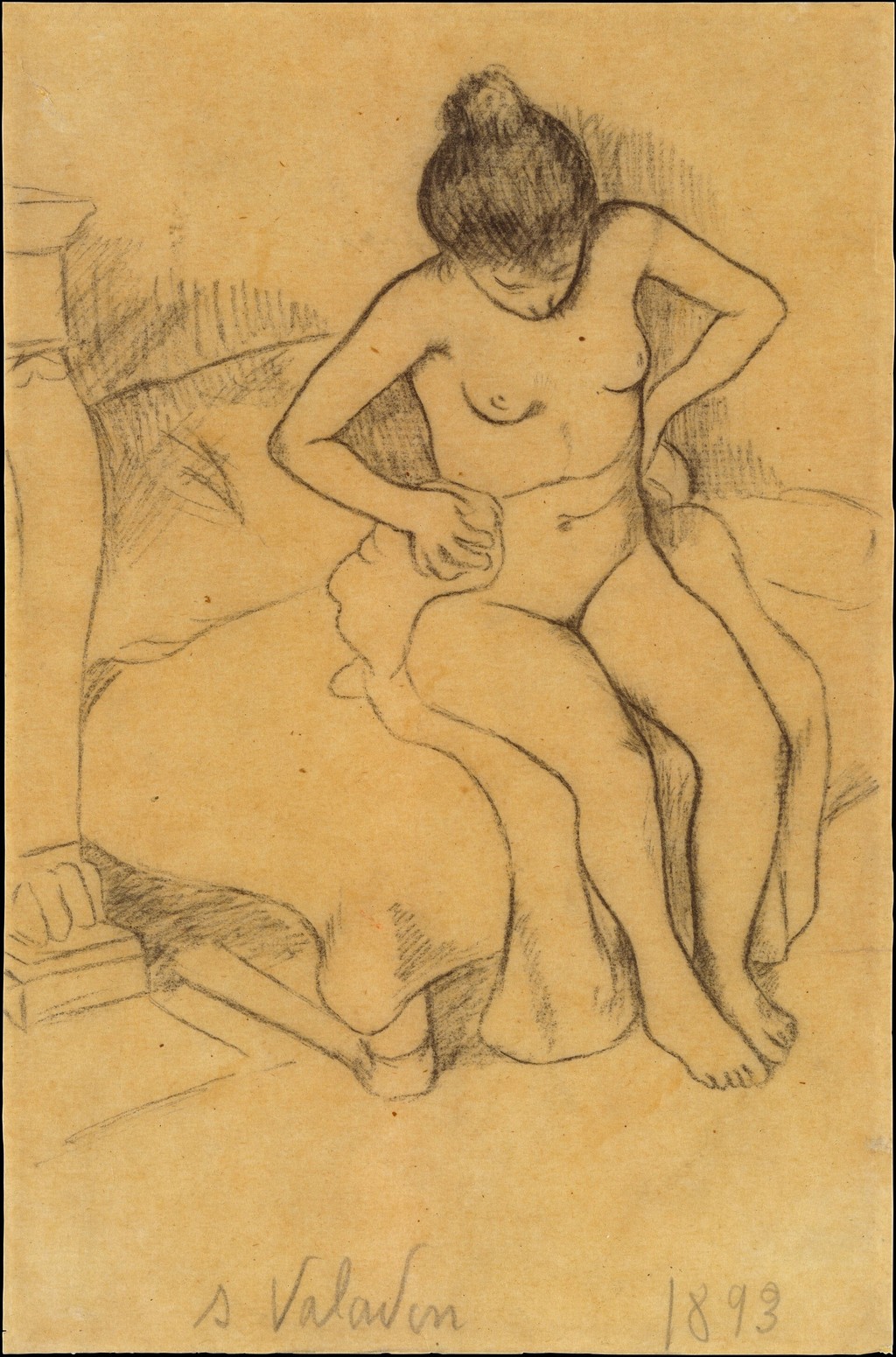
After the Bath
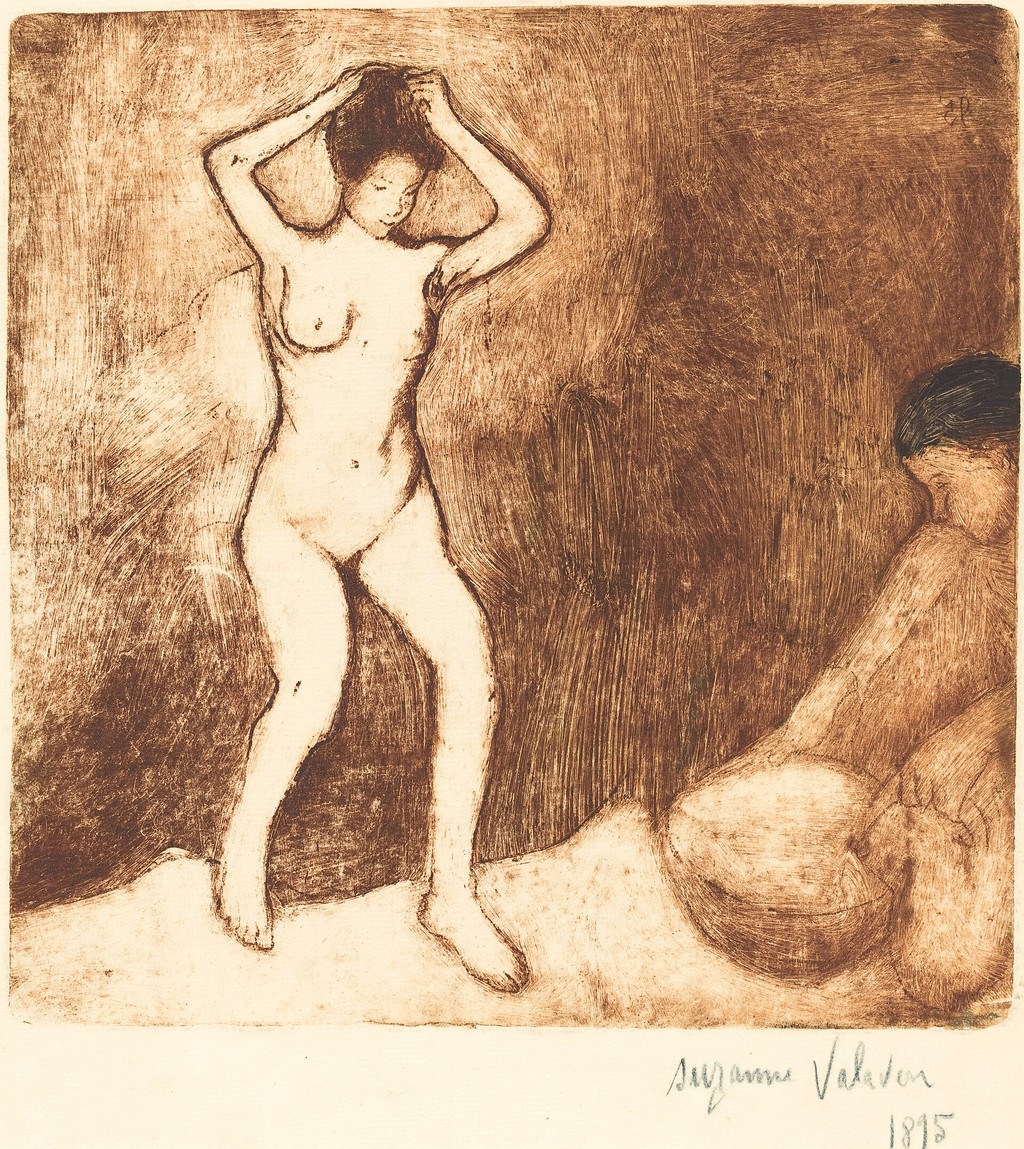
La Toilette
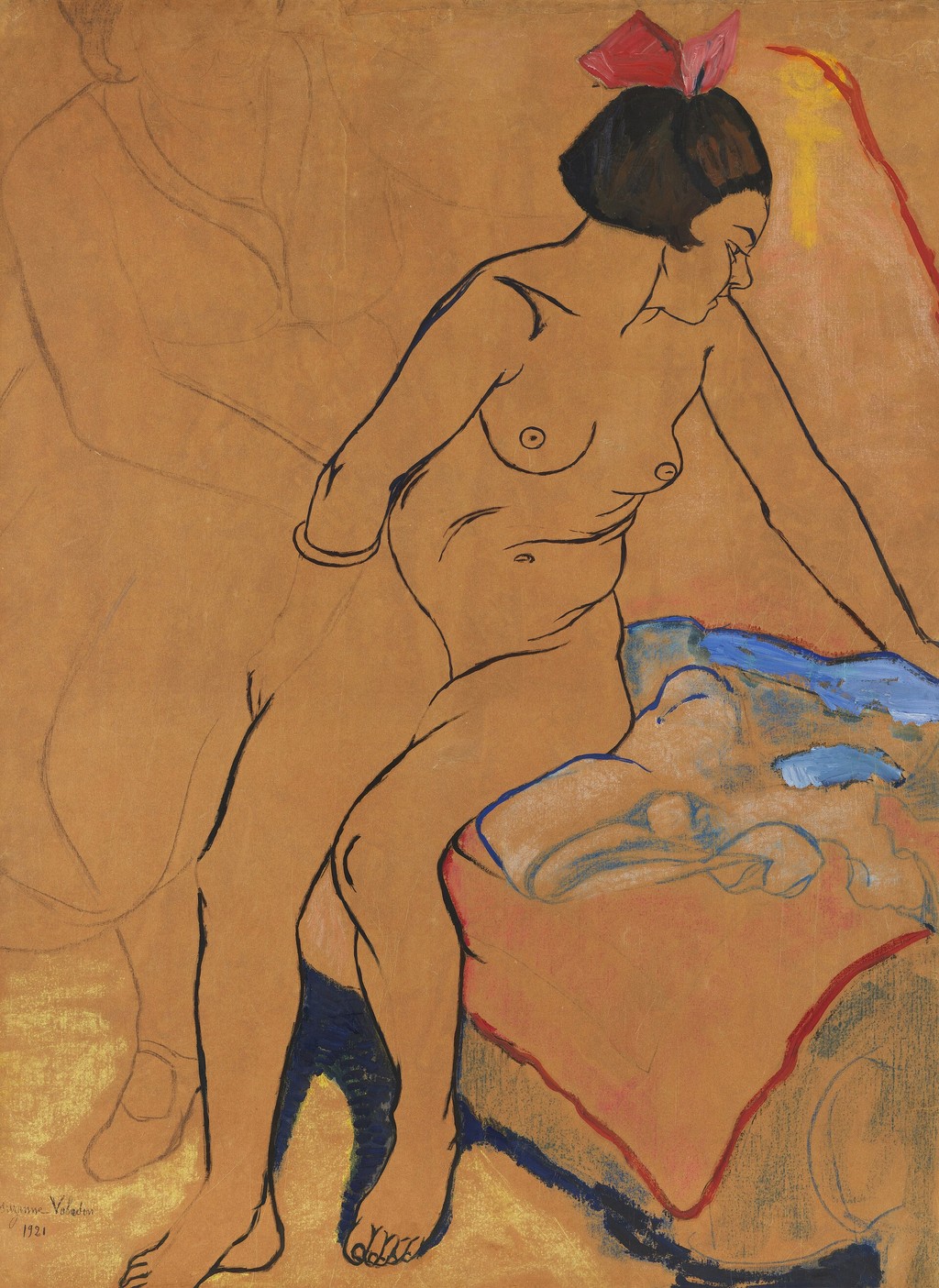
The Abandoned Doll