 by Tom Gurney
Tom Gurney BSc (Hons) is an art history expert with over 20 years experience
Page Created on August 31, 2026 / Page Updated on November 6, 2026
Email: tomgurney1@gmail.com / Phone: +44 7429 011000
Family Portrait: Introduction
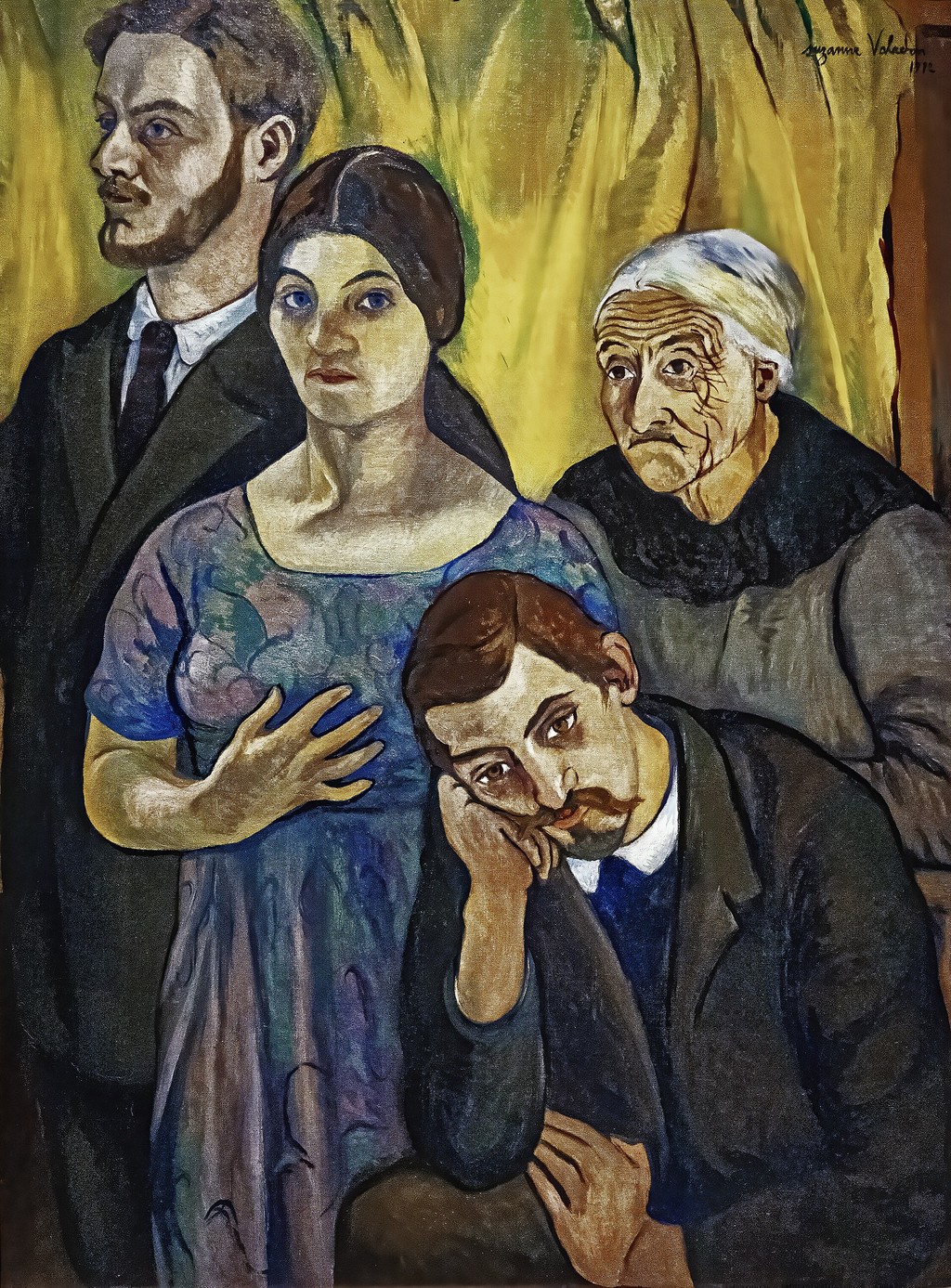
Suzanne Valadon’s Family Portrait gathers four closely connected people without making them look united. André Utter stands in profile; Valadon faces outward; her mother Madeleine rises behind; Maurice Utrillo sits below with his head supported by one hand. The space is shallow and the bodies overlap, yet each pose establishes a different direction of attention. Painted in 1912, the work transforms a complicated household into a deliberate art-historical construction rather than a casual record of family life.[1][2]
At a Glance
- ArtistSuzanne Valadon
- TitlePortraits de famille (Family Portrait)
- Date1912
- MediumOil on canvas
- Dimensions98 × 73.5 centimetres
- CollectionMusée d’Orsay, inventory RF 1976 22
Suzanne Valadon in context
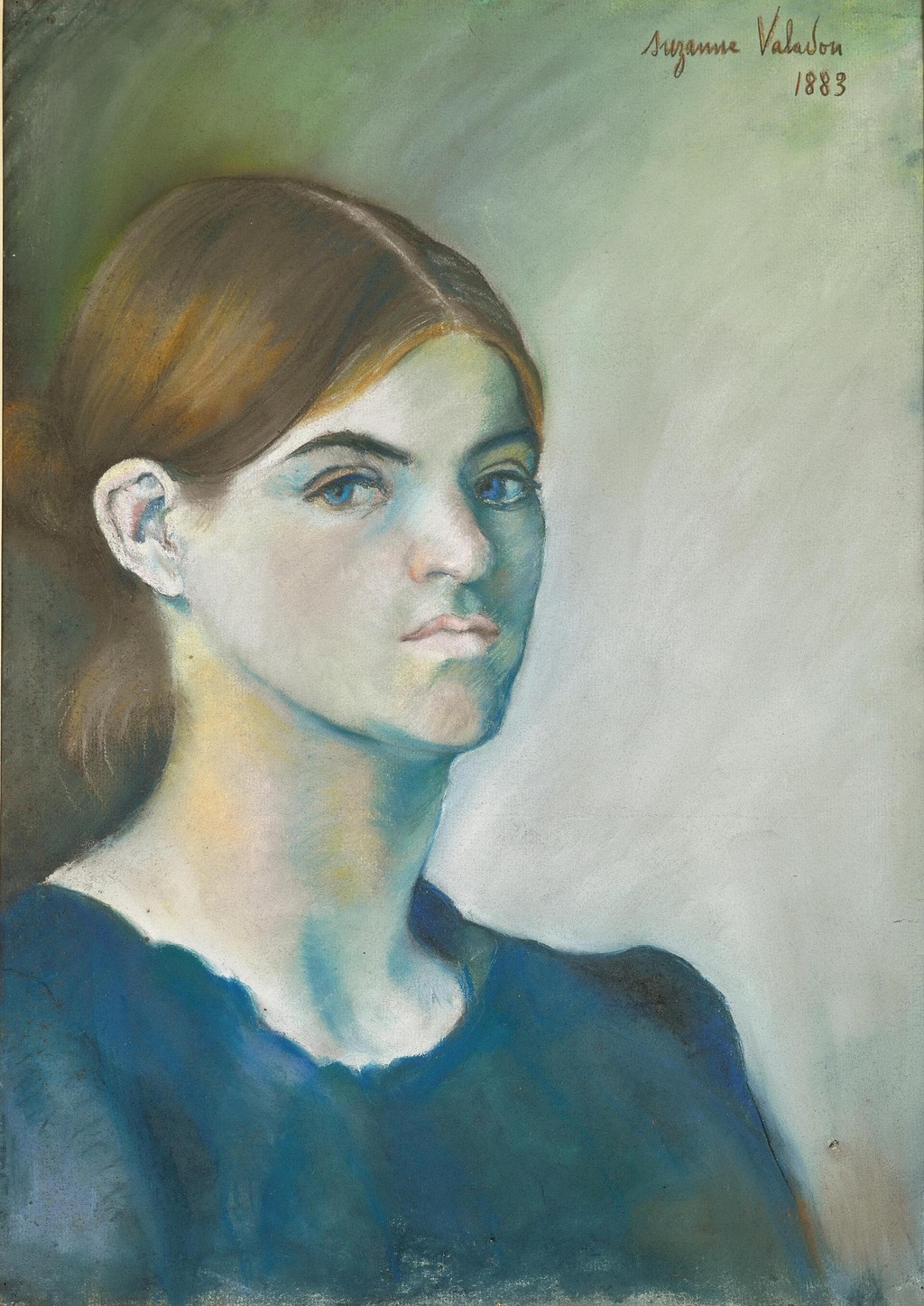
Self-Portrait
1883Portrait of Erik Satie
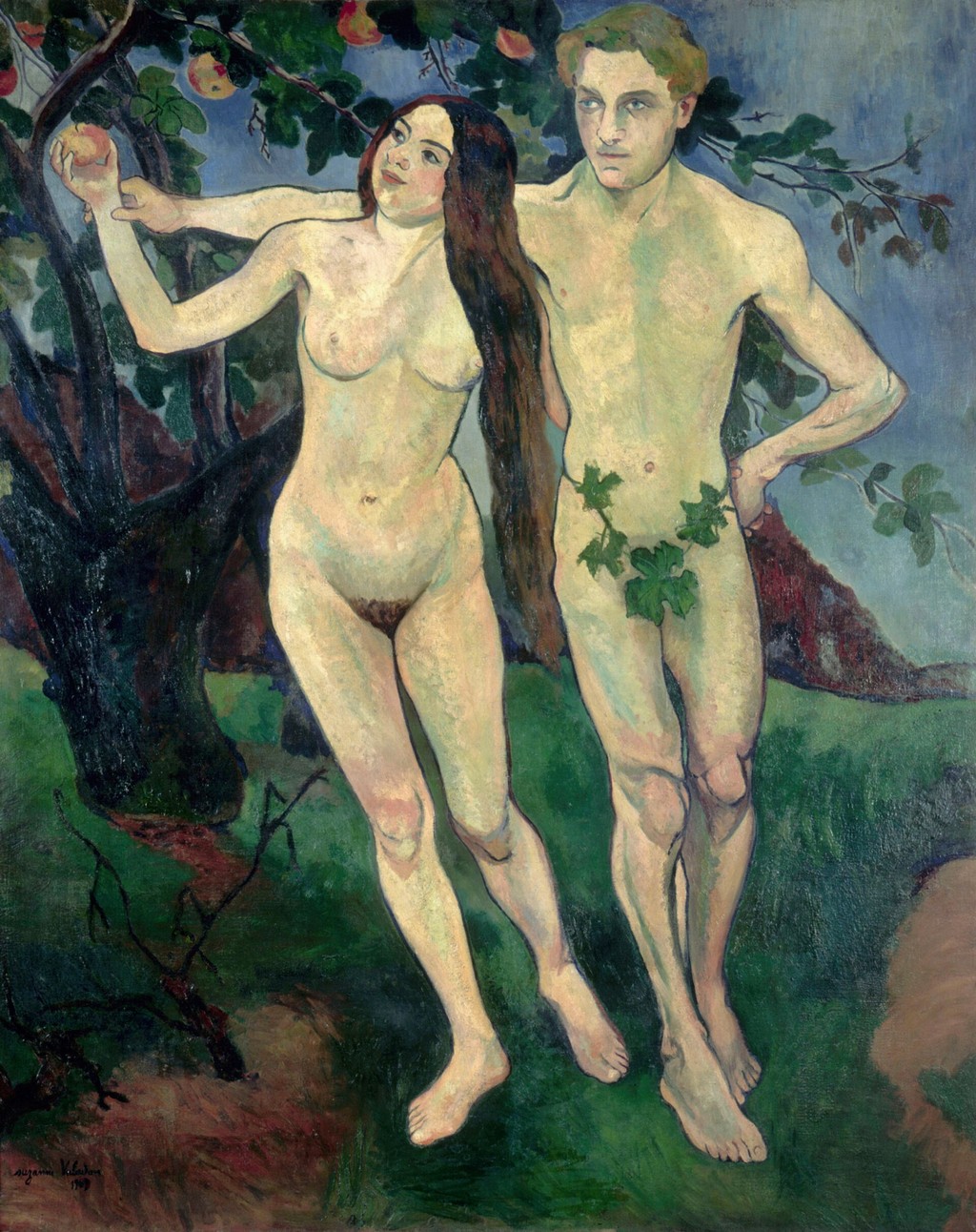
1892–93Adam and Eve
1909Family Portrait
1912The Casting of the Net
1914The Abandoned Doll
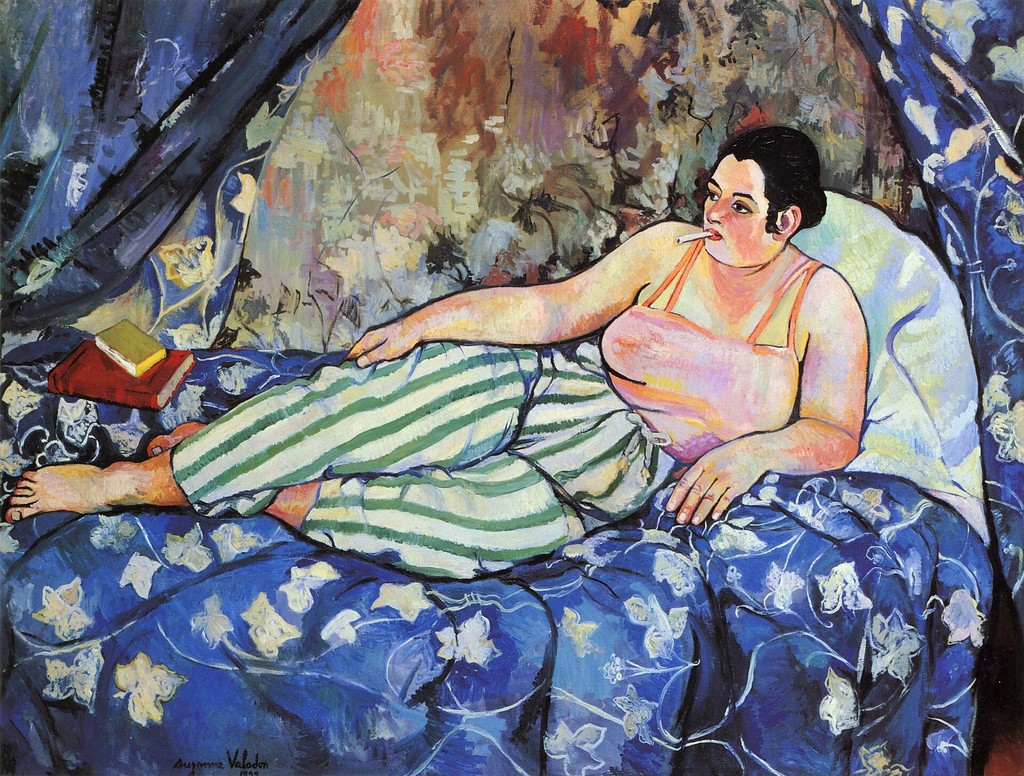
1921The Blue Room
1923Self-Portrait with Bare Breasts
1931Contents
- Introduction
- The Exact Object
- Four Figures in a Narrow Field
- Valadon at the Centre
- Utter and Utrillo
- Madeleine and the Ages of Life
- A Household at Rue Cortot
- Art History as Professional Claim
- Reading Emotion Carefully
The Exact Object
Musée d’Orsay records the painting under the original title Portraits de famille, with La famille as another title. It was given by M. Cahen-Salvador in 1976, assigned first to the Louvre’s Jeu de Paume and then to Musée d’Orsay. The record also documents its long deposit at the Musée national d’art moderne through 2025.[1] Those details distinguish the canvas from another Valadon family group, La Famille Utter of 1921.
The distinction matters because titles such as “family” recur. A close reading begins with the exact 1912 object, its four identified sitters and vertical dimensions. The paintings and artworks guide places it within the broader oeuvre without merging separate family pictures.
Four Figures in a Narrow Field
The group is constructed as a stack of diagonals and profiles. Utter’s dark jacket and upright body establish the left edge. Valadon’s blue dress forms the central coloured mass. Madeleine’s pale, deeply lined face occupies the upper right, while Maurice’s bent arm and inclined head fill the lower zone. No broad interior opens behind them; colour and bodies press towards the surface.
Overlapping usually suggests closeness, but here it does not erase separation. Utter looks across rather than towards the viewer. Maurice’s eyes turn down or aside. Madeleine’s presence is frontal but elevated. Valadon alone makes the most direct outward address. These are visible arrangements. Describing them as loyalty, melancholy or distance requires an attributed interpretation rather than certainty about private feeling.
Valadon at the Centre
Centre Pompidou notes that this is the only family portrait in which Valadon included herself and identifies her central pose with the tradition of the Madonna. Her right hand rests against her chest while her gaze meets the space beyond the canvas.[2] The reference does more than dignify the household. It makes the woman artist both author and represented centre.
This self-placement belongs within Valadon’s longer practice of examining her own image. The portraits and self-portraits essay compares the 1912 role with solitary self-portraits. Here identity is relational: she appears among mother, son and partner, yet her position does not dissolve into any one of those bonds.
Utter and Utrillo
Utter appears in strict profile. Centre Pompidou connects the pose to Renaissance aristocratic portraiture and, further back, to profiles on Roman coins.[2] The analogy gives formal authority to a man who was Valadon’s younger companion and fellow painter. It also creates a hard edge: the face does not turn towards the rest of the group.
Maurice Utrillo sits below, cheek on hand. The museum relates his pose to Dürer’s Melencolia I and to the Romantic type of the suffering artist. This learned reference transforms a familiar gesture into an emblem of creative melancholy.[2] Biography—Maurice’s illness, alcohol dependence and difficult relations—may inform reception, but the painted pose is not a medical diagnosis.
Madeleine and the Ages of Life
Madeleine Valadon’s aged face occupies the background without being softened. Lines across her skin are highly visible, contrasting with the smoother faces below. Centre Pompidou reads her inclusion as introducing the theme of life’s stages and mortality.[2] The vertical arrangement supports that account: generations coexist within one field, but age is neither hidden nor relegated outside the family image.
Valadon repeatedly drew and painted her mother. The practice belongs to the wider attention to ageing found in late self-portraits. The nudes and female gaze guide considers how bodily time enters her work without automatic idealisation.
A Household at Rue Cortot
In 1912 Valadon, Utrillo and Utter settled at 12 rue Cortot. Musée de Montmartre describes the shared artists as the “trio infernal” and identifies the years there as especially productive for Valadon.[3] Madeleine adds an older generation to the painted group. The canvas therefore coincides with a major domestic and working reorganisation.
The Montmartre model-to-artist essay separates documented place history from bohemian legend. Family Portrait does something similar visually. Its cultivated pose types and controlled surface prevent the household from becoming a snapshot of scandal.
Art History as Professional Claim
The Pompidou interpretation identifies references to Roman profile imagery, Renaissance portraiture, Parmigianino’s Antea and Dürer. Such references challenge the idea that Valadon’s lack of academy schooling meant ignorance of art history.[2] Years spent in studios, collections and artistic circles offered another route to visual knowledge.
The painting can thus be read as a professional claim. Valadon inserts a nontraditional household into established forms and places herself at its compositional centre. She neither copies a single prototype nor rejects tradition wholesale. She makes it carry modern relationships that do not settle into harmony.
Reading Emotion Carefully
The figures’ differing poses generate psychological tension, but their inner states remain unknowable. It is reasonable to say that Maurice’s hand-to-head posture evokes melancholy because the museum identifies the visual tradition. It is less responsible to declare exactly what he felt during the sitting. Likewise, Valadon’s gaze can be called direct; “protective” or “defiant” needs qualification.
This restraint increases rather than reduces the picture’s power. The group is close enough to demand relational reading and separate enough to resist a final family story. Family Portrait makes uncertainty part of its structure.
Researched works directory
This searchable evidence census contains 133 distinct records assembled from public collection data and a reproducible Wikidata snapshot. It is not a catalogue raisonné, not a claim of complete oeuvre coverage, and it keeps works with repeated titles as separate objects.
| Name | Date | Medium |
|---|---|---|
| زنان در حمام | 1909 | Painting |
| Adam and Eve | 1909 | Painting |
| After the bath | 1908 | Painting |
| André Utter and his dogs | 1932 | Painting |
| Anémones dans un verre blanc | 1920 | Painting |
| Black Venus | 1919 | Painting |
| Bouquet de fleurs dans un vase Empire | 1920 | Painting |
| Bouquet de fleurs sur un guéridon | 1925 | Painting |
| Bouquet de fleurs sur une petite table | 1932 | Painting |
| Bouquet de roses | 1936 | Painting |
| Bouquet of flowers | 1930 | Painting |
| Bouquet of flowers 1928 | 1928 | Painting |
| Casting the Net | 1914 | Painting |
| Catherine lying naked on a panther skin | 1923 | Painting |
| Catherine nue se coiffant | 1895 | |
| Châtillon-d'Azergues | 1927 | Painting |
| Chien endormi sur un coussin | 1923 | Painting |
| Deux figures | 1909 | Painting |
| Doctor Robert Le Masle | 1930 | Painting |
| Femme à la contrebasse | 1908 | Painting |
| Femmes au bain | 1893 | |
| Fleurs | 1930 | Painting |
| Fleurs et fougères dans un vase | 1929 | Painting |
| Flowers in front of a Window | 1930 | Painting |
| Fruit bowl | 1917 | Painting |
| Germaine Utter à sa fenêtre | 1926 | Painting |
| Germaine Utter devant sa fenêtre | Date unknown | Painting |
| Gilberte nue se coiffant | 1920 | Painting |
| Grandmother and Grandson | 1910 | Painting |
| Joy of Life | 1911 | Painting |
| Juliet sitting in a chair | 1909 | Painting |
| L'Acrobate, ou La Roue | 1916 | Painting |
| L'avenir dévoilé | 1912 | Painting |
| L'étable en Beaujolais | 1921 | Painting |
| La baigneuse nue | Date unknown | Painting |
| La boîte à violon | 1923 | Painting |
| La Cour du Château de Saint-Bernard | 1930 | Painting |
| La Couturière | 1914 | Painting |
| La Dame au petit chien | 1917 | Painting |
| La grenouille | 1910 | Drawing |
| La rue Cortot | Date unknown | Painting |
| La Toilette | 1895 | |
| La Vachère | 1922 | Painting |
| Landscape at Saint-Bernard (Ain) | 1932 | Painting |
| Le Canard | 1930 | Painting |
| Le Jardin de la rue Cortot | Date unknown | Painting |
| Les lilas et camélias | 1936 | Painting |
| Lilacs and Peonies | 1929 | Painting |
| Marie Coca et sa fille | 1913 | Painting |
| Mauricia Coquiot Portrait | 1915 | Painting |
| Mrs. Robert Rey and her daughter Sylvie | 1920 | Painting |
| Naked in the mirror | 1909–1916 | Painting |
| Nature morte | 1920 | Painting |
| Nature morte à la draperie et au bouquet | 1924 | Painting |
| Nature morte au lapin et à la perdrix | 1930 | Painting |
| Nature morte au poisson | 1926 | Painting |
| Nature morte aux fruits et aux fleurs | 1926 | Painting |
| Nu à la couverture rayée | 1922 | Painting |
| Nu à la draperie blanche | 1914 | Painting |
| Nu allongé sur un divan | 1926 | Painting |
| Nu assis | 1925 | Painting |
| Nu assis au bord d'un lit | 1929 | Painting |
| Nu assis sur un canapé | 1916 | Painting |
| Nu au châle bleu | 1930 | Painting |
| Nu, Suzanne Valadon | 1925 | Artwork |
| Nude Arranging Her Hair | 1916 | Painting |
| Nude on a Red Couch | 1920 | Painting |
| Nude Sitting on the Edge of a Bed | 1929 | Painting |
| Nude with drapery | 1921 | Painting |
| Nude with drapery and armchair | 1921 | Drawing |
| Nude woman with a cat and flowers | 1920 | Painting |
| Nudes | 1919 | Painting |
| Paysage de Bretagne ou Île d'Ouessant | 1912 | Painting |
| Plat d'étain | 1920 | Painting |
| Portrait d'enfant | Date unknown | Painting |
| Portrait de Lily Walton | 1923 | Painting |
| Portrait de Louis Moysés | 1924 | Painting |
| Portrait de Maurice Utrillo | 1921 | Painting |
| Portrait du sculpteur Gibault | 1895 | Painting |
| Portrait of a Woman | 1928 | Painting |
| Portrait of a Woman | 1929 | Painting |
| Portrait of a woman | 1934 | Painting |
| Portrait of Charles Wakefield-Mori | 1922 | Painting |
| Portrait of Erik Satie | 1892 | Painting |
| Portrait of Lily Walton | 1922 | Painting |
| Portrait of Madame Lévy | 1922 | Painting |
| Portrait of Madame Maurice Utrillo, Lucie Valore | 1937 | Painting |
| Portrait of Madame Petridès | 1937 | Painting |
| Portrait of Maurice Utrillo | 1928 | |
| Portrait of Mme Zamaron | 1922 | Painting |
| Portrait of Nora Kars | 1914 | Painting |
| Portraits of the Family | 1912 | Painting |
| Raminou cat study | 1917 | Painting |
| Raminou on his blue cushion | 1919 | Painting |
| Reclining Nude | 1928 | Painting |
| Route dans la forêt de Compiègne | 1914 | Painting |
| Seated Female Nude | 1916 | Painting |
| Seated Nude with Shawl Carpet | 1921 | Painting |
| Self-portrait | 1883 | Drawing |
| Self-Portrait | 1898 | Painting |
| Self-portrait in the mirror | 1927 | Painting |
| Self portrait with bare breasts | 1931 | Painting |
| Sitting nude | 1921 | Painting |
| Spring Flowers | 1928 | Painting |
| Still Life with Fruit | 1937 | Painting |
| Still Life with Fruit Basket | 1920 | Painting |
| Still life with white rose | 1936 | Painting |
| The Abandoned Doll | 1921 | Painting |
| The artist's mother | 1912 | Painting |
| The Bath | 1908 | Drawing |
| The bathers | 1923 | Painting |
| The Blue Room | 1923 | Painting |
| The Rising | 1920 | Painting |
| The two sisters | 1928 | Painting |
| The Woman in White Stockings | 1924 | Painting |
| Tree at Montmagny Quarry | Date unknown | Painting |
| Untitled (Still Life) | 1921 | Painting |
| Utrillo de face | 1925 | Drawing |
| Utrillo de trois-quarts | 1925 | Drawing |
| Utrillo devant son chevalet | 1919 | Painting |
| Utrillo pensif | 1911 | Drawing |
| Utter familly | 1921 | Painting |
| Vase de fleurs | 1917 | Painting |
| Vase de fleurs | 1927 | Painting |
| Vase de fleurs | 1934 | Painting |
| Vase de fleurs et tapis oriental | 1929 | Painting |
| Vase of flowers | 1922 | Painting |
| Woman in an armchair. Portrait of Madame G. | 1919 | Painting |
| Woman Seated | Date unknown | Painting |
| Woman with guitar | 1920 | Painting |
| Young Girl Bathing | 1919 | Painting |
| Young girl crocheting | 1892 | Painting |
| Young Girl in Front of a Window | 1930 | Painting |
Frequently Asked Questions
The painting includes André Utter, Suzanne Valadon, her mother Madeleine and her son Maurice Utrillo. Centre Pompidou identifies each figure and discusses the pose traditions.[2]
It belongs to Musée d’Orsay under inventory number RF 1976 22. Its deposit at Centre Pompidou ended in 2025 according to the current Orsay record.[1]
No. Family Portrait is the vertical four-person canvas of 1912. La Famille Utter is a separate 1921 work with its own collection record.
Centre Pompidou links the pose to Dürer’s Melencolia I and the tradition of the troubled artist. The gesture supports that visual reading but cannot prove Maurice’s precise feelings during the sitting.[2]
It represents Valadon and members of her household, so autobiography is present. Its carefully selected art-historical poses and compressed composition also make it a constructed public painting, not an unmediated family document.
Discussion
Use this evidence-led guide as a starting point for close looking rather than a final verdict.
Share an observation about Family Portrait or a source that adds useful context.
Reader Insights
Which visible detail most changes your reading of Family Portrait?
How do medium, scale, setting and current museum evidence shape the encounter?
What remains uncertain once documented fact is separated from visual inference?
Join the Conversation
Add your reading below, keeping observations specific and evidence clear.
References
- Musée d’Orsay, Family Portrait, accessed 31 August 2026.
- Centre Pompidou, Family Portrait, accessed 31 August 2026.
- Musée de Montmartre, Valadon, Utrillo and Utter at 12 rue Cortot, accessed 31 August 2026.
- Family Portrait, 1912 — Musée d’Orsay, public domain.
More VALADON Artworks
Self-Portrait
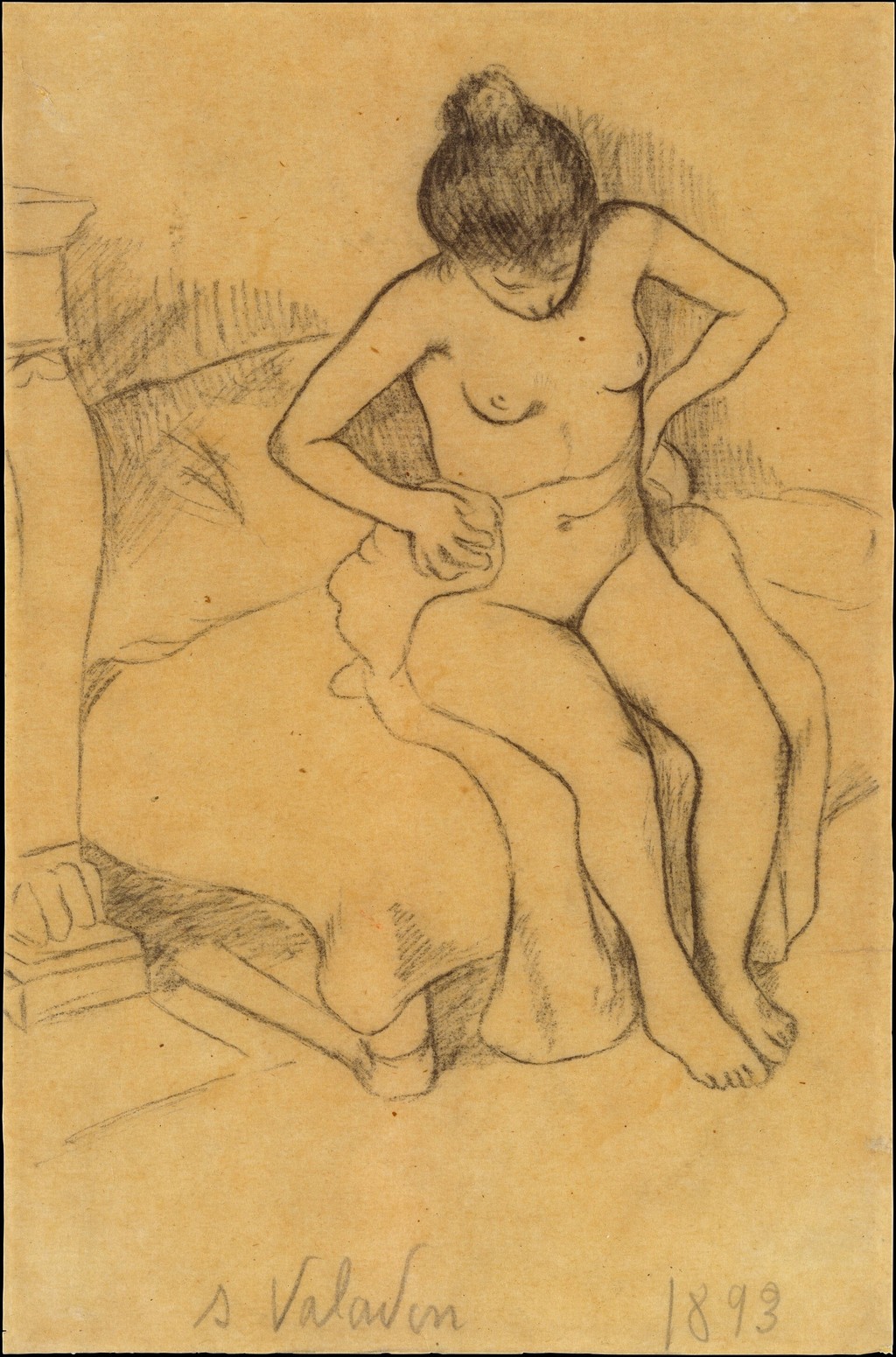
After the Bath
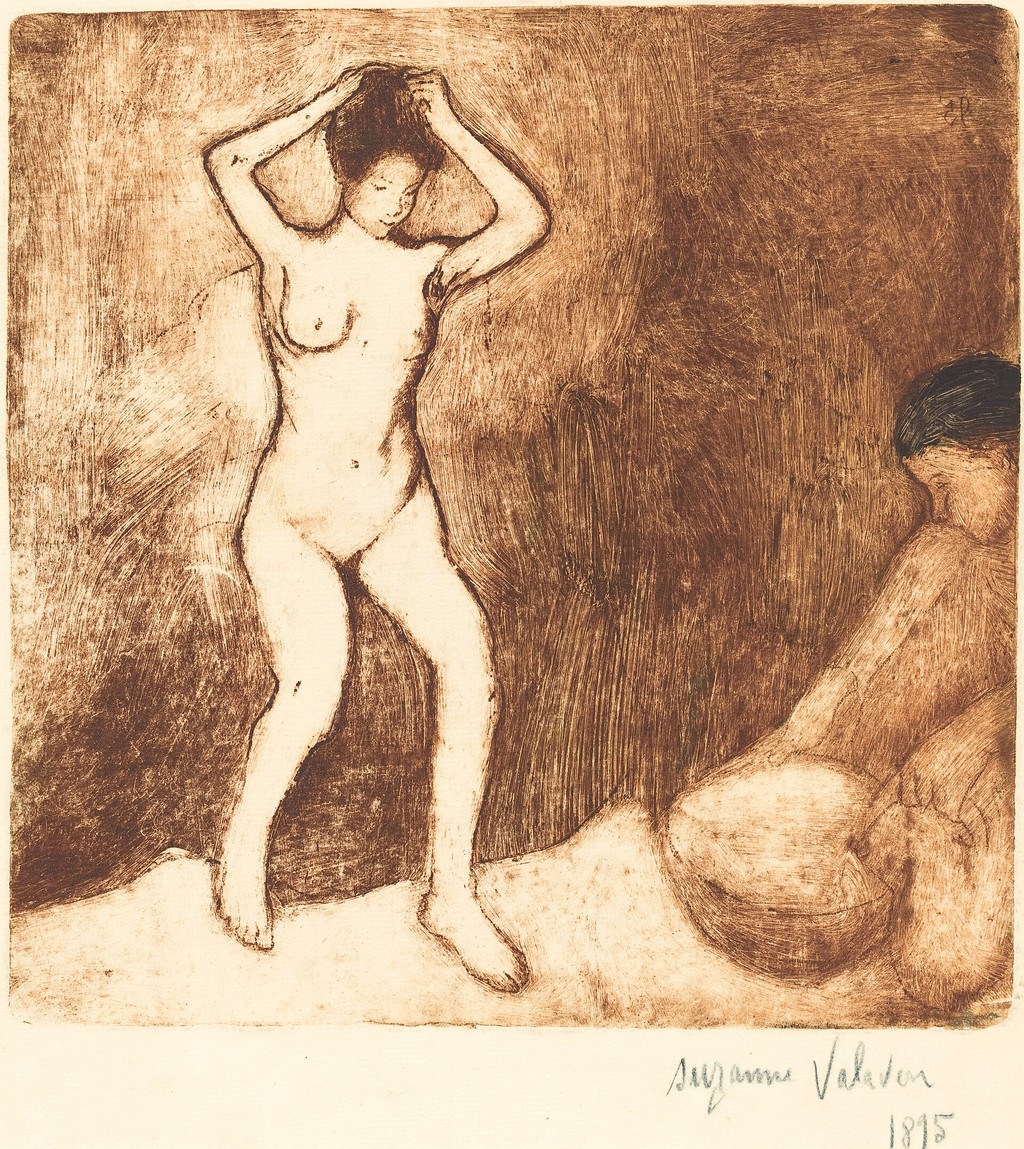
La Toilette
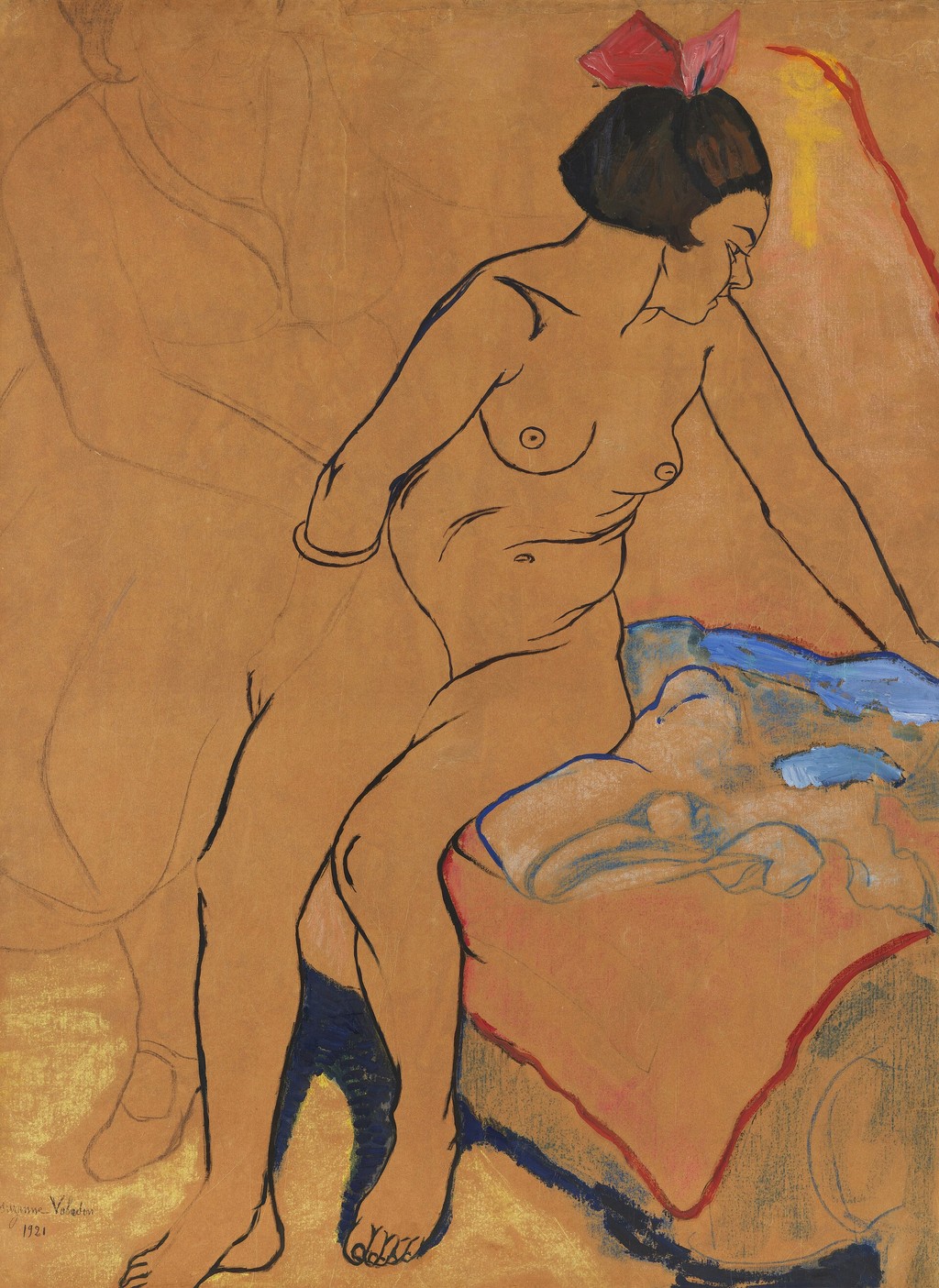
The Abandoned Doll