 by Tom Gurney
Tom Gurney BSc (Hons) is an art history expert with over 20 years experience
Page Created on August 31, 2026 / Page Updated on November 6, 2026
Email: tomgurney1@gmail.com / Phone: +44 7429 011000
The Blue Room: Introduction
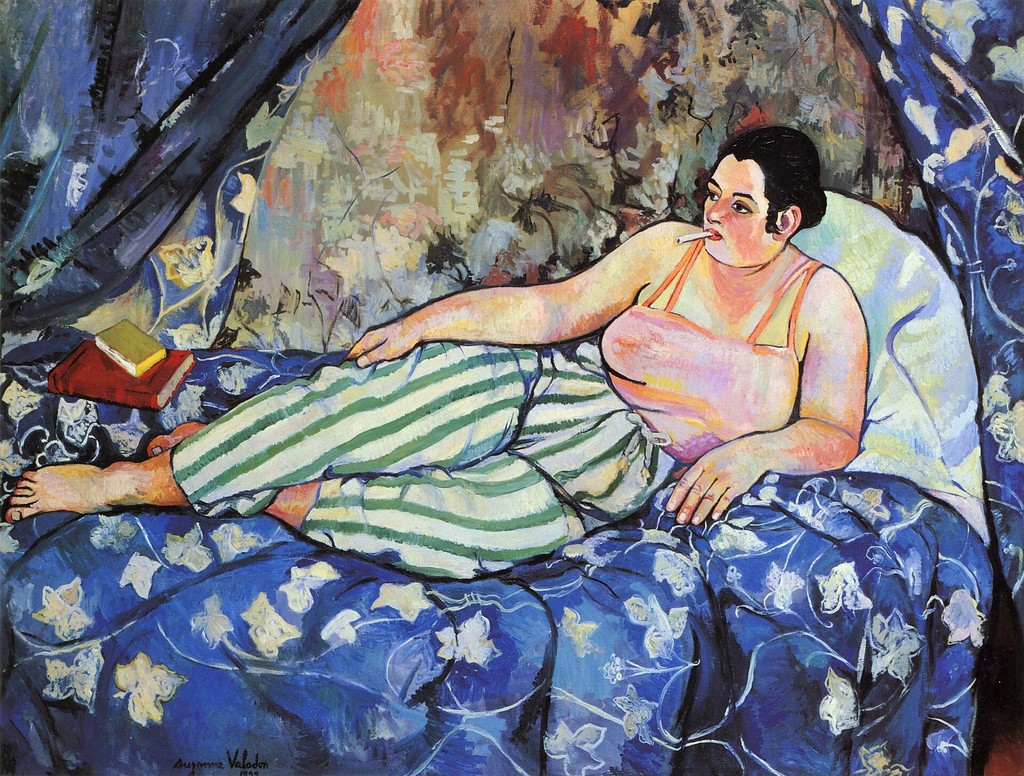
In The Blue Room, a woman reclines across a bed but does not behave like a conventional odalisque. She wears a pale camisole and green-striped trousers, holds a cigarette between her lips and shares the bed with two books. Blue floral textiles spread around her body, while drapery and a worn wall fill the shallow background. Suzanne Valadon used an inherited pose but replaced the expected nude display with the material signs of a modern private life.[1][2]
At a Glance
- ArtistSuzanne Valadon
- French titleLa Chambre bleue
- Date1923
- MediumOil on canvas
- Dimensions90 × 116 centimetres
- CollectionMusée national d’art moderne, Centre Pompidou
Suzanne Valadon in context
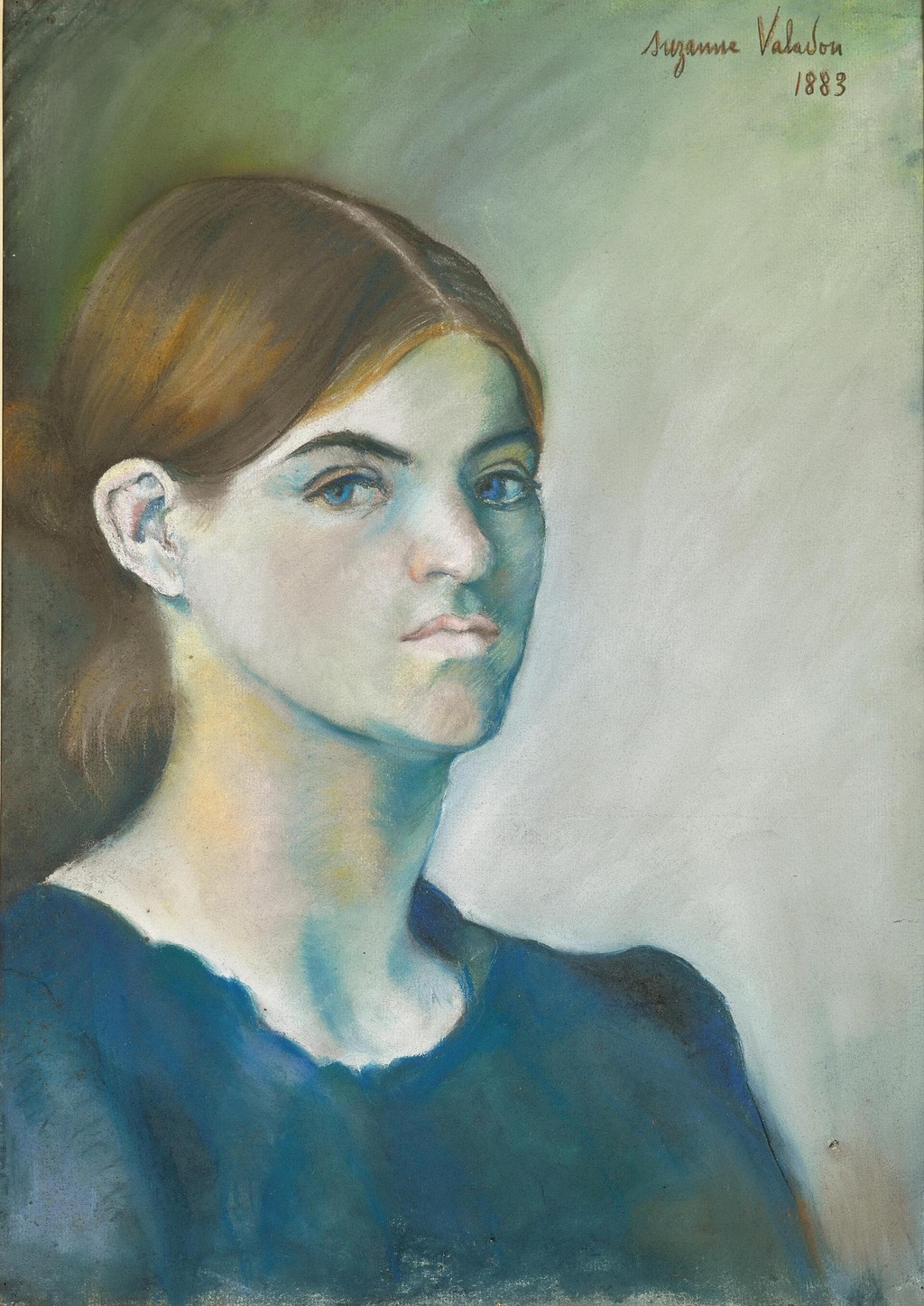
Self-Portrait
1883Portrait of Erik Satie
1892–93Adam and Eve
1909Family Portrait
1912The Casting of the Net
1914The Abandoned Doll
1921The Blue Room
1923Self-Portrait with Bare Breasts
1931Contents
- Introduction
- The Exact Object and Its Date
- A Reclining Body Fully Dressed
- Blue as an Environment
- Books, Cigarette and Modern Time
- Revising the Odalisque
- Who Is the Woman?
- Surface, Weight and Looking
- A Modern Interior
The Exact Object and Its Date
Centre Pompidou identifies the painting as a 1923 oil measuring 90 by 116 centimetres and records the work as public domain. The large horizontal format gives the reclining body substantial physical space.[1] It belongs to a mature period in which Valadon had already exhibited for decades and received international recognition.
That chronology matters. The Blue Room is not an experiment by a beginner translating experience as a model. It is the assured work of an established artist choosing to revisit a deep tradition. The biography follows the professional record leading to this moment.
A Reclining Body Fully Dressed
The woman lies on her side with one leg extended and the other bent. Her upper body rises on pillows; an arm rests along the bed. The pose makes her body broad and horizontal, yet clothing changes how it is encountered. Striped pyjama trousers cover the legs, and the camisole exposes only a limited area of chest and arms.
Centre Pompidou describes the clothes as indoor garments not designed to please a male spectator.[1] That is a curatorial interpretation grounded in visible difference from the nude odalisque. The figure remains bodily and sensuous, but exposure no longer organises the entire relation. The nudes and female gaze essay places this clothed image beside Valadon’s frank nudes.
Blue as an Environment
Blue is not a flat background colour. It appears in bedcover, cushions, drapery and shadow, broken by pale floral motifs and the sharp green-white rhythm of the trousers. The surrounding patterns nearly engulf the figure, but dark contours around arms, face and clothing keep her form legible.
This balance between absorption and separation is central to Valadon’s mature interiors. Pattern makes the room active rather than decorative. The woman occupies it through scale and weight, while the fabric creates a field dense enough to push back. In the paintings and artworks overview, the picture can be compared with group portraits where backgrounds exert similar pressure.
Books, Cigarette and Modern Time
Two books lie near the woman’s feet or lower body, one red and one yellow. A cigarette projects from her mouth. These objects introduce activities that extend beyond the moment: reading before or after the depicted instant, and smoking as an ongoing action. They also give the sitter forms of attention that do not centre on the viewer.
Centre Pompidou interprets the books—a pocket novel and a bound art-history volume—as signs of intellectual emancipation.[1] Exact identification of their contents depends on the museum’s analysis rather than legible titles in ordinary reproduction. Their contrasting covers remain visible even without that interpretation, counterweights to the broad blue field.
Revising the Odalisque
European painting frequently presented a reclining woman as an odalisque within an imagined “Oriental” interior, making exotic setting and bodily availability mutually reinforcing. Centre Pompidou describes Valadon’s canvas as a reinterpretation and subversion of those codes. The clothed woman smokes, reads and occupies her own worn room instead of performing as an exotic fantasy.[2]
The comparison is formal as well as political. Valadon preserves the horizontal pose, bed and surrounding textiles, so the tradition remains recognisable. She changes its social terms from inside. The woman is not removed from view; rather, the viewer is denied the familiar arrangement of display.
Who Is the Woman?
The sitter is not securely identified in the institutional record used here. Centre Pompidou suggests that she can function as a symbolic alter ego for Valadon while stating that the painting is not a self-portrait.[1] That distinction should remain intact. A symbolic relation is an interpretation of attitude and role, not evidence that the face belongs to the artist.
The portraits and self-portraits guide explains why likeness requires exact support. Here anonymity can be productive. The figure represents a particular body, not a generic type, yet she retains an identity outside the viewer’s possession.
Surface, Weight and Looking
The picture’s force comes from an opposition between crowded surface and heavy body. Floral marks scatter across the bed; stripes repeat across the trousers; patched colour activates the wall. Against that movement, the figure remains settled. Her head turns away from full frontal address, and the cigarette interrupts any conventional smile.
This does not make her completely indifferent to being seen. Painted figures cannot literally consent or refuse. What Valadon can control is the pictorial relation: pose, clothing, scale, objects and direction of attention. Together those decisions make observation possible without offering the easy fiction of availability.
A Modern Interior
The room is modern not because every object is new, but because inherited form meets a contemporary life. Pyjamas, popular reading and smoking relocate the reclining figure. The worn wall prevents the interior from becoming a luxurious fantasy, while the art book claimed by the Pompidou analysis brings cultural knowledge onto the bed.[1]
The Montmartre model-to-artist essay traces Valadon’s experience within rooms where bodies were staged for painters. The Blue Room reorders that experience. A woman occupies the room materially, and the artist converts the genre’s history into a scene of self-directed time.
Researched works directory
This searchable evidence census contains 133 distinct records assembled from public collection data and a reproducible Wikidata snapshot. It is not a catalogue raisonné, not a claim of complete oeuvre coverage, and it keeps works with repeated titles as separate objects.
| Name | Date | Medium |
|---|---|---|
| زنان در حمام | 1909 | Painting |
| Adam and Eve | 1909 | Painting |
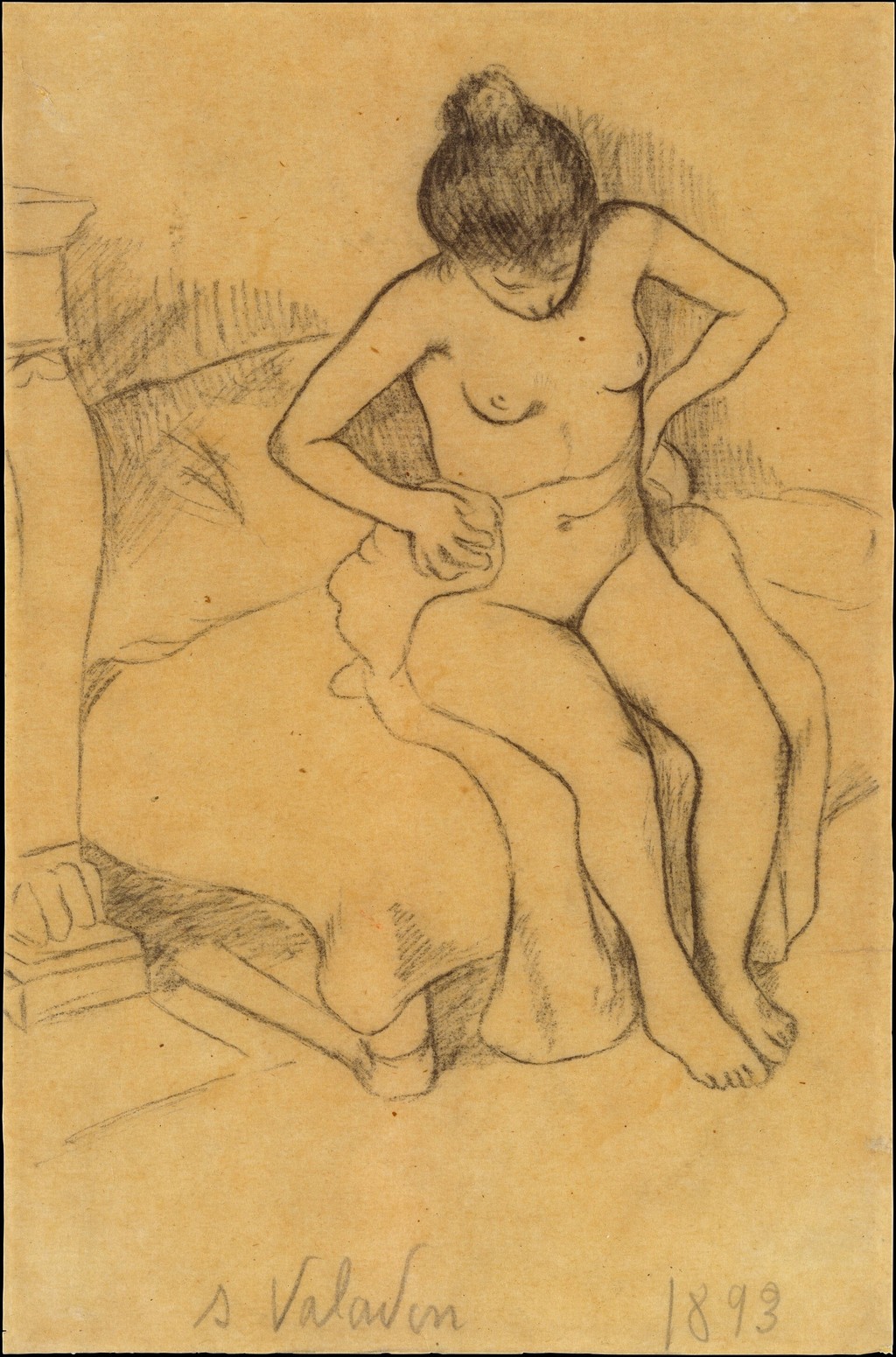
| After the bath | 1908 | Painting |
| André Utter and his dogs | 1932 | Painting |
| Anémones dans un verre blanc | 1920 | Painting |
| Black Venus | 1919 | Painting |
| Bouquet de fleurs dans un vase Empire | 1920 | Painting |
| Bouquet de fleurs sur un guéridon | 1925 | Painting |
| Bouquet de fleurs sur une petite table | 1932 | Painting |
| Bouquet de roses | 1936 | Painting |
| Bouquet of flowers | 1930 | Painting |
| Bouquet of flowers 1928 | 1928 | Painting |
| Casting the Net | 1914 | Painting |
| Catherine lying naked on a panther skin | 1923 | Painting |
| Catherine nue se coiffant | 1895 | |
| Châtillon-d'Azergues | 1927 | Painting |
| Chien endormi sur un coussin | 1923 | Painting |
| Deux figures | 1909 | Painting |
| Doctor Robert Le Masle | 1930 | Painting |
| Femme à la contrebasse | 1908 | Painting |
| Femmes au bain | 1893 | |
| Fleurs | 1930 | Painting |
| Fleurs et fougères dans un vase | 1929 | Painting |
| Flowers in front of a Window | 1930 | Painting |
| Fruit bowl | 1917 | Painting |
| Germaine Utter à sa fenêtre | 1926 | Painting |
| Germaine Utter devant sa fenêtre | Date unknown | Painting |
| Gilberte nue se coiffant | 1920 | Painting |
| Grandmother and Grandson | 1910 | Painting |
| Joy of Life | 1911 | Painting |
| Juliet sitting in a chair | 1909 | Painting |
| L'Acrobate, ou La Roue | 1916 | Painting |
| L'avenir dévoilé | 1912 | Painting |
| L'étable en Beaujolais | 1921 | Painting |
| La baigneuse nue | Date unknown | Painting |
| La boîte à violon | 1923 | Painting |
| La Cour du Château de Saint-Bernard | 1930 | Painting |
| La Couturière | 1914 | Painting |
| La Dame au petit chien | 1917 | Painting |
| La grenouille | 1910 | Drawing |
| La rue Cortot | Date unknown | Painting |
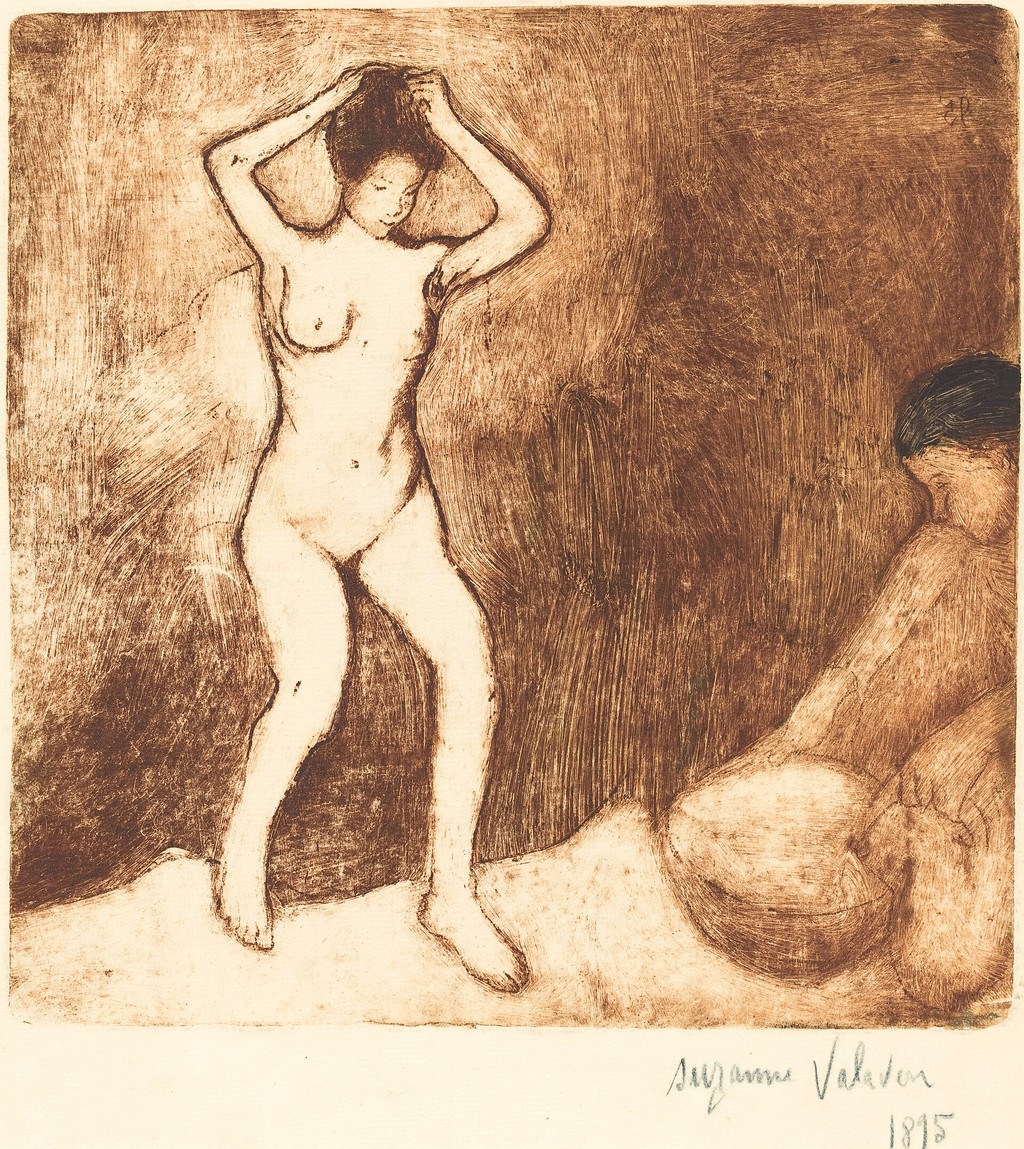
| La Toilette | 1895 | |
| La Vachère | 1922 | Painting |
| Landscape at Saint-Bernard (Ain) | 1932 | Painting |
| Le Canard | 1930 | Painting |
| Le Jardin de la rue Cortot | Date unknown | Painting |
| Les lilas et camélias | 1936 | Painting |
| Lilacs and Peonies | 1929 | Painting |
| Marie Coca et sa fille | 1913 | Painting |
| Mauricia Coquiot Portrait | 1915 | Painting |
| Mrs. Robert Rey and her daughter Sylvie | 1920 | Painting |
| Naked in the mirror | 1909–1916 | Painting |
| Nature morte | 1920 | Painting |
| Nature morte à la draperie et au bouquet | 1924 | Painting |
| Nature morte au lapin et à la perdrix | 1930 | Painting |
| Nature morte au poisson | 1926 | Painting |
| Nature morte aux fruits et aux fleurs | 1926 | Painting |
| Nu à la couverture rayée | 1922 | Painting |
| Nu à la draperie blanche | 1914 | Painting |
| Nu allongé sur un divan | 1926 | Painting |
| Nu assis | 1925 | Painting |
| Nu assis au bord d'un lit | 1929 | Painting |
| Nu assis sur un canapé | 1916 | Painting |
| Nu au châle bleu | 1930 | Painting |
| Nu, Suzanne Valadon | 1925 | Artwork |
| Nude Arranging Her Hair | 1916 | Painting |
| Nude on a Red Couch | 1920 | Painting |
| Nude Sitting on the Edge of a Bed | 1929 | Painting |
| Nude with drapery | 1921 | Painting |
| Nude with drapery and armchair | 1921 | Drawing |
| Nude woman with a cat and flowers | 1920 | Painting |
| Nudes | 1919 | Painting |
| Paysage de Bretagne ou Île d'Ouessant | 1912 | Painting |
| Plat d'étain | 1920 | Painting |
| Portrait d'enfant | Date unknown | Painting |
| Portrait de Lily Walton | 1923 | Painting |
| Portrait de Louis Moysés | 1924 | Painting |
| Portrait de Maurice Utrillo | 1921 | Painting |
| Portrait du sculpteur Gibault | 1895 | Painting |
| Portrait of a Woman | 1928 | Painting |
| Portrait of a Woman | 1929 | Painting |
| Portrait of a woman | 1934 | Painting |
| Portrait of Charles Wakefield-Mori | 1922 | Painting |
| Portrait of Erik Satie | 1892 | Painting |
| Portrait of Lily Walton | 1922 | Painting |
| Portrait of Madame Lévy | 1922 | Painting |
| Portrait of Madame Maurice Utrillo, Lucie Valore | 1937 | Painting |
| Portrait of Madame Petridès | 1937 | Painting |
| Portrait of Maurice Utrillo | 1928 | |
| Portrait of Mme Zamaron | 1922 | Painting |
| Portrait of Nora Kars | 1914 | Painting |
| Portraits of the Family | 1912 | Painting |
| Raminou cat study | 1917 | Painting |
| Raminou on his blue cushion | 1919 | Painting |
| Reclining Nude | 1928 | Painting |
| Route dans la forêt de Compiègne | 1914 | Painting |
| Seated Female Nude | 1916 | Painting |
| Seated Nude with Shawl Carpet | 1921 | Painting |
| Self-portrait | 1883 | Drawing |
| Self-Portrait | 1898 | Painting |
| Self-portrait in the mirror | 1927 | Painting |
| Self portrait with bare breasts | 1931 | Painting |
| Sitting nude | 1921 | Painting |
| Spring Flowers | 1928 | Painting |
| Still Life with Fruit | 1937 | Painting |
| Still Life with Fruit Basket | 1920 | Painting |
| Still life with white rose | 1936 | Painting |
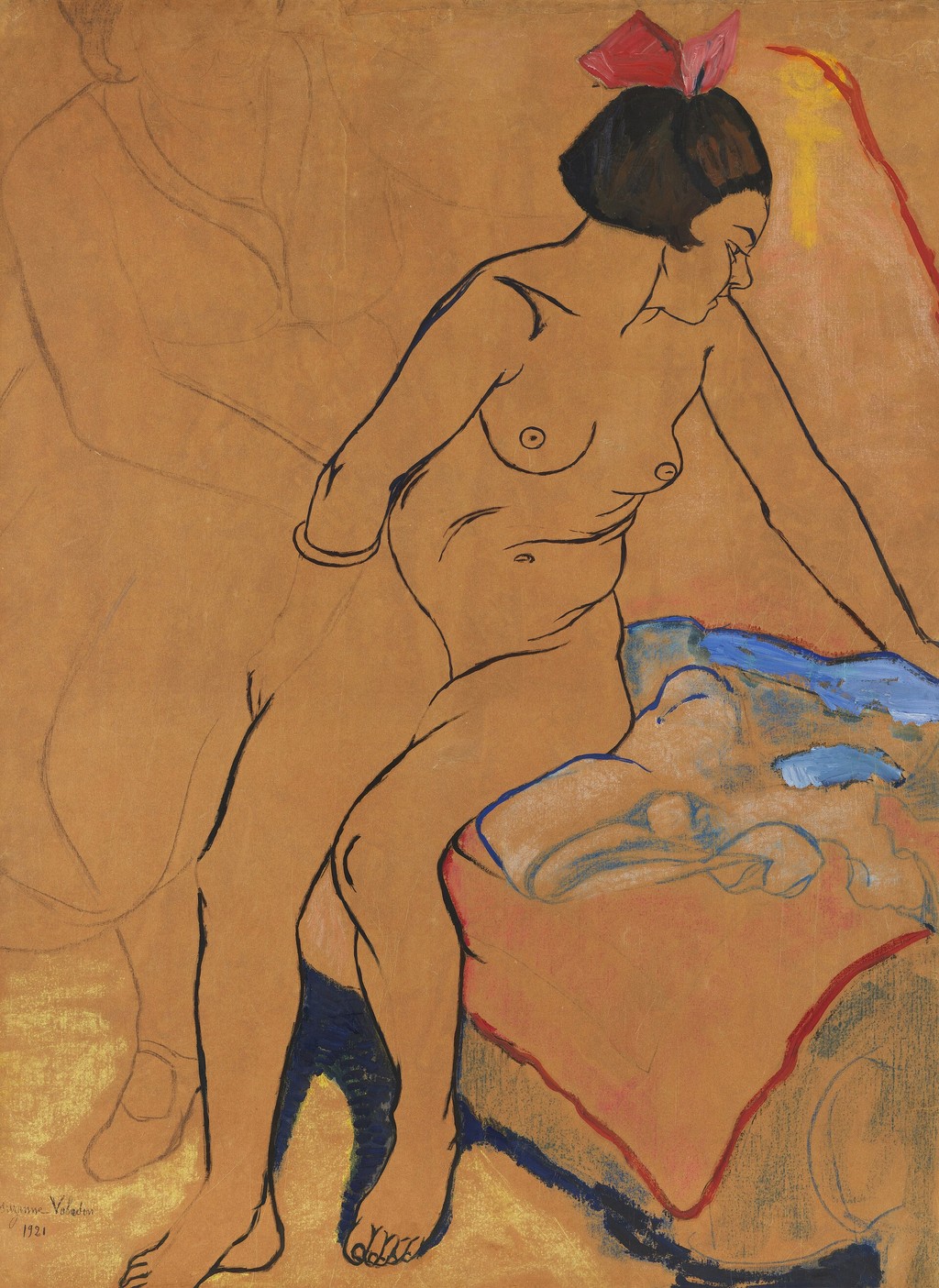
| The Abandoned Doll | 1921 | Painting |
| The artist's mother | 1912 | Painting |
| The Bath | 1908 | Drawing |
| The bathers | 1923 | Painting |
| The Blue Room | 1923 | Painting |
| The Rising | 1920 | Painting |
| The two sisters | 1928 | Painting |
| The Woman in White Stockings | 1924 | Painting |
| Tree at Montmagny Quarry | Date unknown | Painting |
| Untitled (Still Life) | 1921 | Painting |
| Utrillo de face | 1925 | Drawing |
| Utrillo de trois-quarts | 1925 | Drawing |
| Utrillo devant son chevalet | 1919 | Painting |
| Utrillo pensif | 1911 | Drawing |
| Utter familly | 1921 | Painting |
| Vase de fleurs | 1917 | Painting |
| Vase de fleurs | 1927 | Painting |
| Vase de fleurs | 1934 | Painting |
| Vase de fleurs et tapis oriental | 1929 | Painting |
| Vase of flowers | 1922 | Painting |
| Woman in an armchair. Portrait of Madame G. | 1919 | Painting |
| Woman Seated | Date unknown | Painting |
| Woman with guitar | 1920 | Painting |
| Young Girl Bathing | 1919 | Painting |
| Young girl crocheting | 1892 | Painting |
| Young Girl in Front of a Window | 1930 | Painting |
Frequently Asked Questions
Centre Pompidou states that it is not a self-portrait, while proposing that the woman may be understood as Valadon’s symbolic alter ego.[1]
Its horizontal reclining pose, bed and surrounding fabrics recall a genre often used to display an exoticised female nude. Valadon preserves those formal cues while changing clothing, setting and agency.[2]
Two books sit near the reclining woman. The museum interprets them as a pocket novel and an art-history book; their red and yellow covers punctuate the dominant blue.[1]
Yes. A cigarette hangs from her lips, contributing to the sense of an occupied private moment rather than a formally presented pose.
It belongs to the Musée national d’art moderne at Centre Pompidou in Paris. Display status can change, so a current museum listing should be checked before visiting.[1]
Discussion
Use this evidence-led guide as a starting point for close looking rather than a final verdict.
Share an observation about The Blue Room or a source that adds useful context.
Reader Insights
Which visible detail most changes your reading of The Blue Room?
How do medium, scale, setting and current museum evidence shape the encounter?
What remains uncertain once documented fact is separated from visual inference?
Join the Conversation
Add your reading below, keeping observations specific and evidence clear.
References
- Centre Pompidou, The Blue Room dossier, accessed 31 August 2026.
- Centre Pompidou, Focus on The Blue Room, accessed 31 August 2026.
- The Blue Room, 1923 — Centre Pompidou, public domain.
More VALADON Artworks
Self-Portrait
After the Bath
La Toilette
The Abandoned Doll