 by Tom Gurney
Tom Gurney BSc (Hons) is an art history expert with over 20 years experience
Page Created on August 31, 2026 / Page Updated on November 6, 2026
Email: tomgurney1@gmail.com / Phone: +44 7429 011000
Suzanne Valadon Portraits and Self-Portraits: Introduction
Suzanne Valadon knew portraiture as a sitter before she controlled it as an artist. That experience makes comparison tempting, but her portraits are not simply replies to Renoir or Toulouse-Lautrec. They create their own problems: how a face meets a field of colour, how clothing and furniture shape identity, how family members occupy unequal positions, and how an ageing artist chooses to look at herself. Firm outlines and compressed settings deny the easy illusion that likeness alone can reveal a person.[1][2]
At a Glance
- Earliest surviving self-imagePastel Self-Portrait, 1883
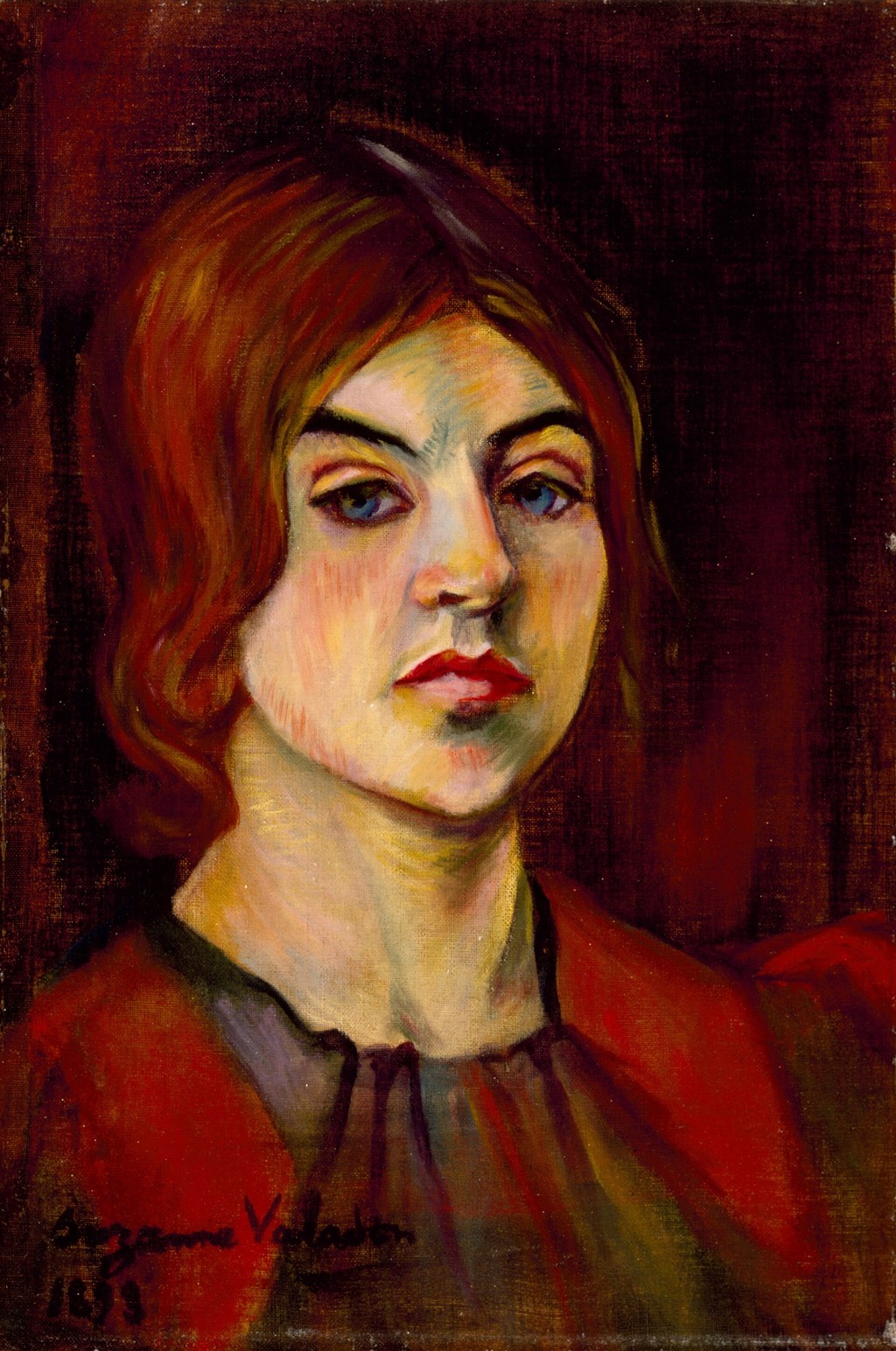
- Major oil self-portraitSelf-Portrait, 1898, Museum of Fine Arts Houston
- Recurring sittersMaurice Utrillo, Madeleine Valadon, André Utter, friends and patrons
- Musical connectionPortrait of Erik Satie, 1892–93
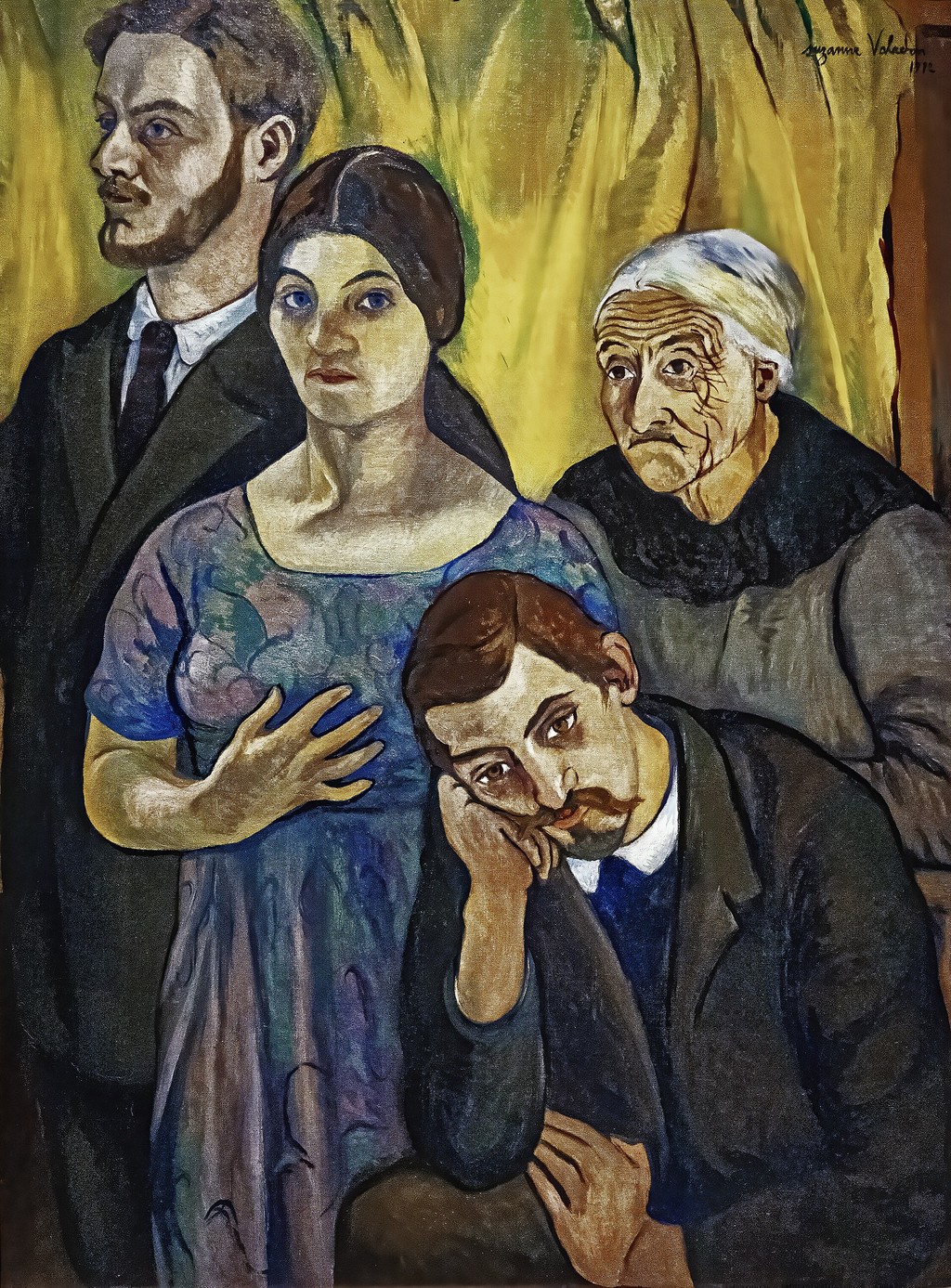
- Family landmarkFamily Portrait, 1912
- Late concernAgeing shown without conventional idealisation
Contents
- Introduction
- Sitting and Seeing
- The 1883 Self-Portrait
- Erik Satie and the Intimate Head
- The Houston Self-Portrait
- Family Faces
- Patrons, Friends and Professional Identity
- Ageing and the Unidealised Self
- Portraits Without Final Answers
Sitting and Seeing
Valadon’s years as a professional model gave her practical knowledge of portrait sessions: the duration of a pose, the negotiation of costume, and the transformation of a working person into a painted type. Musée d’Orsay identifies her as the woman in Renoir’s Dance in the City, where dress, partner and setting define an elegant social performance.[3] When Valadon made portraits, she could draw upon that embodied knowledge without merely reversing another artist’s style.
The Montmartre model-to-artist essay reconstructs this change of position. Authorship meant choosing who would be looked at, how long a pose would last and which visual facts would remain. It also meant entering exhibition systems under her own name.
The 1883 Self-Portrait
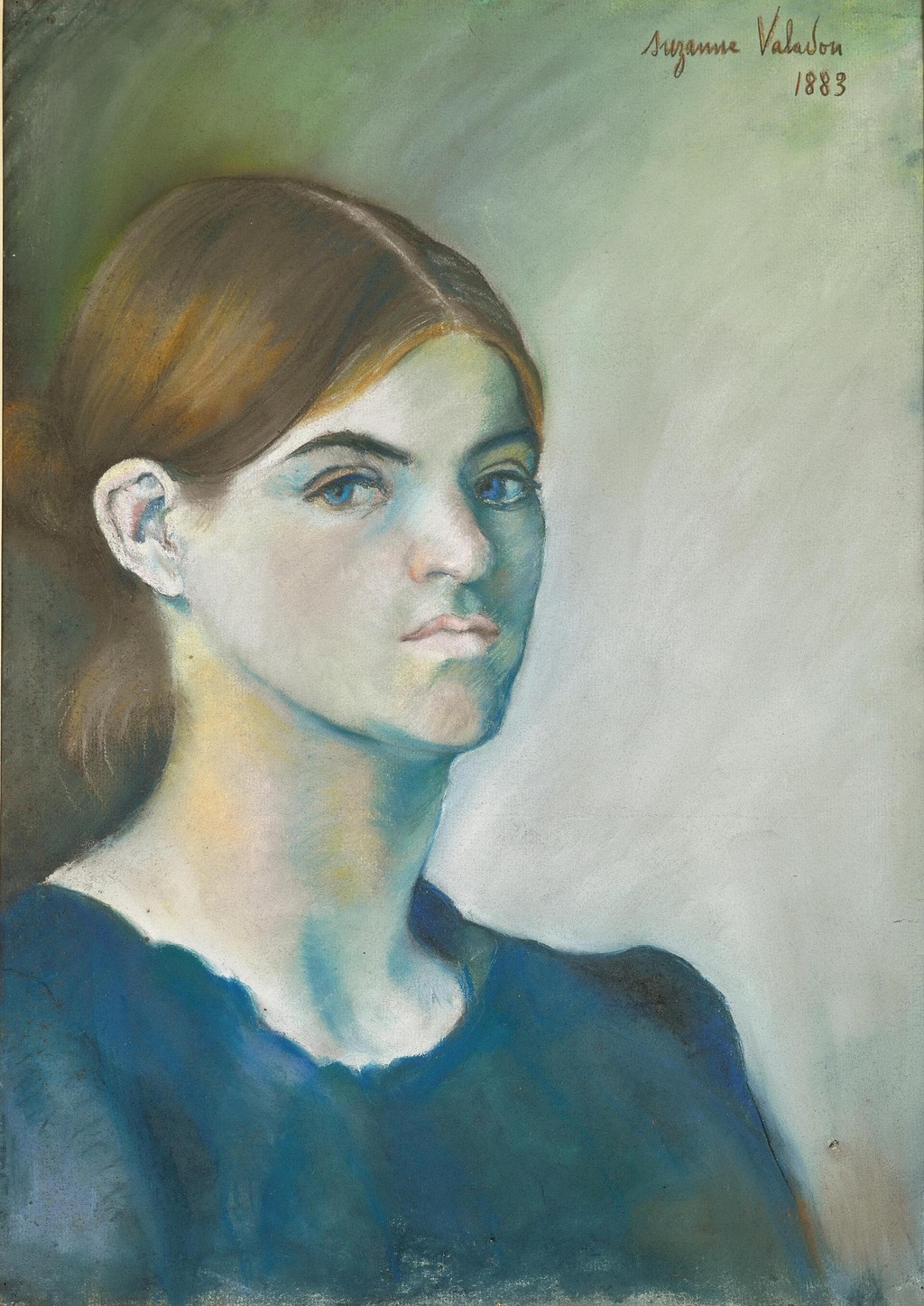
Centre Pompidou identifies the 1883 pastel as Valadon’s earliest surviving work. The head turns slightly, but the eyes address the viewer with unusual steadiness. Colour is restrained and the surrounding field offers little narrative distraction. Because the work coincides with the year Maurice was born, biography can easily overtake looking. The object does not document every pressure of that year; it shows a young artist constructing her own visible presence.[2][4]
This is also a statement in drawing. Pastel can blur into atmospheric softness, yet Valadon uses it to define jaw, brow and tied-back hair. The drawings and prints guide places the sheet within the longer discipline of line from which her painted contours developed.
Erik Satie and the Intimate Head
Valadon’s Portrait of Erik Satie dates from 1892–93 and belongs to Centre Pompidou. The composer appears in profile within a small, almost medallion-like field. The format narrows attention to forehead, nose, beard and collar, avoiding the elaborate attributes common in professional portraits.[2]
Satie and Valadon had a brief relationship, a fact that encourages psychological storytelling. The portrait cannot verify the emotional course of that relationship. What it can show is concentration: a familiar face converted into a spare profile. A portrait may emerge from intimacy while still functioning as a formal object in public circulation.
The Houston Self-Portrait
The 1898 oil Self-Portrait at the Museum of Fine Arts Houston measures 40 by 26.7 centimetres. The museum records its public-domain status, provenance and present display. Its catalogue essay describes the work as small but powerful and notes the contrast between Valadon’s austere self-presentation and Renoir’s softened images of her.[5]
Colour gives the painting much of its force. Red-brown hair, shadowed background and cool facial tones create a tightly controlled opposition. The expression is direct without being easy to name. “Defiant”, “tired” or “determined” may describe a viewer’s response, but they are interpretations rather than object data. Valadon made likeness and opacity coexist.
Family Faces
Maurice Utrillo appears across decades in drawings and paintings: as a child, a young man and an adult artist. Valadon’s mother also recurs, her lined face carrying age without caricature. André Utter was both companion and model. These familiar sitters allowed repeated observation, yet family knowledge did not dissolve the boundaries between them.[1]
That distinction becomes central in Family Portrait. The 1912 group places Valadon, her mother, Maurice and Utter close together while their poses point in different directions. Centre Pompidou identifies learned references behind several poses, making the household image an argument about art history as well as kinship.[6]
Patrons, Friends and Professional Identity
Valadon painted many people beyond her household: Mauricia Coquiot, Lily Walton, Madame Lévy, Paul Pétridès, Doctor Robert Le Masle and others preserved in public records. Clothing, chairs, windows and patterned backdrops help locate these sitters socially without turning them into fixed types. The portrait’s setting often presses forward, narrowing the distance between person and surface.
Such commissions and relationships are evidence of a professional network. They complicate the myth of the isolated self-taught outsider. Valadon exhibited, worked with dealers and produced portraits that moved through collections. The paintings and artworks overview shows how those likenesses sit beside nudes, landscapes and still lifes rather than defining the career alone.
Ageing and the Unidealised Self
AWARE highlights the 1931 Self-Portrait with Bare Breasts, reading its ageing body as neither ashamed nor sentimentalised.[1] The work is striking because Western self-portrait traditions have often linked artistic authority to a clothed face and studio attributes, while female nudity was more often presented for another viewer. Valadon combined self-authorship, age and bodily exposure.
The nudes and female gaze essay considers the modern terminology surrounding that reversal. The painting need not be labelled a simple declaration of empowerment. Its force lies in sustained self-scrutiny: a body records time, and an artist makes that record part of professional identity.
Portraits Without Final Answers
Valadon’s portraits reward a double discipline. First identify the verifiable facts—sitter when known, date, medium, dimensions, collection. Then observe how head, hands, costume and background are organised. Only after that should interpretation begin. A direct gaze is not automatically confidence; a downward head is not proof of sadness.
This method is particularly useful for family portraits, where biography encourages certainty about emotion. Valadon gives enough structure to make relations visible but not enough to settle them. Her portraits protect the otherness of their subjects even when those subjects are herself.
Researched works directory
This searchable evidence census contains 133 distinct records assembled from public collection data and a reproducible Wikidata snapshot. It is not a catalogue raisonné, not a claim of complete oeuvre coverage, and it keeps works with repeated titles as separate objects.
| Name | Date | Medium |
|---|---|---|
| زنان در حمام | 1909 | Painting |
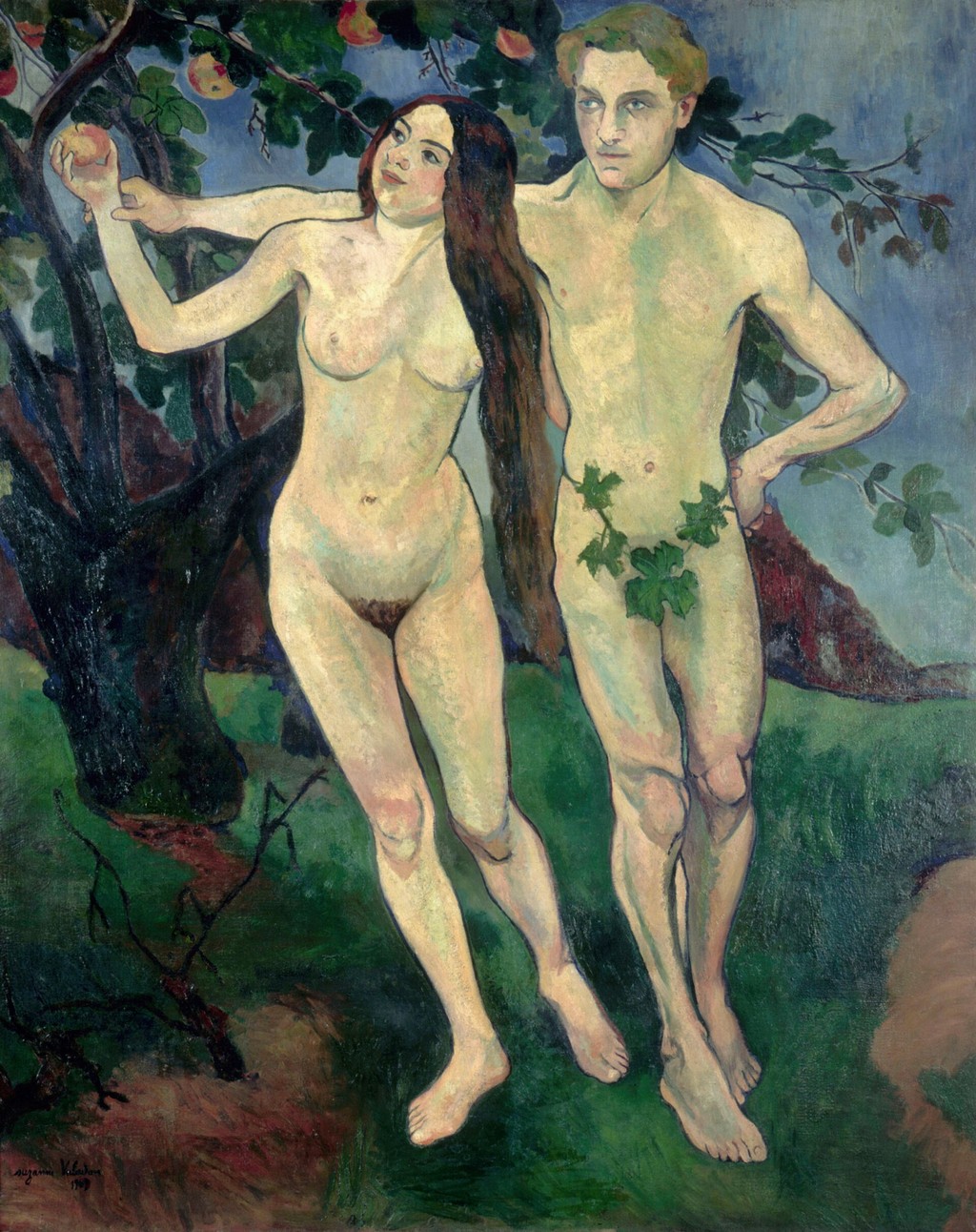
| Adam and Eve | 1909 | Painting |
| After the bath | 1908 | Painting |
| André Utter and his dogs | 1932 | Painting |
| Anémones dans un verre blanc | 1920 | Painting |
| Black Venus | 1919 | Painting |
| Bouquet de fleurs dans un vase Empire | 1920 | Painting |
| Bouquet de fleurs sur un guéridon | 1925 | Painting |
| Bouquet de fleurs sur une petite table | 1932 | Painting |
| Bouquet de roses | 1936 | Painting |
| Bouquet of flowers | 1930 | Painting |
| Bouquet of flowers 1928 | 1928 | Painting |
| Casting the Net | 1914 | Painting |
| Catherine lying naked on a panther skin | 1923 | Painting |
| Catherine nue se coiffant | 1895 | |
| Châtillon-d'Azergues | 1927 | Painting |
| Chien endormi sur un coussin | 1923 | Painting |
| Deux figures | 1909 | Painting |
| Doctor Robert Le Masle | 1930 | Painting |
| Femme à la contrebasse | 1908 | Painting |
| Femmes au bain | 1893 | |
| Fleurs | 1930 | Painting |
| Fleurs et fougères dans un vase | 1929 | Painting |
| Flowers in front of a Window | 1930 | Painting |
| Fruit bowl | 1917 | Painting |
| Germaine Utter à sa fenêtre | 1926 | Painting |
| Germaine Utter devant sa fenêtre | Date unknown | Painting |
| Gilberte nue se coiffant | 1920 | Painting |
| Grandmother and Grandson | 1910 | Painting |
| Joy of Life | 1911 | Painting |
| Juliet sitting in a chair | 1909 | Painting |
| L'Acrobate, ou La Roue | 1916 | Painting |
| L'avenir dévoilé | 1912 | Painting |
| L'étable en Beaujolais | 1921 | Painting |
| La baigneuse nue | Date unknown | Painting |
| La boîte à violon | 1923 | Painting |
| La Cour du Château de Saint-Bernard | 1930 | Painting |
| La Couturière | 1914 | Painting |
| La Dame au petit chien | 1917 | Painting |
| La grenouille | 1910 | Drawing |
| La rue Cortot | Date unknown | Painting |
| La Toilette | 1895 | |
| La Vachère | 1922 | Painting |
| Landscape at Saint-Bernard (Ain) | 1932 | Painting |
| Le Canard | 1930 | Painting |
| Le Jardin de la rue Cortot | Date unknown | Painting |
| Les lilas et camélias | 1936 | Painting |
| Lilacs and Peonies | 1929 | Painting |
| Marie Coca et sa fille | 1913 | Painting |
| Mauricia Coquiot Portrait | 1915 | Painting |
| Mrs. Robert Rey and her daughter Sylvie | 1920 | Painting |
| Naked in the mirror | 1909–1916 | Painting |
| Nature morte | 1920 | Painting |
| Nature morte à la draperie et au bouquet | 1924 | Painting |
| Nature morte au lapin et à la perdrix | 1930 | Painting |
| Nature morte au poisson | 1926 | Painting |
| Nature morte aux fruits et aux fleurs | 1926 | Painting |
| Nu à la couverture rayée | 1922 | Painting |
| Nu à la draperie blanche | 1914 | Painting |
| Nu allongé sur un divan | 1926 | Painting |
| Nu assis | 1925 | Painting |
| Nu assis au bord d'un lit | 1929 | Painting |
| Nu assis sur un canapé | 1916 | Painting |
| Nu au châle bleu | 1930 | Painting |
| Nu, Suzanne Valadon | 1925 | Artwork |
| Nude Arranging Her Hair | 1916 | Painting |
| Nude on a Red Couch | 1920 | Painting |
| Nude Sitting on the Edge of a Bed | 1929 | Painting |
| Nude with drapery | 1921 | Painting |
| Nude with drapery and armchair | 1921 | Drawing |
| Nude woman with a cat and flowers | 1920 | Painting |
| Nudes | 1919 | Painting |
| Paysage de Bretagne ou Île d'Ouessant | 1912 | Painting |
| Plat d'étain | 1920 | Painting |
| Portrait d'enfant | Date unknown | Painting |
| Portrait de Lily Walton | 1923 | Painting |
| Portrait de Louis Moysés | 1924 | Painting |
| Portrait de Maurice Utrillo | 1921 | Painting |
| Portrait du sculpteur Gibault | 1895 | Painting |
| Portrait of a Woman | 1928 | Painting |
| Portrait of a Woman | 1929 | Painting |
| Portrait of a woman | 1934 | Painting |
| Portrait of Charles Wakefield-Mori | 1922 | Painting |
| Portrait of Erik Satie | 1892 | Painting |
| Portrait of Lily Walton | 1922 | Painting |
| Portrait of Madame Lévy | 1922 | Painting |
| Portrait of Madame Maurice Utrillo, Lucie Valore | 1937 | Painting |
| Portrait of Madame Petridès | 1937 | Painting |
| Portrait of Maurice Utrillo | 1928 | |
| Portrait of Mme Zamaron | 1922 | Painting |
| Portrait of Nora Kars | 1914 | Painting |
| Portraits of the Family | 1912 | Painting |
| Raminou cat study | 1917 | Painting |
| Raminou on his blue cushion | 1919 | Painting |
| Reclining Nude | 1928 | Painting |
| Route dans la forêt de Compiègne | 1914 | Painting |
| Seated Female Nude | 1916 | Painting |
| Seated Nude with Shawl Carpet | 1921 | Painting |
| Self-portrait | 1883 | Drawing |
| Self-Portrait | 1898 | Painting |
| Self-portrait in the mirror | 1927 | Painting |
| Self portrait with bare breasts | 1931 | Painting |
| Sitting nude | 1921 | Painting |
| Spring Flowers | 1928 | Painting |
| Still Life with Fruit | 1937 | Painting |
| Still Life with Fruit Basket | 1920 | Painting |
| Still life with white rose | 1936 | Painting |
| The Abandoned Doll | 1921 | Painting |
| The artist's mother | 1912 | Painting |
| The Bath | 1908 | Drawing |
| The bathers | 1923 | Painting |
| The Blue Room | 1923 | Painting |
| The Rising | 1920 | Painting |
| The two sisters | 1928 | Painting |
| The Woman in White Stockings | 1924 | Painting |
| Tree at Montmagny Quarry | Date unknown | Painting |
| Untitled (Still Life) | 1921 | Painting |
| Utrillo de face | 1925 | Drawing |
| Utrillo de trois-quarts | 1925 | Drawing |
| Utrillo devant son chevalet | 1919 | Painting |
| Utrillo pensif | 1911 | Drawing |
| Utter familly | 1921 | Painting |
| Vase de fleurs | 1917 | Painting |
| Vase de fleurs | 1927 | Painting |
| Vase de fleurs | 1934 | Painting |
| Vase de fleurs et tapis oriental | 1929 | Painting |
| Vase of flowers | 1922 | Painting |
| Woman in an armchair. Portrait of Madame G. | 1919 | Painting |
| Woman Seated | Date unknown | Painting |
| Woman with guitar | 1920 | Painting |
| Young Girl Bathing | 1919 | Painting |
| Young girl crocheting | 1892 | Painting |
| Young Girl in Front of a Window | 1930 | Painting |
Frequently Asked Questions
She returned to self-portraiture from the 1880s into the 1930s. The surviving examples vary in medium, age, pose and degree of bodily exposure, making them a long record of artistic self-construction rather than one stable image.[1][2]
Centre Pompidou identifies Suzanne Valadon, Maurice Utrillo, André Utter and Valadon’s mother Madeleine. Musée d’Orsay owns the 1912 painting.[6][7]
Yes. Centre Pompidou holds the compact likeness she made around 1892–93. Their personal relationship is documented, but the picture is not a complete account of it.[2]
They were made by different artists for different purposes. Renoir placed a model within his own pictorial world; Valadon selected medium, pose, emphasis and expression for her self-representation.[3][5]
No. Expressions can guide interpretation, but they are constructed visual signs. Collection records, letters and chronology are needed before a portrait is used to support a life claim.
Discussion
Use this evidence-led guide as a starting point for close looking rather than a final verdict.
Share an observation about Suzanne Valadon Portraits and Self-Portraits or a source that adds useful context.
Reader Insights
Which work most clearly complicates the familiar label of American Impressionist?
Where do training, display, family, place or teaching most productively alter your reading?
Which source or surviving object would you investigate next?
Join the Conversation
Add your reading below, keeping observations specific and evidence clear.
References
- AWARE, Suzanne Valadon, accessed 31 August 2026.
- Centre Pompidou, Suzanne Valadon resource dossier, accessed 31 August 2026.
- Musée d’Orsay, Dance in the City, accessed 31 August 2026.
- Centre Pompidou, Suzanne Valadon chronology, accessed 31 August 2026.
- Museum of Fine Arts Houston, Self-Portrait, accessed 31 August 2026.
- Centre Pompidou, Family Portrait, accessed 31 August 2026.
- Musée d’Orsay, Family Portrait, accessed 31 August 2026.
- Self-Portrait, 1898 — Museum of Fine Arts, Houston, public domain.
More VALADON Artworks
Self-Portrait
After the Bath
La Toilette
The Abandoned Doll