by Tom Gurney
Tom Gurney BSc (Hons) is an art history expert with over 20 years experience
Page Created on August 31, 2026 / Page Updated on November 6, 2026
Email: tomgurney1@gmail.com / Phone: +44 7429 011000
Suzanne Valadon Nudes and the Female Gaze: Introduction
Suzanne Valadon’s nudes are direct, but “direct” does not mean simple. Women wash, dry themselves, arrange their hair, examine a mirror or occupy a bed. Men appear alone or beside the artist. Bodies have weight, awkward joints, folds, hair and age; patterned surroundings prevent them from floating in an ideal realm. Current museums often frame this work through a “female gaze”, a useful phrase when it identifies altered relations of looking. It becomes misleading if it assumes that every image by a woman carries one uniform politics.[1][2]
At a Glance
- Early nude mediaDrawing, softground etching, drypoint and monoprint
- Key bodily actionsBathing, drying, dressing, resting and looking in a mirror
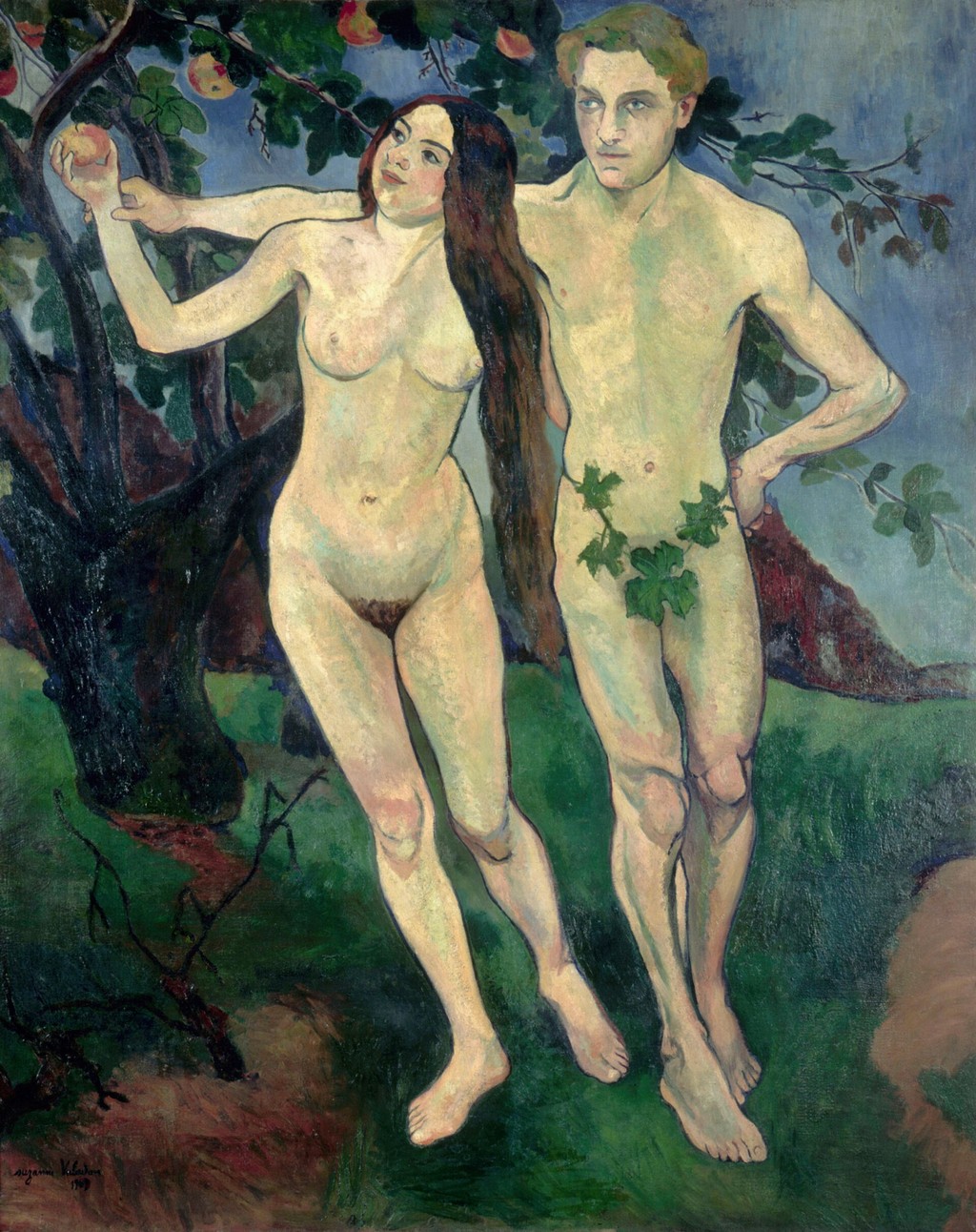
- Major double nudeAdam and Eve, 1909
- Domestic landmarkThe Abandoned Doll, 1921
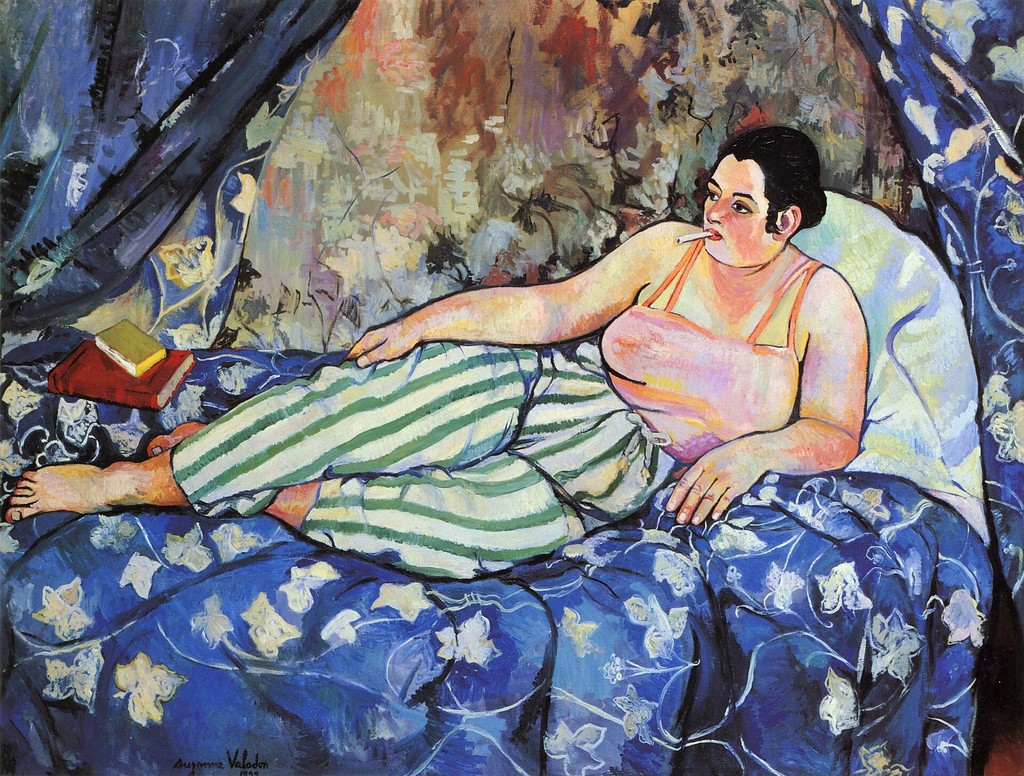
- Modern reclining figureThe Blue Room, 1923, clothed rather than nude
- Interpretive caution“Female gaze” is a current framework, not a period title
Contents
- Introduction
- What the Phrase Can Mean
- Bathing Without Spectacle
- The Model’s Knowledge
- Adam and Eve and the Male Nude
- Adolescence in The Abandoned Doll
- The Clothed Body in The Blue Room
- Ageing and Self-Exposure
- Looking Responsibly
What the Phrase Can Mean
The “male gaze” names systems in which women are arranged as objects for a presumed heterosexual male spectator. A female gaze can indicate an alternative position: women represented as subjects of bodily experience, or men made available to a woman artist’s desire and scrutiny. Centre Pompidou uses the phrase for Valadon’s 2025 retrospective, emphasising her reversal of conventional artist-model roles.[1]
Yet gender alone cannot settle how an image operates. Composition, pose, medium, audience and historical genre all matter. The paintings and artworks guide therefore treats the phrase as a question to test. Who acts? Where is attention directed? Does the body perform for the viewer, attend to another person, or remain absorbed in a task?
Bathing Without Spectacle
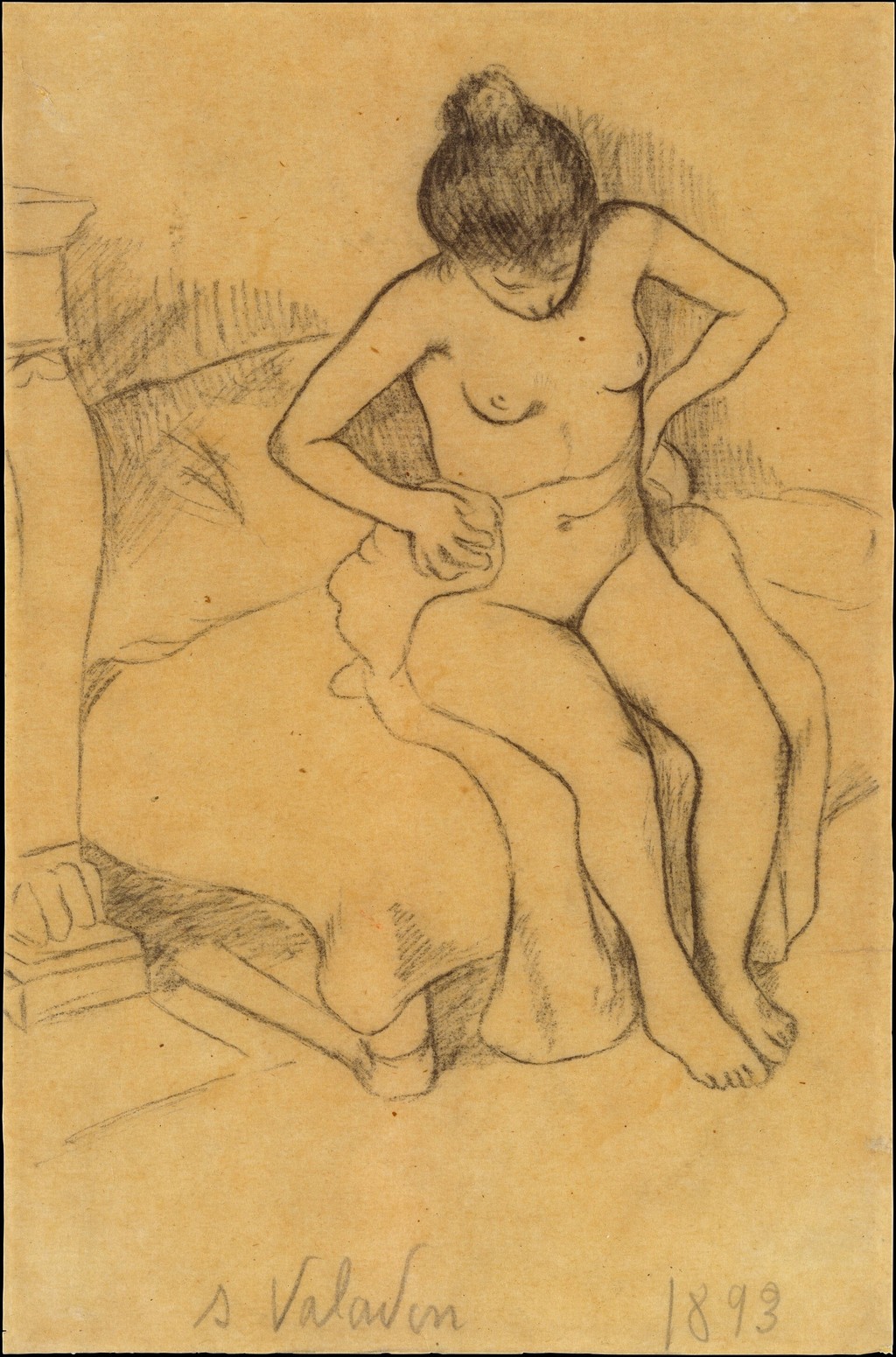
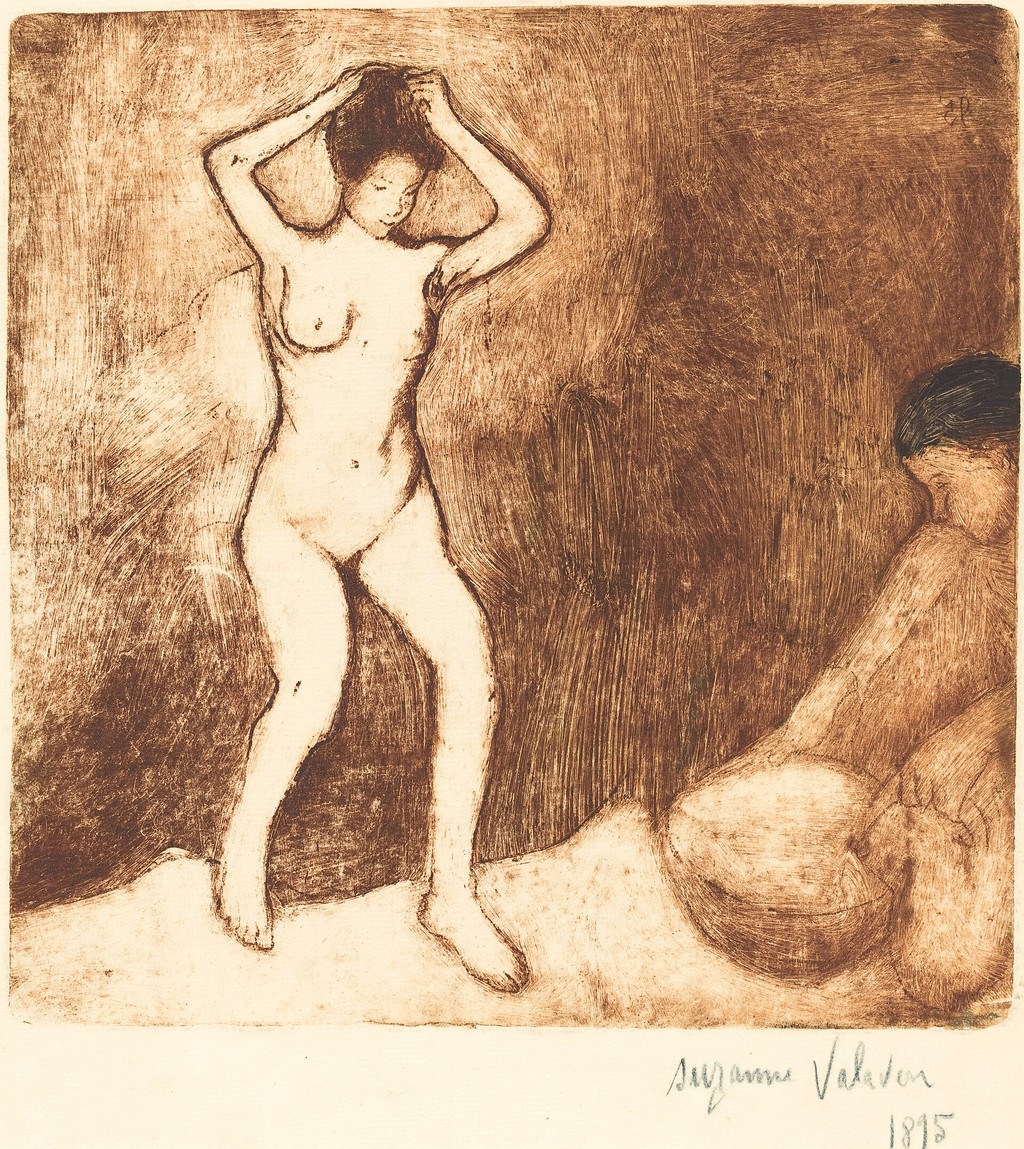
Valadon’s 1890s works on paper repeatedly show women bathing or tending to their hair. In NGA prints, one figure may crouch near a tub while another stands with raised arms. The actions create their own purpose inside the scene. Softground, drypoint and variable inking make skin, shadow and background materially distinct without polishing the figures into academic ideals.[3]
The drawings and prints essay explains how these techniques shape each impression. Here they also influence viewing distance. A small print asks the spectator to approach, but the figures’ attention does not return that approach. Intimacy is present without a promise of access.
The Model’s Knowledge
Valadon spent more than a decade modelling. She understood that a pose is labour and that the resulting image can detach a body from the person who held it. NMWA argues that her paintings and prints transformed the female nude by offering insight into women’s experiences.[2] The claim is strongest when attached to specific decisions: ordinary gestures, unidealised anatomy, or relations among women that exceed display.
This history is developed in Montmartre: Model to Artist. Valadon’s experience did not give automatic access to every sitter’s inner life. It did give her unusually informed control over the conditions of posing and over which parts of bodily experience became pictorial subjects.
Adam and Eve and the Male Nude
In 1909 Valadon painted herself and André Utter as Adam and Eve. Centre Pompidou presents the canvas as an unprecedented case of a woman creating, at large scale, a frontal male body beside her own unclothed likeness. The institutional record confirms the sitters, medium, size and biblical subject.[4][5] A later garland covering Adam’s genitals is commonly connected with public exhibition requirements, a reminder that display conditions could alter the represented body.
The Adam and Eve close reading concentrates on the couple’s movement, scale and painted environment. The work reverses conventional positions, but it does not merely replace one passive nude with another. Both figures advance through foliage, and their linked gestures complicate any simple division between viewer and viewed.
Adolescence in The Abandoned Doll
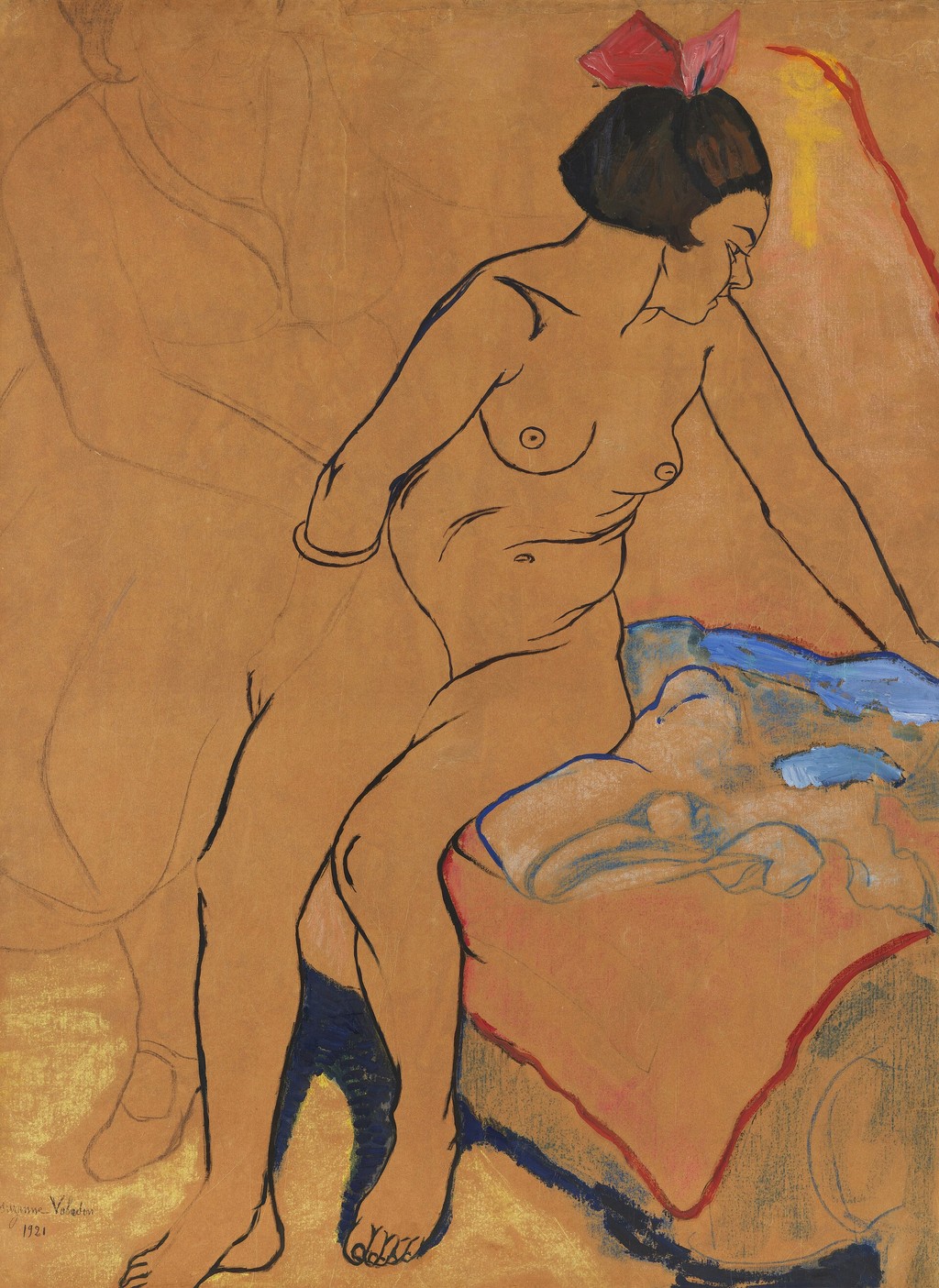
NMWA’s The Abandoned Doll (1921) places a clothed woman beside a nude adolescent who looks into a hand mirror. A discarded doll and repeated pink bows connect childhood to the changing body. The museum interprets the three figures—the woman, the girl and the doll—as stages of life and emphasises that the adolescent is not presented as a passive erotic object.[6]
The scene remains ethically demanding. Nudity and youth require careful description, not sensational language. The mirror makes self-observation part of the subject, while the adult’s act of drying locates the body within care. Viewers can note those relations without claiming certainty about the girl’s emotions.
The Clothed Body in The Blue Room
The Blue Room is important to Valadon’s nude practice precisely because its reclining woman is dressed. Striped pyjama trousers, a camisole, books and a cigarette replace the conventional odalisque’s exposed body and exotic accessories. Centre Pompidou reads the figure as self-possessed in a private space, not waiting for a man.[7]
The Blue Room analysis considers how posture and pattern sustain that interpretation. Clothing does not remove the body; it changes how the body occupies the bed. The woman’s size, weight and horizontal spread remain central, but availability is no longer the scene’s organising premise.
Ageing and Self-Exposure
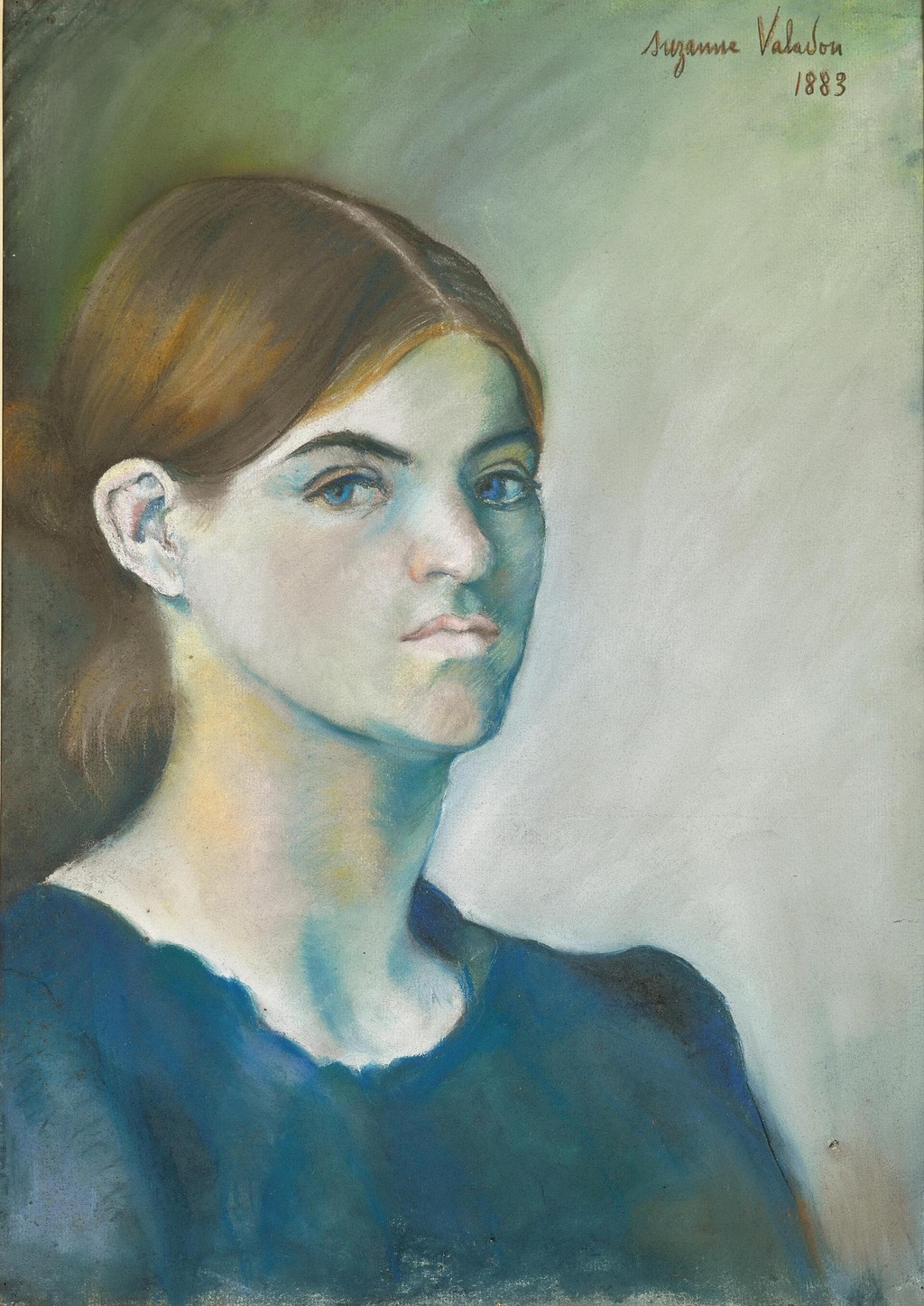
In the 1931 Self-Portrait with Bare Breasts, Valadon turned the nude gaze upon her ageing body. AWARE describes the image as frank and innovative, without shame or consoling idealisation.[8] The work joins two traditions often kept apart: the self-portrait as a claim to artistic identity and the female nude as a body offered for inspection.
The portraits and self-portraits guide shows why this is more than autobiography. An artist controls framing, colour and the act of looking, yet the resulting image remains vulnerable to other viewers’ judgements. The tension cannot be solved by calling the painting empowering; it is part of the work’s continued force.
Looking Responsibly
Responsible close looking begins with neutral description and exact records. Identify who is known, what the medium is, how large the object is and where it is held. Describe pose and setting before assigning emotion. Attribute curatorial claims to their source, especially claims of firstness or feminism. Avoid treating biography as permission to sexualise a sitter.
Valadon’s nudes matter because they make viewing relations visible and unstable. Bodies act, age, care for one another and sometimes return a gaze. The pictures do not offer one universal woman’s perspective. They preserve a particular artist’s sustained effort to represent embodied life outside the smooth conventions she knew so well.
Researched works directory
This searchable evidence census contains 133 distinct records assembled from public collection data and a reproducible Wikidata snapshot. It is not a catalogue raisonné, not a claim of complete oeuvre coverage, and it keeps works with repeated titles as separate objects.
| Name | Date | Medium |
|---|---|---|
| زنان در حمام | 1909 | Painting |
| Adam and Eve | 1909 | Painting |
| After the bath | 1908 | Painting |
| André Utter and his dogs | 1932 | Painting |
| Anémones dans un verre blanc | 1920 | Painting |
| Black Venus | 1919 | Painting |
| Bouquet de fleurs dans un vase Empire | 1920 | Painting |
| Bouquet de fleurs sur un guéridon | 1925 | Painting |
| Bouquet de fleurs sur une petite table | 1932 | Painting |
| Bouquet de roses | 1936 | Painting |
| Bouquet of flowers | 1930 | Painting |
| Bouquet of flowers 1928 | 1928 | Painting |
| Casting the Net | 1914 | Painting |
| Catherine lying naked on a panther skin | 1923 | Painting |
| Catherine nue se coiffant | 1895 | |
| Châtillon-d'Azergues | 1927 | Painting |
| Chien endormi sur un coussin | 1923 | Painting |
| Deux figures | 1909 | Painting |
| Doctor Robert Le Masle | 1930 | Painting |
| Femme à la contrebasse | 1908 | Painting |
| Femmes au bain | 1893 | |
| Fleurs | 1930 | Painting |
| Fleurs et fougères dans un vase | 1929 | Painting |
| Flowers in front of a Window | 1930 | Painting |
| Fruit bowl | 1917 | Painting |
| Germaine Utter à sa fenêtre | 1926 | Painting |
| Germaine Utter devant sa fenêtre | Date unknown | Painting |
| Gilberte nue se coiffant | 1920 | Painting |
| Grandmother and Grandson | 1910 | Painting |
| Joy of Life | 1911 | Painting |
| Juliet sitting in a chair | 1909 | Painting |
| L'Acrobate, ou La Roue | 1916 | Painting |
| L'avenir dévoilé | 1912 | Painting |
| L'étable en Beaujolais | 1921 | Painting |
| La baigneuse nue | Date unknown | Painting |
| La boîte à violon | 1923 | Painting |
| La Cour du Château de Saint-Bernard | 1930 | Painting |
| La Couturière | 1914 | Painting |
| La Dame au petit chien | 1917 | Painting |
| La grenouille | 1910 | Drawing |
| La rue Cortot | Date unknown | Painting |
| La Toilette | 1895 | |
| La Vachère | 1922 | Painting |
| Landscape at Saint-Bernard (Ain) | 1932 | Painting |
| Le Canard | 1930 | Painting |
| Le Jardin de la rue Cortot | Date unknown | Painting |
| Les lilas et camélias | 1936 | Painting |
| Lilacs and Peonies | 1929 | Painting |
| Marie Coca et sa fille | 1913 | Painting |
| Mauricia Coquiot Portrait | 1915 | Painting |
| Mrs. Robert Rey and her daughter Sylvie | 1920 | Painting |
| Naked in the mirror | 1909–1916 | Painting |
| Nature morte | 1920 | Painting |
| Nature morte à la draperie et au bouquet | 1924 | Painting |
| Nature morte au lapin et à la perdrix | 1930 | Painting |
| Nature morte au poisson | 1926 | Painting |
| Nature morte aux fruits et aux fleurs | 1926 | Painting |
| Nu à la couverture rayée | 1922 | Painting |
| Nu à la draperie blanche | 1914 | Painting |
| Nu allongé sur un divan | 1926 | Painting |
| Nu assis | 1925 | Painting |
| Nu assis au bord d'un lit | 1929 | Painting |
| Nu assis sur un canapé | 1916 | Painting |
| Nu au châle bleu | 1930 | Painting |
| Nu, Suzanne Valadon | 1925 | Artwork |
| Nude Arranging Her Hair | 1916 | Painting |
| Nude on a Red Couch | 1920 | Painting |
| Nude Sitting on the Edge of a Bed | 1929 | Painting |
| Nude with drapery | 1921 | Painting |
| Nude with drapery and armchair | 1921 | Drawing |
| Nude woman with a cat and flowers | 1920 | Painting |
| Nudes | 1919 | Painting |
| Paysage de Bretagne ou Île d'Ouessant | 1912 | Painting |
| Plat d'étain | 1920 | Painting |
| Portrait d'enfant | Date unknown | Painting |
| Portrait de Lily Walton | 1923 | Painting |
| Portrait de Louis Moysés | 1924 | Painting |
| Portrait de Maurice Utrillo | 1921 | Painting |
| Portrait du sculpteur Gibault | 1895 | Painting |
| Portrait of a Woman | 1928 | Painting |
| Portrait of a Woman | 1929 | Painting |
| Portrait of a woman | 1934 | Painting |
| Portrait of Charles Wakefield-Mori | 1922 | Painting |
| Portrait of Erik Satie | 1892 | Painting |
| Portrait of Lily Walton | 1922 | Painting |
| Portrait of Madame Lévy | 1922 | Painting |
| Portrait of Madame Maurice Utrillo, Lucie Valore | 1937 | Painting |
| Portrait of Madame Petridès | 1937 | Painting |
| Portrait of Maurice Utrillo | 1928 | |
| Portrait of Mme Zamaron | 1922 | Painting |
| Portrait of Nora Kars | 1914 | Painting |
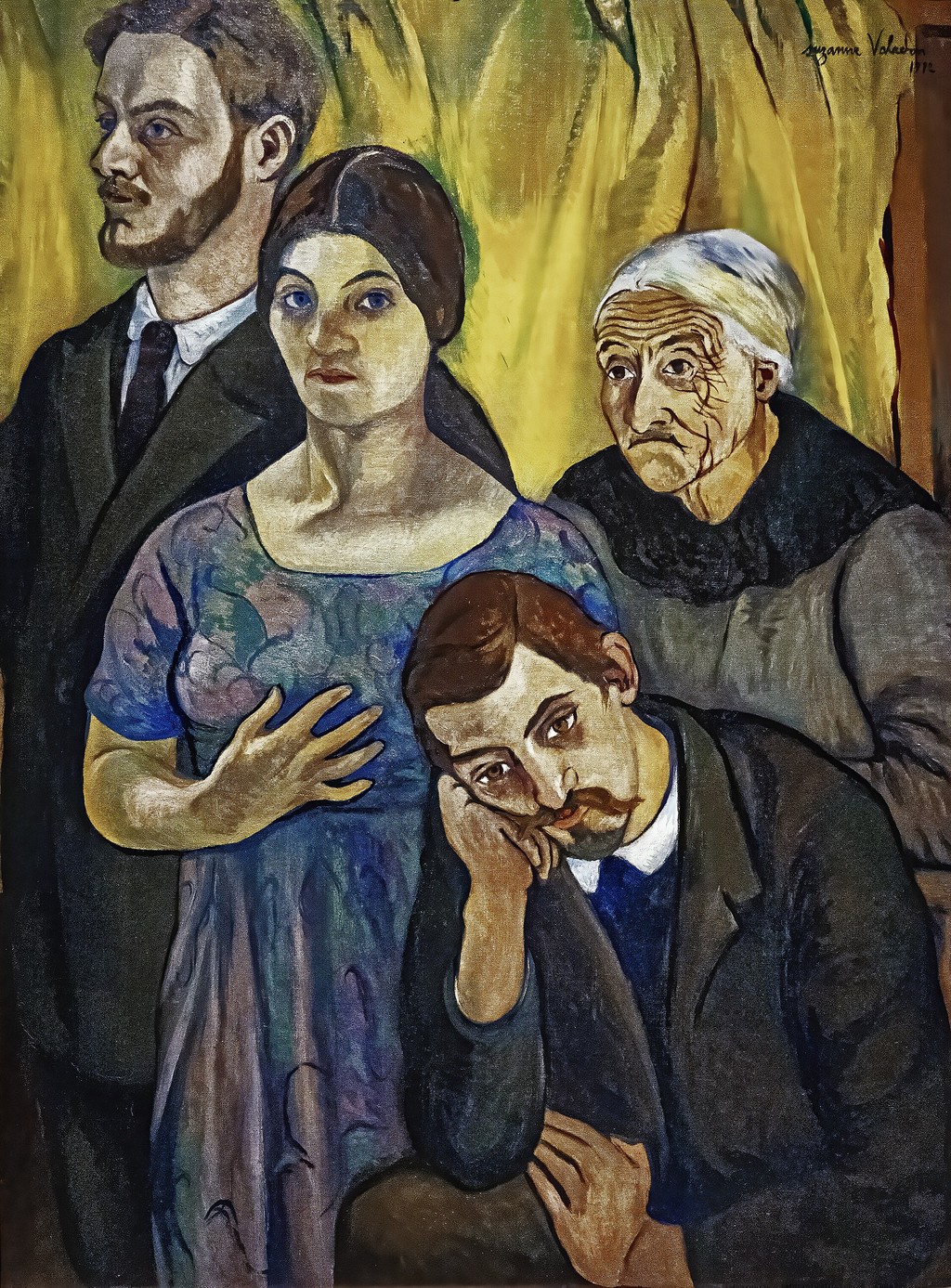
| Portraits of the Family | 1912 | Painting |
| Raminou cat study | 1917 | Painting |
| Raminou on his blue cushion | 1919 | Painting |
| Reclining Nude | 1928 | Painting |
| Route dans la forêt de Compiègne | 1914 | Painting |
| Seated Female Nude | 1916 | Painting |
| Seated Nude with Shawl Carpet | 1921 | Painting |
| Self-portrait | 1883 | Drawing |
| Self-Portrait | 1898 | Painting |
| Self-portrait in the mirror | 1927 | Painting |
| Self portrait with bare breasts | 1931 | Painting |
| Sitting nude | 1921 | Painting |
| Spring Flowers | 1928 | Painting |
| Still Life with Fruit | 1937 | Painting |
| Still Life with Fruit Basket | 1920 | Painting |
| Still life with white rose | 1936 | Painting |
| The Abandoned Doll | 1921 | Painting |
| The artist's mother | 1912 | Painting |
| The Bath | 1908 | Drawing |
| The bathers | 1923 | Painting |
| The Blue Room | 1923 | Painting |
| The Rising | 1920 | Painting |
| The two sisters | 1928 | Painting |
| The Woman in White Stockings | 1924 | Painting |
| Tree at Montmagny Quarry | Date unknown | Painting |
| Untitled (Still Life) | 1921 | Painting |
| Utrillo de face | 1925 | Drawing |
| Utrillo de trois-quarts | 1925 | Drawing |
| Utrillo devant son chevalet | 1919 | Painting |
| Utrillo pensif | 1911 | Drawing |
| Utter familly | 1921 | Painting |
| Vase de fleurs | 1917 | Painting |
| Vase de fleurs | 1927 | Painting |
| Vase de fleurs | 1934 | Painting |
| Vase de fleurs et tapis oriental | 1929 | Painting |
| Vase of flowers | 1922 | Painting |
| Woman in an armchair. Portrait of Madame G. | 1919 | Painting |
| Woman Seated | Date unknown | Painting |
| Woman with guitar | 1920 | Painting |
| Young Girl Bathing | 1919 | Painting |
| Young girl crocheting | 1892 | Painting |
| Young Girl in Front of a Window | 1930 | Painting |
Frequently Asked Questions
It describes current interpretations that emphasise women’s bodily experience, self-possession and Valadon’s reversal of the traditional male artist-female model relation. It is an analytical frame, not a title she applied to her practice.[1]
Yes. André Utter modelled for major male nudes including Adam and Eve and The Casting of the Net. Valadon’s authorship placed a woman in control of a genre from which women had often been restricted.[4][8]
Generally they resist academic smoothing. Bodies show weight, individual proportion and ordinary movement, though each object requires its own analysis rather than a blanket description.[2][3]
The painting reworks the reclining-woman tradition associated with the nude and the odalisque. Clothing, books and smoking redirect the genre towards modern private agency.[7]
Her work supports feminist readings, especially through reversals of authorship and bodily representation. Applying a single present-day identity to every object risks flattening the historical and visual differences among them.
Discussion
Use this evidence-led guide as a starting point for close looking rather than a final verdict.
Share an observation about Suzanne Valadon Nudes and the Female Gaze or a source that adds useful context.
Reader Insights
Which work most clearly complicates the familiar label of American Impressionist?
Where do training, display, family, place or teaching most productively alter your reading?
Which source or surviving object would you investigate next?
Join the Conversation
Add your reading below, keeping observations specific and evidence clear.
References
- Centre Pompidou, Suzanne Valadon: A Female Gaze, accessed 31 August 2026.
- National Museum of Women in the Arts, Suzanne Valadon, accessed 31 August 2026.
- National Gallery of Art, Suzanne Valadon artist record, accessed 31 August 2026.
- Centre Pompidou, Adam and Eve dossier, accessed 31 August 2026.
- Centre Pompidou, Adam and Eve collection record, accessed 31 August 2026.
- National Museum of Women in the Arts, The Female Form through Female Eyes, accessed 31 August 2026.
- Centre Pompidou, Focus on The Blue Room, accessed 31 August 2026.
- AWARE, Suzanne Valadon, accessed 31 August 2026.
- La Toilette, 1895 — National Gallery of Art, CC0.
More VALADON Artworks
Self-Portrait
After the Bath
La Toilette
The Abandoned Doll