 by Tom Gurney
Tom Gurney BSc (Hons) is an art history expert with over 20 years experience
Page Created: / Page Updated:
Email: tomgurney1@gmail.com / Phone: +44 7429 011000
Hammershøi's Copenhagen and Architecture: Introduction
Vilhelm Hammershøi did not usually present Copenhagen as a sequence of celebrated monuments or crowded streets. He found his subjects in the places closest to him: the planes of a room, a courtyard wall, a row of windows, adjoining roofs and the harbour buildings opposite his home. Architecture was therefore more than a setting. It supplied a measured framework within which light, intervals and small changes of viewpoint could become the subject of a painting.
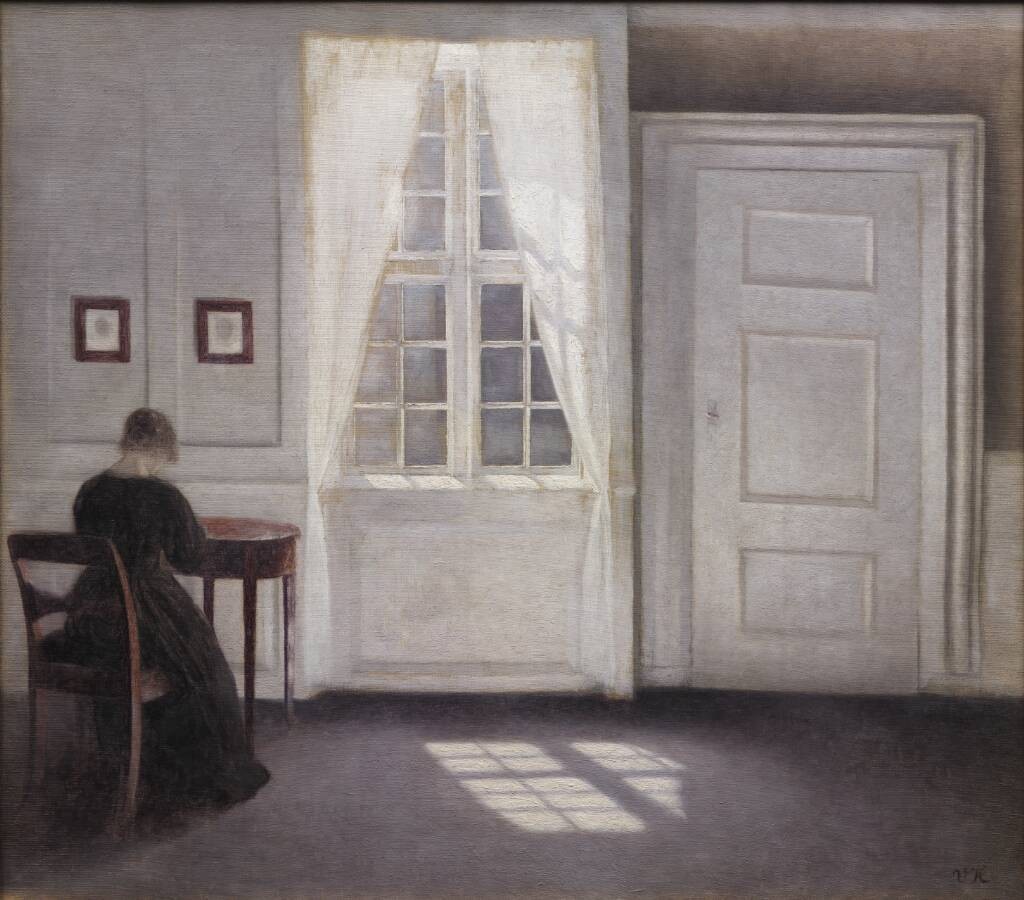
His Copenhagen pictures also connect private life with the fabric of the city. A door inside an apartment and a gateway across Strandgade could both organise a view. The same disciplined attention runs through his Strandgade interiors and his exterior studies, although their scales and social meanings differ. Reading them together reveals a painter who repeatedly tested how built spaces could be cropped, cleared and rebalanced.
At a Glance
- Copenhagen homesHammershøi lived at seven Copenhagen addresses, and several homes became recurring subjects.[1]
- Principal addressStrandgade 30 in Christianshavn served as both residence and principal pictorial territory from 1898 to 1908.[2]
- Visual structureRooms, façades, windows and courtyards offered related systems of verticals, horizontals and openings.
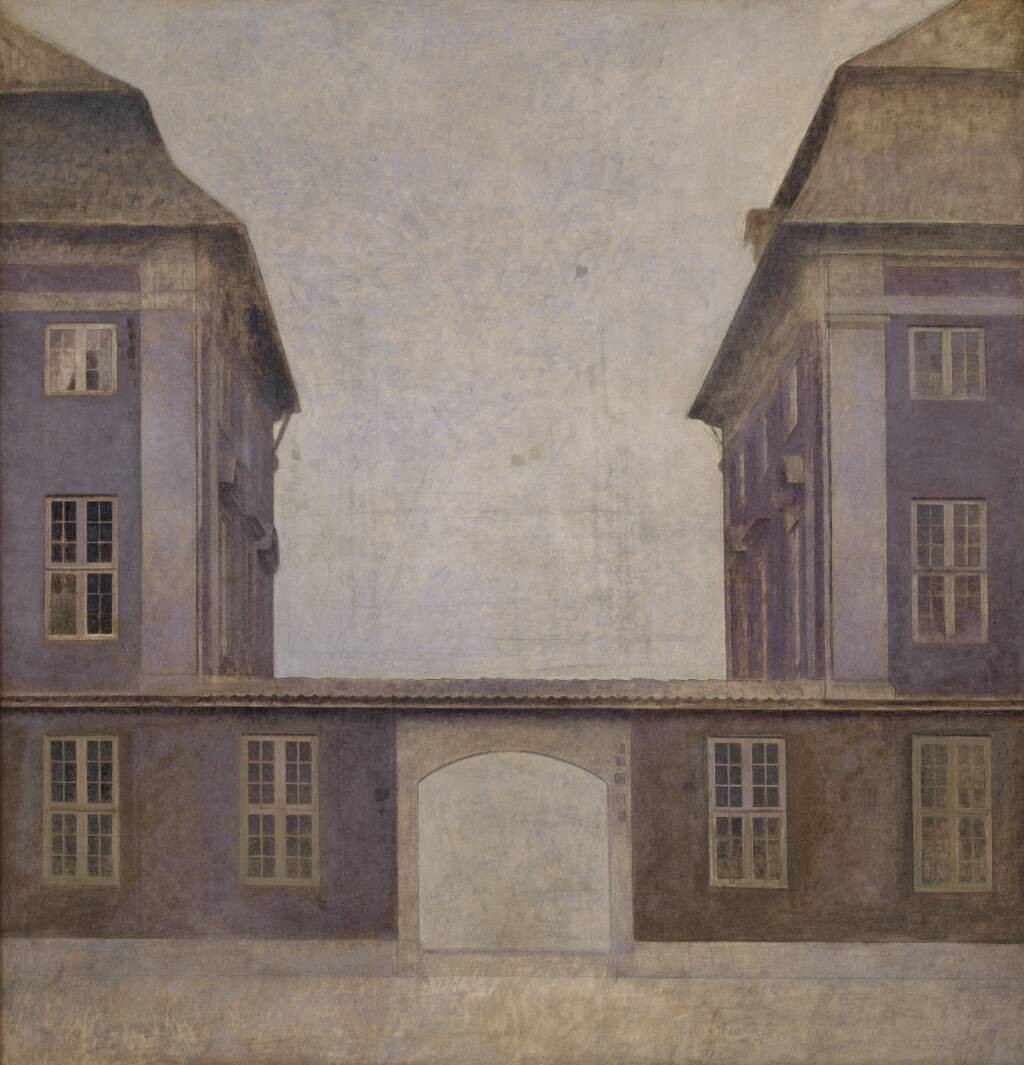
- Featured workThe featured 1902 canvas KMS6657 measures 146.5 × 140.5 cm and belongs to SMK.[3]
- Object statusKMS6657 is an unfinished preliminary work, not the completed Ordrupgaard version of the motif.[3]
- Later homeAt Bredgade 25, Hammershøi again shifted furniture and viewpoint while retaining the same architectural framework.[4]
Contents
- Introduction
- A Painter of Copenhagen Addresses
- Rooms, Courtyards and Exterior Views
- Architecture Without Crowds
- Framing and the Photographic Analogy
- The Asiatic Company Subject
- Underdrawing, Omission and Incompletion
- Strandgade, Bredgade and the Late Urban Motifs
A Painter of Copenhagen Addresses
The story of Hammershøi's life can be followed partly through addresses. The Hirschsprung Collection records seven Copenhagen homes and explains that his residences functioned as studios and subjects as well as domestic spaces.[1] This does not mean that every apartment produced the same kind of picture. It means that moving gave him a new set of proportions, surfaces and routes through which to think.
An early interior with his brother Svend was painted at Aaboulevarden, in a recently built property. The museum notes that Vilhelm and Ida Hammershøi preferred older buildings with patina; after about a year they moved to Strandgade 30 in Christianshavn.[1] There the apartment's worn doors, tall windows and connected rooms became enduring components of his art. The address mattered not simply because it looked old, but because its layout could be reassembled through framing.
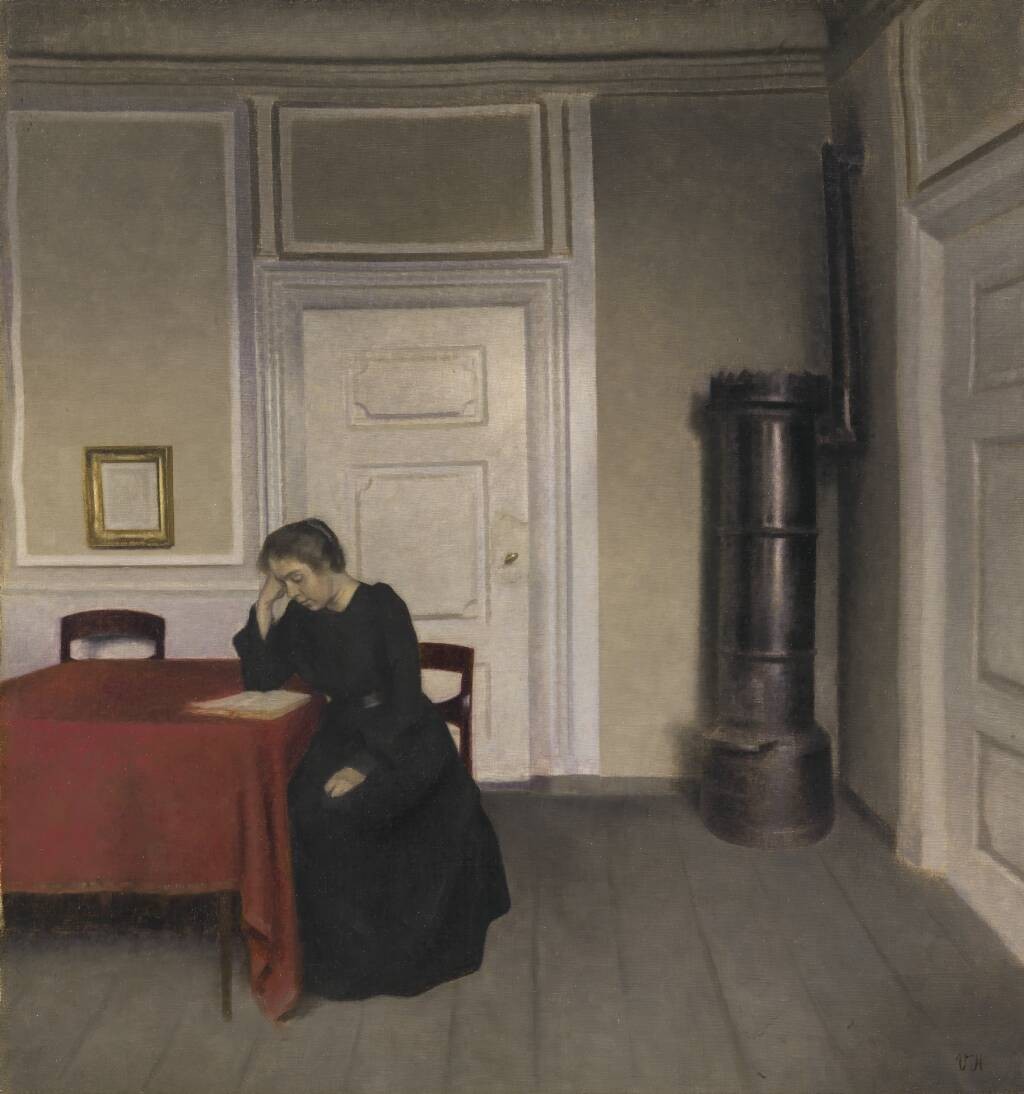
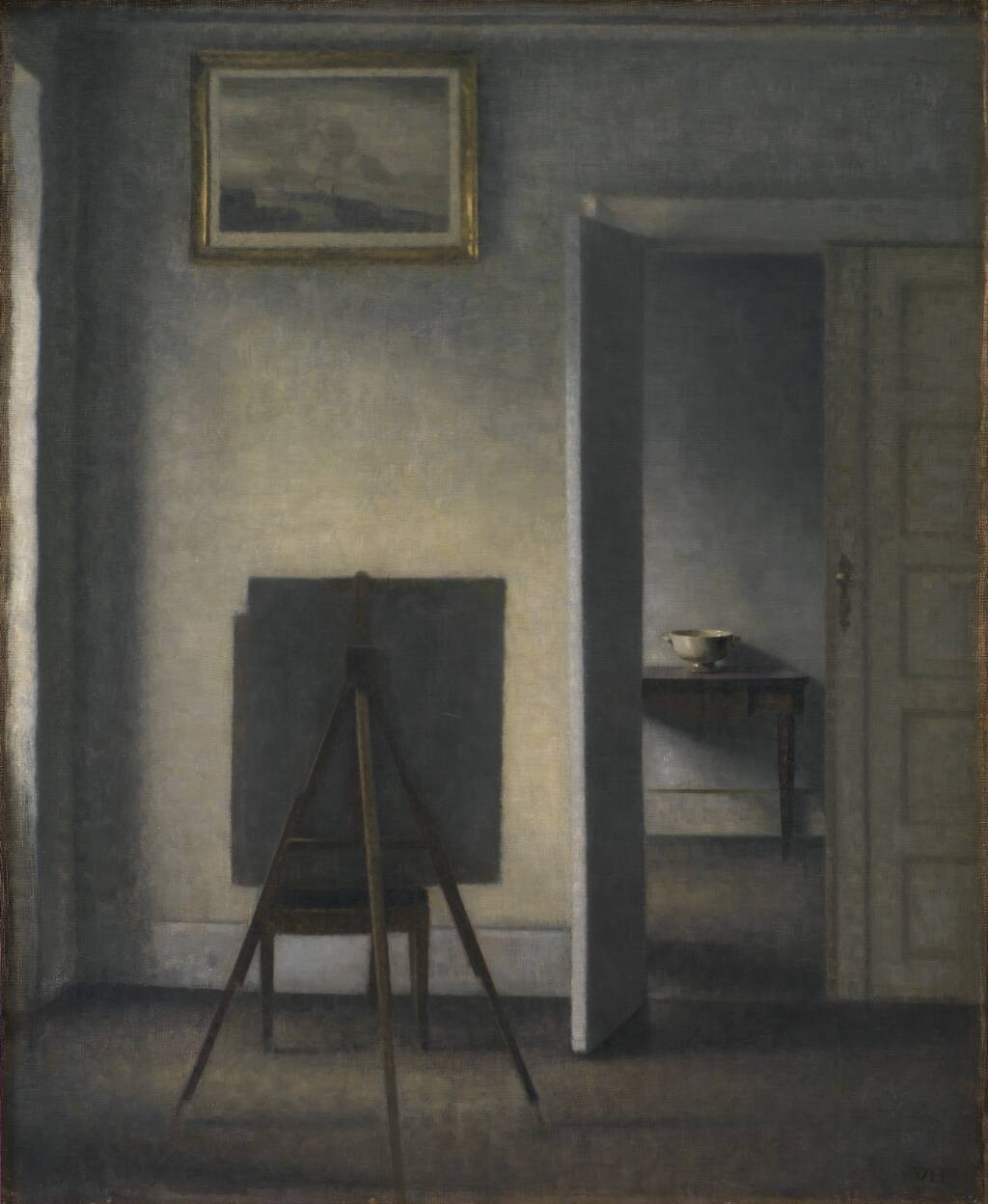
The sequence continued. Pictures of Bredgade 25 made in 1910 and 1911 retain recognisable rooms and double doors while altering the placement of the easel, piano, prints and other furnishings.[4] In 1913 the couple moved into Strandgade 25, the former Asiatic Company building that Hammershøi had studied from across the street. They remained there until his death in 1916.[3] Copenhagen was thus lived geography before it became art-historical geography.
Rooms, Courtyards and Exterior Views
Hammershøi's interiors are architectural even when a seated figure or table draws first attention. Walls meet floors in carefully judged bands; door leaves interrupt or reinforce a sequence of rectangles; windows admit light while dividing it into panes. In Interior in Strandgade, Sunlight on the Floor, the frontally viewed room faces the inner courtyard. ViHDA notes that he returned to this position at different times of day, varying the selected furniture and presence of a figure.[2]
That courtyard orientation complicates any sharp division between indoors and outdoors. The room receives its light from an enclosed urban space, while the window and door establish a façade-like rhythm inside the picture. Conversely, an exterior such as The Buildings of the Asiatic Company is organised almost like a room: side masses hold a broad central opening, and the low connecting wall forms a firm horizontal boundary.
The link is structural, not a claim that all subjects are interchangeable. Hammershøi could vary scale, distance and illumination while relying on architecture to stabilise the image. His paintings as a whole show that a domestic wall, an urban roofline and a country building each posed different questions, even when their restrained geometry appears related.
Architecture Without Crowds
Many of these views contain few or no people. That absence should be understood as a decision within the depicted scene, not evidence that Copenhagen itself was deserted. In KMS6657, the street-facing buildings are presented without passers-by, carts or commercial incident. The exclusion concentrates attention on the gateway, roof slopes, repeated windows and the pale interval of sky.
The effect is particularly striking because the subject belonged to Christianshavn's mercantile and harbour history. Human activity is implicit in the Asiatic Company's architecture and in the faintly planned shipping details, yet it is not narrated through anecdote. Hammershøi turns the viewer towards thresholds: what lies behind the central gate, beyond the low wall or between the two upper blocks?
Such questions are interpretive effects of composition. They do not prove loneliness, silence or a private psychological state. The paintings are more securely understood through visible choices: figures omitted, façades brought forward, streets narrowed and open areas given unusual weight. Restraint allows the construction itself to carry attention.
Framing and the Photographic Analogy
ViHDA's account of the Asiatic Company motif states that Hammershøi photographed and painted the gate several times in 1902. It also reports scholarship connecting this particular angle with a photograph he used to capture and imagine the view, although the photograph's present whereabouts are unknown.[3] That evidence makes photography relevant, but it does not reduce the painting to a mechanical copy.
KMS6657 demonstrates active redesign. The two tall wings press against the left and right edges, while their sloping roofs open towards a large, nearly centred field of sky. Below, the long wall and arched gate establish a shallower register. The arrangement resembles a deliberate crop because architecture continues beyond the frame and because the central interval is treated as positively as the buildings themselves.
Hammershøi's adjustments also show that observation passed through selection. The technical record indicates that the canvas originally accommodated a wider scheme before a dark boundary fixed the present format.[3] Photographic framing is therefore a useful analogy for the angle and abrupt edges; the surviving object reveals painterly decisions about what to retain, compress or leave unresolved.
The Asiatic Company Subject
The exact SMK object is KMS6657, catalogued as The Buildings of the Asiatic Company, seen from St. Annæ Street and located in Copenhagen. Painted in 1902 in oil on canvas, it carries ViHDA survey number 237 and measures 146.5 × 140.5 cm.[3][5] These identifiers matter because Hammershøi made several treatments of the subject.
The depicted mansion at Strandgade 25 had formerly housed the Asiatic Company and was built in 1738 to designs by Philip de Lange.[3] When Hammershøi made this study, he and Ida lived opposite at Strandgade 30. The subject was therefore encountered across an ordinary route of daily looking, even though its history and scale extended well beyond domestic life.
In the image, two upper blocks flank a broad expanse of cool sky. Their roofs slope inward, and rows of windows articulate the purplish-grey façades. A lower range spans the width, pierced at the centre by a pale archway. The near balance of the two sides is checked by differences in width, shadow and window placement. Those variations keep the view from becoming a diagram.
Most importantly, KMS6657 is not the finished painting at Ordrupgaard. ViHDA identifies the SMK canvas as preliminary to Bramsen number 236, now at Ordrupgaard. The later work adopts a larger foreground and a viewpoint further to the right; it also includes a prominent ship's mast that is only faintly planned in the SMK study.[3] The two pictures belong to one investigation, but they are separate objects with different states and compositions.
Underdrawing, Omission and Incompletion
The unfinished surface is evidence of process rather than a defect to be imaginatively repaired. ViHDA's conservators found grey and black linear drawing visible across the architectural elements. Some horizontal guides continue onto folded tacking edges, showing that the first arrangement extended beyond the present width. A black line on all four sides then established a narrower boundary.[3]
Further lines in the gateway and the space between the buildings indicate ships' masts and cross-yards. These harbour elements never received full painted form. Black underpaint remains in the roofs, brown beneath the walls and grey-brown in the sky. Large passages stopped at this lean, translucent stage, while a few small square strokes may have tested intended tonal values.[3]
This material record clarifies why the visible image feels both monumental and provisional. Some walls have denser purplish-grey paint, but canvas texture remains conspicuous elsewhere; only slight impasto occurs in limited architectural passages. The rooftop at right was adjusted against the sky, yet other areas were not carried through to an equivalent degree of finish.[3]
The historical catalogue explanation preserved by ViHDA says Hammershøi abandoned this layout because he wanted more foreground and needed to alter the viewpoint to balance the large mast in the separate exhibition picture.[3] Technical examination broadly supports that account by locating the wider design, shipping lines and incomplete underpainting in the object itself. For a fuller comparison of evidence beneath the surface, see Hammershøi's light, colour and technique.
Strandgade, Bredgade and the Late Urban Motifs
Hammershøi's changes of address did not erase earlier ways of seeing. At Bredgade 25, architecture again became a framework for serial variation. SMK's 1911 Interior. Bredgade 25 shows the same room and double doors found in the 1910 Interior with the Artist's Easel, but from a shifted viewpoint with objects rearranged.[4] Repetition here is an active comparison between possible compositions.
The move to Strandgade 25 in 1913 gives the Asiatic Company subject an unusual biographical afterlife. A building first observed from the opposite side of the street eventually contained the couple's home. It would be too simple to treat that fact as fulfilment encoded in the 1902 picture: KMS6657 remains a preliminary architectural study, not a prophecy. Yet the continuity shows how closely Hammershøi's motifs could adhere to lived routes.
Across Copenhagen, his practice joined residence, observation and revision. Rooms led the eye through doors; courtyards controlled daylight; façades framed sky; rooflines and gateways established balance. The city supplied constructed relationships rather than picturesque incident, and Hammershøi made those relationships newly visible by testing them more than once.
Researched works directory
This directory covers the 133 paintings currently published by the Vilhelm Hammershøi Digital Archive (ViHDA). It is a researched platform census, not a complete catalogue raisonné of the artist's oeuvre.
| Name | Date | Medium |
|---|---|---|
| A Bakery Shop. Study | 1888 | Painting |
| A Greek Relief. Louvre | 1892 | Painting |
| Amalienborg Square | 1896 | Painting |
| An Ancient Relief. Study | 1878 – 1881 | Painting |
| An Old Woman | 1886 | Painting |
| An Old Woman Standing by a Window | 1885 – 1886 | Painting |
| Artemis | 1893 – 1894 | Painting |
| Bedroom | 1890 | Painting |
| Church of Christiansborg Palace, Copenhagen | 1910 | Painting |
| Church of Sankt Petri, Copenhagen | 1906 | Painting |
| Double Portrait. Vilhelm and Ida Hammershøi | 1892 | Painting |
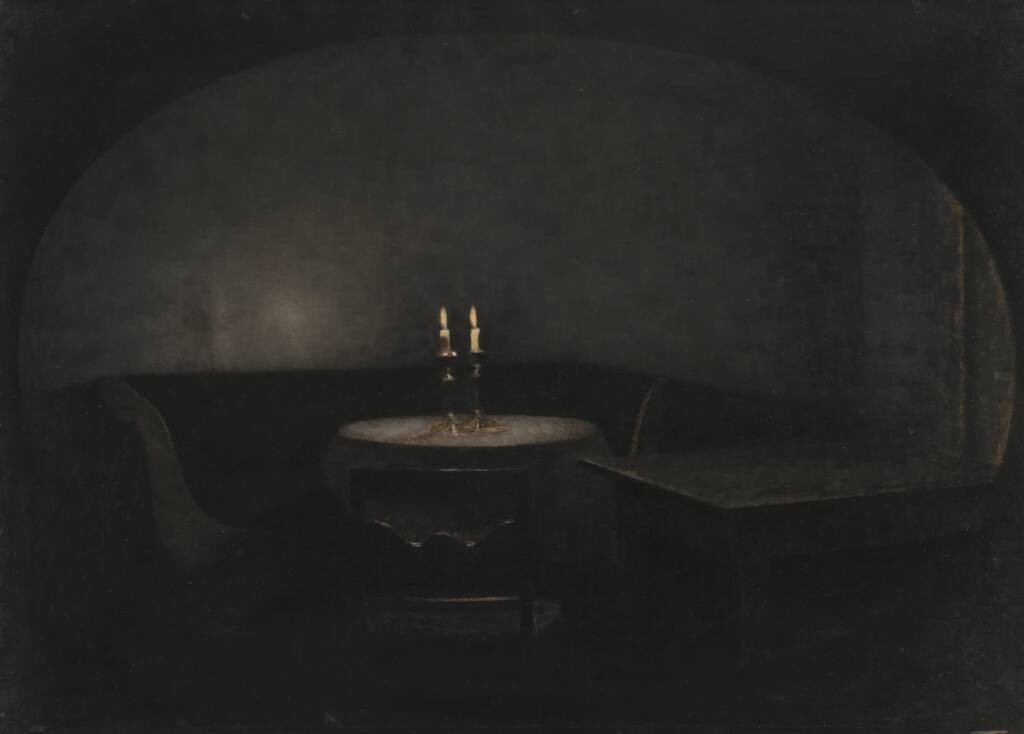
| Evening in the Drawing Room. Strandgade 30 | 1904 | Painting |
| Evening in the Sitting Room. | 1904 | Painting |
| Evening Interior. Artificial Light. Ida and Frederikke Hammershøi | 1891 | Painting |
| Farm. Refsnæs | 1900 | Painting |
| Five Portraits. Study | 1901 | Painting |
| Frederiksborg Castle | 1893 | Painting |
| From Christianshavns Canal | 1905 | Painting |
| From Frederiksholms Kanal | 1893 | Painting |
| From Kvæsthusbroen | 1908 | Painting |
| From the British Museum. London, Winter | 1906 | Painting |
| From the Church Santo Stefano Rotondo in Rome | 1902 – 1903 | Painting |
| From The Greenlandic Trade Dock. Christianshavn | 1908 | Painting |
| From the Old Christiansborg Palace | 1907 | Painting |
| Hammershøi's palette | Uncertain/Unknown | Painting |
| Head of a Woman. Study for Artemis | 1893 | Painting |
| Houses. Arresødal near Frederiksværk | 1904 | Painting |
| Interior | 1898 | Painting |
| Interior in Louis Seize style. Rahbeks Allé | 1897 | Painting |
| Interior. 'The Four Rooms'. Strandgade 25 | 1914 | Painting |
| Interior. A Young Man Reading | 1898 | Painting |
| Interior. Artificial Light | 1909 | Painting |
| Interior. Attic Room with Table and Chair | 1883 – 1885 | Painting |
| Interior. Frederikke and Anna Hammershøi | 1884 | Painting |
| Interior. From The Great Hall of Lindegården | 1909 | Painting |
| Interior. Ida Hammershøi at a Sewing Table | Uncertain/Unknown | Painting |
| Interior. Living Room in Louis-Seize-Style. Rahbeks Allé 26 | 1893 – 1896 | Painting |
| Interior. Looking out on the Exterior. Strandgade 30 | 1905 | Painting |
| Interior. Strandgade 30 | 1901 | Painting |
| Interior. Strandgade 30 | 1902 | Painting |
| Interior. Strandgade 30 | 1905 | Painting |
| Interior. Study in Sunlight. Strandgade 30 | 1906 | Painting |
| Interior. Sunshine in the Drawing Room III | 1903 | Painting |
| Interior. The Music Room. Strandgade 30 | 1908 | Painting |
| Interior. The Old Stove. Albertinelyst | 1888 | Painting |
| Interior. The Tall Windows | 1913 | Painting |
| Interior. With Empire Sofa. Strandgade 30 | 1907 | Painting |
| Interior. With Four Etchings. Strandgade 30 | 1904 | Painting |
| Interior. With Table, Cupboard and Windsor Chair. Strandgade 25 | 1913 | Painting |
| Interior. With the Artist's Easel | 1910 | Painting |
| Interior. With the Artist's Easel. Bredgade 25 | 1912 | Painting |
| Interior. Woman knitting | 1889 | Painting |
| Interior. Woman Reading | 1910 | Painting |
| Interior. Woman Reading. Bredgade 25 | Uncertain/Unknown | Painting |
| Interior. Woman Sitting Behind a Table | 1910 | Painting |
| Interior. Woman Sweeping | 1899 | Painting |
| Job | 1887 | Painting |
| Job. Study | 1887 | Painting |
| Landscape. At Lyngby Lake | 1888 | Painting |
| Landscape. Early Spring | 1909 | Painting |
| Landscape. Gentofte | 1906 | Painting |
| Landscape. Grønsund, Falster | 1890 | Painting |
| Landscape. Gundsømagle near Roskilde | 1885 | Painting |
| Landscape. Gundsømagle near Roskilde | 1886 | Painting |
| Landscape. Kongevejen near Gentofte. Study | 1892 | Painting |
| Landscape. Near Fortunen | 1901 | Painting |
| Landscape. Near Lejre | 1905 | Painting |
| Landscape. Ryet near Farum Lake | 1896 – 1897 | Painting |
| Landscape. Summer. Near Lejre | 1905 | Painting |
| Landscape. Søndermarken Park in Winter | 1895 – 1896 | Painting |
| Landscape. The Rowan Avenue at Snekkersten | 1906 | Painting |
| Landscape. With a Farmhouse | 1878 – 1879 | Painting |
| Landscape. Young Forest, Trørød, Summer | 1907 | Painting |
| Morning Toilette. Study. Strandgade 25 | 1914 | Painting |
| Nude Female Model | 1884 | Painting |
| Nude Female Model | 1910 | Painting |
| Open Doors. Strandgade 30 | 1905 | Painting |
| Portrait of a Young Girl. Anna Hammershøi | 1885 | Painting |
| Portrait. Anna Hammershøi | 1883 | Painting |
| Portrait. Anna Hammershøi. Profile | Uncertain/Unknown | Painting |
| Portrait. Daniel Jacobson Salter | 1901 | Painting |
| Portrait. Elisabeth Dorothea Rentzmann | Uncertain/Unknown | Painting |
| Portrait. Elisabeth Wandel | 1890 | Painting |
| Portrait. Fini Henriques | Uncertain/Unknown | Painting |
| Portrait. Frederikke Hammershøi | Uncertain/Unknown | Painting |
| Portrait. Frederikke Hammershøi. Study | 1894 | Painting |
| Portrait. Henry Madsen. Study | 1904 | Painting |
| Portrait. Henry Madsen. Study | 1904 | Painting |
| Portrait. Ida Hammershøi | 1894 | Painting |
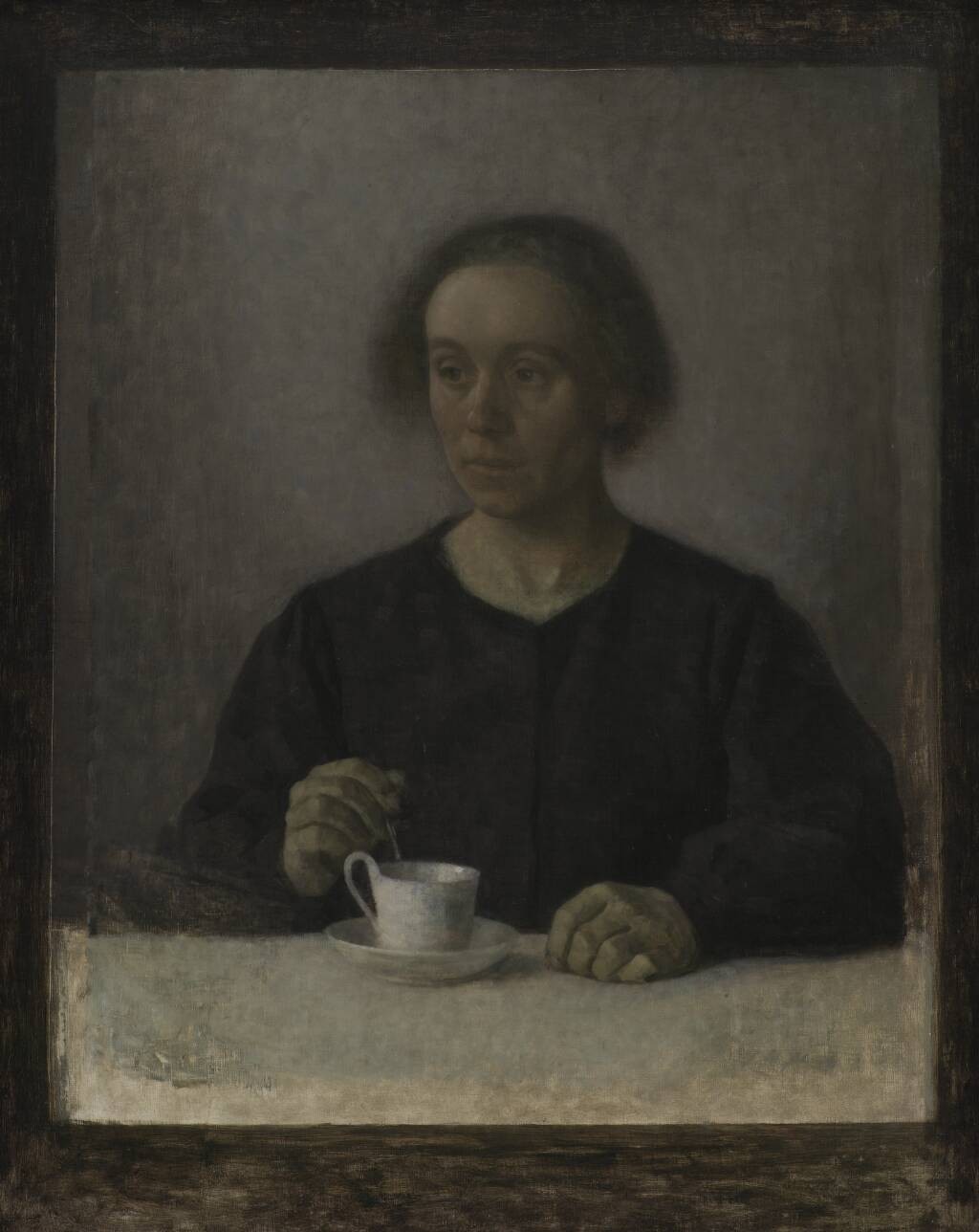
| Portrait. Ida Hammershøi with a Teacup | 1907 | Painting |
| Portrait. Ida Ilsted | 1890 | Painting |
| Portrait. Ida Ilsted. Study | 1890 | Painting |
| Portrait. Ida Ilsted. Study | 1890 | Painting |
| Portrait. J.F. Willumsen. Study for Five Portraits | 1901 | Painting |
| Portrait. J.F. Willumsen. Study for Five Portraits | 1901 – 1902 | Painting |
| Portrait. Karen Malm | 1914 | Painting |
| Portrait. Karl Madsen | 1890 | Painting |
| Portrait. Kristian Zahrtmann | 1889 | Painting |
| Portrait. Kristian Zahrtmann | 1889 | Painting |
| Portrait. Svend Hammershøi | 1881 | Painting |
| Portrait. Svend Hammershøi | 1892 | Painting |
| Portrait. Svend Hammershøi | 1903 – 1904 | Painting |
| Portrait. Svend Hammershøi. Study for Five Portraits | 1901 | Painting |
| Portrait. Thora Bendix, née Anne Victoria Sundberg | 1896 | Painting |
| Portrait. Thora Bendix. Study | 1896 | Painting |
| Portrait. Thorvald Bindesbøll. Study | 1904 | Painting |
| Portrait. Woman. Possibly Frederikke Juncker-Jensen | 1878 – 1881 | Painting |
| Portrait. Woman. Profile | 1888 | Painting |
| Seated Female Nude | 1889 | Painting |
| Self- Portrait | 1891 | Painting |
| Self-Portrait | 1890 | Painting |
| Self-Portrait | 1914 | Painting |
| Self-Portrait. Spurveskjul, Frederiksdal | 1911 | Painting |
| Self-Portrait. Spurveskjul, Frederiksdal | 1911 | Painting |
| Standing Female Model | 1909 – 1910 | Painting |
| Street in London. Montague Street at the British Museum | 1905 – 1906 | Painting |
| Study of a Model. A Woman seen from the Back | 1888 | Painting |
| Sunbeams or Sunshine. "Dust motes dancing in the sunbeams" | 1900 | Painting |
| The Buildings of the Asiatic Company, seen from St. Annæ Street | 1902 | Painting |
| The Cello Player. Henry Bramsen | 1893 | Painting |
| The Coin Collector. Strandgade 30 | 1904 | Painting |
| The Garden Room. Frederiksberg Allé | 1887 | Painting |
| The Tuesday Forest | 1893 | Painting |
| Three Sailing Boats. Christianshavns Canal | 1905 | Painting |
| Tree Trunks. Arresødal near Frederiksværk | 1904 | Painting |
| View of Christiansborg Palace. Late Autumn | 1890 – 1892 | Painting |
| View of Gentofte Lake . 'Sunshower' | 1903 | Painting |
| View of Gentofte Lake . 'Sunshower'. Study | 1903 | Painting |
| View of Jægersborg Allé. Study | 1892 | Painting |
| White Doors. Strandgade 30 | 1899 | Painting |
| Woman Knitting. Frederikke Hammershøi | 1889 | Painting |
| Young Beechwood. Arresødal near Frederiksværk | 1904 | Painting |
| Young Girl Sewing. Anna Hammershøi | 1887 | Painting |
Frequently Asked Questions
He lived at seven addresses in the city.[1] Particularly important settings include Aaboulevarden, Strandgade 30, Bredgade 25 and, from 1913, Strandgade 25. These must not be collapsed into one generic home because each supplied distinct rooms, views and periods of work.
No. The SMK picture is an unfinished preliminary work that appears to have been left at the underpainting stage in substantial areas.[3] Its exposed drawing and uneven development are integral evidence of how Hammershøi reconsidered the composition.
No. KMS6657 at SMK is the preliminary survey-number 237 canvas. The related Ordrupgaard painting is Bramsen number 236, with a changed viewpoint, expanded foreground and more prominent mast.[3]
For this motif, ViHDA reports that he photographed the gate and cites scholarship linking the chosen angle to a photograph.[3] The source image is now unlocated, while the painting's revisions demonstrate that he altered the composition rather than simply transferring it unchanged.
Their omission directs attention towards façades, openings, light and proportion. It should not be taken as documentation of an unoccupied city or as proof of Hammershøi's psychology. What the pictures establish is a preference for architectural relations over street anecdote.
Discussion
Use this evidence-led guide as a starting point for close looking rather than a final verdict.
Share an observation about Hammershøi's Copenhagen and Architecture or a source that adds useful context.
Reader Insights
Which work most clearly turns an ordinary room, face or building into a newly measured pictorial structure?
Where do Copenhagen, Ida, training or exhibition history productively alter your reading?
Which source or surviving object would you investigate next?
Join the Conversation
Add your reading below, keeping observations specific and evidence clear.
References
- The Hirschsprung Collection, “Vilhelm Hammershøi”, accessed 31 August 2026.
- SMK — The Vilhelm Hammershøi Digital Archive, “Interior. Strandgade 30” (KMS3696), accessed 31 August 2026.
- SMK — The Vilhelm Hammershøi Digital Archive, “The Buildings of the Asiatic Company, seen from St. Annæ Street” (KMS6657), accessed 31 August 2026.
- SMK, “SMK receives three paintings by Vilhelm Hammershøi in an exceptional donation”, accessed 31 August 2026.
- SMK Open, KMS6657, accessed 31 August 2026.