 by Tom Gurney
Tom Gurney BSc (Hons) is an art history expert with over 20 years experience
Published on June 19, 2020 / Updated on August 2, 2026
Email: tomgurney1@gmail.com / Phone: +44 7429 011000
Contents
- Introduction
- What The Watercolor Shows
- Homer In Cullercoats And Tynemouth
- Baskets, Net, Wind And Labor
- Provenance And Exhibition History
- Why This Work Matters In The Homer Cluster
- Annotated Details
Introduction
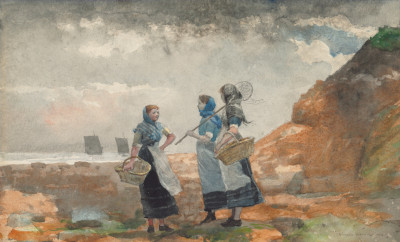
Winslow Homer's Three Fisher Girls, Tynemouth is one of the quiet but architecturally important watercolors in the artist's English period. Painted in 1881, it shows three young women on a rocky shore at Tynemouth, near the fishing village of Cullercoats on the northeast coast of England. The scene is compact, but it carries much of what made this period so consequential for Homer: wind, working bodies, sea labor, coastal weather and a new seriousness about the lives of people who depended on the ocean. [1]
The watercolor belongs to the National Gallery of Art in Washington, D.C., where it is recorded as watercolor over graphite on wove paper. Its sheet measures just under twelve by twenty inches, yet Homer gives the group a scale beyond its size. Two girls hold broad baskets, while a third balances a large net across her shoulder. Their dark blue dresses, gray aprons and shawls are pressed and lifted by the wind. In the distance, small sailboats sit on the horizon, and at the right a rocky hill rises from the shoreline. The whole image feels exposed: the girls are not sheltered from the weather, and the sea is not a background decoration. It is the condition under which their work, movement and community exist. [2]
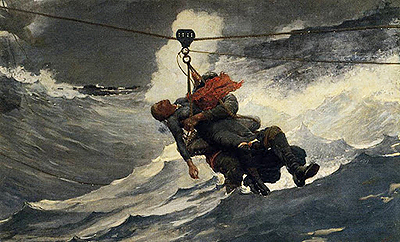
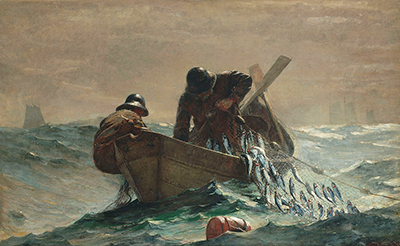
This article had previously survived in the Homer cluster as an active URL with almost no body content. That made it easy to mistake the work for a minor entry. Source review points in the opposite direction. Three Fisher Girls, Tynemouth deserves retention because it helps explain Homer's Cullercoats phase, his watercolor practice and his broader interest in coastal labor. It also gives the Winslow Homer cluster a much-needed bridge between the watercolors hub and the later marine paintings, including works such as The Herring Net, The Fog Warning and The Life Line. [3]
What The Watercolor Shows
At first glance, the image is simple: three figures, shore, wind and sea. Homer's arrangement, however, makes each of those elements active. The three girls are placed close together, but they are not arranged as a sentimental group portrait. They face the weather and the viewer with a kind of contained practicality. Their tools matter as much as their expressions. The baskets and net identify them with a working shoreline rather than a picturesque tourist coast. [4]
The two basket-bearing girls stand nearer the viewer. Their baskets are wide, useful and visually forceful; they curve outward against the sharper lines of clothing, shore and net. The third figure, carrying the net, creates a diagonal movement through the group. The net strings are especially important because they make the wind visible. Homer often found ways to show weather indirectly, through sailcloth, clothing, water or posture. Here, the wind pulls at shawls and netting, turning a still group into an image of pressure. [5]
The watercolor medium sharpens that effect. Homer does not need a heavily modeled oil surface to build the scene. The figures are readable through placement, color and economy. Dark blue clothing anchors them against the paler sky and shore. Gray aprons and shawls keep the palette restrained. The distant sailboats are small, but they confirm that the girls belong to an active marine economy. They are not isolated figures by the sea; they are part of a community organized around boats, nets and returns from the water. [6]
Homer's title also matters. These are not named sitters, and the Smithsonian Catalog of American Portraits support record treats them as unidentified girls. The title therefore directs attention to type, place and work rather than individual biography. That does not make the girls anonymous in a casual sense. Instead, Homer asks the viewer to look at what their role requires: endurance, balance, cooperation and exposure to weather. [7]
Annotated Details from Three Fisher Girls, Tynemouth
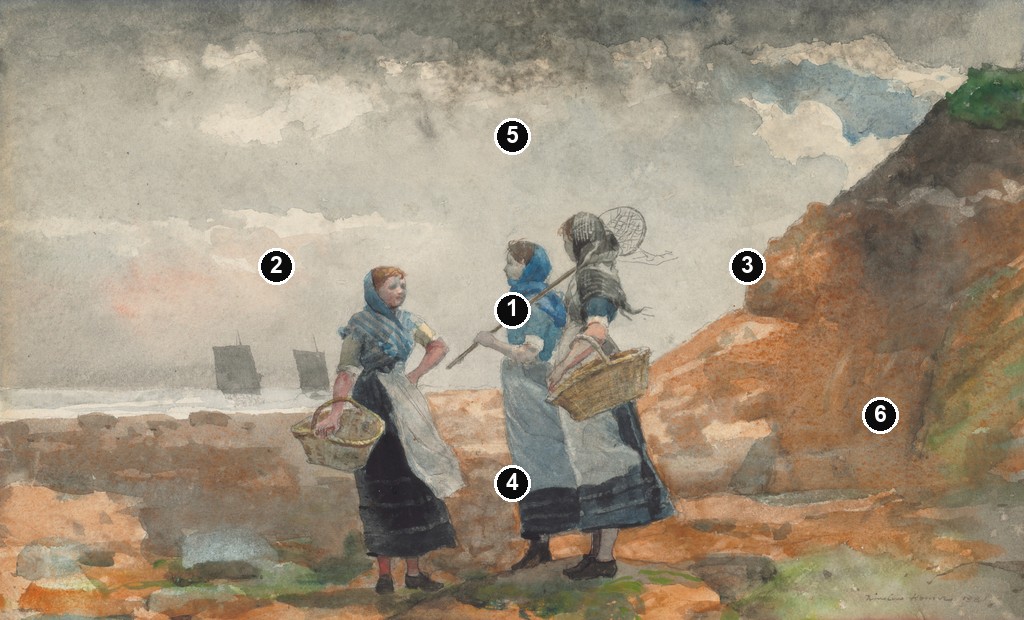
Details from THREE FISHER GIRLS, TYNEMOUTH
Close looking follows the composition through figure, setting, foreground and surrounding visual pressure.
Central Action
The central passage carries the first act of close looking, where pose, spacing and surrounding detail establish the main visual problem.
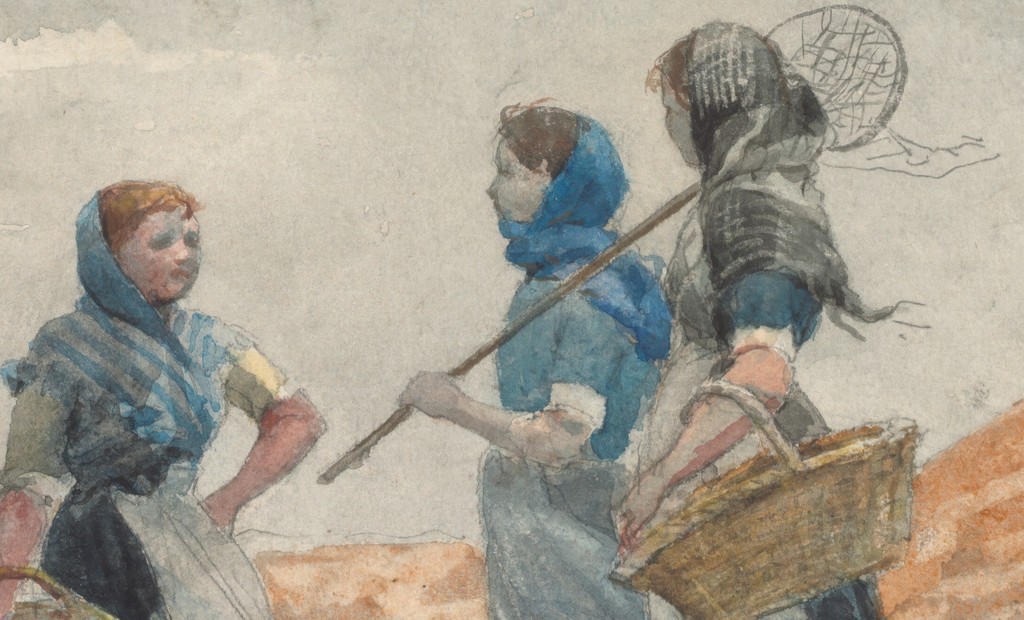
Left-Hand Structure
The left side helps frame the composition and shows how Homer balances incident against the broader setting.
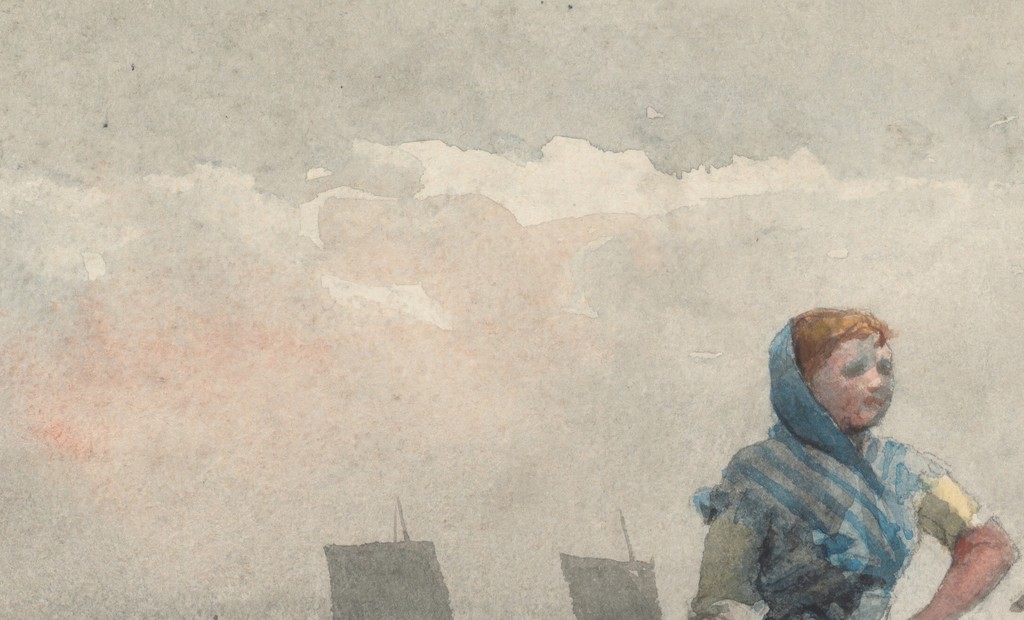
Right-Hand Structure
The right side answers the central group with a second visual pressure, often through movement, distance or environmental force.
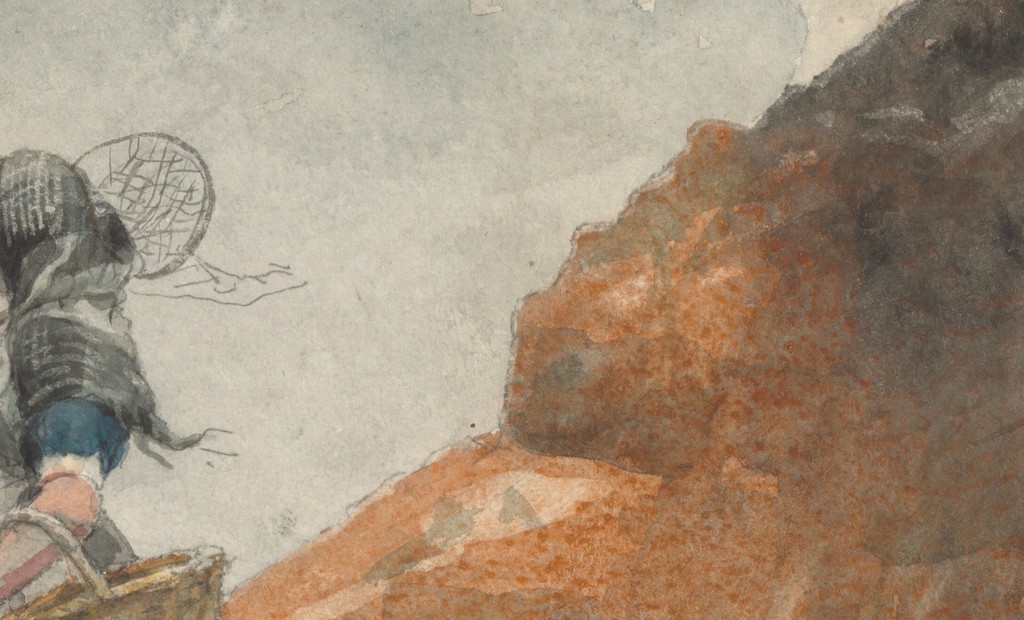
Foreground Detail
The foreground gives the viewer a threshold into the image and often contains the practical evidence of work, risk or play.
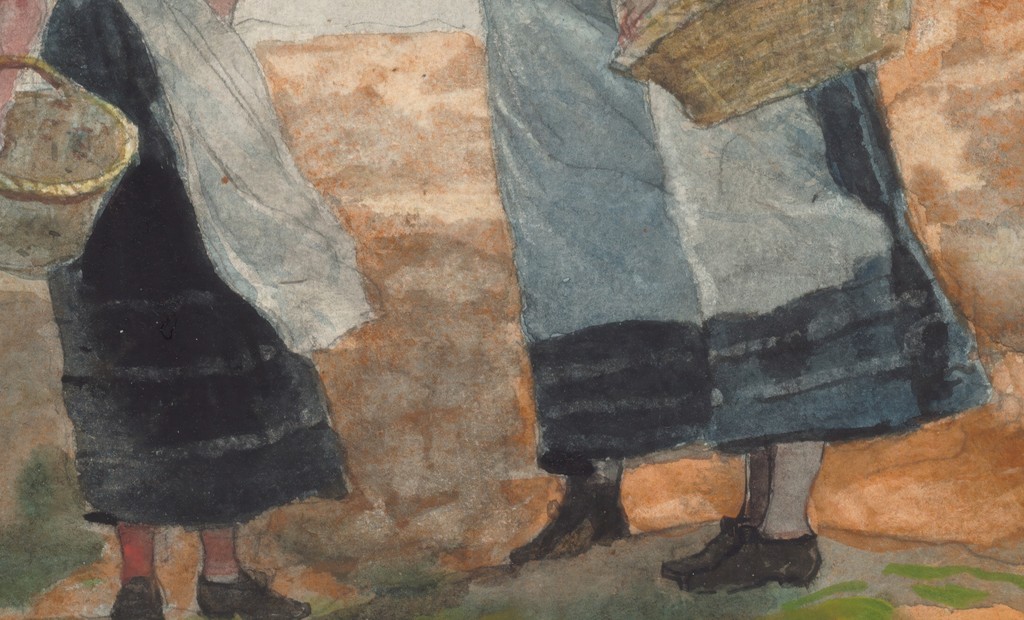
Background Distance
The background opens the picture into weather, landscape or social space, making the scene larger than the immediate figures.
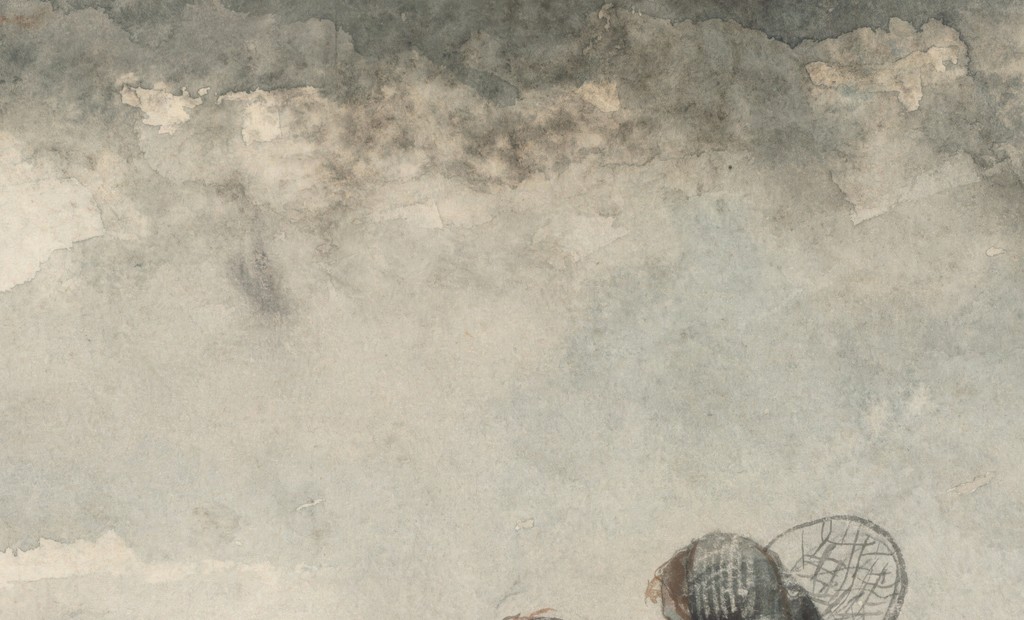
Edge Rhythm
A detail near the edge shows how the composition keeps the eye moving instead of closing around a single motif.

Homer In Cullercoats And Tynemouth
Homer traveled to England in 1881 and spent an extended period in Cullercoats, near Tynemouth, remaining there into 1882. This stay is one of the decisive turns in his career. Earlier Homer had become known through illustration, Civil War subjects, rural American scenes, leisure images and increasingly ambitious watercolors. In Cullercoats, he encountered a fishing community whose daily life offered a more austere subject world: women waiting, carrying, mending and watching; men at sea; boats moving through uncertain weather; rescue and loss never far from ordinary labor. [1]
The National Gallery, London, in its Force of Nature material, identifies the Cullercoats period as central to Homer's development. The Met's biographical timeline likewise places the Cullercoats and Tynemouth stay within the larger movement of his career, after his 1870s experimentation and before his later Prouts Neck marine paintings. That sequence is useful because it prevents Three Fisher Girls, Tynemouth from being treated as a decorative travel watercolor. It belongs to a period in which Homer was testing how watercolor could carry weight, not just freshness. [2]
Tynemouth and Cullercoats also changed the human emphasis in Homer's coastal art. The sea had appeared earlier in scenes of recreation, boating and shore life, but in the English works the coastal figure is often bound to necessity. Weather is not merely picturesque. Waiting is not merely romantic. Nets and baskets are not props. They are tools within an economy that depends on skill, repetition and risk. [3]
The girls in this watercolor are therefore part of a larger Cullercoats vocabulary. They stand at the edge between shore and sea, but they are not passive spectators. Their clothing, baskets and net connect them to the labor surrounding fishing, especially the labor performed by women and girls in coastal communities. Homer does not narrate a particular incident. He compresses a way of life into a group of figures whose bearing tells the story more strongly than anecdote would. [4]
Baskets, Net, Wind And Labor
One reason the watercolor works so well is that Homer lets ordinary objects carry the meaning. The baskets are not decorative curves. They imply carrying, sorting, transport and sale. The net is not just a marine detail. It suggests preparation, repair and the shared work behind every boat that goes out. The wind is not simply atmospheric. It is a physical force the girls have to stand within. [5]
This is where Homer's restraint becomes powerful. A more theatrical artist might have turned the scene into a storm drama or a sentimental image of hardship. Homer holds back. The girls are still, but not inert. Their bodies have adjusted to weather. Their clothing absorbs motion. Their tools explain their place in the fishing economy without a caption-like narrative. The sea is present, but the subject is not a boat in crisis. It is the human structure around the sea. [6]
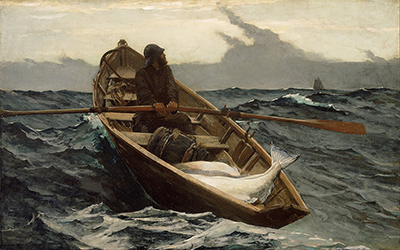
That emphasis connects Three Fisher Girls, Tynemouth to later Homer works in the active cluster. In The Herring Net, working fishermen haul their catch at sea. In The Fog Warning, a single figure in a dory confronts distance, weather and the need to return. In The Life Line, rescue technology and human risk become central. This watercolor stands earlier in that line of thinking, and from the shore rather than the boat. It shows that Homer's marine art was not only about waves and peril; it was also about communities that understood the sea as work. [7]
The image also belongs naturally beside the Watercolours hub. Homer's watercolor practice was not a secondary branch of his career. It was a field of experiment where he could study light, weather, travel, labor and immediacy. In Three Fisher Girls, Tynemouth, watercolor is especially suited to shifting atmosphere and economical figure description. Graphite underdrawing gives structure, while watercolor supplies movement and air. [1]
Provenance And Exhibition History
The National Gallery of Art records the work's provenance through several owners before it entered the Mellon collection and then the museum. The known ownership route includes Mrs. F. S. Clark, Isabella Clark Eaton, Doll & Richards, John S. Ames, Mrs. John S. Ames, Paul Mellon and finally the National Gallery of Art, where the work entered through the Mellon collection route in 2012. [2]
That history matters because it shows that the watercolor was not a stray fragment outside Homer's recognized achievement. Its exhibition history includes an 1882 Boston watercolor showing and a 1941 watercolor exhibition at the Museum of Fine Arts, Boston. Those appearances help establish the work within Homer's watercolor reputation and within the collecting history that later brought many important American works into public museums. [3]
The NGA catalogue information also records the work in the Goodrich and Gerdts catalogue raisonne, giving it a secure place in the documented body of Homer's watercolors. For a rebuilt artwork page, that kind of source stability is important. It means the article can rely on firm object data rather than general biography alone. [4]
Why This Work Matters In The Homer Cluster
Three Fisher Girls, Tynemouth is not one of Homer's most famous images, but it repairs a real gap in the artist cluster. Without it, the site has less support for the Cullercoats phase and for the transition from watercolor observation to later marine intensity. The article remains active because it gives readers a specific, sourceable entry point into that turn. [5]
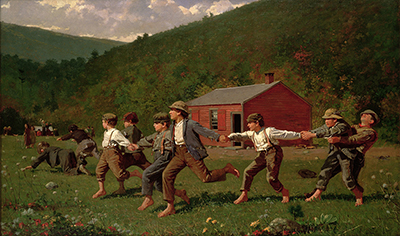
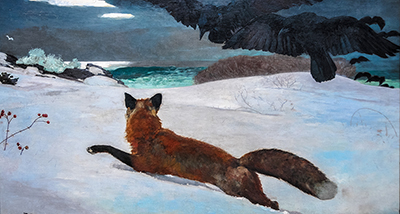
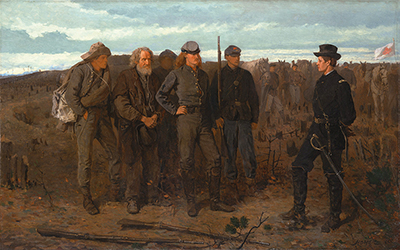
It also helps the cluster avoid a common imbalance in Homer coverage. The big oil paintings naturally attract attention: The Gulf Stream, Breezing Up, Prisoners from the Front, The Fog Warning, The Fox Hunt. But Homer cannot be understood through oil flagships alone. The watercolors show how he learned to compress experience, how he followed weather, and how he built serious subjects from rapid but disciplined observation. [6]
For readers moving through the site, this article connects outward in three directions. First, it links to the Winslow Homer biography, where the English period belongs in the chronology. Second, it should support the Watercolours hub, because the work is a clear example of watercolor carrying major artistic weight. Third, it connects to fishing-community and marine-labor pages such as The Herring Net, The Fog Warning, The Life Line, Gale and Boys in a Dory. [7]
The rebuilt guide therefore be concise but not thin. A useful version of this article does not need to invent drama. The drama is already there in the way Homer places three young figures between land, wind and sea, with the tools of work in their hands. [1]
Discussion
Winslow Homer rewards close looking because his strongest images rarely close down into one easy meaning. Use the prompts below to test how the work changes as you move between subject, place, medium and history.
Reader Insights
First Look
What detail in Three Fisher Girls, Tynemouth changes how the whole work feels?
Homer's Method
Where do you see Homer's balance between clear observation and unresolved meaning?
Cluster Context
Which related Homer work helps you read this page more carefully?
Join the Conversation
Share a thoughtful observation below, especially if a detail, source connection or related Homer page changed the way you read the work.
References
- National Gallery of Art, Three Fisher Girls, Tynemouth, object record, accession 2012.89.4.
- Smithsonian National Portrait Gallery / Catalog of American Portraits, support record for Three Fisher Girls, Tynemouth.
- The Metropolitan Museum of Art, Heilbrunn Timeline of Art History essay on Winslow Homer.
- National Gallery, London, Introduction to Winslow Homer, Winslow Homer: Force of Nature.
- Local source packet:
empty-url-source-test-green-hill-three-fisher-girls-2026-07-20.md. - Local source enrichment:
phase-1a-source-enrichment-before-manuscripts-2026-07-20.md. - Local feature support pack:
phase-1a-green-route-feature-support-pack-2026-07-20.md.
 Winslow Homer.jpg)