 by Tom Gurney
Tom Gurney BSc (Hons) is an art history expert with over 20 years experience
Published on June 19, 2020 / Updated on August 2, 2026
Email: tomgurney1@gmail.com / Phone: +44 7429 011000
Contents
- Introduction
- What The Painting Shows
- 1865 And The Civil War Aftermath
- The Veteran As Farmer
- Harvest, Scythe And Symbolic Pressure
- Relationship To Other Homer Works
- Why This Painting Matters
Introduction
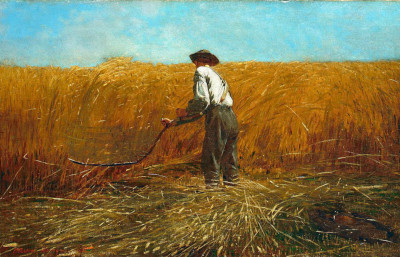
Winslow Homer's The Veteran in a New Field is one of the most concentrated paintings in American art about the first season after the Civil War. Painted in 1865, it shows a single man at work in a wheat field. At first glance the subject is simple: a farmer harvesting grain. The discarded Union Army jacket and canteen in the lower right corner change the scene. This is not only a rural laborer. He is a veteran who has returned from war to the work of cultivation. [1]
The painting belongs to The Metropolitan Museum of Art, where it is recorded as an oil on canvas from 1865. The date is essential. Homer made the work in the year of Confederate surrender and President Abraham Lincoln's assassination, when the United States was trying to imagine peace while still living inside grief. The Met's object record frames the painting through that tension between mourning and renewal. Homer does not illustrate a battlefield, a funeral or a political ceremony. He places the aftermath of war in a field of ripe grain, where ordinary work has become historically charged. [2]
The title carries the same double meaning. The veteran is in a new field because he has left the field of battle. He is also in a literal field, cutting a crop that promises food, labor and seasonal return. Homer lets the two meanings coexist. The painting does not say that peace cancels death. It says that the work of peace begins under the shadow of death. [3]
That shadow appears most clearly in the scythe. The tool belongs to agriculture, but it also carries a long association with mortality. The veteran bends into the harvest, his back turned to the viewer, while the blade moves through tall wheat. The crop suggests recovery and abundance. The scythe keeps that recovery from becoming too easy. In Homer's 1865, the field is a place of hope and a reminder of the human cost that made hope necessary. [1]
What The Painting Shows
The composition is unusually direct. A man stands alone in a field, seen from behind and slightly to the side. His body is strong, but his face is hidden. Homer does not make him a portrait subject. He turns him into a figure of return, labor and national transition. The veteran is not shown in uniform. The evidence of his service has been laid aside near the edge of the field, where the viewer can read it almost as a footnote to his present work. [2]
That decision matters. If Homer had dressed the man in uniform, the painting would have remained visibly military. Instead, the veteran wears work clothes and occupies a civilian landscape. The Union jacket and canteen tell us what he has been, but the body in the center tells us what he is doing now. The old identity is present, but it is not the whole scene. [3]
The field fills most of the image. Homer gives the wheat a monumental role, not as picturesque scenery but as the material through which the veteran's work takes place. The standing grain rises around him, and the cut path behind him records the passage of effort. This is not a leisure scene or an emblem of easy rural peace. Harvesting is physical labor. The veteran has survived the battlefield only to enter another demanding rhythm of work. [1]
The crop also changes the emotional temperature of the painting. A field of wheat can suggest plenty, renewal and the return of seasonal order. In 1865, that order was anything but simple. The country had been exhausted by war, and the promise of recovery was bound up with loss, social upheaval and the uncertain future of Reconstruction. Homer compresses those conditions into a scene that looks quiet but feels unsettled. [2]
The absence of the veteran's face is especially important. It prevents the viewer from turning the painting into a sentimental study of one man's emotion. Homer does not ask us to read tears, pride, exhaustion or relief from facial expression. He asks us to read posture, work and objects. The man's privacy remains intact. The viewer sees him as part of a wider historical condition rather than as a character in a simple anecdote. [3]
The low-lying jacket and canteen provide the clearest narrative clue. Their placement near the lower right corner makes them easy to overlook at first, which is part of their force. The painting reveals its Civil War subject slowly. The field comes first, then the signs of war, then the title's double meaning. That sequence lets the viewer experience something like the veteran's own transition: civilian work in the foreground, military memory lying close by. [1]
1865 And The Civil War Aftermath
Homer's Civil War experience had begun in print culture. He worked for Harper's Weekly and made images connected to the war before his most famous postwar paintings. The local biography packets for the Winslow Homer rescue emphasize that his early career as an illustrator matters because it trained him to build scenes from observed detail, public events and legible human situations. By 1865, however, Homer was not simply reporting wartime material. He was making paintings that could hold the psychological and symbolic weight of national aftermath. [2]
The Veteran in a New Field belongs to that shift. It is close in date to the end of the war, but it is not a battle picture. It is a reconstruction of feeling after battle. The soldier has returned, and the setting has changed from military conflict to agricultural labor. Yet Homer makes the return complicated. The jacket and canteen are not trophies. They are reminders of a recent past that cannot be neatly folded away. [3]
The painting's timing also connects it to mourning for Lincoln. The Met object record notes the work's completion after surrender and assassination, and that sequence matters for public interpretation. In 1865, Union victory and national grief arrived almost together. The end of combat did not feel like uncomplicated triumph. Homer catches that mixed atmosphere through a subject that is neither public celebration nor private despair. [1]
The field allows him to avoid both extremes. It gives the veteran something to do. Work becomes a way of imagining peace without pretending that peace is already secure. The man does not pose for gratitude. He does not perform heroism for the viewer. He cuts grain. The humility of the action is part of the painting's seriousness. [2]
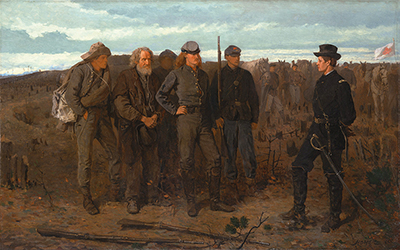
This makes the work a useful companion to Prisoners from the Front, which Homer painted the following year. In that painting, a Union officer and Confederate prisoners stand in a damaged landscape, and the encounter still belongs to the social world of military defeat. The Veteran in a New Field is quieter, but it is no less historical. Instead of showing enemies face to face, it shows the returning soldier alone with the work of recovery. [3]
The article therefore avoids treating the painting as a generic harvest scene. The harvest is real, but it is not neutral. It becomes Homer's way of asking what a country does after the field of battle has emptied. The answer is not abstract. Someone has to cut the grain. Someone has to begin again, while the evidence of war remains within sight. [1]
The Veteran As Farmer
The central figure has often been described through the meeting of soldier and farmer. That combination is not accidental. Farming suggests continuity, independence and subsistence. Soldiering suggests interruption, obedience and danger. Homer puts the same body between those identities. The man who once wore the Union jacket now wears work clothes, and the change of clothing becomes a change of historical role. [2]
The painting does not tell us the veteran's name, regiment, home town or battlefield history. That silence widens the subject. He could stand for many Northern soldiers returning to civilian life, but he is not reduced to a flat symbol. His labor gives him weight. He is not just an idea of peace; he is a working body in a field. [3]
Homer's restraint is important here. He does not surround the veteran with family members, flags, banners or narrative explanation. There is no reunion scene. No one greets him. No one watches him work. The painting's solitude suggests that return from war is not only a public event. It is also something private, physical and repetitive. A veteran has to re-enter time itself: seasons, tasks, weather, fatigue, livelihood. [1]
The field also changes how viewers understand courage. The painting does not glorify combat. It redirects attention to the difficult discipline of ordinary life after combat. The veteran's work is not spectacular, but it is necessary. That quieter form of heroism suits Homer's public voice better than inflated allegory would have done. [2]
At the same time, the painting does not need to be softened into a simple healing image. The man has returned, but his tools and surroundings carry an uneasy charge. The scythe, the title and the discarded military objects make the peace provisional. Recovery is real, but it takes place in the presence of memory. [3]
This balance helps explain why the painting remains powerful. Homer finds an image for postwar transition that does not depend on speeches or dramatic gestures. He lets a farmer-veteran's back, a field of wheat and two military objects carry the burden. The result is intimate and national at once. [1]
Harvest, Scythe And Symbolic Pressure
The harvest is the painting's largest visual fact. It fills the scene and gives the veteran's work its immediate purpose. In an agricultural image, harvest often means reward: seed has grown, labor has ripened, the season has delivered its crop. In Homer's painting, that meaning is present but unsettled. The harvest comes after war, not after an ordinary year. [2]
The scythe intensifies that tension. As a farm tool, it is practical. It cuts grain efficiently and belongs naturally in the field. As an image, however, it also evokes death. Homer does not need to make this symbolism theatrical. The veteran's movement through the wheat is enough. The same curved blade that gathers the harvest also reminds viewers of the lives cut down by war. [3]
That double role gives the painting its emotional depth. The field stands for renewal, but the method of harvest recalls loss. The veteran is creating abundance, yet his tool cannot escape its association with mortality. Homer lets hope and grief occupy the same object. [1]
Homer's handling of the wheat also matters. The tall vertical strokes create a surrounding field rather than a distant backdrop. The veteran is absorbed into the work. He is neither elevated above the field nor swallowed by it. This scale makes him part of the country's recovery while keeping him physically specific. [2]
The painting's simplicity can therefore be misleading. It contains very few elements, but each one carries pressure. The wheat promises life. The scythe hints at death. The jacket and canteen name the war. The veteran's hidden face preserves privacy. The title makes the field both agricultural and military. Homer has built an image in which nearly every visible thing has more than one job. [3]
Relationship To Other Homer Works
Within the Winslow Homer cluster, The Veteran in a New Field should sit close to the Civil War and Reconstruction pages. Its most direct companion is Prisoners from the Front, where Homer developed a more public and multi-figure postwar history painting. Read together, the two works show different ways Homer processed the war: one through a soldier's solitary return, the other through a confrontation between Union authority and Confederate defeat. [1]
The painting also belongs beside the biography and prints material. Biography explains Homer's movement from illustration to oil painting, including his wartime work as an artist-correspondent. Prints can help readers understand why Homer's Civil War eye was trained through mass-circulation images before it became the basis for painted works of aftermath and memory. [2]
The Reconstruction pages extend the story beyond Union veteran experience. A Visit from the Old Mistress, The Cotton Pickers, Dressing for the Carnival and The Bright Side belong to a later, related group of works about Black life, post-emancipation tension and the unsettled social world after the war. The Veteran in a New Field does not need to absorb those subjects into its own meaning, but it can help frame the larger cluster: Homer returned repeatedly to what the war changed and what it failed to settle. [3]
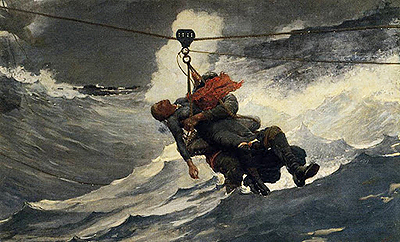
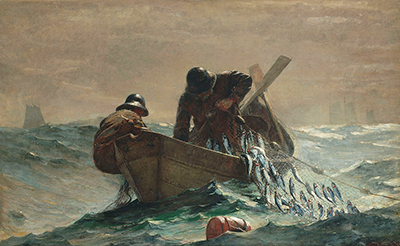
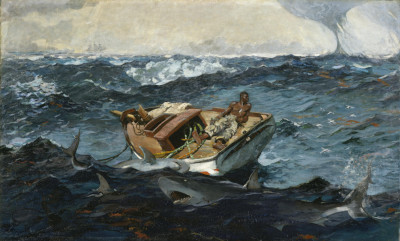
There is also a quieter connection to Homer's rural and labor imagery. The field, the harvest and the working body anticipate the importance of everyday labor in his art, even when the historical context changes. Later paintings of fishing, rescue and coastal work are visually different, but they share Homer's interest in people defined by demanding physical tasks rather than by theatrical expression. [1]
This makes the article useful beyond Civil War readers. It can serve as a bridge between Homer's early war-related work, his postwar American subjects and his broader commitment to labor as a serious artistic theme. [2] The veteran's field is not the sea, but Homer is already asking a question that will matter across his career: how can a single figure at work carry more history than the scene first appears to contain?
Why This Painting Matters
The Veteran in a New Field matters because it turns national aftermath into a private act of labor. Homer does not need a battlefield to paint the Civil War. He shows its residue in a jacket, a canteen, a title and the body of a man trying to work in peace. [3]
The painting also matters because it refuses easy consolation. The wheat is abundant, and the veteran has returned. Those facts are hopeful. But the scythe, the hidden face and the proximity of military objects keep grief present. Homer makes recovery visible without making it simple. [1]
For modern readers, the strongest way into the painting is to slow down the order in which its meanings appear. First there is the field. Then there is the laboring body. Then there are the military objects. Then the title turns the field into a memory of battle. Finally the scythe brings harvest and mortality together. The painting grows more complex the longer the viewer stays with it. [2]
That complexity is why the work deserves a substantial support page in the Homer rescue. It is not merely an illustration of a returning soldier. It is a compact image of 1865: victory, mourning, work, memory and the uncertain beginning of peace. Homer gives the veteran no public speech and no visible face. Instead, he gives him a field to cut, and lets the whole country's difficulty gather around that task. [3]
Discussion
Winslow Homer rewards close looking because his strongest images rarely close down into one easy meaning. Use the prompts below to test how the work changes as you move between subject, place, medium and history.
Reader Insights
First Look
What detail in The Veteran in a New Field changes how the whole work feels?
Homer's Method
Where do you see Homer's balance between clear observation and unresolved meaning?
Cluster Context
Which related Homer work helps you read this page more carefully?
Join the Conversation
Share a thoughtful observation below, especially if a detail, source connection or related Homer page changed the way you read the work.
References
- The Metropolitan Museum of Art, object record
67.187.131, The Veteran in a New Field, 1865. - The Metropolitan Museum of Art, Heilbrunn Timeline of Art History essay on Winslow Homer.
- Winslow Homer Phase 1 approval brief, provisional URL decision matrix, source leads ledger, homepage/biography source packets, internal-link ledger, quote ledger, glossary ledger and Tom image-policy record, 2026-07-20.
 Winslow Homer.jpg)