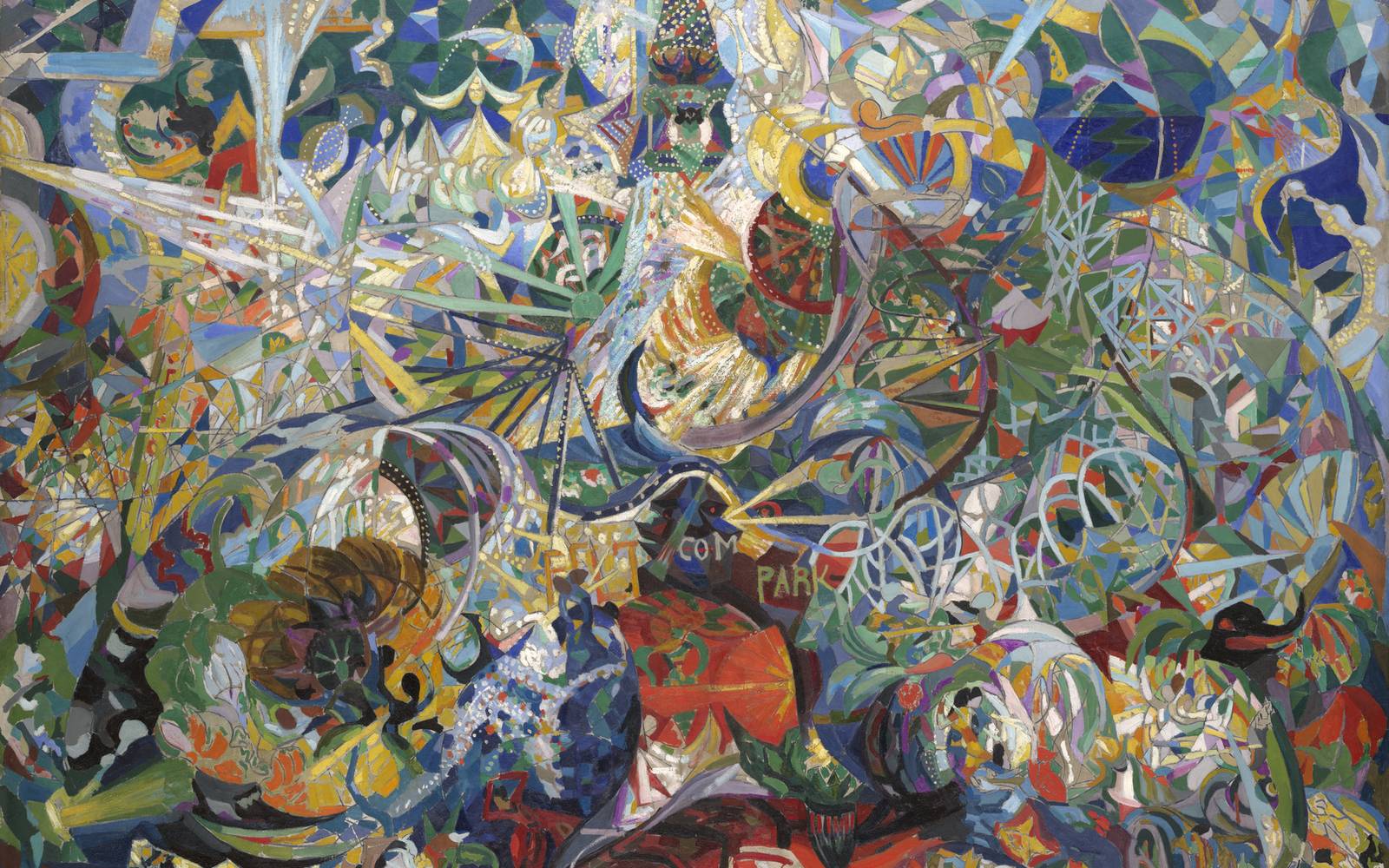
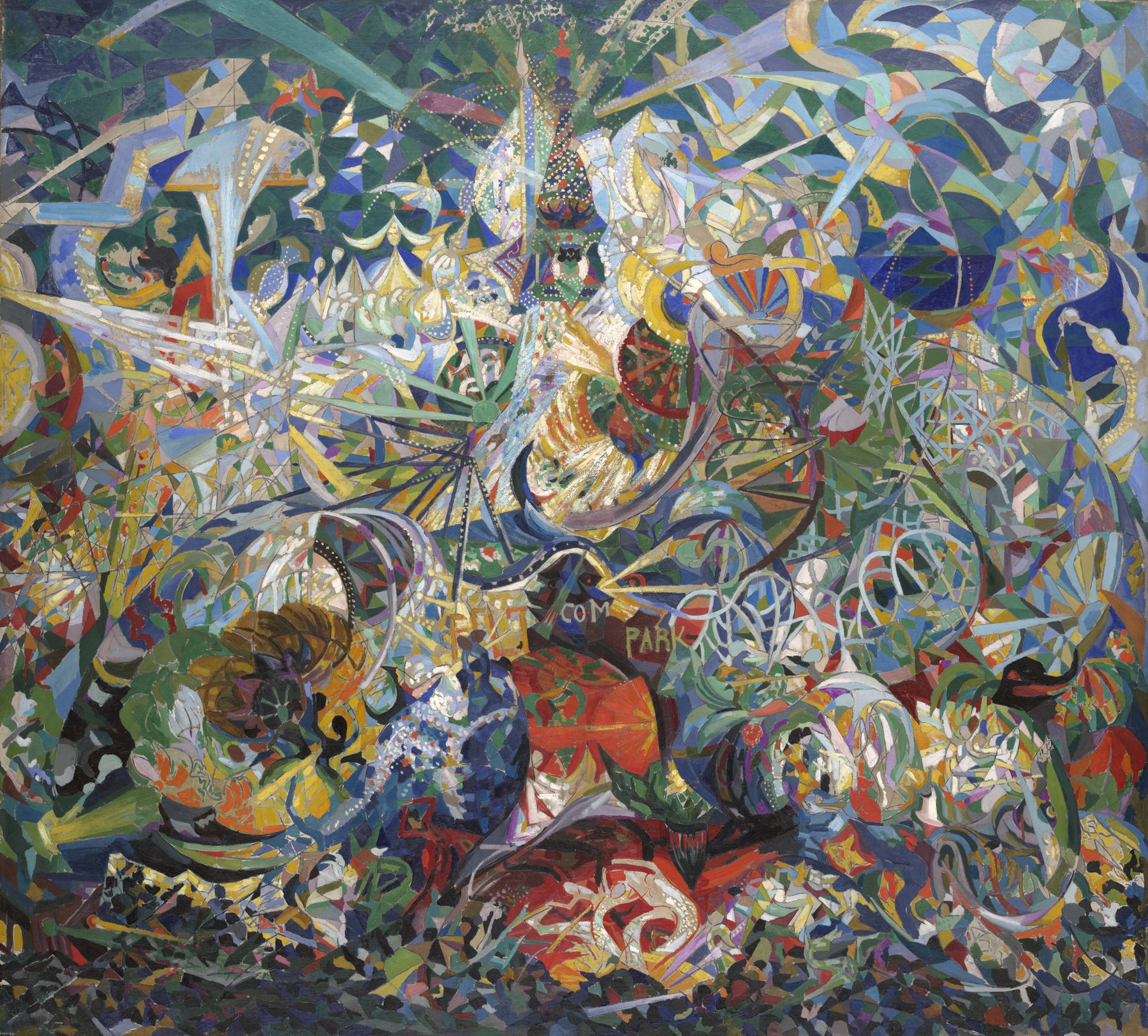
Image reference: Battle of Lights, Coney Island, Mardi Gras.
At a Glance
- Core periodapproximately 1900–1945, with earlier roots and later continuities
- Geographythe United States within Atlantic, Pacific, Caribbean and Mexican networks
- Mediapainting, drawing, printmaking, photography, sculpture and mural art
- Major centresNew York, Chicago, Philadelphia, Washington, San Francisco, Los Angeles and the Southwest
- Recurring subjectscity life, machines, nature, identity, migration, labour, popular culture and national memory
- Defining featurecompeting realist and abstract attempts to make modern experience visible
- Key networksthe Ashcan artists, the Stieglitz circle, Harlem Renaissance communities, regional schools, federal projects and independent abstraction groups
- Essential cautionAmerican Modernism is a retrospective umbrella, not a membership category
Contents
- Where it fits
- What it contains
- Before the Armory Show
- Four stages
- Major artists
- Abstraction and the world
- Essential works
- How to look
- Where to see
- Suggested books
Where American Modernism fits
Georgia O’Keeffe
Key career periodEdward Hopper
Key career periodArthur Dove
Key career periodMarsden Hartley
Key career periodStuart Davis
Key career periodAaron Douglas
Key career periodAwa Tsireh
Key career periodDorothea Lange
Key career periodAmerican Modernism is less a movement than an argument conducted in images. During the first half of the twentieth century, artists in the United States asked what an art adequate to modern life might look like. They answered with watercolours that make bridges sway, photographs that turn clouds into states of mind, murals crowded with labour, portraits of new urban communities, hard-edged factories, abstract colour, vernacular signs and landscapes made strange by close attention.
No single answer prevailed. The early modernists gathered in galleries, schools, studios, magazines, clubs, government projects and political organisations, but never formed one body with a common manifesto. A recent Whitney survey rightly stresses the multitude of nonrepresentational languages developed between 1900 and 1930, as well as the many women and artists of colour whom older collections failed to represent.[1] The plural is therefore important: American Modernism contains modernisms.
Its history is also inseparable from movement across borders. Artists travelled to Paris, Berlin, Mexico City and Tokyo; immigrants recast New York and California through memories and techniques formed elsewhere; European and Mexican artists worked in the United States; African American modernism circulated across the Atlantic and Caribbean. The question was never simply how America escaped foreign influence. It was how a changing country translated international forms while arguing over who belonged to it.
What does American Modernism contain?
A useful history begins by refusing a neat family tree. The National Gallery of Art describes early American modernism through its eclecticism, independence and resistance to stable categories.[2] Artists shifted between abstraction and recognition, city and countryside, European experiment and local tradition. Some changed positions more than once. The field is not untidy because historians have failed to classify it; instability is one of its historical facts.
This makes style alone an unreliable test. Sharp geometric form might belong to a factory picture, an abstract print or a Pueblo watercolour. A recognisable figure might serve urban observation, racial self-definition, political protest or private allegory. The period held Realism, Expressionism, geometric and biomorphic abstraction, Precisionism, Regionalism, Social Realism and Surrealist tendencies at the same time. A Met collection study connects that coexistence to the shocks of depression and war, and to the freedom and uncertainty of an art world without one dominant method.[3]
Even the 1930s, sometimes reduced to a contest between rural Regionalism and urban Social Realism, resist a binary. A French exhibition at the Musée de l’Orangerie placed abstraction, social painting, Regionalism and the distinct worlds of Georgia O’Keeffe, Marsden Hartley and Edward Hopper beside one another. Its premise was that modern American painting in the decade could not be defined in a single way.[4] Seen from abroad, its diversity is not a failure to keep pace with Europe but the subject itself.
The word “American” needs equal care. Period critics often demanded an art rooted in national soil, everyday products or native experience. Those demands could oppose academic dependence, but they could also become nativist, erasing immigration, Black citizenship and actual Indigenous nations. Wanda Corn’s study The Great American Thing is valuable because it treats national identity as something constructed between transatlantic artists and those who claimed to be rooted at home, rather than as a visual essence waiting to be discovered.[5]
For this survey, approximately 1900–1945 supplies a practical frame. It begins when urban realism, photographic secession and independent exhibition were challenging inherited institutions. It ends around the Second World War, when refugee artists, federal-project alumni and older abstractionists helped form the conditions of postwar art. Neither boundary is official. Modernism began differently in different media and did not cease on one date.
Before the Armory Show: modern life becomes a subject
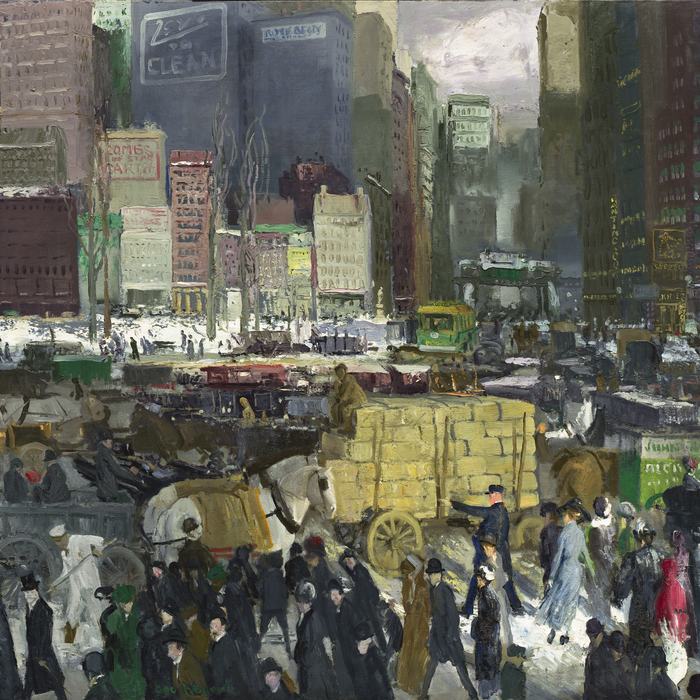
The artists later grouped as the Ashcan School established one route into modern art. Robert Henri encouraged William Glackens, George Luks, Everett Shinn and John Sloan to treat streets, theatres, tenements and popular leisure as subjects worthy of ambitious painting. Their broad marks carried habits learned in newspaper illustration: speed, compression and an eye for the incident that would register immediately. George Bellows extended the language into boxing clubs, river views and the dense life of New York.
Their rebellion mattered institutionally. The exhibition of The Eight at Macbeth Galleries in 1908 and later independent shows challenged the authority of conservative academies. Yet contemporary subject matter did not automatically produce social radicalism. The Met’s history notes that these artists usually stopped short of direct propaganda and often softened the harshest realities of poverty, immigration and class conflict.[6] A crowded street may feel democratic while still being viewed from comfortable social distance. Their contribution lies in making ordinary urban experience available to art, not in serving as transparent reporters.
In 1913, a vast International Exhibition of Modern Art—quickly shortened to the Armory Show—altered the scale of the debate. It opened at New York’s 69th Regiment Armory on 17 February, travelled to Chicago and concluded in Boston in May. The Smithsonian’s archival reconstruction identifies it as the first major United States exhibition of European modern art.[7] Visitors confronted Post-Impressionism, Fauvism and Cubism beside American work. Ridicule and fascination made modern art public news.
The Armory Show accelerated experimentation, but it did not switch modernism on. Henri’s circle, photographic organisations, immigrant artists, small galleries and magazines had already weakened academic authority. Nor did every participant abandon representation after seeing Duchamp or Picasso. Stuart Davis absorbed the encounter for decades; others rejected its lessons or converted them into very different forms. The show is a junction, not a creation myth.
Networks made the new art visible
American modernism depended on people who made rooms, pages and audiences. Alfred Stieglitz was simultaneously photographer, editor, organiser, advocate and gatekeeper. He founded the Photo-Secession in 1902 to argue for photography’s artistic standing, published Camera Work, and operated the gallery known as 291. His own practice moved from carefully produced Pictorialist prints toward more direct photographs, extended portraits and the cloud series he called Equivalents. The Met’s account makes clear that this change was not a simple rejection of craft: Stieglitz continued to control printing while asking what the camera alone could do.[8]
Camera Work functioned as an exhibition that travelled by post. Its first issue appeared in 1903 with Edward Steichen’s Art Nouveau cover and richly printed photogravures. During its early years it concentrated on photography; after 1908 it increasingly carried modern painting and sculpture, before its final 1917 number presented Paul Strand’s direct photographs.[9] Paper, type, sequence and reproduction were therefore part of the movement’s material history, not neutral packaging around original works.
The gallery system changed with Stieglitz’s ambitions. Across 291, the Anderson Galleries, the Intimate Gallery and An American Place, he showed European figures and a selected American circle from 1908 to 1946. The National Gallery exhibition and book Modern Art and America reconstructed that long sequence through paintings, sculptures, photographs and works on paper.[10] It demonstrates both the reach of his labour and the limits of a history organised around one impresario.
At 291, viewers could encounter European modern movements alongside Georgia O’Keeffe, Arthur Dove, Marsden Hartley, John Marin and other American experimenters. Photography’s ability to describe appearances could release painters toward abstraction, while abstract painting sharpened photographers’ awareness of edge, interval and compression.[11] The exchange ran in both directions. A photograph was not modern because it resembled a Cubist picture, nor was a painting modern because it escaped description.
After the First World War, Stieglitz and associated writers urged artists to identify with the country’s “native ground.” This ideal supported concentrated responses to Maine, Lake George, New Mexico and Long Island, but it could also become inward-looking. The National Gallery’s study of his 1918–37 photographs records how An American Place appeared increasingly isolated during the Depression, when Ben Shahn, Walker Evans, Dorothea Lange and others addressed social crisis more directly.[12] A network that once looked insurgent could become an establishment of its own.
Other infrastructures provided different answers. Gertrude Vanderbilt Whitney established an exhibition studio in Greenwich Village in 1914, supported artists whom academies ignored, and founded the Whitney Museum, which opened in 1931. Its early collection included George Bellows, Stuart Davis, Charles Demuth, Edward Hopper, Yasuo Kuniyoshi, Reginald Marsh and John Sloan.[13] The institution’s commitment to living American art was crucial even when its choices remained uneven.
Katherine S. Dreier, Marcel Duchamp and Man Ray founded the Société Anonyme in 1920 as an experimental museum without a building. Its exhibitions and publications connected European, Latin American and United States artists. Joaquín Torres-García’s New York activity reveals how that organisation belonged to a hemispheric conversation rather than a one-way import route from Paris.[14] The modern art world grew through overlapping circles, sometimes cooperative and often competitive.
Follow American Modernism through four stages
–12
Modern life challenges inherited institutions
Urban realism, photographic secession, independent exhibitions and small galleries create several routes away from academic authority before the Armory Show.
–24
International experiment becomes public
The Armory Show, 291, Camera Work, the Société Anonyme and artists working across borders make Cubism, abstraction, photography and vernacular culture part of a national argument.
–39
Many American modernisms coexist
Precisionism, the Harlem Renaissance, Pueblo watercolour, Regionalism, Social Realism, documentary photography and independent abstraction develop through distinct but overlapping networks.
–45
War reshapes the field
Refugee artists, federal-project alumni, Mexican exchange and older abstractionist networks converge as institutions and critical attention begin shifting toward postwar art.
Major American modernist artists
| Name | Nationality | Key Works |
|---|---|---|
| Robert Henri | American | Salomé; Snow in New York |
| John Sloan | American | Hairdresser’s Window; McSorley’s Bar |
| William Glackens | American | At Mouquin’s; Italo-American Celebration |
| George Luks | American | Hester Street; The Spielers |
| Everett Shinn | American | Theatre Box; Eviction |
| George Bellows | American | New York; Cliff Dwellers; Both Members of This Club |
| Alfred Stieglitz | American | The Steerage; Equivalents |
| Edward Steichen | Luxembourgish-American | The Flatiron; Rodin—The Thinker |
| Paul Strand | American | Wall Street; Blind; Manhatta |
| Berenice Abbott | American | Changing New York; Night View, New York |
| Walker Evans | American | American Photographs; Alabama Tenant Farmer Wife |
| Dorothea Lange | American | Migrant Mother; White Angel Breadline |
| Imogen Cunningham | American | Magnolia Blossom; Triangles |
| Georgia O’Keeffe | American | Blue and Green Music; Radiator Building—Night |
| Arthur Dove | American | Movement No. 1; Silver Sun; Space Divided by Line Motive |
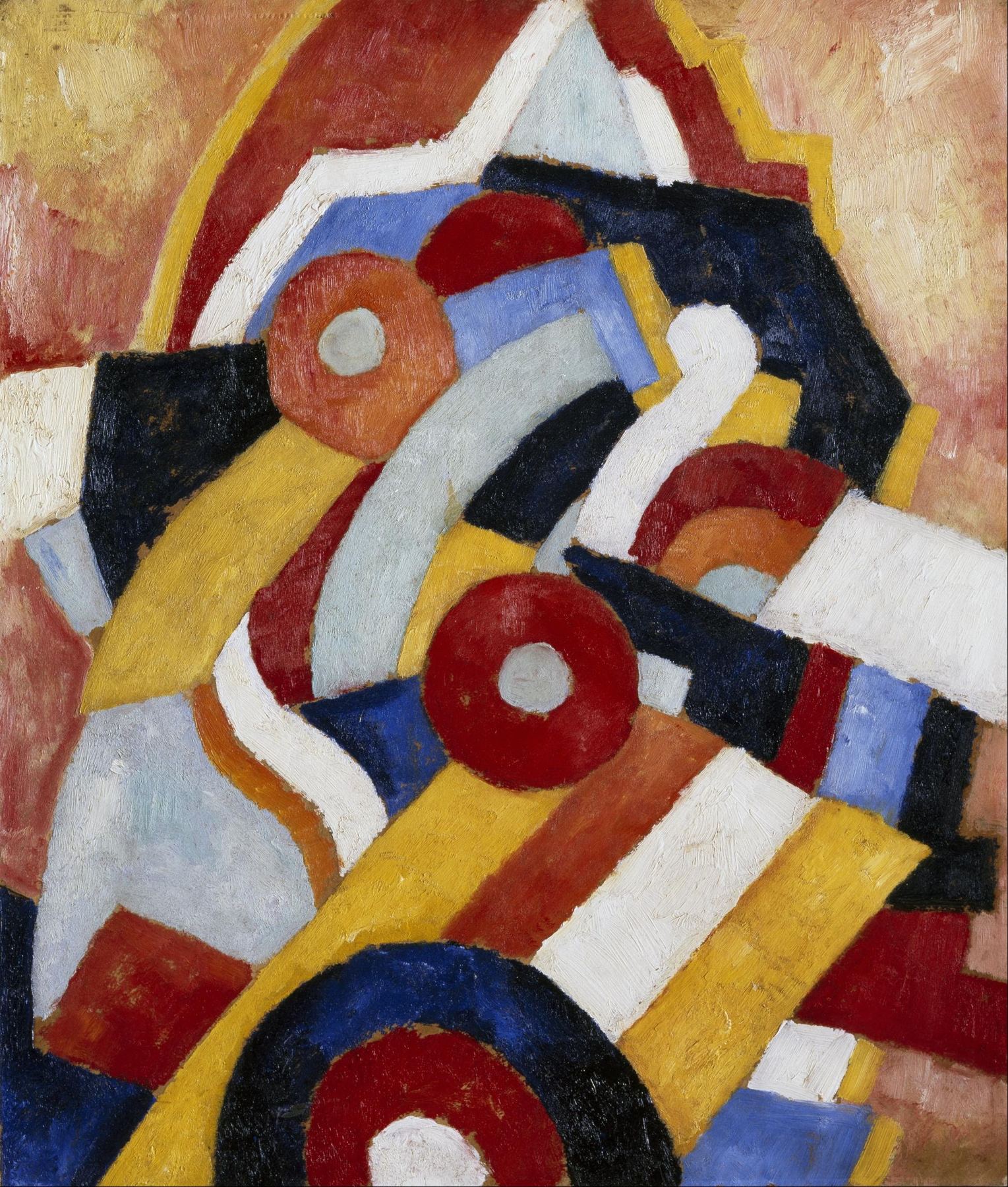
| Marsden Hartley | American | Abstraction; Portrait of a German Officer |
| John Marin | American | Brooklyn Bridge; Lower Manhattan |
| Stuart Davis | American | Lucky Strike; Egg Beater series; New York Mural |
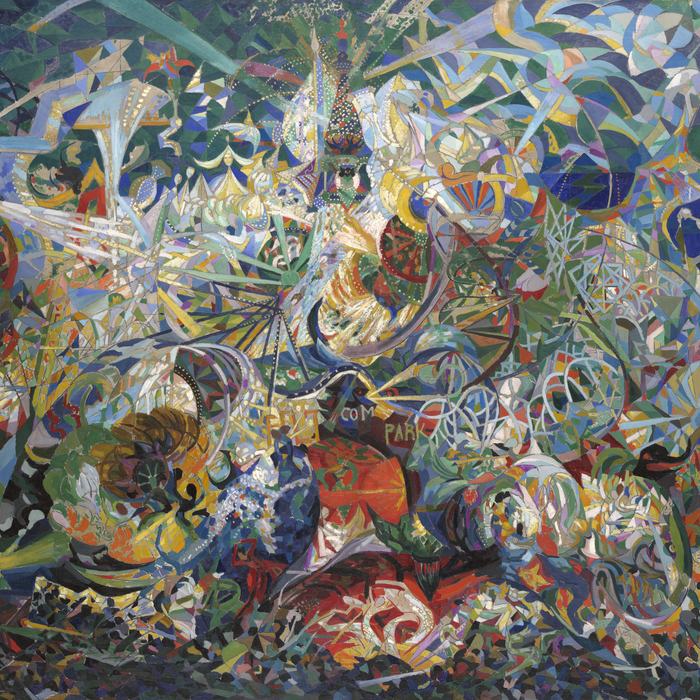
| Joseph Stella | Italian-American | Battle of Lights; Brooklyn Bridge |
| Charles Sheeler | American | American Landscape; Classic Landscape |
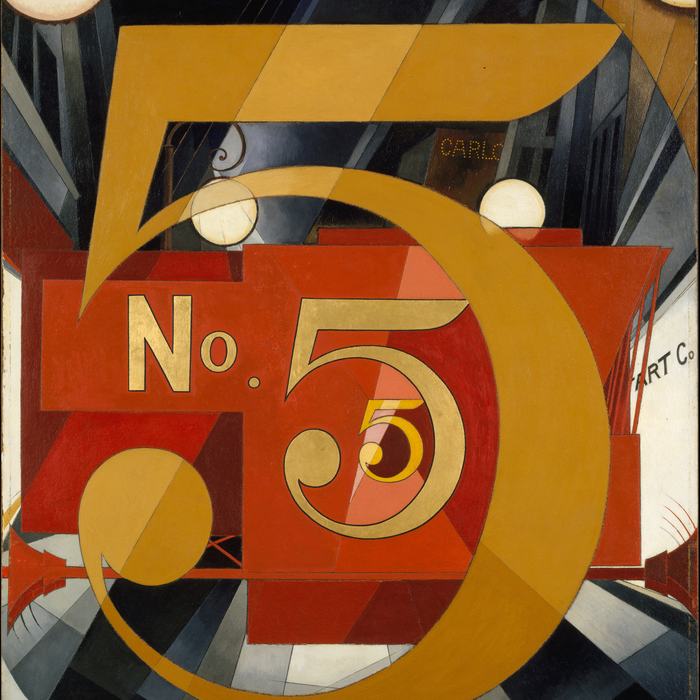
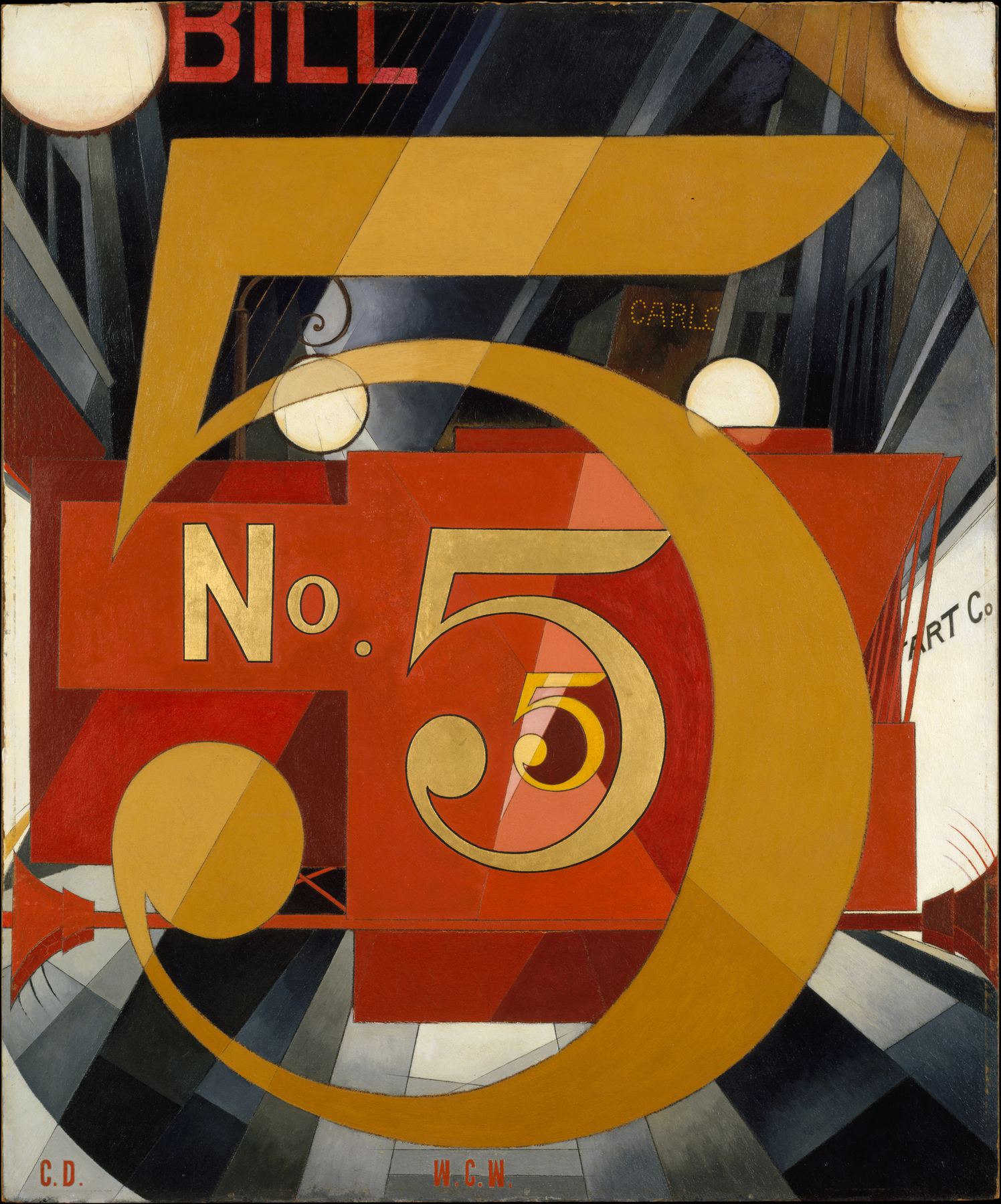
| Charles Demuth | American | I Saw the Figure 5 in Gold; My Egypt |
| Elsie Driggs | American | Pittsburgh; Queensborough Bridge |
| Edward Hopper | American | Nighthawks; Early Sunday Morning; New York Movie |
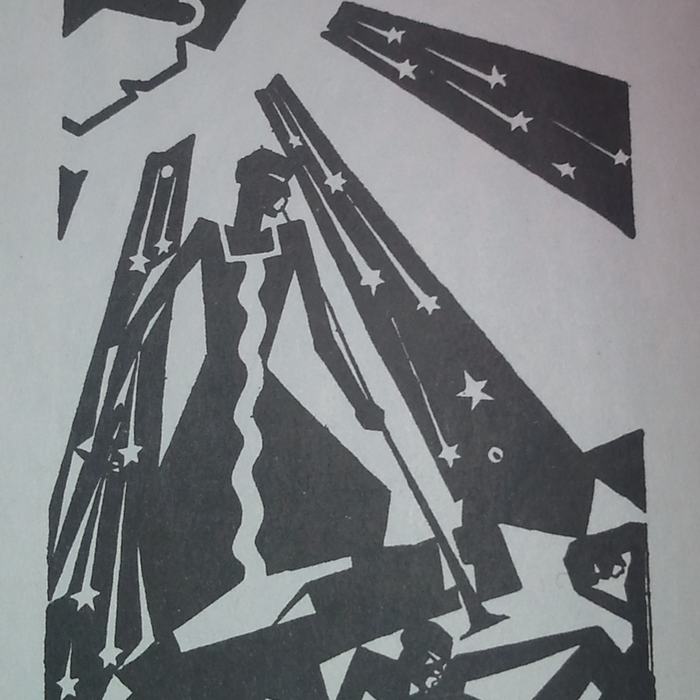
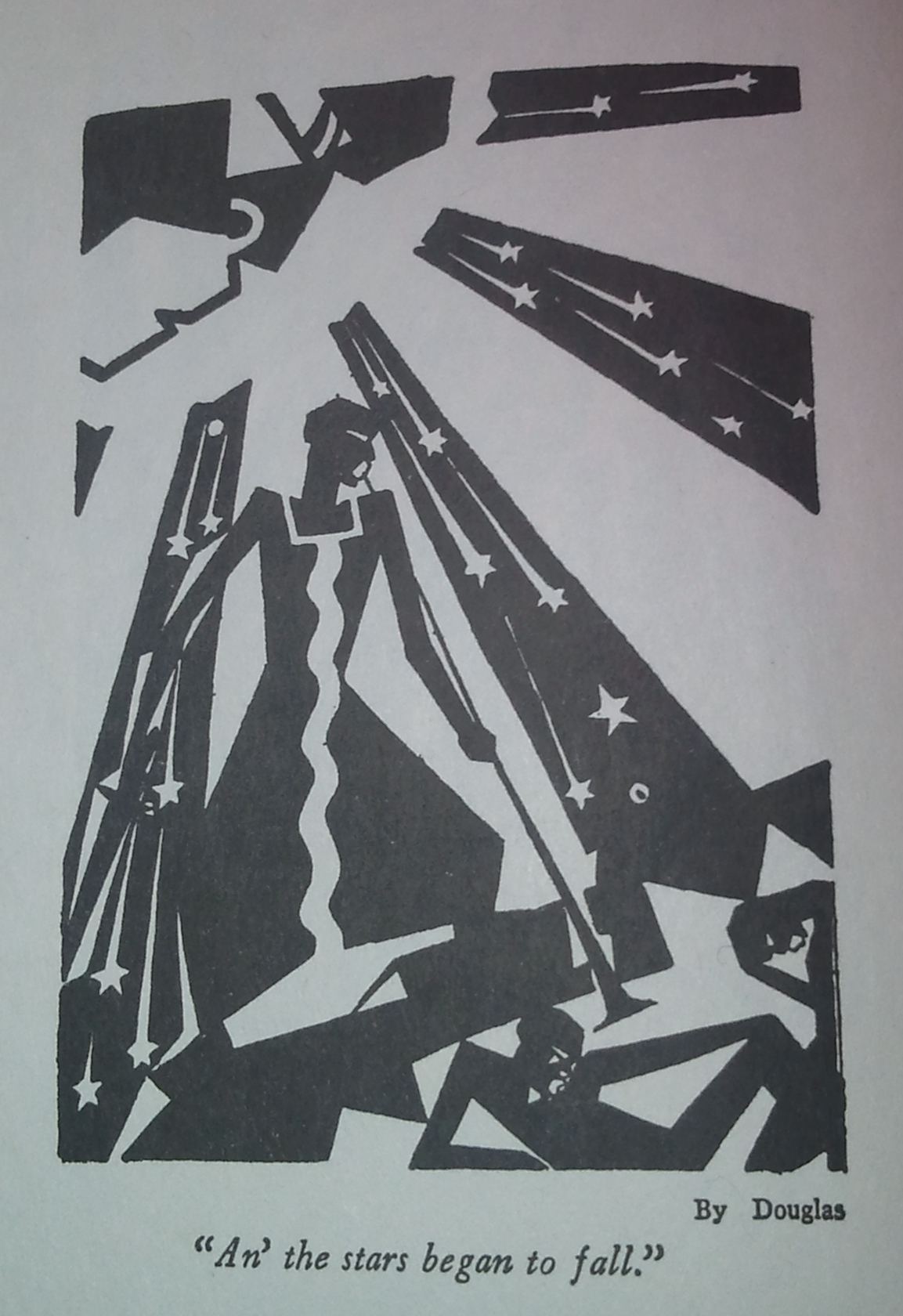
| Aaron Douglas | American | Aspects of Negro Life; An’ the Stars Began to Fall |
| Augusta Savage | American | Gamin; Lift Every Voice and Sing |
| Archibald Motley | American | Portrait of My Grandmother; Blues; Nightlife |
| Laura Wheeler Waring | American | Anna Washington Derry; Marian Anderson |
| Awa Tsireh | American (San Ildefonso Pueblo) | Basket Dancer; Two Kossa |
| Chiura Obata | Japanese-American | World Landscape Series; Yosemite works |
| Miki Hayakawa | Japanese-American | Mademoiselle M; Portrait studies |
| Hisako Hibi | Japanese-American | Topaz landscapes; Barrack Room |
| Miné Okubo | Japanese-American | Citizen 13660; wartime drawings |
| Alice Trumbull Mason | American | Disrupted Forms; abstract prints |
| Lee Krasner | American | Little Image paintings; Composition |
| Thomas Hart Benton | American | America Today; A Social History of Missouri |
| Diego Rivera | Mexican | Detroit Industry; Pan American Unity |
Abstraction did not mean leaving the world
John Marin made watercolour behave like a restless city. In Brooklyn Bridge, transparent washes, charcoal braces and slanting accents do not illustrate engineering detail so much as stage pressure. Marin described buildings as masses that pushed and pulled against one another. The Met connects the picture to his first fully personal phase around 1912 and to his belief that the city possessed a life beyond the people moving through it.[15] The paper’s uncovered areas are active pauses; the image seems to lean, recover and lean again.
Marin’s modernism matters because it refuses the choice between place and abstraction. The bridge remains identifiable, yet perception arrives as force, rhythm and bodily adjustment. Watercolour’s speed and translucency suit this unstable balance. A heavier oil surface would tell a different story.
Arthur Dove found abstraction in weather, growth, sound and the movement of water. He called many works “extractions,” a word that suggests taking relations from experience rather than copying objects or fleeing them. His materials included oil, wax emulsion, collage and found matter. In the late Space Divided by Line Motive, opaque zones of saturated colour interlock across the canvas. The National Gallery places the painting within Dove’s continued search for a more universal abstract language during the early 1940s, despite serious illness.[16]
Dove’s titles are often clues rather than solutions. A shape may begin with moonlight or plant growth but cannot be translated back into a diagram of nature. Looking should move between recognition and sensation: where does a line gather energy, where does colour seem to thicken, and what does the material surface do that the title cannot explain?
Marsden Hartley’s abstractions make private identity and international history inseparable. In Berlin he encountered German Expressionism, military display and an urban queer culture that offered forms of belonging unavailable at home. His War Motifs use flags, crosses, initials, numbers and ornamental emblems. Berlin Abstraction belongs to a group connected with Lieutenant Karl von Freyburg, Hartley’s cherished friend who died during the First World War. National Gallery research reads the sequence as elegiac and multivalent, joining queer attachment, militarism, portraiture and conflict rather than allowing one code to cancel the others.[17]
The paintings are not portraits because a hidden likeness waits beneath their geometry. They are portraits because signs, colours and remembered affiliations can carry a person’s presence. Their brilliant order is also unstable: mourning attaches itself to the spectacle of the force that produced the death. Hartley’s later return to Maine did not purify him of Europe. It added another identity to a career built through travel, loss and strategic self-presentation.
Georgia O’Keeffe’s early charcoal drawings offer a different beginning. Arthur Wesley Dow’s teaching encouraged composition through relations of line, mass and tonal value rather than imitation. While working as a teacher in South Carolina and Texas, she began nonfigurative drawings in 1915; Stieglitz exhibited them at 291 the following year. A Spanish account from the Museo Thyssen-Bornemisza places these experiments beside the flowers and New York skyscrapers that made her one of the most visible avant-garde artists in the United States.[18]
O’Keeffe enlarged, cropped and simplified natural forms, but enlargement is not disclosure of one secret sexual symbol. Colour, interval and scale make looking newly physical. Her skyscraper pictures convert height, glare and optical interruption into an experience of the city. Her New Mexico work arose from repeated travel and sustained attachment, not from finding an empty land. Buildings, bones, hills and sky record a specific way of selecting from an inhabited region.
The Centre Pompidou’s French retrospective framed O’Keeffe across several moments: an inventor of American modernism in the 1920s, a participant in 1930s arguments over national identity, and a later precursor of hard-edge reduction.[19] That long view is useful because it prevents one famous motif from swallowing seven decades of work. It also restores her agency beyond the roles of Stieglitz’s model, wife or discovery.
A city of signs, products and engineered wonder
Stuart Davis learned from Robert Henri before the Armory Show redirected his attention. He did not exchange the street for pure form. He brought cigarette packets, newspapers, garages, shipping, jazz, lettering and storefront colour into an evolving Cubist language. The Egg Beater paintings begin with a fan, rubber glove and eggbeater fixed to a studio table, then compress those objects into intervals of flat shape. The Whitney describes how ordinary products and advertising supplied a distinctly American vocabulary without ceasing to be abstraction.[20]
Davis treated Realism and abstraction as a false choice. A painting could be constructed from observed things while refusing illusionistic space. His 1918 Multiple Views still carries high colour and thick handling, but the National Gallery relates its broken space to the avant-garde work he had studied since 1913.[21] Across his career, Cubism became a working grammar rather than a borrowed period look.
Jazz is often invoked for Davis because syncopation, recurrence and variation help describe his compositions. The comparison works best when it remains precise. Letter fragments return like motifs; hard colours establish beats; a shape reappears altered rather than simply repeated. The paintings do not illustrate a particular performance. They construct visual time from the commercial environment.
Joseph Stella saw the modern city as immigrant spectacle. Born in southern Italy, he moved to New York and later encountered Futurism in Europe. His Brooklyn Bridge pictures translate cables and Gothic arches into shafts, nets and luminous verticals. The Whitney notes that he alternated between bold industrial geometry and lyrical symbolic art instead of binding himself to one school.[22] The bridge could be engineering, shrine and threshold at once.
In Coney Island, the amusement park becomes a circular storm of electric colour. Fragmented planes convey light, crowd and mechanical motion, while the tondo format recalls Renaissance sacred imagery.[23] Stella makes mass entertainment both intoxicating and overwhelming. His modern America is not inherited calmly; it is encountered through migration, awe and sensory excess.
Precisionism offered another way to organise the machine age. Charles Sheeler, Charles Demuth, Elsie Driggs and associated artists used hard contours, reduced detail and controlled surfaces while retaining recognisable factories, grain elevators, barns, houses and objects. The Met stresses that the field was not formally organised and that its attitudes toward technology could range from admiration to unease.[24] Exact appearance never guarantees a single politics.
Edward Hopper demonstrates how fully a realist could be modern. He selected from New York rather than recording it whole: elevated tracks, windows, offices, theatres, bridges and isolated rooms become arrangements of light and withheld narrative. Whitney research on his city pictures emphasises the slow deliberation through which impressions were refined. New York could remain intensely observed while conveying broader sensations of metropolitan life.[25]
Hopper’s emptiness differs from Precisionist polish. Edges may be clear, but human time weighs on them. A lit interior exposes figures without explaining their relationships; a street corner feels both familiar and inaccessible. The modernity lies in partial knowledge, cropping and the spectator’s position—not in the presence of a new machine.
The Depression did not produce one American Scene
The stock-market crash changed patrons, subjects and expectations. Artists faced unemployment, political conflict and the question of public relevance. Some turned to labour, protest and social documentation; others sought rural continuity, local history or abstraction. The period’s realism was not a single conservative reaction against experiment.
Thomas Hart Benton’s mural cycle America Today fills a room with factories, mines, farms, cities, leisure and transport. Bodies twist and surge through compressed spaces derived partly from sixteenth-century Mannerism. The Met’s study shows how the cycle combines direct observation with a highly artificial rhythm and later became central to Benton’s Regionalist reputation.[26] Its breadth is ambitious, but no panorama can represent a nation neutrally. Ask who works, who rests, who directs machinery and who appears as type rather than individual.
Regionalism is most closely associated with Benton, John Steuart Curry and Grant Wood, yet its boundaries and politics were never uniform. Rural subjects could resist metropolitan authority, market a reassuring national image or expose the strangeness of local custom. National Gallery research places artists such as Horace Pippin and Marguerite Zorach within the modernist dilemma of being simultaneously inside and outside categories of region, folk art and professional culture.[27] Regional knowledge is not the same as isolation.
Social Realists made strikes, unemployment, racial violence, crowded streets and industrial power visible. Their images often circulated as prints and magazine illustrations, where low cost and multiplication changed their public role. A work could advocate reform without becoming an instruction sheet; irony, grotesque distortion and montage left space for conflict. Political commitment is a context for form, not a substitute for examining it.
Black modernism changes the centre
American Modernism cannot be surveyed accurately if Black art enters only when white institutions begin collecting it. The Harlem Renaissance grew from the Great Migration, New Negro thought, expanding Black cities, publishing, music, theatre, education and political organisation. It reached Chicago, Washington, Paris and other centres while Harlem served as an extraordinary concentration of people and ideas.
Aaron Douglas developed a graphic language of silhouetted bodies, concentric light, angular rhythm and layered historical time. The Smithsonian describes how he combined Cubist structure, Art Deco dynamism and African and African American imagery across illustration, painting and mural practice.[28] Those elements do not merge into decorative style alone. They make a modern public history capable of carrying forced migration, labour, music, oppression and aspiration.
The Met now presents the Harlem Renaissance as the first international modern-art movement led by African Americans, extending well beyond one New York neighbourhood. Its publication joins Aaron Douglas, Charles Alston, Augusta Savage and William H. Johnson with artists who chose classical portraiture to give Black subjects dignity and interiority.[29] This expanded definition matters: modernity is not measured by how closely an artist approaches abstraction.
Douglas’s Let My People Go reworks designs made for James Weldon Johnson’s God’s Trombones. A beam of light divides a field of lavender and gold as Moses leads the Israelites from bondage. The biblical story had long carried African American meanings of enslavement and liberation. The Met connects the work to the Great Migration and Alain Locke’s New Negro ideal, while acknowledging that the museum itself failed to collect Harlem Renaissance art during the movement’s lifetime.[30] Institutional absence is evidence about the museum, not about the art’s importance.
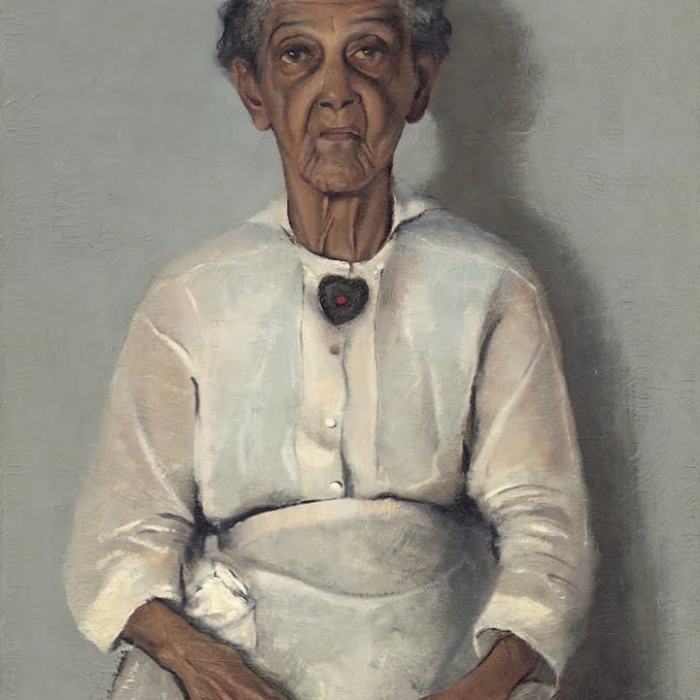
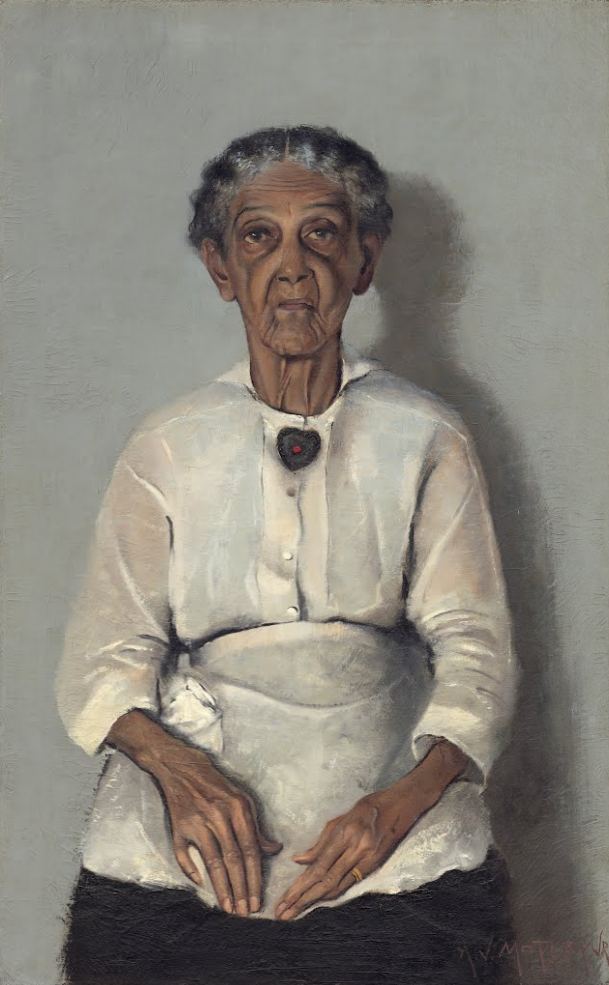
Archibald Motley took another path. His portraits attend to complexion, age, dress and class with controlled modelling; his Bronzeville nightlife pictures press dancers, tables, signs and electric colour into restless social space. The National Gallery’s Portrait of My Grandmother preserves the sitter’s direct gaze, lined face and carefully described clothing without turning her into a sociological symbol.[31] Motley’s modernism resides in both psychological portraiture and the chromatic theatre of urban pleasure.
Augusta Savage joined artistic invention to teaching and institution-building. For the 1939 New York World’s Fair she designed Lift Every Voice and Sing, widely called The Harp: robed singers rise like strings above a kneeling figure, translating James Weldon Johnson and J. Rosamond Johnson’s anthem into collective form. The monumental original was destroyed after the fair, though smaller versions preserve its design.[32] Its loss shows how material survival shapes the canon. Savage’s schools and leadership carried influence that an inventory of surviving sculpture cannot measure.
Black modernism included debate. Some artists looked to African sculpture, others to European academic traditions, folk practices, Mexican murals or contemporary photography. Portraiture could counter racist caricature; nightlife could claim complex modern pleasure; history painting could unite ancestral memory and political futurity. No one style owned racial authenticity.
Indigenous and transpacific modernisms
Older surveys often used Indigenous objects as formal resources for non-Native artists while excluding living Native practitioners from modernism. Awa Tsireh, also known as Alfonso Roybal, makes that structure impossible to sustain. His watercolours draw on San Ildefonso Pueblo knowledge and geometric ceramic design while selectively engaging Japanese prints, South Asian miniatures and international modern form. The Smithsonian notes that his images of ceremonial dancers affirmed cultural survival when federal authorities were restricting Pueblo religious practice.[33]
Flat space and outlined figures should not be mistaken for simplicity or timeless tradition. They are choices made under colonial conditions for viewers within and beyond the community. The work is modern because it negotiates contemporary power, materials and audiences—not because it resembles a metropolitan style.
Chiura Obata’s career similarly disrupts an East-versus-West map. Born in Japan, he arrived in California in 1903, became an important teacher at the University of California, Berkeley, and worked through ink, watercolour, mineral pigment and print. The Smithsonian presents his synthesis of artistic traditions as a refusal of rigid American/European and Japanese/Asian categories. His career also passed through anti-immigration law and the wartime incarceration of Japanese Americans, where he helped establish art schools.[34]
Landscape in Obata’s work is an encounter with duration, weather and “Great Nature,” not a picturesque possession of empty territory. Mineral colour and Japanese printing collaboration change how Yosemite and the Sierra are materially imagined. His teaching and transpacific production belong to American art even when older national surveys placed them elsewhere.
Miki Hayakawa, Hisako Hibi and Miné Okubo were among the visible Japanese American artists of the interwar Bay Area. Hayakawa and Hibi studied at the California School of Fine Arts; Okubo trained at Berkeley and later made Citizen 13660, her graphic account of forced removal and incarceration. A Smithsonian exhibition restores their place in modernism while showing how exclusion-era law shaped careers and later remembrance.[35] They should not be defined only by wartime injury: portraits, interiors, landscapes, social realism and changing colour languages preceded and outlived it.
Such cases alter the map. New York was indispensable, but it was not the only generator of modern art. California schools, Pueblo communities, Chicago neighbourhoods, HBCUs, Philadelphia collections and Southwestern networks sustained practices that a Manhattan-centred story could overlook.
Women built abstraction’s infrastructure
O’Keeffe’s fame can create the false impression that one exceptional woman overcame an otherwise neutral field. In the 1930s and 1940s, women abstractionists faced restricted exhibition access, hostile criticism and museums inclined toward male artists or realist work. They responded by organising. The Whitney’s research on women and abstraction reconstructs networks around the American Abstract Artists, Atelier 17, schools and print workshops, with figures including Alice Trumbull Mason, Esphyr Slobodkina, Suzy Frelinghuysen, Perle Fine, Lee Krasner and Louise Nevelson.[36]
Works on paper were especially important because printmaking encouraged experiment and collaboration, yet histories that privilege large oil paintings often made this labour less visible. Women wrote theoretical texts, arranged exhibitions and held leadership roles. Their modernism was not a waiting room for the men of Abstract Expressionism. It supplied institutions, arguments and techniques that changed what postwar abstraction could become.
Gender also affected subject and reception. Florine Stettheimer’s intimate salon pictures, Elsie Driggs’s industrial views, Georgia O’Keeffe’s flowers and Helen Torr’s abstractions were read through different expectations than comparable work by men. A careful survey asks how access, money, marriage, teaching work and critical stereotype shaped what could be made and preserved without treating biography as an explanation of form.
Public patronage and art for a wider audience
The Federal Art Project began in 1935 within the Works Progress Administration and operated through national, state and local structures. It employed artists, supported community art centres and generated murals, posters, paintings and prints. The Library of Congress holds more than 230 fine prints from its Graphic Arts Division and records a programme that produced vast numbers of impressions for schools, libraries and public offices.[37]
Reproducibility was part of the democratic ambition. A print could travel where a unique canvas could not. At the same time, federal support did not make every image official propaganda. Artists negotiated project rules, local supervisors, political conviction and their own formal interests. Public patronage expanded opportunity while remaining vulnerable to censorship, bureaucracy and changing congressional support.
Murals demanded another relation to viewers. Architecture fixed scale and sequence; workers, students or post-office visitors encountered art during ordinary activity. Fresco revived an old technique for modern histories. The mural’s promise of collective address could serve corporate celebration, federal narrative, community memory or protest, and sometimes several at once.
Photography had its own modernisms
Walker Evans sought a descriptive style at once direct and composed. Roadside signs, inexpensive rooms, small-town façades, churches and faces became an archive of vernacular America. During his work for the Resettlement Administration and Farm Security Administration, he did not simply obey a publicity script. The Met emphasises his independent itineraries and his conversion of ordinary subjects into carefully sequenced books, especially American Photographs and Let Us Now Praise Famous Men.[38]
Evans’s restraint is a style, not the absence of one. Frontality, spacing and serial order encourage comparison while resisting easy sentiment. The camera records abundant detail, but choice of moment, negative, print, caption and sequence still constructs meaning. Documentary truth is an ethical relation to evidence, never a view without an author.
Berenice Abbott returned from Europe in 1929 and saw New York as a city undergoing radical change. Her album of 266 small prints organised skyscrapers, bridges, elevated railways and neighbourhood streets by subject and location. The Met identifies it as the turning point toward Changing New York, the federally supported project she pursued from 1935 to 1939.[39] The album makes modernity cumulative: one façade is an observation, while hundreds become an argument about time.
On the West Coast, Group f/64 announced a different photographic programme in 1932. Ansel Adams, Imogen Cunningham, Consuelo Kanaga, Alma Lavenson, Sonya Noskowiak, Edward Weston and colleagues advocated sharp focus, small apertures, contact printing and glossy paper. Their subjects ranged from landscape and plants to industry, household objects and bodies. The group’s name described a technical choice but also a belief that the camera’s precision should not be disguised as painterly effect.[40]
Paul Strand connects photographic experiment and social attention. His early abstractions, elevated-city views and street portraits gave geometric order to modern life without sacrificing human presence. Fundación MAPFRE’s Spanish study emphasises his encounter with 291, later use of the large-format camera and command of the darkroom as foundations for photography with its own aesthetic authority.[41] Blind is forceful because form and encounter remain inseparable, not because one decorates the other.
Sculpture participated in the same debates. John Storrs translated skyscraper setbacks, polished metal and machine-like balance into compact abstract forms. His work moved between Paris and the United States and appeared in the Société Anonyme’s 1926 international exhibition. The Whitney associates his architecture-minded sculpture with Art Deco while retaining its independent modernist experimentation.[42] Modern form occupied rooms and public space as well as picture planes.
Museums did not merely preserve the canon
What now appears central to American Modernism often became central through gifts, bequests, exhibitions and changing policy. The National Gallery opened in 1941 without modern art on view. Its later holdings grew through the interests of curators and patrons, the Stieglitz bequest, major gifts and eventually an institutional willingness to place American modernism beside European art.[43] A collection is a history of decisions as much as a store of masterpieces.
Modern museums faced a paradox: how could an institution devoted to permanence collect an art that defined itself as a break with history? National Gallery research traces policies that delayed the accession or display of living artists and the widespread interwar assumption that American work was derivative of Europe.[44] Those judgements affected which artists were studied, purchased and reproduced.
The early Whitney deliberately collected across conservative portraiture, urban realism and abstraction and installed its rooms with colour and domestic informality rather than severe white walls. Its founding collection expressed Gertrude Vanderbilt Whitney and Juliana Force’s support for living artists, yet subsequent reassessment has also exposed missing women and artists of colour.[45] Institutional self-correction should not be mistaken for proof that the original field was inclusive.
Mexico remade the meaning of American art
The border does not contain this history. After the Mexican Revolution, public murals by José Clemente Orozco, Diego Rivera and David Alfaro Siqueiros offered artists in the United States alternatives to both academic history painting and private avant-garde experiment. Mexican artists worked on both coasts and in Detroit; artists from the United States travelled to Mexico, assisted on projects and studied fresco, political imagery and pre-Hispanic art.
The Whitney’s Vida Americana research demonstrates the depth of this influence between 1925 and 1945. Mexican muralism encouraged epic narratives about labour, national history and racial injustice, shaping artists including Aaron Douglas, Elizabeth Catlett, Philip Guston, Isamu Noguchi, Jackson Pollock, Ben Shahn, Charles White and Hale Woodruff.[46] This was not an exotic supplement to American modernism. It changed the scale, materials, audience and politics of art made in the United States.
A Spanish guide to the exhibition identifies the range of questions the exchange made newly visible: technology and productivity, economic inequality, labour rights, racialised violence and the rise of fascism.[47] These themes crossed languages and borders because the crises did. Artists disagreed about Communism, nationalism and public persuasion, but Mexico supplied a living model of modern art addressed to ordinary people.
Influence was not ownership. United States artists could admire Indigenous Mexican forms while detaching them from communities and politics. Commissions could invite Rivera and then censor him. The most responsible account therefore follows actual journeys, workshops, assistants, techniques and contracts rather than claiming a vague “primitive” energy.
The 1945 threshold
The Second World War changed artistic geography. European refugees brought Surrealism, Bauhaus teaching and abstract theory into denser contact with United States artists. Existing schools, the American Abstract Artists, federal-project experience, Mexican mural workshops and earlier experiments by Dove, O’Keeffe, Davis and many women abstractionists all contributed to the environment from which postwar painting emerged.
A Spanish Met account of Abstract Expressionism locates that movement amid Depression-era Regionalism and Social Realism, WPA employment, European modernism and new institutions such as the Museum of Non-Objective Painting.[48] That context should not be converted into inevitability. Jackson Pollock did not complete a relay race whose earlier runners existed only to hand him abstraction. Postwar art selected, transformed and sometimes obscured its prewar inheritances.
American Modernism after 1945 did not disappear. Hopper, Davis, O’Keeffe, Abbott, Obata and many others continued working. The threshold marks a shift in critical attention, market power and international status. It is a useful ending for a survey only if the reader remembers that lives and practices crossed it.
How to look at American Modernism
Begin with the medium. A transparent watercolour, glossy contact print, lithograph, fresco and polished steel object organise attention differently. Reproduction can make them seem equally flat and equally sized, erasing much of the argument.
Then identify the work’s infrastructure. Was it made for a gallery, magazine, mural wall, federal archive, salon, book or community centre? Who financed it, selected it and encountered it? Modernism happened through distribution as much as invention.
Look for translation rather than influence alone. If Cubist geometry appears in a city picture, ask what the local subject, colour and material make it do. If Pueblo design or Mexican mural practice enters the account, ask whose knowledge is being used and whether living artists and communities retain agency.
Notice what the picture excludes. A silent factory may omit labour; a national mural may turn people into types; a landscape may imagine occupied land as empty. Absence can be meaningful without proving a single intention.
Finally, resist ranking abstraction above recognition. A portrait can reconstruct modern selfhood; a photograph can make serial time; a regional landscape can destabilise national myth. The most revealing comparison is often between different answers to the same modern pressure.
Essential Precisionist works
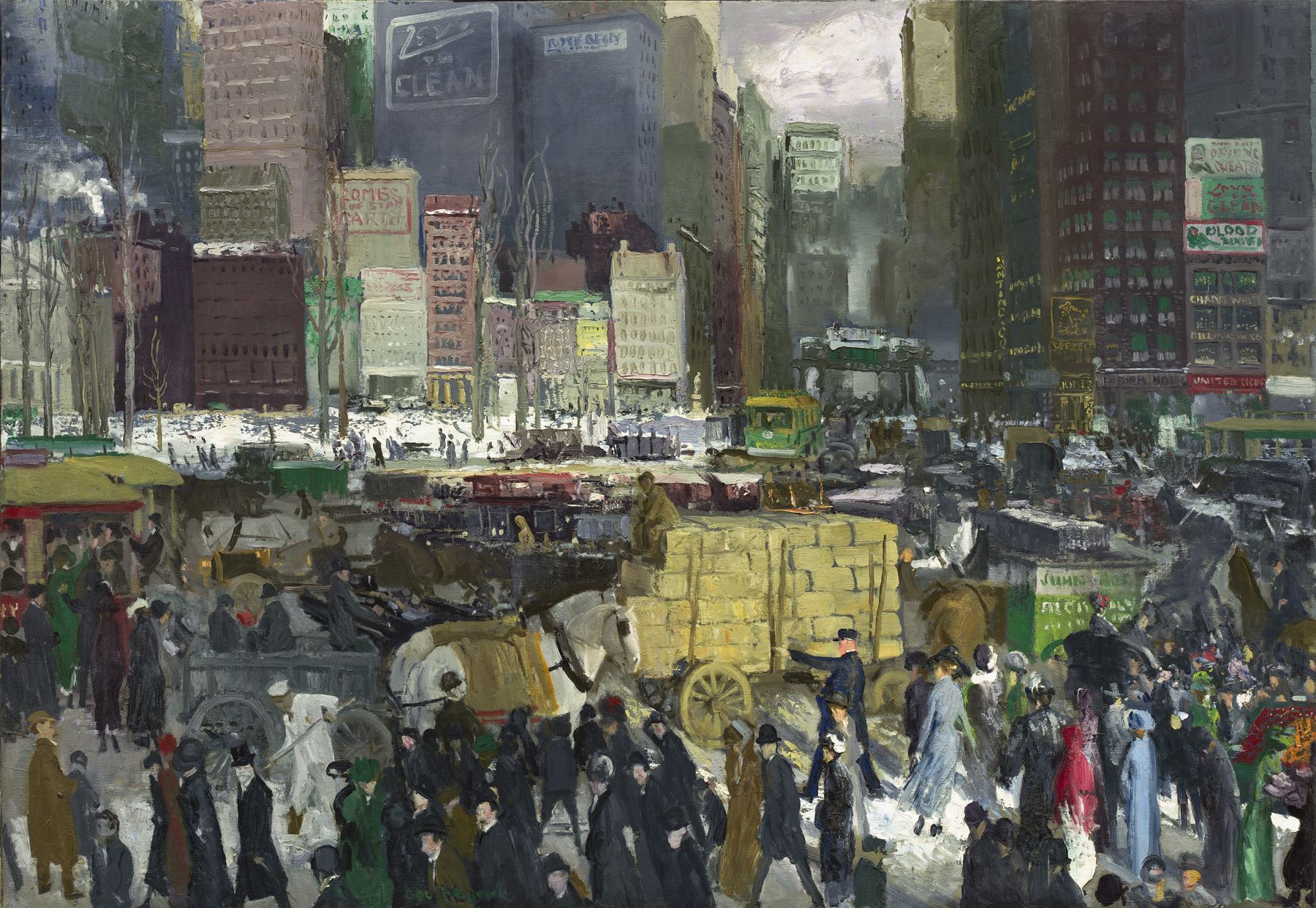
New York
George Bellows · 1911 · Bellows compresses crowds, traffic, architecture and winter atmosphere into a forceful urban panorama.
Battle of Lights, Coney Island, Mardi Gras
Joseph Stella · 1913–14 · Stella turns Coney Island into a vortex of electric light, mechanical motion and immigrant wonder.
Abstraction
Marsden Hartley · c. 1914 · Hartley makes signs, colour and compressed geometry carry private identity and international experience.
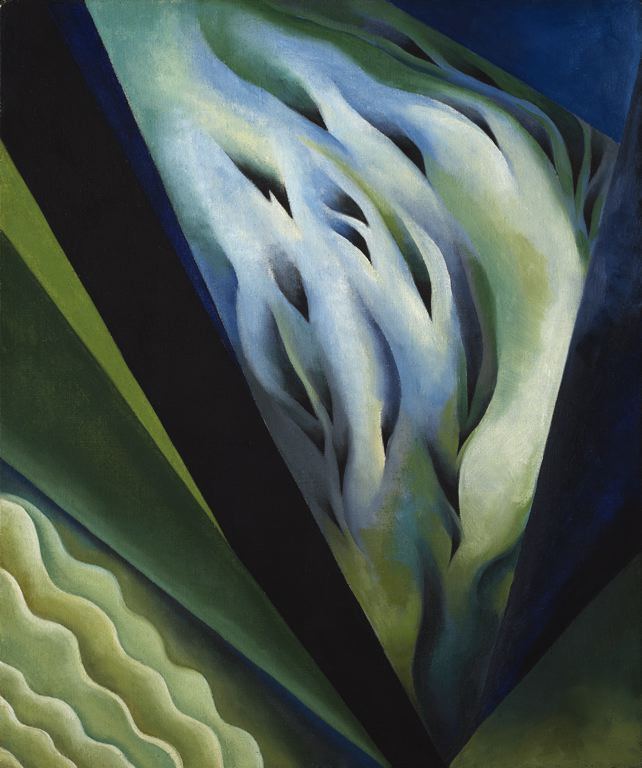
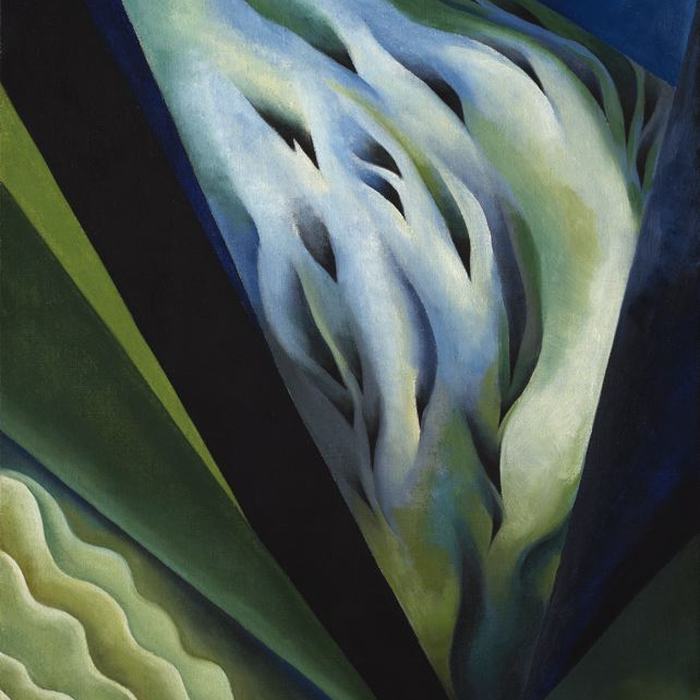
Blue and Green Music
Georgia O’Keeffe · 1919–21 · O’Keeffe lets colour, interval and curving form create sensation without abandoning remembered experience.
I Saw the Figure 5 in Gold
Charles Demuth · 1928 · Demuth joins lettering, advertising colour, portraiture and Cubist structure in a compact American icon.
An’ the Stars Began to Fall
Aaron Douglas · 1925 · Douglas combines silhouette, radiating form and book illustration to imagine Black history as modern visual culture.
Portrait of My Grandmother
Archibald Motley · 1922 · Motley gives monumental dignity and psychological specificity to a Black sitter excluded from older canons.
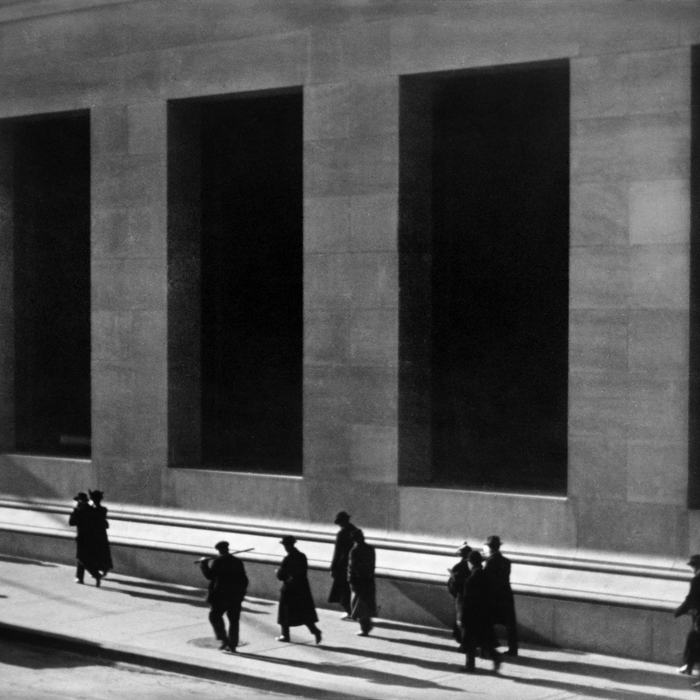
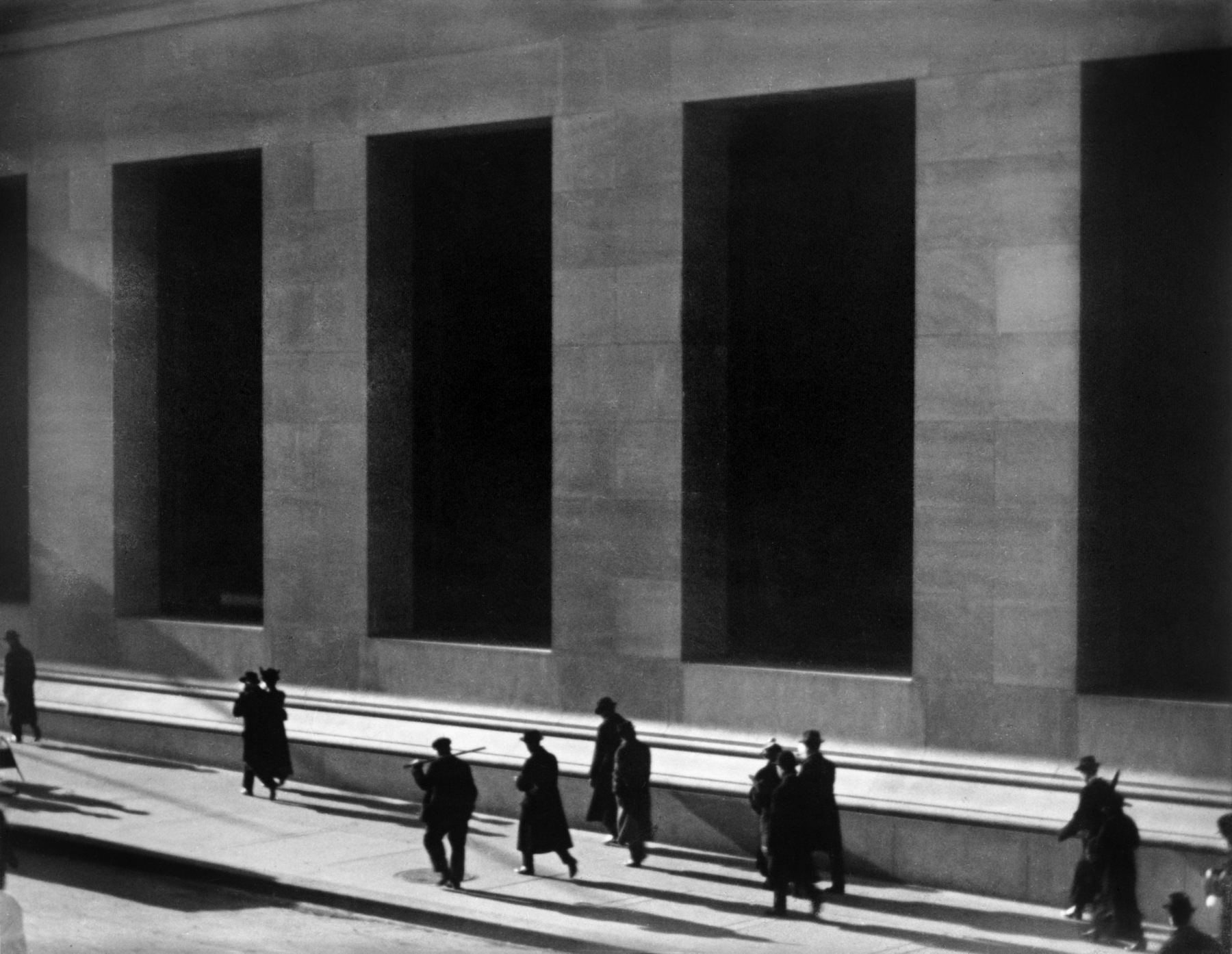
Wall Street, New York
Paul Strand · 1915 · Strand makes architecture, shadow and pedestrians into a rigorous statement of photographic modernism.
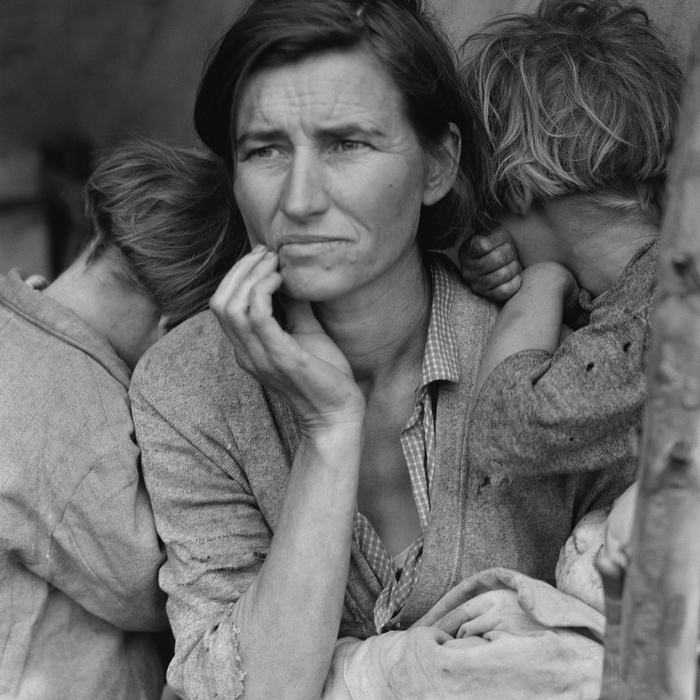
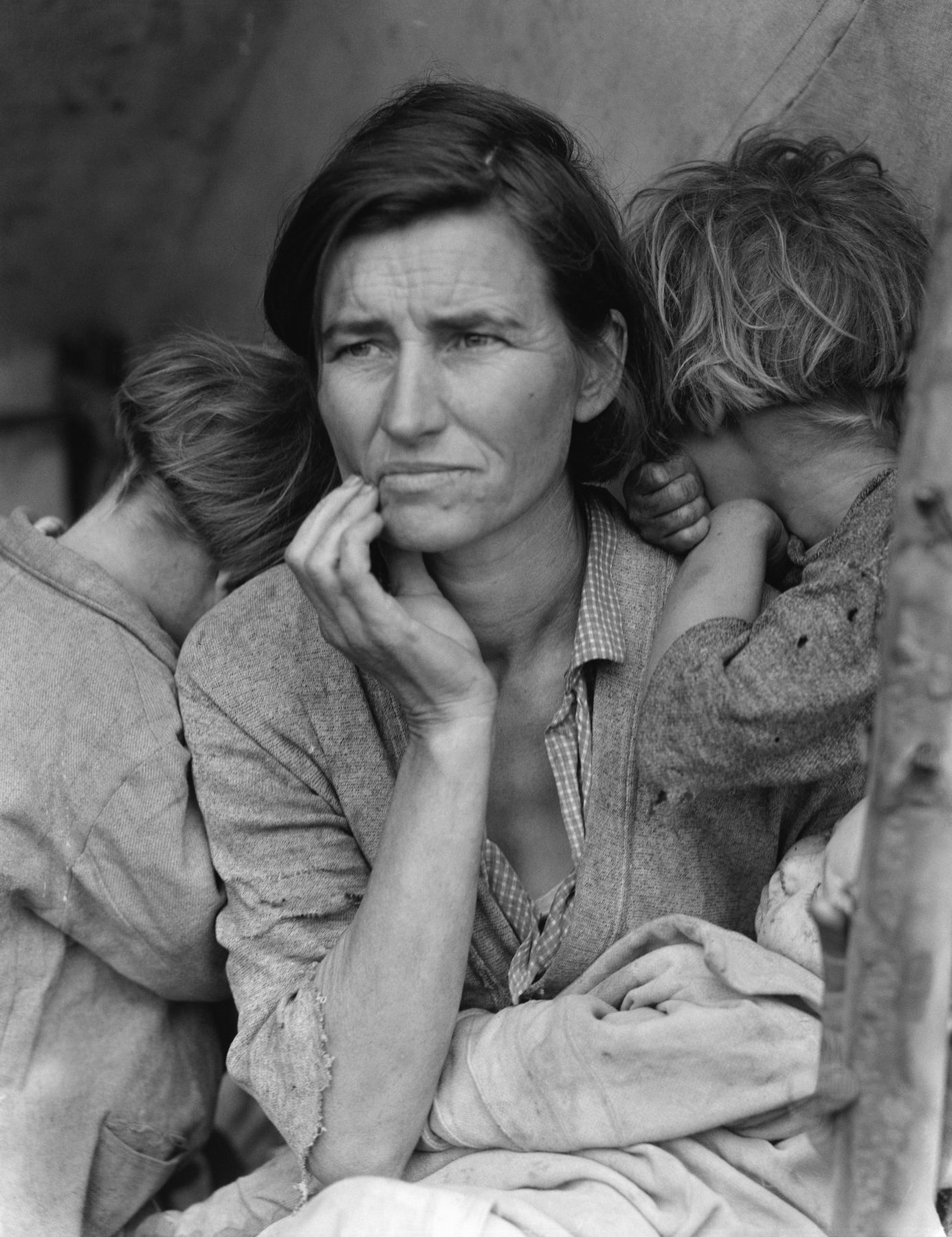
Migrant Mother
Dorothea Lange · 1936 · Lange’s federal-project photograph shows how documentary form, public purpose and individual encounter could converge.
Where to see American Modernism
Displays change. Check current gallery and access information before travelling.
- 01
Whitney Museum of American Art, New York
The founding collection, early modernist holdings and continuing reappraisals make the Whitney the most concentrated place to study competing definitions of American art. Look across urban realism, Precisionism, abstraction and Social Realism rather than following one stylistic line.
New York, USA
Broad holdings across early abstraction, urban realism, Harlem Renaissance art and interwar modernismsVisit official website - 02
Museum of Modern Art, New York
MoMA places United States artists within international modernism and is essential for photography, painting, film, design and the institutional taxonomies that shaped twentieth-century art. Its history is as instructive as individual icons.
New York, USA
Painting, photography, film, design and the institutional history of American modern artVisit official website - 03
Metropolitan Museum of Art, New York
The American Wing, modern galleries, photography collection and Harlem Renaissance acquisitions allow comparisons across media and across the boundaries older departments once enforced.
New York, USA
Ashcan art, Stieglitz-circle work, Precisionism, photography and America TodayVisit official website - 04
National Gallery of Art, Washington
The Stieglitz Key Set and the online American Paintings, 1900–1945 project support unusually deep study of photography, Hartley, Dove, Davis, Regionalism and the history of collecting American modernism.
Washington, USA
Multiple modernisms, the Stieglitz bequest and extensive American-art scholarshipVisit official website - 05
Philadelphia Museum of Art
Philadelphia’s collection brings the Stieglitz circle into dialogue with artists outside its customary canon. The city’s role in the Armory Show, independent exhibitions and modern design broadens the New York story.
Philadelphia, USA
Davis, Demuth, Duchamp, Hartley, Marin, O’Keeffe and modernist networksVisit official website - 06
Art Institute of Chicago
Chicago is indispensable for Archibald Motley, Georgia O’Keeffe, Grant Wood, Edward Hopper and the many forms of modernism that developed or found audiences beyond Manhattan.
Chicago, USA
O’Keeffe, photography, American modernist painting and works on paperVisit official website - 07
Smithsonian American Art Museum, Washington
The museum’s holdings and research on Aaron Douglas, Awa Tsireh, Chiura Obata and Japanese American women artists make it especially valuable for a more capacious national account.
Washington, USA
Federal art, African American and Indigenous modernisms, sculpture, painting and works on paperVisit official website - 08
Georgia O’Keeffe Museum, Santa Fe
The museum joins artworks, archives and landscape context across O’Keeffe’s long career. It is the best place to move beyond familiar flowers toward her abstractions, buildings, materials and working process.
Santa Fe, USA
O’Keeffe’s career, archive, materials and Southwest contextVisit official website
Suggested books
American Modernism: Highlights from the Philadelphia Museum of Art
Jessica Todd Smith’s compact survey uses painting and sculpture from 1910 to 1950 to make productive comparisons between familiar Stieglitz-circle artists and figures left outside older mainstream histories.[49]
The Great American Thing: Modern Art and National Identity, 1915–1935
Wanda M. Corn follows the period’s desire to invent a national art without treating “America” as an innocent or stable idea. It is especially strong on transatlantic movement, machines, vernacular tradition and self-fashioning.
Modern Art and America: Alfred Stieglitz and His New York Galleries
The National Gallery catalogue reconstructs the exhibitions, publications and relationships through which Stieglitz promoted photography, European modernism and his changing American circle.
American Modernism at the Art Institute of Chicago
This substantial collection study spans painting, sculpture, decorative arts and works on paper. Its Chicago base is a useful corrective to histories that make New York the only meaningful centre.[50]
The Harlem Renaissance and Transatlantic Modernism
The Met’s multi-author catalogue places New Negro artists at the centre of international modern art and follows modern Black representation across cities, media and the Atlantic world.
Frequently Asked Questions
It is a broad name for the many ways artists in the United States responded to modern experience during the first half of the twentieth century. It includes abstraction, realism, photography, printmaking, sculpture, mural art and several more specific movements. It was never one organisation.
There is no universal start date. Around 1900 is useful because urban realists, photographic reformers and independent exhibitors were challenging academic standards. The Armory Show of 1913 was a major accelerator, not the first modern event.
Around 1945 is a practical survey boundary because war, migration and the rise of Abstract Expressionism changed the art world’s centre of gravity. Many prewar modernists continued working well beyond that date.
No. Abstraction was essential, but Hopper’s realism, Harlem Renaissance portraiture, Regionalism, Social Realism and documentary photography were equally serious modern responses. Recognition and experiment often coexist in the same work.
No short list is complete. Major figures include Georgia O’Keeffe, Arthur Dove, Marsden Hartley, John Marin, Alfred Stieglitz, Stuart Davis, Charles Demuth, Charles Sheeler, Edward Hopper, Aaron Douglas, Archibald Motley, Augusta Savage, Joseph Stella, Chiura Obata and many others.
He advanced photography as art, published Camera Work, exhibited European modernism and supported a major circle of United States artists. His influence was enormous, but his galleries represented a selective network rather than the whole national field.
It exposed large audiences in New York, Chicago and Boston to an unprecedented concentration of international modern art. It intensified argument, encouraged some artists and provoked others, but modernist activity was already under way.
It developed modern forms for Black life, history and self-representation through painting, sculpture, photography, illustration and mural art. It was African American-led, international and geographically broader than Harlem, making it central rather than peripheral to the story.
Yes, though older canons often excluded them while borrowing Indigenous design. Artists such as Awa Tsireh worked through contemporary materials, markets and colonial pressures while sustaining specific Pueblo knowledge and community meaning.
Mexican muralists offered powerful models of public scale, fresco technique, social history and political address. Their United States projects and workshops influenced numerous painters, sculptors, printmakers and future postwar artists.
Federal programmes employed artists and supported murals, prints, paintings, posters, photography and community art centres. They expanded audiences and production while also introducing bureaucracy, political pressure and disputes over public purpose.
Photography transformed modern seeing through cropping, seriality, sharp focus, abstraction, documentation and reproducible books and magazines. Stieglitz, Strand, Abbott, Evans, Cunningham, Weston and others developed photographic languages that were not subordinate to painting.
Discussion
Reader Insights
Ask whether an image began as a corporate commission, independent painting, photograph, print or film.
Compare the immaculate structure with the workers, noise, heat and conflict that may sit outside the frame.
Notice how paint, graphite, Conté crayon, lithographic stone and photography create different kinds of exactness.
Join the Conversation
Which work best expands your idea of American Modernism: a city watercolour, an abstract landscape, a Black modern portrait, a Pueblo ceremonial image, a public mural or a documentary photograph? Consider what changes when the story is organised by networks and audiences rather than by one victorious style.
References
- At the Dawn of a New Age: Early Twentieth-Century American Modernism, Whitney Museum of American Art, View Source
- Building the Collection: Multiple Modernisms, National Gallery of Art, View Source
- American Art: The Edith and Milton Lowenthal Collection, Metropolitan Museum of Art, View Source
- La peinture américaine des années 1930, Musée de l’Orangerie (French; consulted in French), View Source
- The Great American Thing: Modern Art and National Identity 1915–1935, Wanda M. Corn / University of California Press, View Source
- The Ashcan School, Metropolitan Museum of Art, View Source
- About the 1913 Armory Show, Smithsonian Institution, View Source
- Alfred Stieglitz and American Photography, Metropolitan Museum of Art, View Source
- Camera Work No. 1, Metropolitan Museum of Art, View Source
- Modern Art and America, National Gallery of Art, View Source
- Alfred Stieglitz and His Circle, National Gallery of Art, View Source
- The Key Set 1918–1937, National Gallery of Art, View Source
- Whitney History, Whitney Museum of American Art, View Source
- Spirit of America: Joaquín Torres-García in New York 1920–1922, Museum of Modern Art / post, View Source
- Brooklyn Bridge, Metropolitan Museum of Art, View Source
- Space Divided by Line Motive, National Gallery of Art, View Source
- Berlin Abstraction 1914/1915, National Gallery of Art, View Source
- Georgia O’Keeffe, Museo Nacional Thyssen-Bornemisza (Spanish; consulted in Spanish), View Source
- Georgia O’Keeffe, Centre Pompidou (French; consulted in French), View Source
- Stuart Davis, Whitney Museum of American Art, View Source
- Multiple Views 1918, National Gallery of Art, View Source
- Joseph Stella, Whitney Museum of American Art, View Source
- Coney Island, Metropolitan Museum of Art, View Source
- Precisionism, Metropolitan Museum of Art, View Source
- Approaching a City: Hopper and New York, Whitney Museum of American Art, View Source
- Thomas Hart Benton’s America Today Mural, Metropolitan Museum of Art, View Source
- Building the Collection: Regionalism and Folk Art, National Gallery of Art, View Source
- Aaron Douglas: African American Modernist, Smithsonian American Art Museum, View Source
- The Harlem Renaissance and Transatlantic Modernism, Metropolitan Museum of Art, View Source
- Let My People Go, Metropolitan Museum of Art, View Source
- Archibald John Motley Jr., National Gallery of Art, View Source
- Lift Every Voice and Sing (The Harp), Metropolitan Museum of Art, View Source
- Acoma War Dancer, Smithsonian American Art Museum, View Source
- Chiura Obata, Smithsonian American Art Museum, View Source
- Pictures of Belonging, Smithsonian American Art Museum, View Source
- Boldness Knew No Limits, Whitney Museum of American Art, View Source
- Fine Prints by Federal Art Project Artists, Library of Congress, View Source
- Walker Evans 1903–1975, Metropolitan Museum of Art, View Source
- Berenice Abbott’s New York Album 1929, Metropolitan Museum of Art, View Source
- Group f/64, Metropolitan Museum of Art, View Source
- Paul Strand, Fundación MAPFRE (Spanish; consulted in Spanish), View Source
- John Storrs, Whitney Museum of American Art, View Source
- American Modernism and the National Gallery of Art, National Gallery of Art, View Source
- National and Modern, National Gallery of Art, View Source
- Breaking Ground: The Whitney’s Founding Collection, Whitney Museum of American Art, View Source
- Vida Americana: Mexican Muralists Remake American Art 1925–1945, Whitney Museum of American Art, View Source
- Vida Americana Spanish guide, Whitney Museum of American Art (Spanish; consulted in Spanish), View Source
- Abstract Expressionism, Metropolitan Museum of Art (Spanish; consulted in Spanish), View Source
- American Modernism: Highlights from the Philadelphia Museum of Art, Jessica Todd Smith / Yale University Press, View Source
- American Modernism at the Art Institute of Chicago, Art Institute of Chicago / Yale University Press, View Source
- American Modernism image records, Wikimedia Commons and Smithsonian American Art Museum: New York (public domain; National Gallery of Art / Wikimedia Commons), Battle of Lights, Coney Island, Mardi Gras (public domain; Yale University Art Gallery / Wikimedia Commons), Abstraction (public domain; Museum of Fine Arts, Houston / Google Art Project / Wikimedia Commons), Blue and Green Music (public domain in the United States; Art Institute of Chicago / Wikimedia Commons), I Saw the Figure 5 in Gold (public domain; Metropolitan Museum of Art / Wikimedia Commons), An’ the Stars Began to Fall (public domain in the United States; The New Negro (1925) / Wikimedia Commons), Portrait of My Grandmother (public domain in the United States; National Gallery of Art / Wikimedia Commons), Wall Street, New York (public domain; Wikimedia Commons), Migrant Mother (public domain, United States federal work; Library of Congress / Wikimedia Commons).