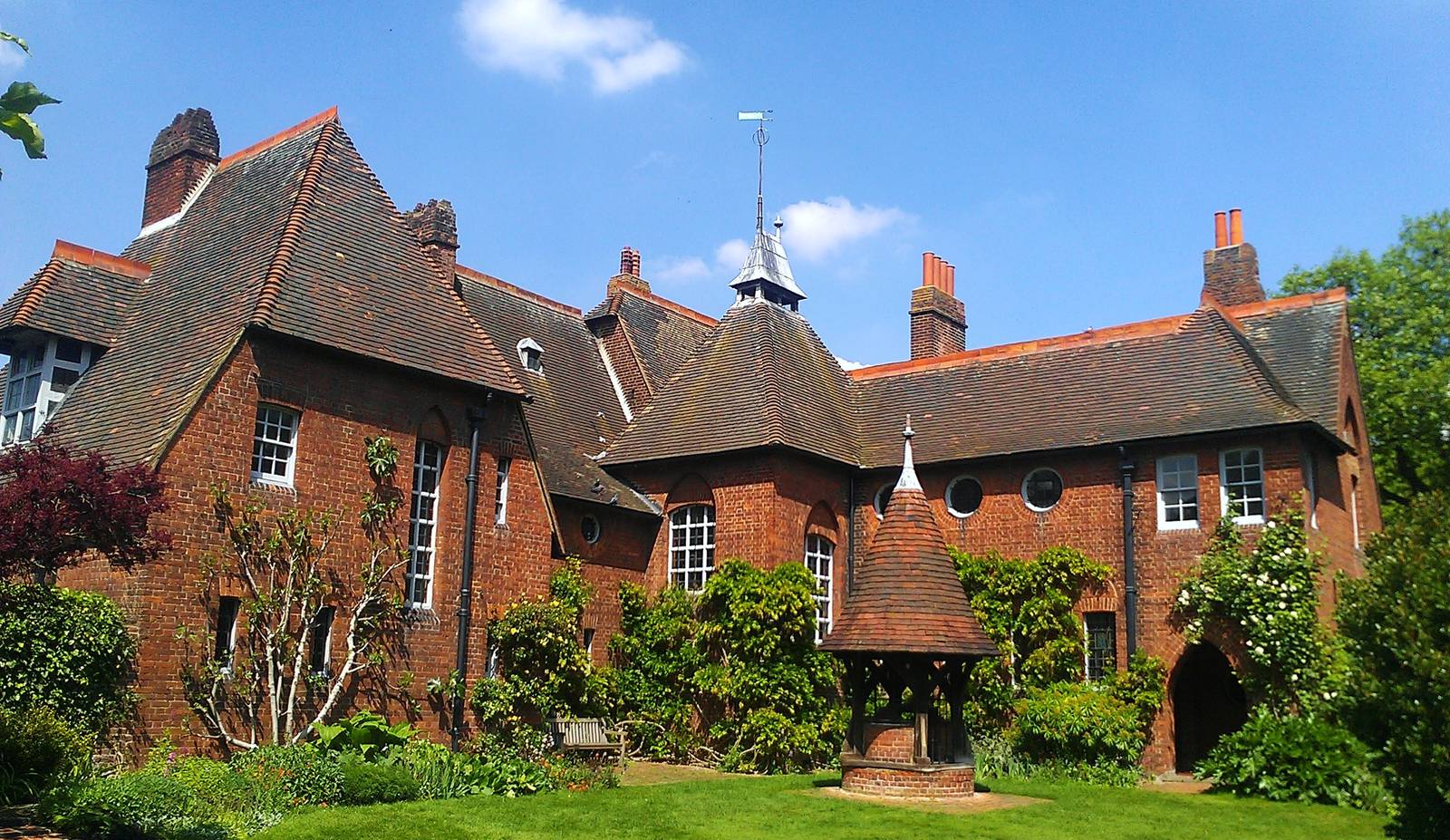
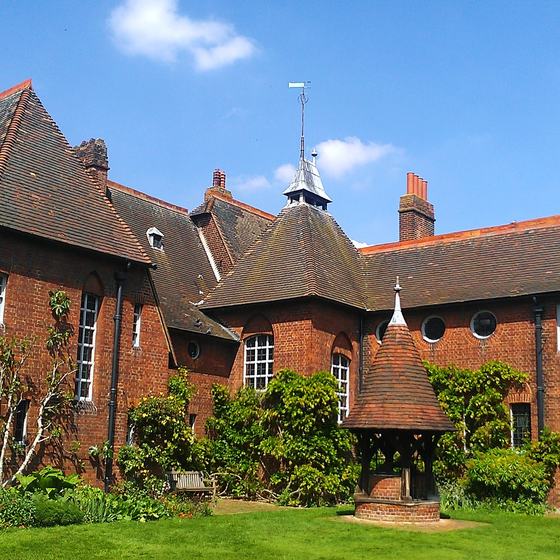
Image reference: Philip Webb, Red House.
At a Glance
- Core periodc. 1880–1920, with Gothic Revival roots and important later afterlives
- Origin of the nameArts and Crafts Exhibition Society, founded 1887; first exhibition 1888
- Principal British centresLondon · Birmingham · Cotswolds · Glasgow · Edinburgh · Lake District · garden cities
- Known forintegrated houses · honest construction · plant pattern · furniture · stained glass · metalwork · ceramics · embroidery · books
- Leading figuresMorris · Webb · Crane · Ashbee · Gimson · May Morris · Traquair · Mackintosh
- Best understood asa network of design reform, social criticism and workshop practice rather than one fixed style
- Central contradictionobjects intended to dignify everyday life were often affordable only to wealthy clients
Contents
- Where Arts and Crafts fits
- Industrial Britain and design
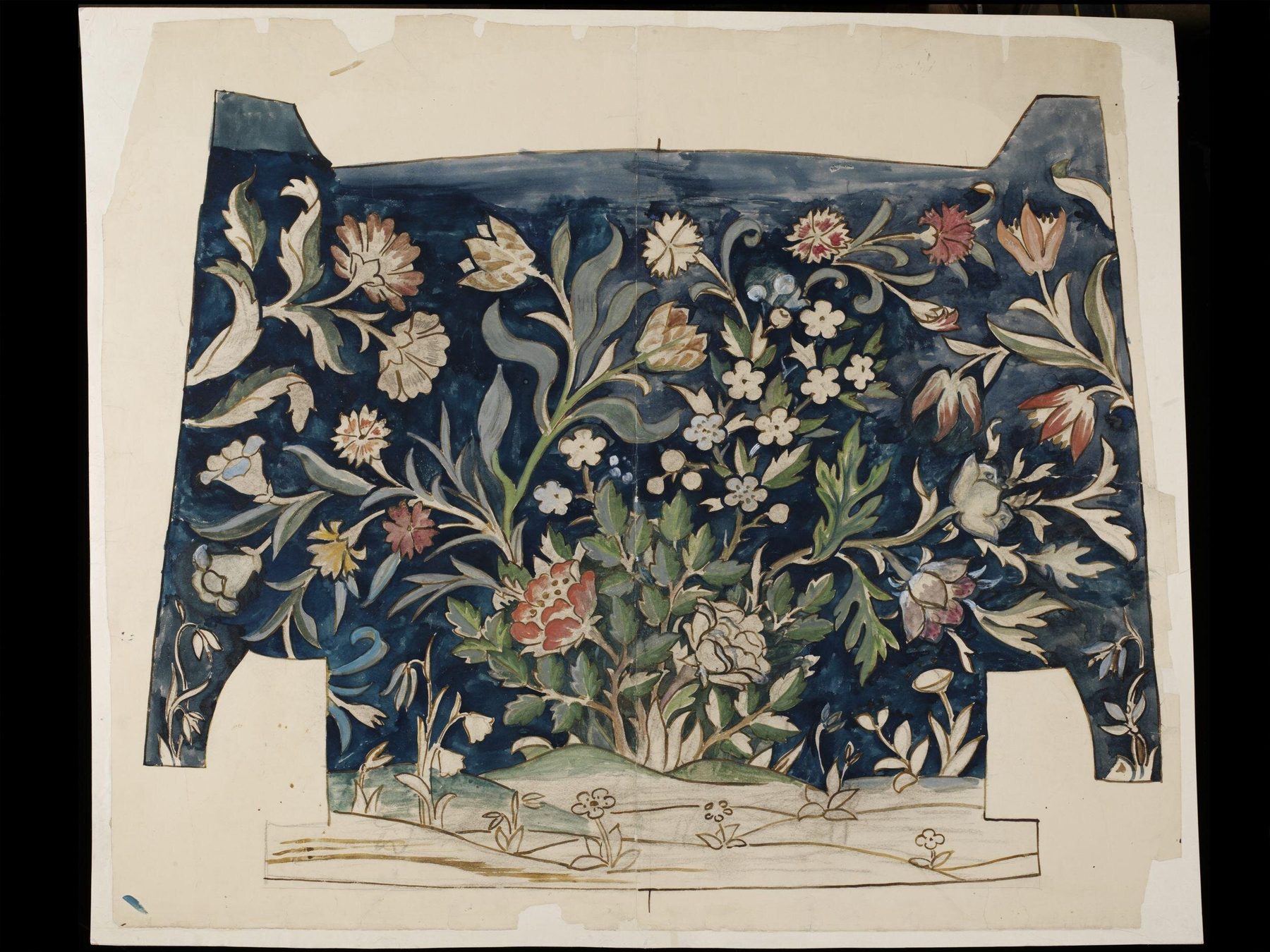
- Pugin, Ruskin and making
- William Morris before the name
- Exhibitions and public identity
- Truth to materials
- Machines and handwork
- The house as a total work
- Women as designers and organisers
- People and enterprises to know
Where the Arts and Crafts Movement fits
A. W. N. Pugin
Principal careerJohn Ruskin
Principal careerWilliam Morris
Principal careerPhilip Webb
Principal careerWalter Crane
Principal careerMay Morris
Principal careerC. R. Ashbee
Principal careerErnest Gimson
Principal careerPhoebe Anna Traquair
Principal careerCharles Rennie Mackintosh
Principal careerMargaret Macdonald Mackintosh
Principal careerEvelyn Gleeson
Principal careerGustav Stickley
Principal careerElena Polenova
Principal careerThe Arts and Crafts Movement began with a question that remains difficult: who gets to live with beauty, and under what conditions is it made? In industrial Britain, reformers looked at crowded cities, divided labour and rooms filled with mechanically ornamented goods, then argued that the quality of an object could not be separated from the life of its maker. A chair, book, room or garden was more than a style. It revealed how materials had been understood, how work had been organised and what kind of society had commissioned it.[1] [5]
The movement took its public name from the Arts and Crafts Exhibition Society, founded in London in 1887 and first exhibited in 1888. Its history, however, reaches backward through the Gothic Revival, A. W. N. Pugin, John Ruskin and the early career of William Morris. It also extends far beyond one society. Guilds, schools, workshops, shops, houses, magazines and exhibitions carried related arguments across Britain and Ireland, continental Europe, Russia and the United States. Later, Japanese advocates of mingei, or folk craft, developed a different movement with resonant questions of making and everyday use.[2] [27] [43]
There was no single Arts and Crafts look. Some designers favoured dense plant patterns and medieval references; others preferred plain oak, whitewashed walls or abstract geometry. Production ranged from individual handwork to workshops, subcontracting and carefully directed machines. The unifying field was ethical rather than merely visual: respect for materials, pleasure and intelligence in labour, unity among the arts, fitness for purpose and the conviction that ordinary surroundings matter.[3] [7]
Those ideals produced enduring buildings and objects, but they also exposed contradictions. Labour-intensive goods were often expensive. Women built careers while institutions sometimes hid them behind workshops, husbands or collective names. British artists celebrated Islamic, Japanese and Indigenous designs through markets shaped by empire. A movement that wished to reform modern life could retreat into an imagined medieval past—or supply models for modernism itself. Arts and Crafts is most useful when these tensions remain visible.
Arts and Crafts overlaps several labels without being identical to any of them. It inherited the Gothic Revival's admiration for medieval building and manufacture, but it was not confined to Gothic arches or ecclesiastical objects. It coincided with the Aesthetic Movement's insistence on beauty in daily life, yet frequently attached beauty to social duty rather than treating it as an autonomous end. It met Art Nouveau in plant forms and integrated interiors, while often rejecting the latter's more theatrical curves and urban luxury. It helped prepare modern design even when its practitioners distrusted modern industry.[1] [27]
Chronology varies by nation and medium. In Britain, the practical core falls roughly between 1880 and the First World War. Morris & Co. had been operating since the 1860s; Ruskin's decisive texts were earlier still. The Art Workers' Guild began in 1884, the Arts and Crafts Exhibition Society in 1887, and many rural workshops flourished around 1900. American organisations and communities adapted the movement into the 1910s. Some craft traditions continued for decades, and its institutional descendants remain active.[2] [4]
Nor was it an organised party. The Exhibition Society never contained every important maker. Morris supported its aims but did not found it. Architects, socialist lecturers, commercial manufacturers, aristocratic patrons, professional women, rural craftspeople and urban consumers entered the story for different reasons. Their objects do not always look related. A severe chair by Ernest Gimson, an embroidered panel by May Morris, a silver vessel by C. R. Ashbee and a room by Charles Rennie Mackintosh can all belong to the movement without sharing a decorative formula.
It is therefore safer to speak of a reform network. Its participants used exhibitions to elevate the decorative arts, revived or transformed workshop skills, designed buildings as coordinated environments and debated the moral status of labour. They differed over machines, markets, historical styles and politics. Those disagreements were not failures of definition. They were the movement's intellectual life.
Industrial Britain and the design problem
Britain's nineteenth-century industrial expansion made objects available on an unprecedented scale. Factories divided manufacture into specialised tasks; railways and global trade enlarged markets; catalogues and exhibitions brought goods before a growing middle class. Industrial production did not automatically create bad design, and handmade manufacture did not guarantee good working conditions. Reformers nevertheless saw a recurring problem: machines could reproduce ornament faster than designers and workers understood either its structure or its relation to a material.[6]
At the Great Exhibition of 1851, visitors encountered dazzling technical achievement alongside surfaces loaded with borrowed Gothic, Rococo, Renaissance and natural motifs. Government schools and museums attempted to improve industrial design through historical examples and close study of plants. Yet the question was larger than taste. If one person conceived an object, another translated the drawing and many others repeated fragments of work, could any maker exercise judgement or take pleasure in the result?
For Arts and Crafts thinkers, a false ornament was often evidence of a false relationship. Wallpaper could imitate carved stone; cast metal could mimic woven cord; a chair might conceal its joints beneath applied decoration. The objection was not that every surface must remain plain. Morris produced some of the most elaborate patterns of the period. The concern was whether form, material, technique and use belonged together.[6] [15]
Industrialisation also transformed domestic life. Middle-class houses accumulated furniture, wallpapers, carpets and ornaments advertised as signs of refinement. Reform interiors answered with coordinated colour, structural furniture and selectively chosen objects. Their apparent calm depended on labour elsewhere—joinery, weaving, cleaning and household service. The movement's “home” was never only an aesthetic refuge; it was a workplace and an economic system.[14]
The diagnosis could become nostalgic. Medieval workshops were imagined as communities in which master and apprentice shared artistic purpose, though historical labour was neither universally free nor comfortable. Yet medievalism offered a critical mirror. By imagining work organised differently, reformers made the modern factory seem like a choice rather than an inevitability.
Pugin, Ruskin and dignity in making
A. W. N. Pugin supplied an important architectural foundation before Arts and Crafts existed as a name. He argued that Gothic architecture arose from truthful construction and a coherent Christian society. Buildings should reveal their structure, and ornament should enrich rather than disguise it. His own interiors joined furniture, metalwork, textiles and architecture into a unified setting. Later reformers inherited both the integrative ambition and the risk of treating one historical age as morally whole.
John Ruskin shifted the argument toward labour. In “The Nature of Gothic”, a chapter of The Stones of Venice, he praised the irregularity that records a worker's freedom and condemned systems that reduce people to tools. A flawless surface might testify not to artistic excellence but to labour stripped of invention. The Gothic mattered because many hands could leave distinct decisions within a shared building.[5]
Ruskin did not provide a practical workshop programme, and his politics cannot be compressed into modern categories. His writings join radical critiques of industrial labour to paternalism and other Victorian assumptions. Their power for Arts and Crafts lay in making aesthetic judgement social. The line of a carving could disclose whether a worker had been permitted to think.
This principle altered the hierarchy between “fine” and “decorative” art. Painting and sculpture had been elevated above furniture, embroidery, printing and metalwork partly because the former appeared to bear an individual signature. Ruskin's account made intelligent craftsmanship a form of art. Later organisations would invite designers and makers to exhibit under their own names, though that ideal was unevenly achieved.
Ruskin also taught close looking at nature. The lesson was not to paste botanical facts onto a surface. A designer should understand growth, proportion and the way one form answers another, then reorganise that knowledge within the demands of a flat pattern or constructed object. Nature was a discipline for invention, not a catalogue to copy.
William Morris before the movement had a name
Morris became the movement's most influential precursor because he joined design, poetry, business, preservation and socialism in one career. At Oxford he met Edward Burne-Jones, with whom he shared medieval literature and plans for an artistic life. Through the architect Philip Webb and the circle around Dante Gabriel Rossetti, he entered a collaborative world in which painting, furniture, stained glass, poetry and domestic decoration overlapped.[8]
Red House, designed by Webb for Morris and his wife Jane and completed in 1860, turned those relationships into architecture. Its red brick, steep roofs and asymmetrical planning answered site and use rather than an imposed classical façade. Friends helped decorate the interior; furniture, wall painting, embroidery and stained glass developed with the house. The result was not a complete Arts and Crafts prototype waiting for a movement to catch up. It was an experimental home whose collaborative making revealed both possibility and strain.[9]
In 1861 Morris, Marshall, Faulkner & Co. began producing stained glass, furniture, embroidery, tiles and other furnishings. It later became Morris & Co. The enterprise sought unity between design and making, but it was also a business serving churches and affluent households. Designers supplied cartoons; skilled workers executed them; outside firms sometimes manufactured components. Collaboration made the work possible while complicating the image of the solitary craftsman.
Morris taught himself processes because technique changed design. At the Merton Abbey works, acquired in 1881, dyers, printers, weavers and tapestry makers worked in workshops arranged around the River Wandle. Natural dyes, hand-block printing and handloom weaving required patient control. Yet the organisation was neither a medieval guild nor the direct embodiment of socialism. It operated within a commercial market and maintained divisions of expertise.[10]
The woven double cloth Dove and Rose demonstrates the depth of that expertise. Designed by Morris and produced at Merton Abbey, its interlocked structure makes pattern and fabric together rather than applying ornament afterward. The method demanded planning, loom knowledge and coordinated labour. Its beauty resides as much in construction as in motif.[11]
Morris's textile patterns translate plants into repeat. In Trellis, Willow Bough, Marigold and later designs, stems lead the eye across the surface while leaves and flowers distribute density. A successful repeat has no obvious beginning or isolated emblem. It creates a field that can continue beyond the edges of a wall or cloth. Morris studied historical textiles and living plants, but the result is an invented order rather than botanical illustration.[12]
His wallpapers present a useful contradiction. Morris distrusted shoddy mass production, yet wallpaper was an industrially distributed domestic product. Early papers were printed by Jeffrey & Co.; blocks and pigments translated complex designs into repeatable commodities. Their expense limited the audience, but the medium carried Morris's patterns far beyond houses furnished wholly by his company.[15]
Morris's social thinking became more explicitly socialist in the 1880s. In lectures such as “Useful Work versus Useless Toil”, he argued that work should produce things worth having and offer hope of rest, pleasure in the activity and pleasure in the product. He opposed unnecessary luxury and the waste created by competitive production. Art could not be secured for a small cultivated class while most people endured degrading labour.[7]
This did not translate into a simple command to abolish machines. Morris distinguished between machinery serving people and people serving machinery. In “Art and Labour”, he imagined machines undertaking burdensome tasks once society had ended production for profit and useless consumption. The central problem was control: what gets made, why, and who decides.[48]
His preservation work applied the same ethics to buildings. The Society for the Protection of Ancient Buildings, founded in 1877, opposed destructive “restoration” that replaced weathered fabric with conjectural new work. Its manifesto urged conservative repair and respect for the accumulated changes of time. Heritage was not a picture to return to one ideal date; it was material evidence entrusted to the present.[13]
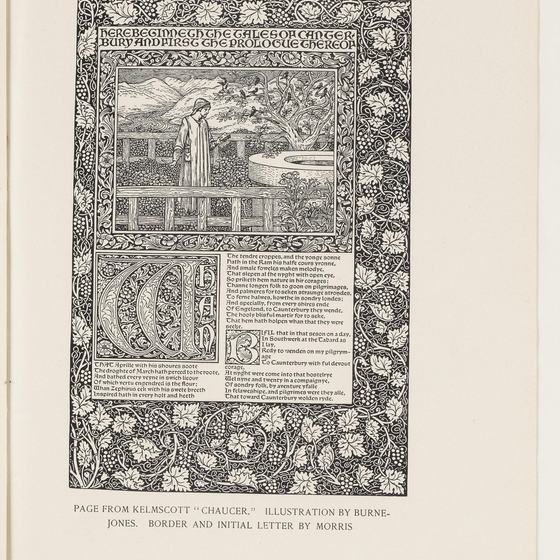
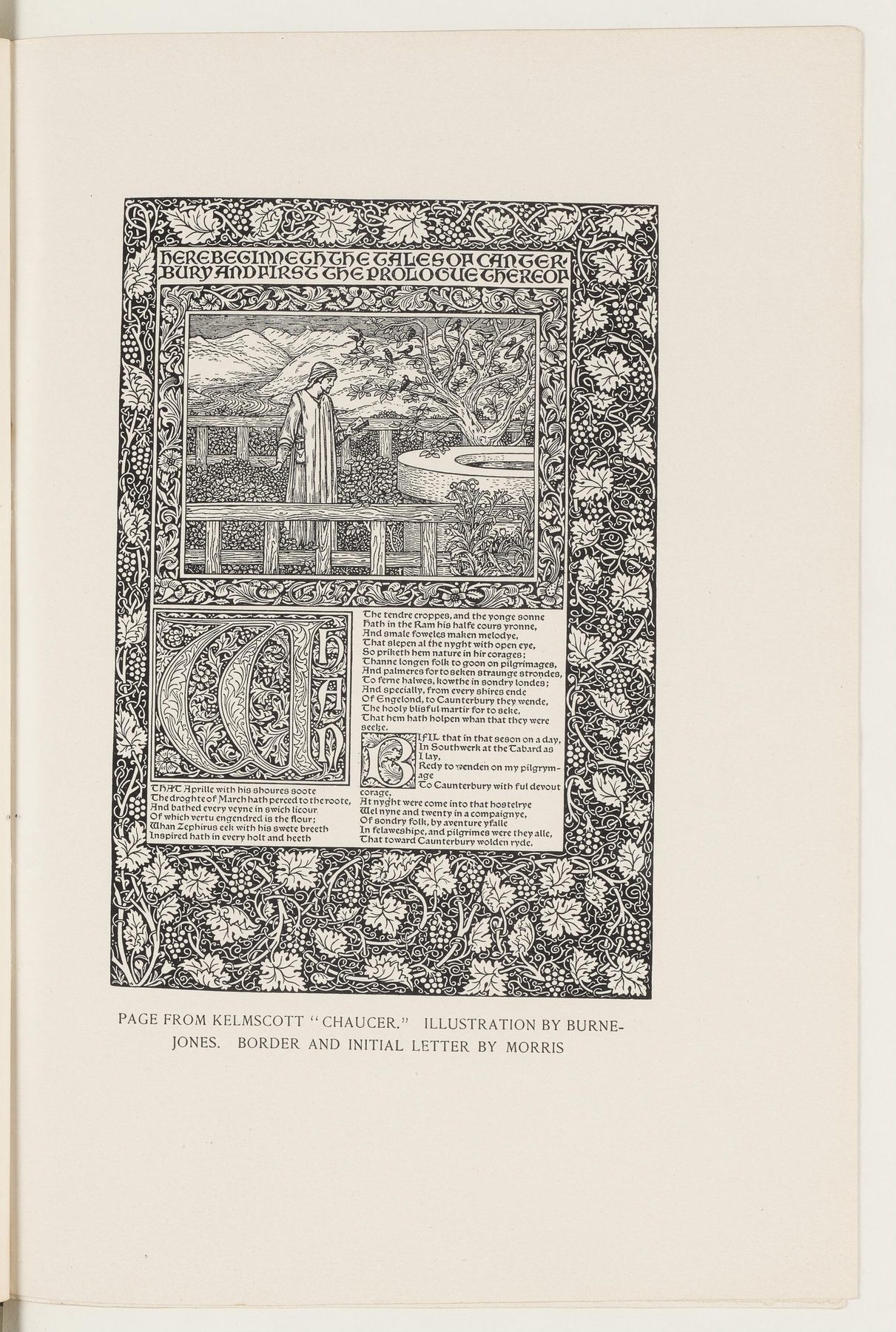
Morris also transformed the book. At the Kelmscott Press, founded in 1891, type, paper, ink, margins, wood-engraved illustration and binding were considered as one object. The press looked back to early printing without merely reproducing it. Its influence reached private presses and modern typography, demonstrating how historical study could generate new standards of coordination.[46]
Essential works
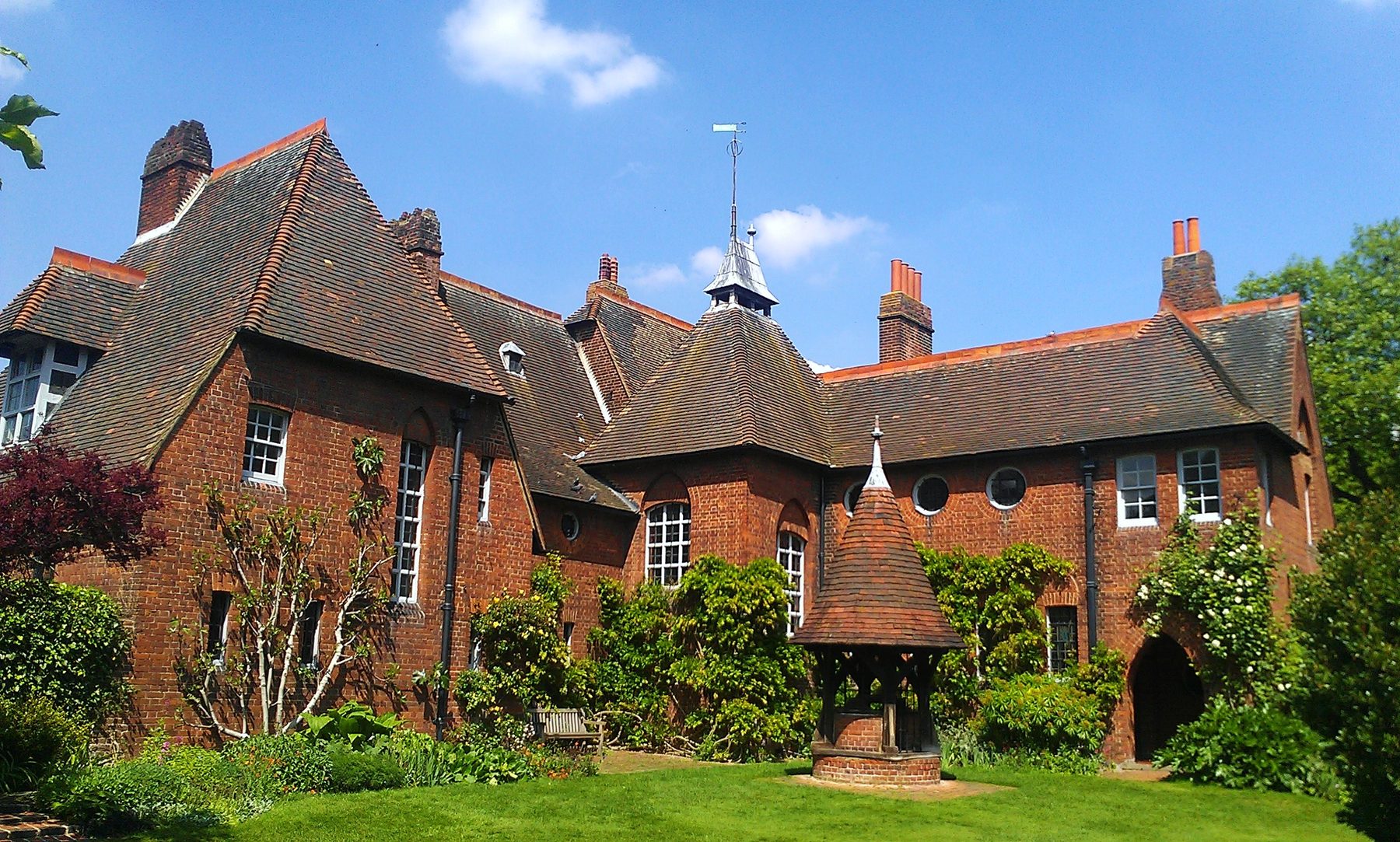
Red House
Philip Webb for William and Jane Morris, 1859–60
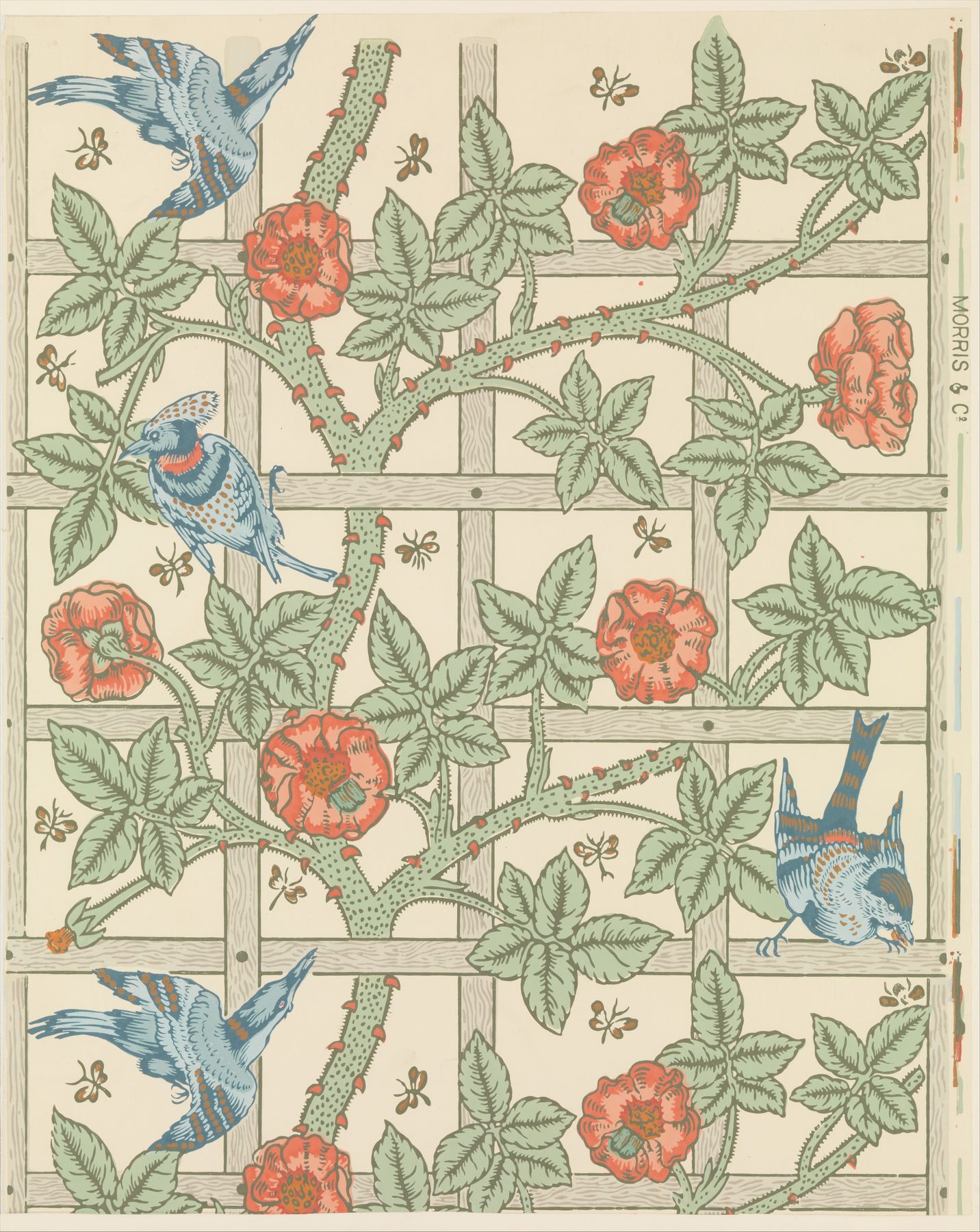
Trellis
William Morris, designed 1862
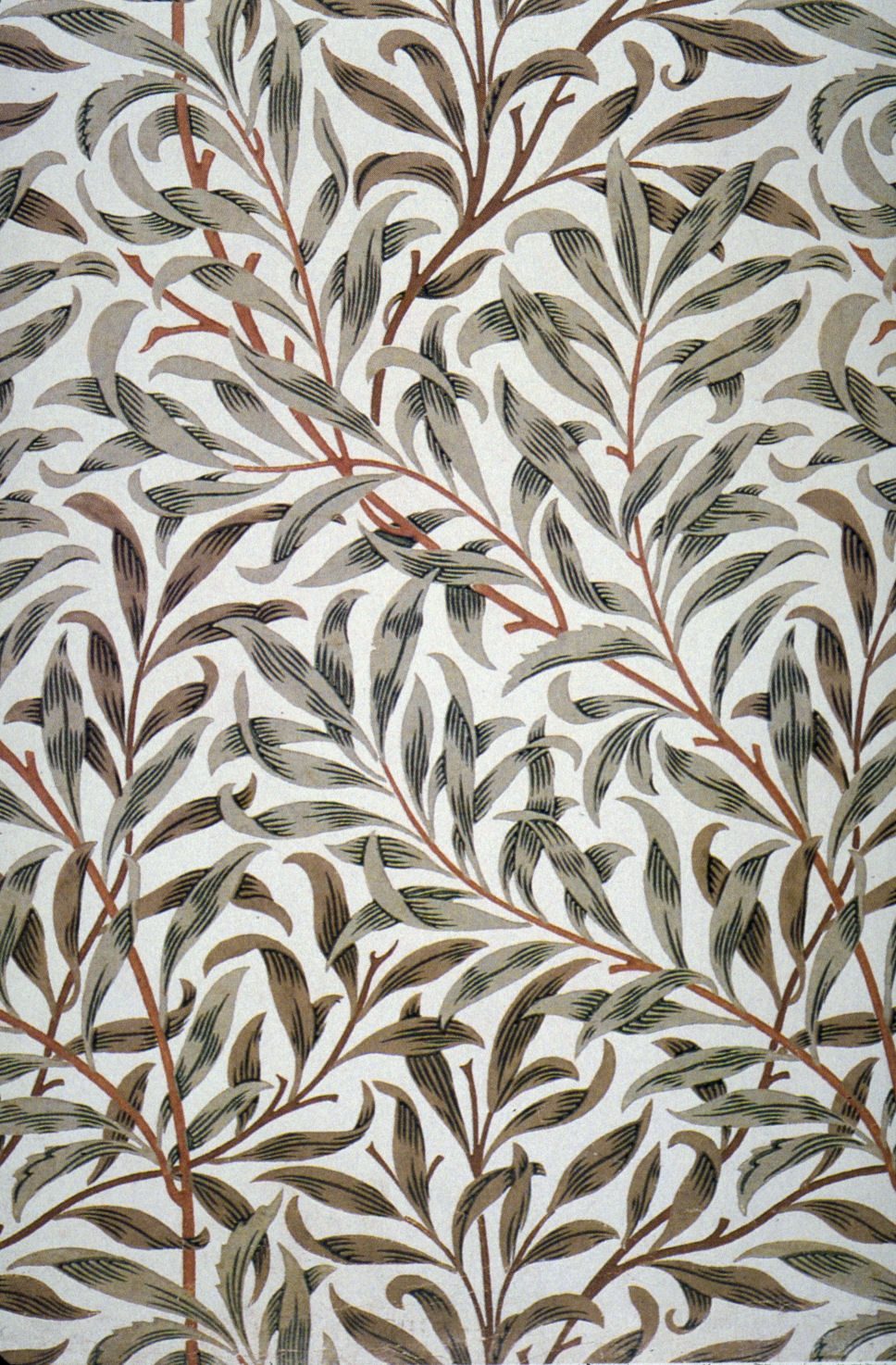
Willow Bough
William Morris, designed 1887
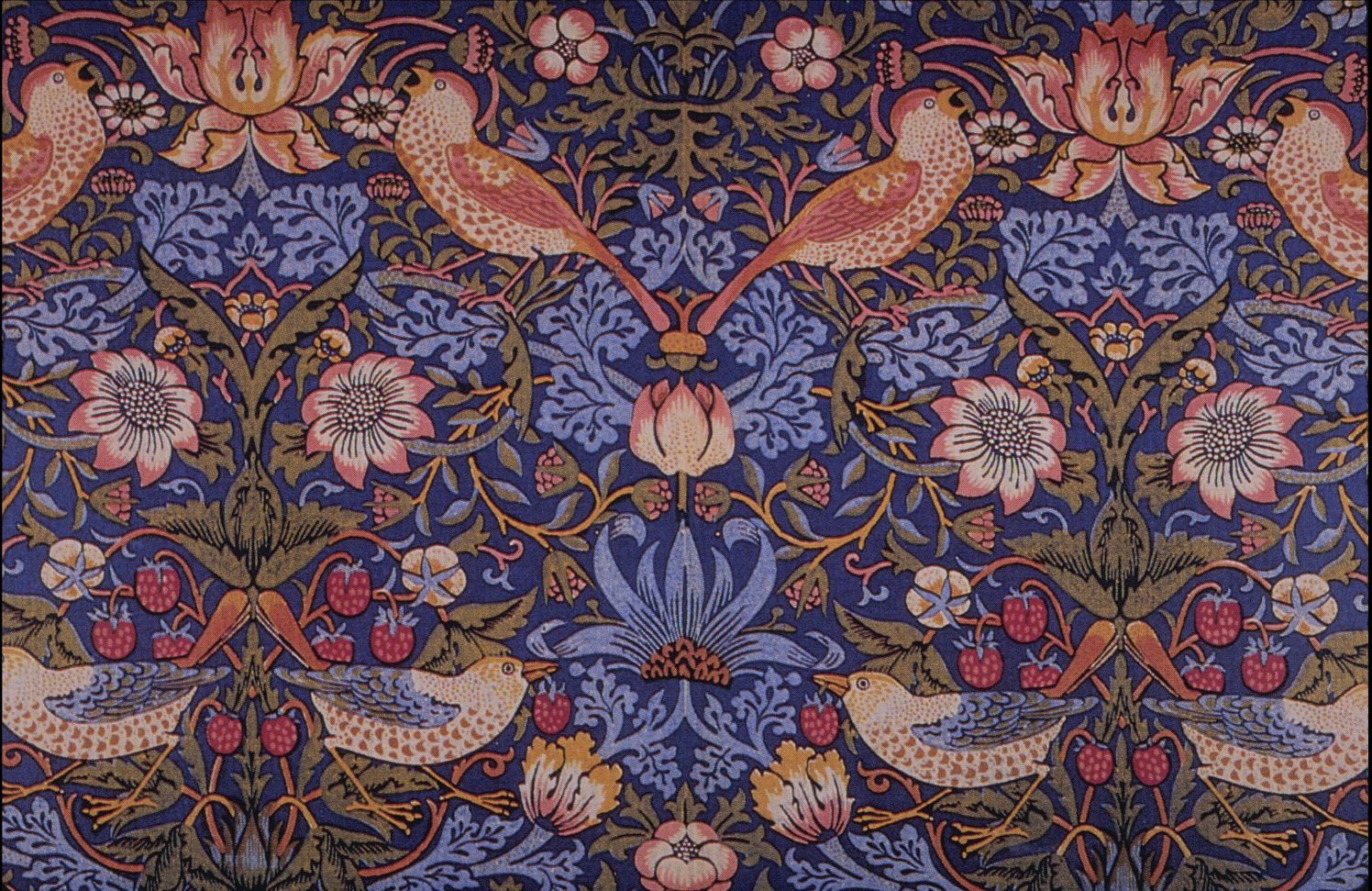
Strawberry Thief
William Morris, designed 1883
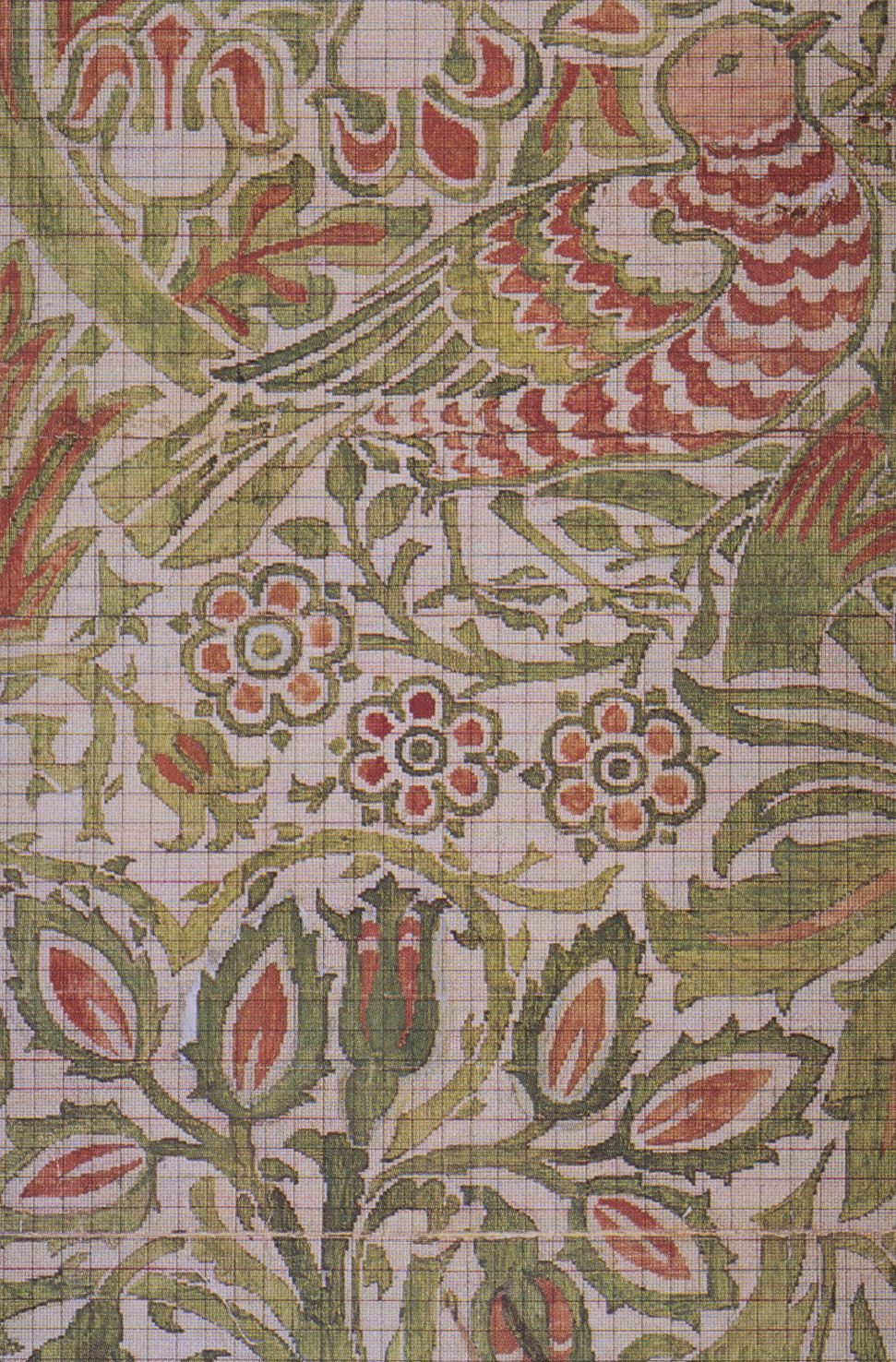
Dove and Rose point paper
William Morris and Morris & Co., 1879
Exhibitions and a public identity
By the 1880s, decorative artists needed institutions capable of presenting their work as art. The Art Workers' Guild, founded in 1884, brought architects, designers and craftspeople together for lectures and debate. It rejected the rigid separation of professions and sought fellowship across media, though its early membership and governance remained male. Guild thinking encouraged exchange between intellectual argument and workshop experience.[4]
The Arts and Crafts Exhibition Society followed in 1887. Walter Crane became its first president, and the inaugural exhibition opened at the New Gallery in London in 1888. The surviving catalogue, with Crane's emblematic cover, makes the name visible as a public proposition. Objects, processes and makers entered a gallery context that usually privileged painting. Exhibitors could explain techniques through demonstrations and labels, helping audiences see manufacture as knowledge.[3] [45]
The Society's title was deliberately broad. “Arts” and “crafts” appeared together without subordinating one to the other. Its exhibitions included furniture, textiles, metalwork, stained glass, books and architectural design. They helped establish reputations, connected buyers to workshops and gave an international audience a phrase with which to describe a much wider tendency.
Yet exhibitions could turn an ethic into a market style. A hand-hammered surface, exposed peg or medieval letterform became recognisable and saleable. Objects designed against industrial anonymity acquired prestige precisely because they seemed to preserve individual labour. The gallery elevated the maker while also converting authenticity into value.
Morris lectured in support of the exhibitions and embodied many of their aims, but historical precision matters: he was not the Society's founder. Crane, C. R. Ashbee, W. R. Lethaby, Lewis Foreman Day, May Morris and many others shaped its debates. Arts and Crafts had a leading ancestor, not a single inventor.
Truth to materials
“Truth to materials” is often treated as the movement's slogan, though its practice is more useful than any single phrase. It means allowing the capacities and limits of a substance and process to guide form. Oak can be joined and carved differently from mahogany. Hammered silver records blows that cast imitation texture would merely simulate. Lead lines in stained glass hold pieces together while participating in the image.
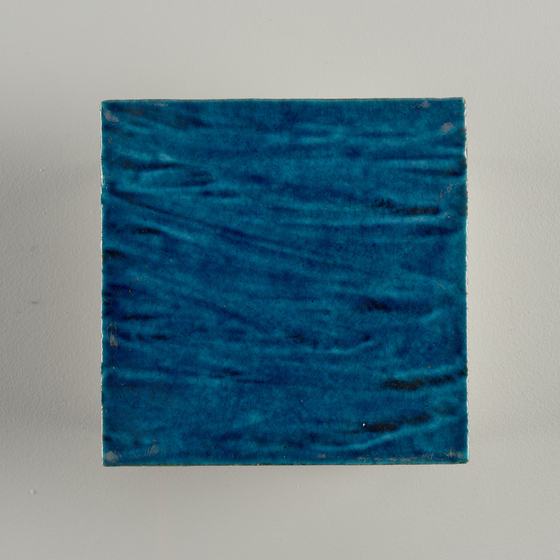
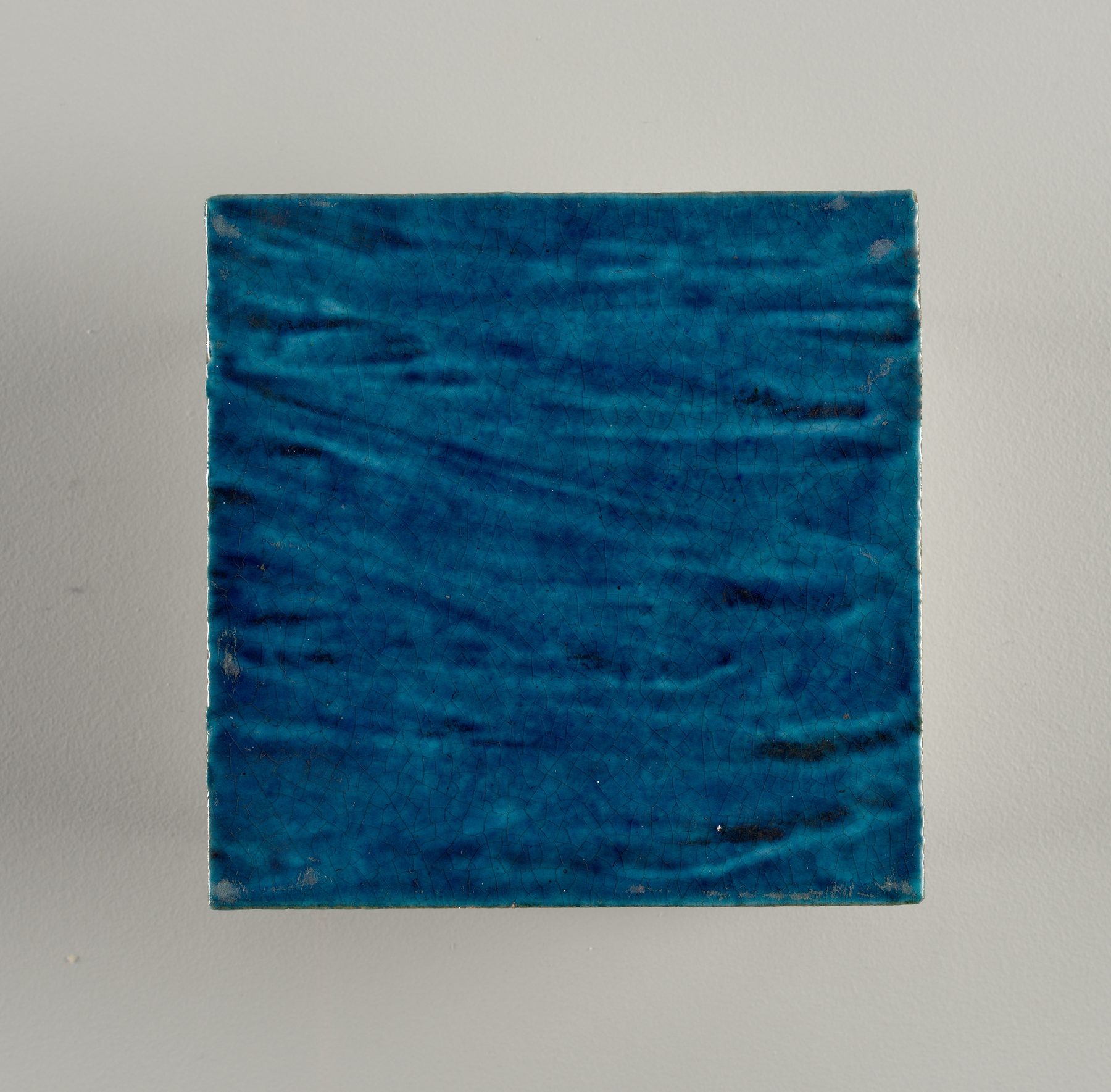
Truth does not require rawness. William De Morgan's ceramics use brilliant glazes, lustre and fantastic animals; their surfaces are highly artful. What matters is that decoration emerges through ceramic knowledge. De Morgan experimented with kilns, pigments and firing, enduring technical failures before achieving his distinctive colour. Design and chemistry were inseparable.[23]
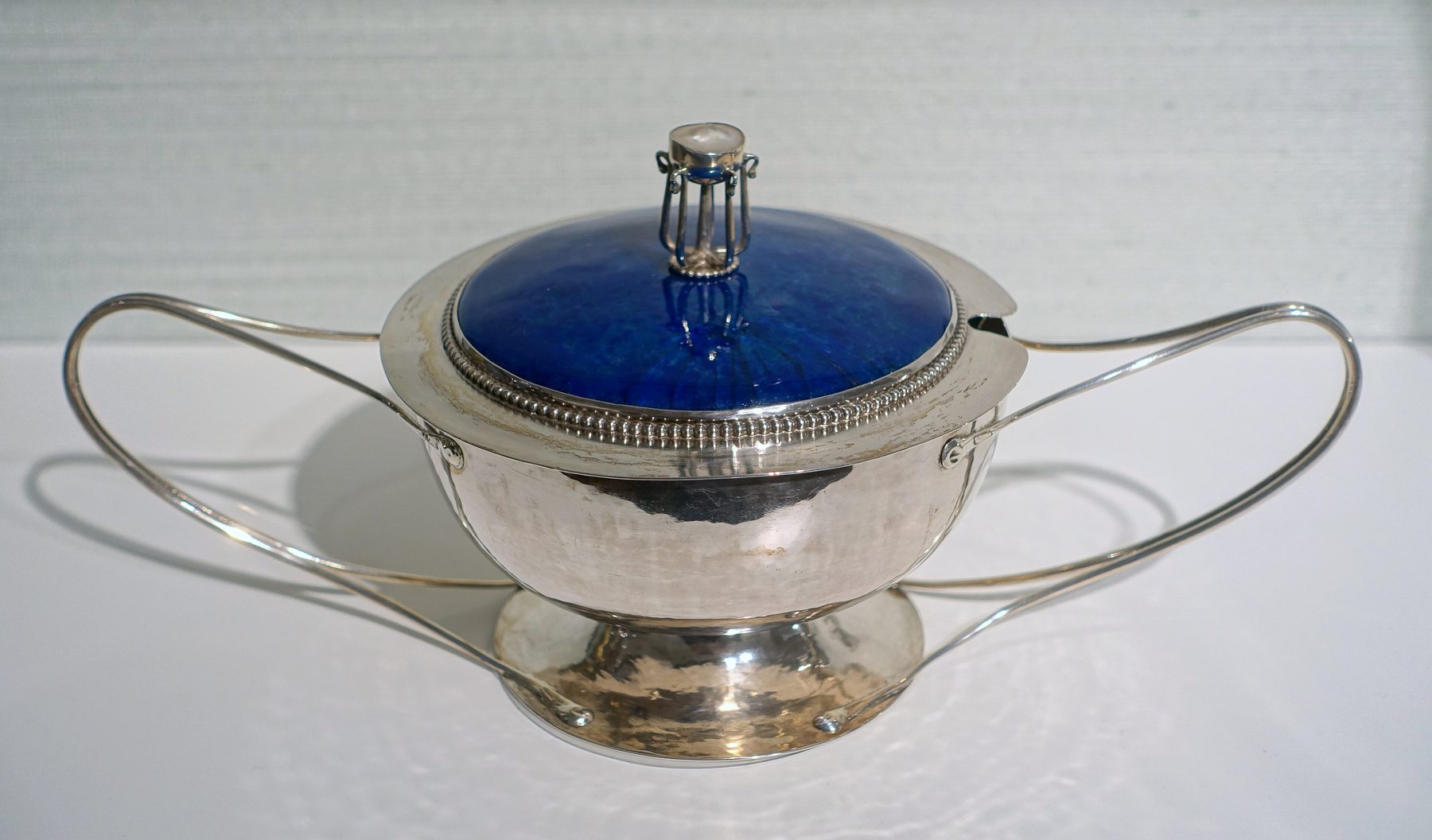
Arts and Crafts enamellers similarly exploited the luminous relationship between powdered glass and metal. Small surfaces could hold intense colour, patterned wires and irregular effects from firing. Women were prominent in the field, and enamelling could be practised in comparatively small workshops. Its scale made technical control visible without reducing it to private amateur work.[18]
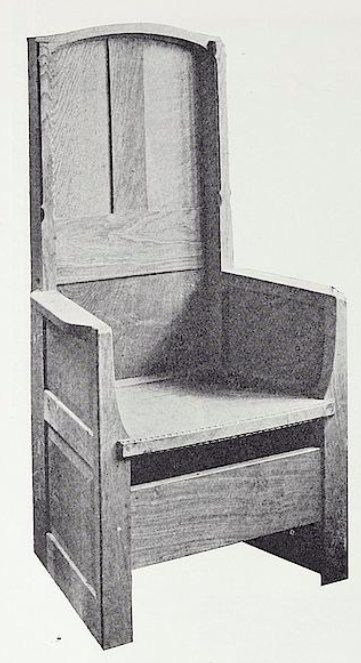
Honesty also concerns structure. A chair may reveal mortise-and-tenon joints; a cabinet's metal fittings may protect corners and articulate doors; a building may let beams, brick and stone carry visual force. Visible construction can still be theatrical. Pegs may be exaggerated and tool marks cultivated. The question to ask is not whether an object looks handmade, but whether its appearance helps us understand how it works.
Machines, handwork and the real argument
Popular accounts often define Arts and Crafts as anti-machine. Some participants did prefer hand processes and established rural workshops partly to escape factory discipline. Others designed for industry, used powered tools or collaborated with manufacturers. Even hand production depended on commercially made tools, transported materials and retail networks. The movement's argument concerned the human terms of production more than a test of whether a machine had touched an object.[7] [27]
Morris believed that machinery could relieve people of repulsive labour if collectively controlled. W. A. S. Benson designed elegant metal goods suited to mechanical repetition and sold them through modern commerce. Voysey patterns circulated through manufacturers. Workshops used division of labour while trying to preserve skilled judgement. A pure hand-versus-machine opposition hides these productive differences.
The distinction between repetition and monotony is more revealing. A weaver repeats movements, but responds to tension, colour and error. A block printer repeats a unit while registering each impression by hand. An industrial worker might also exercise skill, but a production system could deny any influence over pace or outcome. Arts and Crafts asked whether repetition deepened knowledge or extinguished it.
This remains one source of the movement's modern relevance. Digital manufacture can support small-scale custom production; global logistics can conceal dangerous labour behind smooth products; handmade branding can romanticise underpaid work. Arts and Crafts supplies no automatic answer, but insists that design history include the workplace.
Follow the Arts and Crafts Movement through four stages
–1877
Gothic, labour and the first experiments
Pugin, Ruskin, Red House and Morris’s early firm connect truthful construction, collaborative interiors and the dignity of intelligent work.
–1888
Preservation, production and a public name
SPAB, Merton Abbey, textiles and the Arts and Crafts Exhibition Society turn reform arguments into institutions, processes and public display.
–1900
Houses, guilds and makers
Integrated houses, rural workshops, metalwork, furniture, embroidery and private printing test how beauty, labour and commerce might be reorganised.
–1920
International transformations
Scotland, Ireland, Europe, Russia and the United States translate Arts and Crafts into distinct architectural, educational, commercial and political settings.
The house as a total work
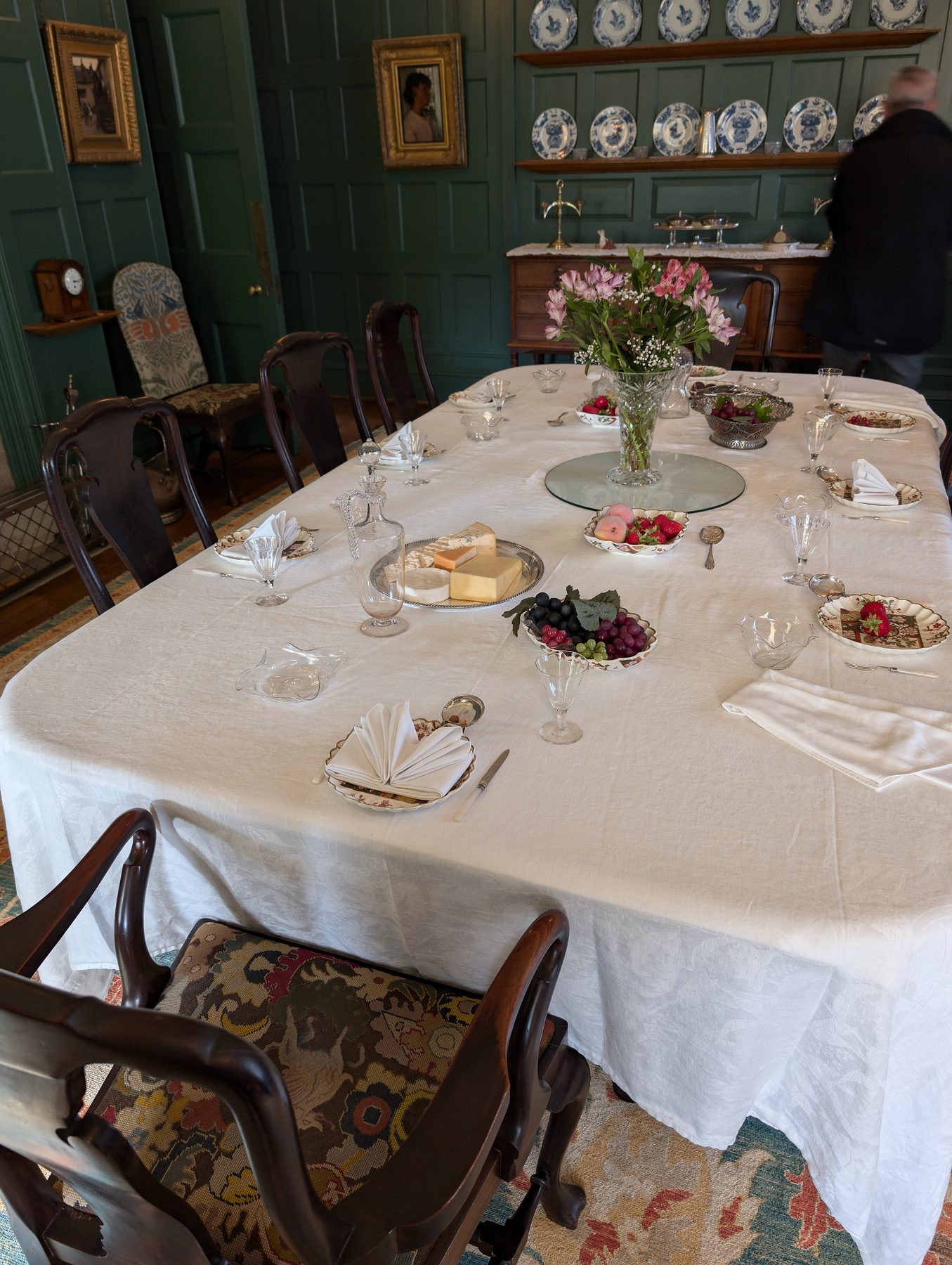
The house offered the movement its most complete field. Architecture, furniture, wallpaper, textiles, metalwork, stained glass and garden could be designed in relation. Rooms were not containers filled afterward with fashionable goods. Proportion, light, circulation, surface and use formed one environment.[14]
At Standen in Sussex, Philip Webb designed a country house for James and Margaret Beale in the 1890s. Morris & Co. textiles and wallpapers joined built-in furniture, local materials and collected objects. The house grew from an existing farmhouse and a sloping site rather than presenting a symmetrical monument. Domestic comfort and artistic coherence depended on a wealthy industrial family's patronage, a reminder that reform interiors often rested on fortunes made in modern commerce.[25]
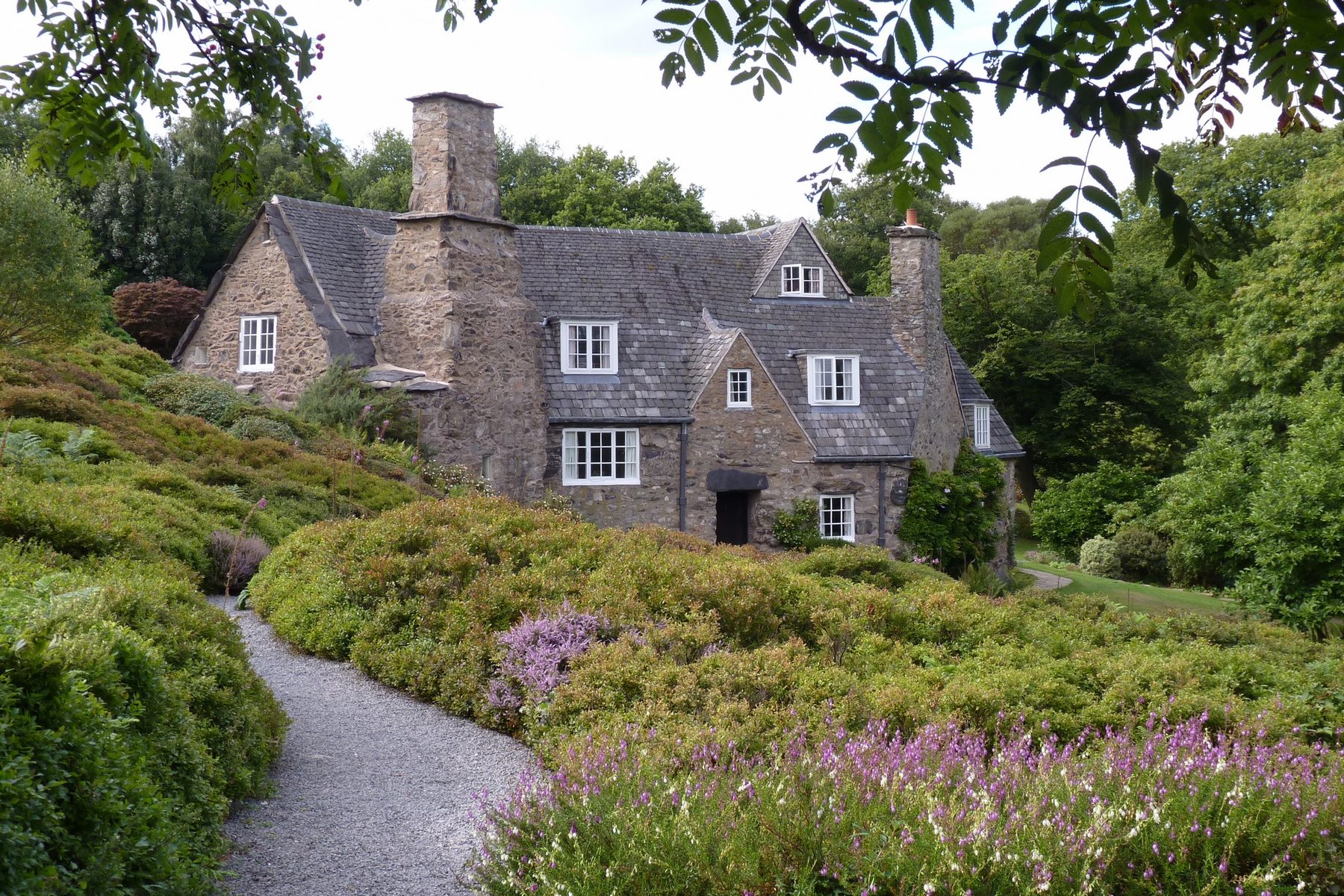
Ernest Gimson's Stoneywell in Leicestershire takes a different form. Built from local stone on a rocky site, its apparently irregular plan follows the landscape and the sequence of rooms. Furniture, masonry and garden make the cottage feel discovered rather than imposed. Its rusticity was carefully designed, not an untouched survival.[26]
The Arts and Crafts house frequently values built-in storage, window seats, broad hearths and rooms shaped around activity. Gardens extend the planning through terraces, walls and planted “rooms”. Historic precedent is absorbed into practical composition. No single motif certifies the style: what matters is the relationship among site, materials, craft and living.
These houses can look informal while relying on social hierarchy. Servants' circulation, laundries and kitchens supported the calm of principal rooms. Women clients often shaped briefs and interiors, but architectural authorship was commonly assigned to men. Reading the whole house means following work as well as beauty.
Guilds, workshops and rural communities
Guilds gave historical language to modern organisation. C. R. Ashbee founded the Guild of Handicraft in London's East End in 1888, combining training and production in metalwork, furniture and other crafts. In 1902 it moved to Chipping Campden in the Cotswolds. The relocation pursued communal life and beautiful surroundings, but distance from metropolitan clients helped create financial difficulty. Ideal community still needed orders, distribution and cash.
The Cotswolds became associated with Gimson, Ernest and Sidney Barnsley, the Gloucestershire Guild and skilled makers in wood, metal and plaster. Their work often appears anonymous in its restraint, but depended on named designers, cabinetmakers and smiths. Rural setting did not erase professional ambition. It was a laboratory for reorganising relationships among drawing, bench and client.[27]
Morris's Merton Abbey was larger and more commercially integrated. Mary Watts created the Compton Potters' Arts Guild in Surrey as a village enterprise connected to the extraordinary cemetery chapel that local people decorated in modelled terracotta. The project linked local income, teaching, memorial architecture and symbolic design; it also grew through Watts's authority and access to patronage.[20]
The garden-city movement carried Arts and Crafts ideas into planning. Letchworth, founded in 1903 as the first garden city, attempted to join homes, work, green space and community within an alternative to congested industrial cities. Its buildings include many Arts and Crafts details, but the deeper connection is social and spatial: good design was imagined at the scale of a town.[34] [35]
Alternative communities could challenge domestic and sexual conventions. At Millthorpe in Derbyshire, socialist writer Edward Carpenter created a home and garden with his partner George Merrill. The house connected simple living, political thought, handwork and same-sex partnership. Such lives widen Arts and Crafts beyond the conventional family home, even though they remained vulnerable within Victorian and Edwardian law and society.[36]
Women as designers, makers and organisers
Women did not simply embroider patterns conceived by male leaders. They designed, taught, managed workshops, wrote, exhibited and created organisations. Needlework was one route because it could be learned within domestic education, but professional embroidery required command of materials, stitches, scale, assistants and commissions. The language of “home craft” has often obscured substantial businesses.
Dress reform carried related principles onto the body. Looser construction, visible hand embroidery and softened historical forms could oppose rigid fashionable silhouettes, although reform dress also became a marker of artistic identity and class.[16]
May Morris directed the embroidery department of Morris & Co. from 1885, developed original designs, lectured internationally and helped found the Women's Guild of Arts in 1907 after women remained excluded from the Art Workers' Guild. Her work uses stitch to construct surfaces whose colour and relief cannot be reduced to a paper cartoon. Her scholarship and later editing also shaped the public memory of her father.
Mary Lowndes worked in stained glass and co-founded the Artists' Suffrage League. Jessie Bayes combined miniature painting, illumination and design. Women entered enamelling in notable numbers, partly because a small kiln and bench could support independent practice, although training, capital and exhibition access still mattered.[18]
In Scotland, Phoebe Anna Traquair worked across mural painting, embroidery, illuminated books and metalwork. Her vast decorative schemes in Edinburgh join Renaissance references to jewel-like pattern and visionary colour. The National Galleries of Scotland describes her as a central figure in the Scottish Arts and Crafts movement, not an adjunct to an architect or husband.[19]
Mary Seton Watts designed the Compton Cemetery Chapel and trained villagers to model its terracotta decoration. The building's densely symbolic surfaces combine Celtic, Christian, Egyptian and Art Nouveau sources. Its collective production was real, but Watts supplied design, teaching and organisational direction. “Community art” should not make female authorship disappear.[20]
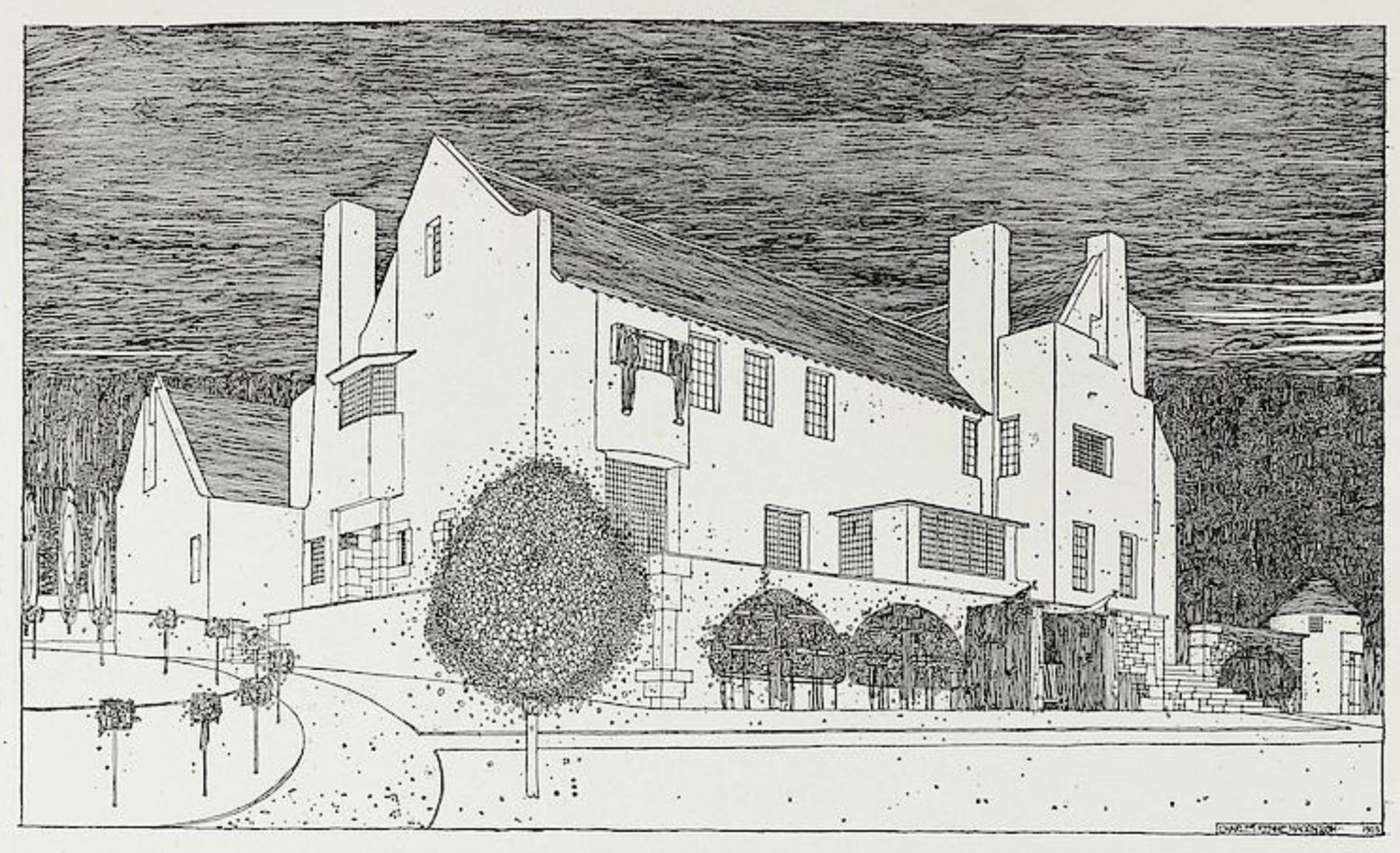
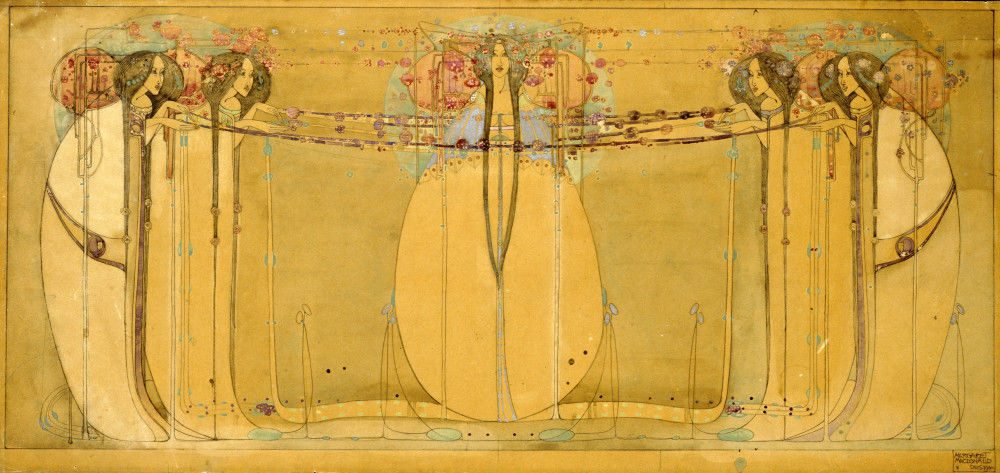
The Glasgow School gave women a more visible place in advanced design. Margaret Macdonald Mackintosh and Frances Macdonald McNair developed elongated figures, symbolic panels, metalwork and collaborative interiors; Jessie Newbery reshaped embroidery education at the Glasgow School of Art. Margaret's gesso panels were integral to rooms designed with Charles Rennie Mackintosh, yet histories repeatedly reduced her to influence or assistance. The Glasgow Four—Margaret and Frances Macdonald, Mackintosh and James Herbert McNair—worked through intersecting but distinct authorships.[32] [33]
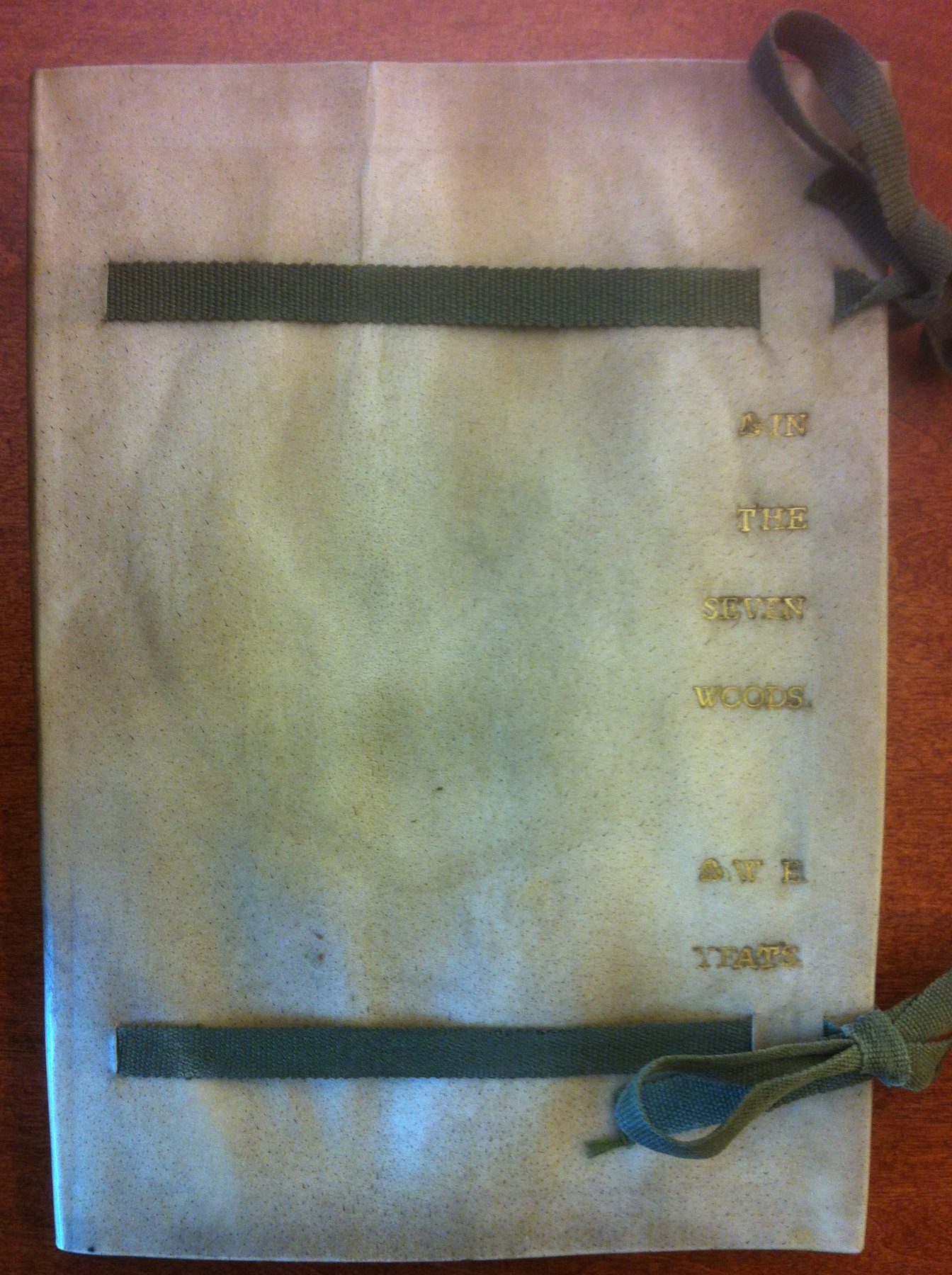
Ireland offers another model. Evelyn Gleeson founded the Dun Emer Guild with Elizabeth and Lily Yeats in 1902. The enterprise linked weaving, embroidery and printing to an Irish cultural revival. The Yeats sisters later formed Cuala Industries, with Elizabeth directing the press and Lily the embroidery department. Irish-language and literary publishing made the book a vehicle of cultural autonomy as well as craft reform.[21] [22]
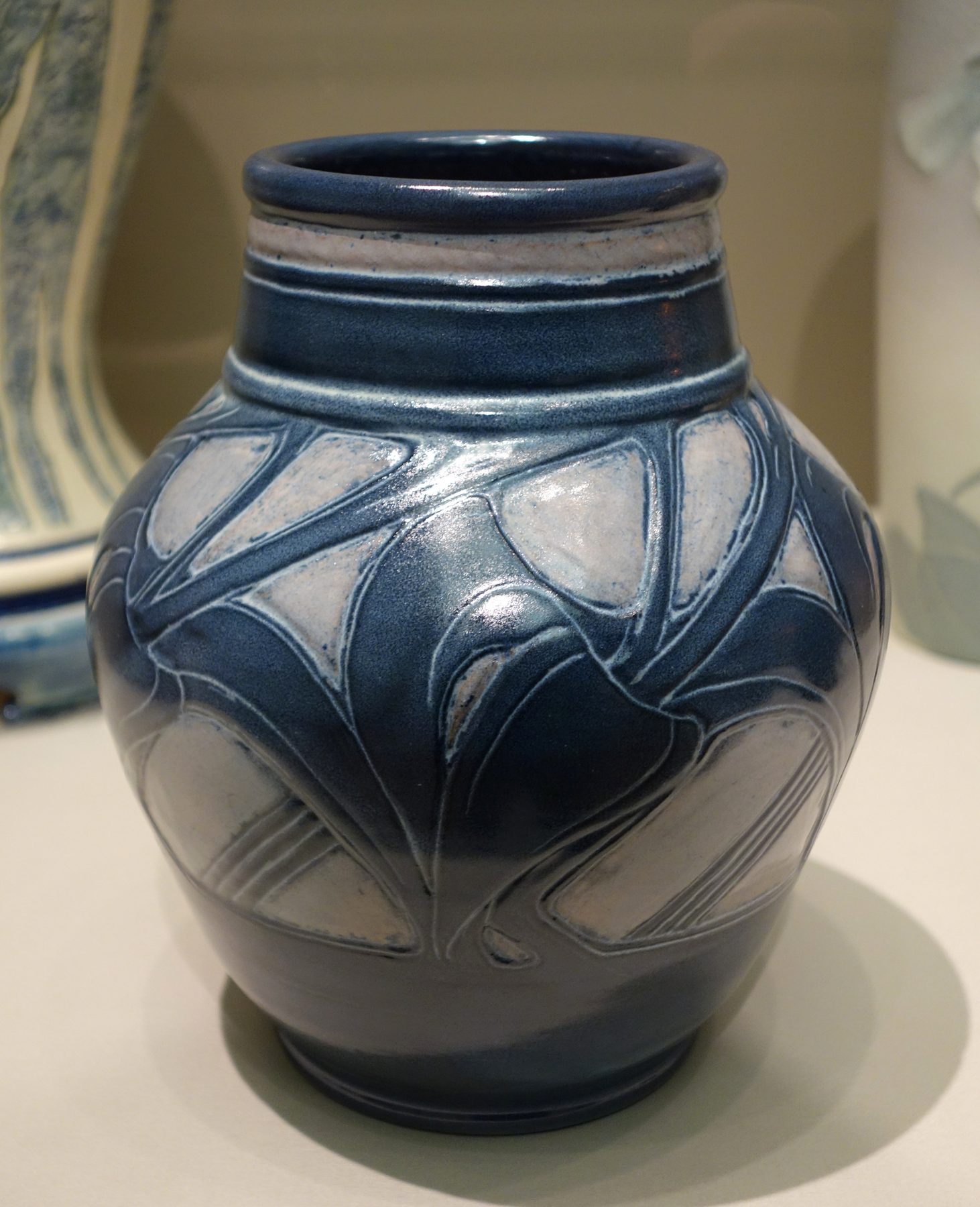
Across the Atlantic, women at Newcomb College in New Orleans designed and decorated ceramics within an institution intended to provide respectable paid work for Southern women. Individual decorators signed pieces with ciphers, though the Newcomb name often dominates museum labels and markets. The pottery joined local plants and landscapes to changing styles, from linear naturalism to more abstract surface design.[40]
Women encountered a double expectation. Craft could be deemed naturally feminine and therefore less important; when it became professional, authority might pass to male architects, directors or retailers. Collective workshop practice further complicated signatures. Recovering women requires more than adding names to a list. It requires asking who designed, who executed, who taught, who kept accounts, whose home enabled work and whose reputation absorbed the result.
Beauty, price and the democratic promise
Arts and Crafts wanted beauty to be ordinary. Morris's political writing imagined useful goods and pleasurable work available beyond an elite. Yet hand-blocked wallpaper, bespoke furniture and architect-designed houses required time and skilled labour. Paying fairly made objects costly within an unequal economy. Reducing the price through industrial scale could recreate the division of labour that reformers opposed.
This is not a simple hypocrisy. The contradiction exposes the difficulty of reforming consumption without reforming property, wages and production. Morris understood that a socialist art could not be achieved by selling exemplary furnishings to rich clients. His business demonstrated standards and supported skilled work, but it could not alone create the society his lectures imagined.[7] [48]
Different makers responded differently. Some designed modest furniture and household objects. Guilds offered apprenticeships. Exhibitions explained techniques. Magazines and pattern books spread ideas that households could adapt. Garden cities addressed housing at a collective scale. American manufacturers translated visible joinery and simple forms into broader product lines. None fully resolved access.
Affordability also depends on whose labour is counted. A home embellished by unpaid family needlework may look democratic because little money changed hands, while time and skill remain hidden. A cheap factory object may transfer environmental and human costs to distant workers. Arts and Crafts is strongest not as a promise that handwork is automatically ethical, but as a demand for honest accounting.
Scotland and Ireland
Arts and Crafts did not travel outward from London unchanged. Scotland joined local educational institutions, Celtic revival, symbolism and international modernism. Edinburgh's Traquair transformed churches, hospitals and books through colour and ornament. Glasgow designers favoured attenuated figures, pale interiors, dark structural lines and abstracted roses. Mackintosh's rooms could be spare and geometric where a Morris interior appeared densely patterned.[19] [32]
Glasgow's significance also depended on teaching and exhibition. The Glasgow School of Art supported collaboration among architecture, metalwork, embroidery and graphic design. The international circulation of its work, especially through exhibitions in Vienna, helped connect British reform to continental modernism. “Glasgow Style” is therefore both a local formation and an export, produced by women and men whose contributions require individual attention.[33]
In Ireland, craft reform intersected with political and linguistic revival. Dun Emer and Cuala used Irish materials, legends, typography and texts to support a distinct national culture under British rule. The Yeats family library and press history preserve Irish- and English-language networks that connected poems, images, bindings and readers.[21] [22]
These enterprises could romanticise rural identity, but they also created training and paid production. Their nationalism was not merely decorative Celtic knotwork. Decisions about language, subject, paper and distribution helped define who constituted the public. The book and textile became political objects without ceasing to be designed things.
Continental Europe and Russia
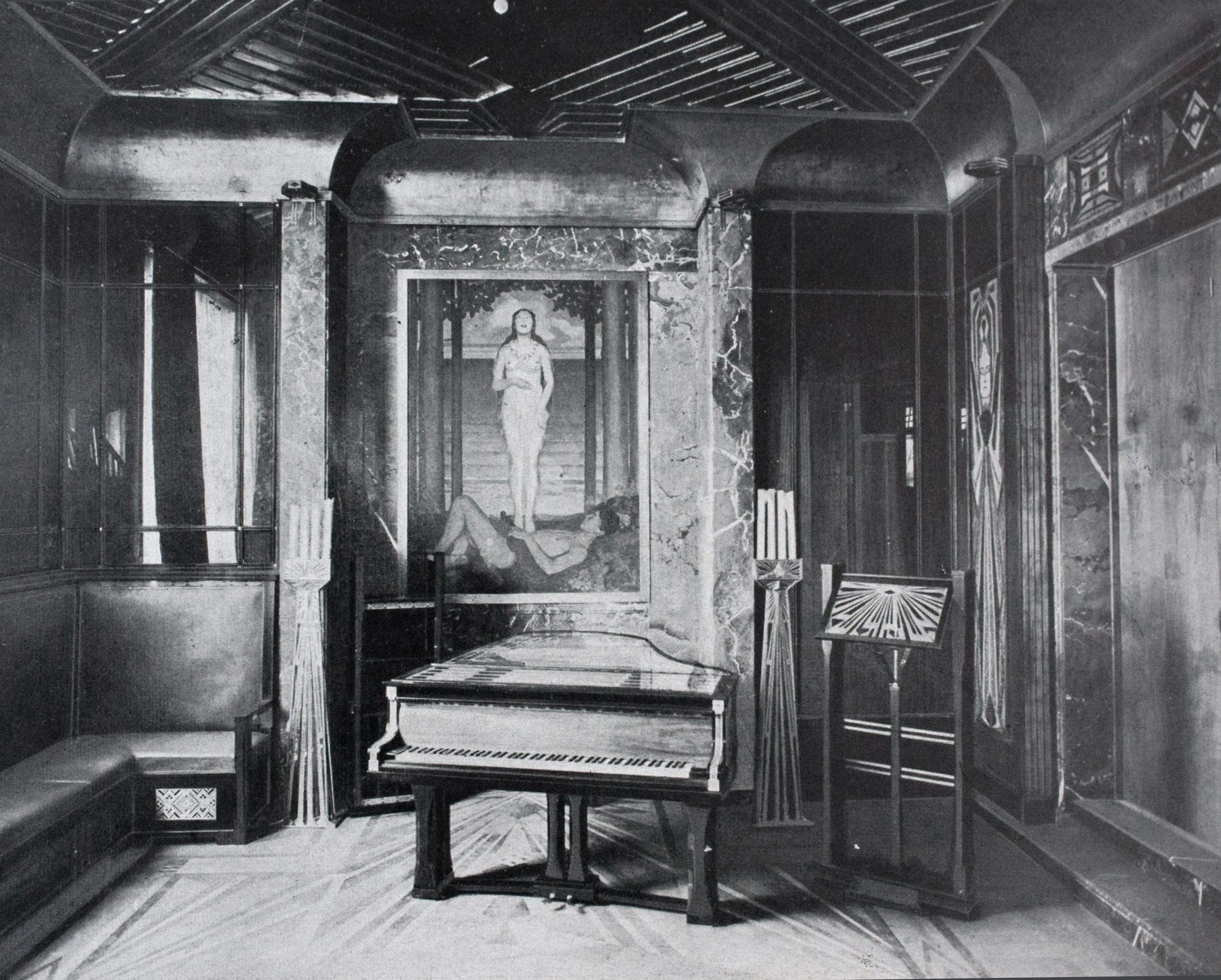
Across continental Europe, Arts and Crafts ideas met Art Nouveau, Jugendstil, national revival and state-sponsored design reform. Belgian designer Henry van de Velde embraced the unity of architecture and furnishings but rejected historical imitation, developing a dynamic line suited to modern life. In Germany he became a key educator and later a founding member of the Deutscher Werkbund.[29]
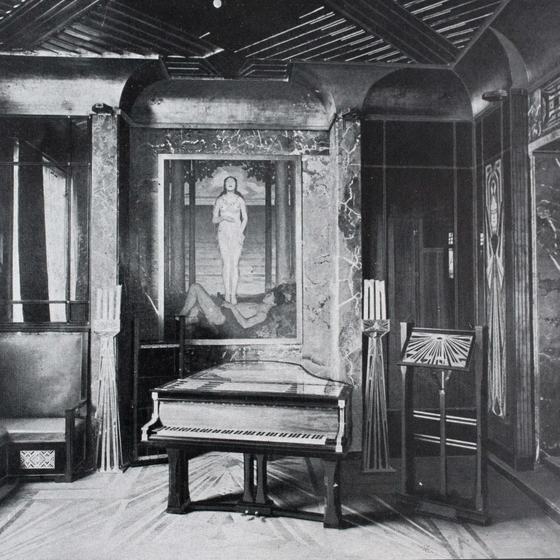
The Darmstadt Artists' Colony, established by Grand Duke Ernst Ludwig in 1899, brought artists together to design houses, exhibitions and interiors on the Mathildenhöhe. Its exhibitions presented Raumkunst—the room as a coordinated art—through architecture, furniture, ceramics, metalwork and graphics. The colony shared the Arts and Crafts search for total design while adopting increasingly abstract and modern forms.[30]
The Deutscher Werkbund, founded in 1907, pursued cooperation among artists, craft and industry. It did not simply abandon Arts and Crafts for the machine. It sharpened an unresolved question: could high design quality be achieved through standardisation and mass production without sacrificing cultural value? Debates within the Werkbund helped form the ground from which Bauhaus and modern industrial design later emerged.[28]
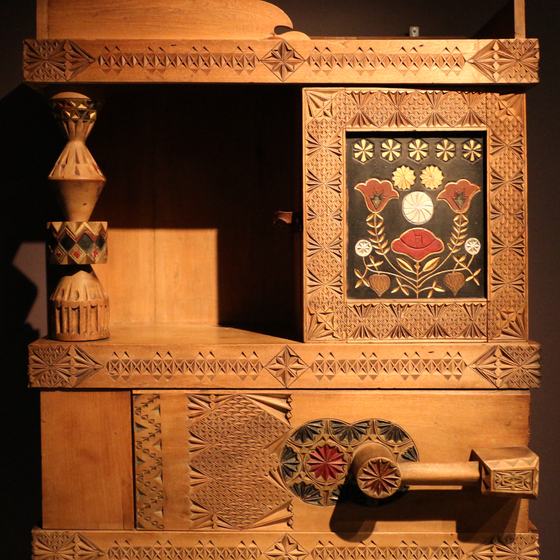
In Russia, the artists' colony at Abramtsevo joined revived craft to theatre, architecture and national culture. Savva and Elizaveta Mamontov gathered artists including Viktor Vasnetsov, Elena Polenova and Mikhail Vrubel. Workshops studied vernacular carving and ceramics, then developed new furniture and objects rather than merely preserving village types. Polenova's role as designer, collector and workshop organiser was central.[31]
These histories should not be treated as branches controlled from Britain. Each joined modern design to local debates about nation, education, class and industry. They shared international exhibitions and publications, but resemblance could arise through parallel responses to industrialisation as well as direct influence.
The movement in the United States
American Arts and Crafts grew through reform organisations, museums, schools, magazines and commercial workshops. The movement arrived amid rapid industrial growth, urbanisation and anxiety about mass-produced goods. Its advocates celebrated individual workmanship, simple living and regional materials, yet often reached consumers through catalogues and modern manufacturing.[37]
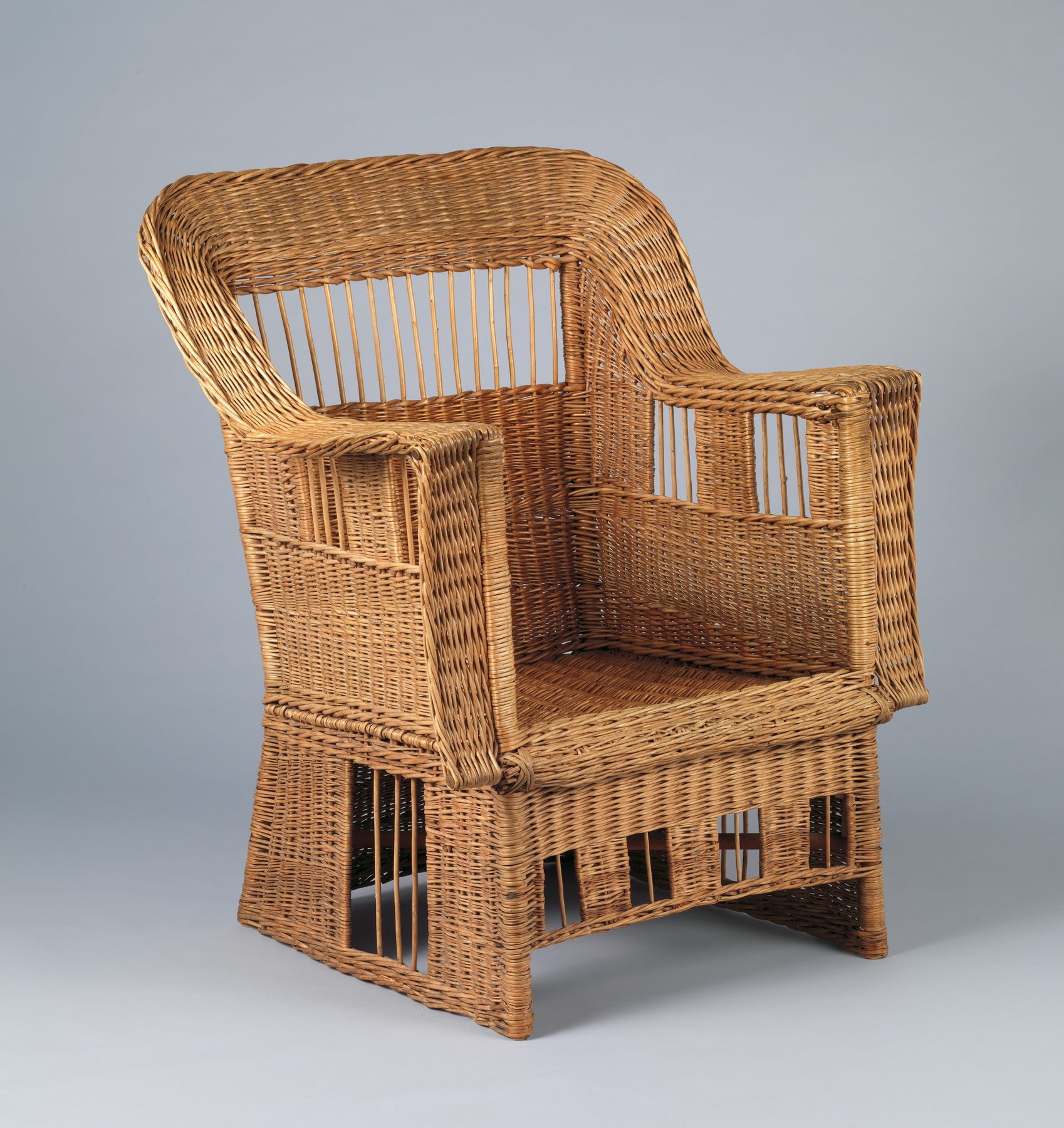
Gustav Stickley gave the movement a powerful commercial identity. His furniture emphasised oak, broad planes, structural joints and restrained metal fittings. Through The Craftsman magazine, model houses and retail networks, he promoted an entire way of living. Production involved factories and standardised models: the visual language of construction was adapted to a national market rather than confined to one artisan's bench.[38]
Elbert Hubbard's Roycroft community at East Aurora, New York, began with printing and expanded into furniture, metalwork and leather. Its campus combined workshops, sales and a theatrical public image of communal craft. Roycroft made Arts and Crafts identity into a brand, demonstrating both the reach and the commercial performance of anti-industrial ideals.[39]
Newcomb Pottery developed within a women's college; Chicago Hull-House workshops connected craft to settlement reform and immigrant communities; Boston's Society of Arts and Crafts established standards and exhibitions. Women, educators and social reformers were therefore as significant as heroic male furniture makers. Cooper Hewitt's account of American women, charity and craft shows how philanthropy could create opportunities while also imposing middle-class ideas about respectable work.[41]
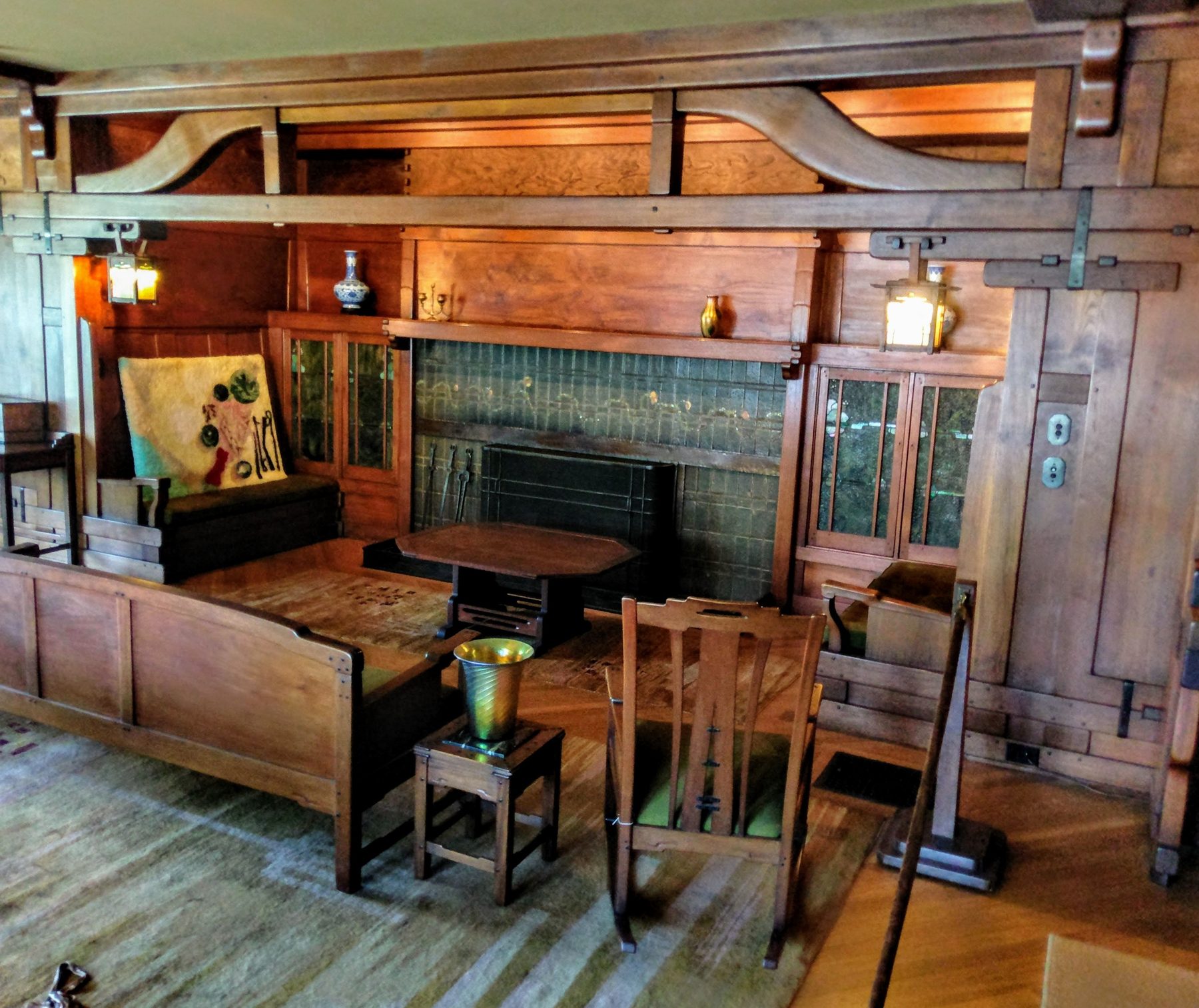
In California, Charles and Henry Greene designed houses in which timber structure, furniture, stained glass and landscape form meticulously coordinated environments. The Gamble House in Pasadena joins Japanese-informed joinery and garden relationships to American materials and luxury patronage. Its precision should not be reduced to “bungalow style”; it represents an exceptional concentration of design and craft for a wealthy client.[42]
Regional adaptation made American Arts and Crafts visually broad. Mission furniture, desert and mountain imagery, Native American motifs, California redwood and Southern plants entered objects under very unequal conditions. A desire for national authenticity could depend on appropriating Indigenous forms or idealising pre-industrial communities while ignoring living peoples.
Sources beyond Europe and the problem of empire
Arts and Crafts designers studied objects from across the world. Morris knew historical carpets, textiles and manuscripts from Islamic cultures and advised the South Kensington Museum, later the Victoria and Albert Museum, on acquisitions. Their structural pattern, saturated colour and disciplined repeat informed his eye. Recent William Morris Gallery interpretation rightly asks how museum collections and trade routes created through empire enabled that encounter.[17] [24]
Japanese prints and decorative objects also transformed European and American design. Cropped compositions, flat colour, asymmetry and sensitivity to seasonal forms offered alternatives to academic representation. Yet “Japan” could become a free-floating aesthetic label detached from named makers, specific schools and a rapidly modernising society. Import markets selected what Western consumers expected to see.
American designers drew on Native American baskets, textiles and pottery. Such admiration occurred during dispossession, coercive assimilation and aggressive collecting. Museums and patrons could preserve objects while separating them from communities, functions and intellectual property. A borrowed motif is not ethically explained by visual influence alone.
The same caution applies to the movement's ideal of the rural craftsperson. Reformers sometimes treated colonised or peasant makers as survivors of a purer life, valuable because they seemed outside modern history. In fact they worked within markets, adapted to demand and navigated political power. Naming makers and communities restores agency that a universal category of “handicraft” can erase.
This history does not make cross-cultural study illegitimate. It makes it specific. We can ask what an artist saw, whether an object was bought or removed, how it was catalogued, what knowledge was lost, and whether later makers transformed a structure or simply applied an exotic sign. The movement's hope for fellowship among makers becomes more credible when the inequalities of access are acknowledged.
Mingei: a related but distinct Japanese movement
The Japanese folk-craft movement known as mingei emerged in the 1920s through Yanagi Sōetsu and potters Hamada Shōji and Kawai Kanjirō. Yanagi coined the term from words for “the people” and “craft”. The Japan Folk Crafts Museum, opened in Tokyo in 1936, collected everyday objects whose beauty advocates located in use, repetition, natural materials and makers working without individual fame.[43]
There are clear resonances with Arts and Crafts: respect for ordinary objects, criticism of industrial ugliness and admiration for skilled traditions. Bernard Leach's friendships and work in Japan created direct exchanges between British studio pottery and Japanese ceramics. Yet mingei was not the Japanese chapter of a British movement. It formed through Japanese modernisation, Korean ceramics, Buddhist thought, collecting and debates about national and colonial identity.[44]
The ideal of the anonymous craftsperson also requires criticism. Anonymity may honour communal knowledge, but it can conceal individual makers, women and labour conditions. Yanagi's collecting during imperial Japan raises questions about how Korean and Okinawan objects were interpreted within Japanese cultural authority. The most useful comparison preserves both affinity and difference.
Mingei later shaped studio craft, museums and ideas of “everyday beauty” around the world. Its popularity can encourage consumers to mistake irregular surfaces for proof of ethical making. As with Arts and Crafts, appearance is not enough; the organisation of labour and movement of objects remain part of the story.
War, modernism and afterlives
The First World War disrupted workshops, commissions and international networks. Some organisations declined; others continued. The Arts and Crafts Exhibition Society held exhibitions well beyond the movement's usual terminal date. Its leading cultural position changed as Art Deco, modernist architecture and industrial design offered different accounts of modern life.[1] [3]
Arts and Crafts did not simply lose to modernism. Its integration of architecture and furniture, respect for material process, workshop education and desire to reunite art with life fed institutions including the Werkbund and Bauhaus. Modernists rejected historical ornament while retaining the ambition to design environments and reform production.[28]
Conservation carries another strong afterlife. The SPAB principle of repair rather than conjectural restoration continues to influence care for historic buildings. Garden-city planning shaped new towns and suburbs internationally. Private presses carried attention to type, paper and page into modern book design. Textile and wallpaper designers transformed Morris's rhythmic repeat through new scales, abstractions and manufacturing methods rather than endlessly copying acanthus leaves.[13] [34] [46] [47]
Studio pottery, hand weaving, woodworking and metalwork inherited the ideal of the maker who controls conception and execution. That ideal could generate expressive independence; it could also recreate a hierarchy in which signed studio pieces outrank communal or industrial skill. Contemporary craft history increasingly studies teams, technicians, supply chains and maintenance alongside named designers.
Environmental debates give Arts and Crafts new urgency. Durable materials, repair, local production and opposition to useless consumption align with sustainable design. But local handwork can consume scarce resources, and industrial processes can sometimes reduce waste. Morris's deeper challenge is more demanding than a rustic aesthetic: society must decide collectively which objects are useful and what forms of work permit human and ecological flourishing.[48]
People and enterprises to know
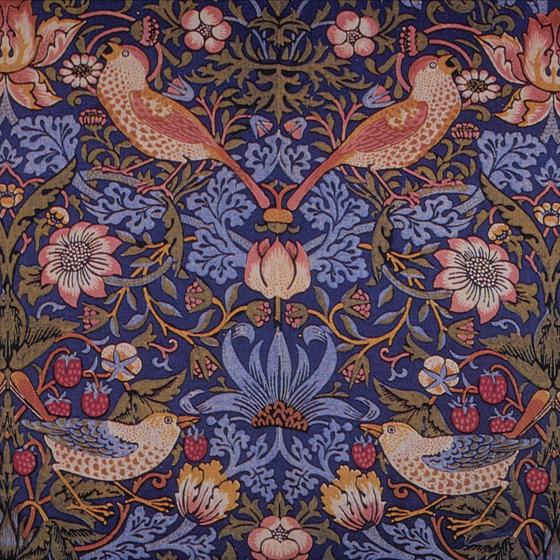
William Morris and Morris & Co.
Morris joined pattern design, manufacturing experiment, socialist argument, preservation and printing. His company demonstrated exceptional technical standards while revealing the economic limits of reform through luxury goods.[8] [10]
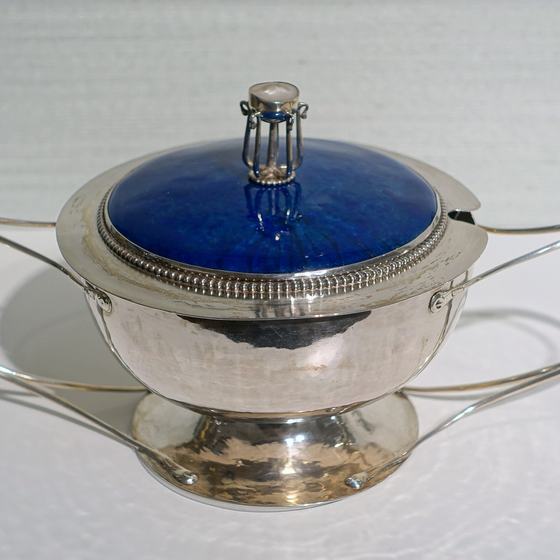
C. R. Ashbee and the Guild of Handicraft
Ashbee combined architecture, silversmithing, training and communal experiment. The Guild's move from London to Chipping Campden tested whether skilled production and fellowship could survive away from the metropolitan market.
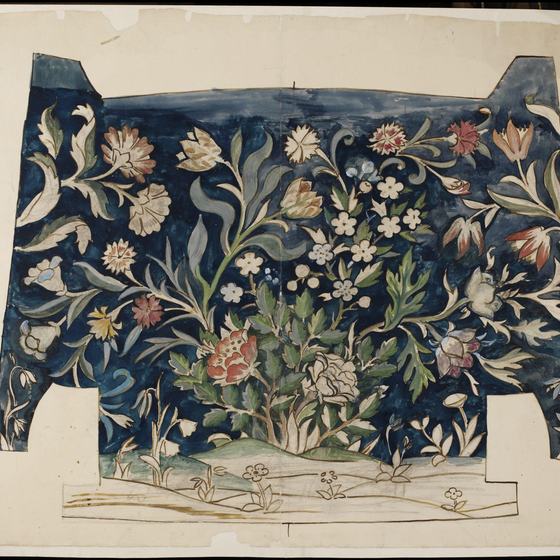
May Morris
May Morris was a major embroidery designer, workshop director, lecturer and organiser. Her career makes clear that Morris & Co. and the wider movement cannot be understood through her father alone.
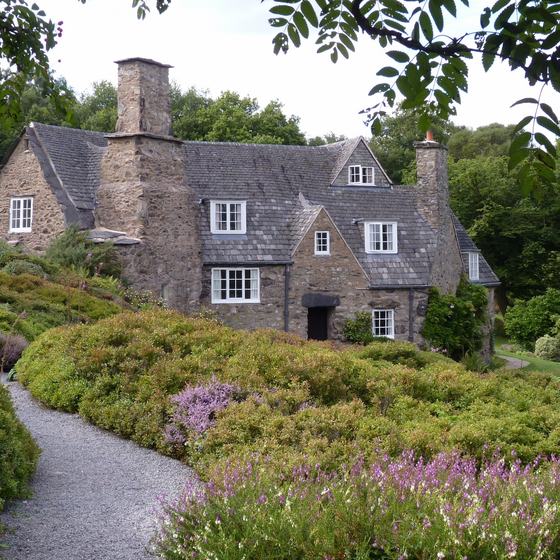
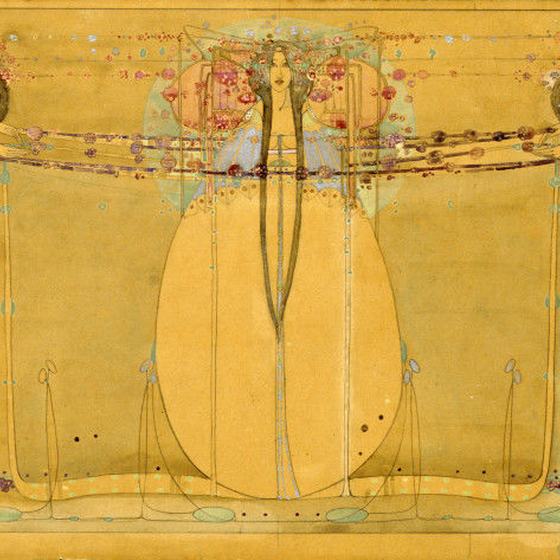
Further people and enterprises
Walter Crane
Crane was an illustrator, designer, socialist and the first president of the Arts and Crafts Exhibition Society. His work helped connect book art, public exhibition and political imagery.[2] [45]
Phoebe Anna Traquair
Traquair brought visionary figure painting and ornamental richness to murals, embroidery, metalwork and books. Her Edinburgh commissions established an Arts and Crafts practice at architectural scale.[19]
Evelyn Gleeson, Elizabeth Yeats and Lily Yeats
Their work at Dun Emer, followed by the Yeats sisters' Cuala enterprises, joined professional craft and publishing to Irish literary and national revival.[21] [22]
Gustav Stickley
Stickley's furniture, magazine and retail system translated structural simplicity and craft ideals for a broad American audience through modern production and publicity.[38]
Newcomb Pottery
Newcomb created professional opportunities for women ceramic decorators and developed a regional visual language from Louisiana plants and landscapes.[40]
Major artists directory
| Name | Nationality | Key Works |
|---|---|---|
| C. R. Ashbee | British | Covered bowl |
| Charles Rennie Mackintosh | British | Hill House |
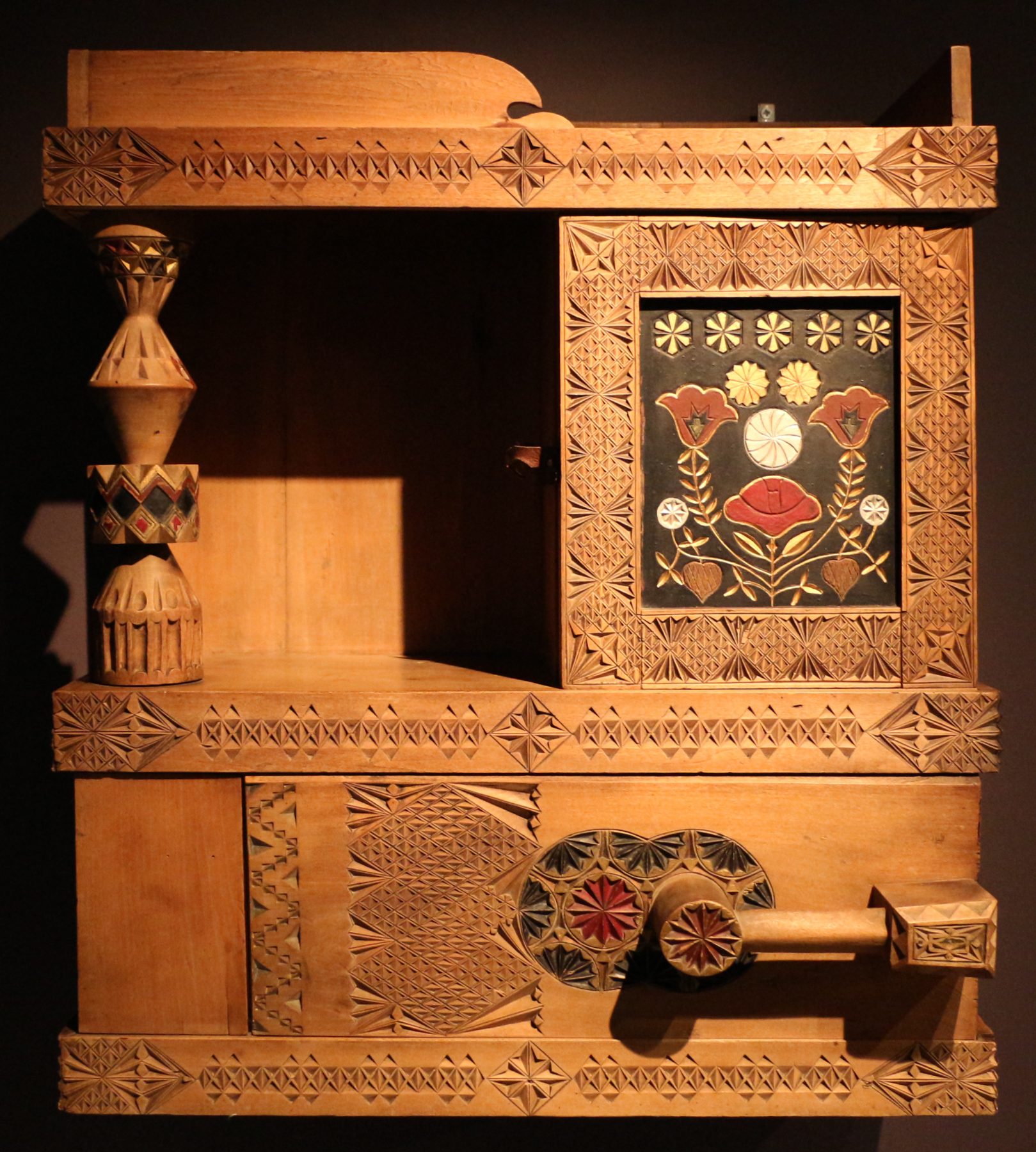
| Elena Polenova | Russian | Carved shelf |
| Elizabeth Yeats | Irish | In the Seven Woods |
| Ernest Gimson | British | Stoneywell, Chair in English oak |
| Evelyn Gleeson | Irish | In the Seven Woods |
| Greene & Greene | American | Gamble House interior |
| Gustav Stickley | American | Armchair |
| Lily Yeats | Irish | |
| Margaret Macdonald Mackintosh | British | The May Queen |
| May Morris | British | Embroidery design |
| Newcomb Pottery | American | Vase |
| Philip Webb | British | Red House, Standen interior |
| Phoebe Anna Traquair | Irish | |
| Sidney Barnsley | British | Standen interior |
| Walter Crane | British | |
| William De Morgan | British | Decorative tile |
| William Morris | British | Trellis, Willow Bough, Strawberry Thief, Dove and Rose point paper, The Works of Geoffrey Chaucer |
How to look at Arts and Crafts design
Begin with construction. Follow the joints in a chair, the lead lines in stained glass or the repeat in wallpaper. Ask which elements carry weight, secure parts or organise the surface. An exposed joint may be functional, decorative or both.
Then consider material transformation. Hammering, carving, dyeing, weaving, firing and printing leave different evidence. Irregularity is not automatically virtue. Look for how technique contributes to use, durability, colour and touch.[11] [18]
Move outward to the room. Arts and Crafts objects were often designed within relationships: a textile answers a wall colour; a cabinet aligns with panelling; a garden path extends a room's axis. Museum display can isolate an object from this environmental intelligence.[14]
Look for collaboration. A design may carry an architect's or company name while a weaver, embroiderer, joiner or ceramic decorator made decisive choices. Labels, signatures, workshop marks and archives can reveal distributed authorship.
Finally, follow money and sources. Who commissioned the work? Who could afford it? Where did timber, dye, pattern or historical knowledge come from? These questions do not interrupt aesthetic pleasure. They show what the object makes visible—and what its beauty might otherwise conceal.
Frequently Asked Questions
It was an international design-reform network that linked the quality of objects to materials, skilled labour and everyday life. It encompassed architecture, furniture, textiles, books, ceramics, metalwork, gardens, education and social criticism. It was not one style or a formal membership organisation.[1] [27]
Its main British phase is usually placed around 1880–1920. Roots lie earlier in Pugin, Ruskin, Morris and the Gothic Revival. The 1887 founding and 1888 first exhibition of the Arts and Crafts Exhibition Society gave the movement its public name. Organisations and international adaptations continued beyond the First World War.[2] [3]
No one person founded the whole movement. William Morris was its most influential precursor, but the Arts and Crafts Exhibition Society was established by a wider circle including Walter Crane and other designer-craftspeople. Ruskin, Pugin, Webb, Ashbee, Lethaby and many women makers and organisers supplied distinct foundations.[2] [4]
Not uniformly. Some makers favoured hand production and criticised factory division of labour. Others designed for manufacturers or used machinery within workshops. Morris argued that machines could serve people by removing burdensome work; he opposed production systems that made workers subordinate and generated useless goods.[7] [48]
It means designing through the properties, processes and structural possibilities of a material rather than disguising it as something else. It does not require plainness. Elaborate textiles, lustre ceramics and enamel can be truthful when their effects arise from deep technical understanding.[18] [23]
Skilled, labour-intensive production takes time, and fair payment increases cost within an unequal market. Many exemplary furnishings and houses were commissioned by wealthy clients. The gap between democratic ideals and expensive objects was recognised by Morris and remains one of the movement's central contradictions.[7]
Women were designers, workshop directors, embroiderers, metalworkers, ceramic decorators, publishers, teachers and organisers. May Morris, Phoebe Traquair, Mary Watts, Margaret Macdonald, the Yeats sisters, Evelyn Gleeson and Newcomb artists are among many examples. Their authorship has often been obscured by company and family names.[18] [19] [21] [40]
They overlapped in integrated interiors, plant forms and the desire to reform design. Arts and Crafts placed stronger emphasis on the moral organisation of labour and often drew on vernacular or medieval construction. Art Nouveau is more closely associated with an explicitly new style of sinuous or geometric form, though figures such as van de Velde and Mackintosh cross any neat boundary.[29] [32]
Yes, especially to debates about repair, durability, sustainable materials, supply chains and meaningful work. Its history warns against treating “handmade” as an ethical guarantee. Its strongest legacy is the demand to judge design by the lives, resources and systems through which it is made.[13] [48]
Discussion
Which Arts and Crafts object, house or idea most changes how you think about design? Do you see handwork as a path toward better labour, or can modern industry deliver the movement's social promise more effectively? Share the makers, places and questions you would add to this history.
Reader Insights
Look for joints, weave, print blocks, hammer marks and material transitions before treating decoration as a detachable style.
Place a chair, textile, vessel or book back within the house, workshop, school, shop or exhibition that organised its use.
Ask who designed, made, managed, sold, cleaned and paid for the object—and whose work disappeared behind a company or household name.
Join the Conversation
Which Arts and Crafts object or building best joins beauty to a convincing account of labour—and where does the ideal break down? Share your view below.
References
- Arts and Crafts: an introduction — Victoria and Albert Museum, vam.ac.uk. View Source
- Our History — Society of Designer Craftsmen, societyofdesignercraftsmen.org.uk. View Source
- Arts and Crafts Exhibition Society — British and Irish Furniture Makers Online, bifmo.furniturehistorysociety.org. View Source
- The Art Workers' Guild: a short history — Art Workers' Guild, artworkersguild.org. View Source
- “The Nature of Gothic” — John Ruskin, Lancaster University, lancaster.ac.uk. View Source
- Wallpaper design reform — Victoria and Albert Museum, vam.ac.uk. View Source
- “Useful Work versus Useless Toil” — William Morris Archive, University of Iowa, morrisarchive.lib.uiowa.edu. View Source
- About William Morris — William Morris Gallery, wmgallery.org.uk. View Source
- The history of Red House — National Trust, nationaltrust.org.uk. View Source
- The Workshop — William Morris Gallery, wmgallery.org.uk. View Source
- Dove and Rose woven double cloth — William Morris Gallery, wmgallery.org.uk. View Source
- William Morris textiles — Victoria and Albert Museum, vam.ac.uk. View Source
- The SPAB Manifesto — Society for the Protection of Ancient Buildings, spab.org.uk. View Source
- Arts and Crafts: design for the home — Victoria and Albert Museum, vam.ac.uk. View Source
- William Morris and wallpaper design — Victoria and Albert Museum, vam.ac.uk. View Source
- How Arts and Crafts influenced fashion — Victoria and Albert Museum, vam.ac.uk. View Source
- William Morris and the V&A — Victoria and Albert Museum, vam.ac.uk. View Source
- Arts and Crafts enamels — Victoria and Albert Museum, vam.ac.uk. View Source
- Phoebe Anna Traquair — National Galleries of Scotland, nationalgalleries.org. View Source
- The Potters' Arts Guild — Watts Gallery, wattsgallery.org.uk. View Source
- Irish women artists — National Gallery of Ireland, nationalgallery.ie. View Source
- Inside the Yeats family library — National Library of Ireland, (in Irish). View Source
- William De Morgan: an introduction — Victoria and Albert Museum, vam.ac.uk. View Source
- William Morris and art from the Islamic world: interpretations — William Morris Gallery, wmgallery.org.uk. View Source
- The history of Standen House and Garden — National Trust, nationaltrust.org.uk. View Source
- Visiting the cottage at Stoneywell — National Trust, nationaltrust.org.uk. View Source
- Arts and Crafts beyond the UK — Victoria and Albert Museum, vam.ac.uk. View Source
- Werkbund and Jugendstil — Museum der Dinge, (in German). View Source
- Henry van de Velde — Museum der Dinge, (in German). View Source
- Raumkunst — Institut Mathildenhöhe Darmstadt, guide.mathildenhoehe.eu. View Source
- Abramtsevo furniture and Elena Polenova — State Tretyakov Gallery, (in Russian). View Source
- The Glasgow Style — V&A Dundee, vam.ac.uk. View Source
- An Hour with The Four — Glasgow Life, glasgowlife.org.uk. View Source
- Our history — Letchworth Garden City Heritage Foundation, letchworth.com. View Source
- Arts and Crafts influences in Letchworth Garden City — Garden City Collection, gardencitycollection.com. View Source
- Millthorpe and Edward Carpenter — Historic England, historicengland.org.uk. View Source
- The Arts and Crafts Movement in America — Metropolitan Museum of Art, metmuseum.org. View Source
- History — Stickley Museum at Craftsman Farms, stickleymuseum.org. View Source
- History of the Roycroft Campus — Roycroft Campus Corporation, roycroftcampuscorporation.com. View Source
- Newcomb ceramics — Newcomb Art Museum, newcombartmuseum.tulane.edu. View Source
- Women, charity and craft in America — Cooper Hewitt, Smithsonian Design Museum, cooperhewitt.org. View Source
- The art and craft of Greene & Greene — Smithsonian American Art Museum, americanart.si.edu. View Source
- The Japan Folk Crafts Museum — Mingeikan, mingeikan.or.jp. View Source
- 100 Years of Mingei: The Folk Crafts Movement — National Museum of Modern Art, Tokyo, (in Japanese). View Source
- Catalogue of the first Arts and Crafts Exhibition Society exhibition — William Morris Gallery, wmgallery.org.uk. View Source
- William Morris: literature and book design — Victoria and Albert Museum, vam.ac.uk. View Source
- Pattern design after William Morris — Victoria and Albert Museum, vam.ac.uk. View Source
- “Art and Labour” — William Morris, marxists.org. View Source
- Image references 49–68: open-access reproductions and institutional collection records.
View 20 image sources
01 · commons.wikimedia.org02 · commons.wikimedia.org03 · commons.wikimedia.org04 · commons.wikimedia.org05 · commons.wikimedia.org06 · commons.wikimedia.org07 · commons.wikimedia.org08 · commons.wikimedia.org09 · commons.wikimedia.org10 · commons.wikimedia.org11 · commons.wikimedia.org12 · commons.wikimedia.org13 · commons.wikimedia.org14 · commons.wikimedia.org15 · commons.wikimedia.org16 · commons.wikimedia.org17 · commons.wikimedia.org18 · commons.wikimedia.org19 · commons.wikimedia.org20 · commons.wikimedia.org