 by Tom Gurney
Tom Gurney BSc (Hons) is an art history expert with over 20 years experience
Published on August 21, 2026 / Updated on October 23, 2026
Email: tomgurney1@gmail.com / Phone: +44 7429 011000
About Gustav Klimt Prints
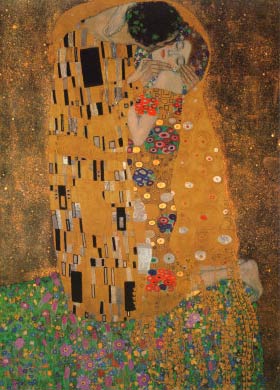
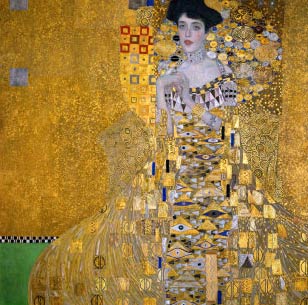
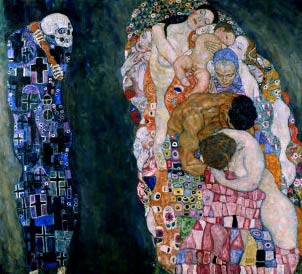
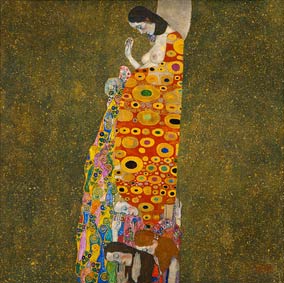
“A Klimt print” can mean almost anything in modern commerce: a museum poster, a reproduction of The Kiss, a decorative canvas transfer or a page removed from an old portfolio. Art history needs a narrower and more useful vocabulary. An original lithographic poster designed by Gustav Klimt is not the same kind of object as a photomechanical plate reproducing one of his paintings. For modern decorative copies, see the advice on choosing a Klimt poster or reproduction below. Posters, original printed designs and later reproductions remain different kinds of objects. A printed illustration made from his drawing is not the drawing itself. A later edition produced after his death does not become an original merely because it carries his name.
Once those distinctions are made, Klimt's print history becomes smaller but more interesting. He was not a prolific painter-printmaker who spent a career cutting woodblocks, etching copper or pulling impressions in his own studio. His most consequential graphic work arose through publishers, printers, periodicals and exhibition organisations. The print was a place where an image could leave the unique sheet, join typography and enter public life.
The defining example is his 1898 poster for the First Vienna Secession Exhibition. Its image of Theseus fighting the Minotaur under the gaze of Pallas Athene gave a new artists' association a combative visual identity. It also became a literal site of censorship: the heroic nude had to be obscured for public circulation.[3][4] In one object, the design, the printing process, institutional politics and altered state are inseparable.
At a Glance
- ScaleA small and carefully bounded graphic output, not a large independent printmaking oeuvre
- Early publication workDesigns for Martin Gerlach's Allegories and Emblems from the early 1880s
- Key original printed workThe colour lithographic poster for the First Vienna Secession Exhibition, 1898
- Important publicationVer Sacrum, the Vienna Secession's illustrated square-format journal
- Principal production rolesArtist/designer, publisher, printer and institution must be named separately
- State distinctionThe 1898 Secession poster survives in versions before and after censorship
- Reproduction distinctionA collotype, heliogravure or other plate after a painting is a reproduction of that painting, even when Klimt approved the project
- Lifetime disseminationThe portfolio later completed as Das Werk von Gustav Klimt circulated high-quality reproductions of his paintings
- Posthumous cautionLater portfolios, facsimiles and commercial editions require their own dates, makers and processes
- Essential questionDid Klimt make the printed matrix, supply the design, supervise the reproduction, or have no role in the edition at all?
Gustav Klimt Print and Graphic Index
Browse paintings, drawings and printed objects discussed in this guide. Select a title to explore its date, medium and reproduction history.
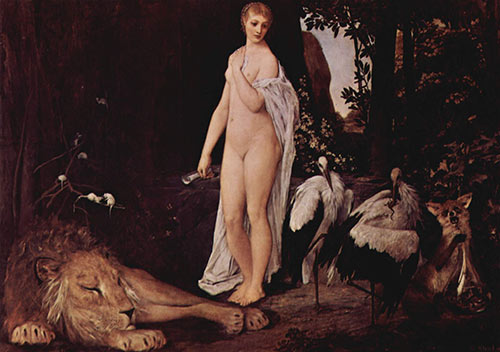
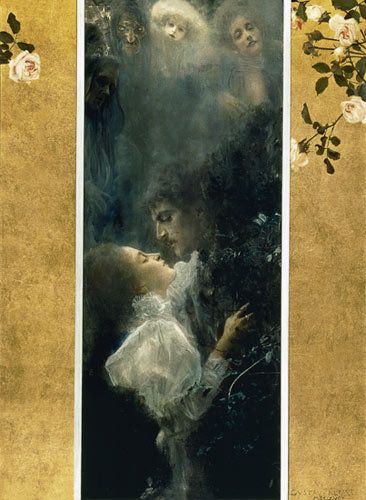
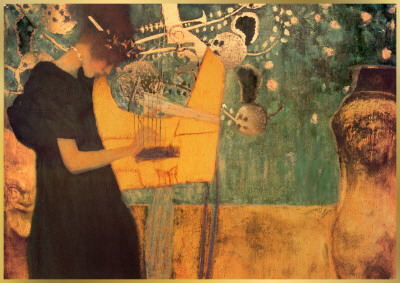
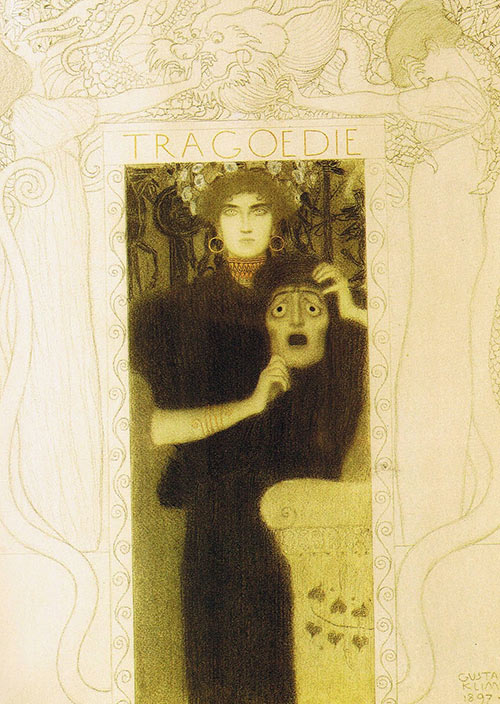
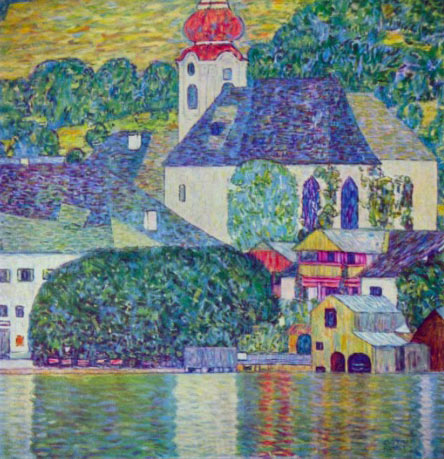
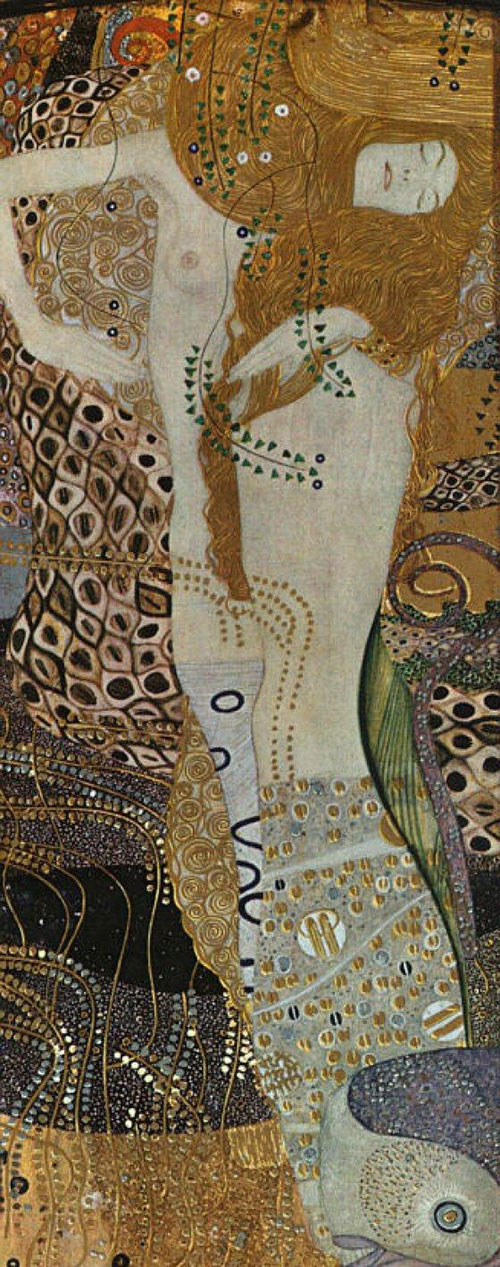
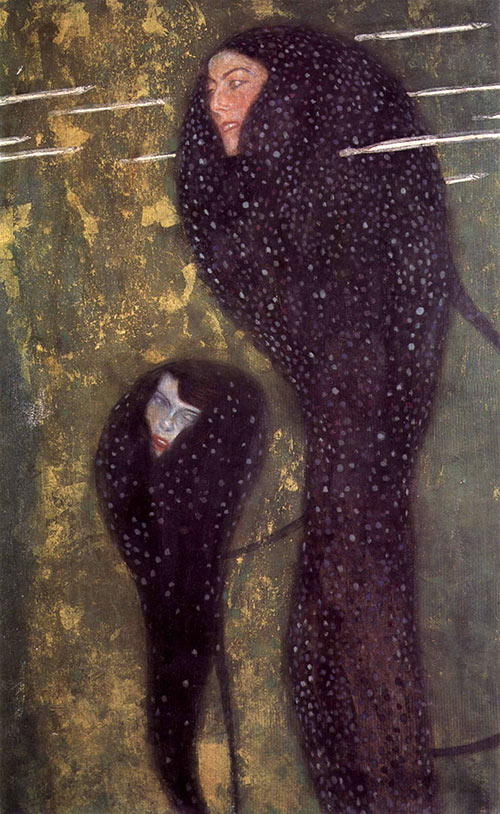
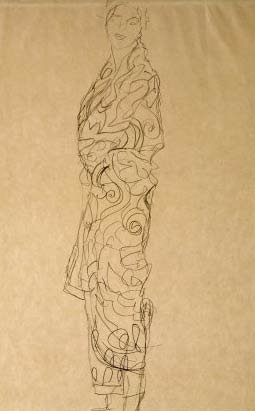
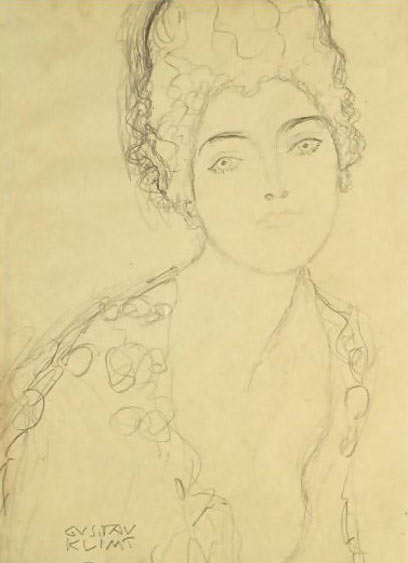
Browse Klimt Print and Reproduction Pages
These pages help separate original works from later printed records, reproductions and corrective title histories.
What Counts as a Klimt Print?
Printmaking produces multiple impressions from a matrix or printing surface. In an artist's original print, the image is conceived for that process, even when a professional printer assists with its execution. Reproductive printmaking begins from another work—often a painting or drawing—and translates it for multiplication. Both can be historically important. They are not interchangeable forms of authorship.
Klimt's case adds a third category: the printed design. He could make an original drawing for a poster, magazine or pattern book while a commercial workshop transferred and printed it. The resulting impression is correctly associated with Klimt as designer, but the technical labour and publishing decision belong to other named participants too.
This is not pedantry. Lithography, letterpress, collotype and heliogravure create different relations to an original mark. A lithographic design can be drawn for the stone or transferred to it; a magazine illustration may reproduce a pen-and-ink sheet; a photomechanical plate can preserve the tonal appearance of an oil painting without carrying the painter's brushwork. The category tells us what kind of contact with Klimt the object actually offers.
A museum record is therefore more reliable than the signature line on a seller's label. Useful records identify artist, role, printer, publisher, date, process, dimensions and state. When those facts are missing, “Klimt print” is a description of the image's fame, not yet an identification of the object.
Designs for Allegories and Emblems
Klimt encountered publication work while still close to his training at the Vienna School of Arts and Crafts. Beginning in 1881, the publisher Martin Gerlach commissioned designs for Allegories and Emblems, a collection of visual models intended to raise the standard of work in the applied arts. Students including Gustav and Ernst Klimt and Franz Matsch contributed alongside established artists. Gustav supplied designs in drawing and oil for subjects that could be reproduced and used as examples by other makers.[1]
The enterprise joined pedagogy, commerce and design. A plate did not simply present an artwork for contemplation; it offered a repertory of personifications, poses, attributes and ornamental solutions. Its trilingual headings and registered publication status addressed an international market of artists and artisans.
The Leopold Museum's record for plate 26, The Times of Day, makes the production chain unusually clear. It identifies Klimt with the design, Martin Gerlach as editor and Gerlach & Schenk with the printing and publishing. The medium is broadly recorded as print on paper, dated 1882.[2] Nothing in that account requires us to imagine Klimt operating the press. His authorship lies in the visual conception supplied to a collaborative publishing system.
These early designs complicate the idea that graphic art was a late supplement to Klimt's painting. He learned from the beginning to think about translation: how an allegorical composition could remain legible when reduced, multiplied and detached from the singular painted surface. The historical language is still academic, but the relation between figure, frame and reproducible ornament anticipates later work for the Secession.
The First Secession Poster
In 1897 Klimt helped found the Association of Austrian Visual Artists Vienna Secession and became its first president. The organisation needed more than rooms and members; it needed a public image. Klimt's poster for its first exhibition in 1898 uses myth as institutional argument.
At the left, Theseus attacks the Minotaur. Pallas Athene stands apart on the right. A large area of the paper remains open between action and witness, while exhibition information forms a dense block below. The old struggle is not illustrated as archaeological spectacle. It becomes a modern claim about a younger association confronting the structures of Vienna's established art world.[3]
The uncensored impression held by the Leopold Museum is a colour lithograph with gold printing on paper, measuring 97.3 by 73.2 centimetres. The record identifies Klimt as the artist and notes that the naked Theseus caused conflict with the authorities. A revised version added tree trunks over the figure.[3] MoMA's record for a censored impression names the Association of Austrian Artists Vienna as publisher and Albert Berger's lithographic institute in Vienna as printer.[4]
The change is more than an anecdote about prudery. It creates a state distinction. An impression before censorship preserves the initial design; the altered state records the negotiation required for public display. Neither should be described as the sole poster without qualification. Dimensions can also differ among impressions and institutional records, so state, sheet and collection must stay together.
The gold is significant because it functions as printed colour rather than leaf applied to a painting. It catches the prestige associated with metallic surface while remaining part of a multiplied graphic object. The open paper is just as important. Klimt does not fill the poster with the luxuriant pattern now used to market his name. He makes emptiness carry distance, hierarchy and suspense.
Text is structural. The image leaves room for dates, venue and association. Letterforms do not sit beneath a self-contained painting; they complete the object. This integration of word, figure and blank ground places the poster within the Secession's broader effort to dissolve inherited rankings between fine art and applied design.
Censorship, Copies and States
Posters are vulnerable precisely because they are public. They are pasted, folded, covered, trimmed and discarded. A surviving impression may be mounted, restored or separated from the setting for which it was printed. Reproductions often crop away the lower text, turning the design into a mythological picture and removing its exhibition function.
The First Secession poster also circulates today in images of both states. A viewer may encounter Theseus uncovered, partially hidden or cropped above the intervention. Without the state named, an apparent difference can be mistaken for damage or modern alteration. The historical record explains that the covering tree trunks belong to the authorised public revision.[3][4]
A further distinction separates an original 1898 impression from a modern facsimile. The same design can be printed again at another scale, on another paper and by another process. Visual fidelity does not restore the original date or production. An honest description begins with “after Klimt” or “reproduction of” when the object was not issued within the historical project.
Klimt in Ver Sacrum
The Vienna Secession's journal Ver Sacrum began appearing in 1898. Its square pages changed appearance from issue to issue, bringing literature, criticism, illustration and typography into a designed whole. The third issue of the first year was devoted entirely to Klimt, who produced a group of pen-and-ink drawings for it.[5]
Here the line between drawing and print becomes especially productive. Klimt's original Nuda Veritas design in the Wien Museum is graphite, pen and brush in ink on paper, dated 1898. The museum identifies it as the final drawing for the March issue of Ver Sacrum.[6] That sheet is a unique work with its own scale, paper and corrections. The image in the journal is a printed publication object, placed in sequence with type and other pages.
The difference affects close looking. On the original drawing, one can attend to ink density, preliminary graphite and the physical boundary of the sheet. In the journal, the relevant questions include reduction, page proportion, neighbouring text, ink transfer and the rhythm of turning pages. Neither object is a lesser version of the other. They disclose different stages in a graphic passage from studio to audience.
Klimt's initials, decorative elements and allegorical figures in Ver Sacrum do not form a portfolio of independent prints in the conventional sense. They belong to a collective periodical. Editors, typesetters, printers and other contributing artists shaped the publication. Klimt's presidency and prominence should not erase that shared labour.
The square format also deserves notice. It creates pressure quite unlike the tall Secession poster. A figure, initial or border must negotiate with a compact page, sometimes wrapping around a block of text or acting as punctuation within it. Long before the square became strongly associated with Klimt's landscapes, it was active within the graphic culture of the Secession.
From Unique Drawing to Multiplied Page
Publication is not neutral transmission. Every stage changes an image. A printer may translate fluid ink into a more even contour. Reduction can make small irregularities disappear and bring the larger silhouette into focus. Paper tone changes contrast. Typography can turn a lone figure into an argument or emblem.
Klimt understood those pressures because his graphic designs leave room for them. The First Secession poster gives a remarkable proportion of its surface to air and information. Ver Sacrum drawings use contour and patterned black that remain legible after reproduction. The early Gerlach designs organise allegory for a plate intended to circulate as a model.
This is why “designed by” is not a diminished attribution. It identifies the intellectual and visual authorship appropriate to applied graphic work. At the same time, it prevents the designer from absorbing the printer's craft. Albert Berger's workshop made the censored Secession lithograph printable and repeatable; Gerlach and his firm structured the earlier portfolio; the Secession created the journal context. Print history is a history of roles.
Das Werk von Gustav Klimt
The most ambitious publication associated with Klimt's paintings belongs to reproduction rather than original printmaking. Das Werk von Gustav Klimt gathered fifty high-quality plates after paintings. The HFBK Hamburg describes its 1918 copy as fifty heliogravures, organised in five instalments of ten, with two colour plates in each. It was produced in collaboration with Klimt and printed by the Imperial-Royal Court and State Printing Office for the publisher Hugo Heller.[7]
The project developed from an earlier portfolio connected to Galerie Miethke. The Klimt Database describes the Heller publication as its continuation and notes that it appeared in 1918, after Klimt's death.[8] Its timing gives the set an unusual threshold status: conceived through a lifetime campaign to circulate the oeuvre, completed as a memorial object.
These plates matter enormously to reception. They brought works held in different collections into a single portable sequence. They preserved images of paintings that later changed location or were lost. They offered critics and collectors an ordered account of Klimt's achievement at a quality far beyond an ordinary newspaper reproduction.
But a heliogravure after a painting remains a translation. It does not contain the canvas, the relief of paint, applied metal or original scale. Where colour and gold are simulated, the optical behaviour differs from the work. The plate can be an authentic 1918 publication made with Klimt's involvement without being an “original Klimt print” in the sense of an image conceived and worked through the printing medium.
This distinction protects the portfolio from two opposite errors. It should not be sold conceptually as fifty original graphic works by Klimt. Nor should it be dismissed as mere copying. Reproductive technology was one of the mechanisms through which an artist's corpus became visible, collectable and canonical.
After Klimt: The Expanding Reproductive Image
Klimt's posthumous fame has produced a vast field of printed images. Some are serious scholarly facsimiles or museum publications. Some are plates from named historical portfolios. Others are modern decorative products with little more than a familiar image and the artist's surname.
The relevant questions are concrete. Who issued the object? When? By what process? Was it made from an original drawing, a photograph of a painting or another reproduction? Does a plate number belong to a documented portfolio? Was the paper created for the edition or artificially aged? A signature printed as part of the image is not a hand signature.
Posthumous portfolios of drawings deserve the same discipline. A collotype can reproduce graphite with extraordinary subtlety, but it remains a multiplied image after the sheet. If a volume includes an actual drawing, that inserted work must be identified separately from the plates. The fame of erotic Klimt drawings has encouraged portfolio pages to be detached and sold individually; once separated, the original publication context can be easy to lose.
Modern reproductions also change meaning through selection. The same handful of golden paintings dominate posters and merchandise, while the austere Secession graphics and early pattern-book designs remain less familiar. This imbalance can make Klimt seem more decorative and less experimental than his printed work suggests. The original poster's large emptiness is a useful corrective to the assumption that he always filled every surface.
Why the Small Corpus Matters
Klimt's prints are important because they reveal an artist speaking through systems larger than the studio. A painting can be privately commissioned or exhibited as a singular object. A poster addresses pedestrians before they enter. A journal enters homes and cafés. A pattern book moves among workshops. A reproductive portfolio carries an absent painting across borders.
Those formats required economy. The Secession poster reduces institutional conflict to a few figures, open ground and an information block. Ver Sacrum designs rely on contour and contrast. The Gerlach plates turn historical allegory into reusable visual material. In each, multiplication is not an afterthought. It shapes what the image can do.
The corpus also makes collaboration visible. Klimt's name may draw attention, but paper, stone, press, publisher, editor and institution determine the final impression. Print does not weaken authorship; it distributes it more accurately.
Artist Up Close
The closest encounter with Klimt in print may occur where his hand is least easy to romanticise. A lithograph is not the untouched trace of a pencil. It has passed through preparation, a printing surface and a press. Yet the decisions remain sharp: how far Theseus is pushed to the edge, how Pallas holds the opposite side, how much blank paper separates struggle from authority.
That distance is the poster's real drama. It allowed a public message to be forceful without being crowded. When censorship added tree trunks, the intervention changed the body but could not erase the design's challenge. The altered state now carries both Klimt's initial conception and the pressure placed upon it.
Across his graphic work, Klimt did not simply shrink paintings for paper. He adjusted line, spacing and symbol to the social life of print. The result is a small corpus with an unusually wide reach.
Choosing a Modern Klimt Poster
Start with the image rather than the seller's description of its prestige. Browse the paintings and drawings to find a subject you want to live with, then compare the offered reproduction with a reliable image of that work. A familiar title is not enough to establish that the crop, orientation or colours are suitable.
Check whether the product shows the complete composition or a selected detail. Either can be an intentional choice, but they provide different experiences. Ask for the dimensions of the printed image as well as those of the sheet and frame. A large border can make a product's overall measurement much greater than the artwork area.
Compare paper, finish, framing and delivery terms without assuming that a more expensive format is more historically authentic. A contemporary canvas reproduction remains a reproduction; metallic-looking ink or a printed signature does not make it an original Klimt object. Inspect sample details for sharpness and ask whether the image has been stretched to fit a standard shape.
For a pair or group, consider the actual image proportions before choosing matching frames. Do not crop an important part of a composition simply to make every product identical. Check the current seller's return policy and description of what is supplied, rather than relying on an old price, an unlabelled promotional photograph or a promise that every format is available.
Frequently Asked Questions
References
- Gustav Klimt Database, “Theater Painter in the Crown Lands and Vienna, 1883–1888,” including Allegories and Emblems. View source.
- Leopold Museum, “Allegories and Emblems, Plate 26, The Times of Day,” 1882. View source.
- Leopold Museum, “Ver Sacrum. Theseus and Minotaur. Poster for the First Exhibition of the Vienna Secession, Version Prior to Censorship,” 1898. View source.
- Museum of Modern Art, “Poster for the First Secession Exhibition, Censored Version,” 1898. View source.
- Albertina Museum, “Illustrations for Ver Sacrum,” Online Catalogue Raisonné of Gustav Klimt's Drawings. View source.
- Wien Museum, “Nuda Veritas,” final drawing for Ver Sacrum, 1898. View source.
- University of Fine Arts Hamburg Library, “Das Werk von Gustav Klimt,” 1918 portfolio record. View source.
- Gustav Klimt Database, “The Final Years, 1914–1918,” including the Heller Portfolio. View source.
Discussion
Gustav Klimt Prints rewards close attention to source context, object identity and careful reproduction boundaries.