 by Tom Gurney
Tom Gurney BSc (Hons) is an art history expert with over 20 years experience
Page Created: 30 August 2026 / Page Updated: November 6, 2026
Email: tomgurney1@gmail.com / Phone: +44 7429 011000
Jupiter and Semele: Introduction
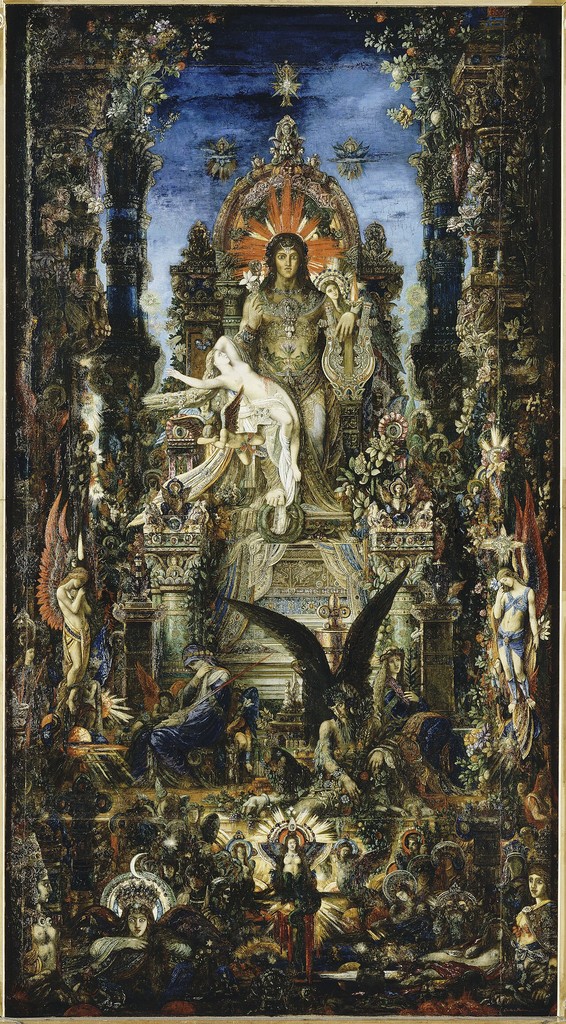
In Gustave Moreau’s Jupiter and Semele, a mortal woman collapses across the lap of a god whose unveiled splendour has destroyed her. Yet the fatal encounter occupies only the radiant centre of a much larger world. A lyre, an eagle, allegorical figures, plants, sphinxes and beings half hidden in darkness extend around and below the throne. Moreau turns a brief mythological catastrophe into a monumental vertical meditation on earthly life, death and spiritual ascent. Its scale makes this imagined order physically immediate as well.
At a Glance
- ArtistGustave Moreau
- TitleJupiter and Semele (Jupiter et Sémélé), Cat. 91
- DateCommissioned in 1889; completed and delivered in 1895
- MediumOil on canvas
- DimensionsApproximately 212 × 118 cm
- CollectionMusée Gustave Moreau, Paris; given by Léopold Goldschmidt in 1903[1]
Gustave Moreau in context
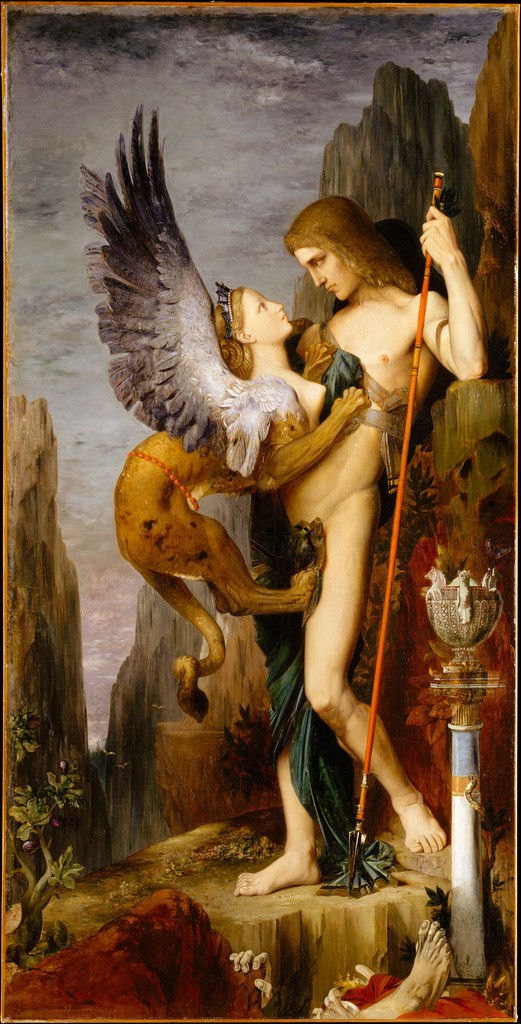
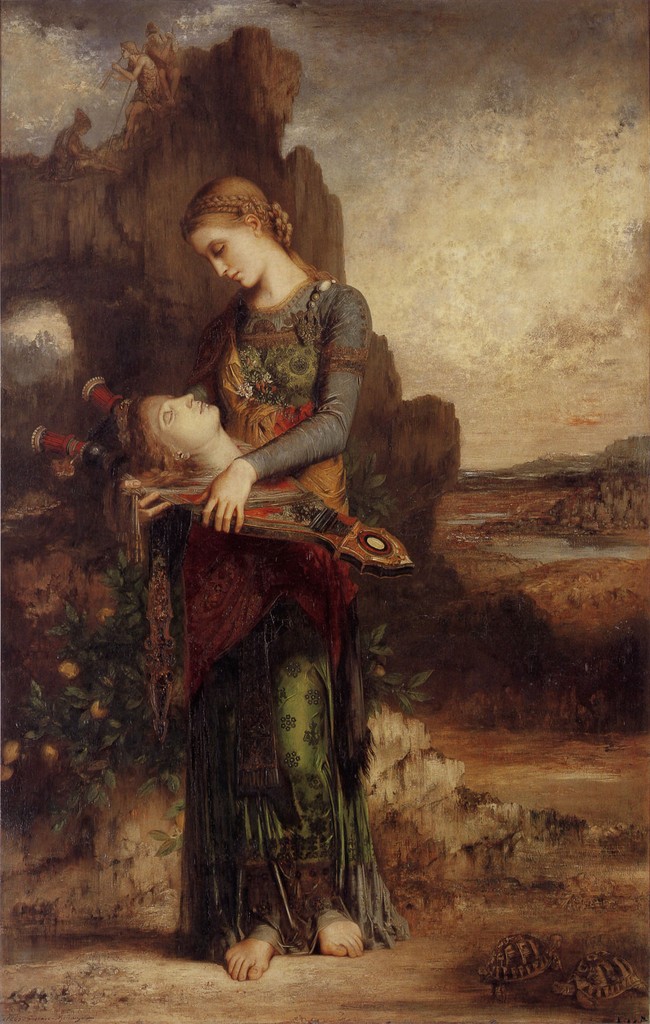
Orpheus
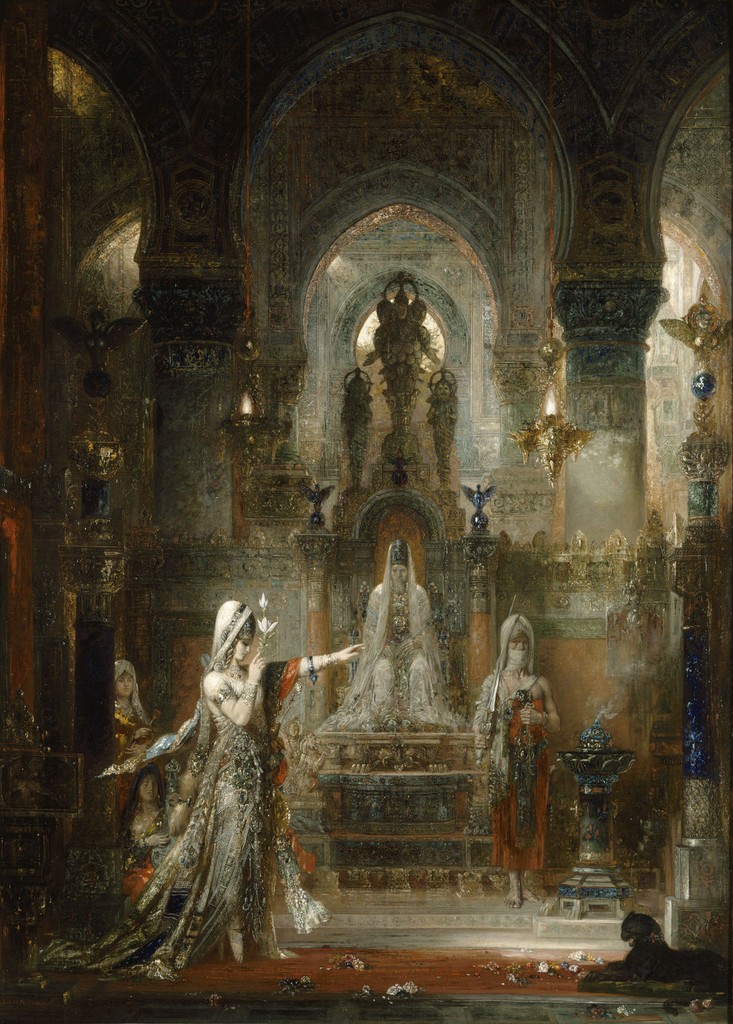
1865The Apparition
1876Galatea
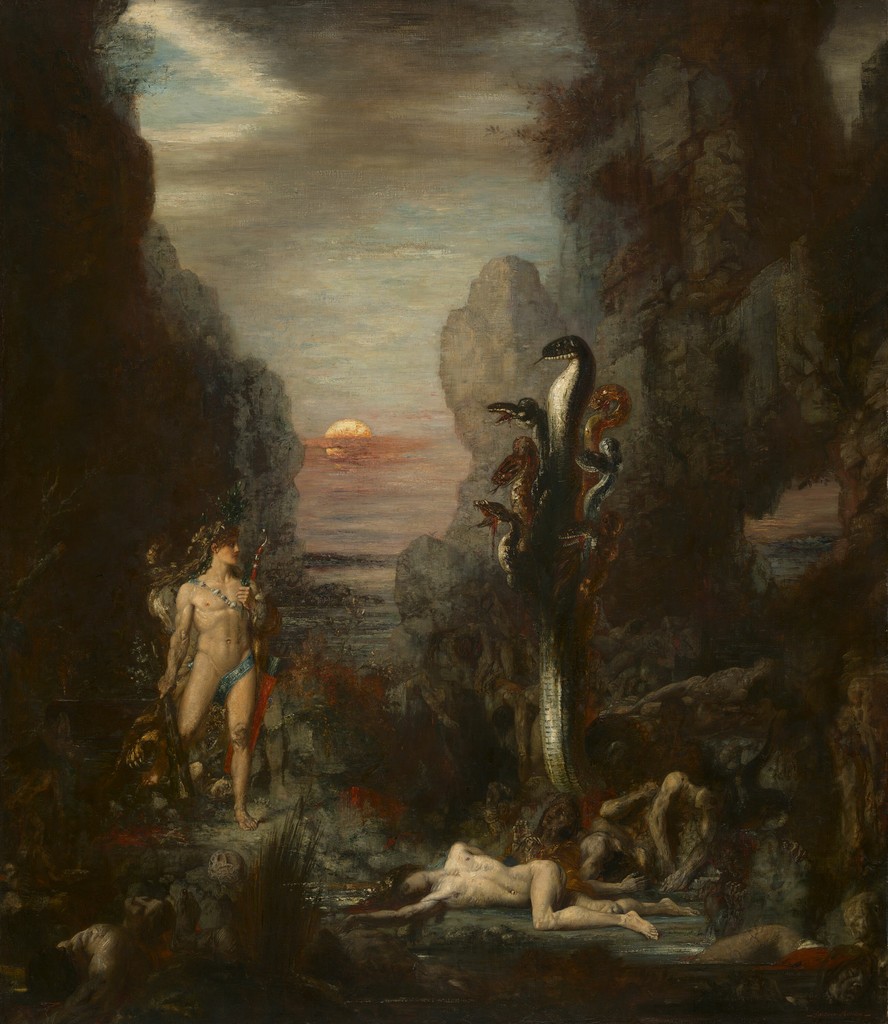
c. 1880Saint George and the Dragon
1889–90Jupiter and Semele
1894–95Contents
- Introduction
- The Exact Painting and Its Commission
- How to Look at the Central Revelation
- The Myth of a Fatal Request
- Moreau’s Departures and Named Allegories
- From Lower Darkness to Spiritual Regions
- Monumental Scale, Layered Colour and Surface
- A Late Synthesis Beside the Museum Project
- Why Jupiter and Semele Matters
The Exact Painting and Its Commission
The active object is the Musée Gustave Moreau’s Cat. 91, not Cat. 73, a preparatory drawing or another treatment of the subject. The museum records that the first sketch dates from 1889, when the German banker Léopold Goldschmidt commissioned the painting. Moreau completed and delivered the oil in 1895. Its height is 2.12 metres and its width 1.18 metres, giving the crowded design an emphatically upright field.[1]
Goldschmidt retained the canvas after delivery. He donated it to the museum in 1903, the year the institution opened, and it now dominates the first room of the third-floor studio.[2] This ownership sequence matters. The painting belongs intimately to the house-museum today, but it did not enter the state with the works Moreau left inside his home at his death.
The exact high-resolution image is also identified as Cat. 91 and reproduces the same tall oil now in the Paris museum.[3] Dates such as 1894–95 sometimes accompany reproductions, but the holding institution’s more precise account—commissioned in 1889 and completed in 1895—governs here.[1]
How to Look at the Central Revelation
The following visual description is based on observation of the Cat. 91 reproduction; the names assigned to its many secondary figures come from the museum’s account.[1][3] Begin at the luminous centre. Semele’s pale body lies diagonally across Jupiter, her head thrown back and one arm falling towards the richly constructed seat. Her exposed flesh is the brightest continuous shape in the picture, so the eye finds her before it can sort the surrounding multitude.
Jupiter sits frontally behind her, immense yet almost motionless. Moreau gives him a smooth, beardless face, a dark halo and an elaborately ornamented body. Rays spread behind his head within the throne’s architecture. The effect is less like a natural burst of lightning than a sustained manifestation: the god appears as an image of power that Semele cannot survive.
A large lyre rests beside Jupiter. Its looping outline and strings remain readable amid jewels, cloth and architectural motifs. The instrument is unexpected because it conventionally belongs to Apollo or Orpheus; the museum explains that Moreau used it to make Jupiter a poet god.[1] That choice shifts the revelation away from thunder alone. Divine force is presented through radiance, music and the generative power of imagination as well as destruction.
Below the throne, Jupiter’s eagle opens dark wings across the central axis. The bird creates a strong visual threshold: pale Semele and the enthroned god remain above, while denser, darker beings accumulate beneath. To either side, vegetation climbs through columns, figures and ornaments. Leaves and flowers do not form a separate landscape. They interlace the divine court until architecture, bodies and growing forms seem to occupy one prolific environment.
This first route—Semele, Jupiter, lyre and eagle—gives the eye a stable scaffold. Only then do the smaller presences become distinguishable. The picture rewards alternating distances: from afar, its central light and long vertical structure are clear; close viewing reveals faces, attributes and minute passages that complicate any single reading.
The Myth of a Fatal Request
Semele was the daughter of Harmonia and Cadmus, founder of Thebes, and the mortal lover of Jupiter. According to the narrative summarised by the museum, Jupiter’s jealous wife Juno disguised herself as Beroe, Semele’s elderly nurse. She gained the young woman’s confidence and persuaded her to demand that her lover reveal himself in his divine glory. Juno knew that such a vision would be fatal to a mortal.[1]
Moreau represents the consequence. Semele is struck down, overwhelmed by the transfigured god she had asked to see. The episode contains desire, deception and unequal knowledge: she seeks proof of Jupiter’s identity, but the proof exceeds the limits of her body. Her death is therefore not incidental to the revelation. It exposes the impossible distance between a human lover and divine power.
The wider myth continues through their child. Bacchus, or Dionysus, is removed from Semele’s womb and sewn into Jupiter’s thigh until he can be born. Moreau does not narrate that sequence in a set of episodes. Instead, a small winged being shields its eyes near the throne. The museum notes that this figure has sometimes been identified as Bacchus, but records Moreau’s own description of it as the goat-hoofed spirit of earthly love.[1] That distinction keeps a later interpretation from replacing the painter’s stated identification.
Moreau’s Departures and Named Allegories
The beardless Jupiter is a deliberate break from customary images of the mature, thunder-wielding god. The lyre is another departure. Moreau combines sovereign, poet and visionary in one still figure, then surrounds him with beings that are not required to tell the classical story. His additions transform an episode about Juno’s deception into a much broader allegorical order.[1]
At the base of the throne stand Death and Sorrow. The museum identifies Death by the bloodied sword that has just done its work. Sorrow wears a crown of thorns and carries a lily, joining suffering to an emblem of purity. Moreau understood these two figures as the tragic foundation of human existence.[1] They do not merely repeat what has happened to Semele: they generalise her catastrophe into conditions shared by mortal life.
Pan occupies another level of the assembly. As a divinity associated with the earth, he links the celestial region above to the infernal zone below. Tiny creatures struggle upon his thighs, described by the museum as trying to shed worldly bonds.[1] Nearby, Jupiter’s eagle belongs unmistakably to the god, but its spread black wings also divide the picture’s radiant centre from the lower crowd.
At the bottom is Hecate, identified with Night and marked by a crescent upon her head. Around her gather hybrid inhabitants of Erebus, a realm of shadow whose beings still await light. Two sphinxes guard this obscure company and signify the past and future in the museum’s interpretation.[1] Their riddle-like presence is apt: they frame what cannot yet be clearly known.
These identities make the painting legible without turning it into a substitution cipher. Death, Sorrow, Pan and Hecate have named functions, but colour, scale and position also matter. A visitor need not decode every small body before experiencing the main contrast between Semele’s exposed vulnerability and the dark abundance below. The broader guide to Moreau’s symbolism, mythology and religion offers context for this balance between literary knowledge and visual suggestion.
From Lower Darkness to Spiritual Regions
The museum proposes that the painting’s vertical development should be read as the soul’s path towards increasingly spiritual regions.[1] The lower edge is packed with nocturnal beings, half-seen faces and low, lateral bodies. Above them, the eagle and the throne establish a middle boundary. Jupiter and Semele occupy the most concentrated revelation, while blue space, stars and airborne forms open above the architectural crown.
The movement is not a simple ladder in which every higher figure is better. Semele reaches the god and dies; physical nearness to divinity is dangerous rather than automatically redemptive. Sorrow and Death stand close to the throne, and vegetation passes between levels instead of respecting neat borders. Spiritual ascent is therefore imagined through tension: darkness seeks illumination, but illumination can overwhelm.
The format intensifies this reading. At nearly twice its width in height, the canvas encourages the gaze to climb and descend. Moreau repeats arches, upright columns and rising stems, then interrupts them with Semele’s diagonal body and the eagle’s horizontal wings. Those crossings prevent the vertical scheme from becoming static. The eye repeatedly returns to the mortal body laid across the axis of ascent.
Monumental Scale, Layered Colour and Surface
The dimensions make Jupiter and Semele a bodily encounter. More than two metres high, it exceeds the height of most viewers, while its relatively narrow width concentrates the mass of detail. In a reproduction, the entire work can appear like one intricately patterned object; in the third-floor studio, the scale allows its throne, plants and lower population to confront the visitor as separate zones.[1][2]
On visual inspection, blue-black shadow surrounds intensely local reds, greens, golds and whites. Fine outlines preserve tiny attributes, while clustered touches make jewellery, flowers and carved forms glint against darkness.[3] The Musée Gustave Moreau describes rich painting as an ideal in Moreau’s art and singles out Jupiter and Semele as an example of colour aspiring to the intensity of enamel.[4] Its press kit also compares the dazzling colour to the ceramics of Bernard Palissy.[2] These are useful analogies for brilliance and density, not claims that the canvas is made from enamel or ceramic material.
The only medium in the object record is oil on canvas.[1] Within that medium, the surface produces differences between pale flesh, opaque dark wings, coloured ornaments and blue atmosphere. The accumulation does not erase the design. Semele’s light body, Jupiter’s frontal pose and the throne’s symmetry continue to organise a field filled almost to saturation. Moreau’s wider painting practice helps explain why finish in his art can mean layered elaboration rather than uniform smoothness.
A Late Synthesis Beside the Museum Project
Moreau completed the commission in 1895, a decisive year in his late career. His official biography records both the completion of Jupiter and Semele and the transformation of the family house at 14 rue de La Rochefoucauld for its future use as a museum.[5] Architect Albert Lafon began that conversion in 1895. New, spacious studios replaced the upper floors, and from 1896 Moreau selected, arranged and continued working on objects intended to present the range of his career.[2]
The timing makes Cat. 91 an apt companion to the museum project, even though it belonged to Goldschmidt at the time. It gathers many of Moreau’s persistent concerns: a classical story recast as inward revelation, a disciplined central design, hybrid beings, abundant botanical form, precious colour and a hierarchy that moves from material darkness towards spirit. The museum accordingly treats it as a synthesis and a pictorial testament.[1]
That language should not be converted into the claim that this was literally Moreau’s final painting. He lived until 1898, continued organising and revising works, and returned to The Return of the Argonauts in 1897.[2][6] “Testament” describes the painting’s summative ambition, not the last item in a chronological list. The biography of Gustave Moreau places it within those still-active final years.
Goldschmidt’s 1903 gift brought the privately commissioned canvas into the institution just as it opened. It now stands in a setting Moreau shaped to preserve relationships across his work rather than isolate a few celebrated pictures. That home makes Cat. 91 both an individual commission and a key part of the museum’s larger account of his art.[2]
Why Jupiter and Semele Matters
The painting demonstrates how Moreau could enlarge a single instant until it held an entire metaphysical world. Semele’s death remains the emotional centre, but it is set within cycles of suffering, earthly existence, darkness and possible ascent. The crowd is purposeful: named allegories expand the myth, while unresolved details preserve the mystery Moreau valued.
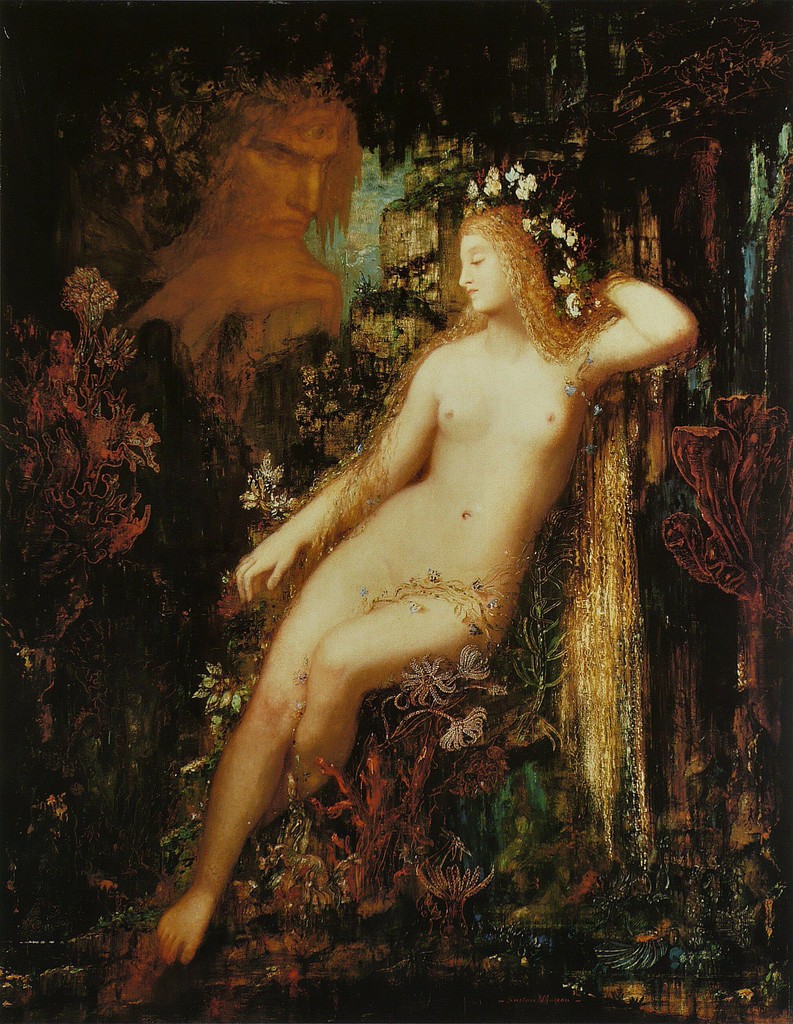
It also joins apparent opposites. Monumental scale contains miniature-like attention; a rigid throne supports a collapsing body; intense colour emerges from deep shadow; and a fatal divine appearance becomes an image of poetic power. Connections to works such as Galatea show Moreau repeatedly suspending myth at a psychologically charged encounter, but Cat. 91 carries that method into its most architecturally expansive late form.
Researched works directory
This searchable evidence census was assembled from public museum records and a reproducible Wikidata snapshot. It is not a catalogue raisonné, a claim to complete oeuvre coverage, or a substitute for Pierre-Louis Mathieu's printed catalogue, which was not consulted for this directory.
| Name | Date | Medium |
|---|---|---|
| Abstract Study | 1850 | Painting |
| Abstract Study | 1875 | Painting |
| Abstract Study | 1890 | Painting |
| Academic Study of a Man | 1847 | Painting |
| Achilles the Centaur Chiron | 1859 | Painting |
| Andromeda | 1867 | Painting |
| Andromeda | Date unknown | Painting |
| Angels Following the Magi | 1860 | Painting |
| Angels following the Three Magi | 1898 | Painting |
| Angels Throwing Flowers on the Vatican | 1850 | Painting |
| Aphrodite, 1871 | Date unknown | Painting |
| Apollo and Daphne | 1852 | Painting |
| Apollo and The Nine Muses | 1856 | Painting |
| Apollo and the Satyrs | 1850 | Painting |
| Apollo Victorious over Python | 1885 | Painting |
| Apollon and Marsyas | 1858 | Painting |
| Ariadne and Theseus | 1875 | Painting |
| Arion | 1891 | Painting |
| Athenians being Delivered to the Minotaur in the Cretan Labyrinth | 1855 | Painting |
| Autumn | 1885 | Painting |
| Bacchanal | 1850 | Painting |
| Bacchus on the Panther -cart. | Date unknown | Painting |
| Bathsheba | 1875 | Painting |
| Beheading of John the Baptist | 1872 | Painting |
| Bertrand and Raton | 1879 | Painting |
| Binding of Isaac | 1850 | Painting |
| Birth of Venus | 1870 | Painting |
| Briseis Departure | 1859 | Painting |
| centaur | Date unknown | Painting |
| Centaurs | 1850 | Painting |
| Chimera | 1850 | Painting |
| Chimeras | 1875 | Painting |
| Christ and the Two Thieves | 1870 | Painting |
| Christ at Gethsemane | 1850 | Painting |
| Christ at Gethsemane | 1875 | Painting |
| Christ at Lake Tiberias | 1850 | Painting |
| Christ at the Column | 1850 | Painting |
| Christ Blessing Hist Mother | 1850 | Painting |
| Christ Reliever | 1850 | Painting |
| Circe | 1850 | Painting |
| Cleopatra | 1850 | Painting |
| Cleopatra | 1887 | Painting |
| Danaé | 1858 | Painting |
| Darius, Fleeing after the battle of Arbela, Stops, Exhausted, to Drink from a Pond | 1853 | Painting |
| Darius Flight | 1850 | Painting |
| Dead Orpheus | 1850 | Painting |
| Dead Orpheus | 1890 | Painting |
| Dead Poet Carried by a Centaur | 1890 | Painting |
| Death Giving Laurels to the Winner of the Tournament | 1859 | Painting |
| Death of a Young Crusader | 1870 | Painting |
| Death of Moses | 1850 | Painting |
| Death of Sapho | 1850 | Painting |
| Death of Sapho | 1872 | Painting |
| Debauchery | 1850 | Painting |
| Dejanira (Autumn) | 1872 | Painting |
| Delilah | 1850 | Painting |
| Delilah | 1890 | Painting |
| Delilah | 1896 | Painting |
| Descent from the Cross | 1850 | Painting |
| Diana bathing | 1900 | Painting |
| Diomede devoured by his horses | 1865 | Painting |
| Diomedes Devoured by His Horses | 1865 | Painting |
| Diomedes Devoured by His Own Horses | 1870 | Painting |
| Œdipus the Wayfarer | 1888 | Painting |
| Draft for Sapho | 1850 | Painting |
| Eleonora Gonzaga, Duchess of Urbino | 1858 | Painting |
| Endymion | 1850 | Painting |
| Erigone | 1865 | Painting |
| Eve | 1850 | Painting |
| Eve | 1875 | Painting |
| Fairy in a Cave | 1850 | Painting |
| Fairy with Griffins | 1870 | Painting |
| Fairy with Griffins | 1876 | Painting |
| Fée aux griffons | 1876 | Drawing |
| Femme et licorne | 1890 | Painting |
| Francesco Maria della Rovere, Duke of Urbino | 1858 | Painting |
| Françoise de Rimini | 1850 | Painting |
| Galatea | c. 1880 | Painting |
| Galathea | 1896 | Painting |
| Galathea | Date unknown | Painting |
| Ganymede | 1886 | Painting |
| Gardian Angel of the City | 1850 | Painting |
| Genius of Evil | 1850 | Painting |
| Genius of Evil | 1875 | Painting |
| Golgotha | 1870 | Painting |
| Hamlet | 1850 | Painting |
| Hamlet Giving Poison to the King | 1850 | Painting |
| Helen | 1850 | Painting |
| Helen | 1880 | Painting |
| Helen at the Scaean Gate | 1888 | Painting |
| Helen Glorified | 1893 | Painting |
| Helen on the Walls of Troy | 1850 | Painting |
| Helen on the Walls of Troy | 1875 | Painting |
| Helene | Date unknown | Painting |
| Hercule et les oiseaux du lac de Stymphale | Date unknown | Painting |
| Hercules and Omphale | 1856 | Painting |
| Hercules and the Ceryneian Hind | 1871 | Painting |
| Hercules and the Daughters of Thespius | 1850 | Painting |
| Hercules and the Lernaean Hydra | 1875–1876 | Painting |
| Hercules and the Nemean Lion | 1850 | Painting |
| Hercules and the Stymphalian Birds | 1872 | Painting |
| Hercules and Thespius Daughters | 1850 | Painting |
| Hercules at Lake Stymphalia | 1875 | Painting |
| Hercules between Vice and Virtue | 1850 | Painting |
| Hesiod and the Muse | 1870 | Painting |
| Hesiod and the Muse | 1875 | Painting |
| Hesiod and the Muse | 1891 | Painting |
| Hesiod and the Muses | 1860 | Painting |
| Hesiod and the Muses | 1882 | Painting |
| Hésiode enfant | 1860 | Painting |
| Horse Rider | 1854 | Painting |
| Horse Rider | 1870 | Painting |
| Horse Rider and Amazon | 1869 | Painting |
| Horse Riders and Horses | 1854 | Painting |
| Indian Women Poets | 1890 | Painting |
| Interior, Draft | 1850 | Painting |
| Jacob and the Angel | 1876 | Painting |
| Jacob and the Angel | 1878 | Painting |
| Jacob et l'Ange | 1878 | Painting |
| Jason | 1865 | Painting |
| Jason et Éros | 1891 | Painting |
| Judith | 1850 | Painting |
| Jupiter and Semele | 1889–1895 | Painting |
| King Canute and His Courtesans | 1850 | Painting |
| King David | 1878 | Painting |
| L'enlèvement d'Europe | 1872 | Painting |
| La Fée | Date unknown | Painting |
| La mort de Sapho | 1872 | Painting |
| La mort de Sapho | 1876 | Painting |
| La Villa Borghèse | Date unknown | Painting |
| Landscape | 1850 | Painting |
| Landscape, Draft | 1850 | Painting |
| Landscape (Neighborhood of Étampes) | 1850 | Painting |
| Le Bon Samaritain | 1865 | Painting |
| Le Cantique des cantiques | 1853 | Painting |
| Le Christ et Madeleine (Noli me Tangere) | 1889 | Painting |
| Le Grand Pan contemple les Sphères Célestes | 1897 | Drawing |
| Le Poète et la Sirène | 1893 | Painting |
| Le Soir | 1887 | Painting |
| Le Sphinx | 1886 | Painting |
| Leda | 1846 | Painting |
| Leda | 1850 | Painting |
| Leda | 1870 | Painting |
| Les Chimères | 1884 | Painting |
| Les Plaintes du poète | 1882 | Painting |
| Life of Humanity | 1875 | Painting |
| Life of Humanity | 1886 | Painting |
| Life of Humanity: Salvator Mundi | 1886 | Painting |
| Life of Humanity: The Golden Age, Adam - Evening - Sleep | 1879 | Painting |
| Life of Humanity: The Golden Age, Adam - Morning - Prayer | 1879 | Painting |
| Life of Humanity: The Golden Age, Adam - Noon - Extasy | 1879 | Painting |
| Life of Humanity: The Iron Age, Cain - Evening - Death | 1879 | Painting |
| Life of Humanity: The Iron Age, Cain - Morning - Work | 1879 | Painting |
| Life of Humanity: The Iron Age, Cain - Noon - Rest | 1879 | Painting |
| Life of Humanity: The Silver Age, Hesiod and Orpheus, Hesiod - Evening - Tears | 1879 | Painting |
| Life of Humanity: The Silver Age, Hesiod and Orpheus, Hesiod - Morning - Inspiration | 1879 | Painting |
| Life of Humanity: The Silver Age, Hesiod and Orpheus, Orpheus - Noon - Song | 1879 | Painting |
| Love Victorious over Death | 1850 | Painting |
| Lucretia and Tarquin | 1850 | Painting |
| Magdalene on Golgotha | 1850 | Painting |
| Magdalene on Golgotha | 1875 | Painting |
| Magdalene on Golgotha | 1880 | Painting |
| Magnolia | 1864 | Painting |
| Martyrdrom | 1850 | Painting |
| Messalina | 1850 | Painting |
| Messalina | 1874 | Painting |
| Messaline | 1874 | Painting |
| Mort de Sapho | 1900 | Painting |
| Moses Exposed | 1875 | Painting |
| Moses Exposed on the Nile | 1875 | Painting |
| Moses, in Sight of the Promised Land, Takes His Sandals Off | 1854 | Painting |
| Moses Rescued from the Nile | 1893 | Painting |
| Mystic Flower | 1890 | Painting |
| Narcissus | 1850 | Painting |
| Narcissus | 1885 | Painting |
| Narcissus | 1890 | Painting |
| Noces d’Alexandre et de Roxane | Date unknown | Drawing |
| Nude Study | 1850 | Painting |
| Nyx, Night Goddess | 1880 | Painting |
| Oedipus and the Sphinx | 1864 | Painting |
| Orestes | 1850 | Painting |
| Orestes | 1875 | Painting |
| Orestes and the Erinyes | 1875 | Painting |
| Orphés | 1865 | Painting |
| Orpheus | 1865 | Painting |
| Orpheus Head | 1850 | Painting |
| Orpheus on Eurydice's Tomb | 1890 | Painting |
| Pasiphaë | 1850 | Painting |
| Pasiphaë | 1880 | Painting |
| Pasiphaë, Grisaille | 1850 | Painting |
| Pauline Moreau as the Virgin | 1848 | Painting |
| Perseus and Andromeda | 1870 | Painting |
| Persian Poet | 1875 | Painting |
| Petrarch After the Triumph | 1850 | Painting |
| Phaéton | 1878 | Painting |
| Phoebus and Boreas | 1879 | Painting |
| Pietà | 1867 | Painting |
| Pietà | 1875 | Painting |
| Pietà | 1876 | Painting |
| Pietà | Date unknown | Painting |
| Pittacus the Tyrant in War Costume | 1883 | Drawing |
| Polyphemus | 1880 | Painting |
| Poney | 1870 | Painting |
| Portrait of Gustave Moreau by Himself | 1850 | Painting |
| Portrait of Gustave Moreau by Himself | 1890 | Painting |
| Postman and Horses | 1854 | Painting |
| Prometheus | 1868 | Painting |
| Prometheus | 1869 | Painting |
| Prometheus Thunderstruck | 1870 | Painting |
| Prometheus, Variant | 1870 | Painting |
| Rape of Deianira | 1850 | Painting |
| Rape of Deianira | 1872 | Painting |
| Return of the Argonauts | 1890 | Painting |
| Ruines de Rome : le Colisée vu des jardins de l'Angélicum des dominicains | 1858 | Painting |
| Saint Cecilia and the Angels of Music | 1850 | Painting |
| Saint Francis Kissing a Leper | 1850 | Painting |
| Saint George and the Dragon | 1889–1890 | Painting |
| Saint Jerome | 1850 | Painting |
| Saint Sebastian | 1850 | Painting |
| Saint Sebastian | 1870 | Painting |
| Saint Sebastian and the Angel | 1876 | Painting |
| Saint Sebastian and the Angels | 1850 | Painting |
| Saint Sebastian Succoured | 1885 | Painting |
| Saint Sebastian with Archers | 1875 | Painting |
| Saint-Sébastien et l'ange | 1876 | Painting |
| Saint Sébastien soigné par les saintes femmes | 1869 | Painting |
| Sainte Cecilia | 1850 | Painting |
| Salome | 1850 | Painting |
| Salome | 1872 | Painting |
| Salome | 1874 | Painting |
| Salome at the Prison | 1873 | Painting |
| Salomé au Jardin | 1878 | Painting |
| Salome Dancing | 1872 | Painting |
| Salomé Dancing Before Herod | 1876 | Painting |
| Salome Dancing in front of Herod | 1876 | Painting |
| Salome with the Head of John the Baptist | 1876 | Painting |
| Santa Cecilia (Moreau) | Date unknown | Painting |
| Sappho falling into the Abyss | 1867 | Painting |
| Semele | 1889 | Painting |
| Semele, Draft | 1889 | Painting |
| Singing Centaurs | 1850 | Painting |
| Slaves Thrown to the Morays | 1850 | Painting |
| Song of Songs (Cantique des Cantiques) | 1893 | Painting |
| Spanish Conversation | 1850 | Painting |
| Spring | 1850 | Painting |
| St. Sebastian | Date unknown | Painting |
| Study | 1850 | Painting |
| Study | 1874 | Painting |
| Study | 1875 | Painting |
| Study for Jupiter and Semele | 1889 | Painting |
| Study for Moses Taking Off His Sandals | 1854 | Painting |
| Study for Saint Cecilia | 1850 | Painting |
| Study for Salome | 1874 | Painting |
| Study for The Triumph of Alexander the Great | 1885 | Painting |
| Study from Nature | 1850 | Painting |
| Study of a red ibis | 1900 | Painting |
| Sultan | 1850 | Painting |
| Suzanne et les vieillards | 1895 | Painting |
| swinging girl | Date unknown | Painting |
| Tea Rose | 1850 | Painting |
| Temptation | 1890 | Painting |
| Tempting Demon | 1875 | Painting |
| The Angels of Sodome | 1872 | Painting |
| The Apparition | 1876 | Drawing |
| The Argonauts | 1885 | Painting |
| The Bad Rich | 1850 | Painting |
| The calvary | 1867 | Painting |
| The childhood of Sixtus V. | 1853 | Painting |
| The Chimera | 1867 | Painting |
| The chimera | Date unknown | Painting |
| The Chimeras | 1850 | Painting |
| The Crowning with Thorns | 1846 | Painting |
| The Daughters of Thespius | 1853 | Painting |
| The Dead Lyres | 1897 | Painting |
| The Decameron | 1850 | Painting |
| The Disciples in Emmaus | 1850 | Painting |
| The Dream Haunting the Mogul | 1881 | Painting |
| The Entombment | 1867 | Painting |
| The Good Samaritan | 1850 | Painting |
| The Infant Moses | 1877 | Painting |
| The Magi | 1860 | Painting |
| The Martyred Saint Sebastian | 1869 | Painting |
| The Mermaid and the Poet | 1895 | Painting |
| The Muses Leaving Their Father Apollo to Go and Light the World | 1868 | Painting |
| The Parca and the Angel of Death | 1890 | Painting |
| The Parcae | 1850 | Painting |
| The Pieridae | 1875 | Painting |
| The Pieridae | 1880 | Painting |
| The Pietà | 1867 | Painting |
| The Plague in Florence | 1870 | Painting |
| The Poet and the Siren | 1894 | Painting |
| The Prodigal Son | 1850 | Painting |
| The Prodigal Son | 1890 | Painting |
| The Rape of Europe | 1868 | Painting |
| The Rape of Europe | 1869 | Painting |
| The Shulamite | 1853 | Painting |
| The Sirens | 1850 | Painting |
| The Sirens | 1875 | Painting |
| The Sirens | 1882 | Painting |
| The Springs | 1856 | Painting |
| The Suitors | 1862 | Painting |
| The Toilette | 1887 | Painting |
| The Travelling Angels | 1875 | Painting |
| The Travelling Poet | 1890 | Painting |
| The Unicorn | 1885 | Painting |
| The Unicorns | 1888 | Painting |
| The Voices | 1867 | Painting |
| The Wandering Jew | 1870 | Painting |
| The Young Man and Death | 1856–1865 | Painting |
| Tomyris and Cyrus | 1850 | Painting |
| Triumph of Alexander the Great | 1873 | Painting |
| Triumphing Church | 1870 | Painting |
| Tyrtaeus | 1850 | Painting |
| Tyrtaeus Singing While Fighting | 1860 | Painting |
| Un Saint au désert | 1879 | Painting |
| Untitled | 1866 | Painting |
| Venice | 1850 | Painting |
| Venice | 1885 | Painting |
| Venus Rising from the Sea | 1866 | Painting |
| Victim | 1850 | Painting |
| Vue de Florence | 1858 | Painting |
| Walk in a Park | 1865 | Painting |
| Water Fairy | 1850 | Painting |
| Womand and Chimera | 1875 | Painting |
| Young Thracian Woman Holding Orpheus' Head | 1866 | Painting |
Frequently Asked Questions
Juno, jealous of Jupiter’s mortal lover Semele, disguises herself as the woman’s nurse and persuades her to demand that Jupiter reveal his divine glory. The revelation is fatal to Semele. Moreau shows her collapsing across the enthroned god at the moment she is overwhelmed.[1]
Léopold Goldschmidt commissioned the work in 1889, the date of Moreau’s first sketch. The artist completed and delivered the canvas in 1895. Goldschmidt then gave it to the Musée Gustave Moreau in 1903.[1]
The museum records an oil on canvas measuring approximately 212 centimetres high by 118 centimetres wide. The medium is oil alone; comparisons with enamel and Palissy ceramics describe its intense colour and ornate effect, not additional materials.[1][2][4]
Moreau expanded the fatal revelation into an allegory of mortal and spiritual existence. The museum identifies Death, Sorrow, Pan, Hecate, Jupiter’s eagle and two sphinxes among the surrounding beings. Their positions lead from a dark lower realm towards more spiritual regions above.[1]
It is Cat. 91 in the Musée Gustave Moreau in Paris. The museum’s guide places it in the first room of the third-floor studio, where its tall format and densely populated surface dominate the space.[2]
Discussion
Use this evidence-led guide as a starting point for close looking rather than a final verdict.
Share an observation about Jupiter and Semele or a source that adds useful context.
Reader Insights
Which detail most changes your reading of Jupiter and Semele?
How do scale, support, medium or present museum evidence shape the encounter?
What remains uncertain when visual inference is separated from documented fact?
Join the Conversation
Add your reading below, keeping observations specific and evidence clear.
References
- Musée Gustave Moreau, “Jupiter and Semele [Jupiter et Sémélé].”, accessed 30 August 2026.
- Musée Gustave Moreau, English Press Kit 2023, accessed 30 August 2026.
- Musée Gustave Moreau via Wikimedia Commons, “Jupiter and Semele by Gustave Moreau.jpg.”, accessed 30 August 2026.
- Musée Gustave Moreau, “The Art of Gustave Moreau.”, accessed 30 August 2026.
- Musée Gustave Moreau, “Biography of Gustave Moreau.”, accessed 30 August 2026.
- Musée Gustave Moreau, “The Studios.”, accessed 30 August 2026.