 by Tom Gurney
Tom Gurney BSc (Hons) is an art history expert with over 20 years experience
Page Created: 30 August 2026 / Page Updated: November 6, 2026
Email: tomgurney1@gmail.com / Phone: +44 7429 011000
Salomé Dancing Before Herod: Introduction
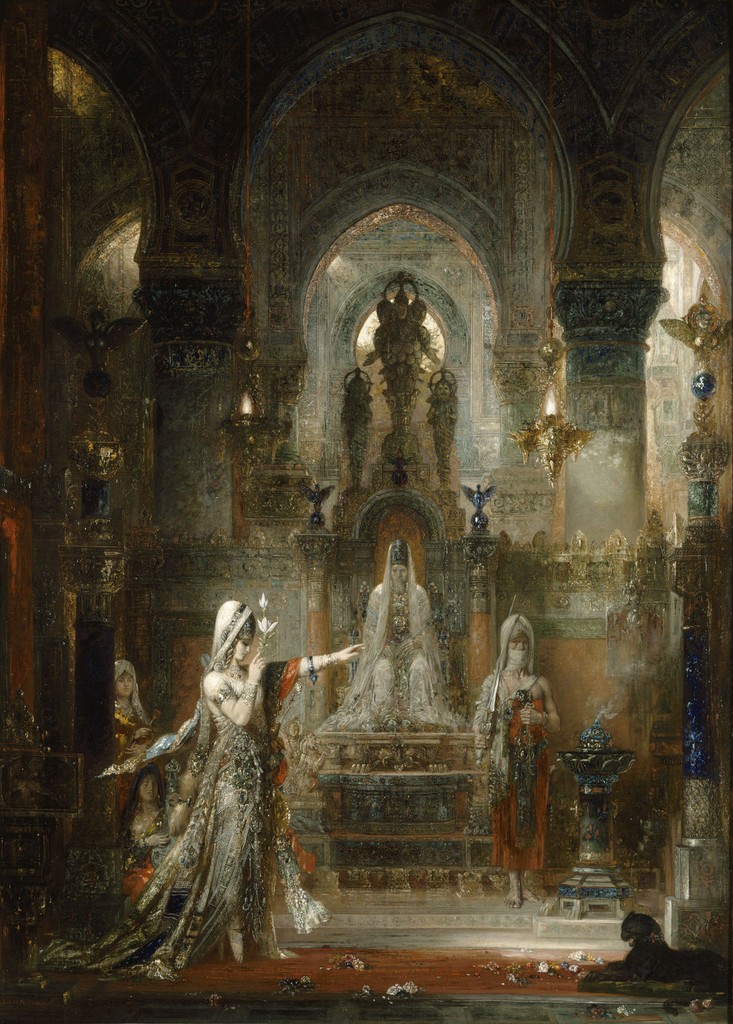
Gustave Moreau’s Salomé Dancing Before Herod fixes a dangerous story at the moment before its violence becomes visible. The dancer advances through a vast, dim hall, raising a pale lotus as her other arm points towards the enthroned king. John the Baptist’s head has not yet appeared, and no execution is shown. Moreau instead makes gesture, distance, architecture and scattered points of light carry the tension. The 1876 oil is both a biblical history painting and a carefully staged vision whose beauty has shaped—and complicated—later interpretations of Salomé.
At a Glance
- ArtistGustave Moreau
- Date1876; developed between 1874 and 1876
- MediumOil on canvas
- Dimensions143.5 × 104.3 cm
- CollectionHammer Museum, Los Angeles; accession AH.90.48
- Key distinctionThis dancing scene is not The Apparition, the Tattooed Salomé or the Metropolitan Museum’s small oil-on-wood variant.
Gustave Moreau in context
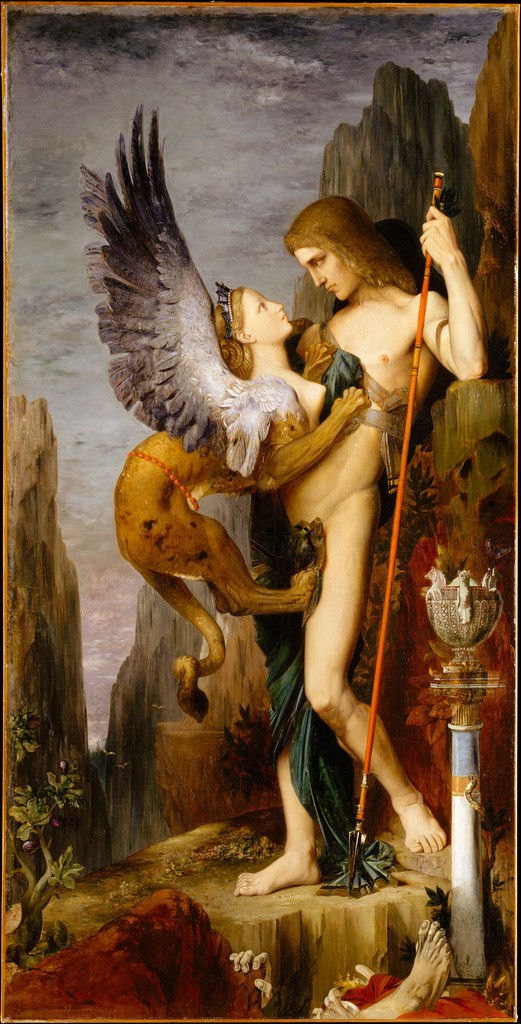
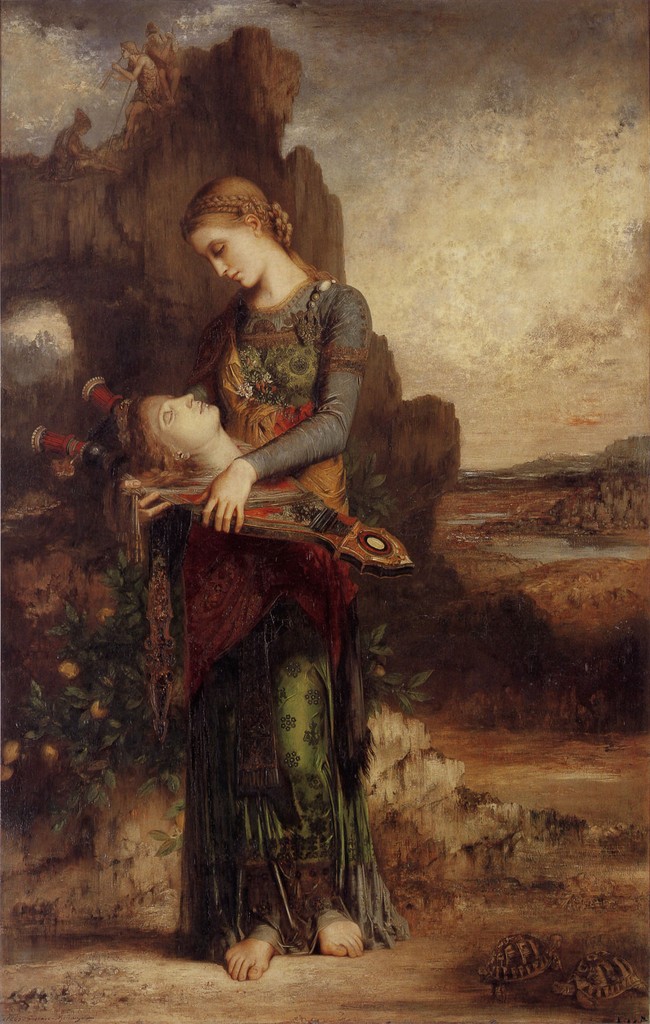
Orpheus
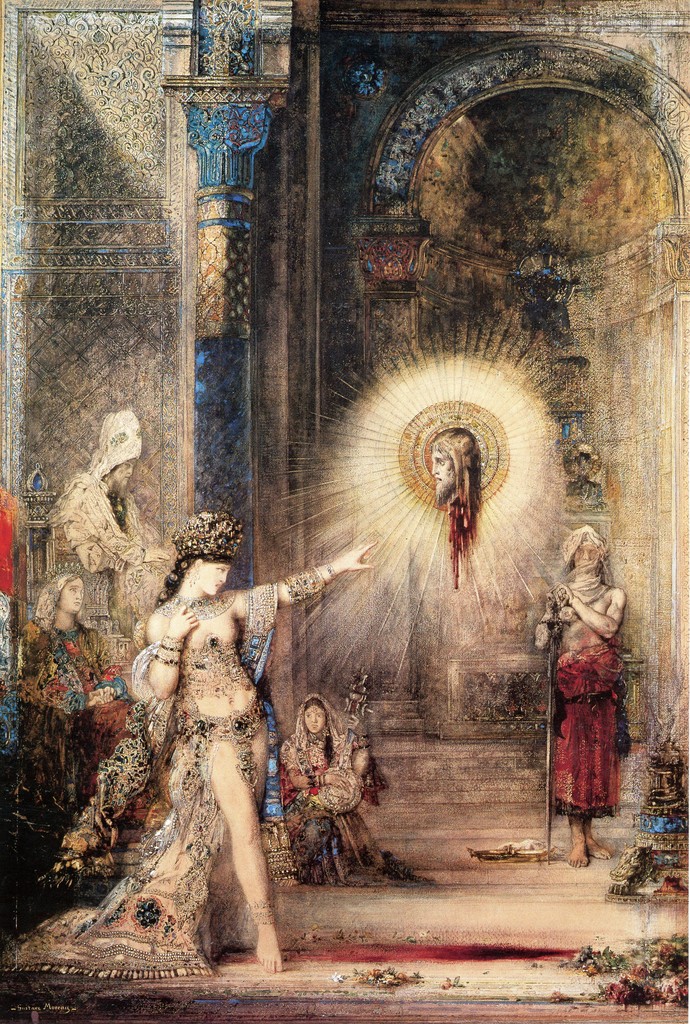
1865The Apparition
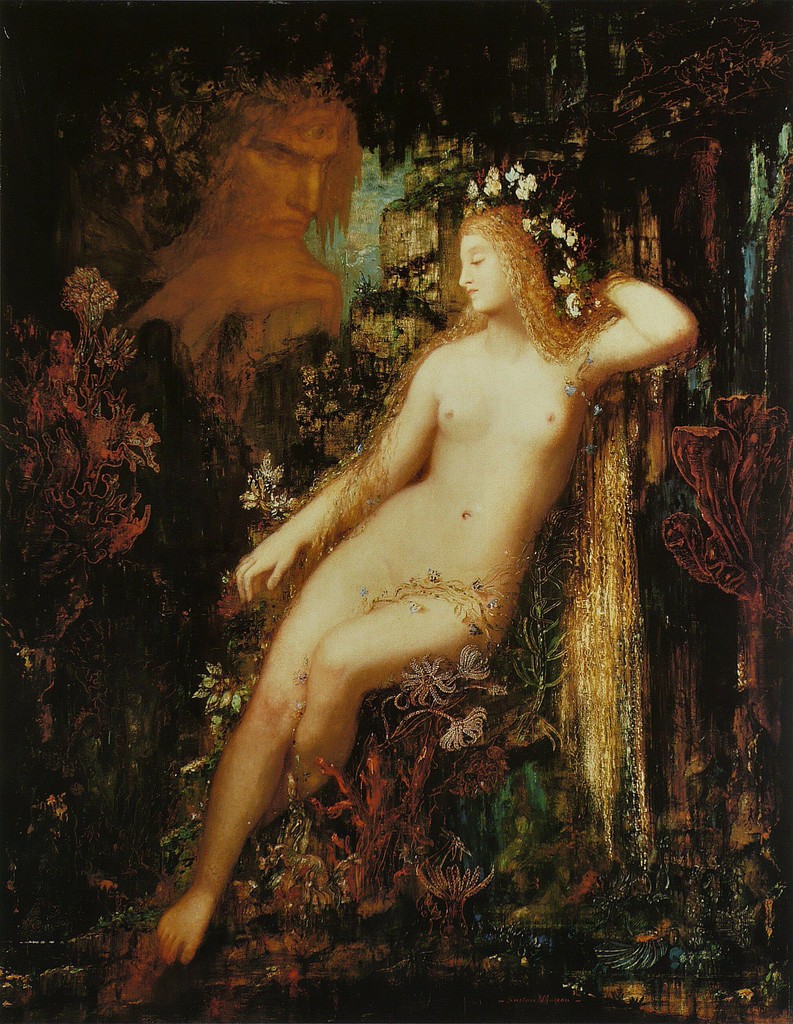
1876Galatea
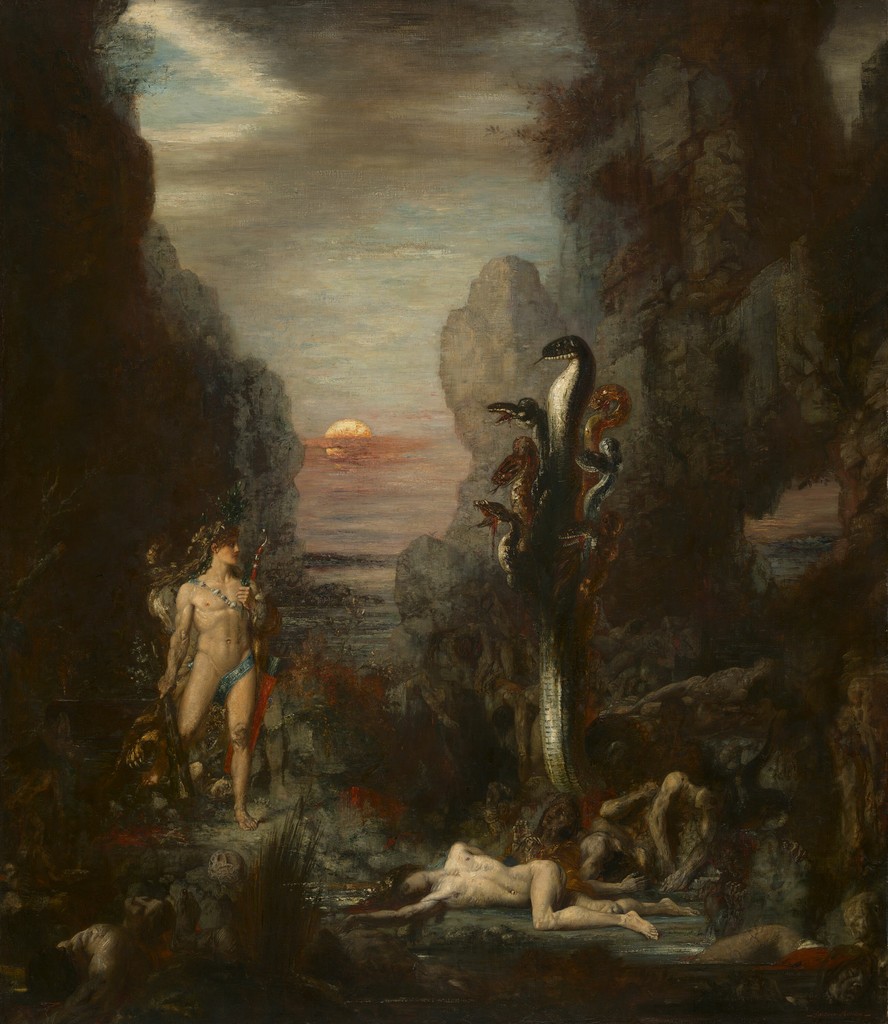
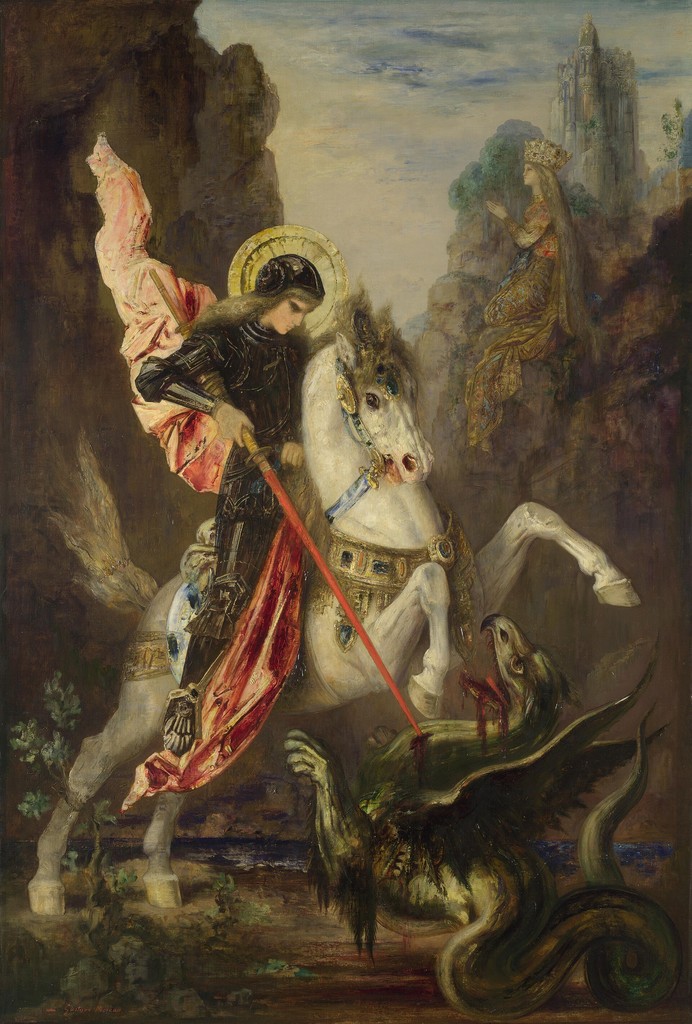
c. 1880Saint George and the Dragon
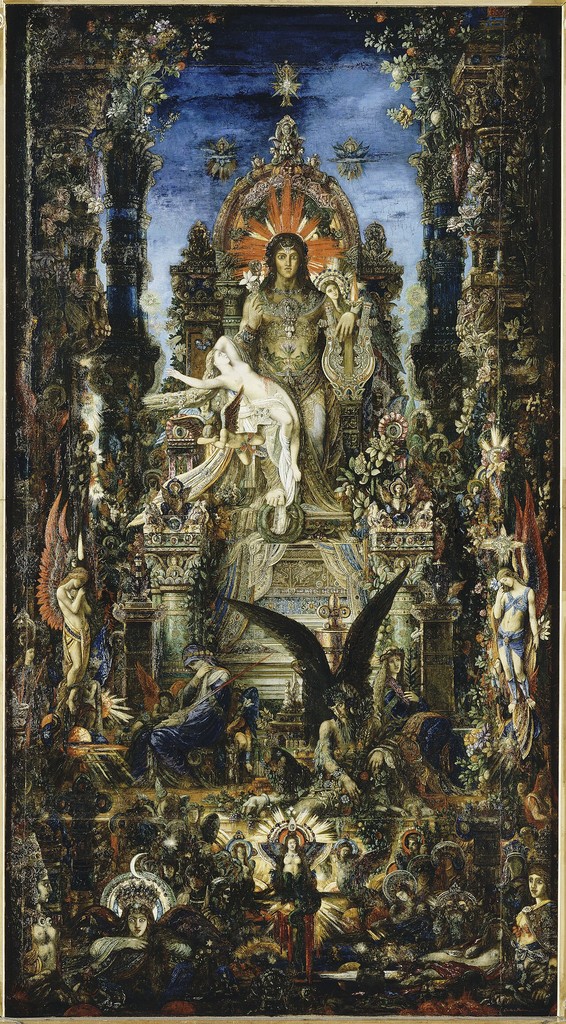
1889–90Jupiter and Semele
1894–95Contents
- Introduction
- The Exact Painting
- Looking from Salomé to Herod
- Architecture, Music and Ceremonial Space
- Specks of Colour and Raised Paint
- The Biblical Story and the Moment Chosen
- More Than Eighty Preparatory Studies
- The Salon of 1876 and a Divided Reception
- Salomé and the “Femme Fatale” Debate
- Not The Apparition or Another Salomé
The Exact Painting
The Hammer Museum records Salomé Dancing Before Herod as an oil on canvas measuring 143.5 by 104.3 centimetres. It bears the accession number AH.90.48 and belongs to the Armand Hammer Collection, given by the Armand Hammer Foundation. The museum dates the object to 1876 and marks it Public Domain.[1] Its exhibition history page gives the broader making span 1874–76, reflecting the sustained development revealed by the surviving studies.[2]
That identity is important because Moreau returned to Salomé many times. This is the tall Hammer canvas exhibited at the Paris Salon of 1876. The painting shows the dance before Herod while the request for John the Baptist’s head still lies ahead. Other oils, watercolours and studies choose the apparition of the head, the aftermath of the execution, or another conception of the dancer. Their information should not be transferred to AH.90.48.
Looking from Salomé to Herod
On visual inspection, Salomé stands below and to the left of the painting’s central axis. She is shown in profile, moving from left to right. Her long skirt and trailing fabric spread behind her, while the exposed forearm reaching towards Herod gives the pose a sharp horizontal direction. The other hand rises near her face and holds a tall white lotus. That upright flower makes a delicate counter-line to the pointing arm.
The dancer does not fill the canvas. Moreau makes her relatively small within a building that rises far above her. Pearls, metalwork and patterned fabrics complicate her outline, yet her pale skin and costume distinguish her from the surrounding brown, black and muted green. Her step appears measured rather than hurried. This is an observation from the image: the impression of controlled movement comes from the extended foot, the backward sweep of cloth and the poised geometry of her arms, not from a documented sequence of dance positions.
Herod occupies the elevated throne in the distance. The king is frontal and almost immobile, enclosed by a small arch inside a succession of much larger ones. The visual route from dancer to ruler is therefore long: Salomé gestures across open floor and past the lower edge of the throne before the eye reaches his face. Their separation lets the architecture become an active part of the exchange. The gesture commands attention, but the throne answers with height and central placement.
Moreau also distributes shadowed musicians and other witnesses around this line. A seated player is partly visible at the far left behind Salomé, holding a stringed instrument. Another face appears beneath the dancer’s trailing fabric. To the right of the throne, a standing figure and a richly decorated vessel occupy a brighter side aisle. At the lower right, a dark crouching figure turns towards the performance. These observations show how the dance is watched from several positions. The scene is public within the court, even though darkness makes each witness feel isolated.
Architecture, Music and Ceremonial Space
The hall does not read as a neutral reconstruction of Herod’s palace. Repeated horseshoe and pointed arches, tall supports, patterned walls, hanging lamps and relief-like figures create a composite sanctuary. The Musée Gustave Moreau describes related studies as developing an interior in which high pilasters form linked arches and produce a dark, solemn atmosphere.[3] The Hammer, more broadly, identifies decorative material borrowed from Indian, Turkish, Persian, Egyptian, Moorish, Roman, Greek and Etruscan sources.[1]
Those categories should remain distinct. The museum does not assign every visible capital, textile or vessel to one precise origin, and the painting is not an archaeological diagram. Moreau gathered forms from many records and reassembled them into an imagined setting. The result resembles a palace, temple and stage at once. Architecture gives the biblical episode the weight of ritual while withholding a single historical place.
Music is present but visually subordinated. The partly hidden player at left accompanies a dance that the image cannot make audible. This creates a productive tension: the story depends upon Salomé’s performance, yet the painting makes the viewer concentrate on stillness. Herod sits, attendants wait, and the dancer’s pose is held. Music must be inferred from the instrument and narrative while colour, contour and spacing control the actual experience.
The red-brown floor anchors the lower zone. Small flowers or decorative fragments appear scattered across it, especially towards the right. Their bright touches extend the dancer’s ornament into the space she crosses. Above, the architecture grows darker and harder to parse. Light enters at the sides, but the throne remains caught between illumination and shadow. The hall’s scale thus moves attention both inward, towards the king, and upward, towards the layered arches.
Specks of Colour and Raised Paint
The Hammer provides unusually useful evidence about the surface. It says Moreau enlivened the canvas with a new technique of intense colour specks, glittering white touches and impasto. The museum connects these accents to the mystery, opulence and deliberately unfamiliar atmosphere of the biblical scene.[1] Impasto means paint applied thickly enough to stand proud of the surrounding surface and catch light.
In the reproduction, the accents appear discontinuously rather than as an even finish. White and coloured points concentrate on Salomé’s jewellery and clothing, then recur on the throne, lamps, floor and architectural detail. Dark passages keep those small marks from dissolving into general brightness. The effect is less like natural daylight than intermittent glint: surfaces seem to flash as the eye moves.
This handling also complicates the relationship between figure and setting. Salomé is the narrative focus, but the same kind of sparkle travels through objects around her. Her costume belongs to the hall’s material richness even as her pale body separates from it. The guide to Moreau’s paintings places this surface within his wider negotiation between drawn structure and coloured sensation; the present canvas shows how those two systems can remain visible together.
The Biblical Story and the Moment Chosen
The Hammer identifies the subject as a New Testament episode. Salomé dances for her stepfather, Herod, during the banquet for his birthday. Captivated, he promises to grant what she desires. Prompted by her mother Herodias, she requests the head of John the Baptist, who had condemned the marriage of Herod and Herodias.[1]
Moreau does not narrate all those events at once. There is no severed head, platter or executioner in the Hammer painting. The emphasis falls on the dance that makes the promise possible. A viewer who knows the story supplies the coming demand, and that knowledge changes the beautiful scene. Salomé’s outstretched hand can be read as part of the performance; it may also seem to anticipate a command. The ambiguity belongs to the selected moment, and the absence of violence is what lets future violence press upon it.
The lotus intensifies that suspension. Huysmans later described the raised flower and the dancer’s commanding gesture in À rebours, but his 1884 novel is a reception of Moreau’s image, not the painter’s binding explanation.[3] Visually, the flower is both attribute and compositional device: its pale vertical shape draws the gaze to Salomé’s face and interrupts the long line of her body. A more exact symbolic claim would require evidence that the object record does not provide.
More Than Eighty Preparatory Studies
The apparent profusion was planned. The Hammer records more than eighty preliminary sketches for Salomé Dancing Before Herod.[1] Its 2012 exhibition brought the canvas together with about fifty related works from the Musée Gustave Moreau, including variant paintings and more than forty drawings directly connected to the Hammer composition. The displayed material included studies of Salomé, a nude female model, Herod, architecture and decorative elements.[2]
Different sheets preserve different problems. Some isolate the dancer’s stance; another studies Herod and is squared for transfer; a tracing-paper study combines pen, chalk, graphite and charcoal. Such evidence prevents the finished picture from being mistaken for unstructured fantasy. Moreau designed figures separately, tested their relation to the setting and used transfer procedures to coordinate them.
The preparatory archive also explains why density and control coexist. The hall contains many objects, but its principal axes are clear. Salomé’s arm points across the lower register; the throne establishes a vertical centre; nested arches repeat that centre at increasing scale. Ornament fills those structures after their relationships have been worked out. Readers interested in the paper trail can continue to Moreau’s drawings and watercolours.
The Salon of 1876 and a Divided Reception
Moreau had stayed away from the Salon after severe criticism in 1869. Alongside the Hammer oil, his 1876 display included Hercules and the Lernaean Hydra, a Saint Sebastian and the watercolour Apparition. The Hammer says Salomé Dancing Before Herod received critical acclaim and describes its debut as a sensation.[1][2] It demonstrated that a monumental biblical subject could still command attention amid Realist and Impressionist art.
Reception was not unanimous. Émile Zola dismissed Moreau’s two large Salon oils as bizarrely archaic and hostile to realism, according to excerpts presented by the Musée Gustave Moreau.[3] That response clarifies what was at stake. To an advocate of Naturalism, the painting’s composite architecture and cultivated unreality could seem like evasion. To later writers and artists, those same qualities made it a powerful alternative to observed modern life.
Joris-Karl Huysmans helped establish the latter reading. In chapter five of À rebours (1884), his fictional collector Des Esseintes contemplates Moreau’s Salomé pictures through elaborate prose.[3] The passage enlarged the painting’s literary afterlife, but it appeared eight years after the Salon. Huysmans is evidence of reception, not a substitute for looking at the object or studying Moreau’s preparations.
Salomé and the “Femme Fatale” Debate
Later nineteenth-century culture frequently treated Salomé as a “femme fatale”, a beautiful woman imagined as sexually compelling and destructive. The Metropolitan Museum of Art places Moreau’s Salomé imagery within the growth of that Symbolist type.[4] The category is historically relevant, especially when reading Huysmans, Oscar Wilde and later depictions. It should not be allowed to turn the painting into a timeless claim about women.
The biblical structure distributes responsibility among several people: Herod makes the promise, Herodias directs the request, and Salomé performs and asks. Moreau’s chosen instant has not yet shown the demand. His dancer is richly adorned and visually commanding, but she is also small within an immense court organised around an enthroned man. A gender-aware reading can therefore examine how desire, spectacle and blame are constructed rather than simply repeat the period label.
This caution does not remove danger from the image. The viewer knows what follows, and the dance is the mechanism by which the story advances. It does, however, keep interpretation tied to the picture’s actual relations: who watches, who occupies the throne, who moves, what remains absent, and how later writing changed the terms in which Salomé was seen. The broader guide to Moreau’s symbolism, mythology and religion develops that method across other recurring figures.
Not The Apparition or Another Salomé
The closest comparison is The Apparition, but the active objects differ in medium, action and collection. The 1876 Apparition is a watercolour, graphite and gouache work recorded by the Musée d’Orsay and assigned to the Louvre’s Department of Prints and Drawings. It shows the bloodied head of John the Baptist appearing before Salomé after the dance.[5] Moreau also made a separate oil version, Cat. 222, now in the Musée Gustave Moreau.[6]
The Tattooed Salomé is another independent canvas. The Hammer’s exhibition identifies it as Salomé Dancing, known as Salomé Tattooed, begun about 1874 and held by the Musée Gustave Moreau. Its linear decorative patterns distinguish it from the Hammer picture even though the dancer and subject are related.[2] The Paris museum also explicitly lists the Tattooed Salomé separately from its oil Apparition.[3]
The Metropolitan Museum’s Salome with the Head of John the Baptist is smaller again: an oil on wood measuring 21.6 by 12.1 centimetres and dated about 1876. There Salomé turns away from the radiant severed head.[7] None of its measurements, support or narrative details belongs to AH.90.48. Moreau’s repetition of the subject makes comparison valuable only when each version retains its own identity.
The Painting at the Hammer Museum
Salomé Dancing Before Herod entered the Hammer Museum in 1990 as a gift from the Armand Hammer Foundation. The current collection record lists it as on view in Gallery 5, but display can change and should be checked before travel.[1] Seeing the original matters because its scale, dark tonal field, small impasto accents and spatial separation between dancer and throne are difficult to judge from a screen.
Researched works directory
This searchable evidence census was assembled from public museum records and a reproducible Wikidata snapshot. It is not a catalogue raisonné, a claim to complete oeuvre coverage, or a substitute for Pierre-Louis Mathieu's printed catalogue, which was not consulted for this directory.
| Name | Date | Medium |
|---|---|---|
| Abstract Study | 1850 | Painting |
| Abstract Study | 1875 | Painting |
| Abstract Study | 1890 | Painting |
| Academic Study of a Man | 1847 | Painting |
| Achilles the Centaur Chiron | 1859 | Painting |
| Andromeda | 1867 | Painting |
| Andromeda | Date unknown | Painting |
| Angels Following the Magi | 1860 | Painting |
| Angels following the Three Magi | 1898 | Painting |
| Angels Throwing Flowers on the Vatican | 1850 | Painting |
| Aphrodite, 1871 | Date unknown | Painting |
| Apollo and Daphne | 1852 | Painting |
| Apollo and The Nine Muses | 1856 | Painting |
| Apollo and the Satyrs | 1850 | Painting |
| Apollo Victorious over Python | 1885 | Painting |
| Apollon and Marsyas | 1858 | Painting |
| Ariadne and Theseus | 1875 | Painting |
| Arion | 1891 | Painting |
| Athenians being Delivered to the Minotaur in the Cretan Labyrinth | 1855 | Painting |
| Autumn | 1885 | Painting |
| Bacchanal | 1850 | Painting |
| Bacchus on the Panther -cart. | Date unknown | Painting |
| Bathsheba | 1875 | Painting |
| Beheading of John the Baptist | 1872 | Painting |
| Bertrand and Raton | 1879 | Painting |
| Binding of Isaac | 1850 | Painting |
| Birth of Venus | 1870 | Painting |
| Briseis Departure | 1859 | Painting |
| centaur | Date unknown | Painting |
| Centaurs | 1850 | Painting |
| Chimera | 1850 | Painting |
| Chimeras | 1875 | Painting |
| Christ and the Two Thieves | 1870 | Painting |
| Christ at Gethsemane | 1850 | Painting |
| Christ at Gethsemane | 1875 | Painting |
| Christ at Lake Tiberias | 1850 | Painting |
| Christ at the Column | 1850 | Painting |
| Christ Blessing Hist Mother | 1850 | Painting |
| Christ Reliever | 1850 | Painting |
| Circe | 1850 | Painting |
| Cleopatra | 1850 | Painting |
| Cleopatra | 1887 | Painting |
| Danaé | 1858 | Painting |
| Darius, Fleeing after the battle of Arbela, Stops, Exhausted, to Drink from a Pond | 1853 | Painting |
| Darius Flight | 1850 | Painting |
| Dead Orpheus | 1850 | Painting |
| Dead Orpheus | 1890 | Painting |
| Dead Poet Carried by a Centaur | 1890 | Painting |
| Death Giving Laurels to the Winner of the Tournament | 1859 | Painting |
| Death of a Young Crusader | 1870 | Painting |
| Death of Moses | 1850 | Painting |
| Death of Sapho | 1850 | Painting |
| Death of Sapho | 1872 | Painting |
| Debauchery | 1850 | Painting |
| Dejanira (Autumn) | 1872 | Painting |
| Delilah | 1850 | Painting |
| Delilah | 1890 | Painting |
| Delilah | 1896 | Painting |
| Descent from the Cross | 1850 | Painting |
| Diana bathing | 1900 | Painting |
| Diomede devoured by his horses | 1865 | Painting |
| Diomedes Devoured by His Horses | 1865 | Painting |
| Diomedes Devoured by His Own Horses | 1870 | Painting |
| Œdipus the Wayfarer | 1888 | Painting |
| Draft for Sapho | 1850 | Painting |
| Eleonora Gonzaga, Duchess of Urbino | 1858 | Painting |
| Endymion | 1850 | Painting |
| Erigone | 1865 | Painting |
| Eve | 1850 | Painting |
| Eve | 1875 | Painting |
| Fairy in a Cave | 1850 | Painting |
| Fairy with Griffins | 1870 | Painting |
| Fairy with Griffins | 1876 | Painting |
| Fée aux griffons | 1876 | Drawing |
| Femme et licorne | 1890 | Painting |
| Francesco Maria della Rovere, Duke of Urbino | 1858 | Painting |
| Françoise de Rimini | 1850 | Painting |
| Galatea | c. 1880 | Painting |
| Galathea | 1896 | Painting |
| Galathea | Date unknown | Painting |
| Ganymede | 1886 | Painting |
| Gardian Angel of the City | 1850 | Painting |
| Genius of Evil | 1850 | Painting |
| Genius of Evil | 1875 | Painting |
| Golgotha | 1870 | Painting |
| Hamlet | 1850 | Painting |
| Hamlet Giving Poison to the King | 1850 | Painting |
| Helen | 1850 | Painting |
| Helen | 1880 | Painting |
| Helen at the Scaean Gate | 1888 | Painting |
| Helen Glorified | 1893 | Painting |
| Helen on the Walls of Troy | 1850 | Painting |
| Helen on the Walls of Troy | 1875 | Painting |
| Helene | Date unknown | Painting |
| Hercule et les oiseaux du lac de Stymphale | Date unknown | Painting |
| Hercules and Omphale | 1856 | Painting |
| Hercules and the Ceryneian Hind | 1871 | Painting |
| Hercules and the Daughters of Thespius | 1850 | Painting |
| Hercules and the Lernaean Hydra | 1875–1876 | Painting |
| Hercules and the Nemean Lion | 1850 | Painting |
| Hercules and the Stymphalian Birds | 1872 | Painting |
| Hercules and Thespius Daughters | 1850 | Painting |
| Hercules at Lake Stymphalia | 1875 | Painting |
| Hercules between Vice and Virtue | 1850 | Painting |
| Hesiod and the Muse | 1870 | Painting |
| Hesiod and the Muse | 1875 | Painting |
| Hesiod and the Muse | 1891 | Painting |
| Hesiod and the Muses | 1860 | Painting |
| Hesiod and the Muses | 1882 | Painting |
| Hésiode enfant | 1860 | Painting |
| Horse Rider | 1854 | Painting |
| Horse Rider | 1870 | Painting |
| Horse Rider and Amazon | 1869 | Painting |
| Horse Riders and Horses | 1854 | Painting |
| Indian Women Poets | 1890 | Painting |
| Interior, Draft | 1850 | Painting |
| Jacob and the Angel | 1876 | Painting |
| Jacob and the Angel | 1878 | Painting |
| Jacob et l'Ange | 1878 | Painting |
| Jason | 1865 | Painting |
| Jason et Éros | 1891 | Painting |
| Judith | 1850 | Painting |
| Jupiter and Semele | 1889–1895 | Painting |
| King Canute and His Courtesans | 1850 | Painting |
| King David | 1878 | Painting |
| L'enlèvement d'Europe | 1872 | Painting |
| La Fée | Date unknown | Painting |
| La mort de Sapho | 1872 | Painting |
| La mort de Sapho | 1876 | Painting |
| La Villa Borghèse | Date unknown | Painting |
| Landscape | 1850 | Painting |
| Landscape, Draft | 1850 | Painting |
| Landscape (Neighborhood of Étampes) | 1850 | Painting |
| Le Bon Samaritain | 1865 | Painting |
| Le Cantique des cantiques | 1853 | Painting |
| Le Christ et Madeleine (Noli me Tangere) | 1889 | Painting |
| Le Grand Pan contemple les Sphères Célestes | 1897 | Drawing |
| Le Poète et la Sirène | 1893 | Painting |
| Le Soir | 1887 | Painting |
| Le Sphinx | 1886 | Painting |
| Leda | 1846 | Painting |
| Leda | 1850 | Painting |
| Leda | 1870 | Painting |
| Les Chimères | 1884 | Painting |
| Les Plaintes du poète | 1882 | Painting |
| Life of Humanity | 1875 | Painting |
| Life of Humanity | 1886 | Painting |
| Life of Humanity: Salvator Mundi | 1886 | Painting |
| Life of Humanity: The Golden Age, Adam - Evening - Sleep | 1879 | Painting |
| Life of Humanity: The Golden Age, Adam - Morning - Prayer | 1879 | Painting |
| Life of Humanity: The Golden Age, Adam - Noon - Extasy | 1879 | Painting |
| Life of Humanity: The Iron Age, Cain - Evening - Death | 1879 | Painting |
| Life of Humanity: The Iron Age, Cain - Morning - Work | 1879 | Painting |
| Life of Humanity: The Iron Age, Cain - Noon - Rest | 1879 | Painting |
| Life of Humanity: The Silver Age, Hesiod and Orpheus, Hesiod - Evening - Tears | 1879 | Painting |
| Life of Humanity: The Silver Age, Hesiod and Orpheus, Hesiod - Morning - Inspiration | 1879 | Painting |
| Life of Humanity: The Silver Age, Hesiod and Orpheus, Orpheus - Noon - Song | 1879 | Painting |
| Love Victorious over Death | 1850 | Painting |
| Lucretia and Tarquin | 1850 | Painting |
| Magdalene on Golgotha | 1850 | Painting |
| Magdalene on Golgotha | 1875 | Painting |
| Magdalene on Golgotha | 1880 | Painting |
| Magnolia | 1864 | Painting |
| Martyrdrom | 1850 | Painting |
| Messalina | 1850 | Painting |
| Messalina | 1874 | Painting |
| Messaline | 1874 | Painting |
| Mort de Sapho | 1900 | Painting |
| Moses Exposed | 1875 | Painting |
| Moses Exposed on the Nile | 1875 | Painting |
| Moses, in Sight of the Promised Land, Takes His Sandals Off | 1854 | Painting |
| Moses Rescued from the Nile | 1893 | Painting |
| Mystic Flower | 1890 | Painting |
| Narcissus | 1850 | Painting |
| Narcissus | 1885 | Painting |
| Narcissus | 1890 | Painting |
| Noces d’Alexandre et de Roxane | Date unknown | Drawing |
| Nude Study | 1850 | Painting |
| Nyx, Night Goddess | 1880 | Painting |
| Oedipus and the Sphinx | 1864 | Painting |
| Orestes | 1850 | Painting |
| Orestes | 1875 | Painting |
| Orestes and the Erinyes | 1875 | Painting |
| Orphés | 1865 | Painting |
| Orpheus | 1865 | Painting |
| Orpheus Head | 1850 | Painting |
| Orpheus on Eurydice's Tomb | 1890 | Painting |
| Pasiphaë | 1850 | Painting |
| Pasiphaë | 1880 | Painting |
| Pasiphaë, Grisaille | 1850 | Painting |
| Pauline Moreau as the Virgin | 1848 | Painting |
| Perseus and Andromeda | 1870 | Painting |
| Persian Poet | 1875 | Painting |
| Petrarch After the Triumph | 1850 | Painting |
| Phaéton | 1878 | Painting |
| Phoebus and Boreas | 1879 | Painting |
| Pietà | 1867 | Painting |
| Pietà | 1875 | Painting |
| Pietà | 1876 | Painting |
| Pietà | Date unknown | Painting |
| Pittacus the Tyrant in War Costume | 1883 | Drawing |
| Polyphemus | 1880 | Painting |
| Poney | 1870 | Painting |
| Portrait of Gustave Moreau by Himself | 1850 | Painting |
| Portrait of Gustave Moreau by Himself | 1890 | Painting |
| Postman and Horses | 1854 | Painting |
| Prometheus | 1868 | Painting |
| Prometheus | 1869 | Painting |
| Prometheus Thunderstruck | 1870 | Painting |
| Prometheus, Variant | 1870 | Painting |
| Rape of Deianira | 1850 | Painting |
| Rape of Deianira | 1872 | Painting |
| Return of the Argonauts | 1890 | Painting |
| Ruines de Rome : le Colisée vu des jardins de l'Angélicum des dominicains | 1858 | Painting |
| Saint Cecilia and the Angels of Music | 1850 | Painting |
| Saint Francis Kissing a Leper | 1850 | Painting |
| Saint George and the Dragon | 1889–1890 | Painting |
| Saint Jerome | 1850 | Painting |
| Saint Sebastian | 1850 | Painting |
| Saint Sebastian | 1870 | Painting |
| Saint Sebastian and the Angel | 1876 | Painting |
| Saint Sebastian and the Angels | 1850 | Painting |
| Saint Sebastian Succoured | 1885 | Painting |
| Saint Sebastian with Archers | 1875 | Painting |
| Saint-Sébastien et l'ange | 1876 | Painting |
| Saint Sébastien soigné par les saintes femmes | 1869 | Painting |
| Sainte Cecilia | 1850 | Painting |
| Salome | 1850 | Painting |
| Salome | 1872 | Painting |
| Salome | 1874 | Painting |
| Salome at the Prison | 1873 | Painting |
| Salomé au Jardin | 1878 | Painting |
| Salome Dancing | 1872 | Painting |
| Salomé Dancing Before Herod | 1876 | Painting |
| Salome Dancing in front of Herod | 1876 | Painting |
| Salome with the Head of John the Baptist | 1876 | Painting |
| Santa Cecilia (Moreau) | Date unknown | Painting |
| Sappho falling into the Abyss | 1867 | Painting |
| Semele | 1889 | Painting |
| Semele, Draft | 1889 | Painting |
| Singing Centaurs | 1850 | Painting |
| Slaves Thrown to the Morays | 1850 | Painting |
| Song of Songs (Cantique des Cantiques) | 1893 | Painting |
| Spanish Conversation | 1850 | Painting |
| Spring | 1850 | Painting |
| St. Sebastian | Date unknown | Painting |
| Study | 1850 | Painting |
| Study | 1874 | Painting |
| Study | 1875 | Painting |
| Study for Jupiter and Semele | 1889 | Painting |
| Study for Moses Taking Off His Sandals | 1854 | Painting |
| Study for Saint Cecilia | 1850 | Painting |
| Study for Salome | 1874 | Painting |
| Study for The Triumph of Alexander the Great | 1885 | Painting |
| Study from Nature | 1850 | Painting |
| Study of a red ibis | 1900 | Painting |
| Sultan | 1850 | Painting |
| Suzanne et les vieillards | 1895 | Painting |
| swinging girl | Date unknown | Painting |
| Tea Rose | 1850 | Painting |
| Temptation | 1890 | Painting |
| Tempting Demon | 1875 | Painting |
| The Angels of Sodome | 1872 | Painting |
| The Apparition | 1876 | Drawing |
| The Argonauts | 1885 | Painting |
| The Bad Rich | 1850 | Painting |
| The calvary | 1867 | Painting |
| The childhood of Sixtus V. | 1853 | Painting |
| The Chimera | 1867 | Painting |
| The chimera | Date unknown | Painting |
| The Chimeras | 1850 | Painting |
| The Crowning with Thorns | 1846 | Painting |
| The Daughters of Thespius | 1853 | Painting |
| The Dead Lyres | 1897 | Painting |
| The Decameron | 1850 | Painting |
| The Disciples in Emmaus | 1850 | Painting |
| The Dream Haunting the Mogul | 1881 | Painting |
| The Entombment | 1867 | Painting |
| The Good Samaritan | 1850 | Painting |
| The Infant Moses | 1877 | Painting |
| The Magi | 1860 | Painting |
| The Martyred Saint Sebastian | 1869 | Painting |
| The Mermaid and the Poet | 1895 | Painting |
| The Muses Leaving Their Father Apollo to Go and Light the World | 1868 | Painting |
| The Parca and the Angel of Death | 1890 | Painting |
| The Parcae | 1850 | Painting |
| The Pieridae | 1875 | Painting |
| The Pieridae | 1880 | Painting |
| The Pietà | 1867 | Painting |
| The Plague in Florence | 1870 | Painting |
| The Poet and the Siren | 1894 | Painting |
| The Prodigal Son | 1850 | Painting |
| The Prodigal Son | 1890 | Painting |
| The Rape of Europe | 1868 | Painting |
| The Rape of Europe | 1869 | Painting |
| The Shulamite | 1853 | Painting |
| The Sirens | 1850 | Painting |
| The Sirens | 1875 | Painting |
| The Sirens | 1882 | Painting |
| The Springs | 1856 | Painting |
| The Suitors | 1862 | Painting |
| The Toilette | 1887 | Painting |
| The Travelling Angels | 1875 | Painting |
| The Travelling Poet | 1890 | Painting |
| The Unicorn | 1885 | Painting |
| The Unicorns | 1888 | Painting |
| The Voices | 1867 | Painting |
| The Wandering Jew | 1870 | Painting |
| The Young Man and Death | 1856–1865 | Painting |
| Tomyris and Cyrus | 1850 | Painting |
| Triumph of Alexander the Great | 1873 | Painting |
| Triumphing Church | 1870 | Painting |
| Tyrtaeus | 1850 | Painting |
| Tyrtaeus Singing While Fighting | 1860 | Painting |
| Un Saint au désert | 1879 | Painting |
| Untitled | 1866 | Painting |
| Venice | 1850 | Painting |
| Venice | 1885 | Painting |
| Venus Rising from the Sea | 1866 | Painting |
| Victim | 1850 | Painting |
| Vue de Florence | 1858 | Painting |
| Walk in a Park | 1865 | Painting |
| Water Fairy | 1850 | Painting |
| Womand and Chimera | 1875 | Painting |
| Young Thracian Woman Holding Orpheus' Head | 1866 | Painting |
Frequently Asked Questions
It shows Salomé performing at Herod’s birthday banquet. Her dance leads Herod to promise her a reward; prompted by Herodias, Salomé asks for the head of John the Baptist. Moreau depicts the dance before that request is fulfilled, so neither the execution nor the severed head appears in this painting.[1]
The Hammer dates AH.90.48 to 1876 and records it as oil on canvas, 143.5 × 104.3 centimetres. Exhibition research describes the working period as 1874–76.[1][2]
Moreau produced more than eighty preparatory sketches. Surviving studies isolate the dancer, Herod, architecture and ornaments, and some document transfer methods. In the finished oil he added intense colour specks, bright white touches and impasto, setting glittering accents against the dark interior.[1][2]
The Hammer oil shows Salomé dancing before Herod with no severed head visible. The active Apparition is a 1876 work on paper in watercolour, graphite and gouache, now assigned to the Louvre’s graphic-arts collection, in which John the Baptist’s head manifests before her. Moreau also made a separate oil Apparition in his Paris museum.[5][6]
It belongs to the Hammer Museum in Los Angeles, accession AH.90.48. The current object page marks it on view in Gallery 5 and identifies it as Public Domain. Visitors should confirm its display status with the museum before travelling.[1]
Discussion
Use this evidence-led guide as a starting point for close looking rather than a final verdict.
Share an observation about Salomé Dancing Before Herod or a source that adds useful context.
Reader Insights
Which detail most changes your reading of Salomé Dancing Before Herod?
How do scale, support, medium or present museum evidence shape the encounter?
What remains uncertain when visual inference is separated from documented fact?
Join the Conversation
Add your reading below, keeping observations specific and evidence clear.
References
- Hammer Museum, “Salomé Dancing Before Herod.”, accessed 30 August 2026.
- Hammer Museum, “A Strange Magic: Gustave Moreau’s Salome.”, accessed 30 August 2026.
- Musée Gustave Moreau, “Artworks on the Move.”, accessed 30 August 2026.
- Metropolitan Museum of Art, “Symbolism.”, accessed 30 August 2026.
- Musée d’Orsay, “L’Apparition.”, accessed 30 August 2026.
- Musée Gustave Moreau, “The Apparition.”, accessed 30 August 2026.
- Metropolitan Museum of Art, “Salome with the Head of John the Baptist.”, accessed 30 August 2026.