 by Tom Gurney
Tom Gurney BSc (Hons) is an art history expert with over 20 years experience
Page Created on September 22, 2026 / Page Updated on September 22, 2026
Email: tomgurney1@gmail.com / Phone: +44 7429 011000
Leonardo's River-Lock Drawing
One of Leonardo da Vinci's most frequently reproduced engineering drawings is often introduced simply as a design for river locks. That description is broadly right, but it conceals the most interesting facts. The sheet does not show the angled, double-leaf gate commonly associated with Leonardo. It presents an earlier and mechanically different answer to the problem of carrying boats along water that falls from one level to another.
The drawing is on Codex Atlanticus folio 90v, now catalogued as ATL.0180.1. Older editions called it 33 verso-a, which helps explain why captions have varied. The surviving sheet measures 212 by 284 millimetres and is drawn in pen and ink over traces of black chalk. Carlo Pedretti proposed a date of about 1480–82, although the questions it raises continued to occupy Leonardo for decades. [1] A high-resolution digital image confirms that this is the source of the familiar view: a broad channel seen obliquely, boats moving through a succession of barriers, and details of a gate mechanism crowded into the lower-left corner. [2]
Correct identification matters because three distinct works are repeatedly blended into one story. Folio 90v shows a river divided by oblique weirs and vertical lifting gates. A later sheet, now folio 656a r, studies a lock at San Marco in Milan with paired gates and a small water-control opening. Folio 126v belongs to a still later scheme for a navigable canal between Florence and the sea. They reveal a sustained hydraulic interest, but they are neither three views of the same structure nor successive pages of one finished design.
At a Glance
- SubjectLeonardo's River-Lock Drawing
- Artist and contextLeonardo da Vinci (1452–1519) and his Renaissance world
- Periodlate fifteenth century
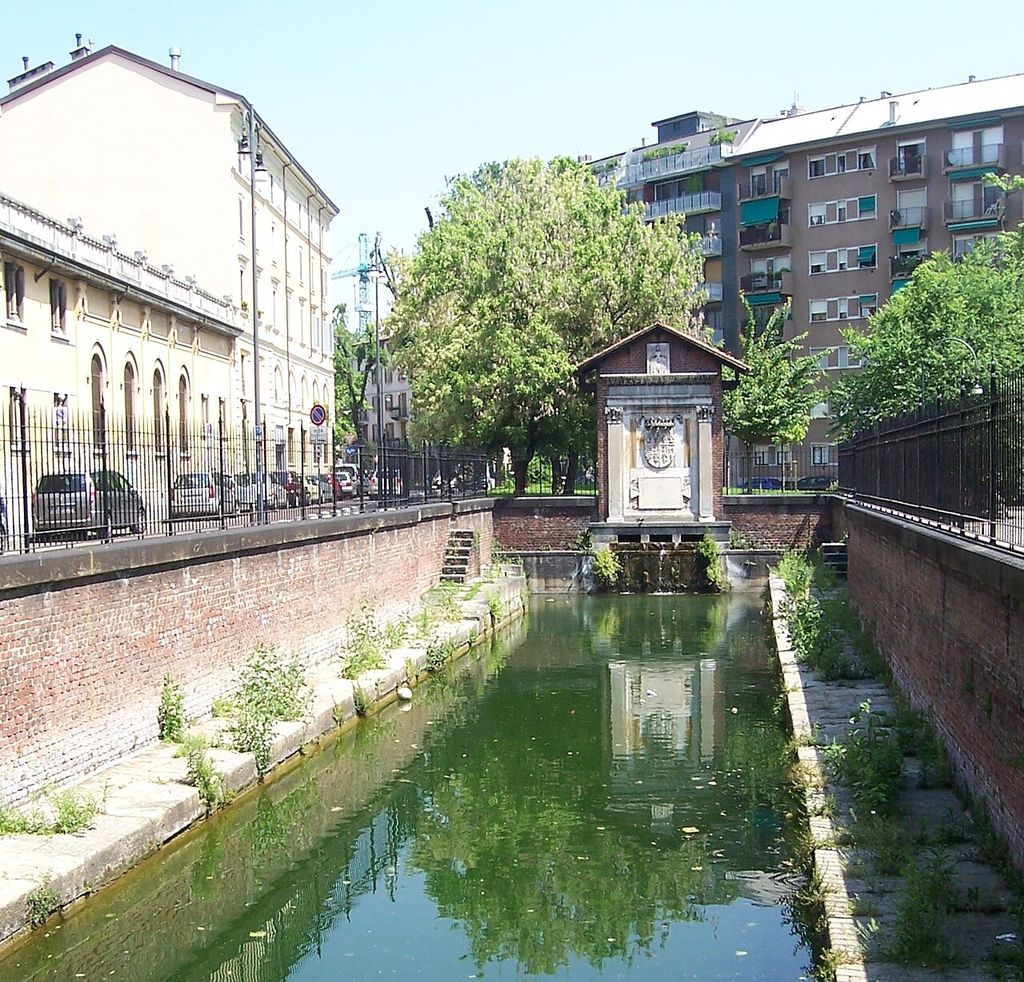
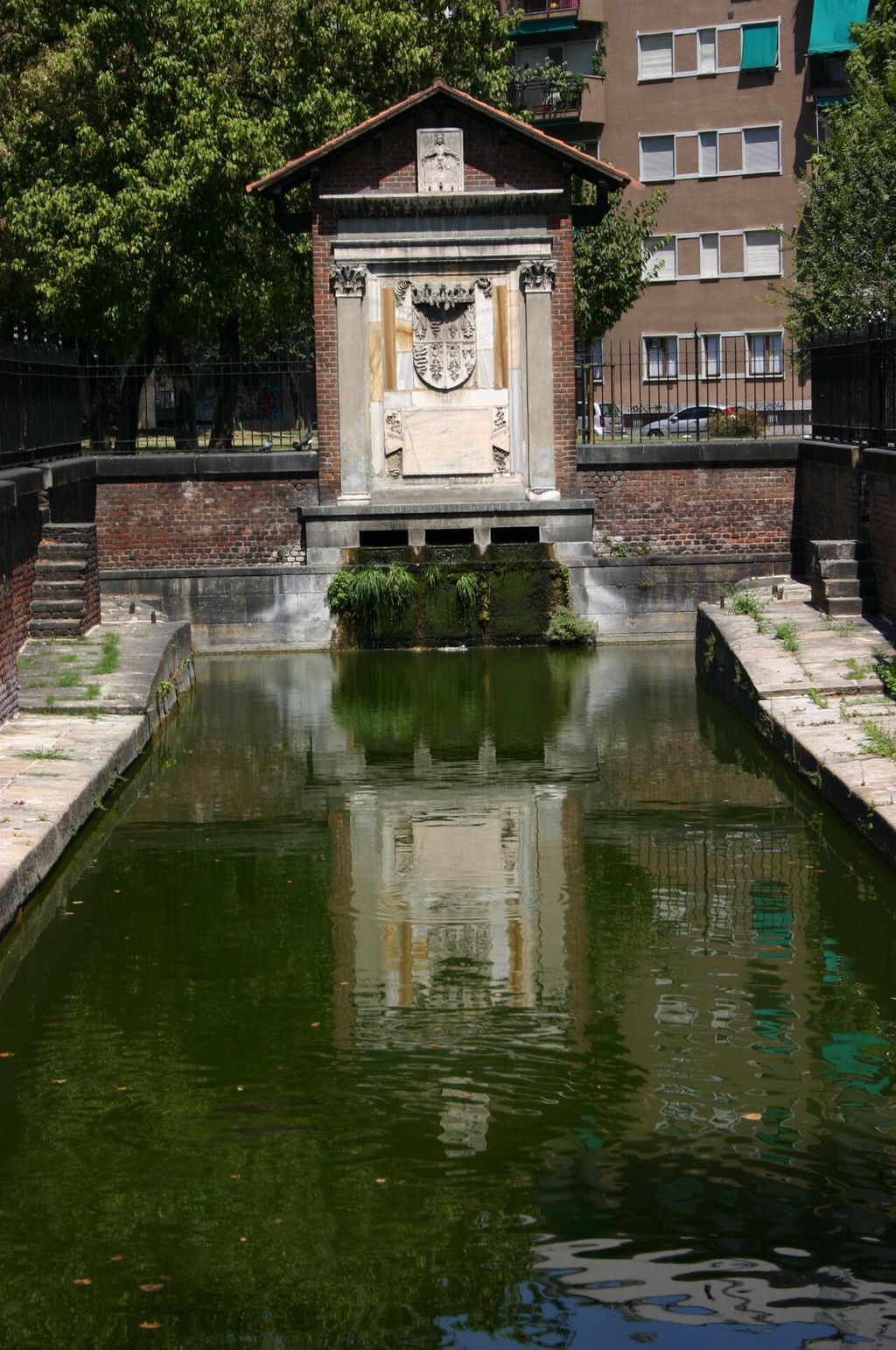
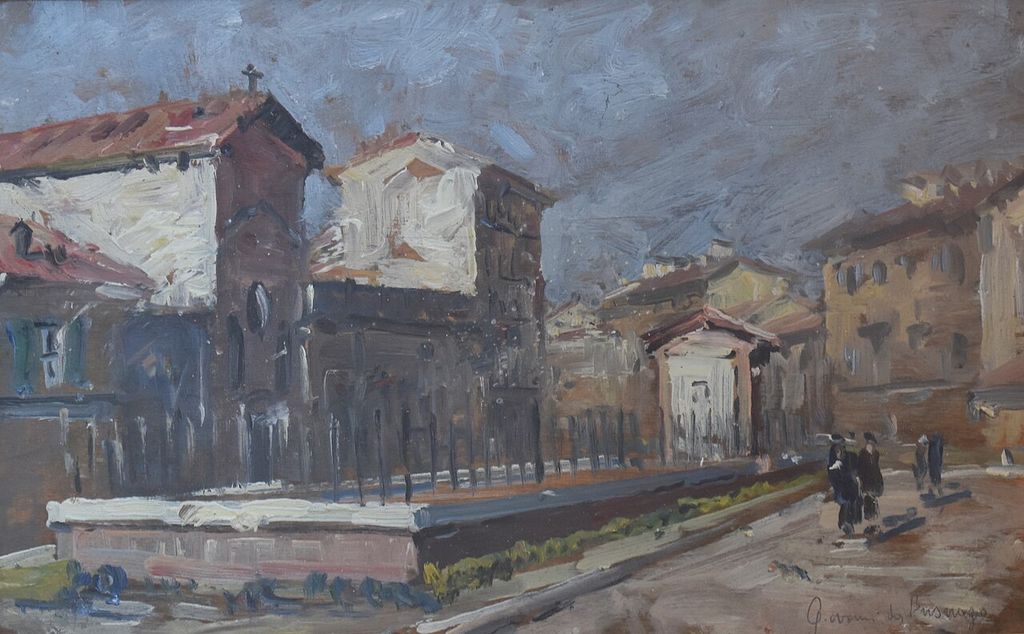
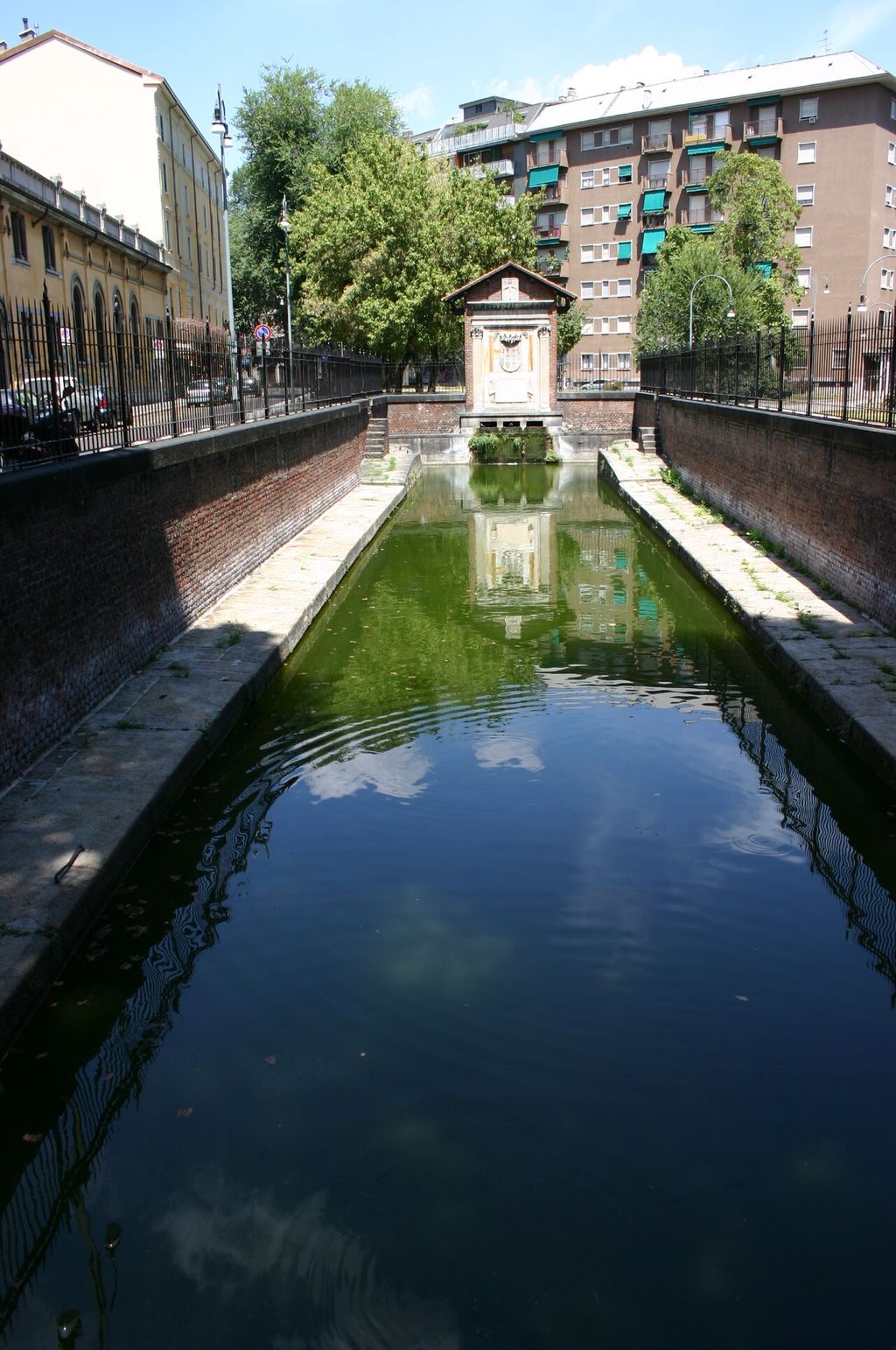
- ImageThe surviving Conca di Viarenna lock structure in Milan.
Where this study sits in Leonardo’s career
Florentine training
c. 1469–82The Last Supper
c. 1495–98Leonardo's River-Lock Drawing
late fifteenth centuryMona Lisa
from c. 1503Contents
- Turning a slope into navigable steps
- The oblique weirs
- A gate with two movements
- A technology Leonardo inherited
- The later San Marco study
- The wooden leaves that survived
- From one river reach to a regional canal
- What belongs to Leonardo
Turning a slope into navigable steps
A naturally descending river presents two linked difficulties. Its current can be too swift or shallow for dependable passage, while a solid barrier that raises the water also blocks the boat. A navigable waterway therefore needs to retain an adequate depth, release surplus flow and provide a controlled route past each difference in level.
A pound lock, in its developed form, solves the last problem with a chamber closed by a gate at each end. A descending boat enters when the chamber matches the upper reach. The upper gate closes, water leaves the chamber until its surface matches the lower reach, and the lower gate opens. The sequence reverses for ascent. The gates should not be forced open against a large difference in water pressure; the levels on their two sides are first brought close together.
Folio 90v does not supply a modern construction drawing of every chamber, culvert and seal. Its value lies in the way it transforms a continuous slope into a visible sequence. Leonardo draws a series of short reaches separated by barriers. Boats appear at different points, making the system's navigational purpose unmistakable. The channel is no longer one uncontrollable fall: it becomes a ladder of retained water levels. [1]
Nineteenth-century editor Giuseppe Govi read the barriers as overflow weirs that preserve navigable depth, with a lock passage at each transverse obstruction. Augusto Marinoni likewise described a large canal furnished with conche, or lock basins, and many boats travelling upwards. These interpretations fit what the image communicates, although “basin” should not tempt us to assume that every hidden component matched a later standard lock. Leonardo is coordinating water retention and boat passage at the scale of an entire river, then enlarging the piece that needs mechanical explanation. [1]
The oblique weirs
The barriers do not cross the water by the shortest route. They run diagonally, making their crests much longer than the width of the channel. That geometry is functional. When water spills over a weir, the amount that can pass depends, among other things, on the effective length of its overflow edge and the depth of water above it. A longer crest can pass a given flow with less rise than a shorter one under otherwise comparable conditions.
Leonardo's diagonal arrangement therefore reconciles two competing requirements. It impounds water upstream, helping to preserve depth for navigation, while giving floodwater a relatively long escape edge. Pedretti emphasised this consequence in his commentary: lengthening the spillway could limit the rise caused by increased flow. [1] The principle does not mean the system would prevent flooding under all conditions. Banks, sediment, channel shape, downstream level and the size of the openings would all affect performance. No surviving result gives a measured discharge for this particular design.
The angle also allows the lock opening to sit beside the main overflow rather than interrupting the entire dam. Water can continue across the crest while a boat uses the controlled passage. In the drawing, the repeated diagonal strokes lead the eye downstream, and the small boats make the engineering scale legible. Leonardo's perspective is analytical: it shows how an element repeated across the width and length of a landscape changes the route through it.
This way of drawing distinguishes the sheet from a decorative river scene. The distant parts establish the system; the close details reveal operation. It also anticipates Leonardo's later habit of moving between maps, sectional profiles, mechanisms and cost calculations when studying waterways. Modern fluid mechanics gives a precise language for some of the effects he observed, but the drawing itself remains qualitative. His achievement here is to organise the problem visually, not to publish a calibrated hydraulic law. [10]
A gate with two movements
The enlarged mechanism at the lower left is easily lost when the whole sheet is reproduced at small size. Leonardo first sketches the operating beam in black chalk above the masonry supports, then develops it in ink within them. Another state shows the gate after it has been lifted and moved aside. Read together, these alternatives describe two successive motions rather than several unrelated machines. [1]
The closure is a vertical panel, called a sluice, portcullis or cataract in different accounts. Chains rise from it to an axle or windlass. Turning the axle winds the chains and lifts the panel. Raising it alone would still leave a tall obstruction above the navigation opening, especially troublesome for a mast or high superstructure. Leonardo therefore makes the heavy support pivot. Once the gate has reached the required height, the beam or upright rotates and carries the suspended panel away from the passage. The panel rises, then swings clear. [1]
This sequence explains the otherwise puzzling cluster of lines. It also exposes the demands that a reconstruction must answer. The masonry must resist the reactions from the lifting gear. The axle needs bearings and a means of being turned from a safe position. Chains, fastenings and timber must carry the wet panel's weight. The moving assembly needs enough clearance to rotate without striking the boat, while the opening requires guides or seals capable of limiting leakage when the panel is down.
Water pressure makes the operation harder. A gate separating unequal levels is pressed towards the lower side, increasing friction in its guides and the force needed to move it. An operator might first admit or release water to reduce that difference, but folio 90v does not fully draw the filling route and operating sequence for every reach. The image establishes the main closure and its removal; details supplied by a working model remain modern engineering choices.
The mechanism is therefore not a mitre gate. A mitre arrangement has two leaves hinged at the sides, meeting at an upstream-pointing angle. Upstream pressure pushes those leaves more firmly against each other and their sill. Folio 90v's panel instead moves vertically and is then carried away by a rotating support. Calling both devices “Leonardo's lock gate” erases the mechanical comparison that makes his studies valuable.
A technology Leonardo inherited
Leonardo did not begin with an empty river. Northern Italy had centuries of experience in diverting water for transport, irrigation, mills, defence and urban supply. When he reached Milan, he encountered the Navigli and an active Lombard school of hydraulic practice. The Museo Nazionale della Scienza e della Tecnologia describes that environment as a major source of his education: he observed the Adda, Ticino and smaller streams, but devoted particular attention to the artificial canals and their economic uses. [3]
The critical history of folio 90v also places it beside earlier writing and drawings. Leon Battista Alberti discussed locks in the tenth book of De re aedificatoria. Francesco di Giorgio Martini drew and analysed hydraulic works within the technical-manuscript tradition Leonardo knew. The exact direction of every influence is difficult to recover, but the precedents rule out a story in which Leonardo invented the lock as a concept. [1]
What the sheet adds is an unusually concentrated act of analysis. It links the longitudinal management of a watercourse to the local mechanics of one opening. It compares preliminary and developed positions of the support. It uses boats to test clearance and direction. The page asks how a network and a moving part condition each other.
That distinction also changes the meaning of invention. A Renaissance engineer could observe a functioning structure, copy a useful feature, diagnose a weakness, alter the operating gear and recombine it within a new project. Those activities leave similar marks on paper. The Milan science museum therefore cautions that it is difficult to decide whether Leonardo's hydraulic drawings record existing works or original proposals; description and suggested improvement may occupy the same sheet. [3] A responsible history does not force every line into one category.
The later San Marco study
The contrast becomes clearer in Leonardo's study for the San Marco lock in Milan. Its current catalogue identity is Codex Atlanticus f. 656a r, ATL.1311.1, although older books commonly cite Hoepli folio 240 recto-c. It is generally dated to about 1493–95. The sheet belongs to Leonardo's engagement with a canal system that was already organised and useful, not to the birth of Milanese navigation. [4]
The later works also belonged to a team. Research published by the Metropolitan City of Milan places Leonardo as a consultant to the ducal engineers Giuliano Guasconi and Bartolomeo della Valle when work on the Conca dell'Incoronata began in October 1496. A contemporary technical description records masonry founded on piles, gravel and lime, green transverse timbers and boards nailed above them. These details do not prove that folio 656a r was followed as a construction drawing. They locate Leonardo's hydraulic advice within named offices, builders and an established Lombard craft tradition, and show that a functioning lock depended on foundations and carpentry beyond the celebrated gate leaves. [11]
Here, paired leaves close across the channel at an angle. Water on the upstream side presses them towards their meeting line and the sill, helping the structure resist the load. This is the form later called porte vinciane, or Leonardo gates, but the name should not be mistaken for conclusive evidence of first invention. The drawing may include Leonardo's refinements to known practice, yet the division between what he surveyed and what he proposed remains uncertain. [3] [4]
Modern civil-engineering histories often single out this angled form and its regulating wicket when explaining Leonardo's importance. [9] The emphasis is understandable, because the two features make pressure control visible. It is stronger as an account of his analysis and the design's later reputation than as proof that no earlier engineer used paired gates.
The most revealing feature is small. A controllable wicket in the larger gate allows water to pass without opening the main leaves. Its off-centre pivot uses the pressure of the water to help regulate motion. By admitting or discharging water through that smaller opening, operators can bring the chamber level towards the level beyond the main gate. The force holding the leaves shut then falls, and they can be opened with much less effort. [4]
This is controlled equalisation, not evidence that the complete lock was automatic. People still had to manage the wicket and gate sequence. Nor should the mechanism be projected backwards onto folio 90v. The early sheet's lift-and-swing panel and the later sheet's pressure-assisted leaves are alternative ways of controlling an opening. Their difference shows Leonardo returning to the same operational problem with a changed mechanical vocabulary.
The wooden leaves that survived
A pair of upper gate leaves from the former San Marco lock survives in the collection of the Milan science museum. The frames are ash, the panels spruce, and the operating components include iron. They came from the urban Martesana canal, whose construction between the Adda and Milan began under Francesco Sforza before Leonardo settled in the city. Removed when sections of the Navigli were covered in 1929–31, the leaves passed through the Siloteca Cormio before entering the museum. [5]
These imposing objects make the gate principle tangible. Their two leaves meet obliquely; a smaller port permits controlled release; fittings could be operated from the towpath. They preserve evidence of carpentry, repair, abrasion and prolonged contact with water that a manuscript cannot supply.
They are not, however, a pristine machine built by Leonardo. A working lock is maintained repeatedly. Decayed planks, seals and ironwork are replaced, and alterations accumulate. The museum dates components of the surviving assembly from the sixteenth through the nineteenth century and describes the leaves as witnesses to the porte vinciane system. [5] That formulation is exact. The artefacts demonstrate the long material life of a gate tradition; they do not place Leonardo's hand on every timber or prove that folio 656a r served as their construction drawing.
The same caution applies to museum models. A model can make water-level changes and gate movements intelligible, and it can test whether one interpretation is mechanically coherent. Its maker must nevertheless choose missing dimensions, joints, seals, materials and operating details. Those decisions belong to the model's history unless the manuscript or another contemporary source fixes them.
From one river reach to a regional canal
About two decades after the proposed date of folio 90v, Leonardo considered locks within a far larger territorial project: a navigable waterway from Florence towards the sea. Codex Atlanticus folios 126 and 127 contain its most concentrated surviving account. Folio 126v shows a canal carried across another river on a high bridge, with a navigation basin and paired gates. This is the image sometimes misidentified as the river-lock drawing, but its structure and purpose are different. [6]
The Museo Leonardiano model helps explain the crossing. A boat would enter a basin closed by gates. A small opening could release water until the basin matched the downstream reach; the main leaves would then open without fighting the full pressure difference. The model translates the drawn bridge, gates and stepped water route into three dimensions, while remaining a twentieth-century interpretation rather than evidence that the bridge was built. [7]
Filippo Camerota's reconstruction of the four folio sides shows how ambitious the project became. The proposed route was at least 72 kilometres long and had to negotiate a total difference of about 34 metres between Florence and Pisa. It joined cartography, channel dimensions, river crossings, a summer reserve in the Valdichiana, navigation depth, mills, irrigation and excavation costs. The sheets even consider whether water could fill an elevated basin through a siphon. [8]
Locks were only one possible answer. Leonardo knew that chambers and gates required constant operation and maintenance. At Serravalle, where the route had to descend in repeated steps, he considered economical supports holding roughly one braccio of water. Camerota connects that thinking directly to folio 90v, whose drawbridge-like sluices were cheaper and simpler than corner gates. Folio 127v then explores counterweighted barriers that a moving boat might depress, using the flow itself to help fill the next reach. [8]
This relationship gives folio 90v a longer intellectual life without proving that its original destination was the Florence canal. An early mechanism could remain available in Leonardo's repertoire and be reconsidered when a later landscape posed similar constraints. The comparison also prevents a false story of steady progress towards one perfect gate. Different sites favoured different compromises among head, leakage, cost, clearance, maintenance, traffic and available labour.
The Florence project never reached a final official commission, and most of it remained on paper. Its significance lies in the scale at which Leonardo combined problems. A gate was no longer an isolated clever device. It had to fit a route, water budget, crossing, seasonal regime, labour estimate and commercial purpose. [8]
What belongs to Leonardo
The safest account of Leonardo's contribution is also the richest. He did not invent the need to impound water, the idea of a lock, the canal culture of Lombardy or every gate later called Leonardesque. Folio 90v belongs to an inherited field of practice, and its exact status as observation, adaptation or proposal cannot be reduced to a slogan.
What survives is evidence of sustained, discriminating work. On folio 90v he turns a sloping waterway into a chain of controlled reaches, lengthens the overflow barriers and isolates a gate whose two motions solve the clearance problem. In Milan he studies angled leaves and a small regulating wicket that use pressure rather than merely resisting it. In the Florence sheets he integrates locks and simpler water supports into a route tens of kilometres long.
Across those pages, Leonardo's method is comparative. He changes the scale of view, draws alternative states and asks how a mechanism behaves before, during and after movement. Boats are not decoration: they expose depth and clearance requirements. Flow is not a background motif: it supplies both the load on a gate and the medium that must be conserved. Even uncertainty is informative, because the drawings show an engineer learning from structures around him while testing how they might be altered.
Folio 90v should therefore be valued for what it actually depicts. It is an early study of navigable steps, diagonal weirs and a vertically lifted gate that swings out of the way. It is neither the famous San Marco mitre-gate drawing nor the later Florence canal bridge. Once those identities are separated, the sheet reveals something more persuasive than a solitary invention: Leonardo's ability to connect landscape, water, machinery and human passage in one working visual argument.
Continue exploring Leonardo
Explore Leonardo’s works and designs
| Name | Date | Medium |
|---|---|---|
| A Map of Imola | 1502 | Drawing |
| Adoration of the Magi | About 1482 | Painting |
| Annunciation | About 1472 | Painting |
| Bacchus | Around 1517–1520 | Painting |
| Benois Madonna | Around 1478–1480 | Painting |
| Crossbow | 1485-1490 | Drawing |
| Diving Suit | — | Drawing |
| Flying Machine | — | Drawing |
| Ginevra de’ Benci | c. 1474/1478 | Painting |
| Head of a Woman (Turin) | Source-led range: 1478-1485, c. 1483-1485 or 1480s | Drawing |
| Helicopter | — | Drawing |
| Horse and Rider | — | Sculpture |
| La Bella Principessa | — | Painting |
| La Belle Ferronnière | c.1490–1497 | Painting |
| La Scapigliata | 1492–1501 ca | Painting |
| Lady with an Ermine | c. 1490 | Painting |
| Landscape Drawing for Santa Maria della Neve | Fifteenth century; inscription dated 5 August 1473 | Drawing |
| Leda and the Swan | — | Painting |
| Leonardo's Catapult Designs | late fifteenth century | Drawing |
| Leonardo's Designs for Milan Cathedral | 1487–90 | Architecture |
| Leonardo's River-Lock Drawing | late fifteenth century | Drawing |
| Leonardo's Romorantin Palace Project | 1517–18 | Architecture |
| Leonardo's Self-Propelled Cart | late 1470s–1480s | Drawing |
| Machine Gun | — | Drawing |
| Madonna Litta | Mid-1490s | Painting |
| Madonna of the Carnation | Around 1475 | Painting |
| Madonna of the Yarnwinder | — | Painting |
| Mary Magdalene | — | Painting |
| Mona Lisa | 1503 / 1519 | Painting |
| Ornithopter | — | Drawing |
| Parachute | — | Drawing |
| Portrait of a Lady: The Historic Leonardo Attribution | late fifteenth century | Painting |
| Portrait of a Man in Red Chalk (Self Portrait) | 1517/1518 or c. 1517-1518 | Drawing |
| Portrait of a Musician | About 1485 / first Milan period | Painting |
| Portrait of Isabella d’Este | Around 1499/1500 | Drawing |
| Profile of an Ancient Captain | c. 1475–1480 | Drawing |
| Rearing Horse and Mounted Warrior | First half of the 16th century | Sculpture |
| Saint Jerome in the Wilderness | About 1480–1482 / 1481–1482 | Painting |
| Saint John the Baptist | Around 1508–1519 | Painting |
| Salvator Mundi | — | Painting |
| Study of Hands | c.1480 | Drawing |
| The Baptism of Christ | About 1470–75 | Painting |
| The Battle of Anghiari | — | Painting |
| The Burlington House Cartoon | About 1506–8 | Painting |
| The Fetus in the Womb | c. 1511 | Drawing |
| The Last Supper | 1495–1498 in the Museo del Cenacolo Vinciano object table | Painting |
| The Sforza Horse Monument | 1480s–1499 | Sculpture |
| The Trivulzio Monument | c. 1506–13 | Sculpture |
| The Virgin and Child with Saint Anne | Around 1503–1519 | Painting |
| Triple Barrel Cannon | — | Drawing |
| Virgin of the Rocks | — | Painting |
| Vitruvian Man | Generally associated with Leonardo’s Milanese years, around 1490; exact dating remains cautious | Drawing |
| Wreath of Laurel, Palm, and Juniper with a Scroll | c. 1474/1478 | Drawing |
Frequently Asked Questions
Discussion
Which part of the evidence changes the way you read Leonardo's River-Lock Drawing? The article sets surviving material beside later interpretation; share the distinction that matters most to you.
Reader Insights
What detail in the images or drawings is easiest to miss on a first viewing?
How does turning a slope into navigable steps alter your understanding of this subject?
Where does the article leave a question open rather than presenting a settled answer?
Join the Conversation
Share your reading of Leonardo's River-Lock Drawing below.
References
- Museo Galileo, Leonardo//thek@, Codex Atlanticus f. 90v (ATL.0180.1). View Source
- Biblioteca Leonardiana, Leonardo Digitale, Codex Atlanticus f. 90v. View Source
- Museo Nazionale della Scienza e della Tecnologia Leonardo da Vinci, “Leonardo: navigation and hydraulic engineering”. View Source
- Museo Galileo, Leonardo//thek@, Codex Atlanticus f. 656a r, San Marco lock study (ATL.1311.1). View Source
- Museo Nazionale della Scienza e della Tecnologia Leonardo da Vinci, “Coppia di porte battenti della conca di San Marco sul Naviglio Martesana in Milano”. View Source
- Museo Galileo, Leonardo//thek@, Codex Atlanticus f. 126v (ATL.0252.1). View Source
- Museo Leonardiano di Vinci, “Canal bridge with basins”. View Source
- Filippo Camerota, “Leonardo and the Florence Canal. Sheets 126–127 of the Codex Atlanticus,” Substantia 4, no. 1 (2020), 37–50. View Source
- Linda Hall Library, “Canals,” Centuries of Civil Engineering. View Source
- Michele Mossa, “The recent 500th anniversary of Leonardo da Vinci's death: a reminder of his contribution in the field of fluid mechanics,” Environmental Fluid Mechanics 21 (2021), 1–10. View Source
- Città Metropolitana di Milano, Leonardo nel Ducato di Milano. View Source