 by
Tom Gurney
Tom Gurney BSc (Hons) is an art history expert with over 20 years experience
Email:
tomgurney1@gmail.com
/ Phone:
+44 7429 011000
Emanuel Leutze Portraits: Introduction
Portraiture runs through Emanuel Leutze’s career, from his early search for commissions in America to likenesses of artists, relatives and public figures. His historical paintings made him famous, but they grew alongside a continuing practice of representing individuals. Looking at the portraits brings that practice into focus and reveals relationships that are less visible in his national subjects. [1]
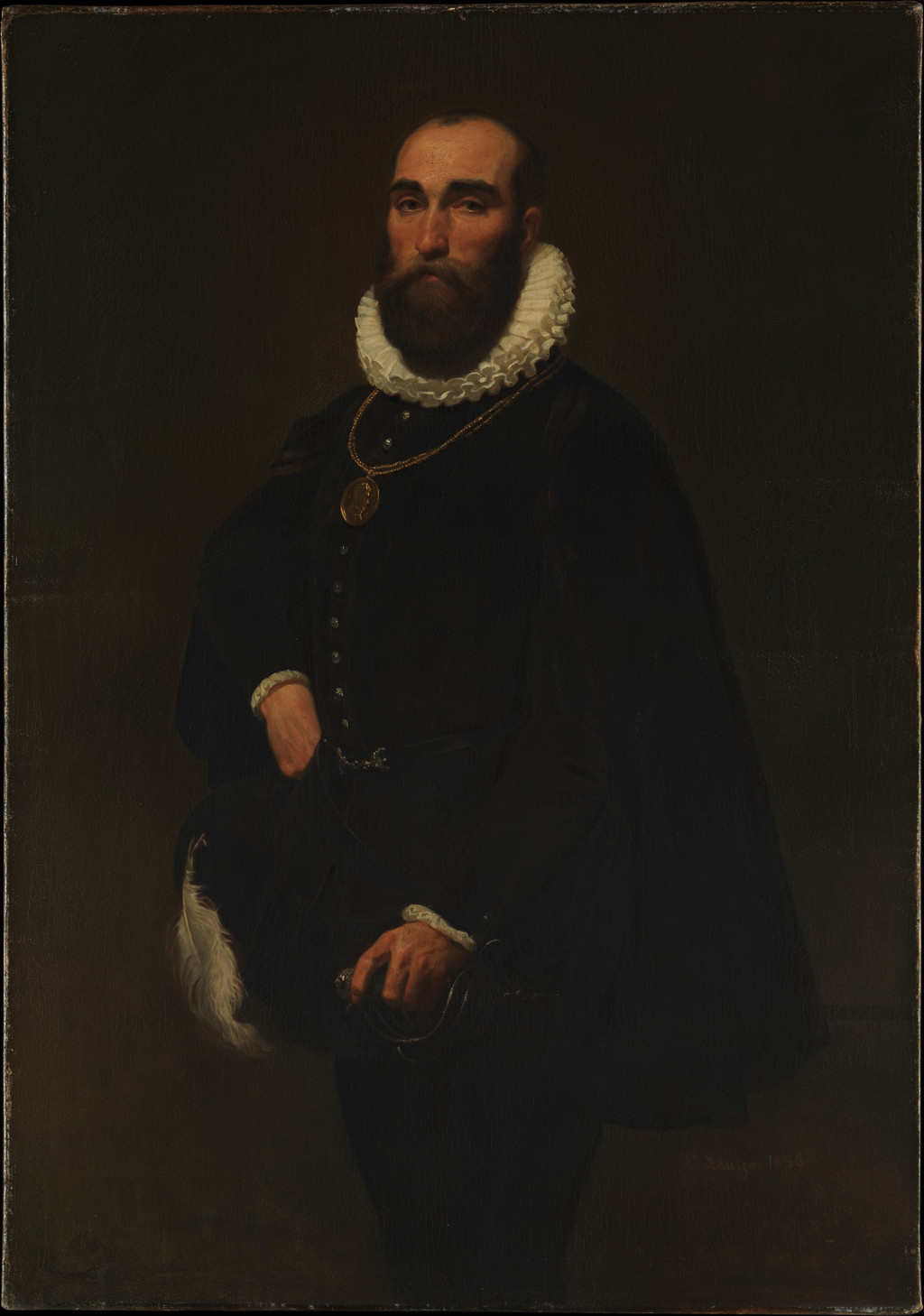
The portrait of Worthington Whittredge offers a particularly useful starting point. The sitter is a fellow painter, yet his seventeenth-century costume evokes an earlier portrait tradition. Elsewhere, Leutze represented his wife and daughter, members of the Lottner family and people associated with public life. Identity could be presented through friendship, family connection, profession or official standing. [1] [2]
At a Glance
- Artist Emanuel Gottlieb Leutze, 1816–1868
- Early professional field Portrait painting in America
- Artist sitter Worthington Whittredge, painted in 1856 and on later occasions
- Family group The Amber Necklace , 1847, showing Juliane and Ida Leutze
- Other family portraits Maria Lottner, about 1842; Heinrich Lottner, 1858
- Friendship context Relatives, acquaintances, fellow artists and patrons
- Public figures Leutze’s later work included portraits of Lincoln, Grant and Union officers
- Related field Likenesses within historical and diplomatic groups
Contents
- Portrait work before the famous history paintings
- Whittredge and the historical costume
- Family likenesses in the Gmünd collection
- Friendship, patrons and the artist’s circle
- Public people and the diplomatic group
- Likeness, modelling and historical invention
- Looking at a painted face
Portrait work before the famous history paintings
Leutze’s early opportunities depended on representing people who could commission or promote his work. Raised in Philadelphia after his family’s migration in 1825, he studied with the drawing master John Rubens Smith. By the mid-1830s, portrait commissions connected him with James Herring and James Barton Longacre’s project, The National Portrait Gallery of Distinguished Americans . A painted likeness could consequently become part of a publishing enterprise with a wider audience. [1]
The financial disruption of 1837 interrupted that work. Leutze subsequently travelled as a portrait painter in Virginia, Maryland and Pennsylvania before returning to Philadelphia. These experiences place portraiture within the practical business of establishing an artistic career: finding sitters, securing support and making images that other people valued. They preceded his further study in Düsseldorf, which began in 1841. [1]
Portraiture therefore supplied more than an occasional alternative to history painting. It gave Leutze early experience of likeness and presentation, fields that continued to matter when he arranged larger groups. A recognisable face, a convincing posture and a carefully chosen setting could serve an individual commission or contribute to a public narrative.
Whittredge and the historical costume
The Metropolitan Museum’s Worthington Whittredge dates to 1856. Leutze presents the landscape painter standing against a subdued background, with a white ruff, gold chain and dark clothing. The face and hands emerge from that restrained setting, while the costume creates an association with an earlier age. The portrait gives a contemporary colleague the visual bearing of a historical gentleman. [3]
The museum catalogue connects the clothing with Leutze’s study of old masters and suggests that it probably came from his collection of period dress. The choice gives the likeness a form of historical performance. Whittredge remains the named sitter, but the painter uses costume to influence how his presence is encountered. The picture can evoke an older tradition without becoming a portrait of an actual seventeenth-century person. [1]
Leutze painted Whittredge on later occasions, including a half-length portrait of 1861 and a picture of 1865 showing him at his easel. These are separate works. Their different arrangements demonstrate that the same sitter could be presented through period clothing or through the visible circumstances of artistic labour. The dedicated portrait article follows those distinctions and the 1856 painting’s later museum history. [1]
Family likenesses in the Gmünd collection
The museum in Leutze’s birthplace, Schwäbisch Gmünd, has documented an important group of family portraits. The Amber Necklace , painted in 1847, shows his wife Juliane with their daughter Ida. The double portrait places a relationship between two sitters at the centre, offering a different scale of human connection from the collective action of the historical canvases. [2]
Other portraits connect the painter with Juliane’s family. The likeness of Maria Lottner dates to about 1842, before Leutze’s marriage, and represents his future mother-in-law. The portrait of his brother-in-law Heinrich Lottner dates to 1858. Together, these examples extend across a substantial part of his European career. Their significance lies partly in the continuity of personal relationships alongside changing professional ambitions. [2]
These works also broaden the kinds of individuality associated with Leutze. A national hero arrives with a public identity that a spectator may recognise in advance. A family portrait can preserve someone whose importance begins within a smaller circle. Its later museum life brings that person before audiences who must learn the relationship as part of understanding the picture.
The Gmünd museum’s research makes such connections accessible without reducing the sitters to additions to the artist’s biography. The portraits belong to his work as paintings, while their names and relationships explain why these particular people entered it. The biography provides the chronology around them; the portraits bring its people into focus.
Friendship, patrons and the artist’s circle
Portraiture also connects Leutze to people outside the immediate family. The Gmünd museum’s 2024 exhibition announcement highlighted a newly acquired portrait of Friedrich Wilhelm Hütz, dated 1863. It described Hütz as a merchant who had made his fortune in South America and placed the painting within a broader consideration of Leutze’s images of friends, acquaintances, fellow artists and relatives. [4]
That example adds a useful dimension to the familiar American-and-German outline of Leutze’s career. A sitter’s own journeys and occupation could bring further geographical connections into his circle. The portrait records an individual within those networks, rather than presenting history only through the most famous political actors.
Friendship should nevertheless be understood through specific evidence. A painted likeness can preserve an association, but it does not reveal every detail of a relationship or the sitter’s private feelings. Names, dates, correspondence and the history of ownership help establish context. The image then provides its own account of how the person is presented, through the visible choices of pose, clothing and expression.
Watch: Emanuel Leutze
Choose a film to explore the artist’s work, its interpretation and its wider setting.
It's not only about the American Revolution, Leutze's Washington Crossing the Delaware
Smarthistory considers the ideas and historical distance behind Washington Crossing the Delaware.
Watch on YouTubePublic people and the diplomatic group
Leutze’s later American work included portraits of Abraham Lincoln, Ulysses S. Grant and Union officers, as recorded in the Metropolitan Museum’s scholarly account. These subjects connect his portrait practice with the public world of New York and Washington. The desire to represent contemporary leaders continued beside his work on the Capitol mural and other historical commissions. [1]
Signing of the Alaska Treaty , dated about 1867, brings contemporary likenesses into a larger composition. Seward, de Stoeckl and the other officials are identified individuals whose roles matter to the subject. Their presence becomes a historical group through the shared activity organised around documents, maps and a globe. [5]
The painting shows how portraiture and history painting could support one another. A series of recognisable faces supplies personal specificity; the arrangement of hands, papers and attention supplies narrative. The viewer can follow one official’s appearance and then return to the relationship between the men. Individual identity remains visible within the account of a public undertaking.
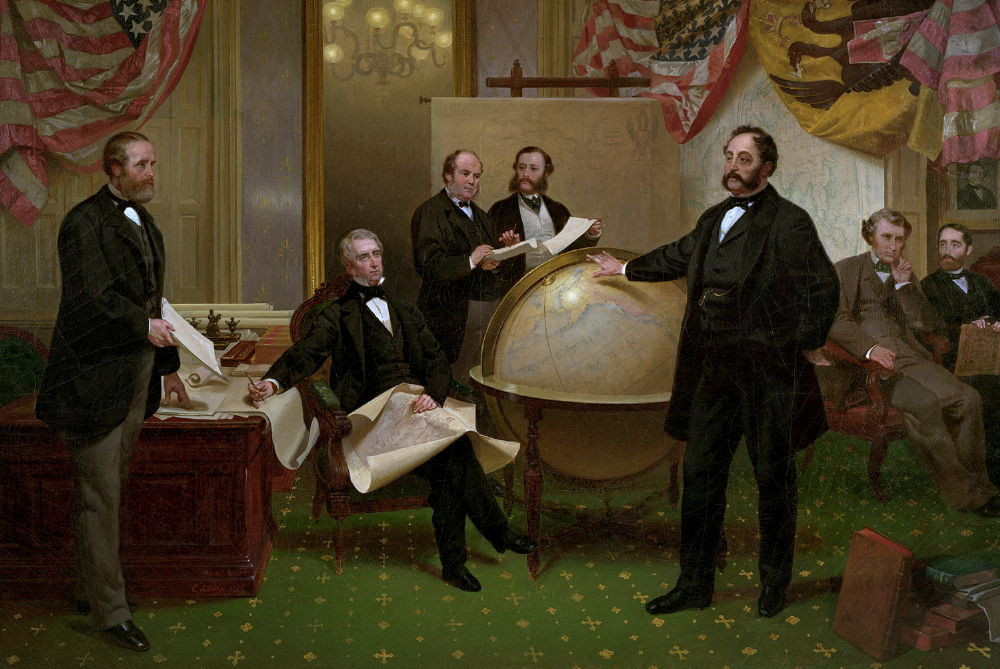
Emanuel Leutze, Signing of the Alaska Treaty, about 1867. Seward House Museum, Auburn, New York. A gift to William H. Seward from Peter Cooper. Emanuel Leutze; reproduction viaWikimediaCommons.
Image source
.
Public domain,faithful2Dreproduction
. Resized only; native appearance, complete image and margins preserved.
Likeness, modelling and historical invention
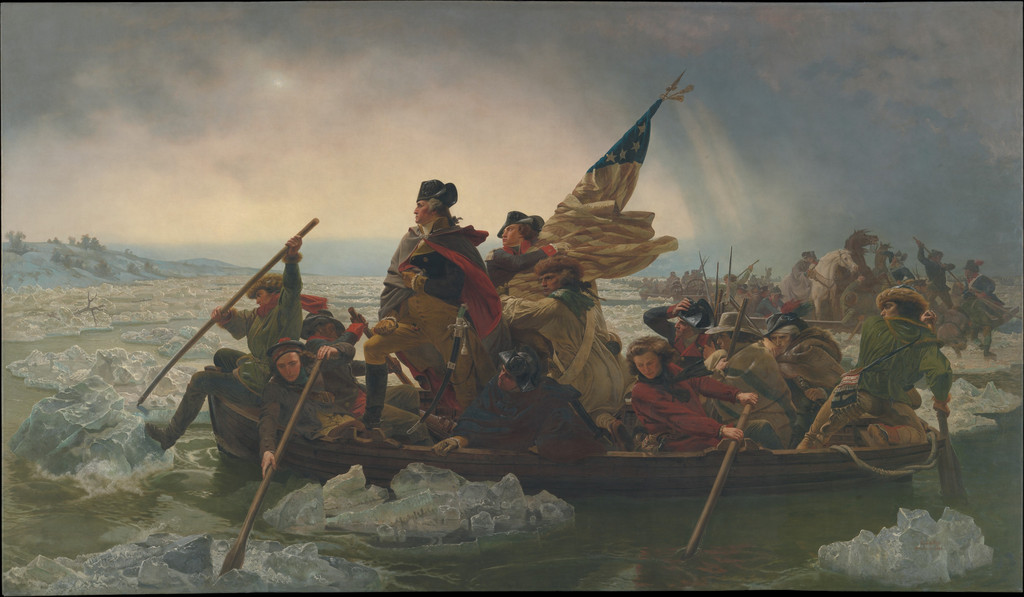
The relationship becomes more complicated when a living model contributes to the representation of someone from the past. Whittredge posed for Washington’s body and for the steersman in Washington Crossing the Delaware , while Leutze used Houdon’s sculptural likeness as a source for Washington’s head. The model and the represented historical figure therefore belong to different parts of the painting’s construction. [6]
This makes a useful comparison with the costumed Whittredge portrait. There, period dress transforms the presentation of a named contemporary sitter. In the Delaware canvas, a contemporary body helps give visible form to a historical person. Similar studio practices of posing and dressing a figure can produce different relationships between identity and appearance.
Looking across Leutze’s paintings with those distinctions in mind reveals the reach of his portrait skills. The individual likeness and the historical figure can be examined together while retaining their different relationships with a sitter, a model and an imagined past.
Looking at a painted face
In the Whittredge portrait, the white ruff makes a conspicuous boundary beneath the face. The beard overlaps it, while warmer light picks out the forehead and cheeks. Those contrasts guide attention without isolating the head from the body. The chain and pale cuffs provide further points to follow into the darker clothing, where buttons and folds become apparent more gradually.
Begin with those visible relationships before deciding what they imply about character. A steady gaze or restrained pose is a painter’s presentation of a person; it does not reveal everything about the sitter’s temperament. The portraits bring Leutze’s interest in human presence into concentrated view, while his larger historical groups show how far he could extend the same attention to faces and bodies.
Artworks directory
A selected directory of paintings and drawings discussed in these articles. Different versions are listed separately.
| Name | Date | Medium |
|---|---|---|
| Washington Crossing the Delaware (Met canvas) | 1851 | Painting |
| Westward the Course of Empire Takes Its Way (oil study) | 1861 | Painting |
| Westward the Course of Empire Takes Its Way (Capitol mural) | 1861–62 | Painting (mural) |
| Washington Rallying the Troops at Monmouth (large original) | 1854 | Painting |
| Washington Rallying the Troops at Monmouth (replica) | 1857 | Painting |
| The Courtship of Anne Boleyn | 1846 | Painting |
| Worthington Whittredge | 1856 | Painting |
| Signing of the Alaska Treaty | c. 1867 | Painting |
| The Last Drop (McGuire Scrapbook) | Date not specified | Drawing |
| The Amber Necklace | 1847 | Painting |
| Maria Lottner | c. 1842 | Painting |
| Heinrich Lottner | 1858 | Painting |
| Cromwell at Milton’s Home (Schwäbisch Gmünd version) | 1855 | Painting |
| Titian’s Lagoon Voyage | 1857 | Painting |
| Mary Stuart’s First Mass in Holyroodhouse | 1866 | Painting |
| Evening Party at Milton’s (National Gallery of Art canvas) | 1854 | Painting |
| Friedrich Wilhelm Hütz | 1863 | Painting |
| Waving figure from Westward the Course of Empire Takes Its Way | c.1860 | Drawing |
Frequently Asked Questions
Yes. Portraiture was an early professional field and continued throughout his career, including likenesses of relatives, fellow artists and public figures.
The painting, dated 1847, represents Leutze’s wife Juliane with their daughter Ida.
The museum catalogue links the choice with Leutze’s interest in old masters and historical dress. Whittredge is a contemporary artist presented through the appearance of an earlier gentleman.
He posed for Washington’s body, while Leutze used Houdon’s sculptural likeness for the head. Modelling for part of a figure does not make the finished character a portrait of the model.
Discussion
Look again at the images and ideas explored in Emanuel Leutze Portraits. These editorial prompts invite your observations.
Which does more to establish a sitter’s identity: the face, clothing, pose or knowledge of the person’s relationship with Leutze? Compare the Whittredge portrait with the diplomatic group.
Reader Insights
How does the white ruff guide your attention towards Whittredge’s face?
What changes when likeness becomes part of the Alaska group?
What do the named family relationships add to the portrait subjects?
Join the Conversation
Share a detail, comparison or question about Emanuel Leutze Portraits below.
References
- Natalie Spassky , American Paintings in the Metropolitan Museum of Art , Volume II, 1985, Leutze section, pp. 13–25, especially pp. 13–16 and 25. Early portrait work, later public sitters and Whittredge likenesses. View source
- Museum im Prediger / City of Schwäbisch Gmünd , Emanuel Leutze: zum 200. Geburtstag , 2016 exhibition account. Juliane and Ida, Maria Lottner and Heinrich Lottner portraits. View source
- Metropolitan Museum of Art , Worthington Whittredge , 1856, accession 03.16. Object record and image. View source
- City of Schwäbisch Gmünd , Jahrespressegespräch Museum und Galerie im Prediger , 23 January 2024, announcement of Guten Morgen, Vielliebchen: Emanuel Leutzes Freundschaftsbilder . Hütz portrait and friendship context. View source
- Seward House Museum , Signing of the Alaska Treaty by Emanuel Leutze, about 1867. Named diplomatic group. View source
- Carrie Rebora Barratt and others , Washington Crossing the Delaware: Restoring an American Masterpiece , The Metropolitan Museum of Art Bulletin , Fall 2011, p. 6. Whittredge’s modelling and Houdon’s likeness. View source
- Splash image source.
Emanuel Leutze, Worthington Whittredge, 1856. Oil on canvas, 129.2 × 102.9 cm. Metropolitan Museum of Art, 03.16. Gift of Several Gentlemen, 1903. The Metropolitan Museum of Art. CC0 / Public domain . Resized only; native appearance, complete image and margins preserved.
View source