 by
Tom Gurney
Tom Gurney BSc (Hons) is an art history expert with over 20 years experience
Email:
tomgurney1@gmail.com
/ Phone:
+44 7429 011000
Worthington Whittredge by Emanuel Leutze: Introduction
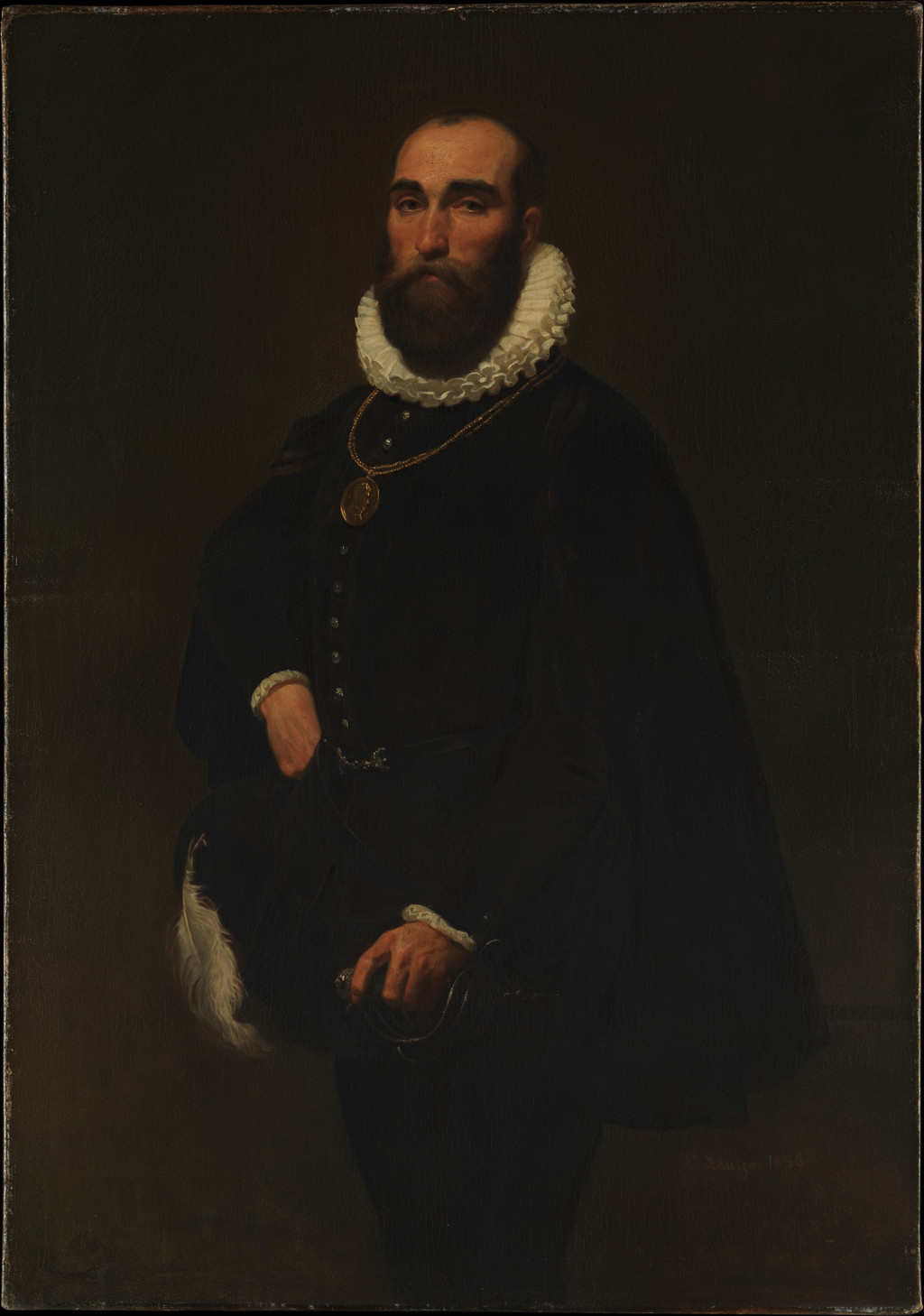
Emanuel Leutze’s Worthington Whittredge presents a nineteenth-century American landscape painter in the guise of a much earlier gentleman. A white ruff surrounds the bearded face, a gold chain crosses the dark costume, and the hands emerge from lace cuffs. Painted in 1856, the portrait brings together a living friendship and Leutze’s interest in the appearance of the past. [1] [2]
The result is quieter than his crowded historical canvases but equally concerned with representation. Whittredge is recognisable as an individual, while his clothing invites comparison with an older portrait tradition. Leutze’s fellow artist becomes both the subject of a likeness and a participant in an act of historical imagination.
At a Glance
- Artist Emanuel Gottlieb Leutze
- Sitter Worthington Whittredge, American landscape painter, 1820–1910
- Date 1856
- Medium Oil on canvas
- Dimensions 129.2 × 102.9 cm
- Collection Metropolitan Museum of Art, New York
- Accession 03.16
- Credit Gift of Several Gentlemen, 1903
- Distinctive feature The modern sitter wears seventeenth-century costume
This work across Emanuel Leutze’s career
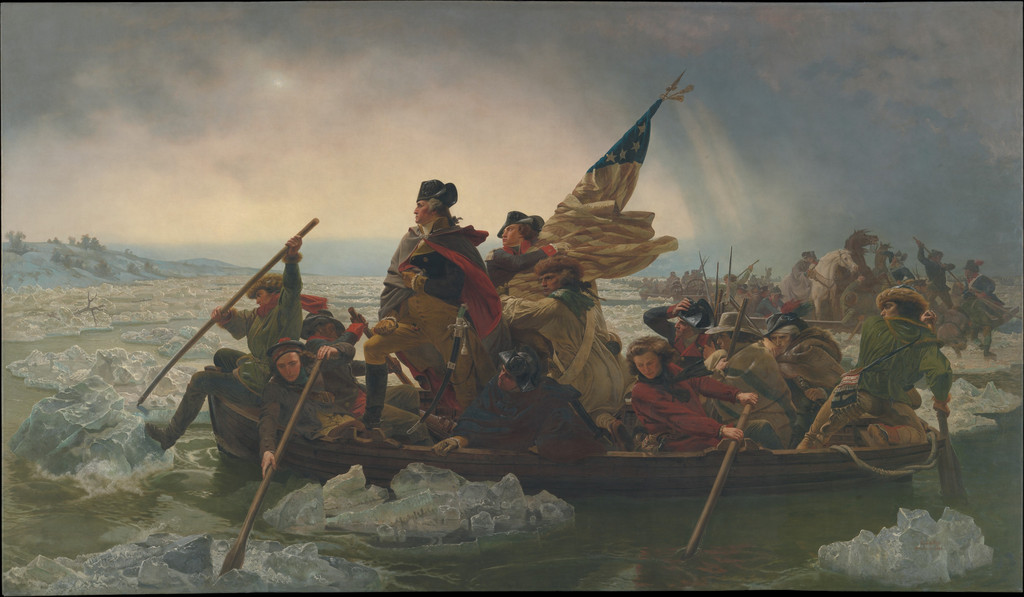
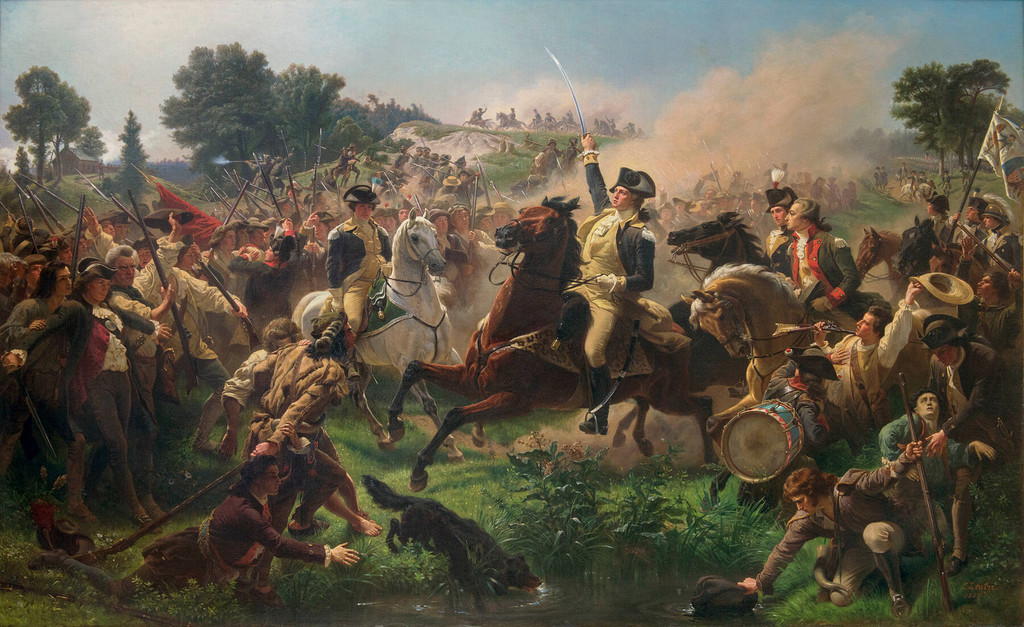
Washington Rallying the Troops at Monmouth
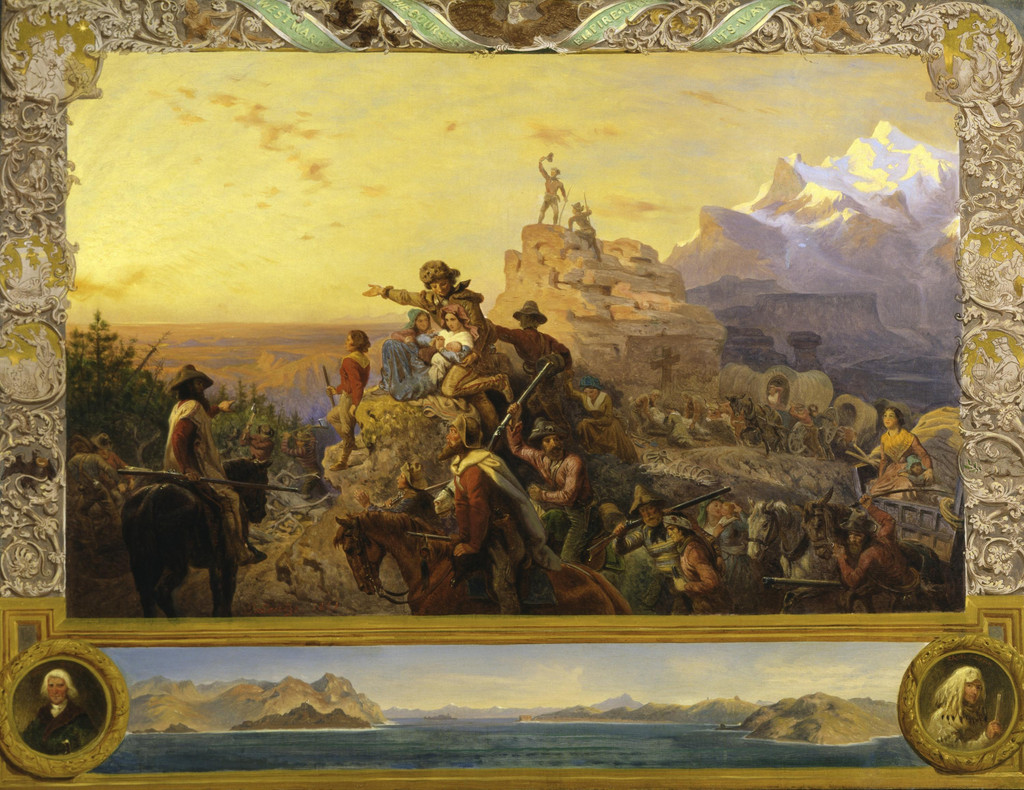
1857 replica; original 1854Westward the Course of Empire Takes Its Way
1861 (oil study); mural 1861–62Signing of the Alaska Treaty
c. 1867Contents
- The artist inside the historical costume
- Why dress Whittredge as an earlier gentleman?
- Face, hands and the dark silhouette
- Friendship and the Düsseldorf studio
- Other likenesses of the same painter
- A gift made during the sitter’s lifetime
- Annotated details
The artist inside the historical costume
Whittredge’s profession does not announce itself through an easel or an expansive view of the natural world. The portrait instead concentrates attention on his body, face and dress. Leutze gives the sitter substantial room within the canvas, with a dark background that keeps the setting unobtrusive. His standing presence supplies the picture’s principal structure.
The Metropolitan Museum dates the painting to 1856. Its catalogue suggests that Leutze probably painted it in Düsseldorf, where Whittredge was present that year, while allowing the possibility of a brief encounter in Rome. Düsseldorf is consequently the more likely setting, rather than an established location that removes every uncertainty about the sitting. [1] [2]
The distinction between painter and sitter is important here. Whittredge made his reputation in landscape; Leutze is the artist responsible for this portrait. The picture records an encounter between two painters whose practices differed, within the international community that brought Americans to Europe. A biography of either man can illuminate it, but the visible choices belong to Leutze’s construction of the likeness.
Annotated Details from Worthington Whittredge
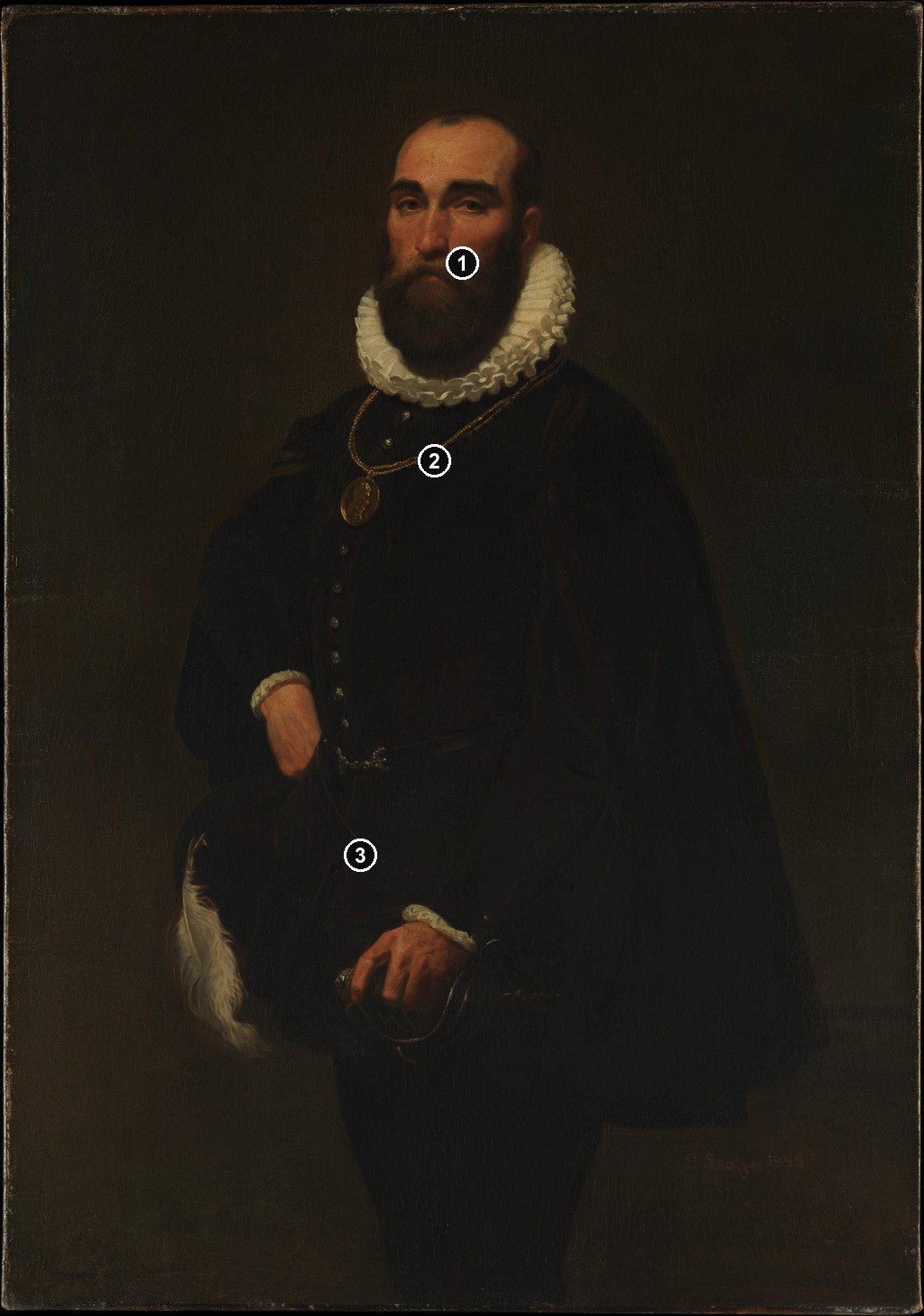
The numbered points identify visible features discussed in this article. Return from each detail to the whole composition. Emanuel Leutze, Worthington Whittredge, 1856. Oil on canvas, 129.2 × 102.9 cm. Metropolitan Museum of Art, 03.16. Gift of Several Gentlemen, 1903. The Metropolitan Museum of Art. Image source. CC0 / Public domain. Separate resized overview with numbered points; details cropped from the original. Original colour and appearance retained.
Details from WORTHINGTON WHITTREDGE
Compare the cropped details with the complete images above. Notice how their colours, shapes and positions contribute to the larger compositions.
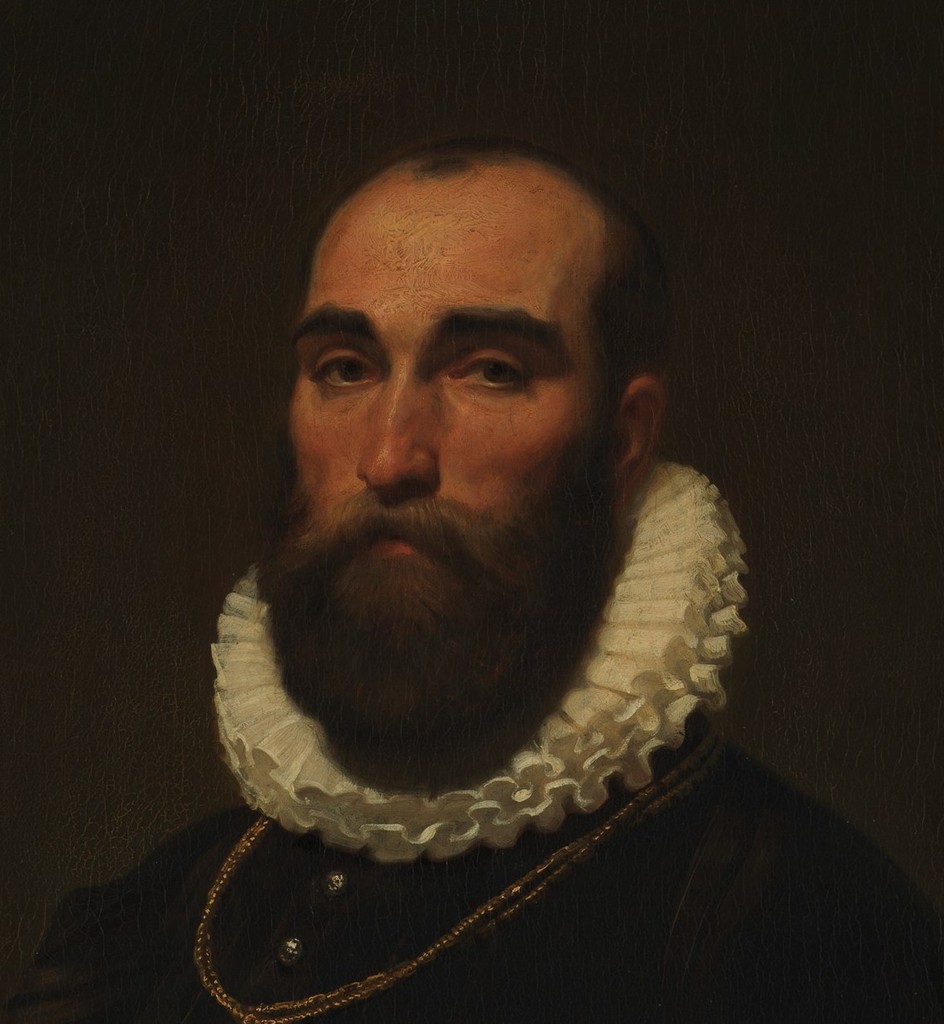
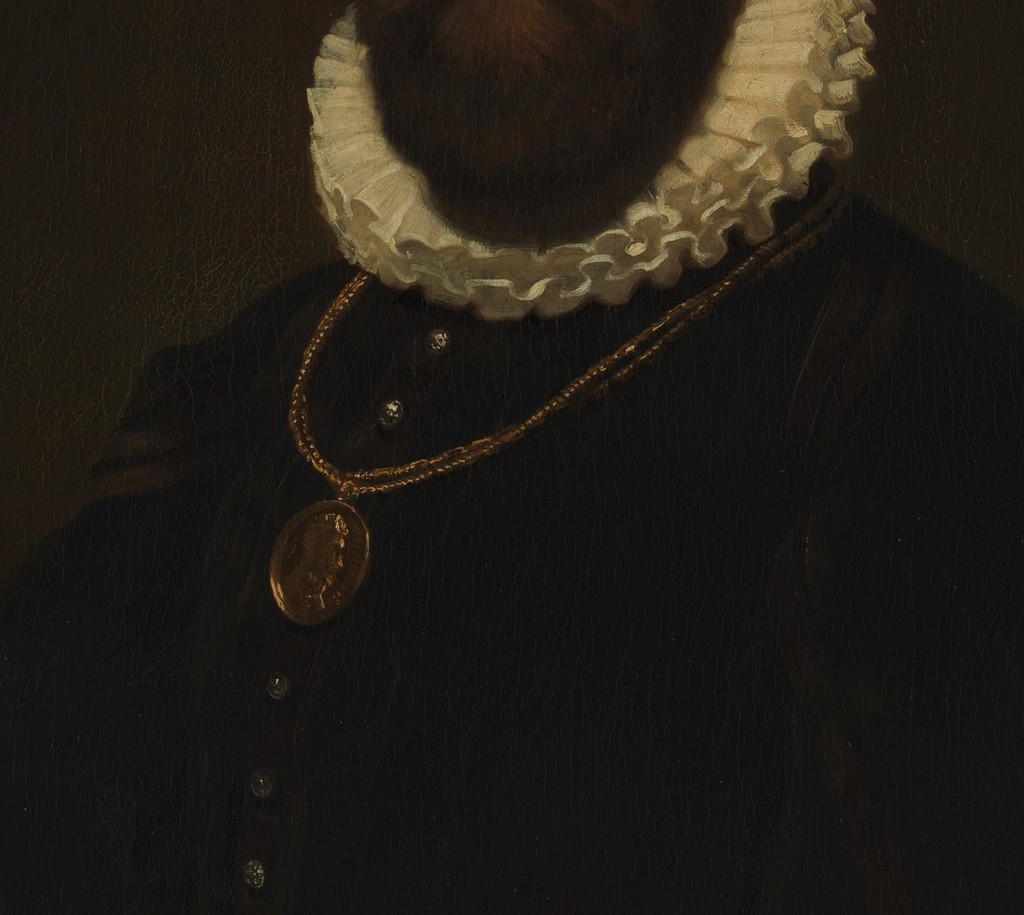
Face and white ruff
The white ruff sets a bright boundary beneath the beard and face. Warmer passages on the forehead and cheeks emerge from the restrained dark background.
Chain and medallion
A gold chain crosses the dark chest and leads to the medallion. These smaller bright forms continue the movement from the collar into the body.
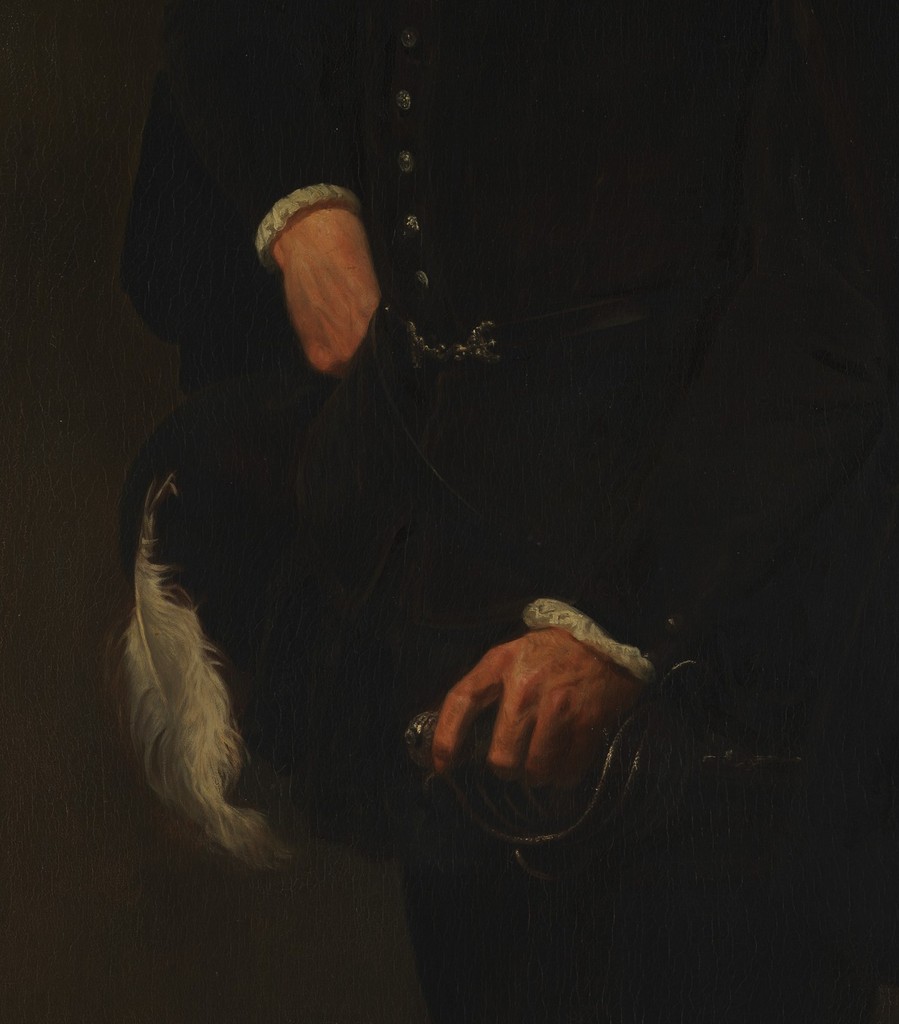
Hands, cuffs and feathered hat
Pale cuffs and both hands punctuate the dark clothing. The feathered hat contributes another lighter passage at the left, helping the lower pose remain legible.
Why dress Whittredge as an earlier gentleman?
Leutze’s historical interests provide a persuasive context for the costume. The museum catalogue connects the portrait with his study of old masters and suggests that the clothing probably came from his extensive collection of period dress. Such clothes could serve a historical composition, but here they transform the presentation of someone from the painter’s own circle. [2]
The effect was recognised during Whittredge’s lifetime. In Book of the Artists , published in 1867, Henry T. Tuckerman included an unnamed friend’s description of the sitter. That observer thought his face and figure resembled a Spanish or Portuguese cavalier and compared Leutze’s costumed portrait to the work of Van Dyck or another old master. This is a contemporary response to the painting, rather than proof that Leutze copied one particular earlier canvas. [4]
The comparison helps explain how the portrait could suggest dignity through an adopted historical appearance. Whittredge did not need to be represented as a named ruler or fictional character. A familiar person could acquire the bearing associated with an established tradition of portraiture. His modern identity remains present beneath the period clothing, creating a relationship between resemblance and performance.
The costume also offers Leutze a sequence of different surfaces. The ruff, metal chain, dark fabric and pale cuffs respond differently to light. Their variety prevents the restrained colour scheme from becoming visually uniform. Historical dress gives the painter material opportunities alongside its associations with an earlier age.
Face, hands and the dark silhouette
The white ruff is the strongest interruption in the portrait’s dark mass. Its repeated folds form a bright irregular ring beneath the face, separating the head from the clothing. The beard overlaps that whiteness, while the forehead and cheeks provide warmer areas of light above it. The eye moves between the pale fabric and the more subdued modelling of the features.
Whittredge’s head turns slightly in relation to his torso. The difference is small, but it keeps the pose from becoming rigidly frontal. His eyes meet the space beyond the picture with a steady expression; the closed mouth and substantial beard reinforce the sense of reserve. These are effects of the painted presentation. They do not establish how he behaved throughout his life.
The hands introduce another rhythm lower down. One appears beside the waist, while the other is positioned near the hat and its pale feather. The cuffs repeat the light accent of the ruff on a smaller scale. Looking from face to hands reveals a carefully spaced arrangement of brighter passages within the broad dark silhouette.
The chain offers a more delicate connection. It arcs over the chest and leads to a medallion, giving the costume a visible centre without competing with the face. Buttons and folds emerge gradually from the darker paint. The portrait rewards a slower inspection than its first impression of black clothing might suggest: distinctions in texture and light become part of how the sitter occupies the canvas.
Watch: Emanuel Leutze
Choose a film to explore the artist’s work, its interpretation and its wider setting.
It's not only about the American Revolution, Leutze's Washington Crossing the Delaware
Smarthistory considers the ideas and historical distance behind Washington Crossing the Delaware.
Watch on YouTubeFriendship and the Düsseldorf studio
Leutze and Whittredge’s association reaches beyond this sitting. The Metropolitan Museum’s catalogue places the beginning of their friendship around Whittredge’s arrival in Düsseldorf in 1849. Leutze’s studio offered Americans a place of advice and shared activity, alongside his own work on ambitious historical subjects. The portrait belongs within that community, rather than to an isolated encounter with a professional model. [2]
Whittredge also posed during the creation of Washington Crossing the Delaware . The Met’s account of that painting explains that Leutze used him for Washington’s body and for the steersman. Washington’s head drew on Houdon’s sculptural likeness. A model’s participation therefore needs to be distinguished from the identity represented in the finished historical painting. [3]
That distinction makes the costumed portrait especially interesting. In the Washington canvas, Whittredge helped Leutze construct someone else. Here he appears under his own name, even while the clothing evokes another century. The same studio practice of dressing and posing a body could support two different purposes: a historical figure within a narrative and a recognisable colleague presented through historical associations.
Tuckerman’s account provides another contemporary setting for the likeness. Its description of Whittredge’s studio includes a courteous host and an artist absorbed in work, surrounded by sketches and studies. Those observations are the impressions of the quoted friend. They show how the portrait entered a discussion of the living painter and his working environment, beyond the costume’s resemblance to old-master art. [4]
Other likenesses of the same painter
Leutze painted Whittredge on more than one occasion. The Met catalogue distinguishes a half-length portrait dated 1861 from a painting of 1865 showing him at his easel. Both belong to the later New York phase of the artists’ association. Neither should be confused with the 1856 canvas merely because the sitter and painter have the same names. [2]
These differences in presentation are meaningful. Period clothing can connect a sitter to the prestige of earlier portraiture; an easel can make artistic labour itself part of the image. A painter’s identity has several possible visual expressions. The 1856 work selects one of them, concentrating on bearing, likeness and dress rather than showing Whittredge making a landscape.
Whittredge also made a bust-length copy after Leutze’s 1856 portrait for his patron and friend James W. Pinchot, according to the catalogue. That derivative has a different maker and format. Its existence suggests that the image had a personal usefulness beyond the original sitting, while reminding viewers to distinguish Leutze’s canvas from later or related representations. [2]
A gift made during the sitter’s lifetime
The portrait entered the Metropolitan Museum in 1903 as the gift of several gentlemen. The catalogue describes a subscription organised by a committee that included Pinchot, artists and collectors. Whittredge was still alive and wrote to Samuel P. Avery Jr. thanking him after the gift was announced. His response acknowledged both the elaborate clothing and the prospect of a lasting place in the museum. [1] [2]
That later history adds another kind of recognition to the image. A portrait originating within an artistic friendship became a museum representation of a painter whose career extended well beyond Düsseldorf. The acquisition did not erase its personal setting; it gave that relationship a public afterlife.
Within Leutze’s portraits , Worthington Whittredge demonstrates how closely likeness and historical imagination could cooperate. The costume attracts attention first, but the face, hands and controlled light sustain it. Looking at those parts together reveals a portrait in which a modern artist’s presence remains distinct within the borrowed appearance of the past.
Artworks directory
A selected directory of paintings and drawings discussed in these articles. Different versions are listed separately.
| Name | Date | Medium |
|---|---|---|
| Washington Crossing the Delaware (Met canvas) | 1851 | Painting |
| Westward the Course of Empire Takes Its Way (oil study) | 1861 | Painting |
| Westward the Course of Empire Takes Its Way (Capitol mural) | 1861–62 | Painting (mural) |
| Washington Rallying the Troops at Monmouth (large original) | 1854 | Painting |
| Washington Rallying the Troops at Monmouth (replica) | 1857 | Painting |
| The Courtship of Anne Boleyn | 1846 | Painting |
| Worthington Whittredge | 1856 | Painting |
| Signing of the Alaska Treaty | c. 1867 | Painting |
| The Last Drop (McGuire Scrapbook) | Date not specified | Drawing |
| The Amber Necklace | 1847 | Painting |
| Maria Lottner | c. 1842 | Painting |
| Heinrich Lottner | 1858 | Painting |
| Cromwell at Milton’s Home (Schwäbisch Gmünd version) | 1855 | Painting |
| Titian’s Lagoon Voyage | 1857 | Painting |
| Mary Stuart’s First Mass in Holyroodhouse | 1866 | Painting |
| Evening Party at Milton’s (National Gallery of Art canvas) | 1854 | Painting |
| Friedrich Wilhelm Hütz | 1863 | Painting |
| Waving figure from Westward the Course of Empire Takes Its Way | c.1860 | Drawing |
Frequently Asked Questions
Emanuel Leutze painted this portrait in 1856. Worthington Whittredge, the sitter, was himself a landscape painter.
The museum catalogue connects the choice with Leutze’s study of old masters and his interest in period costume. Contemporary viewers compared Whittredge’s appearance in the portrait to a Spanish or Portuguese cavalier.
Yes. The Metropolitan Museum’s account explains that he posed for Washington’s body and for the steersman. Leutze used a sculptural likeness by Houdon as a source for Washington’s head.
It belongs to the Metropolitan Museum of Art in New York, accession 03.16. The painting was given to the museum in 1903.
Discussion
Look again at the images and ideas explored in Worthington Whittredge by Emanuel Leutze. These editorial prompts invite your observations.
Does the historical costume make Whittredge seem more distant, or does it draw your attention to the individual face within it? Consider how the hands change your impression of the pose.
Reader Insights
What do Whittredge’s hands contribute to the pose?
Does the historical costume bring you closer to the face or make it seem more distant?
How does knowing the sitter was a fellow painter change the encounter?
Join the Conversation
Share a detail, comparison or question about Worthington Whittredge by Emanuel Leutze below.
References
- Metropolitan Museum of Art , Worthington Whittredge , 1856, accession 03.16. Object details, collection credit and image. View source
- Natalie Spassky , American Paintings in the Metropolitan Museum of Art , Volume II, 1985, pp. 13–25, especially p. 25. Portrait, probable place of execution, related likenesses and museum acquisition. View source
- Carrie Rebora Barratt and others , Washington Crossing the Delaware: Restoring an American Masterpiece , The Metropolitan Museum of Art Bulletin , Fall 2011, p. 6. Whittredge’s modelling and Leutze’s construction of Washington’s likeness. View source
- Henry T. Tuckerman , Book of the Artists , 1867, pp. 515–518, especially p. 518. Contemporary discussion of Whittredge, including an unnamed friend’s description of the costumed portrait and studio. View source
- Splash image source.
Emanuel Leutze, Worthington Whittredge, 1856. Oil on canvas, 129.2 × 102.9 cm. Metropolitan Museum of Art, 03.16. Gift of Several Gentlemen, 1903. The Metropolitan Museum of Art. CC0 / Public domain . Resized only; native appearance, complete image and margins preserved.
View source