


 by
Tom Gurney
Tom Gurney BSc (Hons) is an art history expert with over 20 years experience
Email:
tomgurney1@gmail.com
/ Phone:
+44 7429 011000
Homer Dodge Martin Paintings: Introduction
Homer Dodge Martin painted mountain lakes, riverbanks, coastal ground and buildings held within their surroundings. These subjects offered different ways to explore distance, reflection and the relation between a few prominent forms. Looking across the paintings reveals an artist returning to particular problems while changing his handling and emphasis.
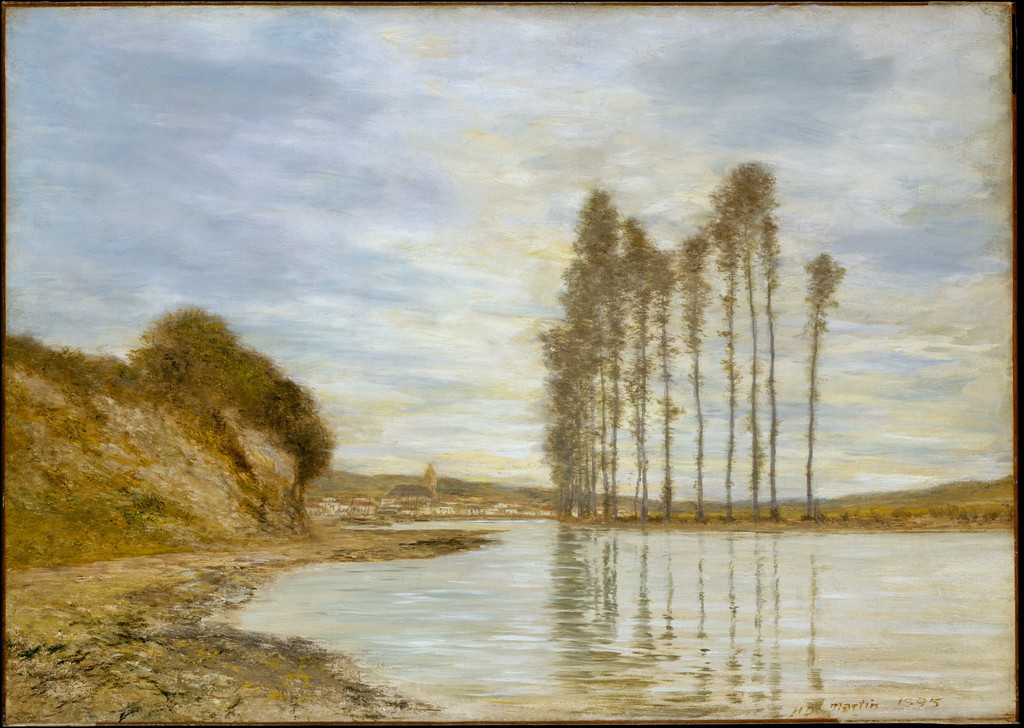
His career began within the American landscape tradition associated with the Hudson River School and developed through encounters with French painting and Whistler. The Smithsonian emphasizes the later importance of studio pictures made from recollection. That broad account becomes more revealing when individual works are compared: a lake can measure depth through successive bands, while a row of poplars can make reflection the organizing rhythm of a river. [1]
Explore twelve painting studies
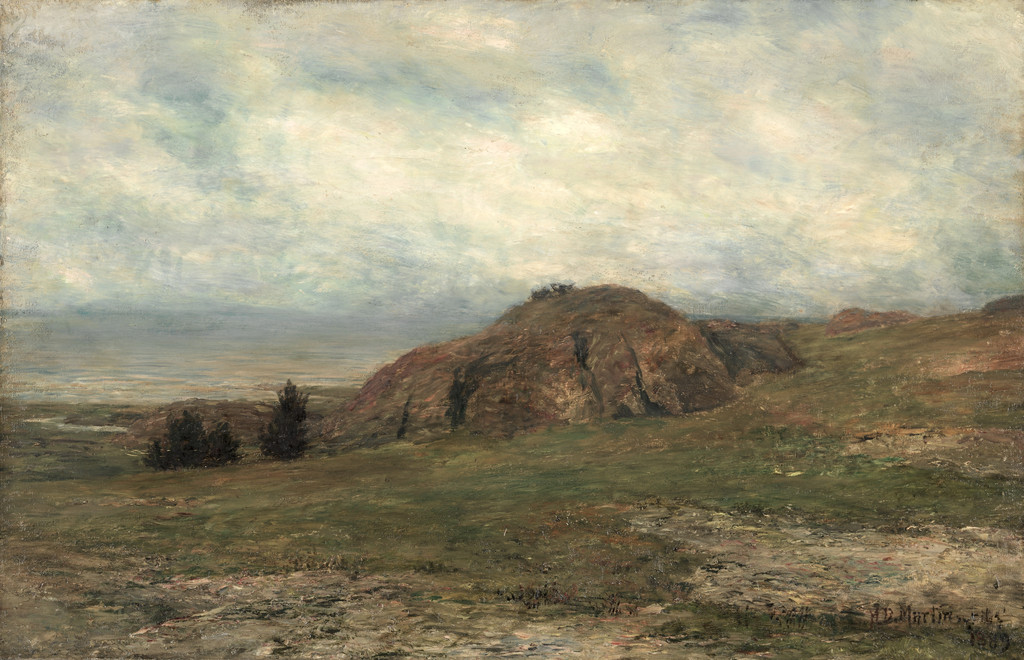
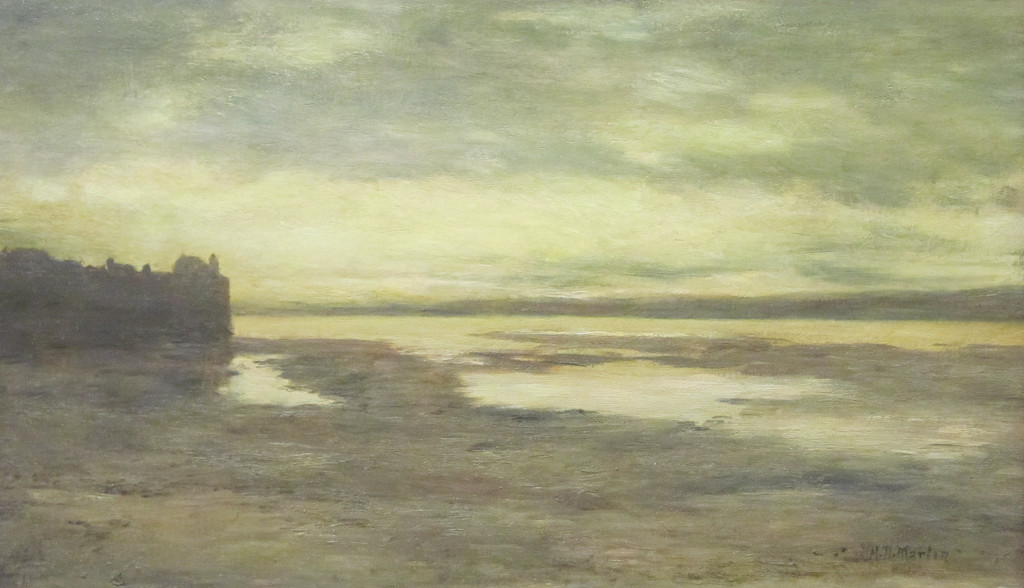
At a Glance
- Principal painting medium Oil on canvas, alongside oils on board or wood panel and watercolors.
- Recurring subjects Mountain lakes, rivers, dunes, coasts, trees and old buildings.
- Major late canvas View on the Seine: Harp of the Winds, 1893–95.
- American regions Adirondacks, White Mountains, Lake Champlain, Lake Ontario and Newport.
- European subjects The Thames and the coast and countryside of Normandy.
- Working methods Outdoor observation, drawings, studio composition and repeated revision.
- Historical illustrated selection Dana H. Carroll’s Fifty-Eight Paintings by Homer D. Martin, 1913.
- Useful comparisons Early and late lake pictures; small coastal boards and large canvases; different treatments of repeated subjects.
Contents
- A route through Martin’s paintings
- Mountain and lake pictures
- Britain and the Norman coast
- The repeated landscape
- Large paintings and small studies
- Remembered scenes in the final years
- Titles, versions and the 1913 selection
- Explore the painting articles
A route through Martin’s paintings
Begin with a pair of pictures whose subjects share something visible. Upper Ausable Lake and Harp of the Winds both give water a central role, but they organize it differently. The lake opens toward a mountain wall; the river curves past repeated trees. One invites comparison of broad depth zones, the other of intervals and reflection.
Then follow a particular element across another subject. A dark foreground can establish the viewer’s position before a distant passage of light. A slender trunk can interrupt an open space without blocking it entirely. The contribution of these features becomes clearer when the eye moves between works, recognizing a related decision within a different landscape.
Dates help, but the development is not a simple progression from detail to freedom. Mather’s account emphasizes the persistence of Martin’s concern with extensive space and considered arrangement. The Met catalogue likewise traces selection and simplification within the earlier American work. Later experience altered an approach already in motion. [2] [3]
The style and technique account follows the means more closely. Here the most useful starting point is the paintings themselves: what occupies the foreground, where the principal light falls, how the horizon divides the surface and which forms repeat. Those questions provide a practical route through pictures that can initially appear quiet or elusive.
Mountain and lake pictures
In the Smithsonian’s Upper Ausable Lake , dated 1868, the farther mountains rise across the water beyond a nearer shore and reeds. Water separates the foreground from that distant wall, while a brighter passage helps articulate its width. The current museum record identifies an oil on canvas, 46.2 by 76.8 centimeters, rather than one of Martin’s drawings of Adirondack subjects. [4]
Mather traced the painter’s summer observations through the Adirondacks and White Mountains, describing studies of rocks, falling water and trees. These particulars mattered within the larger view. A ledge can give the foreground its structure, while a gap between mountain slopes allows the eye to move farther into the picture. Careful observation and broad arrangement therefore developed together. [2]
The relationship continues into Adirondack Scenery , completed in 1895. A foreground ledge, wooded ground and distant lake form successive stages of an extensive view. Mather treated it as a culmination of memories and observations considered over many years. Its late date does not make mountain country a newly discovered subject; it shows the continuing life of an earlier experience. [2]
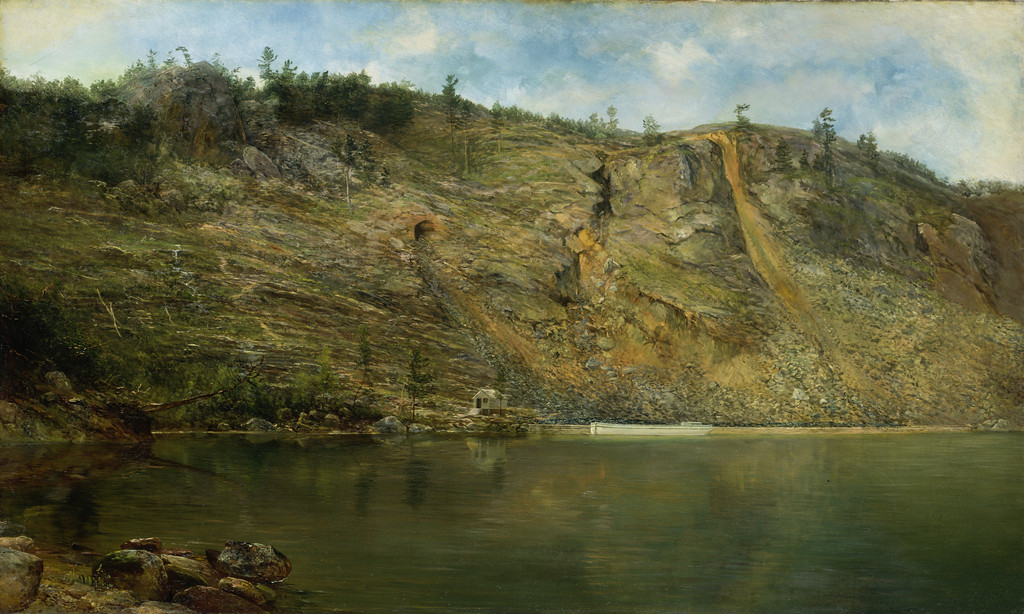
Industrial and inhabited places also belong within this American landscape practice. The Iron Mine, Port Henry, New York brings shoreline structures and a cut into the cliff together with open lake water. Westchester Hills uses a route across the ground, rocks and a wooded ridge to organize countryside. Such differences widen the range beyond an idea of Martin painting only remote wilderness.
The White Mountains pictures offer another revealing comparison. The Wellin Museum’s The White Mountains from Randolph Hill, dated 1866–67, is a canvas measuring sixteen by twenty-six inches; its account identifies Mount Washington in the center. A much larger picture formerly in the Met, measuring thirty by fifty inches, has a separate history. The Met catalogue identifies Mount Madison and Mount Adams in that view, while a 2008 auction offering records the larger canvas as the museum’s property. [5] [3] [6]
These are related regional subjects rather than interchangeable pictures. Their sizes, signatures and mountain arrangements distinguish them. Comparing the records also reveals why a familiar place-name can make an inadequate description on its own: a painter can turn toward different peaks from the same wider region, producing another balance of near ground and distant slopes.
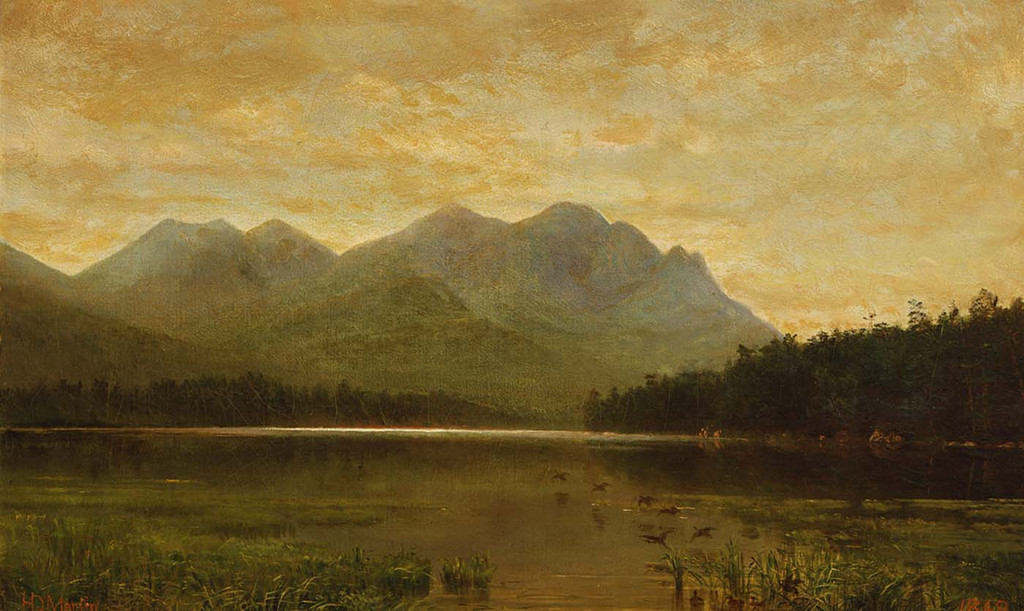
Homer Dodge Martin, Upper Ausable Lake, 1868. Oil on canvas, 46.2 × 76.8 cm. Smithsonian American Art Museum, 1909.7.44. The nearer shore and reeds lead toward water and distant mountains. Smithsonian American Art Museum, Gift of William T. Evans.
Image source
.
Public domain
. Resized only; source appearance preserved.
Britain and the Norman coast
Britain introduced river subjects that can be read beside the later French pictures. The Smithsonian dates Evening on the Thames to about 1876. Its broad river, low distant buildings and open sky offer a different balance from a mountain lake. The water carries the view across the width of the canvas rather than toward a steep enclosing barrier. [7]
Normandy supplied both coastal openness and more contained settings. Brooklyn’s Normandy Coast , dated 1884, spreads a freely worked sky above a low shore. The museum describes it among Martin’s outdoor paintings. Its small board and conspicuous brushwork make it a useful counterpart to the large canvases developed through extended studio revision. [8]
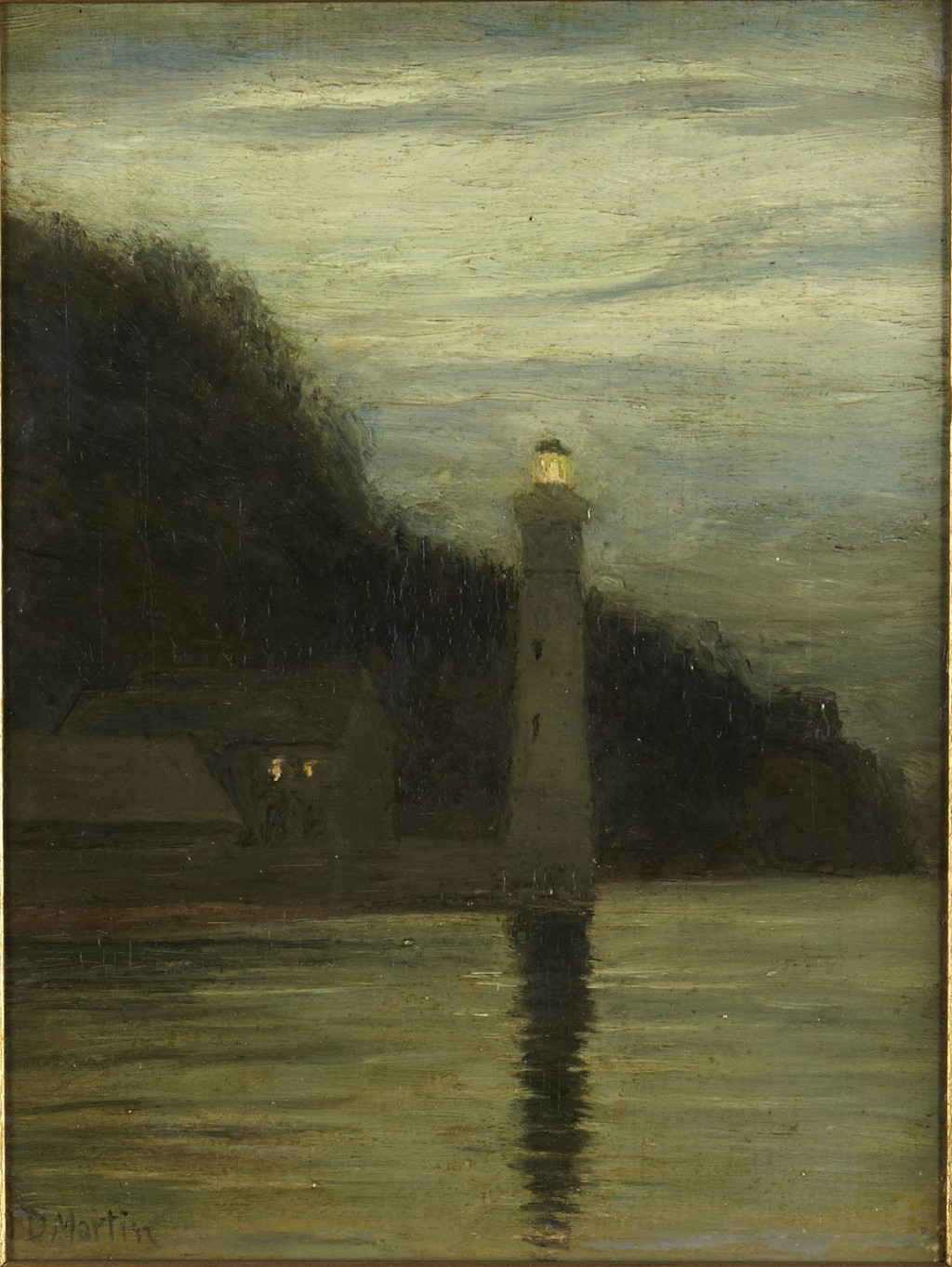
Built forms create another kind of focus. In The Lighthouse, Honfleur , a compact vertical format gives the tower a strong place within the surrounding air. Princeton identifies its picture as an undated oil on wood panel, 28 by 20 centimeters. That object is distinct from the larger horizontal Honfleur Light discussed in historical accounts. [9]
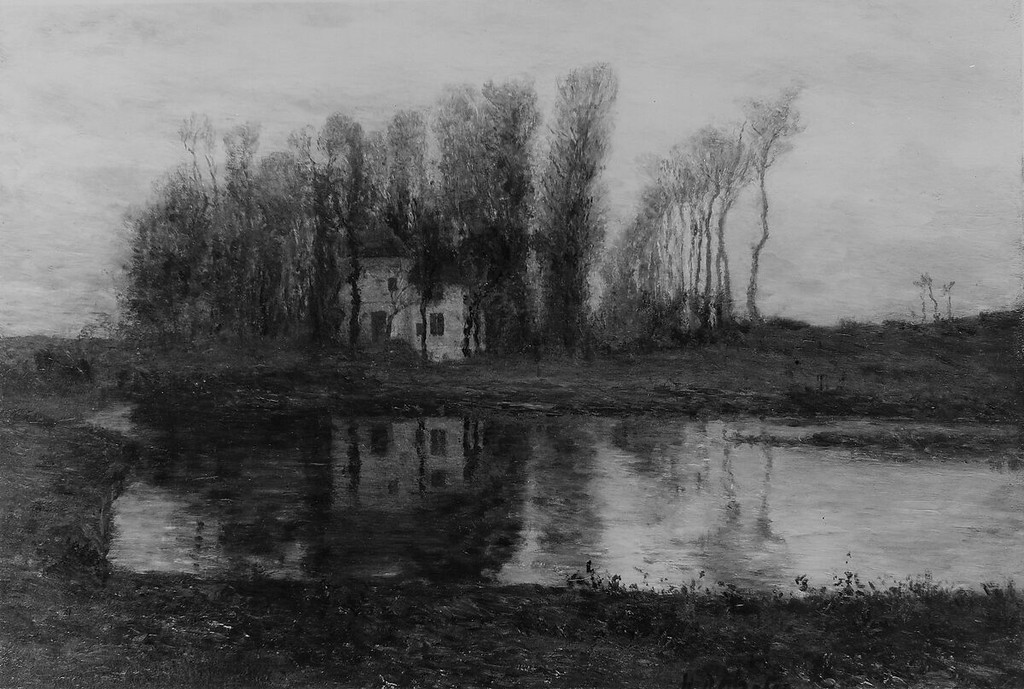
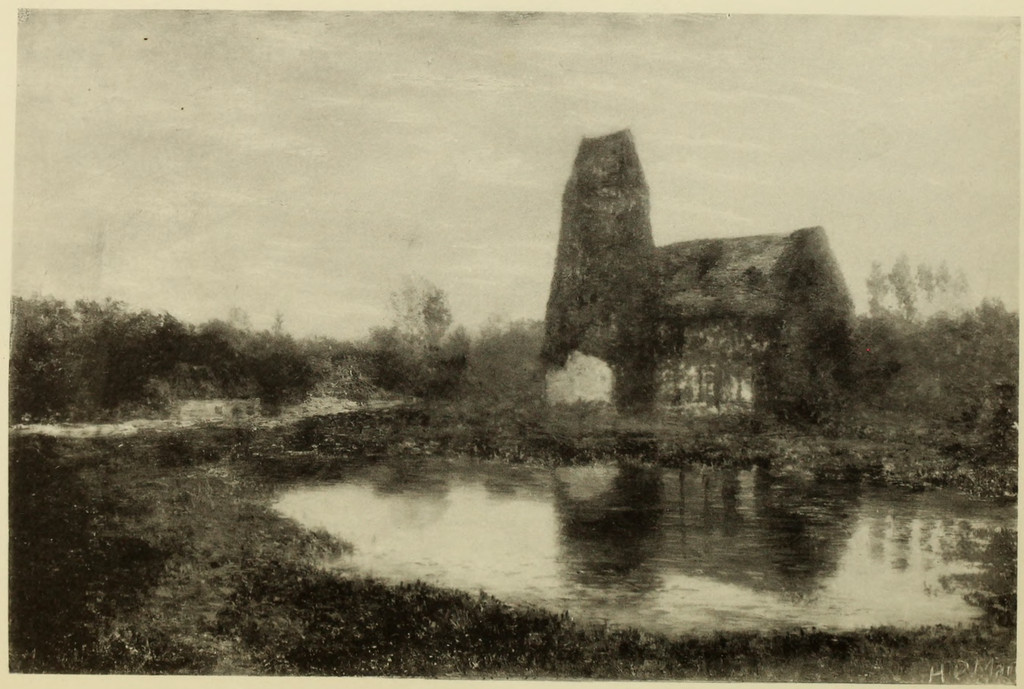
Old Manor of Criqueboeuf and Criqueboeuf Church bring architecture beside reflecting water. Their subjects invite attention to the balance between a building and the trees that surround it. The France and Normandy account places these pictures within the Martins’ residence and the subjects that continued to occupy him after his return.
The Met dates Old Manor to about 1882–92, a span that extends beyond Martin’s French residence. Its catalogue follows revision through 1892. The building and reflecting pool therefore belong to a picture reconsidered after the painter had left its setting. Looking at the finished arrangement can be joined to an awareness of how long that arrangement remained open to change. [3]
The repeated landscape
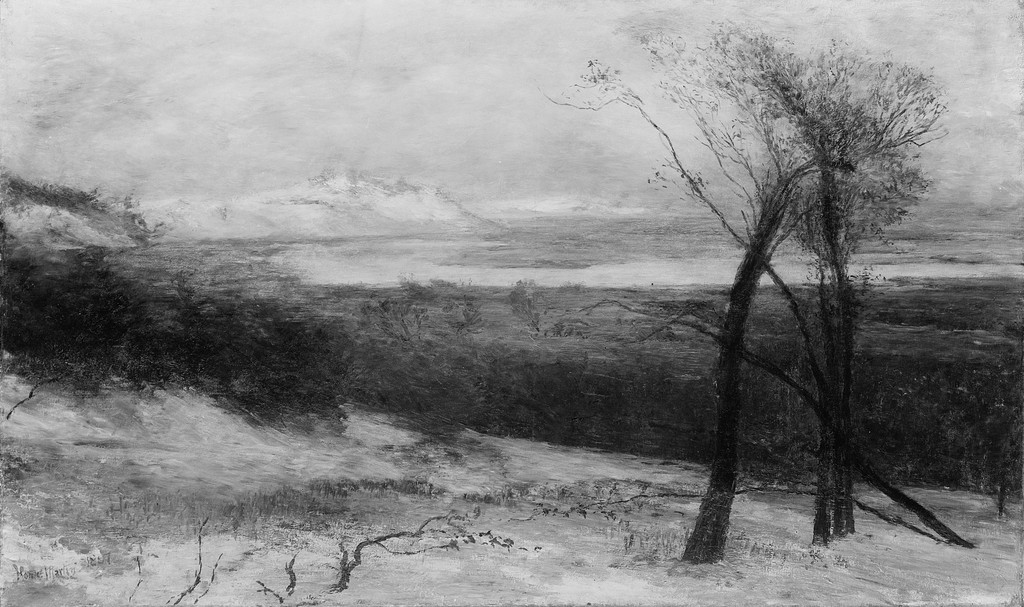
The Ontario dunes show how much can change within a recurring subject. Martin visited the region in 1874 and returned to its forms in several works. The Met’s Behind Dunes, Lake Ontario was begun during his French residence, submitted unsuccessfully to the 1884 Salon and revised until 1887. An American setting thus acquired a long working history on both sides of the Atlantic. [3]
Compare the allocation of space before concentrating on particular objects. Near trees can make the foreground insistent, while distant sand and water provide a more open passage. A branch’s angle or a trunk’s height changes the amount of sky around it. Reworking these relationships can substantially alter the experience of a landscape even when the principal subject remains recognizable.
The Met catalogue also draws attention to the material changes in Behind Dunes. It describes broad areas worked with a palette knife and contrasts them with brushed trees and weeds. That distinction gives the foreground a different presence from the farther reaches. The account connects the painting’s revision with French landscape practice, making the recurring American subject a useful example of an established motif reconsidered through other experience. [3]
Repetition also requires attention to the identity of each object. Cleveland’s Wild Coast, Newport , dated 1889, measures 59 by 91.6 centimeters. The Smithsonian’s picture of the same title is a smaller canvas dated about 1885–95. Their dimensions and accessions distinguish them, while the Cleveland exhibition history leaves a proposed connection with an 1890 Academy exhibit uncertain. [10] [11]
The Wild Coast discussion begins with the Cleveland painting. Keeping that identity in view makes comparison productive: a similar title can lead toward related coastal interests without requiring both pictures to share an exact date, owner or exhibition history. Repeated motifs reveal continuity; the particular objects preserve the decisions through which that continuity took shape.
Watch: Homer Dodge Martin
Start with Martin’s Normandy Landscape, then explore the wider Hudson River School tradition in which he began.
Homer Dodge Martin | Normandy Landscape
The Castellani Art Museum introduces Martin’s Normandy Landscape.
Watch on YouTubeLarge paintings and small studies
A reproduction can conceal a major difference of scale. Brooklyn’s Normandy Coast measures 18.3 by 32.2 centimeters. The Met’s Behind Dunes measures 91.4 by 153.7 centimeters. Enlarged to comparable widths on a screen, the two can appear physically similar. Their actual sizes make clear that the small outdoor board and the expansive canvas ask for different kinds of encounter. [8] [3]
The size also changes the relationship between a brushmark and the whole. Across a small board, a short passage of paint may carry a large part of the sky. On a much wider canvas, an interval between trees can spread through a substantial physical distance. Comparing the dimensions alongside the image helps restore something that the uniform size of reproductions removes.
A small picture need not be a preparation for a larger one. Princeton’s Landscape with Poplars is an undated vertical canvas, 29 by 24 centimeters. Its trees and reflections can be compared with Harp of the Winds , but resemblance alone does not establish that it was a study for that painting. The comparison is valuable as an encounter with a recurring motif. [12]
The drawings and watercolors provide further ways to examine such choices. They preserve contours, tonal masses and washes through means different from oil paint. Medium and support therefore deserve attention alongside subject and date, rather than treating every small work as an unfinished stage on the way to a more important canvas.
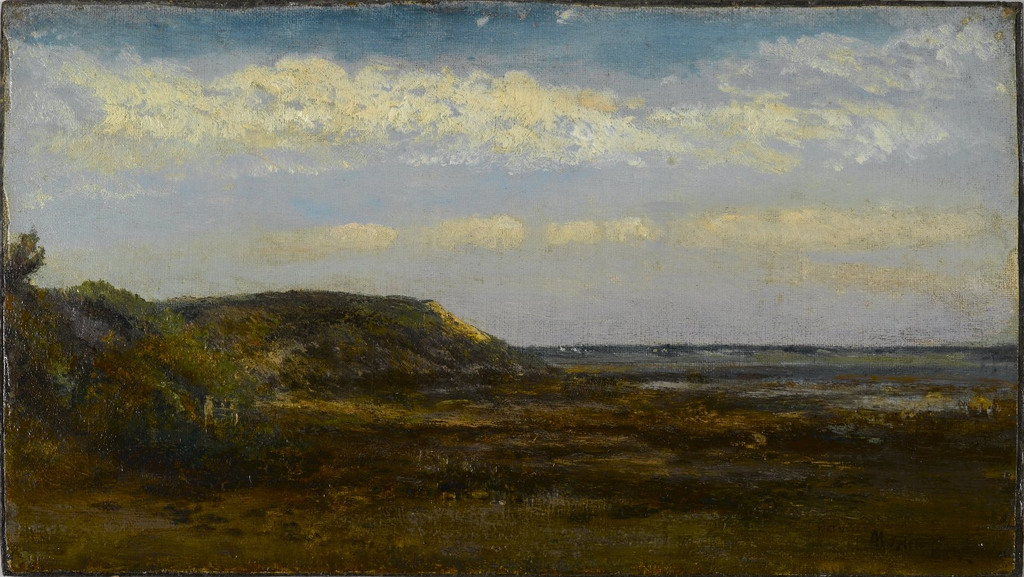
Homer Dodge Martin, Normandy Coast, 1884. Oil on board, 18.3 × 32.2 cm. This small outdoor picture offers a different scale of encounter from the large studio canvases. Brooklyn Museum, Bequest of Charles A. Schieren.
Image source
.
No known copyright restrictions
. Resized only; source appearance preserved.
Remembered scenes in the final years
The late paintings bring different parts of Martin’s experience into close relation. Harp of the Winds developed from French material, while Adirondack Scenery returned to American mountain country. Both were completed in 1895 during his final years in Minnesota. They share an extended history of looking, remembering and reconsidering rather than a single moment of inspiration. [2] [3]
The Met catalogue describes Harp beginning in charcoal on canvas in New York in 1893 and reaching completion in Saint Paul in 1895. The interval is visible in the importance of arrangement: the curve of the bank, repeated poplars and their reflections work together across the surface. The French subject belongs within a painting made through later American circumstances. [3]
Archival descriptions add useful duration to the Adirondack picture’s history. The Archives of American Art’s account of the Clarke correspondence traces work on it from 1894 before its 1895 completion. That sequence helps explain the late achievement through continuing effort. Thomas B. Clarke’s role also connects the canvases in Minnesota with the New York circle through which pictures reached viewers and purchasers. [13]
The biography follows the circumstances of these final years, including impaired eyesight and Elizabeth’s account of the household. Looking at the paintings alongside that history gives the work a human setting, while leaving room to examine the specific choices that hold each composition together.
Titles, versions and the 1913 selection
Dana H. Carroll’s Fifty-Eight Paintings by Homer D. Martin , published in 1913, provides a substantial historical selection. Its entries bring together pictures in different collections and include repeated subjects and titles. The number in its title describes that assembled group. It is not a statement of Martin’s lifetime output or the number of paintings that survive today. [14]
Historical titles can differ from those used by museums now. The Met catalogue identifies Old Manor of Criqueboeuf with the picture called the Haunted House in Elizabeth’s memoir. That connection joins two names to a documented painting. Elsewhere a similar landscape title may refer to another version, so a name alone is insufficient to establish identity. [3]
Dimensions, medium, signatures, inscriptions and collection histories offer further points of comparison. Princeton’s current lighthouse record explicitly connects its small panel with Carroll’s entry number thirty. Such a documented connection is stronger than a resemblance between titles. Historical owners likewise describe a particular moment, and cannot automatically be carried forward as present ownership. [9] [14]
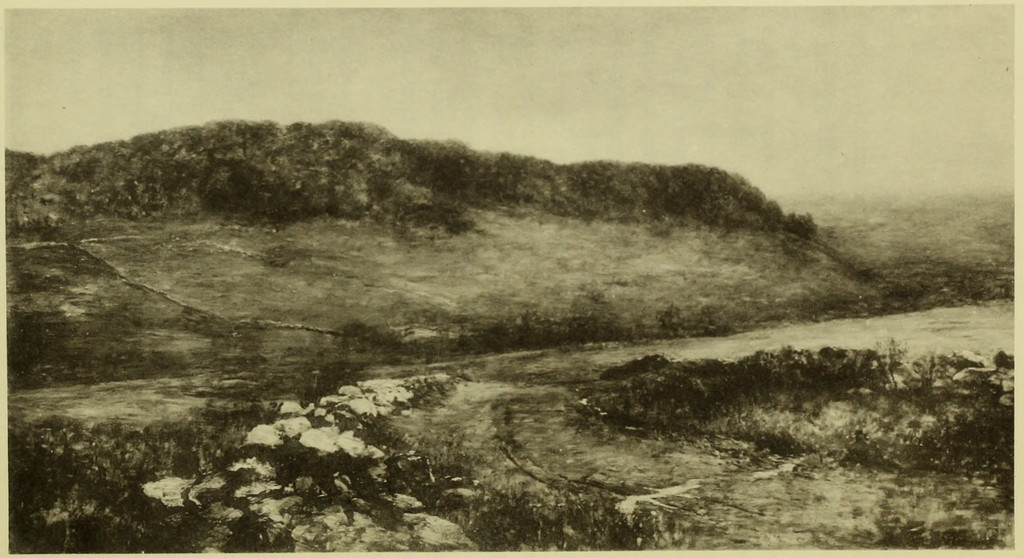
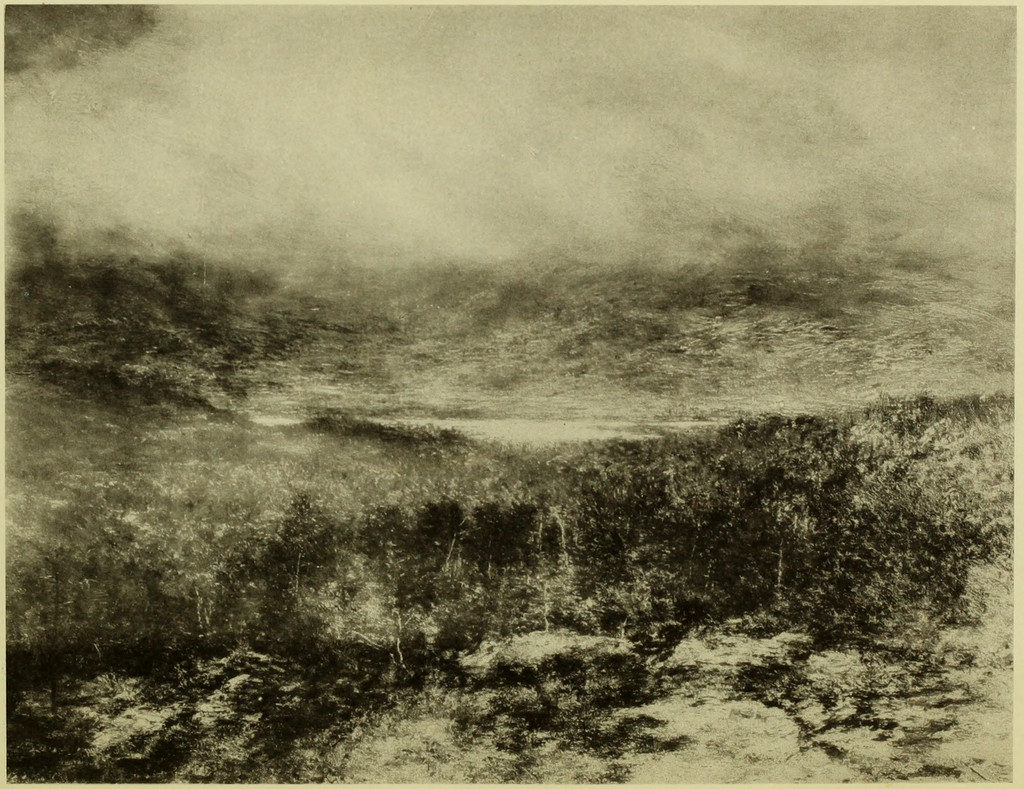
Older illustrated books remain rewarding for their selection and criticism, but a monochrome reproduction does not preserve a painting’s colors. It can clarify the distribution of light and dark, the curve of a bank or the position of a building. When studying color relationships, a museum color image or an explicitly attributed written account provides a different kind of evidence.
Explore the painting articles
For a first extended comparison, pair Upper Ausable Lake with Adirondack Scenery . Follow the relationship between the nearer ground, a middle stretch of water and the farther mountain slopes. Then turn to Harp of the Winds , where the repeated trunks and their reflections give another structure to the movement into distance.
For coast and countryside, compare Normandy Coast , Wild Coast, Newport and Westchester Hills . Notice how much of each surface is given to sky and how firmly the foreground establishes a position for the viewer. The low shore, coastal ground and rising inland slope offer different balances between openness and enclosure.
Buildings provide a third route through The Lighthouse, Honfleur , Old Manor of Criqueboeuf and Criqueboeuf Church . A tower can assert a vertical against the sky; a house or church beside water can acquire a second presence through reflection. These relationships make Martin’s paintings and life a sustained investigation of how familiar landscape forms become a particular view.
Artwork records
Browse 58 records from Carroll’s selected 1913 catalogue alongside 25 separately documented object records. Some records concern the same work; this is not a complete lifetime catalogue or a count of 83 unique artworks. [14]
| Name | Date | Medium |
|---|---|---|
| Carroll 1: Saranac Lake (1913 record) | 1860s; exact date not clearly decipherable | Painting — historical catalogue record |
| Carroll 2: Lake George from Bolton (1913 record) | Date not stated | Painting — historical catalogue record |
| Carroll 3: The Iron Mine, Port Henry, N. Y. (1913 record) | Date not stated | Painting — historical catalogue record |
| Carroll 4: On Lake Ontario (1913 record) | Probably late 1860s | Painting — historical catalogue record |
| Carroll 5: The Giant of the Valley (1913 record) | 1865 | Painting — historical catalogue record |
| Carroll 6: An Adirondack Lake (1913 record) | Date not stated | Painting — historical catalogue record |
| Carroll 7: Winter in Normandy (1913 record) | Date not stated | Watercolor — historical catalogue record |
| Carroll 8: Across the Lake (1913 record) | Date not stated | Painting — historical catalogue record |
| Carroll 9: New Hampshire Landscape (1913 record) | Late 1860s | Painting — historical catalogue record |
| Carroll 10: Long Lake (1913 record) | Date not stated | Painting — historical catalogue record |
| Carroll 11: Salt Meadows (1913 record) | Mid 1880s | Painting — historical catalogue record |
| Carroll 12: Autumn on the Susquehanna (1913 record) | 1879 | Painting — historical catalogue record |
| Carroll 13: Ontario Sand Dunes (1913 record) | 1887 | Painting — historical catalogue record |
| Carroll 14: Late Autumn (1913 record) | About 1877 | Painting — historical catalogue record |
| Carroll 15: Early Spring (1913 record) | About 1877; companion dating | Painting — historical catalogue record |
| Carroll 16: Raquette Lake (1913 record) | 1869 | Painting — historical catalogue record |
| Carroll 17: A Glimpse of the Sea (1913 record) | Date not established; historical suggestion disputed | Painting — historical catalogue record |
| Carroll 18: Headwaters of the Hudson (1913 record) | 1869 | Painting — historical catalogue record |
| Carroll 19: Autumn in the Adirondacks (1913 record) | 1871 | Painting — historical catalogue record |
| Carroll 20: Richmond on Thames (1913 record) | About 1877; later alterations | Painting — historical catalogue record |
| Carroll 21: Saranac Lake (1913 record) | 1878 | Painting — historical catalogue record |
| Carroll 22: Windsor Castle (1913 record) | Finished 1878 | Painting — historical catalogue record |
| Carroll 23: L’Anse St. Étienne, Saguenay (1913 record) | 25 July 1879 | Watercolor — historical catalogue record |
| Carroll 24: L’Anse aux Basses Pierres (1913 record) | Date not stated | Watercolor — historical catalogue record |
| Carroll 25: Blossoming Trees (1913 record) | Mid 1880s | Painting — historical catalogue record |
| Carroll 26: On the Seine (1913 record) | Date not stated; later years suggested | Painting — historical catalogue record |
| Carroll 27: The Dunes (1913 record) | 1883 | Watercolor — historical catalogue record |
| Carroll 28: The Moonlit Pond—Honfleur (1913 record) | Date not stated | Painting — historical catalogue record |
| Carroll 29: Normandy Landscape (1913 record) | Date not stated | Painting — historical catalogue record |
| Carroll 30: The Lighthouse, Honfleur (1913 record) | Date not stated | Painting — historical catalogue record |
| Carroll 31: Ruby Strong—Normandy (1913 record) | Date not stated | Painting — historical catalogue record |
| Carroll 32: Sand Dunes, Lake Ontario (1913 record) | 1874 | Painting — historical catalogue record |
| Carroll 33: Low Tide, Honfleur (1913 record) | Date not stated | Painting — historical catalogue record |
| Carroll 34: Evening on the Seine (1913 record) | Date not stated | Painting — historical catalogue record |
| Carroll 35: On the Seine (1913 record) | Date not stated | Painting — historical catalogue record |
| Carroll 36: On the Hudson (1913 record) | 1881 | Painting — historical catalogue record |
| Carroll 37: A Forest Brook (1913 record) | 1881 | Painting — historical catalogue record |
| Carroll 38: Coast Meadows, St. Sauveur (1913 record) | 1881 | Painting — historical catalogue record |
| Carroll 39: Landscape (1913 record) | 1883 | Painting — historical catalogue record |
| Carroll 40: An Adirondack Lake—Lake Sanford (1913 record) | 1883 | Painting — historical catalogue record |
| Carroll 41: Lower Ausable Pond (1913 record) | 1868 | Painting — historical catalogue record |
| Carroll 42: December Morning in Normandy (1913 record) | 1883 | Painting — historical catalogue record |
| Carroll 43: Low Tide—Villerville (1913 record) | 1884 | Painting — historical catalogue record |
| Carroll 44: Lake George (1913 record) | 1884 | Painting — historical catalogue record |
| Carroll 45: Crepuscule—Montvilliers (1913 record) | 1885 | Painting — historical catalogue record |
| Carroll 46: The Sea at Villerville (1913 record) | 1885 | Painting — historical catalogue record |
| Carroll 47: Golden Sands (1913 record) | Date not stated | Painting — historical catalogue record |
| Carroll 48: The Meadow Brook (1913 record) | 1887 | Painting — historical catalogue record |
| Carroll 49: The Sun Worshippers (1913 record) | After the 1886 return to New York | Painting — historical catalogue record |
| Carroll 50: South Side of Long Island (1913 record) | 1894 | Painting — historical catalogue record |
| Carroll 51: Criqueboeuf Church (1913 record) | 1893 | Painting — historical catalogue record |
| Carroll 52: Normandy Farm (1913 record) | 1895 | Painting — historical catalogue record |
| Carroll 53: On the Mississippi (1913 record) | Toward the close of the artist’s life | Painting — historical catalogue record |
| Carroll 54: Newport Neck (1913 record) | 1893 | Painting — historical catalogue record |
| Carroll 55: A Newport Landscape (1913 record) | 1896 | Painting — historical catalogue record |
| Carroll 56: A Distant View of Caen (1913 record) | Date not stated; exhibited 1894 | Painting — historical catalogue record |
| Carroll 57: The Brook (1913 record) | 1894 | Painting — historical catalogue record |
| Carroll 58: Normandy Trees (1913 record) | Date not stated | Painting — historical catalogue record |
| View on the Seine: Harp of the Winds | 1893–95 | Oil on canvas |
| The Iron Mine, Port Henry, New York | About 1862 | Oil on canvas mounted on fiberboard |
| Wild Coast, Newport | 1889 | oil on canvas |
| In the Housatonic Valley (attributed to Homer Dodge Martin) | late 1850s | oil on canvas |
| Sand Dunes, Lake Ontario | c. 1874 | Possibly black crayon on paper |
| Adirondacks | 1868 | Pencil drawing |
| Landscape | 1896 | Watercolor |
| Near Newport | mid-1800s | Watercolor |
| Effect of Trees | About 1879 | Oil on canvas |
| Behind Dunes, Lake Ontario | 1883–87 | Oil on canvas |
| Old Manor of Criqueboeuf | About 1882–92 | Oil on canvas |
| Upper Ausable Lake | 1868 | Oil on canvas |
| Wild Coast, Newport (Smithsonian version) | About 1885–95 | Oil on canvas |
| On the Seine | About 1895 | Oil on canvas |
| The Lighthouse, Honfleur | Date not supplied by museum | Oil on wood panel |
| The White Mountains from Randolph Hill (Wellin canvas) | 1866–67 | Oil on canvas |
| Old Crossing, Otter Tail River | 1871 | Black chalk touched with white chalk on paper |
| Landscape with Poplars | Date not supplied by museum | Oil on canvas |
| Normandy Coast | 1884 | Oil on board |
| Criqueboeuf Church, Normandy | 1893 | Oil on canvas |
| Evening on the Thames | About 1876 | Oil on canvas |
| Hudson River | 1860 | Graphite drawing on wove paper |
| The White Mountains, from Randolph Hill (formerly Met canvas) | About 1862–68; later revisions | Oil on canvas |
| Westchester Hills | About 1887 | Oil painting — historical accounts |
| Adirondack Scenery | 1895 | Oil painting — historical accounts |
Frequently Asked Questions
No. His subjects include Britain and Normandy as well as American mountains, lakes and coastal places. A French subject might be completed after his return to the United States. [3]
No. Fifty-eight is the number assembled in Carroll’s 1913 illustrated selection, which is not a complete catalogue of his output. [14]
Discussion
Look again at the images and ideas explored in Homer Dodge Martin Paintings. These editorial prompts invite your observations.
Reader Insights
Compare the amount of sky in Upper Ausable Lake and Normandy Coast. How does it change your sense of scale?
Look at a small panel’s dimensions beside those of Behind Dunes. Which details might feel different when standing before the actual objects?
Follow trees and reflections through Harp of the Winds and Landscape with Poplars. What remains familiar, and what changes with the format?
Join the Conversation
Share a detail, comparison or question about Homer Dodge Martin Paintings below.
References
- Smithsonian American Art Museum , Homer Dodge Martin: artist biographies, accounts by Joan Stahl and Emery Battis. View source
- Frank Jewett Mather Jr. , Homer Martin: Poet in Landscape, 1912, particularly pp.26–38 and53–76. View source
- Natalie Spassky and colleagues , American Paintings in The Metropolitan Museum of Art, Volume II, 1985, Martin section, pp.420–430. View source
- Smithsonian American Art Museum , Upper Ausable Lake, 1868, 1909.7.44, object record. View source
- Katherine D. Alcauskas , The White Mountains from Randolph Hill, Wellin Museum of Art, Hamilton College, 2011.6; curatorial account from Innovative Approaches, Honored Traditions, 2017, p.126. View source
- Christie’s , The White Mountains, from Randolph Hill, 2008 offering, property line, dimensions and signature. View source
- Smithsonian American Art Museum , Evening on the Thames, about 1876, 1909.7.45, object record. View source
- Brooklyn Museum , Normandy Coast, 1884, 15.281, object record and curatorial account. View source
- Princeton University Art Museum , The Lighthouse, Honfleur, undated, y1948-3, object record and bibliography. View source
- Cleveland Museum of Art , Wild Coast, Newport, 1889, 1923.1118, object record and exhibition history. View source
- Smithsonian American Art Museum , Wild Coast, Newport, about 1885–95, 1929.6.72, object record. View source
- Princeton University Art Museum , Landscape with Poplars, undated, y1946-105, object record. View source
- Archives of American Art , Thomas B. Clarke letters to or about Homer Dodge Martin: biographical note, collection biography and series description. View source
- Dana H. Carroll , Fifty-Eight Paintings by Homer D. Martin, 1913, selected illustrated entries. View source
- Splash image source.
Homer Dodge Martin, View on the Seine: Harp of the Winds, 1893–95. Poplars, reflections and the curve of the river organize the composition. The Metropolitan Museum of Art, 97.32. The Metropolitan Museum of Art. CC0 / Public domain . Resized only; source appearance preserved.
View source