 by
Tom Gurney
Tom Gurney BSc (Hons) is an art history expert with over 20 years experience
Email:
tomgurney1@gmail.com
/ Phone:
+44 7429 011000
The Iron Mine, Port Henry, New York: Introduction
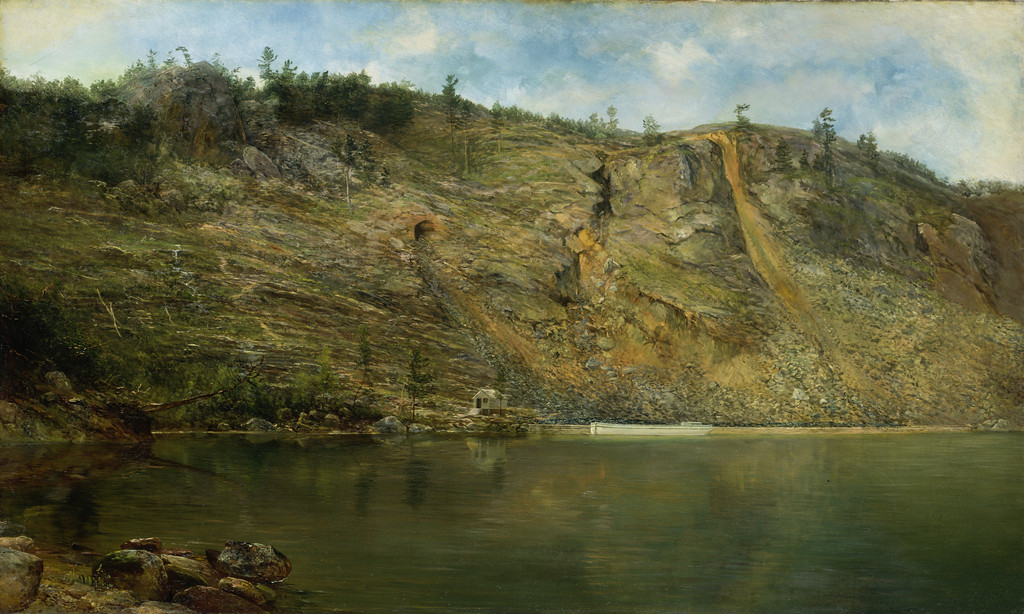
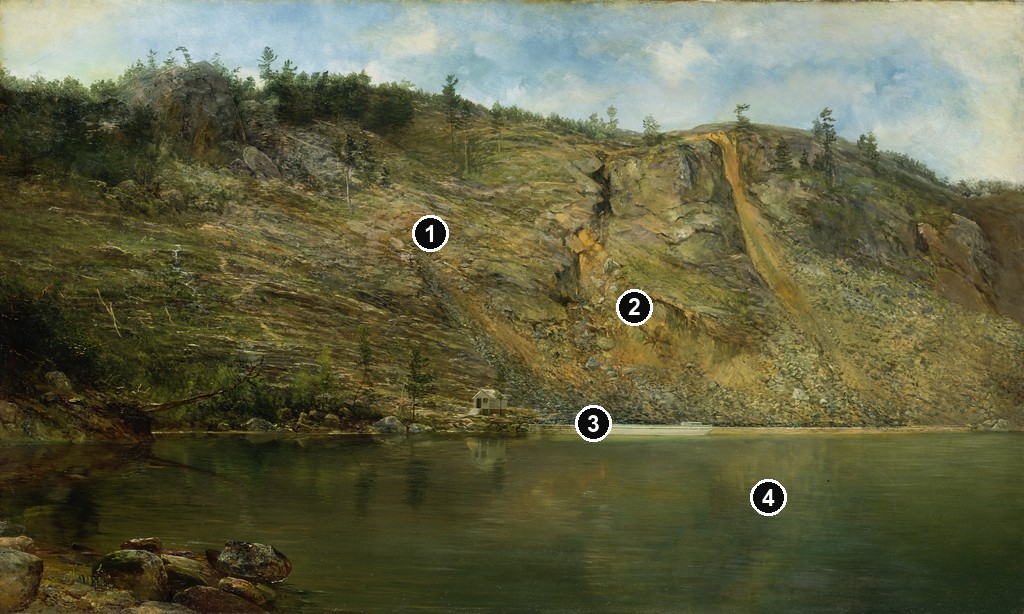
A steep rocky bank rises above Lake Champlain, its exposed face broken by a mine opening and a long, descending runway. A small building stands near the water, with a pale vessel beside the shore. Homer Dodge Martin’s The Iron Mine, Port Henry, New York places an industrial operation within a landscape whose rock, vegetation and reflective water remain powerfully present.
The Smithsonian American Art Museum dates the painting to about 1862. The broad oil on canvas, now mounted on fiberboard, measures 76.5 by 127 centimeters and belongs to the museum through William T. Evans’s gift. Its industrial subject makes it an especially revealing example of Martin’s early American landscape work. [1]
The picture can be approached through both its visible arrangement and its historical setting. The mine belongs to a region shaped by ore extraction and transport; the canvas also gives the water, cliff and narrow sky distinct pictorial roles. Understanding the operation helps explain what is represented, while close looking reveals how those features become a sustained view.
At a Glance
- Artist Homer Dodge Martin.
- Title The Iron Mine, Port Henry, New York.
- Date About 1862.
- Medium Oil on canvas mounted on fiberboard.
- Dimensions 76.5 × 127 cm.
- Collection Smithsonian American Art Museum.
- Accession 1910.9.11.
- Credit Gift of William T. Evans.
- Subject An iron-mining site by Lake Champlain near Port Henry.
- Site identification Craig or Cragg Harbor in the museum’s scholarly account.
- Interpretation The Smithsonian’s 2006 label connects the scene with Northern industrial resources during the Civil War.
- Patronage Neither a proposed Reed commission nor the older Tweed story is established as fact.
This work across Homer Dodge Martin’s career
Evening on the Thames
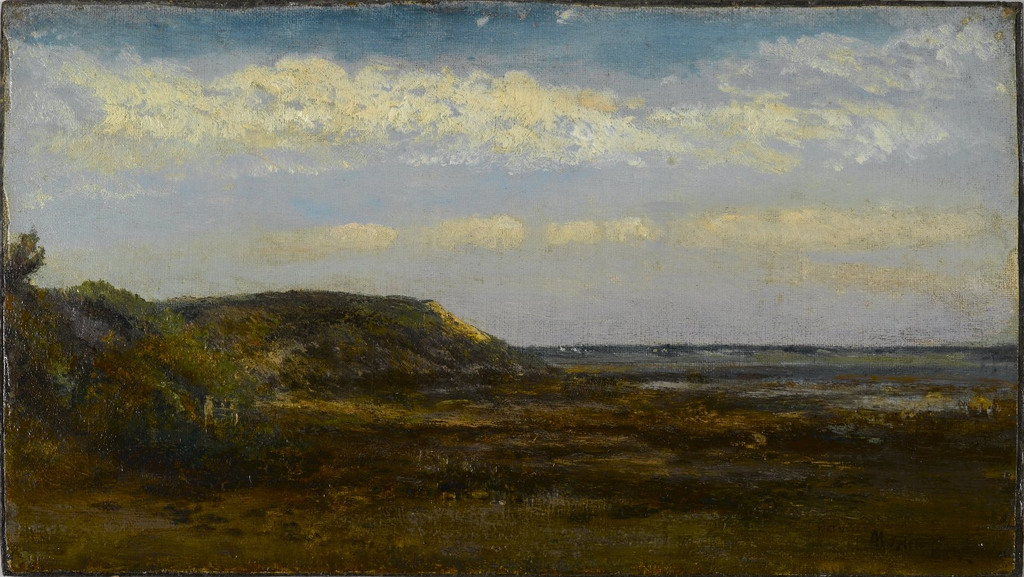
about 1876Old Manor of Criqueboeuf
about 1882–92Behind Dunes, Lake Ontario
1883–87Normandy Coast
1884Westchester Hills
about 1887Lighthouse, Honfleur
UndatedNotes and sources
The Iron Mine, Port Henry, New York (current article). An industrial opening, sloping runway and worked cliff stand above Lake Champlain. The Smithsonian connects this landscape with the North’s resources during the Civil War. [1]
Upper Ausable Lake. Foreground reeds and birds lead toward a bright passage of water beneath the mountain wall. The Smithsonian identifies this canvas as Upper Ausable Lake. [2]
Evening on the Thames. A low river horizon, distant buildings and reflected light bring a British subject into Martin’s painting. The museum’s date remains approximate. [3]
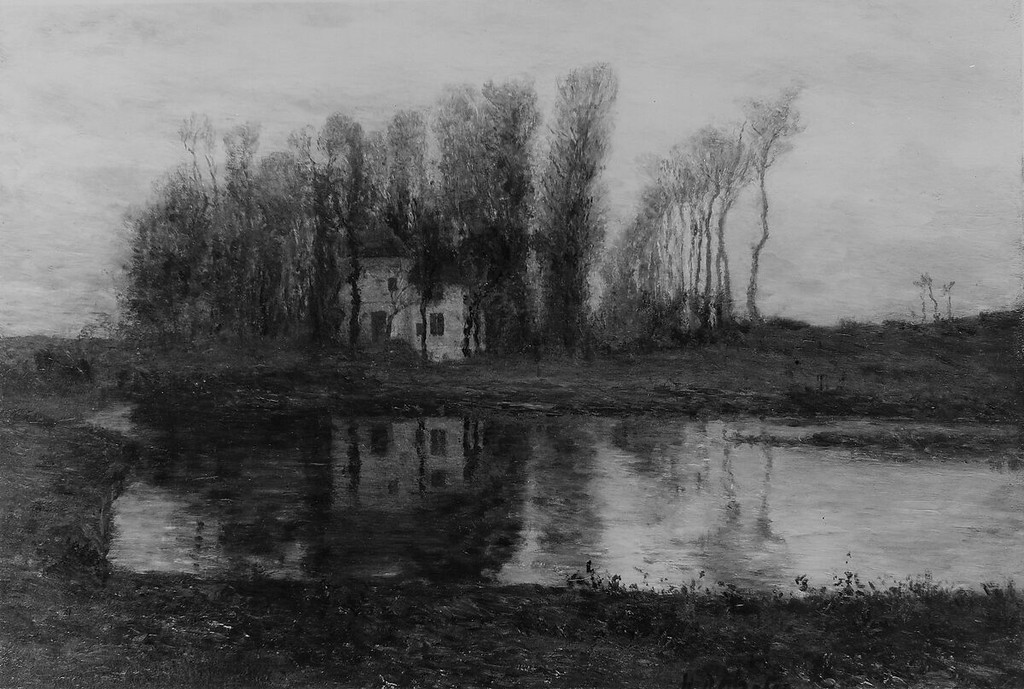
Old Manor of Criqueboeuf. A house and its reflection organize this slowly developed Normandy subject. The broad date range does not mean that Martin painted it without interruption. [4]
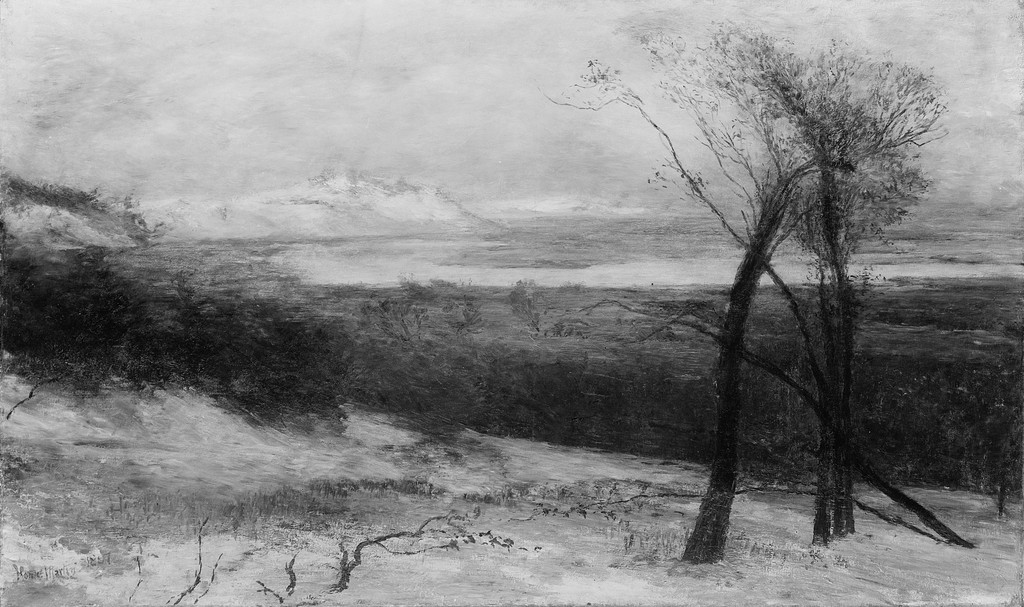
Behind Dunes, Lake Ontario. An American subject developed during the French residence and after the return. The Met records rejection at the 1884 Salon followed by revision in 1887. [5]
Normandy Coast. Freely brushed clouds dominate a small coastal board. Brooklyn places it among outdoor paintings made during Martin’s French residence. [6]
Westchester Hills. Mather describes a large outdoor undertaking at Croton Falls and records its exhibition in 1888. The probable painting date and exhibition year remain distinct. [7]
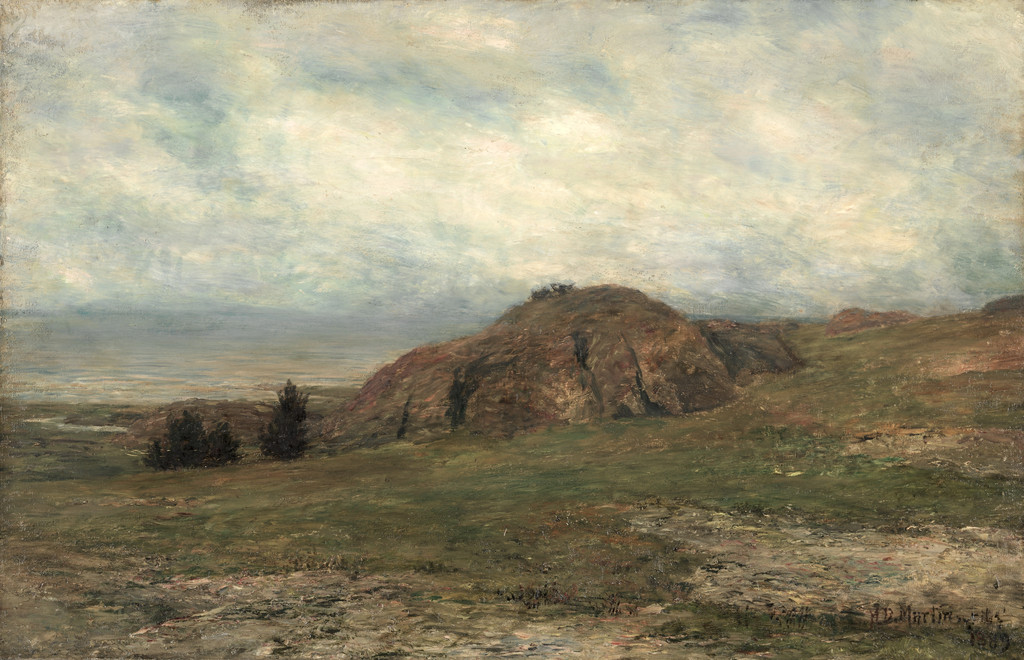
Wild Coast, Newport. An extensive sky opens above low coastal ground. This dated Cleveland canvas is distinct from the Smithsonian painting bearing the same title. [8]
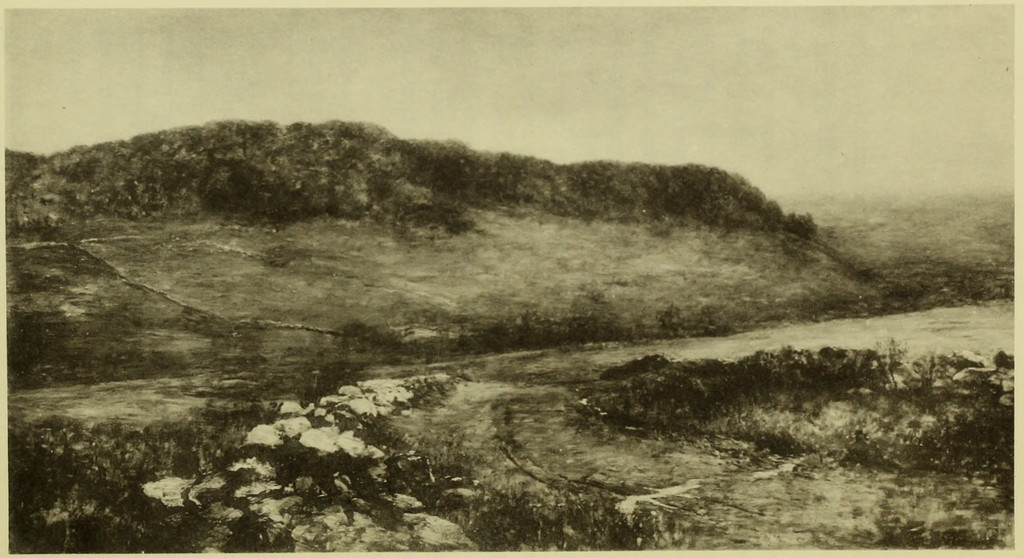
Criqueboeuf Church, Normandy. A church, trees and their reflections give architecture a place within the landscape. The current LACMA record supplies the date; the article reproduces a historical monochrome print. [9]
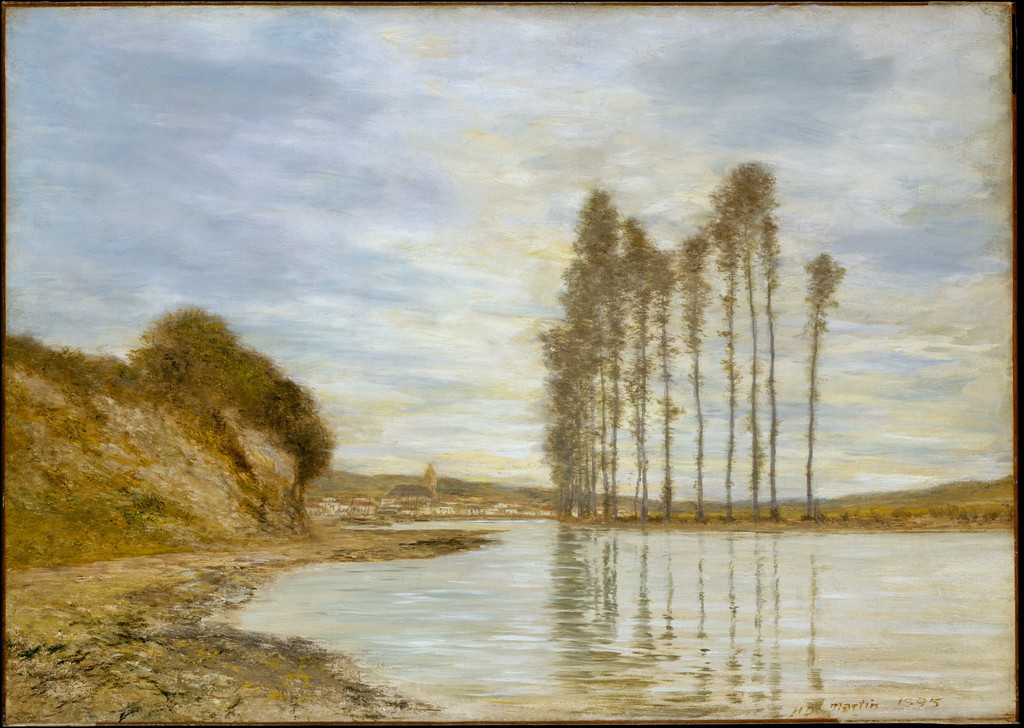
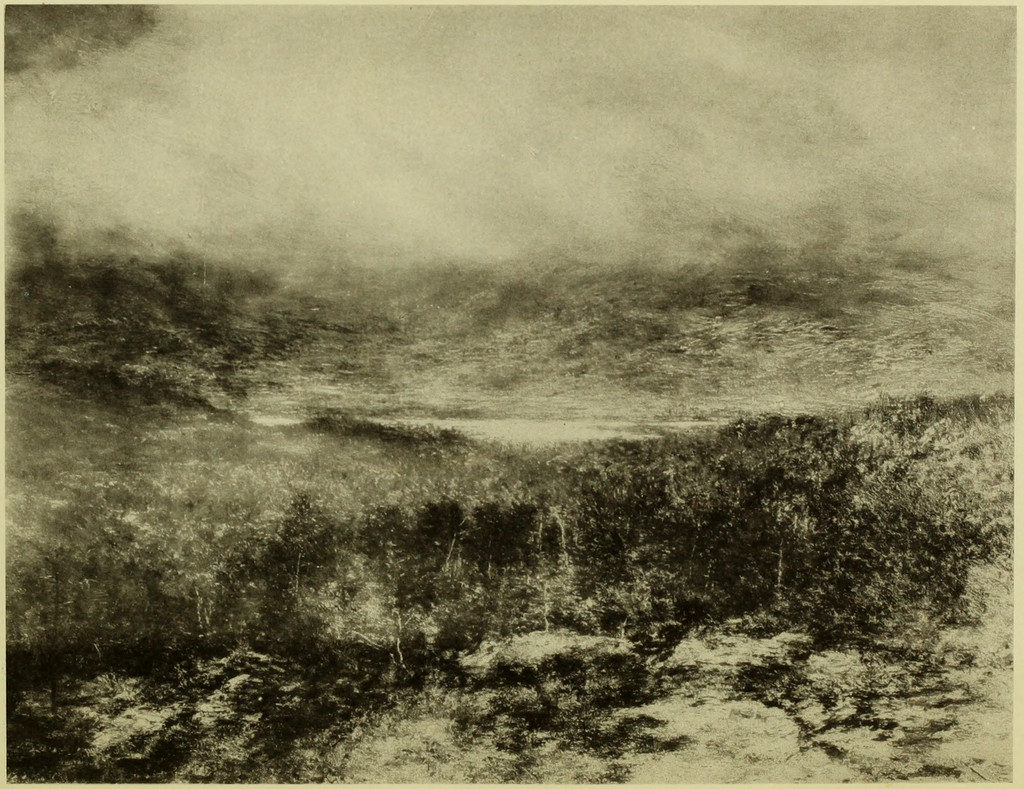
View on the Seine: Harp of the Winds. Poplars and their reflections repeat across the Seine. The Met records a charcoal beginning in New York in 1893 and completion in Saint Paul in 1895. [10]
Adirondack Scenery. Mountain slopes, a foreground ledge and water organize this late return to American scenery. Mather treats it as a major expression of experiences considered over many years. [7]
Lighthouse, Honfleur. Princeton’s small upright wood panel sets the lighthouse within a compact landscape. It remains undated and is distinct from the larger horizontal Century Club canvas. [11]
Contents
- An industrial scene in a landscape painting
- Lake, cliff and the mine opening
- The rust-colored bank
- Lake Champlain and the transport of ore
- A difficult ore and an uneven mining history
- The Civil War reading of the picture
- Patronage stories and what is documented
- Early Martin beside the Adirondack landscapes
- Later photographs and a changed region
- Annotated details
An industrial scene in a landscape painting
The industrial features are modest beside the cliff, but they organize the viewer’s understanding of it. The dark opening reveals a worked interior within the exposed rock. The runway links that opening with the shore, while the building and boat place the operation at the water’s edge. Together they turn a rocky slope into a site of extraction and movement.
Martin gives these features different degrees of emphasis. The opening is a compact dark accent, the runway a strong diagonal, and the boat a long pale shape against darker water. Their relative sizes allow the bank to remain monumental while keeping the practical use of the place intelligible. Industry occupies the landscape through a few carefully placed forms.
The Smithsonian’s exhibition account places the picture within an expanding nineteenth-century interest in industrial subjects. Mines and transport infrastructure could become part of the scenery an artist chose to represent. This canvas does not need to abandon the forms of landscape painting in order to make an industrial operation its subject. [1]
The combination is particularly effective because no single machine dominates the view. Rock, lake, trees, structure and vessel share the arrangement. The operation is visible through relationships between them: the mine above the shore, the route down the slope and the boat beside the land. The viewer reconstructs a working place from that connected set of elements.
Annotated Details from The Iron Mine, Port Henry, New York
The numbered points identify visible features discussed in this article. Return from each detail to the whole composition. Homer Dodge Martin, The Iron Mine, Port Henry, New York, about 1862. Oil on canvas mounted on fiberboard, 76.5 × 127 cm. Smithsonian American Art Museum, 1910.9.11. Smithsonian American Art Museum, Gift of William T. Evans. Image source. Public domain. Numbers added to a separate overview; detail crops made from the accepted source. No enlargement, recoloring, restoration or reconstruction.
Details from THE IRON MINE, PORT HENRY, NEW YORK
Compare the cropped details with the complete images above. Notice how their colours, shapes and positions contribute to the larger compositions.
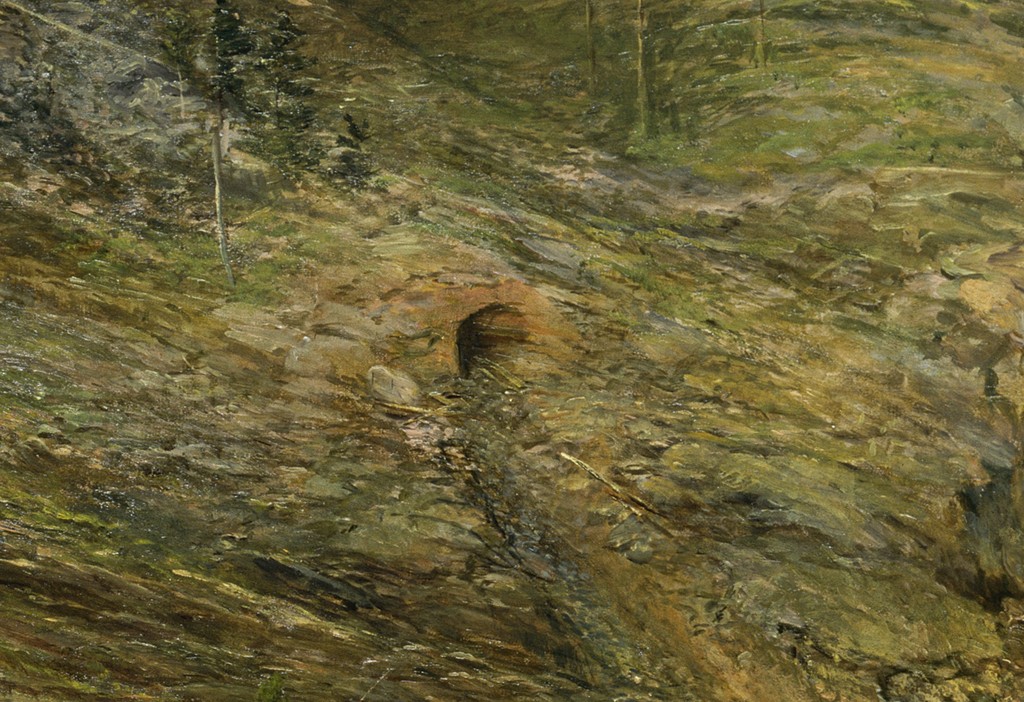
The dark opening in the worked hillside
A dark opening interrupts the sloping rock and earth. Its small rounded shape provides a concentrated sign of excavation within the much larger worked hillside.
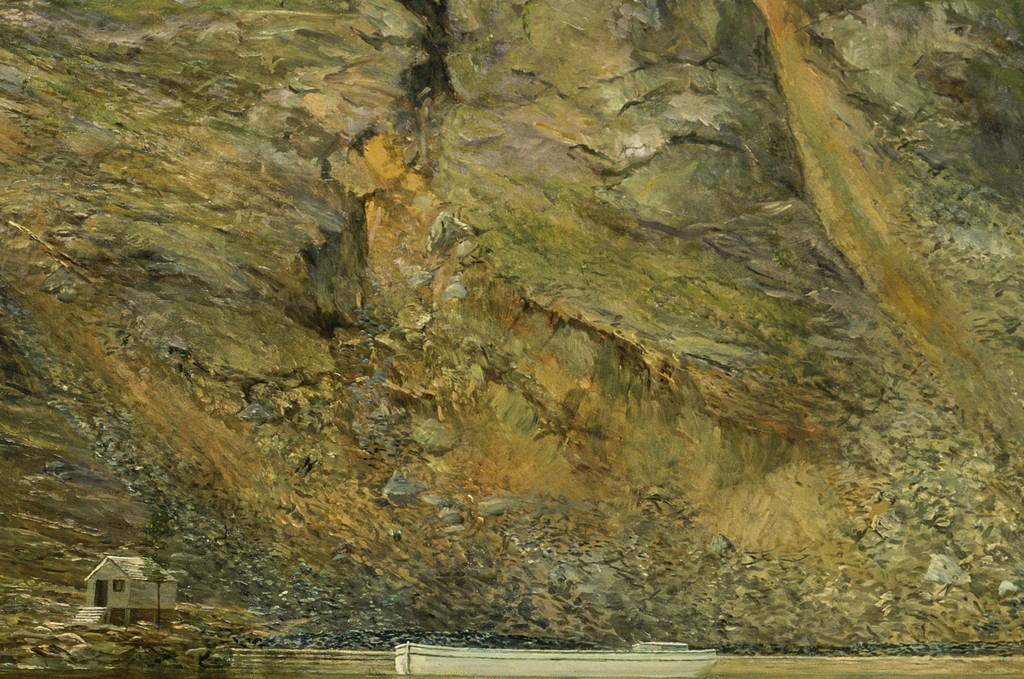
A diagonal across the exposed cliff
The rust-colored diagonal descends across the cliff toward the shore. Its direction contrasts with the nearly horizontal water and helps connect the upper workings with the lake.
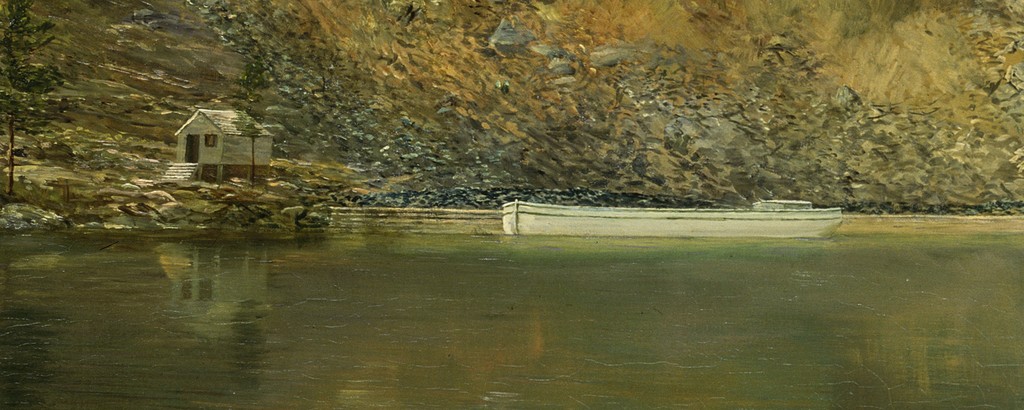
The small building and barge
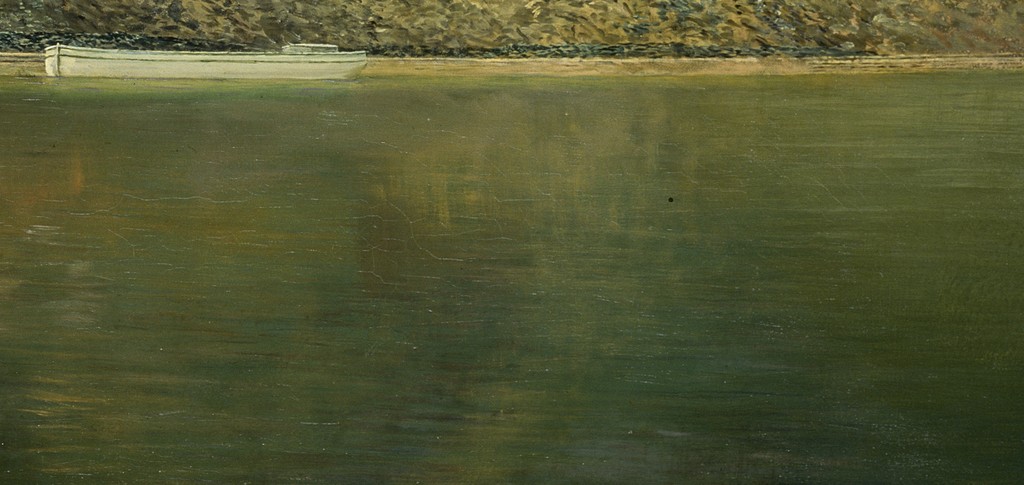
A light building and a long pale barge occupy the narrow margin between cliff and water. Their modest scale makes the steep exposed ground above them appear more extensive.
Reflected rock below the shoreline
Broken vertical and horizontal marks carry the cliff’s colors into the water. The reflection joins the worked landscape to the lake without repeating every feature above it.
Lake, cliff and the mine opening
The composition is held between the cliff’s steep rise and the lake’s horizontal expanse. The rock reaches close to the top of the canvas, leaving a comparatively narrow band of sky. Water occupies the lower part of the view, spreading in front of the bank and carrying its darker and warmer colors downward through reflection.
Near rocks at the lower left establish a position from which to look across the water. Their individual forms and rough edges contrast with the more continuous surface beyond. The distance between these foreground boulders and the far shore gives the lake a breadth that might be lost if the view began directly at the foot of the mine.
The mine opening lies left of the principal rusty descent. Its darkness becomes a focus within a much larger field of varied rock and vegetation. The runway then carries the eye downward toward the small shore building. The diagonal gives direction to the cliff face, joining a point above with the narrow strip of activity below.
The pale boat supplies another kind of line. Set along the shore, it extends laterally across a passage of dark water. Its horizontal shape answers the runway’s descent and connects the mining site with the larger lake. The contrast between these two directions helps make the industrial arrangement readable at a glance.
Look also at the trees along the top. Their irregular silhouettes break the edge between land and sky, while vegetation farther down the bank occupies places where the exposed rock gives way. The industrial opening is therefore set within a slope that still carries signs of growth and an uneven natural structure.
The rust-colored bank
Warm ochers, reds and browns run through the face of the cliff, set among gray rock and subdued green vegetation. The largest rusty passage descends from near the crest toward the shore. Smaller warm patches elsewhere keep that striking feature connected with the rest of the bank rather than isolated as a single spot of color.
The Smithsonian’s research notes connect the red streaks with rust, reporting the explanation of a consulted New York State Museum geologist. A separate 2008 study by Marian Lupulescu and Joseph Pyle identifies magnetite and ilmenite in the Craig Harbor ore, hosted within the local rock. Geological context and the painting’s visible color can therefore be considered together without treating the canvas as a mineral specimen. [12] [13]
The warm color also has a pictorial function. It interrupts the cooler gray-green spread of the bank and carries attention down the slope. In the lake below, reflected warm and dark passages make the water answer the ground above it. The cliff’s color therefore contributes to the arrangement on both sides of the shoreline.
Dana H. Carroll’s 1913 description paid particular attention to this colored rock face and its reflection. His account treats the bank’s variety as a central attraction of the painting, alongside the opening, vegetation and shore features. That early response is useful because it recognizes color and industrial subject together within the same landscape. [14]
Lake Champlain and the transport of ore
The position beside the lake gives the mine a practical connection with transport. In the painting, the route down the bank ends near the shore, where the vessel lies. The arrangement makes movement from rock face toward water a visible part of the site, even though it does not record every stage of extraction or loading.
The Smithsonian’s account explains the role of ore carried by water and connects the region’s mines with manufacturing and railroads. The canal connection between Lake Champlain and the Hudson enlarged the network through which mineral products could reach markets. The lake is consequently more than a reflective foreground within the subject’s industrial history. [1] [12]
The picture nevertheless gives only a selected portion of that network. Its small vessel cannot establish an individual cargo’s destination or a particular delivery. What can be followed is the relationship between the mine’s elevation, the descent toward the shore and access to the lake. Those visible connections explain why geography mattered to the operation.
The water’s calm appearance also affects the reading of the scene. It gives the worked cliff a broad reflecting surface, drawing the mine into a quieter overall view. The painting holds extraction and stillness together. Their coexistence makes the industrial subject more complex than a straightforward image of energetic machinery or an isolated emblem of production.
A difficult ore and an uneven mining history
The district’s importance should be distinguished from the history of the particular mine. Lupulescu and Pyle describe Craig Harbor as a small operation, separate from the larger Mineville producers. Their regional account follows a long pattern of openings, closures and renewed activity shaped by changing markets and competition. An iron-bearing landscape could be significant without every deposit being equally profitable. [13]
The Smithsonian’s notes likewise complicate an easy equation between rich ore and easy success. They discuss difficulties in processing Craig Harbor material and record a reported abandonment in 1869. That history gives the site an uneven economic character, rather than making the exposed vein alone a sufficient explanation of prosperity. [12]
The 2008 geological study identifies the ore within a particular rock setting and preserves uncertainty about its precise origin. For a viewer of the painting, the useful distinction is between what the rock contained and how readily it could be turned into a valuable product. Mineral presence, workable material and profitable operation are related questions, but they are not identical. [13]
Martin’s arrangement gives those questions an appropriate physical scale. The entrance, runway and building are small against the mass of the bank. The viewer encounters the extent of the ground alongside the limited forms through which people work it. The painting can suggest an industrial claim upon the place without supplying a balance sheet or guaranteeing the venture’s success.
Watch: Homer Dodge Martin
Start with Martin’s Normandy Landscape, then explore the wider Hudson River School tradition in which he began.
Homer Dodge Martin | Normandy Landscape
The Castellani Art Museum introduces Martin’s Normandy Landscape.
Watch on YouTubeThe Civil War reading of the picture
The approximate date places the canvas during the Civil War. The Smithsonian’s 2006 exhibition label interprets it through Northern strength in natural resources and manufacturing, connecting iron extraction with the material infrastructure of the economy. This is a museum reading of the scene’s historical significance, rather than a surviving statement by Martin about a political commission. [1]
The same label describes the mineshaft through the image of a “bleeding wound.” That figurative language draws attention to the opening and the colored descent across the cliff. It introduces a possible sense of injury into a scene also concerned with mineral wealth and productive use. The language belongs to the museum’s interpretation, not to a title supplied by the painter. [1]
Looking at the canvas allows those associations to be weighed against its particular balance. The bank is visibly worked, but the water remains calm and the trees continue along the crest. The opening is dark, yet it occupies only a small part of the view. The scene can sustain attention to extraction’s material importance and its effects upon the ground at the same time.
That openness is part of its interest. A viewer need not turn every rusty passage into a fixed symbol in order to recognize the historical relevance of an iron mine painted around 1862. The American artists context includes such encounters between landscape, resource use and national circumstances, while the individual painting preserves its own combination of forms.
Patronage stories and what is documented
Two patronage accounts require different kinds of qualification. The Smithsonian’s research notes report Patricia Mandel’s suggestion that Benjamin T. Reed of the Bay State Iron Company may have commissioned the picture. The Smithsonian researcher’s search of company records did not produce a reference to Martin or the painting, and the surviving documents examined were largely later than its execution. The proposal remains unconfirmed. [12]
Carroll’s 1913 entry preserves another story, associating the picture with Boss Tweed and a supposed wish for a portrait of the mine. Carroll introduced it explicitly as a story. That wording should remain part of its reception, rather than becoming a proved account of who owned the operation or paid Martin. [14]
The firm museum identity is more straightforward. The Smithsonian records the work as The Iron Mine, Port Henry, New York , about 1862, accession 1910.9.11, a gift of William T. Evans. That credit identifies its entry into the collection. It does not by itself establish the identity of an original patron several decades earlier. [1]
The distinction makes the picture’s history more informative. A documented gift, a scholarly commission proposal and an older anecdote each contribute something different. They should remain recognizable as such, leaving the canvas available for study without allowing an attractive story to settle questions the evidence has not resolved.
Early Martin beside the Adirondack landscapes
The painting can be compared with Upper Ausable Lake , dated 1868 in the Smithsonian’s collection. Both arrange near ground, water and a substantial farther landform within a horizontal canvas. Their different subjects demonstrate how related pictorial concerns could serve an industrial lakeshore and a mountain lake. [2]
In Upper Ausable Lake , the mountains form a farther boundary beyond the water, while near reeds and shore distinguish the viewer’s position. In The Iron Mine , the cliff presses more strongly forward and higher toward the canvas edge. The narrow sky reinforces its weight. Comparing those divisions reveals how differently Martin could distribute space around a body of water.
The foreground rocks in the mine picture are especially useful to follow. Their rough shapes make the nearer shore tangible, while the boat remains small against the opposite bank. Scale is established through the relation of these forms rather than through a prominent figure. The broad water interval keeps the nearby boulders and far shore distinct.
The connection with the Hudson River School is consequently useful as a starting point for looking at Martin’s early landscape practice. [15] It does not require the industrial subject to be treated as an interruption of his art. The paintings overview follows his continuing interest in water, near ground and extensive space across different settings.
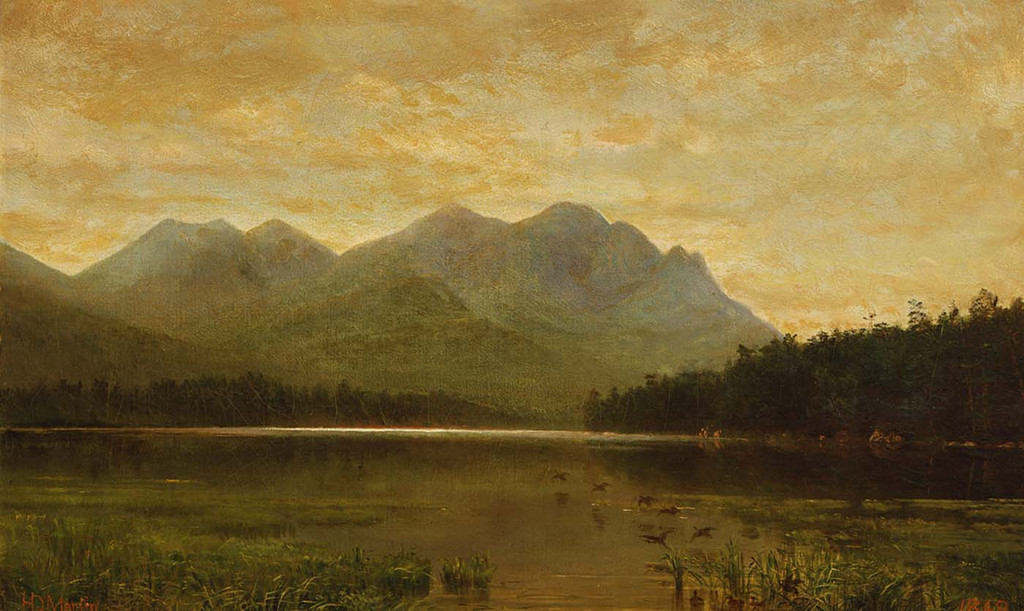
Homer Dodge Martin, Upper Ausable Lake, 1868. Oil on canvas, 46.2 × 76.8 cm. Smithsonian American Art Museum, 1909.7.44. A comparison of near shore, water and farther landforms. Smithsonian American Art Museum, Gift of William T. Evans.
Image source
.
Public domain
. Resized only; source appearance preserved.
Later photographs and a changed region
A Library of Congress photograph supplies a later view across Lake Champlain toward Port Henry. Catalogued as created or published on 23 December 1902, it looks from Fort Frederic at Crown Point toward the town and hills. It dates about forty years after the painting and approaches the region from another position. [16]
In the photograph, the broad water separates nearer open ground from a distant settlement backed by hills. Those relationships make the lake’s scale and the town’s setting tangible. The image is regional context, not a photographic match for Martin’s cliff or proof that a particular industrial feature remained unchanged after he painted it.
The digital image also has a particular material history. The Library of Congress identifies it as a file made from a black-and-white film copy negative of a cyanotype print. Its appearance therefore belongs to that chain of reproduction. It should not be mistaken for a direct color record of the landscape or a color scan of the original cyanotype. [16]
Set beside the painting, the photograph encourages comparison of viewpoints rather than substitution of one for the other. Martin selected a cliff, a narrow industrial shore and reflective water; the later photographer took a wider view of town, lake and hills. Each makes a particular arrangement of the region visible.
The biography places the canvas within Martin’s early working life, while his main overview connects it with later landscapes. The mine remains distinctive within that career because it makes a working operation part of an extensive view, keeping material use and the physical character of the place in the same picture.
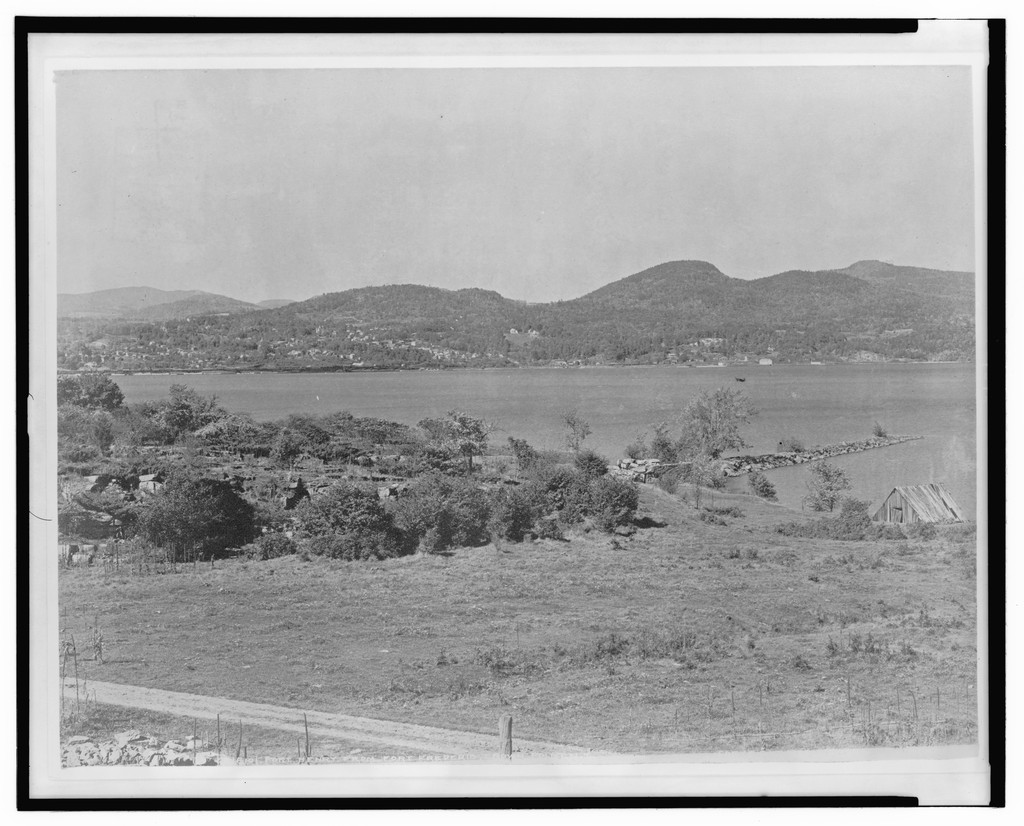
Port Henry seen across Lake Champlain from Fort Frederic, Crown Point, New York. Library of Congress catalogue date: 23 December 1902. This later regional view is not Martin’s exact mine viewpoint. Library of Congress, Detroit Publishing Company Photograph Collection.
Image source
.
No known copyright restrictions
. Resized only; source appearance preserved.
Artwork records
Browse 58 records from Carroll’s selected 1913 catalogue alongside 25 separately documented object records. Some records concern the same work; this is not a complete lifetime catalogue or a count of 83 unique artworks. [14]
| Name | Date | Medium |
|---|---|---|
| Carroll 1: Saranac Lake (1913 record) | 1860s; exact date not clearly decipherable | Painting — historical catalogue record |
| Carroll 2: Lake George from Bolton (1913 record) | Date not stated | Painting — historical catalogue record |
| Carroll 3: The Iron Mine, Port Henry, N. Y. (1913 record) | Date not stated | Painting — historical catalogue record |
| Carroll 4: On Lake Ontario (1913 record) | Probably late 1860s | Painting — historical catalogue record |
| Carroll 5: The Giant of the Valley (1913 record) | 1865 | Painting — historical catalogue record |
| Carroll 6: An Adirondack Lake (1913 record) | Date not stated | Painting — historical catalogue record |
| Carroll 7: Winter in Normandy (1913 record) | Date not stated | Watercolor — historical catalogue record |
| Carroll 8: Across the Lake (1913 record) | Date not stated | Painting — historical catalogue record |
| Carroll 9: New Hampshire Landscape (1913 record) | Late 1860s | Painting — historical catalogue record |
| Carroll 10: Long Lake (1913 record) | Date not stated | Painting — historical catalogue record |
| Carroll 11: Salt Meadows (1913 record) | Mid 1880s | Painting — historical catalogue record |
| Carroll 12: Autumn on the Susquehanna (1913 record) | 1879 | Painting — historical catalogue record |
| Carroll 13: Ontario Sand Dunes (1913 record) | 1887 | Painting — historical catalogue record |
| Carroll 14: Late Autumn (1913 record) | About 1877 | Painting — historical catalogue record |
| Carroll 15: Early Spring (1913 record) | About 1877; companion dating | Painting — historical catalogue record |
| Carroll 16: Raquette Lake (1913 record) | 1869 | Painting — historical catalogue record |
| Carroll 17: A Glimpse of the Sea (1913 record) | Date not established; historical suggestion disputed | Painting — historical catalogue record |
| Carroll 18: Headwaters of the Hudson (1913 record) | 1869 | Painting — historical catalogue record |
| Carroll 19: Autumn in the Adirondacks (1913 record) | 1871 | Painting — historical catalogue record |
| Carroll 20: Richmond on Thames (1913 record) | About 1877; later alterations | Painting — historical catalogue record |
| Carroll 21: Saranac Lake (1913 record) | 1878 | Painting — historical catalogue record |
| Carroll 22: Windsor Castle (1913 record) | Finished 1878 | Painting — historical catalogue record |
| Carroll 23: L’Anse St. Étienne, Saguenay (1913 record) | 25 July 1879 | Watercolor — historical catalogue record |
| Carroll 24: L’Anse aux Basses Pierres (1913 record) | Date not stated | Watercolor — historical catalogue record |
| Carroll 25: Blossoming Trees (1913 record) | Mid 1880s | Painting — historical catalogue record |
| Carroll 26: On the Seine (1913 record) | Date not stated; later years suggested | Painting — historical catalogue record |
| Carroll 27: The Dunes (1913 record) | 1883 | Watercolor — historical catalogue record |
| Carroll 28: The Moonlit Pond—Honfleur (1913 record) | Date not stated | Painting — historical catalogue record |
| Carroll 29: Normandy Landscape (1913 record) | Date not stated | Painting — historical catalogue record |
| Carroll 30: The Lighthouse, Honfleur (1913 record) | Date not stated | Painting — historical catalogue record |
| Carroll 31: Ruby Strong—Normandy (1913 record) | Date not stated | Painting — historical catalogue record |
| Carroll 32: Sand Dunes, Lake Ontario (1913 record) | 1874 | Painting — historical catalogue record |
| Carroll 33: Low Tide, Honfleur (1913 record) | Date not stated | Painting — historical catalogue record |
| Carroll 34: Evening on the Seine (1913 record) | Date not stated | Painting — historical catalogue record |
| Carroll 35: On the Seine (1913 record) | Date not stated | Painting — historical catalogue record |
| Carroll 36: On the Hudson (1913 record) | 1881 | Painting — historical catalogue record |
| Carroll 37: A Forest Brook (1913 record) | 1881 | Painting — historical catalogue record |
| Carroll 38: Coast Meadows, St. Sauveur (1913 record) | 1881 | Painting — historical catalogue record |
| Carroll 39: Landscape (1913 record) | 1883 | Painting — historical catalogue record |
| Carroll 40: An Adirondack Lake—Lake Sanford (1913 record) | 1883 | Painting — historical catalogue record |
| Carroll 41: Lower Ausable Pond (1913 record) | 1868 | Painting — historical catalogue record |
| Carroll 42: December Morning in Normandy (1913 record) | 1883 | Painting — historical catalogue record |
| Carroll 43: Low Tide—Villerville (1913 record) | 1884 | Painting — historical catalogue record |
| Carroll 44: Lake George (1913 record) | 1884 | Painting — historical catalogue record |
| Carroll 45: Crepuscule—Montvilliers (1913 record) | 1885 | Painting — historical catalogue record |
| Carroll 46: The Sea at Villerville (1913 record) | 1885 | Painting — historical catalogue record |
| Carroll 47: Golden Sands (1913 record) | Date not stated | Painting — historical catalogue record |
| Carroll 48: The Meadow Brook (1913 record) | 1887 | Painting — historical catalogue record |
| Carroll 49: The Sun Worshippers (1913 record) | After the 1886 return to New York | Painting — historical catalogue record |
| Carroll 50: South Side of Long Island (1913 record) | 1894 | Painting — historical catalogue record |
| Carroll 51: Criqueboeuf Church (1913 record) | 1893 | Painting — historical catalogue record |
| Carroll 52: Normandy Farm (1913 record) | 1895 | Painting — historical catalogue record |
| Carroll 53: On the Mississippi (1913 record) | Toward the close of the artist’s life | Painting — historical catalogue record |
| Carroll 54: Newport Neck (1913 record) | 1893 | Painting — historical catalogue record |
| Carroll 55: A Newport Landscape (1913 record) | 1896 | Painting — historical catalogue record |
| Carroll 56: A Distant View of Caen (1913 record) | Date not stated; exhibited 1894 | Painting — historical catalogue record |
| Carroll 57: The Brook (1913 record) | 1894 | Painting — historical catalogue record |
| Carroll 58: Normandy Trees (1913 record) | Date not stated | Painting — historical catalogue record |
| View on the Seine: Harp of the Winds | 1893–95 | Oil on canvas |
| The Iron Mine, Port Henry, New York | About 1862 | Oil on canvas mounted on fiberboard |
| Wild Coast, Newport | 1889 | oil on canvas |
| In the Housatonic Valley (attributed to Homer Dodge Martin) | late 1850s | oil on canvas |
| Sand Dunes, Lake Ontario | c. 1874 | Possibly black crayon on paper |
| Adirondacks | 1868 | Pencil drawing |
| Landscape | 1896 | Watercolor |
| Near Newport | mid-1800s | Watercolor |
| Effect of Trees | About 1879 | Oil on canvas |
| Behind Dunes, Lake Ontario | 1883–87 | Oil on canvas |
| Old Manor of Criqueboeuf | About 1882–92 | Oil on canvas |
| Upper Ausable Lake | 1868 | Oil on canvas |
| Wild Coast, Newport (Smithsonian version) | About 1885–95 | Oil on canvas |
| On the Seine | About 1895 | Oil on canvas |
| The Lighthouse, Honfleur | Date not supplied by museum | Oil on wood panel |
| The White Mountains from Randolph Hill (Wellin canvas) | 1866–67 | Oil on canvas |
| Old Crossing, Otter Tail River | 1871 | Black chalk touched with white chalk on paper |
| Landscape with Poplars | Date not supplied by museum | Oil on canvas |
| Normandy Coast | 1884 | Oil on board |
| Criqueboeuf Church, Normandy | 1893 | Oil on canvas |
| Evening on the Thames | About 1876 | Oil on canvas |
| Hudson River | 1860 | Graphite drawing on wove paper |
| The White Mountains, from Randolph Hill (formerly Met canvas) | About 1862–68; later revisions | Oil on canvas |
| Westchester Hills | About 1887 | Oil painting — historical accounts |
| Adirondack Scenery | 1895 | Oil painting — historical accounts |
Frequently Asked Questions
The Smithsonian dates it to about 1862. The approximate date should be retained rather than treated as an exact documented year. [1]
It belongs to the Smithsonian American Art Museum, accession 1910.9.11, Gift of William T. Evans. [1]
It is the Smithsonian’s 2006 exhibition interpretation. No artist statement establishing that political intention is supplied by that label. [1]
No. It is a later regional view from Crown Point across the lake toward Port Henry. [16]
Discussion
Look again at the images and ideas explored in The Iron Mine, Port Henry, New York. These editorial prompts invite your observations.
Reader Insights
Follow the diagonal runway down to the shore, then the horizontal shape of the boat. How do those directions make the operation legible?
Compare the warm cliff with its darker reflection. What changes when the bank’s colors move into water?
Look at the 1902 photograph beside the painting. What does each viewpoint include, and what does it leave outside the view?
Join the Conversation
Share a detail, comparison or question about The Iron Mine, Port Henry, New York below.
References
- Smithsonian American Art Museum , The Iron Mine, Port Henry, New York, about 1862, 1910.9.11, object record and 2006 exhibition label. View source
- Smithsonian American Art Museum , Upper Ausable Lake, 1868, 1909.7.44, object record. View source
- Smithsonian American Art Museum, Evening on the Thames,1909.7.45. View source
- Metropolitan Museum of Art, Old Manor of Criqueboeuf, 22.117. View source
- Metropolitan Museum of Art, Behind Dunes, Lake Ontario, 06.1287. View source
- Brooklyn Museum, Normandy Coast,15.281. View source
- Frank Jewett Mather Jr., Homer Martin: Poet in Landscape, 1912, pp. 11–76. View source
- Cleveland Museum of Art, Wild Coast, Newport, 1923.1118. View source
- Los Angeles County Museum of Art, Criqueboeuf Church,Normandy,M.90.159. View source
- Metropolitan Museum of Art, View on the Seine: Harp of the Winds, 97.32. View source
- Princeton University Art Museum, The Lighthouse, Honfleur, y1948-3. View source
- Smithsonian American Art Museum , The Iron Mine: research notes, December 2011, pp.1–5, including site identification, geological consultation and commission search. View source
- Marian Lupulescu and Joseph Pyle , Mining history, mineralogy and origin of the Mineville–Port Henry iron deposits, New York State Geological Association 2008 field-trip guidebook, pp.117–129, particularly 119 and 125; SUNY repository copy. View source
- Dana H. Carroll , Fifty-Eight Paintings by Homer D. Martin, 1913, no.3, p.14, historical description and patronage story. View source
- Smithsonian American Art Museum , Homer Dodge Martin: artist biographies, accounts by Joan Stahl and Emery Battis, early Hudson River School context. View source
- Library of Congress , Port Henry from Fort Frederic, Crown Point, New York, 1902, Detroit Publishing Company Photograph Collection, LC-USZ62-134546, catalogue and reproduction information. View source
- Splash image source.
Homer Dodge Martin, The Iron Mine, Port Henry, New York, about 1862. Oil on canvas mounted on fiberboard, 76.5 × 127 cm. Smithsonian American Art Museum, 1910.9.11. Smithsonian American Art Museum, Gift of William T. Evans. Public domain . Resized only; source appearance preserved.
View source