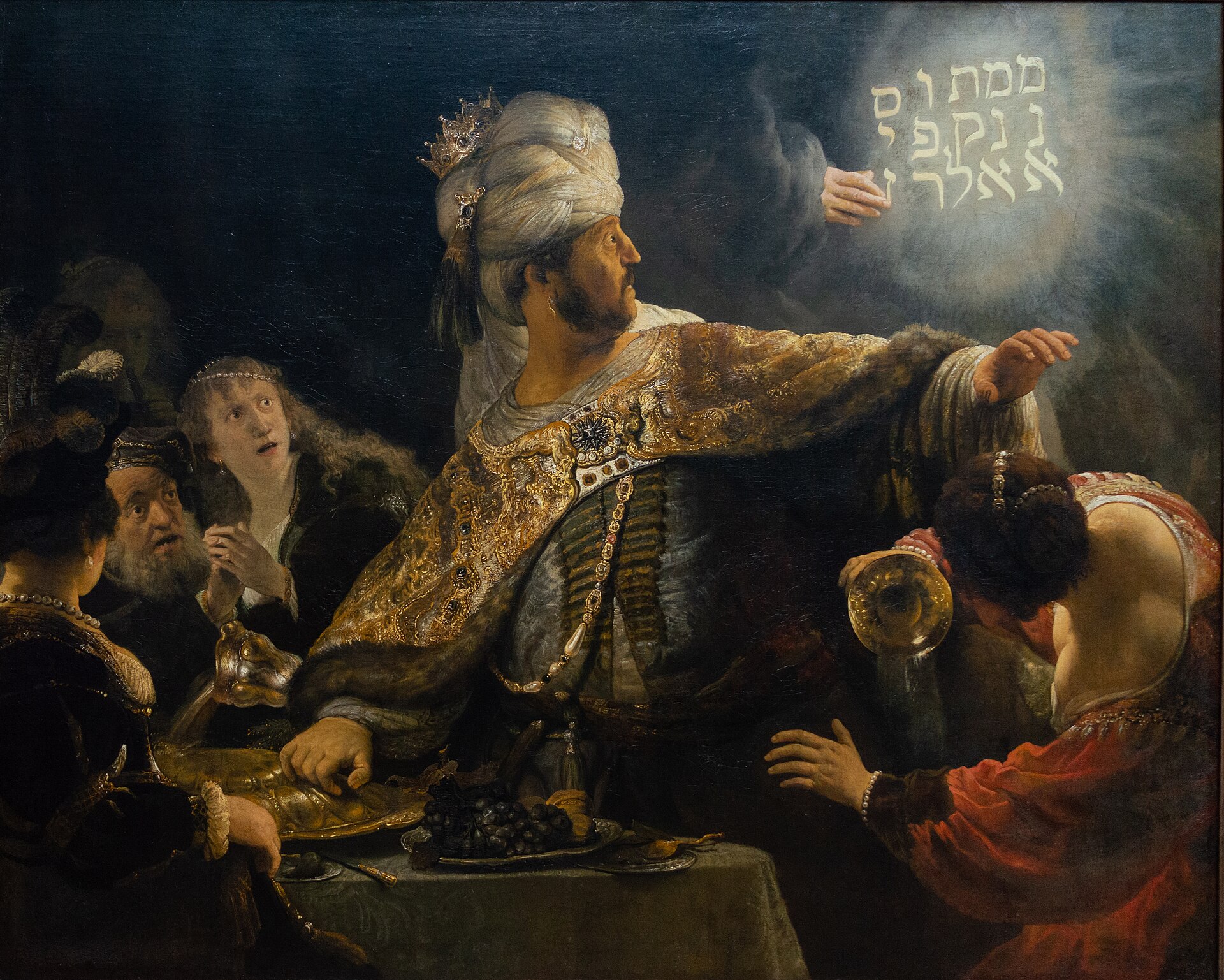
Belshazzar's Feast by John Martin: Introduction
John Martin's Belshazzar's Feast turns a biblical moment of judgement into one of the great architectural spectacles of British Romantic art. The scene comes from the Book of Daniel. Belshazzar, ruler of Babylon, hosts a vast banquet and uses sacred vessels taken from the Jerusalem temple. During the feast a mysterious hand writes a message on the wall. Daniel interprets the words as a sentence against the king: his reign has been counted, weighed and divided.
Martin painted the subject in 1820, early in the decade that made his name as a master of public spectacle. The Yale Center for British Art owns the oil painting, an 80 by 120.7 centimetre canvas in the Paul Mellon Collection. Its scale is modest compared with some of Martin's later vast works, but its imaginative scale is enormous. The painting opens a palace so deep, crowded and theatrically lit that the human drama seems almost swallowed by the architecture around it.
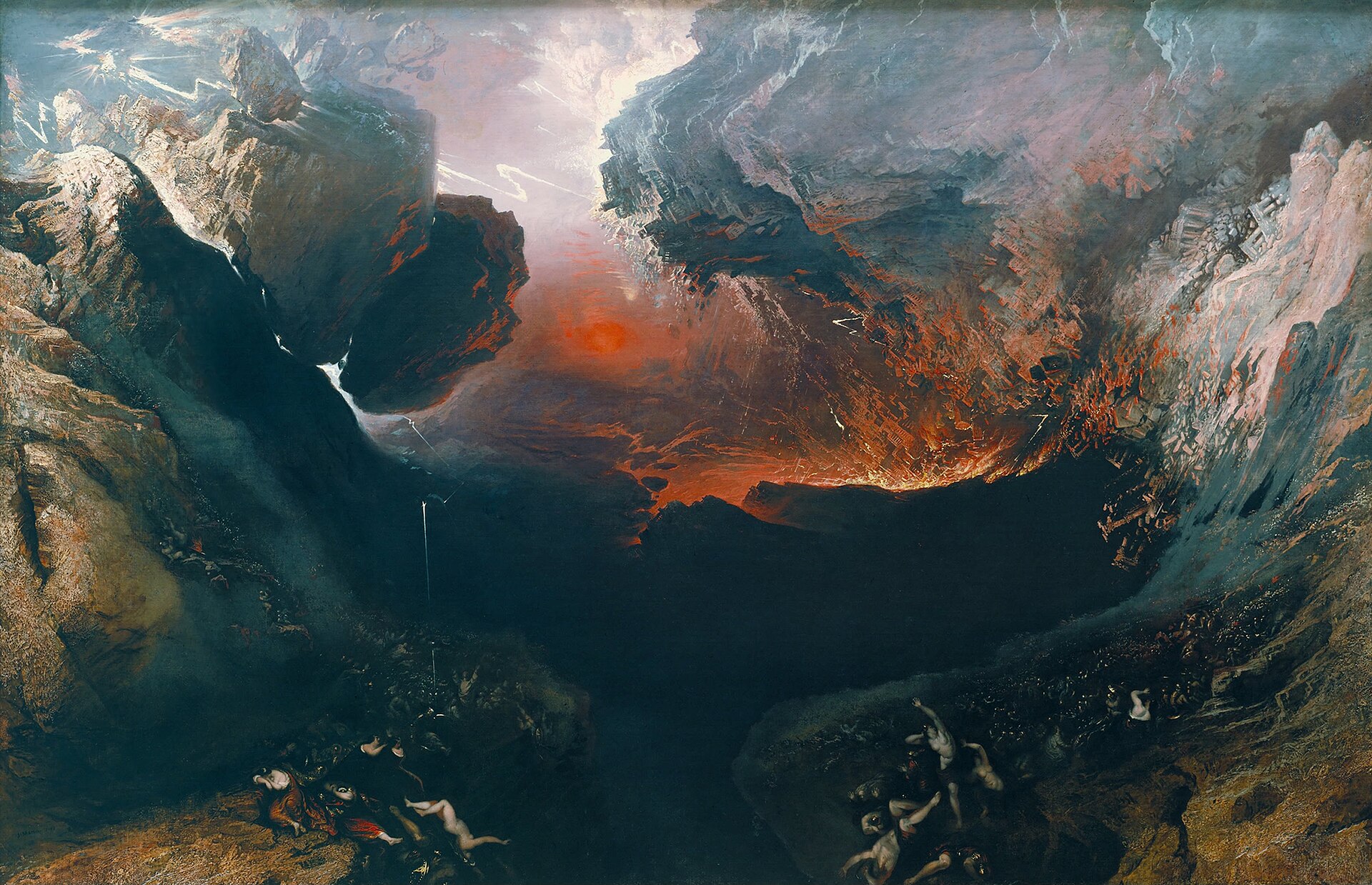
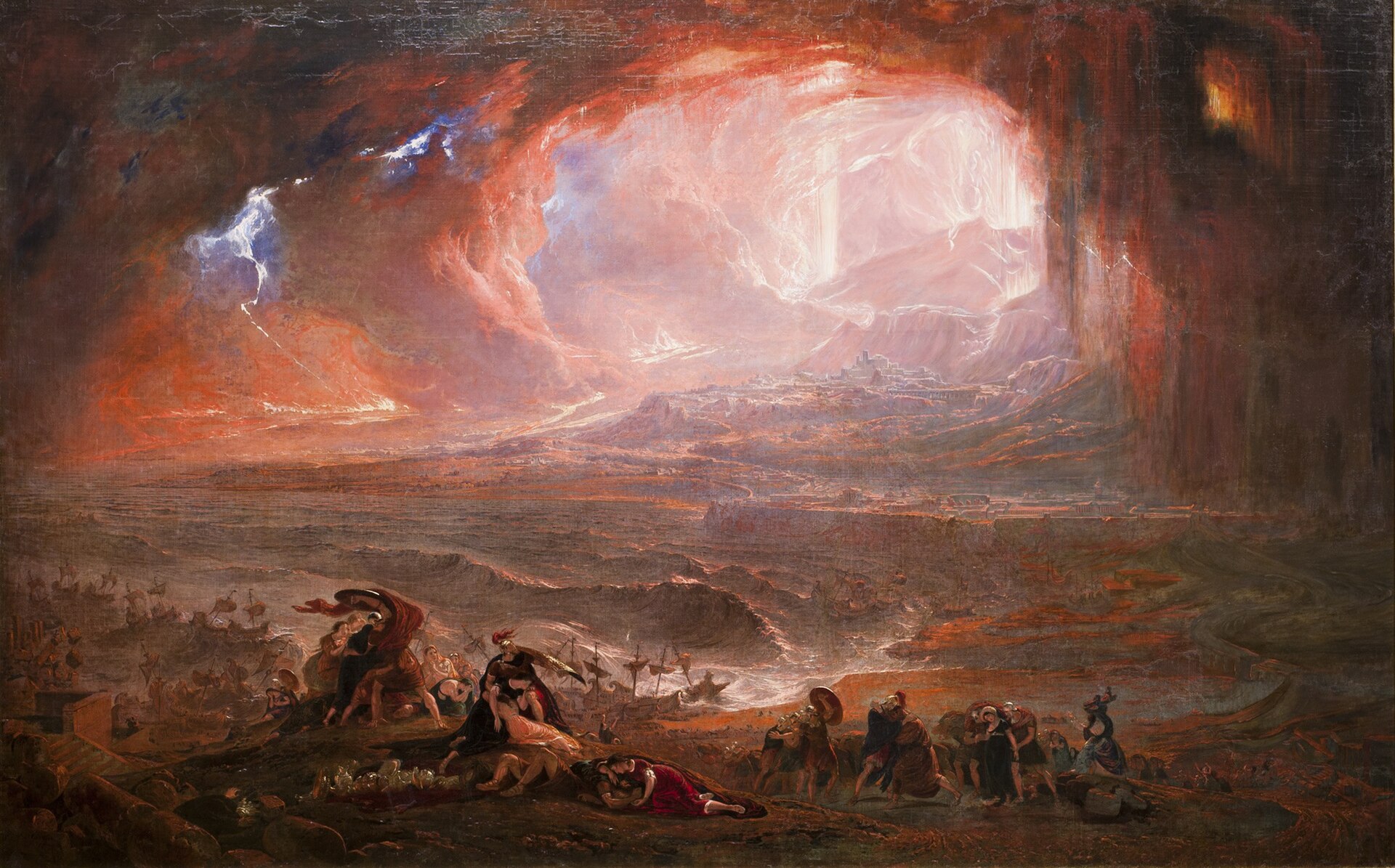
This is not a landscape apocalypse like The Great Day of His Wrath, and it is not a classical disaster like The Destruction of Pompeii and Herculaneum. It is an interior spectacle: a court, a feast, a palace and a ruler suddenly made small before an invisible power. That makes it especially revealing within Martin's career. He could find catastrophe not only in volcanic eruption or cosmic judgement, but also inside a room full of luxury.
At a Glance
- ArtistJohn Martin
- TitleBelshazzar's Feast
- Date1820
- MediumOil on canvas
- CollectionYale Center for British Art, Paul Mellon Collection
- SubjectDaniel 5, the feast of Belshazzar and the writing on the wall
- Closely related worksMartin's 1826 mezzotint and etching versions, later Bible illustration designs and several museum collection impressions
Contents
- Introduction
- How to Read the Composition
- The Writing on the Wall
- A Palace Built for Spectacle
- Exhibition Fame and Public Reaction
- The Print Afterlife
- Later Designs and Variations
- Biblical Court Drama, Not an Apocalypse Landscape
- Why the Painting Matters
What Is Happening in the Painting?
The story begins with excess. Belshazzar holds a banquet for his court, wives and concubines. The sacred vessels taken from Jerusalem are used for drinking. In the biblical account, this turns royal celebration into sacrilege. The feast becomes a test of power: the king's wealth, palace and ceremony are set against a judgement he cannot command.
Martin chooses the moment after the sign has appeared. The writing on the wall blazes at the side of the scene. Daniel stands as interpreter, not as a warrior or ruler, but as the one figure who can read what everyone else fears. Belshazzar is not presented as a heroic centre. He is part of a disturbed court, surrounded by architecture, treasure, attendants and panic.
That shift matters. In many earlier treatments of the subject, the drama sits close to the figures: the startled king, the prophet, the hand, the inscription. Martin widens the event until it becomes environmental. The palace itself seems to react. Light moves across columns and crowds. The banquet table becomes a threshold between earthly luxury and divine warning.
The result is a picture about scale as much as narrative. Belshazzar has tried to make kingship visible through splendour. Martin answers with a spectacle that dwarfs the king inside his own display.
How to Read the Composition
Begin with the light. The writing on the wall is not simply a detail in the story. It is the engine of the entire scene. It breaks into the palace like a force rather than a caption. Its brightness pulls the eye sideways and disrupts the banquet's order.
Then look at Daniel. He is crucial because he gives language to the event. In the biblical account, the words are mysterious until he interprets them. Martin makes this interpretive role visual. Daniel's stance and gesture help connect the luminous warning to the court that does not yet understand it.
Belshazzar and his attendants occupy another kind of space. They are surrounded by costly objects, crowded movement and ceremonial architecture, but none of that protects them. The king is not enlarged by the palace. He is diminished by it. Martin lets the viewer feel that the imperial setting has become too big, too unstable and too charged with judgement for its ruler to control.
The architectural recession is one of the painting's most important effects. The palace appears to extend far beyond the immediate feast. Columns, platforms, figures, statues and distant structures create a world of ceremony stretching into darkness. This is the Martin signature: a biblical episode becomes a vast spatial machine.
The picture rewards slow looking because it moves between different scales. At one level it is a story about a king and a prophet. At another it is a panorama of Babylonian power. At another it is a moral image about the collapse of visible splendour when hidden judgement arrives.
The Writing on the Wall
The phrase "the writing on the wall" has become a common expression for a warning of imminent disaster, but Martin restores its theatrical strangeness. In Daniel 5, the words are not a convenient moral slogan. They interrupt a feast and terrify a court. They have to be read, explained and understood as judgement.
Martin uses that suspended moment. The threat has appeared, but the banquet world has not yet fully collapsed. The figures still inhabit the palace. The vessels and tables are still visible. The court's hierarchy remains on display. Yet the meaning of the scene has changed completely. The king's own hall has become the surface on which his fate is announced.
That is why the light feels so important. It is not only illumination. It is interpretation made visible. It reveals the palace, exposes the feast and pulls the story toward Daniel's reading of the words.
Martin's handling of the subject also turns the biblical warning into a modern image of spectacle. Viewers are invited to scan, identify and compare. The scene is crowded enough to require orientation. The famous story is still legible, but Martin makes its legibility part of the drama: everyone is looking, but only Daniel truly sees.
A Palace Built for Spectacle
Martin's Babylon is not archaeologically restrained. It is a theatre of imperial imagination. The palace is an invented environment of columns, platforms, ornament, ritual space and distant recession. It tells the viewer what Belshazzar wants his kingdom to be: immense, ordered, luxurious and permanent.
The Biblical source gives Martin a subject about pride and judgement. His visual solution is to make pride architectural. Babylon is not merely the setting for Belshazzar's feast. It is the form of Belshazzar's ambition. The king's world reaches upward and backward through space, while the writing breaks in from the side like a force that refuses the palace's own logic.
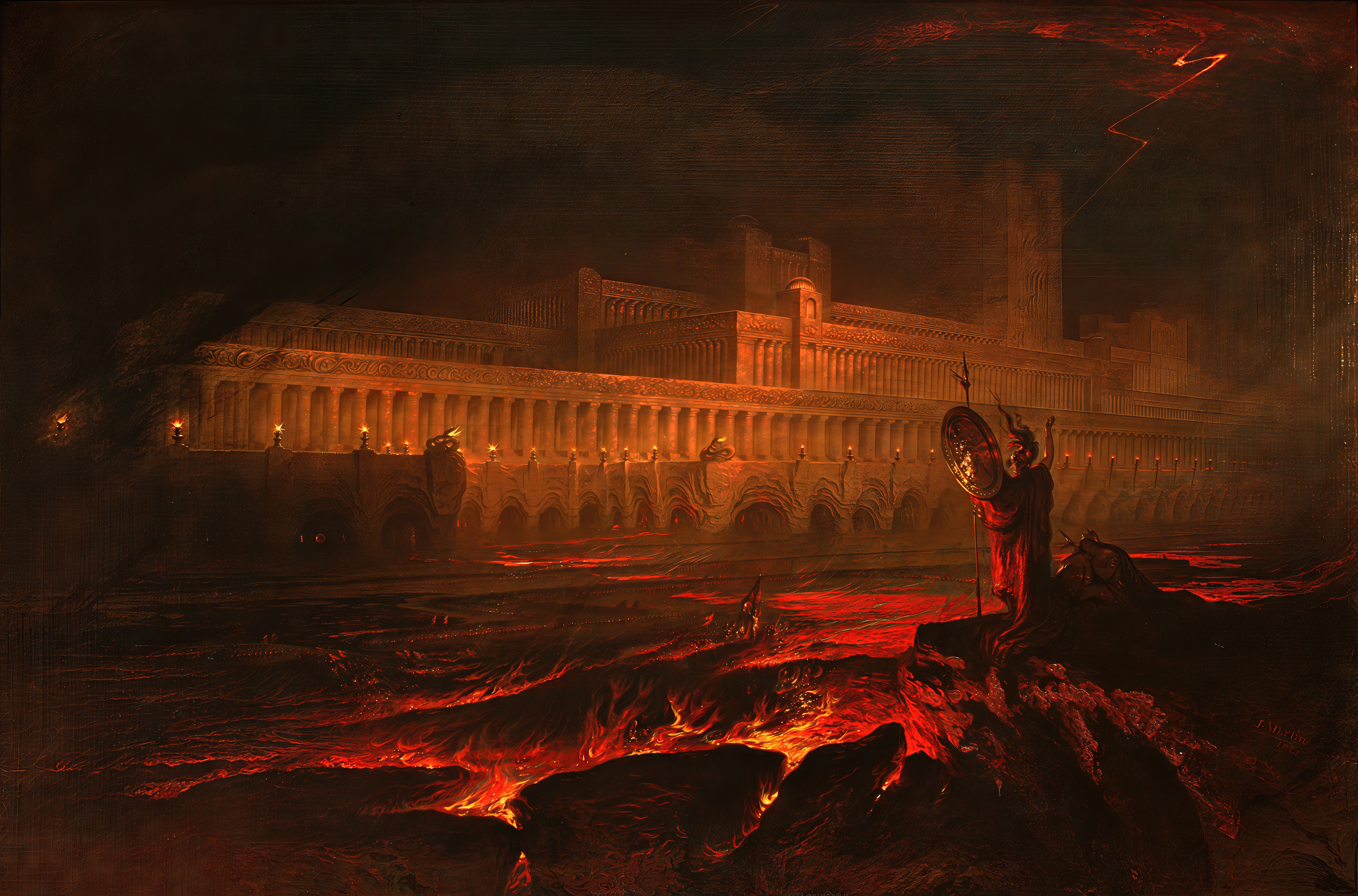
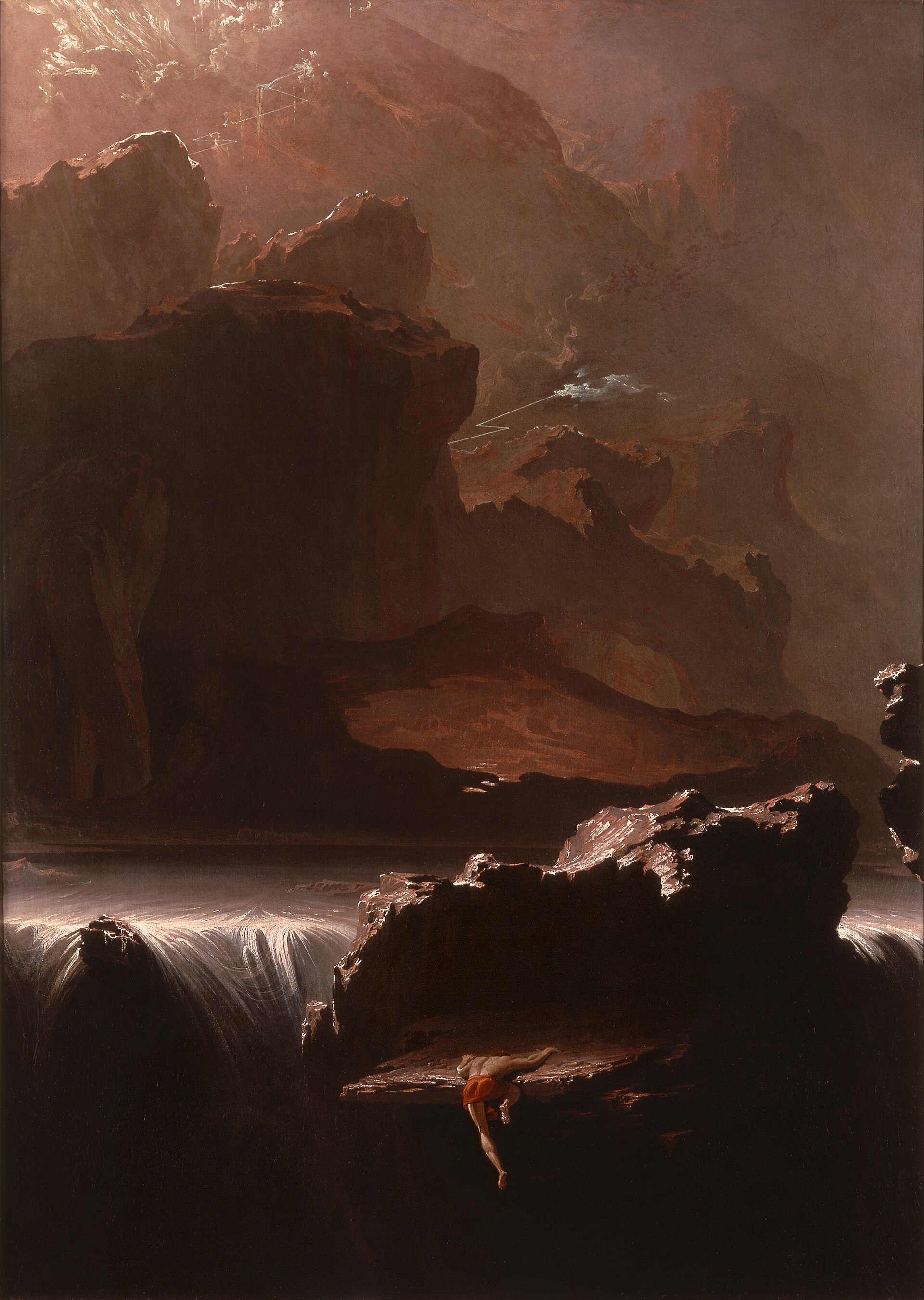
This is where the painting belongs with Martin's wider practice. He often uses architecture as a measure of human ambition. In Pandemonium, infernal architecture helps imagine Milton's fallen world. In Belshazzar's Feast, palace architecture becomes the stage for sacred rebuke. In both cases, buildings are not passive backgrounds. They embody power, pride and theatrical imagination.
The difference is just as important. Pandemonium is anchored in Milton and the fallen angels. Belshazzar's Feast is anchored in biblical court drama. It has no volcanic eruption and no cosmic landscape. Its terror comes from a sign appearing inside a room where power had seemed settled.
Exhibition Fame and Public Reaction
Belshazzar's Feast helped establish Martin as an artist who could turn history painting into public event. British Museum notes on a related drawing record that the original oil painting was shown at the British Institution in 1821 and won a 200-pound premium. The same account says the painting became so popular that it had to be protected from crowds by a cordon, an unusual measure that captures the force of its public appeal.
This popularity was not just polite admiration. Martin's pictures were discussed as spectacles, and his supporters and critics both responded to that quality. The British Museum's curatorial commentary records Martin's desire to make an exceptional public impact with the painting. It also preserves critical discomfort: some reviewers felt that the scene's bustle and theatrical splendour overwhelmed the spiritual gravity of the subject.
That tension is central to Martin. His art often sits between religious awe and theatrical display. Belshazzar's Feast is powerful because it does not resolve the tension neatly. It gives the viewer a dazzling palace while showing the palace under judgement. It uses spectacle to criticise spectacle.
The painting's early reception also explains why later prints mattered so much. Martin's work was not confined to private ownership or a single exhibition room. Through prints, descriptions and later Bible illustrations, the composition could continue to circulate among viewers who had never stood before the oil painting.
The Print Afterlife
Martin was not only a painter of spectacular subjects. He was also deeply involved in print culture. Belshazzar's Feast became part of that wider career through large mezzotint and etched versions in 1826 and later Bible-illustration material.
The National Gallery of Art in Washington holds an 1826 hand-coloured mixed-media intaglio of Belshazzar's Feast. Its open-access record describes the same enormous architectural space, the banquet, Daniel's gesture, the cowering figures, the statue, the smoke and flame, and the bright writing at the side. The print makes clear how well the composition could function beyond the oil painting. Martin's architecture and lighting were ideally suited to reproductive drama.
The Metropolitan Museum of Art owns an 1826 proof of the first plate, a mezzotint with etching, and lists Martin as both artist and publisher. The British Museum holds an 1826 mezzotint with etching and records that Martin donated a group of his own prints to the museum in 1833. National Galleries of Scotland also holds an 1826 mezzotint and etching on paper.
These records matter because they show Belshazzar's Feast as a painting with a long reproductive life. The image did not remain a single oil. It became a printed spectacle, a collector's object, a museum object and part of Martin's broader reputation as a maker of dramatic biblical imagery.
Later Designs and Variations
The British Museum's drawing for a later Bible illustration is especially useful because it shows Martin continuing to rethink the subject. The museum identifies the drawing as a print study from around 1835, connected with Illustrations of the Bible, and notes differences from the original oil painting. It also explains that Martin's versions adjust architectural and ornamental details rather than merely repeating a fixed design.
That later activity helps us understand the 1820 painting. Martin was not simply illustrating Daniel 5 once. He was building a visual vocabulary around the scene: dazzling light, immense architecture, fearful crowds, distant recession, Daniel's interpretive role and the king's collapse before the message.
The British Museum's notes also preserve a fascinating detail about how viewers were guided through the original painting. Martin produced an accompanying pamphlet with a numbered key, helping viewers follow the order of the crucial elements. That tells us something about the complexity of the work. The picture was not meant to be absorbed at a glance. It was designed to be navigated.
This navigational quality connects Belshazzar's Feast to the panoramic culture of Martin's age. His spaces ask viewers to travel visually through a scene, moving from the supernatural sign to the human response, from foreground treasure to distant tower, from courtly action to architectural immensity.
Biblical Court Drama, Not an Apocalypse Landscape
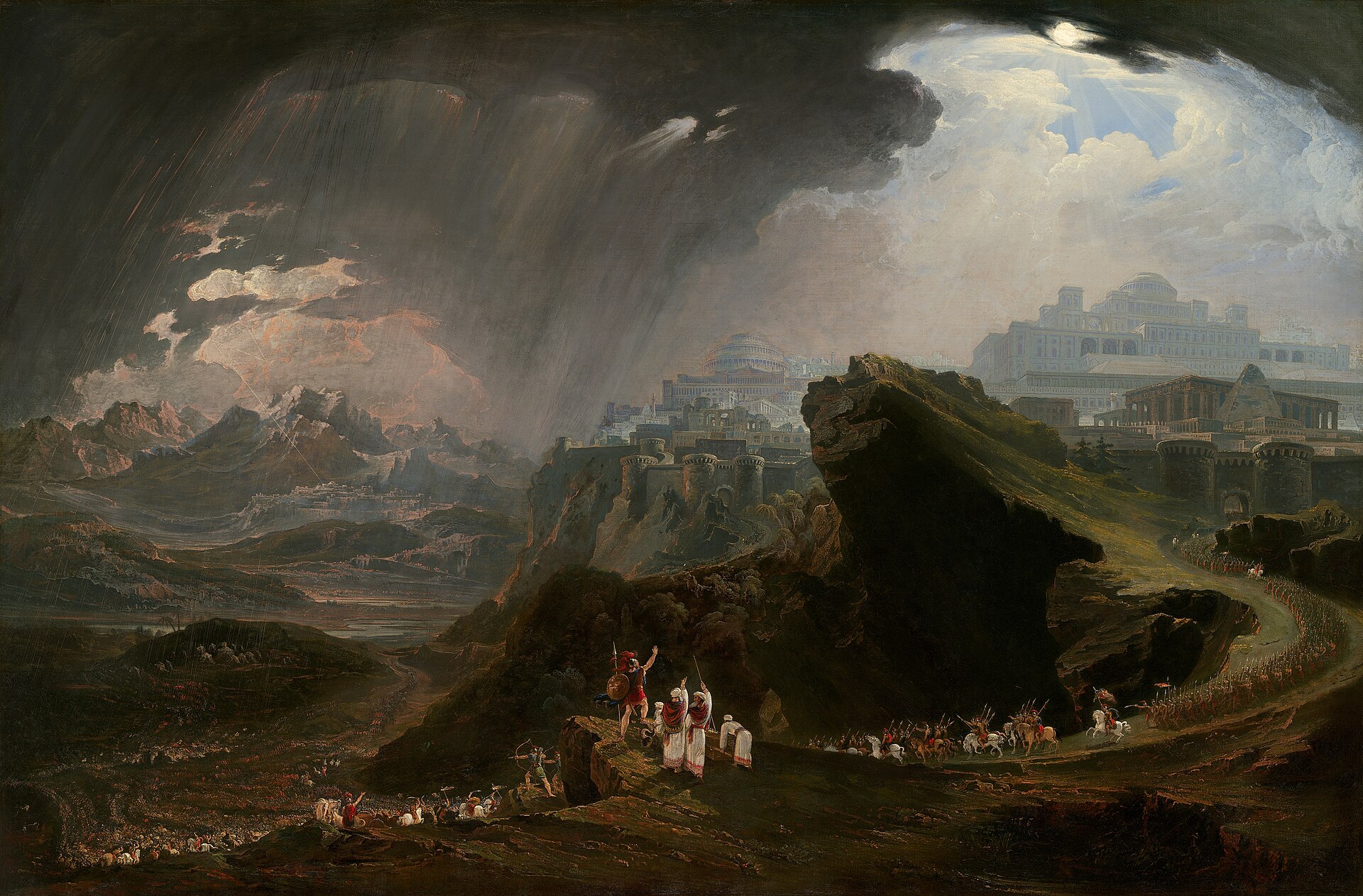
It is tempting to describe all of Martin's grand biblical paintings as apocalyptic, but Belshazzar's Feast needs a more precise reading. The painting is about judgement, but it is not part of the Last Judgement sequence. Its world is Babylon, not Revelation. Its action is courtly, textual and political: a feast becomes a sentence against a kingdom.
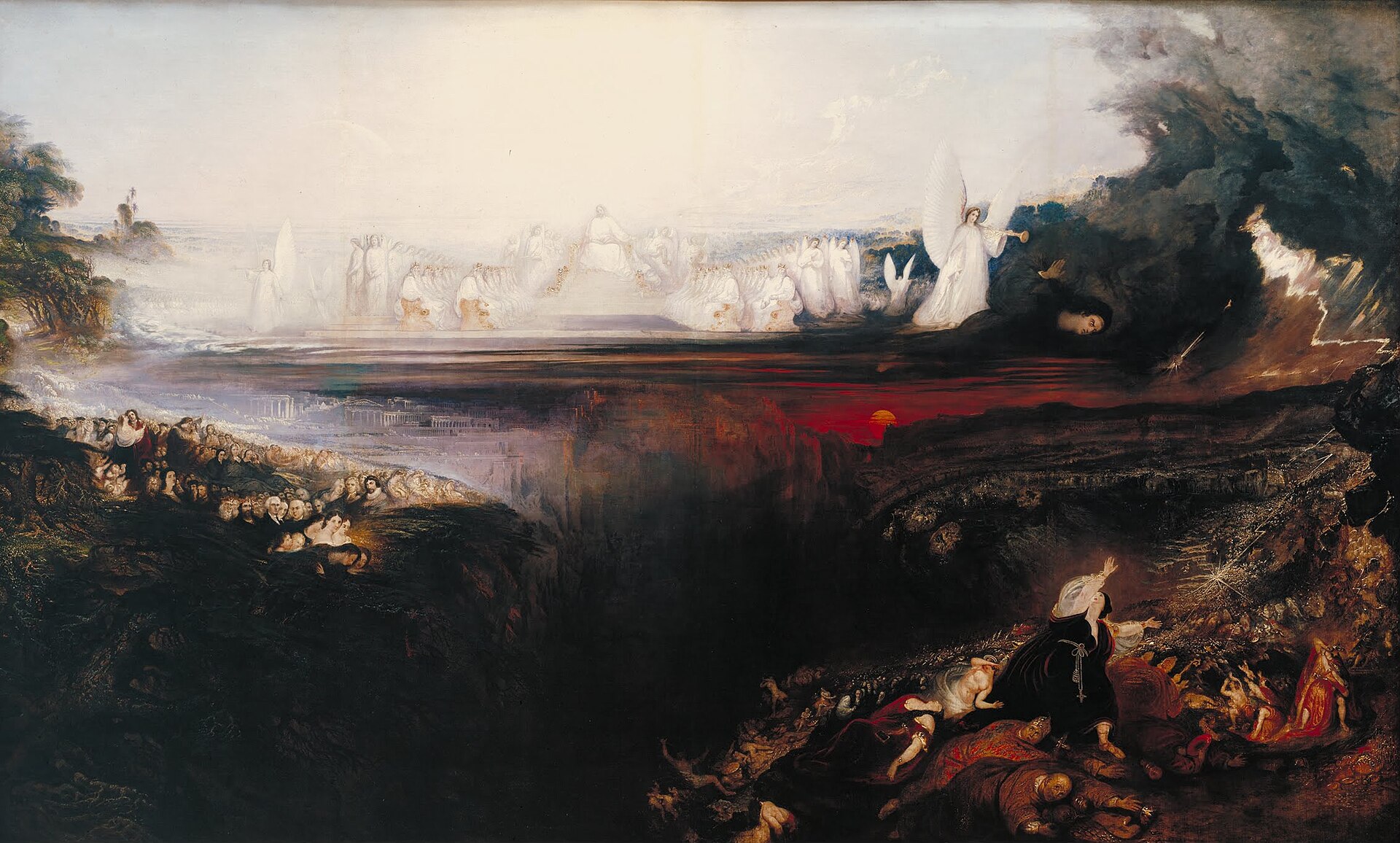
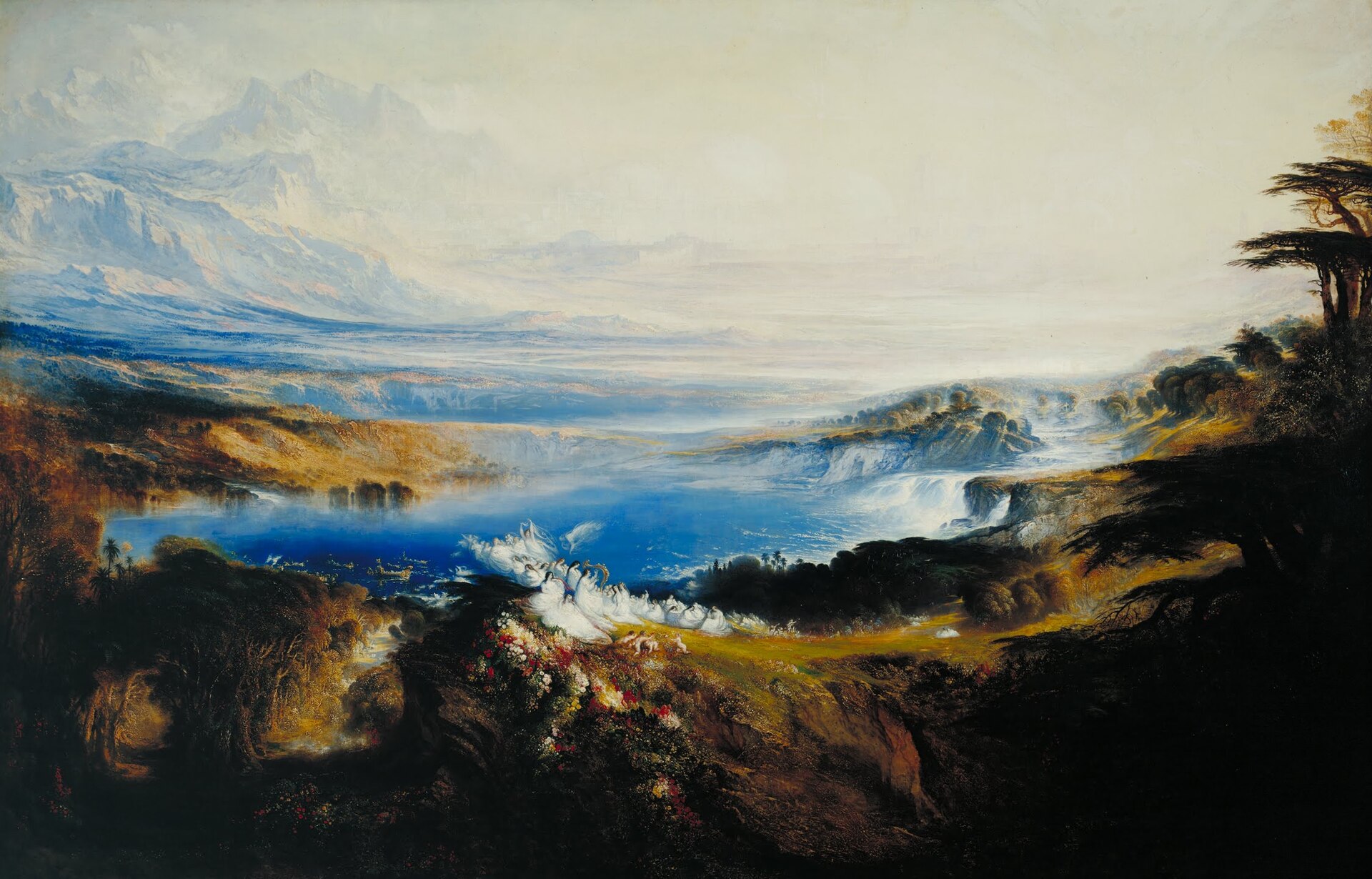
This distinction gives the painting its own personality within Martin's work. The Last Judgement paintings stage cosmic division: destruction, judgement and blessedness across a monumental sequence. The Destruction of Pompeii and Herculaneum turns ancient catastrophe into historical spectacle. Belshazzar's Feast places doom inside an interior and lets the warning arrive through words.
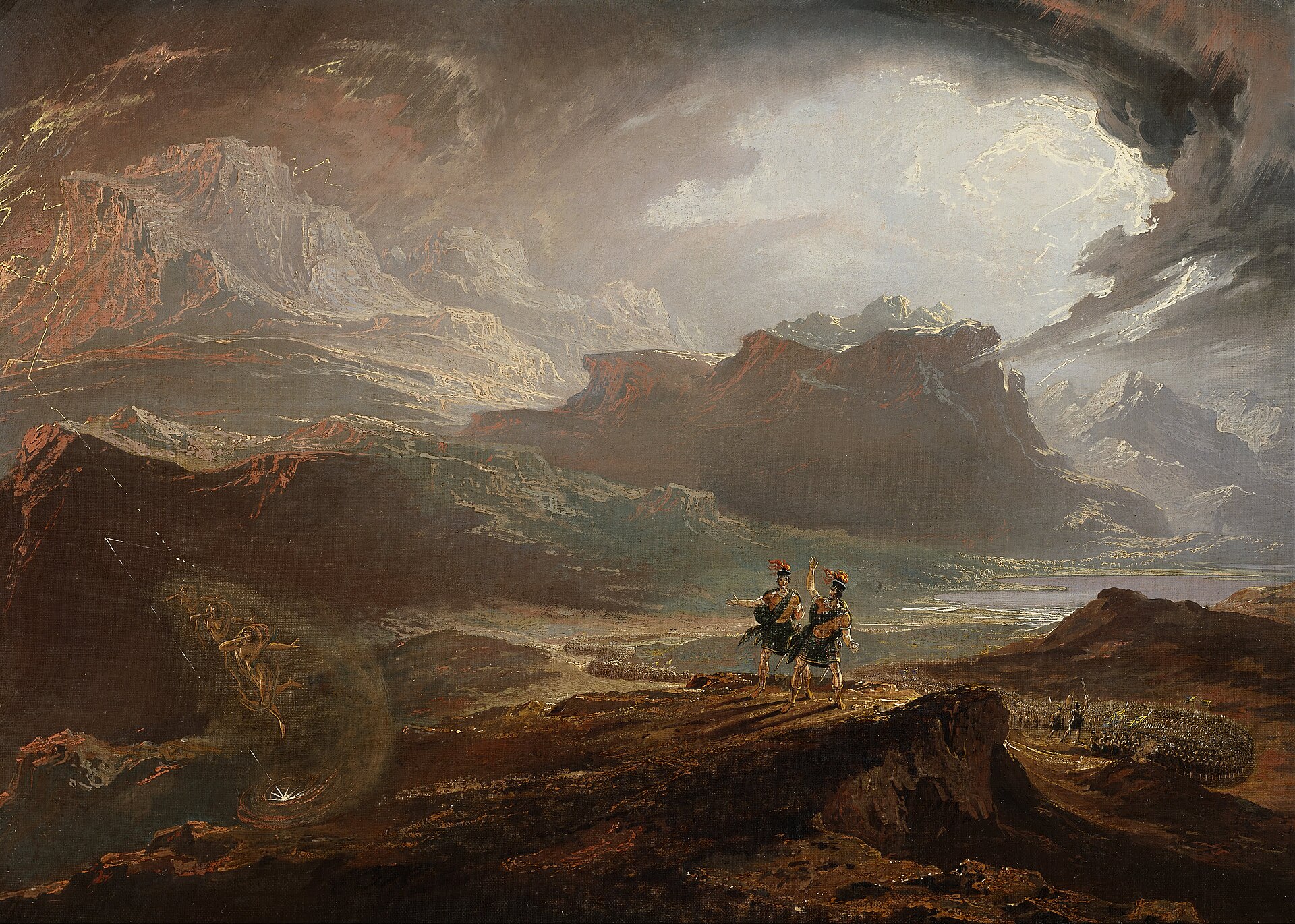
The painting therefore belongs to Martin's broader sublime imagination without becoming interchangeable with his disaster paintings. It shares his love of scale, light and overwhelmed human figures. But its crisis is the sudden conversion of ceremony into judgement. The king's feast becomes his trial.
Why the Painting Matters
Belshazzar's Feast matters because it shows Martin discovering one of his most effective formulas: make the setting so vast and charged that the human story becomes both dramatic and fragile. The biblical subject gives the moral structure. The architecture gives the emotional scale.
The painting also helps explain why Martin's art could attract crowds and divide critics. It is spectacular by design. Its richness, movement and vastness are not accidental excesses. They are how the painting thinks. Martin uses theatrical grandeur to make the viewer feel the instability of earthly power.
For modern viewers, the work is also a useful bridge between Martin's paintings and prints. The 1820 oil at Yale, the 1826 prints at the National Gallery of Art, the Metropolitan Museum of Art, the British Museum and National Galleries of Scotland, and the later Bible illustration study together show a subject that Martin returned to across media. The idea of Belshazzar's feast was durable because it suited him so well: a crowded hall, an unreadable sign, a prophet, a frightened king and a world of splendour about to fall.
Seen beside Pandemonium, the painting reveals another side of Martin's imagination. One picture builds the architecture of hell from Milton's epic. The other imagines Babylonian luxury at the instant it becomes judgement. Both are concerned with power, spectacle and ruin. But Belshazzar's Feast keeps its drama indoors, where the most terrifying thing in the room is not a collapsing mountain or a burning city, but a sentence written in light.
Frequently Asked Questions
Discussion
What detail in Belshazzar's Feast changes how you read John Martin's use of scale, light or atmosphere?
Reader Insights
Which figure, architectural form or passage of light first anchors the scene for you?
How does the source story or subject change the emotional force of the image?
Where does this work feel closest to, or furthest from, Pandemonium?
Join the Conversation
Share your reading of Belshazzar's Feast below.
References
- Yale Center for British Art, *Belshazzar's Feast*, 1820, B1981.25.440: View Source, accessed 2 August 2026.
- British Museum, *Belshazzar's Feast* print, 1826, Mm,10.1: View Source, accessed 2 August 2026.
- British Museum, *Belshazzar's Feast* drawing/print study, circa 1835, 1908,1217.1: View Source, accessed 2 August 2026.
- National Gallery of Art, *Belshazzar's Feast*, 1826, 1978.86.5: View Source, accessed 2 August 2026.
- The Metropolitan Museum of Art, *Belshazzar's Feast (First Plate)*, 1826, 49.40.262: View Source, accessed 2 August 2026.
- National Galleries of Scotland, *Belshazzar's Feast*, 1826, P 8981: View Source, accessed 2 August 2026.
- Daniel 5 source context, World English Bible via Bible Gateway: View Source, accessed 2 August 2026.
- USCCB Daniel 5 notes for historical/textual caution around Belshazzar and the inscription: View Source, accessed 2 August 2026.