Sadak in Search of the Waters of Oblivion by John Martin: Introduction
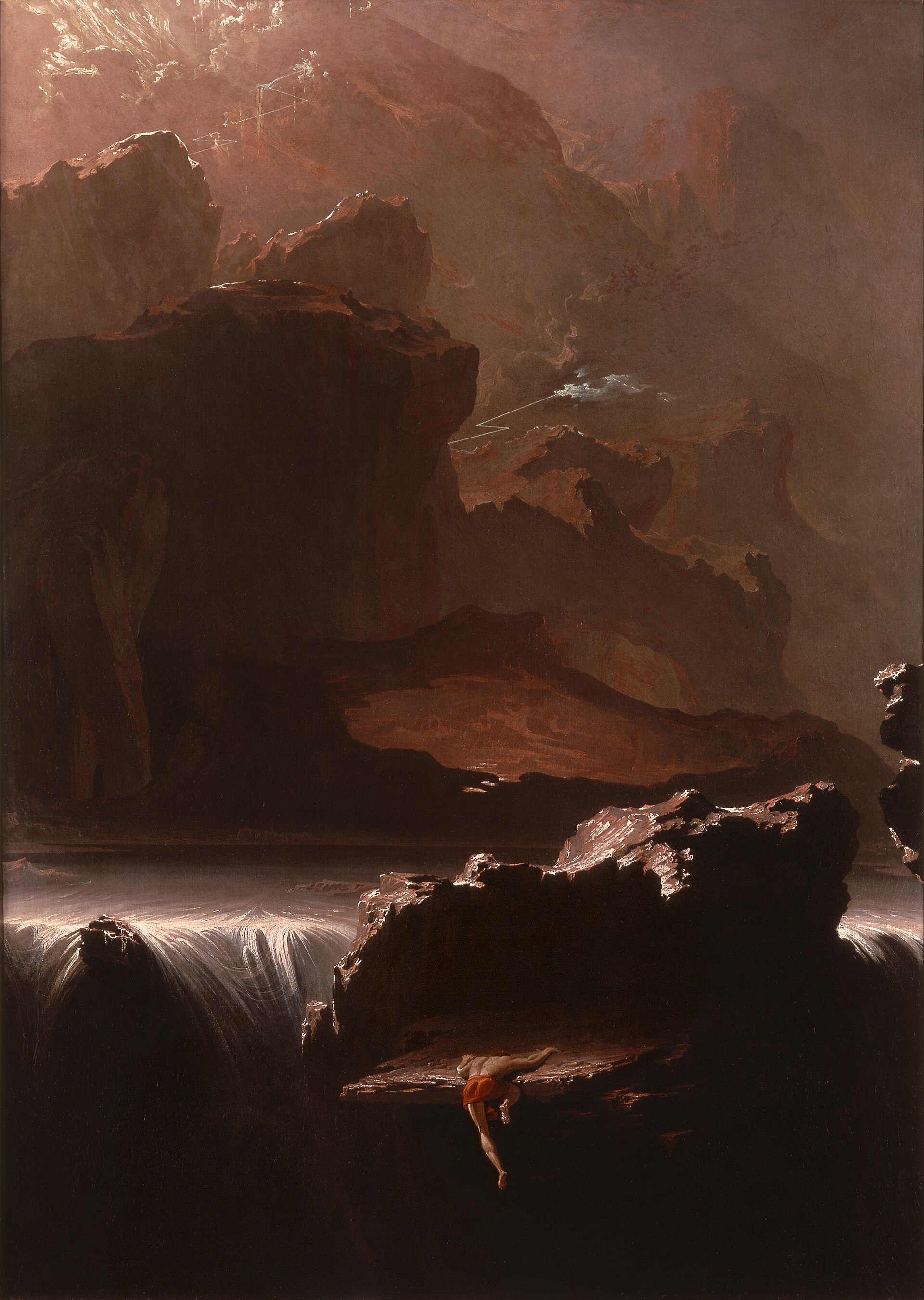
John Martin's Sadak in Search of the Waters of Oblivion is one of the clearest early signs of the artist he would become. Painted in 1812, it shows a single figure clinging to rock at the bottom of a towering landscape. The Saint Louis Art Museum, which owns the painting, identifies it as an oil on canvas, 183.2 by 131.1 centimetres, and records its subject as drawn from James Ridley's Tales of the Genii.
The painting is not biblical battle, courtly judgement, volcanic disaster or final apocalypse. It is a quest image. Sadak is a Persian nobleman in a perilous story of abduction, endurance and trial. He has been sent to find the Waters of Oblivion, and Martin chooses the moment when the hero is nearly lost inside the landscape he must still climb.
That choice gives the painting its force. Sadak is physically tiny, but emotionally central. The rest of the canvas is rock, height, danger, darkness and light. Martin makes the viewer search for the human figure, then measure him against the impossible scale above him. This would become one of Martin's great visual habits: a small human body made meaningful by the vast world that threatens to erase it.
At a Glance
- ArtistJohn Martin
- TitleSadak in Search of the Waters of Oblivion
- Date1812
- MediumOil on canvas
- CollectionSaint Louis Art Museum
- Dimensions72 1/8 by 51 5/8 inches, or 183.2 by 131.1 centimetres
- Source storyJames Ridley's Tales of the Genii
- Main visual ideaa solitary climber overwhelmed by sublime landscape
Contents
- Introduction
- How to Read the Composition
- A Literary Adventure, Not a Biblical Scene
- The Solitary Climber
- Sublime Landscape and Early Martin
- Exhibition, Sale and Career Significance
- Scale Without Crowds
- Later Visibility and Image Afterlife
- Why the Painting Matters
What Is Happening in the Painting?
The painting shows Sadak during a desperate climb. In the story summarised by the Saint Louis Art Museum, Sadak's wife, Kalasrade, has been abducted by the Sultan. Sadak is told that she will be returned safely if he undertakes the dangerous journey to obtain the Waters of Oblivion.
The waters are not simply a treasure. They carry the story's danger because they can erase memory. The Sultan wants them for a sinister purpose, but the quest ultimately turns against him. Martin is less interested in the political ending than in the visual ordeal: a man alone against the terrain that stands between him and his goal.
Look near the bottom of the painting. Sadak clings to the rock, almost swallowed by darkness and scale. The Saint Louis Art Museum notes that the rest of the canvas is given over to the rocky precipices he must surmount. This is the essential structure of the work. The hero is present, but the landscape dominates.
Rays of light appear from the upper left. SLAM reads those rays as a sign that Sadak may ultimately obtain what he seeks. The painting therefore holds two ideas at once: danger below and promise above. Sadak is not simply falling or defeated. He is suspended at the moment when the journey is still almost impossible, but not hopeless.
How to Read the Composition
Begin at the bottom, not the top. Martin makes Sadak small enough that the viewer may need a moment to find him. That delay is part of the painting's drama. The eye first encounters the vast landscape, then discovers the human body that gives the landscape meaning.
Sadak's position is precarious. He clings to the edge of a rock in a world of precipices, water, darkness and height. The painting does not show a heroic climber standing triumphant at the summit. It shows effort at its most vulnerable. The body is exposed; the goal is distant; the landscape is indifferent.
Then follow the vertical pull upward. The rock face dominates the canvas, and Martin turns the climb into a visual test. Every surface seems difficult. The path is not clear. The viewer has to imagine how a human figure could move through such a place. That imagined movement is one reason the painting feels so tense.
The light at the upper left changes the mood. It does not remove the danger, but it prevents the scene from becoming pure despair. It suggests destination, revelation or the possibility of success. Martin's sublime is not only darkness. It is the mixture of terror and promise.
The composition works because it refuses balance in the ordinary sense. Sadak is visually outweighed by rock and sky. Yet the tiny figure controls the emotional meaning of the whole painting. Without him, the landscape would be impressive. With him, it becomes a quest.
A Literary Adventure, Not a Biblical Scene
The source of the painting matters. Sadak comes from Tales of the Genii, first published in 1764 and long presented under the pseudonym Sir Charles Morell. The Saint Louis Art Museum's 2025 account explains that James Ridley created an imagined Persian backstory for the book rather than translating an actual manuscript. That context helps modern readers place the painting carefully.
The work belongs to a British fascination with oriental tale, romance and imagined eastern adventure. It should not be treated as documentary Persia. Martin is painting from a literary fantasy filtered through eighteenth-century taste. That is part of the painting's meaning, and also part of its caution.
The story gives him a distant, exoticised setting and a quest structure, but the painting's strongest effect is not ethnographic. It is psychological and spatial. Sadak's body becomes a point of endurance inside a world that seems almost designed to defeat him.
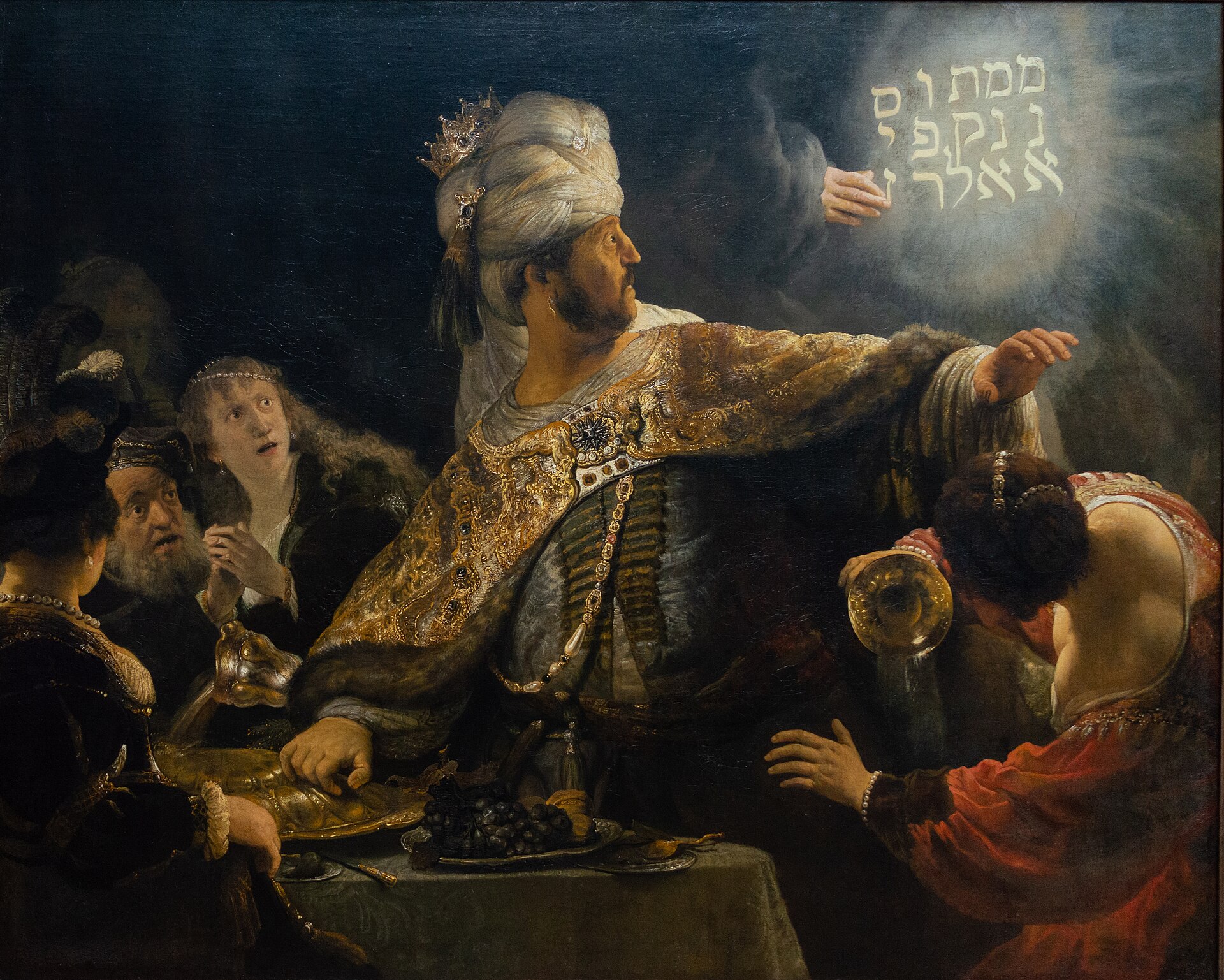
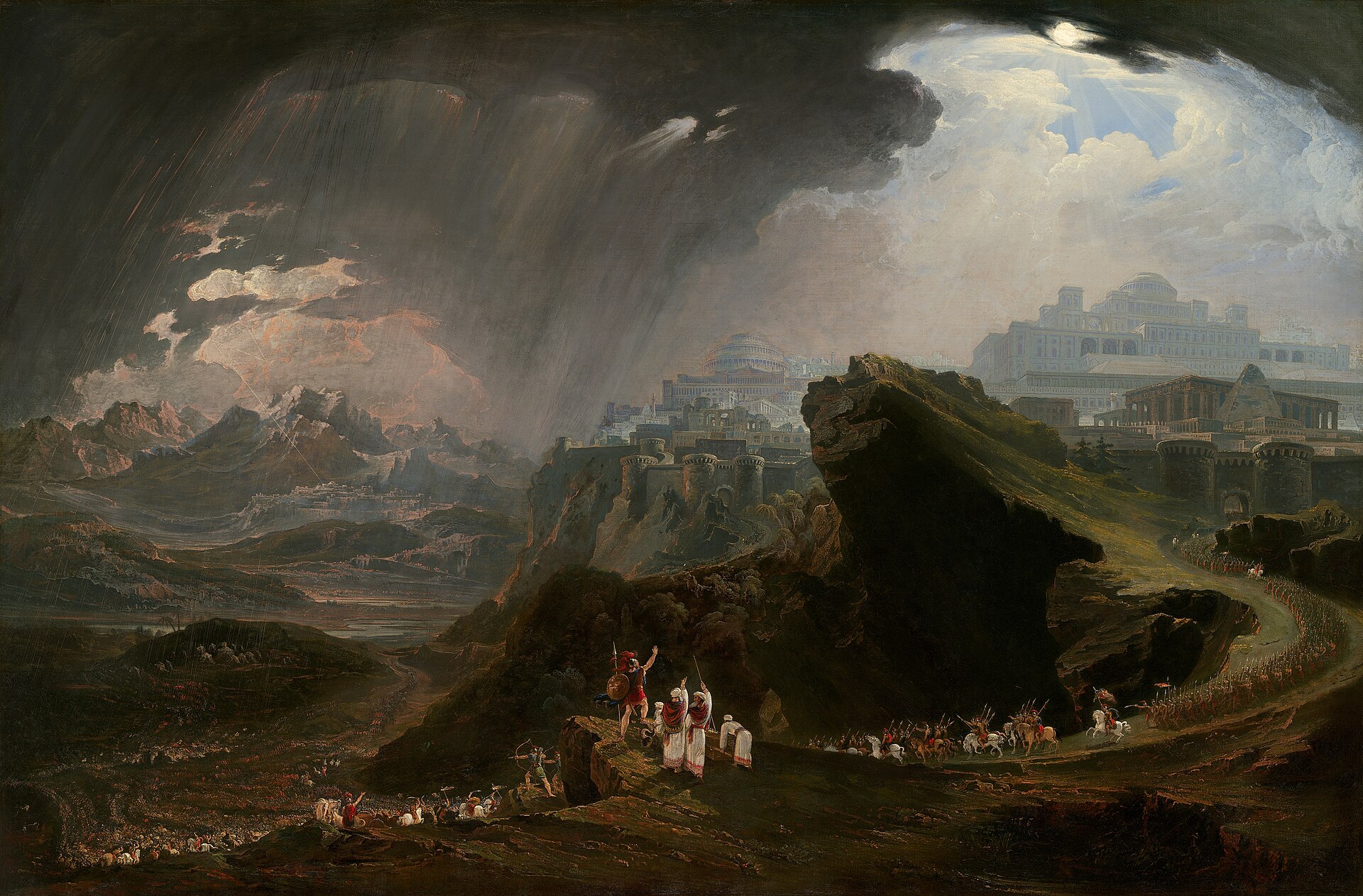
This is why the painting needs to be kept distinct from Martin's biblical works. Joshua Commanding the Sun to Stand Still upon Gibeon is a miracle of command in battle. Belshazzar's Feast is a court interior where written judgement interrupts luxury. Sadak is a solitary ordeal. It is a quest through peril, not a public act of prophecy or war.
The Solitary Climber
Sadak's smallness is the painting's central image. He is not surrounded by armies, courtiers or angels. There is no crowd to explain the action. The viewer meets him alone, almost at the limit of human strength.
That solitude makes the painting unusually direct. Martin's later works often multiply figures until they become swarms within vast architecture or landscape. Here the drama is concentrated in one body. The scale is still overwhelming, but the emotional focus is narrow: can this man continue?
The climber motif also lets Martin make suspense visible. Sadak is neither at the beginning nor the end. He has already travelled far enough to be exhausted and endangered. He has not yet reached the light. The painting therefore shows a middle moment, when success is possible only because failure is so close.
This is one reason Sadak has remained memorable. It is easy to describe in a sentence, but hard to exhaust by looking. A tiny figure on a rock becomes a whole argument about endurance, ambition and the terrifying beauty of a world larger than the self.
Sublime Landscape and Early Martin
The Guardian's account of the painting rightly points to the contrast between the tiny figure, the vast surrounding world and the vertiginous perspective. That combination would become a signature of Martin's spectacular art, but in Sadak it appears with unusual clarity.
The painting was an early large work, and its scale matters. It is over six feet high. For a young artist still building his reputation, that was a bold choice. The American University study of Martin's early exhibition ambitions describes Sadak as a large, dramatic, attention-seeking work made in a moment when Martin needed both money and fame.
The drama is not only size. Martin already understands how to make a viewer feel small. The cliff face, the fall, the unreachable height and the light beyond danger create an experience of the sublime: fear, wonder and attraction fused together.
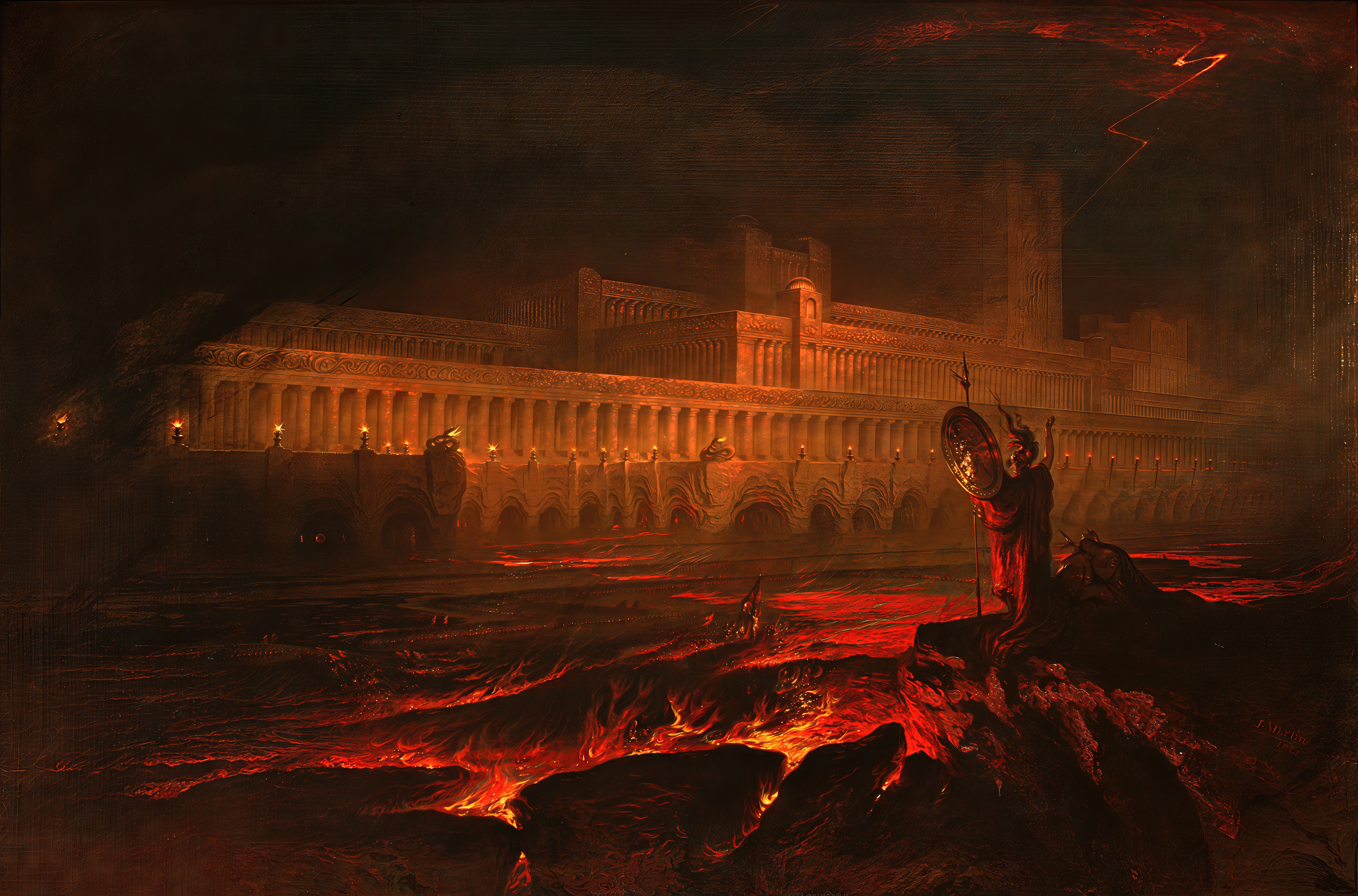
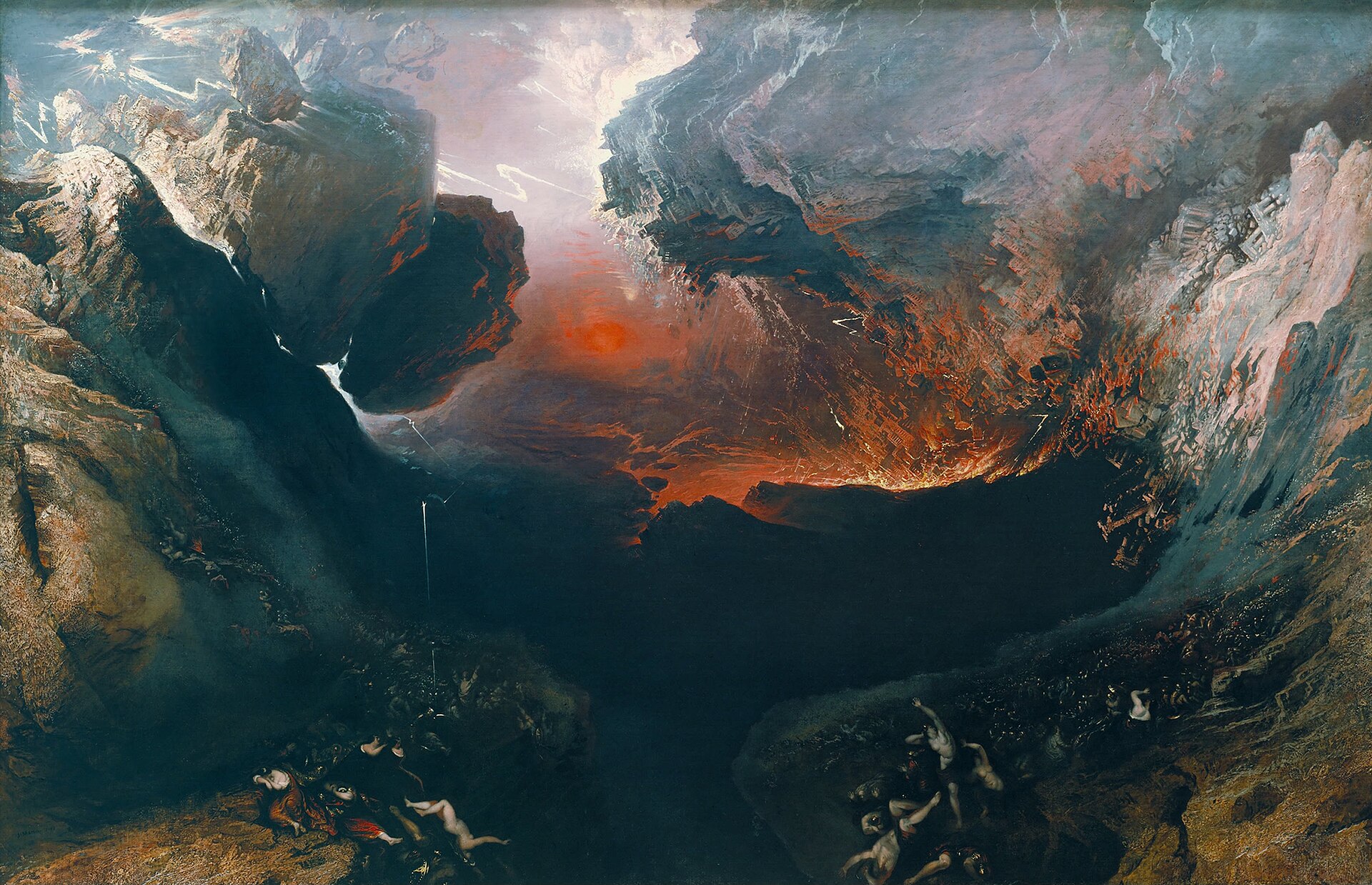
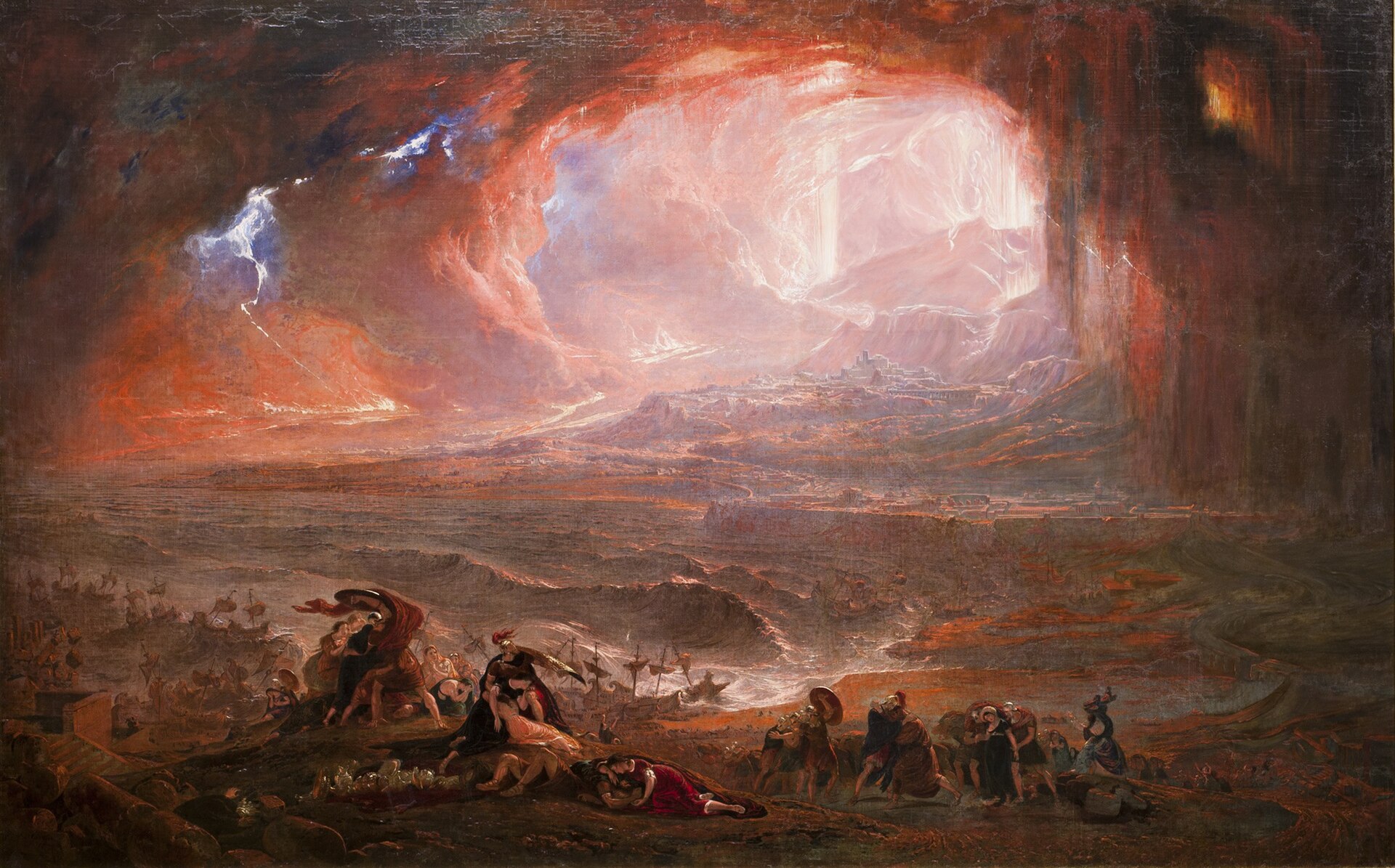
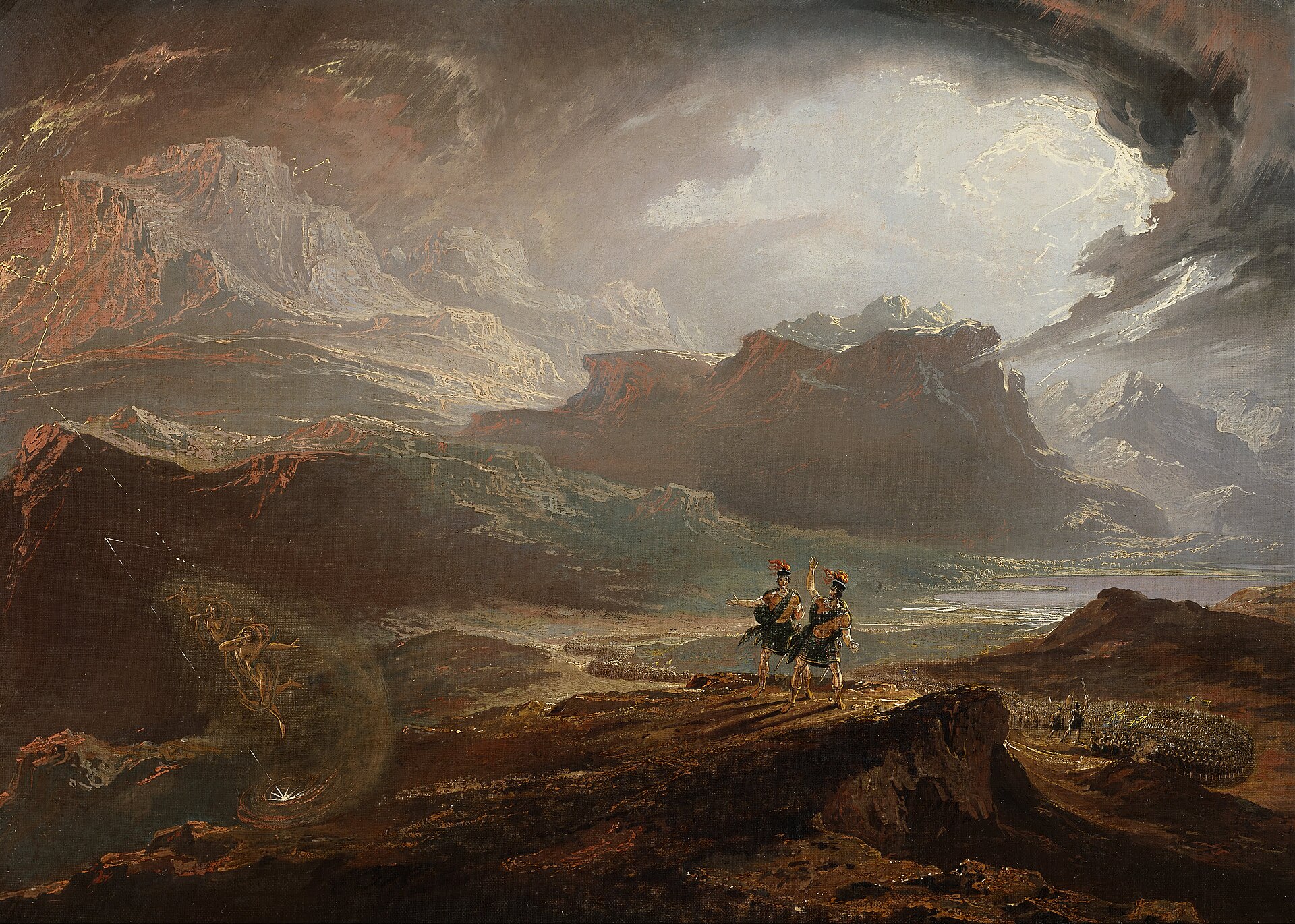
This early solution anticipates later works without duplicating them. In The Great Day of His Wrath, humanity is overwhelmed by cosmic destruction. In Pandemonium, architecture gives grandeur to Milton's fallen world. In Sadak, the whole system is compressed into a single questing body and a mountain of ordeal.
Exhibition, Sale and Career Significance
The Dictionary of National Biography records that Martin sent two landscapes and Sadak in Search of the Waters of Oblivion to the Royal Academy in 1812. The painting belongs, then, to the moment when he was beginning to move from decorative and commercial work toward public artistic ambition.
The American University account adds useful detail about the painting's early fortunes. It describes Sadak as placed in an anteroom at the Academy, yet still gaining favourable press and selling for fifty guineas. The buyer is often identified as a Bank of England governor in later summaries of the painting's career.
That early sale matters because Sadak gave Martin proof that his instinct for spectacle could attract attention. It did not yet have the architectural vastness of Belshazzar's Feast or the crowded martial sweep of Joshua, but it already had the essential formula: one human being measured against an overwhelming world.
The painting also helps explain Martin's later confidence. It showed that literary subjects could become visual events. It made a fantasy episode feel urgent through scale, light and peril. From this point onward, Martin's career repeatedly returned to the question Sadak poses so starkly: how much can a human figure endure inside a scene built to dwarf him?
Scale Without Crowds
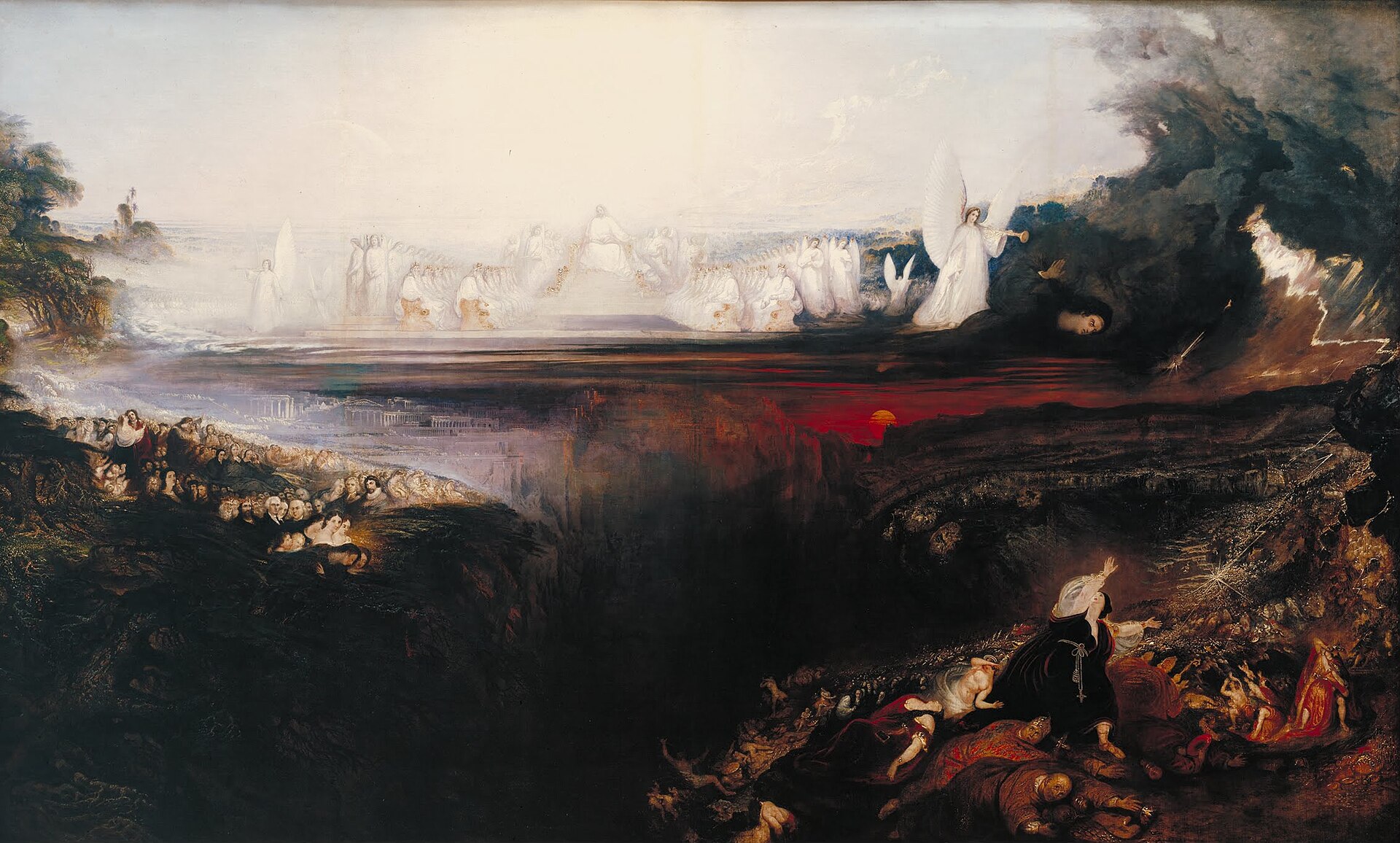
Many of Martin's later major works create scale through multiplication. Belshazzar's Feast fills a palace with courtiers. Joshua sends armies through a mountain landscape. The Last Judgement pictures arrange humanity across destruction, judgement and salvation. Sadak works differently. Its scale is not crowded. It is nearly empty.
That emptiness is important. Because there are no armies or large groups to distract from the climb, the viewer feels the force of the setting more directly. The rock face becomes the antagonist. The vertical journey becomes the story. The light above the cliff becomes almost a character in its own right, pulling the eye toward a destination Sadak cannot yet reach.
This gives Sadak a special place in Martin's work. It is spectacular, but it is not busy. It shows that Martin's grandeur did not depend only on crowds, temples, cities or collapsing worlds. He could create a monumental image from one figure, one impossible ascent and one shaft of hope.
The painting's height also matters here. A six-foot canvas makes the viewer's own body part of the encounter. Sadak is small within the image, but the painting itself is large enough to make the viewer feel the physical climb. The result is a strangely intimate sublime: the scene is immense, yet its drama depends on the fingertips of one exhausted man.
Later Visibility and Image Afterlife
Unlike Belshazzar's Feast or Joshua, Sadak does not have the same well-documented 1820s print afterlife in the core museum records reviewed for this packet. Its later visibility is instead tied strongly to the painting itself, its reproduction in modern collection records and its role in accounts of Martin's early career.
The Saint Louis Art Museum presents it as a public-domain painting on view, and its 2025 note gives the literary story and describes the specific moment of Sadak's climb. Wikimedia Commons also hosts a public-domain reproduction linked to the Saint Louis Art Museum object record, though any later image decision should return to the museum record first.
The painting also appears in modern discussions of Martin's reputation. A 2024 open-access article in the Journal of the History of Collections mentions Sadak among works that British institutions had opportunities to acquire during the period when Martin's reputation was being reconsidered. That later history is useful because it shows how Martin's works moved in and out of institutional favour long after their early public success.
For this page, the afterlife should therefore stay modest and accurate. The strongest story is not a documented sequence of Martin-made prints. It is the painting's endurance as a defining early example of his sublime imagination.
Why the Painting Matters
Sadak in Search of the Waters of Oblivion matters because it shows Martin discovering power through imbalance. The human figure is tiny; the landscape is enormous. The action is simple; the emotional pressure is immense. The setting comes from an orientalist literary adventure, but the visual idea reaches beyond plot: a person clings to the world while danger and hope rise above him.
The painting is also important because it comes before the better-known spectacular works. Before Joshua, before Belshazzar's Feast, before Pandemonium and the Last Judgement paintings, Martin had already found a way to make scale tell a story. The vertical landscape becomes a moral and emotional test.
Seen within Martin's career, Sadak is the early quest image. Beside Pandemonium, it helps explain where Martin's later infernal and apocalyptic imagination begins. His cities, palaces and catastrophic landscapes all grow from this basic pressure: the human figure confronting a world too large to master.
That is why the painting still works. It is spectacular, but not crowded. It is theatrical, but not noisy. It asks the viewer to look down, find the figure, and then look upward with him. The whole canvas becomes the distance between danger and deliverance.
Frequently Asked Questions
Discussion
What detail in Sadak in Search of the Waters of Oblivion changes how you read John Martin's use of scale, light or atmosphere?
Reader Insights
Which figure, architectural form or passage of light first anchors the scene for you?
How does the source story or subject change the emotional force of the image?
Where does this work feel closest to, or furthest from, Pandemonium?
Join the Conversation
Share your reading of Sadak in Search of the Waters of Oblivion below.
References
- Saint Louis Art Museum, *Sadak in Search of the Waters of Oblivion*, 1812, 1566:1983: View Source, accessed 2 August 2026.
- Saint Louis Art Museum, "John Martin's dramatic painting recounts scene in epic tale", 2025: View Source, accessed 2 August 2026.
- The Guardian, "John Martin's Sadak in Search of the Waters of Oblivion: man against nature", 2018: View Source, accessed 2 August 2026.
- American University, "Ambitious of Fame", exhibition study page: View Source, accessed 2 August 2026.
- Open Library, James Ridley, *The tales of the genii*: View Source, accessed 2 August 2026.
- Wikisource, Dictionary of National Biography, John Martin: View Source, accessed 2 August 2026.
- Wikimedia Commons, *John Martin - Sadak in Search of the Waters of Oblivion.jpg*: View Source, accessed 2 August 2026.
- Laia Anguix-Vilches, "Rediscovering John Martin: Collecting the apocalypse in post-war Britain", *Journal of the History of Collections*, 2024: View Source, accessed 2 August 2026.