The Last Judgement by John Martin: Introduction
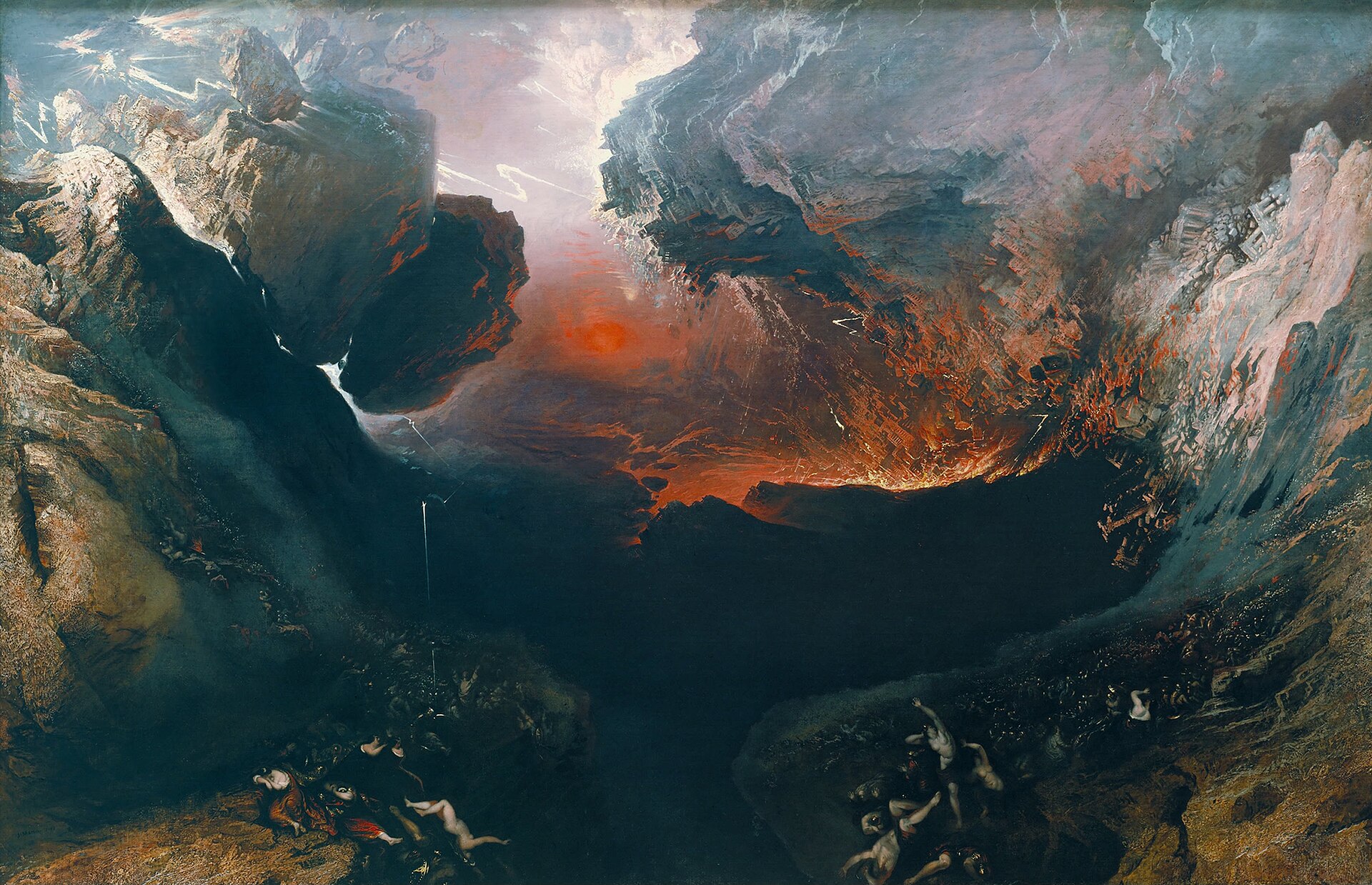
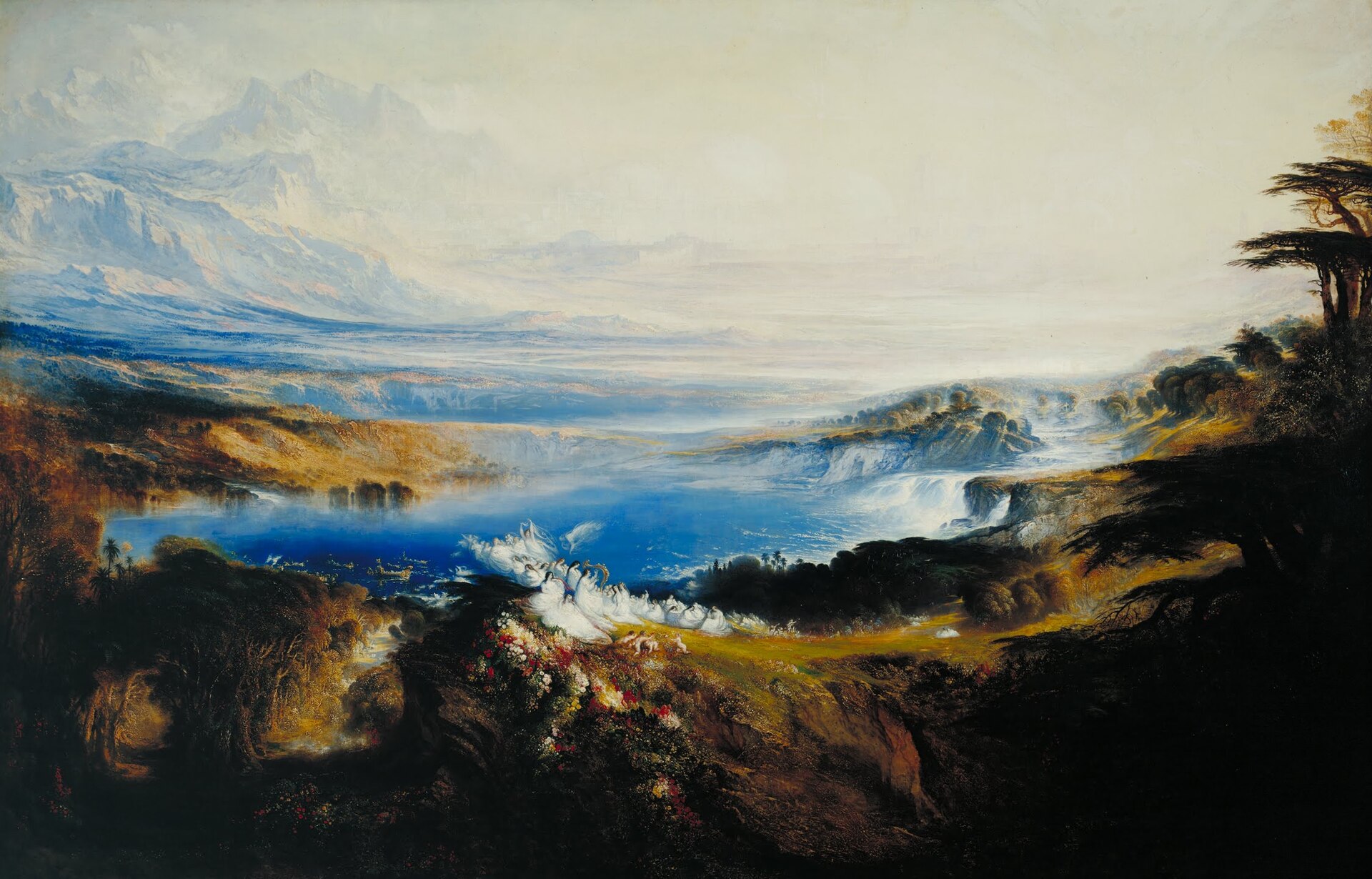
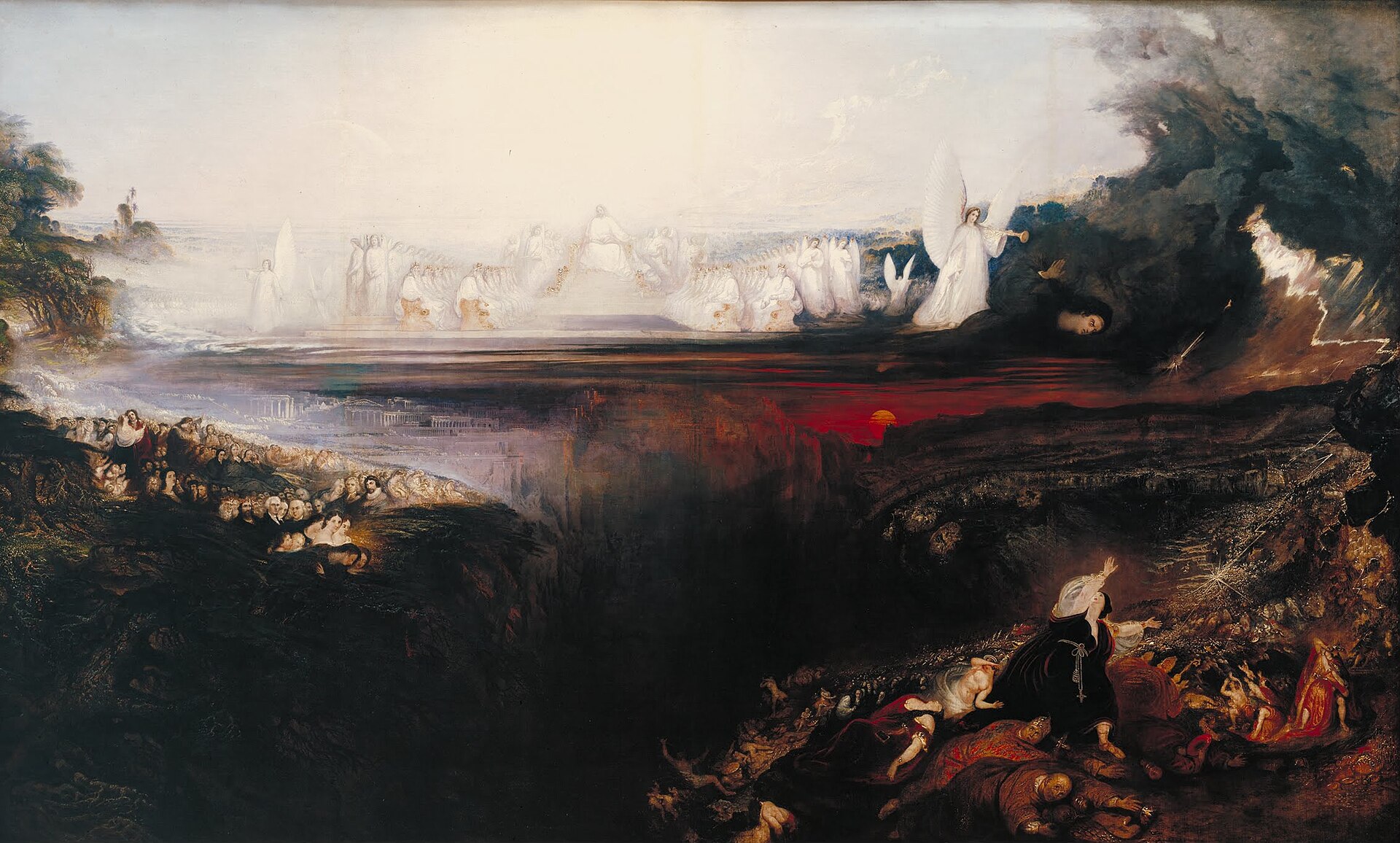
John Martin's The Last Judgement is the central judgement scene in his late apocalyptic sequence. Painted in 1853 and now in Tate Britain, it shows Christ enthroned in the heavens as the righteous and the damned are divided below. The painting stands between two very different companion works: The Great Day of His Wrath, where the earth collapses under divine anger, and The Plains of Heaven, where salvation opens into a tranquil celestial landscape.
Its particular subject is the moment of judgement itself. Martin does not only show destruction or consolation here. He imagines a vast moral sorting of the world: good and evil, ascent and fall, Mount Zion and the bottomless pit.
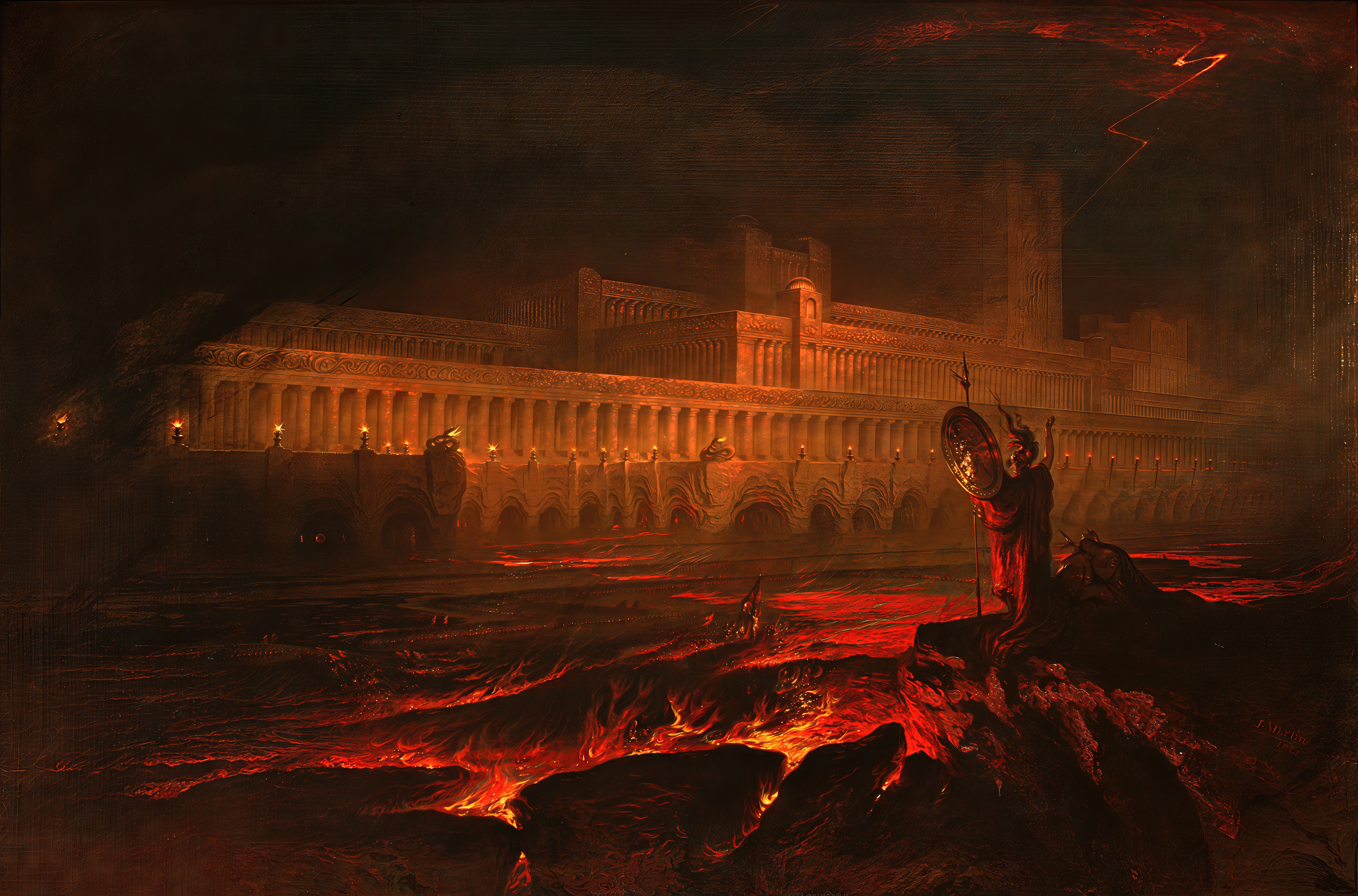
Pandemonium remains the best single doorway into Martin's art because it gathers Milton, printmaking, infernal architecture and the 1841 Louvre painting into one flagship work. The Last Judgement is different. It is the centre of Martin's final apocalyptic drama, the place where catastrophe becomes decision.
At a Glance
- ArtistJohn Martin
- TitleThe Last Judgement
- Date1853
- Mediumoil on canvas
- CollectionTate Britain, London
- AccessionT01927 in the Wikimedia/Tate reference trail
- Provenance notebequeathed by Charlotte Frank in memory of Robert Frank, 1974, in the Tate-linked Google Arts record
- Dimensions3258 mm wide by 1968 mm high in the Tate-linked Google Arts record
- Subjectthe Last Judgement from the Book of Revelation
- Related worksThe Great Day of His Wrath and The Plains of Heaven
- Best cluster comparisonThe Great Day of His Wrath for destruction; Pandemonium for Martin's separate flagship vision of infernal architecture
Contents
- Introduction
- How to Read the Composition
- The Righteous and the Damned
- The Centre of the Sequence
- Relationship to The Great Day of His Wrath
- Relationship to The Plains of Heaven
- Public Display and Print Afterlife
- Why the Painting Matters
- How to Look at The Last Judgement
What Is Happening in the Painting?
The painting shows the central event of Revelation: Christ judging the world. The Tate-linked Google Arts record describes Christ seated on a throne in the heavens, surrounded by the four and twenty elders. Below, on one side, the good gather on Mount Zion and wait to appear before the throne. On the other side, the forces of evil, commanded by Satan, are defeated and fall into a bottomless pit.
Martin turns judgement into geography. Good and evil are not only moral categories. They occupy different regions of the picture. The saved are grouped toward the heavenly landscape, connected to the world of The Plains of Heaven. The damned are carried toward collapse, darkness and descent, closer in feeling to The Great Day of His Wrath.
That organisation makes the painting more than a crowded religious scene. It is a map of destiny. The viewer's eye moves between throne, angels, elders, righteous figures, falling enemies and torn landscape. Martin uses space to show separation.
The central drama is vertical as well as horizontal. Christ sits above the world, judgement descends from the heavens, the good are lifted toward salvation and the damned fall. Martin's composition turns theology into motion.
How to Read the Composition
Start at the upper centre, with the heavenly throne. Martin places Christ high in the picture because judgement belongs to a power above the divided world below. The surrounding elders and angels enlarge that authority, giving the scene a ceremonial order.
Then move down and across the two sides of the painting. On the left, the good assemble on Mount Zion and await the call toward heaven. On the right, the forces of evil break apart and fall toward the pit. The Tate-linked record says Martin included a high proportion of artists and poets among the good and that many figures on both sides were identified in a chart published to accompany the picture.
That chart matters because it shows how much Martin wanted the picture to be read. The painting was not only a general vision of salvation and damnation. It contained named or recognisable figures, moral groupings and a kind of visual index for viewers. Martin's spectacle was theatrical, but it was also diagrammatic.
Victorian Web's Tate commentary notes that the central design recalls older Italian Renaissance and Flemish Last Judgement traditions. That comparison is useful because Martin did not invent the subject. He entered a long iconographic tradition, then translated it into his own nineteenth-century language of vast scale, bright light, tearing landscape and crowd movement.
The foreground is especially important. Victorian Web describes it as literally tearing apart. This rupture links The Last Judgement to The Great Day of His Wrath, where the earth itself collapses. In the central panel, however, the rupture is part of moral separation. The world breaks because judgement divides it.
The Righteous and the Damned
Martin's most unusual detail is not simply the throne of Christ or the fall of Satan. It is the population of the judged world. The Tate-linked Google Arts record says Martin placed many artists and poets among the good. Victorian Web names examples such as Chaucer, Shakespeare and Newton in the righteous company, while also noting that the damned include a strange mixture of figures associated with Babylon, lawyers, churchmen and some of Martin's personal enemies.
This makes the painting both traditional and oddly modern. The Last Judgement was an old religious subject, but Martin personalised it through cultural and contemporary identification. The righteous are not anonymous souls alone. They include makers of art, poetry and knowledge. The damned are not only abstract sinners. They include recognisable kinds of public authority and grievance.
That detail needs proportion. The painting is not a simple list of Martin's likes and dislikes. Its scale is too large for that. But the accompanying chart shows that Martin expected viewers to look for individual identities within the cosmic drama. He turned apocalypse into something legible for a public audience.
The inclusion of artists and poets among the good also reveals Martin's own view of imaginative labour. In The Plains of Heaven, the saved artists and poets appear again in a serene landscape. In The Last Judgement, their presence is part of a larger claim: art and poetry have a place in the redeemed order.
The Centre of the Sequence
The Last Judgement is central both physically and conceptually. It is the work that explains why the other two paintings belong together. The Great Day of His Wrath shows the world breaking under apocalyptic force. The Plains of Heaven shows the continuation of salvation. The Last Judgement is the threshold between them.
The Google Arts record for The Great Day of His Wrath says that Martin's judgement pictures were inspired by Revelation. The record for The Plains of Heaven describes that work as the second picture in the triptych and explains that its celestial landscape continues from the good gathered in The Last Judgement. Those companion records clarify the central panel's role. It is where the division of humanity becomes visible.
Seen with The Great Day, this painting shifts Martin's apocalypse from destruction to accountability. The earth may crash inward in the companion painting, but here the question is who stands where when judgement arrives.
Seen with The Plains of Heaven, it shifts from accountability to hope. The left side of The Last Judgement opens toward the saved landscape. Martin's heaven is not a small reward tucked into the corner. It becomes a whole world in the companion canvas.
That is why The Last Judgement must not be read as a mere middle panel. It is the intellectual hinge of the group.
Relationship to The Great Day of His Wrath
The study of The Great Day of His Wrath focuses on collapse: the abyss, moving mountains, red light, helpless figures and Revelation's sixth-seal imagery. The Last Judgement shares the apocalyptic setting, but its structure is different. It is less about the earth coming undone and more about the moral order revealed through that undoing.
In The Great Day, the viewer feels the instability of matter. Rock, city and ground become vulnerable. In The Last Judgement, the viewer reads a divided universe. The composition asks us to compare positions: throne above, saved to one side, damned to the other, abyss below.
The two paintings need each other because destruction alone can become spectacle without meaning, while judgement alone can become diagram without force. Martin links them so the viewer experiences both terror and decision.
This difference also keeps the two pages distinct. The Great Day of His Wrath is the catastrophe page. The Last Judgement is the judgement page. Both are apocalyptic, but they ask different visual questions.
Relationship to The Plains of Heaven
The Plains of Heaven provides the calm counterweight to The Last Judgement. The Tate-linked Google Arts record describes it as a picture of tranquility and harmony, where the saved continue into a celestial landscape. It includes poets and artists among the good, visible in white on a hill in the foreground.
That continuity makes the left side of The Last Judgement more important. The good are not merely spared from destruction. They are already connected to another world. Martin imagines salvation spatially: Mount Zion in the central panel becomes the heavenly landscape of the companion painting.
The difference in mood is striking. The Last Judgement is crowded, bright, divided and dramatic. The Plains of Heaven is expansive, blue and ordered around distance, water and mountains. Together they show that Martin's late imagination could move from spectacle to serenity without abandoning scale.
This relationship matters because it corrects the common idea that Martin painted only doom. In the Last Judgement sequence, doom is real, but it is not the final condition for everyone.
Public Display and Print Afterlife
Martin was still working on the three apocalyptic pictures when illness overtook him. The Dictionary of National Biography records that he suffered paralysis on 12 November 1853 while engaged on The Last Judgement, The Great Day of His Wrath and The Plains of Heaven. He died at Douglas on the Isle of Man on 17 February 1854.
After his death, the three large apocalypse pictures were shown in London and other major English cities, drawing large crowds and many subscribers for engravings made from them. This afterlife fits Martin's career exactly. His paintings were built for public attention, and his print culture helped that attention travel.
Victorian Web's Tate commentary records that The Last Judgement was engraved in 1856 and became popular with the public in that form. It also notes that the triptych was reassembled at Tate in 1974 after the panels had been separated. The 1974 bequest recorded by Google Arts gives the modern collection story a precise institutional anchor.
The University of Bristol record for the 2011 Tate Britain project The Last Judgement: an illustrated lecture at intervals shows how modern curators revisited that public-display tradition. The project used sound and light in relation to the three paintings, explicitly drawing on the lecture and entertainment formats once associated with Martin's apocalyptic works.
This reception history helps explain why Martin can feel close to modern visual spectacle. He did not simply paint private devotional images. He made works that could be looked at in darkness, explained, reproduced and experienced as public events.
Why the Painting Matters
The Last Judgement matters because it is Martin's most complete statement of judgement as visual order. The Great Day of His Wrath shows destruction with immense force. The Plains of Heaven shows salvation with unexpected calm. The Last Judgement holds the two destinies in one divided composition.
It also matters because it reveals Martin's ambition to rival older traditions of religious art. By recalling Last Judgement iconography from Renaissance and Flemish precedents, then amplifying it through Romantic scale and public spectacle, Martin placed himself inside a long history while making the subject unmistakably his own.
The painting's weaknesses and strengths are closely connected. It can feel excessive, crowded or melodramatic. Victorian Web's Tate commentary itself recognises both the bold Romantic force and the danger of overstatement. But that tension is part of Martin's importance. He tests how far spectacle can carry religious imagination before it breaks into theatre.
For a modern viewer, the painting is best approached as a staged moral landscape. It is not intimate. It is not quiet. It is not subtle in the usual sense. It is a vast public image of consequence, built by an artist who believed that painting could still attempt heaven, hell and the end of the world.
How to Look at The Last Judgement
Begin with the overall division. Do not try to identify every figure at once. First see how the painting separates the world: heaven above, the good to one side, the defeated evil to the other, the broken foreground below.
Then look at the throne. Christ's elevated position gives the painting its axis. Everything else depends on that point of judgement. The eye can then move outward through elders, angels, saved figures, falling figures and landscape rupture.
Next, look for Martin's theatrical devices: bright light, plunging space, dramatic crowd movement, tiny bodies against vast scale and architecture or landscape made unstable. These are familiar from his other major works, but here they serve a moral division rather than one local disaster.
Finally, remember the companion paintings. The right side of the sequence leads toward catastrophic collapse in The Great Day of His Wrath. The left side opens toward the blue distance of The Plains of Heaven. The Last Judgement is the point at which those futures separate.
Frequently Asked Questions
Discussion
What detail in The Last Judgement changes how you read John Martin's use of scale, light or atmosphere?
Reader Insights
Which figure, architectural form or passage of light first anchors the scene for you?
How does the source story or subject change the emotional force of the image?
Where does this work feel closest to, or furthest from, Pandemonium?
Join the Conversation
Share your reading of The Last Judgement below.
References
- Google Arts & Culture, Tate Britain record for *The Last Judgement*: View Source, accessed 2 August 2026.
- Google Arts & Culture, Tate Britain record for *The Great Day of His Wrath*: View Source, accessed 2 August 2026.
- Google Arts & Culture, Tate Britain record for *The Plains of Heaven*: View Source, accessed 2 August 2026.
- Victorian Web, Simon Cooke/Tate commentary mirror for *The Last Judgement*: View Source, accessed 2 August 2026.
- University of Bristol research record, *The Last Judgement: an illustrated lecture at intervals*: View Source, accessed 2 August 2026.
- Wikimedia Commons, *John Martin - The Last Judgement - Google Art Project.jpg*: View Source, accessed 2 August 2026.
- Tate Shop, Martin Myrone, *John Martin - Sketches of My Life*: View Source, accessed 2 August 2026.
- Wikisource transcription of William Cosmo Monkhouse, "Martin, John (1789-1854)", *Dictionary of National Biography*, 1893: View Source, accessed 2 August 2026.