The Great Day of His Wrath by John Martin: Introduction
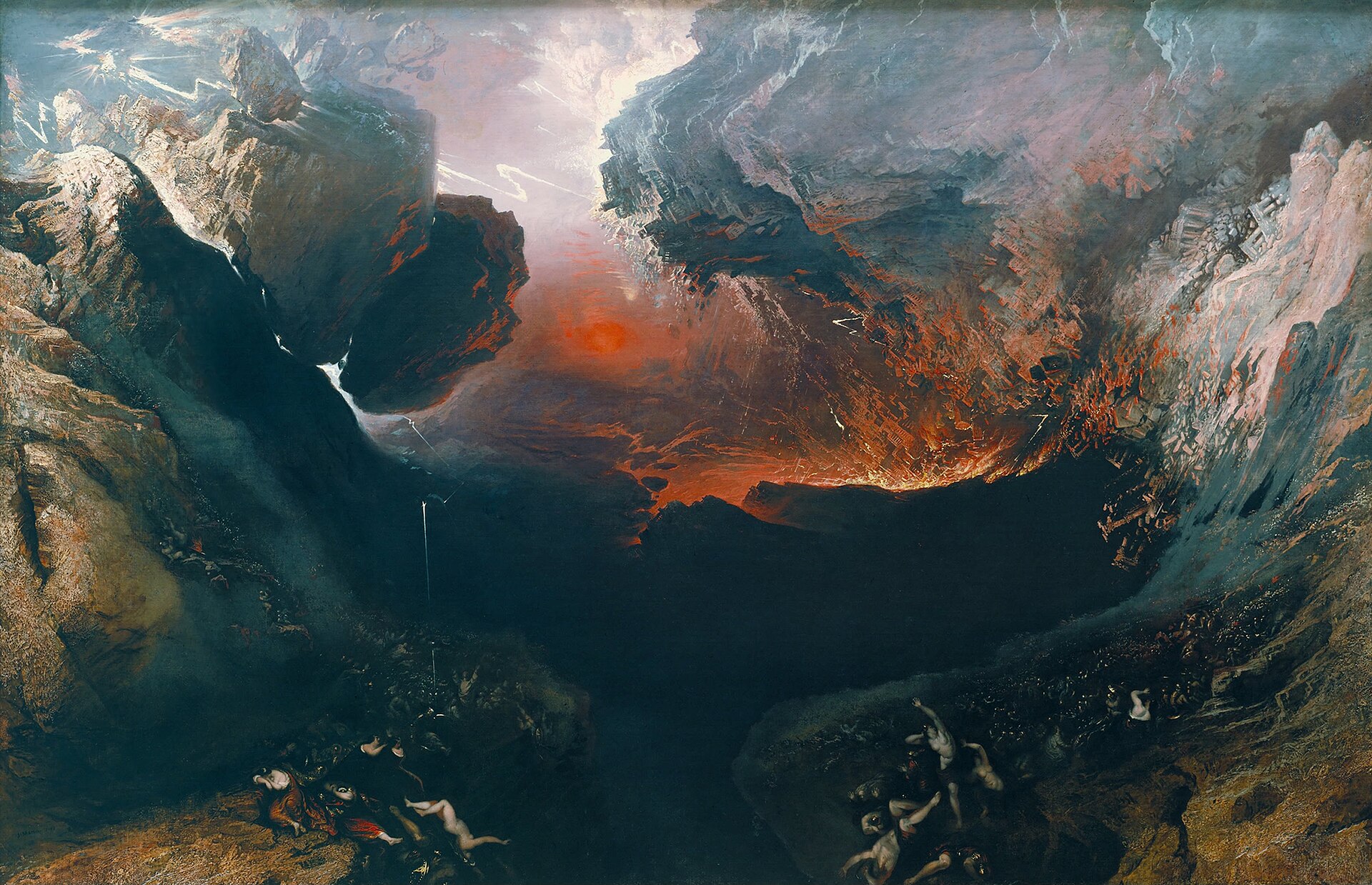
John Martin's The Great Day of His Wrath is one of the most overwhelming images of apocalypse in British art. Painted around 1851 and now in Tate Britain, it shows the world breaking apart under divine judgement. Mountains collapse, cities are thrown into the abyss and human beings are reduced to small, helpless forms before a catastrophe that no earthly power can stop.
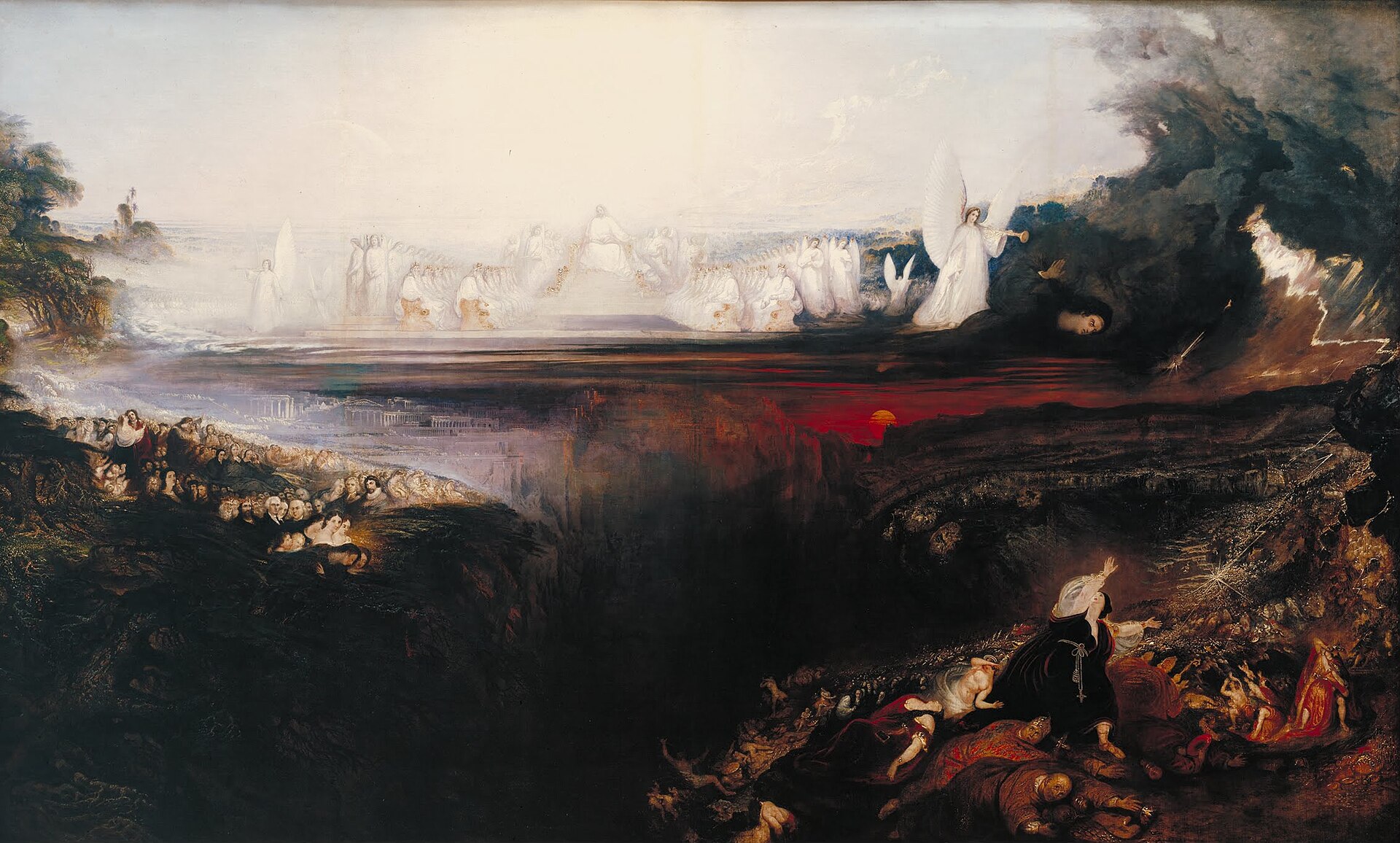
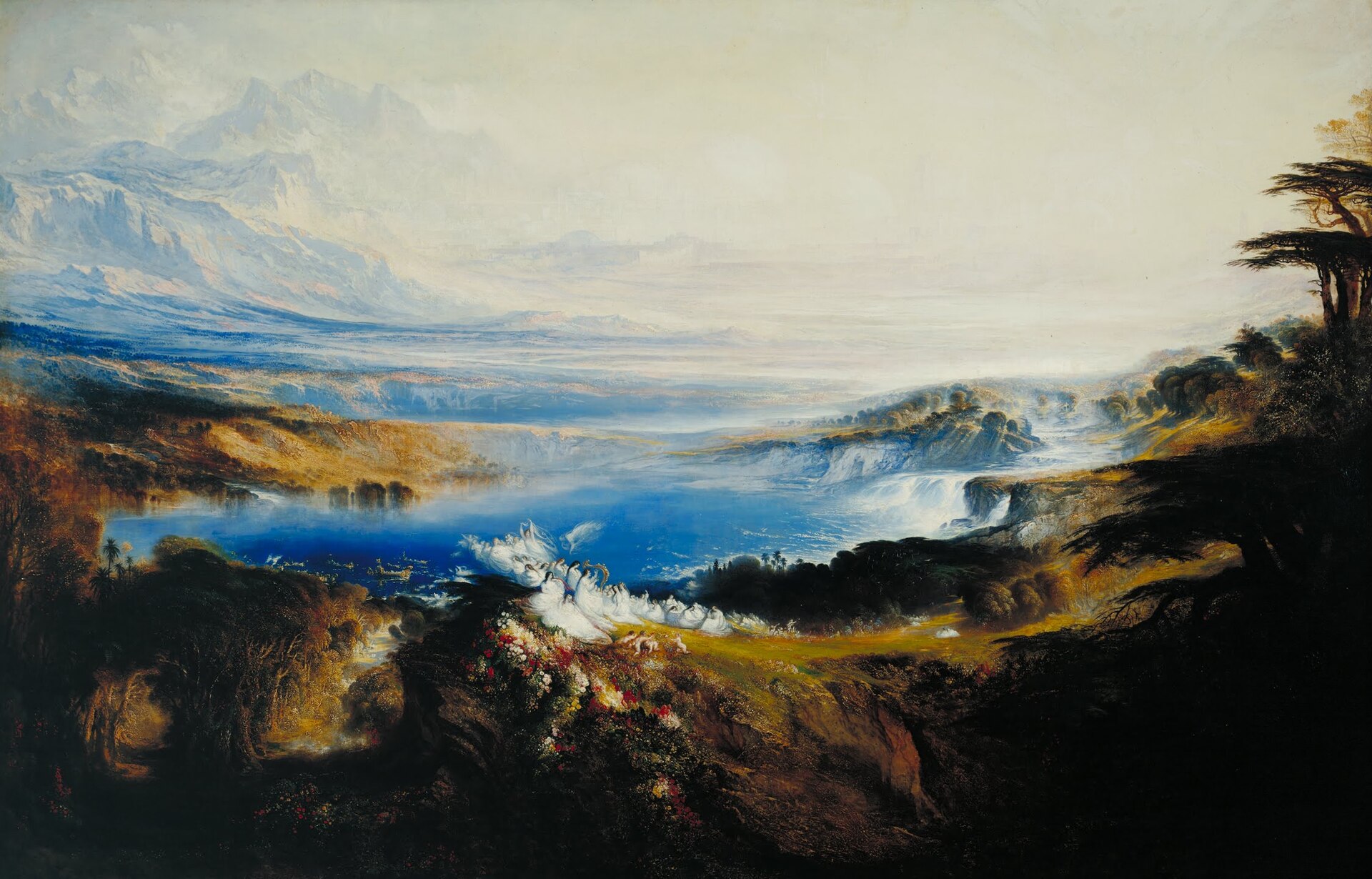
The painting belongs to Martin's late Last Judgement sequence, together with The Last Judgement and The Plains of Heaven. Seen on its own, The Great Day of His Wrath is a vision of physical destruction. Seen with the other two works, it becomes one part of a larger moral drama: collapse, judgement and salvation.
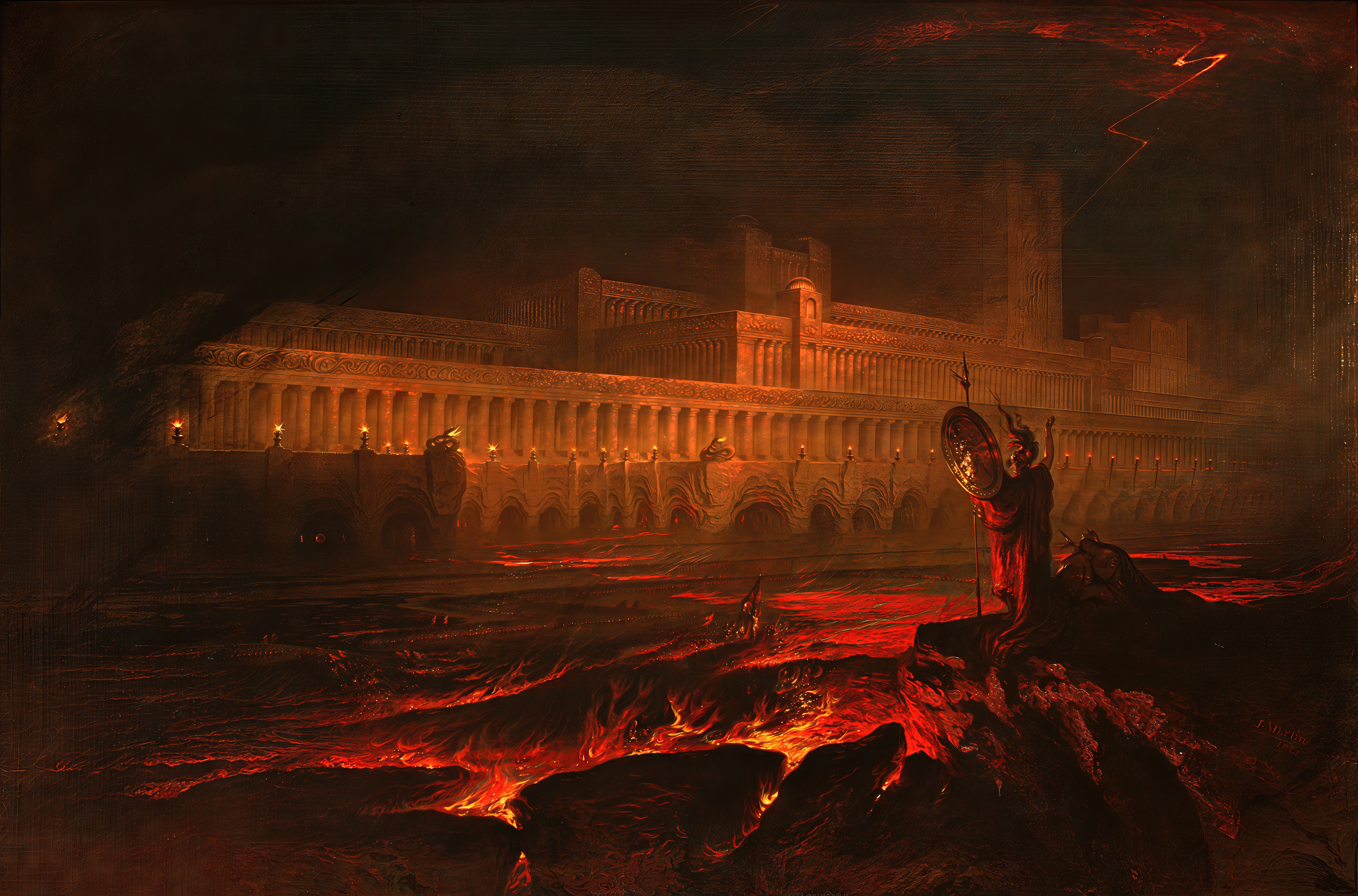
Beside Pandemonium, Martin's Miltonic vision of Hell becoming architecture, The Great Day of His Wrath shows a different extreme of his imagination. Pandemonium builds the infernal city. The Great Day of His Wrath tears the earthly city apart.
At a Glance
- ArtistJohn Martin
- TitleThe Great Day of His Wrath
- Datearound 1851; often dated 1851-1853 in related scholarship and image records
- Mediumoil on canvas
- CollectionTate Britain, London
- Provenance notepurchased 1945 in the Tate-linked Google Arts record
- Dimensions3032 mm wide by 1965 mm high in the Tate-linked Google Arts record
- Subjectthe breaking of the sixth seal and the Last Judgement imagery from the Book of Revelation
- Related worksThe Last Judgement and The Plains of Heaven
- Best first comparison in the clusterPandemonium
Contents
- Introduction
- How to Read the Composition
- Revelation and the Sixth Seal
- The Last Judgement Sequence
- Relationship to Pandemonium
- Public Spectacle and Afterlife
- Why the Painting Still Feels Modern
- How to Look at The Great Day of His Wrath
What Is Happening in the Painting?
The painting imagines the earth convulsing at the end of time. It takes its force from Revelation, the final book of the New Testament, where cosmic signs accompany judgement: earthquake, blackened sun, blood-red moon, falling stars, a heaven rolled away and mountains moved from their places.
Martin turns that biblical language into a physical event. The earth does not merely tremble. It folds inward. Rock masses buckle like waves. Built structures are carried with them. A great abyss opens across the centre and lower part of the composition, while lightning and blood-red light make the destruction feel both geological and supernatural.
The title gives the catastrophe its theological force. This is not simply a disaster scene. It is The Great Day of His Wrath, a phrase that places destruction inside divine judgement. The painting's violence is therefore not random. Martin asks the viewer to see destruction as the visible form of a cosmic reckoning.
Human figures are present, but they are not the primary scale of the image. They fall, flee or cling in tiny groups, overwhelmed by the movement of the world itself. That smallness is typical of Martin. He does not make the viewer identify with a single heroic body. He makes the viewer feel the helplessness of humanity as a whole.
How to Read the Composition
Start with the abyss. Martin places a huge opening near the centre of the painting, so the eye is pulled downward almost immediately. The abyss is not a quiet dark space. It is the destination of falling rock, architecture and people. Everything in the painting seems to be moving toward it.
Then look at the mountains. They do not behave like stable landscape forms. They roll, tilt and crash. Victorian Web's Tate commentary describes them as transformed into waves of solid rock, and that phrase captures Martin's most important visual invention here. The earth has become fluid under judgement. What should be permanent is suddenly unstable.
The sky adds another pressure. Darkness gathers, lightning splits the scene and a red glow spreads across the landscape. Martin uses colour and light to make the collapse feel apocalyptic rather than merely natural. This is not a storm painting with figures added. It is a world in which sky, land and divine wrath act together.
Architecture gives the catastrophe human meaning. A city or built settlement appears caught in the collapse, its structures broken and carried toward the chasm. Martin often uses architecture as the visible sign of civilisation, ambition or organised power. Here architecture cannot protect anyone. It is part of the debris.
Finally, look for the figures. They are small enough to miss at first, but they are essential. Their scale tells the viewer how large the event is. Their gestures tell the viewer what the event feels like. Martin's great apocalyptic machine would be less terrifying without these fragile human marks.
The diagonal movement is also crucial. Martin does not arrange the scene like a flat wall of destruction. The land seems to slide and rotate, carrying the eye from upper masses down into darkness. That angled force gives the painting its sense of irreversible motion.
Revelation and the Sixth Seal
The painting is rooted in Revelation's account of the sixth seal. The Tate-linked Google Arts record says Martin's apocalyptic vision closely follows the biblical account, especially the earthquake, blackened sun, blood-red moon, departed heaven and displaced mountains and islands. Victorian Web's Tate commentary also connects the work to Revelation and to the sequence of terrifying events that culminate with the sixth seal.
Martin was not making a literal diagram of the biblical text. He was translating its scale into Romantic spectacle. Revelation gives him cosmic signs; he turns them into an immense landscape collapse. The biblical language is visionary, compressed and symbolic. Martin expands it into space.
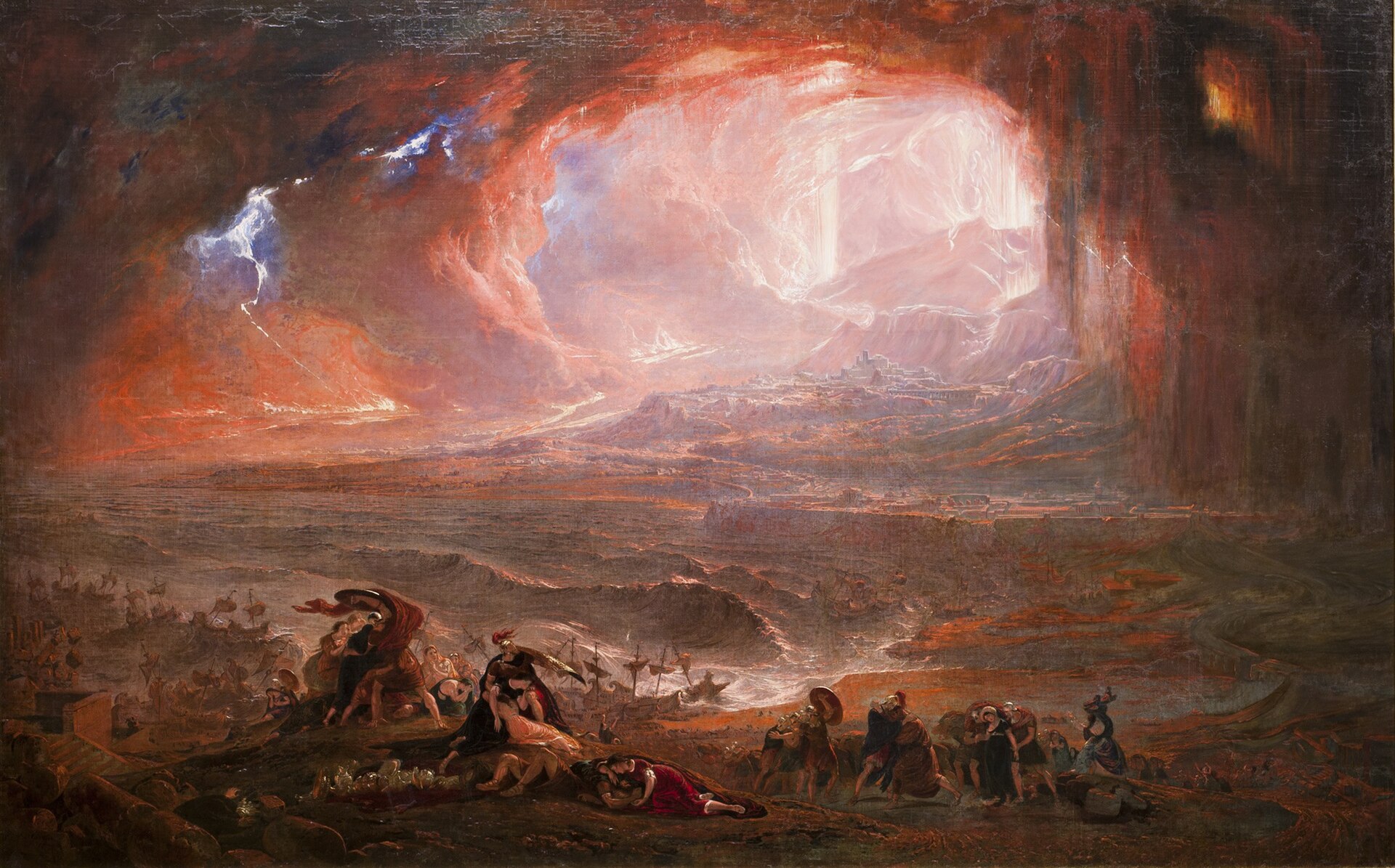
That translation is the heart of the painting. A viewer does not need to identify every detail to feel the subject, but the source prevents the work from becoming generic destruction. This is not Pompeii, where a known ancient eruption overwhelms two cities. It is not Pandemonium, where Milton's Hell becomes a palace. It is the end of the present world.
The result is one of Martin's clearest statements of apocalyptic sublime. The sublime here is not simply size or danger. It is the encounter with power beyond human resistance. The Google Arts record describes the earth crashing inward in a way that underlines the futility of resisting God's will. Martin's whole composition works toward that idea.
The Last Judgement Sequence
The Great Day of His Wrath is strongest when it is understood alongside its companions. The Last Judgement stages Christ in judgement, with the good and evil divided. The Plains of Heaven presents salvation through a calm celestial landscape. The Great Day of His Wrath supplies the destructive force of the sequence.
The Tate-linked Google Arts record identifies The Great Day of His Wrath as part of a triptych of judgement pictures inspired by Revelation. The companion records clarify the relationship. The Last Judgement shows Christ enthroned, the good on Mount Zion and the defeated forces of evil falling toward the pit. The Plains of Heaven continues the vision of the saved into a landscape of tranquillity, water and mountain distance.
That structure matters because it keeps The Great Day of His Wrath from being read as Martin's final word. In the sequence, destruction is not the only outcome. It is one stage in a larger narrative that includes moral division and heavenly peace.
The contrast with The Plains of Heaven is especially important. Martin's ability to imagine catastrophe can obscure his ability to imagine calm. But the triptych needs both. The red, falling, shattered world of The Great Day of His Wrath is answered by the blue distance and harmony of The Plains of Heaven. Martin's apocalypse contains terror and hope, not terror alone.
Relationship to Pandemonium
Pandemonium and The Great Day of His Wrath are two different kinds of Martin spectacle. Pandemonium is infernal construction: Satan creating the palace of Hell in Milton's Paradise Lost. The Great Day of His Wrath is cosmic destruction: the earth collapsing under Revelation's signs of judgement.
The comparison is useful because both paintings depend on architecture. In Pandemonium, architecture rises from fire and darkness. In The Great Day of His Wrath, architecture is torn apart with the earth itself. One shows rebellious power building a capital; the other shows earthly power unable to stand before divine wrath.
Both works also make figures tiny. In Pandemonium, the demon host and Satan are small within the infernal world Martin creates. In The Great Day of His Wrath, human beings are small within a collapsing world. Martin repeatedly uses small bodies to measure vast forces.
But Pandemonium remains the better flagship because it gathers more of Martin's career into one object: Milton, print-to-painting development, the Louvre painting, the original frame, the 1841 exhibition context and the return of a subject he had already explored in prints. The Great Day of His Wrath is a major peak within the apocalyptic sequence. It should be read as one of the cluster's strongest works, not as a replacement for the flagship.
Public Spectacle and Afterlife
The painting's own life after Martin is part of its story. The Dictionary of National Biography records that Martin was working on his last large pictures - The Last Judgement, The Great Day of His Wrath and The Plains of Heaven - when he suffered paralysis in November 1853. He died in Douglas on the Isle of Man in February 1854.
After his death, the three apocalyptic pictures were shown in London and major English cities, drawing large crowds and subscribers for engravings made from them. This is exactly the kind of public afterlife Martin's art was built to generate. The paintings were not only objects for quiet ownership. They could become touring spectacles and printed commodities.
Victorian Web's Tate commentary records that the triptych later became famous, toured in England and America, then fell out of favour before the panels were dispersed and reunited by Tate in 1974. That arc tells a larger story about Martin's reputation. The very theatricality that drew audiences could later seem outmoded. Modern reassessment has made it easier to see the ambition behind the spectacle.
The University of Bristol record for Tate Britain's 2011 John Martin: Apocalypse exhibition describes a sound-and-light installation that accompanied the three paintings. It was conceived as a recreation of the public lectures once presented when the pictures toured, with reference to modern apocalyptic blockbusters. That modern display did not invent the painting's theatrical nature. It recovered a way of experiencing it.
Why the Painting Still Feels Modern
The Great Day of His Wrath feels modern because it imagines catastrophe as an immersive visual event. The viewer is not placed safely outside a neat scene. The tilted rocks, falling city, dark abyss and violent light all create the sensation that the image is moving.
That movement explains why Martin is often discussed in relation to cinema and disaster imagery. The comparison should not be flattened into a claim that Martin predicted film. He was a nineteenth-century painter working with biblical tradition, exhibition culture and print circulation. But the painting shares qualities that later popular visual culture would use again and again: panoramic destruction, collapsing architecture, tiny crowds, dramatic lighting and a viewpoint that makes the viewer feel suspended above disaster.
The painting also speaks to modern anxieties because it turns stability into collapse. Buildings, mountains and cities are the things human beings often trust to last. Martin makes them temporary. The scene is religious in source, but the image also works on a broader emotional level: it shows a world in which every structure fails at once.
That is why the painting can still feel powerful even to viewers who approach it outside its original religious culture. The biblical source gives the work its subject and moral frame. The visual construction gives it its continuing force.
How to Look at The Great Day of His Wrath
Stand back first. The painting needs distance because Martin built it as a total event. Let the large movements register before looking for details: the downward pull into the abyss, the rolling rock, the red glow, the jagged lightning and the exposed figures.
Then move closer in imagination. Look for the places where Martin makes solid matter unstable. Rock behaves like water. Architecture becomes debris. The ground opens where ground should support. These inversions make the painting unsettling.
Look next at the colour. The red light is not decorative warmth. It signals wrath, fire, danger and cosmic disorder. It also links the surface of the earth to the depths below, so the whole painting feels lit from catastrophe.
Finally, return to the human figures. Martin's figures are not psychologically individualised in the way a portrait might be. They are signs of collective vulnerability. Their bodies make the landscape legible as an event happening to human beings, not just a magnificent geological vision.
The painting rewards this kind of looking because it is more organised than its first shock suggests. Martin wants astonishment, but he controls that astonishment through composition: abyss, rock, sky, city, figure and light all working together.
Frequently Asked Questions
Discussion
What detail in The Great Day of His Wrath changes how you read John Martin's use of scale, light or atmosphere?
Reader Insights
Which figure, architectural form or passage of light first anchors the scene for you?
How does the source story or subject change the emotional force of the image?
Where does this work feel closest to, or furthest from, Pandemonium?
Join the Conversation
Share your reading of The Great Day of His Wrath below.
References
- Google Arts & Culture, Tate Britain record for *The Great Day of His Wrath*: View Source, accessed 2 August 2026.
- Google Arts & Culture, Tate Britain record for *The Last Judgement*: View Source, accessed 2 August 2026.
- Google Arts & Culture, Tate Britain record for *The Plains of Heaven*: View Source, accessed 2 August 2026.
- Victorian Web, Frances Fowle/Tate commentary mirror for *The Great Day of His Wrath*: View Source, accessed 2 August 2026.
- University of Bristol research record, *The Last Judgement: an illustrated lecture at intervals*: View Source, accessed 2 August 2026.
- Art UK, John Martin artist page: View Source, accessed 2 August 2026.
- Wikimedia Commons, *John Martin - The Great Day of His Wrath - Google Art Project.jpg*: View Source, accessed 2 August 2026.
- Tate Shop, Martin Myrone, *John Martin - Sketches of My Life*: View Source, accessed 2 August 2026.
- Wikisource transcription of William Cosmo Monkhouse, "Martin, John (1789-1854)", *Dictionary of National Biography*, 1893: View Source, accessed 2 August 2026.