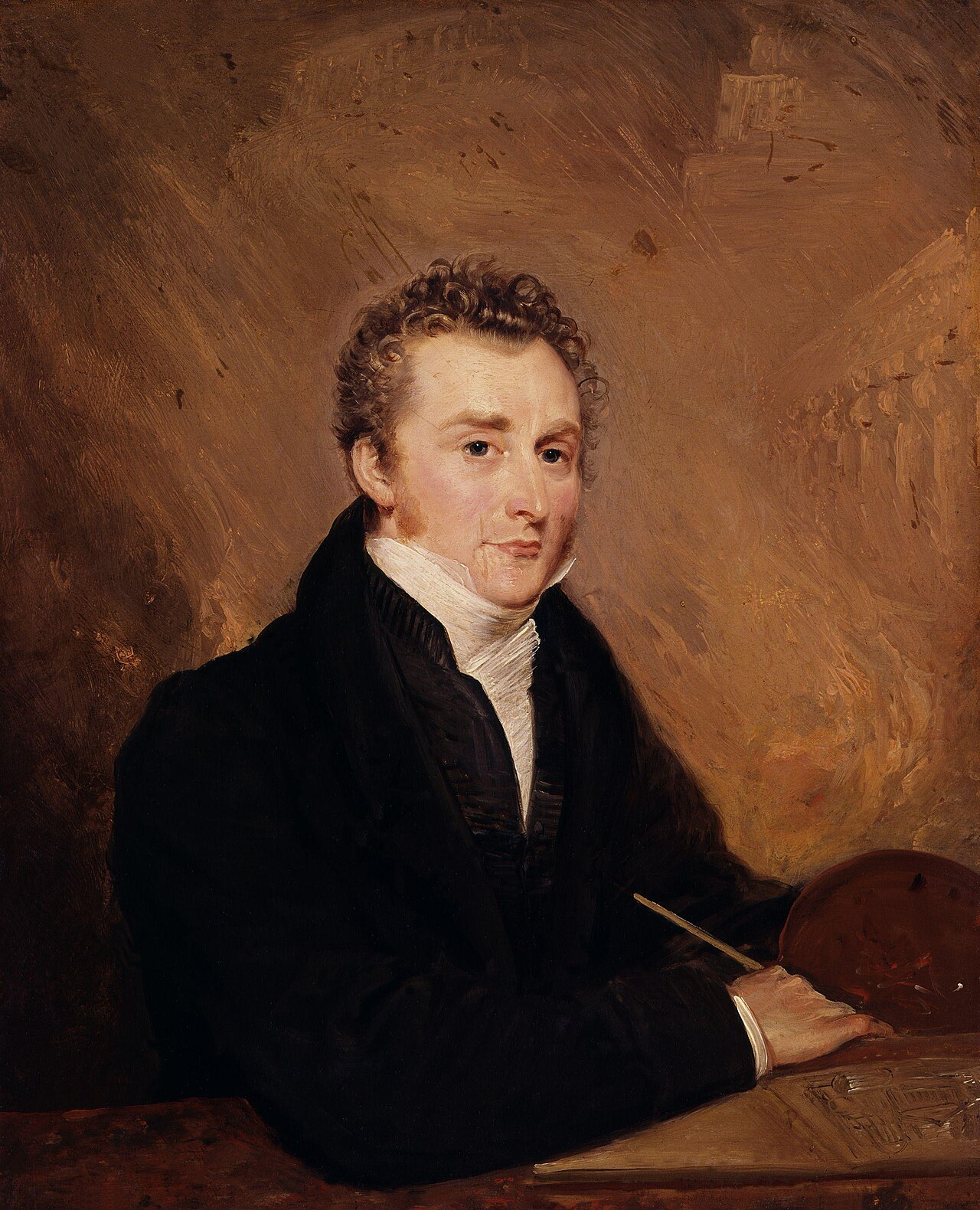
John Martin Biography: Introduction
John Martin's life traces the career of an artist drawn repeatedly to subjects larger than conventional history painting could easily contain. He began far from the London art world, trained through practical trades, built a reputation with immense biblical and literary spectacles, carried his images into print, argued with art institutions, devised plans for the improvement of London and ended his career with some of the most ambitious apocalyptic paintings of the nineteenth century.
He was born in 1789 at Haydon Bridge in Northumberland and died in 1854 at Douglas on the Isle of Man. Between those points lay a career of unusual range. Martin painted on china and glass before he became famous for large canvases. He exhibited at the Royal Academy, reached wide audiences through mezzotint prints and became associated with subjects in which cities, armies, kings and whole peoples are dwarfed by divine, geological or supernatural power.
His biography matters because the spectacular character of his art grew from several kinds of experience. Martin's paintings combine a craftsman's precision, a public artist's command of attention, a printmaker's control of tone and an almost architectural imagination. The worlds he made on canvas were shaped by early decorative work, by the study of perspective, by the politics of exhibition, by literary and biblical reading and by a restless interest in engineering and urban reform.
At a Glance
- Full nameJohn Martin
- Dates1789-1854
- NationalityEnglish
- BornHaydon Bridge, Northumberland
- DiedDouglas, Isle of Man
- Early trainingcoach and heraldic painting, china painting, glass painting, drawing and perspective
- Known fordramatic biblical, historical and literary paintings; apocalyptic landscapes; mezzotints; book illustration
- Family contextpart of an unconventional Northumberland family that included the inventor William Martin and the preacher Jonathan Martin
- Major career landmarksSadak in Search of the Waters of Oblivion, Joshua Commanding the Sun to Stand Still upon Gibeon, Belshazzar's Feast, The Destruction of Pompeii and Herculaneum, Pandemonium and the Last Judgement pictures
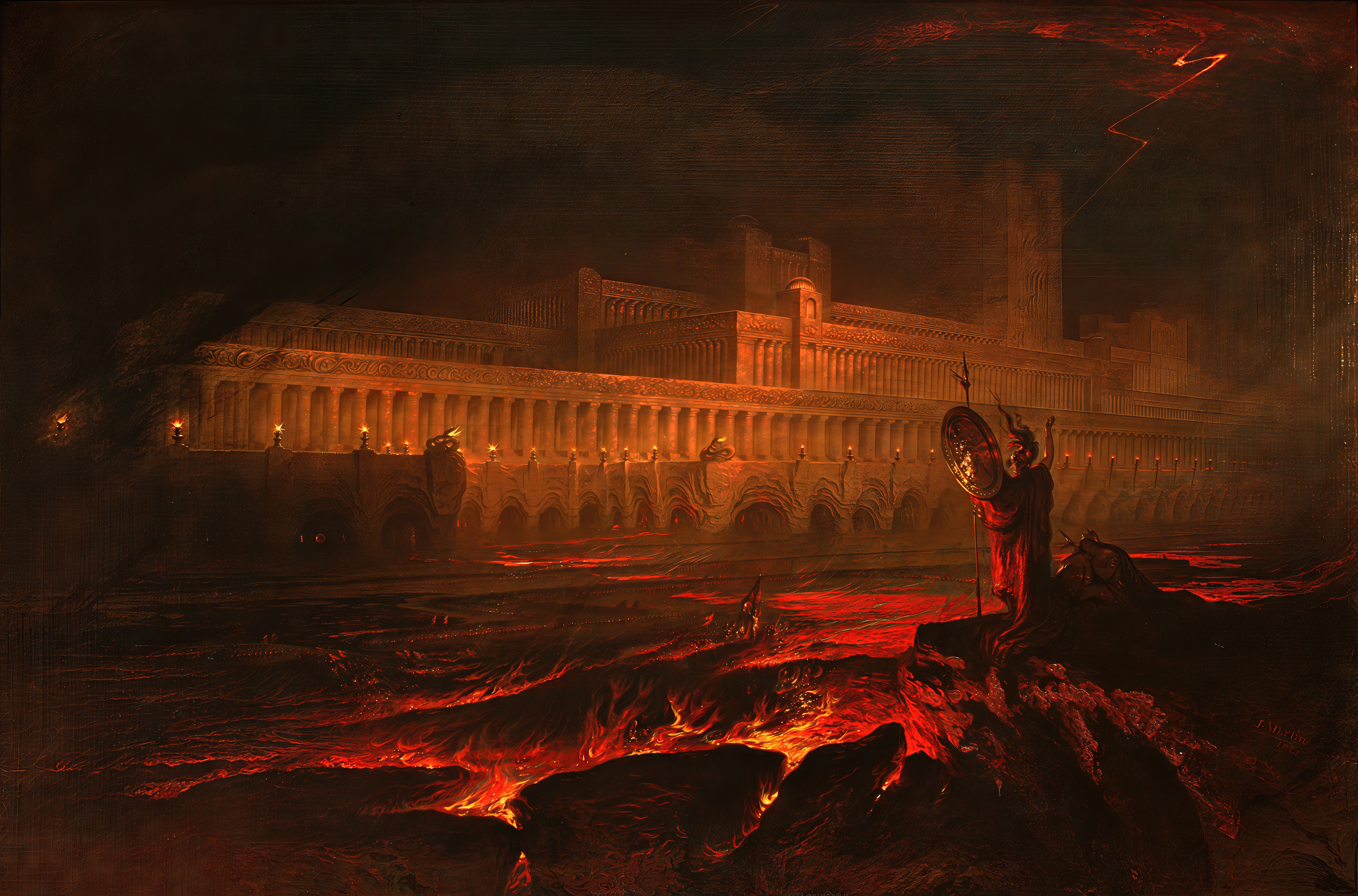
- Closest cluster doorwayPandemonium, the Louvre painting based on Milton's Paradise Lost
Contents
- Introduction
- Northumberland Beginnings
- Apprenticeship and Early Trades
- London and the Search for History Painting
- The Breakthrough of Spectacle
- Public Fame and Uneasy Respect
- Printmaking, Milton and Paradise Lost
- Family, Collaborators and Public Identity
- Engineering and the Reformer Imagination
- Last Years and the Apocalyptic Triptych
Northumberland Beginnings
Martin's story begins at Haydon Bridge, near Hexham in Northumberland. That origin is more than a biographical footnote. Later viewers came to know him through London exhibitions and dramatic biblical subjects, but his first landscape was the northern countryside of the Tyne valley: hills, moors, stone, changing light and a sense of scale that could make people feel small.
The Dictionary of National Biography records that Martin was born on 19 July 1789, the son of Fenwick Martin, a fencing master. Local Haydon Bridge heritage material preserves a vivid tradition of humble beginnings, describing him as one of the children of Fenwick and Isabella Martin at East Land Ends. Even allowing for the caution needed with later family stories, the pattern is clear: Martin did not enter art through wealth, institutional patronage or a polished metropolitan education.
That distance from the centre helps explain some of the energy of his career. Martin was not simply an academy-trained painter following a smooth professional path. He arrived at art through work, experiment and self-assertion. His later paintings often imagine precarious human figures confronting immense natural or supernatural settings. His early Northumberland environment may have contributed to that feeling of exposed scale, though the connection is best treated as suggestive rather than certain.
The family background also matters because the Martins were remembered as an unusually forceful, eccentric group. The National Portrait Gallery records William Martin as John Martin's brother, and the Dictionary of National Biography separately notes both William and Jonathan. William became known as an inventor and writer; Jonathan became notorious after setting fire to York Minster in 1829 and was later confined as insane. John Martin's public reputation developed in the shadow of that family notoriety, but his own career should not be reduced to it. The family context is useful because it shows an atmosphere of religious intensity, invention, public assertion and restless ambition around him.
Apprenticeship and Early Trades
Martin's earliest artistic training was practical. The National Galleries of Scotland records that he began as a painter of heraldry for a coach-builder in Newcastle-upon-Tyne. The Dictionary of National Biography gives a fuller early sequence: he was apprenticed at fourteen to a Newcastle coach-painter named Wilson, left after a dispute over wages and was then placed under Boniface Musso, a china-painter in Newcastle.
This training differed from formal academy education, but it gave Martin skills that mattered. Heraldry required clear design and decorative order. China and glass painting demanded control of surface, line and colour. These were trades of precision, and they help explain why Martin's later spectacles, however extravagant, often depend on careful patterning and architectural rhythm.
In 1806 Martin accompanied Boniface Musso to London. There, according to the Dictionary of National Biography, he supported himself by painting on china and glass while studying perspective and architecture. Those subjects became central to his mature art. Martin's most famous paintings are not just dramatic because of their stories; they are dramatic because of how space is built. Walls, terraces, towers, ledges, cities and plunging distances are part of his artistic language.
The early London years also forced Martin to make art as work. He had to find income, make contacts, study and compete in a crowded cultural capital. His career was not a single revelation but a climb through craft, exhibition and public response.
London and the Search for History Painting
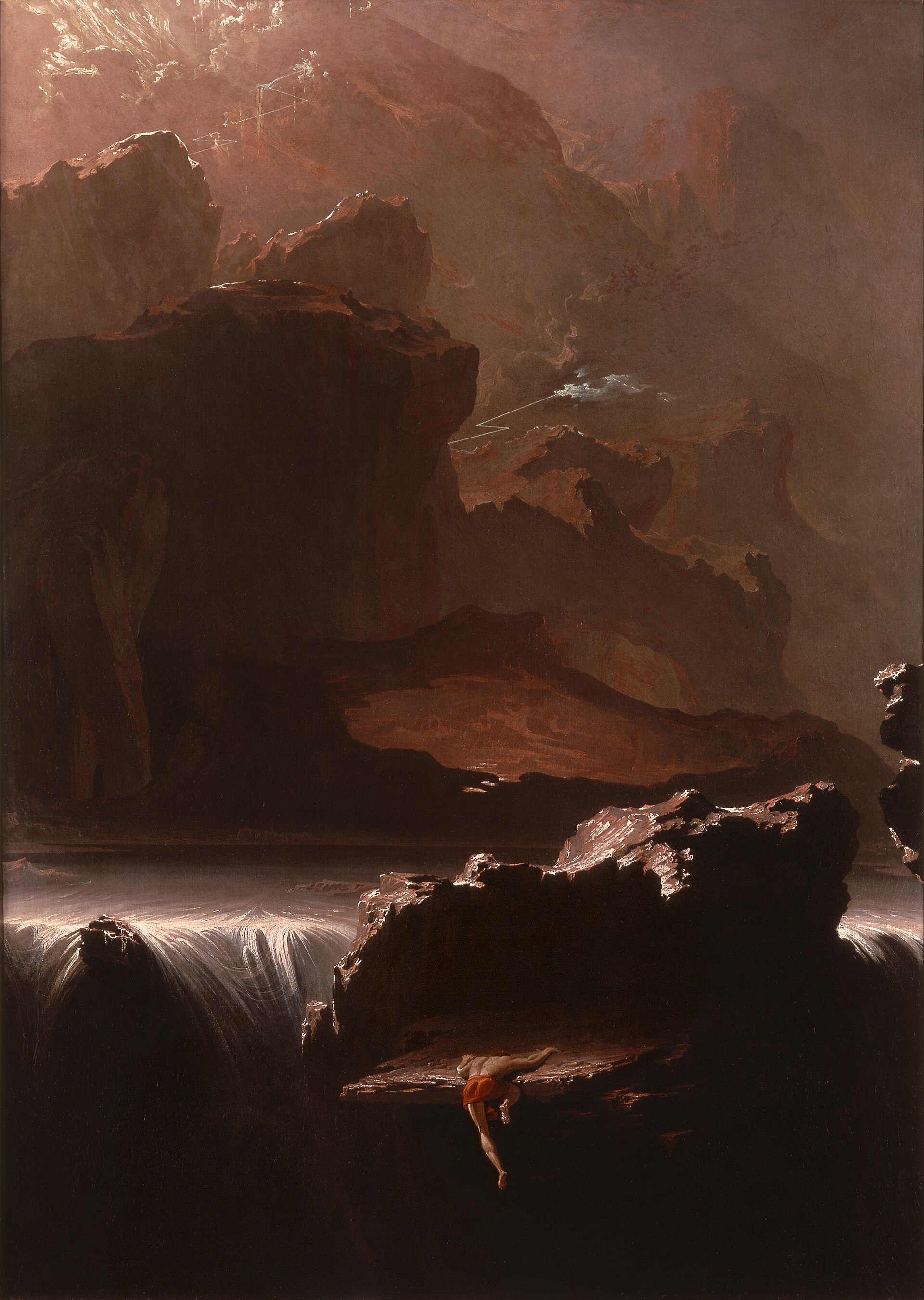
Martin married young, and by 1812 he was living in Marylebone. The Dictionary of National Biography records that he sent two landscapes and Sadak in Search of the Waters of Oblivion to the Royal Academy that year. Sadak is now in the Saint Louis Art Museum, which identifies the subject as drawn from James Ridley's Tales of the Genii. It is a striking early sign of the kind of artist Martin would become: a tiny figure, nearly swallowed by a vast and perilous landscape, clings to the world with extraordinary intensity.
The painting helped establish him as an artist of bold invention. It also showed that his imagination did not depend only on biblical subjects. He was drawn to moments when a literary or legendary figure could be placed against a world too large to master. That idea would return in Shakespeare, Milton, Revelation and ancient history.
The Royal Academy remained important to Martin even when his relationship with it became strained. The National Galleries of Scotland states that he gained recognition as a history painter through Royal Academy exhibitions. The Dictionary of National Biography adds that he felt aggrieved by the hanging of Clytie in 1814 and again by the treatment of Joshua Commanding the Sun to Stand Still upon Gibeon in 1816. Such conflicts should not be overstated into a simple story of outsider versus institution, but they do reveal a strong sense of artistic ambition and public placement.
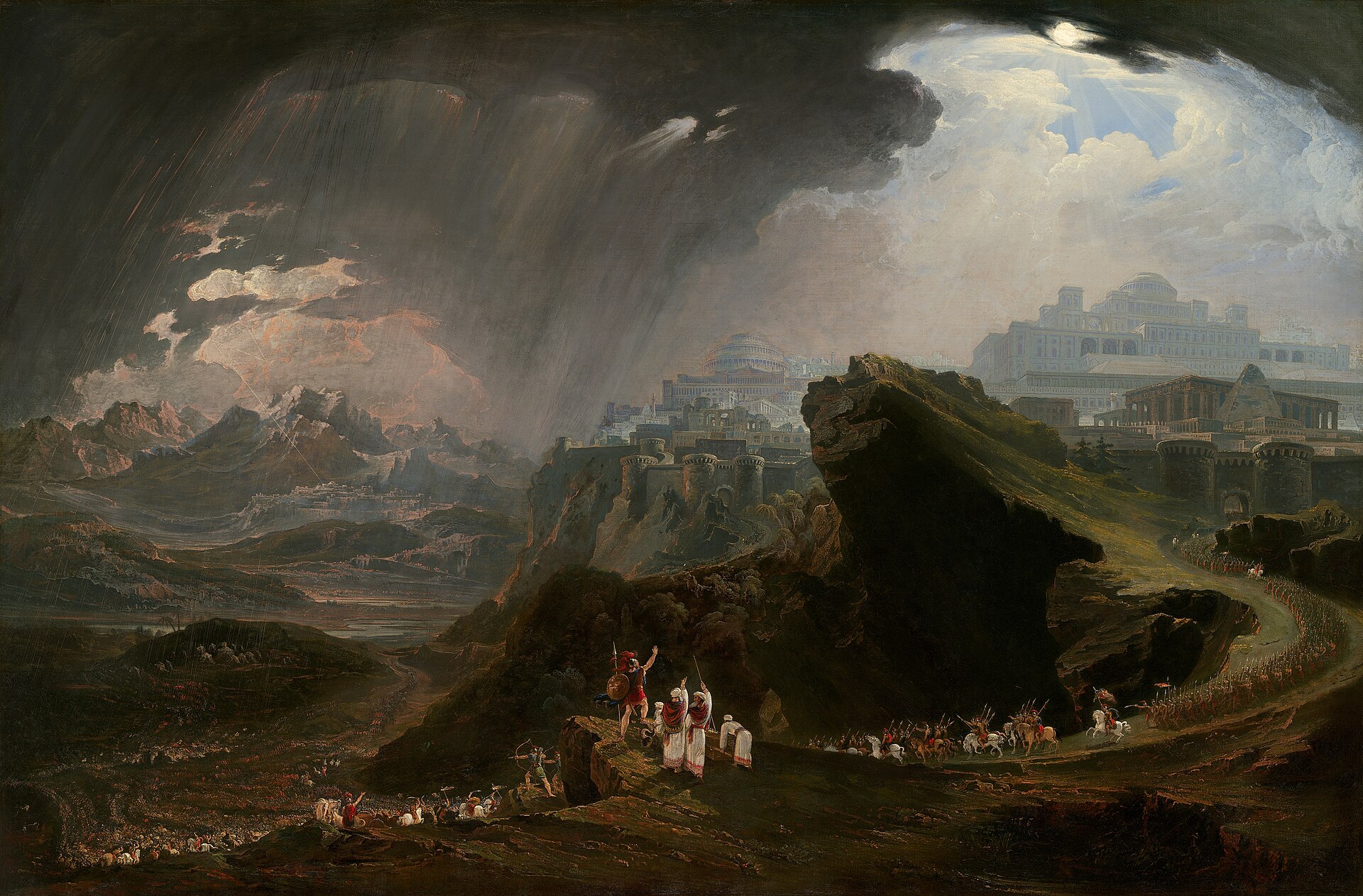
Joshua, now in the National Gallery of Art in Washington, was a major early success. The NGA records it as an 1816 oil on canvas exhibited at the Royal Academy in 1816 and at the British Institution in 1817. The subject gave Martin a perfect vehicle for miracle, landscape, armies and light. It also confirmed that he could make biblical narrative feel panoramic.
The Breakthrough of Spectacle
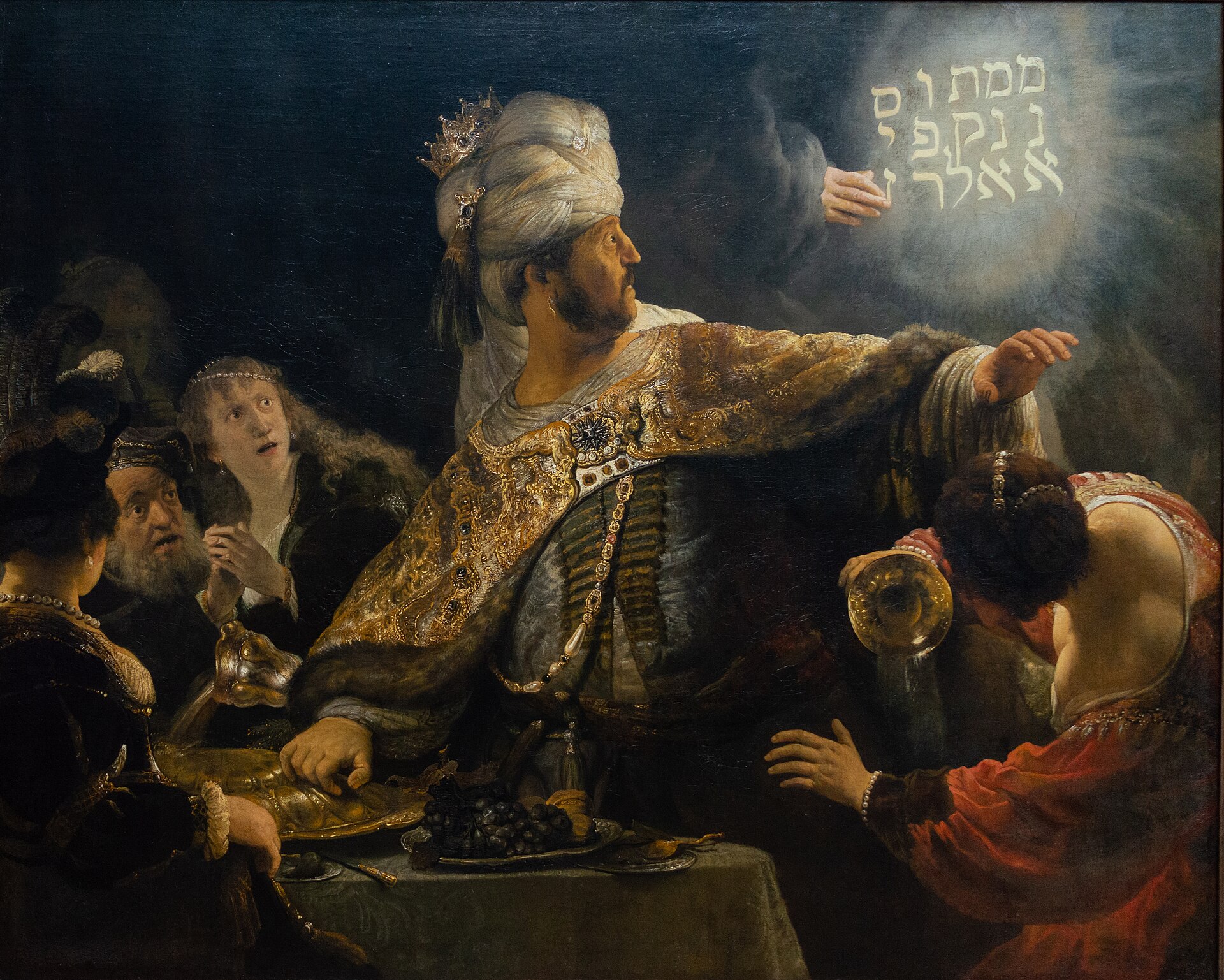
Martin's fame rose through paintings that turned history, scripture and literature into immersive events. Belshazzar's Feast, painted in 1820 and now in the Yale Center for British Art, became one of the great works of his early maturity. Yale's record anchors the subject in the Book of Daniel: a Babylonian king's banquet is interrupted by the mysterious writing on the wall and by Daniel's prophecy of downfall.
The appeal of Belshazzar's Feast lay partly in scale and architecture. Martin did not present the feast as a small moral anecdote. He transformed it into a vast interior of luxury, crowd movement, light and impending judgement. The Dictionary of National Biography records the enormous effect it made on the public and notes that Martin received a premium for the work. Yale also preserves the later Charles Lamb comparison between Martin's subject and the extravagance of George IV's Brighton Pavilion, a reminder that Martin's ancient spectacles could speak to modern public life.
After Belshazzar, Martin continued with subjects that suited a reputation for grandeur: The Fall of Babylon, Macbeth, The Destruction of Pompeii and Herculaneum, The Seventh Plague and others. These works were not identical, but they share a method. Martin found a crisis, gave it monumental space and placed human action beneath forces beyond ordinary control.
Macbeth, about 1820 and now in the National Galleries of Scotland, shows the literary side of this method. The museum describes Macbeth and Banquo isolated before the witches while the surrounding army dwindles into distance and the landscape becomes a stage for cataclysmic consequence. Martin did not need a city or a biblical plague to create apocalypse. In Shakespeare, too, he found a world where a single encounter could open into disaster.
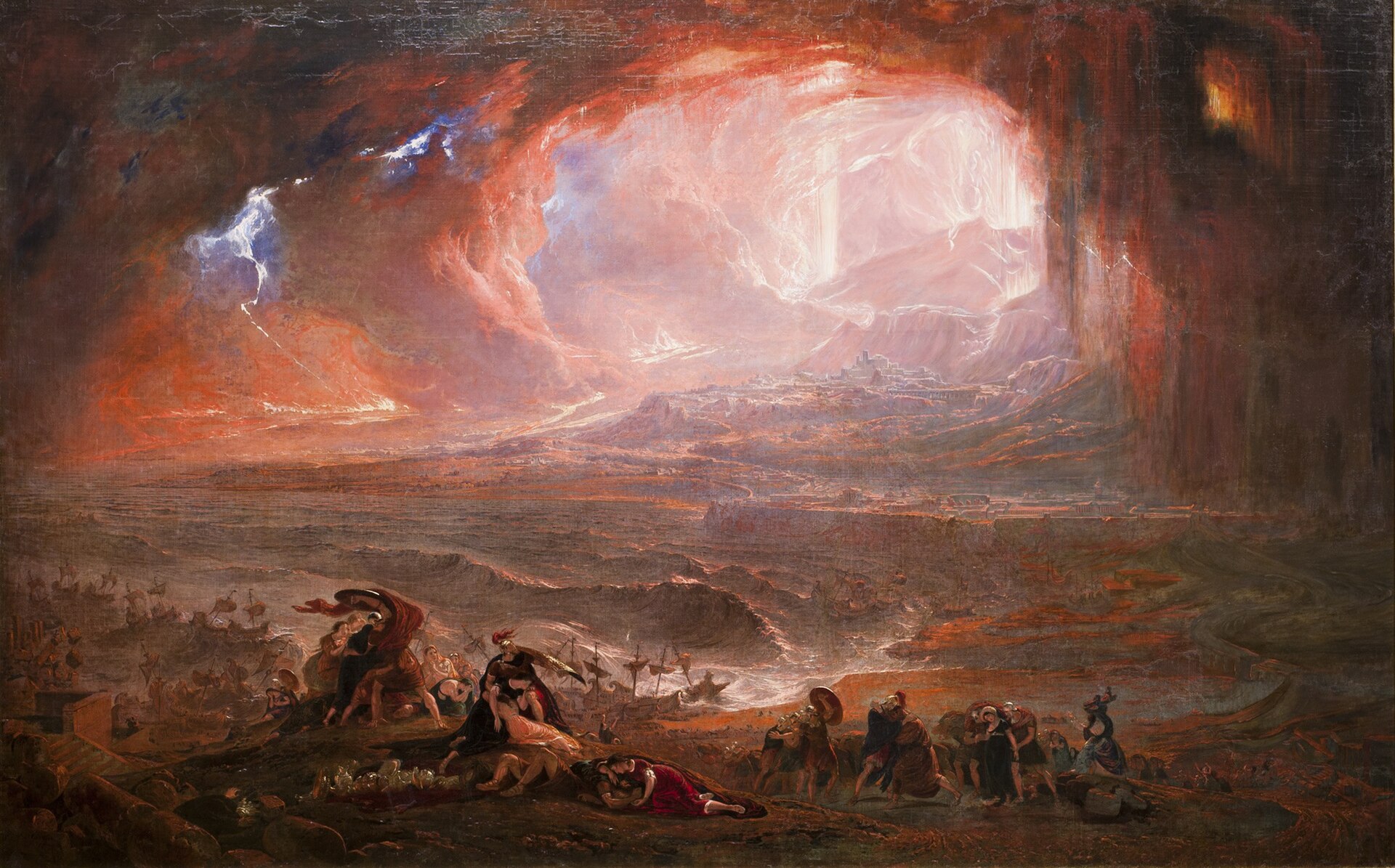
The Destruction of Pompeii and Herculaneum, painted in 1822, carried ancient catastrophe into volcanic spectacle. ACMI's account describes Vesuvius in eruption, Herculaneum smothered in the distance and Pompeii laid out closer to the foreground beneath red lava glow, ash and lightning. The painting's later damage and restoration would become part of its modern story, but in Martin's own career it already showed his appetite for disaster as an image of civilisation overwhelmed.
Public Fame and Uneasy Respect
Martin became famous because his works could command attention. The National Portrait Gallery describes him as known for large-scale dramatic panoramas inspired by historic and biblical themes of disaster and mass destruction. That sentence captures both the force and the risk of his reputation. Martin's paintings were powerful because they were dramatic. They were also vulnerable because drama could be treated by critics as excess.
He was not a quiet painter of private feeling. His pictures asked to be seen by crowds, discussed, engraved and remembered. In the nineteenth century, that popular reach could be an advantage and a burden. A painting that behaved like an event might bring wide fame, but it might also provoke suspicion from critics who preferred restraint, finish or academic hierarchy.
The National Portrait Gallery's account of affordable mezzotints is crucial here. Martin's fame did not depend only on unique paintings in exhibition rooms. Prints carried his images into a broader visual world. They allowed viewers to own or study compositions that might otherwise be encountered only in public display. Martin understood, and benefited from, the circulation of spectacle.
His relations with institutions were often tense. The Dictionary of National Biography records his complaints about exhibition treatment and his quarrels with the Royal Academy and British Institution. Yet he continued to exhibit and to seek public notice. That combination of dependence and resistance is part of his biography: Martin needed the exhibition world, but he also pushed against it.
Printmaking, Milton and Paradise Lost
Martin's printmaking was not a minor supplement to his paintings. It was a central part of his career. He made engravings after major subjects and became strongly associated with book illustration, especially Milton's Paradise Lost. The National Galleries of Scotland notes that he produced book illustrations and engravings, while the National Portrait Gallery emphasises the role of mezzotint prints in popularising his work.
Milton gave Martin a literary world equal to his imagination. Paradise Lost offered rebellion, heaven, hell, angelic battle, infernal architecture and cosmic scale. These were not merely decorative subjects for him. They let him translate poetry into space, light and darkness.
Pandemonium is the most important example. The Louvre records Martin's 1841 painting as based on Book I of Paradise Lost and notes the earlier engraved versions of the subject from 1824 and 1831. The British Museum, Yale Center for British Art, the Hammer Museum and the Art Gallery of New South Wales preserve important evidence of that print tradition. The subject occupied Martin across decades because it suited him perfectly: Satanic ambition imagined through architecture, fire and collective spectacle.
The print-to-painting development also complicates the idea of Martin as only a painter of big effects. A successful mezzotint requires tonal intelligence, compression and control. Martin's prints show that the grandeur of his imagery could survive without the physical scale of a large canvas. He could build vastness in black, white and gradation.
That is one reason Pandemonium belongs near the centre of his biography. It is not just one late painting. It gathers his literary ambition, print practice, architectural imagination and public sense of drama into a single subject.
Family, Collaborators and Public Identity
Martin's family history often appears in accounts of his life because it is vivid, troubling and unusually public. William Martin, recorded by the National Portrait Gallery as John's brother, became known for invention and scientific claims. Jonathan Martin became infamous after the York Minster fire. These associations helped make the Martin name memorable, but they could also distort the reception of John's art.
The fairest approach is to keep the family context in proportion. John Martin was not simply the respectable brother of eccentric men, nor was his art a symptom of family notoriety. He was a professional artist with sustained exhibition success, a major print practice and a recognisable visual language. Still, the family atmosphere of invention, dissent and religious intensity helps readers understand why his career can feel so charged.
Collaboration and reproduction also shaped his public identity. Martin worked with publishers and print markets; his Paradise Lost images were issued through the illustrated-book world, and engravings after his paintings circulated widely. The British Museum records Martin's address and identifies him as a historical and landscape painter, printmaker and draughtsman. That combination matters. He operated across the boundaries between painting, publishing and popular display.
Portraits give another view of that public identity. The National Portrait Gallery holds several images of him, including Henry Warren's oil portrait exhibited in 1839. Warren's portrait is especially apt because the gallery notes that its background suggests Martin's own art, with architecture and a mood of cataclysmic doom. Even as a sitter, Martin could be framed through the visual world he had invented.
Engineering and the Reformer Imagination
Martin's architectural imagination also extended beyond painted cities. He became involved in schemes for improving London. The Dictionary of National Biography states that after 1827 he gave attention to supplying the metropolis with water and later to improvements of the docks and sewers. A modern engineering-history article by Mark Gaterell goes further, arguing that Martin's 1830s drainage thinking belonged to the prehistory of London's later sewerage system.
This part of Martin's life needs careful proportion. He was not the engineer who built modern London, and his plans did not simply become public works in the way he imagined. His reforming interests are nevertheless real and revealing. They show that the same imagination that built painted cities also thought about actual urban systems: water, drains, transport, embankments and the organisation of metropolitan life.
The connection broadens the picture of Martin's imagination. In the paintings, cities often appear at the edge of judgement or catastrophe. In his schemes, the city appears as a place to be redesigned, made healthier or reordered. Both impulses belong to a mind fascinated by structure at large scale.
Martin's engineering interests also help explain the precision of his imaginary architecture. The towers and terraces in his paintings are not neutral backdrops. They are signs of human ambition, civic order and sometimes civic failure. His public schemes suggest that he thought about cities as systems, not just as dramatic scenery.
Last Years and the Apocalyptic Triptych
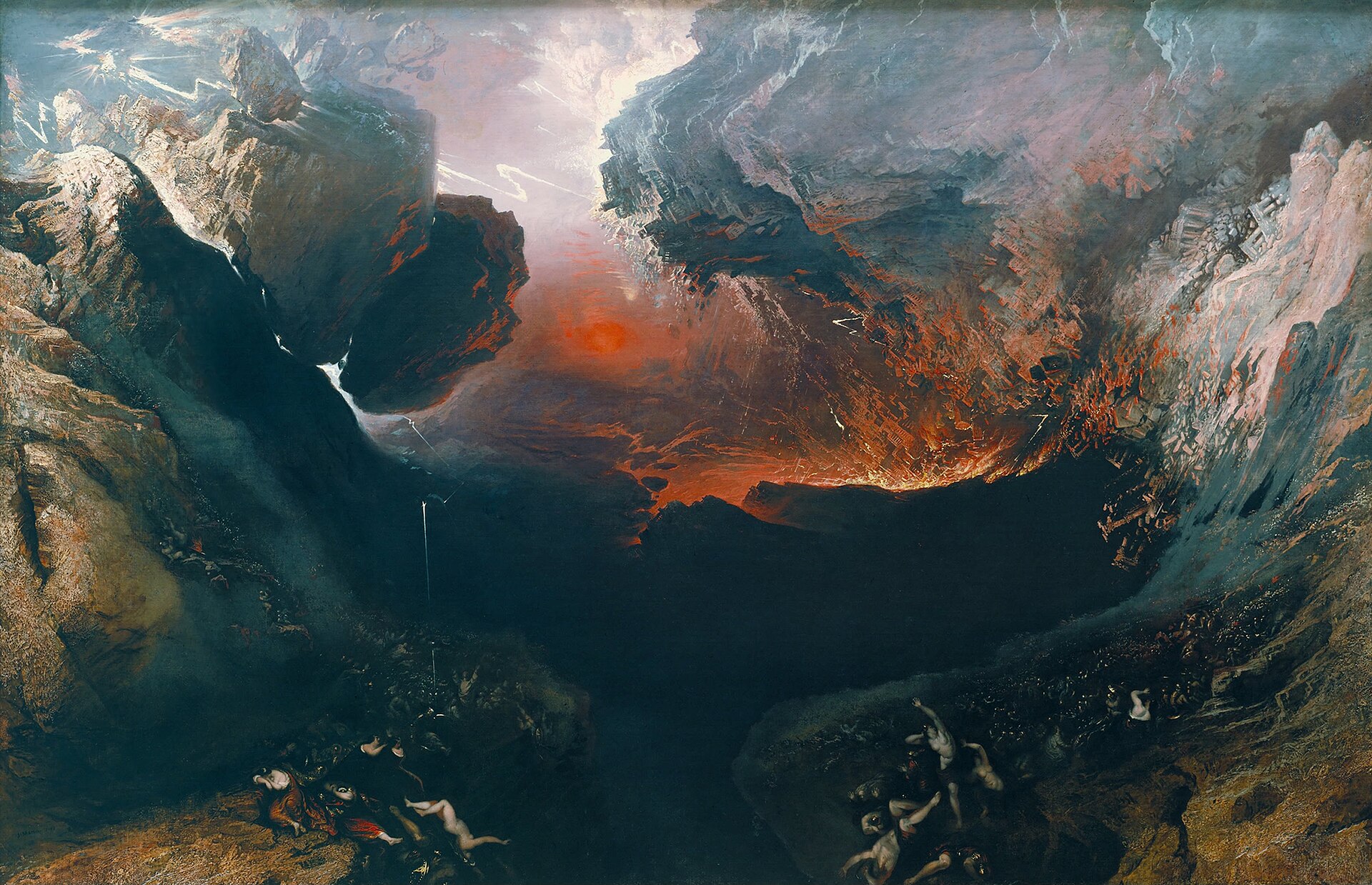
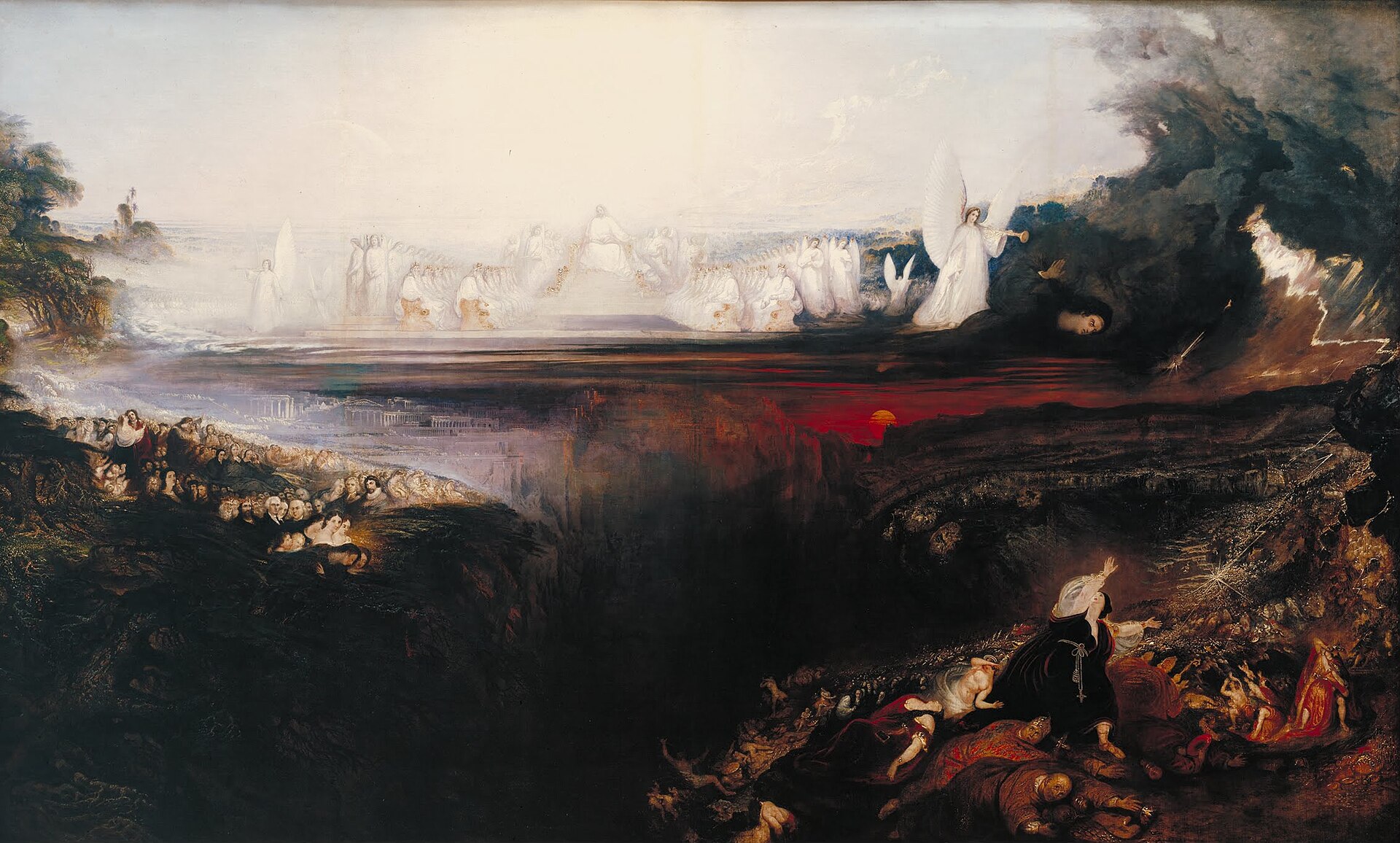
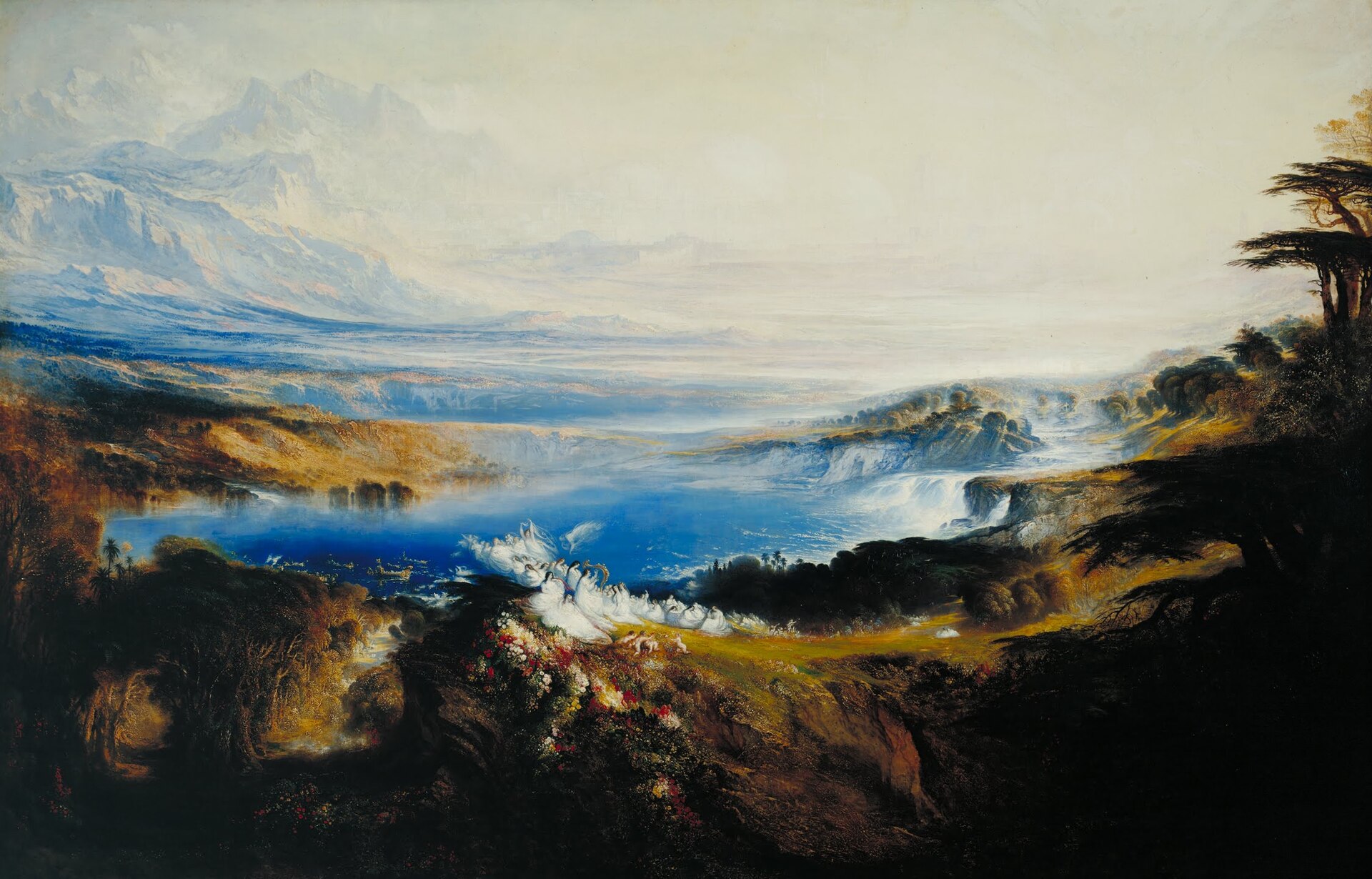
Martin's late career returned to apocalypse with extraordinary force. The Last Judgement pictures - The Last Judgement, The Great Day of His Wrath and The Plains of Heaven - form one of his most ambitious final statements. Google Arts & Culture's Tate-linked records describe the group through Revelation: judgement, destruction and salvation arranged across monumental canvases.
The contrast between the pictures is important. The Great Day of His Wrath imagines the physical collapse of the world, with mountains and cities giving way before divine judgement. The Last Judgement stages the division of good and evil before Christ's throne. The Plains of Heaven offers a calmer vision of salvation, with poets and artists among the blessed in a serene celestial landscape. Martin's late imagination was not only destructive. It also sought order beyond catastrophe.
The Dictionary of National Biography records that Martin was seized with paralysis in November 1853 while engaged upon these last large pictures, losing speech and use of his right arm. He was taken to the Isle of Man for his health and died at Douglas on 17 February 1854.
After his death, the Last Judgement pictures continued to attract audiences. That posthumous response fits the pattern of his whole career. Martin's art did not belong only to the studio or the collector's room. It moved into public experience, touring display and reproduced image culture.
Reputation and Reassessment
Martin's reputation has never been simple. He was famous in his lifetime, then vulnerable to dismissal as melodramatic, mechanical or excessive. The Dictionary of National Biography itself, written in the late nineteenth century, preserves both sides: it records the praise that once ranked him among great geniuses and also the later decline in reputation. That tension remains useful. Martin's art forces the question of whether spectacle can carry serious imaginative weight.
The modern answer has become more generous. Tate Britain's 2011-2012 John Martin: Apocalypse exhibition and the related scholarship edited by Martin Myrone helped bring Martin back into the story of British art, print culture and public spectacle. Tate's publication of Martin's Sketches of My Life also gives readers access to the artist's own attempt to correct accounts of his career after an 1849 illustrated review he considered inaccurate.
Museum records have reinforced that reassessment. The Louvre's acquisition and display of Pandemonium gives international visibility to one of his strongest Miltonic works. The National Gallery of Art's open-access record for Joshua places an important early painting in a major American collection. Yale's Belshazzar's Feast, the Saint Louis Sadak, the National Galleries of Scotland Macbeth and Tate's Last Judgement group all make it possible to trace Martin's career through strong institutional anchors.
The restored modern visibility of The Destruction of Pompeii and Herculaneum is especially symbolic. The painting was damaged in the Tate flood of 1928 and later restored for renewed display. Its return mirrors the broader return of Martin himself: an artist once easy to caricature as theatrical excess, now more productively understood as a maker of immersive visual worlds.
Martin's life therefore ends with a paradox. He was a nineteenth-century artist of biblical and literary painting, but many of his instincts feel surprisingly modern: panoramic scale, repeatable images, crowd appeal, catastrophe as spectacle, architecture as world-building and the desire to make viewers feel inside an event. His biography is not just a rise-and-fall story. It is the story of an artist whose ambition had to wait for later viewers to recognise how much of modern visual culture it anticipated.
Frequently Asked Questions
Discussion
What detail in John Martin Biography changes how you read John Martin's use of scale, light or atmosphere?
Reader Insights
Which figure, architectural form or passage of light first anchors the scene for you?
How does the source story or subject change the emotional force of the image?
Where does this work feel closest to, or furthest from, Pandemonium?
Join the Conversation
Share your reading of John Martin Biography below.
References
- National Galleries of Scotland, John Martin artist biography: View Source, accessed 2 August 2026.
- National Portrait Gallery, John Martin person record: View Source, accessed 2 August 2026.
- National Portrait Gallery, Henry Warren portrait of John Martin, NPG 958: View Source, accessed 2 August 2026.
- National Gallery of Art, John Martin artist page: View Source, accessed 2 August 2026.
- National Gallery of Art, *Joshua Commanding the Sun to Stand Still upon Gibeon*: View Source, accessed 2 August 2026.
- Louvre Collections, *Le Pandemonium, 1841*, RF 2006 21: View Source, accessed 2 August 2026.
- British Museum, John Martin biographical record: View Source, accessed 2 August 2026.
- Yale Center for British Art, *Belshazzar's Feast*: View Source, accessed 2 August 2026.
- Saint Louis Art Museum, *Sadak in Search of the Waters of Oblivion*: View Source, accessed 2 August 2026.
- Saint Louis Art Museum, John Martin constituent record: View Source, accessed 2 August 2026.
- National Galleries of Scotland, *Macbeth*: View Source, accessed 2 August 2026.
- Google Arts & Culture, *The Great Day of His Wrath*: View Source, accessed 2 August 2026.
- Google Arts & Culture, *The Last Judgement*: View Source, accessed 2 August 2026.
- Google Arts & Culture, *The Plains of Heaven*: View Source, accessed 2 August 2026.
- ACMI, *The Destruction of Pompeii and Herculaneum*: View Source, accessed 2 August 2026.
- University of Portsmouth research portal, Mark Gaterell, "The art of John Martin's London sewerage system": View Source, accessed 2 August 2026.
- Tate Shop, Martin Myrone, *John Martin - Sketches of My Life*: View Source, accessed 2 August 2026.
- Open British National Bibliography, *John Martin: Apocalypse*: View Source, accessed 2 August 2026.
- Wikisource transcription of William Cosmo Monkhouse, "Martin, John (1789-1854)", *Dictionary of National Biography*, 1893: View Source, accessed 2 August 2026.
- Haydon Bridge heritage page, "John Martin (1789-1854)": View Source, accessed 2 August 2026.